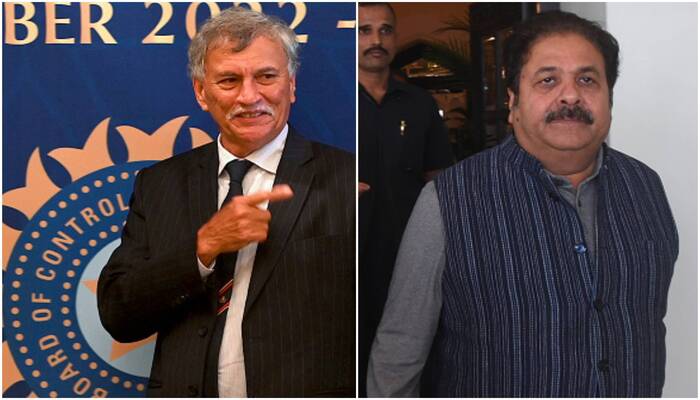
Days after Pakistan Cricket Board (PCB) invited BCCI vice president Rajeev Shukla and President Roger Binny to watch a few matches of the Asia Cup starting from August 30 with a Pakistan versus Nepal match, a PTI report has claimed that Rajeev Shukla and Roger Binny have accepted the invitation. Both Shukla and Binny will be in Lahore from September 4 to 7.
Citing an anonymous source close to the development, PTI reported that Rajeev Shukla, Roger Binny and secretary Jay Shah will be in Sri Lanka for the marquee India versus Pakistan clash in Pallekele (Kandy) on September 2. The trio will return to India on September 3 following which BCCI president and vice-president will travel through the Wagah border to Lahore.
Both Shukla and Binny have been invited to Pakistan along with their spouses for an official dinner hosted by the PCB at the Governor’s House in Lahore on 4th September.
Two BCCI bigwigs are expected to attend the Afghanistan-Sri Lanka game on September 5 and Pakistan’s first Super Four match the following day.
As reported earlier, the location of the continental competition was shifted from Pakistan to a joint hosting arrangement between Sri Lanka and Pakistan. India’s opposition to hosting games in her hostile neighbour was the primary driver of this adjustment. Notably, the last time India visited Pakistan was in 2008 for the Asia Cup, however after the terrible 26/11 terrorist assault carried out by Pakistani terrorists, the relationship and cricketing ties between the two countries deteriorated.
Last week, a TikTok video showcasing a woman shouting at employees within a Fresno McDonald’s gained viral traction. Subsequently, she was dismissed from her position at a dental office in Fresno city of California USA. Caught on camera, the individual in question, Gina Aiello, was recorded hurling racial slurs at another customer while also subjecting minimum-wage employees to verbal abuse, all over a routine soda order.
Surpassing 2 million views, the 13-second video captures a heated exchange between Aiello and Luis Aceves, a fellow customer. The footage commences with Aceves confronting Aiello, highlighting her discourteous conduct towards the McDonald’s staff.
In her retort, Aiello not only employs an offensive racial slur but also resorts to indecent gestures before making an abrupt exit. The video captures Aceves, who documented the incident, displaying genuine astonishment at Aiello’s abhorrent demeanour. The confrontation escalated further as Aiello directed verbal aggression at the drive-thru staff member while expressing her dissatisfaction regarding the soda.
Aceves recounted that the employees had already borne the brunt of Aiello’s verbal hostility. Ironically, Aceves, instead of being the target of Aiello’s racial slur, demonstrated compassion towards her actions, understanding that she might have been grappling with a challenging day. He said, “We’re all struggling. We’re all trying to find our purpose in life sometimes it just stinks when we’re having a bad day.”
Swift action ensued in response to the incident’s aftermath. Aiello was promptly terminated from her employment position at the Jack Ohanesian Dentist and Dental Surgery in Fresno.
The dental practice, headed by Dr. Jack Ohanesian, issued an Instagram statement on August 19, revealing that the woman had been placed on administrative leave. Subsequently, on August 22, the establishment released a follow-up statement confirming that she had been removed from their team.
On August 22, 2023, a horrific accident took place in which a Rolls-Royce car rammed into an oil tanker on the Delhi-Mumbai expressway in Haryana’s Nuh. The oil tanker driver and his helper were killed, while the three occupants of the Rolls-Royce narrowly escaped but sustained serious injuries. Reports revealed that those who died were identified as Rampreet and Kuldeep.
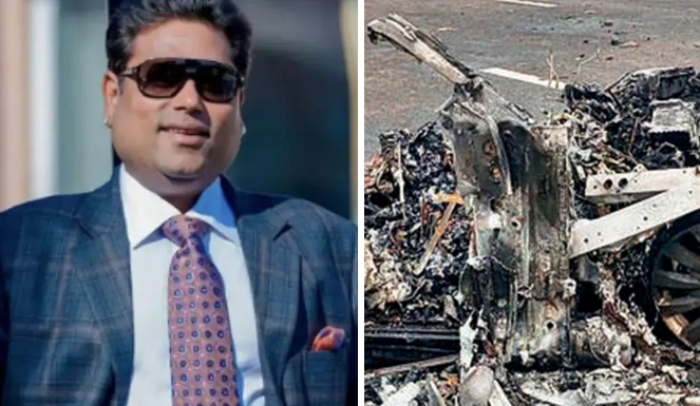
One of the three people travelling in the luxury car that was cruising at a speed of over 200 kmph when it crashed into the tanker was Vikas Malu, the Kuber Group director. Malu, who sustained serious injuries in the collision, is currently undergoing treatment at a hospital in Gurugram and is scheduled for surgery on Monday.
About Vikas Malu’s health condition, his lawyer RK Thakur said, “Vikas has an elbow injury and is hospitalised. He also has a problem in his spine that needs to be treated. He cannot even stand without someone’s support.”
Who is Vikas Malu
Vikas Malu is the Chief Executive and proprietor of Kuber Group. His business empire includes 45 companies in 50 different nations. According to reports, he is in charge of the group’s 12 companies activities.
The Kuber Group, founded in 1985 by Vikas Malu’s father Mul Chand Malu, initially focused on tobacco production under the brand name Kuber Khiani. Over time, it diversified to various sectors, spanning FMCG, packaging and lamination, holographic technology, poly films, real estate, and more.
Vikas Malu took over the leadership of the Kuber Group as a director in 1993. Malu recently assumed the position of director at Vardhman International Private Limited.
Vikas Malu is listed as a director for 13 Indian firms with the Ministry of Corporate Affairs. He now holds directorships in 14 organizations, including BLOOMING DALE RESORTS PRIVATE LIMITED.
Vikas Malu, a powerful business magnate, is also well-known for his passion for high-end automobiles. In 2021, he was featured in an interview where he talked about catapulting his brand in luxury segments.
Vikas Malu in front of his luxury car collection (source: Zee News)
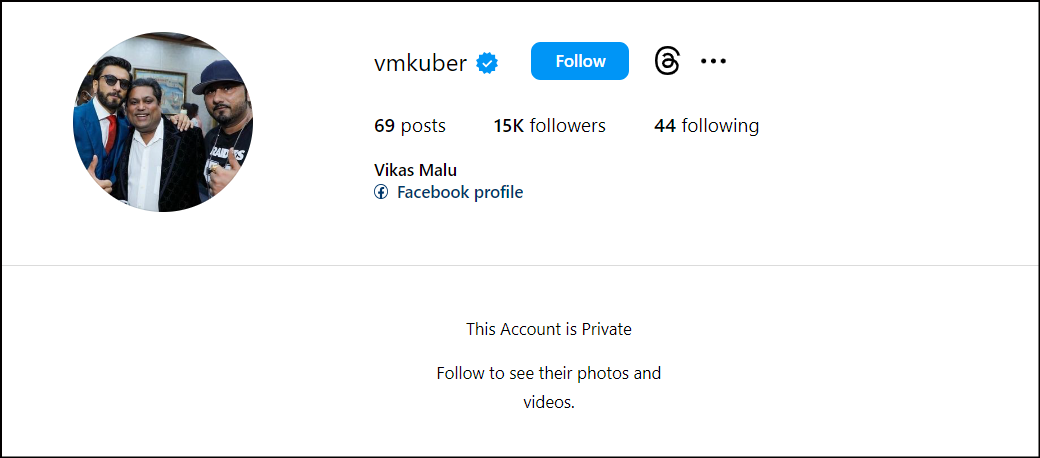
Malu is quite active on social media as his interactions extend to the celebrity circles. On Instagram, Malu has as many as 15k followers. In fact, his profile picture on Instagram shows him posing with Bollywood actor Ranbir Singh and singer Yo Yo Honey Singh.
Vikas Malu’s Instagram page
Second wife of Vikas Malu accuses him of Satish Kaushik’s murder, rape
Recently, Vikas Malu grabbed the headlines when his second wife Saanvi Malu accused him of murdering veteran actor and director Satish Kaushik. She had also recently filed a rape case against her spouse.
Notably, a day before his demise on March 9, 2023, Kaushik had participated in Holi festivities at the farmhouse of Vikas Malu. On the night of the party, the actor had chest pain and was taken to Fortis Hospital, but he died before receiving treatment.
After his death, Malu’s estranged wife Saanvi Malu accused Vikas of the actor’s murder. In fact, she had also written a letter to the Delhi Police commissioner, alleging Vikas’s involvement in the death of the actor.
Speaking to ANI, she said, “I have got a complaint registered in connection with Satish Ji’s death. He had come to my husband’s farmhouse for a party, where his health deteriorated. Some objectionable medicines have also been found in the farmhouse. Satish Ji and my husband had business connections as well. In August 2022, an argument broke out between Satish Ji and my husband, where Satish ji demanded Rs 15 crores that he had earlier given to him. But, my husband said that he will give the money in India.”
She further alleged, “When I later asked him about the money, my husband said that he borrowed the money from Satish ji, but the money went for loss during the Covid period. My husband was not in the mood to return the money, he even said that he will use blue pills and Russian girls to do away with Satish Kaushik. That’s why I have brought this angle to the police for fair investigation.”
However, when she was summoned by the Delhi Police to record her statement in connection with the case, she refused to cooperate in the investigation until the investigating inspector with “suspicious role” was changed.
The woman’s lawyer Rajendra Chhabra had told the media then, “The woman had made rape allegations against her husband Vikas Malu, and it was the same inspector investigating the case. But, he was removed from the investigation for allegedly tampering with the evidence. Now, again after the complaint of my client, the same inspector has been appointed for investigation, which is surprising,” she added.
After his wife levelled accusations of his involvement in the death of veteran actor Satish Kaushik, the farmhouse owner Vikas Malu alleged that his name is being used in “wrong light”.
Satish Kaushik’s wife Shashi Kaushik had also reacted strongly to the allegations and refuted the claims of financial transactions. She also asked Vikas Malu’s wife to withdraw the case.
The Rolls Royce crash
On August 22, 2023, Vikas Malu, the Director and proprietor of Kuber Group, sustained injuries following a collision between the Rolls-Royce he was travelling in and a tanker. The incident occurred on the Delhi-Mumbai Expressway.
The police said that on the highway, the Rolls-Royce unexpectedly surged forward, surpassing the other vehicles in the convoy ahead before ultimately colliding with a tanker that was taking a U-turn. Vikas Malu, accompanied by a woman named Divya and their driver, was inside the Rolls-Royce. Although all of them were successfully rescued, the car subsequently ignited in flames.
Notably, the oil tanker driver and his helper were killed in the accident. Senior police officials have indicated that the initial investigation suggests the responsibility rests with the driver of the Rolls-Royce, which was part of a 14-vehicle convoy.
Notably, after the incident, his attorney RK Thakur said that Vikas Malu was deemed unfit to operate the vehicle, and therefore, his driver Tasbir was driving the vehicle. Thakur contended that maintaining a slow speed on an expressway is “more dangerous.” Nevertheless, he also clarified that Malu had not given any specific instructions to the driver regarding driving at a faster or slower pace.
On Friday, August 25, a US court sentenced a Pakistani man named Muhammad Masood to 18 years in prison and subsequent supervised release after he was convicted of attempting to provide material support to the terror outfit Islamic Stae of Iraq and Al-Sham (ISIS). The Pakistani convict had pleaded guilty on August 16 last year.
According to a press release issued by the US Justice Department, Muhammad Masood (31), a licensed medical doctor in Pakistan had under an H-1B visa worked as a research coordinator at a medical clinic in Rochester, Minnesota. Masood worked at the Mayo Clinic previously but was working at a research clinic in Rochester when he was arrested in 2020.
Masood used an encrypted messaging service to enable his travel overseas to join the Islamic terrorist organisation ISIS between January and March 2020. Masood expressed his desire to join the Islamic State of Iraq and Al-Sham (ISIS) and declared his allegiance or “Bayat” to the proscribed terrorist organisation and its leader in many of his statements.
Muhammad Masood had also expressed his aspiration to carry out ‘lone wolf’ terrorist attacks in the United States. Reportedly, Masood was also willing to fight and work as a combat medic for the Islamic terrorist outfit in the Middle East.
The inquiry into Masood’s activities began in January 2020, when investigators discovered he had on an encrypted social media network asked for assistance on “making hijra”. According to an affidavit submitted by the Federal Bureau of Investigation, the term is often used in Islamic State circles to denote travel to territory controlled by ISIS for the goal of “violent jihad.”
The Pakistani doctor turned Jihadi had planned to reach Syria via the route of Chicago, Illinois, to Amman, Jordan and from there on to Syria. Masood had on February 21, 2020, bought plane tickets accordingly. However, Muhammad Masood had to change his travel plans as Jordan closed its borders for incoming flights in the wake of the COVID-19 pandemic.
Following this, Masood decided to fly from Minneapolis to Los Angeles to meet with someone he believed could help him go via cargo ship to ISIS territory.
Masood travelled from Rochester to Minneapolis-St. Paul International Airport (MSP) on March 19, 2020, to board a plane heading for Los Angeles, California. Masood checked in for his flight at MSP. However, the Pakistani Jihadi was apprehended there by the FBI’s Joint Terrorism Task Force.
He was caught because the persons he was talking to about his plans to join ISIS were actually government informants.
Notably, Masood’s lawyer, Jordan Kushner, claimed that Masood suffered from “mental illness”. Masood’s lawyer toldThe New York Times on Friday that the sentence was “extremely harsh” considering his client’s history of mental illness.
Kushner, in court, had referred to a psychiatrist’s report, which found that Masood’s acts should be seen “not as an act of devotion to violent extremism and the aims of ISIS, but as a result of his mental illness and multiple stressors.”
Chandrayaan 3 is in the news since its historic moon landing and everyone has lauded India and her scientists for their extraordinary achievement for this success. It is the third Indian lunar exploration mission under the Indian Space Research Organisation (ISRO)’s Chandrayaan program, and the first one ever in history to land on the South Pole of the moon. It consists of a lander named Vikram and a rover named Pragyan, similar to those of the Chandrayaan 2 mission.
Following the successful landing of Chandrayaan-3 on the moon, several people have been questioning how one buys land on the moon, as many celebrities have done.
The moon has undoubtedly been a subject of great interest for people and the mega success of Chandrayaan-3 has piqued the curiosity of many to find new information and knowledge about the same. However, amidst all of the eagerness, there is a man by the name of Dennis Hope who has been selling land on the moon for quite some time now.
Dennis Hope- The man who “owns” the moon
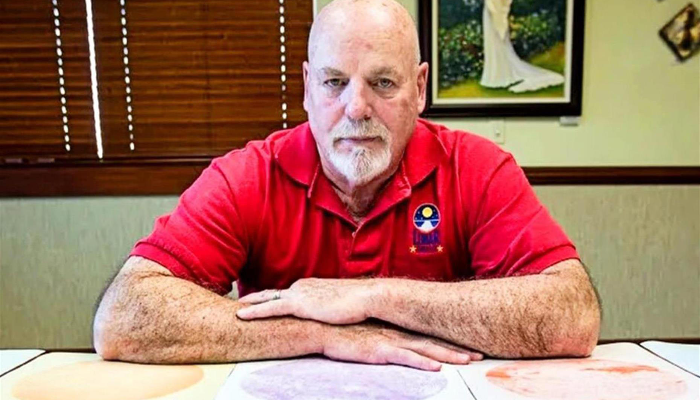
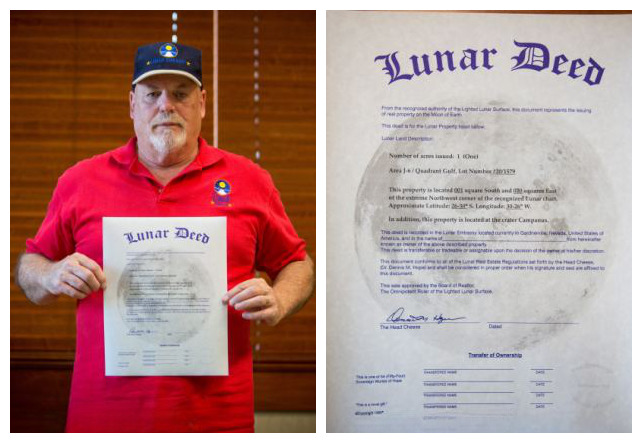
A 75-year-old American entrepreneur and former car salesman named Dennis Hope declared himself the owner of the moon in 1980. His audacious and peculiar assertion provoked discussion, rebuke, and a fresh dialogue concerning international property rights on lunar territory. He is a businessman from Nevada and gained notoriety after he claimed that he was the proprietor of the moon.
Source: Business Insider
Hope declared his ownership in 1980 and began working on a strategy to make use of his “property rights”. Dennis Hope is of the opinion that he has a right to claim the moon because there is no nation-state or governing organisation that could contest the validity of his authority.
Many have questioned how such a person could possibly own the moon or any other portion of it. Many concerns with regard to the potential exploitation of space resources and the legitimacy of ownership in the absence of international acknowledgement or regulation have been expressed by ethical experts.
Dennis Hope, who considers he can create fresh opportunities for international cooperation in advancing astronomical exploration is unfazed by these accusations.
Dennis Hope capitalising on the moonthrough a UN loophole
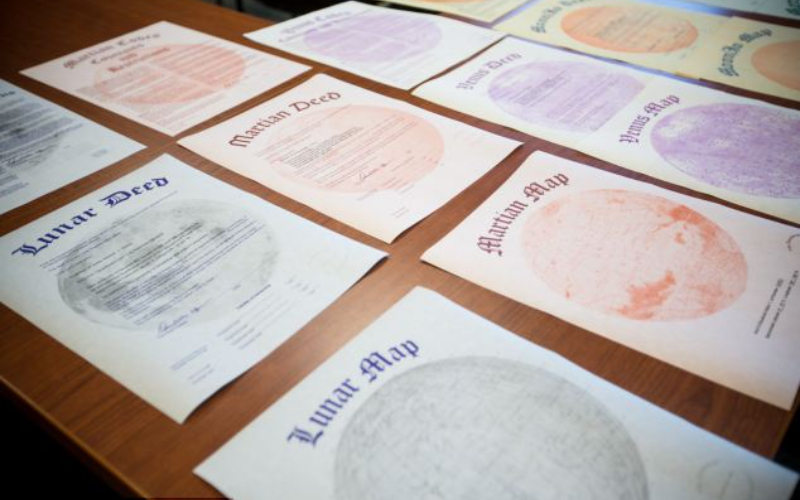
Dennis Hope had a revolutionary idea in 1980 which was to to sell lunar deeds. He founded the Lunar Embassy, an organisation dedicated to selling these documents for $19.95 per acre and taking ownership of the lunar surface in order to accomplish the same. This assertion was supported by a loophole in the 1967 United Nations Outer Space Treaty, which forbids any country from acquiring land in outer space.
He supported his position with letters informing all treaty signatories of his idea and the development of an official website. Additionally, he began marketing his company through several media channels.
Dennis Hope’s main goal was to use these documents to raise money for both personal wealth-building through real estate investments outside of our planet and further space exploration. He is unwavering in his quest to see moon property rights recognised on a worldwide scale, despite receiving conflicting responses.
How the “blind” transaction takes place
The Lunar Embassy Corporation has made $11 million through the sale of extraterrestrial property over the course of nearly four decades. A copy of the official certificate of ownership costs $2.50 in addition to $10 for shipping and handling along with $1.51 for planetary and lunar tax as well as $19.99 for one acre of lunar real estate.
Source: Business Insider
Dennis Hope, the head of the firm, merely closes his eyes and selects at random a diagram of the moon to indicate which piece of lunar territory he wants to sell. The owner is then given photographs of their just acquired property, but these images are only accessible after a completed point of sale. The area is then coloured red to indicate that it is no longer available.
Dennis Hope maintained that millions of individuals worldwide, including celebrities like Barbara Walters, Tom Cruise, John Travolta, Nicole Kidman, and former presidents Ronald Reagan, Jimmy Carter, and George W. Bush own more than 600 acres of land on the moon. Each owner is given a certificate and the right to vote in any moon election. Hope also believes that people would have extended vacations of up to three months at a time to get the best views of the solar system.
He alleged that some of these property owners have ambitious plans for their holdings that include a golf course which will be challenging because “even a one-degree pitch would send the ball into outer space.” Hope remarked that he turned down a $50 million offer from someone who wanted to purchase the entire northern area of the moon last year since the lunar embassy does not sell real estate near important historical sites.
There are currently 27 resellers, 6 ambassadors, and 2 permanent staff members functioning for the real estate company. Licence holders must pay a $60,000 fee and purchase a minimum number of homes each month in order to resell properties or become an ambassador.
Dennis Hope has offered many governments, including the United States, a sizable sum of money to help them with their financial problems. He invented a financial system called ‘The Delta’ that is utilised by those who own property on the moon, but no government has yet accepted the loan. He established the Galactic Government in 2001 to safeguard these roughly six million property owners.
Hope has also claimed ownership of Mars, Venus, Mercury, and one of Jupiter’s moons and commented that he doesn’t “sell on other planets because he can’t find maps of them to carve out subdivisions.”
Indian celebrities with land on the moon
Interestingly, Shah Rukh Khan and the late Sushant Singh Rajput also own a piece of land on the moon. SRK stated that an Australian woman gifts him a little plot of land on his birthday every year in an interview in 2009. He is now the owner of the Sea of Tranquilly, a popular region on the moon. The cost of one acre which equates to 43,560 square feet or 4,047 square metres is around $37.50 (or $1758.75) and the superstar has been given numerous acres there.
“An Australian lady buys a little land on the moon for me every year on my birthday. She has been buying it for a while now and I get these certificates from the Lunar Republic Society. She writes me colourful emails (in the sense one line is red, one is blue and so on). I feel blessed to have the love of so many people worldwide,” he revealed in an interview.
Sushant Singh Rajput acquired a plot of property known as the Mare Muscoviense, or the Sea of Muscovy on the far side of the moon in 2018. According to estimates, he paid 55 lakh rupees for it. He also possessed a Meade 14″ LX-600, a sophisticated telescope that enabled him to monitor his acreage from his house.
Notably, there is a website called The Lunar Registry which allows you to buy and own land on the moon. The website reads, “The International Lunar Lands Registry (ILLR) is tasked with administering and allocating real property located on Luna, Earth’s Moon, and registering ownership claims to properties on the Moon on behalf of individuals, organisations and business entities around the world.”
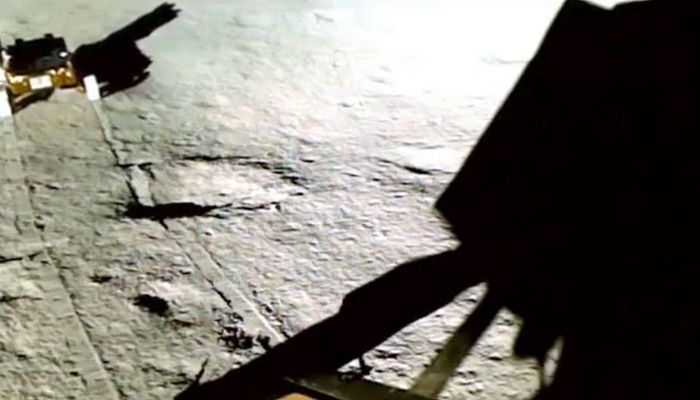
On Saturday, 26th August 2023, three days after the successful soft landing of the Chandrayaan-3 mission on the lunar surface, the Indian Space Research Organisation (ISRO) shared new details. These details pertain to the landing of the lander Vikram and the rover Pragyan at the moon’s south pole. The ISRO chairman reported that as of Saturday morning, the rover had covered a distance of 12 meters.
According to ISRO, the rover is operating as per its designated plan on the lunar surface. Designed to traverse up to 500 meters, the rover had accomplished an 8-meter journey by August 25. Additionally, two payloads have been activated to gather diverse lunar data. These payloads will relay information through the Vikram Lander to ISRO on Earth. On 26th August 2023, ISRO’s official X handle shared a video of rover Pragyan moving on the lunar surface.
Chandrayaan-3 Mission: ?What's new here?
Pragyan rover roams around Shiv Shakti Point in pursuit of lunar secrets at the South Pole ?! pic.twitter.com/1g5gQsgrjM
Remarkably, India stands as the fourth global entity to achieve a soft lunar landing, and uniquely, it’s the pioneer in attaining the moon’s southern pole. In commemoration of this momentous achievement, Prime Minister Modi arrived in Bengaluru on Saturday, 26th August 2023.
His purpose in being there was to inspire and engage with ISRO scientists. On this occasion, he declared that the triumph of ‘Chandrayaan-3’ will be commemorated annually as National Space Day on August 23.
Chandrayaan-3 Mission:
All planned Rover movements have been verified. The Rover has successfully traversed a distance of about 8 meters.
Rover payloads LIBS and APXS are turned ON.
All payloads on the propulsion module, lander module, and rover are performing nominally.…
ISRO Chairman S Somnath said Chandrayaan-3 rover Pragyan had covered a distance of 12 meters till Saturday morning. He shared several pictures from the moon with the PM.
On Wednesday, August 23, 2023, ‘Chandrayaan-3’ successfully achieved a lunar landing. The lander Vikram gently placed the rover Pragyan onto the lunar South Pole using a two-segment foldable ramp and a supporting wire. Once the rover made contact with the lunar surface, the wire was detached.
Simultaneously, a solar panel opened, enabling the rover to produce 50W of electricity for its forthcoming 500-meter journey. On Friday, ISRO shared the latest update on the lander via the X handle.
Chandrayaan-3 Mission:
All planned Rover movements have been verified. The Rover has successfully traversed a distance of about 8 meters.
Rover payloads LIBS and APXS are turned ON.
All payloads on the propulsion module, lander module, and rover are performing nominally.…
ISRO said in this post, “All planned Rover movements have been verified. The Rover has successfully traversed a distance of about 8 meters. Rover payloads LIBS and APXS are turned ON. All payloads on the propulsion module, lander module, and rover are performing nominally.”
The gathered data will be transmitted from the rover to the lander and subsequently relayed to the orbiter from the previous Chandrayaan Mission-2. Following this, Chandrayaan-2’s orbiter will transmit the data back to Earth.
Initiation of data collection experiments on the Moon’s South Pole has commenced. These instruments will conduct experiments and observations for the upcoming two weeks, equivalent to one lunar day (14 Earth days). As a consequence of the limited lunar sunlight, these instruments are expected to enter an inactive state during the moon’s nighttime phase.
Prime Minister Narendra Modi, on Saturday morning at ISRO’s Tracking and Telemetry Centre, declared that the site where Chandrayaan-3’s lander Vikram touched down would be designated as ‘Shiv Shakti’. Additionally, the location where Chandrayaan-2’s lander was supposed to perform its landing would be named ‘Tiranga’. The Chandrayan-2’s lander could not successfully land on the lunar surface, but its orbit is still functional. He further proclaimed that August 23, the day of Chandrayaan-3’s triumphant lunar landing, would here onwards be observed as National Space Day.
PM Modi said, “I can see every moment of that day of August 23 in front of my eyes. I salute your dedication. I salute your patience. I salute your hard work. I salute your inspiration.”
He added, “India is on the moon. Our national pride is on the moon. We have reached a place where no one has reached before. We have achieved what no one has achieved before! This is today’s India, courageous and brave.”
He reiterated the role of space technology in enhancing daily life, aiding in the seamless operation of the nation, and fostering transparency and efficiency.
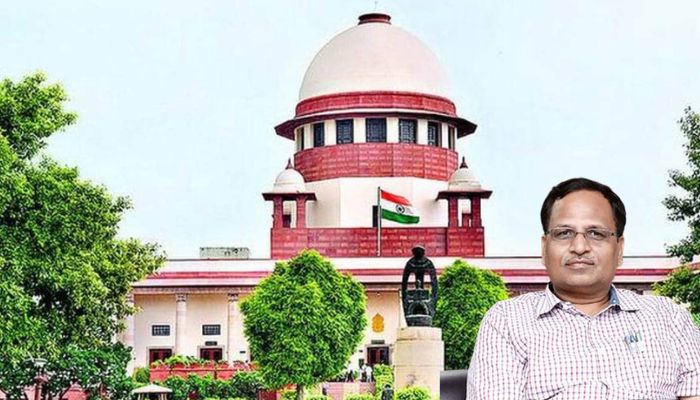
On Friday (25 August), the Enforcement Directorate submitted before the Supreme Court that AAP leader and Former Delhi cabinet Minister Satyendra Jain wants a “swimming pool” in jail. The central probing agency made this remark while opposing the extension of interim medical bail given to the AAP leader.
The incident unfolded when a bench of Justices AS Bopanna and MM Sundresh were hearing arguments on the extension of the AAP leader’s interim bail. The bench was presented with a medical condition report indicating that Jain is currently in the process of recovering from his spinal operation, which took place on July 21st. The report recommends a course of action that includes physiotherapy, aquatic exercises, and certain limitations on his body movements.
During the proceedings, Satyendra Jain’s counsel, Abhishek Manu Singhvi urged the apex court to extend the AAP leader’s interim bail citing medical advice. Singhvi argued that his client Satyendra Jain is going through “some important rehabilitation” after a crucial spinal operation.
Opposing the extension of his interim bail, ED contended that medical advice is not sufficient to extend his interim bail. Appearing for the ED, Additional Solicitor General SV Raju insisted that Jain’s independent examinations should be conducted by AIIMS.
ASG Raju asserted that if required, they could take Jain to a swimming pool for physiotherapy.
He said, “Let him surrender today. We are willing to provide him with physiotherapy. And for aquatic exercises, if he needs a swimming pool, we can even take him there. Nothing in the medical report shown by him warrants an extension of bail even by a day. Ask him to surrender. He should be treated as any ordinary petitioner.”
To which the court replied, “What to do? If he does physiotherapy, you’ll take photos and publish them.”
Subsequently, the bench extended the medical interim bail granted to Satyendar Jain till the 1st of September. On that day, his plea for regular bail will also be listed.
In his plea, AAP leader Satyendra Jain had challenged the Delhi High Court’s order dated 6 April in which it refused to grant him bail. The High Court observed that it did not find any illegality in the trial court order rejecting his bail.
Notably, ED arrested Former AAP Minister Jain in May 2022 in a money laundering case. He was granted a six-week interim bail on the 26th of May which was to last on 11 July. This was the first reprieve after he spent over a year in jail. He got relief to take treatment in a private hospital of his choice. Later, the interim bail was extended by the Court considering his medical condition.
Following the investigation, last year ED attached assets worth ₹4.81 crore belonging to companies that are allegedly linked to him.
The investigation by the ED started because of a case that was filed against Jain in 2017 by the Central Bureau of Investigation (CBI). He has been on bail in the CBI case.
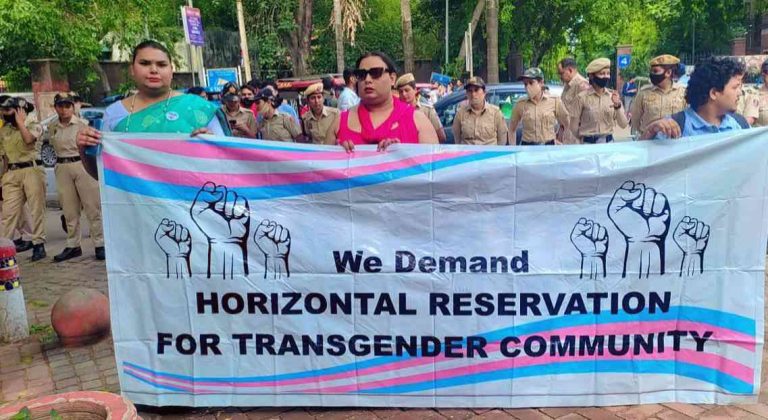
On Friday, 25th August 2023, the Supreme Court took a significant step by issuing a notice to the Union government, as well as all states and Union Territories (UTs), soliciting their responses in connection with a plea advocating for reservations for transgender individuals in state employment opportunities across India.
The notice was issued by a bench led by Chief Justice of India (CJI) DY Chandrachud in response to a plea that seeks a declaration asserting the entitlement of transgender persons, at large, to reservations within state government jobs under the provisions of Articles 14, 19, and 21, which are delineated as Fundamental Rights within Part-III of the Indian constitution.
The individual behind the plea is Subi KC, a transgender person, who also urged the CJI bench to direct the formulation and implementation of a reservation policy in favour of transgender persons within the sphere of public employment.
Subi KC’s plea references several studies that underscore the socially, economically, and educationally disadvantaged status of the transgender community, characterised by distressing conditions. The petitioner also contends that swift action is necessary to address these challenges by establishing and executing provisions for reservations.
The petition further alludes to the landmark 2014 Supreme Court case of NALSA vs. Union of India, which paved the way for acknowledging transgender rights and directed the state to classify transgender individuals as socially and economically disadvantaged, thus enabling the extension of reservations to them.
The plea emphasises that the verdict of the aforementioned case is legally binding in accordance with Article 141 of the Indian constitution. Following this judgement, the Supreme Court mandated the state to institute reservation provisions for the Transgender Group of Persons (TGP).
The plea additionally presents a report from the National Aids Control Organisation (NACO), which collaborates with the United Nations Development Programme (UNDP). This report underscores the inadequate provision of training and skill development programs for transgender individuals, which has led to a stark absence of employment opportunities for them.
According to the petitioner, although the Transgender Persons (Protection of Rights) Act, 2019 confers various rights upon TGP, it does not extend to providing them with reservations in education or employment.
Furthermore, the petitioner highlights the submission of multiple writ petitions before various high courts advocating for the implementation of reservations in public employment. Despite these efforts, no tangible measures have been initiated to ensure reservations for the Transgender Group of Persons.
On Saturday, August 26, the Spanish football federation said it would take legal action against Spanish woman football forward player Jenni Hermoso’s comments about its president Luis Rubiales kissing her, claiming she is lying about it being non-consensual.
The Spanish Football Federation (RFEF) said, “The RFEF and Mr President will demonstrate each of the lies that are spread either by someone on behalf of the player or, if applicable, by the player herself.
“The RFEF and the President, given the seriousness of the content of the press release from the Futpro union, will initiate the corresponding legal actions.”
The federation also said that, if selected, players have “an obligation” to play for the national team, after 81 female players said they would not represent Spain until Rubiales is removed from his post.
On Friday, August 25, the Spanish woman football forward player Jenni Hermoso joined 80 other women players to protest against the Spain women’s football federation chief Luis Rubiales, who came under harsh criticism after he kissed footballer Hermoso on the lips following Spain’s 1-0 victory over England in the World Cup final in Sydney on Sunday (August 20) night.
The players began the mass strike after the Spanish soccer boss, Luis Rubiales refused to resign from his post despite the uproar he caused with the kiss, which he termed “mutual, euphoric and consensual.” He added that Hermoso had said “OK” when he asked her if he could give her “a peck”. He also asserted that “she was the one who lifted me in her arms and brought me close to her body”.
In an emergency meeting called by the federation on Friday, Luis Rubiales insists he won’t step down. “I won’t resign,” Luis Rubiales declared four times in quick succession at the meeting and claimed he was a victim of a witch hunt by “false feminists.”
Jenni Hermoso denies Rubiales’ claim of kiss being ‘consensual’
Spanish midfielder Jenni Hermoso, on the other hand, has vehemently refuted the claims made by the federation chief that the kiss was consensual. She said she felt “vulnerable and the victim of an assault”.
“I want to clarify that at no time did I consent to the kiss that he gave me and in no case did I seek to lift up the president,” Hermoso said in the Futpro statement.
“I do not tolerate my word being questioned and much less that they invent words that I did not say,” she added.
She maintained that she will not play until strict action is taken against the federation chief, adding that she is pursuing action against the Spanish FA president.
The controversy
On August 20, Sunday, the Spanish women’s football federation chief Rubiales came under fire for allegedly grabbing his crotch in celebration of Spain’s victory over England while standing metres away from Spain’s Queen Letizia and her teenage daughter Sofia. Rubiales then kissed Spain midfielder Jenni Hermoso during the trophy celebration.
The inappropriate kiss delivered on stage during the official post-match ceremony which was captured on camera prompted a huge outrage on social media. The reaction to the kiss continued to dominate Spanish headlines until today.
On August 21, Monday, the interim government’s minister of equality, Irene Montero, said on social media that it was “a form of sexual violence that we women suffer on a daily basis and has been invisible until now.”
“We can’t make this normal,” she added.
England’s Lionesses, who were defeated by Spain in the World Cup final, backed the players’ boycott, saying: “Unacceptable actions allowed to happen by a sexist and patriarchal organisation. Abuse is abuse and we have all seen the truth.
“The behaviour of those who think they are invincible must not be tolerated and people shouldn’t need convincing to take action against any form of harassment.
“We all stand with you, @jennihermoso and all players of the Spainish team.”
Following the uproar, the world players’ union FIFPRO called for FIFA to intervene and investigate Rubiales, echoing a statement from the Spanish players’ union on 22nd August that condemned such behaviour as ‘never appropriate or acceptable’.
In its statement issued on 23rd August, FIFPRO said: “FifPro fully endorses the statement of Spanish player union AFE in calling for immediate action to address the conduct of Spanish federation president Luis Rubiales at the Fifa Women’s World Cup final and is requesting an investigation of his actions under Fifa’s code of ethics.”
“We reiterate that it was deeply lamentable that such a special moment for the players of the Spain national team taking place before a global television audience should be stained by the inappropriate conduct of an individual in a role carrying so much responsibility.”
“Uninitiated and uninvited physical approaches towards players are not appropriate or acceptable in any context, and especially when they are put in a position of vulnerability by a person who holds a position of power over them in their workplace.”
The head of Spain’s Sports Council, also sought Rubiales’ removal, saying, “We want this to be a ‘Me Too’ of Spanish soccer”.
That same day, FIFA, football’s global governing body and organiser of the Women’s World Cup, opened a disciplinary case against him. FIFPRO took to X to inform about the same.
Its disciplinary committee was entrusted with determining if Rubiales violated its code of conduct regarding “the basic rules of decent conduct” and “behaving in a way that brings the sport of football and/or FIFA into disrepute.”
Notably, the governing body’s disciplinary judges can impose sanctions on individuals ranging from warnings, penalties, and even suspensions from the sport. FIFA gave no timetable for the ruling.
On Friday (August 25), Swarajya journalist Swati Goel Sharma shared an undated video from a school in the Mau district of Uttar Pradesh. In the video, several burqa-clad girls were seen dancing to a song, which cursed non-believers (Kafirs) and glorified the practice of ‘purdah’ for women in Islam.
The girls are said to be the students of Talimuddin Niswan Women’s Degree College in Mau. In the video, they were seen performing to a song with lyrics urging Muslim girls to adhere to the principles of Islam without being afraid of the ‘Zaalim’ (oppressor).
The song further asserted that the Purdah/veil alone was the identity of women, urging the ‘Shehzadis’ of Islam to exhibit their ‘Imaan’ (Faith). A voiceover, attached to the song, emphasised, “To hell with such an education system, and institutions that target the rules laid down in Islam.”
A glimpse into the brainwashing and radicalisation that goes on in religious minority institutes
Women covered from head to toe in burqa are glorifying the regressive all-body wrapping as the very foundation of their religious beliefs, while cursing non-believers as hijdas and… pic.twitter.com/UKPz2uNT1f
Moreover, the song labelled the supposed ‘enemies’ of Islam as Hijdas (colloquial term for eunuchs) and Kuttas (dogs). While sharing the contentious video on X (formerly Twitter), journalist Swati Goel Sharma wrote, “A glimpse into the brainwashing and radicalisation that goes on in religious minority institutes.”
“Women covered from head to toe in burqa are glorifying the regressive all-body wrapping as the very foundation of their religious beliefs while cursing non-believers as hijdas and kutta and declaring them as enemies,” she added.
Sharma further emphasised, “Anybody trying to end the purdah system is trying to end Islam, they declare Video is from Talimuddin Niswan Women Degree College in UP’s Mau district. Song’s tune plagiarised from Katrina Kaif’ Kamli, the original source of which I don’t know.”
The video tweeted by her has sparked outrage on social media, with many questioning the indoctrination of Muslim girls within the school premises.
प्रकरण में उचित धाराओं में अभियोग पंजीकृत कर लिया गया है तथा सभी संबंधित पर आवश्यक विधिक कार्रवाई की जाएगी
On Friday (August 25) evening, Mau police informed that a case was registered under relevant provisions of law and a further investigation into the matter is underway.