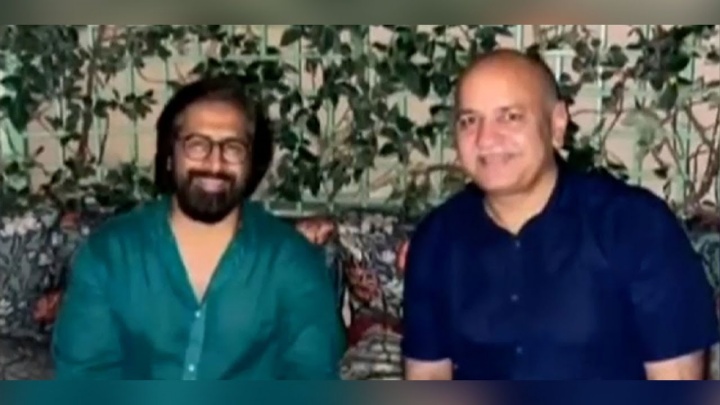
The Enforcement Directorate (ED) on Thursday arrested businessman Dinesh Arora in connection with its ongoing probe in Delhi excise policy case, sources said.
Arora has been declared an approver in the same case being investigated by the Central Bureau of Investigation (CBI). Considered close to jailed Aam Aadmi Party (AAP) leader Manish Sisodia, Arora is the 13th person to be arrested, so far, in the case by the the Enforcement Directorate. Last year, a city court allowed the CBI’s request to make Arora an approver in the case.
The ED has, so far, filed five charge sheets in the case, including against the former Delhi deputy chief minister.
In 2022, the ED filed its first chargesheet in the case. The agency said it has, so far, undertaken over 200 search operations in this case after filing FIR and taking cognizance of a CBI case, which was registered on the recommendation of the Delhi Lieutenant Governor.
The CBI inquiry was recommended on the findings of the Delhi chief secretary’s report filed in July showing prima facie violations of the GNCTD Act 1991, Transaction of Business Rules (ToBR)-1993, Delhi Excise Act-2009, and Delhi Excise Rules-2010, officials said.
In October, the ED had raided nearly three dozen locations in Delhi and Punjab following the arrest of Sameer Mahendru, managing director of Delhi’s Jor Bagh-based liquor distributor, Indospirit Group, in connection with the case and arrested him later.
The CBI, too, filed its first chargesheet in the case early this week.
The ED and the CBI had alleged that irregularities were committed while modifying the Excise Policy, undue favors were extended to license holders, the license fee was waived or reduced and the L-1 license was extended without the competent authority’s approval. The beneficiaries diverted “illegal” gains to the accused officials and made false entries in their books of account to evade detection.
Further, it was alleged that the Excise Department had decided to refund the Earnest Money Deposit of about Rs 30 crore to a successful tenderer against the set rules. Even though there was no enabling provision, a waiver on tendered licence fees was allowed from December 28, 2021, to January 27, 2022, due to the Covid-19 pandemic.
This allegedly caused a loss of Rs 144.36 crore to the exchequer.
The probe was conducted on the reference of the Union Home Ministry following a recommendation from Delhi Lieutenant-Governor Vinai Kumar Saxena.
(This news report is published from a syndicated feed. Except for the headline, the content has not been written or edited by OpIndia staff)
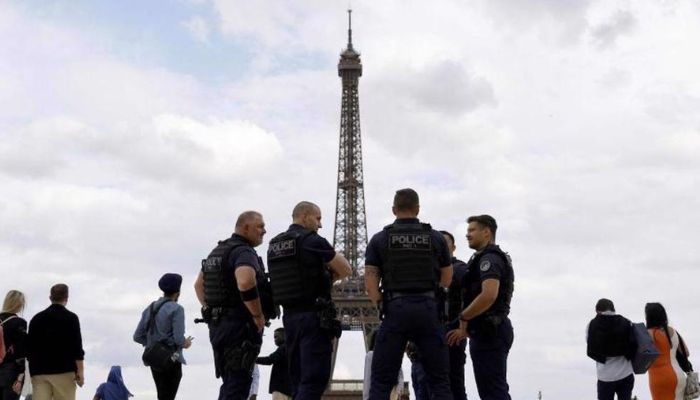
On 5th July 2023, French lawmakers approved a new justice reform bill that permits police to remotely access and monitor the cameras, microphones, and GPS of individuals’ mobile phones and other devices. This provision has sparked criticism from various quarters, including the left-wing opposition and the so-called human rights defenders in France, who argue that it infringes upon citizens’ privacy rights.
Police will have the authority to remotely activate mobile phones of targeted suspects
The bill, which forms part of a broader justice overhaul, also encompasses laptops, cars, and other connected objects, expanding the scope of police surveillance. It empowers law enforcement agencies to track the geolocation of suspects involved in crimes carrying a minimum sentence of five years imprisonment.
In addition, the legislation allows for remote activation of devices to record audio and video of individuals suspected of terrorism, organized crime, and delinquency offenses.
Digital rights group La Quadrature du Net expressed serious concerns regarding the potential infringement of fundamental liberties. They pointed out that the right to security, the right to private life, private correspondence, and the right to freedom of movement could be compromised, suggesting that this proposal signifies a slide towards heavy-handed security measures.
Doctors, journalists, lawyers, and MPs are exempt
During the parliamentary debate, lawmakers aligned with President Emmanuel Macron introduced an amendment to the bill. The amendment restricts the use of remote surveillance to cases where it is justified by the nature and severity of the crime, ensuring a strictly proportional duration. Furthermore, the provision requires judicial approval for its implementation, with a maximum surveillance period of six months. Notably, professionals in sensitive fields such as doctors, journalists, lawyers, judges, and members of parliament are exempt from being targeted under this legislation.
Justice Minister Eric Dupond-Moretti defended the bill, assuring citizens that it would only impact a limited number of cases each year. He argued against comparisons to George Orwell’s dystopian novel “1984,” emphasizing that the law is far from totalitarian surveillance. Dupond-Moretti maintained that the measure would save lives and contribute to public safety.
This controversial provision, alongside several other measures, was approved by the National Assembly as part of the justice reform bill, which is currently progressing through Parliament. The bill has drawn attention amidst ongoing social unrest sparked by the recent police killing of Nahel Merzouk, a teenager of African origin. Riots under the guise of mass protests erupted across France, reigniting concerns about people’s safety.
‘Law and order is not EU’s domain’: Frances dismisses EU statement over current riots
In response to the criticism, the French government dismissed comments from European Union (EU) Justice Commissioner Didier Reynders regarding the recent protests in the country. France rejected the notion that the EU should intervene in matters concerning law enforcement. Laurence Boone, France’s minister in charge of European affairs, emphasized that upholding public order is not within the EU’s domain. She labeled the remarks as interference in France’s domestic affairs and highlighted that similar events are not exclusive to France, necessitating efforts to restore calm rather than commentary from external sources.
As France grapples with rising violence and ongoing riots primarily involving Islamic refugees, the passage of this law reflects the government’s determination to combat the security challenges faced by the country. However, concerns about potential infringements on individual privacy rights and the balance between security and civil liberties persist, leading to a heated debate within French society.
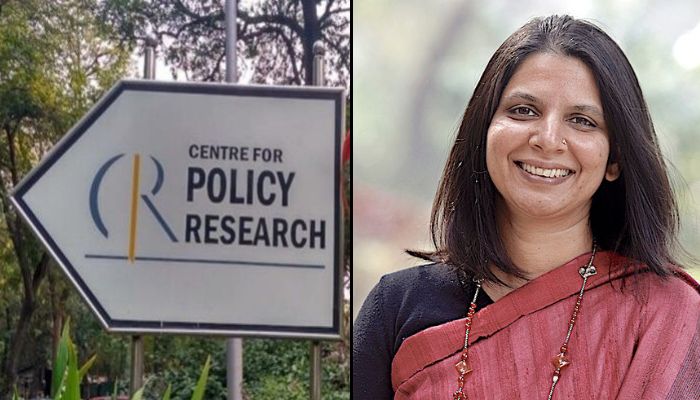
On June 30 this year, the Income Tax Department reportedly informed the ‘Centre for Policy Research (CPR),’ run by the daughter of Congress leader Mani Shankar Aiyar, about the withdrawal of its tax exemption status.
While crying foul over the development on Wednesday (July 6), the controversial think tank said, “CPR maintains that it is fully compliant with the law and all its collaborations and partnerships are limited to research alone.”
It added, “Since the IT survey began in September 2022, CPR has provided detailed responses to various authorities and fully cooperated with all the proceedings. In response to the current order withdrawing our tax exemption status, CPR will be seeking &avenues of recourse that are available.”
The Centre for Policy Research labelled the imitation by the Income Tax Department as a ‘severe blow that strikes at the core of its ability to function.’ It also claimed to continue with its research, which supposedly contributes to better policies, robust public discourse and high-quality scholarship.
It must be mentioned that non-profits are entitled to tax exemptions under Section 12A of the Income Tax Act of 1961. However, if an organisation fails to register under 12A or follow the guidelines, its financial recipes and transactions can be deemed taxable.
According to its website, CPR has been in existence since 1973. It claims to be a non-partisan public policy think tank, which is supposedly focused on supporting ‘scholarly excellence’.
Govt action against Centre for Policy Research
In September 2022, income tax raids were conducted at the Delhi-based think tank. In March this year, the Foreign Contribution Regulation Act (FCRA) license of the ‘Centre for Policy Research (CPR)’ was suspended by the Central government.
As per a report by The Economic Times, its licence was revoked due to non-compliance with FCRA rules. CPR had filed for the renewal of the licence.
It stated that during the period of October 2022-December 2022, funds amounting to Rs 10.1 crore were received from the Bill and Melinda Gates Foundation, the University of Pennsylvania, the World Resources Institute and Duke University.
The think tank is headed by Yamini Aiyar, the daughter of controversial Congress leader Mani Shankar Aiyar.
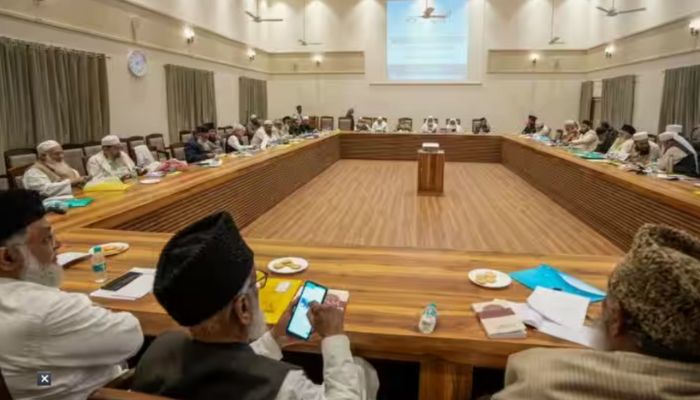
The All India Muslim Personal Law Board (AIMPLB) has said that it is working to establish Sharia courts in Muslim-majority areas across India. This comes days after the AIMPLB registered its objection against the Uniform Civil Code (UCC) even as the Centre is merely in the process of collecting suggestions.
While speaking to a media channel about their plan of action on UCC, AIMPLB spokesperson Qasim Rasool Ilyas said, “We have more than 100 Sharia courts in India under AIMPLB. And there are several others running under Imarat-e-Sharia across states including Bihar, Orissa, Jharkhand, under Imara-e-Sharia Assam and Karnataka. Jamiat Ulema is also running Sharia courts.”
When asked if they are willing to expand the Sharia courts, he said that these courts are a means to resolve issues in a “timely, easy, and affordable manner”. “We are planning to establish Sharia courts wherever there is a Muslim population,” said the AIMPLB spokesperson.
Interestingly, he said by establishing Sharia courts, the AIMPLB is attempting to reduce the burden on the Constitutionally-run Indian courts.
This is not the first time that the AIMPLB has issued such a statement. In 2018 too, the Muslim body had said it plans to open Darul-Qaza (Sharia courts) in all districts of the country.
Earlier on Thursday, the All India Muslim Personal Law Board met Congress President Mallikarjun Kharge, NCP Chief Sharad Pawar, and Shiv Sena (UBT) Chief Uddhav Thackeray to discuss their concerns about UCC.
Ilyas reportedly claimed that the Congress party assured that it will take cognizance of AIMPLB’s concerns and raise them in the Parliament. He claimed that Sharad Pawar said they are not in favour of UCC and only agree with the 21st Law Commission’s conclusion.
He added that Uddhav Thackeray was in favour of UCC but he said that UCC should be formed only with everyone’s consent and unless everyone’s consent is there, this should not happen.
The AIMPLB plans to meet Prime Minister Narendra Modi and President Droupadi Murmu to express their reservations against Uniform Civil Code.
Meanwhile, in a strange demand, the Muslim body has also said that all religious minorities be kept out of the purview of UCC. This was a day after it submitted its objections to the Law Commission.
On a more radical note, the Jamiat Ulema-e-Hind has reportedly submitted its draft to the law commission saying that the Muslim personal law cannot be changed till the end of time.
Ever since Prime Minister Modi underlined the importance of the Uniform Civil Code on 27th June, the Opposition and Muslim bodies have been making a hue and cry about the same even as the draft is yet to be formulated.
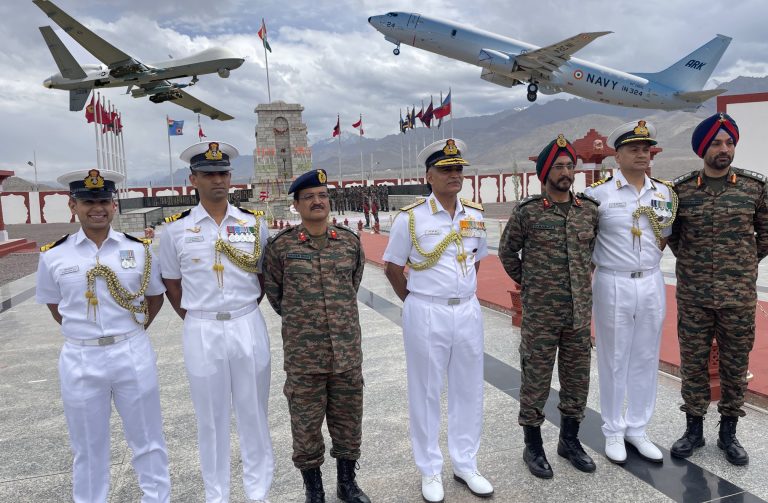
Amid the ongoing standoff with China in Eastern Ladakh, Navy Chief Admiral R Hari Kumar on Thursday said the P-8I surveillance planes along with the two leased Predator drones have proved useful in Ladakh since 2020 and will further improve the capabilities when they start arriving in the country. “The sensors they (Predators) have are quite a state of the art and they provide good recognizance and intelligence effort. So I would say no asset belongs to just any one service. It’s a national asset and we need to use it wherever it can give the best results and optimal results so that the nation benefits,” he added.
Asked about the induction of the proposed 31 Predator drones and their surveillance capability, the Admiral said that the surveillance capabilities will definitely increase.
“Out of the 31, about 16 of them will be primarily for the border areas, for the land region. The only difference between the sky guardian and the sea guardian for the surveillance is mainly the sensors,” he told ANI.
“So the sensor will be state of the art and they will be able to provide near real-time and almost 24/7 surveillance. So that definitely augments the effort and brings transparency in battlespace awareness,” he added.
“The P8I have been used here along with the army and the Air Force teams and we found it quite beneficial. And similarly, we found that the two sea guardians which we have on lease are being operated since number 2020. They’ve also been quite useful,” he added.
The Indian Navy is extending the lease of the two Predator drones which have flown more than 12,000 hours for surveillance across the country including the boundary with China.
The two drones were inducted by the Indian Navy under the emergency powers on lease in November 2020 during the initial phase of the military standoff with China and have been used extensively by the force.
The two drones of the older version of the Predators were taken on lease along with the ground control stations and other equipment.
After extensive flying operations and use of these drones for surveillance requirements of the Indian Army and Indian Air Force, it has now been decided that the defence forces would get a total of 31 of the latest Predator MQ-9B drones which will be used for surveillance.
The drone deal was announced by India and the US during Prime Minister Narendra Modi’s state visit to the US.
The deal has been approved by the Defence Acquisition Council and will now be negotiated with the US government for the final price and other contractual requirements.
Fifteen of these drones would be used for surveillance in the maritime zone while the reaming 16 would be used for aerial and ground surveillance along the northern and northeastern sectors.
The drones are located at the INS Rajali air base of the Navy in Tamil Nadu which is also planned to be one of the three hubs of the high-altitude long endurance unmanned aerial vehicles.
(This news report is published from a syndicated feed. Except for the headline, the content has not been written or edited by OpIndia staff)
In a striking resemblance to the previously exposed scheme of converting Hindu youths through an online game, a recent incident has come to light from Jetpur. This time, the conversion took place through Instagram, where a Hindu youth adopted Islam to marry a Bangladeshi girl he had met on the platform. The young man was notably influenced by videos featuring Zakir Naik. However, in a positive development, reports now indicate that Hindu organizations and revered saints from Jetpur collaborated to successfully guide and reintegrate the individual back into the Sanatan faith, as he did a Ghar Wapasi last night.
इंस्टाग्राम पर बांग्लादेशी युवती से निकाह की लालच में और यूट्यूब पर ज़ाकिर नाइक के वीडियो देखकर गुजरात के जेतपुर का हिंदु युवक बन गया था मुस्लिम।
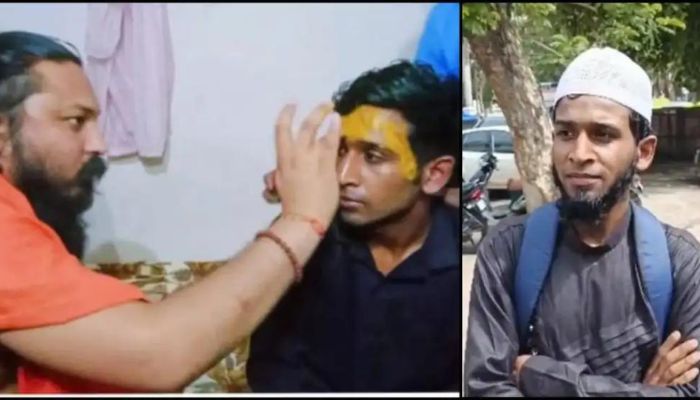
The news of a Hindu youth’s conversion to Islam in Jetpur swiftly gained widespread attention. The individual in question, Ashish Goswami, assumed the name Sheikh Mohammad Alsami after embracing the new faith. The situation escalated when Ashish, accompanied by two Muslim companions, caused a commotion upon arriving at the Jetpur government hospital for circumcision. Eventually, the matter was brought to the attention of the local police station on Wednesday, triggering further investigation.
Enlightened by the mahant of the Narasimha temple, the young man found his way back to the Sanatan fold
As the news reached the local Hindu organisations by Wednesday evening, a wave of anger swept through their ranks. Determined to rescue the Hindu youth from the clutches of conversion, Kanhaiyanand Maharaj, the revered leader of the local Hindu Dharma Sena and mahant of the Narasimha temple in Jetpur, wasted no time. In a show of solidarity, he assembled a substantial group of Hindu youths and personally visited the young man’s residence at night.
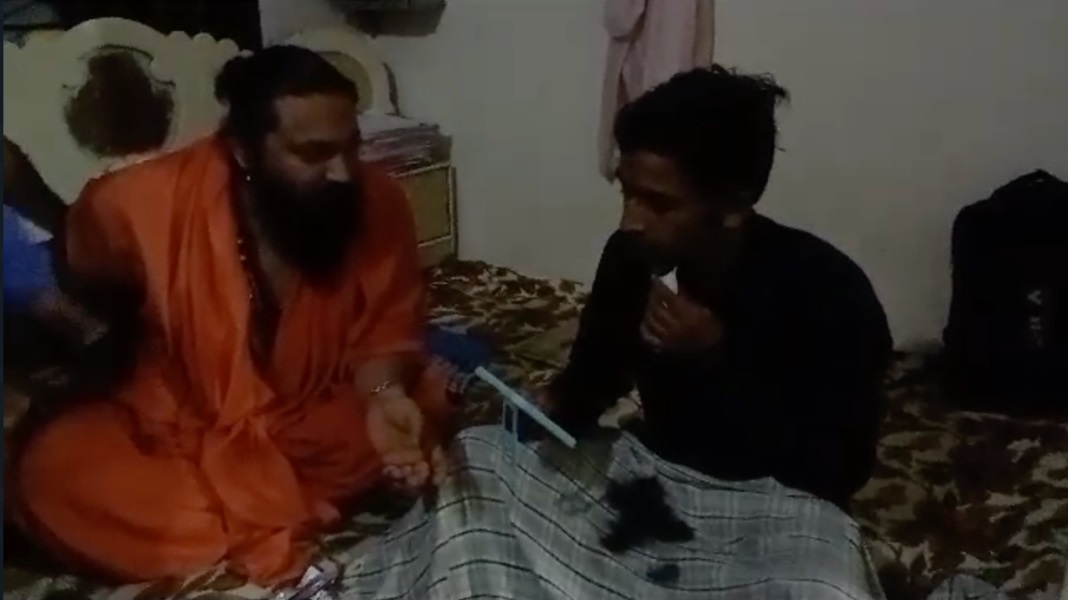
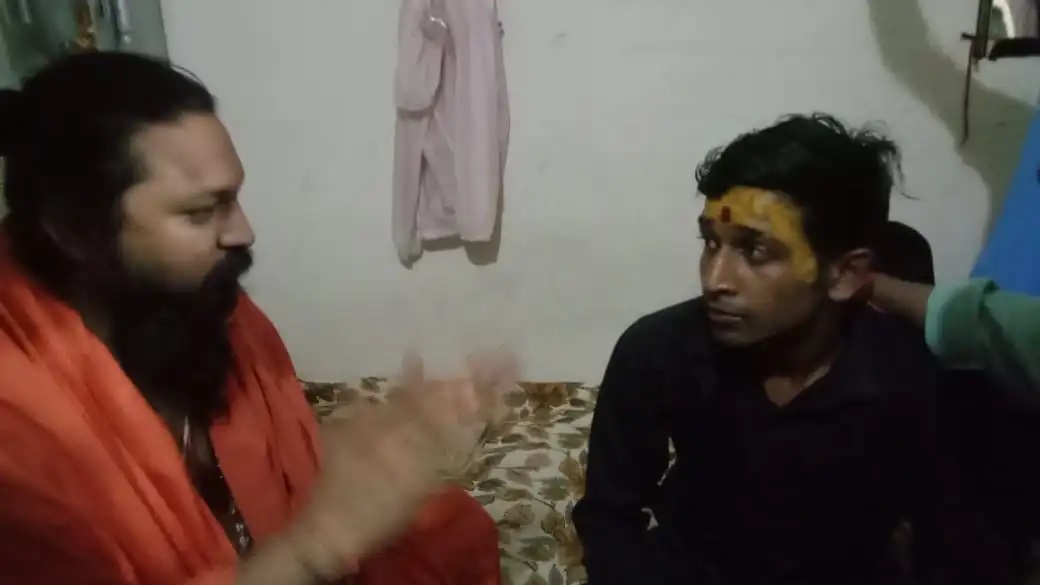
Engaging in a two-hour conversation, the young man, Ashish Goswami, began to acknowledge his error and realised that he had succumbed to Islamic influences. Overwhelmed by remorse, Ashish Goswami expressed deep regret. In a symbolic act of returning to the original faith, Mahant Kanhaiyanand Maharaj adorned Ashish’s forehead with a Chandan tilak, signifying his return to the Sanatan Dharma. In a gesture of reaffirmation, the young man, with the guidance of the mahant, used a trimmer to remove the beard he had grown, reminiscent of the Muslim tradition. In this way, the young man made a visible declaration of his reconnection with his Hindu roots.
Ultimately, the collective efforts of Hindu organisations triumphed as they successfully reintegrated the Hindu youth from Jetpur back into the Sanatan fold. This youth embraced Islam under the influence of Zakir Naik. Late into the night, passionate activists from these organisations congregated outside the youth’s residence and raised the chants of ‘Bharat Mata ki Jai’ and ‘Jai Shri Ram.’ In a unifying act, the group also recited the Hanuman Chalisa, with the once-converted youth fervently joining in, symbolising his renewed connection with his Hindu heritage.
‘The young man was under the influence of Zakir Naik and other clerics like him.’ – Mahant Kanhaiyanand
In an exclusive conversation with OpIndia, Mahant Kanhaiyanand Maharaj, who also serves as the head of the Saurashtra province of Akhil Bharatiya Sant Samiti, stated, “When I received news of the incident around 5 pm yesterday while I was in Gandhinagar, I immediately grasped the gravity of the matter. Without wasting any time, my colleagues and I swiftly made our way to Jetpur. By 9 pm, we had reached the young man’s house and commenced our earnest efforts to convince him of his mistake.”
Mahant Kanhaiyanand Maharaj elaborated, stating, “Around 11 pm, we witnessed a breakthrough as the young man arrived at a state of stability and comprehended our perspective. Overwhelmed with remorse, he shed tears profusely. Providing him with reassurance and support, I performed the ritual of applying Chandan Tilak on his forehead, symbolising his return to the Sanatan Dharma.”
Mahant Kanhaiyanand Maharaj also imparted valuable guidance to the young man, emphasizing the importance of reading the Bhagavad Gita on a daily basis. He assured the young man that in case any doubts or questions arise regarding Sanatan Dharma, he is always available as a reliable source of guidance and support.
Mahant Kanhaiyanand shared that the youth’s decision to convert to Islam was prompted by the influence of Zakir Naik – a fugitive Islamic preacher, and similar clerics. This revelation highlighted the significant impact these individuals had on the youth, leading him to take the step of converting his faith.
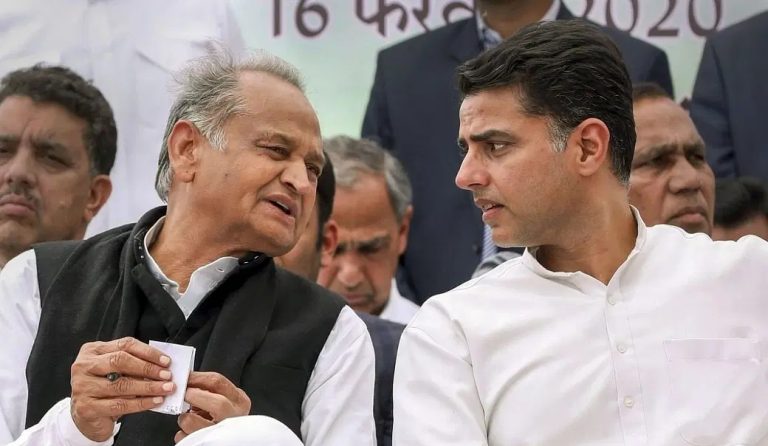
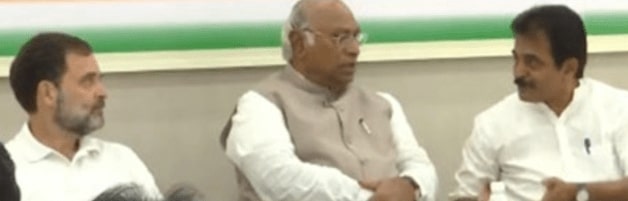
Political parties in Rajasthan have got the ball rolling for the upcoming Assembly elections this year. A key meeting was chaired at the Congress HQ presided by Mallikarjun Kharge and Rahul Gandhi along with 30 leaders from the state to take stock of poll preparedness. CM Gehlot and rebel leader Sachin Pilot were also present.
A key meeting was chaired at the Cong HQ preceded by Mallikarjun Kharge and Rahul Gandhi along with 30 leaders from Rajasthan to take stock of poll preparedness. (Source: ANI)
The meeting comes following a tug of war for months between Rajasthan Chief Minister Ashok Gehlot and former deputy CM Sachin Pilot. AICC in charge of Rajasthan Sukhjinder Singh Randhawa was also present in the meeting.
Congress General Secretary KC Venugopal in a post-meet briefing said that the party will unitedly fight the polls. The party will announce the list of candidates in the first week of September.
The party has decided that everyone should follow strict discipline. Any issues are to be discussed within the party, and no one has the freedom to speak about the party's internal politics outside the party. Strict disciplinary action will be taken against those who violate… pic.twitter.com/ZSri7l7So9
Even as Venugopal said that it has been decided in the meeting that strict discipline must be followed and internal issues should not be outed, the very leadership of the Congress-led Rajasthan govt has already washed its dirty laundry in public.
“The party has decided that everyone should follow strict discipline. Any issues are to be discussed within the party, and no one has the freedom to speak about the party’s internal politics outside the party. Strict disciplinary action will be taken against those who violate this,” Venugopal said.
However, the party refrained from naming a CM candidate for the polls. In the press conference with AICC in-charge of Rajasthan Sukhjinder Singh Randhawa and state Congress president Govind Singh Dotasra, KC Venugopal dodged the question about who would be the party’s candidate for chief minister. “You know our history. We never announce a chief ministerial candidate. But we will fight together in the elections. There is a government, a good government which is doing good work… That work will give results,” he said.
Going by the video of the meeting posted by Congress, there seems to be an attempt to show that all is well between Gehlot, who attended the meeting over video conference, and Pilot as the two appeared to share a laugh. Sachin Pilot was seen sitting next to Rahul Gandhi.
Gehlot was advised to rest by doctors after he fractured his left toe a few days ago, therefore he joined the meeting virtually.
दिल्ली स्थित कांग्रेस मुख्यालय में आगामी राजस्थान चुनाव को लेकर महत्वपूर्ण बैठक जारी है। pic.twitter.com/Fn0BpglChS
But the several attacks and counter-attacks between the two leaders have revealed their deeply-entrenched political aspirations which will only grow come the state polls. Reportedly, Sachin Pilot said that if he has to participate in the Congress campaigning in Rajasthan, he needs to be given a respectable position in the party. It is learnt that he also reiterated his demand for probe into alleged corruption cases during the Vasundhara Raje government, and demanded that party leaders should not speak outside party forums.
As per reports, the party leadership assured him that the Ashok Gehlot govt will be directed to act on his demands.
Meanwhile, Sachin Pilot after the meeting said that there is no question of a split and there is only Rahul Gandhi-Mallikarjun Kharge group in the Congress party. He said that the party will contest the election unitedly.
#WATCH | Delhi: Rajasthan Congress leader Sachin Pilot, says, "There has been a meaningful discussion for the upcoming elections in Rajasthan…BJP has tried a lot to divert people's attention from issues of corruption & problems of the youth…the party has taken cognizance of… pic.twitter.com/fa7I6sWtLl
Talking about his demands, Pilot said that all the issues were discussed with open mind, the issues that he had raised publicly like the issue of paper leaks, how to reform our public service commission, issues of corruption of the previous government etc. “I am happy that the AICC has taken cognizance and prepared a blueprint to take action on the issues,” he said.
Affirming his loyalty to the party, Sachin Pilot said, “I have fulfilled all the responsibilities that the party has given me in the past, be it at the Centre and in the state. In the future too, I will abide by the directions of the party.”
Rahul Gandhi seemed to have taken the side of Pilot, as he reportedly raised the issue of corruption. He told the CM that while the govt is doing good work, the impression that bureaucrats were running the show needed to be addressed. He also said that SCs, STs, OBCs and minorities not getting enough representation in the government and share in power, and this needed to be corrected.
In a tweet, Congress president Mallikarjun Kharge said that the party will unite and go among the public in the upcoming elections.
Hectic parlays are also underway in the BJP. Former Rajasthan Chief Minister Vasundhara Raje today cut short her visit to Kota and rushed to Delhi for a high-level meeting. This has sparked rumours that Raje may be given a big responsibility. Notably, Raje has recently been quite active in campaigning for the upcoming polls.
Even as the Congress convinces its state leadership and voter base with talks of unity, the BJP seems to have formulated its fundamental poll strategy for Rajasthan. The BJP recently formed a “Vijay Sankalp team” which will be led by Rajasthan BJP Chief CP Joshi. Both Vasundhara Raje and CP Joshi will be part of a key meeting in Delhi on 7th July.
On 30th June, Union Home Minister Amit Shah in Udaipur launched back-to-back attacks on the Gehlot govt over the issues of corruption, breakdown of law and order, terrorism, and the murder of Kanhaiyalal.
He said that had the Congress govt in the state formed a special court as required, Kanhaiyalal’s murderers would have been hanged by now.
Union Minister Gajendra Singh Shekhawat had recently filed a criminal defamation case against Gehlot in the alleged Sanjeevani scam case. Gehlot has been summoned by a Special MP-MLA court on August 7.
Meanwhile PM Modi is scheduled to visit Bikaner, Rajasthan on 8th July, Saturday.
In a study titled “India’s Soft Power and Cultural Diplomacy” published on December 29, 2022, the Standing Committee on External Affairs defined “soft power” as the capacity to influence people without employing coercion by appealing to them and attracting them. Soft power is the ability to influence another person’s preferences through attraction and appeal. Power in international relations has traditionally been defined and assessed in easily quantifiable ‘hard’ terms. This understanding of power frequently relates to economic and military strength. Positive appeal and persuasion are used by soft power, as opposed to hard power, which employs coercion, to accomplish goals. Instead of using traditional foreign policy tools like coercive methods to gain influence, soft power builds networks, shares engaging narratives, creates rules for the world, and makes use of the resources that naturally attract people to the world.
India has consistently been at the top of the list for employing cultural diplomacy and soft power to establish itself on the international stage. Foreign policy, cultural influence, and political principles were the three pillars of soft power outlined by Joseph Nye, the originator of the concept of soft power. The various sources of soft power, however, are numerous and diverse. India is vividly conscious of the importance of cultural engagement and has given weightage to presenting its cultural fascinations to different corners of the world.
India has a vision of a relatively pluralistic government, non-violent, and liberal with a non-threatening global leadership. Luminaries like Mahatma Gandhi and Rabindranath Tagore, as well as the arts of literature, music, dance, the software industry, Ayurveda, etc., generate a staggering array of soft power assets that highlight India’s appeal to the world’s population. Ashoka, Buddha, and other prominent figures served as prime examples of the values that Indians are known for, which include the importance of respect, peace, and fraternity. Epics from mythologies like the Mahabharata and Ramayana are compared to classic Greek works like the Odyssey and Iliad. Between 1 and 1000 AD, India was lauded as the “Golden Bird” for its GDP, which was higher than China at the time. As a result, India soon received immigrants, traders, and invaders like “Alexander the Great”.
The concept of “unity in diversity” is the foundation of India’s international representation. Her history and culture, which show how India peacefully accepted several religions while never losing sight of its own culture and history, are her heritage to the world. The soft power of India, which has been dispersed throughout her enormous social and civilizational heritage over millennia, displays her goals of secularism, liberalism, and cultural inclusivity, all of which are increasingly important in modern society.
People from all over the world are attracted to the nation because of its vibrant democracy, autonomous judiciary, role for NGOs, and progressive and independent media. India is also attempting to gain international recognition for initiatives that are incredibly innovative and that reflect the country’s connection to its wonderful civilizational past. One of the most respected UNESCO members, India has always promoted inter-civilizational and intercultural exchange. The government of Narendra Modi at present has been setting fresh trends in the realm of Indian diplomacy. Today, the state has successfully achieved diplomatic victories, the attractiveness of culture, social values, and foreign policies and advanced the country’s national objectives by utilising special soft power assets of India, such as the diaspora, Yoga, Buddhism, and economic support. India’s supremacy in space technology and diplomacy is a significantly enhanced soft power tool with limitless potential.
India lacks the institutional ecology necessary to harness soft power and advance its national interests abroad despite being a nation rich in soft power resources. Due to issues such as corruption, poverty, violence against women, antagonism towards business, urban pollution, caste prejudice, and gender inequality, India has performed relatively poorly in terms of the factors that make a country attractive to tourists. A number of other factors, such as the Western bias that puts India at a relative disadvantage, force what appears to be an underperformance for India in the Soft Power 30 ranking. India needs to rediscover its ancient wisdom, and its spirituality should inspire other countries to see that India has the potential to play a significant leadership role in the world.
If utilised productively, the country’s soft power potential would unquestionably contribute to India’s elevated standing by making it prosperous in the international community. India undoubtedly possesses the ability and vast prospects to strengthen its position as the “growing global soft power,” which can further open the door for the nation to become a “soft power-superpower” of the twenty-first century.
(Writer Nihal Sharma is a political enthusiast with a keen interest in Indian political landscape, having worked with several Ministers gaining real on-ground experience of the political system.)
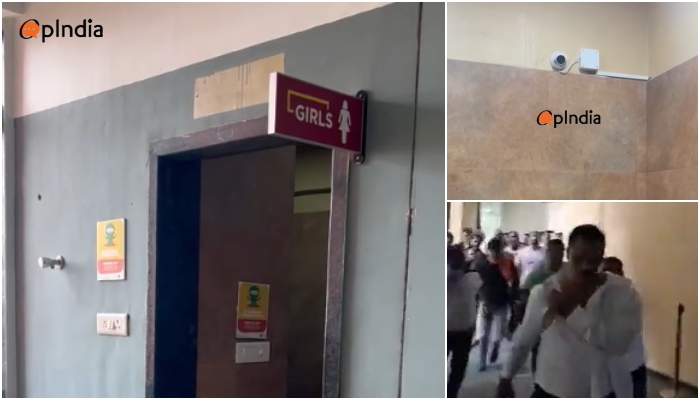
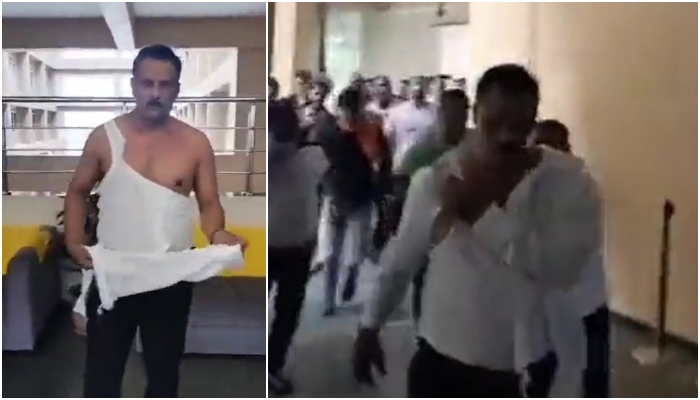
On Thursday, July 6, the Principal of the DY Patil High School in the Ambi region of Pune identified as Alexander Coates Reid, and a couple of Christian teachers, were removed from their position after being accused of molestation, religious conversion and causing insult to Hindu religion. The Principal was also manhandled by the local Hindu organizations after they found out that he had installed CCTV cameras in the girls’ washroom without any notice to the management or the parents.
The video of the incident is making rounds on social media in which the Principal of the reputed convent school can be seen being followed and beaten by the local Hindu organizations. However, the said video is being amplified by the Islamists and left-liberal cabal members who claim that Hindus were causing deliberate hurt to the minority community in India. The Islamists also claim that the Christians are next on the so-called target list of the Hindus and say that the Principal was thrashed just for conducting Christian prayers at the school, which is a partial truth.
After Muslims Next Target Christians??
Alexander Reid, Principal, D Y Patil English High School, Ambi, was allegedly beaten up by Bajrang Dal goons for conducting Christian prayer 'Our Father who art in Heaven', every morning in the school
The Islamists and leftists very diligently forgot to mention that the Principal who has now been suspended as confirmed to OpIndia by the VHP members had installed CCTV cameras in the washroom of the girls studying in standard 8th and above. And that he was caught molesting a female parent on the school premises.
Location: Ambi, Pune, Maharashtra
A mob of extremists thrashed the principal of DY Patil High School, tearing his clothes, allegedly due to accusations of "imparting" Christian education in the school.
Students are forced to read prayers from Bible, Hindu festivals are demeaned
OpIndia verified the incident from the school and from the VHP members. According to Santosh Dabhade, one of the local VHP members, the saga is said to have begun when the parents of one of the students at the school reached out to the local Hindu organizations saying that their daughter was being harassed and tortured at the school. The parents also told that she was deliberately being asked to lift the school benches and was harassed by pinches on her cheeks and other body parts.
School Principal was thrashed by local Hindu organizations (Images obtained by OpIndia)
“We went to the school to check on the case and then discovered that the school had installed CCTV cameras in the washrooms of the grown-up girl students. The parents were already furious and later it was also discovered that the school furthered the Christian way of life. The students there are forced to read prayers from the Bible during the assembly. The Hindu festivals are demeaned and insulted,” he said.
Authorities at the school called the tradition of Ashadhi Ekadashi ‘stupid’
Santosh Dabhade continued by saying that recently, the school denied to issue holidays on the Hindu festival of Ashadhi Ekadashi and also during Gudhi Padwa. “The students wanted to organize a Palkhi (procession) on the occasion of Ekadashi but the permission to it was also denied saying that it was a stupid tradition. We honestly don’t have a problem with Christian prayers. But why demean Hindu culture? Why call it stupid? Why no Hindu prayers are performed at the school when more than 90 per cent of the students studying there belong to the Hindu community?” Dabhade pondered.
The principal was thrashed after he attempted to molest a female parent, says VHP member
As per the information obtained, the school principal was thrashed by the people on July 4 after he threw arrogance and tried to molest one of the female parents of a student. “The parents have so many complaints about the school and its management. That day one of the female parents approached the Principal directly asking why were the children at the school forced to read prayers from Bible and why the girls at the school were harassed. The Principal at that time attempted to disrespect her and molest her by touching her. The people around th
en happened to thrash him,” the VHP member added.
Muslim teacher praised Islam, wanted Jinnah to become India’s PM instead of Nehru
As per the sources further, the teachers at the said school also force the Hindu students against their religion and influence them to believe in foreign religions. One of the Muslim teachers named Samina Patel is also said to attempt to influence the students by saying that ‘Muslims have always been pure, it is Hindus who keep on defaming and attacking the minority community’. Patel also is believed to have made a derogatory comment against India’s first Prime Minister Jawaharlal Nehru. “Nehru was not capable of being a PM. Mohammed Ali Jinnah should have become the PM of the country. The country of India would have developed to a massive extent,” she was quoted by Dabhade.
Reportedly, three teachers of the DY Patil High School including Samina Patel are said to have been suspended by the management, as informed to OpIndia by the VHP members. Further, OpIndia also contacted the school management for comment on the development but no specific comments were provided. “No comments at present. The management is looking into the issue. We will issue the official statement soon,” said Shubert Dsouza from the school administration.
Management says it had no idea about the CCTV cameras, assures strict action
The management of the school conducted a meeting on July 6 over the issue and stated that it had no idea that CCTV cameras were installed in the washroom of the girls studying in standard 8 and above. The management has assured that the accused school teachers and the Principal will be terminated and strict action will be taken against them.
Teachers at the school called Hindu prayer ‘nonsense’
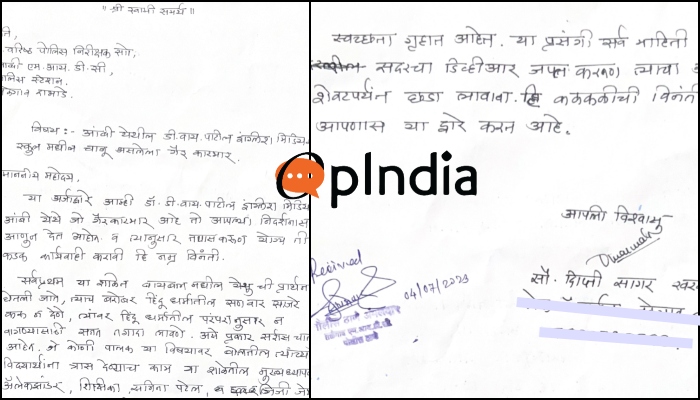
The parents of one of the girl students studying at the school talked to OpIndia and confirmed that a detailed police complaint has been filed at the Ambi Police Station but the FIR is yet to be registered. Deepti Karmale, the female parent said that the girl students are harassed at the school and CCTV cameras have been installed in the girls’ washroom. She also added that the students are kept away from the Hindu culture and traditions and are forced to follow only the Christian prayers.
“During an event, some of the students happened to play the famous Hindu prayer ‘Aee Giri Nandini’ but the teachers called it nonsense and said that no such ‘songs’ would be played at the school. The students are not given holidays on the Hindu festivals and are asked to pray to Jesus. We are not against it, but why such hatred towards the Hindu culture?” the parent asked.
She also narrated one incident that happened at the school when the students were given a project to visit a religious place and write a note but were asked specifically to avoid visiting a temple. “The school wanted the students to either visit a Gurudwara, Church or a Mosque. Why no temple? This is not why we sent our children to school. This shows their disrespect to the Hindu culture,” the parent was quoted as saying.
The principal didn’t respect India’s National Anthem, used to walk during ‘Jan Gan Man’
While noting a complaint about the school Principal, the parent said that he has no respect event for India as a whole country. He does not respect and walks in the corridors while India’s national anthem ‘Jan Gan Man’ is played at the school. “He allows no Hindi, Marathi speech at the school. This is not at all fair. Students should have access to all kinds of knowledge and not only Christian culture,” the parent concluded.
She also expressed worry saying that she doesn’t know what all the CCTV cameras installed in the girl’s washroom might have recorded.
At present, the enraged parents of the students have filed a police complaint in the case and await an FIR to be registered. The management has assured to look into the case and take strict action against the accused Principal and teachers.
OpIndia contacted the Police for the comment but no information was provided. Further investigations are underway. Further updates are awaited.
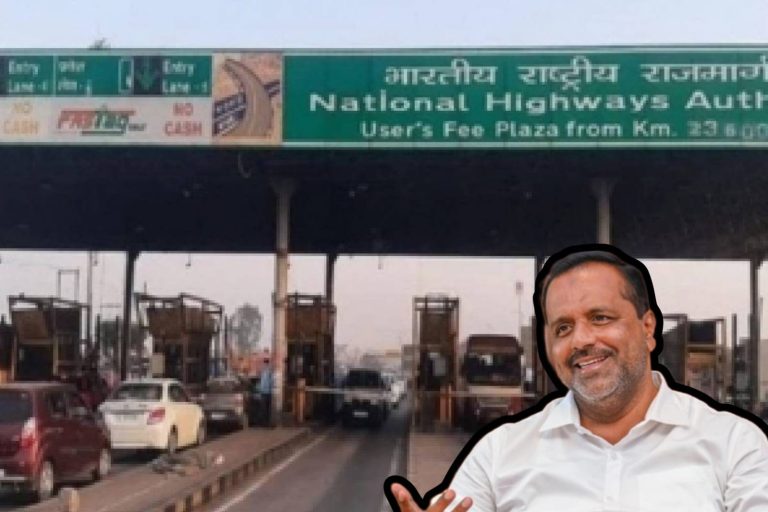
Karnataka Assembly Speaker UT Khader stirred controversy on Tuesday after he demanded a special VVIP toll lane for MLAs and retired lawmakers at toll plazas. When slammed for showcasing the Congress party’s elitist mindset, he later corrected his position, stating that a separate lane “is not possible” and that the demand was made by an MLA.
Karnataka Speaker UT Khader asks the state's PWD minister to have a meeting with NHAI to make sure MLAs, MPs, MLCs and former ministers have a separate lane at toll gates. Issue was raised after Congress MLA Narendra Swamy raised the issue during the session.
After two Congress MLAs claimed that they were harassed at toll gates, Khader directed that the PWD minister, Satish Jarkiholi, have a word with the National Highways Authority of India (NHAI). The discussion was started when Congress MLA Narendraswamy moved for a calling attention motion and claimed that toll plaza employees had mistreated him.
#Karnataka Speaker #UTKhader asks the state's PWD minister to have a meeting with NHAI to make sure MLAs, MPs, MLCs and former ministers have a separate lane at toll gates. Issue was raised after Congress MLA Narendra Swamy raised the issue during the session.
“On June 17, when I was travelling on Mysuru road towards Bengaluru, I stopped at the Sheshagiri Halli toll plaza. Despite having an MLA pass, personnel at the toll plaza behaved in a way that breaches the respect of lawmakers. The pass was scrutinized as if it was a police investigation. The personnel behave like goondas and use abusive language. He added that the matter concerns all MLAs,” Congress MLA Narendraswamy was quoted as saying.
Hubli-Dharwad (East) Congress MLA Abbayya Prasad echoed the same sentiments. “Every time I travel between Hubballi and Bengaluru, I face the same problem. Our passes aren’t considered. They ask for other IDs. There’s a dispute all the time,” he frowned.
In response to the concerns, Satish Jarkiholi stated that he will schedule a meeting with the NHAI to talk about this. Khader advised Narendraswamy to file a motion for violation of privilege. To Jarkiholi, Khader said, “When you call a meeting, ask (NHAI) for a separate VIP lane. Also, their policy doesn’t cover ex-MLAs. They, too, should be covered.”
The opposition, meanwhile, criticised UT Khader’s proposal for a separate lane at toll booths and labelled it as a symbol of “elitism.”
BJP MP Tejasvi Surya tweeted, “Karnataka Assembly Speaker and Congress MLA UT Khadar’s suggestion of making special lanes for MLAs at toll plazas, reeks of elitism and displays the Congress’s VIP culture mindset. While PM Modi, through rules & personal actions, is trying to put an end to this colonial era culture, Congress tries to perpetuate VIP culture in every opportunity they get.”
Karnataka Assembly Speaker and Congress MLA UT Khadar’s suggestion of making special lanes for MLAs at toll plazas, reeks of elitism and displays the Congress’s VIP culture mindset.
While PM Modi, through rules & personal actions, is trying to put an end to this colonial era…
After facing severe criticism, UT Khader later revised his demand on Thursday, stating that a “separate VVIP lane is not practical” after his initial demand caused a commotion.
“A separate lane is already there at every toll but this wasn’t there in Mysuru-Bengaluru toll…There is no question of a separate VVIP lane, it is not practical,” UT Khader told the media. He said that it was an MLA who made the recommendation, not him.
This is not the first time Congress is being accused of indulging in VVIP culture. In 2018, the Congress government in Karnataka under Siddaramaiah, spent Rs. 36 crores on phone bills of MLAs and MLCs during its rule, an RTI had revealed. Each of the 224 MLAs and 75 MLCs received Rs. 20,000 per month as a phone allowance.
That year it was also revealed that the state hospitality department under the then Congres Govt splurged 42 lakh rupees to host political leaders during the swearing-in ceremony of H.D. Kumaraswamy.
In fact, this brazen display of VVIP culture is not only confined to Congress. In 2021, reports emerged about how NCP supremo and former Indian Olympic Association president Sharad Pawar, Sports Minister Sunil Kedar, Cabinet Minister Aditi Tatkare and other ministers and dignitaries parked their vehicles on a race track for athletes in Pune’s Shivachhatrapati Sports Complex sparking controversy.
It has been a general trend in Indian politics that taxpayers have to bear the brunt of politicians wasting money on luxuries.