Home Blog Page 2199

Given injection to kill me slowly, no bathroom access, no bed: Former Pakistan PM Imran Khan alleges torture and mistreatment by authorities

Former Pakistan PM and PTI chief Imran Khan, who was arrested from outside the Islamabad High Court (IHC) by Pakistani Rangers on Tuesday (May 9), told the court that he was being tortured and mistreated by the authorities. The PTI chief also alleged that the incumbent government in the country, led by Shehbaz Sharif, has been trying to kill him inside the jail.

Imran Khan further claimed that he was afraid of meeting the same fate as Maqsood ‘Chaprasi’, a key witness in a Rs 16 billion money laundering case against incumbent Pakistan PM Shehbaz Sharif and his family.

Appearing in the court after his arrest, Imran Khan claimed that he was being tortured. He lamented that he has not been allowed to use the washroom for the last 24 hours.

“I have not been to the washroom in 24 hours.” He further added, “They give [you] an injection, and [you] slowly die,” the PTI chief reportedly said in the court. 

According to Imran Khan’s lawyer Afzal Marwat, the PTI chief was in “good spirits” but had complained of being hit on the back of the head and leg by paramilitary forces who arrested him. He also said that Imran Khan was kept awake all night. The police gave Imran Khan a dirty room that did not even have a bed.

Imran Khan also claimed that all of the charges leveled against him in the Al Qadir Trust and Toshakhana cases are absolutely bogus and an attempt by the current dispensation in Pakistan to prevent him from returning to power.

Mentally prepared to go to jail: Imran Khan

It may be recalled that hours before his arrest, the PTI chief had said that he was mentally prepared to go to jail. “If someone has a warrant, come to me directly, I am prepared to go to jail. Spending so much money as if a major criminal is coming to Islamabad. Do us a favour and don’t stage such a drama and directly provide a warrant,” he said adding that he was mentally prepared to go to jail.

In the tweet, Imran said that the coalition government is making attempts to arrest him to prevent him from campaigning for elections and to stop him from mobilising the masses in support of the Constitution if the govt & their handlers refuse to obey the SC (Supreme Court) and violate Constitution on holding of elections.

In the 6-minute-long video, the Pakistan Tehreek-e-Insaf (PTI) leader said that a serving senior military officer had tried to kill him twice and he was so powerful that he (Khan) was unable to register a case despite being in power in Punjab.

The ISPR had, in turn, criticised Imran for making extremely irresponsible and baseless allegations against a serving senior military commander and urged him to seek redress in court rather than making false allegations.

Imran Khan arrested

Former Pakistan Prime Minister and PTI chief Imran Khan was arrested from outside the Islamabad High Court (IHC) by Pakistani Rangers on May 9, Tuesday. Imran Khan had reportedly gone to the Islamabad HC to seek bail in multiple FIRs registered against him.

The PTI chief reportedly has been arrested in the Al-Qadir Trust case of the National Accountability Bureau as well as the Toshakhana case.

The arrest has led to widespread unrest and clashes across the country with several PTI supporters getting killed in the aftermath of the arrest.

Massive protests after Imran Khan was detained

Following Imran Khan’s detention in Islamabad on Tuesday, there were several large-scale and violent demonstrations around Pakistan. 

In many cities around the nation, protesters flocked to the streets and got into fights with police and other security officials. In Quetta, there has already been one death and five injuries. Unrest was also reported from Lahore, Karachi, Peshawar, and Rawalpindi.

In light of the events, mobile and internet services have been halted throughout the nation. In Pakistan, access to Twitter, Facebook, Instagram, and YouTube has also been blocked.
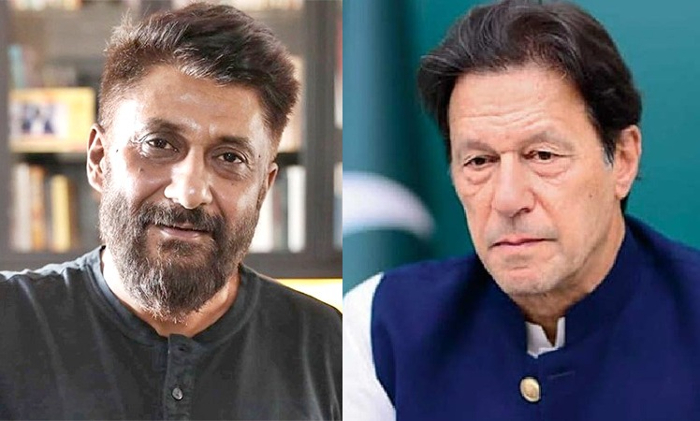
Irony just shot itself: Jailed Imran Khan uses soundtrack of Vivek Agnihotri’s Kashmir Files, a film that talks about Hindu genocide by Pakistan-sponsored Islamists

Former Prime Minister of Pakistan, Imran Khan, was arrested by the country’s security forces under corruption charges on Tuesday, May 9. Since then, the country has seen several violent protests as Imran Khan’s supporters clash with the army and the ruling establishment.

In order to motivate Imran Khan’s supporters to continue to fight against the ruling establishment, his Instagram handle ended up using the soundtrack of ‘The Kashmir Files’, a film by Vivek Agnihotri on the Hindu genocide in Kashmir valley, carried out by Pakistan-sponsored Islamists.

Pointing out the use of his copyrighted song, Vivek Agnihotri highlighted the irony of it all since his film was attacked by Pakistanis.

While the poem was originally written by Faiz Ahmed Faiz, the version used by Imran Khan is straight from Agnihotri’s film. Highlighting the fact, Agnihotri further tweeted, “We bought the rights from Faiz House. There are many versions. This is our legal copyright version.”

The problematic poem by Faiz Ahmed Faiz

During the anti-CAA protests in India towards the end of 2019, Faiz’s hum dekhenge poem created quite a controversy over its use in the protests. Many people protested over the line sab but uthwaye jayenge (all idols will be removed) for the anti-idolatry tone of the words.

While the poem was used in context in the Kashmir Files film to highlight the anti-Hindu nature of some liberals, Imran Khan and his supporters used it unironically in their political fight against the Shehbaz Sharif government.

Imran Khan arrested

Former Pakistan Prime Minister and PTI chief Imran Khan was arrested from outside the Islamabad High Court (IHC) by Pakistani Rangers on May 9, Tuesday. Imran Khan had reportedly gone to the Islamabad HC to seek bail in multiple FIRs registered against him.

The PTI chief reportedly has been arrested in the Al-Qadir Trust case of the National Accountability Bureau as well as the Toshakhana case.

The arrest has led to widespread unrest and clashes across the country with several PTI supporters getting killed in the aftermath of the arrest.

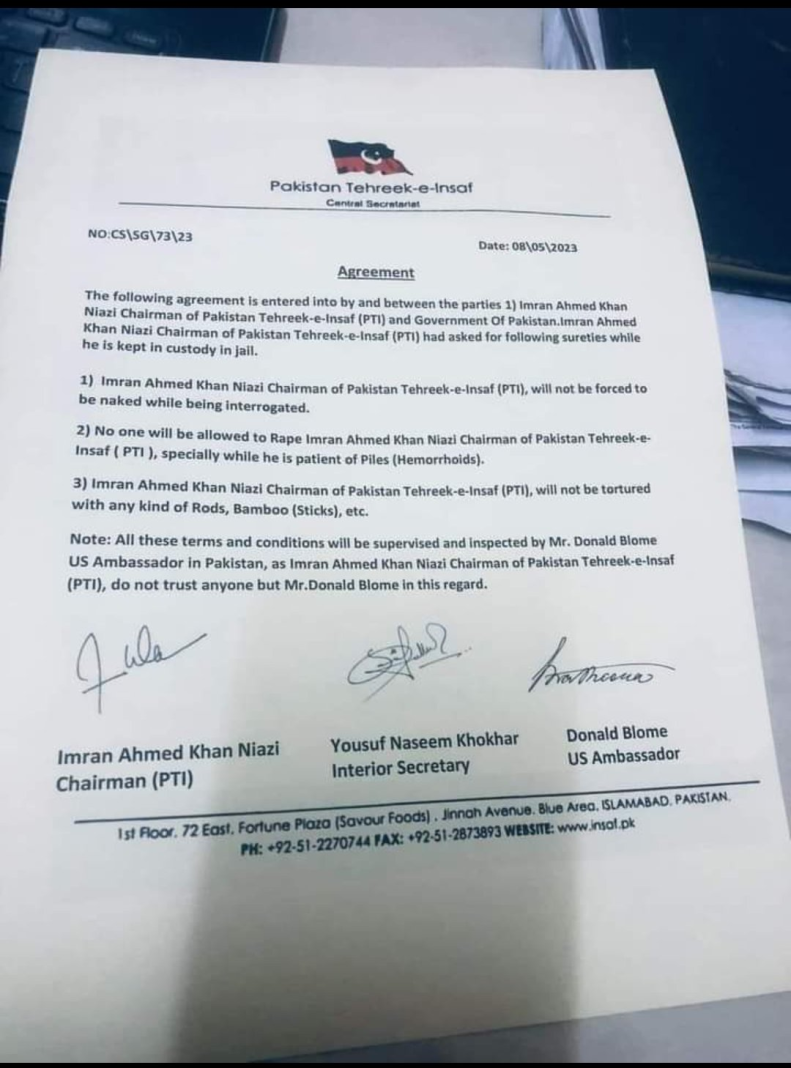
Was there an agreement signed that nobody will strip Imran Khan and rape him while in custody because he has piles: What we know

Former Pakistan Prime Minister and PTI chief Imran Khan was arrested in Islamabad on 9 May. After his arrested outside Islamabad High Court, an ‘agreement’ between him and the Pakistan government has appeared on social media, which purportedly has three conditions under which Imran Khan was arrested.

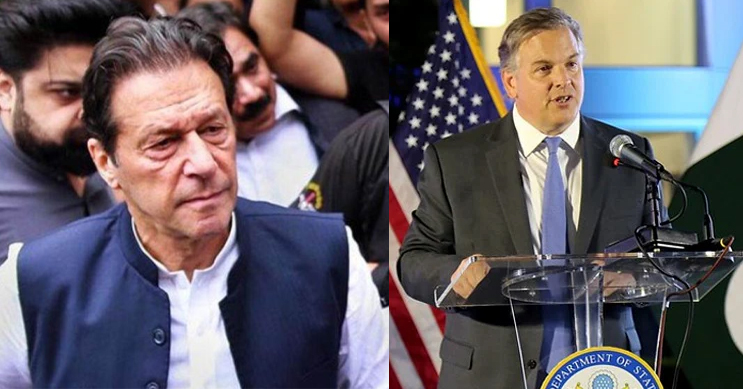
According to the ‘agreement’ signed on the letterhead of the Pakistan Tehreek-e-Insaf party, Imran Khan asked for three sureties while he is kept in jail. According to it, he will not be stripped naked, not raped as he is a Piles patient, and will not be tortured which any penetrating items like rods, bamboo etc. Moreover, it states that Donald Blome, US Ambassador to Pakistan, will supervise and inspect the implementation of these terms, as the ‘agreement’ claimed that Khan trusts only Blome and nobody else in this regard.

The alleged ‘agreement’

The three conditions as set out in the ‘agreement’ are as follows:

1) Imran Ahmed Khan Niazi Chairman of Pakistan Tehreek-e-Insaf (PTI), will not be forced to be naked while being interrogated.

 2) No one will be allowed to Rape Imran Ahmed Khan Niazi Chairman of Pakistan Tehreek-e-Insaf (PTI), specially while he is patient of Piles (Hemorrhoids).

3) Imran Ahmed Khan Niazi Chairman of Pakistan Tehreek-e-Insaf (PTI), will not be tortured with any kind of Rods, Bamboo (Sticks), etc.

It then adds as a note, “All these terms and conditions will be supervised and inspected by Mr. Donald Blome, US Ambassador in Pakistan, as Imran Ahmed Khan Niazi Chairman of Pakistan Tehreek-e-Insaf (PTI), do not trust anyone but Mr. Donald Blome in this regard.”

The ‘agreement’ was signed by Imran Khan, Interior Secretary Yousuf Naseem Khokhar and US Ambassador Donald Blome.

While many people are sharing this ‘agreement’ as real, it has been confirmed that it is fake and fabricated, and no such agreement was signed.

Geo News of Pakistan has said that it is fake, and no such agreement was signed. Geo Fact Check, the fact-checking arm of the media house, confirmed that the agreement is fabricated, citing officials. “An official privy to the development told ??? ???? ?????, on the condition of anonymity, that no such agreement was signed between Khan and the U.S. ambassador,” tweeted Geo Fact Check.

Geo Fact Check also added that Yousuf Naseem Khokhar, who signed the ‘agreement’ as the interior secretary, retired on March 7, while the ‘agreement’ is dated May 8. The retirement of Khokhar was reported in Pakistani media, with images of a farewell ceremony held by the interior ministry where Interior Minister Rana Sanaullah and senior officials of the ministry were present.

The arrest of Imran Khan has led to massive unrest and riots by his supporters in Pakistan. The protesters stormed military buildings, ransacked the residence of a top army general in Lahore, and set ablaze state buildings and assets in other places in the country. The former PM has been remanded to Sialkot Court for 30 days.

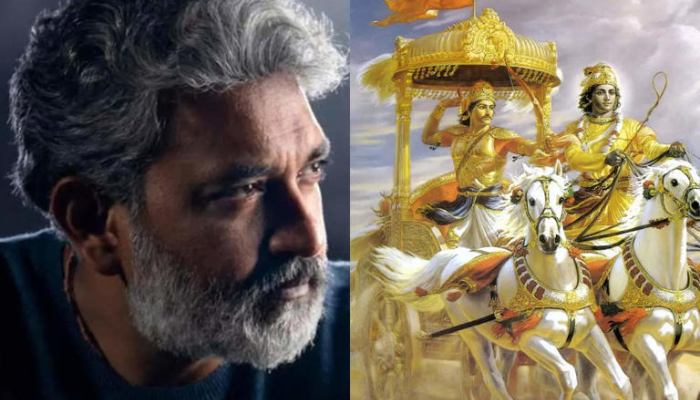
I can only assume that it would be a 10-part film: SS Rajamouli on his dream of bringing Mahabharat to the big screen

The renowned filmmaker SS Rajamouli recently opened up about his long-held desire to make a movie based on the Indian epic Mahabharat. The director, who has been riding high on the huge successes of his movies, RRR and Baahubali, has previously referred to it as his dream project.

However, now he has disclosed at an event that if given the opportunity to make a film on the classic, he would like to split it into 10 parts in order to truly do justice to it. Furthermore, he emphasised that he wants to make it for himself more than anything else.

“If I get to the point of making Mahabharat, it would take me a year just to read the versions of Mahabharat. At present, I can only assume that it would be a 10-part film,” he shared while speaking with his brother-in-law Dr AV Guruva Reddy.

“Every film I make, I feel that I’m learning something to ultimately make Mahabharat. So that’s my dream and every step is towards that,” he remarked while referring to it as the aim of his life.

Rajamouli stated that he would put his own spin on the original. He also mentioned that he wouldn’t begin casting until he had finished writing the script. “I know people have made lists of who should play who in the project. But I will decide my characters only after I write my version of Mahabharata,” he pronounced in an interaction with a news channel.

When asked about Mahabharat, he responded, “The characters that I write for my Mahabharat will not be the same as you’ve seen or read before. I will tell Mahabharat in my own way. Mahabharat (story) will be the same, but the characters will be enhanced and the inter-relationships between the characters will be added.”

Mahabharat was first turned into a TV show in 1988. The original airing consisted of a total of 94 episodes and was broadcasted from 2 October 1988 to 24 June 1990 on Doordarshan. It was produced by B. R. Chopra and directed by his son, Ravi Chopra. It featured an ensemble cast including Nitish Bharadwaj, Mukesh Khanna, Roopa Ganguly, Puneet Issar, and Pankaj Deer among others in the lead and supporting roles. Mahabharat became one of the most successful television series in Indian television history.

Mahabharat was recreated and broadcast on Star Plus in 2013 by television producer and director Siddharth Kumar Tewary. It consisted of 267 episodes ad ran from 16 September 2013 to 16 August 2014.

It is regarded as the costliest series ever launched by the channel and one of the costliest Indian television programs, being the first Indian television show to be made on a budget of more than ₹100 crores.

Saurabh Raaj Jain, Shaheer Sheikh, Pooja Sharma, Aham Sharma, and Arpit Ranka were among the lead cast members. The show became extremely popular and topped TRP (Target Rating Point) charts throughout its run. It also earned a huge fan following abroad and as a result, the prominent characters from the show had been called to Indonesia for a special event.

Watch the entire interview below:

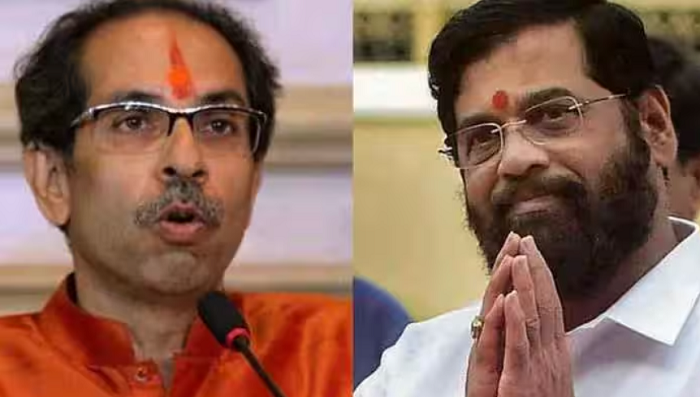
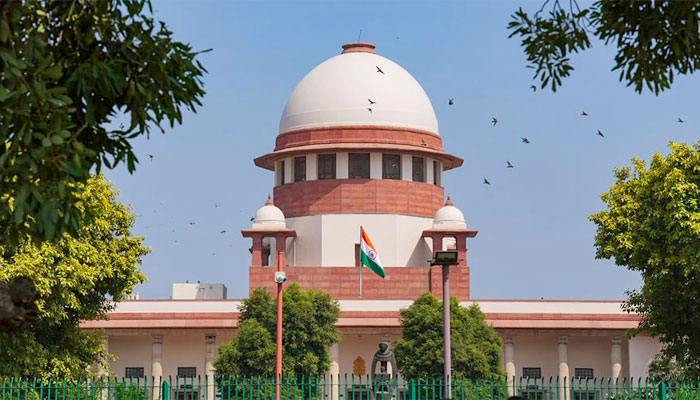
Supreme Court says can’t restore MVA govt since Uddhav Thackeray resigned voluntarily, finds fault in decisions of governor and speaker

On Thursday, the Supreme Court of India held that it cannot order the restoration of the Maha Vikas Aghadi government in Maharashtra as former CM Uddhav Thackeray had resigned without facing a floor test. The Court also said that the then Governor was right in inviting Eknath Shinde-led coalition to form the state government as former Chief Minister of Maharashtra Uddhav Thackeray had already resigned.

“Petitioners argued for restoration of status quo ante. However, Thackeray did not face the floor test. Had Uddhav Thackeray not resigned, the status quo could have been restored,” the Court said.

The Court meanwhile also noted that the then Governor’s decision for the floor test was wrong and the speaker was wrong in appointing a whip of the Eknath Shinde group. The court noted that there was no objective material to doubt the majority of the govt to call for a floor test as nobody had filed any no-confidence motion against the govt. The Constitution Bench led by CJI DY Chandrachud said that dissidence in Shiv Sena didn’t warrant a floor test unless there was a no-confidence motion. The court also said that Devendra Fadnais and 7 MLAs could have moved a no-confidence motion, but they didn’t do it.

Referring to former Maharashtra governor Bhagat Singh Koshyari, the Court said, “Governor ought not to have relied on the letter. The letter did not indicate that Uddhav Thackeray lost support. Exercise of discretion by the Governor was not in accordance with the Constitution.”

“Nothing in any of the communications relied on by the Governor indicated that the dissatisfied MLAs wanted to withdraw support to the government. Neither the Constitution nor the law empower the governor to enter the political arena and play a role either in inter-party or intra-party disputes,” it added further stating that floor test cannot be used to resolve internal party disputes.

The bench also ruled that the decision of the speaker to appoint Bharatshet Gogawale as the whip of Shiv Sena was illegal, as the speaker didn’t identify who was the authorised whip of the party, Sunil Prabhu or Gogawale. The court said that the argument that only the legislative party can appoint the whip is wrong as it will relink the legislative party from the political party.

The constitution bench further ruled that the Election Commission can’t be stopped from deciding the symbols of the two factions of the Shiv Sena. In a significant comment, the court said that after a split, not faction can claim to be the original party. “No faction or a group can argue that they constitute the original party in defence of the disqualification proceedings. The defence of split is no longer available under the tenth schedule,” the court said.

The Supreme Court decided to refer the “Nabam Rebia” decision to a larger bench. This will decide whether a speaker can disqualify MLAs after a notice for removal of the speaker has been moved. However, the court noted that this will not have an impact on the current issue.

The constitution bench delivered verdicts on a number of petitions, including one filed by Shiv Sena UBT head Uddhav Thackeray to disqualify 16 MLAs from the Shiv Sena group led by Eknath Shinde, including Maharashtra head Minister Eknath Shinde, who rebelled against him. 

The Shinde faction meanwhile happened to welcome the decision given by the Supreme Court saying that now the state can have a stable government. “This is a big relief to the Shinde government in Maharashtra. Now the State will get a stable government. We welcome Supreme Court’s decision,” said Rahul Ramesh Shewale of Shiv Sena (Shinde faction) on May 11.

Following the Shiv Sena party conflict, members from both sides had filed petitions on a range of issues, including the legality of the then Governor Bhagat Singh Koshyari’s order to Uddhav Thackeray to undergo a floor test. Eknath Shinde had filed a further petition with the Supreme Court in relation to the notifications that the then Deputy Speaker had issued about the alleged defection under the tenth schedule of the Constitution against the rebel MLAs associated with his faction.

Notably, the Election Commission in February this year designated the Shinde group as the “real Shiv Sena”, some eight months after the insurrection took place, in light of the ongoing divide that began in June 2022.

In its final ruling, the EC declared the Shiv Sena party’s present constitution to be undemocratic and ordered that the Shinde group, which lost contact with the rest of the party in June 2022, get the official name of Shiv Sena and the emblem. “It has been mutilated to undemocratically appoint people from a coterie as office bearers without any election at all. Such party structures fail to inspire confidence.”

In a statement explaining its decision, the polling organisation stated that it had done a “test on majority” since the group of MLAs from the Shinde group received roughly 76% of the votes cast for the 55 Shiv Sena candidates who won the 2019 Maharashtra Assembly Elections. Furthermore, it stated that just 23.5% of the vote went to the Uddhav Thackeray side.

The battle for the ‘real’ Shiv Sena

The saga first began in June last year when the BJP won five out of the ten seats up for election to the Maharashtra Legislative Council. As a result of the Shiv Sena’s surprise at the BJP’s triumph, there are now splits inside the MVA administration. Days later, Eknath Shinde, a senior Shiv Sena figure and dissident MLA, departed with 11 other MLAs and departed for Surat in the BJP-ruled state of Gujarat. On the same day, Uddhav held a meeting where about 10 to 12 other MLAs were absent and unable to attend. In order to prevent their loss, Shiv Sena quickly booked rooms for the remaining MLAs at several Mumbai hotels. Uddhav was informed by Shinde that he had the backing of more than 40 MLAs, and he was pushed to sever the partnership.

The opposing side then crowned Eknath Shinde as head of the Shiv Sena legislative party. Shinde then travelled to the BJP-ruled states of Gujarat, Assam, and even Goa with 40 Sena MLAs in tow before claiming the backing of the saffron party to establish the Maharashtra government. On the other side, Thackeray was only able to get the backing of 15 MLAs.

Shiv Sena filed a plea, and Narahari Zirwal, the deputy speaker of the Maharashtra legislature, issued a disqualification notice to 16 dissident lawmakers. On that day, Uddhav relocated from his official home in south Mumbai, Varsha, to Matoshree, the Thackeray family’s private villa in the Bandra neighbourhood.

The deputy speaker sent a disqualification notice to the rebel leader Eknath Shinde and his MLAs after they filed to the Supreme Court to dispute the denial of the no-confidence motion against the deputy speaker. Uddhav fired Shinde from his position as “Shiv Sena leader” in the midst of the escalating internal conflict.

It was predicted that Shinde and the dissident MLAs will lend their allegiance to the saffron party after receiving backing from the BJP. To everyone’s amazement however on June 30, Shinde was sworn in as the state’s chief minister while Devendra Fadnavis of the BJP was sworn in as the deputy chief minister. Thackeray resigned from his position after the Supreme Court declined to grant a stay of Governor Bhagat Singh Koshyari’s order for the MVA administration to conduct a floor test in the Assembly.

Rahul Narvekar of the BJP was chosen as Speaker of the Maharashtra Legislative Assembly at a special two-day session of the oganized at the Assembly after the formation of the new governement. The new Maharashtra Chief Minister Shinde won the crucial floor test in the state Assembly with 164 votes polled in favour of him, and 99 against.

On October 8, the poll Commission issued a provisional order suspending the Shiv Sena’s ‘bow and arrow’ poll emblem ahead of the November 3 Andheri (East) Assembly byelection. The flaming torch (mashal) and the moniker ‘Shiv Sena — Uddhav Balasaheb Thackeray’ were awarded to the Thackeray group by the EC. The name ‘Balasahebanchi Shiv Sena’ and a shield with two swords were given to Shinde’s organisation.

Later in December, the Delhi High Court reserved its order on an appeal by former Maharashtra Chief Minister Uddhav Thackeray challenging a single judge’s decision dismissing his plea against an Election Commission interim order freezing the Shiv Sena name and election symbol. According to Thackeray, the sole judge’s ruling from November 15, by which it also instructed the EC to speed up the proceedings, was erroneous and subject to being overturned.

In February this year, the ECI stated that the Eknath Shinde group must continue using the party name ‘Shiv Sena’ and the party emblem ‘Bow and Arrow.’ Also, the Shiv Sena party’s legislative office at Vidhan Bhavan was turned over to the group of CM Eknath Shinde. The office was reported to be sealed after the beginning of the conflict in the Shiv Sena.

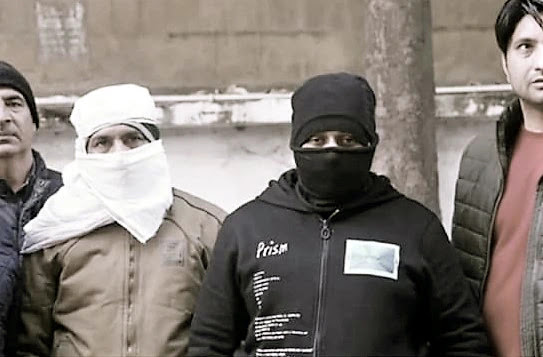
Yakub and Naushad, who had beheaded a Hindu in the Bhalswa Dairy area, were tasked by ISI to execute a rerun of 2000 Red Fort attack: Delhi police

The Delhi police on Wednesday, May 10, filed a chargesheet against Bhalswa Dairy murder accused Jagjit Singh Jassa alias Yakub and Naushad under the Unlawful Activities Prevention Act (UAPA). The police said that the duo had been tasked by the K2 (Kashmir-Khalistan) desk of Pakistan’s Inter-Services Intelligence (ISI) to carry out a rerun of the 2000 terrorist attack on the Red Fort ahead of Republic Day.

Yakub and Naushad were arrested from the Bhalswa Dairy area of Jahangirpuri in Delhi on January 12 this year after the police had recovered a dismembered body of a man in a drain in the area.

The report by TOI quoted some sources as saying that the chargesheet has been filed under UAPA and under various sections such as murder, criminal conspiracy, and destruction of evidence in the court of special judge Sanjay Khanagwal.

The Delhi police in their chargesheet confirmed that Yakub and Naushad, who were out on parole, were at the final stage of attacking the Red Fort and carrying out five targeted killings, including two Sadhus in Haridwar before they were apprehended by the Delhi Police Special Cell.

The accused killed the Hindu man in the Bhalswa Dairy area in Delhi to impress their terror “bosses” in Pakistan

It may be recalled that after the two terrorists were arrested on January 12, 2023, they confessed that they had killed a Hindu man, chopped his body, and sent the video of the murder to their handlers in Pakistan. While the aim of killing the Hindu man was to spread communal violence before Republic Day, they shared the video of the beheading to impress their handlers across the border with their capability.

The Delhi police further revealed that the duo were also planning to target some Shiv Sena leaders in Punjab in the coming month.

Notably, the Hindu man whom they had beheaded was identified as one Raj Kumar. The police revealed that the duo had specifically chosen him because he had a Shiv tattoo. According to the chargesheet, Raj Kumar was lured to the duo’s rented house in northwest Delhi and beheaded with a machete.

The chargesheet added that Yakub and Naushad then chopped Raj Kumar’s body into eight pieces and filmed the entire act. The video was sent to their foreign-based handlers, including an ISI operative, through the chat application Signal, the cops said.

Naushad and Yakub arrested by Delhi police special cell

On January 12, 2023, the Special cell of the Delhi police arrested the two — identified as Jagjit Singh (29) and Naushad (56) — from the Bhalswa Dairy area of Jahangirpuri in Delhi. The police recovered two hand grenades, three pistols, and 22 live cartridges from the suspects. The police also found traces of blood at their house, following which the two were questioned.

Further, Delhi Police said it has information that Jagjit Singh has links to Khalistani terrorist Arshdeep Dall. He is also a member of the notorious Bambiha gang and had been receiving instructions from anti-national elements based abroad, the city police said, adding that he is also a parole jumper in a murder case in Uttarakhand.

Naushad is also associated with Harkat-ul-Ansar (HUA), a terror group that is based in Pakistan and primarily operates in Jammu and Kashmir. He has been convicted of two counts of murder and has also served a 10-year sentence in connection with a case under the Explosive Act.

During their questioning, they confessed to their terror activities, and when the police searched their residence and nearby areas, the chopped-up body was found in a drain.

The police then revealed that the duo was given four to five targets by their Pakistan-based handler Sohail, who is associated with the terror outfit Lashkar-e-Taiba and linked to Pakistan’s Inter-Services Intelligence, ISI. The targets included a local RSS worker, a senior Punjab-based Shiv Sena party leader, and a Sikh group member who is opposed to the Khalistan movement. Sohail allegedly informed the duo that he would transfer money to them after each murder.

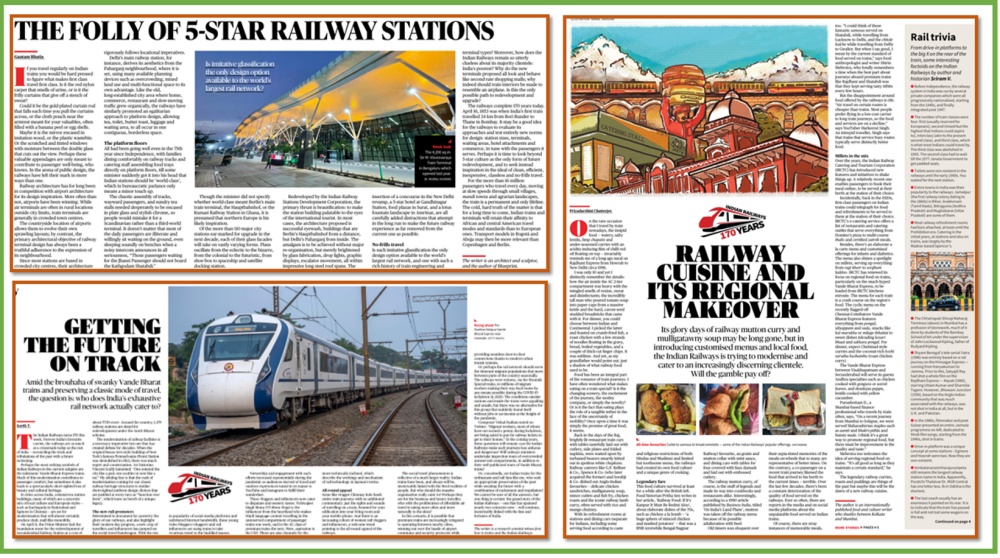
170 years of Indian Railways and The Hindu: 3 racist, elitist op-eds that denigrate Indians who use Railways simply to peddle anti-Modi agenda

On April 16, 2023 Indian Railways completed 170 years. In their Sunday magazine published on the same day, The Hindu published three long articles. The disdainful tone and the absence of coherence made me wonder how these were published in the first place. The answer lay in the common theme across all three articles. 

Coverage in The Hindu

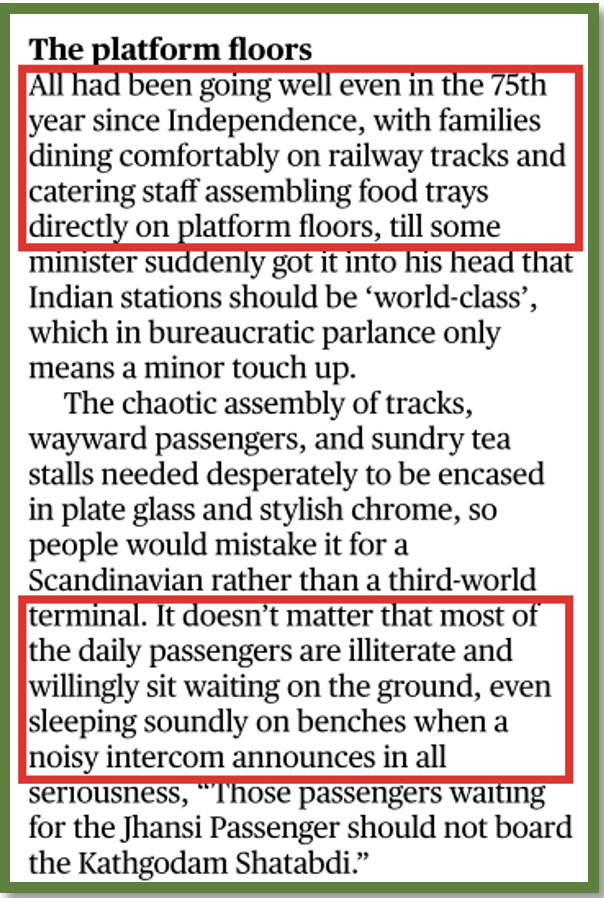
The article “The Folly of 5-star Railway Stations” was written by Gautam Bhatia who is “an architect and sculptor and the author of Blueprint”. Gautam Bhatia is very angry. After reading the entire article, if you think Gautam Bhatia is perhaps angry because Modi didn’t award him the task of redesigning the railway stations (because he is an architect), I really wouldn’t blame you for reaching such a conclusion.  

It’s one thing to be angry. It’s a different thing to be racist. And it’s a whole new thing to get your bigoted piece published in a paper like The Hindu. Do you think my words are harsh? Sample for yourself what he wrote:

Gaurav Bhatia in The Hindu article

Gautam Bhatia tells us that when families are comfortable dining ON the railway tracks, how dare Modi decides to not allow them to do that? Gautam Bhatia is angry that when the “daily passengers are illiterate and willing sit on the ground”, then who the hell is Modi to provide them better facilities? Why must Modi even think that these “illiterates” deserve a better life? The blatant racist overtures are not just limited to poor India but even extend to Ghana in Africa, Bogota in Columbia and Abuja in Nigeria. Gautam Bhatia asserts in the firmest of tones that “For a long time to come, Indian trains and terminals will retain their affinity to African and central American standards than to European ones”.  

At one point in his article, he criticises the addition of food plazas and 5-star hotels in the station upgrades; at another point, he asks why are the Railways not considering “hotel attachments” while upgrading. The hypocritical and condescending article ends with His Lordship telling us that the 16 million passengers who travel daily do not deserve their trains and stations to have cleaner interiors, better seats, malls, escalators, graphic displays etc. The racist tone of the entire article would have made any editor reject it for publication. But this article passed the ultimate test for The Hindu – it criticizes Modi’s plans in strong English. 

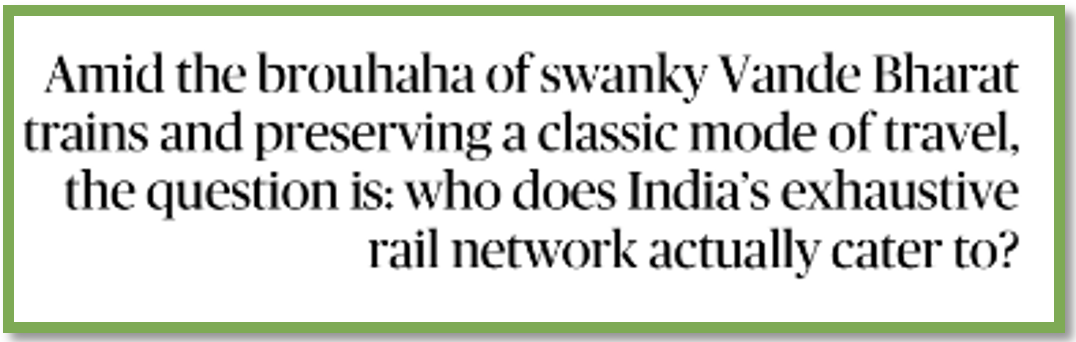
The author of “Getting the Future on Track” is a certain T. Kartik. He is a “research scientist whose first love is trains and the Indian Railways”. Now, that’s an interesting bio to boast of. I was looking forward to reading some nice stories or unknown trivia about our Railways from the guy whose “first love is trains and the Indian Railways”. Instead, what we got was an article with a collection of disjoint thoughts that ranged from berating the plan to upgrade our railway stations to questioning the need for Vande Bharat trains to even quoting vloggers and Vishal Dadlani! 

The author wanted to show his command on the English language (using words like zeitgeist, talismanic, wanderlust, esoteric etc) and knowledge about art historians, while wanting to berate efforts to upgrade our infrastructure. He sounded severely upset that “colonial-era station buildings are all set for modernisation that will almost certainly produce drab, mall-like monoliths” He cites the example of 2 stations to tell us how awesome their structure is. The plan obviously is not to demolish the structures but Karthik makes it sound like the Kacheguda station (in Hyderabad) will lose the entire building! A mention is made Prime Minister Modi laying the foundation for upgrading the Secunderabad railway station with nearly 720 crores. I get a feeling that the author is from Hyderabad given how he gave examples of 2 stations from Hyderabad itself. If you are from Hyderabad and if your “first love is trains”, it really beats me why you cannot see the desperate need for the always crowded Secunderabad station to be upgraded with better infrastructure.

The author, Karthik, then suddenly and mysteriously jumps from the topic of modernisation to how vloggers have begun to capture train journeys from across India and are catering to the “wanderlust” of travel-starved people during COVID times! The topic consumes multiple paragraphs and ends with quoting Vishal Dadlani from the year 2020 and then mysteriously he moves to question the need for Vande Bharat trains! Someone who claims to love Indian Railways actually posed the question of “Who does Indian Railways cater to?” just because he doesn’t like Vande Bharat trains! 

Reading this disjoint piece gives the impression that the only reason it was published is that it passes the ultimate test for The Hindu – it criticizes Modi’s plans in strong English. 

The lead article, “Railway Cuisine and it’s regional makeover” was written by Priyadarshini Chatterjee who is an “internationally published food and culture writer”. She starts her lengthy article by telling us – “On the rare occasion that I travel by train these days”. Wouldn’t that be an automatic disqualification to write about Railways in the first place? You don’t travel by train anymore but have been commissioned to write a lengthy piece on food in Railways? 

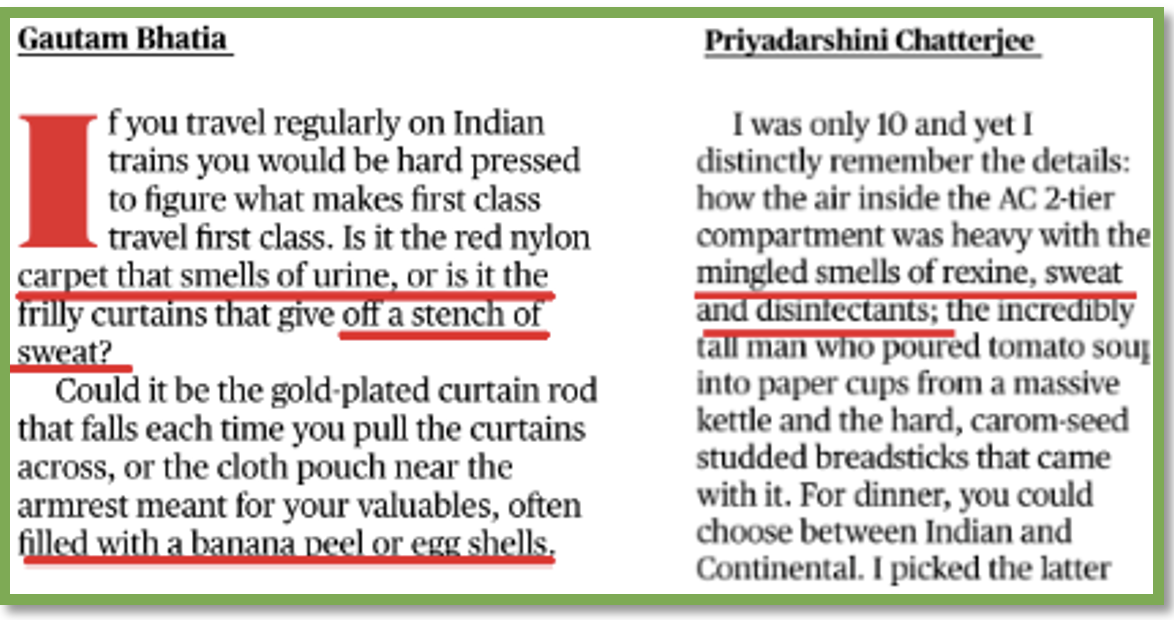
She goes back in time all the way to 1996 when as a 10-year-old, she travelled in the 2nd AC of Rajadhani. Her condescending description of the coach also reminded me of Gautam Bhatia’s filthy description of the first-class coach. See below for their language. 

Coverage in The Hindu

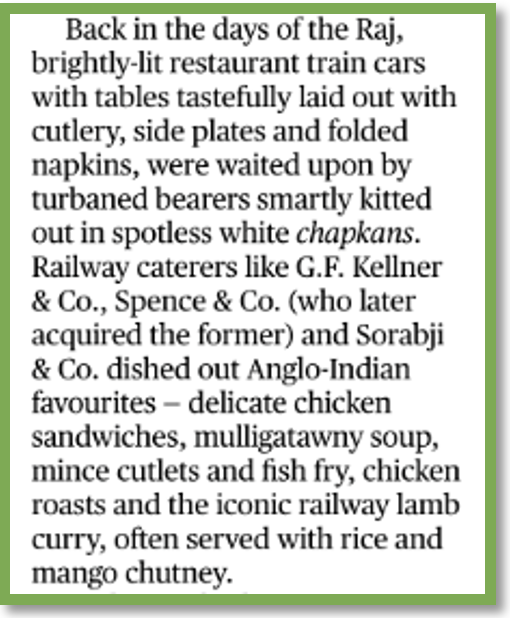
Are these even their real experiences in the first place? Or did they just write these to make them sound like they’ve descended from another planet and come here to insult the people of India? Priyadarshini Chatterjee’s disastrous article continues by glorifying how awesome the food was in the Railways during the British era. 

Coverage in The Hindu

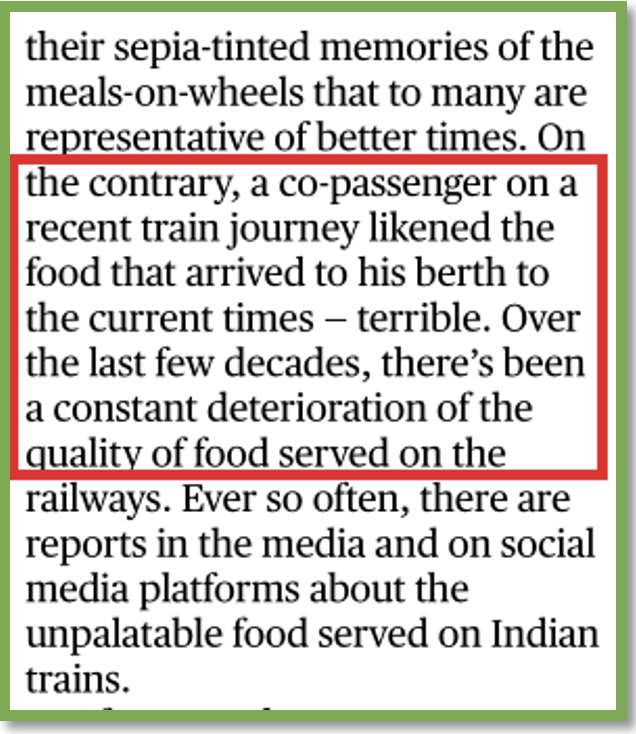
We are then told how the food quality has degraded over the years with only the Railway Mutton Curry being the saving grace and how even that was removed from the menu in the 90s! The article, which began with the author telling us that she rarely travels on the train, now suddenly deviates to what a co-passenger told her during a “recent journey”.

Coverage in The Hindu

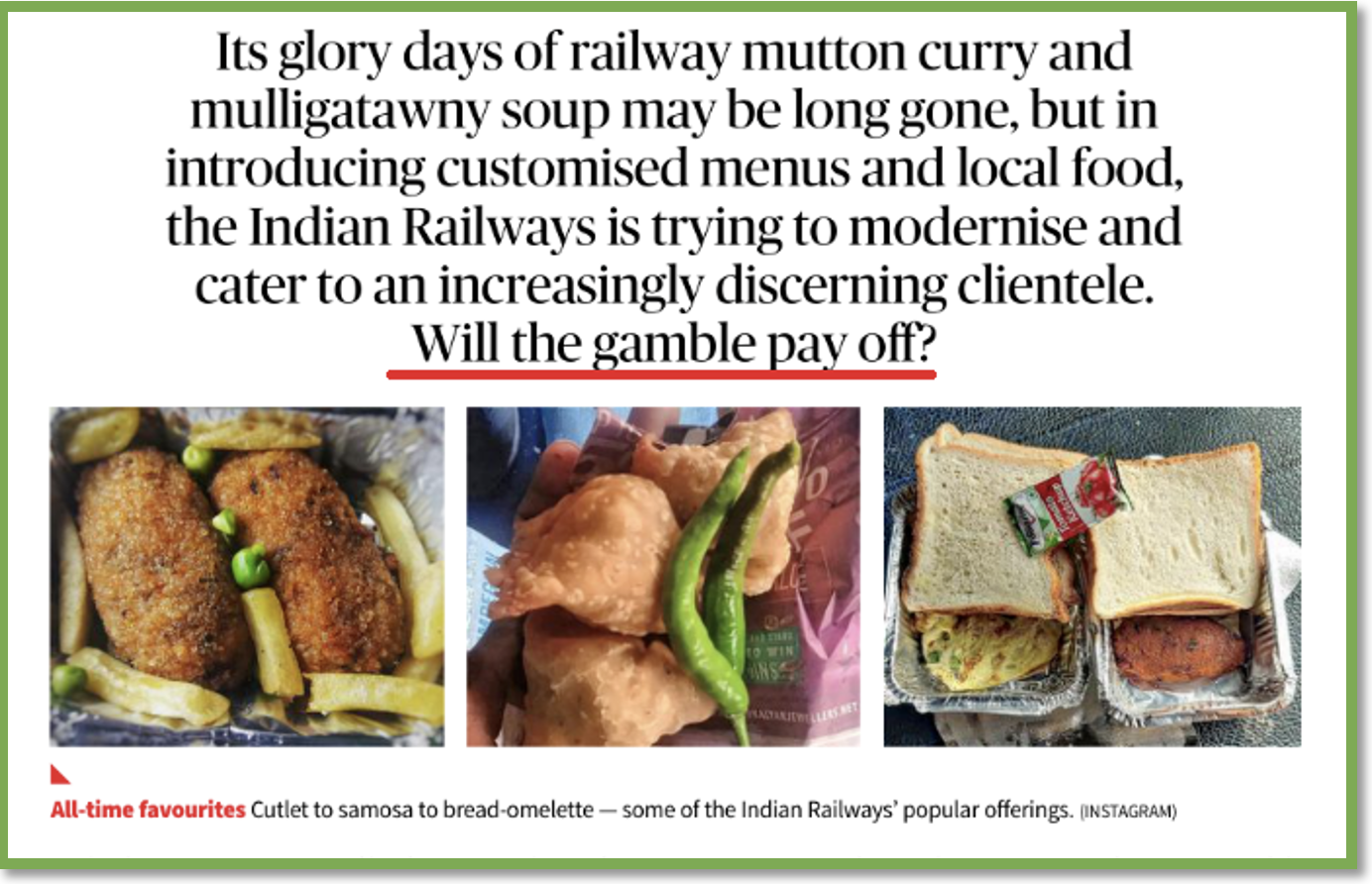
What exactly is “constant deterioration of quality”? If you are an international food author, shouldn’t you atleast be able to explain these simple things? Isn’t it amazing how these people find cab drivers and co-passengers as a convenient cover-up for their own views? Isn’t it amazing that these people don’t have the courage to even own up to their views? The article which began with a vivid description of the British-era food service ends with the detailing of menu in various Vande Bharat trains and asks the weirdest question – “Will the gamble pay off?”

Coverage in The Hindu

How is serving Indian Food on Indian trains a gamble in the first place? Why are these folks so upset that we are making attempts to popularise the variety of our awesome food in our own country? What is this obsession with the British colonial era offerings of food and infrastructure? 

Plus, what is with the horrible style of writing in the first place? Train journeys for crores of us are about some really wonderful memories. If the author has to talk about food on the train, why restrict herself to the 2nd AC compartment? If I ever to write about food in Railways, I will talk about the Idli I had in Gudur station; the bread omelette I had in Vijayawada Station; the Aloo Bonda I had aboard the AP express; the Upma Pesarattu I had in Secunderabad station; the dosa in Kakinada station; and what not! I will write about the amazing bonhomie amongst the passengers when they all open packed boxes from home and share their tamarind rice, chapati curries, and biryanis with strangers! 

I am really proud that we are upgrading our railway stations with modern facilities; not sad that some random British heritage will be lost. I am really proud that we citizens will get to have better experiences when they walk into crowded railway stations. I am definitely not crying that those poorer than me cannot be treated as my equals. If I were to complain, I would complain about the overcrowded trains in certain routes (and why we are not able to add more in those routes); I would complain about the fluctuating punctuality of the trains. 

It’s really strange that The Hindu has provided space to racist authors who don’t have a single clue about Railway travels to write so disparagingly low about our fellow citizens and their aspirations. Even by The Hindu’s low standards when it comes to anything Anti-Modi, these articles were an insult to our intelligence. The only criteria for publication seemed that all of them were anti-Modi in their undertone. Indian Railways will rise to even better heights while this batch can continue to crib and live in their British era. 

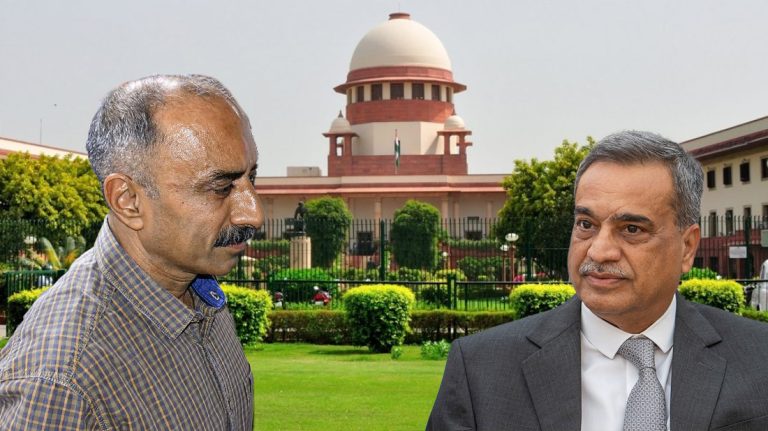
Attempt to indulge in forum shopping and bench hunting: Supreme Court rebukes sacked IPS officer Sanjiv Bhatt for plea seeking recusal of a judge from his case

The Supreme Court on Wednesday rejected Gujarat’s sacked IPS officer Sanjiv Bhatt’s request for a judge to be recused from hearing a case involving his conviction and life sentence in a custodial death case, concluding that it was an attempt made with a mala fide intention to engage in forum shopping and bench hunting. Sanjiv Bhatt had sought the recusal of Justice M R Shah, which was rejected by a bench comprising Justice M R Shah and Justice C T Ravikumar.

The court was hearing a special leave petition filed by Bhatt seeking to add additional evidence in the appeal filed by him in Gujarat High Court challenging his conviction in a custodial death case. In the same SLP, he had sought recusal of Justing Shah from hearing his case, but the Supreme Court judge refused to recuse.

The bench remarked that earlier a bench headed by Justice M R Shah had heard a special leave petition of Bhatt related to the same FIR, and no such objection was raised and no such appeal was made at that time. They highlighted that the prayer of recusal was not invoked despite the current special leave petition being notified and addressed numerous times.

“When the special leave petition is taken up for further hearing and actually being heard, the letter (for recusal) is pressed into service, which is nothing but an attempt on the part of the petitioner to avoid the Bench, which is required to be deprecated,” the bench asserted. 

They emphasised, “We are of the opinion that the request of recusal is nothing but an attempt to indulge in forum shopping and bench hunting and to avoid the bench with mala fide intention.” 

Senior attorney Devadatt Kamat, representing the former officer, sought the removal of Justice M R Shah on the grounds that, in 2011 when the High Court decided a case arising from the same FIR, the court issued strict guidelines against the petitioner’s conduct due to his use of delay tactics.

“Justice is not only to be done but also seen to be done. Judicial propriety would demand that your lordship may not hear this matter,” he submitted.

“Earlier, merely because some proceedings might have been heard by one of us before the High Court in connection with the present matter and/or proceedings and some observations might have been made against the petitioner on the delaying tactics, cannot be a ground to accede to the request made by the petitioner,” the bench proclaimed.

Both senior lawyer A N S Nadkarni and senior advocate Maninder Singh, speaking on behalf of the original complainant and the Gujarat government respectively, fiercely rejected the motion, asserting that it is nothing more than a manoeuvre to manipulate the legal system.

“He is effectively saying that you are biased against me. That is a dangerous submission, with no bona fides,” charged Maninder Singh. He stressed that such behaviour violates the court’s authority and added that every bench that has heard Sanjiv Bhatt’s case, in both the Supreme Court and the High Court, commented adversely about him.

“Judicial orders can never be a subject matter of bias. If that is the case, a party will say that a judge should not hear a matter because of an interim order passed in the case,” argued A N S Nadkarni. He postulated the mere fact that a judge has commented in a previous case against a party will not amount to bias.

They reported that previously when the petitioner came before this court in a case stemming from the same FIR and involving an order against the High Court’s denial to suspend the sentence, no similar demand was made.

The ex-IPS has filed the Special Leave Petition through Attorney Aljo Joseph in an effort to overturn the High Court’s ruling from August 24, 2022, which barred him from submitting more material in support of his appeal under Section 391 CrPC.

After being found guilty on June 20, 2019, in a case involving a three-decade-old custodial death of Prabhudas Madhavji Vaishnani in 1990, Sanjiv Bhatt was given a life sentence by a court in Jamnagar. The court also denied a special leave plea challenging the High Court’s decision to depose three doctors in the case.

“Having gone through the impugned order passed by the High Court, we see no reason to interfere with the same in the exercise of powers under Article 136 of the Constitution of India,” the bench established.

“Any observations by this Court on the deposition of the aforesaid 3 witnesses may ultimately affect the case of either party in the Appeal, which is yet to be considered by the High Court. Therefore, the Special Leave Petition stands dismissed,” the court announced.

“It is observed that the High Court to finally decide and dispose of the appeal strictly in accordance with law and on merits and on re-appreciation of the entire evidence on record which were considered by the trial Court and without in any way influenced by any of the observations made by the High Court in the impugned order so far as the cause of death is concerned and any observations made by the High Court in the impugned order shall be confined to deciding the application under Section 391 Criminal Procedure Code Only,” the bench pronounced.

“With this, the present Special Leave Petition stands dismissed/disposed of,” the top court concluded.

In 2015, Sanjiv Bhatt was removed from the police service, on the grounds of unauthorised absence. In October 2015, the Supreme Court quashed his plea for constituting a special investigation team (SIT) for cases filed against him by Gujarat Government. The court lifted a stay on his trial in these cases and asked him to face prosecution. 

The court observed, “Bhatt was in active touch with leaders of rival political parties, was being tutored by NGOs, was involved in politics and activism of creating pressure, even upon the three-judge bench of this court, amicus and many others.”

In the custodial death case, had submitted a request to the trial court to present the expert testimony of one doctor to support his claim that the death was not caused by the coerced sit-ups the police made him perform. The application had been turned down by the trial court.

He pitched to introduce the expert testimony in the criminal appeal before the Gujarat High Court in an application made according to Section 391 of the Code of Criminal Procedure (CrPC). A division bench of Justices Vipul M. Pancholi and Sandeep N. Bhatt dismissed the application on August 24, 2022.

He filed an affidavit in the Supreme Court in April 2011 charging then-Chief Minister Narendra Modi of involvement in the riots of 2002. On February 27, 2002, the day of the communal riots, he was alleged to have been present in a meeting called by the latter where it was ordered that the state police not pursue criminal charges against the violent offenders.

However, the Special Investigation Team (SIT), which was established by the court, cleared the incumbent prime minister Narendra Modi of all the accusations.

Sole Indian against 49 Pakistanis, all of them hostile: What Ajit Doval’s son Shaurya said about his schooling in Pakistan

It is now a known fact that the National Security Advisor (NSA) Ajit Doval stayed in Pakistan for over six years, however, it is a lesser-known fact that his son Shaurya Doval, the founder-director of Indian Foundation, had studied in Pakistani schools between 1981 to 1987. It was when his father Ajit Doval was posted in the Indian High Commission in Islamabad.

Shaurya Doval talked about his schooling in Pakistan during an interview with The Lallantop. Shaurya Doval stated that he attended school across the country starting from Mizoram. Following that, he spent some time studying in Sikkim and then in Pakistan. Shaurya stated that he lived for roughly 6-7 years in Islamabad, Pakistan.

When asked about the security situation at the time, he said, “The crisis in Afghanistan was ongoing. Pakistan was distracted by what was happening in Afghanistan and the Punjab crisis was about to start. Due to this, Indian diplomats and their families in Pakistan faced no major security threat.”

When questioned about what was it like studying in Pakistani schools, Shaurya said, “It was just like growing up in any other part of India. The only difference is that you are the sole Indian among fifty other children who are against you.”

Shaurya Doval added that in such a case, a person learns two things in life, the first is to love their country and the second is to fight alone. “Like if a cricket match is going on and 49 boys are on one side and you are alone, nationalism and the ability to fight alone are naturally evoked within,” Shaurya said.

Shaurya Doval was also questioned about what was taught about History in Pakistani schools, to which he said that they are presented with a distorted sense of the reality of who they are and where they are coming from in the school textbooks. For example, Pakistanis are taught that their history begins from 1947, they ignore the history prior to 1947.

“Even if they do teach, they do it in the light of Muslim superiority over Hindus. So the Pakistanis get the wrong notion that before 1947, they were the rulers of India, and after 1947 they carved out Pakistan and are ruling it. So you know, they have a distorted perception of history,” Shaurya detailed.

He further added that the history in Pakistani textbooks starts with the arrival of Mohammad Bin Qasim, they believe that it is Pakistan’s history. “In the Indus Valley Civilisation, they teach Harrappa and Mohejodaro only and skip the history of Mauryan and Gupta dynasties to come straight to Bin Qasim. They have no interest at all in the Cholas”, he added.

Shaurya Doval said that although he made some friends in Pakistan, however, he lost touch with them as there was no access to the internet or any such medium back then. 

Centre has power on order, police and land, NCT of Delhi has power to posts, appoint and transfer officials: SC verdict in Delhi govt vs LG tussle

On May 11, a five-judge Constitution bench led by Chief Justice of India (CJI) DY Chandrachud pronounced the verdict in the Government of NCT of Delhi vs Union of India. In the unanimous judgment, CJI said, “unable to agree with Justice Ashok Bhushan in the 2019 split verdict.” The court cleared that the Centre has power over only three subjects which are order, police and land and gave the Government of Delhi the power to create posts, appoint officials and transfer them.

The matter reached the apex court over administrative control over transfers and postings of civil servants in the national capital. The bench comprising CJI Chandrachud, Justice MR Shah, Justice Krishna Murari, Justice Hima Kohli and Justice PS Narasimha reserved its verdict on the matter on January 18, 2023.

In the judgment, CJI Chandrachud said the bench was unable to agree with the view of Justice Bhushan in the split judgment where he said that the NCT of Delhi has no power at all over services. However, the bench found it necessary to deal with the arguments of the Union that phrase must be read in a restrictive manner. Article 239AA 3(A) confers legislative power to NCTD but not over all subjects. The interest of the Union has to be preserved.”

CJI Chandrachud said added, “Subclause b clarifies that parliament has the power to legislate on any subject of NCTD in any of the three lists. if there is a repugnancy in a law enacted by legislative assembly and union. The one by assembly will be void.”

He further said that the article stipulates that such law shall not be deemed to be an amendment to the constitution and 239AA Sub-clause 3 balances the interests of the NCT of Delhi and the Union of India.

CJI said that the legislative assembly of NCTD embodies the principle of representative democracy. The members of the assembly are elected by the people of Delhi. Thus, Article 239AA must be interpreted in a manner to further the interest of representative democracy.

The court further pointed out that while NCTD is not a full-fledged state, it is empowered to legislate under lists 2 and 3. Article 239AA created a federal govt and this is an asymmetric federal model.

He added though the NCT of Delhi is a Union Territory, a federal entity, It has to be ensured that the governance of states is not taken over by the union. “In a democratic form of govt, the real power of administration must rest on the elected arm of the government,” he said.

CJI pointed out that, “If a democratically elected government is not given the power to control the officers, the principle of triple chain of accountability will be redundant. If the officers stop reporting to the Ministers or do not abide by their directions, the principle of collective responsibility is affected.” CJI said if the officers felt they were insulated from the control of the government that would dilute accountability and affect governance.

The apex court said, “The control over services shall not extend to entries related to public order, police and land.” The court added, “NCTD similar to other states represents the representative form of Government. Any further expansion of Union’s power will be contrary to the Constitutional scheme.” The CJI categorically said that the public order, police and land powers will remain with the LG. He added, “The NCT of Delhi is not similar to the other Union Territories.”

Background of the case

In 2018, a Constitution Bench of the Supreme Court looked into the special provisions under Article 239AA of the Constitution for the National Capital Territory (NCT). The interplay of the peculiar status of the NCT, the powers of the Delhi Legislative Assembly, and the LG were debated during the hearing. The court said in its judgment that the LG could not act independently without the aid and advice of the Council of Ministers. It further added that LG has to work harmoniously with the elected Government of the NCT.

Based on the judgment by the Constitution Bench, appeals were placed before a regular bench of the apex court in regard to the individual aspects, including the services. On April 14, 2019, the 2-judge regular bench comprising Justice AK Sikri and Justice Ashok Bhushan could not agree on the issue of the services under Schedule VII, List II, Entry 41 of the Constitution of India.

The issue that the court considered was if the exclusion of the services relatable to the Entry 41 of List II of the Seventh Schedule from the legislative and executive domain of the NCT of Delhi vide the notification of the Government of India dated May 21, 2015, was unconstitutional and illegal. As the judges differed on their verdict, the matter was referred to a 3-judge bench. However, the bench then referred it to the Constitution Bench after the Centre requested it.

In the arguments on behalf of the Delhi Government, Senior Advocate Abhishek Manu Singhvi said that the elected Government should have the power to create posts, appoint staff and transfer officials. He further said that the exclusion of civil service power from a government negates the purpose of the Government. He claimed the LG office derailed the governance of the NCT. Furthermore, he claimed the officials were not attending the meetings called by the ministers. They stopped responding to the ministers’ calls and disobeyed the ministers’ directions. The officials were getting transferred frequently, which also affected the policy implementation.

SG Tushar Mehta appearing for the Union Government argued that the reason behind the constant friction between the Centre and Delhi government was because of the lack of “political maturity” on the part of the Arvind Kejriwal-led Delhi government. He added that they created a wrong perception that LG was running the show. He further said different ideologies have worked with the Centre harmoniously for several years in Delhi till Kejriwal came as CM. He condemned Delhi CM’s street protest at the time when SC was hearing the matter.

He said, “The entire argument proceeds as if the Central Government is interfering in the legislative and administrative field of a full-fledged “State”, thus, violating the federal structure. The significance of Delhi as a Capital and its control by the State Government is recognized both prior to the Constitution and after the Constitution. Article 239AA is also so structured that while providing for a democratic government in the NCT of Delhi, the major control of the major stakeholder, i.e., the Government of the entire nation, is retaining over the Capital of the country. The entire issue deserves to be viewed keeping this backdrop in mind”.