Wednesday, April 8, 2026
Home Blog Page 2391

Pune: IT Dept raids 6 locations of businessman Aniruddha Deshpande, a close aide of Sharad Pawar, probes tax evasion

On Wednesday, the Income Tax department conducted raids at the official and residential premises of Aniruddha Deshpande, Managing Director of City Corporations and promoter of Amanora Township in Pune, Maharashtra. Raids at the premises of Deshpande, who is a close aide of NCP supremo Sharad Pawar started early morning.

According to the local reports, around eight Income tax official teams have been deployed to conduct raids at the six locations linked to Deshpande in Pune. The IT officials are investigating financial transactions and tax evasion of these companies.

The team broke into the construction company of Deshpande named City Corporations. Along with this, a few teams from the Income Tax Department have been working inside Hadapsar’s renowned Amanora Tower since early in the day.

The Income Tax department’s raid on famous businessman Deshpande has caused a commotion in Pune’s business and political communities as Deshpande is a prominent businessman having close ties with NCP supremo Sharad Pawar. Reports mention that Pawar and Deshpande have known each other for more than 20 years now.

Deshpande, a part-time developer in the early 1990s, met Pawar during a Pune automobile rally. Deshpande had a significant role in the formulation of Pune’s plan of development when Pawar acted as Maharashtra’s chief minister. Deshpande rose to fame as a real estate developer during that time.

Pawar and his family became owners of City Corporation with 16% stock when Deshpande founded it in 2004. Through two businesses, Namrata Films Enterprises and Lap Finance and Consultancy, Pawar is the shareholder of 33.6 lakhs of the 2.07 crore shares in City Corporation, as per reports.

Deshpande was also involved in the promotion of Lavasa City. The city was first visualized by Sharad Pawar. Supriya Sule, Pawar’s daughter, and her spouse Sadanand had stock in Lavasa, as per reports. Deshpande pulled out of the project in 2005, while Supriya and Sadanand left in 2004.

Nepal’s former King Gyanendra Shah joins campaign to reinstate the country as Hindu Kingdom

On February 13, the former King of Nepal, Gyanendra Shah, joined a public campaign aimed at restoring Nepal’s earlier status as a Hindu Kingdom. Shah launched the ‘Let’s save dharma, nation, nationalism, culture and citizens mega campaign’ from Kakarbhitta in eastern Nepal’s Jhapa district. A large number of people attended the event, cheering and applauding the move. The campaign is being coordinated by Durga Prasai, a central committee member of the Communist Party of Nepal-Unified Marxist Leninist Party led by former prime minister KP Oli.

Notably, the event took place on the day Prime Minister Pushpakamal Dahal-led Nepal Government declared a holiday on the occasion of the 23rd anniversary of the Maoist war. Reports suggest that several ruling party members were against the decision to declare Monday as a public holiday for the first time. They refused to recognize the insurgency as a “people’s war”.

At the event, the former King did not give any speech. However, his presence at the campaign is seen as significant as the country’s political situation appears to be drifting towards instability and uncertainty. Prasai has termed the current situation in Nepal as “suffocating”. He said, “We never wanted and will never be a republic that sends more than 10 million Nepali youth to the Gulf countries.” He did not make a direct call for the monarch’s return. Prasai also demanded that the farmer loans taken from cooperative banks and microfinance companies be waived off because their plight is forcing them to end their lives.

Shah and the members of different Hindu sects lit lamps to mark the proposed nationwide campaign. For the last six weeks, Shah, his son Paras, daughter Prerana and niece Sitashma have been camping at Damak, which is 40 KM away from the campaign site. Shah has been camping in Damak, about 40 km from the venue, for the last six weeks with his son Paras, daughter Prerana, and niece Sitashma.

Nepal was a Hindu nation before it was declared a ‘secular state’ in 2008 after the success of people’s movement of 2006 which led to abolishing of monarchy. Hinduism is the largest religion in Nepal.

Rajasthan: Congress minister’s nephew, who is in jail for one murder, paid a bounty for another murder, killers of BJP leader’s son arrested

0

On February 14, Rajasthan Police arrested two accused, identified as Ajay Pal and Krishna Pal alias Kanha of Mandsaur, Madhya Pradesh, from Hanuman Mandir located at village Arnod, Pratapgarh in the Vikas Anjana murder case.

Minister of Co-operation Udaylal Anjana’s nephew Arvind Anjana reportedly paid a bounty for the murder. 28-year-old Vikas Anjana alias Bunty was the son of Bharatiya Janata Party (BJP) leader Bapulal Anjana. Vikas was shot to death on February 2.

Arvind is in jail for his involvement in the Vikas Prajapat murder case. Ajay Pal reportedly met him inside the jail between August 30, 2022, and September 6, 2022.

Reports suggest that Arvind had promised to pay Rs 15 lakh for the murder of Vikas Anjana(Bunty). The accused started doing a recce of Bunty Anjana as soon as they came out of jail.

Superintendent of Police (SP) Rajan Dushyant told Dainik Bhaskar that Ajay Pal developed a friendship with Arvind while he was in jail. Arvind told him about the enmity he had with Bunty. Arvind offered a bounty of Rs 15 lakh to kill Bunty once he was out of jail.

After getting released from jail, Ajay formed a team with three of his friends, Krishan Pal, Suresh Jaat and Ramesh, alias Kanha Bheel. During the investigation, Police found that they had tried to kill Bunty Anjana twice before but failed. During the first attempt, Bunty was with his family, during the second attempt, he was with 5-7 people.

Notably, the enmity between Arvind and Bunty started after Bunty slapped him. A video of the incident was uploaded by Bunty’s friend Vikas Prajapat on social media that got viral. Irked by the humiliation, Arvind murdered Prajapat.

Bunty was Bapulal’s only son. On February 2, at around 5 PM, three miscreants circled him and started firing in the village Nimbaheda, district Chittorgarh. He sustained eight bullet injuries. Bunty died on the spot. The incident was captured on CCTV installed nearby. Bunty was in Nimbaheda to attend the funeral of the 6-month-daughter of his friend Lalit Prajapati. His friends Vikas and Devendra were with him when the attack happened.

As per reports, at around 5 PM, a miscreant came in front of the bike. When they stopped the bike, he pulled out a gun. Vikas and Devendra rushed to save themselves, leaving Bunty behind. Within seconds two more miscreants came from behind on a bike, and they threw Bunty in front of a car. Then they shot him 10-12 times, out of which eight found the target. He was rushed to the hospital but was declared brought dead. Bunty is survived by his parents, wife and infant daughter.

Defence procurement from domestic vendors to be at 75%, says Union Minister Rajnath Singh

On Wednesday, Defence Minister Rajnath Singh stated that there is now significantly more trust between the government and the Indian defence sector. As a consequence, he added, domestic vendors will now account for 75 percent of all purchases of weaponry, up from the current 68 percent. This 75 percent defence capital procurement budget will result in transactions worth around Rs 1 lakh crore.

“I believe the Indian defence industry is firmly on its path of strengthening. This is a new beginning with greater focus and emphasis on ‘Atmanirbhar’ or self-reliance and that has given India’s defence industry new energy and new commitment,” Singh said while addressing the Bandhan ceremony of Aero India 2023 in Banglore on February 15.

According to the reports, at least 250 Memorandums of Understanding (MoUs), including agreements for the transfer of technology to the Defence Research and Development Organization (DRDO) were inked at the event. “The trust of the government on our defence industry has increased so much in recent years that the share of procurement from Indian vendors will be increased to 75 per cent in the coming year from 68 per cent last year,” he added.

The Ministry of Defence (MoD) has been given a budget of Rs 5.94 lakh crore for FY 2023–24, which is 13.18 percent of the overall budget (Rs 45.03 lakh crore). Also, the capital investment for infrastructure improvement and modernization has been raised to Rs 1.63 lakh crore.

The minister added that the Narendra Modi administration has gradually increased the proportion of armaments and ammunition purchased from local suppliers. It was raised from 64 percent in 2021–2022 to 65 percent, then to 68 percent in 2022–2023 and finally it has been raised to 75 percent in 2023–2024. “We have understood that if the Indian defence industry has to move forward, it has to be given encouragement. So it is imperative for us to assure the industry of a steady demand for the products they produce,” he said.

In the light of the fact that local defence industries were explicitly targeted, Singh said, the government had set aside 58 percent of the defence budget for capital purchases in the fiscal year 2020–2021. “It was a giant leap in favour of the Indian defence industry,” he said, adding that such a trend would continue.

The Minister stated optimism that with this move, the Indian industry would advance with greater zeal and help create a more robust and successful defense sector. He believed that a robust and self-sufficient defence sector not only improves the nation’s security system but also stimulates the economy. In accordance with Prime Minister Shri Narendra Modi’s vision of “Make in India, Make for the World,” he emphasized that in recent years, a domestic industry-friendly environment has been established in the nation, providing a runway for local businesses to grow and ensure holistic national development while meeting the security needs of friendly nations.

According to the official press release, the Bandhan event also saw the signing of 266 agreements, including 201 Memorandums of Understanding, 53 significant announcements, nine product launches, and three Technology Transfers, totaling almost Rs 80,000 crore. The nine product launched during the event include Jishnu- a Drone Delivered Missile, software defined GPS receiver, indigenously-built ‘Counter Drone Radar’ based on technology from DRDO, goniometer and more.

According to Singh, the MoUs signed at Bandhan would open the door for increased FDI in the defense industry and boost the sector’s production to new heights. He described Bandhan as a fresh resolve to support the country in the area of defense, rather than merely an agreement between two sides with an eye towards economic gain. He also emphasized that the alliances formed with friendly nations will advance their bilateral cooperation with India.

The Minister further claimed that Aero India showed the world the ‘New Defence Sector’ of the ‘New India,’ which has not only developed over the last several years but is now fully prepared to stand alongside the defense sectors of major nations. He declared himself happy that the occasion had cleared the way for the development of the Indian defense sector and referred to it as the start of a new age of ‘Aatmanirbharta.’ He exuded confidence that the industry will advance decisively down the road of growth with fresh vigor and resolve.

Meghalaya: BJP releases election manifesto, 7th Pay Commission, women empowerment, senior citizen pensions on focus

0

 BJP national president JP Nadda on Wednesday released the manifesto for the upcoming Meghalaya Assembly polls in the state capital Shillong.

Elaborating on the manifesto titled ‘eMpowered Meghalaya’, Nadda said the ‘M’ in its name signifies “Modi for Meghalaya”. Speaking at the unveiling of the party’s poll pledges, the BJP national president said the potential of the Northeast state, which is rich in culture and tradition, hasn’t been suitably harnessed and utilised to date.

He said there is a lot to be done in the state as there is plenty of scope for development. “Corruption is also a major issue, which has posed a hindrance to the development of Meghalaya,” Nadda said. He added that the BJP wants to work towards a corruption-free Meghalaya by delivering strong governance.

He added that a strong Meghalaya could only be created by a strong BJP government.

“We need to raise visions of Mega Meghalaya, we have to think big. Speed, scale and skill, all have to come together if we are to take Meghalaya to its promised state,” the BJP national president said.

While stressing the importance of the state machinery in bringing these changes, he said it is also important for the people to be content with the administration.

“To ensure that this happens, we have promised in our manifesto to implement the 7th Pay Commission in Meghalaya and disburse salaries on time,” Nadda added.

The BJP will enhance the benefit under the Centre’s flagship ‘Kisan Samman Nidhi’ scheme by adding Rs 2,000 to the already allocated amount of Rs 6,000 annually.

“For women empowerment, we have promised to introduce the ‘Ka Phan Nonglait’ scheme for our mothers, sisters and daughters. It is named after the first freedom fighter in the Khasi Hills.

At the birth of a girl child, a bond of Rs 50,000 will be provided to the family and the child will be provided with free education from KG to PG, he said, adding that 2 free LPG cylinders would also be provided annually for the beneficiaries of the ‘Ujjawala’ scheme.

Special Economic Zones will be established for the empowerment of youth and many industrial units will be set up in the state to generate employment opportunities, he added.

A scheme to provide annual financial assistance of Rs 3,000 to landless farmers and an annual grant of Rs 6,000 for fishermen will also be implemented, if the BJP comes to power, Nadda said.

“In order to empower widows and single mothers, we will also launch a support scheme under which financial assistance of Rs 24,000 will be provided annually,” he added.

Pension for senior citizens will also be doubled, Nadda said, adding that income support would also be provided to women.

A Special Task Force, under the supervision of a retired Supreme Court judge, will also be formed to investigate all corruption cases in the state, Nadda said.

He added that the BJP will make Meghalaya a ‘peaceful, developed, and prosperous’ state.

Earlier, on Tuesday, Trinamool Congress MP Derek O’Brien released their party’s manifesto for the Meghalaya polls, assuring implementation of all its poll promises within 100 days if it comes to power. Meghalaya will go to polls on February 27 along with Nagaland. The counting of votes, along with those of Tripura, will be done on March 2.

(This news report is published from a syndicated feed. Except for the headline, the content has not been written or edited by OpIndia staff)
Fit for 55: EU approves proposal to ban petrol and diesel cars from 2035 onwards to ensure zero CO2 emissions in mobility

0

On Tuesday, February 14, the European Parliament approved a ban on new sales of carbon-emitting petrol and diesel cars by 2035 through a vote. The ban comes in an effort to accelerate the shift to electric vehicles and fight climate change. 

By 2035, the historic regulations will mandate automakers to achieve a 100% reduction in CO2 emissions from new sold vehicles, making it impossible to sell new fossil fuel-powered cars in the 27-nation bloc.

In addition, the law will set a far higher goal of a 55% reduction in CO2 emissions than the current aim of 37.5% for new automobiles sold from in 2030 compared to 2021 levels.

MEPs approved the agreement negotiated with the Council on revised CO2 emission performance standards for new vehicles and vans in line with the EU’s climate ambition with 340 votes in favor, 279 against, and 21 abstentions.

By 2030, CO2 emissions from automobiles are to be cut by 55% compared to levels in 2021, and those from vans are to be cut by 50%.

Up to the end of 2035, low-volume producers—those who produce between 1000 and 10,000 new cars or between 1000 and 22,000 new vans annually—may be excused from the regulations. After that, those who register less than 1000 brand-new automobiles each year will still be exempt.

The European Commission will introduce a technique by the year 2025 for calculating and reporting the lifetime CO2 emissions of new cars and vans. It will then provide a report every two years to assess the EU’s advancements toward zero-emissions road mobility.

Then, by December 2026, it will monitor the discrepancy between actual fuel and energy consumption data and the legally mandated emissions limitations; and develop a methodology for adjusting manufacturers’ specific CO2 emissions.

According to a statement from the EU Parliament, current incentives for automakers to sell more ZLEV or zero- and low-emission vehicles (0-50g/km of CO2) will be modified in accordance with sales trends. As the usage of battery-electric and plug-in hybrid vehicles rises, these are expected to drop.

It is notable that in October last year, the European Union’s proposal to reach zero-emission road mobility by 2035 was approved by the member states. Now, after the final voting, the legislation will be sent to the Council of the European Union for approval which is likely to happen in March. 

Jan Huitema, the chief negotiator for the law in the EU Parliament stated that this legislation promotes the development of low- and zero-emission automobiles. To achieve climate neutrality by 2050, it comprises a zero-emission objective for 2035 as well as an ambitious modification of the 2030 targets. These goals bring clarity to the automotive sector and encourage investment and innovation among automakers.

“Purchasing and driving zero-emission cars will become cheaper for consumers and a second-hand market will emerge more quickly. It opens up sustainable driving to everyone,” Huitema said.

Fit for 55

As part of the “Fit for 55” initiative, the Commission presented a legislative proposal on July 14, 2021, to update the CO2 emission performance standards for new cars and light trucks. The proposal intends to benefit citizens, advance zero-emission technology innovation, and support the EU’s 2030 and 2050 climate goals.

With regard to a variety of policy areas and economic sectors, including climate, energy and fuels, transportation, buildings, land use, and forestry, “Fit for 55” aims to reinforce eight current pieces of law and introduces five new initiatives. The reason for the moniker is that the package is meant to put the Union on track to achieve its 2030 emission reduction target of a 55% decrease from 1990 levels.

According to Fit for 55, a separate Emissions Trading System (ETS) from the EU’s current ETS must be formed for buildings and road transportation, and it should start operating from 2026 onwards. ETS are market-based tools that incentivize the reduction of emissions in areas where these are quite cost-effective.

The EU proposes the establishment of a Social Climate Fund, which will take several forms, ranging from money for building renovations and access to low-carbon transportation to direct income support, to assist low-income residents and small companies in adapting to the new ETS. 

EU aims to utilize 25% of the revenue generated from the new ETS to finance the formation of this fund. Between 2023 and 2025, it is suggested that the current ETS be extended to the maritime sector.

Carbon border adjustment mechanism: The EU has proposed a carbon-border adjustment mechanism, which will charge imports from regions with carbon-intensive production processes in addition to other market-based mechanisms.

The phase-out of the free allowance distribution under the EU Emissions Trading System (ETS) to encourage the decarbonization of the EU industry is coordinated with the progressive implementation of the CBAM.

With a three-year transition period, it will go into effect in October 2023 and, in its initial phase, will be applied to five important industries: iron and steel, aluminium, cement, fertilizers, and power.

The proposal from the Commission aims to enhance the sector’s contribution to the EU’s higher overall climate ambition. This sector includes land use, land-use change, and forestry (LULUCF).

EU aims to set an EU-level target for net removals of greenhouse gases of 310 million tonnes of CO2 equivalent by 2030. Additionally, the ReFuelEU Aviation initiative seeks to lessen the environmental impact of the aviation industry.

Recently, Volkswagen announced it to manufacture electric vehicles only from 2033 onwards in Europe. Volkswagen chief executive Thomas Schaefer made this announcement in October last year. Volkswagen, however, does not aim to totally transition to electric drives in other sales regions, such as China or North America anytime soon.

Kotak Group withdraws ad featuring Tanmay Bhat: How media organisations shielded the ‘comedian’ by glossing over his pedophilic tweets

0

Mainstream media in India and elsewhere has for long relinquished its responsibility of presenting the news in an unbiased manner and instead wielding its influence to shape narratives that suit its agenda, which at times, involves shielding people who belong to their ideological spectrum.

Grave misconduct and serious allegations against a person are either downplayed or swept under the rug by supportive media organisations who are more engrossed in salvaging the person than presenting the truth to their patrons.

The conduct of several mainstream media organisations over the withdrawal of Kotak Group’s ad campaign featuring controversial ‘comedian’ Tanmay Bhat has been problematic. Instead of reporting the truth, many organisations have sought to draw a veil over the reason for the withdrawal by resorting to obfuscation.

For instance, a report published in The Hindustan Times about the Kotak Group’s decision to discontinue the ad campaign with Tanmay Bhat had an ambiguous headline, almost painting the ‘comedian’ as a victim of social media cancel culture. The headline read “Kotak Mahindra Bank withdraws Tanmay Bhat advt after decade-old tweets stir row”, which gave the impression that Tanmay Bhat was a victim in the entire saga and that his advertisement was removed after “decades-old tweets” triggered a controversy. 

Hindustan Times

The article mentions that Tanmay Bhat’s ad suffered an online backlash for his past tweets on Ganesha. While his disparaging tweets on Hindu Gods were indeed despicable, his tweets on child porn and child rape, which are far more serious matters and warranted greater attention, were summarily brushed aside. 

Though the article does include reactions from Twitter users who were scandalised to watch the ‘comedian’ who made jokes on child rape legitimised by a reputable business group, the article conspicuously downplayed the matter.

Similarly, a report on the same topic by Afaqs had no mention of the paedophilic content uploaded by Bhat in the past. The report said Kotak pulled down the ad campaign because his old tweets on Lord Ganesh had the social media users riled up.

Source:afaqs.com

The deliberate attempt to highlight “decades-old tweets” is a psychological attempt by media organisations to extenuate Tanmay’s culpability and paint his critics as unjust and unfair. By pointing out that Tanmay’s tweets were “decades-old”, the MSM organisations try to imply that those outraging against Kotak for enlisting the ‘comedian’ for its ad campaign are snowflakes, predisposed to taking offence at the minutest of the transgressions.

The Indian Express too published a report that glossed over the more problematic antecedents of Tanmay Bhat and highlighted his offensive tweets against Lord Ganesha as a cover for his paedophilic tweets. The article said the Kotak Bank withdrew its campaign after an old tweet on Ganesha resurfaced. 

Source: Indian Express

The Mint also had a similar stand on the issue, with its article claiming that the Kotak Group had pulled down its ad featuring Tanmay Bhat after outrage at his old tweet on Ganesha.

Source: Mint

It is patently clear that ignorance is not the reason why the media organisations have not included the ‘child rape jokes’ as the cause of Kotak’s withdrawal of the advertisement, for that would stigmatise the ‘comedian’ who remains a darling of the liberal firmament as evidenced by propagandist Kunal Kamra’s sympathising tweet for Bhat.

Expressing his disappointment on Kotak’s withdrawal of the ad, Kamra tweeted: “I can’t believe no comedians are siding with victim Tanmay Bhatt he has faced so many atrocities in life & still counting. Sad day for the comedy world over. Shame on the Indian comedy scene.” However, after being called out for supporting a controversial ‘comedian’ who had made child rape jokes, Kunal Kamra went into damage control mode, stating that his tweet was meant as sarcasm.

Self-described comedians and fact-checkers often resort to such means where they lean on ‘sarcasm’ when caught on the wrong foot. Kamra, too, appeared to manage the backlash by claiming that his tweet lauding the controversial AIB ‘comedian’ known for his vulgar and derogatory jokes was sarcastic.

By concealing his far more problematic paedophilic tweets, the media organisations and Bhat’s supporters are banking on the evanescent public memory to scrub clean the image of one of their own and paint him as a martyr of online fury, which is why the media outlets give a pass to his controversial ‘jokes’ and focus on his lesser offensive comments, believing that it would enable them to bring him out of the woodwork and to greater social acceptability.

Kotak Group withdraws its ad campaign featuring Tanmay Bhat

On February 12, Kotak Mahindra Bank’s digital banking handle Kotak811 withdrew the campaign featuring controversial former AIB comedian Tanmay Bhat after it received a backlash on social media. In a tweet, Kotak811 said, “We at Kotak Mahindra Bank Ltd. do not support or endorse the views of actors made in their personal capacity that harm or offend any individual or group. We have withdrawn the campaign.” The ad campaign also featured comedian Samay Raina.

While the mainstream media organisation would have us believe that his advertisement was pulled down for his offensive tweets against Ganesha, it is notable to mention that Bhat has attracted online wrath for his child rape ‘jokes’ and pedophilic content. Tanmay Bhat has a history of making derogatory and problematic tweets. He not only insulted legendary singer Late Lata Mangeshkar at one point but also made casual jokes about child sexual exploitation.

His group AIB was infamous for making controversial jokes, and it was closed down after one of its members was accused of sexual harassment. Notably, the other members, including Bhat, were aware of the accusations before they were made public, but they decided not to act strictly upon them. The accusations were made public in the wake of the MeToo movement that swept the country in 2018.

The Wire editor Seema Chishti sends notice to Organiser editor, Vijay Patel and Twitter for alleging links with anti-Adani campaign

On 8th February 2023, Seema Chishti – the editor of the propaganda website ‘The Wire’ and wife of communist leader Sitaram Yechuri – sent a legal notice to The Organiser’s editor, Vijay Patel, and Twitter for exposing her connections with a foreign-funded NGO allegedly involved in a hitjob against businessman Gautam Adani.

An article titled ‘Decoding the hit job by Hindenberg against Adani Group‘ was published in The Organiser on its website on 4th February 2023. Also, Vijay Patel – the founder of fact-checking website ‘Only Fact India’ – wrote a thread on 2nd February 2023, exposing the connections between the torchbearers of the anti-Adani propaganda campaign and foreign-funded NGOs. Seema Chishti has also made Twitter an answerable party for publishing the thread by Patel.

In the article published by The Organiser and the tweet thread shared by Vijay Patel, it is explained how the Hindenburg report is a part of coordinated and well-planned attacks against the Adani Group. It was claimed in both of them that there exists a cartel in India that operates in the form of an NGO named ‘National Foundation for India’ that runs on the money funded by some Indian and other foreign NGOs and billionaires including Bill Gates, Azim Premji, George Soros, Ford Foundation, Rockefeller, Omidyar, etc.

There were multiple pieces of evidence in both this article and the tweet thread to show how the anti-Adani cartel in India operates and how many known persons and organizations in the media are involved in it. The list includes names like Ajit Anjum, Abhisar Sharma, and others. Seema Chishti, in her notice, has denied all the allegations and threatened the editor of The Organiser and Vijay Patel, and Twitter to take down the said article and thread of tweets. She has also warned that she will go for a defamation case against the three if they fail to apologize to her.

Vijay Patel has come up with a strong reply to this notice from his Twitter handle and wrote another thread in which he asked pointed questions to Seema Chishti. He wrote, “In this notice, Seema Chishti claims that she doesn’t get financial benefits from NFI and she is working with them on a pro-bono basis. I have a few questions about this claim to Seema Chishti. I hope she will reply. Why she is working with the organization on a pro-bono basis which is funded by foreign elites? Isn’t this against the ideology of your husband and Marxism? How can you work with an organization which was started by the American elite (Ford Foundation)? Let me know if you have ever written any article against any foreign elites who are on the list of donors!”

Vijay Patel further asked, “You are working with a foreign-funded NGO as a fellowship adviser, so do you get any non-financial direct or indirect benefits from them? As a fellowship adviser, you and your team members have chosen fellows and most of them are working for the same propaganda websites with which you are very well connected. Is this just a coincidence? Or you are helping their financial support via a fellowship?”

It is notable that Hindenburg’s report on the Adani Group was published on 23rd January 2023. The Adani Group equities have suffered on the stock exchanges following a slew of accusations from Hindenburg Research against the corporate behemoth, including illegal transactions and share-price manipulation. The Adani Group has denied the accusations, claiming that it abides by all legal and transparency obligations.

Apology on Twitter not acceptable – Pakistan’s ambassador to UN asked to tender formal apology for equating Taliban with Pashtun community

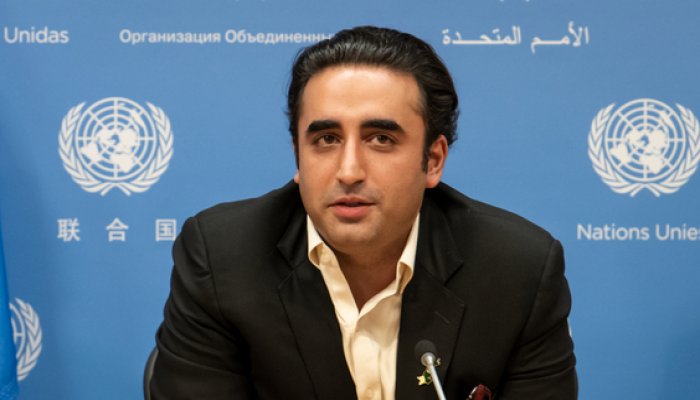
On February 14, Pakistan’s National Assembly’s standing committee on Foreign Affairs chaired by MNA Mohsin Dawar refused to accept the apology tendered on Twitter by the permanent representative to the UN of Pakistan, Munir Akram and asked him to formally apologise for insulting the Pashtun culture. Notably, Akram has used ‘Pashtun’ instead of the Taliban during his address at the United Nations, claiming ‘Pashtun culture requires women to be kept at home’. His statement sparked controversy, after which he apologised on the social media platform Twitter.

In its statement, the committee said an apology rendered on the social media platform could not reflect the grievances expressed by the Pakhtuns worldwide. Expressing his dismay over Akram’s remarks, Dawar said banning women from public places is a practice followed by the Taliban, and it is not part of the Pashtun culture. He blamed Akram for putting the Pashtun culture in a negative light at the UN in a “proper speech”.

At the committee meeting, Akram said, “I took a balanced view as Taliban are not represented in the UN body. If restrictions are imposed on humanitarian assistance, it would add problems for Pakistan. (And in doing so) I mistakenly used the word Pashtun instead of Taliban. I tendered the apology on Twitter.” Unsatisfied with Akram’s reply, Akram confronted him and asked if he was representing the Taliban at the UN. He added as the Taliban seized power at gunpoint, they should not be allowed at the UN.

Sindhi member of the committee Ghulam Ali Talpur urged Akram to resign from his post. He said, “Since you have hurt Pashtuns, don’t you think that you should resign?” However, Akram threw the ball in the Government of Pakistan’s court and said they had the power to remove him if the government wanted to remove him.

State Minister for Foreign Affairs Hina Rabbani Khar had different views at the committee meeting. She came forward to support Akram and requested the members to accept his apology. She claimed everyone makes a mistake, she gave an example of how Americans made a mistake in Afghanistan. Dawar did not take the comparison well and alleged that Pakistan was equally responsible for what happened in Afghanistan, referring to the Taliban’s takeover of the country after staying out of power for 20 years. He said, “We are equally responsible for what happened in Afghanistan, as we kept helping the Taliban for 20 years. The entire world was responsible for what happened in Afghanistan.”

The statement made by Munir Akram

On February 1, speaking on the Humanitarian situation during a UN meeting, Akram claimed that the ban imposed on women from going to public places was not from a religious perspective but a ‘peculiar cultural perspective of the Pashtun Culture’. He said, “From our perspective, the restrictions that have been put by the Afghan interim government flow, not so much from a religious perspective, as from a particular cultural perspective of the Pashtoon culture, which requires women to be kept at home.”

He added that the cultural norms had been part of Afghanistan for hundreds if not thousands of years. “So to expect a complete transformation overnight on the condition that aid will stop to the Afghan people if they do not adhere to international standards, I think that is a rather optimistic expectation,” he added.

He urged the donor community not to walk away from Afghanistan and “hoped” the Secretary General’s appeal to provide monetary help worth $4.4 Billion to Afghanistan would be fulfilled.

Akram was criticised extensively for using ‘Pashtun’ instead of the Taliban. Following the flak he received online and offline, Akram tendered an apology on Twitter on February 3, two days after his remarks. He wrote, “My apologies for the hurt caused by my comments at the humanitarian briefing on Afghanistan. I misspoke, and my words did not accurately reflect Pakistan’s position. I have deep respect for Pashtun culture. Denying women and girls access to education is neither Islamic nor Pashtun culture.”

Pashtuns, or Pakhtuns, popularly known as Pathans, are a predominant ethnic group of Afghanistan. Pakistan’s Khyber Pakhtunkhwa shares a border with Afghanistan and has a notable Pashtun population.

BBC raids: A look into the broadcaster’s long track record of tax avoidance and unscrupulous financial practices in the UK

Several weeks after the Indian government blocked the BBC’s contentious documentary about Prime Minister Narendra Modi and the Gujarat riots of 2002, Indian tax authorities raided the BBC’s headquarters in New Delhi and Mumbai on Tuesday. The Income Tax department’s overnight and ongoing inspection of the BBC’s offices in Delhi and Mumbai has not yet been completed. The survey was conducted as a result of BBC’s willful disregard for the Transfer Pricing Rules and its massive profit-diversion practices.

Interestingly, this is not the first time the BBC has come under fire for adulterated tax affairs. The British Broadcaster has a notorious history of similar allegations that have surfaced from time to time.

Thousands of public employees, including those at the BBC, were not paying their taxes at the source, according to a 2012 report from the public accounts committee in the United Kingdom (UK).

David Smith, the then BBC’s head of employee tax, had admitted that 25,000 contracts covering roughly 1500 staff had been granted on an off-book, freelancing basis, but he argued that the company abided by the laws. He acknowledged, however, that the BBC was able to reduce its liability in cases where the UK’s tax, payments and customs authority, HMRC determined that the person involved was not a true freelancer due to the usage of so-called service companies, particularly by on-air talent.

BBC had accepted, that 148 of its 467 presenters were employed through personal service companies, despite them often being employed long-term. Their contracts shared characteristics with typical pay-as-you-earn (PAYE) contracts.

In 2016, HM Revenue and Customs had reportedly begun an investigation into more than 100 BBC broadcasters amid allegations that they had underpaid their income tax and National Insurance contributions. An investigation of “a very significant number of BBC news presenters” had been started by the officials.

Following the decision in a tax tribunal case brought by BBC newsreaders, Tim Wilcox and Joanna Gosling, who were appealing against a previous ruling that they failed to pay enough tax during the period when they were classified as “self-employed,” it was revealed that HMRC was conducting an investigation.

In a hearing at the First Tier Tax Tribunal, it was discovered that the agency had started looking into 23 BBC presenters in May 2015 to determine whether they had broken the IR35 laws that govern self-employment. However, Jennifer Henderson, the head of global mobility and employment at the BBC, produced evidence suggesting that this has increased to “around 100 extra cases.”

Stars, in 2018, who were dealing with hefty debts following a tax investigation accused BBC of engaging in “industrial level tax avoidance.” To get payment, freelance presenters established personal service firms, which also spared the BBC from having to cover National Insurance. The presenters, however, claimed that they only agreed to the tax arrangement because the BBC instructed it.

“But we have sat by for years watching the BBC say this is nothing to do with them, as if we all spontaneously and independently decided to set up personal service companies at the same time. We were never given the option of being staff. This was industrial level tax avoidance by the BBC,” they had claimed.

A 41-page official report by the Comptroller and Auditor General was released in November of 2018, which dived into the investigation of BBC’s engagement with personal service companies. It laid forth the facts regarding the types of people the BBC employed on a freelance basis and related problems involving such individuals, especially those it hires through personal service businesses.

The BBC was involved in yet another dispute in 2019. According to the BBC annual report, the media organization had set aside up to £12 million to settle the past tax debts of BBC broadcasters who were being investigated by HMRC for using personal service firms to evade taxes.

The National Audit Office (NAO), on the other hand, had questioned whether the payments were a proper use of BBC funds and as a result had provided a cautious assessment of the latter’s accounts.

The NAO underscores the challenges that the BBC and other organizations have encountered when attempting to avoid paying taxes, as well as the complex question of who bears the financial burden of failed tax avoidance strategies.

From the late 1990s onward, the BBC began to hire presenters through personal service businesses. A personal service company is a business created specifically to handle an employee’s affairs. The BBC entered into a contract with their firm rather than the individual employee.

The BBC would profit since the employee would be in charge of their tax affairs and the company would no longer be required to run PAYE or make employers national insurance payments. By paying themselves a modest salary through their company and getting the remainder of their income in dividends, the presenter might reduce their tax obligations. There was a hefty tax advantage from this.

The Auditor General, Gareth Davies, had reaffirmed in his audit statement, that it is evident from the testimony of individuals participating in these schemes that the BBC was a part to the agreements. The company created the contracts and actively pushed its presenters to set up their businesses in this manner. In fact, some of them have claimed that they were compelled to utilize certain arrangements. The BBC certainly benefited from these deals.