Home Blog Page 2407

Rahul Gandhi, whose Italian maternal grandfather fought for the fascists, claims that India has become fascist under PM Modi

On Tuesday, February 21 Congress senior leader Rahul Gandhi claimed that India has become a fascist country under Modi’s regime.

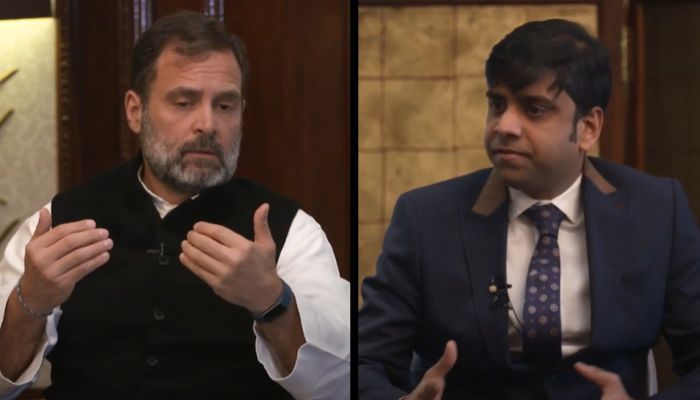
Speaking during an interview with the Italian daily newspaper Corriere della Sera, the Gandhi scion said, “Fascism is already there. Democratic structures collapse. Parliament is no longer working. I haven’t been able to speak for two years; as soon as I speak they take my microphone off. The balance of power is off. Justice is not independent. Centralism is absolute. The press is no longer free.”

When asked if Prime Minister Narendra Modi could be defeated in the next election, Congress leader Rahul Gandhi expressed confidence in Opposition unity, claiming that the Bharatiya Janata Party would be defeated completely if the other parties banded together.

“… it’s sure he (PM Modi) can be beaten. Provided you support a vision, not linked to the right or the left, but to peace and union. Fascism is defeated by offering an alternative. If two visions of India confront each other in the vote, we will be able to prevail,” said the Gandhi scion.

Not only today but the Congress party under the tutelage of Rahul Gandhi and its coteries have time and again labeled Prime Minister Narendra Modi as ‘Hitler’ and a ‘fascist’. Yet, Rahul Gandhi’s labeling of Modi as a fascist is rather ironic considering that his Italian maternal grandfather was a proud fascist himself.

For the uninitiated, Stefano Maino, Rahul Gandhi’s maternal grandfather served as a foot soldier in Italian dictator Benito Mussolini’s army. While the mainstream media was successful in effectively obscuring the details of the maternal side of Rahul Gandhi’s family, however, in a rare interview with Outlook Magazine in 1998, Sonia Gandhi’s father, Stefano Maino, candidly confessed his “unwavering loyalty to Mussolini and Italy’s ‘admirable’ fascist past”.

Maino was not only unapologetic about his support for the fascist leader but he was immensely proud of fighting against the Russian Red Army alongside Hitler’s Wehrmacht on the Eastern Front in World War II.

The interviewer also observed that Stefano Maino’s house was festooned with leather-bound speeches and writings of Benito Mussolini, indicating that he was profoundly inspired by the fascist Italian dictator Benito Mussolini, who teamed up with Nazi dictator Adolf Hitler and presided over the unprecedented massacre of innocent people, mostly Jews. Maino also held dim views of the then-Italian politicians, saying that “the current Italian government was composed of a bunch of traitors who had betrayed Mussolini and the Fatherland”. Wistfully longing for Mussolini’s rule in Italy, Maino had said that the current crop of Italian politicians was all hopeless except the neo-fascist front. He also advocated authoritarian measures such as forced sterilization.

Even Socia Gandhi herself enjoyed a good personal rapport with authoritarian Russian President Vladimir Putin during the UPA’s years in power. In fact, Sonia Gandhi’s meeting with Putin in St Petersburg was described as one of the most productive meetings to develop India-Russia relations.

Wanted Hizbul terrorist Bashir Ahmad Peer alias Imtiaz Alam shot dead by unknown assailants in Rawalpindi, Pakistan

0

Imtiaz Alam alias Bashir Ahmed Peer, one of India’s most wanted terrorists, has been killed in Rawalpindi, Pakistan. Imtiaz was a founding member of the outlawed terror organisation Hizbul Mujahideen, serving as its third commander. On Monday (February 20, 2023), he was killed in front of a shop by two unidentified assailants.

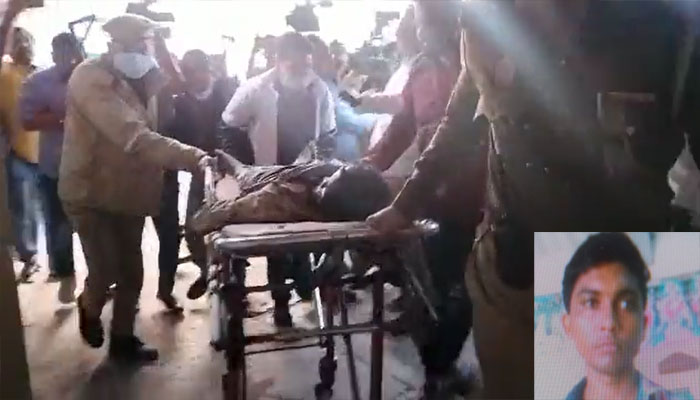
According to reports, Imtiaz, a resident of Babarpora in the Kupwara district of Jammu and Kashmir, was standing in front of a shop in the evening when assailants fired at him from point-blank range and fled. Imtiaz was rushed to the hospital in critical condition where he was proclaimed dead.

The Indian government led by PM Narendra Modi had designated Bashir Ahmed Peer as a ‘terrorist’ under the Unlawful Activities (Prevention) Act (UAPA) on October 4 last year. The Indian security forces were looking for him in relation to many terrorist attacks.

Imitiaz was involved in providing logistics to the banned outfit’s terrorists, especially for infiltration into the Kupwara district in Jammu and Kashmir.

According to the central government notification, Peer was also involved with online propaganda groups with the aim of uniting former terrorists and other cadres of jihadi terror groups in order to promote the activities of the Hizbul Mujahideen, Lashkar-e-Taiba (LeT), and other Pakistan-backed terrorist groups.

Imtiaz used to instigate the youth in the name of implementing Sharia law in Jammu and Kashmir. He was also playing a key role in mobilizing youth and providing them with arms and ammunition.

Bashir Mir was coordinating the terror camps and launch pads from PoK as well.

According to News18, Imtiaz Alam was killed as a result of inter-gang rivalry among Pakistan-based terror groups as they jostle to corner terror funding that is drying up owing to Pakistan’s dismal financial circumstances.

Imtiaz was apprehended by the Pakistan Army’s Intelligence Wing in 2007. He was later released, however, on the orders of Pakistan’s intelligence agency ISI.

Bhiwani deaths: Haryana Police register FIR against Rajasthan Police for assaulting Gau Rakshak’s pregnant wife, causing death of unborn child

Haryana Police has registered an FIR against the officials of Rajasthan Police for assaulting Kamlesh, wife of Gau Rakshak Shrikant Pandit. Kamlesh was nine months pregnant. As per reports, due to the assault, the child died inside Kamlesh’s womb. The case has been registered at Nuh Police Station based on the complaint filed by Shrikant’s mother Dulari. Haryana Police also exhumed the body of the deceased child for post-mortem examination.

Shrikant’s mother has complained that the officials of Rajasthan police had barged into her home and brutally assaulted the family, including Shrikant’s pregnant wife. As a result, the woman had to be hospitalised immediately, where she gave birth to a stillborn child.

Furthermore, it has been revealed that the Gau Rakshaks who have been booked in the murder case of Junaid and Naseer were police informers. Three out of five named in the matter, Rinku Saini, Lokesh Singla and Shrikant, were police informers and regularly tipped police about cattle smuggling activities which is an organised crime in these areas.

Reportedly, they also used to accompany Haryana Police during raids. The other two who have been booked in the case are Monu Manesar and Anil. Bajrang Dal, Vishwa Hindu Parishad and other Hindu organisations have come forward to support the Gau Rakshaks in the case, saying that they are being falsely accused of murder.

According to a report in Dainik Bhaskar, old FIRs revealed that Rinku, Lokesh and Shrikant accompanied Haryana Police in several instances of police action against cattle smuggling. In January, Lokesh had accompanied Haryana Police for a raid in a suspected cow smuggling case. The family of Junaid and Naseer have raised suspicions claiming police personnel could be involved in the murder case.

Dainik Bhaskar claimed the sources in Rajasthan Police told the media house that Rinku admitted taking Junaid and Naseet to Ferozepur Jhirka Police Station. He wanted the police to arrest them but their condition deteriorated following the clash. The police allegedly refused to take action and sent them back. The sources further claimed the duo later died and taken in Bolero to Loharu, Bhiwani, 200 KM away from the crime scene where they were set on fire. A case of kidnapping has already been registered in Bharatpur, Rajasthan.

Hindu Mahapanchayat to support Monu Manesar

Vishwa Hindu Parishad, Bajrang Dal and other Hindu organisations called Mahapanchayat on February 21 to support Monu Manesar. He has extensively worked to protect cows from smugglers in Manesar and Mewat areas, the organisations stated. They added that the government is trying to frame Monu, who is innocent, and the Hindu organisations will build pressure to stop the government from doing so.

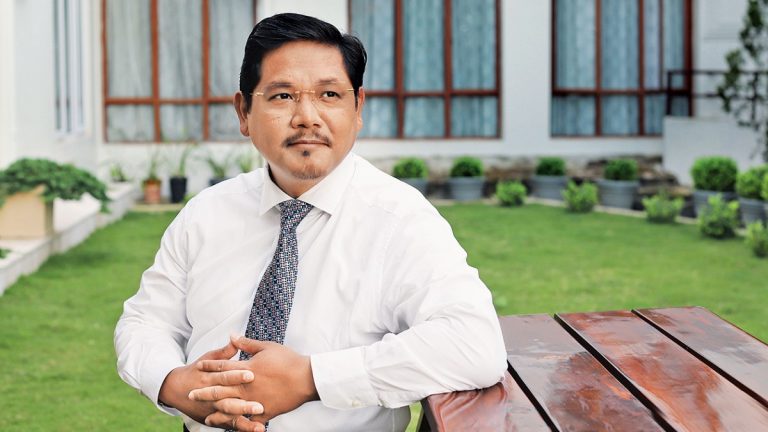
‘People will forever loathe CM for this’: BJP hits out at Meghalaya govt for denying permission to PM Modi’s rally

The Bhartiya Janata Party has slammed the Conrad Sangma government in Meghalaya for denying permission for holding a rally of Prime Minister Narendra Modi at the PA Sangma Sports Complex in the Tura district of the state, considered CM Sangma’s stronghold. On Tuesday, the BJP’s state unit hit out at the state government and said that the “people will forever loathe the CM for this decision”.

“The Director of Sports and Youth Affairs, under direct instructions from a very scared and insecure chief minister, Conrad Sangma, denied us permission to hold a campaign rally at the P.A. Sangma stadium,” BJP leader and the party’s spokesperson in the state, Bernard N Marak, said on Tuesday. He said that it was sad and unfortunate that a sitting Prime Minister was prevented from meeting fellow citizens.

“The fear of losing the (February 27 Assembly) elections is haunting Conrad Sangma and has driven him crazy. The people of Garo Hills will forever loathe the CM for this decision of his,” Marak said.

Prime Minister Narendra Modi is scheduled to visit Meghalaya on February 24 ahead of the assembly elections to be held later this month.

Meghalaya Government denies permission for PM Modi’s rally

The BJP had planned to hold a PM Modi mega rally at Tura on February 24. Significantly, Tura, which is part of the Garo Hills, is deemed Chief Minister Conrad Sangma’s bastion.

The BJP, however, said that the state government had denied permission to organize the rally at Tura’s PA Sangma Stadium saying that it was still under construction.

Speaking to ANI, Bharatiya Janata Party (BJP) national secretary Rituraj Sinha said on Sunday, “We requested Prime Minister Narendra Modi to hold a roadshow in Shillong and a public rally in Tura, Garo hills. We sought permission for a rally in PA Sangma stadium but we were surprised when told that the stadium is under construction and not ready. So they sent a letter that PM’s rally could not be held there. The entire country and the people of Meghalaya know that PA Sangma stadium was inaugurated by CM Conrad Sangma on December 16 itself in a grand manner.”

The BJP leader further added that the National People’s Party (NPP) and other parties have sensed a “Modi wave in Meghalaya” and therefore they are deliberately trying to stop PM Modi’s rally in the state.

“The stadium which was ready on December 16, how come it is under construction again in February? Why it is not available for the PM’s rally? The reason is political. It seems that opposition parties like NPP, TMC, and Congress are scared of the Modi wave here. The people of Meghalaya want a BJP government like other northeastern states,” he added.

Notably, the election for the 60 members of the Meghalaya Legislative Assembly is slated to take place on February 27, 2023. The counting of votes will be conducted on March 2. 

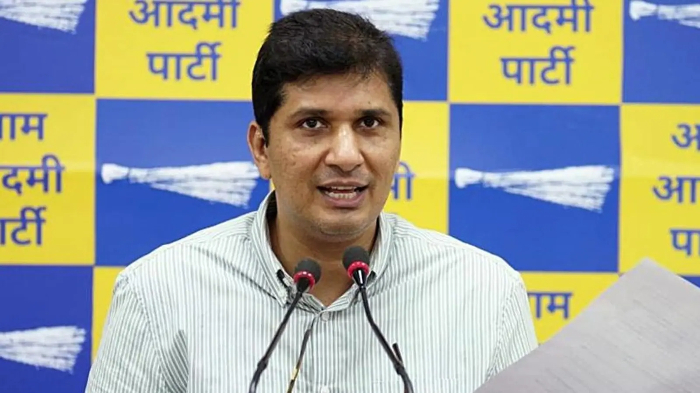
Punjab govt to ‘monitor’ social media activities of employees: Reports

The Aam Aadmi Party-led-Punjab government has directed administrative secretaries to monitor the social media activities of employees, reported The Tribune.

Citing sources, the English daily informed that the Punjab government has already issued orders to the effect. Under the new policy, any government employee found criticising the policies of the State will be issued notices.

The administrative secretaries must notify the General Administration Department, prior to issuing notices to the employees who speak adversely of the Punjab government.

AAP govt has a history of controlling social media activities

This is however not the first time that an Aam-Aadmi Party government has resorted to controlling the social media activities of its employees.

During the Covid-19 pandemic in April 2020, a Delhi government-run hospital (Guru Teg Bahadur) issued a circular for medical professionals, directing them to not flag their problems, related to duty, on any social media platform.

In the circular, Sunil Kumar, the Medical Director of the hospital, had warned, “All COVID-19 staff are advised to refrain from talking to media or using social media such as Whatsapp, Facebook, Twitter etc to make their complaints public”.

The circular warned that they are on National duty and some difficulties are inevitable. “The same should not be highlighted in various social media as the same may be very embarrassing for the government”, read the circular.

Iranian foundation applauds the bravery of Salman Rushdie’s attacker Hadi Matar, to reward him with 1,000 square meters of land

An Iranian foundation has lauded the man who attacked celebrated novelist Salman Rushdie and announced that he will be rewarded with 1,000 square meters of agricultural land.

“We sincerely thank the brave action of the young American who made Muslims happy by blinding one of Rushdie’s eyes and disabling one of his hands,” said Mohammad Esmail Zarei, secretary of the Foundation to implement Imam Khomeini’s Fatwas.

“Rushdie is now no more than a living dead person and to honor this brave action, about 1,000 square meters of agricultural land will be donated to the person or any of his legal representatives,” Zarei added

Salman Rushdie was stabbed in the neck and abdomen by an attacker identified as 25-year-old Hadi Matar in New York in August 2022. Rushdie lost an eye and the use of one hand following the assault.

Iran blamed Salman Rushdie and his supporters for the attack on the author’s life

Soon after the reports of the attack came out, the fingers were pointed toward the fatwa that was issued in Tehran three decades ago calling for Rushdie’s assassination. Iran, trying to deny any link between the attack and the fatwa, washed its hands off the attack and instead blamed Rushdie and his supporters for the attack.

Notably, Iranian media had extensively gloated after the attack and called it ‘divine retribution’. Reacting to the media reports that Rushdie may lose one eye following the attack, Iran’s state broadcaster Jaam-e Jam said, “An eye of Satan has been blinded.” US Secretary of State Anthony Blinken had termed Iran’s media’s behavior ‘despicable’.

On August 15 (local time), Nasser Kanaani Tehran, foreign ministry spokesperson of Iran, categorically denied any links between the attacker and the Islamic country.

He said, “No one has the right to accuse the Islamic Republic of Iran.” Notably, he said Freedom of Speech does not give the right to Rushdie to insult Islam in his writings.

Blaming Salman Rushdie for the attack, Nasser had said, “In this attack, we do not consider anyone other than Salman Rushdie and his supporters worthy of blame and even condemnation,” during his weekly press conference. He added, “By insulting the sacred matters of Islam and crossing the red lines of more than 1.5 billion Muslims and all followers of the divine religions, Salman Rushdie has exposed himself to the anger and rage of the people.”

It is noteworthy that when Satanic Verses was published, the then-Iranian leader Ayatollah Ruhollah Khomeini issued a fatwa against Salman Rushdie, calling for his assassination, and placed a bounty of $3 million on his head. The fatwa is still active though the Iranian government has distanced itself from the decree. Later in 2012, a quasi-official Iranian religious foundation added $500,000 to the bounty.

Why no documentary on 1984 anti-Sikh riots? EAM Dr Jaishankar calls BBC documentary on PM Modi a hatchet job

0

“Actual politics” is being conducted “ostensibly as media” by people who do not have the “courage to come into political field,” External Affairs Minister S Jaishankar told ANI, alluding to the controversial BBC documentary on Prime Minister Narendra Modi.

Terming the furore as “politics by another means,” Jaishankar, in an interview with ANI, said, “Sometime politics of India doesn’t even originate in its borders, it comes from outside.” “We are not debating just a documentary or a speech that somebody gave in a European city or a newspaper edits somewhere — we are debating, actually politics, which is being conducted ostensibly as media — there is a phrase ‘war by other means’ this is politics by another means — I mean you will do a hatchet job, you want to do a hatchet job and say this is just another quest for truth which we decided after 20 years to put at this time,” he said. 

Coming a year just before the Lok Sabha polls of 2024, the external affairs minister questioned the timing of the documentary. 

“I mean, come on, you think timing is accidental! Let me tell you one thing – I don’t know if the election season has started in India, Delhi or not, but, for sure it has started in London, New York,” he added. 

The BBC, in January, released a documentary film titled ‘India: The Modi Question,” that features the Gujarat riots of 2002. The film caused a controversy for alluding to PM Modi’s role in the riots whereas disregarding the Supreme Court clean chit to Narendra Modi. 

“I mean, do you doubt it? Look who the cheerleaders are. What is happening is, just like I told you — this drip, drip, drip — how do you shape a very extremist image of India, of the government, of the BJP, of the Prime Minister. I mean, this has been going on for a decade, ” said Jaishankar when asked about some western media’s bias against PM Modi in India. 

The EAM said that the motive behind planting such stories abroad is to further the anti-India agenda. 

“Let’s not have illusions about it…, there is an echo chamber, it will be picked outside and then they will say it is being said outside, it must be true. Then you will say it inside. There is a ding-dong going on, look this is a globalized world, people take that politics abroad,” said the EAM. 

He further asked, “Why suddenly there is a surge of reports and attention and views? I mean, were some of these things not happening earlier. Many things happened in Delhi in 1984, why don’t we see a documentary on that? If that was your concern, you suddenly feel one day, “I am very humanistic, I must get justice for people who have been wronged, ” said Jaishankar. 

He further advised to not get fooled by such agendas and challenged the propagator to come in the political field. 

“This is politics at play by people who do not have the courage to come into the political field. They want to have that teflon cover saying that I am an NGO, media organisation etc. They are playing politics,” Jaishankar asserted. 

The EAM in his various interactions on multiple platforms abroad has hailed India’s democracy as a guiding force not just for the country but for the world to emulate. In the interview with ANI, the minister said that the people’s verdict will quell all the misconceptions. 

“Among other things in a democracy – don’t you trust the ballot box, people’s verdict to be the final opinion? I do. I know there are certain people who believe that their view supersedes elections. Look, I like you, you win election–great democracy. I don’t like you win election. What are you — ‘electoral autocracy’. That’s reserved for people whom you don’t like to win elections. This is politics,” said Jaishankar.

(This news report is published from a syndicated feed. Except for the headline, the content has not been written or edited by OpIndia staff)

Hopeful that AFSPA will be removed from all areas in the coming years: Home Minister Amit Shah in poll-bound Nagaland

Noting that the BJP government has lifted the Armed Forces (Special Powers) Act, 1958 from major areas of Nagaland, Union Home Minister Amit Shah expressed hope on Tuesday that the Act will be withdrawn from the whole northeastern state within the next three to four years.

Addressing an election rally in Tuensang, Amit Shah stated that Naga peace talks are underway and expressed hope that Prime Minister Narendra Modi’s initiative to bring lasting peace to the northeastern state will yield results.

Shah stated that there are some issues concerning development and rights in eastern Nagaland which he said will be addressed following the assembly elections.

“Before the elections, ENPO issued a demand for a boycott, citing their concerns for the people of Eastern Nagaland. “We’ve had conversations with ENPO, and the agreement is nearing completion,” the Minister stated.

Asserting that insurgency is on the decline in the Northeast, he stated that violent incidents in the region had decreased by 70% under the BJP government. The Union home minister also stated that security force casualties had dropped by 60%, while civilian deaths had dropped by 83% in the region.

“I want to remind all of you about Nagaland before 2014. People were traumatized by the firing and bloodshed, but the Modi government took forward the Naga peace talks by signing peace agreements and today Nagaland has moved ahead on the path of development with peace,” he said.

‘Since Rahul Gandhi became the leader of the Congress the stature of the party’s leaders has been deteriorating day by day’: Amit Shah

Further, the HM took a dig at the Congress party for using derogatory references to PM Narendra Modi’s name.

In an obvious reference to Congress spokesperson Pawan Khera’s remarks last week, in which he referred to the Prime Minister as Narendra ‘Gautam Das’ Modi, Shah said, “the kind of language the Congress spokesperson has used for the PM and the sort of reaction it has drawn from people from across the country… You will see Rahul Gandhi that the Congress will not be visible even through telescopes after the Lok Sabha polls in 2024. People will respond through the ballot box.”

“Congress Party has been marginalized in North East. Congress is not getting any success across the country. Since the time Rahul Gandhi became the leader of the Congress the stature of the party’s leaders has been deteriorating day by day,” the HM added.

Talking about development initiatives Amit Shah said that 53 significant infrastructure projects have been finished since 2015, and another 142 projects are in the process.

Urging people to vote for a BJP-led government in the state, HM Amit Shah added, “Support us in this election and I assure you that we will increase the free insurance cap under Ayushman Bharat from Rs 5 lakh to Rs 10 Lakh…We have completed 53 developmental projects in the last 8 years and another 142 projects are in pipeline for Nagaland alone…We have increased the budgetary allocations for tribes from Rs 21,000 crore in 2014 to Rs 86,000 crore in 2023. By using space technology we have finalized more than 100 developmental projects spread across 13 areas including Nagaland.”

Nagaland will vote for the 60-member assembly on February 27, with results expected on March 2.

Govt to reduce AFSPA areas in Assam, Nagaland and Manipur: HM Amit Shah

It may be recalled that last year, the Modi government decided to reduce the disturbed areas under the Armed Forces Special Powers Act (AFSPA) in the states of Assam, Nagaland and Manipur.

Home Minister Amit Shah revealed that the reduction of areas under AFSPA was an outcome of the improved security situation and fast-tracked development in these states. He also said this is the latest step to PM Modi’s consistent efforts and several agreements to end insurgency and bring lasting peace in the North East.

The Armed Forces Special Powers Act or AFSPA is a law that empowers security forces to conduct operations anywhere and arrest anyone without any prior warrant. It also gives a certain level of immunity to the security forces if an operation goes wrong.

Indira Gandhi removed my father as Union Secretary, he was superseded during Rajiv Gandhi period: EAM Jaishankar

Noting that he belongs to a family of bureaucrats and that the political opportunity as a union minister came as a bolt from the blue in 2019, External Affairs Minister S Jaishankar on Tuesday said that his father Dr K Subrahmanyam was removed as Secretary, Defence Production, by former Prime Minister Indira Gandhi soon after she came back to power in 1980 and he was superseded during the Rajiv Gandhi period with someone junior to him becoming the Cabinet Secretary. 

In an interview with ANI, Jaishankar talked about his journey from foreign service to politics and said he had always aspired to be the best officer and get elevated to the post of Foreign Secretary. Jaishankar was Foreign Secretary from January 2015 to January 2018 and earlier served in key ambassadorial positions including in China and the United States. His father K Subrahmanyam, who passed away in 2011, is regarded as one of India’s most prominent national security strategists. 

“I wanted to be the best foreign service officer. And to my mind, the definition of the best that you could do was to end up as a foreign secretary. In our household, there was also, I won’t call it pressure, but we were all conscious of the fact that my father, who was a bureaucrat, had become a Secretary but he was removed from his secretaryship. He became, at that time, probably the youngest Secretary in the Janata government in 1979,” Jaishankar said. 

“In 1980, he was Secretary, Defence Production. In 1980 when Indira Gandhi was re-elected, he was the first Secretary that she removed. And he was the most knowledgeable person everybody would say on defence,” he added. 

Jaishankar said his father was also a very upright person, “may be that caused the problem, I don’t know”. 

“But the fact was that as a person he saw his own career in bureaucracy, actually kind of stalled. And after that, he never became a Secretary again. He was superseded during the Rajiv Gandhi period for somebody junior to him who became a cabinet secretary. It was something he felt…we rarely spoke about it. So he was very, very proud when my elder brother became secretary,” said Dr Jaishankar. 

Jaishankar said he became a Secretary to the government after his father passed away. 

“He passed away in 2011, at that time, I had got what you would call Grade 1 which is like a secretary ….like an ambassador. I did not become secretary, I became that after he passed away. For us, at that time the goal was to become secretary. As I said I had achieved that goal. In 2018, I was kind of very happy to walk away into the sunset…but, I ended up walking not into the sunset but into Tata Sons! I was contributing my fair bit there. I liked them, I think they liked me. Then completely as a bolt out of the blue, the political opportunity came. Now the political opportunity for me was something I needed to think about because I was simply not prepared for it….So I did reflect on it briefly…,” said Jaishankar when he was asked about his journey from a bureaucrat to a cabinet minister. 

Reflecting on the phone call from the Prime Minister inviting him to be part of the 2019 Narendra Modi-led cabinet, Jaishankar said that it did come as a surprise. “It had not crossed my mind, I don’t think it had crossed the mind of anybody else in my circle,” he said referring to his induction in the union cabinet. 

“Once I entered, I must say in all honesty I myself was very unsure. I had watched politicians all my life. One of the things you get to do in foreign service by the way is you actually perhaps much more than the other services is, you see politicians up close because you see them abroad, you are kind of working with them closely, counselling them. So, it’s one thing to watch but to actually join politics, to become a cabinet member, to stand for Rajya Sabha, you know when I was selected, I was not even a member of Parliament. So each of these things happened one by one. I slid into it, sometimes without knowing it. You learn by watching others,” he added. 

Jaishankar, who joined the Indian Foreign Service in 1977, said he looks “very carefully at what people are doing both in my party and other parties”. He is a BJP member in Rajya Sabha from Gujarat. 

Answering a query about his time as cabinet minister, he said it has been very, very interesting four years 

“I don’t think it’s so much a question of winning friends. Yes, it does help when you are a diplomat, in a sense I was trained I would say to get along, to get the most out of situations. Some of it also, different people are made in different ways. You would see, I very rarely get into anything personal with people, even when I am provoked at times. I think people are just made in different ways. I would say this, it will be four years this summer. It has been a very, very interesting four years. When I look at these four years, for me actually it’s been four years of very intense learning, going to a state which I had really very little knowledge of,” said Jaishankar. 

Jaishankar said when he became a minister he had a choice to join a political party or not. 

“One, this government, this cabinet is very much a team cabinet. You don’t do your own thing out here. You may have a background, you may come from a stream, but this very idea that you will do your domain as you say we are technocrats. I don’t think it gels with what this cabinet is. Secondly, when I was selected as a minister, I was not a Member of Parliament, I was not a member of a political party either. I had the choice whether I would join a political party or not. There was no compulsion on it, nobody brought up that subject. It was something that was left to me. I joined because, one, when you are joining a team, you join it wholeheartedly. That is where you give your best performance and you get the best support.” 

“And secondly, I really reflected on what is the meaning of actually joining a political party. It’s not the decision I took lightly. I am someone who’s studied and analyzed politics all his life. It was something for me of great importance. So I joined because I genuinely believe today that this is a party which captures the sentiments and interests and aspirations of India the best. And I get into other issues because again one of the differences moving from bureaucracy, from a department or a service into politics, you learn so much more when you are a member of the cabinet,” he added. 

He said there is a different level of exposure as a union minister compared to that in bureaucracy. 

“Your exposure, every cabinet meeting…let’s say there are 10 items, it could be on agriculture, it could be on infrastructure. But you get a cabinet note, you read the note, you are interested, you will study a little bit more. So your interest broadens. When your interests broaden, and you go out there and speak to people, it will show.” 

Asked if there was any difference in how Dr Jaishankar thought and operated as a foreign service officer and as a minister and a politician, he said it was some challenge for him personally. 

“In a way, it’s like different lives. You got to understand the challenge that it was for me personally because I am from a bureaucrat’s family. My father was a bureaucrat. I have an elder brother who is a bureaucrat, my grandfather was a bureaucrat, and uncles who were there. So our world, if I can put it to you this way, was very very bureaucratic. Our goals, our dreams were bureaucratic.” 

Jaishankar said every major issue has some political angle which a minister will tend to see much faster than a bureaucrat 
“It’s a different world, a different responsibility. I put it to people like this. I may have sat 40 years in the Parliament gallery. It’s not the same as being on the Parliament floor. I used to sometimes… Sushma Swaraj was my Minister. As Foreign Secretary, we used to talk a lot. …I had the confidence that I have a minister and a Prime Minister above me who at the end of the day shoulder that political responsibility,” he said. 

“Now, come May 2019, that political responsibility is mine. It is a completely different field. As a Minister, you have to look at it not departmentally, there may be something which is, to give you an example, wheat export to some country. As a secretary I would say that a country’s relationship is very important. But as a Minister, I have to say what my own wheat prices look like, what are the domestic concerns out there? Who else do we need to talk to? Every issue, every major issue has some political angle which a Minister will tend to see much faster than a bureaucrat, however good that bureaucrat might be,” said Dr Jaishankar in a wide-ranging podcast interview with ANI’s Editor Smita Prakash. 

Asked if it was kind of challenging, he said, “yes, absolutely”. 

(This news report is published from a syndicated feed. Except for the headline, the content has not been written or edited by OpIndia staff)

Narendra Modi, not Rahul Gandhi, sent the army to LAC, EAM Dr Jaishankar hits out on Wayanad MP

Hitting back at Rahul Gandhi who has been targeting the government over China’s aggression on the LAC in eastern Ladakh, External Affairs Minister S Jaishankar on Tuesday said that it is not the Congress leader but Prime Minister Narendra Modi who sent the Army to the Line of Actual Control as a countermeasure to troop deployment by China and the opposition party should have honesty to look at what happened in 1962. 

In an interview with ANI, Jaishankar said the Modi government had increased the budget by five times to ramp up border infrastructure. Referring to Congress and other opposition parties outraging over the Chinese building a bridge on the Pangong Lake last year, the Minister said the area had been under illegal occupation of China since the 1962 war. 

In a strong rebuttal to Congress over allegations pertaining to China, he said its leaders must have some problem understanding words beginning with ‘C’. 

“When did that area actually come under Chinese control? They (Congress) must have some problem understanding words beginning with ‘C’. I think they are deliberately misrepresenting the situation. The Chinese first came there in 1958 and the Chinese captured it in October 1962. Now you are going to blame the Modi government in 2023 for a bridge which the Chinese captured in 1962 and you don’t have the honesty to say that it is where it happened,” said Dr Jaishankar. 

“Rajiv Gandhi went to Beijing in 1988…signed agreements in 1993 and 1996. I do not think signing those agreements was wrong. This is not a political point I am making. I think those agreements were signed at that time because we needed to stabilise the border. And they did, stabilise the border.” 

The External Affairs Minister stressed that when other countries’ demands are not reasonable, the government will not be able to come to an agreement. 

Asked about the Congress party’s allegation that the Modi government is defensive and reactive on the China issue, Jaishankar dismissed the claims saying there is currently the largest peacetime deployment along the China border. 

“If I would have to sum up this China thing, please do not buy this narrative that somewhere the government is on the defensive…somewhere we are being accommodative. I ask people if we were being accommodative who sent the Indian Army to the LAC (Line of Actual Control). Rahul Gandhi did not send them. Narendra Modi sent them. We have today the largest peacetime deployment in our history on the China border. We are keeping troops there at a huge cost with great effort. We have increased our infrastructure spending on the border five times in this government. Now tell me who is the defensive and accommodative person? Who is actually telling the truth? Who is depicting things accurately? Who is playing footsie with history?”,” added Jaishankar in an interview to ANI. 

Asked about Congress leader Rahul Gandhi’s remarks that S Jaishankar did not know much about foreign policy and needed to learn a little bit more, the External Affairs Minister took a veiled dig and said he is willing to listen to the Wayanad MP if he has “superior knowledge and wisdom” on China. 

“I think he said this somewhere in a public meeting. It is probably in the context of China. All I can say in my defence is I have been the longest-serving ambassador in China. I have been dealing with a lot of these border issues for a very long time. I am not suggesting that I am necessarily the most knowledgeable person but I would have a fairly good self-opinion of my understanding of what is up there. If he has superior knowledge and wisdom for China, I am always willing to listen. As I said, for me life is a learning process. If that is a possibility, I have never closed my mind to anything however improbable that may be,” Jaishankar added. 

Referring to Congress criticism concerning border villages coming up on the Chinese side of LAC, he said the opposition party should remember what happened in 1962. 

“What happens you do this smoke and mirror, oh there is something happening here it is almost like 1962 never happened,” he said. 

“We should be building border infrastructure. Why did you (Congress-led governments) not build up infrastructure? Look at the border infrastructure budget during the Modi period, the budget has gone up five times. Till 2014, it was roughly Rs 3000-4000 crore, today it is Rs 14,000 crore. If you look at the roads that are built, the bridges, they have doubled or tripled, look at the tunnels this government is serious about border infrastructure…where as we know the underlining thinking earlier was let us leave it like that till the Chinese cannot come inside which meant you have no intention of contesting them when they came in,” he said. 

He said it was important to call out Congress blunders as it was targeting the government. 

“Personally, I can get into a blame game what happened in 1962, it happened, but now if you whitewash all that everything happened only in 2023… I have to call you (Congress) out,” Jaishankar said. He added that steps to improve border infrastructure should have been taken at least over two decades back. 

No first of all I am not using the word we are fortifying it I think we are legitimately building our border infrastructure because they have built a robust border infrastructure. In my view, we should have done it 25 years ago. 

He said China was a bigger economy and India was responding to the situation that China has created along the LAC in Ladakh by violating border agreements. 

“They are the bigger economy what I am going to do? I am a smaller economy. Am I going to sort of pick up a fight with a bigger economy? It is not a question of reacting. It is a question of common sense. We had in agreement that we are not supposed to bring to the borders in large numbers…because it is in our interest to stabilize our borders or a situation it is not out of love affection or sentiment. It is a core calculation,” he said. 

Jaishankar said border agreements had helped stabilise the situation till these were violated by China. 

There had been a standoff at the LAC in Ladakh following the aggressive actions of the Chinese Army. The two countries held several rounds of military and diplomatic talks for disengagement from some friction points. The high level of troop deployment by China continues for which India has taken counter steps.

(This news report is published from a syndicated feed. Except for the headline, the content has not been written or edited by OpIndia staff)