The India International Centre, Delhi, is an NGO, but has been heavily supported and involved with the Indian Government since its inception in 1958 (Nehruvian-Congress era of politics).
The IIC was founded & funded by the Rockefeller foundation. The Rockefeller foundation & Rothschild foundation are partners in many projects. Now, both these organisations have dark sinister secrets and pasts.
A look at the ‘About’ section of the India International Centre’s website and one can see quite clearly that its past and present Presidents, Vice Presidents, Life Trustees and Trustees mostly belong to the comfortable coterie of Lutyens’ and Khan Market cabal.
Now, it hosts a CD Deshmukh Memorial Lecture every year on his birth anniversary which is 14th January in memory of its Founder President.
One of their previous speakers in this tradition of lectures last year was MK Rasgotra (Foreign Secy during the Bhopal Gas Tragedy who secured the release of accused Warren Anderson). He spoke (ironically) on “Foreign Policy: Past and Future”.
Then in 2018 they invited Rohintan F. Nariman (who passed incorrect remarks on Rig Veda & termed Babar and Akbar as secular). He spoke on, hold your breath, “Great” Contemporaries: Akbar, Suleiman I and Elizabeth I.”
And one more, before ending this section, was judge B. N. Srikrishna (his Srikrishna Report on Bombay riots of 1992-93 dragged on for more than 5 years and blamed the Shiv Sena as being largely responsible for it). He delivered a speech in 2012 titled “Beyond Federalism”.
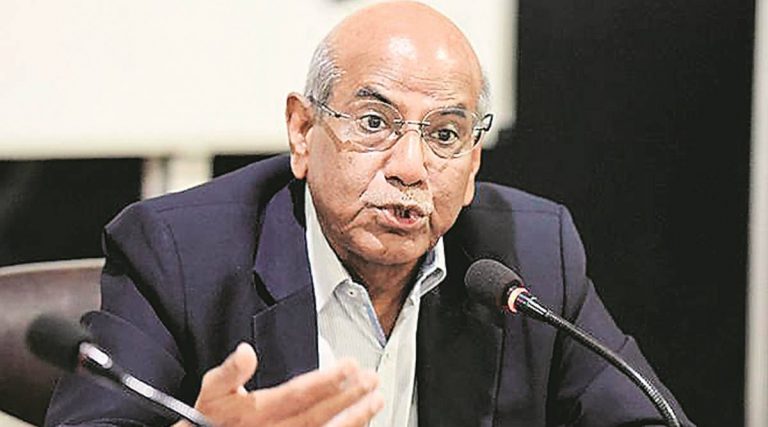
One must especially take a good look at its current President Mr. Shyam Saran’s track record, as he is a well-known Congress supporter & Nehru dynasty loyalist.
In 2020, he criticized Prime Minister Modi for attending the Ayodhya event in an article in the Business Standard newspaper.
As a counter to Shyam Saran’s venomous article, Milind Sathye, an Australian Academic, wrote a factual counter on IndiaFacts.Org .
I would like to quote verbatim some excerpts from that brilliant article of Milind Sathye here:
In so doing, Shyam Saran not only toes the Pakistan government line but also has no qualms in unabashed concealment of truth.
He stated that “it was on the site of the criminal demolition of a mosque that a temple to celebrate Ram was being built.” He further goes on “‘’the continued popularity of Ramayana in distant lands (among others, in Indonesia, a Muslim majority country) is a testimony to the universal moral appeal of Indian epics’’.
Saran could have persuaded the Congress Party governments not to question the very existence of Ram in the Supreme Court. Was his diplomatic silence triggered by a personal ambition to become a foreign secretary? Or did he find that receiving Padma Bhushan honor was more appealing than Ram’s universal appeal? He could have at least convinced his foreign ministry colleagues like Hamid Ansari (former Vice President of India) or bosses like Salman Khurshid (former Foreign Minister) to learn from Indonesian Muslims?
‘’to trap Ram in a golden and glittering edifice is to shrink his universal appeal as a moral hero— a Maryada Mahapurusha— to a local deity…..’’. But does not tell us why similar logic could not be applied to holy places of other religions – the Vatican or the Macca – for example?
As the Indonesian Muslims were not exposed to the toxic Nehruvian history, they do not have issues in showing reverence to Hanuman and accepting their Hindu ancestry which Indian Muslims have.
How could Indians learn about the cultural legacy unless the learning is grounded in the educational system? How could Indians draw inspiration from its cultural heritage when the Marxist education system drilled down the message that we should be ashamed of our heritage as though the caste system is our only heritage. Given this, the need for a temple – a place where people congregate to connect with their cultural past forgetting caste differences – is felt all the more. Yet Saran opposes the Temple!
Saran then shows his anti-Mandir fangs by asking why does then Rama needs a manmade temple to reside.
Saran makes us laugh when he notes that the Independence movement bound ‘’us together in a shared sense of citizenship. If it was so, could the former diplomat explain why did the shared spirit fritter away as freedom was on the anvil? Did Nehru fail Indians? But Saran avoids difficult questions.
Saran then asserts ‘’Gandhi’s Ram Rajya was an embodiment of this idea of India. A Ram Rajya which needs a glorious Ram Temple as its symbol is a very limiting conception of India’’.
Instead of an intellectual debate, Saran resorts to mud-slinging. He describes the struggle for Ayodhya ‘’a violent and vulgar brawl’’ and ‘’ugly manifestations’’.
Saran could have a reason to feel dejected as his colleague Jai Shankar is now the Foreign Minister while Saran had to be content with foreign secretary position and receiving a civilian award.
To be true to his name, Saran could have surrendered to Krishna – and his universal appeal – given that Indonesia proudly showcases the Arjuna Vijaya chariot statue. But alas, Saran chose to surrender reason at the feet of Nehru dynasty.
It is no wonder that Shyam Saran invited the infamous distorter of Indian History, Ms. Romila Thapar for the very recent C.D. Deshmukh Memorial Lecture 2023, on 14th, on “Our History, Their History, Whose History?” It pointed towards some sort of ‘current crisis that has engulfed the teaching and writing of history as reflected in the new syllabuses for educational institutions of all levels.
The abstract of it read as “The talk will examine the current crisis in the teaching and writing of history as reflected in new syllabus for school, college and University, and in public statements on the past. There is a bifurcation between popular public views and those of professional scholars of history. The questions to be answered are how did this come about? How legitimate are the changes being formally suggested? And why these changes are being contested by historians? The focus will be on one frequently quoted interpretation relating to the second millennium AD., discussing the relationship between two communities.”
What is the ‘current crisis’ in the writing of history? Apparently there was none when a cabal of patronized historians, self-appointed ‘professional scholars”, were rubbishing those whom Hindus revere, such as Guru Nanak ji, Guru Tegh Bahadur ji, or were trivializing fighters such as Maharana Pratap, or questioning in the Courts the very historicity of Ramayana.
Without sufficient knowledge of Sanskrit & Persian, Romila Thapar is paraded as a scholar of Ancient Indian History. Her entire patronised academics has been an exercise in subverting the Sanatana Dharma and its narratives. To quote Jane Austen on Miss Bingley -“She won favors of the opposite sex [read ‘The Christo-Islamic West] by undermining her own [read Hindu Civilisation]. For her teaching young children the neutrality of cow-eating is a better educational goal than protecting all JIVA, all forms of life, the goal of Sanatana Dharma.
She was instrumental in a way inventing and propagating the now debunked ‘Aryan Invasion theory’ and sowing the ‘Anti-Brahmin’ poison in our minds through History textbooks in schools and colleges.
Romila Thapar and her fake history has been point by point demolished by the Supreme Court in the Ayodhya verdict, by great scholars like Shri Sitaram Goel, Dr. Meenakshi Jain, Dr. Koenraad Elst, Shri Rajiv Malhotra, Madhu Kishwar and many more. She has not yet accepted any debate with anyone who has challenged her and only resorts to her cosy den for lectures and interviews with absolutely no Q&A.
This very IIC put down the request of its member Dr Daksh Lohiya in July 2021 when he requested that a colloquium be hosted by Shri Sandeep Balakrishna to mark the centenary of the Moplah massacres, but lo & behold, the IIC did not even allow it as a ‘private event’.
But it hosts a formal event, that too a highlighted lecture with known distorter of History, Romila Thapar! Incidentally, her brother Romesh Thapar was one of its Directors from 1967-73.
We don’t see why the IIC at this point of time should enter a kind of political activism by organizing a lecture which will boil down, knowing the ‘pre-eminent’ historian’s known bias, to a critique that will amount to a subversion of the cherished values and historical experience of the majority community.
When the President of IIC, Shyam Saran, chairs such a lecture, it gets located in a characteristic partisan narrative that the invited scholar is renowned for.
Many IIC members, surely, would not like the esteemed IIC to be seen as an extension of Groups that are concerned about, and working for, the 2024 elections.
If the IIC was set up for “the quickening and deepening of true and thoughtful understanding between peoples of nations’ as mentioned in its manifesto then well demeaning Hindus and the Indian govt and glorifying or rather whitewashing the crimes of a certain community/communities is not the way around.
Either it becomes neutral or shows the truth and not lies/half-truths.
So, Mr. Shyam Saran, current President of IIC, need to wake up from their deep slumber of the bygone days of Nehru dynastic politics and smell the coffee of an Indian Renaissance happening right now.
Public wrath via thousands of emails and phone calls as well as major Twitter handles questioning IIC and Shyam Saran for inviting Romila Thapar led them to deploy police personnel outside the venue and change the audience from ‘Public’ to ‘Members only’ is just the beginning of backlash.
IIC will continue to face public wrath if its current and future Presidents and Trustees continue to invite Hindu and Indian Govt baiters in the future.
We are today coming out of a sabotaged and subverted state that ruled by rejecting and ridiculing Hindu Dharma and reduced Hindus to the status of second rate citizens. No more. Sanatana Dharma treats everyone as equal and shall do so. But we will now not allow anyone, particularly those ‘accidental” Hindus who bear Hindu names because they were born in Hindu families, to subdue us by their pseudo-shastra.
Note: The above article is written by Tanya, she tweets here.
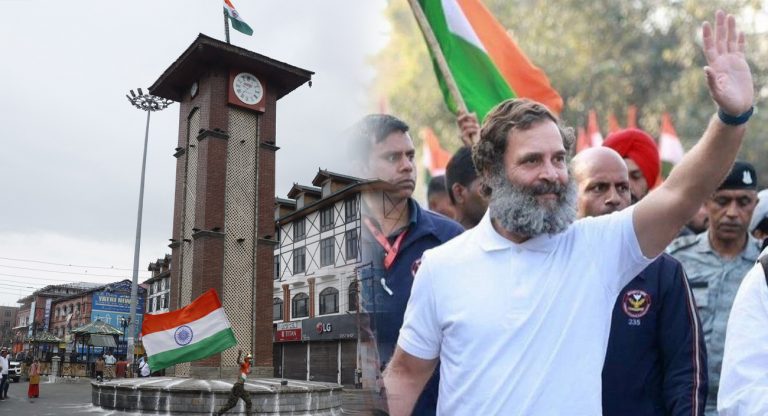
While the Bharat Jodo Yatra led by Congress leader Rahul Gandhi is slated to enter Jammu and Kashmir on January 19, AICC in-charge of Jammu & Kashmir and party MP Rajni Patil said on Tuesday that Gandhi will not hoist India’s national flag at Lal Chowk. She said that the party believes that the unfurling Tricolor at the Lal Chowk in Kashmir is part of ‘the RSS agenda’. Instead, Gandhi will hoist the national flag at party headquarters in Srinagar on January 30, Patil said.
“We do not believe in the agenda of the RSS to hoist the Tricolour at Lal Chowk, where it has already flown high,” Patil said when pressed about Rahul Gandhi’s plan to unfurl the national flag at the end of the Bharat Jodo Yatra on January 30. According to the reports, the final gathering to celebrate the conclusion of the Yatra will be held at Srinagar’s Sher-i-Kashmir International Convention Centre (SKICC).
Patil was addressing the media after about 60 members of Ghulam Nabi Azad’s Democratic Azad Party (DAP), many of whom were founding members of the DAP, rejoined the Congress on Tuesday. Nizam-ud-Din Khatana, a two-time former MLC, and Gulzar Khatana, former vice-chairman of the Gujjar and Bakerwal Advisory Board, are among those who have quit DAP.
Providing more information about the Bharat Jodo Yatra, which will arrive in Jammu on January 19, Patil said the march will rest for the night. Former chief minister Farooq Abdullah and ex-minister Choudhary Lal Singh have indicated that they will participate in the Yatra in Lakhanpur next week. According to Patil, Omar Abdullah is also likely to join the Yatra in Kashmir, while CPI(M) leader M Y Tarigami, Awami National Conference leader Muzaffar Shah, and Shiv Sena leaders would take part at different locations.
Patil stated that ex-CM Mehbooba Mufti has expressed her desire to join the Yatra with her mother and daughter, but it is unclear where the three would meet. According to a statement issued by Uddhav Thackeray Sena, MP Sanjay Raut, who is visiting Jammu for three days, would also be one of the participants. Reports mention that the Congress has written to 21 political parties inviting them to attend the Yatra at its conclusion in Srinagar.
Patil stated that important leaders from India and outside will attend the SKICC ceremony to celebrate the completion of the Yatra. Reacting to Patil’s comments about flag-hoisting at Lal Chowk being the RSS’s agenda, the BJP responded by saying that if given an option, the party would like to see the Tricolor unfurled at Lal Chowk on January 26 every year.
“Making Lal Chowk, which had been the nerve centre of separatism, the nerve centre of nationalism will be the answer to all separatist activities there. Unfurling the Tricolour there is not RSS agenda, but it is India vs separatist forces in Kashmir, and Lal Chowk being the nerve centre of Kashmir politics, only nationalist forces shall be there,” said BJP’s Jammu and Kashmir chief spokesperson Sunil Sethi.
Alleging that the Congress together with National Conference has utilized Lal Chowk as a symbol of specific ideology since 1947, he added that “even if it wants to unfurl the Tricolour there, it will make uneasy both the National Conference and PDP who are supporting the Rahul Gandhi yatra”.
When asked about the significance of Lal Chowk, he was quoted as saying that it was the nerve center of Kashmir politics and a center of separatist activity where anti-India and pro-Pakistan statements were made in the past. “If one wants to ignore its historical importance, it is one’s own choice, but it is a big thing that the tricolour is unfurled there,’’ he said.
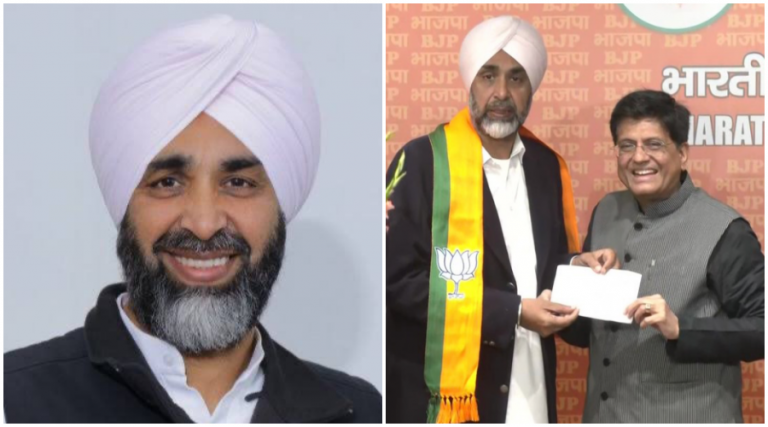
Hours after resigning from the Congress, Punjab leader Manpreet Singh Badal joined the Bharatiya Janata Party in the presence of Union minister Piyush Goel and BJP general secretary Tarun Chugh on Wednesday.
Manpreet Singh Badal earlier on Wednesday resigned from the primary membership of the Congress party and alleged that the Punjab unit of the Congress supported “factionalism.” Nephew of SAD patriarch Parkash Singh Badal, Manpreet started his political career in 1995 by winning the Gidderbaha bye-election.
In his almost three-decade-long political career, it is the fourth party Manpreet joins. He had differences with Punjab Congress chief Amarinder Singh Raja Warring.
Manpreet Badal while addressing the media said, “It’s a saying in Punjabi that ‘main aaya bjp office mein aapne mujhe hatho pe nahi aankho pe bitha lia’. I have been in politics for 30 years. A few days ago I met a tiger who was HM of India, he told me that Punjab has been attacked 400 times. His statement that ‘we will do everything for Punjab’ touched me and I am always concerned for Punjab and the future of Punjab.”
In a letter addressed to Congress MP Rahul Gandhi, Manpreet Badal wrote that a coterie of men in Delhi is running the affairs in Punjab and this has only increased factionalism.
Manpreet wrote that the way the Congress party has conducted its affairs and taken decisions, especially with regard to Punjab, has been disappointing.
BJP is constantly giving shocks to the Congress party in Punjab. About a dozen Congress leaders including Captain Amarinder Singh, and Sunil Jakhar had joined BJP. Now another big blow has been given in the form of Manpreet Badal quitting the Congress.
(This news report is published from a syndicated feed. Except for the headline, the content has not been written or edited by OpIndia staff)
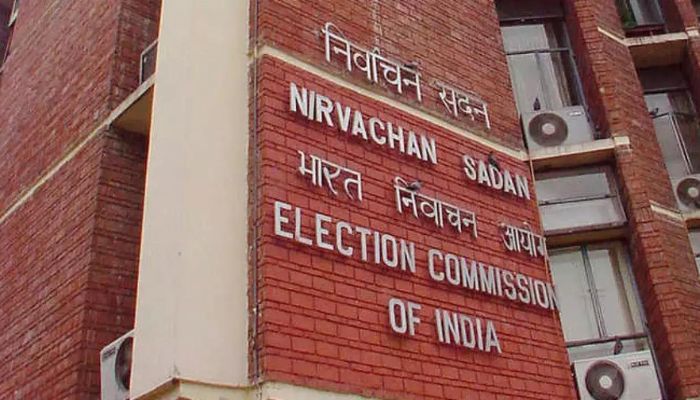
The Election Commission on Wednesday announced the schedule for Assembly elections to the northeastern states of Tripura, Meghalaya and Nagaland to be held in February-March this year. The results of all three states will be declared on March 2, 2023.
“Voting for Assembly elections in Tripura will be held in a single phase on February 16 and in Nagaland and Meghalaya on February 27. The results will be declared on March 2,” Chief Election Commissioner Rajiv Kumar said during a press conference.
The Assembly polls in the northeastern states of Nagaland, Meghalaya and Tripura were announced on Wednesday, thus beginning the election season in 2023.
The CEC said that the terms of the poll-bound states of in Nagaland, Meghalaya and Tripura are coming to an end on March 12, 15, and 22 respectively.
“The term of Assemblies of respective states in Nagaland, Meghalaya and Tripura are respectively due to expire on March 12, 15, and 22. The 3 states have 60 Assembly constituencies each,” the CEC said.
Detailing the number of voters in the poll-bound states, Kumar said, “There are more than 62.8 lakh electors combined in Nagaland, Meghalaya & Tripura including – 31.47 lakh female electors, 97,000 80+ voters, and 31,700 PwD voters. Over 1.76 lakh first-time voters to participate in the elections in 3 states.”
He also informed that there will be some polling stations managed completely by PwDs and women staff. Women will be in command in 376 PS across Nagaland, Meghalaya and Tripura.
Noting that the three states have “terrain-related challenges”, Kumar reiterated the ECI’s commitment in conducting free and fair polls.
“The 3 states have terrain-related challenges, but the Commission is committed to participating free and fair participative accessible and ethical elections in these three states,” he said.
The CEC said that the officials from the Commission recently visited the three states and met the officials regarding the poll preparations and directed them to resort to “zero tolerance” for any kind of violence during the elections.
“We recently visited these three states from January 11 to 15, and met all the district collectors, SPs, DGs and all the enforcement agencies. There are only 2-3 states of the entire country in which pre-poll, during the poll or post-poll violence is left. there was no violence in the last 12 elections. With the help of the district administration, we have told them very clearly that society should have zero tolerance for any kind of violence during the elections,” he said.
(This news report is published from a syndicated feed. Except for the headline, the content has not been written or edited by OpIndia staff)
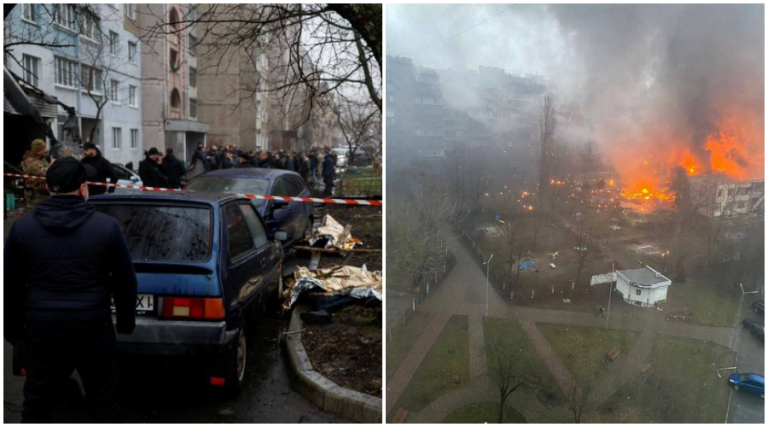
In Ukraine, the interior minister Denys Monastyrsky, his deputy and 16 others have been killed in a tragic helicopter crash in Brovary, just outside of Kyiv on January 18.
The helicopter crashed near a kindergarten, killing three nursery children, as per reports.
Along with Denys Monastyrsky, his first deputy Yevgeny Yenin and state secretary Yuriy Lubkovich were among 8 government officials who were travelling in that helicopter.
The helicopter was reportedly a Eurocopter EC225 LP Super Puma. It is not clear whether it was shot down or it crashed due to any other factor.
#BreakingNews | 16 people including Ukraine's interior minister and other senior officials killed when a helicopter crash in a suburb outside Kyiv, reports National Police Chief pic.twitter.com/ADHjxRcXud
As per reports, National police chief Ihor Klymenko confirmed on social media that the helicopter belonged to Ukraine’s state emergency services.
The helicopter reportedly first crashed into the kindergarten before hitting a nearby residential building.
Oleksiy Kuleba, the head of Kyiv’s regional military administration has informed that the crash has left 29 persons injured and 18 dead.
More details on the incident are awaited.
It is notable here that just a day ago, Aleksey Arestovich, one of President Zelensky’s top advisors had admitted that the missile explosion on a residential building in Dnipro recently was the result of a Ukrainian air defence deflecting an incoming missile. Soon after admitting this, Aleksey Arestovich had resigned from his post.
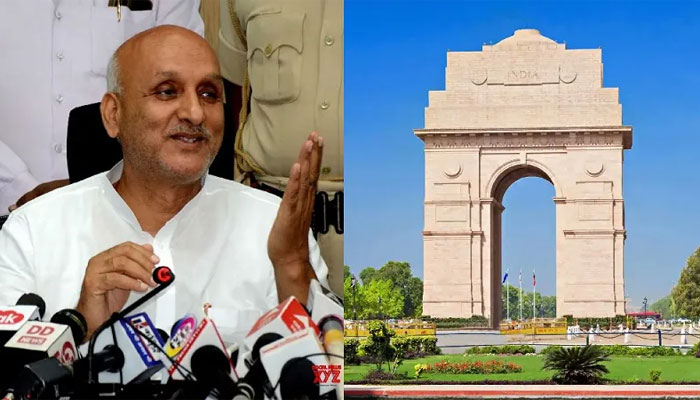
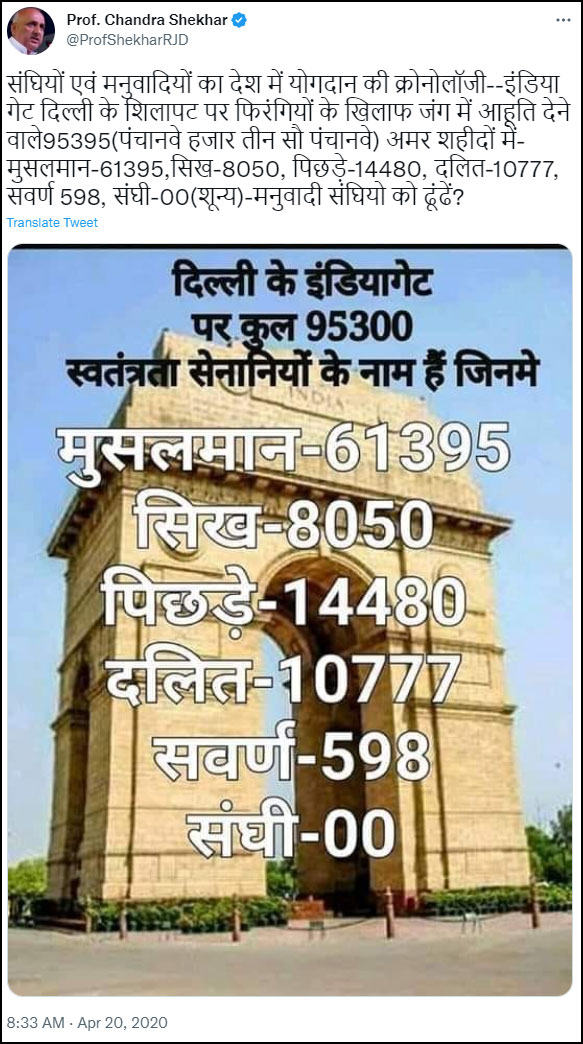
On January 18, an old tweet from Bihar Education Minister Professor Chandra Shekhar who insulted Ramcharitmanas started making rounds on social media, where he peddled WhatsApp university-level ‘gyaan’. In a tweet from April 20, 2020, Shekhar claimed that there was no name of a “Sanghi” on India Gate, where thousands of names of martyrs were written.
Source: Twitter
He said, “Chronology of contribution of Sanghis and Manuwadis to the country – Among the 95,395 immortal martyrs who sacrificed their lives in the war against British whose named are inscribed on India Gate, Delhi, Muslims – 61,395, Sikh – 8,050, Backward – 14,480, Dalit – 10,777, Savarna 598, Sanghi – 00. Should we try finding Manuwadi Sanghi?”
Bihar Education Minister Chandra Shekhar peddling Whatsapp University misinformation
The reality, however, is strikingly different from what Shekhar had claimed. There are no names of freedom fighters on India Gate. Instead, it has the names of the soldiers of the British Indian Army who died in the First World War (1914-18) and the Third-Anglo-Afghan war (1919). It is a war memorial that has the names of over 13,000 soldiers. It pays tribute to all the 70,000 soldiers of the “British Indian Army” who died in these two wars.
Notably, India Gate was built under the Imperial War Graves Commission, which was formed in December 1917. The foundation stone was laid on February 10, 1921. On February 2, 1931, India Gate was inaugurated, over 16 years before India became independent. There are no names of freedom fighters who fought the British. The claim of having names of over 61,000 Muslims, over 8,000 Sikhs, over 14,000 Backward and over 10,000 Dalits is fake.
Chandra Shekhar insults Ramcharitmanas
Bihar education minister Chandrashekhar had last week touched off a major controversy by saying that the Hindu scripture Ramcharitmanas should be burnt like Manusmriti because it promotes caste division in society. He made the comments during the 15th convocation ceremony of the Nalanda Open University in Patna.
During his speech event, Chandrashekhar claimed that books like Manusmriti, Ramcharitmanas by Tulsidas and Bunch of Thoughts by Madhav Sadashivrao Golwalkar worked towards keeping 85% of the population in the country backwards. He claimed that while Manusmriti abuses lower castes, Ramcharitmanas advocates keeping lower caste people illiterate.
He alleged that the three books, Manusmriti, Ramcharitmanas and Bunch of Thoughts have been spreading caste-related hatred in different eras.
A four-page report of Air India crew members has come to light in contrast to what the complainant said in the infamous pee-gate incident. As per the statement, the complainant was provoked by a co-passenger and her behaviour during the incident “cast doubt on her integrity and intent”.
In a shocking incident, it was reported that an inebriated passenger allegedly urinated on a 72-year-old lady who was flying in business class on Air India’s NYC to Delhi flight AI 102. The incident took place on November 26, 2022. However, it only came to light recently after AI issued a formal statement on the matter.
As per the Moneycontrol report, an AI crew member said that a passenger identified as S Bhattacharjee had requested to upgrade his business class seat to first class. However, the request was denied. He was sitting on 8A in front of the complainant, who was sitting on 9A. The accused, Shankar Mishra, was sitting on 8C.
Notably, the statement made by the passenger sitting on 9C also contradicts the statement made by the complainant.
The crew member said that the complainant came to them in the galley and alleged that a co-passenger urinated on her, and she needed help cleaning. The crew members alleged she started taking off her clothes in the galley. The crew member immediately swung into action and provided towels, antiseptic (savlon), slippers, and socks and helped her change into the airline’s nightwear. They requested she change in the toilet instead of in the galley.
While the passenger was getting cleaned up, the crew members cleaned and sanitized her seat, the area around it, her shoes and the bags. The complainant requested that her shoes should be dry cleaned, but the crew members told her it was not possible while on the flight. She also demanded compensation for the soiled belongings and said she was considering a police complaint. Reportedly, Bhattacharjee promised her to arrange a reporter on landing.
The crew member said that the complainant was informed that upon landing, all possible assistance would be given to her, and a wheelchair would be waiting for her. Notably, the crew member said she did not ask for another seat, but they moved her to 12C. She thanked the crew and fell asleep.
Later, the accused person met the complainant and apologized for his behaviour. They worked out a compromise, and he agreed to pay for dry cleaning and would get the clean clothes delivered to her. He also agreed to pay $200 as compensation.
In the report, the crew said that a couple of hours before the landing, the complainant again complained to the crew. She claimed that the crew did not properly clean her shoes and bags this time. The crew noted that she got agitated only after talking to Bhattacharjee and changed her position on the matter. Earlier, he had asked for an upgrade to first class. After the incident, he refused to sit next to Mishra and asked for an upgrade for both the victim and himself.
In a statement, Bhattacharjee denied the allegations and said, “All the allegations in the Air India internal report are untrue; I did not ask for an upgrade; I submitted a written complaint to the crew before landing; and I stood up for a lady in need.”
The passenger sitting on 9C also told a different story. Neither Moneycontrol nor OpIndia could verify the report and statements.
Furthermore, it was said in the report that the complainant was provided with a wheelchair on priority at arrival. However, she claimed that she did not get one on the landing. However, when an employee told her that she saw the complainant sitting in a wheelchair, she changed her stance and said she left the wheelchair as she was “in a hurry”.
While the complainant claimed that the accused backed out from the promise of compensation, the accused showed proof of payment.
The pee-gate that shocked the nation
A complaint was filed by an elderly lady against Mishra, alleging he urinated on her during the flight. A case was filed against Mishra under relative sections, and the police arrested him. Later the court sent him to judicial custody. He was placed on the no-fly list for 30 days, and the entire crew was suspended as they allegedly failed to address the complainant appropriately and adequately. During the court hearing, Mishra’s lawyer claimed that he did not commit the crime and the complainant’s seat was inaccessible to him. Furthermore, he claimed that the complainant might have soiled herself and blamed Mishra to save herself from embarrassment.
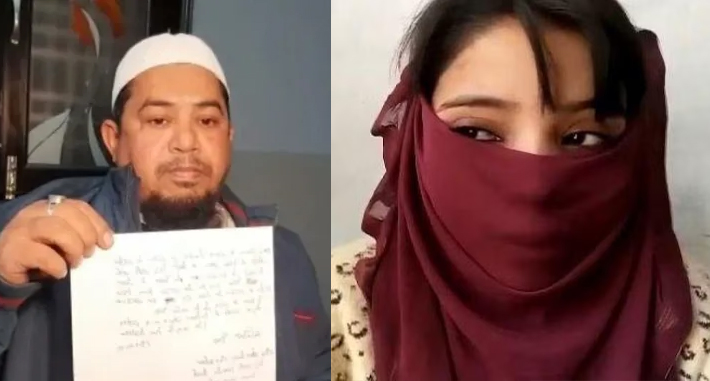
Days after a man named Asim Hussain had claimed that he was assaulted by some men on a train in Moradabad on false charges of theft and also for not chanting ‘Jai Shri Ram’, Hussain has been arrested for molesting a 20-year-old girl on the train, which had resulted in his beating by fellow passengers. The businessman was arrested on Tuesday after the victim woman reached the Government Railway Police to lodge a complaint against him.
It is notable that the video of Moradabad merchant Asim Hussain being assaulted on the Padmavat Express from Delhi to Pratapgarh went viral on social media, which showed that his shirt was removed and he was beaten by a man using a belt. After the video went viral, he filed a complaint, alleging that he was assaulted on false charges of theft. Hussain had also claimed that he was asked to chant ‘Jai Shri Ram’, and was assaulted more for refusing to do so.
However, there was a twist in the incident, with the GRP police stating that the mob had beaten Asim Hussain since he had molested a girl on the train, and denied any religious angle to the incident. The police had already detained the two persons who had beaten Hussain but had released them on bail as till then no case was filed by Hussain.
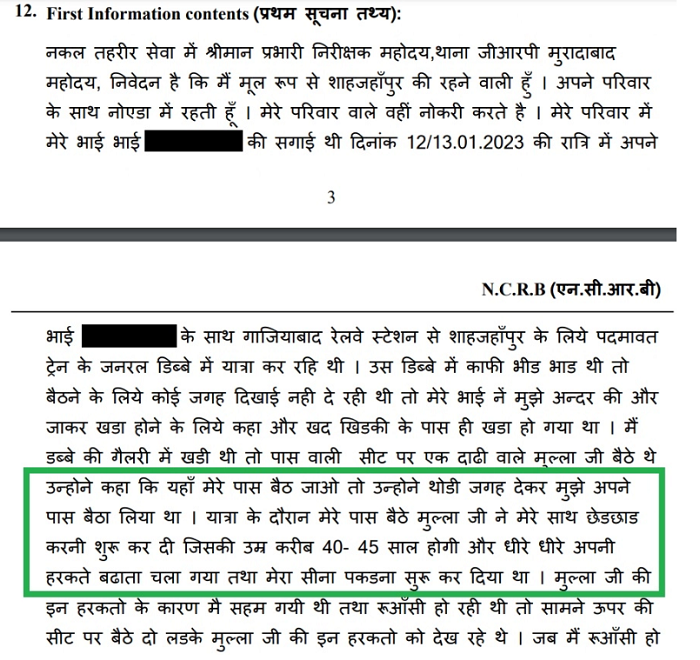
Now, Asim Hussain has been arrested after a complaint was registered by the Shahajahanpur-based 20-year-old girl who was molested by the accused while on the train. The girl said that she along with her brother had boarded the train in Ghaziabad and she was molested by Asim after asking her to sit beside him.
In the complaint, she mentioned that the train was crowded and that there was no place to sit. Her brother was standing near the door and asked her to find a seat inside the coach. Seeing her, Asim Hussain offered her to sit beside him by making some space. But after some time then started to touch her inappropriately, including touching her breasts. When she raised an alarm about it and got up from the seat, fellow passengers noticed what was happening and assaulted Asim. She also added that the accused was not made to chant any slogan by the passengers, as alleged by him.
‘I was standing in the coach when a Mullah with a beard sitting in a nearby seat made space and invited me to sit beside him. During the journey, the 40-45-year-old Mullah started to molest me, and slowly increasing his activities started to hold my chest. I was scared due to these activities of the Mullah and started to cry, when two youths sitting in the upper berth on the front saw this,’ the girl said in her complaint. She added that after the passengers saw the incident, the fight started. The girl also said that Asim Hussain was not asked to chant any slogan, as he is alleging.
Complaint registered by the girl
The GRP also confirmed that the claims of pushing Asim Hussain to scream religious slogans were a lie. According to the police, the woman left Ghaziabad with her brother and was sexually assaulted by Asim on the way. The girl hails from Shahajahanpur but currently stays in Noida with her family.
The incident happened on January 12. The accused had alleged that when he was travelling on Padmawat Express, 8-10 people started to cause disturbances, and suddenly someone shouted ‘ye Mulla chor hai’ (this Mulla is a thief). Talking to reporters, Hussain then alleged he was beaten by a group of people, his beard was pulled, and that he was asked to chant Jai Shri Ram.
Also, AIMIM head Asaduddin Owaisi and Congress lawmaker Imran Pratapgarhi uploaded Hussain’s video, saying that a Muslim businessman was assaulted for not chanting ‘Jai Shri Ram’. However, after probing the incident, Railway Police said that there was no religious angle behind the incident, and Asim Hussain was beaten on the train on the allegation of molesting women. Police also denied the charge that he was beaten for not chanting Jai Shri Ram.
According to the police, two youths seated in front were monitoring Hussain’s conduct, and they thrashed Asim. Asim also apologized during this time. A day after the incident, he went to the Moradabad GRP police station with AIMIM workers and filed a complaint of assault for not shouting ‘Jai Shri Ram’. He also accused all his money was taken away.
The Police had dismissed the earlier case filed against the unidentified persons who thrashed the accused for molesting a girl after following relevant procedure. At present, the case has been registered against Asim Hussain based on the complaint filed by the victim woman and the accused has been arrested.
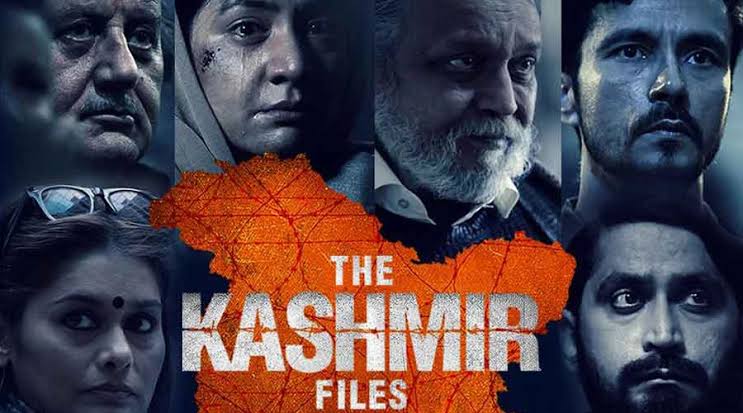
The Kashmir Files, a film directed by Vivek Agnihotri, is set to re-release in theatres on January 19—the day that is observed by the Kashmiri Hindu communities as Exodus Day. Agnihotri announced the news on social media.
“ANNOUNCEMENT: TheKashmirFiles is re-releasing on 19th January – The Kashmiri Hindu Genocide Day. This is the first time ever a film is releasing twice in a year. If you missed watching it on BIG SCREEN, book your tickets NOW,” Agnihotri tweeted.
The re-release of “The Kashmir Files” directed by Vivek Agnihotri, is scheduled to coincide with ‘Cinema Lovers Day’ on January 20th. On this day, tickets for the film will be available for just Rs 99 in all theatres. The film is also currently available on the streaming platform ZEE5.
The Kashmiri Hindu Genocide Day
The movie scheduled to re-release on January 19 also coincides with the Kashmiri Hindu Genocide Day, the day when millions of Kashmiri Pandits were forced to abandon their homes in the Valley and leave for safer destinations. On this day, in 1990, lakhs of Kashmiri Hindus were forced into exile by the Islamist violence that included targeted killings of Hindus in the valley. There were announcements made from mosques asking Kashmiri Hindu men to leave the valley, leaving their women behind. The chants of ‘convert (to Islam), leave or die’ echoed in the valley.
It has been 32 years and the Pandits are still looking up to the political dispensation for redressal and resettlement in the Valley but have faced opposition from the usual suspects who allege that resettlement would impact the demography in the state. In this context, The Kashmir Files has lent voice to the Kashmiri Pandits awaiting justice and brought their story to the world that was diligently taught to look the other way over their exodus from the Valley due to the rise in Islamic terrorism.
The movie struck a chord with the audience and ended up being one of the highest-grossing Hindi movies in the calendar year 2022. The movie also remained the only Hindi movie to feature in the IMDB’s list of top 10 popular movies of the year, which was otherwise populated by hugely popular South Indian movies.
The Kashmir Files
The film takes viewers back to 1989, when due to rising Islamic Jihad, a huge conflict erupted in Kashmir, forcing the great majority of Hindus to flee the valley. According to estimates, roughly 100,000 of the valley’s total 140,000 Kashmiri Pandit inhabitants migrated between February and March 1990. More of them fled in the years that followed until just about 3,000 families remained in the valley by 2011.
The movie which is based on video interviews with first-generation Kashmiri Pandit victims of the Kashmir Genocide begins with the episode of the year 1990 when the then CM of Jammu and Kashmir Farooq Abdullah had tendered his resignation. Abdullah had lost control back in 1984, probably after he had visited a conference in Kashmir and shared the platform with the Jammu and Kashmir Liberation Front’s (JKLF) leader Yasin Malik. Later Ghulam Mohammad Shah, who was supported by the Congress party replaced his brother-in-law Farooq Abdullah and assumed the role of the state Chief Minister.
The Kashmir Files’ is one of the few honest attempts in the last three decades to chronicle the Kashmiri Pandit genocide
Ever since it hit the theatres, the film had come under intense fire from the leftist ecosystem, which has sought to denigrate the movie and term the real-life incidents showcased in it as the figment of the director’s imagination. Far from admitting their apathy to the plight of Kashmiri Pandits, the detractors often pompously advise them to move towards reconciliation without harbouring the feeling of resentment and retribution. But they fail to grasp that the first step towards reconciliation is acceptance of truth, which has been denied to Kashmiri Pandits for more than thirty years. Even today, when a movie chronicling their genocide is being screened, members of the Left intelligentsia do not shy away from denigrating it.
Additionally, not a single Kashmiri Pandit has picked up weapons to avenge the wrongs wrought upon them. Instead, they have reposed their faith in the judiciary and law enforcement apparatus to deliver them justice. All they desire now is an acknowledgement of the genocide that was assiduously kept under wraps until now.
‘The Kashmir Files’ is one of a few honest attempts made in the last three decades to bring out open the long-suppressed truth about the genocide of Kashmiri Pandits. And this is perhaps why it has struck a chord with the audience. The ‘Liberals’ can keep harping that ‘The Kashmir Files’ is a movie directed to gin up anti-Muslim sentiments. But by vilifying the movie, they are only whitewashing the crimes of Islamists and denying the genocide of Kashmiri Pandits, which they have been conscientiously doing for more than 3 decades.
In 2015, when the BJP was in power in Chhattisgarh and Dr Raman Singh was the Chief Minister, Congress had alleged that the government was distributing sub-standard quality grains under the PDS and that officials had received kickbacks from rice millers to allow this. The Nagrik Apurti Nigam is the nodal agency in Chhattisgarh responsible for procuring and distributing food grains under PDS. The BJP government had launched a probe into what came to be known as the NAN scam and subsequently, 27 people were booked by the BJP govt – Anil Tuteja and Alok Shukla being the prime accused. ACB later started a money laundering probe as well and a chargesheet was filed in 2015. After this, Congress came to power in Chhattisgarh.
After Bhupesh Baghel took the reigns, an SIT was formed to probe the scam because the prime accused, Anil Tuteja, had alleged that the investigation was unfair. Since then, various pieces of evidence have come to the fore, proving that Bhupesh Baghel was personally shielding the prime accused, Anil Tuteja, and was instead trying to implicate Raman Singh in the scam. In 2020, Tuteja got bail and immediately, he was appointed by the Baghel govt again. Tuteja was the Joint Secretary for Commerce and Industries and Shukla became the Principal Secretary in charge of Education and other departments.
While Congress was first to bring up the scam in 2015, ample evidence was later recovered that proved that it was actually the Congress government functionaries and the Chief Minister himself was shielding the prime accused Anil Tuteja.
Exclusive WhatsApp chats accessed by OpIndia and what they reveal
OpIndia has accessed Whatsapp chats of Anil Tuteja-IAS Officer, presently Joint Secretary Industries and his Son Yash Tuteja, which was retrieved by Income Tax consequent to its raids conducted in Chhattisgarh, wherein his mobile phone was seized in February 2020. These Whatsapp chats now in possession of OpIndia contain the messages exchanged between the Tutejas and senior IPS officers in the State namely, SRP Kalluri, Kalyan Elesela, G.P Singh and Arif Sheikh. The chats clearly demonstrate that the entire criminal justice delivery system in the State is being abused, misused and mutilated at the behest of Anil Tuteja and his son Yash Tuteja.
The conduct of successive Senior IPS officers in relation to the NAN Scam, as evidenced by the Whatsapp chats, makes it amply clear that top police officers of the state, have been reduced to being aids of the prime accused in the case and are actively conspiring with Anil Tuteja and his Son Yash Tuteja, not just to undermine the sanctity of the NAN Trial, where Anil Tuteja, is a prime accused but also to fix officers and register FIRs against those whose interest conflict with that of all-powerful Tutejas.
The Chats and the sworn affidavit of a key IPS officer in the state, G.P Singh (who himself is a party to these chats), comprehensively reveal that Anil Tuteja and his son Yash Tuteja, in collusion with Congress CM Bhupesh Baghel and other important Police officers and public functionaries, that there was a hitlist against political opponents and the Chief Minister was trying not just to help Tuteja but also implicate Ex-Chief Minister, Raman Singh and his family members, former Principle Secretary Aman Singh and his wife Yasmeen Singh, Former DG (Police) Mukesh Gupta, Ashok Chaturvedi and Chintamani Chandrakar.
The gravity of the situation as evidenced by the Whatsapp chats can be inferred from the fact that the Director General of Police, who otherwise is in charge of Police administration in the State, has not just requested the son of Anil Tuteja to effect transfers and postings in his department, but has also justified such request by emphasizing how such transfers/posting/promotion or suspension would serve the best interest of Tuteja. In addition to that, every strategy of the prosecution and the investigating agency in relation to the NAN trial is either dictated or vetted by either Anil Tuteja or his son.
The Whatsapp chat reveals that officers like SRP Kalluri, Kalyan Elesela, G. P Singh, D. M Awasthi (the then DGP of Chhattisgarh), and Arif Sheikh, are all dancing to the tunes of Anil Tuteja.
Even for small favours like securing gym membership for one’s spouse with a personal trainer an officer of IPS rank, Kalyan Elesela, is dependent on Anil Tuteja and his son Yash. In return for these favours, the IPS officers are filing status reports in High Court modified and amended by Anil Tuteja – the prime accused. The chats further reveal that G.P Singh, the ADG who succeeded Kaluri as head of EOW/ACB is not just drafting a proposed order of the Supreme Court but also is acting as a Hawala operator to secure the interest of Anil Tuteja.
What is interesting is the fact that the same GP Singh, whose promotion to ADG Rank (as revealed by the Whatsapp chats) was facilitated by Anil Tuteja as a reward for his cooperation in subverting proceedings in the NAN case and for fixing the likes of Mukesh Gupta and Aman Singh, was subsequently not just suspended by the Chhattisgarh Govt but was arrested in multiple FIRs.
He has now filed a petition in the Supreme Court saying that actions against him were taken as he failed to deliver on the political hitlist which was given to him by none other than Chief Minister Bhupesh Bhagel, wherein he was asked to target the likes of Raman Singh, his son Abhishek Singh, Punit Gupta, his erstwhile Principal Secretary – Aman Singh his wife Yasmine Singh, Mukesh Gupta, Ashok Chaturvedi and Chintamani Chandrakar. It is quite pertinent that while the said GP Singh was in charge of EOW, FIRs were registered against Mukesh Gupta, Aman Singh and his wife Yasmin Singh, in connivance with Anil Tuteja, as is apparent through the Whatsapp records.
The blatant subversion of the NAN case at the behest of Anil Tuteja and his son with the active collusion of State administration also finds corroboration in the application of the Directorate of Enforcement submitted before the Court seeking a stay of the order of the High Court of Chhattisgarh granting anticipatory bail to Anil Tuteja. On the 18th of November 2021, the Times of India reported:
“Message conversations seized by the IT department shockingly revealed that both the main accused (Tuteja and Shukla) in connivance with successive chiefs of prosecuting agency-Economic Offences Wing, Anti-Corruption Bureau of Chhattisgarh, a very senior law officer in the Chhattisgarh HC, members of the SIT and with the intervention of the Chief Minister have weakened the offence of corruption against them by procuring favourable reports from SIT and by actively threatening witness of predicate offences as well as offences of money laundering”.
“The transcript of such messages clearly reveal the nature of misuse of power in Chhattisgarh, the tampering of evidence and influencing the witnesses going on a potential conspiracy involving some constitutional functionaries also”.
While the Directorate of Enforcement has in its discretion and while taking into account the sensitivity of the transcript filed the WhatsApp transcripts in sealed envelopes to the court, OpIndia believes that to cover the corrupt nexus of high-ranking public officials, the veil of secrecy is not in the interest of the public and will only facilitate functionaries like Anil Tuteja, who through corrupt means and with the aid of CM Bhupesh Baghel and Senior IPS officers in the State have circumvented and trampled the due course of justice in the NAN case.
The chats accessed by OpIndia prove that the Congress government functionaries at the behest of the Chief Minister and prime accused Anil Tuteja were fabricating evidence and threatening witnesses to implicate Dr Raman Singh and his wife. In fact, the chats also show that Anil Tuteja was acting as the head of the NAN investigation where he himself was the prime accused and was coordinating the transfer of IPS officers, promotions and other favours doled to those who were willing to participate in these nefarious designs. Further, those who did not comply were being given punishment posting or worse, being implicated in false cases themselves.
What ED had said about HC judge meeting CM Baghel before accused got bail and how the Whatsapp chats corroborate sequence of events
On the 19th of October 2022, an explosive exchange took place in the Supreme Court, while hearing a case in connection with the NAN scam (Nagrik Apurti Nigam or Public Distribution Corporation scam) of Chhattisgarh. The case in the Supreme Court was filed by the Enforcement Directorate requesting a transfer of the case outside of the state alleging collusion between highly placed persons to save the prime accused in the case.
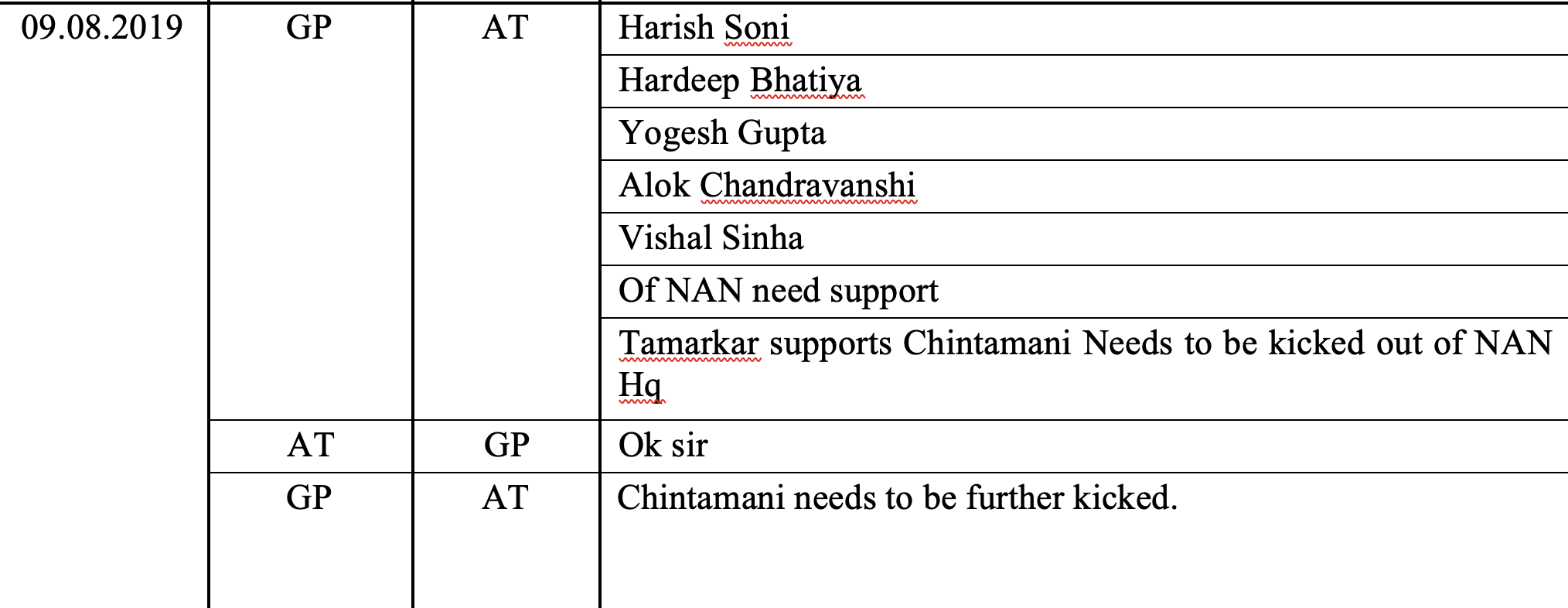
Let us take a chat that OpIndia accessed for example. In this chat, GP Singh (GP) is talking to Anil Tuteja (the prime accused in the NAN scam). GP Singh in this chat is sending the names of the witnesses in the case against Anil Tuteja who ‘need support’ because they were presumably willing to sell out and bail Tuteja out. GP Singh tells Tuteja that “Tamarkar”, who was someone who used to work at NAN needs to be “kicked out” because he supports Chintamani (another employee of NAN). Further, GP Singh tells Tuteja that Chintamani too needs to be “further kicked”.
In the diary that was recovered during the raids in the NAN investigation, a noting referred to one “CM Sir”. That “CM Sir” noting referred to Chintamani, however, as we show later, CM Baghel himself tried to pressurise witnesses to testify that “CM Sir” actually meant Dr Raman Singh (as he was the CM when the scam broke) signifying that Raman Singh was bribed (they were actively trying to fabricate evidence).
Interestingly, it was days after this chat that an FIR was filed against NAN employee Chintamani to pressurise him to admit that ‘CM Sir’ was indeed Dr Raman Singh and not him.
Chat summary
Solicitor General Tushar Mehta had said in the Supreme Court during the hearing that days before the prime accused in the case was granted bail, the High Court Judge had met the Chief Minister of Chattisgarh, Bhupesh Baghel. “The learned judge met the CM a few days before the bail. I have nothing more to say. I did not want to say this but if this cannot shock your lordships’ conscience, nothing can,” Tushar Mehta told the bench, comprising of the then CJI UU Lalit, justices Ajay Rastogi and S Ravindra Bhat.
“Everything is not entered into in black and white. There would not be an agreement signed by the chief minister and the learned judge,” SG had said. Citing this explosive information, ED had requested the trial to be transferred out of the state because of the active collusion of CM Bhupesh Baghel and other state functionaries to save the accused. It is pertinent to note that the lawyer representing the State of Chhatisgarh was senior Congress leader Kapil Sibal.
While making these allegations, Tushar Mehta had read out WhatsApp chats that indicated towards the High Court Judge meeting CM Baghel.
“Please see this –I was wondering if HCM could speak with him”. HCM means Hon’ble Chief Minister. “He has met HCM”. That happened on 11th October 2019 and the bail was granted thereafter. The accused is telling the co-accused this. “Necessary instructions to be given to AG”. Then they’re seen congratulating each other”, SG said.
This timeline is also confirmed by the chats that OpIndia has accessed. GP Singh (GP) messaged AT (Anil Tetuja) informing him that Alok Shukla (the other co-accused) had gotten bail. Tetuja in response says congratulations to GP Singh (Chief of EOW at the time) signalling clear collusion between the functionaries of the Congress government, EOW and the prime accused in the NAN scam.
Chat summary
Kapil Sibal had pointed out to the court that he had been instructed to place on the record that these allegations were false. Kapil Sibal told the Supreme Court that the High Court Judge had indeed never met the Chief Minister (Congress leader Bhupesh Baghel) and that there was no active collusion between the CM and state functionaries to save the prime accused.
Interestingly, ED had also levelled other allegations against the CM and the prime accused. The ED said that the CM and his close aide Anil Tuteja and Alok Shukla who are key accused in the NAN case were vetting and dictating the draft reports of the probe into their role in the NAN scam. These allegations were also rubbished by the state.
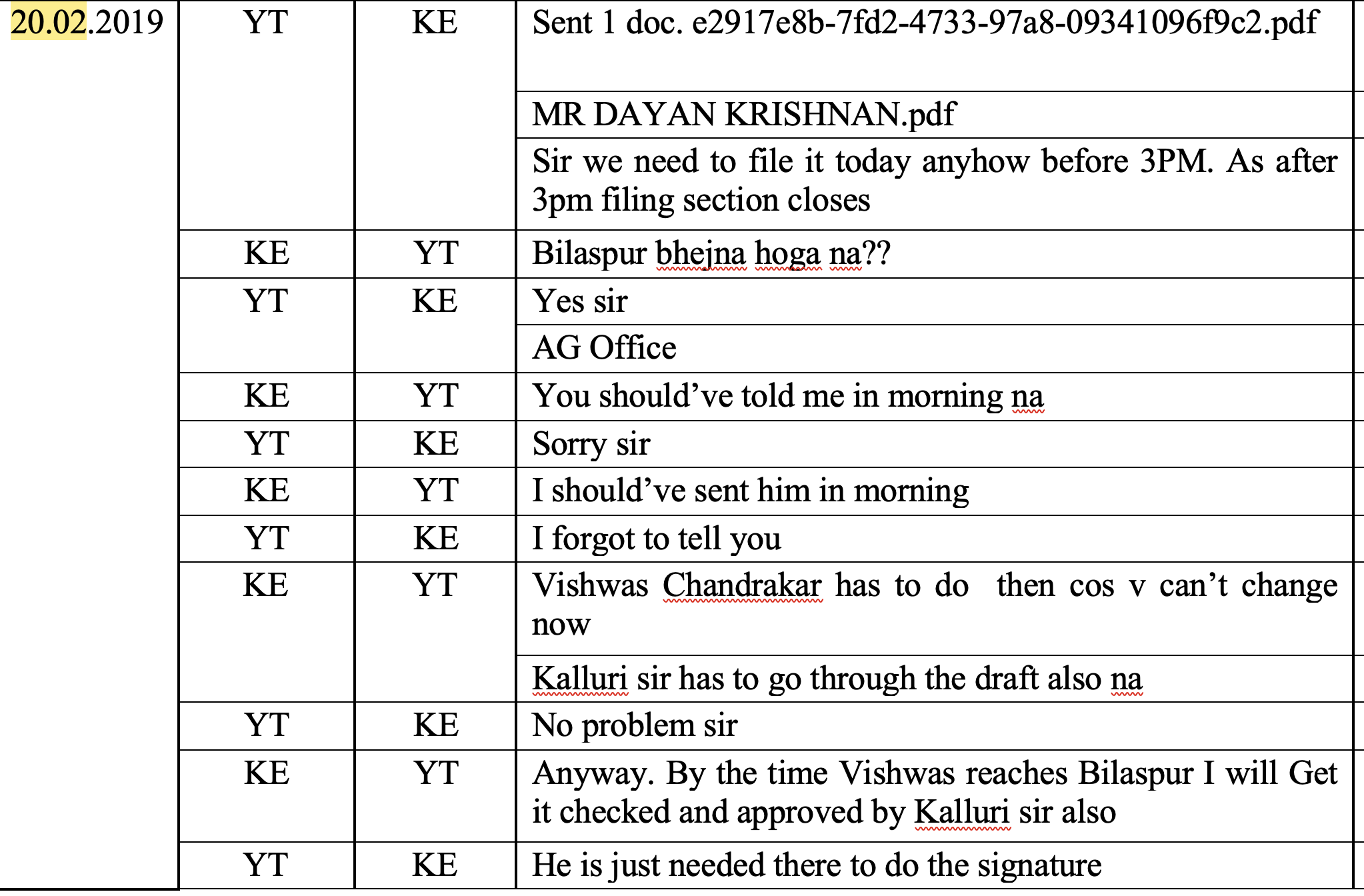
From the chats that OpIndia has accessed, this fact becomes extremely evident. In one such chat, Kalyan Elesela, who was the SP of EOW under SRP Kalluri, GP Singh and even Arif (all successive chiefs of EOW while the Congress govt was trying to implicate Raman Singh and others) is getting a draft of the Status Report to be filed by EOW in the High Court from Yash Tetuja, the son of the prime accused Anil Tetuja. Yash in the chat says that the status report needs to be filed before 3 PM and Elesela says that he should have sent the draft to him earlier since ‘Kalluri sir’ (Chief of EOW – SRP Kalluri) will also have to vet the draft. To this, Yash Tetuja arrogantly says that Kalluri merely has to sign the Status Report that was sent by Yash to Elesela. This indicates that even the status report by EOW, to be filed in the HC, was being drafted and prepared by the prime accused in the case.
Chat summary
Essentially, the ED has categorically pointed towards active collusion by the state functionaries and the CM himself in trying to save Anil Tuteja and Alok Shukla. Further, the ED also said that Tuteja, in essence, was a part of the investigation against himself.
In 2021, Enforcement Directorate (ED) furnished a stunning conversation among the accused in a sealed envelope in its Special Leave Petition filed in the Supreme Court. It was reported in the media that the chats revealed that Anil Tuteja and Alok Shukla, key accused in Naagrik Aapurti Nigam (NAN) scam, not only actively participated in constituting the Special Investigation Team (SIT) to probe their role in the scam but also ‘unofficially’ vetted, influenced, and changed its draft report on many occasions to weaken the case against them.
The chats that have been revealed so far in this article, it becomes evident that the allegations levelled by ED are true, given that chats corroborate most of the timelines mentioned.
While the documents span thousands of pages, one of the main characters in the conspiracy to fix BJP leader Raman Singh and others in a scam that had nothing to do with, was IPS officer GP Singh. While GP Singh had a run of good posting under the BJP government in Chhattisgarh, when the Congress government came to power, he was made the Chief of the EOW (Economic Offences Wing) – one of the most prized positions. It is revealed that GP Singh was later ousted and implicated and allegedly false cases by the Congress government because he had failed to implicate and jail Raman Singh, Mukesh Gupta, Aman Singh and others in the NAN scam.
At this point, it becomes imperative to talk about who Mukesh Gupta and Aman Singh are – the two IPS officers that the Congress government has been trying to implicate along with Dr Raman Singh. Mukesh Gupta was the chief of EOW when the BJP government (Raman Singh) was in power and had opened an investigation against Bhupesh Baghel in an unrelated scam. Aman Singh was the Principle Secretary of Dr Raman Singh when he was in power. Their names will feature further in the article, proving how they were being falsely implicated by CM Bhupesh Baghel and featured in a hitlist furnished by the CM.
The Congress government has maintained the NAN scam was perpetuated by the BJP government and that diary entries directly implicate Raman Singh in the scam, while he was the Chief Minister of the State. However, GP Singh, after being ousted and implicated, had claimed while speaking to the media that he had been asked by Bhupesh Baghel to falsely implicate Raman Singh in the NAN scam, however, when he refused, he was falsely implicated in a sedition case and in a case under Prevention of Money Laundering Act.
The chats that OpIndia has accessed shows active collusion even by GP Singh in attempting to save prime accused Tuteja and implicate Raman Singh.
GP Singh’s petition in the court and what it says about the ‘hitlist’ given to him by CM Bhupesh Baghel
Singh, on the 22nd of December 2022, filed a petition in the court where he details how he was pressurised to implicate the BJP leader and save Tuteja. In the petition that has been accessed by OpIndia, GP Singh tells the court that on the 14th of September 2019, he was summoned to the residence of the Chief Minister (Bhupesh Baghel) in the dead of the night and was directed to implicate Raman Singh the NAN scam just on the basis of certain diary entries that indicated payments to “CM Sir” and “CM Madam” seized during the NAN investigation. GP Singh then told Bhupesh Baghel that “CM sir” and “CM Madam” did not refer to Raman Singh and his wife, but referred to one officer Chinta Mani Chandrakar posted in NAN. Bhupesh Baghel would have none of it and told GP Singh to take the statement of one Shiv Shankar Bhatt of NAN who had come out of jail on bail with the help of the Congress government.
Essentially, GP Singh says in this case that the CM had asked him to get an oral statement from Bhatt, who would claim that “CM Sir” and “CM Madam” was indeed Raman Singh and not Chintamani – and he would be indebted to do so since the state had helped him get bail. When GP Singh said that would not be legally tenable, later, the Congress government due to the instructions of CM Baghel, “extracted” an affidavit out of Bhatt that said that the ‘CM Sir’ actually referred to CM Raman Singh – this was a fabrication.
Most explosively, before this midnight meeting concluded between GP Singh and CM Baghel, Singh was asked to inform the prime accused in the NAN Scam – Anil Tuteja – of the developments in the investigation. GP Singh says that Tuteja then contacted him on multiple occasions to get an update on the case and also insisted that erstwhile BJP government functionaries and the then CM, Raman Singh, should be implicated in the NAN scam.
GP Singh says that on the 10th of May 2020, he was called again for a private meeting with CM Bhupesh Baghel where he was once again instructed to implicate BJP leader Raman Singh and his wife in the NAN scam.
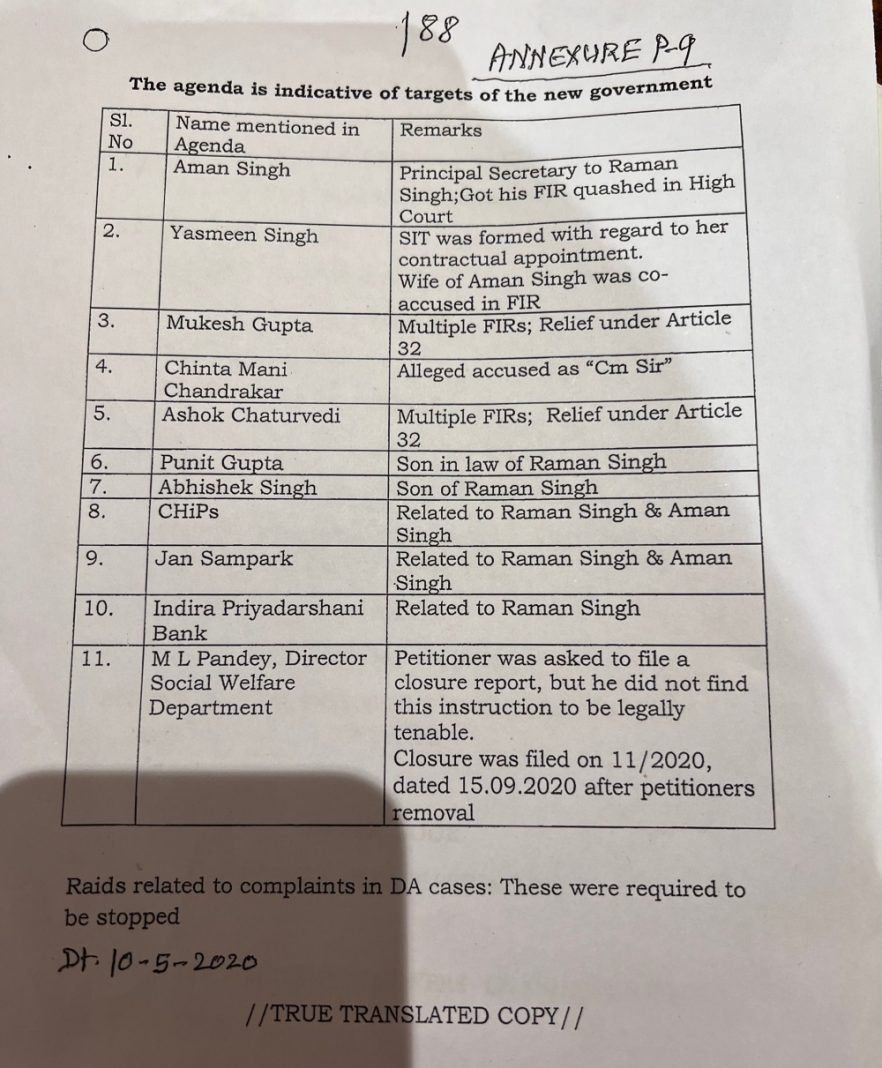
The petition further says, “The unsigned agenda is indicative of the political hitlist that was on their mind and certain closure of investigations that were motivated. He was ordered with some tone of finality that he must make the statement before the media implicating Dr Raman Singh and Mrs Veena Singh and conclude the investigation soon, “or else”. The threat was left looming in the air as Petitioner No. 1 was dismissed from the meeting”.
The “political hitlist” that GP Singh mentioned was attached as an annexure to the petition.
Submission by GP Singh of the hitlist
The petition further says, “When Petitioner No. 1 failed to the bidding of the higher-ups, he landed himself at odds with a political powerhouse of the State of Chhattisgarh. Within a few weeks of the meeting, he was arbitrarily transferred as a punishment posting”.
Attempt to implicate Aman Singh – the Principle Secretary of Dr Raman Singh when he was in power
In the hitlist that was furnished by CM Bhupesh Baghel to GP Singh, the then head of EOW (and who was colluding with Anil Tuteja), two names that feature prominently are Aman Singh and his wife Yasmin Singh. From the documents accessed by OpIndia, it becomes amply clear that a fabricated case was brought against him after the active collusion between GP Singh and Anil Tuteja. With the revelations made by GP Singh in court, it is safe to conclude that it was Congress CM Bhupesh Baghel who had given GP Singh the instructions to implicate Aman Singh and his wife. The documents further prove that the collusion was taking place to save Anil Tuteja at his behest.
Aman Kumar Singh, the then Principal Secretary to ex-Chief Minister, Dr Raman Singh and his wife Yasmin Singh were the prime targets after the regime change. The chats reveal that EOW was conducting a Preliminary Enquiry in a Disproportionate Asset case against Aman Singh and Yasmin Singh. The Whatsapp chats between EOW Chief and Anil Tuteja clearly reveal active connivance and conspiracy to fix Aman Singh and his wife with Tuteja acting like a handler of the EOW Chief.
The timelines of the Whatsapp chat show an interesting trend with chatter increasing in the month of February 2020 culminating with an FIR No. 09/2020 against Aman Singh and Yasmin Singh for a Disproportionate Asset case.
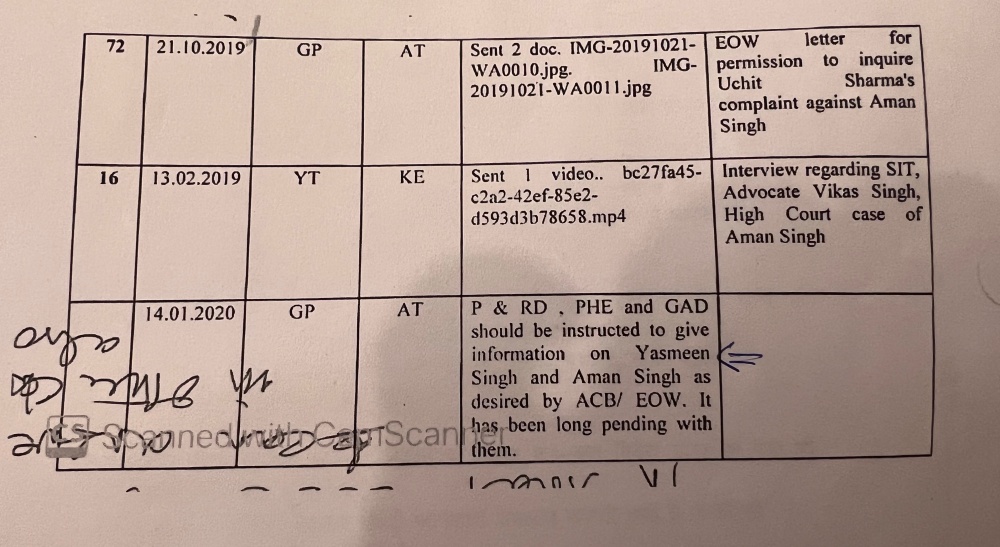
There are three primary chats that reveal the conspiracy to fix Aman Singh and his wife. This chat for example is from the 14th of January 2020. In this, GP Singh was telling Anil Tuteja that agencies should be instructed to provide information to EOW. It is pertinent to ask why the ADG was telling the prime accused in the NAN scam, Anil Tuteja to instruct EOW to provide information and how Tuteja wielded this much power in the Congress government.
Whatsapp chat
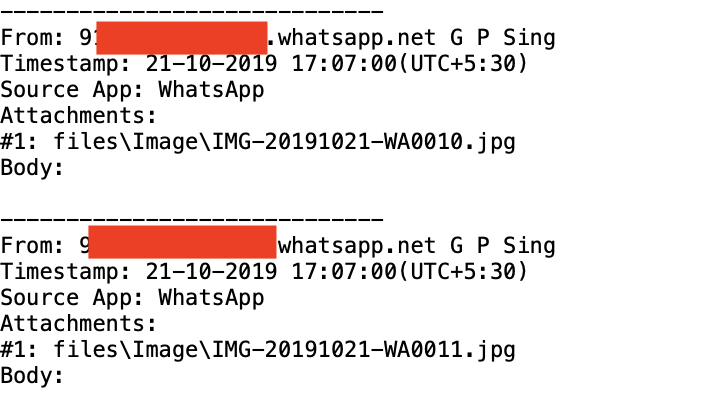
On the 21st of October 2019, before the above chat between GP Singh and Tuteja, GP Singh had sent two documents to Anil Tuteja.
Whatsapp chat
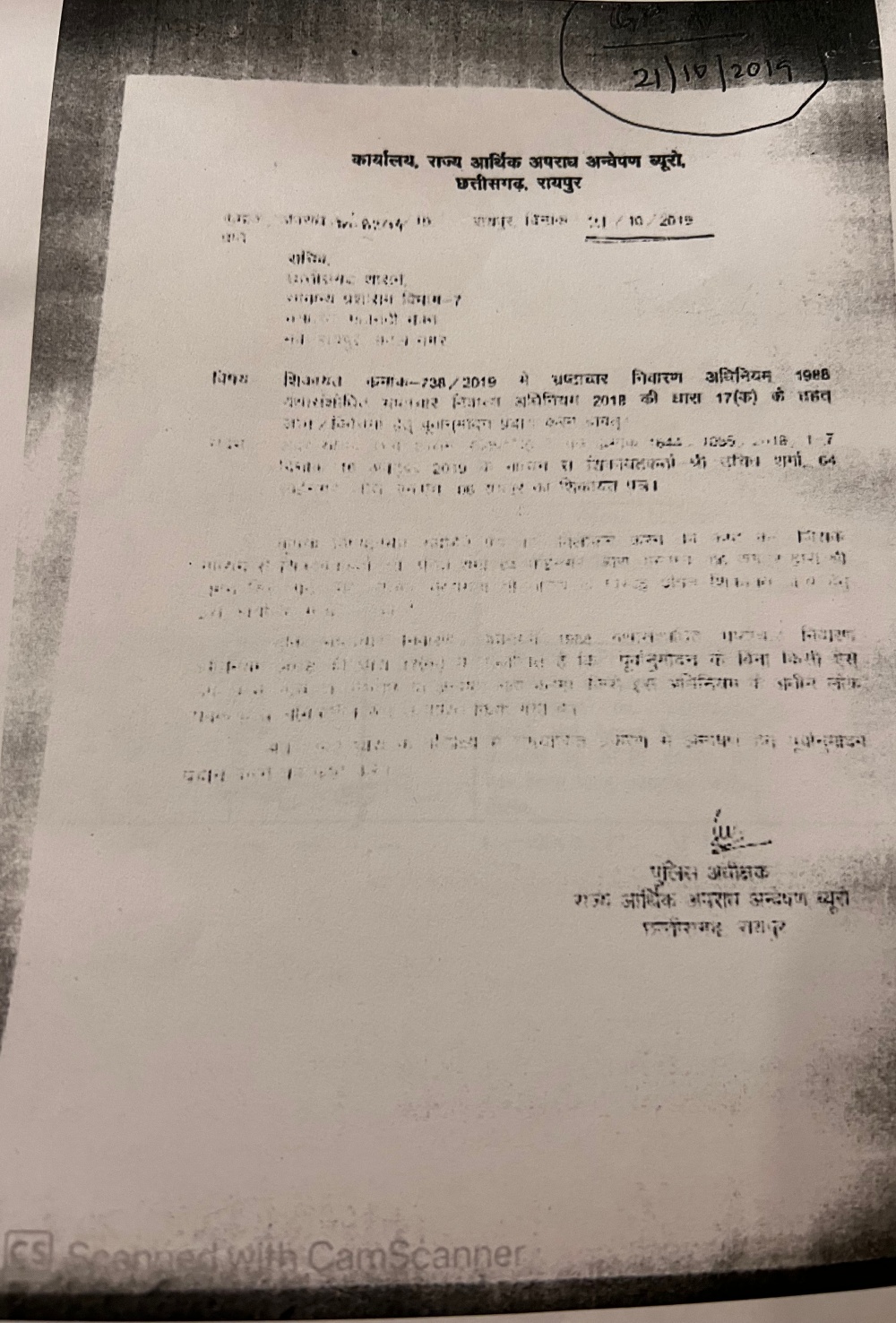
On perusal of these document attachments, it is seen that GP Singh was sending letter asking for sanction for enquiry under Prevention of Corruption (sent by the SP to GAD). On the very same day that this request was sent to GAD, it was forwarded by GP Singh to Anil Tuteja to peruse.
Here is an image of the attachment in the chat, that was sent to Anil Tuteja.
Attachment to the Whatsapp chat
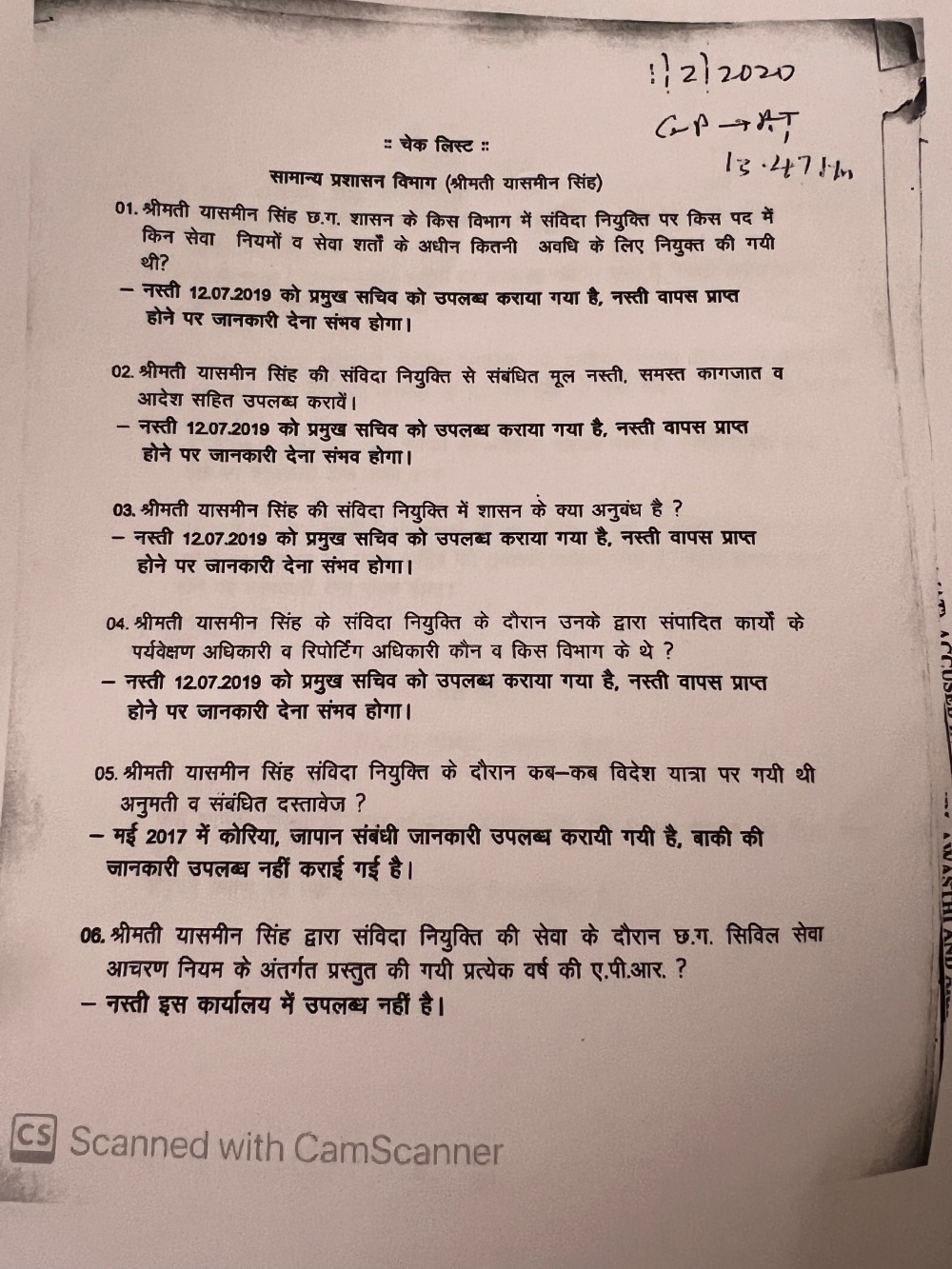
There was another document that was sent by GP Singh to Anil Tuteja was an internal checklist of the information that EOW wanted from GAD. This checklist is made for internal EOW department purposes. The fact that the Chief of EOW was sending it to the prime accused in the NAN case not only points towards active collusion in attempting to fix Aman Singh and his wife but also the unbridled power that Tuteja wielded in the Congress government.
Attachment to the Whatsapp chat
Here is a summary table of the chats pertaining to Aman Singh.
Chat summary
If one looks at the timeline of these chats, it is pertinent to point out that the meeting with CM Baghel that GP Singh talks about in his submission to the court took place on the 14th of September 2019. Only a month after that, GP Singh was sending the letter requesting permission for enquiry against Aman Singh to Anil Tuteja. On the 14th of January 2020, GP Singh requested Tuteja to instruct GAD to provide information on Aman Singh and his wife and an FIR was filed against Aman Singh on the 20th of February 2020.
It is therefore clear from the WhatsApp chats that Aman Singh and his wife were being implicated falsely a) because of the explicit instruction of CM Bhupesh Baghel b) with the active collusion of an probably at the behest of Anil Tuteja to save him in the NAN case.
Some of the WhatsApp chats asking to implicate Mukesh Gupta – the Chief of EOW when Dr Raman Singh was in power
The WhatsApp chats reveal that there was a concerted and continued effort to not only implicate Mukesh Gupta but also harass any officer who was seen as non-compliant to the cause of Anil Tuteja or was seen as an impediment in implicating Mukesh Gupta. In fact, it is evident that several officers were hounded, transferred etc citing that they were “close” to Mukesh Gupta – whether this was actually the case of officers were simply using this as an excuse to get “permission” from Tuteja to affect transfers is a matter of enquiry.
Whatsapp chat
Whatsapp chat
In these two chats, it is evident that GP Singh is discussing with Anil Tuteja that IPS officers should be given punishment postings. Anil Tuteja, a prime accused in the NAN scam, is, as evidenced, effecting transfers and posting with the ADG asking him for counsel and permission.
There are several other conversations that indicate towards active collusion to implicate Mukesh Gupta. These chats will be analysed in follow up articles in due course of time.
The Hawala link – G.P Singh, the ADG who succeeded Kaluri as head of EOW/ACB, was acting as the Hawala operator for Anil Tuteja
At the beginning of this article, it was mentioned how a money laundering probe was initiated in 2015 by the ACB, after which a chargesheet was filed in the NAN case.
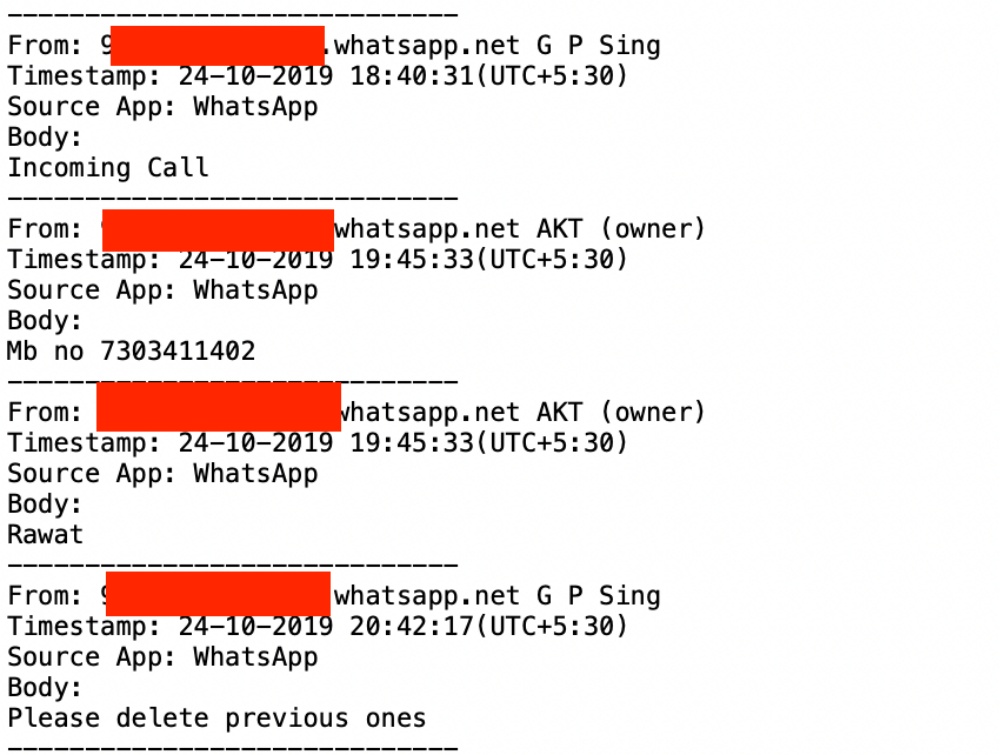
In the submissions by Income Tax to the court against Anil Tuteja and others, ITO specifically talks about the Hawala link. In para 4 of the submission, the Income Tax department says, “Further, on WhatsApp chat dated 24.10.2019..2 photos of Rs 10 notes were sent. Thereafter, accused No. 4 sent the name and mobile number of one Mr Rawat. After 10 mins, accused No 1 sent message as Tango. Thereafter, accused no. 1 sent 2 more photos of Rs 10 notes, after which, Shri Dhebar sent photos of Rs 20 note. Further, the note details communicated by accused No 4 on 24-10-19 was further communicated to one Mr GP Singh. The said chat was confronted with accused no 1 during his statement u/s 131 (A) of the IT Act, 1961 dated 8-10-2020 and accused no. 1 has tried to skirt/evasive to reply the hawala transaction done by him…”
This chat is a part of the WhatsApp conversation dump that OpIndia has in its possession.
Whatsapp chat
In this, GP Singh sends a Rs 10 note to Anil Tuteja and Tuteja then sends the name of operator Rawat to GP. Interestingly, GP knows that this would be caught as a Hawala operation and then asks Tuteja to “delete previous ones”. The transaction, GP says, is fixed for the first available date on the 4th. It is therefore evident that the ADG was acting as the Hawala operator for the prime accused in the NAN scam, Anil Tuteja, who was trying to be saved by CM Bhupesh Baghel and others.
The Income Tax submissions say that Rs 1 crore was received through Hawala by GP Singh, on behest of Anil Tuteja from one Sameer Goyal.
From the chats revealed so far, the following conclusions can be drawn:
The Congress government was actively trying to save the prime accused in the NAN case
Congress Chief Minister Bhupesh Baghel was actively colluding not just with IPS officers but also with Anil Tuteja to implicate Dr Raman Singh and others in the NAN scam
There was rampant Hawala transactions with officers of the state acting as Hawala operators for Anil Tuteja
Anil Tuteja and his son Yash Tuteja are powerful enough in the state to not only run an investigation against themselves but also affect transfers and suspensions. This is unlikely without the active support of Bhupesh Baghel himself.
The investigation is being skirted and tarnished with fabricated evidence, witnesses being threatened and bought off.
There are elements even in the Judiciary that are compromised and part of the conspiracy to save Anil Tuteja.
The NAN scam was one worth thousand of crores and one where Congress has continually maintained that Dr Raman Singh was involved. With these explosive chats that we would be exploring further in subsequent articles, it is evident that Raman Singh, Mukesh Gupta and Aman Singh are actively being framed by the Congress regime and the prime accused is being shielded at every step of the way.
OpIndia believes that in a constitutional democracy like ours, citizens have a right to know every public action done by their public functionaries. They are entitled to know the details of every corrupt transaction of public functionaries in all its bearing and as such the transcript of the Whatsapp chats in possession of OpIndia, being uploaded here: