In an order dated 13 December 2022, a Delhi court dismissed the revision petition of Journalist Swati Chaturvedi seeking the quashing of summons issued against her in a 2018 defamation case filed by Bhartiya Janta Party (BJP) spokesperson Tajinder Bagga.
The court dismissed Chaturvedi’s petition challenging a magisterial court order issued in May 2018 directing her to appear in a case filed by the BJP leader.
Special Judge Sudhir Kumar Sirohi while dismissing the petition observed that the complainant Tajinder bagger was appointed spokesperson of a national party, and the tweet by respondent Swati Chaturvedi regarding sexual harassment and arrest of Tajinder Bagga has “lowered the image of a public figure, and that too when he was representing of a national party.”
“Therefore no illegality has been found in the order passed by the Metropolitan Magistrate,” Judge Sirohi said.
Taking to Twitter, Alakh Alok Srivastav, the advocate appearing for the BJP leader, informed about the court ruling and tweeted, “Hearing my detailed submissions on behalf of @TajinderBagga, Patiala House Court has dismissed the revision petition filed by Swati Chaturvedi by which she had challenged the criminal defamation initiated by us against her.“She Lowered the image of a public figure”- says Court.”
Hearing my detailed submissions on behalf of @TajinderBagga, Patiala House Court has dismissed the revision petition filed by Swati Chaturvedi by which she had challenged the criminal defamation initiated by us against her.
Notably, Tajinder Bagga contended in his defamation suit filed in 2017 that Swati Chaturvedi harmed his reputation and defamed him by falsely claiming that he was arrested in a sexual harassment case.
His counsel, advocate Alakh Alok Srivastava, claimed that the complainant was never arrested in any sexual harassment case and that journalist’s tweet damaged the complainant’s reputation.
Copy of the complaint filed by BJP leader Tajinder Pal Singh Bagga
In his original complaint dated 16/03/2017, Bagga stated that he was neither involved in the beating up of advocate Prashant Bhushan nor was he ever arrested in any case pertaining to sexual harassment. He also claimed that the said tweet was a deliberate attempt to defame him and tarnish his reputation.
On Wednesday (December 14, US local time) night, Elon Musk announced that the Twitter handles which post the real-time location of individuals and compromise their physical safety would be suspended.
In a tweet, the new Twitter owner said, “Any account doxxing real-time location info of anyone will be suspended, as it is a physical safety violation. This includes posting links to sites with real-time location info.”
While granting an exception to the Twitter violation rules, he further emphasised, “Posting locations someone travelled to on a slightly delayed basis isn’t a safety problem, so is ok.”
Any account doxxing real-time location info of anyone will be suspended, as it is a physical safety violation. This includes posting links to sites with real-time location info.
Posting locations someone traveled to on a slightly delayed basis isn’t a safety problem, so is ok.
While responding to a Twitter user, Musk clarified that journalists would not be treated as exceptions for endangering the lives of individuals by posting links to their live location. “Same doxxing rules apply to “journalists” as to everyone else,” he reiterated.
Same doxxing rules apply to “journalists” as to everyone else
According to New York Post journalist, Jon Levine, several reporters have faced the wrath of the new Twitter owner under the new doxxing rules.
This included CNN reporter, Donie O’Sullivan, Washington Post reporter Drew Harwell, The New York Times reporter Ryan Mac and independent journalist Aaron Rupar.
On Wednesday (December 14, US local time), Elon Musk informed that his 2-year-old son named ‘X’ was doxxed by a ‘crazy stalker’ after mistaking his child for him. The stalker was seen wearing a black hoodie and recording the incident on camera.
“Last night, a car carrying little X in LA was followed by a crazy stalker (thinking it was me), who later blocked the car from moving & climbed onto the hood,” Musk narrated the ordeal.
He had also posted an 11-second-long video of the alleged stalker and vowed to take action against a college student named Jack Sweeney, who used publicly available data to track the movement of the billionaire’s private jet to ‘raise awareness about carbon footprints.’
The new Twitter owner had also permanently suspended the account Jack Sweeney, an action criticised by the college student who dubbed Elon Musk as a hypocrite.
Meanwhile, Musk had informed, “Legal action is being taken against Sweeney & organizations who supported harm to my family.” Reportedly, ‘X’ is one of the 10 children fathered by the new Twitter owner.
It has been 51 years since India won the 1971 war against Pakistan, and Bangladesh was born. No Indian can forget the legendary photograph of Pakistani Commander of Eastern Command Lt-Gen AAK Niazi signing the Instrument of Surrender in Decca. Lt-Gen Jagjit Singh Aurora, Vice Adm N Krishnan, Air Marshall HC Dewan, Lt-Gen Sagat Singh, Maj Gen JFR Jacob and Flt LT Krishnamurthy witnessed the historic moment. Each of them played an important role in India’s victory. At that time, India captured 93,007 Prisoners Of War, out of which 72,795 were Pakistani soldiers. Later, all of them were sent back to Pakistan as per the Shimla Agreement and under the provisions of the Geneva Convention on POWs.
While India fulfilled its duty as a mature nation, Pakistan did just the opposite. For the last 51 years, India has been waiting for information on the whereabouts of its 54 soldiers, officers and fighter pilots who were captured as POWs by the hostile nation sitting right next to us. The Government of India has marked them as ‘Missing In Action’. Sadly, the Pakistani government has repeatedly denied the presence of the 54 soldiers in the country. It is notable that in 1989, former President of Pakistan Zulfikar Ali Bhutto’s lawyer was informed that there were POWs in the same prison where Bhutto was lodged in Lahore. The incident found its mention in a book, but later President Pervez Musharraf denied the presence of the 54 POWs in Pakistan.
One of the major questions that arise when Missing 54 are mentioned is how Pakistan managed to continue the alleged illegal detention of the Indian POWs. Brigadier (Retd) Harwant Singh told India Today that during the 1971 Indo-Pak war, Pakistan authorities did documentation with faulty details when these personnel were taken POWs. He said, “We had raised the issue with the then Indian prime minister who spoke to Parvez Musharraf but in vain. The absence of proper documentation was responsible for detention. Had the Pakistan authorities documented them, they might have been traced, and their families may not have suffered for decades.”
There have been countless stories that need to be told about the Missing 54 and their families. According to a BBC report from 2020 authored by Soutik Biswas, Chander Suta Dogra, a senior Indian journalist, keenly followed the stories of Missing 54. In her book ‘Missing in Action: The prisoners who never came back”, Dogra gave a detailed account of their stories. Dogra noted that in the 1990s, in response to a petition in a lower court, the Government of India mentioned that 15 of the Missing 54 defence personnel were “confirmed killed”. However, today, the government maintains that all 54 of them are still missing.
There have been several reports of Indian POWs in Pakistani jails. BBC noted that the family of a wireless operator who went missing in the 1965 war was told by the Indian Army that he died in the line of duty. However, between 1974 and the early 1980s, the Government and the family were informed by three Indian prisoners that he was still alive. The whereabouts of the Indian defence personnel were never found.
Families missed a chance to visit Pakistani jails in 1983
In 1983 six people and in 2007, 14 people went to Pakistan to find any possible information on Missing 54, but they alleged that the Pakistani Government did not cooperate and were stonewalled. While the relatives continued to say that they had evidence of POWs in Pakistani jails, the Government of Pakistan kept denying it. Here is what happened during that period.
After the 1982 visit of Pakistani dictator General Zia Ul Haq to India, there was some hope among the families of the Missing defence personnel, and they were not wrong. Surprisingly, Pakistan invited families to visit. Then-Minister of External Affairs Narasimha Rao assured the families that he would try his best to facilitate the visit. Notably, in 1972, India allowed some Pakistani families to meet prisoners in jails which were seen as one of the reasons Pakistan could have agreed to allow Indian families to visit Pakistani jails.
The Indiatimes report noted that there was a hush-hush in the media. It was a classified visit, and the families were told not to indulge with the press. There was a possibility that some deal was being made between the governments. As per reports, the families were told, “Get the men back. They may not be in good health, but you can nurse them back to health.”
On September 12, 1983, the families left for Lahore. They were later informed that MEA officials would also join them to go to the Multan jail, where most Indian prisoners were believed to be kept. On September 14, they reached Multan.
This was the time when things went south. The politics became a hurdle between the families and the Indian defence personnel lodged in the prisons. As per reports, then-Prime Minister Indira Gandhi was quite critical of Haq and regularly gave statements favouring Khan Abdul Ghaffar Khan & the MQM movement. It was one of the reasons the Indian families were not allowed to meet the prisoners. Another notable thing is that on September 14, India was supposed to permit Pak officials to meet 25 Pakistani prisoners in Patiala jail, but it never happened. The Pakistani media reported, “India goes back on its words”.
Despite reaching Multan, the families were not allowed to meet the prisoners. The family members sat for long hours to get access to meet around six people but were asked to leave. The jail officials told them that only Zia Ul Haq could have helped them.
Notably, when the Pakistan Government returned Wing Commander Abhinandan, then-Chief Minister of Punjab, Captain Amarinder Singh, raised the issue of POWs of 1971 lodged in Pakistani jails. He said, “The Indian government must take up the issue of PoWs of the 1971 war with Islamabad.”
The 2007 visit to Pakistani jails
In 2007, the hopes of the families were again sparked when a delegation was allowed by the Pakistani government. 14 relatives visited Pakistan jails but could not confirm anything. Lt Col MK Guptaray in an article for Mission Victory India said, “Even if they were alive and kept somewhere in Pak Jail, it was very easy for Pak to hide them from the visitors.”
Several reports pointed towards the presence of Indian POWs in the Pakistani jails
On December 27, 1971, Time Magazine published a photo of Major AK Ghosh, one of the missing personnel lodged in a Pakistani jail. His family members believed he was dead but recognised him instantly upon seeing the photograph. In the same year, a local paper published another photograph of a prisoner who was believed to be Indian defence personnel.
70-year-old Damayanti Tambay was married for only 18 months when the 1971 war broke out. Her husband, Flight Lt Vijay Vasant Tambay, was one of the missing 54. She blamed the government of India for not taking any concrete steps to bring back the soldiers who were lodged in Pakistani jails. She said, “We are just ‘file numbers’ for the government. We have given them evidence, but they just set it aside.” Tambay was one of the petitioners who had approached the Gujarat High Court and got an order to approach the International Court of Justice to find Missing 54 in 2013. However, the then-government of India got a stay from the Supreme court. She said, “It hurts that the government can send legal luminaries to defend Kulbhushan Jadhav (arrested by Pakistan on charges of being a spy), but for people like my husband who risked their lives for the country, they have no time.”
A BSF constable Surjit Singh from Tehna village, Faridkot, was posted in the Poonch sector of Jammu and Kashmir. His wife, Angrej Kaur, and son Amrik Singh believe that Surjit is currently lodged in Kot Lakhpat jail in Pakistan. Amrik said, “I was only a few days old when my father was taken hostage by Pakistan Rangers on December 4, 1971.” In 2017, Kaur approached Punjab and Haryana High Court to seek instructions from the government to approach ICJ. Her petition was based on a statement by Ansar Burney, former Pakistani minister, who told Jang Samachar on April 28, 2011, that Surjit was in a Pakistani jail. A report in India Today mentioned that an Indian, Khushi Mohammad came back to India in 2004 from Pakistan after completing his jail term and told Surjit was alive.
Bombay Sappers sepoy Jugraj Singh’s daughter Paramjit Singh was not even a year old when her father was declared a martyr. However, she said, “After decades, our hopes came alive when a woman named Manjit Kaur from a neighbouring village informed us that she heard the name of Jugraj Singh of Jeeda village in the list of prisoners in Pakistan while listening to the news on the radio in 2004.”
As per Amar Ujala’s report, a postcard came from Karachi in 1975 that contained information about 20 Indians being alive in Pakistan. Notably, there were reports on Pakistani radio and in newspapers about Indian POWs being lodged in Pakistani jails.
In December 2006, a Tribune report noted that Dr RS Suri, father of Major Ashok Suri, who was declared “killed in action”, received a hand-written note dated December 7, 1974. It was sent by his son. On the slip, it was written, “I am okay here.” There was a cover note that read, “Sahib, valaikumsalam, I cannot meet you in person. Your son is alive, and he is in Pakistan. I could only bring his slip, which I am sending you. Now going back to Pak.” It was signed by one M Abdul Hamid, and the postmark was of December 31, 1974.
He received another letter in August 1975. The letter read, “Dear Daddy, Ashok touches thy feet to get your benediction. I am quite okay here. Please try to contact the Indian Army or the Government of India about us. We are 20 officers here. Don’t worry about me. Pay my regards to everybody at home, especially to mummy, and grandfather – the Indian government, can contact the Pakistan government for our freedom.” Upon investigation, it was found that the handwriting matched that of Major Ashok. The then-defence secretary then changed his status from “Killed In Action” to “Missing In Action”. Dr Suri, who was with the delegation that went to Pakistan in 1983, kept fighting for his son and hoped the Indian government would bring him back; however, he left this world in the hope of seeing his son again in 1999. His last words reportedly were, “Perhaps I will finally find peace in the grave.”
Major SPS Waraich and Major Kanwaljit Singh were captured by the Pakistani army after they made a full-scale surprise attack. 15 Punjab lost 53 men and two officers. As per reports, 35 personnel were taken as prisoners. Later, General Riaz at the Munich Olympics told DIG Punjab Police Ashwini Kumar that Waraich was in Dargai Jail.
On September 1, 2015, during the hearing of a case related to the missing 54, the Supreme Court of India asked the Government of India if they were still alive. Solicitor General Ranjit Kumar appearing for External Affairs and Defence Ministries, said, “We do not know”. He added, “We presume that they are dead as Pakistan has been denying their presence in their prisons.”
Mention of Missing 54 in Parliament and courts in chronological order
Since the 54 soldiers, officers and fighter pilots went missing in action, they have been mentioned multiple times during parliament debates and in courts. Multiple times the lawmakers raised questions about their whereabouts in the Parliament.
Lok Sabha question 3575 dated December 12, 1978
On December 15, 1978, in an unstarred question number 3575, Ahmed Patel and Amarsinh Rathawa asked the Ministry of External Affairs about the Indians detained in Pakistan and vice versa. Furthermore, they asked how many such detainees were released by Pakistan and India. They also asked about the steps being taken by the Governments of both nations to get the detainees released mutually.
In 1978, the Ministry of External Affairs replied to a question and informed there were 250 Indians lodged in Pakistani jails. Source: eparlib.nic.in
In its reply, the then-Minister of State, Ministry of External Affairs, Samarendra Kundu, said that as per the information received by the Government of Pakistan and other sources, there were 300 Indian Nationals under detention in Pakistan as on December 31, 1977. Similarly, 430 Pakistanis were under preventive detention in India. It was further stated that 115 Indians and 460 Pakistanis were released in 1978 by Pakistan and India, respectively. Notably, there were still 250 Indians in Pakistani jails.
Kundu further added that the verification process based on the information received by the Pakistani government was expedited, and the Indian government had approached them to release those whose identity was already verified. Though the information provided in 1978 did not mention the mission of 54 armed forces personnel, it holds importance as in 1979, another question was raised in Lok Sabha that was specifically about the Prisoners Of War lodged in Pakistani jails. In its reply, the answer to 1978 question 3575 found a mention.
Lok Sabha question 6803 dated April 12, 1979
On April 12, 1979, in an unstarred question number 6803, then-Amarsinh Rathawa asked the Ministry of External Affairs for further information on question 3575 from 1978. He sought information about the names of the persons held in Pakistan and what charges they were detained. Further, he asked if the government was aware of the persons locked up, particularly in Multan Jail, for the last 5-6 years without any charges. He asked if the Ministry was looking into the matter and urged the minister to look into it personally to get the Indians back.
In 1979, the Ministry of External Affairs replied to a question and informed there were 250 Indians lodged in Pakistani jails and also provided a list of the names of the persons. Source: eparlib.nic.in
In the reply, then-Minister of State, Ministry of External Affairs Samarendra Kundu mentioned the answer he provided last time and said, as per the information, 250 Indians were still in Pakistani jails. He further stated that the government of India received information about some more persons. At that time, the Ministry was confirming the nationality of the persons whose information was provided by the Pakistani government. The precise information of some detainees was not available to the government as they came to know about them via relatives and family members. The Government of India passed the information to the Pakistani government and sought information about the same. The minister added that the Indian government was in constant touch with the Pakistani government to sort out the matter at the earliest. In the answer, the Minister mentioned the information on the missing persons was available in a library document numbered LT-4293/79. OpIndia is trying to access the document.
Rajya Sabha question 4285, dated May 15, 1997
On May 15, 1997, while replying to Rajnath Singh’s unstarred question 4285, then-Minister of Law State of the Ministry of Law and Justice Ramakant D Khalap informed the house that as per the information available with the Government of India, there were 54 defence personnel missing from the 1965 and 1971 was lodged in detention in Pakistan. However, Pakistan continued to deny having any POWs. The issue was raised to the Foreign Minister of Pakistan on April 9, 1997. Though he stood by the official statement of the Pakistani Government, the external minister of Pakistan offered to receive all available material on the subject, and it was to be forwarded to Pakistan.
Rajya Sabha question 4174, dated May 4, 2000
On May 4, 2000, while replying to Abani Roy’s unstarred question 4174, then-Minister of State for External Affairs Ajit Kumar Panja informed the house that as per the information available with the Indian Government, there were 54 Indian POWs in Pakistani jails, but Pakistan denied having POWs. He further added that the Indian Government raised the issue again during the Prime Minister’s visit to Pakistan on February 20-21, 1999, with the Prime Minister of Pakistan. India and Pakistan appointed a 2-member committee at the Ministerial level to examine the issue. The matter was again raised in the official level discussion on March 5-6, 199. Pakistan again stated that it did not have any Indian POWs in custody but agreed to re-examine the matter afresh.
Lok Sabha question 8016, dated May 17, 2000
On May 17, 2000, while replying to Naresh Kumar Puglia’s unstarred question 8016 in Lok Sabha, then-Minister of State, External Affairs, Ajit Kumar Panja said that during the 1971 war, 532 Indian soldiers were taken in custody by Pakistan who was lodged in Pakistani jails. All of these soldiers were repatriated to India. Subsequently, the Government of India was informed about 54 defence personnel, and the cases were taken up with the Government of Pakistan. However, Pakistan consistently maintained there were no Indian POWs in their custody.
Rajya Sabha question 2640, dated August 16, 2001
On August 16, 2001, while answering Rajeev Shukla’s unstarred question 2640, then-Minister of State for External Affairs Omar Abdullah informed that Pakistan had been consistently denying the presence of any POWs in its jails. However, the upper house was informed that Pakistan stated 72 detainees from India had completed their jail term, and the Indian government was verifying the national status of those detainees.
Rajya Sabha question 2649, dated August 16, 2001
On the same day, while answering Satish Pradhan’s unstarred question 2649, Omar Abdullah said that as per the available information, there had been 54 Indian POWs in Pakistan since 1971, but the Government of Pakistan has consistently denied their presence in its jails. The matter was raised during a Summit meeting with President Pervez Musharraf on July 15, 2001, at Agra, where the Prime Minister urged him to take urgent and purposeful action “for the earliest release and repatriation of these POWs to end the agony of the families of these soldiers.”
Rajya Sabha question 646, dated March 6, 2002
On March 6, 2002, while replying to S Agniraj’s starred question 646, then-Minister of External Affairs George Fernandes said there were believed to be 54 POWs in Pakistani Jails; however, Pakistan continued to deny the same. The matter was again raised during Agra Summit on July 15, 2001, and Pakistan allegedly conducted another search in its jails. However, Pakistan claimed it did not find any POWs.
Rajya Sabha question 1088, dated March 13, 2002
On March 13, 2002, while replying to AK Patel’s unstarred question 1088, then-Minister of Defense George Fernandes said, “During the 1971 war, 532 Indian soldiers were taken prisoners of war by Pakistan. All these soldiers have been repatriated to India. Subsequently, Government were informed about 54 missing Indian soldiers who are believed to be in Pakistani jails. The Government has consistently taken up the issue of their release and repatriation with the Government of Pakistan at all levels. During the Agra Summit on July 15, 2001, the Prime Minister also urged the Pakistani President to take urgent and purposeful action towards releasing these POWs.”
Rajya Sabha question 3246, dated April 24, 2002
On April 24, 2002, While replying to Nana Deshmukh’s unstarred question 3246, then-Minister of Defence George Fernandes said that the GoI was taking all possible steps to trace the POWs from the 1971 war in Pakistani jails, but the Government of Pakistan continued to deny having any POWs.
Rajya Sabha question 2119, dated November 11, 2002
On November 11, 2002, while replying to Rajeev Shukla’s question number 2119, then-Minister of Defence George Fernandes said that Prime Minister (Atal Bihari Vajpayee) raised the issue of POW with the Government of Pakistan at Agra Summit in September 2001. The Govt of Pakistan informed India that they had conducted an “Exhaustive search” and checked jail records to find if there were any POWs from 1971 in Pakistani jails. He further informed that Pakistan claimed they did not find any such persons or records. The Pakistani government also offered to receive a delegation of the families of POWs, which was being considered.
Rajya Sabha question 953, dated July 22, 2004
On July 22, 2004, while replying to RK Anand’s unstarred question 953, then-Minister of State for Ministry of External Affairs E Ahamed said as per the information with GoI, there were 54 POWs in Pakistani jails, but Pakistani continued to deny having any POWs. The matter was again raised during Foreign Secretary-level talks between India and Pakistan held in New Delhi on June 27-28, 2004.
Rajya Sabha question 157, dated March 8, 2007
On March 8, 2007, while replying to Harish Rawat’s starred question 157, then-Minister of External Affairs Pranab Mukherjee said that during a visit to Pakistan in January 2007, the External Affairs Minister reiterated India’s demand to allow kins of POWs to visit jails in Pakistan and the request was accepted by President Musharraf. The visit was scheduled for April 2007.
Rajya Sabha question 1065, dated March 8, 2007
On March 8, 2007, while replying to Vinay Katiyar’s unstarred question 1065, then-External Minister Pranab Mukherjee informed that there were 74 POWs in Pakistani jails as per information with GoI. A delegation of kin of POWs to Pakistan was proposed in April 2007 after Pakistan agreed to the same.
Rajya Sabha question 1067, dated March 8, 2007
On March 8, 2007, while replying to Dara Singh’s unstarred question 1067, then-Minister of External Affairs Pranab Mukherjee said that there were 74 POWs in Pakistani jails as per information from the GoI. The Government of Pakistan agreed to accept the visit of family members of POWs, and GoI proposed a visit delegation to Pakistan in April 2007. He further added, “During EAM’s visit to Pakistan, India and Pakistan agreed to establish a committee on prisoners comprising retired judges of the superior judiciary to visit jails in the two countries and propose steps to ensure humane treatment and expedite the release of prisoners who have completed their prison terms.”
Rajya Sabha question 3086, dated May 3, 2007
On May 3, 2007, while replying to NR Govindarajar’s unstarred question 3086, then-Minister of External Affairs Pranab Mukherjee informed that there was information of 74 Indian POWs in Pakistani jails since 1971-72, but Pakistan denied it. The GoI continued to raise the issue, and in January 2007, Pakistan agreed to accept a visit of families of POWs.
Rajya Sabha question 4634, dated May 5, 2007
On May 5, 2007, while replying to Datta Meghe’s unstarred question 4634, then-Minister of External Affairs Pranab Mukherjee said in January 2007, during the visit of the External Affairs Minister to Pakistan, the matter of POWs in Pakistani jails was taken up with the Pakistani Government. They had agreed to accept a visit of families of POWs to Pakistan. However, there was no information in this document whether they were talking about POWs from 1971.
Rajya Sabha question 3860, dated May 10, 2007
On May 10, 2007, while replying to Eknath K Thakur’s unstarred question 3860, then-Minister of External Affairs Pranab Mukherjee informed that there was information of 74 Indian POWs in Pakistani jails since 1971-72, but Pakistan denied it. The GoI continued to raise the issue, and in January 2007, Pakistan agreed to accept a visit of families of POWs.
Rajya Sabha question 166, dated August 23, 2007
On August 23, 2007, while replying to Jaya Bachchan’s starred question 166, then-Minister of External Affairs Pranab Mukherjee said that a group comprising members of the families of missing defence personnel visited ten jails in Pakistan from June 1 to June 14 in 2007. They did not come across any missing defence personnel. He added, “However, it was confirmed that one of the missing personnel had been killed in action and not taken Prisoner of War.”
Gujarat High Court judgment of 2011
The case was filed in the Gujarat High Court in 1999. It took over a decade for the court to reach a decision. Following the court’s direction in 2012 to implement the directions of the court within 15 days, the Government of India approached Supreme Court and got a stay on the direction to approach the International Court of Justice in the matter. There were several points mentioned in the Judgment by the petitioners. Here are some of the highlights related to the India-Pakistan war that continued from December 3, 1971, to December 16, 1971.
From Kashmir Front, 2238 soldiers and military officials went missing. No dead bodies were recovered. No evidence that they were killed in action. It was alleged that the GoI made no serious efforts to trace these officers and soldiers. After a short period, they were presumed to be dead by the Ministry of Defence.
On December 7, 1971, Sunday Pakistan Observer published a report claiming five Indian Pilots, including Vasant V Tambay, were captured alive.
The Judgment noted the letters received by Dr RS Suri from his son Major Ashok Suri. Furthermore, Major Suri’s name was mentioned by the Punjab Dharbar Programme of Lahore Radio on June 6, 1972. In 1976, Dr Suri was informed by a contact that Major Suri was detained on December 2, a day before the war broke. He was being treated as an Indian spy. On January 15, 1988, Pakistan released an Indian prisoner named Mukhatyar Singh. He informed the Indian authorities to have seen Major Suri at Kot-Lakhpath jail.
In 1968 Indian National Mohanlal Bhaskar of Firozepur was arrested by Pakistani Intelligence Officers. After spending years in 596, FIC
Lahore Central Jail, Kot-Lakhpath, Lahore, Sahi Quilla, Lahore,
FIC Raval-Pindi, Mianwali and Multan returned to India on December 9, 1974. He informed GoI about the presence of Indian POWs from 1965 and 1971. He also told the Government about the inhumane treatment of the POWs in Pakistani Jails. Bhaskar told the GoI that two Pakistani officers, Col Ashif Shafi and Major Ayaz Ahmad Sipra, were arrested for revolting against the Government of Pakistan and spent time with him in jail. They told him that there were 45 POWs in Shahi-Quill of Lahore, including Wing Commander GS Gill.
Another Indian prisoner released by Pakistan on March 24, 1988, named Daljit Singh, informed the GoI that he saw Pilot VV Tambay in February 1978.
Flight Lt Harvinder Singh’s name was announced as captured Indian defence personnel by Pakistani Radio on December 5, 1971.
Major Nawaljit Singh Sandhu was seen by an Indian prisoner released from Pakistan. He alleged that Major Sandhu lost one arm, and he was sentenced to 14 years in prison. Another Indian, Iqbal Hussain, released by Pakistan, alleged he saw Major Sandhu in Kot Lakhpat jail.
Flying Officer Sudhir Tyagi’s name was announced by Pakistani Radio as captured Indian defence personnel on December 5, 1971. An Indian prisoner released on March 24, 1988, by Pakistan named Ghulam Hussain alleged to have seen Tyagi at Shahi Quilla in 1973.
Major AK Ghosh’s photograph was published on December 24, 1971, by Time magazine as an Indian prisoner behind bars in Pakistan.
Captain Ravinder Kaura’s name was announced by Lahore Radio on December 6, 1971. His photograph was smuggled out of Pakistan jail and got published in an Ambala newspaper in 1972. An Indian prisoner released by Pakistan on July 5, 1988, named Mukhtiyar Singh, alleged to have seen Capt Kaura in Multan jail around 1981.
Wing Commander HS GIll’s name was mentioned to Indian prisoner Mohanlal Bhaskar by Pakistani officers who were jailed with him.
Flight Lt Sudhir K Goswami’s name was announced by Lahore Radio on December 5, 1971, as Indian defence personnel captured by Pakistan.
Major SPS Warriach’s whereabouts were revealed by Indian prisoner Mohinder Singh who was released on March 24, 1988. he said Major Warriach was in Multan Jail in 1983, and he was again seen in Kot Lakhpat jail in February 1988.
Capt Kalyan Singh Rathor was seen by Indian prisoner Natha Ram who Pakistan released on March 24, 1988. He saw Capt Rathore in 1983. Mukhtiyar Singh also alleged to have seen Rathore in Kot Lakhpat jail.
Captain Giriraj Singh was seen by Mukhtiyar Singh at Kot Lakhpat jail and in Attock jail in 1973 by Mohanlal Bhaskar.
Mukhtiyar Singh saw Captain Kamal Bakshi in Multan in 1983.
Mukhtiyar Singh saw Flag Officer Krishnan Lakimaj Malkani in Multan jail in 1983.
Mukhtiyar Singh saw Flight Lt Babul Guha in Kot Lakhpat jail.
LNK Hazoora Singh was seen by Indian prisoner Preetam Singh in Gora jail in 1984.
Mukhtiyar Singh saw Flight Lt Gurdev Singh Rai in Kot Lakhpat jail.
Sep Madan Mohan was seen by Indian prisoner Sooram Singh who Pakistan released on March 24, 1988. He says Sep Mohan was in Multan jail around 1978-79.
Flight Lt. TS Dandass was captured with another officer who was released, but Dandass never came back.
The list of names provided in Lok Sabha in 1979 was also mentioned in the Judgment.
The excerpt from the book Bhutto Execution and Trial by Victoria Schofield containing information about the Indian POWs was mentioned in the Judgment.
There was one aspect of the Judgment that needed to be highlighted. When 93000 prisoners were released, the Indian POWs in Pakistan were also supposed to be released. However, only two trains with soldiers arrived in India. The third train that was supposed to be carrying officers never reached India. The court document read, “The Indian Government had returned all the 93000 prisoners of war to Pakistan in haste without verifying properly and correctly the list of Indian prisoners of war in Pakistan. Indian Army Intelligence was so much careless at that time that the family members of the victim army officers had more information than the Intelligence Department.”
The wife of Flight LT Tambay, Damyanti Tambay, was informed by one Bangladeshi Naval officer T Yusuf that he was with Tambay in Lyallpur jail. An Indian prisoner Daljit Singh who was released on March 24, 1988, by Pakistan, is also alleged to have seen VV Tambay at Interrogation Centre, Lahore, in 1978.
The court document further read, “it is apparent that the Indian prisoners of war are detained in the Jails of Pakistan due to the gross negligence and carelessness of the Government of India and its officers at the time of exchange of prisoners of war. The victim families have collected more evidence from the various sources which the Government was supposed to collect in the larger interest of the nation.”
In its affidavits submitted in the court, the Government of India listed the meetings held with Pakistani counterparts where the issue was raised. The GoI said, “The Government of India has made serious, sustained and continuous efforts to ascertain the whereabouts of our missing defence personnel.” GoI further said that efforts were still on to assert the whereabouts of the missing 54 defence personnel. GoI also informed about the benefits extended to the NOKs of the defence personnel resumed killed in action.
Rajya Sabha question 1907, dated August 29, 2012
On August 29, 2012, while replying to Rajeev Chandrashekhar’s unstarred question 1907, then-Defence Minister AK Antony said that the Supreme Court of India stayed the directions of the Gujarat High Court to approach the International Court of Justice in the matter of POWs of 1971 on May 2, 2012. Furthermore, the Government of India took necessary steps to provide benefits to the next of kin of the missing defence personnel were taken as per the judgement.
Lok Sabha question 4463 dated December 19, 2014
On December 19, 2014, then-Defence Minister late Manohar Parrikar in a written reply to the unstarred question 4463 by Laxman Giluwa and Chandrakant Khaire in Lok Sabha provided the list of 54 missing defence personnel from the 1965 and 1971 wars that were believed to be in Pakistani jails. The names are:
Major SPS Waraich
Major Kanwaljit Singh
Major Jaskiran Singh Malik
Captain Kalyan Singh Rathod
Captain Giriraj Singh
2/Lt Sudhir Mohan Sabharwal
Captain Kamal Bakshi
2/Lt Paras Ram Sharma
Major S.C. Gulari
Major A.K. Ghosh
Major A.K. Suri
Sq. Ldr Mohinder Kumar Jain
Flt Lt Sudhir Kumar Goswami
Lt Cdr Ashok Roy
Flt Lt Harvinder Singh
Fg Officer Sudhir Tyagi
Flt Lt Vijay Vasant Tambay
Flt Lt Ilyoo Moses Sassoon
Flt Lt Ram Metharam Advani
Flt Lt Nagaswami Shanker
Flt Lt Suresh Chander Sandal
Flt Lt Kushalpal Singh Nanda
Wg. Cdr Horsern Singh Gill
Flt Lt Tanmaya Singh Dandass
Captain Ravindra Kaura
Sq Ldr Jal Miniksha Mistry
Flt Lt Ramesh Gulabrao Kadam
Flg Officer Krishan Lakima J Malkani
Flt Lt Babul Guha
L/Naik Hazoora Singh
Sq Ldr Jatinder Das Kumar
Flt Lt Gurdev Singh Rai
Flt Lt Ashok Balwant Dhawale
Flt Lt Shrikant Chandrakant Mahajan
Flt Lt Kottiezath Puthiyavettil Murlidharan
Captain Vashist Nath
L/Nk Jagdish Raj
Sep Madan Mohan
Sep Pal Singh
Sep Daler Singh
Lt Vijay Kumar Azad
Sujan Singh
Gunner Shyam Singh
Sep Gian Chand
Sep Jagir Singh
Subedar Kali Das
Flt Lt Manohar Purohit
Pilot Officer Tejinder Singh Sethi
L/Naik Balbir Singh
Sqn Ldr Devaprashad Chatterjee
L/Hav Krishan Lal Sharma
Sub Assa Singh
Capt OP Dalal
SBS Chauhan
Lok Sabha question 856, dated July 24, 2015
On July 24, 2015, while replying to unstarred question 856 by Charanjit Singh Rodhi and K Ashok Kumar, then-Defence Minister Manohar Parikar said there were 54 POWs believed to be in Pakistani jails. GoI raised the matter with the Pakistani government on several occasions. Between 1-14 June 2007, families of POWs visited 10 Pakistani jails but could not verify their presence. He added that the families of the missing 54 defence personnel were provided pension, rehabilitation and other benefits. As per Gujarat High Court’s directions via judgment on December 23, 2011, 38 out of 54 defence personal family members were provided benefits of retirement. In the case of 13 missing defence personnel, next of kin was not found, and related information and liabilities have been submitted to the Gujarat High Court. The Court was further informed about the lack of information on three defence personnel.
Lok Sabha question 2776, dated July 10, 2019
On July 10, 2019, while replying to Gopal Chinnaya Shetty’s unstarred question 2776 in Lok Sabha, then-Minister of State for the Ministry of External Affairs V Muraleedharan said that as per the available information, there were 83 missing Indian defence personnel, including POWs in Pakistan’s custody. While the Government of India consistently raised the matter with Pakistan via the diplomatic channel, the neighbouring nation did not acknowledge the presence of POWs in its custody.
Furthermore, the house was informed that in October 2017, India suggested to the High Commissioner of Pakistan to resolve humanitarian issues related to elderly, women and mentally unsound prisoners in each other’s custody and consider their early release and repatriation. It was proposed to revive the mechanism of the Joint Judicial Committee and that a team of Indian medical experts to allow to visit the mentally unsound prisoners with a view to facilitating their nationality verification and subsequent repatriation.
On March 7, 2018, Pakistan responded positively. After that, India shared details of the medical experts’ team and the re-constituted Joint Judicial Committee with Pakistan with the request to organise their visit. By that time, no response from Pakistan had been received. This particular discussion holds importance because there was a mention in Victoria Schofield’s book about Zulfikar Ali Bhutto that a lawyer was informed that there were mentally unsound prisoners in Pakistani jail who were apparently Indian POWs from the 1971 war. It was claimed that those prisoners were not able to recollect their place of origin, and India did not accept them.
Other documentation proof of the presence of POWs in Pakistani jails
In the book ‘Bhutto – Trial and Execution’, British historian Victoria Schofield wrote that a Pakistani lawyer had been told that Indian prisoners of war “from the 1971 conflict” were kept in Kot Lakhpat prison in Lahore. They could be heard screaming from behind a wall, according to an eyewitness account from within the prison.
Excerpt from Bhutto – Trial and Execution by Victoria Schofield
The book noted that his cell was separated from a barrack area by a 10-foot-high wall. He was able to hear horrific shrieks and screams at night from the other side of the wall. One of his lawyers enquired about the prisoner(s) on the other side from the jail staff. He was informed that they were “in fact, Indian prisoners-of-war who had been rendered delinquent and mental during the course of the 1971 war.” It was claimed in the book that the prisoners were not able to recollect their place of origin, and the Government of India “did not accept them”. Bhutto wrote to the jail superintendent to move the prisoners away from his cell, and his request was accepted. The book noted, “Obviously, the authorities would not accept that Mr Bhutto’s sleep was being disturbed on purpose, but Bhutto did not forget the sleepless nights he spent and often referred to the lunatics in other letters of complaint. “Fifty odd lunatics were lodged in the ward next to mine. Their screams and shrieks in the dead of night are something I will not forget,” Bhutto wrote.”
POWs who did not find mention in ‘Missing 54’
There are some reports that some of the Prisoners Of War from 1971 who were not mentioned in the official list of missing 54. One such POW is Havildar Dharampal Singh from Bathinda. According to Justice Upheld, Singh was captured by the Pakistani security forces in 1971. According to a testimony of another Indian national imprisoned in Pakistan in/or around 1974, Satish Kumar, he met Singh in prison. Kumar was released and repatriated to India in 1986. Kumar provided a written affidavit with information about Singh.
Source: justiceupheld.org.uk
Kumar, in his affidavit, said that Dharampal went missing while serving in 1971 in Dhaka. The army declared him a martyr. However, Kumar met Singh at Kot Lakhpat Rai Jail in Lahore, Pakistan. He resided with Singh during SSP interrogation in Shahi Kila, Lahore. They were lodged in the same prison from July 19, 1974, to 1976. After Kumar got transferred to another jail, he never met Dharampal. At that time, he was in Quila Atak, Frontier, Peshawar. Kumar said he was sure Singh was still in Pakistani Jail.
Singh’s wife, Pal Kaur, raised the matter in Punjab and Haryana High Court. In reply to the court, the Ministry of External Affairs filed an affidavit that the High Commission of India in Islamabad wrote to the Government of Pakistan twice to confirm the whereabouts of Havildar Dharam. However, the Pakistani Government did not reply. In the petition, Kaur’s counsel Hari Chand told the court that Kumar could provide more information about Singh.
Reportedly, an Indian spy named Surjit Singh, released by Pakistan in 2012, claimed to have met Dharampal Singh. In a statement to the Times of India, Singh’s son Arshinderpal said, “I know my father must be old and feeble, but it is important for all of us to know where he is. I am sure he is not dead.”
Hours after a case from Delhi’s Sarai Rohilla area regarding a minor’s rape in Madarsa was reported, National Commission for Protection of Child Rights (NCPCR) chairperson Priyank Kanoongo took suo moto cognizance of the incident and visited the place. Kanoongo revealed on Thursday that the Madarsa in which the incident is said to have happened is an unrecognized Madarsa.
Delhi | On reports of a minor’s rape in a madrasa, we visited the place. A teacher of the madrasa committed the offence. It’s an unrecognized madrasa. 24 children from Bihar & UP kept there along with teachers. No separate facilities like bathroom provided to them: NCPCR Chairman pic.twitter.com/2BdYpQFqh9
According to the reports, a 12-year-old boy in a Madarsa in Delhi’s Sarai Rohilla area was raped by an Ulema of a Madrasa identified as Mohammed Isran. Ulema is one of the Muslim scholars who are recognized as having specialist knowledge of Islamic sacred law and theology. The Police launched an investigation into the case to reveal that the accused booked in the case is absconding.
Police filed an FIR under POCSO Act & 377, 506 sections of IPC. The accused committed unnatural sex with the victim several times after sedating him: Sagar Singh Kalsi, DCP North Delhi
NCPCR Chairperson Priyank Kanoongo stated that the Madarsa was unrecognized and that around 24 children from Bihar and Uttar Pradesh were kept there along with the teachers. “No separate facilities like bathroom provided to them,” he added.
The organization has written a letter to Sonika Singh, DM (Central Delhi), and has asked for immediate action in the case. The victim’s social investigation report has also been asked for from the Delhi government. “Delhi government has neither taken action nor sent Child Welfare Committee. We have directed that the Child Welfare Committee visit this place and rescue and rehabilitation of children be done at the earliest,” Kanoongo said.
Delhi govt has neither taken action nor sent Child Welfare Committee. We directed that Child Welfare Committee visit this place & rescue & rehabilitation of children be done at the earliest. Victim’s social investigation report asked for from Delhi govt: NCPCR Chairman pic.twitter.com/1S598shTup
The Police investigating the case have filed an FIR against the accused under sections 377 and 506 of the Indian Penal Code (IPC), and pertinent sections of the POCSO (Protection Of Children from Sexual Offences) Act.
BREAKING : NCPCR Chairperson Priyank Kanoongo writes to Sonika Singh, DM ( Central Delhi) apprising her of his visit to Delhi’s Sarai Rohilla area in connection with a shocking rape case of a 12 year old boy by Ulema of a madrasa.@KanoongoPriyankpic.twitter.com/SNHnS7AfW6
DCP Sagar Singh Kalsi who has been looking into the case also confirmed the incident and said that the accused committed unnatural sex with the 12-year-old boy several times after sedating him. “The matter is being investigated thoroughly and the accused will be nabbed soon,” he added.
Earlier this week, it was reported that the NCPCR had issued notices to all the Indian states and Union territories asking them to conduct a detailed inquiry into all the madrasas that get funds from the government. The organization also directed the state authorities to keep a record of non-Muslim children who are getting admitted to such madrasas and admit all such children to formal schools post-inquiry.
The NCPCR in the notice issued on December 8 also said that the states shall undertake to map of all unmapped madrasas and submit the report within 30 days for record and further necessary action.
West Bengal chief minister Mamata Banerjee said that the state will unofficially raise the demand for ‘Bharat Ratna’ for actor Amitabh Bachchan as there is no other icon like him in the country. She made this remark after the veteran actor said that questions are being raised on civil liberties and freedom of expression. Both of them shared the dais on Thursday 15th December 2022 to inaugurate the 28th Kolkata International Film Festival.
Amitabh Bachchan said, “The 1952 cinematograph act set out the structure of censorship as it stands today upheld by the film certification board. But even now, ladies and gentlemen, and I am sure my colleagues on stage will agree, questions are being raised on civil liberties and freedom of expression.”
#WATCH | “Even now, questions are being raised on civil liberties and freedom of expression”: Amitabh Bachchan at the 28th Kolkata International Film Festival pic.twitter.com/ycBY5LhRP2
He also thanked Kolkata for giving him his first job and for giving Jaya Bachchan her first film. Amitabh Bachchan added, “Kolkata is my home. I will always remain Kolkata’s son-in-law. The festival has always celebrated an inclusive spirit. I salute you Kolkata for giving me my first job, and for giving Jaya her first film. The pandemic has indeed been ruthless.”
Amitabh Bachchan said, “Film industries all over the world have always propagated courage and faced challenges head-on. Man has always been a social animal and the need to belong to a community and participate in a group activity is a primal human need.”
Bachchan also talked about change in the entertainment industry. He said, “since early times there have been change in content. Subjects have varied. From mythological films to art house to angry young men to the current brand of historical couched in fictionalised jingoism and moral policing the range has kept audience kept reflecting on politics and social issues through single screens and OTTs.”
Mamata Banerjee, while addressing the program hailed Amitabh Bachchan for his contribution to the cinema. She said, “Although not officially, but from Bengal, we will raise this demand to honor Amitabh Bacchan with the Bharat Ratna award for his contribution to Indian cinema for such a long time. As a human being, he is also great.”
Mamata Banerjee further said, “Amitabh Bachchan has come and elaborately said what no one of us can say.” By saying so, she was essentially indicating the issue of the freedom of expression Bachchan raised.
Kolkata Film Festival is being held after a gap of three years due to the Covid-19 pandemic, and it saw a grand opening ceremony. While Amitabh Bachchan inaugurated the event, Shah Rukh Khan, Jaya Bachchan, Rani Mukerji, Arijit Singh, Shatrughan Sinha, Mahesh Bhatt, Kumar Sanu, Saurabh Ganguli and several other dignitaries were present at the event. Apart from CM Mamata Banerjee, West Bengal Governor C V Ananda Bose also attended the inauguration event at Netaji Indoor Stadium in Kolkata.
A total of 183 movies will be screened in 10 theatres across the city from December 16 to 22.
At a time when Shah Rukh Khan’s upcoming movie Pathaan has faced massive outrage on social media over its song Besharam Rang, the actor today criticised social media saying it spreads negativity. Shah Rukh Khan made the comments while addressing the inauguration of the Kolkata Film Festival today, which was inaugurated by Amitakh Bachchan in presence of Mamata Banerjee and a host of other movie stars and dignitaries.
After addressing the crowd in Bengali, which he said was prepared by Rani Mukherjee who was also present on the stage, Khan moved onto the topic of cinema and social media. He said that cinema is perhaps the most important medium of modern times. “Cinema, and the advent of articulation of social media platforms, have now become the foremost expression of human experience, and emotion,” Shah Rukh Khan said.
After he went to say, “the collective narrative of our times is shaped by social media. And contrary to belief, that the spread of social media will affect cinema negatively, I believe cinema has even more important role to play now.” After this, Shah Rukh Khan proceeded to criticise social media, saying that “Social media is often driven by a certain narrowness of views, that limits human nature.”
#WATCH | Social media often driven by a certain narrowness of view that limits human nature to its baser self…I read somewhere-negativity increases social media consumption…Such pursuits enclose collective narrative making it divisive & destructive: Shah Rukh Khan at Kolkata pic.twitter.com/LO1X5YUXh4
The filmstar further added he has read somewhere that negativity increases social media consumption, and thereby increases its commercial value as well. He added that such pursuits enclose collective narrative, which makes it divisive and destructive.
Shah Rukh Khan said that cinema exposes the vulnerability of human nature by telling stories in the simplest form. Therefore, it is placed to sustain a collective counter-narrative ‘that speaks to the larger nature of human kind its baser self,’ He added.
Kolkata Film Festival is being held after a gap of three years due to the Covid-19 pandemic, and it saw a grand opening ceremony. While Amitabh Bachchan inaugurated the event, Shah Rukh Khan, Jaya Bachchan, Rani Mukerji, Arijit Singh, Shatrughan Sinha, Mahesh Bhatt, Kumar Sanu, Saurabh Ganguli and several other dignitaries were present at the event.
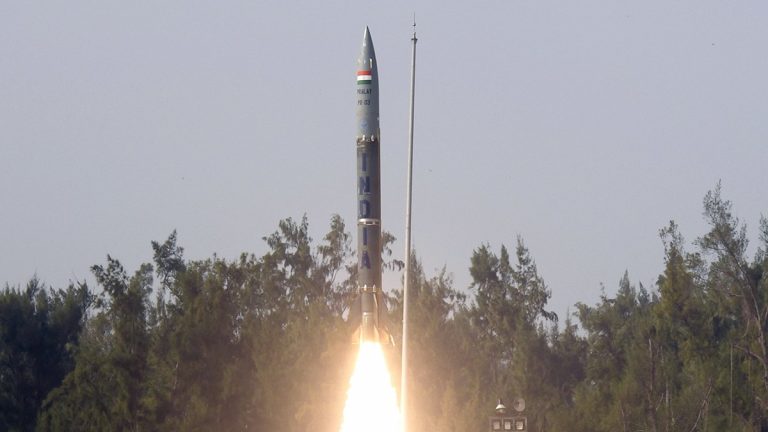
Amid heightened tensions along the Line of Actual Control (LAC) with China, India successfully carried out the night trialsof the nuclear-capable Inter Continental Ballistic Missile (ICBM) Agni-V on Thursday, December 15. The indigenous missile, developed by the Defence Research and Development Organization (DRDO), was tested at a defence installation at Abdul Kalam Island off the coast of Odisha. This weapon has a very high degree of accuracy and can strike targets up to 5,500 kilometres away.
India today successfully carried out the night trials of the Agni-5 nuclear-capable ballistic missile which can hit targets beyond 5,000 kms: Defence sources pic.twitter.com/AniA4Xgzdy
The defence sources also validated information about new technologies and equipment on the missile, which are designed to make the missile lighter. This exercise is aimed at increasing the Agni-V missile’s range if necessary.
The government has consistently maintained that the Agni-V trial’s success is in keeping with India’s stated goal of having ‘credible minimum deterrence’ that underpins the commitment to ‘No First Use’.
As per the sources, ahead of the test, the authorities had issued a notification and declared the Bay of Bengal as a no-fly zone.
What is Agni-V missile?
Agni V is a nuclear-capable intercontinental ballistic missile developed by the Defence Research and Development Organisation (DRDO) of India. It is capable of striking targets at ranges up to 5,000 to 5,500 kilometres with a full payload, i.e 1.5 tonnes, with a very high degree of accuracy. It can reach an exceptional Mach 24 speed which is 29,401 km/hr.
Agni V uses a three-stage solid-fuelled engine. It is road-mobile and can be transported by a truck and launched via a canister.
“Agni-V is capable of reaching any target in the Chinese mainland…In case of a nuclear problem with China, we are capable of taking them on. We have the capability to challenge them,” Republic TV quoted Brig (retd), Hemant Mahajan, as saying.
Given that it may be used with Multiple Independently Targetable Re-entry Vehicle (MIRV), the nuclear-capable Agni-V missile is a potent addition to India’s defence capability. In other words, the ballistic missile is capable of carrying several warheads. Agni-V’s capability will provide India with much-needed deterrence against external threats.
Notably, around the same time last year, Defence Research and Development Organisation (DRDO) successfully carried out the second flight test of the nuclear-capable ballistic missile Agni-P. The test fire was also conducted from Dr APJ Abdul Kalam island off the coast of Odisha.
In the past two decades, India has developed and held successful trials of Agni-I, Agni-II, Agni-III, Agni-IV and Agni-V missiles.
Notably, India is also working on Agni-VI which will be capable of being launched from submarines as well as from land and will have a strike range of 8,000 to 10,000 km.
Karnataka’s Congress leader DK Shivakumar gave a clean chit to the Mangaluru bomb blast accused while addressing a press conference on Thursday 15th December 2022. He said that the Mangaluru bomb blast might have taken place by mistake and also questioned whether it was as big a terrorist attack as the one that happened in Mumbai. DK Shivakumar asked how can one be called a terrorist without any probe, overlooking the fact that the NIA team investigating the case has found ample proof from the residence of the accused which proves that he had a well-established connection with the Islamist terror outfit ISIS.
DK Shivakumar said, “You tell me is he a big terrorist? Please let me know what action have you taken. Who was declared? Without investigation how can they just call someone a terrorist? If they had gone into detail we would know. Was it a terror attack like what happened in Mumbai or Kashmir or Pulwama? There is nothing in it. Some fellows may have done some mistakes. How do you have the right to project it in a different light? They did it for votes. They wanted to steal votes.”
He said, “The BJP government has no significant achievement to showcase to voters. By projecting the blast in a big way, the government wants to steal votes… Who do you call a terrorist? What was shown on TV? What was shown in the media….nothing.”
S Prakash, a BJP spokesperson, criticized DK Shivakumar for his remarks and asked for an apology from the Congressman. He said, “Who is a terrorist will be decided by the police after investigation. If DK Shivakumar doesn’t know the basics after being a minister for so many years, it is very unfortunate. Coming out in support of terror activity accused is very dangerous. He is endangering the life of the people of Karnataka. He should apologize for his careless remark.”
BJP spokesperson Shehzad Poonawala tweeted, “DK Shivkumar & Congress gives a clean chit to Mangluru Blast (auto rickshaw/cooker blast) accused suspected to have links with ISIS. The probe has been taken over by NIA but Congress which is quick to label Hindu Terror gives a clean chit to Islamist terror for vote bank!”
DK Shivkumar & Congress gives a clean chit to Mangluru Blast (auto rickshaw / cooker blast) accused suspected to have links with ISIS. The probe has been taken over by NIA but Congress which is quick to label Hindu Terror gives a clean chit to Islamist terror for votebank!
On 19th November 2022, a blast took place in an autorickshaw running on the streets of Mangaluru in Karnataka. The explosion in the vehicle in the coastal city of Karnataka took place under a mysterious situation. However, within 24 hours of the blast, the Director General of Police (DGP) Karnataka tweeted to confirm that this blast was an act of terror and a series of revelations appeared in the subsequent investigations.
“It’s confirmed now,” said the Director General of Police (DGP) in a tweet. “The blast is not accidental but an act of terror with the intention to cause serious damage. Karnataka State Police is probing deep into it along with central agencies.”
It’s confirmed now. The blast is not accidental but an ACT OF TERROR with intention to cause serious damage. Karnataka State Police is probing deep into it along with central agencies. https://t.co/lmalCyq5F3
One of the most important chapters of the findings of the probe is that the accused culprit in this case – Mohammed Shariq – had links with Islamist terror outfits and that he was posing to be a Hindu before executing the attack, so that, in case he dies in the attack, his identity is mistaken to be a Hindu thereby rendering the attack an act of the so-called Hindu Terror.
Let me begin with the line ‘Someone needs to speak’ which has become the flavour of the day. Sure you spoke, if you speak- you have spoken. This is the best part of the worldwide narrative and counter-narrative construct today. You tweet, you speak or you write- you said it. After that, there are arguments, justifications, juxtapositioning, extrapolations, derived meanings, understandings and misunderstandings, criticism, and of course propaganda which may benefit many. Thereafter you are quiet and others speak for you! Maximum bang for the buck.
I am reminded of the super hit number, ‘Tequila.’ 1958 Latin-flavored instrumental written by Chuck Rio and recorded by the Champs. Though in the entire number of a few minutes, spoken word is only one- TEQUILA! Repeated just thrice in the entire tune! And it became a No. 1 hit on the pop charts at the time of its release and continues to be popular. Even one word can make an impact.
Let me say what I am talking about. I am writing about a crass remark/comment by a respected Israeli film director who was at IFFI Goa, international jury chair Mr. Nadav Lapid who is known for his anti-establishment views. According to him, he felt it was his “duty” to speak his mind as the head of the international jury.
He called “The Kashmir Files”, a film close to the hearts of millions of Indians in India and abroad, a “vulgar” and “propaganda” movie. He further said that making bad films is not a crime, but the Vivek Agnihotri directorial is “crude, manipulative and violent”, in an interview with the Israeli newspaper Ha’aretz.
He didn’t stop at this. He says, “We learned that the film was pushed into the official competition of the festival due to political pressure… I feel as a foreigner who arrives there, you have an obligation to say the things that the people who live there may have a harder time saying.”
Oh my God! Can he substantiate this? And as a foreigner, you are also held accountable by the host country which was decent enough not to take any action on this.
The man who kicked up the dust
One cannot take away what he earned for his craft- several awards for his work on which most of us will not be able to comment- not me at least. He has made close to ten films, including short films. One would congratulate him for that. But the problem is ‘speaking out of turn and putting your foot in the mouth’ in front of the world at large. A man so seasoned a professional in the medium of cinema, and being a part of the jury- heading it- must not express his personal views in such a manner.
How would you take this Mr. Lapid?
International Holocaust Remembrance Day is January 27, commemorating the liberation of the Auschwitz concentration camp in 1945- where a large number of Jews were systematically killed ‘so we were told’ mostly through films.
This day (According to you and Western Media) is a time for reflection and education in honour of the approximately six million Jewish victims and five million non-Jewish victims of the Holocaust. Why should the world believe this? It could be clearly a case of propaganda for gaining the sympathy of the world by the Jews and justification for Allied actions of killing so many Germans who actually rose against the horrible treaty after the First World War. We know history is written by the victors.
The Treaty of Versailles, an armistice treaty, is very controversial. The treaty’s so-called “war guilt” clause forced Germany and other Central Powers to take all the blame for World War I. This meant a loss of territories, a reduction in military forces, and colossal reparation payments to Allied powers for the next 70 years or so. In a way, Germans were right in hitting out at the victors of WWI- Jews were victims of the Collateral damage. Anyone could justify this argument!
Yet the Holocaust has been the subject of so many films since the end of World War II, with various directors over the years depicting the enormous tragedy, shining a light on the strength of the human spirit in the face of the most horrific of circumstances, and showing the ways in which it is still felt today.
One can well say that some of these films glorified death and torture. Most of them were made by Filmmakers who sympathized with the Jewish community.
The first feature film to include footage of concentration camps was titled ‘Strangers’, made in 1946 immediately after the war, by Orson Welles, an American filmmaker. According to his longtime friend, filmmaker Henry Jaglom, Orson Welles had a little crush on the Jews. So be it. But someone must speak up.
Let us not dismiss the movies like ‘Conspiracy’, ‘Schindler’s List’ and ‘Sophie’s Choice’ which give you goosebumps. Were these trying to portray something that never happened? Was Spielberg out of his mind making Schindler’s list, could it be a propaganda film? Arnold Spielberg, his father was born in Cincinnati, and he was of Jewish descent- Well anyone can speak up if he feels like it.
Outright denial of the Holocaust
What we learned through some scattered documentation, mostly through films, is that 6 million Jews were killed by the Nazis. How are you so sure? Did it really happen or is it a figment of some creative director’s crude, vulgar, and not violent but gruesome, overhyped manipulative propaganda? God alone knows.
There is a theory to this too. Holocaust denial is a form of genocide denial drawing on anti-Semitic conspiracy theories that assert that the Nazi genocide of Jews, known as the Holocaust, is a myth, fabrication, or exaggeration. Holocaust deniers make one or more of the following false statements – Nazi Germany’s Final Solution was aimed only at deporting Jews and did not include their extermination. Nazi authorities did not use extermination camps and gas chambers for the genocidal mass murder of Jews. The number of Jews murdered was just one-tenth of what is being told to us- 6 million, and the Holocaust is a hoax perpetrated by the Allies, Jews, and the Soviet Union.
In fact, most of the world does not look at Germans kindly- only because of these films. Can we say propaganda films?
So you poked Germany after the First World War with a horribly biased treaty and now you continue poking Germany after the Second World War with these propaganda movies. Anyone can say that as you said about Kashmir. No?
I recommend strongly that you make a movie- ‘How Hitler was compelled to do what he did’ in the wake of the treaty after WWI. See if you can show concentration camps without violence. That will get you accolades of a different kind. Similar treatment for Goebbels propaganda can be justified as they were pushed against a wall.
The Kashmir Files film
This really happened to Indians Mr. Lapid. We know what happened, it is well documented and with several testimonies. The Kashmiris never chased the perpetrators, like you guys hunted down Nazis as shown in several films- Odessa file is one.
Adolf Eichmann was captured by Mossad agents in Argentina on 11 May 1960 and subsequently found guilty of war crimes in a widely publicized trial in Jerusalem, following which, he was executed by hanging in 1962, and the world clapped as you looked happy.
You may not know or be convinced, as many are not convinced by the Holocaust theory! Was it a conspiracy? We don’t know. Yet the world gives you the benefit of the doubt. Lior Raz of “Fauda” fame said one mustn’t comment on issues they have little knowledge of. I feel he is right.
Even your Ambassador to India, Naor Gilon, and Consul General to Midwest India, Kobbi Shoshani, panned you Mr. Lapid. Barring a few actors, actually non-state ones, and a few opposition guys, nobody else stood by you. Taking a high creative ground, you wanted to create a political storm. But today India doesn’t care for motor mouths, and we speak up.
The Moghul period
Israel is a much younger country as compared to the Indian civilization. India had to suffer the Musim invaders for 800 years! You cannot even imagine this! There were mass massacres by Moghul rulers, and conspiracies galore. Movie Mughal-e- Azam glorifies Akbar and his kindness, but that is debatable.
American historian and writer Will Durant wrote in his 1935 book “The Story of Civilization: Our Oriental Heritage” (page 459) that the Mohammedan conquest of India is probably the bloodiest story in history.
Indian Historian K.S. Lal in his book ‘Growth of Muslim Population in Medieval India (1000-1800)’ gives further details. He estimates that about 60 to 80 million people died in India between the years 1000 and 1525 as a result of the Islamic invasion of the Indian subcontinent. He also observed that more than 2 million Hindus died during Mahmud of Ghazni’s invasions of India alone.
Don’t forget Tipu Sultan and Aurangzeb as heroes. The world needs to know.
Make a film on this- you are assured of an Oscar or we may honor you with the Dadasaheb Phalke award out of turn.
Outrage erupted in Rajasthan’s Udaipur after it came to notice that Pakistan-made candy containing beef gelatine was being sold in the city. Shockingly, these chocolates were being sold at a shop just 50 meters away from the city’s police control room.
Upon receiving a complaint on Wednesday, state Food Inspector Ashok Gupta and a team from the Medical and Health Department arrived at the shop named Chocolate and Birthday Decoration Items at the Delhi Gate intersection of Udaipur and seized all of the beef toffees. The toffee samples have been sent to the forensic lab for testing.
During the investigation, it was discovered that toffee is also supplied to other shops in the city from this shop. When questioned, the shopkeeper stated that he purchased the toffees containing beef gelatine from Mumbai’s Crawford market, however, he did not receive a bill for the toffees. The shopkeeper also revealed that he bought 3 boxes of the Chili Mili beef chocolate, and only one toffee was sold. Two sealed packets containing 24 toffees were found, while there were 23 toffees in the packet that was opened.
After this, the state’s Health Department is investigating other shops in the city.
Image credit: Dainik Jagran
Notably, the local people upon noticing the ingredients of the toffee objected to its sales and urged the authorities to stop its sales immediately.
Image credit: ETV Rajasthan
It is pertinent to mention that on the pack of toffee named ‘Chili Mili’, ‘Made in Pakistan’ is written and an address of Balochistan was also mentioned. It lists beef gelatine as one of the ingredients of the product. Along with other text in Urdu, ‘Manufactured by Ismail industries Limited C-230, HITE Hub, Balochistan, Pakistan’ was written. Each packet of this toffee costs Rs 20. The packet also has a red mark used for non-vegetarian food items.
Chili Mili is made by Candyland, reportedly the largest confectionery brand in Pakistan. CandyLand is a brand of Ismail Industries which has its head offices in Karachi in Pakistan. The Company’s factory is located in Balochistan. Candyland manufactures a wide range of confectionery products including chocolates, toffees, gums, lollipops, jellies, chews, candies etc.
It is notable that Chili Mili is also available on e-commerce sites like Amazon and Flipkart in India.
Gelatine is a common ingredient used in the food processing industry, where it is mostly used as a gelling agent. Gelatine comes from collagen collected from the bones of animals, and it is a common product produced by the meat processing industry. While beef is a common source of gelatien in most other countries, in India, it is procured from other animals, mostly buffalo bones.