Home Blog Page 2616

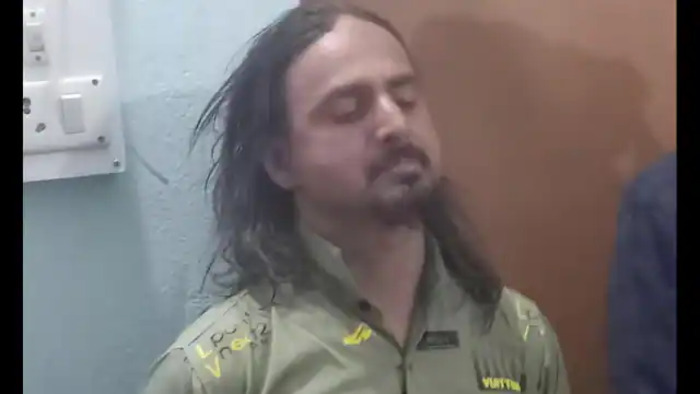
Punjab and Haryana HC denies bail to Ayushi Bhatia, arrested by Gurugram police for filing 9 fake rapes cases against 9 men in one year

0

The Punjab and Haryana High Court on Thursday, December 15, denied bail to Ayushi Bhatia who was arrested last year in December by the Gurugram police in a ‘honey trapping case’. The accused had reportedly filed nine fake rape cases against nine men in a span of 14 months in 2020, purportedly to extort money from the men she accused.

While rejecting the bail plea, the single bench of Justice Ashok Kumar Verma said, “As per the reply filed by the State, the petitioner has filed as many as 9 FIRs against different persons, and out of these 9 cases, in 3 cases, proceedings under Section 182 of the IPC have been initiated against the petitioner as the allegations of these FIRs were found to be false. The court noted, “The petitioner is running a racket for extortion of money from the persons against whom she has made allegations.”

“Keeping in view the facts and circumstances of the case, the gravity of the alleged offences, and the fact that the petitioner is habitual of filing cases against different persons, the petitioner does not deserve the concession of regular bail,” the court held.

Notably, on December 29, 2021, the Gurugram Police arrested Ayushi Bhatia. The Gurugram police confirmed that the woman, reportedly a BA (Hons) student in Atma Ram College, Delhi, confessed to committing the crime. She was produced in a city court and is sent to judicial custody later.

Gurugram Police had charged Ayushi Bhatia under IPC 384, 389, 120B, 506, 509. Her mother and uncle have also been named as accomplices. Ayushi apparently forcefully married a man in September 2021 after giving him threats of a false rape case. Meanwhile, a complaint was filed against her in Gurugram, and Ayushi was arrested when the truth was revealed. 

‘Nobel nominated fact-checker’ Md Zubair spreads fake news that Raghuram Rajan didn’t propose Islamic banking in India, uses a different unrelated report

On 15th December 2022, ‘fact-checker’ and Alt News co-founder Mohammed Zubair tried to ‘fact-check’ journalist Rahul Shivshankar but ended up spreading fake news himself. While Times Now editor Rahul Shivshankar had quoted a report by former RBI governor Raghuram Rajan that talked about Islamic banking, Zubair claimed that the report was by Dr. C Rangarajan.

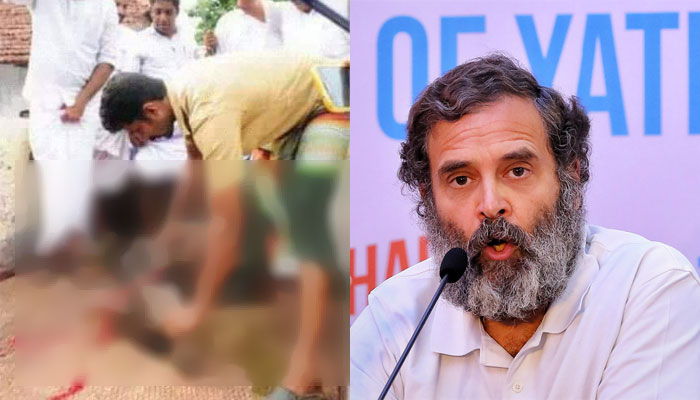
Rahul Shivshankar made the comments after Raghuram Rajan joined the Bharat Jodo Yatra of Congress leader Rahul Gandhi. Calling it ironic, he wrote, “In 2008, Rajan prepared a report on improving infrastructure for financial inclusion, recommending interest-free banking in compliance with Shariat.” Shivshankar then asked, “Is pushing interests of only one community an act of inclusivity?”

The journalist was referring to a proposal by Rajan to consider introducing Sharia-compliant Islamic Banking in India, known as interest-free banking. While Md Zubair didn’t deny that such a proposal was made, he claimed it was made by former RBI governor Dr. C Rangarajan.

Zubair’s tweet with false claim

“The 2008 report by Committee on Financial Inclusion was chaired by Dr. C Rangarajan, Not Raghuram Rajan,” claimed Zubair, quoting the tweet by Shivshankar. He even mocked Shivshankar suggesting that he was mixing between Raghuram Rajan and C Rangarajan, as he posted photographs of the two former RBI governors in a subsequent tweet.

But the ‘fact-checker’ was soon fact-checked, because it was indeed Raghuram Rajan who had authored a report that talked about Sharia-compliant banking, and there is no record of Dr. C Rangarajan making such a proposal. It was Zubair who was mixing up two reports by two committees, one headed by Rajan and the other by Ranganathan, and made a completely false claim. Because Islamic banking was indeed proposed in a report prepared by a committee headed by Raghuram Rajan. On the other hand, the report by the Ranganatha committee didn’t mention it.

In August 2007, the Planning Commission of India formed a high-level committee on Financial Sector Reforms headed by Raghuram Rajan, who was working as a professor at the Graduate School of Business in the University of Chicago at that time. The committee presented its report in the year 2008, titled A Hundred Small Steps. As popular Twitter user The Hawk Eye pointed out, Radhuram Rajan headed the committee.

On page 72 of this report, there is a section titled “Improving infrastructure for financial inclusion”, where the idea of interest-free banking was discussed. A para in that section reads, “Another area that falls broadly in the ambit of financial infrastructure for inclusion is the provision of interest-free banking. Certain faiths prohibit the use of financial instruments that pay interest. The nonavailability of interest-free banking products (where the return to the investor is tied to the bearing of risk, in accordance with the principles of that faith) results in some Indians, including those in the economically disadvantaged strata of society, not being able to access banking products and services due to reasons of faith. This nonavailability also denies India access to substantial sources of savings from other countries in the region.”

Proposal for interest-free banking in Raghuram Rajan committee report

While the report does not mention the words Islamic banking or Sharia compliance banking, the text makes it clear that it is referring to Islamic banking only. It says that certain faiths prohibit the use of financial instruments that pay interest, which directly points towards Islam as earning interest on money is considered haram only in Islam where.

The report had said that while interest-free banking is provided by some NBFCs in India, it should be made available on a larger scale, including through the banking system.

In his tweet, Zubair wrote, “The 2008 report by Committee on Financial Inclusion was chaired by Dr. C Rangarajan, Not Raghuram Rajan.” But the fact is that, Rahul Shivshankar didn’t even claim that the Islamic Banking was proposed in the report by Committee on Financial Inclusion. The Times Now editor wrote that Rajan had prepared a report on “improving infrastructure for financial inclusion”, where he had recommended interest-free banking.

The text “improving infrastructure for financial inclusion” is the exact title of the chapter where Islamic banking was proposed in the Raghuram Rajan report, which can be seen in the PDF of the report.

Zubair deliberately converted “improving infrastructure for financial inclusion” to “report by committee on financial inclusion” to make false claims. While both the phrase contain financial inclusion, they are talking about different aspects of the subject.

It is interesting to note that now ‘fact-checker’ Md Zubair is claiming that Raghuram Rajan didn’t propose Islamic banking, while the proposal of the committee was widely reported in the year 2008 itself. For example, a September 2008 report by Financial Express said in the headline: Raghuram Rajan report advocates introduction of Islamic banking.

2008 report on Islamic banking proposal by Raghuram Rajan committee

Moreover, when the Reserve Bank of India finally rejected the proposal of Islamic banking, most reports on it had mentioned that it was proposed in the Raghuram Rajan report. A News18 report in November 2017 said in its headline, ‘RBI Shuts Door on Raghuram Rajan’s Plan to Introduce Islamic Banking in India’.

Most other reports on the RBI decision had mentioned the same thing, with the Times of India saying, “It all started in late 2008, when a committee on Financial Sector Reforms, headed by former RBI governor Raghuram Rajan, had stressed on the need for a closer look at the issue of interest-free banking in the country.”

Therefore, there was never any dispute that a Planning Commission committee headed by Raghuram Rajan had proposed introducing Islamic Banking in India. But now, Mohammed Zubair, who was allegedly nominated for Nobel Peace Price for his extraordinary skills in fighting fake news, is now spreading the fake news that Rajan never made the proposal.

While trying to prove that the committee that made the proposal was headed by Dr. C Rangarajan and not Raghuram Rajan, Zubair posted the page of a report that contained the names and signatures of the authors of the report. He posted it in response to a Twitter user saying that it is possible that Rajan was a member of the committee headed by Rangarajan. In this page, there is no name or signature of Rajan while Ranganathan’s name and signature are there, thus it proves that he didn’t make the proposal, implied the ‘fact-checker’.

But it was actually another big fake news, as in order to deceive people, Md Zubair deliberately used a different report prepared by a different committee headed by Ranganathan. He was referring to the report of a committee on financial inclusion headed by Dr. Ranganathan, which was published in January 2008.

The Ranganathan Committee was appointed by the Financial Commission, and the report does not mention interest-free banking or Islamic banking. The page containing the names and signatures of members of the Financial Inclusion Committee is also found in this report, on page 31.

Therefore, the ‘fact-checker’ used the content of a totally different report, prepared by a different committee headed by a different person and formed by different organisations to claim that Raghuram Rajan didn’t propose Islamic banking in India.

Dalit family reverts to Hinduism in Karnataka, says the Pastor forcibly converted them to Christianity, and his son raped their minor daughter

0

On Monday, December 12, the Koppal police in Kartanaka arrested a pastor and his wife for allegedly forcing a Dalit family to convert to Christianity. The 17-year-old son of the pastor has also been booked for raping the minor daughter of the family under relevant sections of the POCSO Act.

The victim Dalit family, belonging to the Budgajangam community, has meanwhile reverted to Hinduism under the aegis of Marulasideshwara Swamiji and the Hindu outfit Hindu Jagarana Vedike.

According to reports, the pastor and his wife were sent to judicial custody while their son has been sent to a remand home in Ballari.

Talking about the arrests, the Koppal police confirmed that the first case was registered against the accused pastor Satyanarayan alias Samuel and his wife for forceful conversion, while the second was registered against their minor son for allegedly raping a minor girl from the same family.

The pastor was arrested based on a complaint filed by Shankar, one of the victims whose family was converted by the pastor.

Shankar said in his complaint that pastor Satyanarayana alias Samuel, who runs Grace Prayer Centre in Karatagi, Koppal, had converted him by luring him with money. He accused the pastor of threatening them against praying to Hindu Gods or even keeping pictures of Hindu deities in their house.

“After I was baptised by the pastor, he asked us to follow the rituals of Christianity and warned us to not pray to Hindu deities. He also confiscated the photographs of Hindu deities from our home and threw them into a canal, where he later baptised other members of my family,” Shankar alleged in his complaint.

He also accused the pastor’s wife, Shivamma Sara, of taking his children and involving them in church activities.

Shankar further told the police that when he told the local authorities about the forced conversion, they were allegedly threatened and physically assaulted by the pastor.

The pastor warned the victim’s family that praying to Hindu gods would cause them to go to hell. The pastor terrorized Shankar further by warning that if he dared to return to Hinduism, he would kill Shankar and have his children raped.

While Shankar was contemplating filing a complaint against the pastor, the latter’s 17-year-old son raped his 15-year-old daughter on the pretext of marrying her. This finally prompted Shankar to approach the police on December 9 and file an official complaint against the pastor and his wife accusing them of forced conversions and one against the pastor’s son as well, accusing him of raping his minor daughter.

“As per the complaint, the pastor forced Shankar and his family to convert to Christianity four years ago. Then they were practising their new religion though they had not officially converted. Shankar was waiting to expose Samuel who allegedly used to target poor families and would lure them to convert. But in the meantime, Shankar’s minor daughter was raped by the pastor’s son, who is also a minor, and then Shankar lodged a complaint,” said a police officer who is privy to the case.

“We have questioned the complainant and his family members. We are also checking about the claims of forcible conversion in recent years in the Ramanagara area where the complainant and his family live,” the officer added.

Rishi Rajpopat, an Indian PhD scholar at Cambridge University solves a 2500-year-old Sanskrit grammar conundrum

Rishi Rajpopat, a 27-year-old student at Cambridge University has solved a grammar puzzle deriving from the texts written by the great Sanskrit scholar and the “father of linguistics” Panini which has perplexed scholars for centuries. 

The Indian PhD scholar at the faculty of Asian and Middle Eastern studies at St. John’s College has decoded a rule in Panini’s text Ashtadhyayi. 

Panini’s text Ashtadhyayi, which consists of a set of rules for deriving or forming new words from root words, frequently contains conflicting rules for creating new words, leaving many scholars perplexed about which rules to apply.

Many scholars were interested in resolving such a puzzle in this linguistic algorithm of a book. Panini himself wrote a meta-rule to resolve rule conflicts. According to Panini’s meta-rule (as interpreted by scholars over the years), In the occurrence of a conflict between two rules of equal strength, the rule that comes later in the grammar’s serial order is applicable.

Rishi Rajpopat’s rebuttal to scholars over 2,500 years

Rejecting the traditional interpretation of the metarule, Rishi Rajpopat in his dissertation argued that Panini meant that between rules applicable to the left and right sides of a word respectively, Panini wanted the reader to choose the rule applicable to the right side.

For example, there is a rule conflict when attempting to form the word guruṇā, which means ‘by the guru’ and is a known word, in the sentence jna dyate guru — knowledge (jna) is given (dyate) by the guru (guru).

The word is made up of the roots guru + ā. Following Paini’s rules for creating the word that will mean “by the guru,” two rules become applicable: one to the word guru and one to ā. This is solved by selecting the rule that applies to the word on the right, which results in the correct new form guruṇā.

The eureka moment

As Rajpopat struggled to solve the problem, his supervisor at Cambridge Vincenzo Vergiani gave him a bit of insightful advice. “If a solution is complicated, you are probably wrong,” Vergiani advised Rajpopat. 

Rajpopat reveals that there was a time when he had almost decided to give up however, after six months, he had a eureka moment. “Six months later, I had a eureka moment. I was all set to quit as I was getting nowhere. I closed my books for a month, and enjoyed meditating, praying, swimming, and other activities,” Rajpopat said. 

“I then begrudgingly went back to work, and as I started turning pages, all the patterns started emerging and everything started making sense. I realised that the key to Panini’s grammar was right before everyone’s eyes but hidden from everyone’s minds for over 2 millennia,” Rajpopat added. 

Significance

Sanskrit is one of the oldest languages in the world and holds special importance in Hindu Dharma. It is through Sanskrit that much of India’s greatest science, philosophy, poetry, and other prominent literature has passed on over centuries.

Although the language is spoken in India by about 25,000 people presently, interest in the language has increased in recent years. 

Speaking about ancient wisdom propagated by ancient Indian scholars, Rishi Rajpopat says, “We’ve been made to believe that we are not important. I hope this discovery will infuse confidence, a sense of pride, and hope among Indian students that they too can achieve great things.”

One of the major implications of this discovery by Rajpopat is that now the algorithm of Panini’s grammar is available, and this grammar can now be taught to computers. 

“Teaching computers how to combine the speaker’s intention with Panini’s rule-based grammar to produce human speech would be a major milestone in the history of human-machine interaction, as well as in India’s intellectual history,” Rajpopat explains.

Speaking about his student’s extraordinary achievement, Vincenzo Vergiani, the Professor of Sanskrit at the University of Cambridge said, “My student Rishi has found an extraordinarily elegant solution to a problem that perplexed scholars for centuries. This will revolutionalize the study of Sanskrit.”

Fugitive Nirav Modi loses plea in UK Court against his extradition to India: Details

0

The UK Supreme Court on Thursday denied fugitive diamantaire Nirav Modi’s plea against his extradition to India.

Modi lost the bid to take his fight against extradition to India on charges of fraud and money laundering to the UK’s Supreme Court. “The appellant’s application for permission to appeal to the Supreme Court is refused,” Lord Justice Stuart Smith said in his statement.

The diamantaire, who fled India in 2018 before details of his alleged involvement in large-scale fraud at the Punjab National Bank became public, has argued there is a high risk of suicide if he is extradited.

In November, Nirav Modi filed an application before the UK High Court for permission to appeal against his extradition to India in the UK Supreme Court. He lost the appeal on Thursday to take his fight against extradition to the UK Supreme Court.

Nirav Modi reportedly filed an application in the High Court in London, seeking permission to appeal against his extradition order, two weeks after a UK court dismissed his plea against extradition back to India.

On November 9, Nirav Modi lost his appeal against extradition to India with a United Kingdom court dismissing his plea. Earlier, the High Court of London (United Kingdom) dismissed the appeal of Nirav Modi, who is wanted in India to face money laundering and fraud cases.

The Ministry of External Affairs (MEA) later welcomed the UK High Court’s decision to reject Nirav’s plea.

“India has been vigorously pursuing the extradition of economic fugitives so that they face justice in India. We welcome the decision of the UK High Court. We want to bring him to India as soon as possible,” said MEA spokesperson Arindam Bagchi during a press conference.

Nirav Modi, who is a prime accused in the Rs 13,500 crore PNB scam, had fled India. He lost his appeal after he had moved the High Court in London against extradition on mental health grounds.

The bench of Justice Stuart Smith and Justice Robert Jay of the High Court said there are “no features of psychotic illness”.

The court rejected Nirav Modi’s counsel’s claims that he will die by suicide due to severe depression and said “Nirav Modi neither is nor is very likely to be at the most severe end of the scale of depressive illness”.

“He has so far displayed no features of psychotic illness. Although he has exhibited persistent suicidal ideation, he has neither attempted suicide or deliberate self-harm nor disclosed plans to do so, except in the vaguest and general way,” the court said.

The High Court also noted the steps taken to render Barrack 12 safe and to ensure that there is effective constant monitoring to reduce both the risk of attempted suicide and the prospect of suicide being committed.

The court noted that the Government of India sought the appellant, Nirav Deepak Modi.

Nirav Modi last year had moved the UK High Court against District Judge Sam Goozee’s Westminster Magistrate Court ruling in favour of his extradition. He is presently behind bars at Wandsworth Prison in southeast London. 

(This news report is published from a syndicated feed. Except for the headline, the content has not been written or edited by OpIndia staff)

Besharam Rang from Pathaan may be a cheap and vulgar video but it doesn’t warrant any FIRs, and definitely doesn’t deserve politicians’ attention

For the past couple of days, the new song from the upcoming movie Pathaan, titled ‘Besharam Rang’, has been making headlines and most of them are not so positive. The song featuring Deepika Padukone and Shah Rukh Khan has Deepika’s character gyrating to the music in skimpy clothes in an attempt to seduce Shah Rukh Khan’s character. To maintain gender equality, Shah Rukh Khan also goes bare-chested in the video.

We don’t know if Deepika manages to seduce SRK in the movie or not, but it has definitely not seduced too many viewers. Most people online have termed it a cheap, vulgar attempt to promote the film by trying to attract viewers with the half-naked female lead.

Viewers disliking the video is one thing, but strangely, the video is starting to attract much more extreme reactions from some corners. In one of the scenes from the video, Deepika can be seen wearing a saffron bikini, and some people have interpreted that the ‘Besharam Rang’ in the lyrics refers to saffron, a colour long affiliated with Hinduism.

Even though Deepika has worn bikinis, swimwear etc of several colours in the video, that saffron colour is the one that has now drawn a lot of outrage. In fact, Shah Rukh Khan’s posters were burnt in Madhya Pradesh’s Indore for disrespecting the saffron colour in this video.

It is not only the people of Madhya Pradesh that are outraged over this song, their politicians have been leading the campaign against it. Home Minister Narottam Mishra expressed objection to actress Deepika Padukone’s attire in the song as well. The minister has advised the director to correct the attire, failing which the film may face troubles during its release in Madhya Pradesh. He also called Padukone a member of the ‘Tukde Tukde Gang’, a term that refers to left liberals wishing to separate Kashmir and other parts from India.

Another BJP leader from the state, Indore MLA Ramesh Mandola said that instead of watching Shah Rukh Khan starrer Pathaan, it is better to use that money to feed the poor.

Whenever there is an outrage in India, legal cases follow, and it is no different this time around either. Once the outrage against ‘Besharam Rang’ went mainstream, Supreme Court Advocate Vineet Jindal has already filed a complaint at the Ministry of Information and Broadcasting against actor Shah Rukh Khan and Deepika Padukone over the song.

In his complaint, Jindal said that the song is “vulgar and obscene” and “against Hindu sentiments”. He argued that Deepika was seen wearing a saffron bikini and sarong with Shah Rukh Khan while performing in the song.

While the video of the song is extremely crass and vulgar, and is very openly trying to cash in on a young woman’s skin to promote the film, the protests against it are utterly bizarre.

If Deepika Padukone, and the film’s makers think the best way to promote a film is by trying to engage the male gaze, and exposing skin, then it is their prerogative. Maybe they don’t have any faith in the story and screenplay so they are trying cheap, vulgar ways to attract the audience, but again, it is their call.

Our politicians should have better issues to focus on, a cheap raunchy song is not worth the public’s time, much less elected public respresentatives’ time. Filing legal cases over such cheap issues clog our already over-burdened judicial system, and thanks to the publicity such cases generate, they even get a hearing much before other cases from ordinary citizens.

It is a terrible video, and that is all there is to it, if this is the best that Pathaan has to offer, it will be a flop anyway. Our elected representatives and judicial system should not be spending any time over it.

Uttar Pradesh: Mukhtar Ansari sentenced to 10 years imprisonment, asked to pay Rs 5 lakh fine under Gangster Act

0

Former Mau MLA and mafia Mukhtar Ansari was sentenced to 10 years imprisonment by a court in Ghazipur on Thursday, 15th December 2022. The former MLA has been sentenced by the MP-MLA court of Ghazipur. The court also imposed a fine of Rs 5 lakh on him. Mukhtar Ansari and Bhim Singh were convicted under the Gangster Act on Thursday.

The court on Thursday pronounced its verdict in the 1996 gangster case against MLA Mukhtar Ansari. The special MP MLA court in Ghazipur has given its verdict at around 2.30 pm. However, Mukhtar Ansari was not present in the court at the time of the verdict. Mukhtar Ansari was not sent to the Ghazipur court due to Enforcement Directorate’s custody and security reasons. Therefore, arrangements were made for video conferencing in the ED office of Prayagraj.

In 1996, this Gangster Act case was registered against Mukhtar Ansari. The action was taken against Mukhtar on the basis of five cases under the Gangster Act. Congress leader Ajay Rai’s elder brother Awadhesh Rai’s murder case and the fatal attack on additional SP are also included in these five cases.

In this case, the court has sentenced after 26 years. This is the first time Mukhtar Ansari has been convicted in any case. The gangster act was invoked simultaneously in connection with the murder of Awadhesh Rai, the murder of constable Rajendra Singh, the murder of constable Raghuvansh Singh, the attack on an additional SP, and the attack on policemen in Ghazipur.

Vivek Oberoi slams Bollywood for its ‘God complex’, says few people have too much power in their hands to even destroy people: What he said

Actor Vivek Oberoi revealed that the entire Bollywood lobby tried to push him down through his career and had stopped offering him films. “I had no work. No films were offered,” he said adding that the lobby that tried crushing his talent is now breaking.

“It is breaking. Look at what Sushant Singh Rajput went through, or so many other kids go through, so much talent gets crushed because it was somebody’s decision, for reasons other than work, to just destroy someone. There is so much power in some people’s hands, there is a God complex, which needs to go,” he said in an exclusive interview with the Indian Express.

He also said that it was inadequate that some people in the industry had been given much power in their hands, so much so that they thought they could destroy someone, could stop him or her from working in the films. ” It’s our fault as an industry that we’ve given that kind of power to them. That pedestal should be given only to talent, new, old, upcoming, established, that is the most important,” he stated.

The actor who was featured in the biopic of Prime Minister Narendra Modi revealed that he and his family struggled when the Bollywood lobby acted against him and offered no projects. “That was the time I went out and gave a Shootout at Lokhandwala, where I got a lot of praise and won awards. People were saying ‘oh my God, this is amazing!’ and then for one and a half years, I was sitting at home, nobody was coming to me with films, it defies all logic,” he said.

However, he said that he has struggled and had created his name in the industry despite being a second-generation actor. He said that none of the acts by the Bollywood lobby stopped him and his talent from reaching his fans. He lauded the OTT platforms and said that they have liberation from unnecessary paraphernalia that has nothing to do with creativity, talent, or meritocracy.

Vivek was an early adopter of OTT when Bollywood was still dismissive of the media. The actor claims that it was his open-mindedness rather than his foresight that got him there. “I’d say open-mindedness and lack of arrogance, I think. Sometimes we believe hum sab jaante hai, humara hi sahi hai. That comes from a sense of arrogance that you know all, but you should be willing to try something new, you should be willing to say ok, I’ll try and reinvent myself, let me try and experience what this is and that’s what leads you,” he said when asked about the OTT shift.

He further added that he has been following and working in Malayalam, Tamil, and Telugu cinema for years before other Bollywood actors realized how impactful South Indian cinemas are. He said that the actors working in South Indian films have commitment, dedication, the honesty which pays them more respect and honor than the Bollywood actors. The actor meanwhile also confessed that he is getting good work in mainstream Hindi cinema too.

The actor from 2017 to 2022 did Inside Edge 1, 2, and 3 (Prime), Dharavi Bank (MX player), and recently worked in Rohit Shetty’s Indian Police Force drama series (Prime). Earlier to that he appeared in several Bollywood films which include Saathiya, Dum, Vivegam, Kaal, Omkara, Mission Istanbul, Prince, and many more.

The actor throughout the interview stood by his opinion that money is just the byproduct of art and that for him it’s ‘pehle Saraswati uske baad mein Lakshmi.’ “I’ve been very particular and very careful. Despite who’s the producer or how big the set-up is, if I don’t get a feeling, I say no. I think I commit my fans who’ve been there for me for 20 years through thick and thin. So, my commitment is that if excellence, at least I try,” he was quoted.

DCW issues notice to Amazon and Flipkart over ‘easy availability of acid’ after police said acid thrown on girl in Dwarka was bought on Flipkart

0

On Thursday, December 15, the Delhi Commission for Women (DCW) sent a notice to Flipkart and Amazon after it was learnt that the acid used in the Dwarka acid attack incident in Delhi was bought from the e-commerce platform Flipkart. The DCW said that the availability of acid on Amazon and Flipkart is illegal, and sought details on the availability of acid on the e-commerce platforms.

The DCW took this step after Special Commissioner of Police, Sagar Preet Hooda said yesterday that the acid used in the attack was bought from the e-commerce platform Flipkart, and the payment was made online.

“DCW has learnt that accused bought acid through ‘Flipkart’ & that acid is easily available on ‘Amazon’ & ‘Flipkart’ which is illegal,” the letter reads as DCW seeks details on the same,” the notice read. “The easy of availability of acid on online platforms is a matter of grave concern and needs to be checked urgently,” the DCW said in the notice.

In the notice, DCW asked that these online marketplaces explain why acid is available there as well as full contact information for any vendors who have listed “acid” as a product.

It further inquired as to whether the seller’s licence was verified prior to posting the acid product on the website, and if not, it asked the e-commerce sites to specify the reasons. It further questioned whether photo ids of those purchasing acid online were sought. If yes, they were asked to provide a complete list of the purchasers along with the photo Ids of the buyers.

The DCW has also requested information on the people responsible for allowing the sale of acid on the portal, as well as information on the measures taken against them.

Highlighting the gravity of the matter, the Delhi Commission for Women has asked the e-commerce sites to send in their responses by December 20.

Availability of acid

While police said that the acid used in the attack was purchased from Flipkart, searches on both Amazon and Flipkart do not show any corrosive acid that can be used in such an attack. Searching for acid shows various healthcare products that include various kinds of acid which are not corrosive. Therefore, it is not what kind of acid was purchased online which was used in the attack.

Delhi acid attack incident

On Wednesday, December 14, a Class 12 student was on her way to school in southwest Delhi’s Dwarka when two men on a bike passed by and one of them flung acid at her. Within 24 hours of the acid attack incident, the Delhi Police arrested the three accused in the case.

According to the police, the motive behind the attack was ‘revenge’ as the main accused Sachin Arora (20) wanted to take revenge on the minor girl for calling off their friendship a few months ago. 

The CCTV footage of the incident that emerged showed the teen recoiling and then running in pain. It showed a person named Harshit riding the bike while accused Sachin Arora throwing acid at the girl. Later on, Virendra took Sachin’s mobile phone and scooty so that the police cannot trace Sachin’s location.

Adv Vineet Jindal files complaint against Deepika Padukone and Shah Rukh Khan for hurting religious sentiments, seeks ban on ‘Besharam Rang’

On December 15, Supreme Court Advocate Vineet Jindal filed a complaint at the Ministry of Information and Broadcasting against actor Shah Rukh Khan and Deepika Padukone for the recently released song ‘Besharam Rang‘ of their upcoming film Pathaan.

In his complaint, Jindal said that the song is “vulgar and obscene” and “against Hindu sentiments”. He argued that Deepika was seen wearing a saffron bikini and sarong with Shah Rukh Khan while performing in the song.

Saffron being a “symbol of renunciation, sacrifice, knowledge, purity and service”, he said. He blamed Bollywood for turning saffron into a symbol of ‘shamelessness. He said, “Bollywood turns saffron into a symbol of shamelessness by insulting the colour of pride and devotion by performing obscene moves in this song. It is also noted that vulgarity has its height by using saffron colour intentionally to insult the Hindu community and Sanatan culture.”

Complaint filed by Supreme Court Advocate Vineet Jindal against Deepika Padukone and Shah Rukh Khan. Source: Vineet Jindal

Accusing Deepika and Shah Rukh of hurting the religious sentiments of Hindus with the song ‘Besharam Rang, Jindal said that their performance in the song has damaged the pure divinity of the saffron colour which is of utmost significance to the Hindu community. Such deplorable performances in the context of the saffron colour which is worn by Hindu saints and ascetics as their devotion toward the religion are extremely outrageous, atrocious and hurting the sentiments and beliefs of the Hindu community.”

Jindal alleged that it was a deliberate and malicious act intended to outrage the religious feelings of the Hindu community via vulgar visuals and verbal representation in the song that is being circulated on social media and on public platforms. He urged to file a complaint against the involved parties, including Deepika Padukone, Shah Rukh Khan and others, under Sections 295A,298, 505, 67 IT Act and 34 of the Indian Penal Code.

He further urged the I&B Ministry to ban the video and called for its removal from the internet immediately.

Speaking to OpIndia, Jindal said, “How our Saffron colour has been displayed in the song Besharam Rang with vulgarity in the film Pathaan is derogatory. I have requested the Ministry of Information and Broadcasting to ban the song and remove it from all platforms immediately. Furthermore, action should be initiated against the actors, filmmakers and all parties involved for making such an obscene song.”

MP’s Home Minister objected to Deepika’s attire

Notably, on December 14, Madhya Pradesh’s home minister Dr Narottam Mishra expressed objection to actress Deepika Padukone’s attire in the song ‘Besharam Rang’ from the film ‘Pathaan’. The minister has advised the director to correct the attire, failing to which the film may face troubles in release in Madhya Pradesh. He also called Padukone a member of the ‘Tukde Tukde Gang’, a term that refers to left liberals wishing to separate Kashmir and other parts from India.

Dr Narottam Mishra said, “The costumes used in the song are prima facie very objectionable. It is clear that this song has been filmed with a corrupt mentality. Anyway, in the JNU case, Deepika Padukone has supported the Tukde Tukde Gang.”