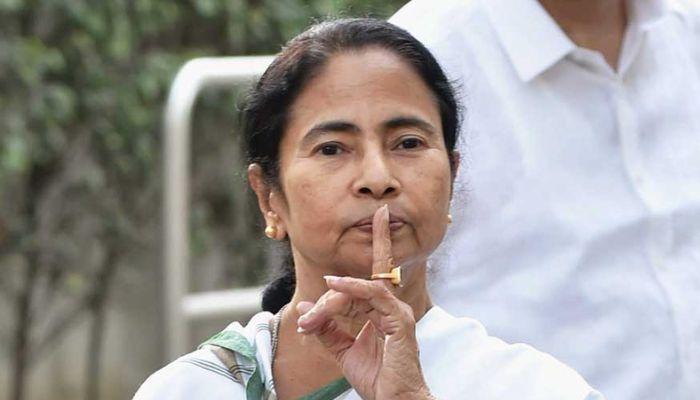
A day after the results of Vidhan Sabha elections for the States of Gujarat and Himachal Pradesh were declared, social media users informed West Bengal Chief Minister Mamata Banerjee that polls could be conducted without violence.
BJP IT Cell Head, Amit Malviya, tweeted, “Yesterday, results for two state elections were announced. Incumbent retained one, lost another. But no instance of violence, booth capturing, intimidation, rape or murder of political workers reported.”
“But all this happened under Mamata Banerjee’s watch after WB results last year…”he added.
Y’day, results for two state elections were announced. Incumbent retained one, lost another. But no instance of violence, booth capturing, intimidation, rape or murder of political workers reported.
But all this happened under Mamata Banerjee’s watch after WB results last year…
One Twitter user pointed out, “Election of Gujarat and HP showed how elections are done. No pre-poll or post-poll violence. No bombs..no bullets. No booth capture. No stopping the opposition from filing nominations…That’s real democracy…#NoVoteToMamata.”
Election of Gujarat and HP showed how elections r done. No pre poll or post poll violence No bombs.. no bullets. No booth capture. No stopping the opposition from filing nominations..
“That is also without any violence, murders etc otherwise Indian public has already seen what happened during CPM rule in West Bengal and what’s going on in Mamta rule in West Bengal. In the last election of West Bengal, there was unbelievable post and pre-election murders and violence,” another Twitter user said.
That is also without any violence, murders etc otherwise Indian public already seen what happened during cpm rule in West Bengal and what’s going on in mamta rule in West Bengal. In last election of West Bengal there was unbelievable post and pre election murders and violence.
Using violence as an instrument to subdue their political opponents has become a distinctive feature of the TMC rule in West Bengal. Ever since the Mamata Banerjee-led retained power in the state, the persecution of dissenters and opposition workers has only intensified.
In an overwhelming number of such incidents, the victims have been BJP supporters and workers while the accused were said to be the supporters of the TMC party. More than a dozen BJP workers lost their lives in the post-poll violence that ensued following the victory of the TMC party in the assembly elections in 2021.
As per reports, 303 people were forced to flee their homes. Among them, 47 victims were unable to return to their workplaces while 92 victims had their houses demolished. About 164 victims were forcibly evicted from their homes and were thus unable to return to their places of residence.
OpIndia reached out to some of the victims of the violence and spoke with them about their horrific experiences, a year after the post-poll violence in West Bengal.
Earlier in February this year, elections in 108 municipalities in 20 districts of West Bengal were marred by incidents of violence, vandalism, assault, and election malpractices.
The ‘fraudulent’ elections took place in the backdrop of the Supreme Court’s decision to not deploy central armed forces for the civic body polls in the State.
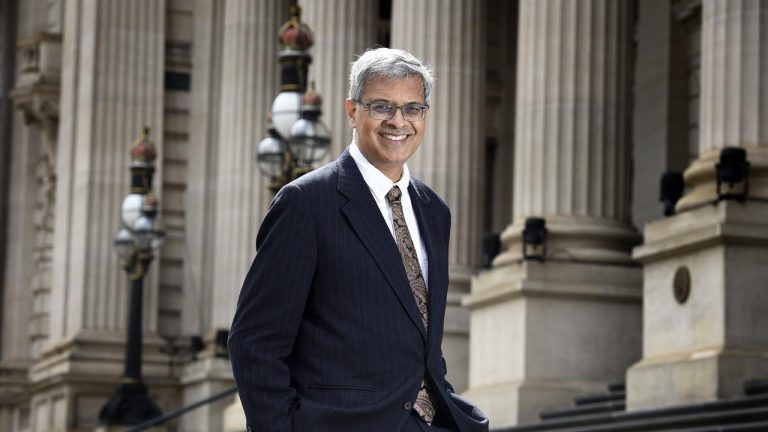
American journalist Bari Weiss, who recently exposed how Twitter systematically banned right-wing accounts and non-mainstream narratives in a long sequence of tweets, mentioned how Dr Jay Bhattacharya, a professor of health policy at Stanford University, was one of the victims of the high-handedness of a ‘select few’ employees at the social media platform.
Weiss, in the second part of the ‘Twitter Files’, highlighted how Bhattacharya’s tweets were blocked from trending because he claimed that Covid-19 lockdowns could harm children.
3. Take, for example, Stanford’s Dr. Jay Bhattacharya (@DrJBhattacharya) who argued that Covid lockdowns would harm children. Twitter secretly placed him on a “Trends Blacklist,” which prevented his tweets from trending. pic.twitter.com/qTW22Zh691
In fact, following Bari Weiss’ exposé, the professor himself turned to Twitter on December 9, Friday, to attest to how the social media giant blacklisted him for expressing his personal opinions on the dangers of Covid-infused lockdown on children.
“Still trying to process my emotions on learning that @twitter blacklisted me. The thought that will keep me up tonight: censorship of scientific discussion permitted policies like school closures & a generation of children were hurt,” tweeted the Stanford professor.
Still trying to process my emotions on learning that @twitter blacklisted me. The thought that will keep me up tonight: censorship of scientific discussion permitted policies like school closures & a generation of children were hurt. 1/2
In his following tweet, he expressed gratitude to Twitter CEO Elon Musk, who, shortly after taking over the firm, exposed internal conversations regarding the banning of the Hunter Biden story on the social media network. He also implied that the US government had a significant role in the internal workings of Twitter, which he predicted would be revealed in the coming days.
“I’m curious about what role the government played in Twitter’s suppression of covid policy discussion. We will see with time, I suppose. Thank you @bariweiss and @elonmusk. Sunshine is the best disinfectant,” Bhattacharya tweeted.
I’m curious about what role the government played in Twitter’s suppression of covid policy discussion. We will see with time, I suppose.
For the uninitiated, Dr Jay Bhattacharya is a professor of health policy at Stanford University and a research associate at the National Bureau of Economic Research. He directs Stanford Center for Demography and Economics of Health and Aging. As research, he focuses on the health and wellbeing of vulnerable populations with a particular emphasis on the role of government programs, biomedical innovation, and economics— including the epidemiology of Covid-19 and evaluating policy responses to the epidemic.
His broader research interests encompass the implications of population aging for future population health and medical spending, the measurement of physician performance tied to physician payment by insurers, and the role played by biomedical innovation on health. He’s published 135 articles in top peer-reviewed scientific journals in medicine, economics, health policy, epidemiology, statistics, law and public health among other fields. He holds an MD and PhD in economics, both from Stanford University.
Dr Jay Bhattacharya had called the shutting of schools during Covid lockdowns catastrophic
Dr Jay Bhattacharya had been on the front lines of analysing, studying, and even fighting the COVID-19 pandemic since its very beginning. In 2020, the professor co-authored the Great Barrington Declaration, an open letter questioning the efficacy of Covid-19 lockdowns. The professor then emphatically stated that the effects of the lockdown on children and the youths were catastrophic, including worse physical and mental health and irretrievably lost life opportunities. The professor had called for a return to normal life for non vulnerable children and youngsters.
The Stanford professor had appeared on multiple talk shows and interviews where he had reiterated the social harms caused by protracted absences from school, economic disruptions and forced isolation of older people during the pandemic.
In fact, last month, in a podcast hosted by Technology Policy Institute, the professor had spoken extensively about the responses of public health and economic experts to Covid-19 where he re-emphasised how the costs of the lockdowns and school closings were enormous.
— Technology Policy Institute (TPI) (@techpolicyinst) November 2, 2022
“They’re devastating, and we still haven’t paid them all, especially for the poorest countries in the world. We’re going to continue to pay them for a very long time. The schooling loss in the U.S. was bad, but you should look at what happened in Ghana where four and a half million kids never came back to school after two years out. The generational inequality we’ve developed—but we sort of pushed through—but the lockdowns are almost unimaginable,” the professor had said.
In May 2022, the professor appeared in another interview where he reiterated the adverse effects of lockdowns. “I think that probably the single worst [policy] was school closures,” said Bhattacharya. “Even short interruptions in the schooling of children can result in long-term ripple outcomes in their lives.”
In September 2021, the Canadian Paediatric Surveillance Program showed that children are at low risk of severe outcomes from COVID-19, Bhattacharya added as he went on to list the negative effects of lockdowns. “The economic effect of the lockdown policies that we followed, especially on poor countries, has been particularly devastating,” he said. “Some estimates suggest that 100 million people worldwide were thrown into poverty, dire poverty, less than $2 per day of income or less.”
According to Bhattacharya, there was no good evidence that lockdowns prevented the spread of COVID-19.
“There was no good evidence that… [lockdowns] were capable of stopping the diseased from spreading,” he said “The Great Barrington Declaration called for focused protection of the old.”
He pointed to Florida and Sweden as case studies. “If you compare Florida and California, the age-adjusted death rate from COVID is very similar,” said Bhattacharya. “California locked down, Florida didn’t lockdown. Sweden did better than most countries, certainly better than the United States, despite not putting in place school closures and a whole host of lockdown-related policies.”
Stanford professor receives death threats for the Great Barrington Declaration
Other health leaders, including National Institute of Allergy and Infectious Diseases director Dr Anthony Fauci, had then condemned the Great Barrington Declaration and called the document’s proposal for herd immunity “nonsense and very dangerous.”
Bhattacharya revealed how soon after the Great Barrington Declaration gained widespread attention, he received death threats, hate mail and questions on where he receives his funding from.
UNICEF asks for reopening of schools on priority
Notably, in July last year, when the world was still fighting the Covid pandemic, UNICEF urged the decision-makers and governments to prioritize and plan for the safe reopening of schools. It also stated that keeping the schools shut due to the fear of the pandemic could lead to a “generational catastrophe”.
“The losses that children and young people will incur from not being in school may never be recouped. From learning loss, mental distress, exposure to violence and abuse, to missed school-based meals and vaccinations or reduced development of social skills, the consequences for children will be felt in their academic achievement and societal engagement as well as physical and mental health. The most affected are often children in low-resource settings who do not have access to remote learning tools, and the youngest children who are at key developmental stages,” remarked UNICEF in its statement.
WHO Chief Scientist also urged for reopening of schools
Soumya Swaminathan, the Chief Scientist at the World Health Organization furthered UNICEF’s appeal of reopening the schools. Quoting UNICEF’s Tweet, Swaminathan wrote, “With teachers & adults working in schools prioritized for vaccination & preventive measures to reduce spread of #COVID19, schools can be safely opened. 150 million children out of school with limited access to online education & midday meals will take a much bigger toll on them.”
AIIMS director suggests opening school in a staggered manner
All India Institute of Medical Sciences (AIIMS) director Dr Randeep Guleria too in an interview earlier had stated that schools in areas with fewer Covid-19 cases must reopen. “Districts should open schools in a staggered manner and bring back children on alternate days, said Dr Guleria.
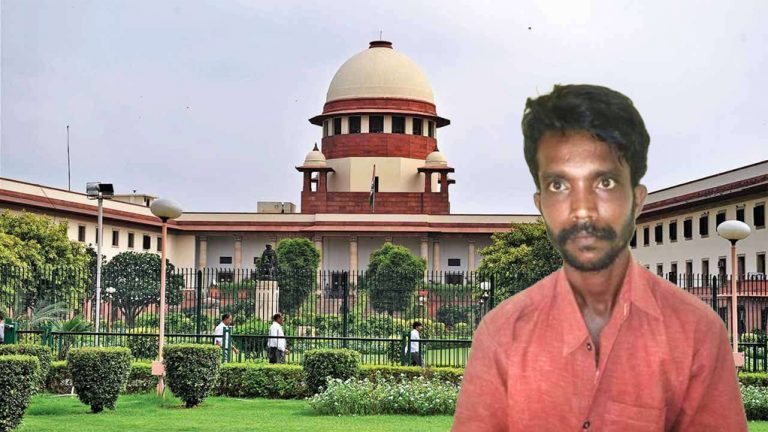
The Supreme Court on Thursday stayed the death penalty of a flower vendor accused of raping and murdering a juvenile in Tamil Nadu’s Pudukkottai in 2020. A bench comprising Chief Justice of India DY Chandrachud, Justices PS Narasimha, and JB Pardiwala, also asked for the Tamil Nadu government’s statement on the issue. According to the reports, Aditya Sondhi, the Senior Advocate, represented the petitioner.
In 2020, the appellant named M Samivel alias Raja was convicted of rape and murder of a 7-year-old Dalit kid who was killed after a penetrative sexual assault. Before perpetrating sexual assault on the youngster, the accused allegedly established acquaintances with her. Fearing that the girl might tell someone about the crime, the accused smashed her head against a tree and dropped her body into a dry pond.
Examination of the girl’s body found injuries on her head, face, neck, and chest, multiple abrasions on the abdomen, thighs, and private parts, among others. Apart from smashing her against a tree, he had also beaten her with a stick. The vicitim was a class II student.
The accused was found guilty by the trial court and was condemned to death by hanging. The Madurai Bench of the Madras High Court further affirmed the death punishment imposed by Sessions Judge Pudukkottai in the case under the Protection of Children from Sexual Offences Act in January (POCSO Act).
A panel of Justices S Vaidyanathan and G Jayachandran emphasized that allowing someone like the accused to thrive in the world would ‘contaminate the brains of co-prisoners on the verge of release.’ The High Court ruled that the presumption was against the accused in this case as Section 29 of the POCSO Act imposed a statutory presumption on the accused.
The bench had dismissed the accused’s contention about the delay in filing a first information report (FIR), reasoning that it was natural to hunt for a missing person in all possible locations and only after determining that the missing person could not be found would one consider filing a police complaint.
The case dates back to June 2020, when a seven-year-old Dalit girl had gone missing and her parents lodged an FIR after searching for her for a day. The Police later found the girl in a deserted location near her village and found that she was sexually abused and killed by M Samivel from the same village. He was arrested by the Police on July 2. During interrogation, he confessed to his crime of sexual assault and murder.
Th girl was seen with her before she disappeared, and his clothes were found to be stained with her blood.
The FIR against the accused was then booked under Sections 376 (rape), 302 (murder), 364 (abduction), and 201 (misleading police) of the Indian Penal Code. Charges under the sections of the Protection of Children from Sexual Offences Act, 2012, and SC/ST (Prevention of Atrocities) Amendment Act, 2018 were also slapped against him.
A 19-year-old AC mechanic named Akhtar Mathar Hussain reportedly sexually assaulted a 5-year-old girl in Taloja, Mumbai, inside a lift at a housing complex. The incident became apparent after the child returned home and began vomiting, making her parents suspicious of any untoward incident with her.
Maharashtra | After the girl reached her home, she started vomiting. After being asked by her mother, she revealed the incident & her parents along with neighbours gathered outside eventually nabbing the accused before he could escape, after victim girl identified him: SI, Taloja pic.twitter.com/Bdg96Qex7n
The accused was nabbed after the neighbours in the society got to know about the incident. According to Sub Inspector J Sonawane, Mohd Akhtar Mathar Hussain (19) sexually assaulted a 5-year-old girl in Taloja, Raigad district. While the youngster was playing, he reportedly took her to a lift and assaulted her. Akhtar was visiting a nearby fla for work.
The police have informed that when the girl arrived at her house, she began vomiting. When her mother inquired, she narrated the events. The parents, along with neighbours, gathered outside and finally apprehended the accused before he could escape. The child reportedly identified the accused.
Further details in the case are awaited as of now. The report will be updated as soon as details of the incident emerge.
Former actress Meghan Markle has courted controversy for mocking the late Queen Elizabeth II and disrespecting royal family traditions. She made the insulting remarks during the second episode of the new Netflix documentary series titled, ‘Harry & Meghan.’
In a video clip that had gone viral on social media, Markle was seen laughing uncontrollably as she described how Prince Harry introduced her to Queen Elizabeth II.
“It was like that…Like I curtsied as though I was like…Pleasure to meet you, Your Majesty? Like, was that okay?” Meghan Markle was heard as saying. Prince Harry seemed to not like the idea of his wife mocking his family traditions and cultural beliefs.
However, social media users were not impressed by her ‘attempted humour’, with many rebuking her for not being respectful of other cultures and belief systems.
Netizens haul Meghan Markle over the coals for “mocking” having to curtsy to the late Queen
“Meghan Markle mocking the late Queen but don’t forget she still wants her title as the DUCHESS OF SUSSEX,” wrote ‘El American’ Editor, Ben Kew.
Meghan Markle mocking the late Queen but don’t forget she still wants her title as the DUCHESS OF SUSSEX pic.twitter.com/Gn7m2gg0gW
Journalist Colin Brazier pointed out, “There’s nothing so private as a marriage. But, honestly, how does Harry reconcile the values he once espoused – including an Army officer’s oath to defend the Queen – with his wife’s not-so-thinly-veiled contempt for the things our late monarch stood for.”
There’s nothing so private as a marriage. But, honestly, how does Harry reconcile the values he once espoused – including an Army officer’s oath to defend the Queen – with his wife’s not-so-thinly-veiled contempt for the things our late monarch stood for.pic.twitter.com/lRjFfFpUsW
“So Meghan Markle is making fun of the Queen in that documentary but I didn’t notice her having a problem with the monarchy giving her a multi-million dollar wedding which was more like a circus! The most drab royal wedding dress I’ve ever seen!” one user called out her hypocrisy.
So Meghan Markle is making fun of the Queen in that documentary but I didn’t notice her having a problem with the monarchy giving her a multi-million dollar wedding which was more like a circus! The most drab royal wedding dress I’ve ever seen!
Social campaigner Anna McGovern wrote, “Harry said that having to explain to Meghan Markle that she would have to bow to his grandmother (the Queen!) was “weird”. Exactly two months after the Queen died, they slander the Royal Family and reap the monetary rewards. This is a pathetic performance we all see through!”
Harry said that having to explain to Meghan Markle that she would have to bow to his grandmother (the Queen!) was “weird”.
Exactly two months after the Queen died, they slander the Royal Family and reap the monetary rewards.
In June this year, videos surfaced on social media showing Prince Harry and his wife Meghan Markle being booed as they arrived and left the church service honouring Queen Elizabeth II’s 70 years on the throne.
The duo had made their first public appearance at the Queen’s Platinum Jubilee celebrations in the UK since stepping back from royal duties two years ago. They attended the Trooping the Colour, albeit they did not appear on the Buckingham Palace balcony owing to their withdrawal from royal responsibilities.
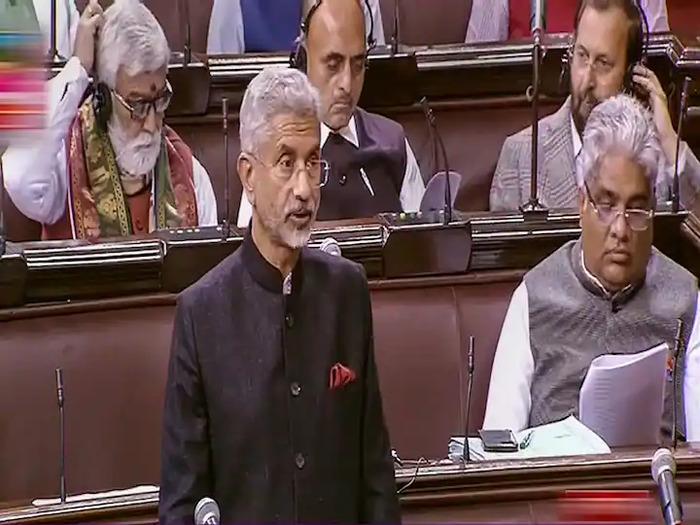
On December 7, External Affairs Minister (EAM) S Jaishankar gave a befitting reply to RJD MP Manoj Kumar Jha’s “2014-centric foreign policies” charge against the Modi government in Rajya Sabha during the winter session of the Parliament.
The RJD MP said in Rajya Sabha that it seems like the foreign policy has been shaped only after 2014 when the Modi government came to power. He asserted that the “2014-centric foreign policy approach undermines the people and processes involved since 1947.”
In response to this, EAM Jaishankar called 2014 a watershed moment and that after 2014, India’s foreign policy has become more effective, dynamic, and prominent. I am glad that you brought up this 2014 issue and I hope you will be supportive of it.
“Since you are asking me, I will say that yes, 2014 was a watershed moment, things have changed better after 2014. Yes, India’s foreign policy has become more dynamic, more effective and prominent after 2014,” EAM S Jaishankar responded.
RJD MP Manoj Jha also claimed that he can do the job of external affairs minister better than Jaishankar.
Reacting to this in a subtle manner, EAM Jaishankar said, “Professor Jha suggested that he could do my job better, he is free to hold that opinion.”
S Jaishankar responds to Manoj Kumar Jha’s questions on India’s stand on Russia-Ukraine war
Jha also raised the Ukraine-Russia war issue and India’s neutral stand as well the Gaza dispute. The Rajya Sabha MP said that a fight between the oppressor and oppressed India never was neutral. “In a fight between an elephant and an ant, your neutrality helps the elephant.”
On Ukraine Russia War, Jaishankar reiterated that India has always urged both Ukraine and Russia to resolve disputes through dialogue and return to diplomacy. Prime Minister Narendra Modi had also told in strong words to the Russian President Putin that “this is not an era of war.” The Modi government is also working to soften the impact of the war on Indian people whether it is fuel, fertilizers or food inflation. “So if it is your contention that we have put the Indian people first, then I plead guilty,” Jaishankar said.
Reacting to the Gaza issue, Jaishankar detailed that India backs a two-state solution with both countries living peacefully side-by-side. Our empathy for Palestinians has not changed and the financial support for Palestinian refugees has gone up during the tenure of the Modi government.
The Supreme Court on Friday rejected a plea seeking a copy of the agenda, a copy of the decisions, and a copy of the resolution of a 2018 Collegium meeting and clarified that only a resolution drawn and signed by all the Collegium members could be said to be the final decision.
A bench of justice MR Shah and CT Ravikumar rejected RTI activist Anjali Bhardwaj’s plea challenging the Delhi High Court order. The top court said that there was no substance in the plea challenging the Delhi High Court order and the same deserves to be dismissed. SC clarified whatever is discussed in the Collegium meeting shall not be in the public domain and “only final decision required to be uploaded,”
SC also clarified that the consultation of December 12, 2018 was not concluded and was, therefore, adjourned.
The petitioner Anjali Bhardwaj, in the RTI application, had sought a copy of the agenda, a copy of the decisions, and a copy of the Resolution of the meeting of the Collegium of the Supreme Court held on December 12, 2018.
The court said that only after the final resolution drawn and signed by the Collegium, which is always after completing the due procedure and process of discussion, deliberation and consultation, is the same required to be published on the Supreme Court website.
The court noted that no final decision was taken in the December 2018 Collegium meeting which was required to be drawn and signed by all members of the Collegium.
The court also said that the 2019 resolution is very clear which specifies that the process of consultation in the earlier meeting was not over and remained unconcluded.
The petitioner Anjali Bhardwaj, who was represented by advocate Prashant Bhushan and Ria Yadav, challenged the order dated July 27 2022 of the High Court of Delhi, which dismissed his plea for information under the Right to Information Act.
The appellant in the RTI Application had sought a copy of the agenda, a copy of the decisions, and a copy of the Resolution of the meeting of the Collegium of the Supreme Court held on December 12, 2018.
According to petition the resolution of the subsequent meeting affirms that there was indeed an agenda of the previous collegium meeting of 12.12.2018 and further that certain decisions were indeed taken and this was also affirmed through the public statements of Justice (Retd.) Madan Lokur and the statements made in the autobiography written by former Chief Justice of India, Ranjan Gogoi (who were both members of the collegium as of 12.12.2018). In such circumstances, it cannot be held that the information does not exist, the petitioner said.
(This news report is published from a syndicated feed. Except for the headline, the content has not been written or edited by OpIndia staff)
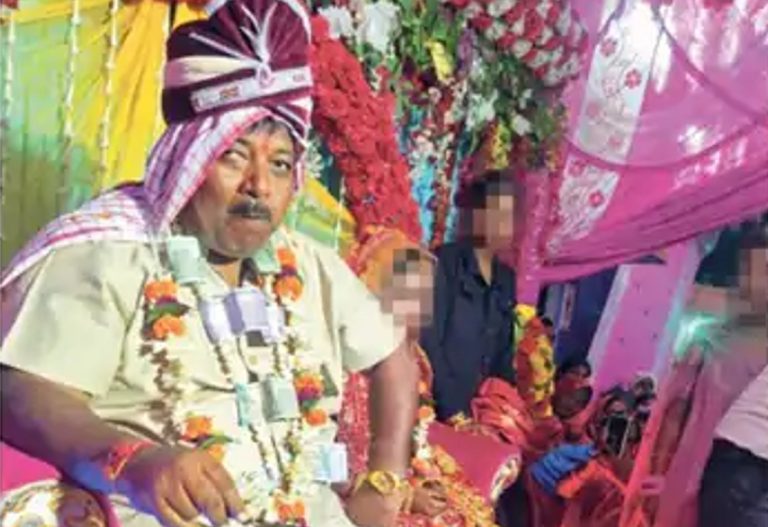
A new case of grooming Jihad has come to the fore in Jharkhand’s Bokaro where a middle-aged man named Aslam Khan was marrying a Hindu minor girl while disguising himself as a Hindu man working in the police department. In Kumhar Toli of Sector-9 Harla police station area of Bokaro, Aslam Khan (50 years) was marrying a minor by identifying himself as Sanjay Kasera.
As per a report in the Dainik Bhaskar, the wedding function was in progress and the Varmala was done when a labourer working at the venue identified Sanjay saying that he is not a Hindu and that his name is Aslam Khan. The labourer said that Aslam is a resident of Wasseypur in Dhanbad.
He informed the family that in 2021 while he was lodged in Chas Jail in a case, Aslam was also with him and both remained in jail together for 6 months. Following this revelation, a ruckus spread all over the function. Finding an opportunity to escape, Aslam fled the scene taking one of his cars while another was seized by the people there.
Following the event, the police questioned the girl’s family members at the Harla police station. According to family members, Aslam presented himself as a police officer and stated that Latehar was his current posting. He mentioned that he is an orphan and hails from the Kasera background. He went on the stroll wearing his uniform even before the wedding ceremony on Wednesday night.
The labourer who was with him in the jail disclosed Aslam’s secret. The neighbours spoke about the groom’s antics since they were against Hindu conventions. When the labourer arrived, he revealed that the groom was Aslam Khan and not Sanjay.
Raju Kasera, the minor’s father, explained that he runs a handcart and looks after the family. He has three girls and two sons, and their financial situation is dire. A cybercriminal had reportedly cheated his wife Saroj Devi with a fake prize in ‘Kaun Banega Crorepati’ 6 months ago. His wife and children were caught in his scam. The thugs robbed one lakh rupees from his entire savings up to this point. Later, the wife and daughter went to Dena Bank to apply for a loan. Aslam had introduced himself to the family there. He deceived them by posing as the manager of Dena Bank.
Then, after enticing them with the prospect of a loan, he began visiting their house. He introduced himself as Sanjay Kasera. After a few days, he began to visit them in police uniform. He stated that he works as a police officer. Aslam persuaded them and held captive the girl’s family on the promise of a residence. Following that, he put pressure on them to marry the girl to him. Because the family was destitute, they consented and began planning for the wedding. It was coincidentally on the day of the marriage that his identity was exposed and the truth came out, the girl’s father said.
According to accounts, police have been notified of the incident and further action is being taken by the authorities.
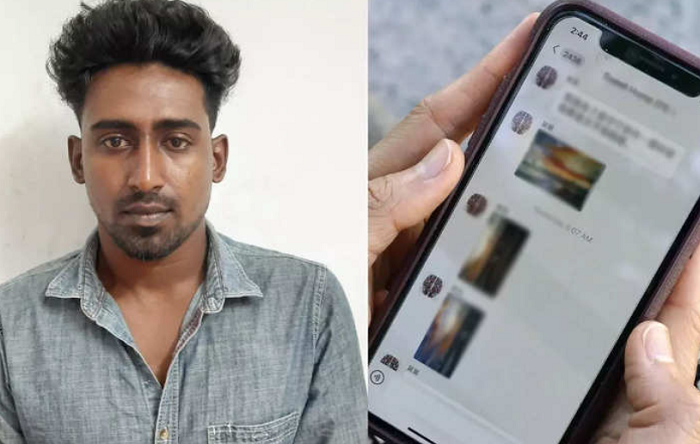
The Kerala Police on December 7 arrested Jinesh Jayan of Jinesh Bhavan, Vilavurkkal Malayam, a local leader of the Democratic Youth Federation of India (DYFI) for sexually abusing a 16-year-old girl. The police acted in the case after they recovered incriminating evidence of the accused having sexual intercourse with around 30 women, including the minor. DYFI is the youth wing of the ruling CPI (M) party.
According to the reports, the police arrested seven more people along with Jinesh, who was a so-called anti-drugs activist for sexually abusing the minor. The police have registered an FIR against the eight and have added the sections of POCSO to the case. The other arrested persons have been identified as S Sumej (21) of Thrissur, A Arun (27) of Malayam Chithira, S Abhijith (20) of Shaji Bhavan, R Vishnu (20) of Poozhikunnu, Siby (20) of Perukav and A Ananthu (18).
The police examined Jinesh’s phone and also discovered several photographs of him using deadly weapons like daggers, knives, and swords. Some of the videos saved on the phone also showed the accused feeding the girls with intoxicating substances. The phone belonging to Jinesh, one of the local leaders of the Democratic Youth Federation of India (DYFI) is under investigation at present and is in the custody of Cyber Cell. The accused meanwhile is under remand.
The victim 16-year-old girl in her statement to the Police stated that she had met the accused via phone. The accused who is a resident of Kodungallur was arrested by the police after he tried to run away with a girl he had met on Instagram. The girl’s brother happened to see her packing her bags and informed his mother and the Panchayat members who called the police. The girl revealed that she was being sexually abused for the past two years.
Reports mention that the accused was involved in a similar case six years ago when a girl alleged that Jinesh had shared her number with some cheap pornographic WhatsApp groups. The party members intervened as the girl said that she would book Jinesh under serious charges. The matter was then resolved after the parents of Jinesh apologized and paid Rs 25,000 to NGO named Gandhi Bhavan as demanded by the victim.
In the current case, the accused has been booked under the POCSO case for sexually abusing a 16-year-old girl. Seven other persons identified as S Sumej (21) of Thrissur, A Arun (27) of Malayam Chithira, S Abhijith (20) of Shaji Bhavan, R Vishnu (20) of Poozhikunnu, Siby (20) of Perukav and A Ananthu (18) have also been arrested in the case. Further investigations are underway.
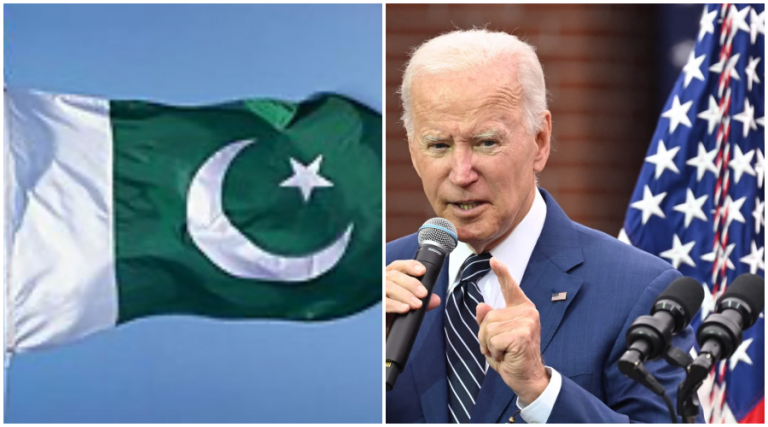
The United States has placed six Pakistani companies on its entity list for missile proliferation and unsafeguarded nuclear activity.
These companies were part of two dozen entities from countries like Russia, Switzerland, Latvia, Pakistan, United Arab Emirates, that were added to the Entity List of the US Commerce Department.
“Today, the Commerce Department’s Bureau of Industry and Security (BIS) issued a rule that adds 24 new entities to the Entity List under 26 entries, applying stringent license requirements that will severely restrict these entities’ access to commodities, software, and technologies subject to the Export Administration Regulations (EAR). These entities are added under the destinations of Russia, Switzerland, Latvia, Pakistan, and United Arab Emirates (U.A.E.),” the US Commerce Department’s Bureau of Industry and Security (BIS) said in a press release.
Six Pakistan-based companies which are designed are Dynamic Engineering Corporation, Rainbow Solutions (Pakistan), Universal Drilling Engineers (Pakistan), EnerQuip Private, Ltd. (Pakistan), NAR Technologies General Trading LLC (Pakistan and UAE) and TROJANS (Pakistan and UAE).
These companies were added to the entity list for “unsafeguarded nuclear activity and missile proliferation-related activities.”
“For the unacceptable risk of using or diverting items subject to the EAR for Pakistan’s unsafeguarded nuclear activities, Dynamic Engineering Corporation has been added to the Entity List,” BIS said in the statement.
“Five companies are being added to the Entity List for their contributions to unsafeguarded nuclear activity and missile proliferation-related activities that are contrary to the national security and foreign policy interests of the United States,” the statement added.
US Assistant Secretary of Commerce for Export Administration Thea Rozman Kendler said advancements in missile and nuclear technology must be vigorously protected from those who seek to cause harm and destruction at a global scale.
“We cannot allow the export of U.S. technology to contribute to nuclear proliferation worldwide. Our action today helps to prevent that from happening and demonstrates U.S. leadership in standing up for the principles of ethical innovation,” Kendler added.
(This news report is published from a syndicated feed. Except for the headline, the content has not been written or edited by OpIndia staff)