Home Blog Page 2909

Rahul Gandhi draws inspiration from Imran Khan, will sleep, pee, and poop in a ‘container’ for 150 days of ‘Bharat Jodo Yatra’

Rahul Gandhi, the perennial Congress candidate for the post of Prime Minister, notwithstanding numerous electoral defeats, seems to have taken a leaf out of his Pakistani counterpart, Imran Khan’s playbook for his upcoming ‘Bharat Jodo Yatra’ commencing today. Gandhi is going to live in containers for the 150 days of ‘Bharat Jodo Yatra’ just like Khan spent his agitation days in containers back in 2014.

Khan, who pioneered living in containers to garner public sympathy and chart his way to the office of Pakistan Prime Minister, appears to be the source of inspiration to Rahul Gandhi whose party possibly believes ‘Bharat Jodo Yatra’ is a momentous political movement that would revive his dying political fortunes.

For the next 150 days, senior Congress leader Rahul Gandhi will sleep in a container during the 3,750 km journey from Kanyakumari to Kashmir, touted among Congress loyalists and sympathisers circles as a ‘masterstroke’ to take on the Modi juggernaut in the 2024 general elections.

As the inordinately long journey commences, pertinent questions about lodging and accommodation of senior political leaders participating in the ‘Bharat Jodo Yatra’ have surfaced. However, the party has clarified that the Gandhi scion will not stay in any hotel and complete the entire journey living in a container.

As per reports, Rahul Gandhi would call the containers his abode for the next 150 days. Sleeping beds, toilets, air-conditioners, and other ‘basic facilities have been installed in containers to assist the leaders participating in the Yatra. About 60 such containers have been prepared and sent to a village in Kanyakumari, where a temporary village is set up where all the containers are housed. The container will be placed in a new position every day in the shape of a village for night rest.

Before coming to power in Pakistan, Khan had indulged in similar theatrics, projecting himself as the people’s leader, mobilising mass agitations against the incumbent government, and pitching himself as the panacea that the country direly needs to remedy its chronic problems. Khan had pioneered using containers to advance his brand of intimidatory politics, travelling across the country and whipping up a groundswell of criticism against the government of the day.

Back in 2014, when Imran Khan was one of the many candidates eyeing the coveted seat of Pakistan Prime Minister, the former cricketer turned politician launched a massive agitation called ‘Freedom March‘ to stamp his authority and project himself as one of the strongest contenders to challenge the incumbent Nawaz Sharif government. The march, which witnessed PTI activists and supporters advancing toward the capital Islamabad, saw containers used by the leaders while they were on the roads leading a campaign against the government. Pictures of Imran Khan sleeping on a container had also gone viral on the internet.

Years later, Rahul Gandhi will be following in the footsteps of former Pakistan Prime Minister Imran Khan as he embarks on the 150-day long ‘Bharat Jodo Yatra’. The Wayanad MP, who keeps hightailing it to Italy and other vacation spots every once in a while, will sleep, pee, poop, and live in containers as the March snakes through different parts of India.

AAP govt in Punjab fails to pay August salaries to its employees as the govt runs out of money after giving freebies: Report

0

While the Aam Aadmi Party (AAP) continues to promise freebies in election-bound states, its Punjab government continues to face a financial crisis. According to a report by Indian Express, the Punjab government is yet to pay salaries to its employees for the month of August even after a week has passed in September. And it is believed that the reason for this delay is that the state government has run out of money.

The government typically pays salaries for the previous month on the first of each month. Officials in the state govt claimed that the administration has been facing a funding crisis since the GST compensation regime expired. In the previous fiscal year, Punjab received Rs 16,000 crore in GST compensation from the Centre.

This year, it only received compensation for the first quarter of the current fiscal year, after which the GST compensation regime expired on June 30. According to the report, a senior govt official said that the salaries have been delayed because the AAP govt invested Rs 1,000 crore from the state exchequer to earn interest. The officials said that they thought that the “employees could bear with the government for at least a week”.

On Monday, the Cabinet approved a new policy that would create a specific cadre of employees by absorbing contractual and ad hoc staff. This would impose an additional burden of Rs 400 crore on the state exchequer.

Besides this, the state exchequer is already burdened with a whopping electricity bill, owing to the AAP government’s fulfilment of pre-poll free electricity promises. It is worth mentioning that the AAP had also promised before the assembly elections that every woman of a household above 18 years will be provided Rs 1000 every month. However, the state govt which presented its maiden budget of Rs 1.55 lakh crore skipped making any provision for implementing its pre-poll promise of giving Rs 1,000 allowance to women of each household above the age of 18. 

Why are the Centre and AAP fighting over freebies?

The BJP-led central government and Arvind Kejriwal’s AAP have been debating over freebies with the BJP advocating that the freebies need to be stopped, while Delhi CM Arvind Kejriwal asserts that his party’s schemes are meant for the welfare of the people and, that they will continue with such schemes. 

This debate over freebies started when Prime Minister Narendra Modi slammed the opposition over ‘Revdi Culture’ at the inauguration of the Bundelkhand Expressway on July 16, 2022.

Election Commission on freebies 

As the matter escalated and reached the Supreme Court, the Election Commission told SC that the terms “irrational” and “freebies” are open to subjective interpretation and have no clear legal definitions. Providing life-saving medicines, food, or funds during a natural disaster or epidemic may save lives, but in normal times, they can be considered giveaways, according to the commission.

RBI on freebies

Freebies are not merit products or expenditures, according to a Reserve Bank of India (RBI) report (such as public distribution systems, employment guarantee schemes, and governmental assistance for education and health facilities). According to the document, freebies include provisions for free energy, water, or transportation, as well as waivers of pending utility bills and loans, and other such perks.

Burden of freebies 

Freebies, according to experts, destabilize public budgets and send governments into a debt spiral. According to the above-stated RBI analysis, freebies undermine credit culture, distort prices through cross-subsidization, erode incentives for private investment, and disincentivize employment at the present wage rate, resulting in a reduction in labor force participation.

For example, Punjab’s electricity subsidy and escalating cost to the state exchequer exceeds 16% of total receipts. Bailouts imply money transfers from one state to another, as well as animosity. PM Modi has urged states to clear subsidies to distribution companies (DISCOMS) totaling hundreds of crores of rupees. According to a CRISIL report, most states are in perilous debt circumstances, which will limit their ability to compete.

West Bengal: CBI grills TMC MLA Paresh Paul for 3 hours in BJP worker Avijit Sarkar’s murder case, might summon again

On Tuesday, the Central Bureau of Investigation (CBI) summoned TMC leader Paresh Paul for the second time in the investigation of the murder of West Bengal BJP worker Avijit Sarkar. Paul arrived at the CBI office CGO complex office in Kolkata where he was questioned by the CBI officers for 3 hours based on the fresh inputs.

According to the reports, Paul is being summoned in the murder case of BJP worker Avijit Sarkar who was killed by purported TMC workers in the Narkeldanga area of the state. Sarkar was murdered after Paresh Paul had won the West Bengal 2021 Assembly election on May 2. While it is believed that the TMC MLA from Beleghata might be summoned again, he said on September 6 that he would cooperate with the CBI officials. “I will make myself available as many times as they call me”, he was quoted.

The case against the TMC MLA was originally filed by West Bengal Police at the Narkeldanga Police Station. The CBI however took over the investigation in the case after the Calcutta High Court directed the agency to do so on August 19, 2021. Earlier, the CBI had questioned the TMC leader on May 18 for around eight hours. The officials had also recorded his statement in the case. Later it continued to investigate the matter and questioned other witnesses to tally the recorded statement.

Reports mention that the CBI also attained a few recordings of the phone calls made by the leader before and after the brutal incident and hence summoned the leader on Tuesday. The BJP worker named Avijit Sarkar was dragged out of his house at Narkeldanga in Kolkata hours after the 2021 election results were declared on May 2 and was brutally murdered by Trinamool Congress workers.

Hours before his death, Sarkar had taken to Facebook to narrate the harrowing tale of violence that he was subjected to by the TMC goons. “I don’t know how to come live (on Facebook). They hurled bombs right in front of my eyes and vandalized my house and the party office. My only mistake is that I am a BJP worker,” he had said. He also cried on camera alleging that the TMC workers had killed his pet dogs also.

“They are destroying my house, NGO office – one after the other. Look at my dogs. She had given birth to 5 beautiful puppies. I uploaded their pictures on Facebook. They (TMC workers) slaughtered them mercilessly”, he had said adding that the attack took place in Ward no. 30 in the Beleghata neighbourhood in Kolkata under the supervision of TMC leaders Paresh Paul and Swapan Samaddar. OpIndia had later learned that Avijit Sarkar was beaten to death after uploading the two testimonials on Facebook.

Also, Biswajeet Sarkar, brother of the victim had talked to Opindia alleging that the attack was executed under the supervision of TMC MLA Paresh Pal and local councillor Sapan Samaddar. “I gave all names to the police but they did not act. TMC MLA Paresh Pal and local councillor Sapan Samaddar openly said on the day of polling that on the day of the results, they will kill us. Everybody witnessed it. I heard the goons talking to each other that they had an open hand from Paresh Da and Sapan Da to kill them”, he had stated.

Demanding justice further, he had noted that the TMC leaders were threatening him and his family and forcing them to keep shut about Avijit’s murder. “They still threaten to kill me. As I speak about the murder of my brother, they threaten my mother saying that there will be ‘Khela Hobe’ with me,” he had stated adding that he no more is scared of anyone.

Dal Khalsa terror org co-founder, who hijacked a 1981 Indian Airlines flight, found living in Pakistan, furthers ‘Khalistan’ narrative

On September 5, Gajinder Singh, the co-founder of Khalistani terrorist organization Dal Khalsa and an accused hijacker of a 1981 Indian Airlines flight revealed his current location as Punjab province of Pakistan. The revelation was made after he published a photograph of himself posing in front of a gurudwara on his Facebook profile. The gurudwara in the background is Gurudwara Shri Panja Sahib Ji, located in Hasan Abdal, Pakistan.

Source: Facebook

It is noteworthy that this was not the first time he published a photograph of the Gurudwara with himself in the shot. A similar photograph was published on September 1, where his side profile was visible. That photograph was clicked during nighttime.

Source: Facebook

1981 Indian Airlines plane Hijack

On September 29, 1981, terrorists hijacked an Indian Airlines aircraft headed to Amritsar and forcibly diverted it to Lahore. The Indian Airlines Boeing 737 domestic passenger aircraft had departed from Delhi airport and was scheduled to land in Amritsar. However, five terrorists of Dal Khalsa hijacked it and diverted it to Lahore, Pakistan. As per reports, they were armed with hand grenades and daggers. The plane was carrying 111 passengers.

The hijackers demanded the formation of a separate State for Sikhs, what they call “Khalistan”. Gajinder Singh was the leader of the hijackers. They demanded the release of the leading face of the Khalistani movement, Jarnail Singh Bhindranwale. Another demand that they made was delivery of USD 5,00,000 while talking to the Indian envoy to Pakistan, Natwar Singh.

Pakistan ran a trial in the case and sentenced the hijackers to life imprisonment. However, in October 1994, they were released from prison. Gajinder Singh has been on the most wanted list in India since 2002. The government of India has repeatedly tabled an official request to Pakistan to deport Gajinder Singh, but the neighbouring country kept denying that he lived in Pakistan. However, the recent revelation made on social media speaks a different story than what Pakistan has been telling India.

Khalistan, and only Khalistan: OpIndia’s deep dive into Gajinder Singh’s social media accounts

OpIndia looked into the public posts of Gajinder Singh’s social media account on Facebook and Instagram. We found out that the previous Facebook account of Gajinder Singh was suspended recently, after which he created a new ID. It cannot be surely said how many ‘Khalistan’ supporting posts were made in his previous ID and how many such posts are non-public on his current profile.

Gajinder fanned Khalistani narrative in Arshdeep controversy

After India lost the Asia Cup match to Pakistan on August 5, well-oiled propaganda surfaced on social media platforms where it was insinuated that Indians were defaming Arshdeep by calling him a ‘Khalistani’. Later, it was revealed the trend had Pakistani links, and the likes of Mohammed Zubair of Alt News fanned it in India.

Source: Facebook

Gajinder Singh also took advantage of the controversy and published a post on his Facebook account. In Punjabi, he wrote, “Arshdeep Singh, the Sikh player of the Indian cricket team, has been in a lot of discussions for two days. Arshdeep’s missed catch during India’s match against Pakistan, in which India lost, led to a campaign against him by Indian nationalists calling him a ‘Khalistani’.”

He further added, “The best answer to this Indian campaign is that we all say openly, ‘I am also Khalistani’ or ‘I am proud to be a Khalistan. How nice it would be if Arshdeep Singh and other Sikh sportsmen would openly say that they are proud to be Khalistani.”

‘Cows are the same as other animals for Sikhs’

In another post, he talked about the clash between Nihang Sikhs and Dera Radha Soami Beas followers. Though he stood by Nihangs for obvious reasons, he propagated hate towards Hindus. He said, “I do not understand the connection between Nihangs and cows. Hindus worship cows as a mother. Sikhs do not. For us, cows, buffalos, goats, etc., are the same. What kind of matters are our Sikhs getting into?”

Source: Facebook

Gajinder Singh ‘proudly’ published his photograph with Air India flight

On August 29, Gajinder Singh published an old passport-size photograph of himself in the background of an Air India flight on his Facebook profile. Along with the image, he wrote a poem in Punjabi suggesting he wanted to raise “the flag” [of Khalistan] high in the sky next to the stars.

Source: Facebook

Gajinder’s Instagram account also has a lot of posts linked to the Khalistani movement, and he regularly uses his social media presence to lure the Sikh community to “fight for the establishment of Khalistan”.

Delhi: Illegal Jamia Arabia madrasa built on government land, media team made hostage for asking questions

0

An alarming incident was reported from Delhi recently where two media persons were made hostage by madrasa operators for asking questions about the illegality of the place.

According to the reports, a media team of ‘Headlines India’ had reached the Nizamuddin area of Delhi to visit the Jamia Arabia Madrasa on Tuesday. The operators of the Jamia Arabia Madrasa which is looked after by the Nizamia Welfare Education Society initially stopped the reporter and the camera person from entering the Madarsa and later made them hostage.

The video of the incident was posted by the media channel on September 6 in which the Madrasa operator and his associate could be seen pushing the reporter and threatening the camera person to stop shooting the incident. The media team of ‘Headlines India’ had reached the Madarsa to show the truth about the illegality of the Madarsa. Reports mention that the Madarsa in question is illegally constructed on the land of LDO (Land and Development Office) and that it is engaged in illegal operations.

Notably, several FIRs have also been filed against the madrasa, copies of which were produced by the media team to the Madrasa operators. When asked about the complaints, the operators avoided the questions and claimed the FIR copies produced by the media team were fake. However, the operator later confirmed that the madrasa was built illegally on the land of LDO and that the civil suit was underway at the Court.

It is important to note that recently Uttar Pradesh announced that it would survey unrecognized madrasas of the state to ascertain information such as several teachers and students, curriculum, and its affiliation with any non-government organization. In this regard, orders have also been given to the District Magistrates of all the districts in the state.

Minister of State for Minority Affairs Danish Azad Ansari had earlier said that the survey would be conducted as per the requirements of the National Commission for Protection of Child Rights (NCPCR) which wants to check on basic facilities being provided to students in Madarsas.

The minister stated further that the survey would help gather other details also such as the name of the madrasa and the institution operating it, whether it is being run in a private or a rented building, and information regarding basic facilities of drinking water, furniture, electricity supply, and toilet, etc. The decision was meanwhile backed by the Jamiat Ulema-e-Hind led by several Islamic clerics on Tuesday.

Also, in the state of Assam, CM Himanta Biswa Sarma is taking efforts to eliminate illegal Islamic institutions and those engaged in illegal activities. The Sarma government demolished three Madarsas in Assam which were illegally operating and engaging in terrorist activities. Many clerics associated with these madrasas were also arrested by the police. Also on Tuesday, the inhabitants of Goalpara town in Assam razed a Madarsa which was engaged in anti-national activities. The Madarsa cleric named Jalaluddin Sheikh was also arrested.

Navy veteran pulls up The Wire for misquoting him on INS Vikrant to downplay India and Indian Navy’s achievement

In a bid to downplay the achievements of India and the Indian Navy, propaganda outlet The Wire on Tuesday misquoted Commodore Jaideep Maolankar (R) by taking his quotes from Barkha Dutt’s show out of context. In a series of tweets, Cmde Maolankar pulled up The Wire pointed out how every quote they’ve attributed to him are true, but taken out of context to mean completely the opposite.

Cmde Maolankar asked whether The Wire either had some score to settle with the Navy, rather the armed forces, or some vested interested owing to such biased writing.

In its article titled “Time for an ‘Accurate and Down-to-Earth Assessment’ of Vikrant, Say Veterans”, The Wire massively downplayed the Indian Navy’s feat of commissioning first Made in India aircraft carrier last week. Quoting Cmde Maolankar from his discussion on journalist Barkha Dutt’s show, The Wire downplayed INS Vikrant. While Cmde did say that the INS Vikrant is a modest carrier, but owing to our rich history, the indigenous aircraft carrier will only act as a stepping stone for more such carriers to come. “It is going to adapt, but it is going to grow even further,” he had said. He also pointed out how India is amongst the few countries to have the capabilities of making its own naval aircraft carriers, fighter aircrafts that can go with these ships and even aerial weapons and hence the commissioning of INS Vikrant should be viewed in such wider framework.

He later explains on what he meant by ‘modest carrier’. He said that since he was the first to land an aircraft on an aircraft carrier (INS Vikramaditya in January 2020), he said that those who do not fly fighter jets, these ships are projected as ‘massive’, ‘biggest’ or ‘largest’ and even names signify grandiose, but from the perspective of bringing fighter jets on the carrier, it is a modest one. But The Wire chooses to not mention how he then also talked about we should continue to be self-reliant. He also talked about challenges India is facing and might face in future in terms of national security, which as a veteran, it makes complete sense.

The Wire, however, dismissed the excitement Indians had over the commissioning of INS Vikrant as “breathless hysteria in official, military and media circles” and insinuated that Cmde Maolankar, through his statements that India could and should do better is ‘giving a reality check’. The Wire further downplays the commissioning of INS Vikrant by pointing out how this wont be operational till end of 2023 and various other pointers to portray how the celebration of INS Vikrant is meaningless.

Citing some unnamed ‘senior security officer’, The Wire then mentions how Cmde Maolankar’s comments were ‘accurate and down to earth assessment’ as against ‘frenzied reaction to Vikrant’s commissioning by a cross-section of serving and veteran naval officers, other military and defence officials, analysts and electronic and print media reporter’. Essentially, The Wire tried to portray an out of context comment by a Navy veteran to punch down the excitement of millions of Indians who were excited about commissioning of INS Vikrant, 75 long years after having attained Independence. Rest of the article also paints the Indian Navy in poor light, insinuating India is not combat ready.

While The Wire article does mention that Cmde Maolankar made these comments on Dutt’s show, many Twitter users were left wondering why did he agree to speak to The Wire that has a reputation of misleading reports especially to build an anti-India narrative.

However, Cmde Maolankar pointed out how that was also deceitful on The Wire’s part as what they did make it appear like he gave an interview to them.

Ujjain: Hindu organisations stop Alia Bhatt and Ranbir Kapoor from Darshan at Mahakaleshwar Temple, Police resort to lathi charge to disperse protesters

On September 6, Hindu organisations stopped Alia Bhatt, Ranbir Kapoor and Ayan Mukerji from entering Mahakaleshwar Temple in Ujjain, Madhya Pradesh. The information about their visit was shared by Alia Bhatt on her Instagram account, where she had said she would be leaving for Ujjain on Tuesday with the team from the upcoming movie Brahmastra.

As Bajrang Dal came to know about their visit to the Mahakaleshwar Temple, one of the most revered Jyotirlinga, the organisation’s activists gathered outside the Temple and protested to stop them. When the team reached the Temple for Darshan, they were welcomed by Bajrang Dal activists with slogans of Jai Shri Ram. As per the videos on social media platforms, the activists formed a large group to stop Bhatt and Kapoor from entering the Temple.

It is notable that recently several videos of the members of team Brahmastra started making rounds on social media, out of which one was an old clip on Ranbir Kapoor where he had admitted he was a ‘beef lover’. Irked by the statement, Bajrang Dal activists stopped him and his wife Alia Bhatt, who is also his co-star in the upcoming film Brahmastra, from entering the Temple.

Mahakal Police were also present at the scene. They restored to Lathi Charge to disperse the activists. However, the Hindu organisations prevented the star duo from entering the Temple, and they returned without darshan. However, other members were able to offer prayers at the Temple later.

The Indian Express’s Special Correspondent from Ujjain, Anuraag Singh, shared a few videos of the incident. Bajrang Dal District President Ankit Chaubey said, “We are here to protest against Ranbir Kapoor. He has given derogatory comments against Gau Mata.” He further objected to the lathi charge done by the Police and said, “We will intensify the protests and will not allow Ranbir Kapoor and Alia Bhatt to enter the Temple. Ranbir Kapoor said on camera that eating beef is good. Bajrang Dal will not allow a beef-eater from entering the Temple.”

Chaubey further added that Bajrang Dal activists were protesting peacefully and were at the spot to show black flags. OpIndia tried to reach out to Ankit Chaubey but could not connect.

Boycott calls against Brahmastra

Ranbir Kapoor and Alia Bhatt starrer film Brahmastra is scheduled for release on September 9. Apart from the duo, Amitabh Bachchan, Nagarjuna, and Mouni Roy are also in Ayan Mukerji’s directed film. Ahead of the release, there have been boycott calls due to the previous statements given by the cast members, including Ranbir and Alia. It is notable that the film was written to be based on Rumi, a Sufi saint, but later it was changed to connect it to Hindu mythology.

Rising cases of love jihad in Nepal and its Delhi connection, smuggling plaguing India’s border with Nepal: Ground report

Several recent reports have shown that demography is changing rapidly along India’s border with Nepal. The number of mosques and madarasas is constantly increasing. From August 20 to 27, 2022, an OpIndia team visited several areas in Nepal bordering India to observe the ground situation. What follows here is the third episode of the series of reports documenting the facts noticed by the OpIndia team.

While the shift in demography was visible, our team also found evidence that proves how the menace of ‘love jihad’ or ‘grooming jihad’ has also plagued the land of mountains. Here too, the vulnerable Hindu native women are being targeted by Muslim men, lured and brainwashed, forcefully converted to Islam and married off.

Besides, the open Indo-Nepal border is also extensively used by criminals for smuggling and other notorious activities. Our team tried and obtained some data and information about these crimes too.

In the first report of this series, it was mentioned that the OpIndia team visited the Dang district in Nepal, that falls in the Lumbini state. We entered Dang from the Jarwa border in the Balrampur district of Uttar Pradesh. During the week-long trip, our team also visited the Kapilvastu district, another district of the Lumbini Province in Nepal.

Emerging menace of Love Jihad in Nepal: How young women are being lured and trapped

In June this year, a Nepalese woman named Sina Lama who lives in the Rupandehi area of the country filed a complaint at the Kapilvastu police station against a man named Sanaullah. In her complaint, she claimed that Sanaullah, who allegedly came to the hamlet to undertake a brick business, entrapped her into a love affair under false promises.

He lied about his marital status to her. Later, when she fell into the trap, he tricked her to get her to hand over 4 tolas (or around 10 grammes) of gold and 11 lakh Nepalese rupees to him, which he then took and fled.

Sina Lama with Sanaullah

According to Sina Lama, Sanaullah convinced her to convert to Islam and get married to him as per Islamic law. The FIR filed in the case, names Sanaullah’s father, his mother and Sanaullah as the accused.

FIR copy

The Delhi connection

According to details gathered, Sina Lama’s wedding rituals were performed by a Maulana of the Kapilvastu district who wrote their nikah nama (marriage contract) in Arabic. At the end of the Nikah Nama, ‘Amadullah Islampur’ was mentioned. However, what is interesting is that the form used to write the Nikah Nama was designed and printed by some Khurshid Book Depot having Delhi’s Pincode- 110006.

Notably, the areas that fall under the aforementioned pin code are Sadar Bazar, Chandni Chowk, Hauz Qazi, Chawri Bazar, Jama Masjid etc, all predominately Muslim-dominated areas of Delhi.

Smuggling business flourishing from Indo-Nepal border area: Statistics and the conspiracy

Anti-social elements on both sides have taken advantage of Nepal’s open border for carrying out illegal activities. In one such crackdown, the Siddharthnagar police of Uttar Pradesh seized 26 bottles of Napalese liquor and arrested one person identified as Saddam alias Jalaluddin in this connection on August 25, 2022. Jalaluddin is a resident of Siddharthnagar, Uttar Pradesh.

Notably, there are roughly 50 km between Siddharthnagar and the Indo-Nepal border, which is why many criminals prefer this route to cross the border illagally.

Mahmood Sheikh, a vehicle thief, was detained by the Shohratgarh police of Siddharthnagar, Uttar Pradesh on August 18, 2022, as he attempted to sell three stolen bikes from India to Nepal. Mehmood Sheikh is also a resident of Uttar Pradesh’s Siddharthnagar district.

Mahmood Sheikh arrested with the three stolen bikes

Crime hub and illegal entry of Pakistanis

In August 2022, a 24-year-old Pakistani national, Khadija Noor, was arrested at the Indo-Nepal border by the Sashastra Seema Bal (SSB), a border guarding force of India deployed along its borders with Nepal and Bhutan, for trying to enter India with fake documents. She was arrested in Bhithamore along the Indo-Nepal border. Officials also recovered a Pakistani visa from her. A Nepali accomplice who was assisting her, and her boyfriend, a resident of Hyderabad, were also taken into custody.

On 31 July 2022, District Police and Sashastra Seema Bal (SSB) officials, while conducting joint patrolling on the Indo-Nepal border, arrested one Mohammad Abid and seized heroine worth Rs 15 lakh from him. Abid was a resident of the Bahraich district in Uttar Pradesh.

On 23 July 2022, Siddharthnagar police arrested Salman Ahmed, who was reportedly smuggling fertilizers from Bajaha locality situated on the Nepal border. Two bikes used for smuggling and 39 sacks of manure were recovered from the accused. Salman is a resident of Siddharthnagar, UP.

One Shahnawaz was detained on July 9, 2022 by the Shahjahanpur Police of Uttar Pradesh after he was caught smuggling cannabis from Nepal to India. The police recovered cannabis worth Rs 70 lakhs from the accused. Shahnawaz is a resident of Shahjahanpur district only.

On 6 July 2022, Siddharthnagar police of Uttar Pradesh arrested Majjibula, for smuggling fertilizers from Nepal. The police also seized a marshal jeep he used for smuggling and 16 bags of manure. The accused is a resident of UP’s Siddharthnagar.

On 3 July 2022, Siddharthanagar police arrested Ziauddin of Nepal’s Rupandehi district with as many as 280 intoxicating tablets and a knife in Mohana area.

Nepalese Parliament and ex-minister Mirza Dilshad Baig and Dawood connection

As our team moved around the villages in the Kapilvastu district, we noticed that the residents were still recounting the tales of the dreaded criminal and two-time MLA Mirza Dilshad Baig in the 1990s. Every person from whom we inquired about the ex-member of the Nepalese Parliament’s residence, pointed to the road leading to his house.

When we got close to Mirza Baig’s residence, we noticed no activity nearby.

Mirza Dilshad Baig had crossed the border into Krishnanagar in Nepal 20 years ago. He won two subsequent elections from there and went on to become the minister for housing in the Girija Prasad Koirala government.

As per media reports, Baig was reportedly the primary representative of Dawood’s gang and was in charge of Pakistan’s Inter-Services Intelligence (ISI) operations in the border region. It was said that Mirza Dilshad Baig was ISI one-stop shop for contract killings, gun running, drugs, explosives, and kidnappings. It is believed that Baig single-handedly made Nepal a safe haven for Dawood and the ISI.

He was shot in the bylanes of Kathmandu on June 29, 1998, by the gang of Chhota Rajan, the Malaysia-based underworld don and arch rival of Dawood Ibrahim. 

Hindu leader Mangre Singh was killed on the open international border

Speaking to our team members, OP Mishra and Vidyabhushan, two activists of the Seema Jagran Manch of the Sangh of the Balrampur area recalled how in 1970s, Mangre Singh, a Hindu leader from the Jana Sangh, who was elected as the MLA of the Tulsipur constituency in the Balrampur district of Uttar Pradesh was killed on the Indo-Nepal border. He made a significant contribution in helping the local Hindus.

Mangre Singh was brutally murdered in the 1990s in the dark jungles of Jarwa, a village located in the northern Indian province of Uttar Pradesh 5 kilometres south of the Nepalese border. Firoz Pappu and Masood Ahmed were named as the perpetrators following the assassination. Later, the two murderers joined the Samajwadi Party.

OpIndia’s first report of the series can be read here: कभी था हिंदू बहुल गाँव, अब स्वस्तिक चिह्न वाले घर पर 786 का निशान: भारत के उस पार भी डेमोग्राफी चेंज, नेपाल में घुसते ही मस्जिद, मदरसा और इस्लाम – OpIndia Ground Report

The English version can be read here: Demographic change hits other side of the border too, Mosques and Madarasas mushroom in former Hindu dominated areas in Nepal: Ground report

OpIndia’s second report of the series can he read here:  घरों पर चाँद-तारे वाले हरे झंडे, मस्जिद-मदरसे, कारोबार में भी दखल: मुस्लिम आबादी बढ़ने के साथ ही नेपाल में कपिलवस्तु के ‘कृष्णा नगर’ पर गाढ़ा हुआ इस्लामी रंग – OpIndia Ground Report

Islamic flags flying atop houses and mosques, madarsas influencing businesses: The creeping Islamisation of Nepal’s Krishnanagar

Several recent reports have shown that demography is changing rapidly along India’s border with Nepal. The number of mosques and madarsas is constantly increasing. From August 20 to 27, 2022, an OpIndia team visited several areas in Nepal bordering India to observe the ground situation. What follows here is the second episode of the series of reports documenting the facts noticed by the OpIndia team.

Uttar Pradesh shares a 599.3-km-long open border with Nepal, touching seven districts – Pilibhit, Lakhimpur Kheri, Bahraich, Sravasti, Balrampur, Sidhharthnagar and Maharajganj. The distance between Barhni in Uttar Pradesh’s Siddharthnagar district to Nepal’s Kapilvastu is 53 Km by road. To enter the Kapilvastu district in Nepal one must cross the Barhni city in Siddharthnagar. It is one of the busiest stretches of the Indo-Nepal open border.

Kapilvastu is among the Nepali districts with the highest concentration of Muslims. Muslim residents make up about 18% of the district’s overall population, according to the 2011 census. Several mosques and madrasas can also be seen here along the international border.

Several mosques and madarsas are spotted on the entry to Nepal, domes visible even from the Indian border

The Kapilvastu district’s Krishnanagar area begins as soon as you cross into Nepal from the Barhni border. Right adjacent to the border is a huge market. Numerous businesses, including Dr Saeed Ahmed’s clinic, Faisal Printing, and Imran Mobile, are located on the market’s ground level. On the second floor, there is Al Halal Public Secondary School. It is an English-medium school, says the board. The last storey houses a mosque, whose dome can be seen clearly even from India’s border.

Adjacent to this mosque is a three-story madarsa. The madarsa is called Darul Salaam. Locals claimed that there are Talibs (students) in the madrassa from various regions of Nepal. Aside from this, students from West Bangel and Kashmir have also come here to receive Deni Taleem (religious education).

Nepal
Darul Salaam madarsa

All the shops in the market belong to local Muslims

While we walked past the madarsa, we reached a street which led us straight to the primary market in Krishnanagar. What we noticed here was that the majority of shops in the market were owned by the local Muslims. Burqa-clad women roaming around the marketplace were a common sight. The majority of the males there were also dressed in ways that indicated the area’s considerable Islamic influence. Furthermore, numerous residences in the area were displaying flags with Islamic symbols, further demonstrating how Islam had spread in the region.

Nepal
Burqa-clad women near Krishna Nagar market, house displaying Islamic flags

Indo-Nepal border: Mosque similar to that in Saudi Arabia

A little over a kilometre ahead of the Krishnanagar market, there was another sizable mosque with a madrasa right next to it. The mosque’s upper section resembled the Masjid Al Nawabi in Saudi Arabia. Madeena Masjid is the name of this mosque. Muslims in the area estimate that this mosque is roughly 70 years old.

Nepal
Madeena Masjid in Kapilvastu, Nepal

The area in and around the Krishnanagar market housed innumerable mosques and madarsas. In fact, there was another big madarsa right in front of the Madeena Masjid. The name of this madrasa is ‘Jamia Umme Salma’. Locals told us that hundreds of boys from India migrated here to pursue their studies. According to an elderly Muslim who owns a grocery store, the Madeena Masjid belongs to the Islamic organisation Sunni Jamaat, while the mosque on the border belongs to the people of Ahl-e Hadith, which is a religious movement that emerged in northern India in the mid-nineteenth century.

Nepal

The old temple-like structure next to the madarsa in Kapilvastu, Nepal

Right adjacent to the madarsa was saw a dilapidated dwelling. The structure resembled an ancient temple. However, the locals were unable to provide us with any information regarding the place. Near the madarsa, there was a clod during shop owned by one Arif Khan, who called himself the area’s potential MLA.

Nepal
Arif Khan, owner of a cold drink store near the madarsa

All Political parties in Nepal are dominated by Muslim leaders

In Krishnanagar, the OpIndia team saw posters for numerous political parties. The posters show that Muslims are well represented in all major parties. On the posters, names like Intkhab Ahmed Khan, Mirza Rashid Baig, and Akram Pathan were written.

Muslim shops even on the main highway

A highway connects India’s Barhni border with Nepal’s capital Kathmandu. There are numerous Muslim-owned businesses on both sides of this stretch. The route is dotted with shops with Muslim names, whether it is Farooq’s Chicken Shop or Chand’s Garage. Deependra, a political activist in Krishnanagar, told us that Muslim people predominate in numerous areas of the Kapilvastu district, including Chapurwa, Laxminagar, Bhilmi, Bargadi, Kudarbetwa, and Javabhari.

The first report in this series can be read here in Hindi: कभी था हिंदू बहुल गाँव, अब स्वस्तिक चिह्न वाले घर पर 786 का निशान: भारत के उस पार भी डेमोग्राफी चेंज, नेपाल में घुसते ही मस्जिद, मदरसा और इस्लाम – OpIndia Ground Report

The same report can be read here in English: Demographic change hits other side of the border too, Mosques and Madarasas mushroom in former Hindu dominated areas in Nepal: Ground report

Jharkhand HC says Police tried to save culprits in Rupesh Pandey murder case: Reports

0

The Jharkhand High Court ruled on Tuesday that the Jharkhand police attempted to shield those accused of lynching Rupesh Pandey as per a report by Lagatar24. The Court also directed the CBI to take over the case for a fair inquiry and justice. “Prima facie it appears that police are not investigating the matter independently and are being influenced at the behest of some persons. Incident was so alarming that the Human Right Commission and Commission for Children have also taken cognizance and they sent their representatives to Hazaribagh district of that area,” the court order read.

The Court was hearing a criminal writ suit which was filed by now deceased Pandey’s mother Urmila Devi. Justice Sanjay Kumar Dwivedi meanwhile pondered that even if the charge sheet in the case was not produced within 90 days, why the committee of higher officials of the police had not reviewed the matter. The court also made serious remarks about the rising threat of mob lynching.

The single justice bench noted that the police presented a charge sheet against just five people out of the 27 alleged accused. The state remained evasive in its explanation to the court of the efforts taken to conclude the investigation. Furthermore, the court questioned the veracity of the counter-FIR submitted by a member of the opposing Muslim group. It was filed two days after the lynching of Rupesh Pandey.

“In such a case which has taken place by way of mob lynching what step senior police officers have taken to conclude the investigation at the earliest, that has not been disclosed in the counter-affidavit. When the incident took place on February 6, 2022, the entire police administration, as well as the district administration, swung into action, why the arson case made by another community, has not been registered on the same day, raising eyebrows on the police and on the complaint by another community another F.I.R. was registered on February 8,” the court quoted.

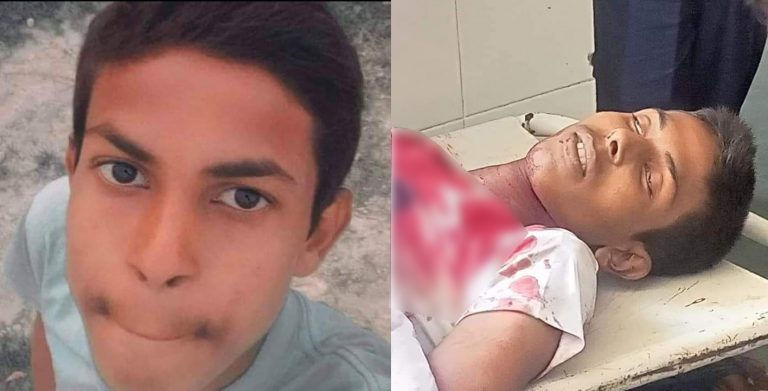
Rupesh Pandey was lynched by a mob of Islamists in the middle of a ruckus when a Saraswati Visarjan procession was passing from Lakhna Dulmaha Imambada of the Nai Taand village in Hazaribagh on February 6. The 17-year-old son of Sikandar Pandey, who was part of the religious procession, was badly beaten amid the ruckus. He was declared dead when taken to the hospital.

According to the exclusive report by Lagatar 24, the deceased’s family had met Jharkhand Chief Minister Hemant Soren and demanded a CBI investigation into the case. The court stated, about a counter-affidavit filed by the state government, that the state attempted to justify that the inquiry was proceeding on the proper path.

“Paragraph 59 of the counter-affidavit, who has sworn the affidavit has stated therein that investigating agency to proceed in its manner in the interrogation of the accused and that in course of investigation to be adopted in a particular case should be left to the discretion and wisdom of the investigating agency. The question remains if such statement is being made on affidavit by the Investigating Officer before the Court which suggests that the Investigating Officer has to say that inquiry should be left to the discretion of the said I.O. which is negated by the Court in view of the judgment of the Hon’ble Supreme Court in the case of Sidhartha Vashisht and Manu Sharma,” the court stated.

The court also stated that if something is being hidden by the police and that if the constitutional courts come to the opinion that a specific case has to be handed over to the specialised agency, it has the authority to do so. The bench however acknowledged that the CBI is overloaded and that the court should not regularly refer cases to the CBI. “It must be used only in rare instances, such as when it is necessary to establish credibility and trust in investigations, or when such an order is required to accomplish complete justice and enforce basic rights”, the bench added.

The bench meanwhile also mentioned a string of post-election violence in West Bengal in which workers of an opposition party were slain, and it ordered a CBI inquiry to ensure a fair investigation. Justice Sanjay Dwivedi noted that West Bengal had a similar situation in which there was a disturbance when political party activists were slain. “A similar issue occurred when the victims’ families did not trust the state police”, the court said.

Further, the court also recognized mob lynching as a serious crime and said that the threat of mob lynching was increasing. According to the court, mob violence and criminality committed by self-appointed keepers of public morals scare ordinary people without legal punishment, resulting in loss of life and property devastation.

Earlier, the mother of now-deceased Rupesh Pandey had demanded a CBI inquiry in the case and had said that she was dissatisfied with the Police investigation. She had demanded strict action against the culprits who murdered Rupesh during the Saraswati Puja Visarjan procession in Jharkhand. The National Human Rights Commission (NHRC) of India had also taken cognizance of the brutal murder of Rupesh Pandey and had sought an action report from the Police in the case.