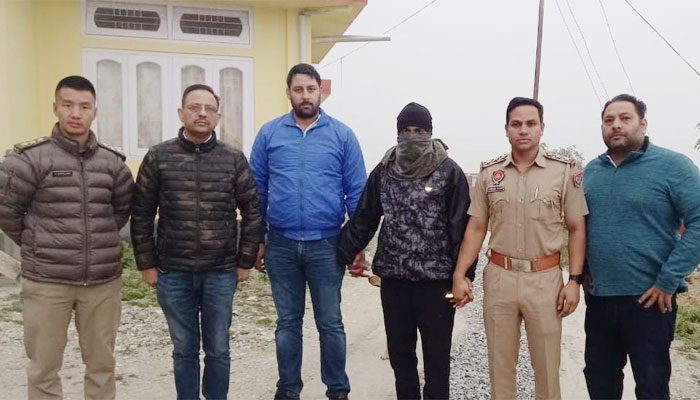
On September 24, Punjab Police arrested an Indian Army personnel identified as Sanjeev Singh in connection to the Chandigarh University Video Leak case where a female student allegedly sent nude videos of other female students from the hostel while they were taking baths. In a statement, Director General of Punjab Police Gaurav Yadav said that Singh was arrested from Arunachal Pradesh with the support of the Army, Arunachal Pradesh Police, and Assam Police.
Singh, who is the fourth accused in the case, is suspected of blackmailing the female student who allegedly recorded several objectionable videos of female students in the common washroom and sent them to his friend Sunny Bhatia in Shimla.
DGP Yadav said in a tweet, “Crucial breakthrough in the Chandigarh University case with the assistance of the Army, Assam and Arunachal Police. Accused army personnel Sanjeev Singh was arrested from Sela Pass, Arunachal Pradesh. Transit remand obtained from Ld CJM Bomdilla for production before Mohali court.”
Accused army personnel Sanjeev Singh arrested from Sela Pass, Arunachal Pradesh. Transit remand obtained from Ld CJM Bomdilla for production before Mohali court. pic.twitter.com/eNhNq9W11R
Based on the forensic and digital evidence obtained during the investigation, a team of SAS Nagar Police was dispatched to Arunachal Pradesh to arrest the accused.
ADGP named Sanjeev Singh as the main accused
A Special Investigation Team comprising of three women Police officials lead under the supervision of Additional Director General of Police (ADGP) community affairs division and women affairs Gurpreet Kaur Deo is investigating the matter.
A three-member all-woman special investigation team (SIT) led by Superintendent of Police Rupinder Kaur Bhatti, under the overall supervision of additional director general of police (ADGP) community affairs division and women affairs Gurpreet Kaur Deo, is probing the case.ADGP said in a tweet, “The prime accused in CU case arrested from Arunachal Pradesh by a SAS Nagar Police team based on leads arrived at by SIT headed by Ms Rupinder Kaur Bhatti, SP CI Ludhiana, DSP Kharar & DSP AGTF!”
The prime accused in CU case arrested from Arunachal Pradesh by a SAS Nagar Police team based on leads arrived at by SIT headed by Ms Rupinder Kaur Bhatti, SP CI Ludhiana, DSP Kharar & DSP AGTF! https://t.co/v9TIltS63A
Hindustan Times quoted SP Rupinder Kaur saying, “The accused belonged to Jammu and was posted at Arunachal Pradesh. During interrogation, the girl student revealed his name, and in further investigation, it was found that the man was directly calling the student and blackmailing her into sending videos of herself and other girl students. The guy was having the video of the girl, and we are investigating how he got them. However, we are yet to find out with which of the two arrested men he was in contact.”
The Chandigarh University Video Leak case
On September 18, it was reported that multiple nude videos of female students of Chandigarh University were recorded while they were taking a bath by the accused female student of the University, who would then allegedly send the videos to his friend Sunny Bhatia from Shimla. Premiliary investigation revealed the accused student was being blackmailed by the other accused in the matter.
Initially, the Police and University denied that videos of other students were sent but while present the three arrested accused in the case, it was revealed videos of at least one other student were recovered from the mobile of one of the accused men.
Police also recovered some screenshots of WhatsApp messages where one of the accused was allegedly blackmailing her for the videos. An SIT was formed by the Punjab Government to look into the matter. Further investigation is underway.
Indian entries to the best foreign film category at the Oscars generally attract a lot of controversies back home. From allegations of favouritism to sending films that are copied or ‘inspired’ from other movies, it is usual to see people question the choice of films sent to the Oscars. This year’s selection by the Film Federation of India (FFI), Chhello Show (The Last Show) is no different as there are several questions being raised over its selection by the jury.
Chhello Show not an Indian film?
The biggest bone of contention regarding the nomination of this film by the jury is that it is not even an Indian film so how can it be sent as India’s official entry to the Oscars. The film’s main producers are the Orange Studios, most of the crew that worked on the film is not Indian, so people have been questioning the choice of the film as Indian entry even though the film is in an Indian language, Gujarati.
In fact, Federation of Western India Cine Employees (FWICE) has already raised objection over this issue and questioned why didn’t the jury send an Indian film to the Oscars instead. BN Tiwari, the President of FWICE even demanded the appointment of a new jury which can be more fair and transparent in selecting the films that can represent India. He mentioned that Chello Show is a foreign film and only the rights were bought by Siddharth Roy Kapur.
Bizarrely, even the President of the Film Federation of India said that he is not sure if Chhello Show is an Indian film. Makes it even more strange that FFI’s jury will select the film to represent India in that case.
The film released in 2021, but being considered in 2022
Another problem raised over the selection of Chhello Show is its release date. The Film Federation of India is supposed to choose from the films release this year, in 2022, for the 2023 Oscars. However, Chhello Show premiered in June 2021, theoretically making it ineligible for selection this year.
Chello Show premiered at the 20th Tribeca Film Festival held in June 2021 and was selected for the Spotlight section of the festival. It played at various film festivals throughout 2021, notably at Beijing International Film Festival, Valladolid International Film Festival, Milwaukee Film Festival among others. A film that had been shown widely across the world in 2021 becoming a 2022 release for the sake of this selection for the Oscars doesn’t sit right with too many people, as the filmmakers who released their films in 2022 didn’t get a fair opportunity.
In fact, the chairman of the jury TS Nagabharana has given an official statement in Bombay Times that Chhello Show was also considered last year by the jury. Considering the same film for 2 years in a row seems grossly unfair to the other filmmakers.
Allegations of plagiarism against Chhello Show
There have also been allegations from certain sections that Chhello Show is heavily ‘inspired’ from the 1988 Italian film ‘Cinema Paradiso’ which won the Oscar at the 1989 Academy Awards in the Best Foreign Language Film category.
VIDEO: I’ve combined trailers of Italian masterpiece CINEMA PARADISO (1988) & CHHELLO SHOW in one video. Pls watch complete video.
Plot of both movies is totally same. A small-town boy befriends a projectionist at cinema hal and falls in love with the magic of cinema.. #Oscarspic.twitter.com/5AFwTsiscP
It isn’t the first time in recent years that India has sent a film to the Oscars which is heavily inspired from a western film.
India’s entry for the 2020 Oscars, Gully Boy, was a rip-off of Eminem’s 8 Mile. Eminem even won an Academy Award for best original song for that film. Similarly, India’s entry for the 2018 Oscars, Newton, had many striking similarities with the Iranian film ‘Secret Ballot’. Even though the Iranian filmmaker later clarified that Newton isn’t a copy of his film. Indian entry for the 2013 Awards, Barfi!, was just a highlight reel of Charlie Chaplin movies, but didn’t stop the jury from sending it to the Oscars as the best of Indian cinema.
While there is unlikely to be any change in the selection of the film by FFI’s jury this year, but many cinema fans felt that it would have been better if India had sent the hugely popular ‘RRR’ or Vivek Agnihotri’s poignant depiction of Kashmiri Hindu genocide ‘The Kashmir Files’ as its official entry to the Oscars.
Congress leader Lt CDR Gokul Chandran recently took to Twitter to admit that he had sent obscene messages after a woman on social media called him out for his vulgar texts.
However, shortly after sharing the note, Gokul made his Twitter account private and protected his tweets. Gokul had also removed references linking him to Congress from his Twitter bio before ultimately deactivating his Twitter account.
Gokul deactivates Twitter account
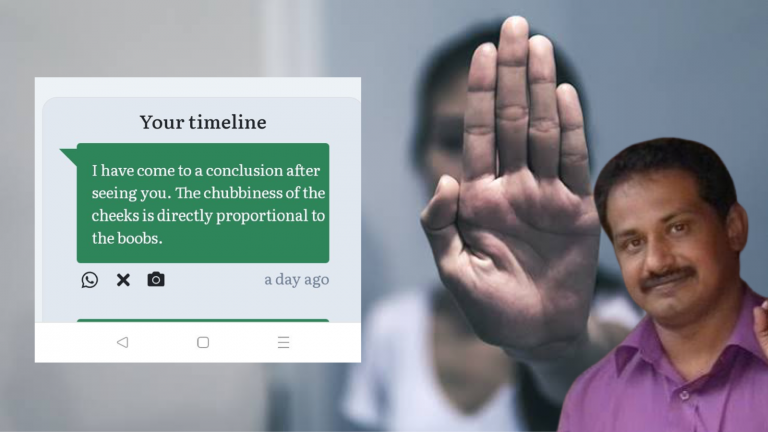
Gokul, who is a member of Tamil Nadu Congress IT & SM, shared screenshots of a Whatsapp message written by him wherein he admitted to exhibiting creepy behaviour on social media after a Twitter user accused him of sending lewd messages.
Check how senior Congress leader @gokulchan is harassing a girl.
A Twitter user had recently shared pictures of lewd messages that Gokul had sent her anonymously.
“You know who u r! The 13k followers of urs will also know if u do this again. Your fauji stature and the fact that u appear on TV debates doesn’t give u a free pass. I had ignored the secret msg. U come to my DM and shamelessly tell me that u have sent it! Such audacity!” a social media user tweeted.
Gokul had allegedly sent her a secret message that read: “I have concluded after seeing you. The chubbiness of the cheeks is directly proportional to the boobs.”
If sending an indecent secret message was not enough, Gokul went ahead and confided in the victim that he was the one who had sent her the said message.
After being called out by the woman, Gokul took to Twitter, expressing regret and admitting to sending filthy messages to girls.
“For everyone asking me in DM and WA if it’s me.. Yeah it’s me. Many of you must have already or will be coming across tweets and indications of my creepy behaviour. I feel guilty and there is no justification or clarification of what I did. My big sorry for people who got offended of my neech behaviour,” he said in a note, which appears as a Whatsapp message, shared on Twitter.
“I know I have let down my friends over here and the organisation which I represent. I don’t want to discuss it further. What was supposed to be anonymous and in personal space is out in open. And I deserve the humiliation for what I did and I take that as a punishment,” the note further read.
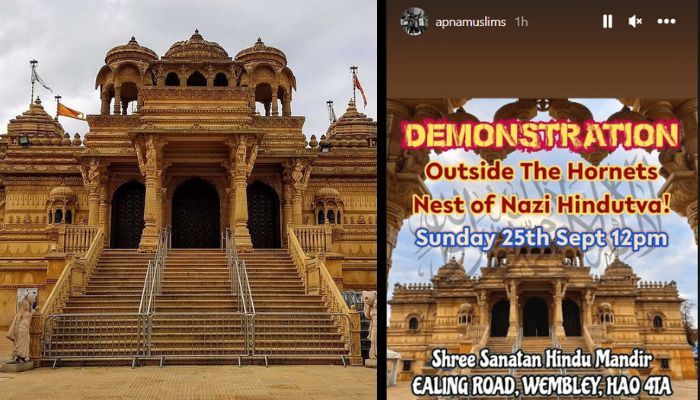
After the attack on Hindus in Leicester, Islamists have been calling for a mass mobilisation outside the Shree Sanatan Hindu Mandir in London from 12 pm onwards on Sunday (September 25). The said Hindu temple is located off Ealing Road in Wembley in northwest London.
The development comes days after Islamists spread the rumour that the Hindu temple has been harbouring and ferrying Rashtriya Swayamsewak Sangh (RSS) workers, via a travel agency, to Leicester to supposedly foment communal tensions.
In a tweet, Australian research scholar Sarah L Gates pointed out how an Instagram account had been instigating violence against the Hindu community. “So what are you going to do? Dress up like ISIS then scream at the Hindus to denounce RSS – a non-terror entity?” she asked.
So what are you going to do? Dress up like ISIS then scream at the Hindus to denounce RSS – a non terror entity?
“Is it time to scrap all taxpayer funding to any Islamic orgs who are feeding this?” she further pointed out. The Instagram story, shared by Sarah L Gates, belonged to an account named ‘Apna Muslims.’
In a story, the handle demonised the Shree Sanatan Hindu Mandir as the ‘hornet’s nest of Nazi Hindutva’ and called for gathering outside its premises. In this way, ‘Apna Muslims’ laid a perfect ground for Islamists to justify any attacks on the temple.
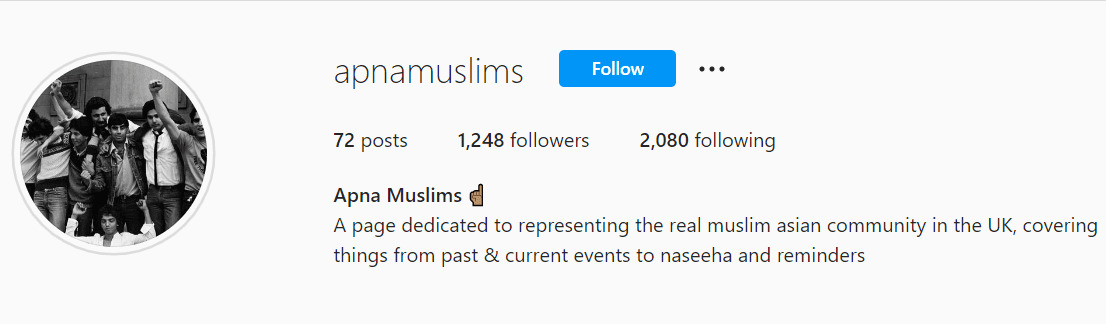
The Instagram account boasts of 1240+ followers and is dedicated to promoting Islamist causes in the United Kingdom.
Screengrab of the Instagram profile of the Islamist
The origins of the conspiracy theory
On September 18, a Twitter user named aart123 posted a 1-minute long video, alleging that a bus belonging to Angel Tours has been ferrying ‘masked Hindutva thugs’ to Leicester. It also claimed that the supposed mobilisation of Hindus was being done at the behest of the Hindu temple. The video showed a coach belonging to Angel Tours parked near the temple.
Soon after, Islamists dug out a year-old picture which showed a group of people holding a BJP flag, standing in front of an Angel Tours bus. “This is the coach in Leicester Angel Tours belonging to Ealing Temple London and the group openly supports BJP,” wrote one Ash.
This is the coach in Leicester Angel Tours belonging to Ealing Temple London and the group openly support BJP. pic.twitter.com/NZfl7a8NeQ
Quoting Wilson, The Wire journalist Sumedha Pal tweeted, “Coach Loads of RSS supporters went to Leicester to provoke conflict which can then be used in India to further Islamophobia & strengthening the narrative of Hindu victimisation.”
However, the owner of the tour company, Angel Tours, denied all the allegations, and said that his buses has not gone to Leicester in the last two months. He clarified that the buses of his company always stop in front of the temple as it is a major landmark and people know the place, therefore the passengers of his coaches can easily locate the bus. The owner Yatin Bhimani said that his buss are parked there only for convenience as there is ample space, and his coach company has no link with the temple.
In an interview with Ali Dawah, the owner of ‘Angel Tours’, Yatin Bhimani, clarified that the Ealing Road temple, where his bus was stationed, is being used as a pickup point by his travel agency since 2009. He also pointed out that he is not affiliated with the temple.
This was also confirmed by the Guardian journalist Aina Khan, who posted GPS log of the bus showing that it didn’t go to Leicester on that day.
Regarding the people with the BJP flag seen in front of his bus, Yatin Bhimani said that last year a group of people had hired the bus and the photo was clicked at that time, and it does not mean that he is associated with BJP. He informed that the group had hired the bus to see PM Narendra Modi addressing the UN Climate Change Conference in November 2021. The travel agency owner also informed that people got hold of the picture from his Facebook profile, where he had written how his ‘Angel Tours’ facilitated the journey of Indians for an event attended by PM Modi. As the photo was taken from his Facebook account, the Islamists knew that the photo is old, but still used it to peddle propaganda against Hindus.
Therefore, the claim that a Hindu temple in London was sending ‘RSS supporters’ to Leicester has been proven wrong already. The bus has no link with the temple, and it was not ferrying RSS supporters or anyone else to Leicester during the violence.
But the Islamists, who are always on the hunt for excuses to justify their crimes, are now harping on the fake information to create chaos at the Shree Sanatan Hindu Mandir in London. As the propaganda against the temple which has nothing to do with the Leicester violence grows on social media, it is possible that the temple may come under the attack of Islamists in the UK.
Built at the cost of £16 million (around ₹109 crore, the Shee Sanatan Hindu Mandir in Wembly in London was opened in June 2010. The temple has been built using the ancient temple architecture methods associated with Hinduism, without the use of metal. The limestone for the temple was hand-carved in Sola town in Gujarat. The temple houses 41 marble deities, also made in India.
On Friday, in Pune, it was reported that ‘Pakistan Zindabad’ slogans were raised during a Popular Front of India (PFI) protest march. The protest followed the arrest of more than 100 members of the radical Islamic organisation across the country. Now Maharashtra Navnirman Sena’s chief Raj Thackeray has commented on the controversy asking such people to go to Pakistan.
The MNS chief shared his comments on the matter via his Twitter account. He said, “If slogans such as ‘Pakistan Zindabad’ ‘ Allahu Akbar’ are going to be proclaimed in our Pune city, then our country’s Hindus are not going to keep quiet.”
If slogans such as ‘Pakistan Zindabad’ ‘ Allahu Akbar’ are going to be proclaimed in our Pune city, then our country’s Hindus are not going to keep quiet.
In his attached statement, Thackeray said, “Few functionaries of the radical Popular Front of India (PFI) were arrested and soon after public proclamations were made by them saying ‘Pakistan Zindabad’ ‘Allahu Akbar’. The government should immediately put a stop to such activities.”
Talking about the arrest of the PFI members, Thackeray further added, “Why were they arrested? The reason being, they are funding terror activities in the country. This is such a serious issue, in short this is anti-national activity.”
Taking a strong stand against such slogans, Thackeray said, “Whilst the arrests were being made, these functionaries were shouting slogans about their religion and reminiscing about Pakistan; if such is their mental state, then take your religion and go to Pakistan. This kind of drama is not going to be allowed in our country.”
Thackeray also urged the central and state home ministers to take strict action against such elements else there could be unrest in the country during the upcoming festive period.
Over 100 PFI members arrested by NIA in a nationwide crackdown
On the intervening night of September 21 and September 22, National Investigation Agency (NIA) conducted several raids on locations linked to the Islamist organization Popular Front of India (PFI) across 10 states, including Bihar, Kerala, Andhra Pradesh, Delhi, Uttar Pradesh, Karnataka, and Telangana.
The agency arrested around 100 cadres, including top leaders of the organization. As per reports, the raids were conducted by joint teams of NIA, Enforcement Directorate (ED), and respective State Police, and the Union Ministry of Home Affairs was monitoring the action against the organization.
PFI members took to the streets in as many as 8 states to protest against the action by the NIA and Enforcement Directorate.
Several recent ground reports by OpIndia have demonstrated how swiftly demographics are shifting along India’s border with Nepal. The number of mosques and madrasas in the area is rapidly increasing. An OpIndia team visited numerous places in Nepal bordering India from August 20 to 27, 2022, to examine the ground situation. This is the 21st report in a series of articles documenting the facts discovered by the OpIndia team.
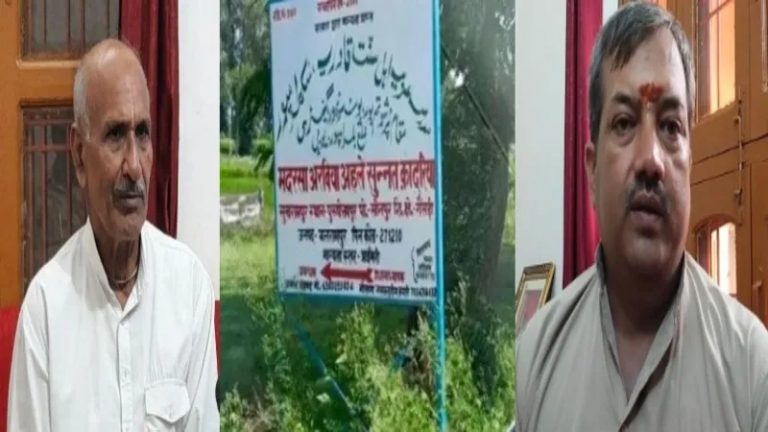
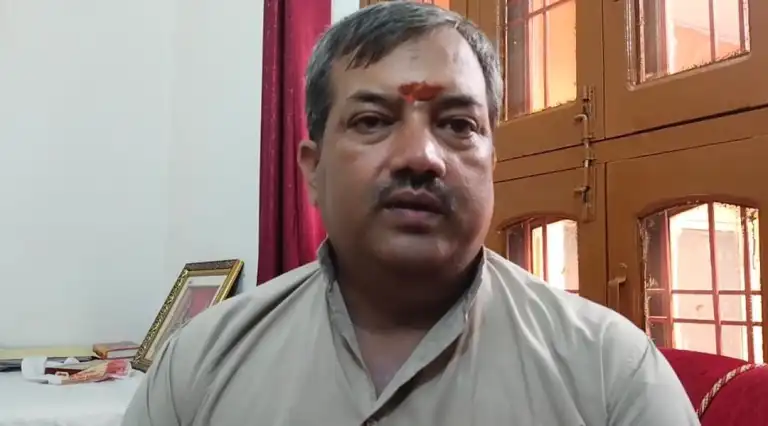
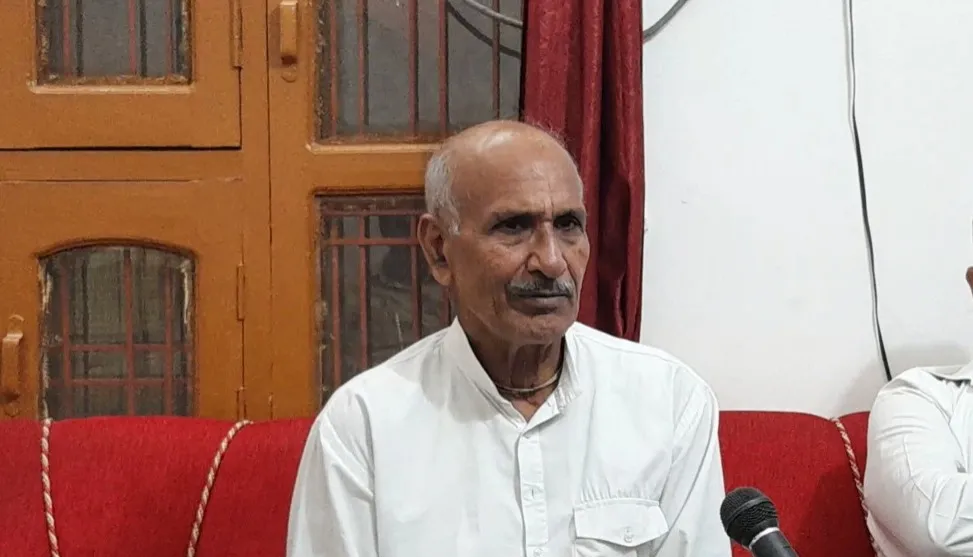
We came across several members of the Rashtriya Swayamsevak Sangh’s Seema Jagran Manch faction near the Indo-Nepal border. We discussed with them the situation on both sides of the border and spoke with Prant Yuva Pramukh Vidyabhushan and Balrampur District President Om Prakash on the demographic shift and the difficulties that arise as a result of it.
Both Vidyabhushan and Om Prakash agreed that not only has the number of mosques, madrassas, and Ibadatgahs on the Nepal-India border risen but so has the Muslim population residing in the border areas.
Muslim-dominated villages on the border
Prant Yuva Pramukh Vidyabhushan told us that the majority of villages along the Nepal border are Muslim-dominated. He included Tandwa, Balapur, Kaneidh, Raniapur, Mohkampur, and Chainpur in this list.
Funding through hawala
Vidyabhushan stated that money is entering the border areas via hawala, with a major portion of it being used for criminal purposes. He stated that the remainder of the money is being utilised to repress and conceal crimes in social work, such as placing taps (with UAE stamp). People from this area, according to Vidyabhushan, have gone to work not just in Saudi Arabia, but also in Iraq and Iran.
5 KM conspiracy belt on both sides
Vidyabhushan warned us about a particular plot that is taking place within 5 kilometres of India’s border and in that much of Nepal. He stated that the Muslim population in these 10 kilometres is booming. As bases, Vidyabhushan addressed madrasas, mosques, and Mazars. He claimed that the madrassas in this area were likewise crowded with intruders.
Fake IDs and documents
When a foreigner enters here, their ID and other documents are created along with other arrangements, according to Vidyabhushan. He called it a conspiracy and stated that the administration’s job in such circumstances is to remain silent.
According to Vidyabhushan, the administration only wakes up when an incident occurs. He stated that if an administrative official claims that everything on the border is right and usual, he is not speaking the truth.
Shelter for criminals from across the country
Vidyabhushan informed us that criminals from all around the nation frequently seek asylum on the Nepal border. He claims that this occurs because, in severe cases, they breach the border and enter Nepal. Vidyabhushan asserted that many criminals who commit crimes in major cities such as Delhi and Mumbai are taking shelter on the Nepal border.
According to Vidyabhushan, the cause for the little communal tension near the Nepal border is a plan to keep the agencies away from that side. According to him, the anti-social individuals lurking on the border are keeping quiet because they do not want to be noticed by any security agency.
Balrampur is on the verge of becoming a Muslim-majority district
According to Vidyabhushan, ancient demographic statistics can be examined to discover how the Muslim population is fast-rising throughout the region. Vidyabhushan identified the nearby district of Siddharth Nagar as having a Muslim majority. In addition, he stated that the district of Balrampur is on the verge of becoming practically entirely Muslim.
Vidyabhushan
Muslim winner of municipal elections for 20 years
Vidyabhushan went on to say that if someone wants to know about the rise in the Muslim population at the grassroots level, he may look to the Balrampur Municipal Corporation elections. He gave the example of 20 years ago when there was a Hindu winner, but for the previous 20 years, only Muslims have won municipal elections here.
Love Jihad and human trafficking
Vidyabhushan warned us that if security and intelligence organisations do a thorough inquiry, a lot of information will emerge from the border areas. He said that human trafficking was taking place among the Hindus, particularly the Tharu females who had relocated along the border. According to Vidyabhushan, the majority of trafficked females are ensnared in the hands of smugglers by love jihad and sold in foreign nations.
According to Vidyabhushan and another local civilian, there is a significant contrast in the working styles of the SSB and the local police. Many cross-border crimes, he claims, have halted with the deployment of SSB. Vidyabhushan informed us that the administrative officials are aware of all the new Ibadatgahs being erected along the border, yet they take no action. He added that the majority of Islamic houses of worship are in violation of the criteria, and their maps, etc., have not been approved.
Conspiracy for a crisis in future
Vidyabhushan asserted that the new houses of worship being erected on the border are part of a larger future plot. He claimed that the conspirators foresee a civil war in the country in the future. He also stated that from the Mazars established near the railway station, these conspirators can target transportation resources in the future if there is a crisis in future.
In addition, he identified such conspirators as being active around the roadways and bus stations. According to Vidyabhushan, the unlawful Islamic worship sites along highway bridges are a plot to halt traffic in the future during times of crisis.
Population imbalance result of inaction by previous governments
In a conversation with OpIndia, Om Prakash, District President of Seema Jagran Manch, stated that past regimes’ actions are primarily responsible for the current border situation. He stated that realising the responsibilities of Seema Jagran Manch, he is making efforts to strengthen and empower the Hindu society existing on the Nepal border. Om Prakash went on to say that they are also offering specific training to the Tharu tribe, who live on the border, in order to get admission into the army and police.
Om Prakash.
Om Prakash and Vidyabhushan both stated that the government should pay close attention to what is going on along the Nepal border. He offered historical instances of how criminals like Mirza Dilshad Baig and Rizwan Zaheer thrived there while Hinduist leaders like Mangre Singh were assassinated.
Although both recognised that a lot has changed since the Yogi government took office, they voiced optimism for increased security exercises. Aside from these two, the locals present acknowledged that things have changed under the current government, but that more progress is required.
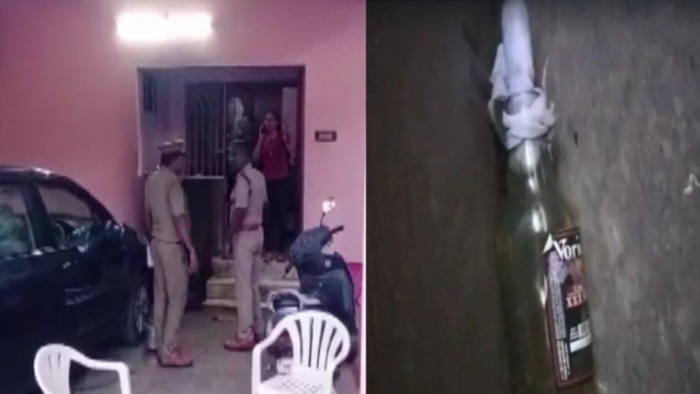
On Saturday, a petrol bomb was thrown at the house of an RSS leader near Tambaram, Chennai in the early hours of Saturday. No casualties were reported in the incident. This is the third time in 24 hours that petrol bombs have been hurled at RSS workers.
“A petrol bomb was thrown at RSS leader Seetharaman’s residence in Chitlapakkam, Tambaram, near Chennai. Efforts are underway to apprehend two unidentified persons who hurled a petrol bomb,” Tambaram police said.
“At 4 a.m., we heard a loud sound and realised that there was a fire outside,” Sitaraman explained. “We suspected a short circuit, but it was not the case. We extinguished the fire and called the police. The CCTV footage of the accused has been handed over to the police,” Seetharaman told ANI.
Tamil Nadu | At around 4 am, we heard a loud sound and saw fire outside. We thought it to be a short circuit but it wasn’t the case. We doused the fire and called police officials. They got the footage of the accused, says Seetharaman on whose house petrol bombs were hurled pic.twitter.com/uSf25KPHl9
Ever since the NIA and ED have conducted nationwide raids and arrested several Popular Front of India (PFI) leaders, there has been no end to violence across the country.
The PFI called for a ‘Kerala Bandh’ on Friday to protest the NIA’s statewide raids and arrests in the terror funding case.
On Friday, several cases of stone pelting were reported in Kerala. Two lorries, as well as the windshields of two Kerala State Road Transport Corporation (KSRTC) vehicles, were destroyed.
Tamil Nadu | Petrol Bomb hurled on RSS functionary Seetharaman’s residence at Chitlapakkam in Tambaram near Chennai. Efforts underway to nab two unidentified people who threw petrol bomb: Tambaram Police https://t.co/pMNC2zw3XGpic.twitter.com/LFh98DQv3p
PFI workers also hurled stones at vehicles in the districts of Thiruvananthapuram, Kollam, Pathanamthitta, Alappuzha, Ernakulam, Kozhikode, and Wayanad.
A vandalism incident occurred on Friday at the BJP office in Coimbatore, Tamil Nadu. Some people hurled petrol bombs into the office. Apart from that, two persons hurled petrol bombs at the RSS office in Mattanur, Kannur.
Kannur, Kerala | During the strike protesting the arrest of the Popular Front of India’s leaders by NIA, a petrol bomb was hurled by two persons at the RSS office in Mattannur; police probe underway pic.twitter.com/3FQCSUgAgS
The Kerala High Court filed a suo moto charge on Friday against members of the Popular Front of India (PFI) for illegally calling a one-day statewide bandh in the state and inciting violence. Hartal had previously been forbidden, and the court stated that harm to public property could not be condoned.
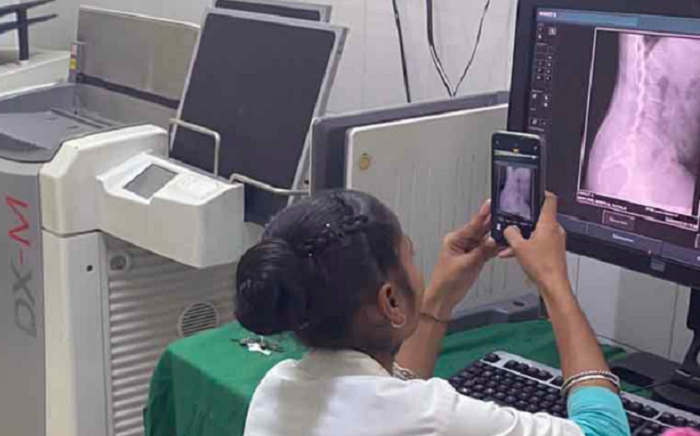
While Chief Minister Bhagwant Mann aspires to provide better healthcare services to the citizens of Punjab, the government hospitals in the state are acting bizarre by asking the patients to click the pictures of X-rays on smartphones instead of accessing a hard copy report.
According to the reports, the government employees at the hospital in Patiala city of Punjab published an announcement asking its patients to get smartphones during X-ray scanning. “Only those who have smartphones should come for X-ray”, the announcement at the district-run hospital named Mata Kaushalya Hospital read.
The hospital staff members claimed that they usually issue the announcement when the hospital is out of X-ray films. As a result of this bizarre attitude, the majority of poor patients are left unattended since they do not own cell phones. Notably, X-ray is a frequent non-abrasive imaging technique used by doctors to inspect the interior of your body.
One of the patients named Fuljaria Devi talked to Tribune India to reveal that she was allegedly denied treatment by the hospital for not owning a smartphone but a keypad phone. The 53-year-old lady said that she works as a construction labourer and can’t afford a smartphone. “My son works near the Focal Point. Only he has a smartphone. Now, I will have to get my son to get my X-ray done”, she added.
Another patient Manjit Kaur, a daily-wager said, “I do not have a smartphone. I have pleaded with many people for help but no one is ready”. Meanwhile, a senior doctor who is supposed to check X-rays on the smartphone stated that this was an unfortunate situation demanding patients to go through a mess. “X-ray is not visible on smartphones and we often face difficulties in diagnosing the patients”, he added.
Ironically, the Health Minister had only recently visited the hospital. However, Dr Sandeep Kaur, Medical Superintendent of Government Mata Kaushalya Hospital praised this act of the hospital and said that it does nothing but save money. “If a patient does not have a smartphone, our X-ray department personnel will email the images immediately to the doctor”, he added.
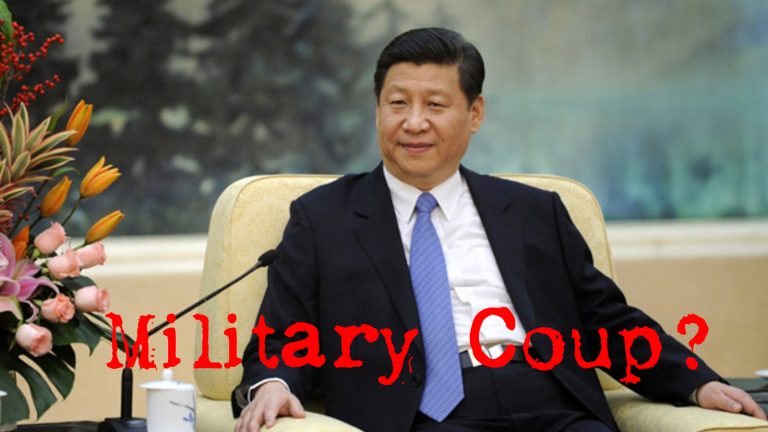
Amid large-scale cancellations of flights at Beijing airport and massive military build-up in Beijing, rumours about a coup in China are going around for the last few days. It has been claimed by many that President Xi Jinping has been removed from the post, and that he has been put under house arrest by PLA. However, nothing has been confirmed till now, and probably the rumours are not true.
In the last few days, several Chinese social media handles had claimed that Xi Jinping has been stripped of his military powers and is under house arrest. It was claimed that the ‘coup’ took place when the Chinese premier was in Samarkand in Uzbekistan to attend the Shanghai Cooperation Organisation summit. According to the rumours, when Jinping was in Samarkand, his distractors in the party convinced the party’s top leadership to remove Jinping from the leadership of the army.
— 新高地官推 官网:https://www.newhighlandvision.com/ (@5xyxh) September 22, 2022
According to News Highland Vision, former Chinese President Hu Jintao and former Chinese Premier Wen Jiabao had persuaded Song Ping, the former member of the Politburo Standing Committee to take the control of the Central Guard Bureau (CGB) from Jinping.
Central Guard Bureau is a specialised organisation responsible for the protection of senior party members including Jinping, their families, and important foreign dignitaries in China.
After control of CGB was taken away from Jinping, the Politburo Standing Committee abolished Xi’s military authorities, it was claimed.
When Xi Jinping found out about the development, he immediately returned to Beijing, but he was apprehended at the airport on 16th September and was put under house arrest at Zhongnanhai, the rumours claimed. It is notable that the central headquarters for the Chinese Communist Party, the State Council of China, and the office of the Chinese Premier among other offices are located at Zhongnanhai in Beijing. It is also being said that the current situation in China is being controlled by former president Hu Jintao.
To add fuel to the rumour, a video was shared widely on social media claiming that it showed a large contingent of Chinese People’s Liberation Army left for Beijing, and the convoy was 80 km long.
Among many others, this claim with the video was also shared by Chinese activist Wanjun Xie. He wrote that the front of the convoy had reached Huailai near Beijing, while the end was at Zhangjiakou in Hebei Province, and therefore the convoy was 80 km road.
However, the video shared with the claim is less than 1 minute long which shows few military vehicles on the road, therefore the claim of an 80 km long military convoy could not be proven.
Another event that added to the speculation was the large-scale cancellation of flights at Beijing airport. It has been reported by many that around 6000 flights have been cancelled at the airport, with the claim that the flights over Beijing have been cancelled for military operations in view of the coup. Some reports said that 60% of flights were cancelled instead of 6000.
While other claims are hard to verify as getting information out of China is difficult, this claim actually can be easily verified, as flights are tracked by several websites. And we have found that the claims of cancellations are correct. Flight tracking site flightradar24 shows that Beijing Capital International Airport has come to almost a standstill as relatively very few flights landed at and took off from the airport.
The portal also shows that a large number of flights scheduled at the airport are either cancelled or their status is unknown. On the other hand, the portal shows that other major airports in China, like Shanghai and Hong Kong are operating normally.
Therefore, the claim that Beijing airport has seen a large number of flight cancellations is true, which can be verified from flight tracking sites.
However, it can’t be verified whether the cancellations are linked to the alleged coup in Beijing, or it is due to other reasons. There are some reports claiming that the flights were cancelled due to a military exercise which was announced in advance.
Activist and author Jennifer Zeng, who had also made the claim on the 80 km long military convoy to Beijing, tweeted today that the rumour about Xi’s arrest is not true.
Someone told me that he knows the family of a #CCP admiral, the rumor about Xi’s arrest is not true. I’ll talk about what is happening in China tonight, titled: “Is Xi Under Arrest After Military Coup? 3 Senior Anti-Xi Officials Sentenced to Death”. Sub: https://t.co/BdIj4wQv2r
However, even if the rumours of the coup are false, there are enough pointers showing that something could be brewing in Beijing. Xi Jinping attended the SCO summit, but he was not present at the dinner attended by other leaders. Covid-19 was cited as the reason for the absence, but it didn’t convince everyone.
It is also being claimed that Xi Jinping was also not present at a high-level meeting on National Defence and Military Reform in Beijing on Wednesday. Although he was already back in Beijing from Uzbekistan, he didn’t attend the meeting which was attended by several senior military leaders, like Army Commander Liu Zhenli, and General Li Qiaoming, in charge of the Theatre Command of the North.
However, there are reports of Xi Jinping addressing the conference, which means that he did attend it, and the reports of him skipping the meeting could be incorrect.
Amid all the rumours, what is interesting is that Beijing has not issued any statement on the issue so far. However, sources in the Argentine embassy in China have categorically denied the claims. It is also notable that the ‘news’ of the coup was posted on social media by mostly Chinese activists living outside China, and anti-China Twitter handles from Nepal and Taiwan. Therefore, the veracity of the rumours was doubtful from the beginning, and by now it is almost certain that they were wrong, and Xi Jinping remains the President of China.
On Friday (September 23), a climate activist invaded a tennis match at the Laver Cup in London and set his arm on fire. The incident took place at the O2 Arena in London during the ongoing 5th edition of the Laver Cup tournament.
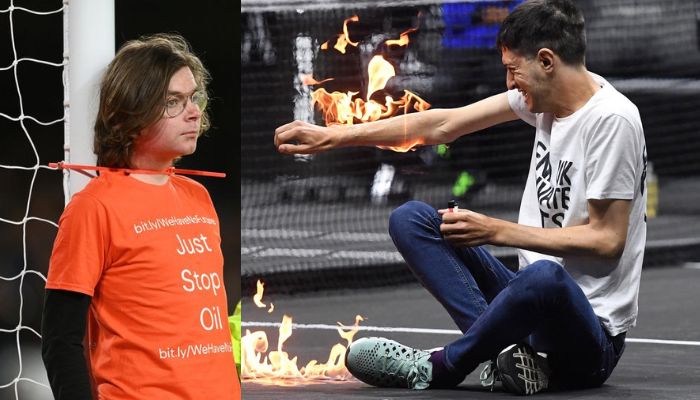
In a video that had surfaced on social media, the activist could be seen rushing to the court and setting his right arm ablaze. In the process, he also set fire to the playing surface.
The man was seen wearing a white shirt that read ‘End UK Private Jets’. This led to a security scare as the incident occurred during an ongoing match between Stefanos Tsitsipas and Diego Schwartzman.
Today a climate change protester appeared to accidentally set himself on fire at the Laver Cup tennis tournament at the O2 Arena in London. pic.twitter.com/C0qZRw1QrP
The climate activist was then escorted out by security officials while the crowd booed him for disrupting the match. Fans were miffed at the fact that the man found legendary tennis player Roger Federer’s last tournament to play spoilsport.
However, this is not the first time that a climate change activist resorted to such theatrics to draw eyeballs. There have been at least 4 occasions in this year alone where ‘saviours of climate’ disrupted elite sporting events to supposedly raise awareness about the changing climate.
Protestor ties herself to the net during 2022 French Open
In another protest at a tennis event, in June this year, a female activist disrupted the semi-final match of the French Open, which was being played between Marin Cilic and Casper Ruud.
With little to no security protocols in place, the climate activist was able to quietly walk to the tennis court and glued herself to the net. The woman was seen wearing a T-Shirt that read, “We have 1028 days left” on both sides. Reportedly, it was in reference to a United Nations report on climate change.
The incident left both players in a state of shock, who then quickly returned to their dressing rooms. After surrounding the activist and untangling her from the net, the security officials escorted her off the court.
Climate change protestor Woman walks into court and tie herself to the net during the game between Ruud vs Clilic at the french Open.Say “we have 1028 days to live” pic.twitter.com/lkeoFzHoe5
— News Talk with Dino Yao (@Dino_dlog) June 3, 2022
After an intermission of about 15 minutes, the play resumed and Casper Ruud managed to clinch the match. In a statement, the Tennis Federation said, “An environmental activist managed to get onto Philippe Chatrier Court and attached herself to the net with metal wires and glue.”
“The young woman, of French nationality, entered the grounds with a valid ticket early in the day. She was then handed over to the police,” it further added.
Climate activists ambush Tour De France
A month later in July 2022, a group of 9 climate activists ambushed the prestigious bicycle race, Tour de France. The incident took place during Stage 10 of the race.
The protestors belonged to a climate group named ‘Dernière Rénovation’, which demanded the renovation of all buildings by the French government for energy efficiency by 2040.
In a viral video, Italian cyclist Alberto Bettiol was seen steering his way through a thick smoke of colourful fumes and climate activists, squatting on the race track. The protestors were seen wearing T-shirts that read, “We have 989 days left.”
The race had to be paused for 15 minutes, during which the local police arrested the activists. Alice, one of the disruptors, claimed, “The reality is that the world towards which politicians are sending us is a world in which the Tour de France can no longer exist. We must act and enter into civil resistance today to save what remains to be saved.”
Protestors sit on track of the British Grand Prix
In the same month, climate activists belonging to ‘Just Stop Oil’ managed to invade the British Grand Prix circuit, despite warnings both by Northamptonshire and Silverstone Police based on Intelligence reports.
A group of 5 activists breached security protocols and invaded the fastest point of the British Grand Prix track, Wellington Straight. They were dragged off the track by security staff and later arrested by the Northamptonshire police.
The climate activists demanded a halt on all new gas and oil projects in the United Kingdom and threatened further disruptions in case of non-compliance by the British government.
Louis Mckechnie (21), who was part of the group, claimed, “I’m in resistance because I cannot stand by while our government licenses new oil and gas projects. Our addiction to oil has brought us to the brink of catastrophe”
“Millions of people face starvation globally as a result of climate breakdown and the fossil-fuelled war in Ukraine. Hungry people are rioting, economies are collapsing – this is what happens when you run out of food,” he alleged.
In a statement, Fédération Internationale de l’Automobile (FIA) informed that the protestors were removed from the circuit. It stated, “We confirm that after the red flag, several people attempted to enter the track. These people were immediately removed and the matter is now being dealt with by the local authorities.”
Chief Inspector Tom Thompson, event commander, expressed disappointment that the climate activists ignored warnings and took the dangerous decision to enter the tracks.
Climate activist ties his neck to the goalpost
Louis Mckenchie, who disrupted the British Grand Prix, had also invaded a premier league match between Everton and Newcastle United in March this year. To everyone’s shock, he ran onto the field and tied himself to a goalpost in the middle of the match.
Mckenchie wore a T-Shirt that read, ‘Just Stop Oil’. Reportedly, it took bolt croppers and more than 6 people to remove the strap from around his neck. After being taken off the ground, the climate change activist was arrested by the police.
Angry fans were seen throwing objects at the activist, with one fan rushing to the ground to attack him.
In a statement, Merseyside Police said, “We can confirm a man was arrested after encroaching onto the pitch during the Everton v Newcastle United Premier League fixture. At around 8:55 pm it was reported that a man disrupted the match by running onto the pitch and tying himself to the goalpost at the Howard Kendall Gwladys Street End.”
“The suspect, a 21-year-old man, has been arrested on suspicion of pitch encroachment and he is now in police custody. The game resumed and has now concluded,” it added.
Stunned by the incident, Newcastle boss Eddie Howe blamed the theatrics of the activist for disrupting the momentum of the game. Howe said, “I’ve never seen anything like that. At first, I didn’t realise what was happening to start with. It was a big delay.”
Conclusion
There has been an increase in the number of such coordinated acts of disruption at major events. The disruptive protests by unruly climate change activists are increasingly drawing the ire of common people, including those who might have been sympathetic to the cause. With no clear goals in sight and unjustified use of disruption, the champions of climate activism are now finding themselves on shaky ground.