As per local media reports, the artistic wooden strut was crafted in 14th century and was stolen from main gate of Kathmandu Metropolitan City-24 Itumbahal Mahabihar in about 1984-85. The Shiva panel that has been returned is an 11th century stone panel that had gone missing in 1995 from Kangkeshwari temple located at KMC-19. Apparently, both these artefacts were ‘donated’ to the Metropolitan Museum of Arts.
Erin L. Thompson, art crime professor at The City University of New York in December 2021 had tweeted to the Metropolitan Museum of Arts from Nepal that the Yakshi in their collection belongs to Nepal.
She had been visiting Kathmandu in Nepal and said that the above statue was stolen from the Buddhist monastery. Now that the artefact is returned to Nepal, she said that she had written to the museum in 2021 about the sculpture and they had replied that they had known about it since 2016 but were still processing the same.
When I emailed the museum about this sculpture in 2021, they replied they had know about the match between the parts since 2016… but were still working on it. pic.twitter.com/jbIwXxi0JI
On Sunday (August 14), the Pakistani Air Force drew the ire of the citizens for releasing a brand new song on the occasion of the country Independence Day (also called Partition Horrors Remembrance Day in India).
The 4-minute long song is based on the theme of the cash-strapped country’s Diamond Jubilee of Independence. In a statement, PAF said, ” (The song is )tribute to the courage and bravery of the soldiers of the Pakistan Air Force who created stories of bravery in air battles with the enemy and raised the prestige of the country.”
However, Pakistanis were not impressed with the theatrics of the PAF. They slammed the country’s Air Force over misplaced priorities at a time when the people are faced with economic distress.
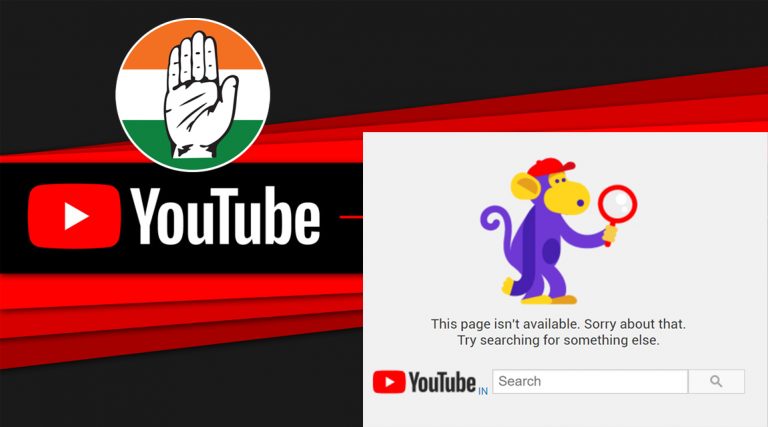
While anticipating the reaction of the ordinary citizens, the official Youtube channel of the Pakistan Air Force turned off the comment section. However, this did not stop Pakistanis from venting their anger on social media posts about the new song of the PAF.
In a Facebook post, ‘Startup Pakistan’ had posted, “Pakistan Air Force Launches New National Song on 75th year of Independence.”
“We need justice not songs,” wrote one Shah Hussain Khan. Another Facebook user chided, “All we needed is a brand new National song to defeat poverty, inflation, corruption, unstable economy and poor mindset of ruling parties.Thank you Pak Airforce.”
Screengrab of the comments
One Ar Fariyah Khan commented about how the Pakistan Air Force and other wings of its armed forces are running the country’s coffers dry. Another user took a dig at the Pakistan Air Force and sarcastically suggested that India might hand over Kashmir (which is an integral part of India) to Pakistan after listening to the new song.
“Great achievement. Hope we will hear more good news from this music industry,” remarked one Malik Jan.
Screengrab of the comments
One Ahmad Zubair commented, “Mashallah. Much needed to defeat the inflation. Hope it will boost our economy. Great step Pak Air Force.”
“Congratulations to PAF for joining media industry,” said Ammar Ahmed.
Screengrab of the comments
Facebook user, Arsal Ahmd, took potshots at Pakistani Chief of Army StaffQamar Javed Bajwa. He wrote, “Bajwa is the lead singer.”
Screengrab of the comments
One Faizan Noor remarked, “Congratulations for Pakistan to luanch a national Anthem, to show how much now we are valuable, to show how currency is in momentum, to how we give land to do terrorist activity in AFG, to show our politicians are so amiable for our 8industry growth. More songs come for future development. Pakistan zindabad.”
Pakistan has been going through a situation of economic crisis, with inflation reaching a whopping 21.3% in July this year. While the armed forces was earlier able to deviate public issues through hyper nationalism and political posturing, Pakistanis are no longer buying their narrative.
On August 15, during his Independence Day speech, PM Narendra Modi pushed for decolonization. PM Modi emphasized erasing all the traces of servitude and slavery as one of the ‘Panchpran’ or ‘The Five Promises.’ He said, “In the next 25 years, we have to focus on ‘Panchpran.’ First, we will move forward with bigger resolves and resolve of developed India. Second, we will erase all the traces of servitude from within and from around us. Third, we will be proud of our legacy. Fourth, we will work on the strength of unity, and fifth, to fulfil our duties to the citizens of India, including the PM and the CMs.”
PM Modi in his speech said, “When dreams are bigger, resolutions are bigger, the efforts are bigger.” He reminded me of the time of the 1940s when the country was moving forward with the aim of Independence. He said, “The resolution was big, to gain Independence, and we did. If the resolution was smaller or limited, we might still be struggling for Independence.”
Invoking the young generation of India, he said, “When India will celebrate its 100th year of Independence, the young generation who is now in its 20-25 years of age, they will be in their 40s and 50s. The coming 25 years of your life are the time to fulfil the resolutions of the country. Take an oath with me, take an oath of this Tricolour that my country will be a developed nation.”
He reminded me of the achievements India has made in recent years, including ‘Swachhta Abhiyan,’ ‘Covid-19 Vaccination’, ‘Ethanol blended fuel,’ ‘open defecation free country, and more. He said, “We have proven time to time that if we have moved ahead with a resolution, we can fulfil it.”
Speaking about letting go of all the traces of servitude and slavery, PM Modi said, “Think about it. When will the world give us certificates? When will we survive on the certificates given by the rest of the world? Won’t we make our norms? Can a country of 130 crore+ citizens show courage to work on its own norms? We do not need to show ourselves like others. We will stand with courage in the way we are. We need freedom from servitude. There should not be any trace of servitude left in our existence.”
He added, “The new education policy will help in getting rid of the traces of servitude. We have seen that our talent sometimes gets stuck in the shackles of language. It is the result of the mindset of servitude. We should be proud of every language of our country. It does not matter if we know the language or not, it is my nation’s language, and my ancestors gifted it to the world… we should be proud of it.”
Speaking about the heritage, PM Modi in his speech said, “We should be proud of our heritage. When we connect to our land, only then can we fly. When we fly, we will give solutions to the world.” He added, “The world is talking about holistic health care. They are looking at Yoga, India’s holistic medicine and lifestyle. It is our heritage that we are giving to the world.”
PM said, “We are the people who know how to live with nature. We are the people who know how to love nature. The world is struggling with the climate crisis. We have the heritage that can fight the problem of Global warming. Our ancestors gave it.” He further talked about millet as India’s heritage and that the world is now accepting and moving forward to celebrate millet year. He said, “We should learn to be proud of it.”
PM Modi added that the family values of India could help the world to fight mental health problems.
Speaking about Pride of India, he said, “We are the people who see ‘Shiv’ in ‘Jeev.’ We are the people who see ‘Narayan’ in ‘Nar.’ We are the people who see ‘Narayani’ in ‘Nari.’ We are the people who see ‘Parmatma’ in ‘Paudha.’ We are the people who call rivers our mothers. We are the people who see ‘Shankar’ in every ‘Kankar.'”
On the occasion of 75 years of Indian Independence, 75 prominent singers and musicians have come together to perform the poem Bharoto Bhagyo Bidhata by Rabindranath Tagore, the first stanza of which has been adopted as the national anthem of India. Titled Jaya He 2.0, the musical tribute has been brought by Harshavardhan Neotia, chairman of the Ambuja Neotia group.
The Brahmo hymn Bharoto Bhagyo Bidhata was composed in 1911 by Rabindranath Tagore, and it has five stanzas. The Indian constituent assembly had adopted the first stanza as the national anthem of India known as Jana Gana Mana.
Jaya Hey 2.0 has been conceptualised, composed and directed by Sourendro Mullick and Soumyojit Das, better known as the Sourendro-Soumyojit duo. The rendition of the full five stanzas of the poem is accompanied by videos of the singers performing, along with other visuals from across the country.
The performance has been named Jaya Hey 2.0 because this is the second rendition of the full song presented by Ambuja Neotia. Earlier the group had created a similar version with 39 artists.
Talking about the creation, Ambuja Neotia chairman Harshavardhan Neotia said, “The essence of India as a nation lies in her plurality and unity in diversity. Many have sacrificed their lives to give us our freedom. It is essential that every individual of this county remembers that and collectively make a conscious effort to keep the essence alive.”
He further added, “As a Group, we had earlier created a similar version of the complete song of Jana Gana Mana in collaboration with 39 performers. This year, paying tribute in reverence to the 75 years of Indian Independence, we have joined hands with 75 singers and musicians to seek inspiration in the words of Gurudev Rabindranath Tagore. Let us sing in unison and bow down before the souls who earned us our freedom. Personally for me, the verses fill me with immense pride for being an Indian and give me hope to overcome any obstacle that life throws at us.”
Composers Sourendro and Soumyojit said, “We are so happy to create this musical bouquet, a humble offering to the motherland from the artistes’ fraternity. The journey of putting it together was larger than life in its own way. We are thankful to the overwhelming support of Shri Harshavardhan Neotia who encouraged us to spread our wings and catch the infinite joy of achieving the unity of the diverse music, diverse belief, and the varied philosophies of India – draped in one anthem of togetherness.”
The 75 singers and musicians who performed the Jaya Hey 2.0 are:
Amjad Ali Khan
Asha Bhosle
Hariharan
Kavita Krishnamurti
Shreya Ghoshal
P. Unnikrishnan
Bombay Jayashri
Papon
K S Chithra
Rewben Mashangva
Rashid Khan
Ajoy Chakrabarty
Hariprasad Chaurasia
L. Subramaniam
Ambi Subramaniam
V. Selvaganesh
Swaminathan Selvaganesh
Harshavardhan Neotia
Benny Dayal
Bela Shende
Teejan Bai
Kaushiki Chakraborty
Anup Jalota
Shubha Mudgal
Harshdeep Kaur
Salim Merchant
Parvathy Baul
Shankar Mahadevan
Sujatha Mohan
Shweta Mohan
Rakesh Chaurasia
Purbayan Chatterjee
Shaan
Kalpana Patowary
Amit Trivedi
Mahesh Kale
Kumar Sanu
Somlata Acharyya Chowdhury
Shantanu Moitra
Amrit Ramnath
Srinivas
Sadhana Sargam
Kailash Kher
Parveen Sultana
Mame Khan
Vishwa Mohan Bhatt
Sivamani
Vikku Vinayakram
Rhythm Shaw
Jayanthi Kumaresh
Alka Yagnik
Lou Majaw
Rekha Bhardwaj
Suresh Wadkar
Malini Awasthi
Rupam Islam
Tetseo Sisters
Mohit Chauhan
Aruna Sairam
Vishal Dadlani
Usha Uthup
Bindu Subramaniam
Omkar Dhumal
Amaan Ali Bangash
Ayaan Ali Bangash
Shilpa Rao
Anupam Roy
Pratibha Singh Baghel
Rahul Deshpande
Udit Narayan
Parthiv Gohil
Anwesshaa
Javed Ali
Mahalakshmi Iyer
Sourendro-Soumyojit.
The 39 artistes who had performed the first version of Jaya Hey were Kavita Krishnamurthi, Ustad Gulam Mustafa Khan, Girija Devi, Usha Uthup, Hariharan, Alka Yagnik, Suresh Wadkar, Pandit Jasraj, Sunidhi Chauhan, Kailash Kher, Rekha Bharadwaj, Roop Kumar & Sonali Rathod, Soumyojit & Sourendro, Pandit Shiv Kumar Sharma, K S Chitra, Jagjit Singh, Nithyashree, Srinivas, P Susheela, Sonu Nigam, Pandit Vishwa Mohan Bhatt, Pandit Ajoy Chakraborty, Richa Sharma, Mahalakshmi Iyer, Shankar Mahadevan, Dr M Balmuralikrishna, Dr L Subramanium, Pandit Hariprasad Chaurasia, Sadhana Sargam, Javed Ali, Lesle Lewis, Lakhkhandas Baul, Lopamudra Mitra, Srikanta Acharya, Srabani Sen, Shaan and Harshavardhan Neotia.
The death of a 9-year-old Dalit student named Indra Meghwal has stirred controversy in Rajasthan. In the media, it is being called a Savarna versus Dalit matter. Rajasthan Police is also taking action under the SC / ST Act in this case. The incident took place in the Jalore district.
Devaram Meghwal, the father of the deceased, reportedly claimed that on July 20, his son Indra had consumed water from his headmaster Chhail Singh’s earthen pot which was allegedly intended for upper caste people. After this, he was beaten up with lewd abuse, which led to his brain haemorrhage and he died during treatment 24 days later. Headmaster Chhail Singh has been arrested in this case. Action is being taken against him under the SC/ST Act.
But amidst all this, contradictory claims are also surfacing. According to the locals, the claim that the child was killed for drinking water from the earthen pot meant for upper castes is false. According to these people, there is only one water tank in the school, and students and teachers used to drink water from the same tank. They denied the claims that there are separate water tanks for upper caste and lower caste students.
Teachers reject the theory of caste-based discrimination
Teacher Gataram Meghwal works in the Saraswati School where the deceased kid was studying. The teacher belongs to the same caste as that of the victim Indra Meghwal. He told that he is teaching in the school for the last 7 to 8 years but never did he experience any discrimination. Even the younger pupils told that there is no earthen pot in the school and everyone consumes the water from the same tank.
The teacher told that the media has reported drinking water from the earthen pot as the reason for beating the kid, but in reality, there is no such discrimination in the school. There is only one water tank in the school and everyone including students and teachers consume the water from the same tank. He added that out of 8 staff members working in the school belong to SC or ST category, therefore, there is no question of discrimination on the basis of one’s caste.
An audio clip of a conversation appeared
As the investigations are going on to find out the truth in this case, audio has appeared in which the headmaster is heard conversing with the father of the deceased student. Even in this audio clip, there is no mention of drinking water from the earthen pot or the water tank. The headmaster is heard telling the father of Indra Meghwal that probably it was a bigger mistake the student committed which made him slap the kid.
The headmaster said, “I am admitting my mistake. I didn’t deliberately hit so hard. If the situation is that bad, I am ready to pay for the treatment. I apologize. I am also paying for it and what more can I do?”
In this audio, the kid’s father is heard quoting the doctor as he told the teacher that the boy’s head vein has been blocked and his hands and legs are not working. Nowhere in this audio did the father of the victim student mention drinking water from the earthen pot. He was heard talking of the earthen pot thing in some other video clip.
The exclusive audio call of the father of Inder Meghwal and Chail Singh clearly suggests that there is no angle of the water pot. In the audio, nowhere father said that he was beaten for drinking water. The kid was slapped for making a disturbance in the School. Propaganda burst! pic.twitter.com/TY1XBej8KU
In that video clip, he had said, “My son Indra Kumar used to go to study in Saraswati School in Surana village. Chhail Singh works there. My son drank water from the earthen pot. Angry over this, Chhail Singh discriminated on the basis of caste. The teacher slapped him on the ear, causing a hemorrhage in his head and blocking the vein. I took the child to Deesa, Palanpur, and Udaipur. Later, I admitted him to a hospital in Ahmedabad, where he died. I will come to Sayla in Jalore on Sunday morning. I request Bhim Army, Bhim Sena, and everyone to come there and give justice to us. Jai Bhim”
Bhim Army protests on streets, stones pelted at police
The Bhim Army took to the streets after the Dalit student’s death and the call given by his father in the video. These protesters pelted stones at the police, after which the police lathi-charged them. The administration suspended internet services in the Jalore district in view of the deteriorating situation. The government has announced a compensation of Rs 5 lakh to the family members. The family has demanded that the school be de-recognized, they should be given a compensation of Rs 50 lakh and one member of the family should get a government job.
The headmaster was named in this case even after he gave 1.5 lakhs
Apart from this, an elderly person was heard talking about this matter in the media. He talked about angles like children’s fights and said that after the boy’s condition worsened, his father had demanded Rs 5 lakh from headmaster Chhail Singh, but he could pay Rs 1.5 lakh.
Then there was a compromise between the headmaster and the parents who assured the headmaster that his name will not appear in this case. But all of a sudden this matter took a strange turn and the caste discrimination angle surfaced.
Under the leadership of Hon’ble Prime Minister Sh. Narendra Modi ji as our nation commemorates ‘Azadi ka Amrit Mahotsav,’ we take a solemn moment to remember all those brave hearts who sacrificed their lives so that we could live in a free country. The struggle for Independence attracted active participation from all the communities across the nation, however, the contributions of smaller communities, especially those from North East India have remained relatively unknown. All that is changing, thanks to the ‘Azadi ka Amrit Mahotsav’ commemoration as envisioned by Modi ji, more and more people are coming to know about the freedom fighters from smaller regions and communities too.
The sacrifices and contributions of the Indian Gorkha community towards our freedom struggle and nation-building are immense, sadly the majority of the people across our nation are unaware of the sacrifices made by our Gorkha ancestors. As a Member of Parliament from the Darjeeling Lok Sabha constituency, which is the heart of Gorkha community in India, and being a Gorkha by ethnicity, here is my humble attempt at highlighting some of the icons from Indian Gorkha community whose contributions in the history of India’s Independence remains relatively unknown among the general population.
INA Capt. Ram Singh Thakuri – Himachal Pradesh
Among the very many celebrated Gorkha Freedom Fighters, perhaps the one with the most iconic contribution, yet the least known remains Capt. Ram Singh Thakuri of Himachal Pradesh.
Call it a coincidence or destiny, Capt. Thakuri was born on the 15th of August 1914 to a Gorkha family in Khaniara village, Dharamshala, HP. In 1924, he had joined the 2/1 Gorkha Rifles as a unit musician. He was a talented young man, who was proficient in many fields including football, athletics, and wrestling. In the Second World War, his Battalion was shipped overseas to Singapore. In 1942, Singapore fell and the Allied forces surrendered to the Japanese. This is when Capt Ram Singh Thakuri joined the Indian National Army (INA). Soon he became very popular due to his musical talents, so much so that Netaji himself took note of his talents. Netaji an astute military strategist understood the power music could have on the morale of the soldiers and asked him to raise a marching band for the INA.
Capt. Thakuri didn’t let Netaji down, as he produced some of the most well know songs from India’s freedom movements like Kadam Kadam Badhaye Ja,Sare Jahan se Accha,Inquilab Zindabad, Hind Sipahi, the Rani of Jhansi Regiment marching song “Hum Bharatki Ladki Hai,” and others.
The Azad Hind Government had strongly felt that a National Anthem was required which would connect all Indians through a common thread of music. While some had favoured the great poet Bankim Chandra Chatterjee’s ‘Vande Mataram’ as the national anthem, some others felt it wasn’t inclusive enough. It was Capt Lakshmi Sahgal who introduced Gurudev Rabindranath Tagore’s ‘Jana Gana Mana’ to Netaji, by having it performed at INA women’s wing meeting, which Netaji had attended. Following this, Netaji instructed Capt Ram Singh Thakuri to re-compose the music of Gurudev Rabindranath Tagore’s version of Jana Gana Mana in a martial tune to which INA soldiers could march to.
In one of his interviews, Capt. Thakuri fondly recalled Netaji instructing him, “the song should have such an indelible impact and force that the Cathay Building [in Singapore] should ‘break’ into two parts and the sky should become visible.”
While Capt Abid Ali and Mumtaz Hussain rewrote Gurudev’s “Jana Gana Mana” to “शुभ सुख चैन – Subha Skhuh Chain ki Barsha Barse”, Capt. Ram Singh Thakuri gave music to it.
Subha Skhuh Chain ki Barsha Barse was adopted by the Provisional Free Government of India (Arzi Hukumat-e-Azad Hind) led by Netaji as the Qaumi Tarana – National Anthem. “Subha Sukh Chain” was played as the national anthem of free India first time on 11 September 1942 at Hamburg, when on October 31, 1943, when the INA came to power, the orchestra led by Capt. Thakuri played the Qaumi Tarana, the Cathay Building did indeed reverberate thunderously.
The music of Capt. Thakuri’s ‘Qaumi Tarana’ became a base on which our current national anthem “Jana Gana Mana” is set. In 1944, Capt. Thakuri was decorated by Subhas Chandra Bose with a gold medal for his contribution. Capt. Thakuri also received a violin and a saxophone as personal gifts from Netaji.
Capt. Thakuri was especially invited to play the ‘Quami Tarana’ when Pt. Jawahar Lal Nehru unfurled the Tiranga from Lal Quila on the 15th of August, 1947, he had used the violin presented to him by Netaji, who had told him, “you will play this violin when India gets her Independence”.
Sadly, after Independence, the brave INA Freedom Fighters were neglected by the then governments. Capt. Thakuri was appointed as a DSP with the Provincial Arms Constabulary (PAC) band of Uttar Pradesh Police, and he continued to serve our nation through his music till his last days.
The Naval Uprising of 1946 is among the lesser-known moments of the Indian Freedom Movement, but perhaps it is the most significant. This is when the Indian Navy soldiers staged a revolt against the British in Karachi and Bombay. Inspired by the Indian National Army over 20000 mutineers joined the Freedom Fighters from Karachi to Calcutta, taking
over the 78 ships afloat and onshore establishment. This had inspired other servicemen in the army, air force and even the civilians to join the protests.
During the rebellion, navy personnel Puspa Kumar Ghising from Darjeeling fought with at least three British soldiers and managed to take control of the Bombay naval ammunition dump alone. The weapons from the ammunition dump were used by the rebelling Indian sailors to hold back the British for 5 days. However, on the fifth day, the leaders of the Indian National Congress had intervened and coaxed the sailors to laydown their arms. Ghising and his friends were arrested and taken to the Mulundi Jail where he was court-martialled but acquitted during the trail.
He resigned from the Navy on September 8, 1946, and plunged into the independence movement.
Even though the Naval Uprising has not been given due importance in the history books, unlike the other important incidents in the Freedom Movement, however, many contemporary historians attribute Naval Uprising as the pivotal movement that hastened the British decision to quit India.
In recognition of Ghisingh’s role in the Independence movement, the government felicitated him with the Tamra Patra on August 15, 1989.
Helen Lepcha was born in 1902 in South Sikkim and is perhaps the only female freedom fighter from Sikkim. The family migrated to Kurseong in search of better education and livelihood prospects. During the floods of 1920 in Bihar, Helen Lepcha worked as a volunteer, providing tireless service to the victims, this brought her to the attention of Mahatma Gandhi, who later named her as Sabitri Devi in honour of her service to the people. Helen Lepcha worked with the coal workers from the coalfields in erstwhile Bihar and among the workers in United Provinces (Uttar Pradesh), strengthening the Freedom Movement and participated in the non-cooperation movement in 1921. She was arrested for “inciting the people against the government” and sent to jail for three months and a further house arrest later that year.
When Netaji was kept under house arrest in Giddhey Pahar in Kurseong from 1939-40, Helen Lepcha played a vital role in smuggling in and out coded messages, ultimately laying the foundation for Netaji’s escape later right under the nose of the British authorities from Calcutta to Germany.
In appreciation of the immense contributions during the freedom movement, the Government of India honoured her with a Tamra Patra citation.
Born on 1st of July in 1913 at the Doiwala village in Dehradun district of Uttarakhand, Durga Malla joined the Gorkha Rifles in 1931 at the age of 18. In 1942, at the height of the 2nd World War, a group of Indian soldiers led by Durga Malla decided to breakaway and form the Indian National Army under Netaji Subash Chandra Bose. Durga Malla was one of the key figures responsible for the formation of the INA, as he was largely responsible for encouraging fellow Gorkha soldiers to quit the British and join the INA. Seeing his dedication towards the Freedom of India and his military talents, he was promoted to the rank of Major by Netaji, and posted in the intelligence branch of INA, where he performed exemplarily often taking risky missions that helped INA march forward.
Major Durga Malla – the INA Hero
It was during one such intelligence gathering missions that he was arrested on the 27th of March, 1944 near Urkhul in Manipur. He along with fellow INA prisoners were kept in a prison at the Red Fort as a prisoner of War. There, the British tried to persuade him to renounce INA and offered him that his life would be saved if he did so. But he flat out refused to bow before the British. When all tricks and coercions failed, the British brought his wife Smt. Sharda Devi to get him to denounce INA, but instead he told his wife, “Sharda, I am sacrificing my life for the freedom of my motherland. You need not be worried and distressed. Crores of Hindustanis will be with you after my death. The Sacrifice I am offering, shall not go in vain. India shall be free. I am confident, this is only a matter of time.”
On 25th August 1944, he was sent to the gallows.
Today, his statue adorns the premise of our Parliament, marking the contribution of Gorkha community towards our Independence.
Honouring Major Durga Mall in the Parliamentary Premise
Subedar Niranjan Singh Chhetri – Manipur
Among the illustrious Gorkha community that has produced so many heroes for our nation, the honour of being the 1st Gorkhali to have martyred for our motherland goes to Subedar Niranjan Singh Chhetri ji, from Manipur.
When the great Manipuri hero Jubraj Tikendrajit Singh decided to resist the British incursions into Manipur, 39-year-old Niranjan Chhetri of Tikuamoh, who was an ex-army sipahi of the 34th native Infantry, joined the native force of Manipur led by Bir Tikendrajit and Thangal General. His past experience as a soldier and bravery was evident, and he was appointed as Subedar by Jubraj Tikendrajit himself.
Following the war, he was tried by the Chief Political Officer, Manipur Field Force and was hanged to death by the British on June 8th, 1891. His last words were, “My birthplace is my Motherland, I am ready to die for this land, and I am ready to kill for this land, but I am not ready to accept surrender and subjugation of my own land”.
For decades, his sacrifice had been relegated to the pages of history. However, under Hon’ble Chief Minister N Biren Singh ji the history and legacy of this legendary Gorkha
Freedom Fighter is finally being brough to light. On March 7th, 2021, CM N Biren Singh ji unveiled the statue of Saheed Subedar Nirajan Singh Chhetri, he acknowledged the role played by Subedar Niranjan by writing, “Immensely glad to unveil the statue of Saheed Subedar Niranjan Singh Chhetri, one of the heroes of Ango-Manipur War, 1891. His bravery, patriotism & sacrificial spirit for the motherland were unparalleled. He was hanged to death by the British on June 8,1891 for his role in the war.”
Dalbir Singh Lohar from Assam joined the freedom movement in 1921 during Gandhi ji’s visit to Dibrugarh. He was a labour leader and one of the most prominent Freedom Fighters from Assam, who led the Civil Disobedience Movement in Dibrugarh from the front. He was imprisoned between 1930-31 for his participation in the Civil Disobedience Movement, along with other Gorkha freedom fighters from Assam like Bhakta Bahadur Pradhan, Anantalal Sharma.
In 1939, Assam saw the historic strike at Asia’s oldest refinery and the birthplace of the oil industry in India in Digboi, Assam. Dalbir Singh Lohar was one of the key leaders of the strike called by the non-unionised Digboi Oil Refinery workers. Citing tensions with Germany, the British crushed the Digboi strike with an iron hand sending down eight platoons of Assam Rifles to crush it. All the prominent leaders like Dalbir Singh Lohar were issued Quit Digboi, Quit Lakhimpur, and finally Quit Assam within 72 hours’ notice by the British.
He was again arrested during the Quit India Movement called by Gandhi ji, and all the Gorkha freedom fighters like Bhakta Bahadur Pradhan, Anantalal Sharma and others and kept in separate jails. However, they soon became the symbols of working-class people’s resistance against the British government.
After Independence, Dalbir Singh Lohar went on to become the first MLA of Gorkha ethnicity to be elected from the Digboi Assembly, by winning the 1951 election with a landslide margin. He continued to serve the working-class people all through his life.
These are only a few, whose contributions I have highlighted today, there are hundreds of others who have played a significant role towards ensuring our Independence, but due to the paucity of space, accommodating them all is not possible.
As can be seen, the Gorkhas no matter which state they were born in, have played a significant role in our Freedom Struggles, and I am hopeful that as we celebrate the “Azadi ka Amrit Mahotsav” more people across the nation will come to know about heroes like them.
On the occasion of India’s 75th Independence Day, the Ministry of External Affairs will screen a short film about Sri Aurobindo Ghose through its missions abroad.
The country is gearing up to celebrate Azadi Ka Amrit Mahotsav on August 15 this year, which also marks the 150th birth anniversary of the Indian freedom fighter turned spiritual leader.
A short film titled ‘Sri Aurobindo: The Beginning of Spiritual Journey’ will thus be screened virtually on the occasion of Independence Day. It will also be screened at various schools and colleges over the next year.
The film features actor Vikrant Chauhan in the lead role. It has been directed by Suraj Kumar while the screenplay has been written by Manish Kumar Pran.
Reportedly, ‘Sri Aurobindo: The Beginning of Spiritual Journey’ is based on the 1-year time (1908-1909) that the freedom fighter spent behind bars at the Alipore Jail in Kolkata. Sri Aurobindo Ghose was arrested on May 5, 1908 after being falsely accused of ‘waging war’ against the British government.
He served one year in Alipore Jail before being freed on May 6, 1909. Director Suraj Kumar informed, “While Sri Aurbindo Ghose was lodged in jail, his spiritual transformation started just after 2-3 days of prison life.”
He added, “My short film ‘Sri Aurobindo: The Beginning of Spiritual Journey’ documents his beginning of spiritual journey in Alipore jail…The idea of making the short cropped up when one of my IIMC friends and prison reformer Dr. Vartika Nanda discussed it with me, back in early 2021.”
“Subsequently, I visited the National Library of India in Kolkata to document and record the news articles published related to Sri Aurobindo’s imprisonment,” Kumar emphasised. The film essentially conveys the journey of Sri Aurobindo from a freedom fighter to a philospher.
The trailer of the short film was posted on the official Youtube channel of ‘Nalanda TV’ on on August 4, 2022.
Aurobindo Ghosh, Freedom Movement and spirituality
Born on August 15, 1872, Sri Aurobindo Ghosh was one of the first few leaders to float the idea of complete independence from the British Raj. He proposed the concept of ‘Purna Swaraj’, 20 years before the Indian National Congress.
He advocated use of Swadeshi products, non-cooperation and passive resistance to achieve the goal. After being a part of the Independence movement between 1902 to 1910, he fled to the French colony of Puducherry to escape the British regime.
Sri Aurobindo set up an ashram and worked for the development of ‘internal Yoga.’ He authored several works including The Life Divine, Essays on the Gita, Collected Poems and Plays, The Synthesis of Yoga, The Human Cycle, The Ideal of Human Unity, Savitri: A Legend and a Symbol, and On the Veda.
Economic policy expert Gautam Chikermane, who authored the book ‘Reading Sri Aurobindo’ told Tribune India, “He remains brutally cancelled by Indian academics, Indian education and Indian mainstream media.
“Despite being an important person in India’s political life and philosophical and spiritual traditions, and producing some cutting-edge work in literature, drama, poetry, analysis of world affairs, psychology, yoga and much more, he has remained largely undiscovered,” he further added.
The philosopher and spiritual leader passed away on December 5, 1950.
Much awaited portfolio allocation of Maharashtra’s ministers took place on 14th August 2022. In the last few days, the state has seen a heated political debate over the cabinet expansion and the subsequent allocation of portfolios after the much-delayed cabinet expansion of the Shinde government. After 18 new ministers had taken the oath on August 9 to join the govt that only had CM Eknath Shinde and Deputy CM Devendra Fadnavis for more than a month, there was again a delay in the allocation of portfolios., The government was then heavily criticized by the opposition for delaying the allocation of portfolios which has finally been announced by the state government.
After distributing portfolios among the 18 ministers, Chief Minister Eknath Shinde has kept 13 portfolios for himself. His departments include general administration, urban development, information and technology, information and public relations, public works (public projects), transport, marketing, social justice and special assistance, relief and rehabilitation, disaster management, soil and water conservation, environment and climate change, minority and Auqaf departments. He will also be responsible for the portfolios not allocated to any of the ministers in the cabinet.
Portfolios allocated to Maharashtra ministers – CM Eknath Shinde to handle Urban Development, Environment, Minority, Transport, Disaster Mgmt; Deputy Chief Minister Devendra Fadnavis gets Home and Finance
Deputy chief minister Devendra Fadnavis will handle the home ministry as well as the ministry of finance and planning. Besides, he will hold other ministries including law and justice, water resources and catchment area development, housing, energy, and ministry of the protocol.
The CM holding the departments of environment, relief and rehabilitation, along with departments of transport, urban development and public transport assumes significance in the backdrop of massive opposition to infrastructure projects in the name of the environment by left-liberal activists and Shiv Sena. The outgoing Shiv Sena-Congress-NCP govt had blocked several vital projects including Mumbai Metro and the High-Speed Rail project, causing delays and cost overruns for the projects. With the CM himself in charge of all the relevant departments now, it is accepted that hurdles to infrastructure projects will be removed in the state.
The portfolios given to other Ministers are as follows:
Radhakrishna Vikhe Patil (BJP) – Revenue, Animal Husbandry, and Dairy
Sudhir Mungantiwar (BJP) – Forest, Cultural Affairs, and Fisheries
Chandrakant Patil (BJP) – Higher and Technical Education, Textile Industry, and Parliamentary Work
Dr. Vijaykumar Gavit (BJP) – Tribal Development
Girish Mahajan (BJP) – Rural Development, Panchayati Raj, Medical Education, Sports, and Youth Welfare
Gulabrao Patil (Shiv Sena – Shinde) – Water Supply and Sanitation
Dada Bhuse (Shiv Sena – Shinde) – Ports and Mining
Sanjay Rathod (Shiv Sena – Shinde)- Food and Drugs Administration
Suresh Khade(BJP) – Labour
Sandipan Bhumre (Shiv Sena – Shinde) – Employment Guarantee Scheme and Fruits Production
Uday Samant (Shiv Sena – Shinde) – Industries
Tanaji Sawant (Shiv Sena – Shinde) – Public Health and Family Welfare
Ravindra Chavhan (BJP) – Public Works (excluding Public Projects), Food, Civil Supplies, and Consumer Protection
Abdul Sattar (Shiv Sena – Shinde) – Agriculture
Deepak Kesarkar (Shiv Sena – Shinde) – Education and Marathi Language
Atul Save (BJP) – Co-Operation, Other Backward Bahujan Welfare
Shambhuraj Desai (Shiv Sena – Shinde) – State Excise Duty
Mangal Prabhat Lodha (BJP) – Tourism, Skill Development and Entrepreneurship, Women and Children Development
The 18 ministers in the ministry include 9 each from the BJP and the Shinde faction of Shiv Sena. Reportedly, the cabinet will be expanded again after the monsoon session of the Maharashtra assembly.
On Sunday, a day ahead of Independence day, NDTV changed the display image for their Twitter handle to a tricolour one, but it quickly changed it back. Netizens criticised NDTV for their conduct, emphasising how insulting this was to the tricolour.
Several social media users pointed out that the act by NDTV just a day ahead of Independence day was disgraceful. A user pointed out that NDTV written on the display touches only the green part and not the saffron one. Twitter user Ankur Singh wrote, “NDTV is always on Green side, not even touching narrow Saffron.”
After reverting to its logo for the Twitter DP, NDTV later again changed it to an independence day themed image. The image has the words ‘India @ 75’, with thin saffron and green bands above it. However curiously, the green band is placed above the saffron band, which is opposite of the order of the colours on the national flag.
Screenshot of NDTV Twitter DP
Netizens called out the dubious behaviour of NDTV. It is worth noting that this is not the first time that NDTV has demonstrated questionable behaviour when it comes to protecting national interests or respecting national symbols such as the flag. Many times, NDTV’s hostility for India as a nation and culture has been shown in its reportage. For recent examples, NDTV’s coverage of the repeal of Articles 370 and 35a, as well as its coverage of the Pulwama terror can be referred.
Former Pakistani governing party PTI supported NDTV’s reporting on the repeal of Articles 370 and 35A by releasing a video clip from one of their shows in which they claim Kashmiris are waiting for the curfew to be lifted so they may “show” India how they feel.
In 2019, Nidhi Sethi, Deputy News Editor of NDTV, posted a comment on Facebook which seemed to glorify the terror attack by Jaish-e-Muhammad. She had written, “where a grisly 44 has been proven to be greater than the mythical 56”. With this, she had added a hashtag #HowstheJaish, a take on the famous dialogue ‘How’s the Josh’ from the recent movie Uri: The Surgical Strike. She was later suspended by NDTV.
The Uttar Pradesh Police’s Lucknow Cyber Cell arrested one Sarfaraz from Rajasthan’s Bharatpur district in the Mewat region for threatening to bomb UP Chief Minister Yogi Adityanath. On Monday (August 8), the UP Police’s Dial 112 service got a WhatsApp message threatening to kill Yogi Adityanath. The message threatened to bomb the chief minister.
Subhash Kumar, the headquarters station commander, filed an FIR at the Sushant Golf City police station on Monday. According to the police, various teams were organised to apprehend the offenders. They also stated that cyber cell and surveillance teams were working on it.
On Saturday, another man named Salman Siddiqui addressed a letter to Bharatiya Kisan Manch (BKM) national president Devendra Tiwari, threatening him and Uttar Pradesh Chief Minister Yogi Adityanath with death. According to Aaj Tak, the accused threatened to blow him and Yogi Adityanath up with a bomb in a letter delivered to the Hindu leader. The cause for the death threat, as described in the letter, was a PIL filed by Tiwari requesting action against illegal slaughterhouses in the state.
The letter sent to Devendra Tiwari reads, “Devendra Tiwari it has been stated to you several times, yet you do not understand. Your PIL has resulted in the closure of multiple slaughterhouses in the state, robbing other Muslim brothers of their livelihood. Now you see what will happen to you. You escaped Deoband deftly, but now you and Yogi Adityanath will be blown up with a bomb. You will see the outcome within the next 15 days. The others have had their necks severed but you two (Devendra Tiwari and Yogi Adityanath) will be blown up with bombs.”
AIMIM chief Asaduddin Owaisi and Jamiat Ulema-e-Hind President Maulana Mahmood Madani’s names were also mentioned in the threat letter. The letter further stated, “You have made our mentors Asaduddin Owaisi and Maulana Madani cry. We shall avenge every single drop of tears they have shed.”
Mewat: A “mini Pakistan”
As this recent arrest comes from the Mewat region of Rajasthan and Haryana, it is crucial to recall that the region has been dubbed “Mini Pakistan” due to the nature of the region’s implicit crimes.
Hindus have always been the victims of atrocities committed in Mewat. Numerous Hindu organisations have condemned the criminal acts in Mewat against Hindus, especially Dalits. In addition to RSS and VHP activists, several other organizations have expressed concern over the rise in criminal activity in Mewat.
The Hindu Janajagruti Samiti said in 2013 that these occurrences in Mewat are not recent. Instead, the mindset of the Muslim majority has endured for a very long period, leading many activists to call it a “mini-Pakistan.”