Home Blog Page 2994

Punishing a ‘collective art’ like a movie for one artist’s politics – why this seemingly unfair practice gets support

Whether we like it or not, politics is everywhere. And with social media, an average Indian is now way more politically aware than he might have been say a decade ago. Also, 2014 changed the rules of the game.

In the film industry, those who were covertly political decided to ‘have a voice’ and ‘talk about intolerance’ and ‘rising Islamophobia’ while continuing to make movies that mock the Hindu faith. Except, amid the normalisation of ‘sar tan se juda’ chants and increased awareness about rampant forced religious conversion, an average Indian is not shying away from calling out their bullsh*t of glorifying these on the silver screen.

Art is never apolitical. Critics have also said how when someone is not making a political statement through their art, even then it is a political statement. So when a film based on real life incident, changes religion of perpetrator from Muslim to a Hindu and calls it ‘artistic expression’, it is a political statement too other than it ceasing to be a film based on true incidents. When a film tries to humanise terrorists or give context to why the terrorist picked up arms other than the fact that he was brainwashed by The Book, it is a political statement. All art is essentially political.

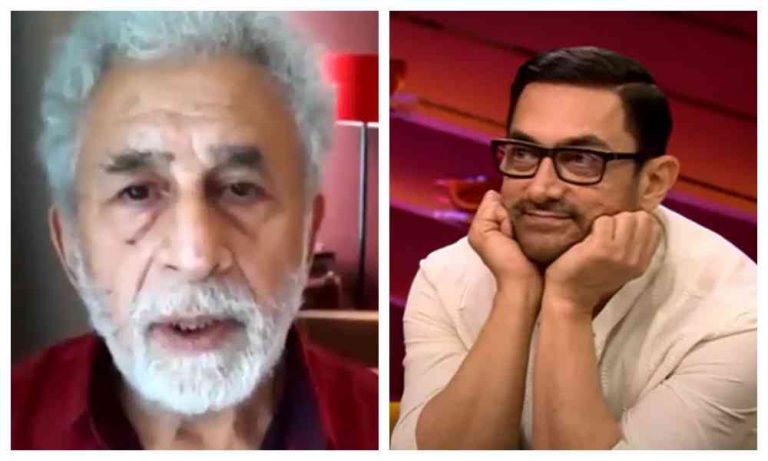
Bollywood entertainers like Naseeruddin Shah, Farhan Akhtar, Aamir Khan have regularly taken a political stand. Farhan Akhtar joined the anti-CAA protests, which fast-tracked Indian citizenship of non-Muslims who have come to India from three neighbouring Islamic countries fearing and facing persecution because of their faith. The Muslims from these countries who seek Indian citizenship could do so as per the existing provisions. This Act had no impact on the lives of Indians, including Indian Muslims. Akhtar still decided to protest against the Act and justified by claiming if so many people have turned out for protest, it must be right. Well, many people also came and set a train in Godhra on fire on 27 February 2002. Surely that was not right, no?

Certain movies over the years had portrayed Hinduphobic content which got mostly unnoticed. Or if people did notice, they didn’t voice it out for fear of being termed ‘bigoted’ thanks to our ‘secular’ schooling where everything except Hinduism is sacred. Which is why when Aamir Khan’s PK was released where he can be seen mocking Hinduism and people protested, Supreme Court of India asked those protesting against it to ‘not watch’ if ‘you don’t like it’.
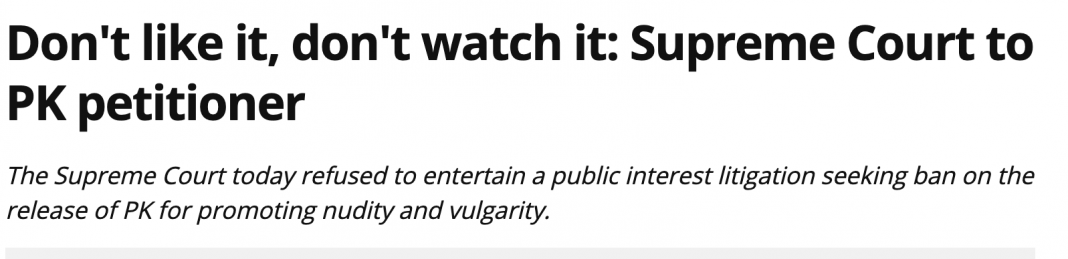
Supreme Court on PK in 2014

Aamir Khan did not mock the faith where blasphemy leads to beheading because everyone likes their head attached to their torso. Judiciary, which now cites Sharia in secular courts, too would likely not make such comments on films which depict other faiths in bad light because here, even ordering or sanctioning videography of disputed structures built after destroying Hindu temples result in death threats.

So years later when people call for boycott of films, the ‘liberals’ from the stable of so-called Nehruvian secularism come to guilt trip cine goers by claiming how a film is not only of the actor but has hundreds others associated with the film.

People like Singhvi then try to guilt trip people by saying how there are hundreds others associated with the film other than the actor people are unhappy with. Now, as an individual I am not obligated to help anyone financially – whether it is Aamir Khan, who makes Hinduphobic movies, Kareena Kapoor Khan, who throws attitude at critics and tells those who say she is product of nepotism (daughter, granddaughter, great granddaughter and sister, cousin of multiple film actors) to ‘not watch the film’ or Atul Kulkarni, who joined hands with Medha Patkar and protested against Sardar Sarovar Dam that would keep Gujaratis water deprived for years.

Let me make one thing clear upfront. I am pro economy and generally against boycott calls in principle. Having said that, just as the actors, filmmakers associated with the film had their freedom of expression to take a political stand or make films that hurt sentiments of crores of people, the crores of people have a right to voice their opposition. We are taught in school that Mohandas Karamchand Gandhi protested against the British rule by calling for a boycott of foreign products and called for Swadeshi movement. So, boycott calls are not a new phenomena in India. And if people think boycotting the films of those who have hurt them gives them satisfaction, so be it. Last I checked India is a democracy and protests keep democracy vibrant.

An individual or a bunch of individuals calling for boycott of film is not the same as State banning a film, like how Congress government banned political satire film Kissa Kursi Ka that was based on Indira Gandhi imposed Emergency. Calls for boycotting films are not wrong as those who want to watch the film are free to do so.

So while boycott calls for films may appear counterintuitive for those who fall on the ‘non-left’ spectrum of politics, as they are usually pro economy and pro business, they are getting immense support. Because if Aamir Khan or the likes of him cared so much about the rest of the crew, he could have been responsible himself and not tried to offend audience. The onus should be on artists if they want their art acceptable. And just as they have freedom of expression and speech, as do audience. It is entirely okay to be pro market, pro economy and still not be against boycott calls raised by people as long as the State does not ban the movies.

We all live with the choices we make and hence so should the artists, with displaced sense of entitlement and importance that they are ‘prominent citizens’ singlehandedly responsible to uphold the value of democracy by playing their religion card while offending other religions.
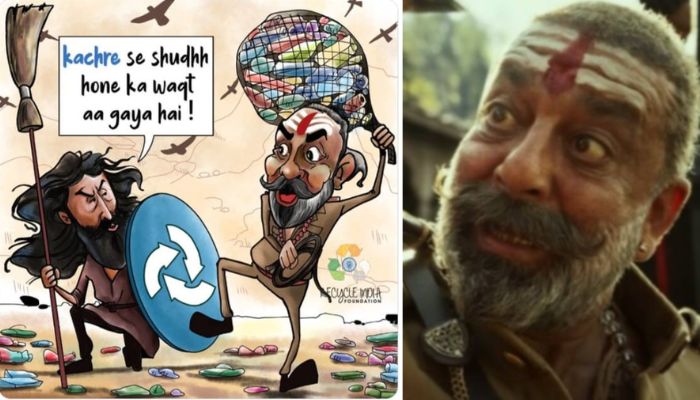
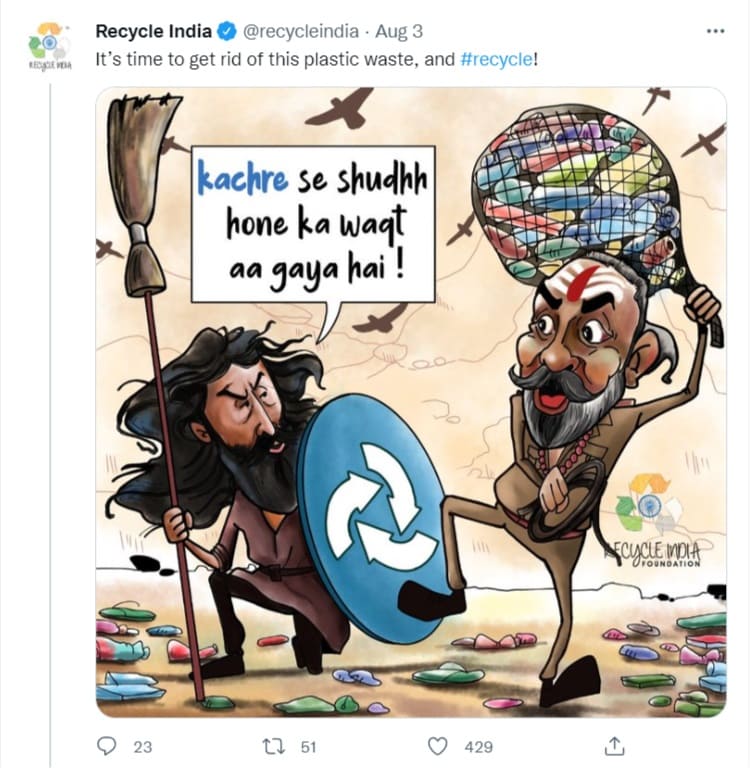
Karnataka NGO ‘Recycle India’ draws ire after showing Tilak sporting ‘evil’ man creating plastic pollution, here are its trustees

On Wednesday (August 3), a Karnataka-based NGO ‘Recycle India Foundation’ courted controversy for posting a Hinduphobic meme to raise awareness about plastic pollution.

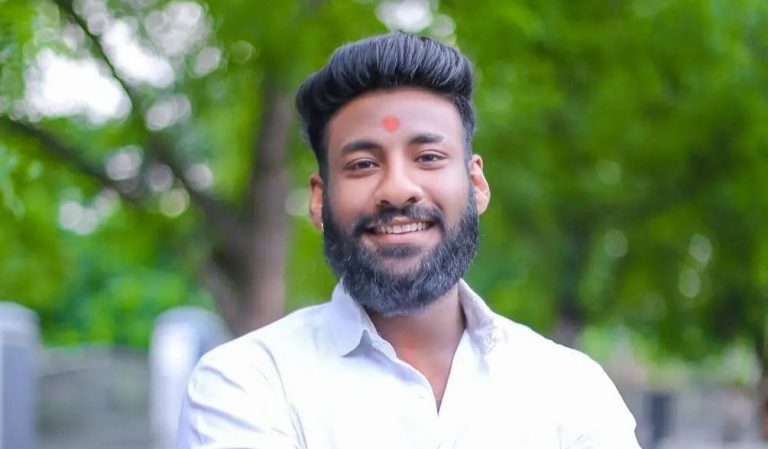
In a tweet, it stated, “It’s time to get rid of this plastic waste, and recycle.” The tweet was accompanied with a picture of a man, sporting a tilak, and creating hindrance in recycling waste.

The image, which has now drawn the ire of social media users, resembled the character of antagonist ‘Daroga Shuddh Singh’ (played by actor Sanjay Dutt) from Ranbir Kapoor’s recent flop movie ‘Shamshera.’

Screengrab of the contentious tweet by Recycle India

Nonetheless, netizens were miffed at the subtle insinuation that the Hindu community is the ‘evil’ responsible for creating waste and thwarting the process of waste collection.

“How dare you demean Hindus. Shameful. Recycle India,” wrote one user.

“Why are you showing the Tilak? Do only Hindus or Brahmins have a hegemony on creating rubbish? #antihinduagenda #ReligiousHatred,” questioned Deshbhakt Sanatani.

Another Twitter user remarked, “Jihadi mentality poster demeaning Hindu religion. Shame on you Recycle India.”

One Vipul Bhatia pointed out how the movie ‘Shamshera’ subtly promoted Hinduphobia. “The film character you are using is demeaning the Hindu traditional ‘Tripund’ tilak revered by Shiv bhakts. The film is a super flop. Your name will be too. Kindly remove it,” he said.

A Twitter user named Murali informed that the trustees of the NGO are two people, named, Abdullah A Rehman and Thahira Rehman. He stated, “No wonder the guy wears a tilak on his forehead ….bcoz the trustees are those wearing skullcaps. Check out who the trustees are…”

A link shared by Murali showed the team members behind Recycle India, where Abdullah Rahman is the founder and Chief Executive and Rasmiya Sheikh is the Project Head, behavioural change and awareness. One Ruhia Hasan is the GM of communications, while one Neha Shenoy is the GM of Operations.

It must be mentioned that several movies, based on Hinduphobic themes, have tanked at the box office in recent months. This also includes the Sanjay Dutt-starrer-Shamshera. Despite being made at a high budget of ₹150 crores, the movie managed to collect only ₹43 crores so far.

Wrestler Vinesh Phogat creates history, becomes first Indian woman to win Gold at CWG and Asian Games

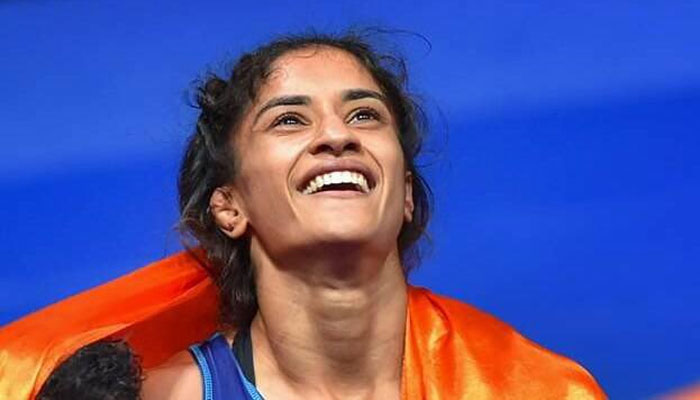
On August 6, Indian wrestler Vinesh Phogat created history by winning the third consecutive gold medal in the Commonwealth games that are currently underway at Birmingham. She also became the first Indian woman win Gold at both the Commonwealth as well as Asian Games. Phogat defeated Sri Lanka’s Chamodya Keshani Maduravlage Don in the women’s 53KG freestyle wrestling at the Birmingham Games. Previously, she had won gold at Gold Coast in 2018 and Glasgow in 2014 Commonwealth Games.

Speaking to News Agency ANI, Phogat said, “It was a good feeling when people were supporting us (inside the stadium).Today I was able to execute what I learned during my training &will try to continue my good performance in upcoming competitions: Indian wrestler Vinesh Phogat after winning gold medal in Commonwealth Games.”

It took Vinesh only 2 minutes and 24 seconds to defeat her opponent. Most of the time, she had pinned her Sri Lankan opponent on the mat. Speaking to Hindustan Times before leaving for the games, Phogat had said, “I want nothing less than a gold medal as I wish to complete my hat-trick of gold medals at the Commonwealth Games. It’s always special to carry the hopes of billions of people, including family members, when you go to a big event. I am looking forward to giving my best at the Birmingham Games and winning my third gold medal. In my cabinet, I have a lot of medals (14 so far), but I would like to have an Olympic medal as well.”

Notably, there were only four wrestlers competing in her weight category. Thus, the medals were decided in Nordic format, contrary to the knockout format in other categories. Her first opponent was Samantha Leigh Stewart from Canada. She finished the match in just 36 seconds. The second match was against Mercy Bolafunoluwa Adekuoroye from Nigeria.

India continues to shine at CWC

Apart from Phogat, Ravi Dahiya and Naveen also won gold medals in wrestling. Dahiya defeated Nigerian wrestler Ebikewenimo Welson in the final of the men’s 57KG final by technical superiority. Naveen, on the other hand, defeated Muhammad Sharif Tahir from Pakistan in the men’s 74KG category.

Deepak Nehra won bronze in the men’s 97KG category in wrestling. Pooja Sihag also won bronze in the women’s 76KG category. So far, India has won 36 medals, including 12 gold, 11 silver and 12 bronze.

Kolkata: CISF jawan opens fire using AK-47 rifle, surrenders after one assistant sub-inspector killed and a head constable injured

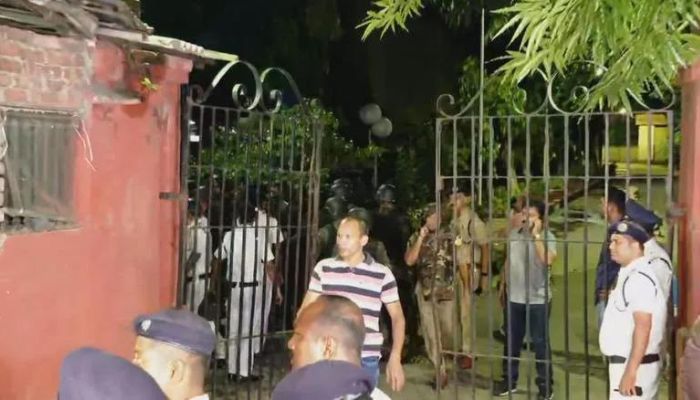
An AK-47-wielding CISF constable went on a shooting rampage on the streets of Kolkata on Saturday 6th August 2022, firing at his own colleagues. One assistant sub-inspector was killed in this shooting while one head constable was injured. The shooter has surrendered to the police. The incident took place at the CISF barrack located at the Indian Museum in Kolkata. The shooter Head Constable Akshay Kumar Mishra was later captured after he surrendered.

A police vehicle that was outside the building’s police barrack was the target of the shooting. There were at least 25–30 shots fired inside the building located in the heart of Kolkata.

According to a report by Republic World, Head Constable Akshay Kumar Mishra began firing at about 6:30 o’clock near the Indian Museum on Jawaharlal Nehru Road. The Museum’s gates were thereafter shut. After that, two teams were assembled to capture him. One of those squads included commandos from the Kolkata Police. They entered the area wearing bulletproof jackets and came in from one side. The second squad of police officers arrived at the scene from the opposite direction wearing bulletproof jackets. They insisted the gunman surrender.

But the CISF personnel refused to surrender and a fight broke out between the squads and the gunman. It is said that more than 30 rounds were fired. ASI Ranjit Sarangi was killed and head constable Subir Ghosh was injured in this operation. The ASI who passed away suffered gunshot wounds to the neck, chest, and hand. The injured head constable is critical and being treated in the SSKM Hospital. The gunman gave up shortly after that and was nabbed.

Vinit Goel, Commissioner of Police, said, “The incident was reported to us around 6:30 in the evening. Our team reached here as soon as we got the news.” According to a report by News 18, after his father’s death, Akshay Kumar Mishra was not granted leave and was emotionally unstable. In his initial testimony soon after being apprehended, he said, “I made a mistake.”

At first, the head constable Akshay Kumar Mishra was refusing to let anyone in. But the IG and CISF men arrived and forced him to surrender. Additional legal procedures are in progress. To carry out the capture operation of the armed shooter, a commando unit under the control of the Kolkata Police employed dragon lights. Images taken at the site showed the vehicle that was shot at being covered with bullet holes. Blood stains were found on the seat.

A tale of 2 missing girls: How unresolved cases have haunted the top cops for years

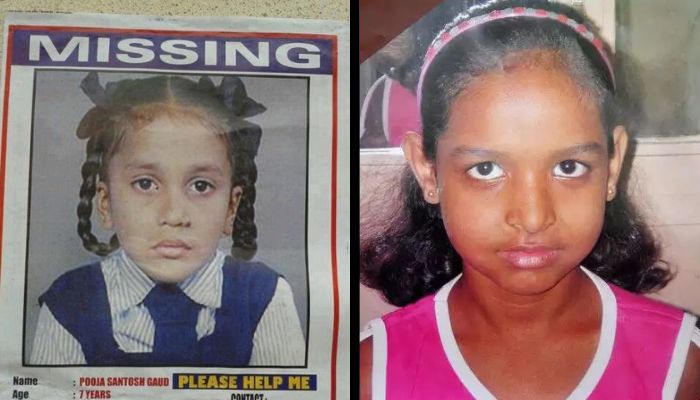
On Friday (August 5), a 16-year-old teenager named Pooja Gaud was finally reunited with her family after a span of 9 years. She was abducted by a couple in 2013 when she was just 7. As per reports, one Harry D’Souza and his wife Soni D’Souza kidnapped the girl from a slum in the Juhu Galli area in the Andheri suburb of Mumbai. The police nabbed Harry on Thursday (August 4) night.

Pooja was on her way to school on January 22, 2013, when she was lured by Harry under the pretext of offering chocolates and ice creams. Although she had left the house with her brother Rohit, she lagged behind which gave the accused the perfect opportunity to abduct the 7-year-old.

She was first taken to Haji Malang in Kalyan and intimidated into silence. According to Pooja, Harry and his wife then took her to Goa, followed by Virar, and Raichur in Karnataka. The victim returned to Mumbai along with her abductors only in 2015.

“They used to give me proper food and take care of me, but once Soni had her own baby, she started harassing me and would beat me. They kept me home and did not allow me to go out. It was like I was in prison. Harry used to speak in English and he taught me how to write in English at home,” Pooja recalled.

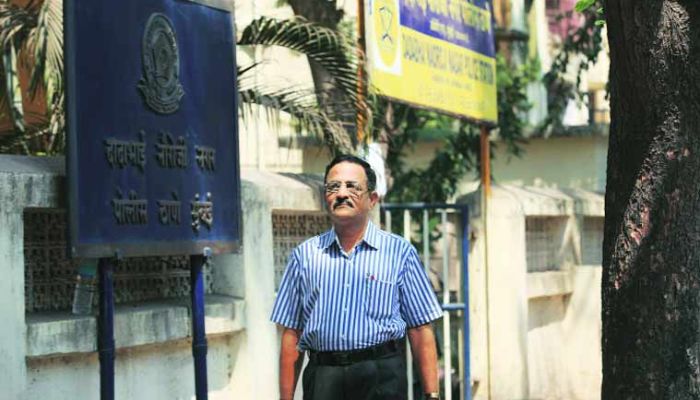
The case had haunted former Assistant Sub-Inspector Rajendra Bhosale for years. Between 2010 and 2015, he was heading the bureau of missing persons at DN Nagar police station. Although his team was able to trace all the missing children, they could not find Pooja.

“I still carry her photo in my wallet. Even after my retirement, I thought about the girl every day and prayed that she is found,” Bhosale added.

How was the cold case of Pooja Gaud solved?

The breakthrough in the case came in the form of a 35-year-old tech-savvy maid named Pramila Devendra. She and the abducted girl, Pooja Gaud, worked as house helps at the residence of a businessman.

During one of their conversations, Pooja informed Pramila about the harassment meted out to her by her family. She also revealed how Harry D’Souza and his wife Soni D’Souza took her away from her real parents during childhood.

While speaking about the matter, Pramila told Hindustan Times, “Annie (aka Pooja) used to come to work with teary eyes and would tell me said that her mother beat her. When she told me that her mother is not her real mother and that she had gone missing when she was a small child, I understood that her case was not normal.”

Rajendra Bhonsale, image via Indian Express

On searching about Pooja’s case on Google, the enterprising house help stumbled upon a poster of the girl and several phone numbers. Pramila was able to connect to a number, which belonged to Pooja’s neighbour Mohammad Rafique Shaikh.

A hesitant Shaikh asked Pramila to give him a video call. Pooja was instantly identified by her family, including her mother. The family wasted no time in notifying the DN Nagar police station.

A police official, privy to the case, informed, “Our team went to the place where Pooja and Pramila worked, and reunited the minor girl with her family (on August 5, 2022).” For Assistant Sub-Inspector Rajendra Bhosale, it marks the end of a 9-year-long wait. “I am elated and I can now rest without any more tension,” he told Hindustan Times.

The Unsolved Case of Vishwa Patel of Ahmedabad

Vishwa Patel was 11 years old when she went missing in 2012. On the fateful day of January 27 that year, the 7th std girl had attended a wedding at around 1:30 pm. The event was organised in her society in Anand Nagar in Ahmedabad. She then disappeared without leaving any trace behind.

The case created such a hullabaloo that the local police, crime branch and State agencies got involved in tracing the missing girl. The law enforcement authorities launched a nationawide manhunt, and followed up on over 3400 informer calls.

The Crime Branch had even sent her pictures to 125 railway stations and updated her pictures to make up for the change in facial features with time. “We circulated her pictures across the country, but nothing worked out,” a cop conceded.

Himanshu Shukla, image via ANI

The police had an initial lead in the form of 2 CCTV footage, where the minor girl was allegedly seen walking out of the wedding. Later, it turned out to be a case of mistaken identity, thereby leaving the cops with no new evidence.

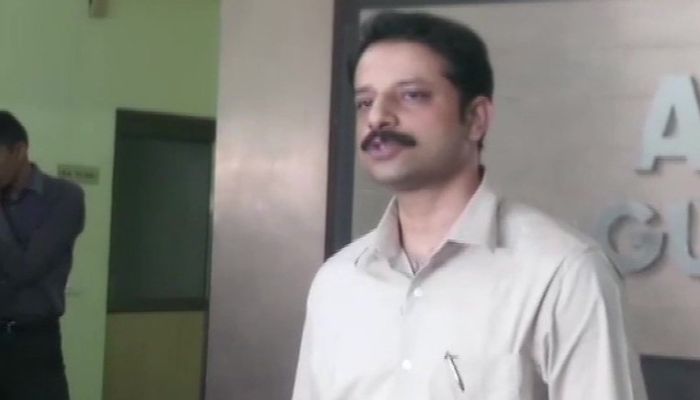
After 10 years of investigation, the case was finally closed in February this year as no trace of the girl was found. Top cop Himanshu Shukla, who served in the Ahmedabad crime branch between 2010 and 2015, refers to the unsolved case of Vishwa Patel as his biggest regret.

Shukla, who holds the distinction of solving many high-profile cases, told The Times of India, “I could not trace an 11-year-old girl named Vishwa Patel who went missing in 2012.” While Bhonsale can now heave a sigh of relief, the journey is long for the likes of Himanshu Shukla.

Jagdeep Dhankhar elected as the 14th Vice-President of Republic of India, defeats Margaret Alva by a wide margin

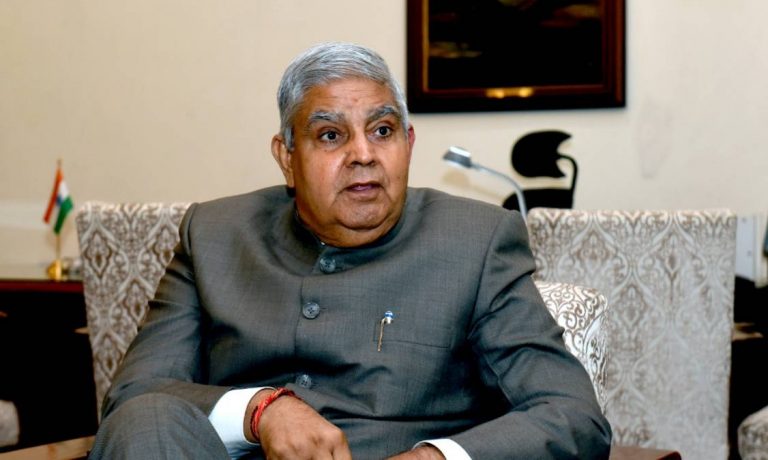
As expected, NDA candidate Jagdeep Dhankhar won the election to become the next vice-president of India, defeating opposition candidate Margaret Alva by a wide margin. Jagdeep Dhankhar will be the 14th Vice-President of the Republic of India. The tenure of the current Vice-President M. Venkaiah Naidu is about to complete on 10th August 2022.

After the end of counting, Jagdeep Dhankhar received 528 votes out of total 725 votes cast. On the other hand, opposition candidate and Congress leader Margaret Alva secured 182 votes. Out of the 780 voters in the electoral college, 725 persons cast their votes. The two Houses of Parliament together have a sanctioned strength of 788 MPs, of which there are eight vacancies in the Upper House.

Out of the total 725 votes cast, 15 votes were rendered invalid. Jagdeep Dhankhar secured a comfortable victory over Margaret Alva in this election. Apart from being the vice president, he will also be the Chairman of the upper house of the parliament, the Rajya Sabha.

The voting for the election of the vice president took place earlier in the day, where only the members of Lok Sabha and Rajya Sabha are members of the electoral college. The MPs including Prime Minister Narendra Modi and his predecessor Manmohan Singh cast their ballots early in the day, while two BJP MPs Sunny Deol and Sanjay Dhotre, who are unwell, did not vote. The Trinamool Congress Party has 39 MPs including 23 of them in Lok Sabha. The TMC had already announced its decision to abstain from this election, reducing the votes for the opposition candidate. TMC had that it will not vote in the polls as the party was not consulted while selecting Margaret Alva as the opposition candidate.

Jagdeep Dhankhar will take oath as the Vice President of India on August 11, a day after the term of current VP Venkaiah Naidu ends.

Jagdeep Dhankhar hails from the Jhunjhunu district of Rajasthan. Born on 18th May 1951, a lawyer by profession, he is in active politics since 1989. He served as a member of Lok Sabha from the Jhunjhunu constituency and worked as a minister of state for Parliamentary Affairs between 1990-1991. He also worked as a member of the legislative assembly of Rajasthan from the Kishangarh constituency between 1993 to 1998. Since 30th July 2019, he has been working as the Governor of West Bengal, and resigned from the post on July 17 after he was selected as NDA candidate for the VP election.

The Vice-President is elected by an electoral college consisting of members of both Houses of Parliament, in accordance with the system of proportional representation by means of the single transferable vote and the voting in such election is by secret ballot. Therefore, only the members of Lok Sabha and Rajya Sabha are voters in the VP polls, and members of state assemblies don’t vote in this election, unlike the presidential elections.

After whitewashing Aurangzeb, Audrey Truschke moves on to downplay the Portuguese Inquisition of Goa and atrocities committed against Hindus

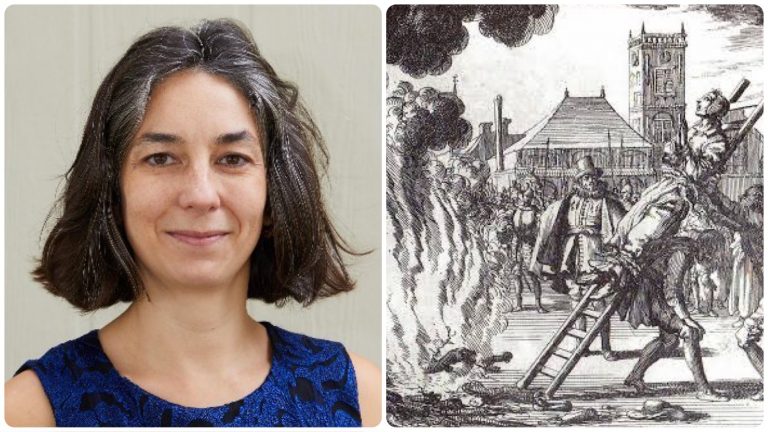
Audrey Truschke, the controversial self-described historian who went to great lengths to whitewash the tyrannical Mughal emperor Aurangzeb, seems to have developed a new fascination of late: to downplay the savage Portuguese inquisition in Goa and atrocities committed against the indigenous population.

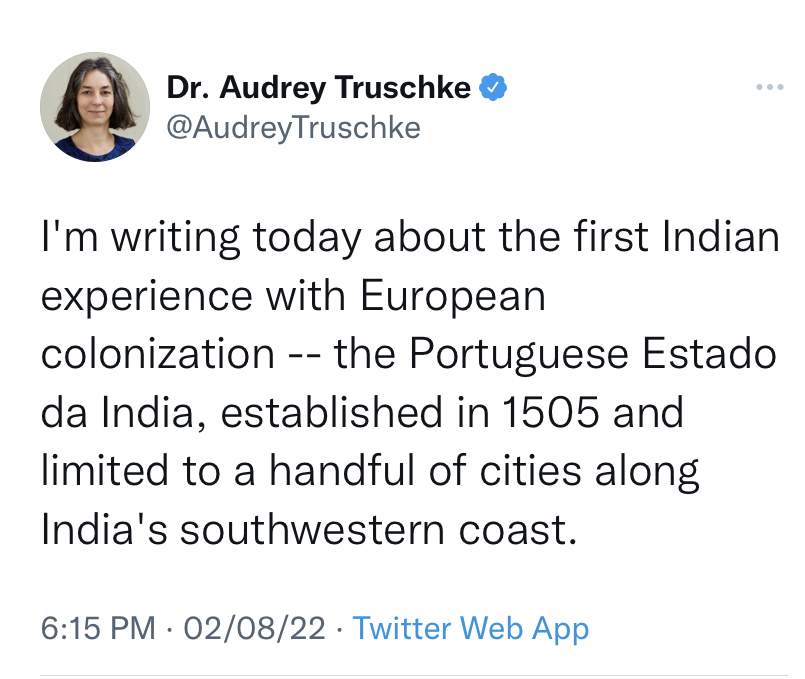
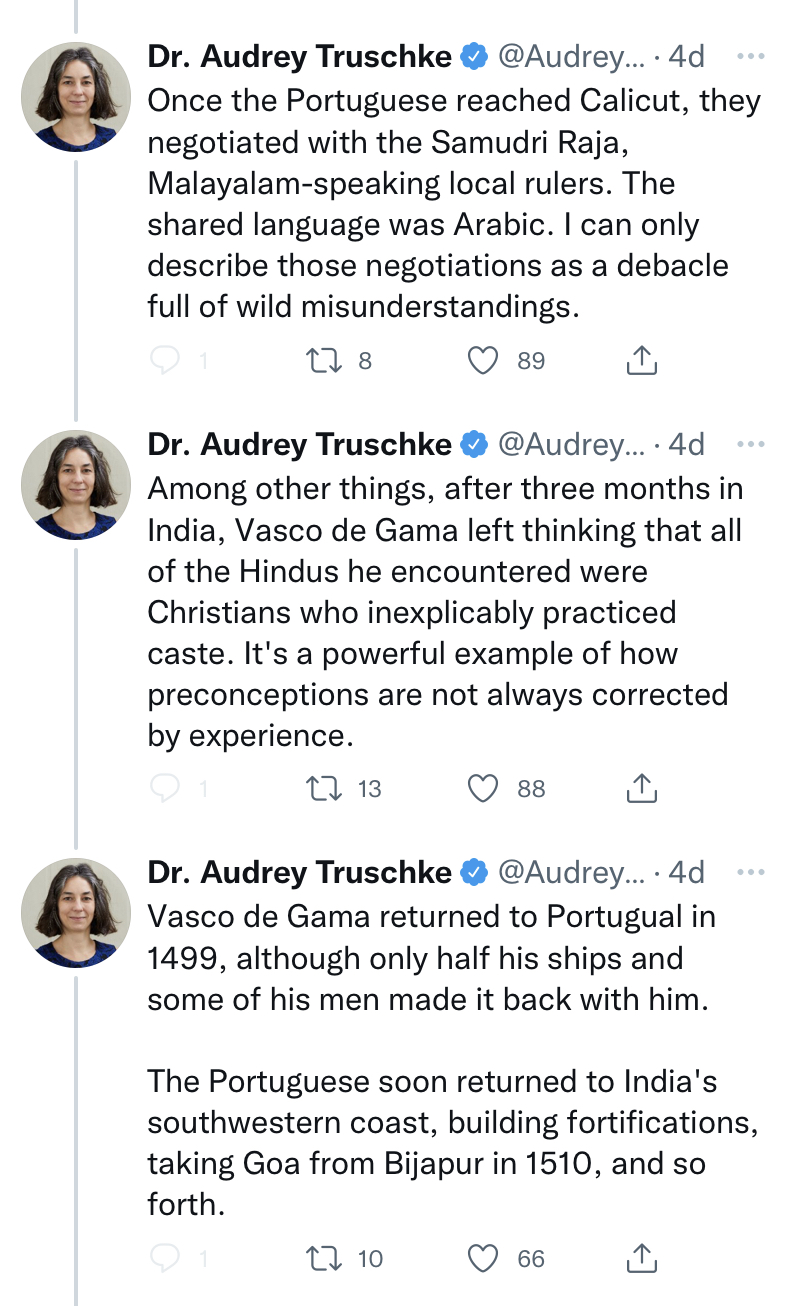
To this end, Truschke recently took to Twitter to share her version of Portuguese conquest of some of the cities along the India’s southwestern coast. “I’m writing today about the first Indian experience with European colonization — the Portuguese Estado da India, established in 1505 and limited to a handful of cities along India’s southwestern coast,” Trushcke tweeted on August 2. 

Audrey Truschke
Source: Twitter

What followed next was a series of tweets packed with Audrey’s convictions and beliefs to sweep under the rug the atrocities meted out by the Portuguese during the tenure of their oppressive reign in India. She tweeted that there were certain things “pretty critical” to add to the conventional understanding that Vasco de Gama successfully sailed around the Cape of Good Hope and arrived in Calicut in 1498. 

Among those things was cooperation from experienced Indian traders in Africa, who, according to Trushchke, played a pivotal role in helping Vasco de Gama navigate the oceans to reach the Indian shore. While Audrey Trushcke summarily rejects Indian literature and evidence of persecution of Hindus and desecration of temples by the Mughal emperors, Aurangzeb in particular, she conveniently relies on unmentioned sources to claim a certain Gujarati from Kenya helped Vasco de Gama sail on to Calicut.

Truschke adds that once Vasco de Gama reached Calicut, he undertook negotiations with Samudri Raja, the Malayalam-speaking local rulers, apparently in Arabic that to the Aurangzeb fangirl’s interpretation was a “debacle full of wild misunderstandings”.

“Among other things, after three months in India, Vasco de Gama left thinking that all of the Hindus he encountered were Christians who inexplicably practiced caste. It’s a powerful example of how preconceptions are not always corrected by experience,” Truschke said in a subsequent tweet while cunningly covering up the vices that Christian proselytisation and imperial Christianity brought in its wake. 

Audrey Truschke Portuguese
Source: Twitter

Christian missionaries often pressurised the natives to embrace Christianity, offering them irresistible inducements for relinquishing their ancestral faith and making appealing promises to get them to initiate into Christianity. But, since the initiation often took place against the converts’ free will, it only served to widen social fissures and create artificial problems that hitherto didn’t exist.

Vasco De Gama, Truschke says, returned to Portugal in 1499, and the Portuguese soon returned to India, hoping to turn it into one of its colonies, especially with the conquest of Goa from Bijapur in 1510. And aping her deceit in painting Mughal emperor Aurangzeb as a victim of contemporary perception, Truschke tried to portray the subjugation of Goa by the Portuguese as some sort of peaceful transition that did not involved bloodshed and atrocities meted out on the natives.

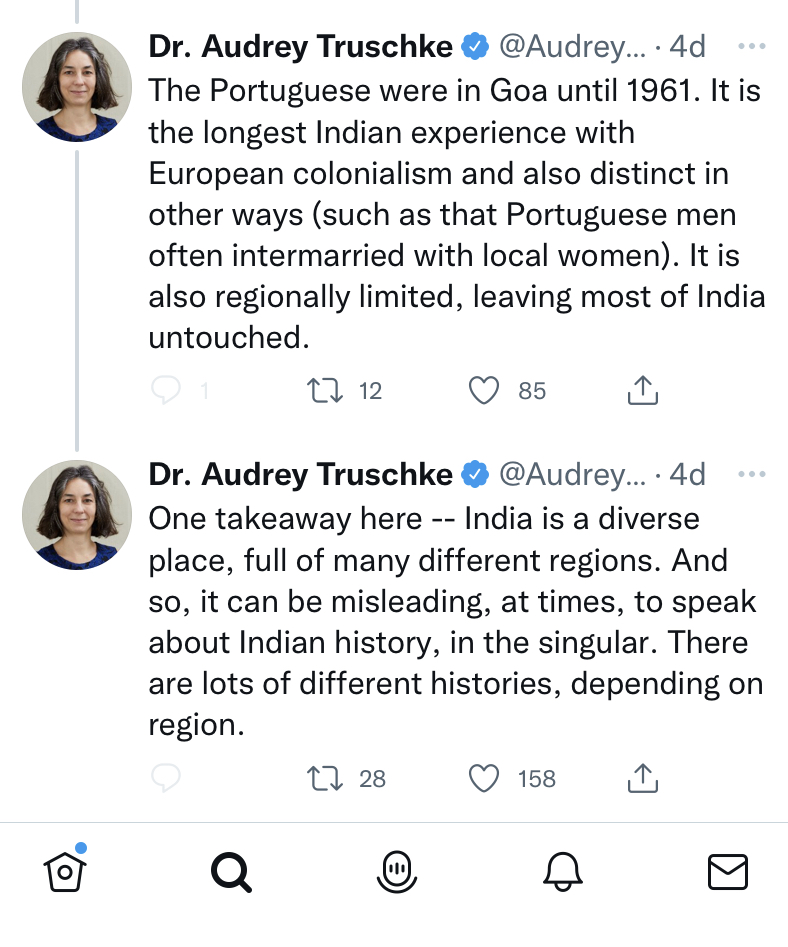
She characterises Portuguese rule over Goa as the longest Indian experience with European colonialism, one that was distinct in the sense that Portuguese men often intermarried with local men. While Truschke tries to pass it off as a “virtue” of the Portuguese men to accept and marry indigenous women, what she tries to gloss over is the conformity of the Portuguese conquerors to the Catholic mandate that called for using miscegenation as a tool for converting Hindus. 

Source: Twitter

One of the popular methods used in medieval times to convert the native Indian population to Christianity and generate a sense of contempt toward their own culture was miscegenation. Christian men married multiple local native women to convert them into Christianity and bring them under their fold, thereby robbing them off their prestige and culture, which could form the basis of their rebellion against the colonial rule.

Another preposterous argument Truschke offers in her colossal exercise to whitewash atrocities committed by Portuguese rulers on the Indian natives is that at least they left most of India ‘untouched’. It is worth mentioning that Portuguese rulers did not try to expand their imperial borders in India as a part of a benevolent gesture toward the natives but because they were severely constrained in their resources to overtake the mighty British, which at that time commanded the seas and ruled most of India.

Certainly, their inability to dislodge the British and seize control of India could not be construed as an act of generosity on the part of Portuguese for “untouched” Indians. But for Truschke, it was profoundly generous of the Portuguese for not extending their rule beyond their existing borders.

Besides, with the Twitter thread, Truschke has also tried to pull a veil over the Portuguese Inquisition of Goa, an often forgotten and unspoken event by the ‘secular’ circles of Indian historians, despite various historical records exposing the gross exodus of not just Hindus, but also Jews that had escaped Medieval Europe to take refuge in India.

The Portuguese Inquisition of Goa: A living hell for native Hindus and Jewish refugees

The Portuguese inquisition of Goa started when Vasco Da Gama returned to Portugal after he discovered the route to India via Africa’s Cape of Good Hope. Upon his return to Portugal in 1510, Gama told the Portuguese royals about the undiscovered route to India, which gave the Portuguese an opportunity to colonise the Western coast of India, and particularly Goa. 

Pope Nicholas V soon issued a diktat which gave the kingdom of Portugal a monopoly on forcing Christianity upon the locals of the newly discovered areas (and mainly India), along with the monopoly to trade on behalf of the Roman Catholic Empire in Asia. Soon after, the Portuguese sent its troops to capture a portion of Goa and set up a colony in the coastal city.

Aghast by the local traditions followed by Hindus, the Portuguese were angered by the locals following a religion other than Christianity and ordered all temples within the colony to be shut; this marked the beginning of the bloody Goan inquisition that comprised of gross human right violations and mass executions of the local Hindu, Jew and Muslim populations. 

In 1541, idol worship was forbidden in the Portuguese colony of Goa and over 350 temples were destroyed by the Portuguese soldiers. It had been officially declared that being a believer of any religion other than Roman Catholicism was forbidden for residents of Goa. 

The infamous Francis Xaviers and Martin Alfonso were sent to Goa by King John III of Portugal in 1542 to initiate the process of converting Goan residents to Roman Catholicism. On their arrival in Goa, they were enraged by the New Christians of Goa secretly practising their previous religions (either Judaism, Hinduism or Islam), while also upholding their Hindu values and traditions. A disturbed Francis Xavier wrote to King John III of Portugal on 16th May 1546 to impose inquisition on Goa in an attempt to ‘discipline’ the residents and make them follow Catholicism. 

The inquisition banned apostasy of Roman Catholics to Hinduism, Judaism or Islam, and banned the sale of books in the Konkani, Marathi, Sanskrit and Arabic languages. The use of Konkani was forbidden in the colony of Goa. 

The Inquisition particularly affected the New Christians of Europe from the Jewish community, who had fled to India during the Spanish Inquisition in an attempt to escape the imposition of Christianity and live amongst the Jewish community in India. They had come in search of a life of dignity where they could practise Judaism openly and not in hiding while pretending to be Christian. India was the only country in the world where Jews were given absolute freedom to practise their faith, especially under Hindu kingdoms.

Upon the imposition of the inquisition in Goa, life became comparable to hell for the local Hindu population, who were often on the receiving end of persecution and were targeted in particular by the sadistic Christian missionaries. The Christian missionaries called the Hindus ‘uncultured’ and ‘savages’, who worshipped black idols ‘resembling demons’; the Christians took it upon themselves to force Hindus into leaving their religion and succumbing to Christianity. An inquisition office was thereby set up which aimed to discriminate against Hindus on all matters possible. 

Hindus were forbidden from holding any public office, inheriting their father’s property and testify as witnesses in courts. If a Hindu child was deemed to be an orphan by the colonialists, the child was ‘seized’ by the Society of Jesus (founded by the not-so-saintly Francis Xavier) and made to change his religion. Clear discrimination was seen in social life, where Hindus were forced to sign public documents only after Christians and couldn’t be clerks in village offices. In 1567, a law banning Christians from employing Hindus in the colony was introduced. 

‘We won’t leave a Kafir alive’: Islamists attack Hindu youth Prateek Pawar with swords in Maharashtra for supporting Nupur Sharma and Kanhaiya Lal

Targeted attacks on Hindus for supporting former Bharatiya Janata Party spokesperson Nupur Sharma are still continuing. On 4th August 2022, a Hindu youth named Prateek Pawar from the Karjat town in the Ahmednagar district of Maharashtra was attacked by around 12 to 15 Islamists who attacked him with various weapons like swords and sticks. Prateek Pawar is being treated in a private hospital in Ahmednagar.

According to the complaint by Prateek Pawar and his friend Amit Mane, the groups of Islamists attacked 23-year-old Prateek Pawar on August 4. Mane said that on August 4 Pawar was going towards Karjat in Ahmednagar and had stopped on the road near Akkabai chowk waiting for a friend. But suddenly around 12 to 14 people arrived in a white Swift car, and three two-wheelers – a black Bullet, a red Pulsar and a white scooter – and surrounded him. They told Pawar, ‘You have so much proud in Hindutva’. They further told him, ‘You are regularly posting posts and statuses on social media supporting Nupur Sharma and Kanhaiya Lal, due to which more people have started to support them, we think we should do a Umesh Kolhe with you also’. They were referring to the murder of Umesh Kolhe in Maharashtra for supporting Nupur Sharma.

After that, one Islamist named Shahrukh Pathan assaulted Prateek Pawar with a sword with the intention to kill him while chanting loud slogans. Pawar tried to protect himself and in the process, the sword hit his hand. After this, Nihal Khan Pathan and Sohail Khan Pathan attacked Sunny on the head from behind. The gravely injured Hindu youth fell to the ground and started bleeding, but the Islamist group continued to hit him with swords, sticks, hockey sticks etc saying that they will not let a Kafir remain alive. After a blow on the head with a sword, Prateek fainted and the attackers fled from the scene.

The victim was immediately rushed to a hospital, and police launched a probe into the case. The accused have been booked under sections 307, 143, 147, 148, 149 , 323, 504 of the IPC on the basis of the complaint filed by Amit Mane. Several persons including Sharukh Khan Pathan, Sohel Pathan, Nihal Khan Pathan, Ilail Sheikh, Tipu Pathan, Arbaz Kasam Pathan, Arshan Pathan, Aqeeb Syed have been named in the case. Reportedly, four persons have been arrested by the police.

‘Our hands are not tied’, says BJP MLA Nitesh Rane

BJP MLA Nilesh Rane today held a press conference at the BJP state headquarters in Mumbai to talk about the attack.

Nilesh Rane said, “I am holding this press conference as a Hindu. The first killings for supporting Nupur Sharma took place in Udaipur in Rajasthan and Amravati in Maharashtra. A similar attempt was made on 4th August 2022 at Karjat in the Ahmednagar district in Maharashtra. A Hindu youth named Prateek Pawar was heading towards the community celebrations organized to mark the birth anniversary of great Dalit Marathi writer AnnaBhau Sathe. On his way to that program, a group of 10 to 15 Muslims stopped him and said – ‘You put Nupur Sharma’s photo as the display picture on your social media account. You are also asking other people in the town to do so. You are raising your voice as a Hindu.’ And these miscreants assaulted Prateek Pawar.”

Nitesh Rane further said, “The attackers had sharp weapons. Prateek Pawar was alone. Due to this brutal attack, he fell unconscious to the ground. The attackers thought that he died and thus they left the spot. When Prateek Pawar’s friends came to the spot, they took him to a government hospital from where he was shifted to a private hospital to get better treatment. He had 35 stitches. His ribs are broken. He is fighting his battle against death.”

Nitesh Rane added, “We live in a country that operates according to the constitution penned by Dr. Babasaheb Ambedkar. Nupur Sharma’s issue is over. But if it is being revisited again and again as a reason to kill some Hindus in this state, then the attackers should realize that no one has tied our hands. The FIR, in this case, is registered; but the local police inspector was trying to pressurize Hindus as he visited the victim’s home. Our local leaders from various Hindu organizations came together and informed to the deputy chief minister Devendra Fadnavis who instructed the police officials to take proper action. So far four culprits are arrested but the main attackers are still absconding. We request the police to take swift action and arrest all of them.”

BJP MLA further said, “This is not the Maha Vikas Aghadi government. Nawab Malik is no more the minority affairs minister. If you target us Hindus like this, we can give an equally brutal reply. We follow the Constitution. There is no Sharia law in our country. Somebody says something to your deities and you are not ready to forget that. But at the same time, Hindu deities are insulted every day on social media and in public life. Why should we forget it all then? A youth in Nashik had spread the Shivling image with a condom put on it, a few weeks back. We took legal action against him. And we let it go. We did not kill him. But if you are not ready to forget such things and if you are ready to even kill us, then I give an open message to all those people that we are ready to retaliate.

Nitesh Rane said, “Don’t dare to touch our people. A country protected by weapons can only take care of its knowledge. If you provoke us to do certain things necessary to protect our Dharma and Nation, we will definitely do all those things. I demand that this matter in Karjat should be probed by NIA. No such incident should repeat in Maharashtra. This is my open warning as a Hindu. We will not attack first. But at the same time we will not tolerate such violence and we will show you that we are capable to defend ourselves in the way we want.”

Derek O’Brien moves bill for women who get harassed online, while Calcutta HC had rapped TMC govt for ‘casual attitude’ over violence against women

0

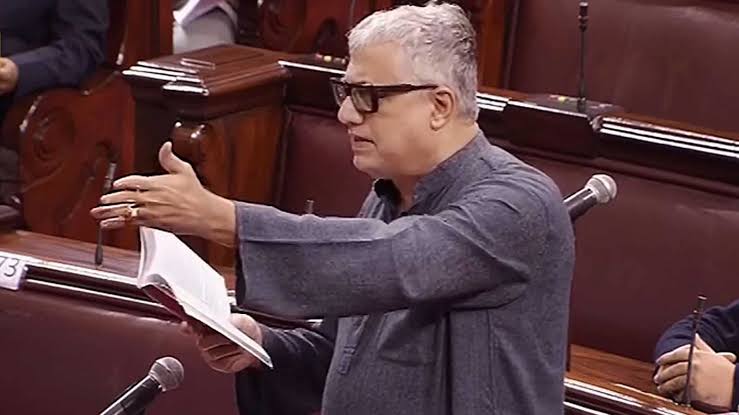
TMC Rajya Sabha member Derek O’Brien on Saturday moved a Private Member’s Bill in the upper house of the parliament for women who get harassed and abused online. The bill seeks to amend certain provisions of the IT Act, 2000, criminalising all forms of online abuse directed against women. 

The TMC leader took to Twitter to share a clip from Rajya Sabha where he had introduced the Bill to penalise online abuse against women. “There is no place for predators and misogynists on the internet. This NEW Bill is for WOMEN WHO GET HARASSED AND ABUSED ONLINE. Introduced my Private Member’s Bill amending IT Act 2000. These amendments criminalise all forms of online abuse against women,” he tweeted. 

Calcutta HC raps TMC govt for demonstrating “casual attitude” in serious matters such as rapes, murders of women during post-poll violence in Bengal

While Derek O’Brien moved a bill seeking criminalisation of online harassment and abuse of women, it is notable to point out the scathing observations the Calcutta High Court had made against the TMC-led West Bengal government over the heinous crimes committed against women, rapes and murders during the post-poll violence that erupted in the wake of election results in May 2021 after Mamata Banerjee returned to power. Having little confidence on the state-led probe, the court transferred the case to CBI. 

A five-judge bench of the Calcutta High Court comprising Acting Chief Justice Rajesh Bindal, Justice IP Mukerji, Justice Harish Tandon, Justice Soumen Sen and Justice Subrata Talukdar pronounced the judgement in a batch of petitions alleging Mamata Banerjee-led West Bengal government’s inaction over the brutal acts of violence unleashed by members of ruling Trinamool Congress in the aftermath of assembly elections. 

In its scathing order, the Calcutta High Court ordered that the HC will monitor the CBI investigation into the post-poll violence in the state. The Calcutta HC also pulled the state for demonstrating a “casual attitude in a serious matter”.

“The Committee, NHRC, any other Commission or Authority, and the State shall immediately hand over the entire record of the cases entrusted to the CBI for investigation. It is made clear that it shall be a Court-monitored investigation. Any obstruction in the course of investigation by anyone shall be viewed seriously”, the Calcutta High Court observed.

Women in West Bengal had also moved the Supreme Court narrating the details of the horrifying gang rapes they were subjected to in the post-poll violence by the members of the ruling TMC. They had sought SIT probe into all the incidents as well as the alleged inaction of the police. 

Post poll violence in West Bengal

Post-poll violence had become a leitmotif of news emerging out of Bengal following the declaration of results. Umpteen number of violence against political opponents have been reported from the state. In an overwhelming number of such incidents, the victims have been BJP supporters and workers, while the accused were said to be supporters of the TMC party. More than a dozen BJP workers have lost their lives in the post-poll violence that ensued following the victory of the TMC party in the assembly elections.

Women were among the most affected by the orgy of violence that engulfed the state in the wake of the Bengal election results. Dissident women being raped, tortured, and murdered were reported from different parts of the state.

The violence unleashed forced people to flee their villages along with their families, witnessing one of the large-scale displacements to have ever taken place over violence in the aftermath of elections. Hundreds and thousands of people, fearing for their lives, had crossed over to Assam, where they had been provided temporary shelter under the supervision of minister Himanta Biswa Sarma.

Avinash Sable creates history: Becomes first non-Kenyan to win a Commonwealth medal in 3000 meters steeplechase in the 21st century

0

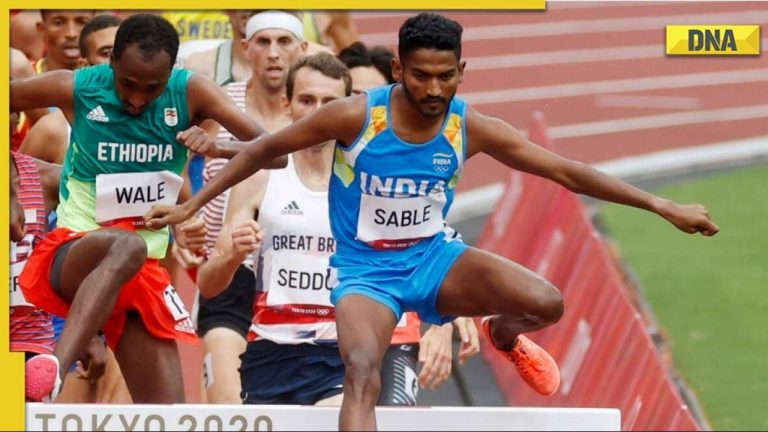
Avinash Sable, born in Beed district in Maharashtra, created history earlier today when he became the first non-Kenyan to win a medal in the 3000 meters steeplechase event at the Commonwealth Games. In an event traditionally dominated by Kenyans, Sable won a silver medal ensuring that Kenyans don’t run away with all the medals yet again.

Avinash Sable finished the race with a time of 8:11.20, creating a new national record. This is the 9th time he has broken the national record in the event. Kenya continued their domination of the event as Abraham Kibiwot, the 2018 silver medallist, narrowly edged out the Indian athlete by 0.05 seconds to win the gold. The bronze also went to Kenya as world junior champion Amos Serem finished in 8:16.83.

Sable now holds the national record in three separate events, namely 3000m steeplechase, 5000m, and the half marathon.

After his remarkable performance, wishes poured in from all quarters, led by Prime Minister Narendra Modi.

The Prime Minister wasn’t the only one to recall his army background as many other people remembered his time at Siachen glacier.

Avinash Sable didn’t even start pursuing athletics seriously till 2016 when he got inducted into the 5 Mahar battalion of the Indian Army. Now he is smashing records left right and center and challenging the traditional powerhouse Kenya in their signature event.