Home Blog Page 3023

Government to revive BSNL with a package of Rs 1.64 lakh crores, saturate uncovered villages with 4G mobile services

On 27th July 2022, the Union Cabinet, presided over by Prime Minister Narendra Modi, approved the Rs 1.64 Lakh Cr. revitalization package for the government telecom company Bharat Sanchar Nigam Limited – BSNL in order to make it financially sustainable. Additionally, the Union Cabinet gave its approval to a project that would cost a total of Rs. 26,316 Cr. and will bring 4G mobile services to all unconnected villages in the nation.

Revival package for BSNL

According to a press release by the Press Information Bureau, revival measures approved by the Cabinet focus on infusing fresh capital for upgrading BSNL services, allocating spectrum, de-stressing its balance sheet, and augmenting its fiber network by merging Bharat Broadband Nigam Limited (BBNL) with BSNL.

In upgrading the BSNL services, the government will focus on administrative allotment of the spectrum, financial support for capital expenditure, viability gap funding for rural wireline operations, and an increase in the authorized capital of the public sector telecom giant.

To improve existing services and provide 4G services, BSNL will be allotted Spectrum in the 900/1800 MHz band administratively at the cost of Rs 44,993 Cr through equity infusion. With this spectrum, BSNL will be able to compete in the market and provide high-speed data using their vast network including in rural areas. To meet the projected capital expenditure for the next 4 years, Government will fund CAPEX of Rs 22,471 Cr. 

The government will provide Rs 13,789 Cr to BSNL as viability gap funding for commercially unviable rural wire-line operations done during 2014-15 to 2019-20. This measure will be taken because, despite the commercial non-viability, BSNL has been providing wireline services in rural/remote areas to meet the social objectives of the Government. Besides, the authorized capital of BSNL will be increased from Rs 40,000 Cr to Rs 1,50,000 Cr in lieu of AGR dues, provision of CAPEX, and allotment of spectrum.

For destressing the BSNL balance sheet, the government will restructure the debts, and provide financial support to BSNL for adjusted gross revenue dues, and BSNL will re-issue preference shares of Rs 7,500 crores.

To facilitate wider utilization of infrastructure laid under BharatNet, Bharat Broadband Network Ltd (BBNL) will be merged with BSNL.  The infrastructure created under BharatNet will continue to be a national asset, accessible on a non-discriminatory basis to all the Telecom Service Providers.

Saturating 4G mobile services in rural parts of India

According to a press release by the Press Information Bureau, the government has approved a project for saturation of 4G mobile services in uncovered villages across the country. The total cost of this project is Rs 26,136 crores.

The project will provide 4G mobile services in 24,680 uncovered villages in remote and difficult areas. The project has a provision to include 20% additional villages on account of rehabilitation, new settlements, withdrawal of services by existing operators, etc.

In addition, 6,279 villages having only 2G/3G connectivity shall be upgraded to 4G. The project will be executed by BSNL using Atmanirbhar Bharat’s 4G technology stack and will be funded through Universal Service Obligation Fund. The project cost of Rs. 26,316 Cr includes CAPEX and 5-year operational expenditure.

BSNL is already in process of deployment of the Atmanirbhar 4G technology stack, which will be deployed in this project as well. The project is a significant step toward the vision of the Government to provide mobile connectivity in rural areas. This project will promote the delivery of various e-governance services, banking services, telemedicine, tele-education, etc. through mobile broadband and generate employment in rural areas.

‘No Kashmiri Pandit left the Valley in 2022’: MoS for Home Affairs Nityanand Rai in Rajya Sabha

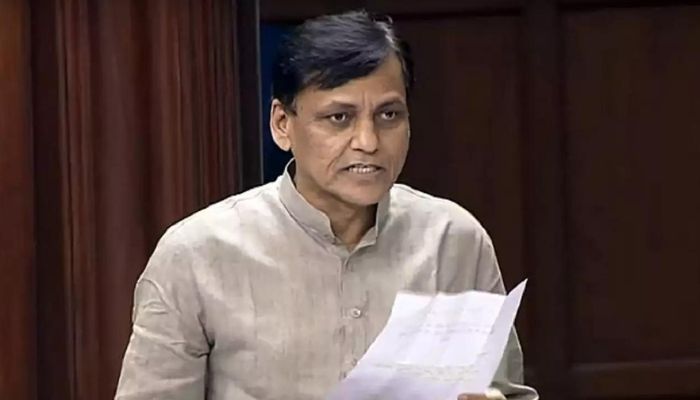
Ministry of Home Affairs (MHA) on Wednesday said no Kashmiri Pandit has left the Kashmir Valley in the year 2022. In response to a question by Samajwadi Party MP Javed Ali Khan, Minister of State for Home Affairs Nityanand Rai provided the Upper House with the information in writing on 27th July 2022.

When asked about the details of the Kashmiri Pandits who left Kashmir Valley in 2022, Rai responded, “As per the records, no Kashmiri Pandit has left the Kashmir Valley during 2022.”

The minister also provided data, noting that as of July 20, 2022, there are 6,514 Kashmiri Pandits living in the Valley. According to the census, Kulgam district has the highest density of Kashmiri Pandits (2,639), followed by Budgam (1,204), Anantnag (808), Pulwama (579), Srinagar (455), Shopian (320), Baramulla (294), Ganderbal (130), Bandipora (66), and Kupwara (19).

According to reports, there were 6,432 Kashmiri Pandits living in the Valley as of 2019. 2 557 Kashmiri Pandits lived in the Valley at the time, followed by 1,204 in Budgam, 808 in Anantnag, 579 in Pulwama, 455 in Srinagar, 320 in Shopian, 294 in Baramulla, 130 in Ganderbal, 66 in Bandipora, and 19 in Kupwara.

The data is crucial at a time when multiple persons, including Kashmiri Pandits, have been killed in the Valley since last year, and there have been reports of Kashmiri Pandits quitting the Kashmir valley. Additionally, minister Nityanand Rai also stated that terrorists killed six Kashmiri Pandits in Jammu and Kashmir in 2020, 2021, and 2022. One was slain in 2020, four in 2021, and one till 20th July 2022.

In a separate response to another MP, the minister Nityanand Rai said that nine government employees excluding security personnel and one Kashmiri Pandit had died in terrorist attacks in Jammu and Kashmir. He also asserted that the government has a zero-tolerance stance against terrorism and that the security situation in Jammu and Kashmir has greatly improved, resulting in a remarkable decrease in terrorist attacks from 417 in 2018 to 229 in 2021.

Informing about the postings of the Kashmiri migrants, Nityanand Rai said that the office holders must operate within the Kashmir Valley and are not entitled to relocation beyond the Valley under any conditions in accordance with the Jammu and Kashmir Kashmiri Migrants (Special Drive) Recruitment Rules, 2009 notified on December 30, 2009. However, the minister clarified that the Kashmiri migrants are sent to safer zones in the Kashmir division’s different districts, tehsils, and headquarters.

Nityanand Rai said, “Besides, the government has taken several measures to ensure the safety of minorities in the valley. These include a robust security and intelligence grid, day and night area domination, patrolling and proactive operations against terrorists, round-the-clock checking at Nakas, deployment of security forces at strategic points to thwart any terrorist attack.”

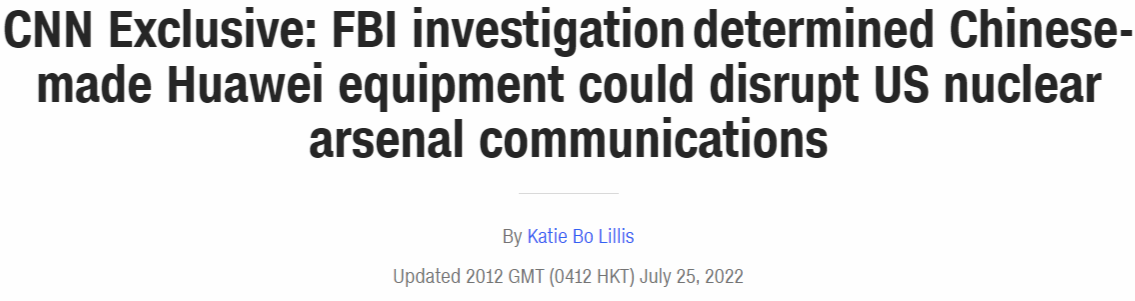
Chinese Telecom giant Huawei can disrupt US defence and nuclear communications: FBI probe reveals CCP’s sinister plans

Amidst growing concerns about Chinese State-run espionage, the Federal Bureau of Investigation (FBI) has found that cell towers equipped with Huawei equipment can capture restricted communications of the US Defense Department.

Huawei, a telecommunications company, has often been accused of spying on the behest of the Chinese government. As per an exclusive report by CNN, the presence of Huawei equipment atop cell towers near military installations posed a serious threat to US Strategic Command, responsible for overseeing the nuclear arsenal of the country.

“While broad concerns about Huawei equipment near US military installations have been well known, the existence of this investigation and its findings have never been reported. Its origins stretch back to at least the Obama administration,” the report added.

Screengrab of the CNN report

Citing sources, the American news outlet stated that the Huawei equipment can not only intercept commercial call traffic but also critical communications made by the US Strategic Command via restricted airwaves.

According to an FBI official, Huawei can get into the way of sensitive military information. “It would impact our ability for essentially command and control with the nuclear triad. That goes into the ‘BFD’ category…If it is possible for that to be disrupted, then that is a very bad day,” he added.

At this point, it remains unclear whether Huawei has already extracted data packages and sent it back to Beijing.   The probe by the FBI was kept a secret in the initial days and even senior policymakers of the government were not informed about it until 2019.

‘Rip and replace’ program marred by fund shortages

As part of its action plan, Congress approved a budget of $1.9 billion in 2020 to ‘rip and replace’ ZTE cellular technology and Huawei equipment from cell towers in rural America. However, the plan did not move forward due to a shortage of funds.
     
“But two years later, none of that equipment has been removed and rural telecom companies are still waiting for federal reimbursement money, reported CNN.

A year later in 2020, the US Justice Department highlighted the security risks posed by Huawei equipment to the Commerce Department and also provided information about their installations across the country.

The CNN report stated, “Among the concerns that national security officials noted was that external communication from the Huawei equipment that occurs when software is updated, for example, could be exploited by the Chinese government.”

When quizzed about the matter, FBI Director said that the Department of Justice charged the Chinese telecommunications company in 2020 with racketeering and conspiring to steal trade secrets.

He, however, dodged the question about the failure of the State to remove Huawei equipment from all cell towers in the country. Meanwhile, Huawei has dismissed claims of espionage and sending sensitive data to the Chinese government.

How FBI unearthed the Huawei conspiracy?

Since the tenure of President Barack Obama,Huawei had been partnering with small telecom providers to provide cheap routers and other crucial tech support in rural parts of the country.

Many such cell towers mushroomed along the arteries of Nebraska and stretches of Interstate 25 in Montana and Colorado. Interestingly, these corridors are located in the vicinity of critical military installations including a nuclear arsenal.

The telecom providers such as Viaero found Huawei as a cheap and reliable alternative in sparsely populated rural areas. Their fleet of cell towers began getting equipped with technology provided by the Chinese firm.

Over time, Huawei-equipped towers began to grow exponentially near US military bases. An investigation launched by the federal authorities found that the company was not making profits through its supply of cheap equipment to telecom providers in rural providers.

“Of particular concern was that Huawei was routinely selling cheap equipment to rural providers in cases that appeared to be unprofitable for Huawei — but which placed its equipment near military assets,” reported CNN.

Mushrooming of Huawei equipped cell towers near US military installations, image via CNN

Ex-FBI agent John Kenkart informed, “(We began) examining Huawei less from a technical lens and more from a business/financial view.” He added that several counter-intelligence concerns were unearthed based on searches of Huawei’s sales efforts in areas with no return on investment.

On further probe, the FBI discovered that Huawei equipment was capable of recognising and disrupting Defence Department communications. This was despite the fact that the equipment was cleared and certified by the Federal Communications Commission (FCC).

Radio Spectrum expert Eduardo Rojas informed, “It’s not technically hard to make a device that complies with the FCC that listens to nonpublic bands but then is quietly waiting for some activation trigger to listen to other bands…Technically, it’s feasible.” 

He said technical experts would need to disassemble the Huawei equipment to semi-conductor level and reverse engineer the design to ascertain its ‘clandestine capabilities.’

Use of HD surveillance cameras and real estate properties

Besides installing cheap China-made routers atop cell towers, telecom companies such as Viaero also began mounting HD surveillance cameras to live-stream traffic and weather.

These cameras were installed on towers along stretches of Interstate 25, and thus inadvertently provided a 24/7 bird’s eye view of military installations and the movement of armed personnel.

“The intelligence community determined the publicly posted live streams were being viewed and likely captured from China, according to three sources familiar with the matter,” reported CNN.

It further added, “Two sources briefed on the investigation at the time said officials believed that it was possible for Beijing’s intelligence service to “task” the cameras — hack into the network and control where they pointed. At least some of the cameras in question were running on Huawei networks.”

The Federal Bureau of Investigation also probed real-estate investments, such as the purchase of land or factory, by Chinese companies near sensitive military installations.

“In one instance, officials shut down what they believed was a risky commercial deal near highly sensitive military testing installations in Utah sometime after the beginning of the I-25 investigation, according to one former US official. The military has a test and training range for hypersonic weapons in Utah, among other things. Sources declined to provide more details,” read the report by CNN.

Similarly, in July 2020, the US government ordered the Chinese government to shut down the office of the Consulate General of China in Houston over allegations of espionage.

Huawei defends itself   

“All of our products imported to the US have been tested and certified by the FCC before being deployed there. Our equipment only operates on the spectrum allocated by the FCC for commercial use. This means it cannot access any spectrum allocated to the DOD,” the company told CNN.

It further claimed, “For more than 30 years, Huawei has maintained a proven track record in cyber security and we have never been involved in any malicious cyber security incidents.”

According to national counter-intelligence expert Bill Evanina, it has been a challenging task for the federal authorities to differentiate between espionage and a legitimate business. He pointed out that both can co-exist at the same time.

Assam: Power and water to residences of MLAs to be cut as several opposition MLAs refuse to vacate old houses set to be demolished

The secretariat of the speaker of Assam Assembly has sent a letter to several MLAs informing that the power and water connection of their officials will be disconnected on 31st July. The MLAs were asked to vacate their official quarters by 27th July, as those houses inside the Dispur capital complex in Guwahati will be demolished and new buildings will be constructed, but several of them are yet to move out of the houses.

As several opposition MLAs are refusing to vacate the houses, it has forced the administration to send an ultimatum. The notice says that the legislators need to vacate the houses as they will demolished from August 1.

Several single-story ‘Assam Type’ houses in the MLA colony used as residence for MLAs, along with a multi-story building used as MLA hostel, are being demolished as part of capital complex redevelopment plan. These old houses are in dilapidated state, get flood during the monsoon, and require large amounts of money in maintenance and repairs of the houses which are decades old.

As a result, the state govt has decided to demolish the old houses and construct new multi-story buildings in their places. The new buildings will be used as residences for MLAs, and they will also have other facilities like a guest house, and will be equipped modern amenities and state of the art security measures.

The decision to demolish the old houses were announced in May this year, the MLAs staying in those houses were asked to vacate the houses by July 20 in that month itself. Affected MLAs have been asked to find rented accommodation to stay till the time the new buildings are ready. The MLAs will be paid Rs 50,000 per month towards house rent for the duration they will be staying outside the capital complex.

But several opposition MLAs are refusing to leave the official residences. When the MLAs didn’t vacate by the deadline of July 20, the secretariat had issued a final deadline of July 27, giving 7 more days. However, as the MLAs are still refusing to move out, today the notice was sent informing that power and water supplies will be cut on 31st August, and the demolitions will start from the next day.

Congress MLA Abdur Rashid Mandal is one such MLA, who says that instead of demolishing all houses at the same time, only some should be demolished, some new houses should be built, and after that the MLAs should be shifted there. He said that there is no need to construct all the new buildings at the same time.

AIUDF MLA Karim Uddin Barbhuiya said he and other MLAs are discussing the matter with the speaker, and they expect that the deadline will be extended. The reluctant MLAs have also said that they have not found suitable houses to rent, and they need more time to shift. Other MLAs who are refusing include Ashraful Hussain and Abdur Rahim Ahmed of AIUDF and Congress.

On the other hand, several MLAs have already vacated the houses, including ruling alliance MLAs, and demolition of those houses have already started. Ministers in Assam govt live in new ministerial quarters constructed recently.

Construction of new houses will start from September after clearing the site. According to the plan, two 10-story buildings will be constructed for residences of the MLAs, while another multi-story building will be constructed for staff of the assembly. A park will also come up in the space vacated by old houses. The buildings will be completed in two to three years.

As time available for construction is very short in monsoon due to long monsoon season, the construction needs to start in September, when the monsoon ends. Ever since BJP came to power in 2016, the speed of construction of govt projects have improved remarkably. While it was not uncommon earlier for govt projects to get delayed by decades, now roads, bridges, flyovers etc are being completed months ahead of schedule. Given such a scenario, it is unlikely that the deadline to vacate the houses will be extended, as Himanta Biswa Sarma govt will like to complete the new houses as soon as possible.

‘It is not hooch tragedy, they consumed chemicals’: Says Gujarat Police as 30 people died after consuming methanol sold as alcoholic beverage

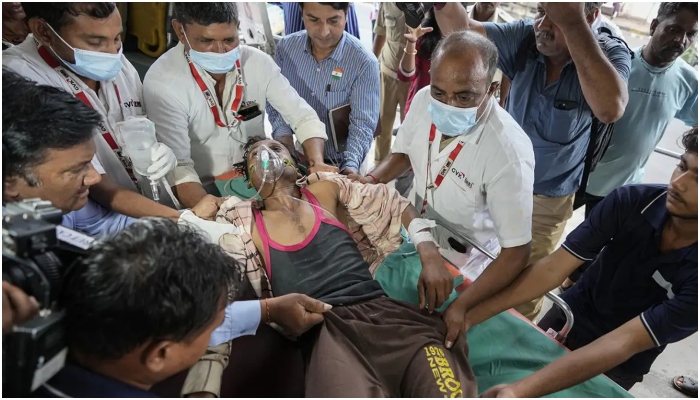
On Wednesday, the Gujarat Police revealed that around 30 people had died and over 60 people are admitted to hospitals after the villagers of Batod district consumed poisonous chemicals under the pretext of alcohol. However, police are saying that it is wrong to call it a hooch tragedy as the villagers consumed poisonous substances that was sold as alcohol. “Villagers consumed chemicals, it’s a chemical tragedy”, SP Batod said on July 27.

“We took immediate action. More than 10 villages affected, we found people who consumed this chemical. At present, 60 people admitted while 30 deaths occurred in Botad district”, he added. According to the official, some of the deceased were residents of the nearby Dhandhuka taluka in the Ahmedabad district while other belonged to villages from Batod.

Around 60 people are still admitted and are under treatment at the hospitals in Bhavnagar, Botad, and Ahmedabad. The saga began on Monday when reports about the hooch tragedy emerged with several residents of Botad’s Rojid village and nearby villages being referred to the government hospitals with crumbling health.

The Police lodged the primary investigations to discover that some inexperienced bootleggers in villages of the Botad district had prepared fake alcohol by mixing water with the highly poisonous industrial solvent methyl alcohol, or Methanol, and sold it to the villagers at a minimal rate of rupees 20.

The Gujarat Home Department has formed a three-person committee to probe the case extensively, chaired by senior Indian Police Service (IPS) officer Subhash Trivedi, and has directed the committee to produce a report within three days. According to a police inquiry, Jayesh alias Raju, a manager at an Ahmedabad godown, stole 600 liters of methyl alcohol on July 25 and sold it to his Botad-based cousin Sanjay for Rs 40,000.

Despite understanding it was an industrial solvent, Sanjay sold it to bootleggers from several Botad villages. These bootleggers combined water with the chemical and sold it to the public as home-brewed booze. Authorities claim that forensic testing proved the victims drank methyl alcohol.

To note, the Botad and Ahmedabad police have filed two FIRs under Indian Penal Code Sections 302 (murder), 328 (causing bodily harm by poison), and 120-B (criminal conspiracy) against around 20 suspects. SP Batod meanwhile also informed that 10 accused have been nabbed and the police are investigating the matter to nab the other accused.

Academician Madhu Kishwar and over 20 scholars write to PM demanding ban on Jihadi curriculum followed by state-funded Islamic universities

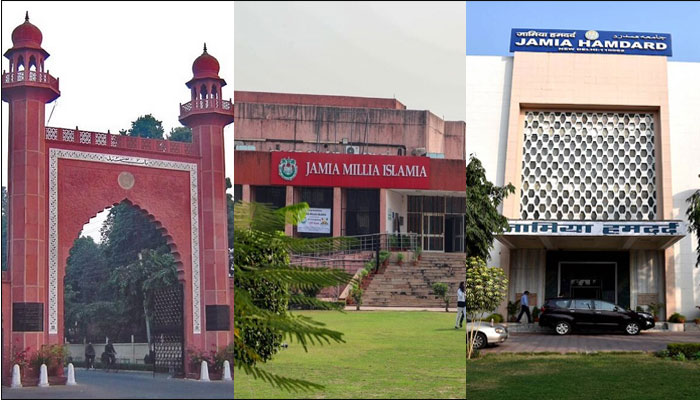
On July 27, activist and academician Madhu Kishwar along with over 20 academicians wrote an open letter to Prime Minister Narendra Modi to bring to his notice the ‘Jihadi Islamic course curriculum’ being followed by state-funded Islamic universities, including Aligarh Muslim University, Jamia Millia Islamia and Hamdard University.

In the letter, the academicians said that the continuous attacks on the Hindu society, culture and civilization are a direct result of such a curriculum. It read, “It is a matter of deep concern that leading Islamic universities are providing a cover of legitimacy and respectability to such ideologies, especially since some prominent Muslim leaders of India have openly declared their determination to Islamize all of post-Partition India by 2047. Since these universities are being supported by public money, we as taxpayers and concerned citizens have a right to demand action against such teachings.”

They included a detailed note on how anti-Indic and anti-national curriculum is openly taught to the students in Islamic universities. The letter read, “it is a matter of deep concern and worry that the writings of Abul Ala Maududi, widely recognized as the authoritative fountainhead of Islam, is part of the course curriculum of the above-mentioned three Islamic universities.”

Notably, Maududi calls for “genocide of non-Muslims everywhere in the world.” Despite the fact that his teachings are anti-non Muslims, the writings by Maududi are included in undergraduate and postgraduate courses in these universities. Furthermore, the students who are pursuing PhDs in these universities are encouraged to go through his writings. Maududi was the founder of Jamaat-e-Islami, which is committed to the total Islamisation of India.

The letter read, “The hydra-headed ideology of Maududi has created many offshoots such as the Indian Mujahideen, Wilayah of Hind (Islamic State’s India province), the JKLF, the Hurriyat, the Raza Academy, The Popular Front of India, etc. JIH also founded the SIMI. All these have had to be either banned at different points or are currently under the NIA scanner on extremely serious charges.”

It further read, “Internationally designated terrorist organizations like Al-Qaeda, ISIS, Hamas, Hezbollah, Muslim Brotherhood, Taliban, etc., continue to drive their inspiration from Maududi’s core ideology and framework of political Islam.”

Speaking about Maududi and his opposition to secular ideas, the letter read, “Maududi opposed the secular pretensions of Jinnah who occasionally paid lip service (practising Taquiyya) to democracy and secularism in his speeches so that he could appear as a “modern and progressive leader”. But Maudidi’s Islam does not believe in making even token concessions to democracy, leave alone secularism. That is why Jinnah was rapidly side-lined soon after his dream of an Islamic State became a reality.”

The academicians alleged it was because of Maududi’s teachings, “pogroms and targeted killings against Shias, Ahmediyas and other smaller sects have a rout been a routine affair”.

They quoted Professor Kevin McDonald, Professor of Sociology and Head of the Department of Criminology and Sociology, Middlesex University, who documented how ISIS chief Al Baghdadi was inspired by Maududi. He wrote, “When he made his speech in July at Mosul’s Great Mosque, declaring the creation of an Islamic State with himself as its Caliph, Abu Bakr al-Baghdadi quoted at length from the Indian / Pakistani thinker, Abul A’la Maududi, the founder of the Jamaat-e-Islami party in 1941 and originator of the contemporary term “Islamic State”.

Similarly, Maududi was an inspirational figure for Muslim Brotherhood ideologue Sayyid Qutb, current Al Qaeda chief Al-Zawahiri, and even General Zia Ul Haq of Pakistan. The letter read, “Maududi’s ideas were eventually adopted by General Ziaul Haq, who had pulled off a successful military coup in July 1977 and then invited Maududi to help him shape policies to help make Pakistan a ‘true Islamic country’ run on ‘Nizam-e-Mustafa.”

The letter added, “The Government of India needs to listen to the belief system and mandates of Islam in the words of prominent Muslim leaders instead of coming up with naive goodwill gestures towards the Muslim community which have continually boomeranged on politicians who try to goad Muslims towards secular reform.”

It further read, “Given this spine chilling belief system which glorifies the total annihilation of non-Muslims who refuse to embrace Islam, it is both shocking and disgraceful that books by Aurangzeb-minded Maududi are currently part of the curriculum and are being taught at the Aligarh Muslim University, Jamia Millia Islamia and Jamia Hamdard, just to name the three leading Muslim universities.”

Expressing their concern about the political and moral legitimacy being given to the anti-Indic and anti-India ideology by the Indian state by allowing them to be part of the academic curriculum, the academicians urged the PM to take note of the matter and act on it at the earliest.

They wrote, “Indian taxpayer money is being used for preparing Jihadis to wage war against non-Muslims (Kafirs) in India. That such fears are not the product of our wild imagination is evident from the recently exposed Agenda 2047 of Popular Front of India (PFI) whereby, this umbrella organization of sundry Jihadi outfits inspired by Maududi ideology has openly stated that they are mazhab-bound to ensure total Islamization of the remaining part of India through means that include waging war against the Indian state and decimate Kafirs who still hold on to their faith.”

Speaking about the multiple incidents where Hindus have to leave their homes because of the change in demographics, they wrote, “Just as Hindus had to flee from areas that became Pakistan, today Hindus of India are forced to abandon their homes and mohallas where Islamists have come to hold sway. The well-planned Demographic Invasion of India through millions of illegal migrants from Bangladesh, Myanmar, Afghanistan and even Pakistan is being executed in defiance of the Indian state under the influence of the Islamic agenda of Ghazwa-E-Hind.”

“Its openly declared aim is to destroy the remaining vestiges of Indic civilization and decimate the remaining share of the native population in their own homeland through Demographic Invasion and a series of civil wars,” the letter further added

The academicians also expressed concern that the curriculum that they have pointed towards is available in traditional Arabic, Urdu, Turkish and Persian, and it is not easy to find a non-Muslim proficient in any of these languages. “Therefore, not just ordinary citizens but even the Government of India and its security apparatus seem unaware of the imminent existential threat India faces at the hands of this virulent political ideology,” they added.

The academicians put forward three demands:

  • The entrenchment of such ideologies in state-funded universities needs to be stopped on a war footing since it has deep national security implications and pertains to the impending bloodbaths being openly threatened by outfits inspired by Maududi.
  • A comprehensive academic review of the course curriculum of Islamic universities, colleges, schools and madarsas be undertaken by the best available experts who are not themselves trapped in the stranglehold of such ideologies. Special effort must be made to review their courses and reading essential lists given to students in Urdu, Arabic, Persian and Turkish.
  • There should be a total ban against the publication or circulation of books by Abul Ala Maududi and other ideologues of Islam that openly call for Jihad against non-Muslims and instigate mass murders and/or forced conversions to Islam in order to bring about total Islamization of India.

The signatories to the letter include:

  1. Prof. Anand Kumar, National Fellow, Indian Institute of Advanced Studies, Shimla
  2. Dr. Anil Kumar Vajpayee, Central Government College, Daman & Diu (Retd.)
  3. Dr. Bhakti Devi, Rashtram School of Public Leadership, Rishihood University, Haryana
  4. Prof. Bharat Gupt, University of Delhi (Retd.)
  5. Dr. Gautam Sen, London School of Economics (Retd.)
  6. Prof. Hari Om Mahajan, Former Dean, Faculty of Social Sciences, Jammu University
  7. Prof. Kanchi Gopinath, Indian Institute of Science (IISC), Bangalore
  8. Prof. Lakshmi Bandlamudi, LaGuardia Community College, City University of New York
  9. Prof. Madhu Kishwar, Senior Fellow, Nehru Memorial Museum and Library (NMML)
  10. Dr. Mala Kapadia, Rashtram School of Public Leadership, Rishihood University, Haryana
  11. Shri Neeraj Atri, Chairman, National Center for Historical Research and Comparative Studies
  12. Dr. Nidhi Shendurnikar, The Maharaja Sayajirao University of Baroda
  13. Prof P Kanagasabapathi, Former Director, Tamil Nadu Institute of Urban Studies
  14. Prof. Prashant Singh, Rashtram University
  15. Dr. Prem Parkash Khosla, M.M.D. University, Haryana
  16. Shri Sahil Aggarwal, CEO, Rishihood University, Haryana
  17. Prof. Sangit Kumar Ragi, Dept. of Political Science, University of Delhi
  18. Dr. Satish Malhotra, Retd. Prof., G.G.S. Medical College, Punjab
  19. Dr. Saumya Dey, Rashtram School of Public Leadership, Rishihood University, Haryana
  20. Dr. Shilpi Tiwari, VIMHANS, Delhi
  21. Prof. Uma Iyer, Bronx Community College, City University of New York
  22. Prof. Ved Prakash Kumar, Chaudhary Bansi Lal University, Haryana

DGCA orders SpiceJet to operate 50% of approved flights for 8 weeks following multiple snags, airline says it won’t affect flight operations

On Wednesday, the Directorate General of Civil Aviation (DGCA) reduced the number of departures of the SpiceJet airlines following spot checks, inspections, and reply to show cause notice submitted by the company. The DGCA directed SpiceJet to operate up to 50 percent of its flights which have been allowed for the summer schedule, for eight weeks.

The Directorate General of Civil Aviation (DGCA) had issued a show-cause notice to SpiceJet on July 6 in response to at least eight incidences of mechanical breakdown in its aircraft since June 19. “Given the findings of various spot checks, inspections, and the reply to the show cause notice submitted by SpiceJet, for the continued sustenance of safe and reliable transport service, the number of departures of SpiceJet is hereby restricted to 50 percent of the number of departures approved under summer schedule 2022 for 8 weeks,” the aviation regulator’s order on Wednesday said.

DGCA said that while “SpiceJet is taking measures for arresting the trend of incidents, however, the airline needs to sustain these efforts for safe and reliable air transport service.” Restricting the flights to 50% of approved numbers, the regulator added that “any increase in the number of departures beyond 50% of the number of departures approved under Summer Schedule 2022, during this period, shall be subject to the airline demonstrating to the satisfaction of DGCA that it has sufficient technical support and financial resource to safely and efficiently undertake such enhanced capacity.”

During the said 8 week period that starts on July 27th, the airline will be subjected to “Enhanced Surveillance” by DGCA.

Responding to the DGCA directive, SpiceJet said that will act as per directions of the regulator. It said, “Due to the current lean travel season, SpiceJet like other airlines had already rescheduled its flight operations. Hence, there will be absolutely no impact on our flight operations”.

The airline said that there will be no cancellation of flights due to the DGCA order, and that their flights will operate as per schedule in the coming days and weeks.

This development comes a day after SpiceJet replied to the DGCA’s show cause notice issued to the company for its failure to ensure safety following a spate of mid-flight incidents. The DGCA in the statement on July 6 said that SpiceJet had failed to establish safe, efficient, and reliable air services under terms of Rule 134 and Schedule XI of the Aircraft Rules, 1937. The authority had asked the airline to explain why action should not be taken against it for the repeated safety issues.

“The review (of incidents) transpires that poor internal safety oversight and inadequate maintenance actions (as most of the incidents are related to either component failure or system-related failure) have resulted in degradation of the safety margins,” the notice stated. At the time of the notice, SpiceJet had reportedly seen at least eight incidents and one accident since May.

On Monday, the minister of state for civil aviation, V K Singh informed that the DGA had found no major safety violations after it conducted 53 spot checks on 48 SpiceJet aircraft. Just three days after issuing the notice, the regulator had started conducting spot checks on SpiceJet planes. The spot checks were completed on July 13.

However, on July 27, the DGCA issued an interim order directing the airline to operate 50 percent of the number of departures approved under Summer Schedule 2022 for 8 weeks from the date of issue of this order

Delhi: Jihadi enters VHP office and threatens to blow it up with a bomb, arrested

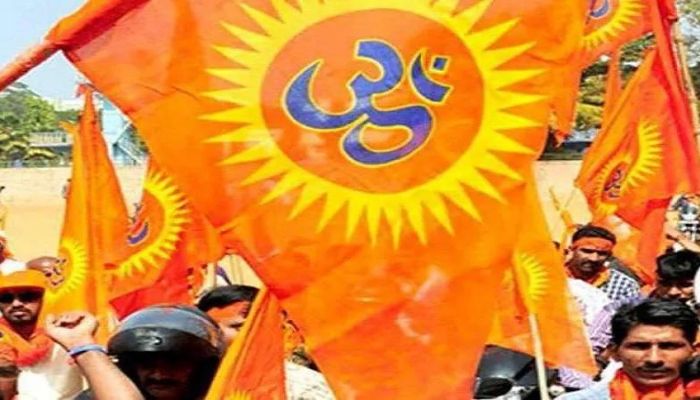
The Delhi-based offices of the Rashtriya Swayamsevak Sangh (RSS) and Vishwa Hindu Parishad (VHP) received bomb threats on Wednesday, July 27, 2022. A jihadi reportedly entered the VHP office and threatened to blow it up.

The VHP has shared this information on its official Twitter account. The tweet reads, “RSS and VHP’s Delhi offices threatened to be blown up with bombs today. The jihadi who entered the offices was handed over to the police by the VHP Delhi’s office bearer Shri Surendra Kumar Gupta. The Delhi Police is investigating further.”

According to the reports, the accused youth did recce at one place while at another place he threatened to blow up the office with a bomb. He said, “What you are saying about our Prophet? What do you think, you know, we also know how to answer this. We will blow up this office with bombs.”

The SHO of the Paharganj police station said, “This afternoon we received the news that the Vishwa Hindu Parishad office located on the second floor of the Jhandewalan temple received a bomb threat. As soon as we got the news, we reached there and detained the accused. Further questioning is going on.”

OpIndia contacted Inderjit Sidhu, VHP’s state electronic media chief, over the incident. He told, “Today, the Delhi offices of the Sangh and VHP received bomb threats. The police are investigating the case. It’s hard to say anything about the threatener right now. After the police investigation is completed, his detail information can be shared.”

At the Vishwa Hindu Parishad Delhi office in Jhandewala temple, a man came around 12.18 pm and said to the state general secretary Surendra Kumar Gupta, “Our boss has decided that the entire building has to be blown up with a bomb.” Then this threatener attempted to run away. Surendra Kumar Gupta immediately called the Delhi police. The police reached the spot and took him into custody.

Uttar Pradesh: One Qazi Farhan brutally beaten for serving Kanwariyas and getting Darshan of Goddess Shakambhari, case registered

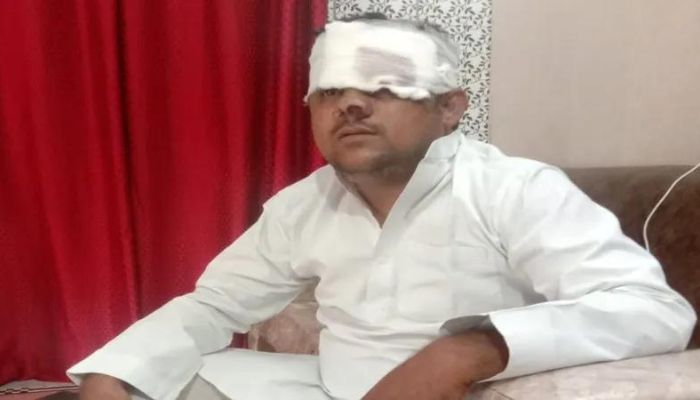
A Muslim youth is brutally beaten up in Saharanpur in Uttar Pradesh for serving the Hindu devotees of Lord Shiva going on the Kanwar Yatra in the ongoing month of Shravan. Unidentified assailants attacked a youth named Qazi Farhan with weapons in the wee hours of Tuesday, July 26, 2022. Qazi Farhan was severely injured in this attack.

In this attack, Farhan’s nose is broken and there is a serious injury to his head and left eye. Farhan said that he had darshan at a temple and served the Kanwariyas, and so he was attacked. Police have registered a case in this matter.

According to a report by Dainik Jagran, Farhan accused that on Tuesday night, when he was serving people in the camp that is set up near his home, a few miscreants came to the camp and started making a ruckus. As he went on to see those people, he noticed that they were wearing saffron stole around their necks.

Noticing Qazi Farhan, the miscreants approached him and encircled him saying ‘he is the guy.’ The attackers assaulted him several times. As more people arrived after seeing the commotion, both the attackers fled from the spot. Farhan said that the assailants tried to kill him with a sharp weapon and also snatched his chain. In this case, he has lodged a complaint with the police.

A few days ago, Qazi Farhan went to the temple of Goddess Shakambhari and got Darshan. He also served the Kanwariyas passing by the temple by offering water and fruits to them. According to Farhan, it was only after this incident that he started receiving threats on social media.

Mithun Chakraborty says 21 Trinamool MLAs are in direct contact with BJP; TMC leaders term it movie dialog, say he has mental issue

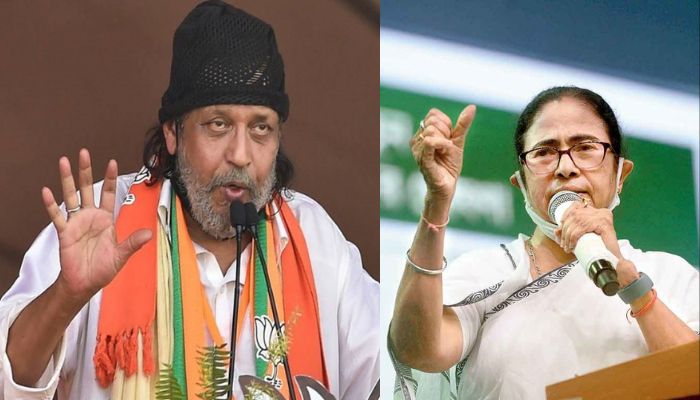
On Wednesday (July 27), actor turned BJP leader Mithun Chakraborty held a press conference and hinted at the possibility of ‘Operation Lotus’ in the State of West Bengal. While speaking to the media, he claimed that about 21 Trinamool Congress MLAs are in direct contact with the BJP. He further added that a total of 38 TMC MLAs have good relations with the saffron party.

“Do you want to hear breaking news? At this moment, 38 TMC MLAs have very good relations with us, out of which 21 are in direct (contact with us),” he remarked.

However he refused to give further details, saying his comments are like trailer and the media need to wait for the final release. While deflating questions posed by curious media persons, the BJP leader said, “If I reveal everything now, then, when will I release my trailer. Enjoy the music for now.” The national award winning actor turned politician made the comments at a meeting with BJP MLAs at the at the election office of the BJP in Hastings on Wednesday.

However, TMC has dismissed the claims, saying Mithun Chakraborty has a habit of making over the top claims. Trinamool spokesperson Kunal Ghosh said, “Mithun Chakraborty’s dialogue is a habit. I think he gave the dialogue of the movie. It has nothing to do with reality. Mithun might be giving a dialogue from a flop movie or MLA Phatakester.”

TMC Rajya Sabha MP Santannu Sen went one step ahead and said that Mithun Chakraborty must be having some mental problem to make such claims. Sen said that Chakraborty was in hospital for a long time for some physical disease, and now he must be suffering from some mental issue.

The Trinamool Congress was in a state of political turmoil, prior to the West Bengal Vidhan Sabha polls in 2021. Several MLAs and heavyweight leaders, including Suvendu Chakraborty, had defected to the saffron party.

Currently, the Mamata Banerjee-led-TMC has a whopping 215 MLAs in the Vidhan Sabha, which is way higher than the majority mark of 148.