Home Blog Page 3022

Did you know Pakistan had another national anthem written by Jagannath Azad, before it was rejected for ‘Qaumi Tarana’

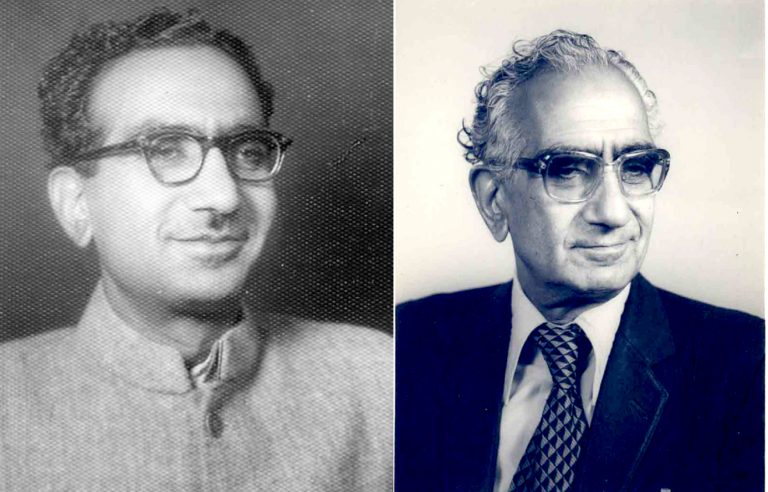
Not many people are aware of the fact that Pakistan had a national anthem prior to the Qaumi Tarana and it was the first anthem that was aired on the radio after the formation of Pakistan on August 14, 1947. The first national Anthem of Pakistan was Tarana-e-Pakistan, written by one Jagannath Azad, a prominent Urdu poet born in 1918 in Punjab’s Mianwali (present-day Pakistan).

This lesser-known fact created controversy both in Pakistan and India when it was disclosed after the death of Azad in 2004. Journalist Luv Puri was informed by Jagannath Azad just a few days before he passed away in 2004 that he had written Pakistan’s first national anthem. During the time of independence, according to the interview that was published in The Milli Gazette’s issue of 16–31 August 2004, Jagannath Azad was in Lahore during the partition and did not want to leave. His Muslim friends counselled him to remain in Pakistan rather than move to India.

Talking to Puri, Azad said that on August 9, 1947, a member of the Radio Pakistan staff from the Lahore station gave him a message from Mohammad Ali Jinnah, the country’s first Governor-General, was asking Azad to write the anthem for Pakistan. In the interview, Jagannath Azad revealed that he penned the anthem in five days and that Jinnah accepted it within a few hours.
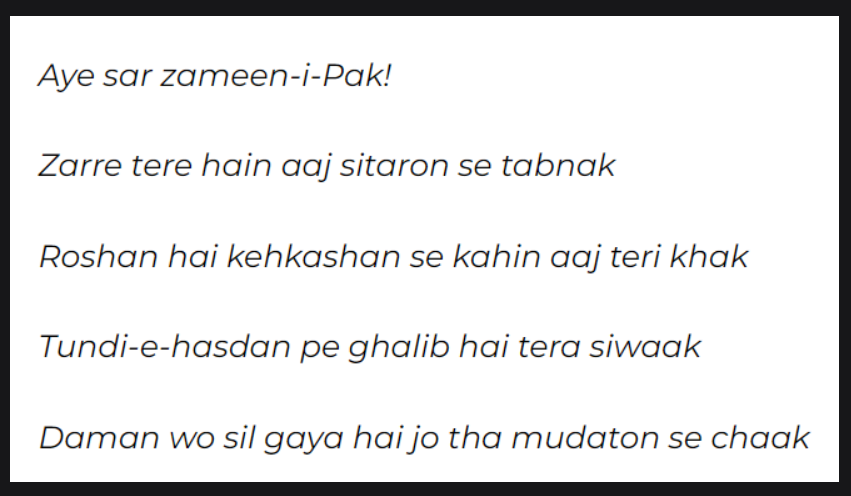
The song written by Azad.

Later, when the law and order situation deteriorated, his friends persuaded him to flee to India, and he did so. “Meanwhile the situation in both east and west Punjab was becoming worse with every passing day and the same set of friends told me in September 1947 that even they would not be able to provide protection to me and that it would be better for me to migrate to India. I decided to migrate to this side.”

The anthem written by Azad continued to be sung for more than a year until the death of Jinnah, after which it was discarded by the leadership of Pakistan. “The song written by me continued to be the national anthem for one and a half years,” Azad told Puri. Azad had to leave Pakistan and move to India as it became difficult for Hindus to survive in the country.

Jagannath Azad was born in 1918 in Punjab’s Mianwali (present-day Pakistan). His father Tilok Chand was a famous Urdu poet. Azad secured several posts in various Urdu publications after he shifted to India. He served as Information Officer in various ministries of the Government of India from 1955 to 1977. Post-retirement from service, he became a professor at the University of Jammu’s Urdu department.
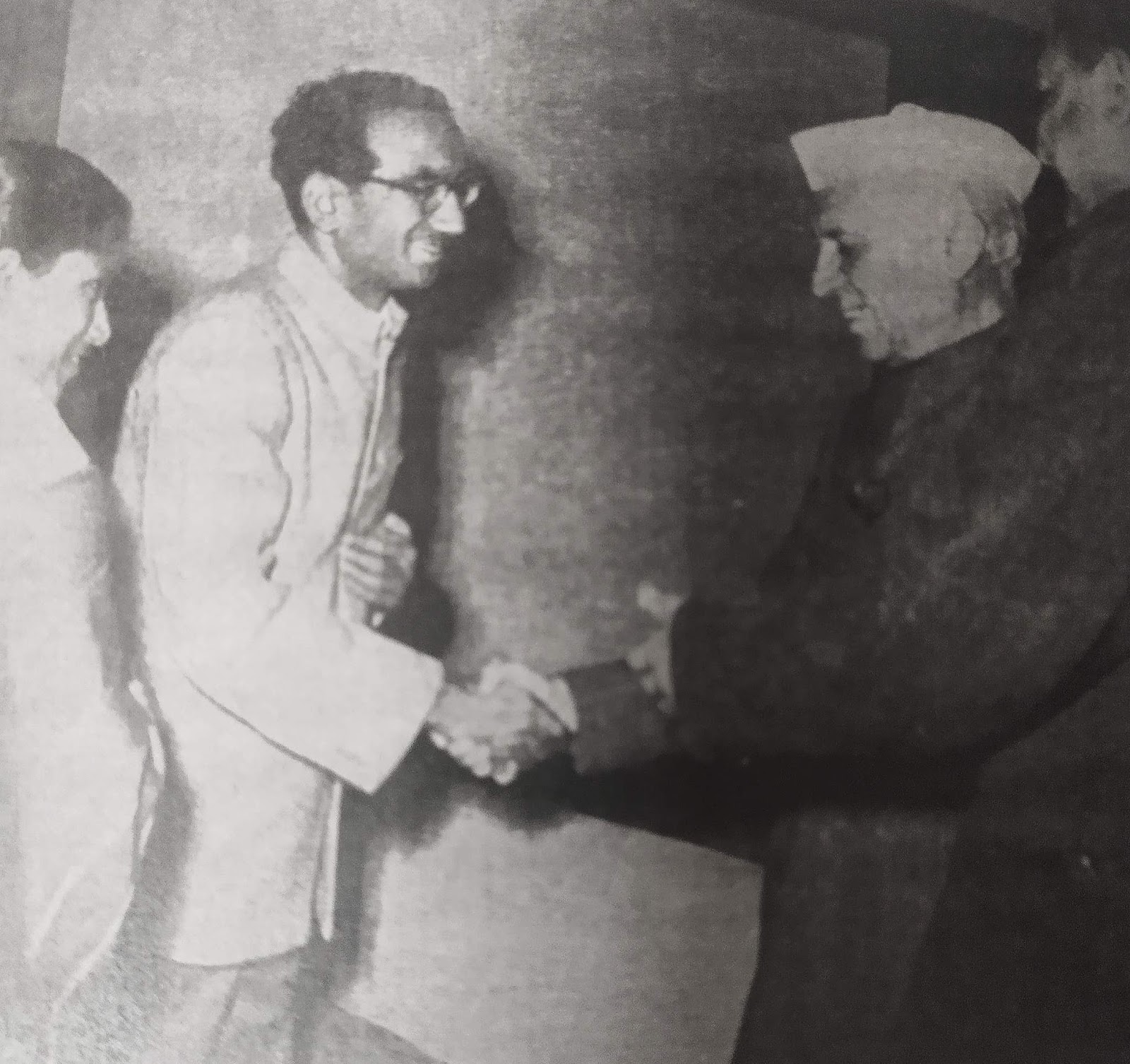
CHINAR SHADE : A NEW BOOK ON URDU POET JAGAN NATH AZAD
Azad with Jawaharlal Nehru.

Despite the fact that Jagannath Azad wrote Pakistan’s first national anthem, it was only sung for six months following Jinnah’s passing in September 1948. The National Anthem Committee (NAC), which was established in December 1948, took two years to finalise a new anthem. In 1950, a poem by NAC member Hafeez Jallandri was chosen from 723 submissions.
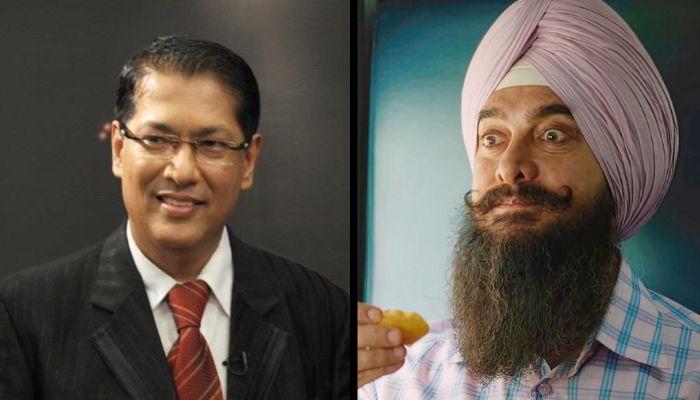
Noted film critic Taran Adarsh says calls to boycott film affected box office collection of Laal Singh Chaddha

On Saturday (Augsut 13), film critic Taran Adarsh slammed the naysayers who have been falsely claiming that calls for the boycott of ‘Laal Singh Chaddha’ movie have not worked.

In a tweet, he remarked, “Stop being in denial about #Boycott calls not affecting film biz… The fact is, these #Boycott calls have made a dent and impacted the Box Office numbers of Laal Singh Chaddha specifically… Face it!”

Laal Singh Chaddha tanks at the box office

Due to Aamir Khan’s previously troublesome utterances, Aamir Khan’s film ‘Laal Singh Chaddha’ has been mired in controversy. The film’s opening weekend box office was dismal, as demands for a boycott appear to have worked against it.

The first day collection of the movie is reported to be the lowest opening that an Aamir Khan movie has seen in the past 13 years. According to Bollywood pundits, an Aamir Khan movie should have ideally had an opening of Rs 30 crores.

In the worst-case scenario, it should not have had an opening day collection of less than Rs 20 crores, however, the audience seems to have shunned the movie completely.Amidst the boycott calls for the film Aamir Khan himself indicated that he was apologetic.

Even the likes of Kareena Kapoor, who earlier treated her audience with disdain, also pleaded with the audience to not boycott the movie. “They should not boycott this film, it’s such a beautiful film. And I want people to see me and Aamir,” she had pleaded.

However, all such appeals seem to have fallen on deaf ears. The audience is reluctant in buying the victim card anymore.

Novelist Salman Rushdie taken off ventilator, attacker charged with attempt to murder, pleads ‘not guilty’

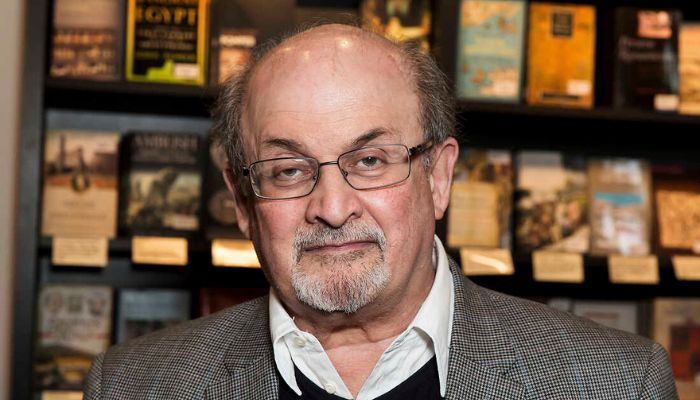
A day after it was reported that Salman Rushdie was on ventilator support, his agent Andrew Wylie informed the media about the improvement in the health condition of the acclaimed novelist.

Wylie stated that ‘The Satanic Verses’ novelist is able to speak and have been taken off ventilator. Michael Hill, the President of the Chautauqua Institution, tweeted, “Salman Rushdie off ventilator and talking! Continued prayers from all.”

Novelist Hari Kunzru wrote, “Andrew Wylie has given a statement to the press and confirmed that Salman has been taken off the ventilator. It seems that the worst outcome has been avoided.”

On August 13, Andrew Wylie informed that Salman Rushdie was in a critical state. He added that Rushdie was on ventilator support and that he could not speak. “The news is not good. Salman will likely lose one eye; the nerves in his arm were severed, and his liver was stabbed and damaged,” Wylie had stated.

Attacker Hadi Matar charged with assault, attempt to murder

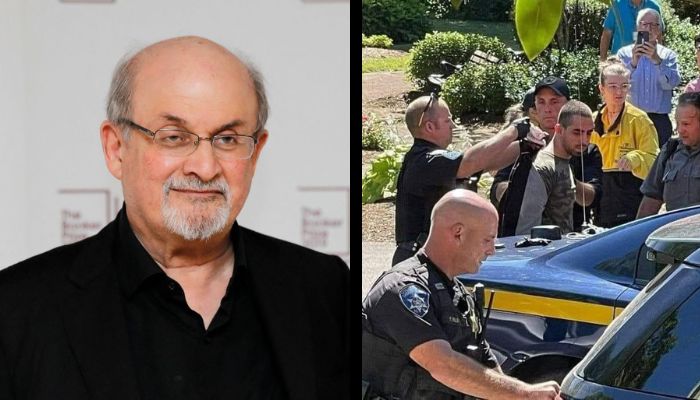
The man involved in the attack on ‘The Satanic Verses’ novelist was identified as 24-year-old Hadi Matar. A resident of Fairview in New Jersey, Hadi jumped onto the stage and attacked the novelist with a knife.

The prosecutors informed that the assailant was formally charged with assault and attempted murder. Chautauqua district attorney, Jason Schmidt, stated, “The individual responsible for the attack yesterday, Hadi Mattar, has now been formally charged with Attempted Murder in the Second Degree and Assault in the Second Degree.”

“He was arraigned on these charges last night and remanded without bail,” he further added.

He has pled not guilty to attempted murder.

The deadly attack on Salman Rushdie

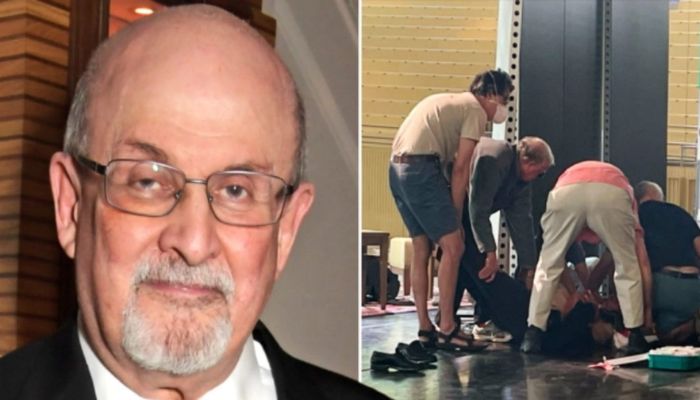
On Friday (August 12), Salman Rushdie was attacked during an event at the Chautauqua Institution in western New York. He received multiple stab wounds, one to his neck and another to his abdomen.

The accused Hadi Matar reportedly had a pass for the event where Rushdie was invited to deliver a lecture.The authorities had also seized a backpack, belonging to the accused, from the crime scene.

As per a report by New York Times, the local police have sought help from the Federal Bureau of Investigation for determining the background and motives of Hadi Matar. In the aftermath of the deadly attack, several Islamists from Pakistan took to social media to celebrate the incident and hail the assailant as a ‘Ghazi.’

Rakesh Jhunjhunwala passes away at 62

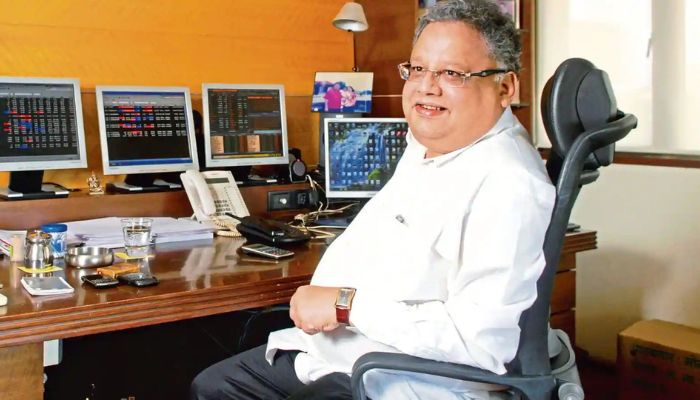
Veteran investor and stock trader Rakesh Jhunjhunwala passed away on Sunday (April 14) morning. He was 62 years old.

Also known as the ‘Big Bull of Dalal street’, Jhunjhunwala is now survived by his wife and three children.

He had recently launched a low cost airline ‘Akasa Air.’

As per initial reports, he was brought to Breach Candy hospital in Mumbai at 6:45 AM where he was declared dead. He had been suffering from multiple health issues since the launch of Akasa Air.

In an interview in November last year, Rakesh Jhunjhunwala had said, “I just pray to God to keep me happy, content, healthy and satisfied. Wealth and success is temporary and transient.” He further added, “What I would like to ask and pray to God is give me contentment and happiness, not to envy others and treat others well.”

Author JK Rowling gets death threats from Islamists for condemning attack on Salman Rushdie

Harry Potter series author JK Rowling on Saturday received death threats for condemning attack on Salman Rushdie, who was stabbed by one Islamist Hadi Matar in New York. Salman Rushdie has been living under threats for the last 30 years after Ayatollah Khomeini of Iran issued a fatwa against him for his allegedly blasphemous novel The Satanic Verses.

Rowling took to Twitter to raise concerns on how the assailant was being hailed by Islamists. She also got ‘don’t worry, you are next’ threat when she said she was feeling very sick upon knowing about the attack on Rushdie and prayed that he’d be okay.

The later said that the police are involved and investigating the threats, who were already working on other threats issued to her.

She also questioned Twitter and its guidelines where in threats are considered violation of terms and conditions. However, as we have seen time and again, threats issued to individuals, especially to those who are not politically left leaning, are often ignored. Threats to Rowling were cheered by ‘liberals’ and ‘wokes’, most of whom had pronouns in their Twitter bio.

Rowling cancelled by wokes

Before Rowing got death threats by Islamists, Rowling was cancelled by wokes. In December 2021, Rowling had questioned Scotland Police’s stand on ‘trans women’ raping actual women and got a lot of hate from trans activists. In November 2021, LGBT activists had doxxed her for not buying their ‘socio-political concept of gender identity.’ She had said that three LGBT activists had deliberately clicked pictures of themselves outside her residence such that the address was visible in those photographs. These pictures were then uploaded on Twitter, leaving Rowling and her family vulnerable to attacks.

She had also earlier received death threats in the past from trans activists, for voicing her opinion against opening women’s toilets to ‘tans’ women.

Prior to that, she was on the receiving end of LGBT community’s ire after she linked her experience of sexual assault with her concern over transgender access to women-only spaces in a 3,600 words long essay. In her article, Rowling, a domestic violence survivor, said she was perturbed that “the new trans activism” was undermining women and girls’ rights to single-sex spaces by “offering cover to predators”.

‘No information about the attack on Rushdie’, says Iran-backed Lebanese terrorist group Hezbollah

Iran-backed Lebanese terrorist group Hezbollah claimed on Saturday, August 13, that it had no information about the brutal attack on author Salman Rushdie. This reaction came almost a day after the writer was stabbed by an Islamist named Hadi Matar aged 24. He attacked Salman Rushdie during a program when he was on the stage ahead of a talk in New York. It is notable that Salman Rushdie has been living under threats for the last 30 years after Ayatollah Khomeini of Iran issued a fatwa against him for his allegedly blasphemous novel The Satanic Verses.

Interestingly, the attacker Hadi Matar had a fake driver’s license bearing the name Hassan Mughniyah. This name is a mix of two senior officials of the terror group Hezbollah. Hezbollah’s current leader is Hassan Nasrallah while Imad Mughniyeh was a senior Hezbollah official close to Iran’s Islamic Revolutionary Guard Corps Quds Force chief Qassem Soleimani. Qassem Soleimani was assassinated by the US in January 2020 in a targeted attack in Iraq.

According to a report by the Times of India, on Saturday, a spokesperson from the Iran-backed Hezbollah stated that the group had no additional information on the stabbing attack on Salman Rushdie. On the condition of anonymity, he said, “We don’t know anything about this subject so we will not comment.”

According to the Chautauqua County District Attorney, Hadi Matar, 24, was accused of attempting to murder in the second degree after stabbing author Salman Rushdie at an event in New York state. A resident of Fairview in New Jersey, Hadi, jumped onto the stage and attacked the novelist with a knife. After living in obscurity for years due to death threats, novelist Salman Rushdie remarked in an interview only weeks before he was hacked and critically injured by the assailant that his life was now relatively normal.

Salman Rushdie was taken to the hospital after the attack and had surgery. He has suffered damage to essential organs and may lose sight in one eye. Rushdie’s agent Andrew Wylie shared that he is still in a critical state. He added that Rushdie was being put on ventilator support and that he could not speak. “The news is not good. Salman will likely lose one eye; the nerves in his arm were severed, and his liver was stabbed and damaged,” Wylie said.

Salman Rushdie’s book ‘The Satanic Verses,’ released in September 1988, sparked outrage across the world among Muslims. Following the publication of his book, which Muslims deemed to be blasphemous, Iran’s supreme leader, Ayatollah Ruhollah Khomeini, issued a fatwa on February 14, 1989, ordering Muslims to kill Rushdie. Since then, not only has Salman Rushdie been living under a perpetual threat but the translators and publishers of his book have also been the targets of Islamists across the world.

‘Supreme Court showed prejudice in favour of Md Zubair and against Nupur Sharma’: Retired Justice SN Dhingra says judges have no knowledge of criminal law

0

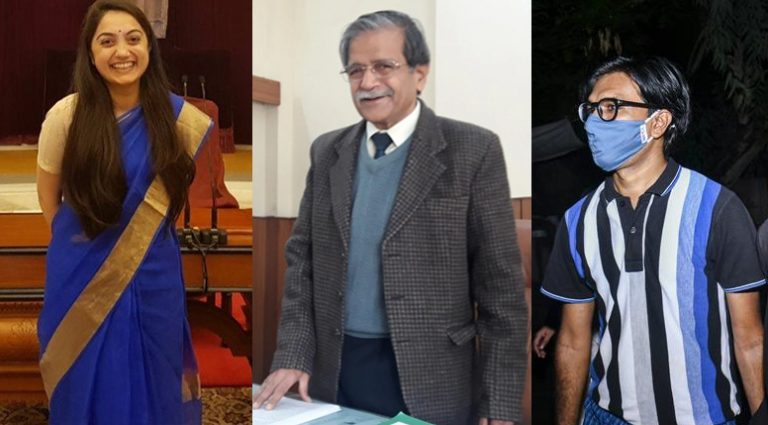
Justice SN Dhingra, former judge of the Delhi High Court, again criticised the Supreme Court of India for its judgments in the Nupur Sharma and Mohammed Zubair cases. While the apex court made a U-turn and ordered to merge all FIRs against Nupur Sharma and transfer them to Delhi, justice Dhingra questioned the court for not taking back its earlier comments blaming the former BJP spokesperson for violence by Islamists.

In an interview with Times Now, justice SN Dhingra said that the Supreme Court bench showed prejudice against Nupur Sharma, and it was prejudiced in favour of Zubair, however, the reason of this bias is not known. It is notable a bench of Justice D.Y. Chandrachud, Justice Surya Kant and Justice A.S. Bopanna had ordered to merge all FIRs against the Alt News cofounder and transfer them to Delhi while granting him interim protection on July 20. On the other hand, a bench of justices Surya Kant and JB Pardiwala had refused to club various FIRs filed against Nupur Sharma for her comments on prophet Mohammad, despite the fact that she faces grave threats to her life after several bounties have been announced on her hand.

While all FIR against Nupur Sharma filed in various states is for the same ‘offence’, her comments in a TV debate on Times Now, the FIRs against Zubair are for completely different allegations, including insulting Hindu seers, provocation of riots, hurting sentiments of Hindus etc. But still, the apex court had ordered the merger of all FIRs against Zubair while refusing the same request of Nupur Sharma.

Justice SN Dhingra called the Supreme Court prejudiced for such variation in judgement. He also said that the Supreme Court bench on the Nupur Sharma case should have explained its decision to reject the plea to merge FIRs, and also explain what compelled it to change its position when it ordered the merger of the FIRs after a second petition was filed by Nupur Sharma.

On July 1, while rejecting Nupur Sharm’s plea, the Supreme Court made several scathing remarks against her, making her responsible for murders and riots by Islamists. The bench had said that her approaching the court for the merger of FIRs shows her arrogance, and had asked her to apologise to the nation on TV for her comments. However, when Nupur Sharma filed another petition with the same request, the same Supreme Court bench accepted her request on August 10.

The bench cited the apex court’s 20th July order to merge FIRs against Zubair, implying that after they accepted Zubair’s plea, they can’t reject the same plea of Nupur Sharma. However, justice SN Dhingra asked why the bench didn’t give any reason for the change of its position on the petition. He said that as the bench didn’t give any reason, people are making their own assumptions about the reason for the change of the decision.

SN Dhingra also said that it appears that the judges on the Nupur Sharma bench are not well aware of the criminal laws, based on its stand on the Nupur Sharma case. He said that there are established precedents of merging FIRs for the same offence, but still, the judges chose to ignore that and reject the first plea of Nupur Sharma.

Giving another example of how it appears the judges are not aware of criminal laws, SN Dhingra said that they should have known that the cases against Nupur Sharma do not have any basis.

He said that if the judges have any knowledge of sections 153 and 295 which have been slapped against Nupur Sharma, they would have known that the charges do not hold. According to these sections, Nupur Sharma had not done any crime and she should not have even be charged. He said that her comments can’t be termed blasphemy as her comments have not been denied by anybody. What she said are mentioned in Islamic Scriptures, and Islamic Scholars have said the same on TV, and therefore there should not be any case against her for her citing Islamic scriptures.

Justice SN Dhingra also said that the change of stand by the Supreme Court on Nupur Sharma’s plea makes it look like the judges are influenced by public opinion and media, which is not a good sign.

However, he expressed hope that the court’s prejudiced oral comments against Nupur Sharma will not hamper when her case when it is heard in the trial court and high court, as those were only oral comments which have no legal value. The Supreme Court’s July 1 order rejecting the petition of Nupur Sharma didn’t include any of the remarks made by the bench against her, therefore it is expected that the lower courts will only go by the written order, Justice SN Dhingra said.

Stabbings, gunshots, and arson: When the translators and publishers of Salman Rushdie’s book ‘The Satanic Verses’ faced vicious attacks by Islamists

Salman Rushdie’s book ‘The Satanic Verses,’ released in September 1988, sparked outrage across the world among Muslims. Following the publication of his book, which Muslims deemed to be blasphemous, Iran’s supreme leader, Ayatollah Ruhollah Khomeini, issued a fatwa on February 14, 1989, ordering Muslims to kill Rushdie. Since then, not only has Salman Rushdie been living under a perpetual threat but the translators and publishers of his book have also been the targets of Islamists across the world.

Murder of the Japanese translator

In July 1991, Hitoshi Igarashi, the Japanese translator of Rushdie’s The Satanic Verses was brutally murdered at a university northeast of Tokyo. The 44-year-old assistant professor of comparative culture was stabbed many times and left in the corridor outside his office at Tsukuba University, according to police. Igarashi, a brilliant professor, had stated in interviews that researchers should not be concerned about what would happen to them as a result of their work. His death is still unsolved and remains a mystery.

Attack on the Italian translator

Ettore Capriolo translated ‘The Satanic Verses’ in Italian. In June 1991, he was attacked by a person who pretended to be looking for a translation of an Islamic pamphlet. Upon assaulting the 61-year-old, he introduced himself as an Iranian and fled. Capriolo was hurt in the neck, hands, and chest. According to the New York Times, the attacker told Capriolo he had a ‘connection’ to the Iranian consulate in Italy. Days later, Italian law enforcement declared that Salman Rushdie’s novel The Satanic Verses had no link to the assault.

Norwegian Publisher of ‘The Satanic Verses’ survived the attack

Two months after the Iranian fatwa, the Norwegian translation of The Satanic Verses was published. The Norwegian publisher William Nygaard got direct threats almost instantly and was granted armed security for a while. He was shot three times on October 11, 1993, in front of his residence in Dagaliveien, Oslo. He gradually healed after being admitted to Sunnaas Hospital. The attackers were never apprehended.

A hotel was torched to kill the Turkish translator of this book

The attempt to kill the Turkish translator of The Satanic Verses written by Salman Rushdie is an example of a fanatic attack on writers. Aziz Nesin translated this book into the Turkish language. On Friday, 2nd July 1993, Aziz Nesin, aged 78, was attending a symposium in the conservative eastern city of Sivas with other academics for commemorating the death of a 16th-century Ottoman poet who spoke about oppression. However, after one of his anti-Islamic assembly remarks was leaked, Turkey’s senior author became the target of an unparalleled barrage of hate.

Hundreds of Islamists came out of mosques and gathered in the city’s central plaza, where they stoned police barriers and governmental structures. They flashed arms and screamed Islamic slogans as their numbers grew throughout the day. An enraged Muslim mob set fire to a hotel in eastern Turkey where Nesin had sought shelter.

Crowds around the hotel also made it difficult for the fire services to contain the incident. Aziz Nesin was forced to flee using a fire department ladder as the rescue crews arrived. Nesin was treated for minor injuries and transported out of the state after escaping from the hotel in a police van. However, at least 35 individuals were killed and 60 were injured, and four of them were critical.

Islamists also staged violent protests in Mumbai where Salman Rushdie was born

Salman Rushdie was born in Mumbai. Islamists in the city had also reacted angrily to the allegedly blasphemous book by the author.

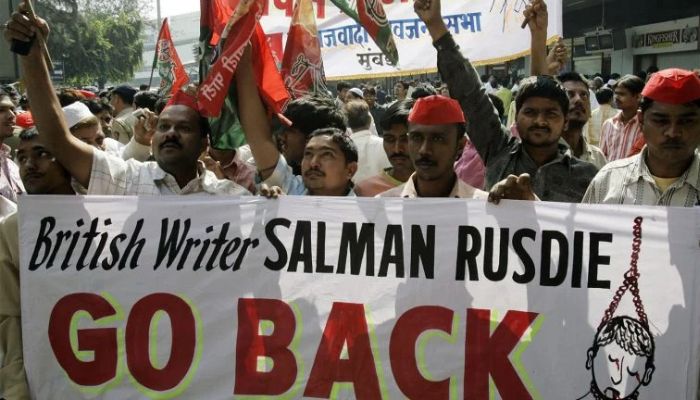
Following Khomeini’s call for the killing of Rushdie on 14th February 1989, Islamists in India called for a ‘bandh‘ on February 24, 1989, in the city of Mumbai. During heated demonstrations, they also opened fire on the police. It was then that the cops resorted to retaliatory firing and neutralized 12 Islamists in this process.

Salman Rushdie stabbed in New York

On Friday (August 12), Salman Rushdie was stabbed during an event at the Chautauqua Institution in western New York. The man involved in the attack was identified as 24-year-old Hadi Matar. A resident of Fairview in New Jersey, Hadi jumped onto the stage and attacked the novelist with a knife.

Rushdie’s agent Andrew Wylie told that he is still in a critical state. He added that Rushdie was being put on ventilator support and that he could not speak. “The news is not good. Salman will likely lose one eye; the nerves in his arm were severed, and his liver was stabbed and damaged,” Wylie said.

The ‘Satanic’ saga: When Islamists ran riot in Mumbai and intimidated a Professor in Jamia Millia Islamia

Salman Rushdie’s stabbing in New York on the 12th of August has once again brought the focus back on Satanic Verses, the book that got Rushdie in so much trouble that he had to live fearing for his life for the past 33 years.

Following the publication of ‘The Satanic Verses’ by Salman Rushdie in September 1988, Islamists were up in arms against the author for committing ‘blasphemy’ and insulting their Faith.

In February 1989, Iran’s first Supreme Leader, Ayatollah Khomeini, even called upon all Muslims to kill Salman Rushdie. By that time, the ‘secular’ government of Rajiv Gandhi had already banned the book in India.

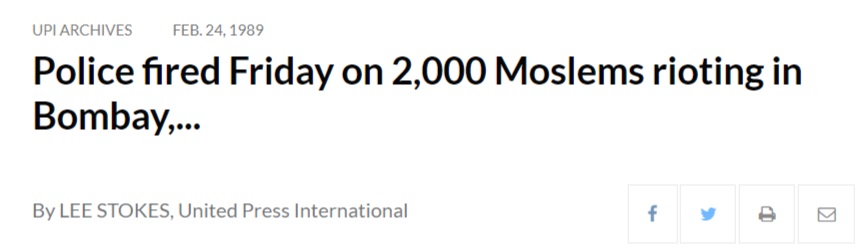
Following Khomeini’s call for the killing of Rushdie on 14th February 1989, Islamists in India called for a ‘bandh‘ on February 24, 1989, in the city of Mumbai. A large demonstration was held that day.

The frenzied Muslim mob was stopped by cops after they tried to march on the British diplomatic mission, which was in Mumbai at that time. The Islamists were protesting against the protection provided to Salman Rushdie by the British government. The mob of 2000 rioters burnt cars, buses, and motorcycles in South Mumbai and also torched a police station.

They also opened fire at the police. It was then that the cops resorted to retaliatory firing and neutralised 12 Islamists in this process. Similar processions were banned for the rest of the day. A total of 500 Islamists were detained and 800 others were arrested.

One of the Islamists present during the violent protests, Sharfarat Khan, claimed, “It all happened so suddenly. The crowd surged forward, and the police hit them with clubs. There was stone throwing and then gunfire.”

Students in Jamia Millia Islamia intimidate Professor into silence

In May 1992, the student union of the Jamia Milia Islamia created a ruckus on the university premises after a history Professor named Mushirul Hasan demanded lifting the ban on ‘The Satanic Verses.’

The radical students hung his effigy on a pole, with the words ‘Enemy of Islam’ written on it. They even threatened to boycott exams until Hasan resigned from his administrative post.

The controversy began in April of that year when the History Professor published an article in a weekly magazine. He had argued that everyone deserves to be read and heard. Although Mushirul Hasan had conceded that the book was ‘offensive to Muslims’, yet he advocated that the ban on ‘The Satanic Verses’ should be lifted.

Soon after, the ‘protests’ took a violent turn. A mob of Jamia students assaulted a Professor, who was sympathetic to Hasan. While speaking to The Christian Science Monitor, the history Professor lamented, “I have been told not to enter (my) campus or I would be physically assaulted.”

Screengrab of the article by The Christian Science Monitor

Forced by circumstances, Mushirul Hasan wrote 3 letters and expressed ‘profound regret’ for seeking to un-ban ‘The Satanic Verses.’ He issued a clarification, distancing himself from Salman Rushdie.

Hasan said, “I also wish to assure all concerned that it was not my intention to hurt religious sentiments or to demand the lifting of the ban.” But the radical students at Jamia Millia Islamia remained defiant about his resignation.

Under the garb of secularism, many of them supported the ban on The Satanic Verses. “There is freedom but it is not absolute,” claimed a Muslim student named Mohammed Yunus.

Badruddin Qureshi, who was the student Union President at that time, had tried to create hysteria by claiming that the book would be unbanned. “Then people creating [inter-religious] disturbances will exploit this book,” he had insinuated back then.

The attack on Salman Rushdie

On Friday (August 12), Salman Rushdie was stabbed during an event at the Chautauqua Institution in western New York. The man involved in the attack was identified as 24-year-old Hadi Matar. A resident of Fairview in New Jersey, Hadi jumped onto the stage and attacked the novelist with a knife.

The accused reportedly had a pass for the event where Rushdie was invited to deliver a lecture. The authorities also seized a backpack, belonging to the accused, from the crime scene. They claimed that the attacker might have been alone and have launched a probe to determine whether that’s the case.

As per a report by New York Times, the local police have sought help from the Federal Bureau of Investigation for determining the background and motives of Hadi Matar. Rushdie’s agent Andrew Wylie informed that he is still in a critical state.

He added that Rushdie was being put on ventilator support and that he could not speak. “The news is not good. Salman will likely lose one eye; the nerves in his arm were severed, and his liver was stabbed and damaged,” Wylie said.

The author of ‘The Satanic Verses’ was reportedly provided immediate medical attention by an audience member named Rita Landman. She informed that Salman Rushdie received multiple stab wounds, one to his neck and another to his abdomen.

‘Rajasthan Royals owner slapped me for getting out on duck’: New Zealander cricketer Ross Taylor makes shocking revelations in autobiography

Former New Zealand batsman Ross Taylor claimed that the owner of the Indian Premier League (IPL) franchise Rajasthan Royals (RR) slapped him after he was out for a duck in an IPL match against the Kings XI Punjab (KXIP) in Mohali in the 2011 season of IPL. Ross Taylor wrote about this incident in his autobiography ‘Ross Taylor: Black and White’. He also revealed that he preferred to play from Royal Challengers Bangalore (RCB). It is notable that in the initial three years of the IPL, Taylor played from RCB, but in 2011, RR bought him for $1 million.

Narrating the incident in which the RR owner slapped him, Ross Taylor wrote that Shane Warne and her partner Liz Hurley were present at the bar on the top floor of the hotel, along with other players and management staff of the team. It was the 23rd match of the season, and Punjab had placed a gigantic 195/7 on the scoreboard, thanks to Shaun Marsh’s 71-run knock. The Royals were no match for Punjab on the day, finishing their 20 overs on 147/7 with no batsman able to score big. Taylor had departed for a duck after five balls.

Ross Taylor wrote, “One of the Royals owners said to me, ‘Ross, we didn’t pay you a million dollars to get a duck’ and slapped me across the face three or four times. He was laughing and they weren’t hard slaps but I’m not sure that it was entirely play-acting.” Taylor went on to say that he was startled to see something like this happen in a professional sporting arena.

Explaining more on this, Ross Taylor said, “When you fetch that sort of money, you’re desperately keen to prove that you’re worth it. And those who are paying you that sort of money have high expectations – that’s a professional sport and human nature. I’d paid my dues at RCB: if I’d had a lean trot, the management would have had faith in me because of what I’d done in the past. When you go to a new team, you don’t get that backing. You never feel comfortable because you know that if you go two or three games without a score, you come under cold-eyed scrutiny.”

Ross Taylor further said, “Under the circumstances, I wasn’t going to make an issue of it, but I couldn’t imagine it happening in many professional sporting environments.” Taylor’s book was previously reported to have disclosed the racist occurrences in the New Zealand dressing room.

Ross Taylor didn’t name the team owner who had slapped him. It is notable that Manoj Badale of Emerging Media IPL Limited is the majority owner of the Rajasthan Royals IPL team. Others having ownership of the team are Bluewater Estate Limited’s Lachlan Murdoch and US-based private equity firm RedBird Capital Partners. Some of the shares are still in the name of legendary leg spinner Shane Warne who passed away in March this year.