Home Blog Page 3386

Uttarakhand: Doctor resigns after accusing IAS officer of intimidation and forcible transfer. Here is what we know so far

On Thursday (March 31), a doctor named Nidhi Uniyal tendered her resignation from the post of Associate Professor at the Government Doon Medical College in Dehradun after accusing the Uttarakhand Health Secretary IAS Pankaj Pandey of high-handed behaviour.

In a letter to the State Secretary, Uttarkhand Chief Minister and the Health Minister, Uniyal informed that she was transferred from Dehradun to the Soban Singh Jeena Government Medical and Sciences college in Almora district on Pandey’s orders.

The former Associate Professor narrated, “I was asked to attend ailing wife of Mr Pankaj Pandey, IAS and Secretary Health, Government of Uttarakhand, at her residence. With due regard to the health secretary, I visited his residence with two of my hospital staff, leaving my running OPD and kept waiting number of patients in the hospital.”
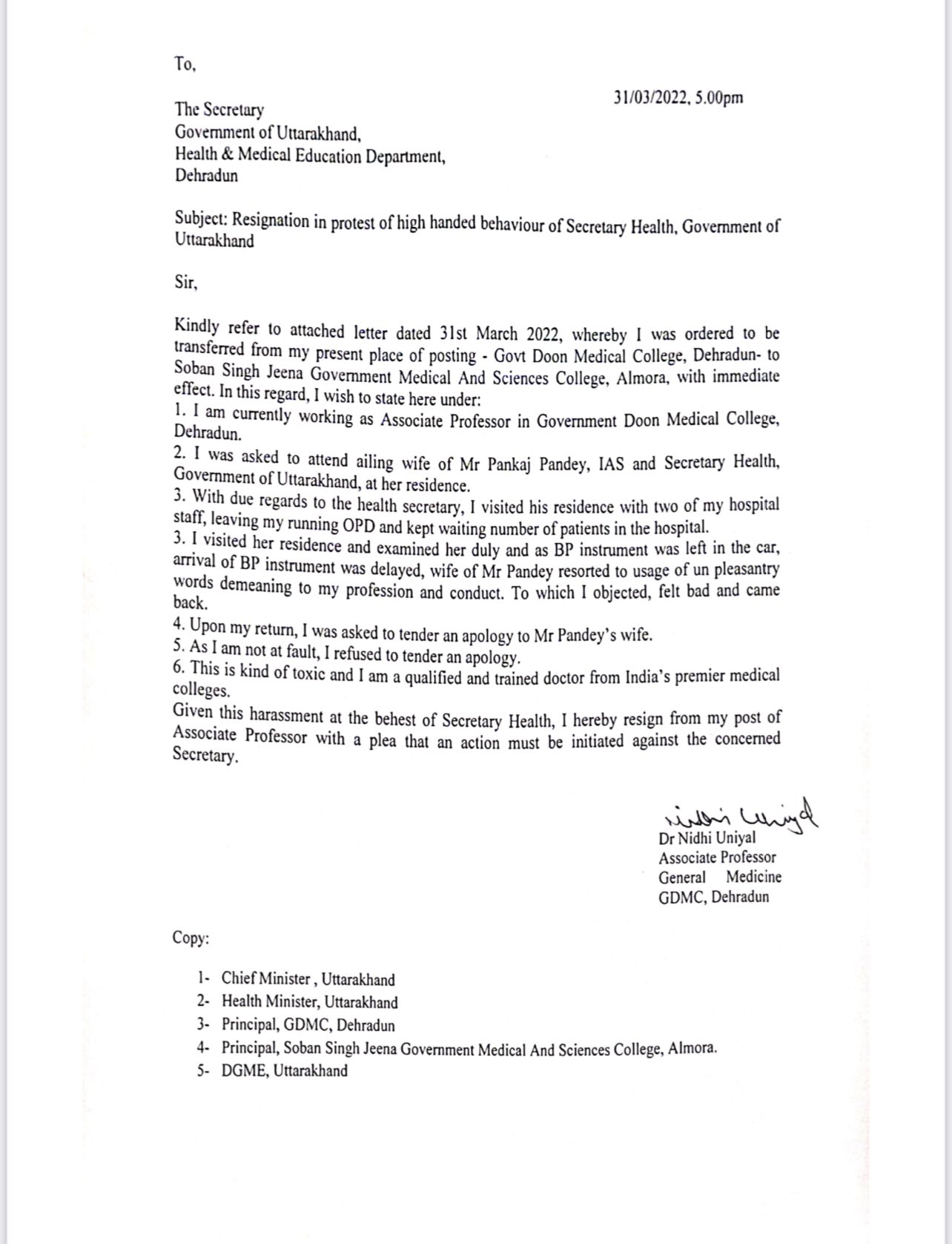
Screengrab of the letter by Dr Nidhi Uniyal

Dr Nidhi Uniyal recounted that although she examined the patient with due diligence, there was a slight inconvenience caused due to the delay in the arrival of the blood pressure equipment, which had got left in the car. She claimed that the wife of the IAS officer then resorted to verbally abusing her, post which she returned home.

“…Wfe of Mr Pandey resorted to usage of unpleasantry words demeaning to my profession and conduct. To which I objected, felt bad and came back. Upon my return, I was asked to tender an apology to Mr Pandey’s wife. 5. As I am not at fault, I refused to tender an apology,” she informed.

According to the Associate Professor, she soon received a letter of transfer from the Government Doon Medical College in Dehradun to the Soban Singh Jeena Government Medical and Sciences College in Almora district of Uttarkhand.

“This is kind of toxic and I am a qualified and trained doctor from India’s premier medical colleges. Given this harassment at the behest of Secretary Health, I hereby resign from my post of Associate Professor with a plea that an action must be initiated against the concerned Secretary,” wrote Dr Nidhi Uniyal in her letter.

A copy of her letter of transfer was posted on the micro-blogging site Twitter by popular physician Amit Thadhani.
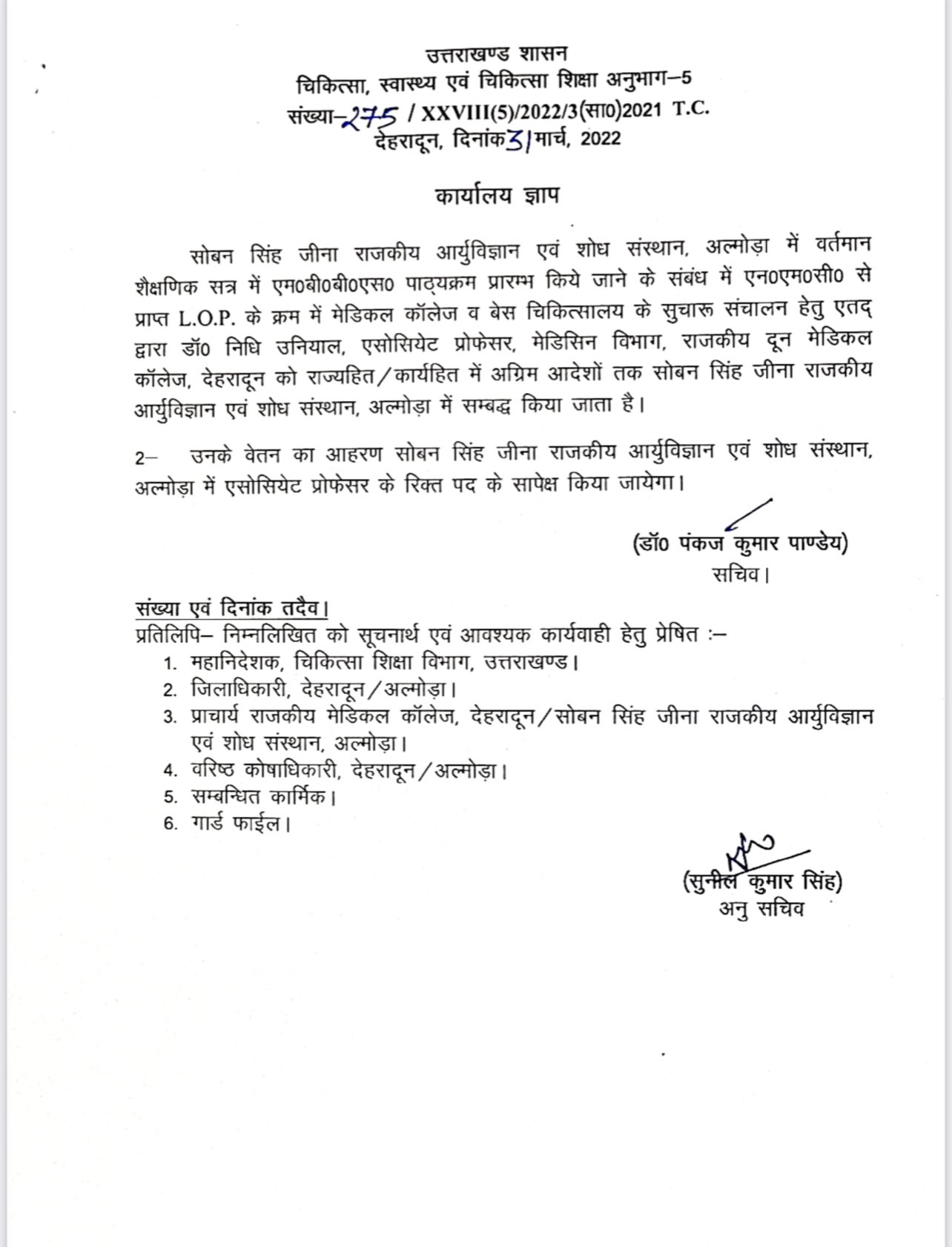
Screengrab of the letter of transfer of Dr Nidhi Uniyal

While speaking about the matter to Jagran, Health Secretary IAS Pankaj Pandey dismissed claims of ‘vengeance’ in the transfer of Dr Nidhi Uniyal. He said that the position of Associate Professor at the Soban Singh Jeena Government Medical and Sciences College in Almora had been lying vacant for some time. He dubbed the transfer as a ‘routine administrative affair.’
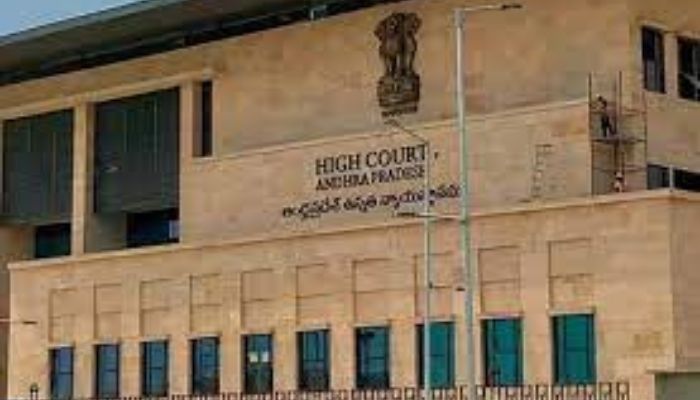

Devotees of a temple entitled to have a say in its running: Andhra Pradesh High Court

On the 1st of April 2022, Andhra Pradesh High Court ruled that devotees of a temple are entitled to have a say in the way a temple is run. The bench of Justice R Raghunandan Rao made this observation in a petition moved by Yellanti Renuka against the proposed reconstruction of Sri Mahakali Ammavari Temple in the Guntur district of Andhra Pradesh.

In her petition, Yellanti Renuka alleged that the deity in the Sri Mahakali Ammavaru temple was installed by her mother on a vacant site that belonged to her. It was consecrated in 1976 by Vedic scholars and purohits who had performed rites and rituals following the relevant Agam Shastras. The temple was then further developed after this.

Yellanti Renuka emphasized the important role of her mother and one other person in the establishment of the temple and the deity. She argued that they would have to be treated as the hereditary trustees of the temple.

The dispute

The dispute started when the temple management made a move to reconstruct the temple and initiated the process by informing the officers of the Endowment Department. Yellanti Renuka, and the other founding member of the temple, opposed the decision to reconstruct the temple. However, the temple management authorities decided to execute the temple reconstruction proposal and started collecting donations from the devotees for the same.

Yellanti Renuka then approached the high court saying, “The said reorganization/reconstruction of the temple cannot be permitted and any such action would be a violation of Articles 25 and 26 of the Constitution of India.”

The respondents, that is the members of the temple management, argued that Yellanti Renuka was not entitled to maintain the writ petition because she is not a member of the founder family which is a disputed fact.

Observations made by the court

Yellanti Renuka and the other petitioner had claimed that they have been attending and participating in various religious ceremonies and other activities of the temple for a long time. The court pointed out that this claim can not be denied.

The court noted that Section 2(18)(b) of the Andhra Pradesh Charitable Hindu Religious Institutions and Charitable Endowments Act 1987 states that any person who is entitled to attend or is in the habit of attending the performance of service, charity, or worship connected with the institution, would be a ‘person having interest’.

The court said, “The term ‘persons having interest’ has a certain significance. Section 92 of the Civil Procedure Code provides that, any two persons having an interest, can move the court where the intervention of the court, in the management of any charitable or religious trust, is required.”

The court added, “The term persons having Interest has not been defined in the Code. However, it has been interpreted to include actual worshippers at a temple. The same definition is now incorporated in the Andhra Pradesh Endowments Act. The Endowment Act has also given a significant place to persons falling under this category. Section 43 (5) requires the concerned Assistant Commissioner of Endowments to give an opportunity of hearing to such persons, before taking a decision on the registration of an institution under the Act.”

The court thus ruled, “This is a recognition of the fact that devotees of a temple are entitled to have a say in the manner in which an institution or temple is run and it cannot be said that such persons having interest cannot be permitted to approach this court when there are complaints of mismanagement or violation of the methods of worship or essential religious practices.”

Burqa-clad terrorist who hurled bomb at CRPF camp in J&K arrested, belongs to banned terror outfit Dukhtaran-e-Milat run by Asiya Andrabi

The Burqa-clad woman who had hurled a petrol bomb at a CRPF camp in Sopore town of Jammu and Kashmir’s Baramulla district on Tuesday (March 29) evening has been arrested, Jammu and Kashmir Police informed on Thursday (March 31).

Vijay Kumar IGP Kashmir, who confirmed the arrest, informed that the Burqa-clad woman was identified as Haseena Akhtar, a resident of Baramulla. She was a member of the banned terrorist organisation Dukhtaran-e-Millat (run by terrorist Asiya Andrabi) and was released on bail a few months ago.

According to Kumar, Akhtar is an OGW (over-ground worker) of LeT and there are three FIRs filed against her under UAPA.

The IGP further informed that Haseena Akhtar is the wife of Mohammed Yousuf Bhat, a resident of Sheeri Baramulla, who was a stone-pelter and had been arrested under the Public Safety Act (PSA) in 2016 for 17 months.

Haseena Akhtar attended Darul Uloom for her primary education. She finished Class X at Hanfia School in Sheeri.

According to the IGP, she came into contact with Dukhtaran-e-Millat chief Asiya Andrabi, a pro-Pakistan separatist who has been dreaming for years now to free Kashmir from India, in 2008-10 and adopted extremist ideology. Dukhtaran-e-Millat is Kashmir’s biggest network of ‘women jihadis’, as claimed by Andrabi herself.

Haseena Akhtar was involved in the posting posters of the Pakistan based terrorist outfit Lashkar-e-Taiba (LeT) in 2019. At that time, the Jammu and Kashmir police had arrested her under the Unlawful Activities (Prevention). She was later released on bail in December 2021.

IGP Kashmir claimed that Haseena Akhtar was evading arrest following the Sopore incident but was eventually apprehended.

Burqa-clad terrorist hurls bomb at CRPF camp in Baramulla, Jammu and Kashmir

OpIndia reported on March 30, how a burqa-clad terrorist had hurled a petrol bomb at a CRPF camp in Sopore town of Jammu and Kashmir’s Baramulla district on Tuesday evening.

A video has gone viral on the internet in which it was seen that a burqa-clad terrorist was seen throwing a bomb at a CRPF post. The unidentified terrorist, who was seen in Islamic gear, stopped in the middle of the street, took a bomb out of his/her bag, and threw it at the CRPF camp.

The terrorist was seen running runs away from the spot immediately afterwards.

A few two-wheelers were also seen passing by when the terrorist hurled bombs at the camp. The CRPF camp burnt in flames as bystanders poured water to douse the fire caused by the petrol bomb.

Who is Asiya Andrabi, the chief of the radical Islamist group Dukhtaran-e-Millat

The Dukhtaran-e-Milat is a radical separatist group in Jammu and Kashmir. The NIA raided this organisation in 2019 in connection with a number of terror funding cases.

The banned secessionist organisation Dukhtaran-e-Millat is headed by Asiya Andrabi, a pro-Pakistan separatist who has been dreaming for years now to free Kashmir from India. Dukhtaran-e-Millat is Kashmir’s biggest network of ‘women jihadis’, as claimed by Andrabi herself.

According to reports, in the early 1980s, Asiya was associated with running a madrasa for women – “Talimul Quran”, a precursor to Dukhtaran-e-Millat, where she invited women to read, understand and practice their faith. She is considered to be the one who radicalised the Muslim women in the valley and mobilised them against India.

Asiya Andrabi is alleged to be the backbone behind the stone-pelting apparatus in Kashmir. She had supported Pakistani separatist Masarat Alam in the series of stone-pelting rallies across Kashmir by using her village network of Dukhtaran-e-Millat operatives. She has several cases against her for instigating terror in the valley.

Andrabi, known for her hateful anti-India activities, is also a member of the All-Party Hurriyat Conference and has been arrested on several occasions for her involvement in separatist movements.

During the investigation, Asiya Andrabi had revealed that she came in close contact with Lashkar-e-Taiba kingpin Hafeez Saaed through a serving Pakistan Army officer. It is important to note that Andrabi’s nephew is a captain rank officer in the Pakistan Army. She also has close relatives having links with Pakistan Army and its intelligence agency ISI.

British media watchdog suspends pro-Khalistan propaganda network Khalsa TV for inciting violence, including murder, to further Khalistani ’cause’

The British Telecom regulator Ofcom suspended the license issued to pro-Khalistan media network Khalsa Television Ltd or KTV after an investigation found out that the Khalistani channel had breached broadcasting rules.

According to the official statement, the Ofcom investigation found that Prime Time, a 95-minute live discussion programme on KTV, incited violence. The KTV television channel caters to the Sikh community in the United Kingdom. 

During the show, the presenter of the programme had issued provocative statements that promoted violent action, including murder, as an acceptable and necessary form of action to further the Khalistani cause. This was a serious breach of our rules on incitement of crime and disorder, the Ofcom order said.

“Given the serious nature of this breach, and for the reasons set out in our suspension notice, we are today suspending Khalsa Television Limited’s licence to broadcast in the UK with immediate effect,” the order read.

Following the violation of rules, Khalsa Television Limited has been given 21 days to appeal against the ban imposed by Ofcom.

Khalistani network had called for violence against India

This is not the first time that the pro-Khalistani outlet has been caught inciting violence. Last year in February, the United Kingdom’s media watchdog had imposed a fine of 50,000 pounds on the pro-Khalistan network – Khalsa Television Ltd or KTV, for broadcasting hateful content and a discussion programme that asked British Sikhs to commit violence and also contained a terror reference.

The British media regulator – Office of Communications (Ofcom) had warned KTV not to broadcast such inflammatory content or the discussion programme found in breach of its rules.

The video and the show advocated violent action against the Indian state and glorified violent acts promoting Sikh secessionist movements. They had encouraged violence toward those who criticised the Sikh faith and legitimised a terrorist organisation. The music video had images of former Indian Prime Minister Indira Gandhi, which Ofcom considered the “video’s narrative of advocating violent action against the Indian state”.

The video had a caricature of Indira Gandhi with blood dripping from her mouth, accompanied by the caption, “You drank the blood of innocents, you evil woman”. The lyrics read, “Warriors will destroy your kingdom”, which had images of flames superimposed on the Red Fort in Delhi.

KTV is a television channel broadcasting largely to the Sikh community in the United Kingdom under a licence held by Khalsa Television Limited.

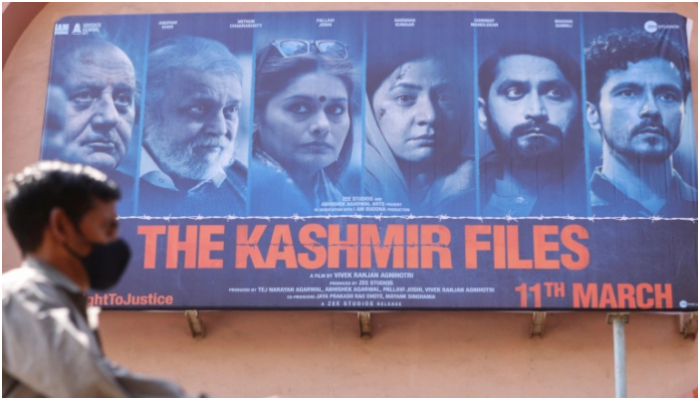
Mumbai: Milk seller threatened for offering products at discount on ‘The Kashmir Files’ ticket, complaint registered

Anil Sharma, a local businessman from Mumbai has registered a complaint at the Pantnagar Police Station for receiving threatening phone calls after he decided to offer milk at discount on ‘the Kashmir Files’ ticket. Sharma had offered a discount of Rs 10 on milk if the audience watching ‘the Kashmir Files’ showed tickets to the film. He had written on a banner outside his dairy shop that anyone who saw the movie and showed tickets would get a 20 percent discount on the cow’s milk.

Reportedly, he offered milk priced at Rs 44 per liter at just Rs 35 per liter intending to encourage more and more people to watch the film based on Kashmiri Hindu Genocide. Sharma, who owns Mumbai Dudhsagar Dairy in Ghatkopar said that he is ready to face the monetary loss if people are encouraged by his offer to watch the film.

However, Sharma has been receiving threatening calls for the past two days. According to local reports, some unknown people are harassing him for promoting the film and offering dairy products at lower prices on ‘the Kashmir Files’ tickets. The Pantnagar police have registered a complaint in the case and are conducting further investigations to nab the accused.

Citizens come up with novel schemes and discounts to promote ‘The Kashmir Files’

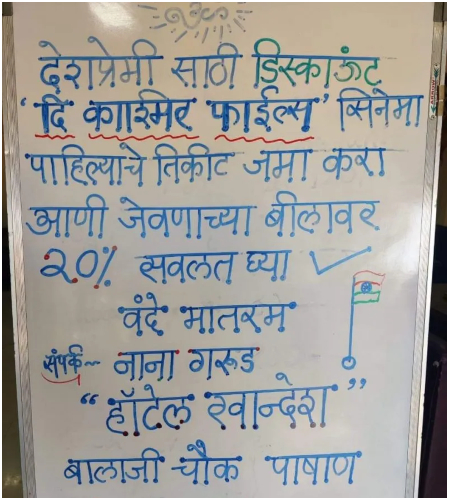
The film ‘the Kashmir Files’ is dominating the box office and has eventually become the people’s film. Several small-scale service providers, influencers and businesses across the country are offering discounted services and products to encourage the audiences to watch ‘the Kashmir Files’. Earlier, a hotel owner in Pune had announced a 20 percent discount on his hotel dinner plate. He had put up a board outside his shop reading, ‘discount for patriots, deposit tickets to watch The Kashmir Files movie and get 20% discount on meal bill. Vande Mataram’.

File Photo

Also, Chirag Barjatya, a fitness entrepreneur who runs a wellness coaching service, Project Fitness Company had announced on Twitter that customers on his website will get flat Rs. 500/- off on showing a ticket of The Kashmir Files. Overwhelmed by the response, Chirag formulated a code ‘TheKashmirFiles’ which could be used by his customers to get the discount on any of the products on his website.

Similarly, in Gujarat’s Palanpur, a jeweler in Shree Keshar Gold Palace had offered a discount of Rs. 500/- on the making charges of jewelry in Gold, silver or diamond and the Om Sanatan Pujapa Bhandar had offered a packet of premium scented essence sticks worth Rs. 70/- for free for people who watch The Kashmir Files movie.

The Kashmir Files is inspired by the true stories of Kashmiri Pandits. It takes viewers back to 1989, when conflict erupted in Kashmir due to rising Islamic Jihad, forcing the great majority of Hindus to flee the valley. According to estimates, roughly 100,000 of the valley’s total 140,000 Kashmiri Pandit inhabitants migrated between February and March 1990. More of them fled in the years that followed until just about 3,000 families remained in the valley by 2011.

The movie based on video interviews with first-generation Kashmiri Pandit victims of the Kashmir Genocide was released in India on March 11 and is open to watch in theatres.

Seven teachers suspended in Karnataka for allowing students wearing hijab to write SSLC exam, more action to follow: Details

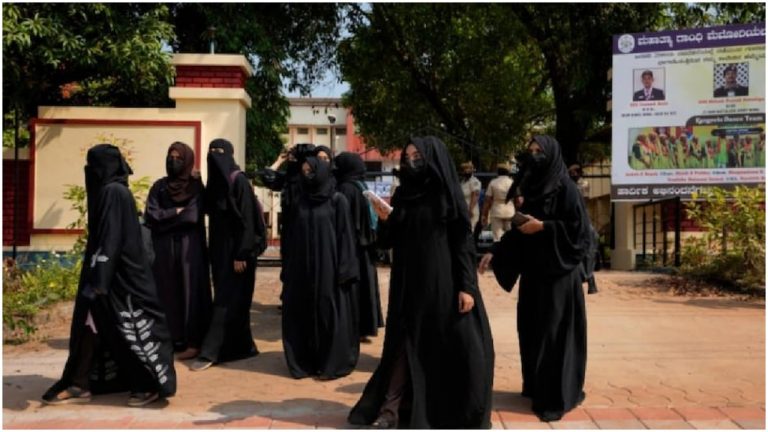
According to reports, seven school teachers in Karnataka have been suspended for permitting children wearing hijabs to take class X board (SSLC) examinations. Despite a government ruling mandating the wearing of uniforms after the high court prohibited religious clothing throughout educational institutions earlier this month, teachers allowed students to enter exam centres on Wednesday.

According to reports, the school administrators have suspended five teachers from CS Patil Higher Primary School and two from other schools in Karnataka. As of now, no action has been taken against students who took examinations while wearing hijabs.

SU Hokkala, SM Pathar, KB Bajanthri, BS Honnagudi, and SS Gujamagadi are the five teachers suspended from CS Patil Higher Primary School. Teachers SG Godage of Sharana Basaveshwara High School in Batagere and VN Kivudara of Bapuji Primary School in Gadag were also reprimanded for allowing hijab-clad students to take examinations.

Addressing media reporters, minister for primary and secondary education BC Nagesh said: “Government has instructed according to the Act, rule and judgement of the High Court. Every government employee has to follow the rule. If it isn’t followed, definitely some action has to be taken and a notice has to be given. We should get information from them and the final action should be decided after that. But clearly they have not followed instructions of the government so the action has been taken.”

Through a circular issued on March 25, the state government made uniforms mandatory for students taking the Class X board (SSLC) examinations. The Karnataka Education Department specified in the circular that students from government schools must attend the exams wearing the appropriate uniform as prescribed by the state government. It further added that students in private schools should appear in examinations wearing uniforms approved by the respective school administrators.

Verdict of Karnataka High Court on hijab

In its ruling on the case filed by certain Muslim students to allow the wearing of hijab in educational institutions, the Karnataka High Court said that the hijab is not an important practice of the Islamic religion and so it cannot be allowed in educational institutions.

The decision came in response to a petition filed in the Karnataka High Court contending that Muslim females wearing Hijab/Burqa should be allowed to attend school. The case was brought by a Muslim student who asked the High Court to order that she be allowed to wear a hijab in college, claiming that it is her “Fundamental Right” under Articles 14 and 25 of the Indian Constitution and an “integral practise of Islam.”

The controversy began earlier in January when several Muslim students were denied entry to classes because they wore hijabs. As the controversy went on, numerous more institutions joined in to prohibit burqa-clad students from attending classes, alleging a breach of their institute’s uniform guidelines.

Bhagwant Mann moves resolution in Punjab Assembly to ‘immediately’ transfer Chandigarh to state

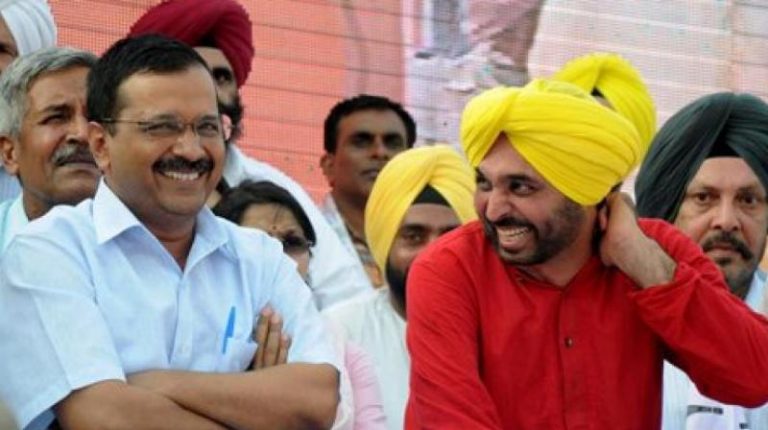
Newly elected Chief Minister of Punjab, Aam Aadmi Party’s Bhagwant Mann has moved a resolution in the Punjab assembly for “immediate transfer” of Chandigarh to the state. The resolution was moved in a 1-day special session of the Punjab Assembly on the 1st of April.

Chandigarh, a Union Territory, serves as the joint capital of Punjab and neighbouring state Haryana since the creation of Haryana state in 1966.

Moving the Resolution, Bhagwant Mann said that Punjab was reorganized through the Punjab Reorganization Act,1966, wherein, the State of Punjab was reorganized into the State of Haryana, Union Territory of Chandigarh, while some parts of Punjab were given to the then Union Territory of Himachal Pradesh.

Since then a balance was maintained in the administration of common assets like the Bhakra Beas Management Board (BBMS), by way of giving management positions in some proportion to the nominees of the state of Punjab and the state of Haryana, he added.

The move comes days after the Central government’s decision to extend central service rules to government employees in Chandigarh drawing sharp criticism from the Punjab government. Earlier, the Chandigarh employees were under the Punjab service rules. Now, the retirement age for government employees will be 60, instead of 58. Women can also avail maternity leave of 2 years now in line with centre service rules.

While the employees will avail these additional benefits, the politicians from Punjab have criticized it saying the centre is trying to usurp Punjab’s right over Chandigarh by replacing Punjab service rules for Chandigarh.

Punjab and Haryana have been locked in this dispute over Chandigarh for over 5 decades now, with both states staking a claim for the city. Interestingly, even Himachal Pradesh claims some parts of the city.

‘It has become a norm that people who file PILs circulate it in media’: Delhi HC on AAP’s petition over CM house protests, asks for status report in 2 weeks

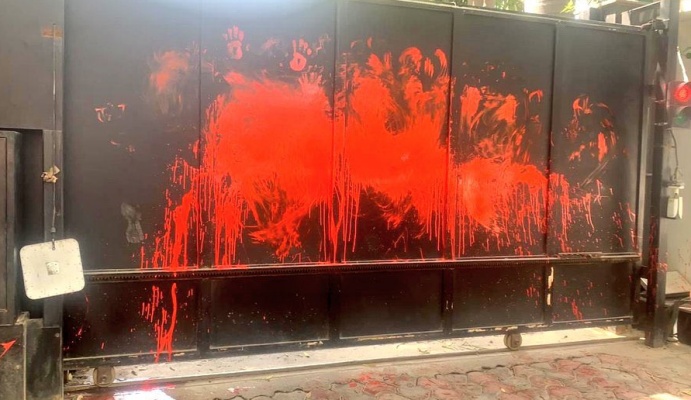
The Delhi High Court was today hearing a petition filed by AAP leader Saurabh Bharadwaj seeking an SIT probe over the protests against Kejriwal’s comments against the Kashmiri Hindu community. During a protest by the BJP youth wing, temporary barricades before an iron gate near the CM’s residence were removed and colourful paint was spread on the gate by protestors. The AAP leaders have been calling it an “attack on the CM’s life”.

A division bench by Acting Chief Justice Vipin Sanghi and Justice Navin Chawla heard the petition where Abhishek Manu Singhvi was representing Bharadwaj. He played the video of the incident. Singhvi argued that had it been any other functionary, ‘heads would have rolled’.

Singhvi blamed BJP MP Tejasvi Surya for the incident and added that he even enjoys a Z+ security. He stated that the ASG was even objecting to the notice. He added that a similar incident had also happened outside the residence of deputy CM Manish Sisodia in 2020.

“Just because he is the CM of Delhi, you cannot belittle his position and authority”, Sanghvi pleaded, adding that Delhi Police cannot be trusted to probe with objectivity.

ASG Sanjay Jain says FIR was lodged within 24 hours

ASG Sanjay Jain interjected that an FIR was lodged over the incident within 24 hours.

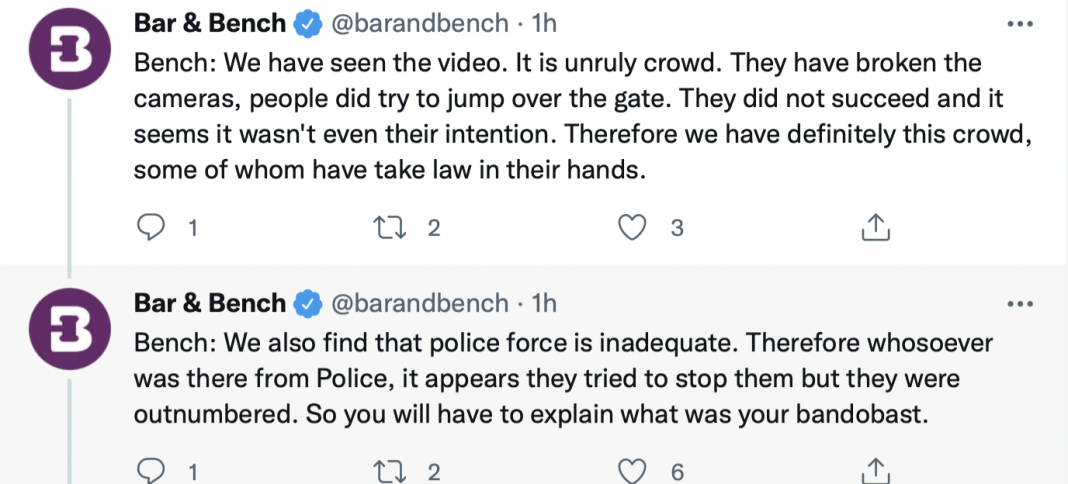
The Bench added that they have seen the video and it was indeed an unruly crowd that broke barricades and damaged cameras, though it did not seem like it was their intention to enter inside the gate. The Bench added that the police force was inadequate to handle the unruly crowd and the police will have to explain what was their arrangement for the protests.

screenshot via Bar and Bench

PIL has been filed as a publicity exercise: ASG

ASG Jain stated that the petitioner (Bharadwaj) is a political person and the PIL has been filed as a publicity exercise. “It was all over the press before it reached the court. It proceeds on a false presumption that FIR is not registered. Delhi Police had not given permission to hold the protest. This case is not different from any other case being investigated.”

ASG insisted that a court-monitored probe in the case will be inappropriate because it is the same as all other cases.

To this, the Bench replied that they are only seeking details, not monitoring. It added that it wants to be satisfied that the Delhi Police is taking the issue seriously.

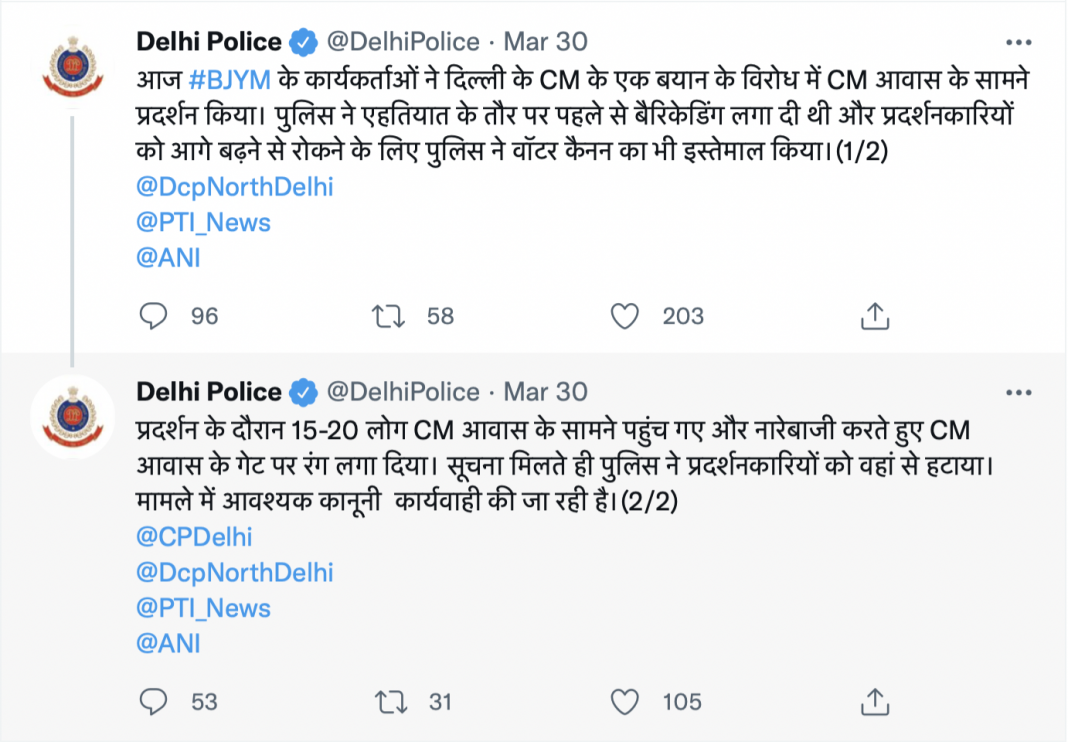
It is notable here that Delhi Police had tweeted about the incident saying they had even used water cannons to disperse the crowd. They confirmed the crossing of temporary barricades and paint sprayed on the iron gate.

Tweets by Delhi Police

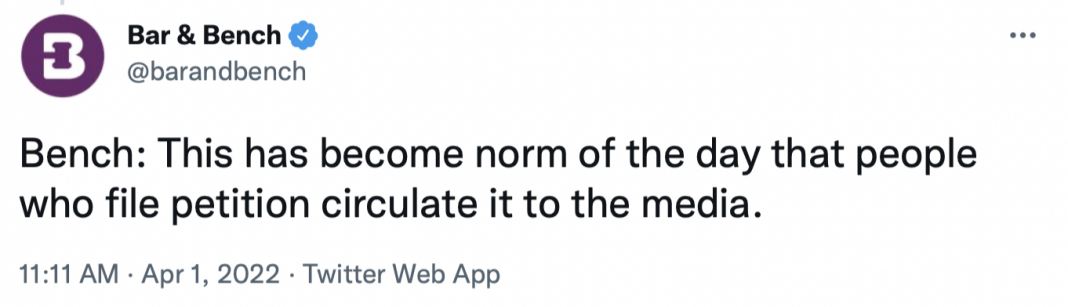
ASG Jain then added that the petitioner (Bharadwaj) is not even a complainant in the case and objected to a notice. The Bench also noted that “It has become the norm of the day that people who file petitions circulate it to the media.”

Tweet by Bar and Bench

In its order, the Bench said,” ASG submits that in light of the fact that FIR stands registered and R-1 has already taken action and proposes to take further steps, before issuing notice an opportunity be granted to submit status report in a sealed cover. Let the same be filed in two weeks.”

The Bench noted that 8 people have so far been arrested in the case and asked to preserve the CCTVs from the location and noted the DCP North’s statement that all evidence including CCTVs cameras around the CM residence and surrounding roads will be preserved.

The Bench then listed the case for further hearing on April 25.

Centrum-BharatPe’s Unity Small Finance Bank, which took over scam-hit PMC Bank, returns approximately Rs 3,800 crore to the depositors: Details

Unity Small Finance Bank paid approximately Rs 3,800 crore to depositors of the scam-hit Punjab and Maharashtra Co-operative Bank (PMC Bank) on Thursday, 31st March, after the Deposit Insurance and Credit Guarantee Corporation (DICGC) certified approximately 850,000 such valid accounts earlier in the day.

Abhinav Khare, the CEO of Asianet and also BharatPe co-founder and CEO took to Twitter on Friday, April 1 to share the news.

Meanwhile, the Economic Times also quoted Jaspal Bindra, the executive chairman of Centrum Group as informing, “Unity SFB received from DICGC a certified list of erstwhile PMC Bank depositors who are eligible to receive up to Rs 5 lakh of their deposits, post banking hours today.”

According to reports, a depositor received his/her money up to a maximum of Rs 5 lakh as per the insurance plan. This means that if the total deposit outstanding is less than the benchmark size, the depositor received the full amount.

Reports suggest that Unity SFB immediately credited the deposit amount to all depositors’ bank accounts soon after its holders sent confirmation of their credit balance via the Unity Bank App.

“To help immediately fund these accounts Unity SFB has taken cash assistance from DICGC which it will repay at a future date,” said Bindra. The bank, according to reports, has taken a loan of over Rs 3,700 crore, which will be repaid over a period of time.

It may be noted that Unity Small Finance Bank Limited, a joint venture between Centrum Group and BharatPe, had commenced operations as a small finance bank with effect from November 1, 2021. Unity Small Finance Bank had, after the RBI nod, taken over the Punjab and Maharashtra Co-operative Bank (PMC Bank), one of the largest cooperative banks, which was put under scrutiny by the Reserve Bank for a massive over Rs 7,000-crore fraud and misreporting of bad loans.

The Centrum group owns 51 per cent in the Unity Small Finance Bank and the remaining equity is held by the Gurugram-based Bharatpe.

PMC Bank fraud: RBI takes action, Mumbai police file FIR forms SIT to probe the case

The Reserve Bank of India had seized the Punjab and Maharashtra Cooperative Bank (PMC), capped cash withdrawals and launched an investigation into its accounting lapses on September 24, 2019.

The Economic Offences Wing (EOW) of the Mumbai Police had filed FIR against HDIL and Punjab & Maharashtra Cooperative (PMC) Bank officials in the PMC bank fraud case.

The FIR had stated that irregularities worth Rs 4,355.46 crores have been committed in the case, although the amount could go up during the course of the investigation. The police had said that it would investigate cases of violation of RBI norms in not disclosing NPA and exceeding lending limits for single entities, undue favour given to HDIL, and any instance of quid-pro-quo between the bank’s board of directors and the borrower company.  The FIR mentioned that the bank kept its NPA data hidden from RBI by using fake loan documents. 

Following this, the Mumbai Police’s EOW had arrested HDIL directors Sarang Wadhawan and Rakesh Kumar Wadhawan in connection with a fraud of over Rs 4,355 crores. According to the reports, PMC Bank officials gave loans to HDIL between the year 2008 and August 2019 despite the HDIL group promoters, Sarang Wadhawan and Rakesh Wadhawan, defaulting on previous loans.

Wife of Shiv Sena leader Sanjay Raut summoned by ED in connection with bank scam

The Enforcement Directorate had also registered a case of money laundering and initiated their own investigation into the scam. Senior NCP leader Praful Patel was also accused of having links with the Wadhwans. In fact, in December 2020, the wife of motormouth Shiv Sena leader Sanjay Raut, Varsha Raut, had been summoned by Enforcement Directorate on the 29th of December in connection with the PMC Bank scam.

Later in January 2021, the Enforcement Directorate had revealed that Shiv Sena MP Sanjay Raut’s wife Varsha repaid a Rs 55 lakhs of ‘friendly loan’ she had taken from a bank scam accused’s wife soon after the investigative agency summoned her to seek an explanation.

RBI clears the decks for the takeover of the scam-hit PMC

On June 19, 2021, RBI had finally cleared the decks for the takeover of the scam-hit Punjab and Maharashtra Cooperative Bank (PMC) by the consortium of the non-bank lender, Centrum Financial Services and fintech startup BharatPe. This was the first time after a gap of nearly six years that the central bank issued a new bank licence.

The RBI move came as a ray of hope for the depositors of the Punjab and Maharashtra Cooperative Bank (PMC), whose funds have been stuck for over three years now.

‘Islam inherently violent’, ‘Quran plagiarised’: What Musa Cerantonio, an ISIS terrorist in Australia who abandoned Islam after 17 years of converting to it, said

Musa Cerantonio, a former Australian Islamist preacher who persuaded a large number of foreign terrorists to join jihadi terror group in Syria, recently recounted his experience when he openly abandoned Islam. The background behind Cerantonio renouncing Islam and reporting it to the author of the article has been detailed in an article published in The Atlantic.

Cerantonio turned to Islam at the age of 17 after being born Robert Cerantonio into an Irish-Catholic family. According to Philippine authorities, Cerantonio travelled to the Philippines in 2013 and used YouTube to advocate for jihad and celebrate the Islamic States of Iraq and Syria (ISIS). He was deported in July 2014 following his actions.

Cerantonio and four others were detained by Australian authorities in May 2016 for allegedly planning to sail to Indonesia with the intention of joining ISIS in Syria. Cerantonio was already communicating with ISIS terrorists on social networks for a long time before his arrest. He often used social media to demand the killing of US officials and to laud Syrian extremists.

Cerantonio repudiated ISIS and admitted his role in fuelling jihad in June 2021. He informed Graeme Charles Arthur Wood, an American staff writer for The Atlantic, that he had forsaken ISIS in a letter sent from Port Phillip Prison in Melbourne last year.

Dedication to tyrannical death cults led by suicidal maniacs is bad enough

In the article at The Atlantic, Graeme Wood wrote, “In block letters—the Arabic transcriptions neatly bedecked with diacritical marks, all in the right places—he explained his journey back from jihad.” Cerantonio stated in the letter that for the previous 17 years, he was completely wrong. “Seeing individuals dedicate themselves to tyrannical death cults led by suicidal maniacs is bad enough. Knowing that I may have contributed to their choices is terrible,” he wrote.

When ISIS advanced, Wood notes, “this neofundamentalist autodidact” possessed both the knowledge and the on-camera charm required to persuade thousands of other Muslims to go to Syria and Iraq to kill and die for the Islamic caliphate.

Quran is plagiarised

While in jail, Cerantonio began to read the Quran more thoroughly, focusing on the passages that perplexed him the most. Among these was the person known as Dhu-l Qarnayn, or “the two-horned one,” who appears in the 18th chapter of the Quran and is sometimes misidentified as Alexander the Great. Cerantonio discovered no connection between Dhu-l Qarnayn and the actual Alexander, but he did detect connections between Dhu-l Qarnayn and an Aramaic version of Alexander’s tale that was substantially fabricated. He assumed that the Aramaic version had replicated the Quran, but after getting a copy and deciphering it for himself, he came to the conclusion that the contrary was more plausible.

Cerantonio went on and added, “Realizing that Dhu-l Qarnayn was not at all a real person but was rather based on a fictional account of Alexander the Great instantly left me with only one possible conclusion: The Quran was not divinely inspired.”

Islam is intrinsically violent

“Of course, I would have preferred to have discovered all that 17 years ago and avoided much trouble,” he added. Cerantonio has so ditched not only ISIS but also Islam and religion in general.

He indicated that he was hesitant to go public with his defection because his detractors will say he was just trying to get out of prison early and not that he is fearful of being murdered by the Islamic jihadists.

When questioned why Alexander’s impersonation convinced him that ISIS was evil yet the group’s techniques of mass massacres and sex enslavement had never turned him off, he stated that the latter was coherent with the religion, but Alexander’s impersonation failed logical standards on its own terms. He was attempting to make the point that Islam is intrinsically violent and that no one should expect anything less.

There is nothing called true Islam

Cerantonio stated that practically all of the programmes in jails in Australia and throughout the world are a waste of time. They present counter-arguments to jihadism that jihadists can readily rebut. He considered the idea of exposing terrorists to “true Islam” idiotic.

Concerning author Richard Dawkins, whom he follows since becoming athiest, Cerantonio noted that he disagrees with what Dawkins says since he gets things incorrect when writing about Islam. “Dawkins quotes a scripture that claims martyrs will be given 72 virgins in paradise. That hadith is not authentic!” Cerantonio voiced his displeasure in a Skype session with Wood. He claimed that opponents of ISIS, even intellectual ones, become ignorant when fighting jihadism and mistakenly believe that the jihadists themselves are stupid.

ISIS deserves destruction

Cerantonio claimed that, thus far, nothing appears to have worked better than destroying ISIS on the battlefield, razing its caliphate, and encouraging its adherents to contemplate if God could be giving them a “message in the form of U.S. aerial bombardment.” 

Cerantonio recounted persuading two jihadists by explaining evolutionary mechanisms to them. He went at them hard and laid out how a world without a supernatural Creator would appear, how it might make sense, and how it may be an alternative to their preconceived opinions.