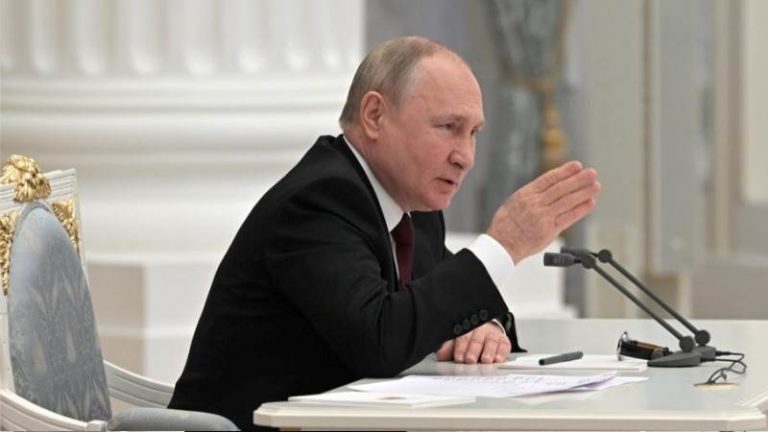
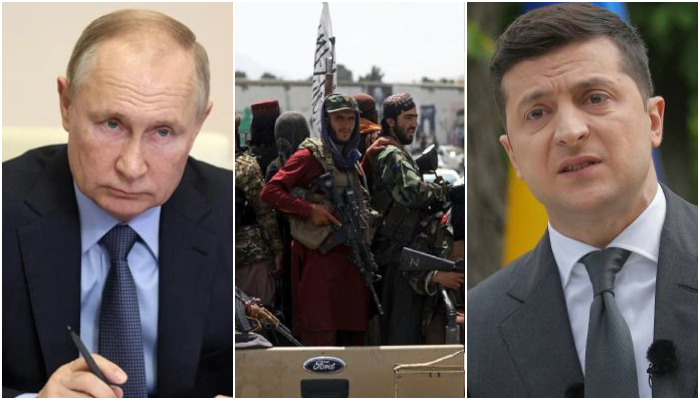
In a major development, the Kremlin on Friday said that Russian President Vladimir Putin is ready to send a delegation to Minsk to hold discussions with Ukraine as Russian forces approach Kyiv on the second day of Moscow’s invasion.
#BREAKING: Russian President Vladimir Putin is ready to send a delegation of high-ranking officials to Minsk to hold talks with Kiev, Kremlin spokesman Dmitry Peskov has said.
According to reports, Kremlin spokesperson Dmitry Peskov said that a Russian diplomatic delegation, including Foreign Ministry, Defence and Administration officials, could be sent to Minsk for talks with Ukraine. The development came after the Russian President turned down Ukraine President Volodymyr Zelenskyy’s offer for talks, demanding that Kyiv ‘surrender’ first.
As per claims made by the Russian military, their forces have seized a strategic airport located outside the Ukrainian capital, asserting that Kyiv has been cut off from the west. The Gostomel (Hostomel) Airport was reportedly the site of intense fighting between Ukrainian and Russian troops.
Russian Foreign Minister Sergey Lavrov had earlier in the day that Russia would be willing to undertake negotiations through diplomatic channels if Ukraine’s army agrees to surrender. “We suggested talking about security guarantee last December with Zelenskyy. We want to have joint talks and make joint efforts to look forward to a joint security guarantee. He is well aware of the facts involving Ukraine, and should not pass on the blame at Russia,” Lavrov said.
Russia launches ‘military operations’ against Ukraine, Zelensky says 137 killed in the Russian offence
A day after Russia launched a full-scale invasion in Ukraine, the President of the Eastern European country, Volodymyr Zelensky, informed on Friday (February 25) that a total of 137 people (including civilians) were killed in Russian military strikes.
On Thursday (February 24), Russian President Vladimir Putin announced limited military operations against Ukraine. In a televised address, Russian President Vladimir Putin declared the special operation to be conducted in East Ukraine.
Putin had added explicitly that Moscow did not plan on occupying Ukraine. He said the military action he announced would seek to “demilitarise” and “denazify” Ukraine and came in response to threats from Ukraine.
According to Ukraine’s border guard agency, the Russian military entered the country from neighbouring Belarus. The Russian forces crossed Belarus to enter Ukraine from the North, said Ukraine’s Ministry of Internal Affairs. The Northern border forces in Ukraine have come under attack by Russian troops.
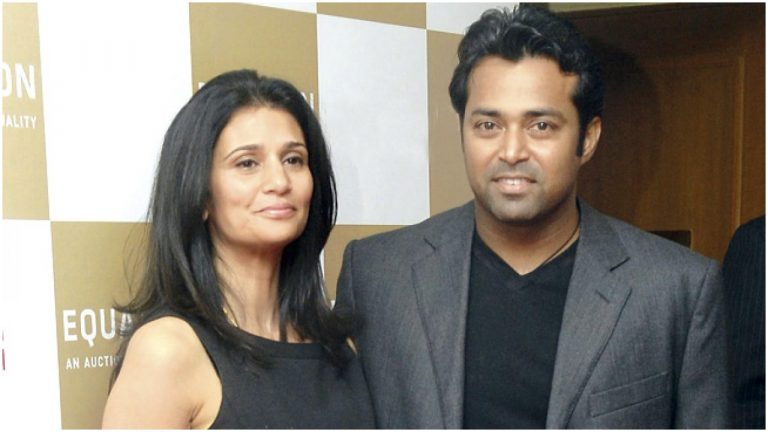
A metropolitan magistrate court in Mumbai has held in its order that tennis legend Leander Paes committed various acts of domestic violence against his former partner Rhea Pillai.
According to the reports, the court held Leander Paes guilty of domestic violence charges and asked him to pay a monthly rent of Rs 50,000, in addition to monthly maintenance of Rs 1 lakh to Rhea Pillai if she chooses to leave their shared residence. Metropolitan magistrate Komalsing Rajput had passed the order earlier this month.
“There would be an additional increase of 5% every year, from the month of March 2023, so that Pillai shall not be compelled to knock on the doors of court again and again for enhancement of the amount of maintenance and house rent to meet the inflation, till the date up to which the said order remains in force,” added the court.
Model-turned-actor Rhea Pillai had filed a domestic violence case against Leander Paes in 2014, seeking relief and protection under the Protection of Women from Domestic Violence Act. Pillai had said that she was in a live-in relationship, akin to marriage, with Leander Paes for eight years.
She had claimed that Leander Paes had “caused verbal, emotional and economic abuse, which resulted in tremendous emotional violence and trauma” through his acts and conduct.
Hearing the plea, the magistrate said, “It is proved that the respondent caused various acts of domestic violence.”
However, the court added that the monetary relief would be available to Pillai only if she chooses to live separately and not continue to live in their shared residence at Bandra. The court also ordered Paes to pay an additional amount of Rs 1 lakh to cover legal fees and expenditures and asked him to pay for their daughter’s sustenance, education, and other essentials.
The magistrate said that with Leander Paes’ career in tennis almost over, it would cause ‘serious prejudice’ for making him pay maintenance to Rhea Pillai when living in a rented home.
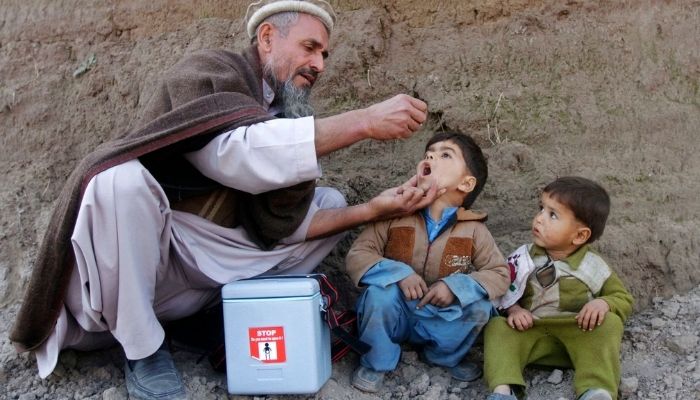
On Thursday (February 24), the United Nation issued a statement, condemning the killing of 8 polio workers at 4 different locations in Northern Afghhanisation.
One of the members of the polio vaccination team was murdered in Takhar province while 4 others were killed in Kunduz city. Besides, a social mobiliser and 2 vaccinators were hacked to death in the Emamsaheb district in Kunduz province of Afghanistan.
Four of the 8 deceased were women. No group has so far claimed responsibility for the attacks. In light of the recent attacks, the programme has been suspended in the Kunduz and Takhar province.
Head of Taliban’s Information & Culture Department (Kunduz), Matiullah Rohani, said, “Our security and intelligence agencies have launched an operation in connection with the incidents that took place today in Kunduz Province, and efforts are underway to apprehend the perpetrators.”
UN condemns killing of 8 polio workers
In a tweet, Dr Ramziz Alakbarow wrote, “The United Nations strongly condemns all attacks on health workers anywhere. The delivery of health care is impartial and any attack against health workers and those who work to defend them is an attack on the children, whose very lives they are trying to protect.”
He further added, “We condemn today’s attack and assassination of 8 polio vaccination workers in #Afghanistan in strongest terms. This is a violation of International Humanitarian Law.” Alakbarov is the UN Secretary-General’s Deputy Special Representative for Afghanistan.
The Director-General of the World Health Organization (WHO), Tedros Adhanom Ghebreyesus, stated, “I am deeply shocked by the killing of 8 #polio health workers, 4 of them women, in Afghanistan. We extend our deepest condolences to their families and colleagues. Health workers are #NotATarget.”
I am deeply shocked by the killing of 8 #polio health workers, 4 of them women, in #Afghanistan. We extend our deepest condolences to their families and colleagues. Health workers are #NotATarget. https://t.co/U6bXQZHv7L
“As a result of these attacks, the national polio vaccination campaign, which began on 21 February 2022, has been suspended in Kunduz and Takhar provinces. This suspension leaves thousands of children unprotected and exposed to a life-threatening disease that can result in permanent paralysis,” informed Dr Ahmed Al-Mandhari, WHO Regional Director (Eastern Mediterranean).
It must be mentioned that the polio programme in Afghanistan is supported by UNICEF, WHO and other partners of the United Nations. Reportedly, 9 polio workers were killed in Afghanistan during vaccination campaigns in 2021. Pakistan and Afghanistan are the only 2 countries in the world where polio still exists.
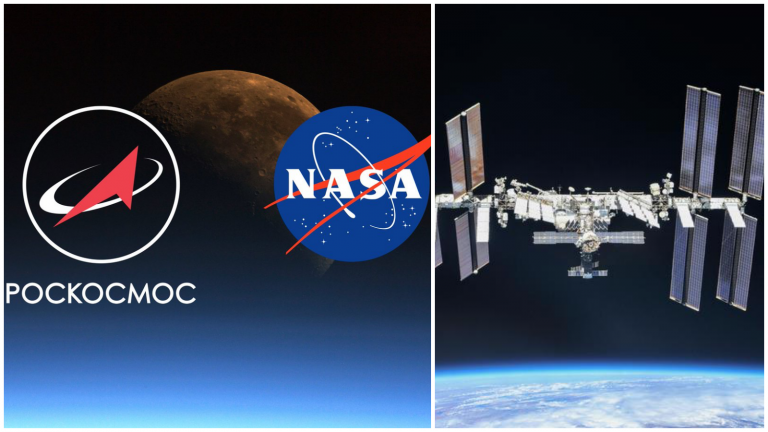
A day after the USA announced sanctions against Russia over the invasion of Ukraine, Dimitry Rogozin, the current head of ROSCOSMOS, Russia’s space agency, shared a series of angry tweets, saying the US sanctions may affect the space-technology cooperation that Russia and USA currently have.
On February 24, hours after Russia started a full-scale military operation in Ukraine, Biden had addressed a strongly-worded presser, asserting that the sanctions the USA brings will adversely affect Russia’s technological advancements and will affect their space program too.
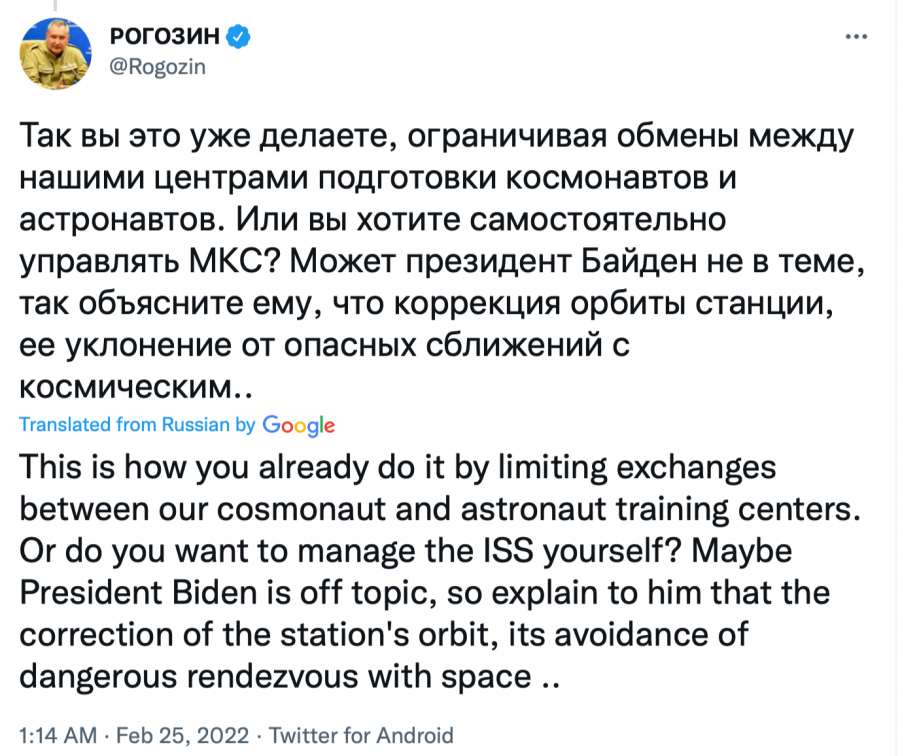
In a series of tweets, Rogozin said, “Sanctions of ALZ-GEIMER. Biden said the new sanctions would affect the Russian space program. OK. It remains to find out the details: 1. Do you want to block our access to radiation-resistant space microelectronics? So you already did it quite officially in 2014. As you noticed, we, nevertheless, continue to make our own spacecraft. And we will do them by expanding the production of the necessary components and devices at home. 2. Do you want to ban all countries from launching their spacecraft on the most reliable Russian rockets in the world?”
He continued, “This is how you are already doing it and are planning to finally destroy the world market of space competition from January 1, 2023 by imposing sanctions on our launch vehicles. We are aware. This is also not news. We are ready to act here too. 3. Do you want to destroy our cooperation on the ISS?”
In the nest two tweets, Rogozin said the US sanctions may adversely affect the controlling and manoeuvring of the ISS (International Space Station) that is currently done by the Russians.
“This is how you already do it by limiting exchanges between our cosmonaut and astronaut training centres. Or do you want to manage the ISS yourself? Maybe President Biden is off-topic, so explain to him that the correction of the station’s orbit, its avoidance of dangerous rendezvous with space garbage, with which your talented businessmen have polluted the near-Earth orbit, is produced exclusively by the engines of the Russian Progress MS cargo ships. “
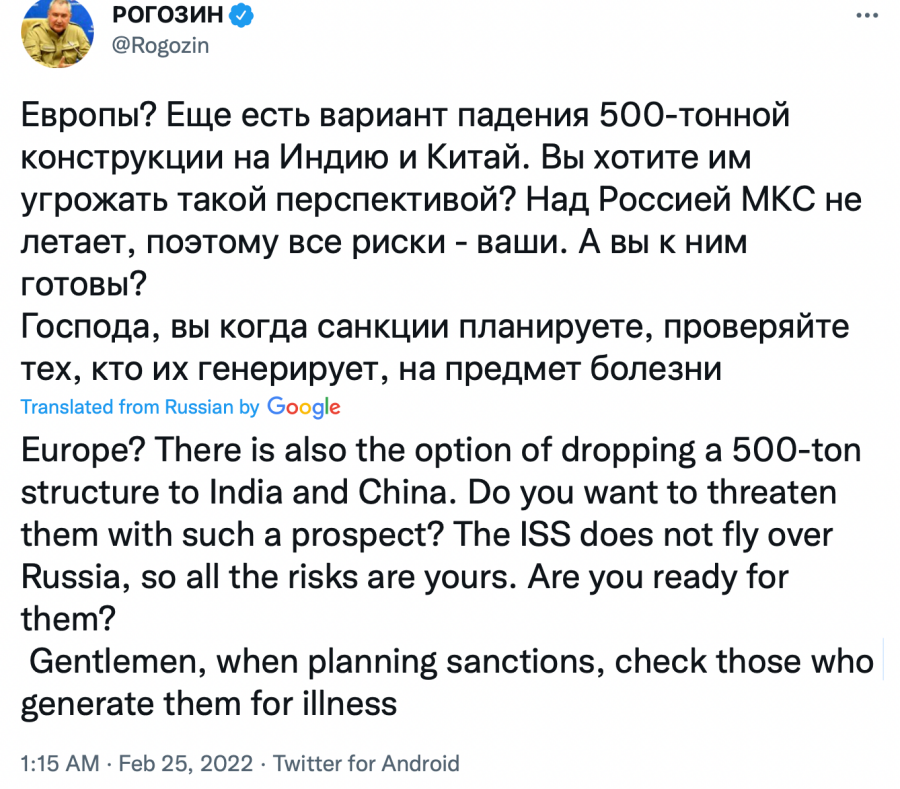
Rogozin continued, “If you block cooperation with us, who will save the ISS from an uncontrolled deorbit and fall into the United States or Europe? There is also the option of dropping a 500-ton structure to India and China. Do you want to threaten them with such a prospect? The ISS does not fly over Russia, so all the risks are yours. Are you ready for them? Gentlemen, when planning sanctions, check those who generate them for illness like Alzheimer’s.”
Rogozin further said, “Just in case. To prevent your sanctions from falling on your head. And not only in a figurative sense. Therefore, for the time being, as a partner, I suggest that you do not behave like an irresponsible gamer, disavow the statement about “Alzheimer’s sanctions”. Friendly advice.”
The International Space Station
The ISS was launched in 1998 with the cooperation of the USA, Russia, Japan, Canada and Europe. Russia’s ROSCOSMOS and NASA mostly control it, through cooperation. There has been friction between the two space agencies in the past over orders to scientists. Currently, there are 7 astronauts on board, 2 Russian, 4 from NASA and one from Europe.
Biden specifically mentions sanctions that affect Russia’s space program. https://t.co/7AkU9KDmrg
Recently, ROSCOSMOS had stated that cooperation with NASA will not be affected due to the ongoing friction between the USA and Russia over Ukraine. Just hours ago, NASA had confirmed the same, saying that the sanctions imposed by the USA on the Russian elite and banks will not put the ISS operation at risk.
“NASA continues working with all our international partners, including the State Space Corporation Roscosmos, for the ongoing safe operations of the International Space Station. The new export control measures will continue to allow U.S.-Russia civil space cooperation. No changes are planned to the agency’s support for ongoing in orbit and ground station operations”, NASA had said to Space.com.
The ISS depends on the Russians for propulsion and manoeuvre, while the ‘power’ segment is provided by the USA, as per spacenews.com.
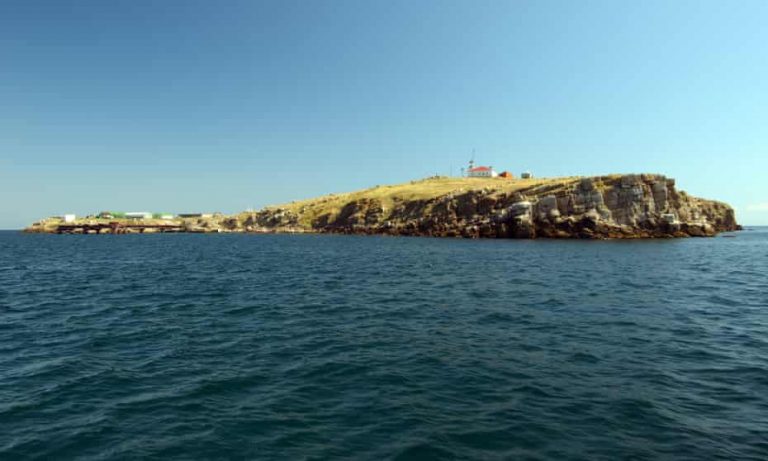
A chilling video from Ukraine’s Snake Island has been doing the rounds on the internet wherein a bunch of Ukrainian soldiers defied Russian forces and refused to lay down their arms after being asked to surrender by a Russian warship. “Russian warship, go f*ck yourselves,” Ukrainian soldiers told an officer on board a Russian navy warship when asked to surrender.
The video of the conversation went viral on social media platforms as users hailed 13 Ukrainian soldiers for their exemplary courage in the face of adversity and imminent death after they refused to vacate their post amidst the escalation of hostilities between Ukraine and Russia.
“This is a Russian warship. I propose you lay down your weapons and surrender to avoid bloodshed and unnecessary victims. Otherwise, you will be bombed,” said a Russian office onboard a navy warship.
“Russian warship, go fuck yourself,” came the reply from the Ukrainian soldiers guarding the strategic island.
According to Anton Herashchenko, an adviser to the interior minister, the strikes began soon after the defiant response by the Ukrainian soldiers.
The refusal to surrender eventually led to the death of all 13 Ukrainian soldiers, who were killed in an attack after Russia conducted strikes from air and sea, Kyiv said.
Ukrainian President Volodymyr Zelenskiy on Thursday confirmed that Snake Island, which is small but strategically important for the defence of Ukraine’s territorial waters and among its southernmost settlements, had been captured by Russia.
“All the defenders of Snake Island died, but they did not surrender,” Zelenskiy said in a video posted on Telegram, adding that they would be named “heroes of Ukraine.”
Russia launches ‘military operations’ against Ukraine
On Thursday (February 24), Russian President Vladimir Putin announced limited military operations against Ukraine. In a televised address, Russian President Vladimir Putin declared the special operation to be conducted in East Ukraine.
Putin had added explicitly that Moscow did not plan on occupying Ukraine. He said the military action he announced would seek to “demilitarise” and “denazify” Ukraine and came in response to threats from Ukraine.
According to Ukraine’s border guard agency, the Russian military entered the country from neighbouring Belarus. The Russian forces crossed Belarus to enter Ukraine from the North, said Ukraine’s Ministry of Internal Affairs. The Northern border forces in Ukraine have come under attack by Russian troops.
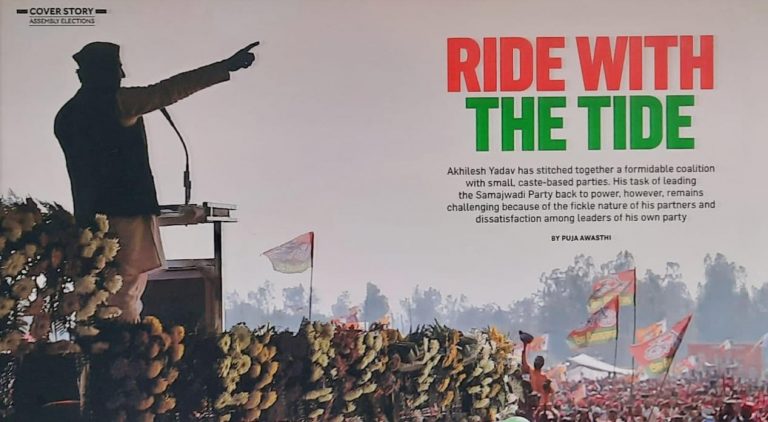
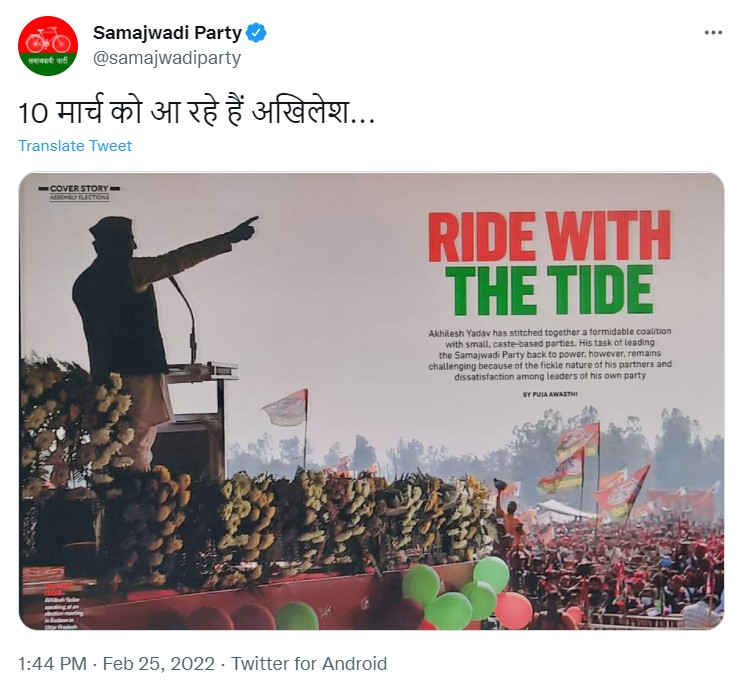
On Friday, the Samajwadi Party uploaded a Twitter post with a banner that said: “Ride With The Tide.” Interestingly, the picture contains comments critical of the party’s position in the current election.
The Twitter post by Samajwadi Party.
The Twitter handle of the Samajwadi Party shared a post writing “Akhilesh is coming on March 10” (Translated from Hindi). The post was shared at 01:44 PM. It has a photo attached which contains the headline “Ride With The Tide.” Under the slogan, there are some lines that are critical to the Samajwadi Party Itself.
The message below the slogan reads, “Akhilesh Yadav has stitched together a formidable coalition with small, caste-based parties. His task of leading the Samajwadi Party back to power, however, remains challenging because of the fickle nature of his partners and dissatisfaction among Leaders of his own party.”
The message in the poster.
As soon as this post went viral, people started ridiculing the Samajwadi Party on social media. A Twitter user named Debojyoti Dasgupta (@tisDev) wrote “Are bhai??Padh to leta pehle kya likha hai”.
It would appear that the Samajwadi Party got so excited looking at a picture of Akhilesh Yadav where he was waving at a crowd that coupled with the tag line that read “Ride with the Tide”, they simply assumed that the cover story claimed that SP would win the upcoming elections. Without really reading the caption critical of the party, SP ended up sharing the post in their excitement not knowing that the accompanying text essentially said that SP would have a tough time winning the upcoming assembly elections.
The state assembly elections in Uttar Pradesh are currently ongoing with all political parties campaigning for the respective rounds of polling. The Samajwadi Party has formed an alliance with many small caste-based parties and the Rashtriya Lok Dal led by Jayant Chaudhary.
The civil aviation authority of Russia has banned all British flights from entering Russia and closed its airspace in response to the British government’s decision to ban Russian Aeroflot flights.
According to the reports, Rosaviatsiya – Russia’s civil aviation authority said that they have banned all flights originating from the United Kingdom and transit flights from landing on Russian soil from Friday. In addition, Russia has also closed its airspace for British flights.
Russia’s civil aviation authority Rosaviatsia said, “This measure was taken in accordance with the provisions of the Intergovernmental Air Services Agreement between Russia and the UK as a response to unfriendly decisions by the UK aviation authorities regarding the restriction on regular flights of aircraft owned, leased or operated by a person associated with Russia or registered in Russia.”
The measure was taken in response to the UK’s decision to ban Russian flag carrier Aeroflot as part of sanctions over Russia’s attacks on Ukraine. British Prime Minister Boris Johnson had announced a set of sanctions on Russia.
British Airways currently operates three flights per week between London and Moscow.
On Thursday, Ukraine had closed its airspace after Russian forces had launched a “special military operation” on its western neighbour.
Russia reaches outskirts of Ukraine’s capital Kyiv
Meanwhile, Russian forces enter deep inside Ukraine. According to Ukrainian Army, Russian troops have reached the outskirts of Kyiv.
On Friday, Ukraine President Zelensky claimed that the Russian troops were targeting civilians and carried out rocket attacks in the besieged capital. The Ukrainian Army said Russian forces are approaching Kyiv from northeast and east.
Invading Russian forces press deep into Ukraine.
Russian forces have reached the outskirts of Kyiv. Ukraine President Zelensky says invading troops are targeting civilians and explosions can be heard in the besieged capital
Earlier in the day, loud blasts were heard in the eastern Ukrainian city of Kharkiv as Russia continued to carry out missile strikes and air raids on several cities in Ukraine.
On Friday, the Taliban ruled Afghanistan government has issued a statement amidst the severe war ongoing between Russia and Ukraine and has called for restraint by both parties. “All parties need to desist from taking positions that could intensify violence”, the statement read calling for dialogue.
Abdul Qahar Balkhi, the MoFA Spokesperson, Afghanistan said that the country was closely observing the Russia-Ukraine war and condemned the invasion by Russia. He also expressed concern about the situation in Ukraine and stated that the violence might intensify resulting in the real possibility of civilian casualties.
The Taliban gravely concerned about the Russian invasion of Ukraine also extended an offer to hold ‘talks’ in order to avert the possibility of more casualties. “The Islamic Emirate if Afghanistan, in line with its foreign policy of neutrality, calls for both sides of the conflict to resolve the crisis through dialogue and peaceful means,” said the statement.
The Taliban government in Afghanistan further called on parties to the conflict to pay attention to safeguarding the lives of Afghan students and migrants in Ukraine.
The statement by the Taliban has come as a surprise to many as thousands of Afghan civilians have been killed in Taliban attacks in Afghanistan over the past two decades. After 20 years of war, the Taliban last year in August captured the Afghan capital Kabul without resistance and intensified their offensive in the northern part of the country, especially after the foreign forces withdrew from Afghanistan.
On August 15 the Islamic Republic of Afghanistan’s government fell, resulting in the de facto takeover of the country by the Islamic Emirate of Afghanistan. The conflict has killed tens of thousands of people and displaced millions in Afghanistan.
Russia on Thursday launched attacks on Ukraine from the neighbouring country Belarus. The Russian forces crossed Belarus to enter Ukraine from the North and crashed attacks on border units, border patrols, and checkpoints using artillery, heavy equipment, and small arms. Earlier in the day, large explosions were heard in Kharkiv, Ukraine.
According to the reports, a total of 137 people, including civilians in Ukraine have been killed in Russian military strikes. The Ukrainian President informed that the enemy has marked him and his family as prime targets and that they want to damage Ukraine politically by destroying the head of State.
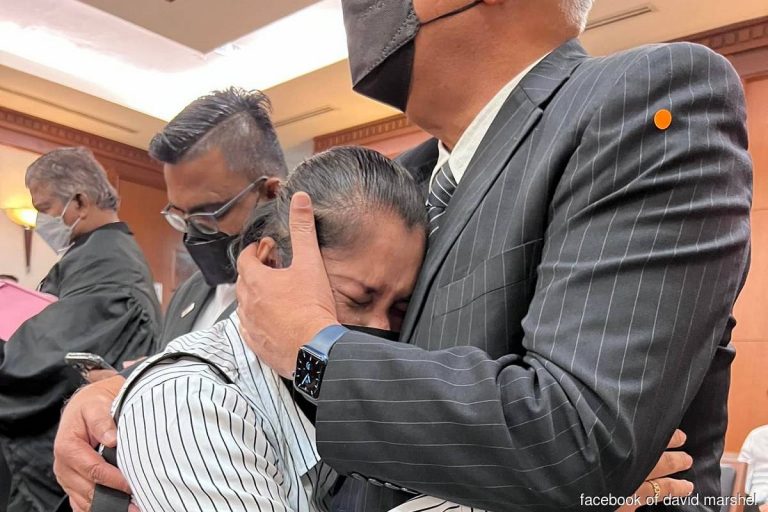
Loh Siew Hong, a 35-year-old Hindu Chinese woman in Malaysia, was struggling for 3 years to obtain custody of her children. When the long wait was finally over on Monday (February 21, 2022), the mother-of-three could not hold back her tears.
“The three children are to be released forthwith into the sole custody, care, and control of the applicant,” the Kuala Lumpur High Court ordered. For Hong who had suffered all her life, it was a moment of tranquillity. She was finally reunited with her 10-year-old son and two 14-year-old twin daughters.
High court judge Collin Sequerah has ordered the welfare department to immediately release all three children aged 14 and 10 to their mother Loh Siew Hong, in line with an earlier court order granting her full custody,care & control of her children.Respondent contemplating appeal https://t.co/mHycYQh19Fpic.twitter.com/FzWQfgrCDC
After suffering years of domestic abuse at the hands of her Indian-origin husband Nagahswaran Muniandy, she had filed for a divorce and separated in March 2019. Loh Siew Hong was then hospitalised for a long time due to injuries inflicted by Muniandy. Her children were taken away by her estranged husband, who had converted to Islam by then.
Hong failed to trace her children and sought the help of the police. “In December 2019, she obtained interim custody of her children pending her divorce, but her court case was delayed when the country went into Covid-19 lockdown in March 2020; she finally obtained an order granting her full and sole custody in March 2021,” reported MalayMail.
During the period of her hospitalisation, Muniandy took her 10-year-old son and two 14-year-old twin daughters to the State of Perlis and converted them to Islam with the help of an Islamic NGO. The conversion was ‘unilateral’ as the children were minors and the consent of Loh Siew Hong was not sought.
In the meantime, her estranged husband Muniandy was arrested for a drug-related offence and was sent to a prison in Kelantan. When Loh Siew Hong tried to meet her children, the NGO denied permission. The children were then transferred to a children’s home in Kedah.
Loh Siew Hong moved Kuala Lampur High Court
On February 13 this year, a motion of habeas corpus was filed by Loh Siew Hong before the Kuala Lumpur High Court. After filing the application, the children were put under the care of a ‘neutral’ party, the Perlis Welfare Department.
She was represented in court by advocate A Srimurugan. In her application, Hong pointed out that a female Islamic preacher by the name of Nazirah Nanthakumari Abdullah kept her children at the Hidayah Centre Foundation in Bayan Lepas in Penang and did not allow her to meet them. The Islamic NGO instead transferred her children to a children’s home.
“The actions of the respondents to keep the children without the applicant’s consent constitute illegal or inappropriate detention in private care and this warrants the court’s intervention as the applicant does not know the specific location of her children. The applicant has reasons to believe that there are intention and attempts by the respondents to convert her children to Islam and to take them outside of this court’s jurisdiction,” the application stated.
With our JAG sisters, we call on all arms of gov to enforce immediately Loh Siew Hong’s rights as a mother to have full custody, care & control of her children. Unilateral conversion defended by religious authorities at the expense of a mother’s custody rights IS NOT acceptable pic.twitter.com/juGpFkFarW
— All Women’s Action Society (AWAM) (@AWAMMalaysia) February 18, 2022
Mother couldn’t meet children but ‘mufti’ could
On February 15, the ‘neutral’ Perlis Welfare Department denied permission to Loh Siew Hong to meet her kids, citing ‘rising Covid-19 cases.’ However, Perlis Mufti Mohd Asri Zainul Abidin was allowed to spend time with her children and further ‘indoctrinate’ them.
It thus came as no surprise when the underage children told their 35-year-old mother to convert to Islam in their first meeting. A helpless Hong even agreed to become a Muslim if her children could come and live with her.
While arguing in the Court, Hong’s lawyer A Srimurugan stated, “I don’t see this happening in any other country, where the mother doesn’t even get to see her own children. I can understand if the mother has a criminal tendency or history of hurting her child, but this is not the case here.”
He further added, “There is absolutely no reason for her (Loh) to be deprived of her right to be with her children.” On the contrary, the lawyer for female preacher Nazira said that his client took responsibility for the kids in the absence of their father.
Advocate Aidil Khalid claimed in court, “In her affidavit, she stated how she came to know the children. When the father went missing, she took the responsibility of taking care of them. It was her who initiated communication with the mother. If she had any bad intentions to take away the children from their mother, she wouldn’t have initiated communications with her.”
Justice Datuk Collin Lawrence Sequerah noted that Hong was accorded the custody of her 3 minor children by the Kuala Lumpur High Court in December 2019 (interim ex-parte order) and in March 2021 (final order) He stated, “The court orders should not be treated with impunity. I allow the application as per enclosure one (writ of habeas corpus)…The three children are to be released forthwith into the sole custody, care, and control of the applicant”
Landmark judgment in Indira Gandhi case paved the way for Hong’s success
The Federal Court ruling in the M. Indira Gandhi case is hailed as a landmark decision that reaffirms the civil courts’ powers to declare unilateral conversions of children as unlawful. In that case, K. Pathmanathan, a Hindu, converted to Islam on March 11, 2009 and he became Muhammad Riduan Abdullah. On April 2 in the same year, he converted his three children to Islam who were born out of his civil marriage held in 1993 with Perak-based Hindu mother M Indira Gandhi. He had converted them without her knowledge and consent.
M Indira Gandhi had filed a case against this conversion of her three children without her consent, and in 2013, the Ipoh High Court had declared the conversion certificates of the three minor children Tevi Darshiny, Karan Dinesh and Prasana Diksa, as null and void. The high court had stated that consent of both parents is required for the religious conversion of minor children. However, in 2015, the Court of Appeal had quashed the high court order, saying that civil courts have no jurisdiction over matters related to conversion to Islam.
The Court of Appeals had ruled that whether a person is Muslim or not can be determined by the Sharia court only. It had said that the high court order declaring the conversion of three children as null and void had transgressed the exclusive jurisdiction of Sharia courts. The court order was applicable for the two younger children, as the eldest child had turned 18 and had the right to decide her religion.
Following this, M Indira Gandhi had approached the Federal Court, the apex court in Malaysia, and the court in 2018 had overturned the order by the court of appeals. The court had ruled that consent of both parents must be sought for religious conversion of minors, said that the word “parent” should not be construed literally. “The word ‘parent’ – is a case of being lost in translation. Both parents have equal rights,” the Federal Court had said.
The Federal Court had resolved a long-standing dispute over the word “parent” mentioned in Article 12 (4), as many argued that the consent of a parent may suffice. Article 12(4) of the Federal Constitution of Malaysia says that the religion of a person under the age of 18 years shall be decided by his or her parent or guardian. The Federal Court in the Indira Gandhi had ruled that parent means both the parents, thereby settling the dispute.
The future plans of Loh Siew Hong
While speaking to Free Malaysia Today, Loh Siew Hong said that she wants to start a food truck business to fund the education of her 3 children. Currently, she is employed as an assistant chef at a hotel in Genting Highlands.
She informed, “My passion is cooking. I even studied culinary arts at a community college. At first, I wanted to rent a stall at a shop near Cameron Highlands. But then I thought, if I had a food truck, I could sell my food at different places. That way, I can earn more money to save up for my children’s education. I want to send them to university.“
Loh Siew Hong with her 3 children, image via Free Malaysia Today
“I have bought all the cooking ware, thinking I will be able to rent a small stall. I have also seen some food trucks for sale online, but I am unsure if I can afford it now. But, I am open to advice,” the mother of three added.
One of her daughters plans on studying law while the other wants to join the police academy. Her 10-year-old son aspires to repair big drones someday. The story of Hong represents courage and a mother’s determination to secure the future of her children, who were abducted and unilaterally converted to Islam.
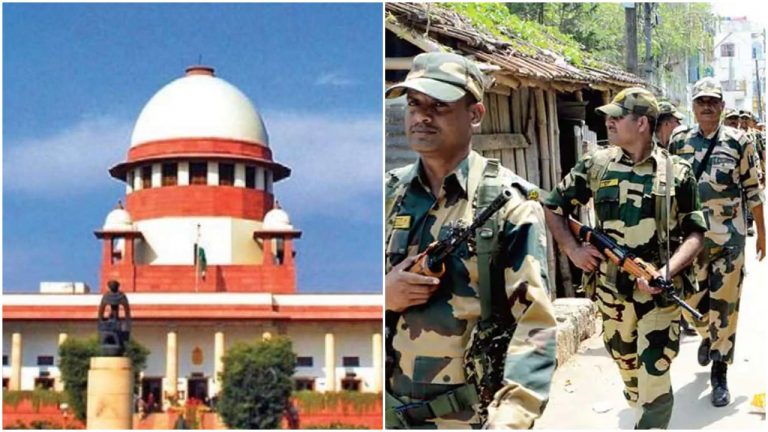
Despite the large-scale violence witnessed in West Bengal during the previous local body polls, the Supreme Court on Friday dismissed the petition filed by the Bhartiya Janata Party (BJP) party leaders Mousumi Roy and Pratap Banerjee seeking deployment of central forces in the West Bengal local polls.
According to reports, the Supreme Court bench comprising Justice DY Chandrachud and Justice Surya Kant dismissed the special leave petition filed by the BJP leaders against the decision of the Calcutta High Court.
The Calcutta High Court had earlier declined to issue directions for the deployment of central forces for the upcoming elections to the 108 municipalities of West Bengal scheduled to be held on February 27.
The BJP leaders had filed a petition before the High Court stating that large scale violence and rigging of votes took place during the recently conducted municipal elections in West Bengal. They sought to deploy central forces for the upcoming elections to the remaining 108 municipalities.
The division bench of the Calcutta High Court had directed the State Election Commission (SEC) to assess the ground situation by gathering information about the conditions prevailing in the municipalities and consult Home Secretary and the Director-General and Inspector General to decide on the deployment of central paramilitary forces.
The High Court had noted that the State Election Commissioner would be held personally responsible for ensuring that there is no violence if it is decided that central forces will not be deployed in the state.
On Friday, Senior Advocate PS Patwalia, appearing for the petitioner, argued before the Supreme Court bench that there were widespread reports of violence during the previous phases of elections. He had alleged that the State Election Commission was biased towards the ruling party All Indian Trinamool Congress.
“The SEC relies on the newspaper “Joy Bangla”, the official newspaper of the Trinamool Congress. We had placed on record the reports of The Hindu, the New India Express etc. about the violence”, Patwalia had submitted before the Supreme Court.
However, the Supreme bench decided to dismiss the petition to observe that no central forces will be deployed during the urban body elections in the state of West Bengal.
While #SupremeCourt didn’t put any query to #WestBengal Govt, SG Tushar Mehta tried to intervene on behalf of the Centre.
SG: In #Tripura case, my opinion was sought & we said we would abide with orders of deployment of central forces. We can do that here too.
Solicitor General Tushar Mehta responded by saying, “Your Lordships have decided not to entertain this. But in the Tripura elections matter, the Court had asked if the government could do something. I may submit that we have no problems in deploying the forces”.
Rejecting the arguments, Justice Chandrachud said, “Thank you, Mr Solicitor”.
West Bengal has been seen widespread political violence by TMC in the last several years. Hundreds of BJP workers and leaders have been killed and many more attacked by TMC workers. The violence peaked after TMC won the assembly elections, and hundreds of people were forced to flee to neighbouring states due to the violence by TMC.