Turkey or Türkiye straddles Europe and Asia. Bordered by eight countries, Turkey is home to a diverse landscape of mountains, plains, coastlines along the Black Sea, Aegean and Mediterranean. The country, however, is fast losing its cultural diversity and principles of secularism to Islamist fundamentalism thanks to Turkish President Recep Tayyip Erdogan’s unannounced yet desperate desire to revive the Caliphate and become its Khalifa (Caliph).
Abolishment of the Islamic Caliphate and the rise of a secular Turkey
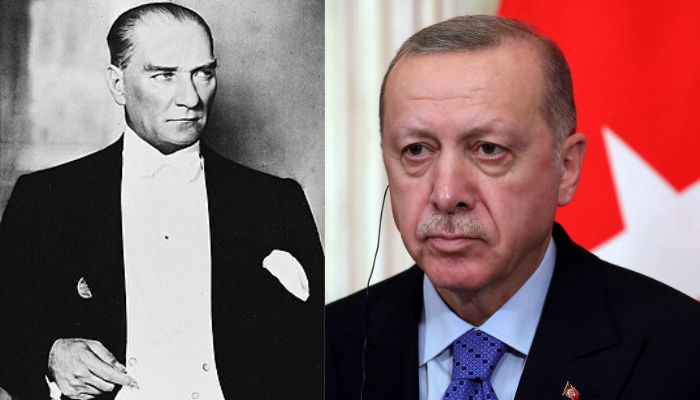
The Republic of Turkey was established on 29th October 1923, by the military commander and an imposing political figure, Mustafa Kemal Ataturk, after the collapse of the Ottoman Empire following the Treaty of Lausanne. Ataturk envisioned Turkey as a secular and democratic modern nation-state modelled on Western values.
The first Turkish President, whose reforms came to be known as the Ataturk Reforms or Kemalism, focused on severing ties with the Ottoman past, which Mustafa Kemal Ataturk viewed as backward and overly Islamist. Mustafa Kemal’s ideology, rooted in secularism, liberal republicanism and a rather modern version of Islam, became the foundation of the Republic of Turkey. This earned him the title of Ataturk—the Father of Turkey.
Under the famous Hat Revolution in 1925, Ataturk banned religious attire like the Fez (traditional head covering) and headscarfs and veils. In 1926, Ataturk introduced a Swiss-inspired civil code, which replaced the Islamic law. He promoted a unified Turkish identity over those based on ethnicity.
Over much of the 20th century, Turkey adhered to Kemal’s principles even after his death, with the Turkish military guarding secularism and ensuring least influence of religion in politics. Turkey during Mustafa Kemal Ataturk’s tenure and under the influence of Kemalism after his death, witnessed rapid industrialisation, economic growth, urbanisation and integration into Western groupings like the North Atlantic Treaty Organisation (NATO) in 1952. While Ataturk and his principles were not against Islam and Islam remained a cultural force in Turkey, the state ensured religion does not dominate public life.
Among the major reforms introduced by Mustafa Kemal Ataturk which changed the destiny of modern Turkey were Civic Independence (popular sovereignty) (1921), Abolition of the Caliphate (1924), Creation of a Directorate of Religion Affairs (1924), settling the new capital at Ankara (1923), Advancement of freedom of the press (1925), Creation of a Government Statistics and Census Bureau (1926), Reform aimed at separation of church and state (1934), Introduction of women’s participation in politics (1934), and Introduction of equality of the sexes in other areas (1926).
Other reforms included changing personal names from Islamic to Western style, Reform of the calendar (1925-26), Establishment of co-education and education of women (1927), Industrialisation and creation of a banking system (1927-1931). While Mustafa Kemal Ataturk’s reforms propelled Turkey toward progress and modernisation, a persistent Islamist undercurrent quietly simmered in the country’s socio-political fabric, poised to resurface.
Erdogan, Caliph dream and Turkey’s gradual departure from its secular foundation
Over the past years, Turkey is witnessing a transformation from a secular state to one increasingly falling into the clutches of Islamist fundamentalism under President Recep Tayyip Erdogan. This transformation is indicative of Turkey’s departure from the vision of its founder Mustafa Kemal Ataturk.
The turning point was the rise of Erdogan in 2003, when his conservative Adalet ve Kalkınma Partis (AKP) or Justice and Development Party came to power. Erdogan’s political roots lie in the Islamist movements that sought revival of the Ottoman ‘glory’. Erdogan emerged from the banned (in 1998) Welfare Party (Refah Partisi) and its successor, the Virtue Party Fazilet Partisi). These Islamist political outfits advocated for incorporation of Islam into Turkish politics, which so far had been governed by secular principles of Ataturk. These outfits challenged the country’s secularism and were thus banned.
Being a shrewd political leader driven by Islamist passion, Erdogan adopted a gradual approach in pushing his Islamist agenda, avoiding overt confrontation with the secular establishment. In a shocking result, Erdogan won the mayoral elections in Istanbul when he was least expected to win. However, he had to give up his position after he faced a political ban in 1998 when he was convicted of inciting religious hatred. The judges found Erdogan guilty of reciting a pro-Islamist poem by Ziya Gökalp that compared mosques to military barracks and Muslims to an army.
A 10-month prison sentence was imposed on Erdogan, of which he served four months, and a subsequent ban from holding political office. However, the AKP government, led by the party’s co-founder and Prime Minister Abdullah Gül, lifted the ban on Erdogan, allowing him to contest the 2003 Siirt province by-election. Erdogan emerged victorious. Following this, Abdullah Gül resigned and Erdogan became the 25th Prime Minister of Turkey on 14th March 2003, commencing the era of Turkey’s subtle and gradual shift from its secular foundation to “Neo-Ottomanism”.
In the initial phase of his tenure, Erdogan positioned AKP or the Justice and Development Party as a moderate, pro-democracy force, promising economic growth and EU integration. These promises brought him public support; however, over time, Erdogan started showing his true colours.
The AKP leader expanded Islamic education in the country, appointing thousands of imams and ordering the construction of mosques at an unprecedented scale, including the magnificent Çamlıca Mosque in Istanbul. As per a 2017 NYT report, Erdogan, since assuming office as Prime Minister, has got around 9,000 new mosques constructed in Turkey, and by now this number must have gone way higher.
Notably, Erdogan served as Turkey’s prime minister from 2003 and then as directly elected president since 2014.
Back in 2015, the Erdogan-led government launched an international mosque-construction program. This program involved construction of 10 massive mosques across the many countries including Albania, the United States, Russia, Kyrgyzstan, the Philippines, the United Kingdom, the Palestinian Territories and Somalia.
The motive behind Erdogan’s push for a rapid Islamisation of Turkey stems from his obsession with the fallen Ottoman Empire. Under the Ottoman Empire, Turkey was a leader of the Muslim world or the Ummah from the 13th to the early 20th century until Ottoman Empire was dissolved after the first World War. Erdogan wants to orchestrate the return of the Ottoman Empire and position himself as a modern Caliph or Khalifa, an aspiration he has held in his heart since 1994, when he first contested election for Istanbul mayor.
Domestically, Erdogan craftily consolidated power to advance his Islamist agenda. After surviving a rare 2016 coup attempt, the AKP leader purged the military, judiciary and academia of secularist elements and replaced them with his loyalists. Reports say that Erdogan has significantly curbed media freedom, with critical outlets either shut down or co-opted. Evidently, the aspiring Caliph wants to control the narrative and promote a conservative Islamist ethos.
Under Erdogan, the education system of Turkey has been overhauled to emphasise Islamism. His government has been funding Islamic Imam Hatip schools, which originally trained Islamic imams and preachers, at a large scale. Back in 2018, President Erdogan explained the rationale behind funding Islamic schools and said that he wants to forge a “pious generation” in predominantly Muslim Turkey “that will work for the construction of a new civilisation”.
A Reuters report from 2018 stated that Turkish government planned spending on Imam Hatip upper schools for boys and girls aged 14 to 18 will double to 6.57 billion lira ($1.68 billion). While the Imam Hatip students make up only 11 percent of the total upper school population, they receive 23 percent of funding, Reuters reported.
The influence of the Diyanet or Turkey’s Directorate of Religious Affairs, has also grown exponentially over the years. The Diyanet has been promoting a Sunni Islamic identity aligned with Erdogan’s vision of Islamist homogeneity, even at the cost of marginalising non-Sunni groups like Alevis.
Turkey has also extended support to Palestine after a full-fledged war erupted between Israel and Islamic terror group Hamas following the latter’s unprovoked attack on 7th October 2023. In November 2024, Erdogan announced that Turkey will sever all ties with Israel.
“The government of the Republic of Turkey, under the leadership of Tayyip Erdogan, will not continue or develop relations with Israel. Our ruling coalition is resolute in its decision to cut ties with Israel, and we will maintain this stance in the future as well. We, as the Republic of Turkey and its government, have currently severed all relations with Israel,” the Turkish President said.
Erdogan has also been vocally critical of Western policies in the Middle East and has also time and again slammed Western governments of indulging in ‘Islamophobia’, in an apparent attempt at bolstering his image as a leader and defender of Islam and Muslims. The Turkish leader often gives statement glorifying the erstwhile Ottoman Empire, its history and ‘achievements’, in his bid to deflect the Turkish populace from secularism and push them towards neo-Ottomanism or simply a Turkish version of rigid Islamism.
The AKP leader’s gradualist approach has been instrumental in the success of mainstreaming the Islamist Neo-Ottomanist agenda. Instead of imposing Islamism overnight, Erdogan focused on normalising Islamic influence through incremental transformations to avoid a backlash that would have triggered from a sudden shift. However, Erdogan’s Islamist designs have not gone down without resistance. The Turkish secularists, urban elites and minority groups have protested against creeping Islamisation, pointing to restrictions on alcohol, which is prohibited in Islam though an abundance of the same is promised to Muslims who would enter Jannat in afterlife. What came as a major shock to the world was the conversion of the historic Hagia Sophia Church into a mosque by the Erdogan regime, with several countries criticising the Turkish President.
Erdogan’s expansionist actions rooted in Islamism and Misak-i-Millî
This desire to transform Turkey into the leader of the global Muslim Ummah has brought Erdogan’s foreign policy at odds with the country’s secular past, although continuous electoral wins have only emboldened the AKP leader. During his election campaign in 2007, Erdogan had promised to lift the ban on headscarves in the civil service and in 2013, the AKP government lifted this decades-old ban.
Back in 2003, the former Turkish Prime Minister Abdullah Gül had openly declared his expansionist designs rooted in the ideology of neo-Ottomanism. “Turkey cannot be confined to Anatolia; its full borders extend beyond the official ones,” he told a Turkish newspaper.
He added that The Balkans, the Middle East, and Central Asia are regions of direct concern to us. Turkey cannot be locked inside Anatolia. Gül had also invoked the 1920 Misak-ı Millî (National Pact), an Ottoman-era territorial claim to emphasise Turkey’s ‘authority’ over Syria and Iraq which inhabit a mix of Kurds, Arabs, Syriacs, Assyrians, Armenians, Turkmens and other nationalities.
In 2011, as violence and chaos engulfed parts of the Middle East, Turkey saw it as an opportunity to intervene in Syria, a country neo-Ottomanist consider a part of Misak-i-Millî and its issues, their domestic matter. “Syria is not a foreign issue for us; we consider it a domestic matter,” Erdogan said on 8th August 2011.
Erdogan has also been granting Turkish citizenship to Syrian refugees. Justifying this, Süleyman Soylu said in 2019, “They come from lands within the Misak-ı Millî borders, which gives them a rightful claim to become Turks.”
In Syria, the Erdogan-led government deployed its forces and supported the anti-Assad regime, Syrian National Army. Turkey, through its Syrian proxies has expanded its influence in the country and occupied many cities such as Jarablus, al-Bab, Azaz, Afrin, Ras al-Ain (Sere Kaniye), and Tel Abyad (Gire Spi). Turkey also plans to establish military bases in Syria.
Erdogan’s suppression of the Kurdish people in the region is a disgraceful chapter of his political career. Under the garb of fighting terrorism, the Turkish government has been targeting Kurdish activists, politicians, and media outlets, through detentions, restrictions on freedom of expression and dismissal from office etc.
Recently, Erdogan met with Syrian interim President Ahmad al-Shaara, who was previously with Al Qaeda, in Istanbul. Shaara thanked Erdogan for his role in lifting Western sanctions against Syria. Interestingly. in March this year, Ahmad al-Sharaa signed a provisional constitution that placed the nation under Islamist governance but claimed to uphold the rights of all Syrians, for a period of five years during the transition.
After the hardline Sunni organization Hayat Tahrir al-Sham (HTS), an affiliate of Al-Qaeda, spearheaded an insurgency that toppled the 24-year-long dictatorship of President Bashar al-Assad in December, the country’s current rulers have found it difficult to maintain control over a large part of Syria. This has been undeniably beneficial for the Erdogan government which aims to consolidate Muslim Ummah and position Turkey as its leader. Despite Syria being in a transitional phase, Turkey and Syria are already set to sign many deals including the ones for export of gas and electricity to Syria.
Erdogan Islamist adventures also extend to Iraq. In 2016, he invoked Turkey’s Sejluk, Ottoman history, and Misak-i-Millî to lay claim over Iraq’s Mosul. Turkey over the years has been expanding its military presence in the Kurdistan region of Iraq by setting up military bases. Turkish expansionist policies have also infested Libya under the pretext of national security. In August 2024, an MoU was signed between Turkey and Libyan Parliament, granting the Turkish forces access to Libya for extensive operational freedom and legal protections.
Turkey’s alignment with Islamic terror groups like the Muslim Brotherhood and its jihadist activities indicate that Erdogan government does not even want to conceal its support to Islamist causes.
Unsurprisingly, Turkey also has longstanding disputes with neighbours Greece, Armenia and Cyprus. In January 2024, Erdogan while addressing an AKP meeting said that “Our struggle did not end with expelling the enemy [Greeks] from our lands and throwing them into the sea from Izmir.”
In the Smyrna (now Izmir) Massacre carried out by Turkish forces, over 1 lakh Greek Christians of Anatolia and many Armenians were killed in 1922. Erdogan hailed this event, in fact, Turkish Islamists consider “throwing Greeks into the sea” as matter of pride.
Turkey has also been laying claims over 152 islands and islets in the Aegean Sea awarded to Greece in the 1923 Treaty of Lausanne, 1932 Convention between Turkey and Italy, and 1947 Treaty of Paris. Erdogan also sides with an Islamic Azerbaijan against Armenia even as the latter has occupied around 215 square kilometers (83 sq mi) of internationally recognized Armenian territory since 2020. Erdogan has been blinded with his ‘Khalifa’ ambition so much so that last year, he openly claimed credit for Azerbaijan’s win in the 2020 Second Nagorno-Karabakh War against Armenia. Azerbaijan had raised strong objections over Erdogan’s statement.
Turkey backs terror-sponsor Pakistan against India: Desperation of wannabe Caliph Erdogan trumps fight against terrorism
Driven by the ambition of positioning himself as the leader of the Muslim Ummah and consolidate Turkey’s influence across Islamic nations, Recep Tayyip Erdogan has historically backed Pakistan against India. In spite of Pakistan’s documented sponsorship of cross-border Jihadist terrorism against India over the years, Turkey has been using international forums to bolster Pakistan’s sinister narrative on Kashmir. Turkey has also been providing material support to Pakistan including weaponry. Erdogan’s self-imposed imperative to revive a Ottoman-like caliphate has led him to ally with Pakistan, a nation that has historically leveraged Islamist terrorism as a state policy.
Besides toeing Pakistan’s narrative on Kashmir, Turkey has also voiced support to Pakistan even after the 2016 Uri Attack, 2019 Pulwama Attack and 2025 Pahalgam Attack. Turkish media had amplified Pakistan lies and propaganda after India revoked Article 370 and Article 35A in Jammu and Kashmir. Erdogan also backed Pakistan after India carried out Balakot Airstrikes in 2019 in Pakistan in the aftermath of the Pakistan-sponsored Pulwama Attack, making it abundantly clear that he is willing to court Islamic nations, even those with evident record of fostering, funding and shielding Jihadi terrorists, to bolster his global Islamic leadership.
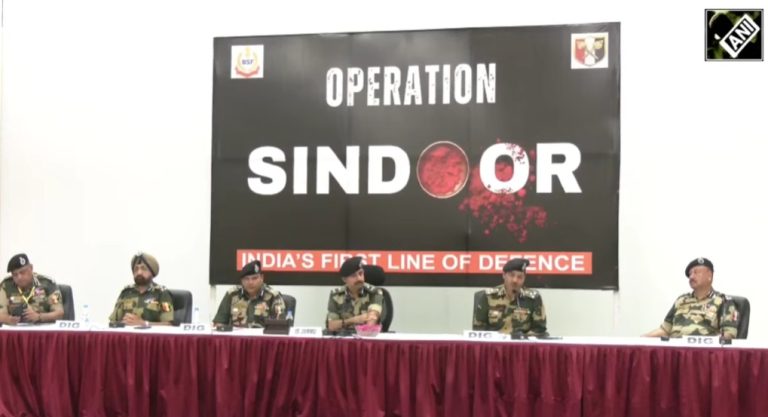
Predictably, the Turkish media has also been echoing Pakistani lies even as India inflicted massive damages on Pakistan through Operation Sindoor. Pakistan and Turkey had also weaponised the Organisation of Islamic Cooperation (OIC) to push anti-India narratives citing Citizenship Amendment Act and NRC, in a bid to further the apocryphal ‘Islamophobia’ narrative. Just days back, Pakistan attempted to rally support of OIC against India, however, the hostile neighbour’s attempts fell flat.
It must be noted that Turkey’s support to Pakistan is not confined to just rhetoric and Kashmir advocacy in UN and other international forums, but also extends to trade and defence cooperation. After Indian Armed Forces launched a strike against Pakistan fostered terror hubs, the hostile neighbour launched a retaliatory drone offensive using Turkish-supplied Bayraktar TB2 drones. While India successfully thwarted Pakistani attacks, compelling Pakistani forces into begging before Indian forces for a ceasefire, Turkey has voiced support for a ‘brotherly’ Pakistan.
While Turkey’s religious and ideological support to Pakistan is widely known, the ideological hostility has now crossed into the realm of military aggression, with Turkey supplying Pakistan with lethal aerial assets used against Indian targets.
Not just supplying arms, reports have indicated that Turkish advisers were working with Pakistani military to help them use these drones against India. Two Turkish drone operators were reportedly killed in the retaliatory strikes by India, revealing Turkey’s on ground support during the war conflict India.
Additionally, a Turkish Ada-class anti-submarine corvette docked at Karachi port on May 2, 2025, and a Turkish C-130 Hercules military transport aircraft landed at Karachi airport on April 27, 2025, possibly carrying arms while the conflict was brewing and Pakistan was anticipating retaliation by India for the Pahalgam terrorist attack.
On 25th May 2025, Turkish President Tayyip Erdogan met Pakistan’s Prime Minister Shehbaz Sharif in Istanbul and the duo said the two countries would strive to boost cooperation, particularly in defence, energy and transportation. Ironically, Erdogan’s office said that Turkey would collaborate with Pakistan in fighting against terrorism, yes, the very Pakistan where a UN-designated and sanctioned terrorist Hafiz Abdur Rauf conducts the funeral of the terrorists killed by India while Pakistani soldiers stand behind, where son of a UN-designated terrorist is serving as Director General of PR wing of Pakistan ‘Aand’ Forces.
Earlier, Erdogan extended solidarity to Pakistan after India killed over 100 terrorists and said, “I pray for Allah’s mercy for our brothers who lost their lives in the attacks, and I extend my condolences to the brotherly people and state of Pakistan.”
It is evident that Erdogan’s support for Pakistan is intricately linked to his goal of consolidating the Muslim Ummah under his leadership. The Islamist leader envisions himself as a modern caliph leading an Ottoman-fashioned Islamic empire. Besides the domestic policy shifts aimed at transforming Turkey into a proper Islamic nation severing ties with the Ataturk’s vision of a secular Turkey, Erdogan is deliberately unleashing rhetorics and actions to rally support of Islamic nations by championing Islamist causes although Saudi Arabia is largely seen as the leader of the Muslim Ummah. Turkey’s support to Pakistan, however, has not only triggered outrage in India but also raised concerns over its credibility as a NATO member.
Behind the veneer of democratic legitimacy, Recep Tayyip Erdogan is operating a brand of Islamism blending populism, Islamist nationalism and quest for the revival of an Ottoman past. Gradually, Turkey has moved away from Mustafa Kemal Ataturk’s secular vision towards Erdogan’s Islamism. Erdogan’s support for terror-sponsor Pakistan, his suppression of secular elements within Turkey, and his global ambitions of becoming a modern Caliph or a neo-Ottoman Empire, however, betrays Turkey’s secular legacy and pushes the country towards potential diplomatic and military conflicts.