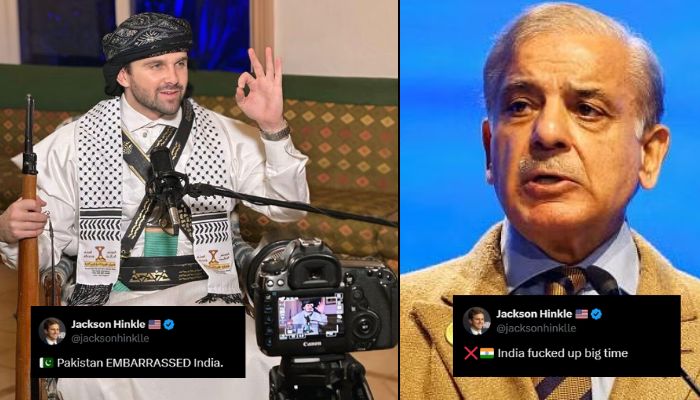
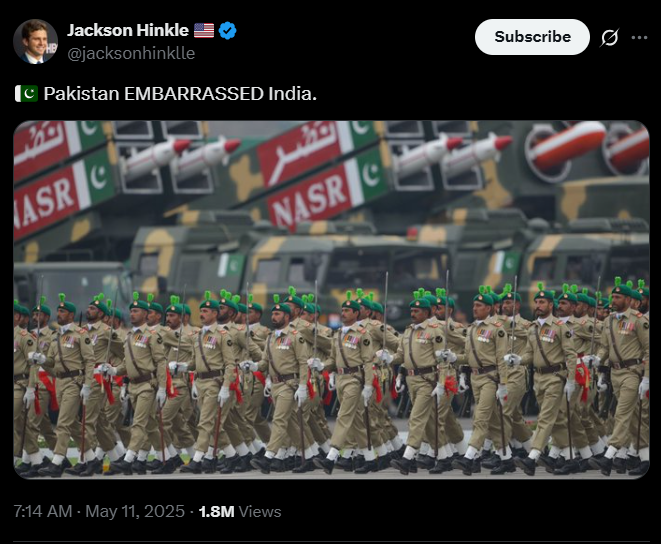
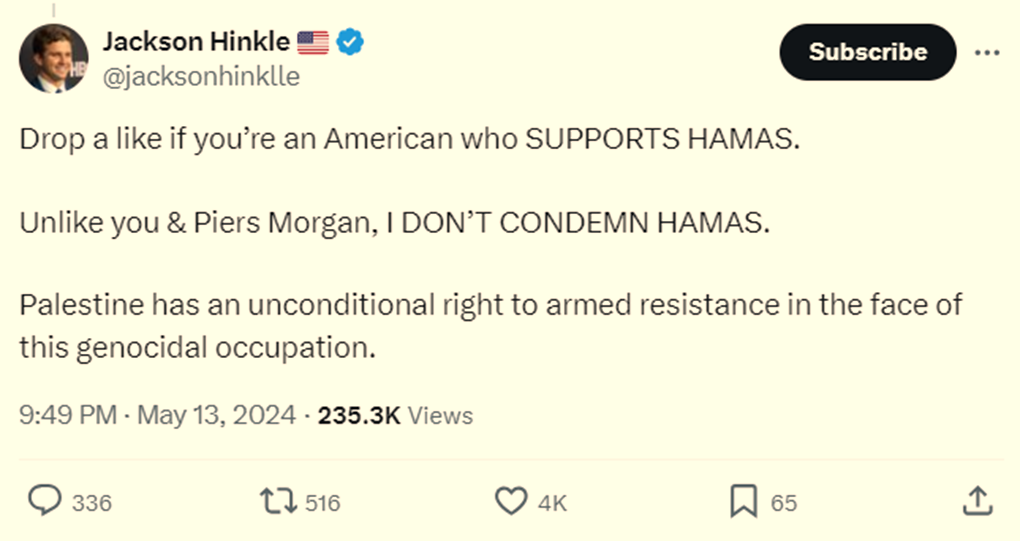
A US-based Hamas supporter and anti-Semite, Jackson Hinkle, has been at the forefront of Pakistan-sponsored disinformation warfare against India in the aftermath of the Pahalgam terror attack and Operation Sindoor.
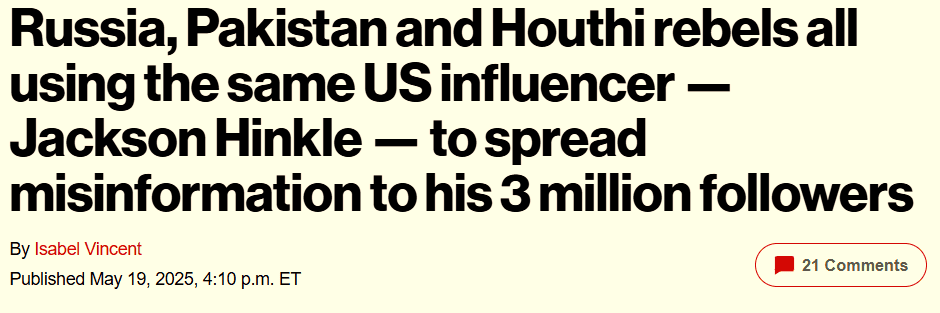
According to a report by The New York Post published on Monday (19th May), Hinkle is helping Pakistani intelligence spread ‘false flag’ narratives against India.
It cited a study conducted by the Network Contagion Research Institute (NCRI).
Screengrab of the report by The New York Post
The New York Post reported, “A week following Hinkle’s interview with Pakistani High Commissioner to India Abdul Basit on his program “Legitimate Targets,” he accused India of conducting a false flag operation against Pakistan in Kashmir. This was propaganda spread by Inter-Services Intelligence, Pakistan’s primary intelligence agency, the NCRI study claims.”
The report added that lies peddled by Jackson Hinkle were amplified by Pakistani bots on social media. This was highlighted in the study by NCRI.
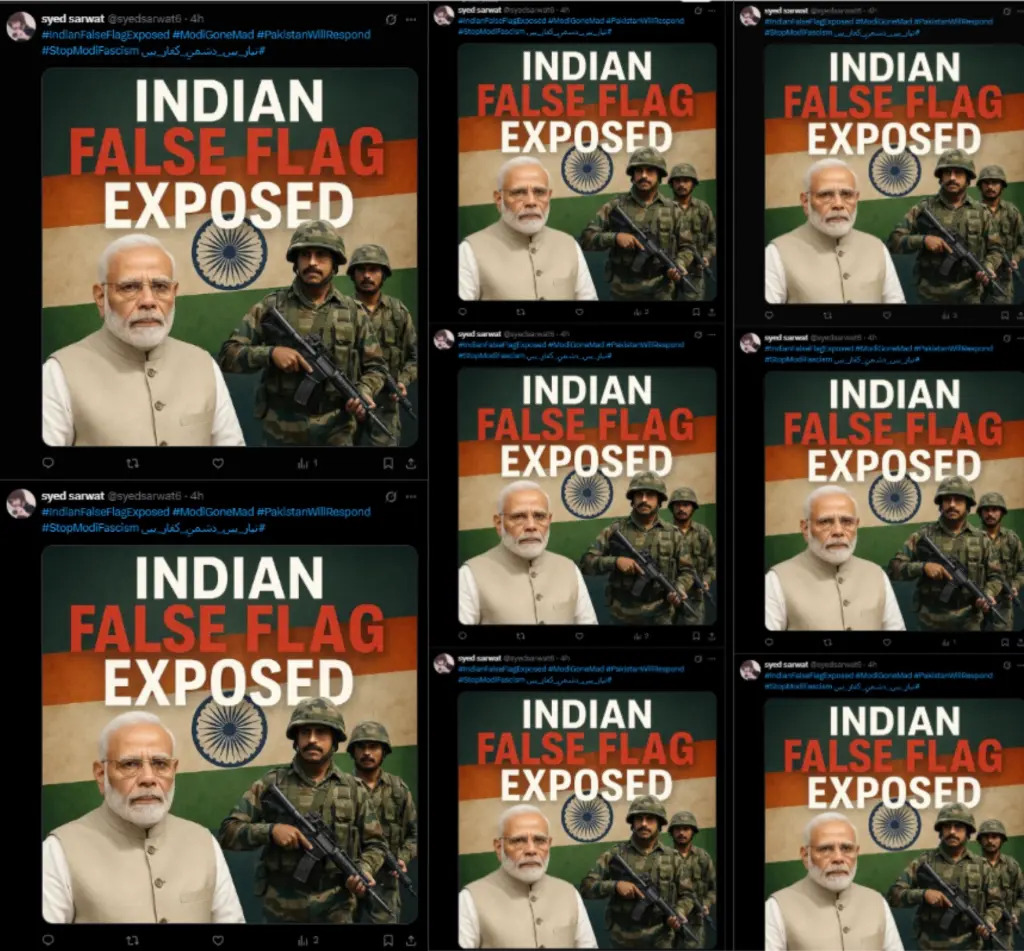
The New York Post added, ““In the aftermath of the Pahalgam attack, inauthentic networks used generative AI [bots] to create and circulate provocative memes pushing the false flag narrative, featuring Indian symbols, political figures and inflammatory slogans,” says the NCRI report. Those “inauthentic” bots have been spreading Hinkle’s message to millions of social media users, according to NCRI.””
Lies of Jackson Hinkle amplified by Pakistani bots, image via The New York Post
OpIndia analysed the social media activity of Jackson Hinkle and found a drastic spike in X posts, which falsely claim ‘Pakistani victory over India’ in the aftermath of Operation Sindoor.
His fake stories found overwhelming support among Pakistani intelligence machinery, which otherwise could not prevent Indian strikes on its military bases and terror camps.
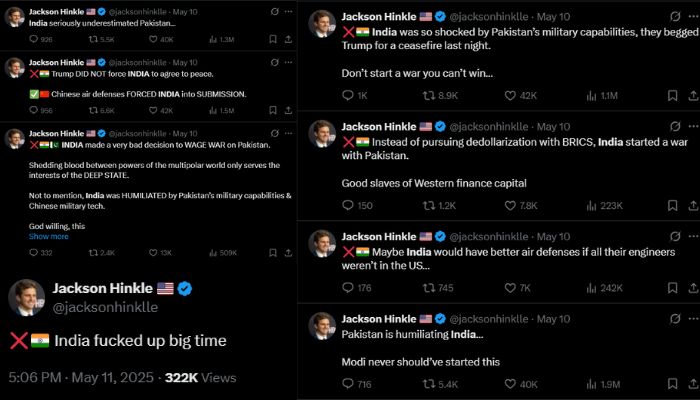
Some of the tweets by Jackson Hinkle read –
“India fucked up big time”
“India was so shocked by Pakistan’s military capabilities, they begged Trump for a ceasefire last night.Don’t start a war you can’t win…”
“Instead of pursuing dedollarization with BRICS, India started a war with Pakistan. Good slaves of Western finance capital”
“Maybe India would have better air defenses if all their engineers weren’t in the US…”
Pakistan is humiliating India…Modi never should’ve started this
“India seriously underestimated Pakistan…”
“Trump DID NOT force INDIA to agree to peace. Chinese air defenses FORCED INDIA into SUBMISSION.”
“Pakistan won, India lost”
“Pakistan embarassed India”
Screengrab of the tweet by Jackson Hinkle
It must be mentioned that the X (formerly Twitter) handle of Jackson Hinkle was withheld by the Indian authorities. However, the temporary ban on access from India was lifted on Monday (19th May).
The military operation by India, which kicked off on 7th May, ended up causing irreparable damage to Pakistan, so much so that it went begging to the United States for help.
India’s military capabilities had spooked the Pakistan army to the extent that it was forced to make a desperate call to for an immediate ‘ceasefire.’ OpIndia had explained in detail how India humbled Pakistan, once and for all.
The firm resolve of the Modi government and the capabilities of the Indian armed forces, which it exhibited by firing drones and missiles deep inside the enemy territory, sent shivers down the spine of the Pakistani Army and its generals.
India was close to decimating Pakistan’s nuclear arsenal – a bargaining chip that the hostile country had used to deter Indian governments (pre-2014) from taking adverse military action for its proxy terror attacks.
After having realised that it was fighting a losing battle and was close to losing its military bases, Pakistan was forced to dial the US and then India for a ‘ceasefire agreement.’
This timely decision on the part of the Pakistan army helped them avoid second-hand embarrassment at home and avoid accountability for their incompetence.
After all, they did not need to surrender publicly like in 1971 and face the wrath of the general public. This reaffirms the age-old saying – Peace can only be maintained from a point of strength.
As long as India flourishes economically, militarily and diplomatically, we will continue to maintain peace in the region.
We will do so by exerting our strength each time against Pakistan, which relies on radical Islamic outfits to perpetrate terror and hostility in the region.
Everything to know about Jackson Hinkle
He is a US-based ‘social media influencer’ with over 3 million followers on X (formerly Twitter). Hinkle, known for peddling fake news and conspiracy theories, have been banned by Instagram, YouTube and Twitch.
He had even spoken at a conference organised by Houthis in Yemen and attended the funeral ceremony of Hezbollah terrorist Hassan Nasrallah in Beirut. He also gave interviews to Hezbollah-run channels Al-Manar TV and Channel 3.
Hinkle had even interviewed Hamas terrorist Basem Naim. He has been called out by the Anti Defamation League (ADL) for his “extensive anti-Zionist, antisemitic and anti-Israel rhetoric since the start of the Israel-Hamas war.”
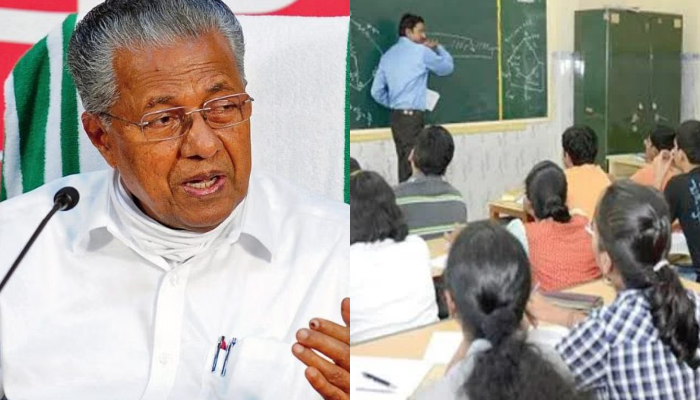
Concerns over academic freedom and the level of government involvement in higher education institutions have been raised by the controversy triggered by the Left government’s proposed University Laws (Amendment) Bill in Kerala.
The bill’s main clause forbids college and university teachers from participating in activities that criticise state legislation and university regulations, reported Mathrubhumi. Meanwhile, opposition of laws and policies of the central government continues to be acceptable. This selective restriction has come under fire for stifling free expression in academic settings.
Moreover, the bill requires that no written, printed or electronic promotional materials provided on campuses violate state or university statutes. Many people view the move as a means of silencing opposing viewpoints in academic circles.
It reads, “Teachers or their groups or organisations may distribute and display written or printed or electronic material in campus without prior approval of the university so long as the distributed material is consistent with university policy and state law. The person or persons responsible for such material must be clearly indicated.”
Additional disputes are emerging over the clauses that confer expanded authority to the Higher Education Minister, who functions as the university pro-chancellor. The bill gives the minister direct control over academic and administrative affairs, including the ability to examine university facilities, curricula, exams and financial dealings. It might erode university autonomy and result in more political meddling, per critics.
Notably, the Raj Bhavan previously voiced his disapproval of faculty members and vice-chancellors attending a seminar hosted by the state government to protest clauses in the proposed UGC (University Grants Commission) regulations. Most of the vice-chancellors then abstained from attending the seminar. The university legislation amendment is believed to have lifted the ban against criticizing the central government to get over these obstacles.
The bill already encountered strong opposition in March with the opposition claiming that the state government was trying to erode university autonomy by converting them into government departments. VD Satheesan, the leader of the opposition, charged that the University Amendment Bill was designed to undermine public institutions in favor of private ones.
He added that the bill will allow for undue intrusion in academic affairs by restricting the powers of vice-chancellors while granting significant power to the Higher Education Minister, who is the statutory pro-chancellor.
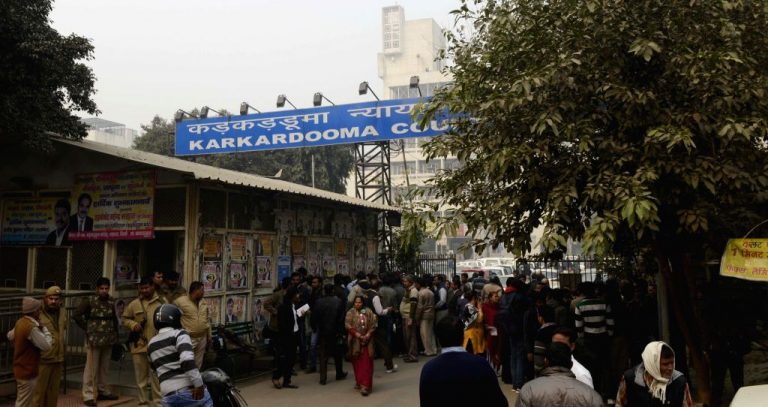
On the 14th of May 2025, a Delhi court acquitted 11 persons accused of arson, rioting with a deadly weapon, theft, and being part of an unlawful assembly during the 2020 anti-Hindu Delhi Riots. The court raised questions over the credibility of the police witnesses who identified the accused men and observed that the witnesses were artificially planted.
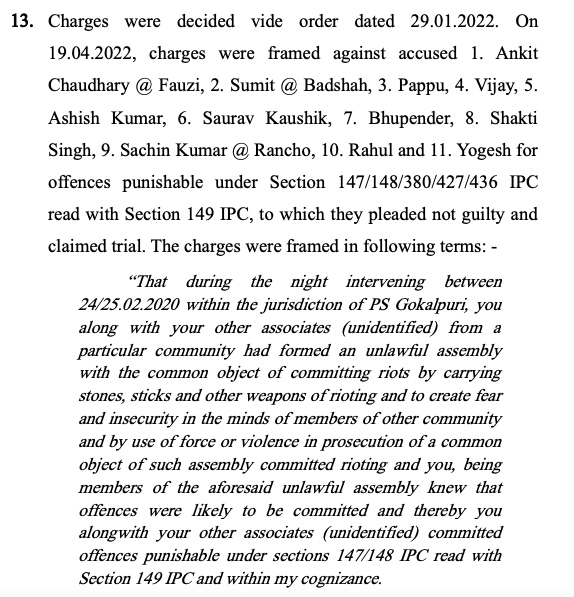
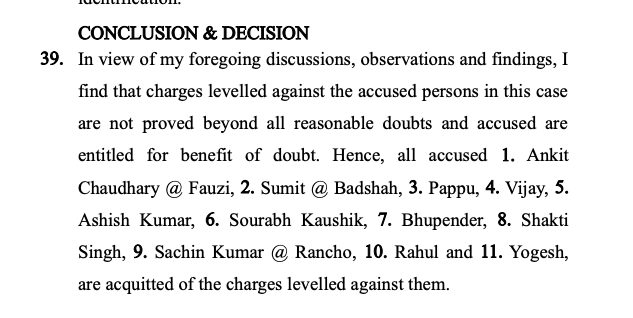
Additional Sessions Judge (ASJ) Pulastya Pramachala of Karkardooma Court noted that charges against accused persons, namely: Ankit Chaudhary alias Fauji, Sumit alias Badshah, Pappu, Vijay, Ashish Kumar, Sourabh Kaushik, Bhupender, Shakti Singh, Sachin Kumar alias Rancho, Rahul and Yogesh, were not proven beyond reasonable doubt. Giving the accused persons benefit of doubt, the court acquitted them of all charges.
Case background and charges against the accused Hindu youths
The case against the accused Hindu persons was registered after a complaint filed by one Mohammad Imran Sheikh at the Gokulpuri Police Station on 1st March 2020. In his complaint, Imran Sheikh claimed about loot and arson committed in his medical shop ‘Crown Medicos’. First and second floor of his shop was full with medicines. He further alleged that one Aslam who was working in a salon, which was situated in front of his medical shop, had telephonically informed him at around 01:30 AM that some persons had looted his aforesaid shop and were setting it ablaze. Immediately thereafter, complainant Imran Sheikh made call at 100 number to police about this incident. Eventually, an FIR was registered on Sheikh’s complaint.
During the probe, Investigation Officer (IO) Laxmi Narayan Sharma visited the site of incident and was later informed that accused Ankit Chaudhary and Sumit who were already arrested in another FIR, had “confessed” their involvement in vandalising Imran Sheikh’s shop. Subsequently, the duo were arrested in this case.
On 9th March 2020, the remaining accused were arrested. ASI Gajraj informed IO of this case about receiving a CD of certain video of riots in his case. He also informed that some rioters were visible in the same and that, videos related to place of incidents in this case as well. IO obtained a copy of that CD and seized it in this case. This CD was sent to FSL, Rohini for forensic examination.
On 11th March 2020, another complaint was filed by one Akram Ali at the Gokulpuri Police Station. In his complaint, Akram Ali alleged that he was running his shop at C-12, Main Road, ground floor, Gokalpuri in the name and style of ‘Smart Looks Salon’ and he, along with his brother Aslam was residing on rent on the second floor of C-12, Main Road, Gokalpuri. On 24.02.2020 at around 6 PM, a number of persons came and started vandalism and thereafter he and his brother left Delhi for their native place, in order to save their lives. On 29.02.2020, when Aslam Ali (brother of Akram Ali) visited said shop, he informed Akram Ali that rioters had vandalized his shop.
Given the proximity of the date, time and place of incident, Akram Ali’s complaint was clubbed in the present case. Following this, the IO added IPC section 436 in the present case.
Ankit Chaudhary alias Fauji, Sumit alias Badshah, Pappu, Vijay, Ashish Kumar, Sourabh Kaushik, Bhupender, Shakti Singh, Sachin Kumar alias Rancho, Rahul and Yogesh, were chargesheeted by the Delhi Police for offences under 147/148/149/ 380/427/436 IPC on 3rd May 2020.
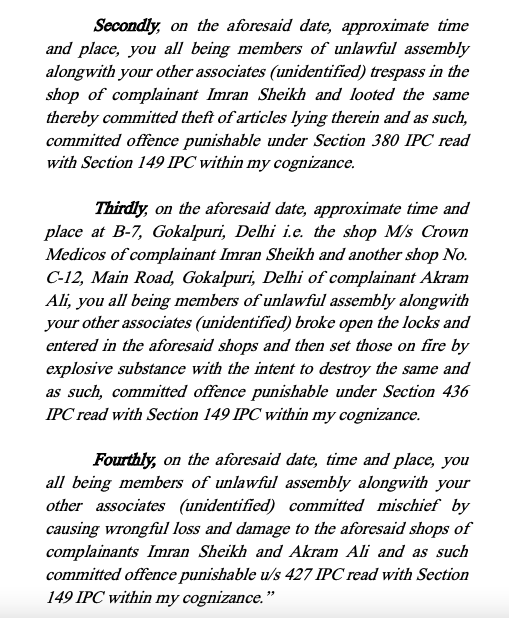
The prosecution alleged that the accused Ankit Chaudhary and others formed an unlawful assembly with the common object of committing riots by carrying stones, sticks and other weapons of rioting and to create fear and insecurity in the minds of members of other community and by use of force or violence in prosecution of a common object of such assembly committed rioting. It was alleged that the accused persons trespassed in complainant Imran Sheikh’s shop and looted several articles.
Further, the prosecution alleged that the accused broke open the locks and entered in the aforesaid shops and then set those on fire by explosive substance with the intent to destroy the same. The prosecution also claimed that the accused committed mischief by causing wrongful loss and damage to the aforesaid shops of complainants Imran Sheikh and Akram Ali. In 2022, additional charge was framed against the accused under IPC section 188.
The prosecution presented 12 witnesses before the court to back its case against the accused.
One eyewitness Mohammad Imran Sheikh (PW2), the owner of the vandalised shop, claimed to have known a number of the accused before to the crime. However, he did not name the accused during the investigation, but rather after the trial began. The Court noticed that even while filming the video of the incident, he did not name the accused.
PW2 was declared hostile by prosecution and he denied the suggestions that he had come to shop in the night of incident, or that he had seen and identified accused persons in the mob of rioters.
Meanwhile, PW5 Aslam (brother of Akram Ali) identified accused Ankit before the court, stating that on previous occasion he could not identify Ankit on display screen. PW5 had recorded incidents of vandalism by the mob on his mobile phone. PW5 earlier identified accused Sumit alias Badshah, Rahul, Amit, Ankit Chaudhary, Vijay and Pappu before the court by taking their correct names. He claimed that he knew their names. PW5 identified accused Sandeep @ Mogli, Rahul, Shakti Singh, Saurabh, Ashish before the court, stating that he did not know their names. PW5 deposed that Saurabh was known as Kachhua in the locality. PW5 had not handed over videos recorded by him to the police, rather he had uploaded them on Facebook. Later, he provided these videos to the police.
PW6 Akram Ali, the other complainant said in his statement that he did not see any incident in the shop and he remained closed inside his room with other workers. His brother Aslam had locked them in a room and had gone to terrace. PW6 had wrongly mentioned in his complaint that on 24.02.2020 PW6 had left Delhi along with Aslam.
Arguments of defence and prosecution
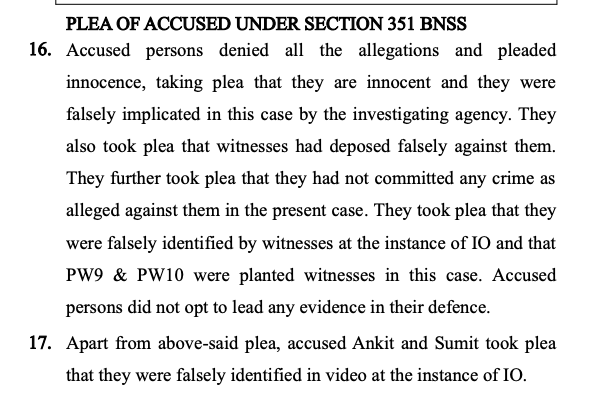
The accused persons pleaded not guilty and asserted that they have been falsely implicated by the investigators. They also argued that the prosecution witnesses in this case have deposed falsely against them. They took plea that they were falsely identified by witnesses at the instance of IO and that PW9 ASI Jahangir & PW10 ASI Vanvir were planted witnesses in this case.
Notably, PW9 and PW10 had identified about 10-11 persons in that mob and they knew them by their names. They were accused Ankit Chaudhary, Sumit Badshah, Sachin, Saurabh, Bhupender, Ashish, Rahul, Vijay, Shakti & Pappu. As per PW9 and PW19, the accused youths were also part of the mob which had vandalised Crown Medicos. PW9 & PW10 identified all accused before the court by taking their correct names.
The defence counsels challenged the presence of PW5 at the relevant time in the property of his shop. They referred to complaint which was made by brother of PW5. In this complaint it was mentioned that PW6 and his brother both fled away from their shop and went to village through train. Before the court, PW6 had clarified that his brother PW5 had not gone with him. However, defence treated it as false improvement in the stand.
The, however, noted that the videos of the incident were examined by the CFSL, and there is no reason to suspect the veracity of these videos, which were claimed to be recorded by PW5 himself, with his voice recorded therein.
The Delhi court said that the core issue was the identification of the accused, whether they were a part of the mob that was responsible for setting ablaze Crown Medicos and vandalising Smart Look Salon or not.
The prosecution relied upon PW5, PW9 and PW10 to argue the presence of all accused in the mob of rioters, which attacked both the aforesaid shops. PW5 deposed that he already knew accused Ankit Chaudhary, Sumit @ Badshah, Rahul, Amit Kumar, Vicky, Sumit. He identified accused Sumit @ Badshah, Vijay and Pappu, as the persons whom he knew by their names.
Delhi court finds merit in defence’s arguments, raises question over credibility of testimonies of prosecution witnesses
ASJ Pulastya Pramachala noted accused Ankit Chaudhary was appearing through video conference and PW5 could not identify him. However, during his examination on a subsequent date, when he had identified videos in DVD furnished by him, accused Ankit was physically present in the court and at that moment PW5 identified him, stating that on previous occasion he could not understand the appearance of the person on the computer screen and he was not told name of that person, hence, he could not identify Ankit Chaudhary on that occasion.
PW5 further identified accused Sandeep @ Mogli, Rahul, Shakti Singh, Saurabh and Ashish, stating that they were also members of the mob of rioters, but he did not know their names. At the same time PW5 deposed that Saurabh was known as Kachhua in that locality. Meanwhile, PW9 and PW10 identified all the accused persons claiming that they knew them since prior to the incident.
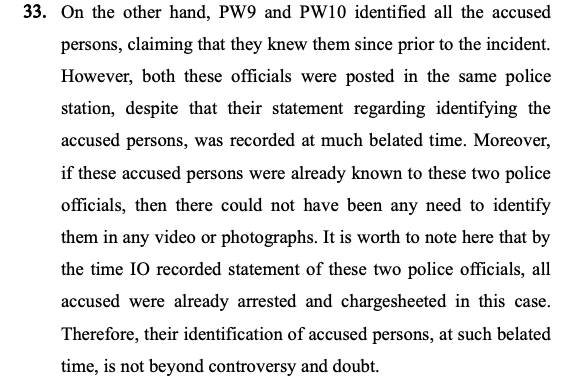
The court, however, noted that “both these officials were posted in the same police station, despite that their statement regarding identifying the accused persons, was recorded at much belated time.”
In addition, the court pointed out that if these accused persons were already known to these two police officials, then there could not have been any need to identify them in any video or photographs.
“It is worth to note here that by the time IO recorded statement of these two police officials, all accused were already arrested and chargesheeted in this case. Therefore, their identification of accused persons, at such belated time, is not beyond controversy and doubt,” the court noted.
Finding merit the defence’s argument, the court noted that defence challenged evidence of PW9 and PW10, mainly on the grounds that despite being posted in the same police station, they came up to name and identify photographs of the accused persons after a huge gap of around 10 month.
“I do find merit in this argument. If PW9/ASI Jahangir and PW10/ASI Vanvir had actually seen and identified the accused persons among the rioters on 24.02.2020, then there was no good reason for them to keep silence for such a long period. From the record of duty roster, even IO could have known the particulars of officials, who were on duty at the concerned place. Still, even IO did not make any attempt to examine such officials at the earliest possible time,” ASJ Pramachala stated.
Deeming the visual evidence provided by PW9 ASI Jahangir, ASJ Pramachala stated, “Showing photographs of accused to PW9, when they were already arrested in this case, appears to be unnatural action, giving impression that PW9 was artificially made an eye witness to identify the accused persons. Therefore, evidence of PW9 cannot be relied upon to assume presence of any accused in the mob of rioters. Same logic applies to discard the identification by PW10.”
The court further noted that the defence counsel challenged the credibility of PW5’s (Aslam)testimony contending that he falsely identified the accused persons before the court as after-thought plea. Aslam confirmed to have identified that the accused persons since they were residents of the same locality, however, he denied defence’s allegation that he identified the accused since they were Hindus and he had enimity with them.
The court pointed out that if PW5 (Aslam) had informed PW6 and his brother Akram about the incident, and knew some of the rioters whom he identified before the court, then why he did not mention their names before PW6 as well. ASJ Pramachala noted that neither in his complaint nor in his testimony did PW6 (complainant Akram) mentioned that he was ever informed by his brother about the names of the rioters.
“It has to be appreciated that PW5, though claimed that he knew some of the accused persons by names since prior to this incident, but he did not get name of any such person mentioned in the complaint made by his brother Akram/PW6. PW6 deposed that PW5 had informed him about the incident. If that was so and if PW5 knew at least some of the rioters by their names, whom he identified before the court, then it was natural for PW5 to mention their names before PW6 as well. However, PW6 neither in his complaint nor in his testimony before the court, stated that he was ever informed about name of any of the rioter by his brother PW5,” ASJ Pramachala observed.
The court further noted that even in the statement recorded by the Investigation Officer LN Sharma, there was no mention of of all the names of rioters as claimed by PW5 before the court. IO Sharma said that except for the disclosure statement of the accused persons, he had no evidence against them at the time of arrest. Sharma added that Aslam had stated that he could identify the culprits from the video, however, that phone and video was not provided to IO Sharma by Aslam.
“If PW5 knew the name of rioters as named by him before the court, then even if he did not have his mobile phone to hand over the videos to police/PW1, PW5 would have mentioned those names before PW1. Thus, claims of PW5 that he knew some accused persons by their names since prior to the incident and that he also had seen and identified them among the rioters, are incompatible with his omission to mention such names before PW6 or before PW1 at the first occasion itself,” the court said.
The court noted that even in the videos PW5 himself recorded during the incident, he did not take names of the persons he could see indulging in arson and vandalism. Although PW5 did point out to accused Sumit and Ankit in two videos, they could not be clearly seen in the videos.
“Therefore, naming and identification of accused persons by PW5 before the court for the first time, in the background of his claim of having known some of them since prior to the incident, is suspicious, and in absence of any corroboration to such evidence of PW5, it is risky to act upon his identification,” the court stated.
All 11 accused acquitted of all charges levelled against them
Judge Pramachala thus concluded that charges levelled against the accused persons in this case are not proved beyond all reasonable doubts and accused are entitled for benefit of doubt. Consequently, the accused were acquitted of all charges brought up against them.
Excerpts taken from relevant court order
“In view of my foregoing discussions, observations and findings, I find that charges levelled against the accused persons in this case are not proved beyond all reasonable doubts and accused are entitled for benefit of doubt. Hence, all accused 1. Ankit Chaudhary @ Fauzi, 2. Sumit @ Badshah, 3. Pappu, 4. Vijay, 5. Ashish Kumar, 6. Sourabh Kaushik, 7. Bhupender, 8. Shakti Singh, 9. Sachin Kumar @ Rancho, 10. Rahul and 11. Yogesh, are acquitted of the charges levelled against them,” the judge stated.
Apple farmers in Himachal Pradesh have demanded a complete ban on the import of Turkish apples into India, citing Turkey’s political stance during heightened tensions between India and Pakistan.
A joint delegation of fruit growers and farmers, led by Himachal Pradesh Sanyukt Kisan Manch Convener Harish Chauhan, submitted a memorandum to the Prime Minister and President through the Governor of Himachal Pradesh.
Speaking to ANI, Chauhan expressed deep anger over Turkey’s support to Pakistan, particularly during Operation Sindoor. “Turkey is an ally of our enemy nation. It supported Pakistan during a critical time when India was fighting against Pakistan. At the same time, back in February 2023, when a devastating earthquake hit Turkey, the Government of India helped them on humanitarian grounds. In return, Turkey stabbed us in the back by aiding Pakistan,” he said.
Chauhan said Turkey currently tops the list of countries exporting apples to India, a trend he claims is hurting local growers. “The farmers of Himachal, especially those in the apple belt, are the worst affected. That is why we are demanding a complete ban and boycott of all Turkish apple imports into India,” he said.
The delegation pointed out that India spends between Rs800 to Rs1,000 crore annually on apple imports, with a significant chunk going to Turkey. “We must strike at the economic roots of enemy-supporting nations like Turkey. If we stop importing Turkish apples, it will break their economic backbone while benefiting our own farmers,” Chauhan added.
He said the Governor assured the delegation that their memorandum would be forwarded to the Prime Minister and President. Chauhan also thanked farmer groups and traders across Madhya Pradesh, Jammu & Kashmir, and Uttarakhand, who have pledged to boycott Turkish apples.
“Through the media, I want to thank the people of India, traders, and farmer groups who have taken a vow not to eat or buy Turkish apples. 140 crore Indians have decided not to consume these apples, and that sends a powerful message,” he said.
The delegation also urged the central government not to reduce import duties on apples, highlighting past lobbying efforts by Turkey and the United States for zero duty. “If the government reduces import duty on apples, it will be nothing short of a death warrant for farmers in Himachal, Jammu & Kashmir, and Uttarakhand,” Chauhan said.
He called for the minimum import price (MIP) to be raised to at least Rs100 per kg and for higher import duties on apples from all countries, including Iran, to protect domestic growers. “This is our demand, and we hope the Indian government takes swift action in the interest of our farmers,” he said.
The farmers’ strong demand to ban Turkish apple imports highlights their determination to protect local livelihoods and send a clear message against foreign support to adversaries.
(This news report is published from a syndicated feed. Except for the headline, the content has not been written or edited by OpIndia staff)
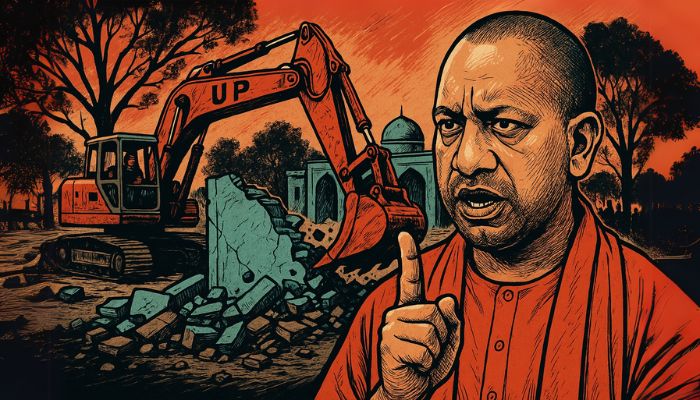
In a major action against land encroachment near the Indo-Nepal border, the Uttar Pradesh government has demolished 286 illegal religious structures across seven districts. The demolished structures include 225 madrasas, 30 mosques, 25 mazars, and six eidgahs.
भारत-नेपाल की सीमा पर यूपी के कई जिलों में उग आए आतंक के अड्डों पर योगी सरकार बुलडोजर एक्शन कर रही है।
संवेदनशील सीमा पर बने अवैध मदरसों, मजारों और ईदगाह पर योगी सरकार ने चाबुक चलाया है।
महाराजगंज, सिद्धार्थनगर, श्रावस्ती और बहराइच में सरकार ने सीमा से 15 किमी अंदर तक अवैध रूप… pic.twitter.com/813lKbSSQn
Demolition drive across 7 districts near Nepal border
The demolition drive is being carried out in districts adjoining the Nepal border, including Maharajganj, Siddharthnagar, Balrampur, Shravasti, Bahraich, Lakhimpur Kheri, and Pilibhit. According to official data, the highest number of demolitions has taken place in Shravasti, where 100 illegal madrasas, one mosque, five mazars, and two eidgahs were demolished.
UP में जमकर गरजा योगी का बुलडोजर
एक सप्ताह में
– 225 अवैध मदरसे – 30 मस्जिद – 25 मजार /दरगाह – 6 ईदगाहों को मिट्टी में मिला दिया गया
अकेले श्रावस्ती जिले में 110 अवैध ढांचों को ध्वस्त किया गया. नेपाल बॉर्डर पर योगी जी का ये ज़ोरदार बुलडोजर एक्शन हुआ है pic.twitter.com/y5fGjcYHl3
In Siddharthnagar, 35 madrasas and nine mosques were demolished. In Balrampur, 30 madrasas, 10 mazars, and one eidgah were identified as illegal structures and were removed. Maharajganj saw action against 29 madrasas, nine mosques, seven mazars, and one eidgah.
In Bahraich, 13 madrasas, eight mosques, two mazars and one eidgah were demolished. Lakhimpur Kheri recorded demolitions of eight madrasas, two mosques, one mazar and one eidgah. In Pilibhit, only one mosque was identified and brought down.
Government’s rationale, encroachment removal and border security
The demolition campaign is being conducted under the direct orders of Chief Minister Yogi Adityanath. He has mandated the removal of encroachments within 10 km of the Indo-Nepal border. Speaking to the media, officials said that the purpose of this drive is twofold, that is, reclaiming illegally occupied government and forest land, and ensuring better border security.
So far, the state has identified 429 cases of encroachment in the region, which include 345 illegal madrasas. Additionally, 41 mosques and 43 mazars were also marked for further action. Of these, 139 madrasas have already been sealed.
Ongoing operations and recent demolitions
The drive that started in the month of April continued after mid-May. On 11th May, demolitions took place at two locations in Maharajganj’s Semrahni and Jugouli villages, one madrasa in Shravasti’s Bhinga tehsil, and a mazar on forest land in Bahraich.
Earlier, between April 25 and 27, another 89 illegal structures, including madrasas, mosques, mazars and eidgahs, were demolished across the border districts. In April 2025, 17 madrasas were sealed during a similar campaign phase.
In recent demolitions, government officials reported that a mosque built on government land in Siddharthnagar’s Mohana area was razed. In Bhojpur Billi village of Shravasti, a madrasa operating on land belonging to a primary school was demolished. In Bahraich, an unauthorised religious structure was removed from forest department land. Additionally, in Balrampur’s Tulsipur tehsil, a madrasa under construction on public land was brought down.
Follow-up actions and monitoring
These demolitions did not happen overnight. Officials confirmed that legal proceedings took place before the demolition drive was carried out. For the pending cases, the legal proceedings are under way. Several notices were issued under Section 67 of the Revenue Code. The entire campaign is under state-level monitoring.
Government records suggest that many of the demolished madrasas were operating without approval from the education department. The other structures were not running with local Waqf Boards’ permission. The state government has reiterated that no religious encroachment will be tolerated, especially in sensitive regions bordering Nepal.
OpIndia investigation into illegal religious structures on Indo-Nepal border
OpIndia prominently highlighted the issue of illegal madrasas in 2022, with over 25 ground reports addressing the matter on our website. These reports shed light on the demographic shifts observed in villages bordering Nepal, as well as incidents of love jihad in these areas.
Notably, in March 2024, OpIndia reported that on the orders of Yogi Government, the Special Investigation Team (SIT) tasked with probing illegal madrasas has submitted its findings to the administration. The report advocates for the closure of approximately 13,000 unauthorised madrasas. Many of these Islamic institutions were discovered to be situated near the Nepal border. Moreover, investigations revealed that these illicit madrasas were established within the past two decades, with funding predominantly sourced from Gulf nations.
Earlier in September 2022, OpIndia published 25 ground reports that can be checked here. The impact of ground reporting was almost immediate and the state government started action with installation of thermal cameras across border.
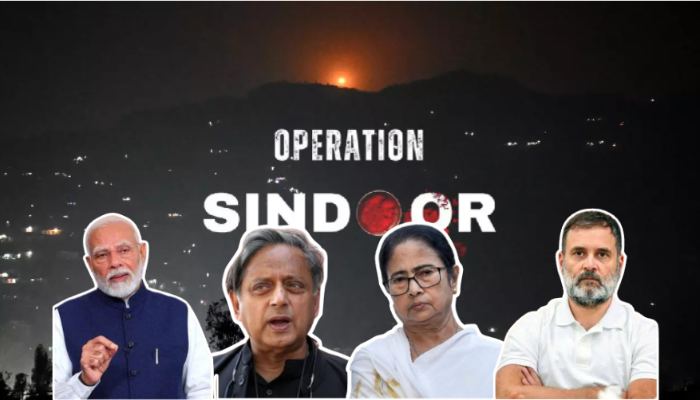
“Operation Sindoor” has delivered a humiliating setback to Pakistan while decisively transforming the terms of engagement with the rogue nation. India is undergoing a significant shift in its foreign policy while demonstrating its military strength to both adversaries and the global community, however, the petty politics of opposition parties remain unchanged.
Rahul Gandhi, infamous for placing political ambitions above the nation’s interests, has once more acted as a pawn for Pakistan propaganda due to his habitual tendencies. He posted a video featuring External Affairs Minister S Jaishankar, claiming that the latter had notified the Pakistan military about the operation beforehand. He also raised inquiries regarding the number of aircraft lost by the Indian Air Force.
Notably, the Press Information Bureau (PIB) fact-check had already declared the video to be a fabrication. The Indian government has debunked several phony videos and pictures that have surfaced on social media amid tensions between India and Pakistan.
Jaishankar orginally conveyed, “At the start of the operation, we had sent a message to Pakistan saying we are striking at terrorist infrastructure. We are not striking at the military. So, the military has an option of standing out, and not interfere in this process. They chose not to take this good advice.”
He did not state that Pakistan was notified prior to the commencement of the strikes. In reality, the timeline verified by Indian defense officials and corroborated by the PIB indicates that the operation had already concluded by the time the message was delivered to country’s authorities.
Furthermore, the Gandhi scion reiterated the falsehood concerning India losing its aircraft, a claim that lacks any evidence aside from the embarrassing “it’s all over social media” statement by Pakistan’s Defence Minister Khawaja Muhammad Asif on CNN. However, the former remained unfazed by the truth, continuing to propagate distortions.
The party even stepped up its attack on Jaishankar on 19th May, the day Foreign Secretary Vikram Misri informed the Parliamentary Standing Committee on External Affairs which was chaired by Congressman Shashi Tharoor, on developments in relation to India and Pakistan foreign policy.
The leader of the opposition in the Lok Sabha charged that Jaishankar’s silence was “damning” and again questioned how many aircrafts India lost because Pakistan was aware of its action. He termed it a crime and proclaimed that the nation has a right to know the truth. Predictably, the Islamic Republic latched onto his remarks and its media used them to claim victory and represent “Operation Sindoor” as a loss for India.
Reason replaced by conspiracy theories in Congress
Pawan Khera, the head of the Congress media department, repeated the accusations during a briefing of the All India Congress Committee (AICC). He alleged that Jaishankar’s comments might have assisted terrorists to abscond. “Prime Minister Narendra Modi and the Foreign Minister S Jaishankar will have to answer why this was done. The government should answer how many aircraft did India lose? What losses did the country suffer? How many terrorists escaped,” he asked.
Lowering the standards of political discourse even further he asked, “What does it mean that you informed them? Do you trust the terrorists so much that they will stay there once you inform them? What is your relationship with them? Do you call this strategy. I am sorry, but in village language, it is called mukhbiri (acting as an informant). This is spying, a crime and betrayal.”
The Congress veteran even carried political mudslinging into the territory of outrageous conspiracy theories and added, “Was it because of this spying that Azhar Masood and Hafiz Saeed escaped alive? Does the country not deserve to know that you saved Azhar Masood? This is the same person who was saved earlier in Kandahar. Why was there a conspiracy to save him for the second time? If we have forewarned Pakistan, then obviously terrorists like Azhar Masood and Hafiz Saeed must have escaped.”
He implied that the United States and China might possess compromising information regarding Prime Minister Modi, Jaishankar and other leaders of the Bharatiya Janata Party, given their reticence when dealing with these countries.
Row over MP delegation
The petty politics, as expected, is not confined solely to India’s military action but also encompasses its efforts to inform the world regarding Pakistan’s sinister schemes that resulted in the operation. Congress has expressed massive outrage following the selection of Shashi Tharoor by Modi government to head one of the seven delegations abroad for diplomatic efforts aimed at exposing Pakistan and emphasizing India’s ongoing battle against cross-border terrorism.
Notably, the party proposed the names of foreign union minister Anand Sharma along with Congress MPs Gaurav Gogoi, Syed Naseer Hussain and Amarinder Singh Brar. However, the government selected only one name from this list, Anand Sharma and substituted the remaining names with individuals not recommended by Congress, including Lok Sabha MPs Shashi Tharoor, Manish Tewari and former union minister Salman Khurshid.
The government clearly selected those who would be most effective in conveying the truth and the nation’s perspective. However, the Congress transformed this into an issue of political pride, labeling the decision as “dishonest” and “cheap politics” as well as alleged that the centre was “playing games.” It was remarked that the government appeared to have settled on the names even before seeking input from Congress.
“Everyone can see that Operation Sindoor is being politicised. US President Donald Trump’s repeated claims, made at least seven times, that the conflict was de-escalated due to his mediation. Yet, PM Modi has not responded. The EAM is silent,” Congress General Secretary in charge of Communications Jairam Ramesh accused. He even declared that there is a “huge difference between being in Congress and being of Congress.”
Meanwhile, the Thiruvananthapuram Lok Sabha MP has chosen to be part of the delegation. He voiced his intention to diligently carry out his designated duties. He even underscored that although his party leadership may hold differing opinions, his commitment to the country is unwavering. The announcement further incensed the top brass of Congress.
Moreover, Manish Tewari has also cited the “call of the nation” as reason for his decision to accompany the Indian delegation on its international outreach campaign against terrorism supported by Pakistan.
TMC refuses to join the delegation
The All India Trinamool Congress (AITC/TMC) also chose not to send its Lok Sabha MP Yusuf Pathan who was nominated by the centre or any other Member of Parliament in the multi-party delegations traveling to various nations to advocate against Pakistan’s cross-border terrorism. “They cannot decide member’s name on their own. It is not their choice. If they request the mother party will decide as is customary,” West Bengal Chief Minister Mamata Banerjee stated.
“How can the union government decide the representative of Trinamool? They should have held discussions with the opposition to decide which representative a party will send,” party’s National General Secretary Abhishek Banerjee argued. “The BJP government is at the helm of affairs. They can decide for their party, but not for Congress or AAP (Aam Aadmi Party),” he added.
The government selected the MP from Murshidabad to be a member of the delegation after its floor leader for the Lok Sabha, Sudip Bandhyopadhyay, stated that his health prevented him from taking part in the campaign. According to TMC, the government did not consult them.
MP delegation: A norm in democracies
A parliamentary delegation refers to an official overseas visit by one or more legislators. Parliamentary delegations are established to promote solidarity, engage in negotiations, conduct research, carry out investigations and disseminate information. India has welcomed numerous delegations from different democracies in the past and has dispatched similar groups to various nations for diverse objectives.
The aim of the present delegation is to showcase the true nature of the cross-border terrorism instigated by Pakistan through its “bleed India by a thousand cuts” strategy. A recent instance of this was the Pahalgam terror attack, which resulted in the deaths of 26 Hindu tourists and escalated the conflict between the two neighboring countries.
In a copycat move, Islamabad also announced its own intentions to send a high-level team headed by former foreign minister Bilawal Bhutto-Zardari to important international capitals, just hours after India made the declaration.
“I was contacted earlier today by Prime Minister (Shehbaz Sharif) who requested that I lead a delegation to present Pakistan’s case for peace on the international stage. I am honoured to accept this responsibility and remain committed to serving Pakistan in these challenging times,” Bilalwal wrote on social media.
It is widely acknowledged that Pakistan functions merely as a democracy in name, as it is effectively governed by its military which possesses the authority to manipulate elections, murder and imprison elected officials and leaders, including prime ministers.
Opposition leaders doubt “Operation Sindoor”
Congress leaders have already cast asperions on “Operation Sindoor.” Kothur Manjunath, the MLA from Kolar City in Karnataka, asserted that the action has proven ineffective and failed to deliver justice to the family of the victims of the Pahalgam terror attack. “If terrorists can enter our country, kill our people, and escape unscathed, isn’t that a glaring security failure? What was our army doing at the border? Did they have any plan at all,” he asked.
Prithviraj Chavan, a veteran Congress leader, criticized the administration over the operation’s codename, claiming it was picked to obtain “sentimental benefits.” Congress leader Udit Raj also levelled similar allegations and accused, “During discussions with intellectuals, it was pointed out that Sindoor is associated with a specific religion, and it would have been better if a different name was chosen.”
Mahua Maji, a Member of Parliament in the Rajya Sabha representing the Jharkhand Mukti Morcha, voiced her dissatisfaction with the name of the operation, indicating that a more suitable title could have been chosen. She contended that the name was laden with political connotations and stated that the operation should have been assigned a different codename.
Senior Congress leader Rashid Alvi stated, “Much better reply needs to be given, this is bare minimum. Our forces did what govt of India told them to do, but the question again arises. Was every single terrorist killed? Will there won’t be another Pahalgam?”
The operation was met with skepticism from controversial Congressman and Lok Sabha MP Imran Masood. “How many (terrorists) were killed and what all damages could they inflict, this also should be announced, then we will feel at peace,” he asked. “The whole world mocked the air strike. Pakistanis were saying that they killed our three crows,” he claimed in an earlier interview to ridicule 2019 Balakote airstrike.
Conclusion
The opposition has transitioned from questioning the operation’s results to criticizing its name, and now to politicizing the government’s initiative to dispatch the MP delegation, opting to engage in political mudslinging instead of standing united with the government in these critical moments.
Nonetheless, their behavior is not unexpected, as the opposition parties, particularly the Congress, have consistently prioritized political interests over national issues and have aligned with the narrative of India’s hostile neighbour.
Pakistan and propaganda have become synonyms over the years. Since its inception, Pakistan has developed a habit of playing the victim card and, to some level, it has succeeded. After all, fake news travels faster than facts. A supposed dossier prepared by Pakistani authorities is now being widely circulated in several Pakistani Telegram groups and social media circles.
Notably, this dossier is not officially released yet in any international platform by the Pakistani military or the government, possibly to avoid international fact-checks, but reports say the document is being circulated internally to promote a false picture and further Pakistani narrative after India’s successful Operation Sindoor.
The tone and content, however, unmistakably reflect the narrative of Pakistan’s propaganda machinery, which has been working extensively, amplifying denial, pushing counter-accusations, and invoking calls for “neutral investigation” that never apply to its own terror proxies.
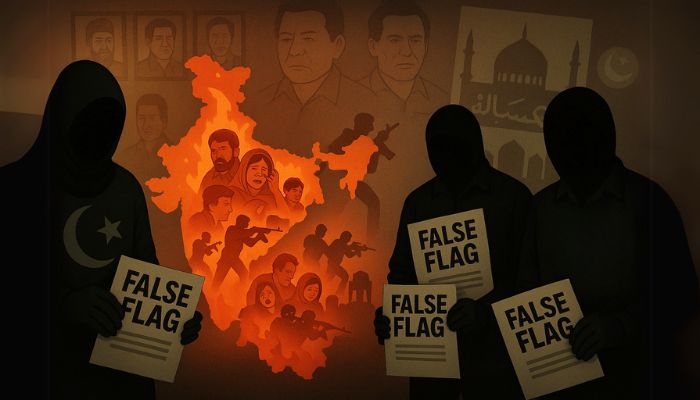
The dossier attempted to label the Pahalgam terrorist attack as a “false flag” operation by India. It went on to cite Leftist Indian journalists and “civil society” voices to discredit India’s account, much like the Hamas playbook of hiding behind civilian optics while justifying terror. It also reminds one of the Islamic State Khurasan Province’s media outreach programme, under which it publishes content, including the monthly magazine Voice of Khurasan.
Such dossiers, pamphlets, social media posts and other means of propaganda-filled content are often used by Islamic terrorist organisations as well as their funders, sympathisers or supporters to shift the narrative.
The false flag fantasy and TRF’s open confession
The dossier’s opening claim accused India of orchestrating a “false flag attack” in Pahalgam to serve internal political goals. However, it conveniently omitted the fact that the terrorists specifically targeted Hindu civilians and non-local tourists. The Resistance Front, a well-known proxy of the Pakistan-based terrorist organisation Lashkar-e-Taiba, claimed responsibility for the attack almost immediately.
India launched a military response against the terrorist camps in Pakistan-occupied Jammu and Kashmir and Pakistan only after confirmation through real-time intelligence, and the swiftness of the response was based on operational clarity, not theatrics.
Pakistan has an old habit of invoking “false flag” every time it finds itself diplomatically cornered. Be it Mumbai, Pulwama or now Pahalgam. Not to forget, the terrorists who were behind the 26/11 terrorist attack came wearing Hindu religious symbols like Kalawa. It was only because Ajmal Kasab was caught alive, thanks to ASI Tukaram Omble, that it was revealed he was an Islamic terrorist who came from Pakistan. It took Pakistan years to admit he was indeed a Pakistani.
Initially, Islamabad denied Kasab was a Pakistani, however, local media traced his house and even aired statements of his family members. It is only one example of how Pakistan has played innocent, attempted to malign the Hindu community and tried to target India on international platforms while sponsoring terrorism.
Precision strikes on terror hubs cannot be called aggression
Another narrative Pakistan tried to push via the dossier is that India launched “unprovoked aggression”. The claim wilfully ignored the fact that Indian targets were long-identified terror infrastructure hubs in Muridke, Bahawalpur and Muzaffarabad. These are not residential neighbourhoods but safe havens for terror outfits.
In fact, Pakistan tried to present an internationally designated terrorist, Hafiz Abdur Rauf, as an innocent preacher. While doing so, Pakistan’s DG ISPR made a blunder and showed his national ID, which matched the details in the US Treasury Department document declaring him a global terrorist.
Pakistan can call it aggression, but international norms recognise India’s right to pre-emptive self-defence under Article 51 of the UN Charter, something ironically used by the terror-sponsor Pakistan to target India. Precision strikes on active threats are not aggression. They are a necessity in a region where non-state actors operate freely under state protection.
Third-party probe talk from a habitual evader of FATF scrutiny
Pakistan called for a neutral third-party probe. Though it sounded like a good gesture, it would have sounded more convincing if it had not spent decades dodging global accountability mechanisms. The same Pakistan that was in FATF’s grey list for years and shielded 26/11 masterminds is now crying for transparency. Notably, the training camp of Ajmal Kasab and David Headley, terrorists behind 26/11 attack, was destroyed in Operation Sindoor. India has already shared credible intercepts and drone footage with its allies and showed relevant information during press conferences as well. No probe can be considered neutral if the accused has a proven history of hosting terror masterminds.
Blaming Indian media while ISPR runs CGI simulations
The dossier tried to blame Indian media for spreading “war hysteria”. However, it failed to acknowledge Pakistan’s Inter-Services Public Relations creating fantasy videos of shooting down Rafales and destroying S-400s. Indian media reports were based on intelligence inputs, TRF’s public statements and local ground reports.
On the other hand, Pakistan has not provided a single satellite image with timestamped evidence to back its claims. What it offered instead were flashy infographics, an unverifiable image of damaged mosques and lofty claims of “destroying BrahMos sites” through long-range artillery.
While Indian media presented a clear image of what happened during the India-Pakistan conflict, it is necessary to point out that there is a large section that worked against India. The videos, social media posts and reports by such media outlets, journalists and influencers were used by Pakistani media, DG ISPR and even by the creators of this dossier to target India.
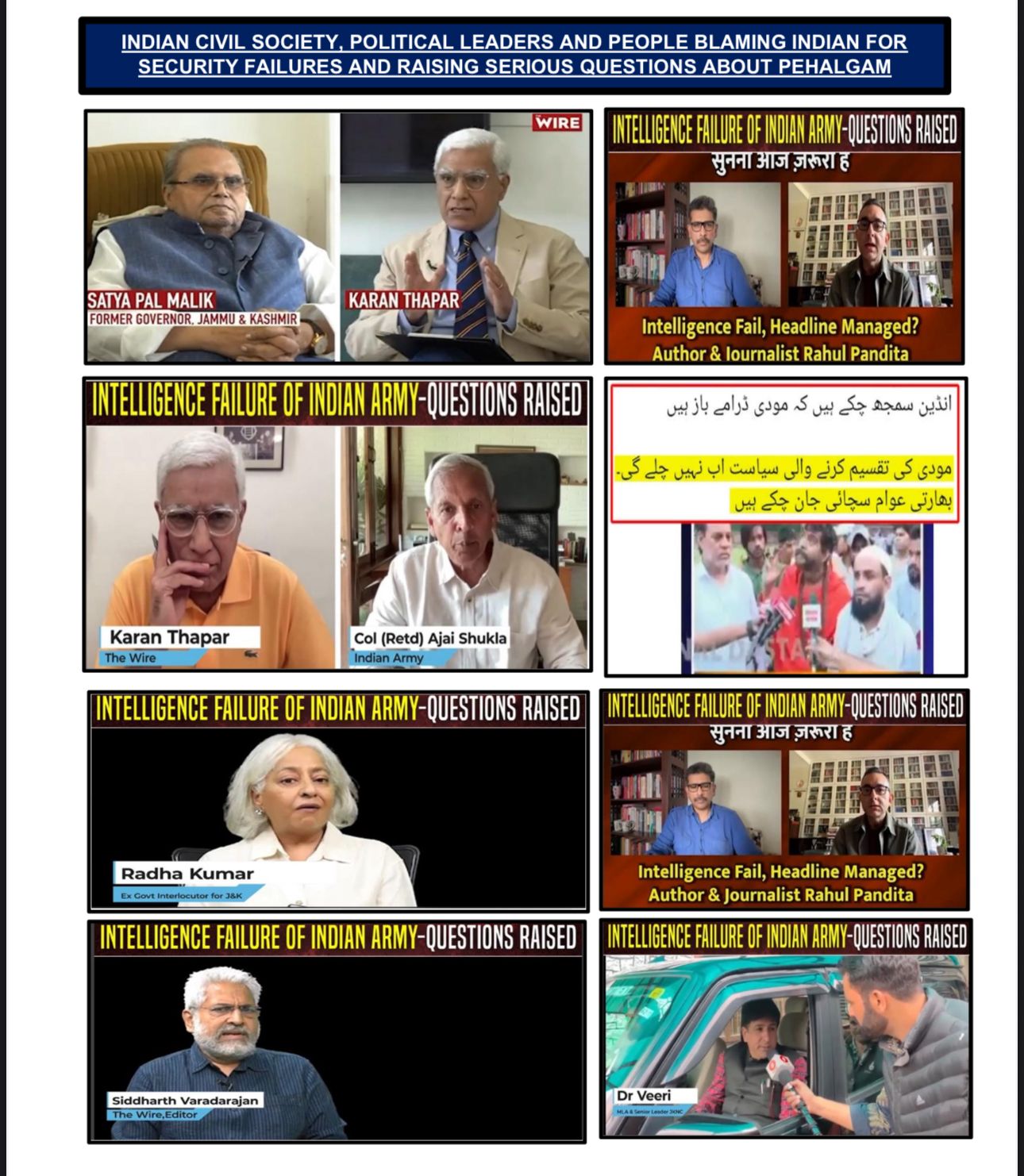
For example, former governor Satyapal Malik, Rahul Pandita, The Wire’s Karan Thapar, Ajay Shukla, Radha Kumar, Siddharth Varadarajan of The Wire, Sankey Upadhyay of The Red Mike and many others presented a picture of the Pahalgam terrorist attack and Operation Sindoor in a way that made India look like the villain. Their coverage, statements, videos and social media posts were extensively used by Pakistan against India.
Source: So-called dossier circulating in Pakistani Telegram Channels and WA
Glorifying Operation Bunyanum Marsoos while pretending restraint
In perhaps the most theatrical section, the dossier attempted to glorify Pakistan’s so-called “measured response” under Operation Bunyanum Marsoos. According to it, Pakistan’s military struck 26 Indian targets, downed drones, Rafales and MiGs. It also claimed that Pakistan took out BrahMos storages, all while avoiding civilian harm.
The absurdity of these claims is not lost on anyone. This narrative is not an assertion of restraint, it is a desperate attempt to equalise terror strikes on civilians with a military response against terror hubs.
Weaponising civilian optics with unverifiable mosque images
Pakistan’s standard tactic of embedding military assets in civilian zones comes back to bite them when strikes result in collateral damage. The dossier tried to portray damaged mosques and civilian deaths as evidence of India’s aggression. Yet none of the images provided carry timestamps, coordinates, or credible sources. India, meanwhile, has always maintained that it targets only verified terror hubs. The problem lies in Pakistan using religious places as operational bases for jihad. Not to forget, Pakistani officials from government and military attended funerals of terrorists.
Furthermore, when reports came out that ten family members of Jaish-e-Mohammad chief Masood Azhar were killed, an official statement came out vowing revenge.
Framing India as a serial violator to whitewash its own sins
The most ironic and final claim that the dossier made was accusing India of habitual violations of international law. Coming from a country that has long harboured Hafiz Saeed, Masood Azhar and other United Nations-sanctioned terrorists, this is rich.
India operates under global scrutiny and in accordance with international law. It is Pakistan that has repeatedly found itself isolated, whether on the FATF Grey List or in global forums that have had enough of its double games.
Pakistan’s so-called dossier is not a factual document but just a WhatsApp forward. It has been crafted to deflect, deny and defame. It is not for gaining credibility on international platforms but for internal consumption. Pakistan just wants to keep the façade of victimhood alive while denying the blood on its hands. If anything, it proves just how deeply the rot of propaganda runs in Pakistan’s state and semi-state apparatus.
The day was 20th May 2000. Terrorists belonging to the banned Christian Tripuri outfit, National Liberation Front of Tripura (NLFT), gunned down Bengali Hindu refugees in Bagber village of Tripura. The ‘Bagber Massacre’ remains one of the deadliest ethno-religious episode of violence in the Northeastern State in the 21st century.
Bagber, which is located in the West Tripura district, was the home to a Bengali Hindu refugee camp at that time (who had to flee their homes due to ongoing conflict in the region).
On 20th May 2000, at about 5pm, NLFT terrorists laid siege to the home of a local CPIM politician (the ruling party in Tripura at that time) named Ajay Ghose. They hurled grenades at his house.
A group of Bengali Hindus, who had sought refuge at the adjacent Niranjan Sardarapara School, heard loud explosions and began running for safety. The banned Christian terror outfit then trained its guns towards the fleeing refugees, killing 3 instantly in the targeted attack.
NLFT terrorists then made their way to the Niranjan Sardarapara School and shot 16 more Bengali Hindus dead and injuring several others. A total of 19 Hindu refugees were killed on that fateful day. According to reports, an additional 6 victims later succumbed to injuries, thereby taking the total death toll to 25.
“The rebels first lobbed grenades into the school premises and then opened indiscriminate fire from automatic weapons. The camp inmates first took shelter in the primary school after their houses were gutted. The rebels attacked them with sharp weapons. Nineteen Bengalis including 10 women died on the spot,” a report by The Hindustan Times read.
The names of 19 out of 25 victims are stated below:
Nabin Debnath
Monica Debnath
Nakul Debnath
Rakhi Debnath
Suklal Nama Das
Premoda Debnath
Nirmala Nama Das
Abala Debnath
Suniti Sarkar
Supriya Debnath
Usha Debnath
Goranga Das
Sikha Debnath
Laxmirani Sarkar
Kumkudini Debnath
Kamalarani Laskar
Birendra Debnath
Dhanibala Debnath
Surendra Debnath.
As per reports, violence also ensued on 21st May 2000, resulting in killings of more 10 victims at Ratiya, Teliamura and Chakmaghat (and taking total death toll to 45). An additional 100 cattle were also massacred by the Christian Tripuri terrorists.
The terror attack occured soon after the killing of 5 tribals in Teliamura by the banned Bengali terror outfit ‘United Bengali Liberation Front of Tripura.’
The aftermath of the Bagber Massacre
In the aftermath of the massacre, an estimated 30000 Bengali Hindus fled from the Tripura Tribal Area Autonomous District Council (TTAADC) areas. This was one of the sinister objectives of the NLFT behind the Bagber massacre.
One such Hindu victim named Shyam Lal Biswas narrated,”There is nothing left there. Our land is barren and there are no homes. What does the government want?”
Gauranga Das, speaking for displaced Hindus, stated, “The block development officer told me recently that I should try and convince some families to go back since this cant be a permanent solution. But our old homes have been taken over by the tribals. They live there. This is akin to pushing us back into the tigers lair.”
The ruling CPIM government had promised 24 tins and a meagre ₹2,000 cash to the displaced Bengali Hindu families to rebuild their homes in the new location.
Security lapses and political reactions
It is important to point out that a camp of Central Reserve Police Force (CRPF) personnel was stationed just outside the Bagber village but they did not intervene during the attack.
The terrorists, estimated to be 60 in number, only fled after jawans from the Tripura State Rifles (TSR) arrived at the scene.
Former Chief Minister of Tripura, Nripen Chakraborty, had lashed out at the then ruling CPIM government over the Bagbar massacre.
“Manik Sarkar (the then CM) has failed to handle the situation. There is no dearth of leaders in the CPM to replace him,” he had infamously remarked.
Prime Minister Atal Behari Vajpayee had assured to deploy Army battalions in terror-torn parts of Tripura in the aftermath of the massacre.
Ethno-religious tensions in Tripura and rise and fall of the NLFT
The ethno-religious tensions in Tripura have deep historical roots dating back decades.
The large-scale settlement of Bengalis in the Northeastern State, first through active encouragement by Tripuri rulers, followed by the Parition of 1947 and the 1971 Bangladesh Liberation War, had been a bone of contention in the State.
The relationship between the tribal communities (who were being rapidly converted to Christianity) and the Bengali Hinduss became strained in the 1980s, resulting in escalated conflicts, violence and massacres.
In the context of these events, the Christian Tripuri outfit of National Liberation Front of Tripura (NLFT) came into existence in March 1989. One of its primary objectives included ‘separation of Tripura’ from the Union of India .
“About 90 per cent of the top ranking NLFT cadres are Christians,” a report by South Asian Terrorism Portal noted. NLFT had the active backing of the Baptist Church of Tripura.
A report by the BBC stated, “The NLFT is accused of forcing Tripura’s indigenous tribes to become Christians and give up Hindu forms of worship in areas under their control. Last year, they issued a ban on the Hindu festivals of Durga Puja and Saraswati Puja. The NLFT manifesto says that they want to expand what they describe as the kingdom of God and Christ in Tripura. The Baptist Church in Tripura was set up by missionaries from New Zealand 60 years ago. It won only a few thousand converts until 1980 when in the aftermath, of the state’s worst ethnic riot, the number of conversions grew.“
The Chrisitian Tripuri terror outfit had the support of the Inter-Services Intelligence (ISI) of Pakistan and terror outfits in Bangladesh
“Outfits such as the NLFT are buying arms, ammunition and modern communication gadgets from South-east Asian countries such as Singapore and Thailand and collecting them in Bangkok before bringing them to Chittagong in Bangladesh. Cox’s Bazaar is one of the major illegal arms centres in Bangladesh. The consignments are loaded into either ships or trawlers in Chittagong, a border district of Bangladesh, and transported to Tripura. These consignments are offloaded in the districts of Dholai, South Tripura and North Tripura and they reach various parts of the North-East via land routes through dense ravines. Tripura is the corridor for pushing arms into the northeast,” former Finance Minister of Tripura Badal Chowdhury told The Frontline.
NLFT has been responsible for multiple attacks against Bengali Hindu communities in various parts of Tripura throughout the 1990s and early 2000s. It has involved in what can be best described as ‘Christian terrorism.’
NLFT was initially banned under the Unlawful Activities (Prevention) Act of 1967. It was finally disbanded in 2024 with the signing of the historic tripartitie ‘Tripura Peace Accord’ between Tripura government, Indian government and the NLFT.
The Bagber massacre was not an isolated incident. 16 unarmed Bengali Hindus were ruthlessly killed in the 2002 Singicherra massacre. The targeting of Bengali Hindus by the NLFT represents a troubling intersection of ethnic separatism and religious terrorism in the Northeastern State of Tripura.
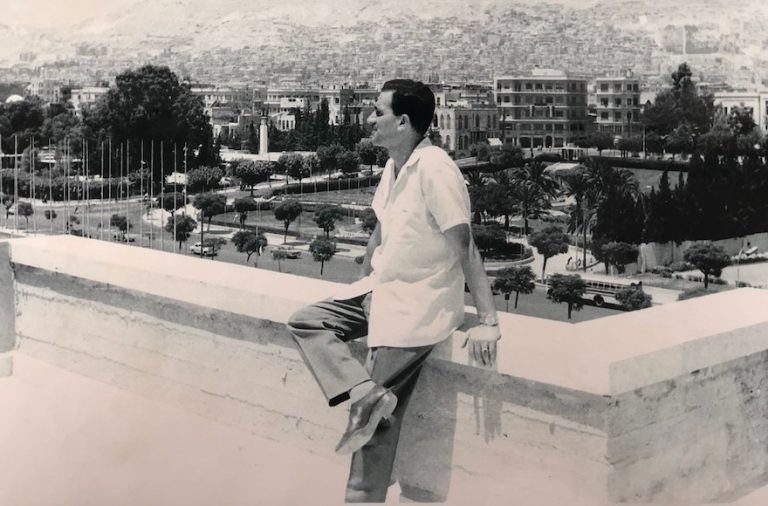
Israel has been involved in a bloody conflict with Hamas in Gaza since the horrific terrorist attack on Israel on October 7, 2023. Following that, Israel also faced attacks from Hezbollah in Lebanon, and that conflict led to the displacement of thousands and thousands of people on both side of the border. However, one Israeli border remained fairly quiet during this period (well, as quiet a border as Israel can expect), the one with Syria. Much of the credit for keeping Israel safe from that side goes to one of the most famous spies in the world, and Mossad’s greatest ever spy. His name was Eli Cohen.
From Israel’s creation in 1948 till 1967, Syrian border was one of the biggest headaches for Israel, as Syrian forces rained mortar shells on Jewish settlements of Upper Galilee region from Syria occupied Golan Heights. The geographical advantage that Syria had meant Israelis living in the area were always under threat of Syrian fire. All that changed in 1967 after the six-day war when Israel occupied most of the Golan Heights, and seized full control of the region in 2024. A crucial role in Israel’s victory that led to them controlling Golan Heights was played by Eli Cohen, this is about the incredible life journey of that spy.
Early life in Egypt
Eli Cohen was born in Alexandria, Egypt, on December 6, 1924, to a family of Mizrahi Jews. His parents were originally from Aleppo in present day Syria. His father had emigrated to Egypt in 1914. Since his early years, Cohen was a firm believer in Zionism and wanted the establishment of a Jewish state.
Cohen was fluent in several languages, like Hebrew, Arabic, Spanish, French, and English. During his time in Egypt, he helped several Jews to escape Egypt and reach the newly created state of Israel.
His parents and his 3 brothers moved to Israel in 1949, however, he stayed behind to help the remaining Egyptian Jews in the country. He was also allegedly involved in ‘Operation Goshen’ by Israeli Defense Forces that led to the evacuation of several Egyptian Jews from the country. However, Egyptian authorities could never prove his involvement in that. He also allegedly was involved in Israel’s disastrous ‘Lavon Affair’ operation, but again, Egyptian authorities could never prove his involvement.
Throughout the 1950s, Eli Cohen was involved in raising support for Israel among the Jewish population of Egypt.
Move to Israel
Following the Suez crisis of 1956, Eli Cohen eventually moved to Israel. When Israel occupied the Sinai peninsula during the war, Eli Cohen was detained by the Egyptian authorities, and was expelled from Egypt along with the remainder of Alexandrian Jews at the end of the war. He arrived in Israel on February 8, 1957.
After arriving in Israel, Cohen started working as a translator in Military Intelligence, and later worked as an accountant. He applied for Israeli Intelligence Agency Mossad twice, but was rejected after they found during his evaluation that he has an exaggerated sense of self-importance and a lot of internal tension. They also concluded that he is likely to take unnecessary risks.
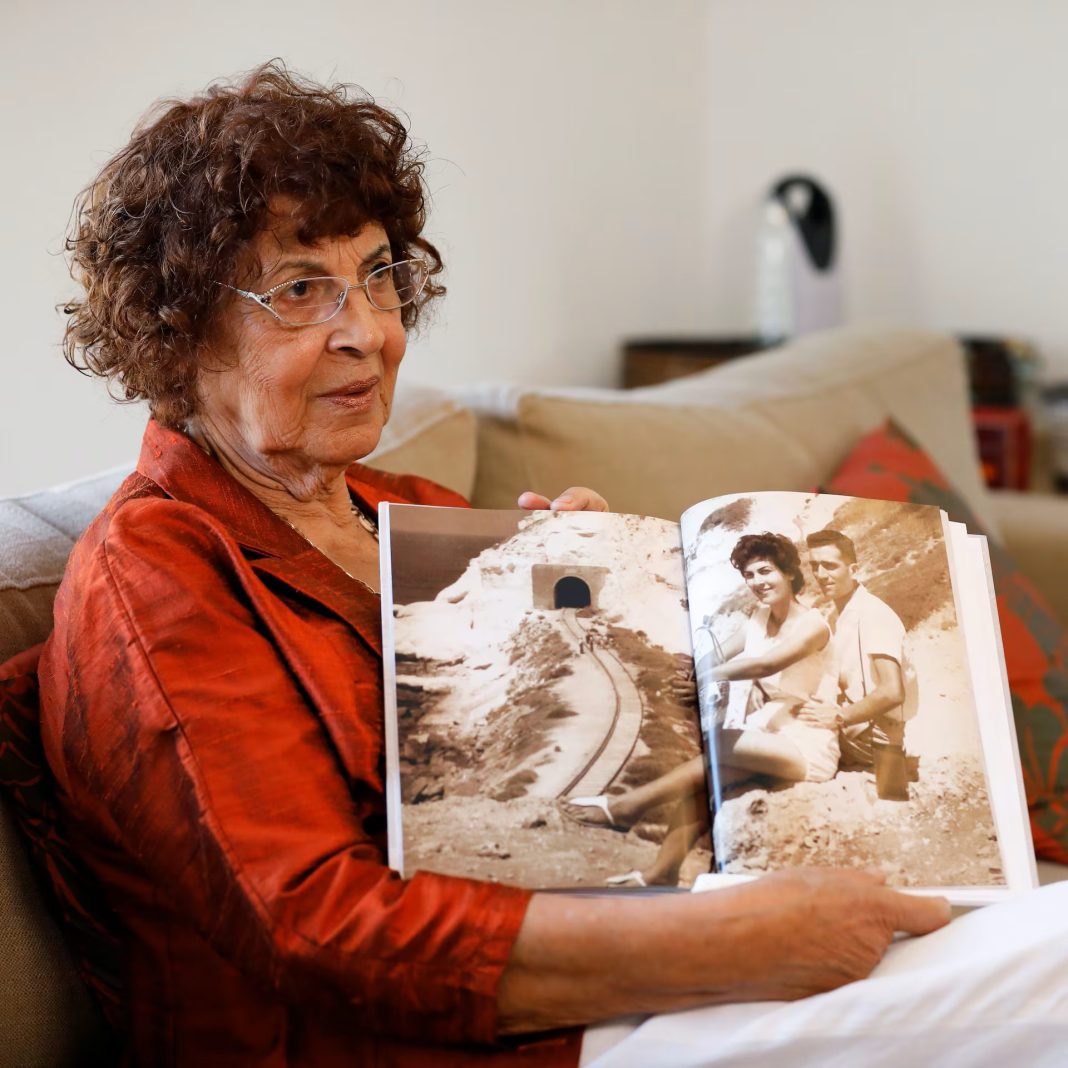
Eli Cohen married an Iraqi born Jew, Nadia Majald, on August 31, 1959. The couple went on to have 3 children together.
Nadia Cohen (Image Source: Reuters)
Meanwhile, in 1960, Mossad took another look at Eli Cohen’s file, having rejected him earlier, as the border with Syria was heating up. Cohen’s Syrian ancestry, and his proficiency in several languages made him perfect to enter Syria as a Mossad spy. And thus was born Kamel Amin Thaabet, the Syrian businessman.
Eli Cohen had to undergo an intensive 6 months training with Mossad first before he could be deployed in the field. During the training, Cohen was taught high-speed evasive driving techniques, Weapons proficiency, topography, map reading, sabotage, and, radio transmissions and cryptography.
Buenos Aires, Argentina
Since Cohen or Thaabet as he had become by then, couldn’t be directly sent to Syria without arousing suspicion, he was first sent to Buenos Aires in Argentina. The country had a thriving Syrian expatriate population, and was considered the right place for Cohen to develop relationships with Syrians.
At home, Cohen told his wife and family that he will be working for the Ministry of Defense of Israel, and will be away from home a lot, to try and explain his long disappearances that were inevitably going to take place now.
Eli Cohen was given a fake biography, Kamal Amin Thaabet was born in Beirut, Lebanon, to Syrian Muslim parents. His father’s name was Amin Thaabet, and his mother’s Sadia Ibrahim. According to his fictional biography, in 1948 their family moved to Argentina, where they opened a successful textile business. As per his fake identity, both his parents were dead and as an only child, he inherited the business.
Thaabet was also being asked to pretend to be a staunch Syrian nationalist who just wanted to return to his homeland of Syria.
Soon, the wealthy Thaabet became a regular feature on the social scene of Buenos Aires as the wealthy businessman who just desired to return to Syria. Cohen made contacts with politicians, diplomats and military officials working out of the Syrian Embassy in Buenos Aires. Among them was Amin al-Hafiz from the Ba’ath party, who would later go on to become the President of Syria. This contact was going to serve Cohen well during his spying operation in Damascus.
Move to Syria
Eli Cohen eventually moved to Syria in February 1962 under his alias Kamal Amin Thaabet. Once in Damascus, Cohen lived on Al Mahdi Ibn Barakeh Street in Abu Rummaneh, an area with several embassies and important government offices.
At that time, Ba’ath Party was slowly becoming more and more powerful in Syria, and expecting them to gain control of the country soon, Cohen developed good relationships with the Ba’ath leadership.
While in Damascus, Cohen held lavish parties at his home where influential Syrian ministers, businessmen, and military officials would come and enjoy themselves. Apparently, several of these parties descended into orgies. Intoxicated officials used to talk freely about classified information related to their work, and a sober Cohen would listen to all this carefully.
The Ba’ath Party seized power in Syria in 1963, and Cohen’s ‘trusted friend’ from Argentina, General Amin al Hafiz became the President of the country. This further entrenched Cohen into the corridors of power in Syria.
Cohen would regularly return to Israel via a circuitous route to be with his family, and also to relay important information about Syria to Israeli officials in person. Most of the information he was sharing via radio transmissions from Damascus.
Vital information that Eli Cohen shared that helped Israel
During his several years’ long stay in Syria, Eli Cohen helped Israel immensely by providing them classified information from Syria.
Syrian authorities had conceptualised a project to divert water from the headwaters of the Jordan away from Israel and deprive the Jewish nation of the much needed water. Through his Army contacts, Eli Cohen came to know about all the details of the project. Cohen informed Israeli forces that a channel was being dug in Syria to receive the diverted flow of the Baniyas River from Jordan. After receiving this information, Israeli Air Force Due bombed and destroyed all the equipment being used for this project thwarting Syrian plans.
However, the most significant information Eli Cohen provided Israel came from Golan Heights. He visited the heavily militarised area of Golan Heights, which was under Syrian control at the time, and observed the locations and the strength of the Syrian fortifications there. It is said that he also recommended planting trees next to each bunker in Golan Heights to provide some shade to the soldiers stationed there. However, that claim hasn’t been verified.
What is verified, however, is that, the information Eli Cohen gathered during his visit to Golan Heights, helped Israeli forces pinpoint the location of the Syrian bunkers in Golan Heights. This information helped Israel target these Syrian posts during the war of 1967 and destroy them, and take Golan Heights away from Syria, ensuring peace in Norther Israel along Syrian border.
Eli Cohen’s capture and subsequent execution
Because of the frequent leakage of Syria’s defense secrets to Israel, Syrian authorities had started suspecting that there is an Israeli spy in Damascus. They eventually caught Eli Cohen in his apartment in January 1965 while he was in the middle of trasmitting a message to Israel.
The reasons why Cohen eventually got outed and was captured vary. Some say he started transmitting radio messages to Israel too frequently, some say he was too careless and started messaging at a fixed time every time which helped Syrian authorities track him down.
However, David Barnea, the current head of Israeli agency Mossad shared in 2022 that Eli Cohen was captured “simply because his transmissions were intercepted and triangulated by the enemy.”
Notably, Syria had started using Soviet supplied tracking equipment at that time, and were assisted by Soviet experts. This expertise was used by the commander of Syrian Intelligence, Colonel Ahmed Suidani, who had always disliked Eli Cohen. So Cohen was most likely bested by the better technology of the time.
Several accounts say that Cohen was in line to become the next Deputy Minister of Defense of Syria at the time. Syrian authorities have denied it, understandably, following the embarrassment that an Israeli spy could rise so high in Damascus.
Arrest and execution
After Eli Cohen was arrested from his apartment red-handed, he was subjected to brutal torture by his Syrian captors. However, he didn’t reveal any information about Israel despite the inhuman torture.
Syria at least had the decency to pretend to have a trial for Cohen, where he was obviously found guilty and sentenced to death.
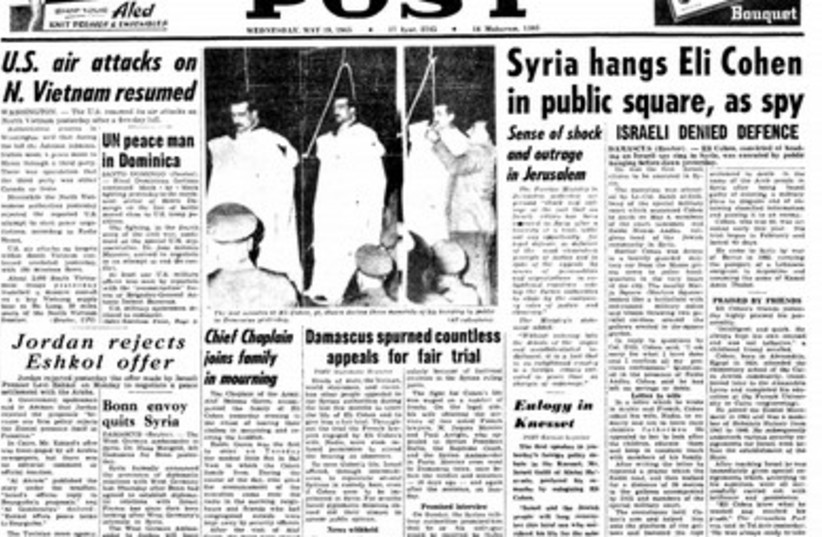
Cohen’s wife Nadia pleaded with several world leaders to save him, several leaders, including the Pope stepped in to try and save him, but Syria was too embarrassed that they let this spy climb so high in Syria, they couldn’t let this go. On May 18, 1965, the greatest Israeli Spy was hanged to death.
Eli Cohen Legacy
Eli Cohen may have died on that day in 1965, but his legacy will continue to inspire Israelis. Many streets and neighbourhoods have been named after Cohen in the Jewish country. He remains an inspiration for generations of Mossad agents, and is widely recognised as the greatest Mossad spy ever, and one of the greatest ever to have worked in the field.
Israel retrieves Eli Cohen’s items from Syria in a covert operation
60 years after Cohen’s hanging, Mossad brought back the official archive on Eli Cohen to Israel from Syria. As per statement by the Israeli PM’s office, thousands of findings that were held for decades by the Syrian security forces in a highly compartmentalized manner, were brought to Israel in a covert and complex Mossad operation. The statement added that the mission was completed in cooperation with an allied foreign intelligence service, without naming it.
This just emphasises that Israel never forgets its heroes, and was definitely not going to forget one of its greatest ones.
Netflix series ‘The Spy’ was based on Eli Cohen’s incredible career
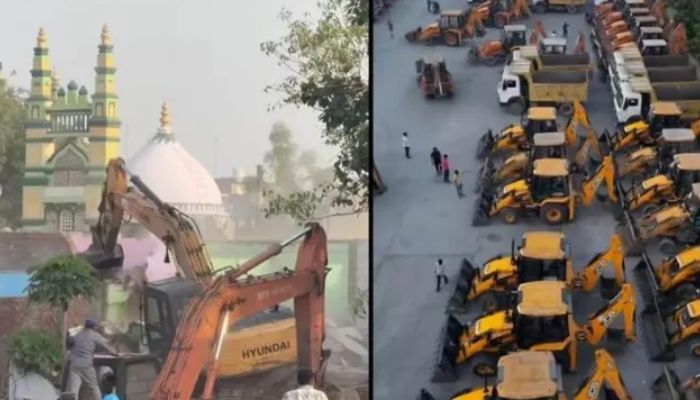
In the Chandola area of Gujarat’s Ahmedabad, a mega demolition drive in ongoing to remove illegal encroachments. The phase 2 of the demolition drive started at around 6 am on 20th May 2025. All the illegal houses on the road from Suryanagar Police Post in Isanpur area towards Mira Cinema are being demolished. The scale of demolition in this phase is way higher compared to the bulldozer action started in the first phase.
Reports say that over 1.5 lakh square meters of land was cleared in the first phase, while now 2.5 lakh square meters of land will be levelled in the second phase. During this process, 60 JCBs, 40 cranes, 3000 policemen will be on the move. The AMC had warned people to vacate their homes by making announcements in this regard on the microphone in the entire area on Monday afternoon. In addition, people living there for a week were being warned to vacate their homes.
Ahmedabad Police says that of the 250 Bangladeshis arrested in 2025, 207 were from Chandola
In a media briefing, Ahmedabad City Police Commissioner GS Malik said that Chandola Lake had become a haven for Bangladeshi infiltrators for a long time and illegal activities had also started taking place. In 2025, 250 Bangladeshis were caught from Ahmedabad and out of them, 207 were caught from Chandola alone. Every year, around 10-20-40 Bangladeshis have been caught. He further said that a total of 3000 policemen including one Joint Commissioner, one Additional Commissioner, 6 DCPs and PIs etc. have been deployed for the second phase of action.
The officer added that apart from that, 25 SRPF companies are also with the police and that drones will also be used. Along with this, he said that in the previous action, about 1.5 lakh square meters of land was cleared and now the operation to clear 2.5 lakh square meters of land has been started.
Malik also stated that this demolition action will be carried out for about three-four days. However, even if the days increase, the authorities are fully prepared.