Home Blog Page 3856

‘Let’s play cricket with each other’: Taliban wants to host Pakistan’s cricket team for bilateral ODI series in Afghanistan

0

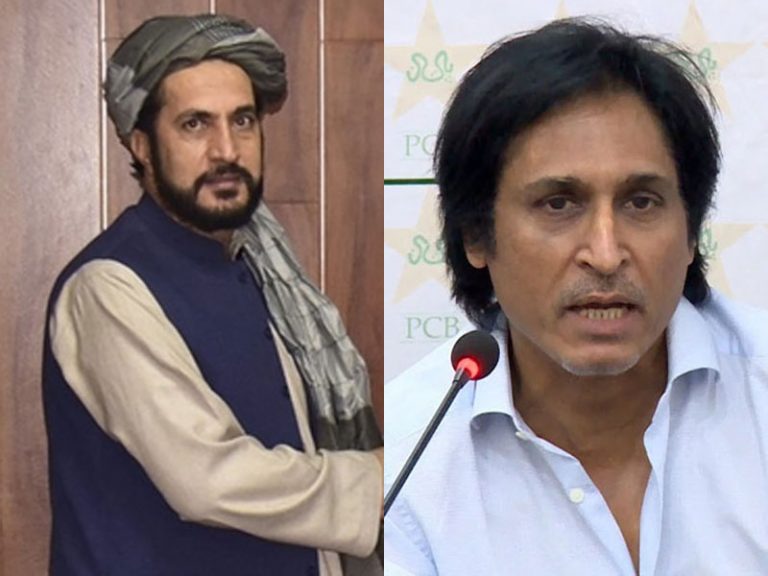
On September 22, Azizullah Fazli, Afghanistan cricket chairman, said he would visit Pakistan to invite them for the One Day International cricket series on September 25.

Amidst the ongoing war in the country, the cricket team of Afghanistan somehow managed to rise in international cricket. There are some good players in the team, including the world’s top spinner Rashid Khan. However, since the Taliban took over the country, there had been calls to boycott the men’s team.

As the Taliban now controls Afghanistan, they ruled to abolish the women’s team. This is where comes the catch. As per the regulations under International Cricket Council (ICC), nations who want to participate in international Test matches must have an active women’s team. Something that is farfetched in the country ruled by Talibs. Though no policy has been announced by the Taliban on allowing women to play sports, a senior official has already declared it as “unnecessary”.

Interestingly, the newly-appointed chairman of Afghanistan cricket also wants to visit India and other countries in the region to meet official cricket boards. While talking AFP, he said, “I am taking a tour of Pakistan from September 25 and then will go to India, Bangladesh and the United Arab Emirates to meet officials of cricket boards.”

Afghanistan cricket team was due to play in Sri Lanka against Pakistan in September, but that could not happen. Fazli said that he would meet Ramiz Raja, chairman of, Pakistan Cricket Board, and “offer to host Pakistan for the series which we were due to play in Sri Lanka in September”. The three-match one-day series between Afghanistan and Pakistan was cancelled due to the Covid-19 outbreak and logistical issues in Sri Lanka. Fauzi further added, “We are seeking to improve Afghanistan cricket so that will come with cooperation from other countries.”

Reportedly, Raja has confirmed that Fazli will be in Pakistan on September 25. Fazli has served as chairman of the board once before between September 2018 and July 2019. Notably, Afghanistan is part of the Twenty20 World Cup that is scheduled to start on October 17 in the United Arab Emirates. Afghan team is in Group 2 of the Super 12 stages.

Recently, Australia took a stern stand against the Taliban’s decision to not allow women to play cricket. Australia has threatened to cancel a Test match that was scheduled to be played against Afghanistan in Brisbane in November.

Notably, the Taliban also replaced the Chief Executive of the Afghanistan Cricket Board. Hamid Shinwari was sacked by Talibs, and Naseeb Zadran Khan took his place. Khan is said to be linked to the Haqqani network that is responsible for some of the worst attacks in Afghanistan.

The security threats in Pakistan for cricket teams

Recently, two countries stepped back from playing cricket in Pakistan over security concerns. On September 17, New Zealand’s B-team that was in Pakistan announced that they would be heading back to their homeland and cancelled the series with Pakistan Cricket Team. The reason that they gave for the sudden decision was a bomb threat. Later, on September 20, the England team also cancelled their tour to Pakistan over security concerns. Both incidents resulted in a meltdown from Pakistan authorities, cricketers and fans.

Netizens speculate Afghanistan’s stand over security threats

As soon as reports of Falzi visiting Pakistan to initiate talks to have cricket matches between the two countries, jokes and memes flooded the Indian social media space. Cricket fans were amused over the thought of war-torn countries trying to picture themselves as ‘patrons of peace’ who want to play cricket with other countries in the region, including India.

Davinder Singh Rawat said, “Both the countries not visiting each other citing security reasons. No other country also visiting them because of the same reason.”

Ravi posted a photograph of Talibs laughing and said, “Rest of the world”.

Arnab Bakshi said, “#TerroristPakistan vs #TerroristTaliban. Whoever loses the match..boom.”

Twitter user YearOfRat said, “Taliban has invited Pakistan to play in Afghanistan, and not offered to play in Pakistan themselves, because even they know the security risks in Pakistan. Taliban: Pakistan khelne jaayen kya? Osama: Pagal hai kya!”

Satire portal The Fauxy published a post in which it was said that “Afghanistan Cricket Team Cancels Its Pakistan Tour Over Security Concerns”, which further ignited the laughter riot.

The screenshots of the satire report were shared as real across Twitter, with people making fun of both countries.

Recently, the Taliban had banned the broadcast of the Indian Premier League in Afghanistan because of the “presence of female spectators and cheerleaders in IPL matches”. Cheerleaders and women watching the matches in the stadium with their hair visible were ruled as ‘anti-Islamic content’ by the Taliban.

PM Modi lands in USA for a three-day visit, UNGA address, QUAD leaders meet and talks with global CEOs on schedule

In a first major foreign visit amidst the pandemic, Prime Minister Narendra Modi arrived in the USA on Thursday starting his three-day visit. PM Modi is scheduled to meet US President Joe Biden, Vice President Kamala Harris, deliver a talk at United Nations General Assembly (UNGA) and attend a QUAD leaders in-person meeting. 

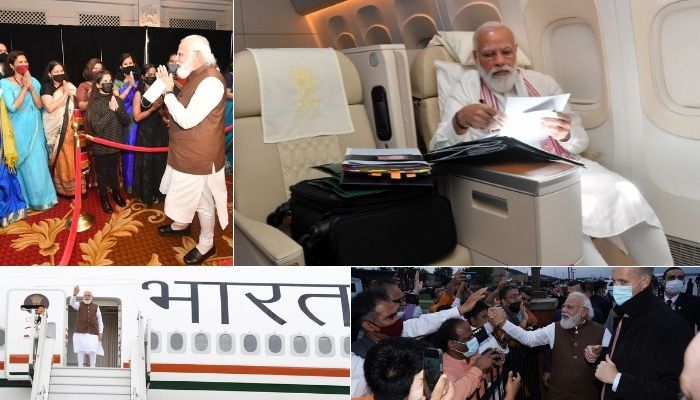
During the long flight, the PM shared an image of himself immersed in paperwork on board the Air India One. The image instantly started trending all over social media.

“A long flight also means opportunities to go through papers and some file work,” Modi Tweeted sharing an image.

Upon landing, Modi received a warm welcome from the members of the Indian community in Washington DC. To receive him at the Andrews Joint Airforce Base were senior officials of the Biden Administration, India’s Ambassador to the US Taranjit Singh Sandhu and a significant number of Indian Americans. 

“Grateful to the Indian community in Washington DC for the warm welcome. Our diaspora is our strength. It is commendable how the Indian diaspora has distinguished itself across the world,” the PM Tweeted. 

On the first day of the tour, the Prime Minister is slated to meet US Vice President Kamala Harris at the Eisenhower Executive Office building. This will be followed by interactions with global CEOs including one-on-one meetings with Cristiano E Amon from Qualcomm, Shantanu Narayen from Adobe, Mark Widmar from First Solar, Vivek Lall from General Atomics, and Stephen A Schwarzman from Blackstone.

Just ahead of departure, the PM had informed, “At the invitation of @POTUS @JoeBiden, I am visiting USA to continue our dialogue, and exchange views on areas of mutual interest. Also looking forward to meet @VP @KamalaHarris to discuss global issues and explore ideas for cooperation between India and US.”

“Will also participate in the Quad with President @JoeBiden, PM @ScottMorrisonMP and PM @sugawitter. We will take stock of outcomes of Summit in March. I will also address UNGA focusing on the global challenges,” he had said further. 

As per a Government of India press release, Modi will be concluding his visit with an address at the United Nations General Assembly. His speech is expected to entail pressing global challenges including the Covid-19 pandemic, the need to combat terrorism, climate change and other important issues.

Rectal ejaculation: How a drug addict man waited two years after he started jizzing from his rectum and urinating faeces

A rather rare and bizarre medical condition called a Rectourethral fistula or Rectal prostate fistulas has come to the fore after a group of doctors last month published a case study on it in the Cureus Journal of Medical Science.

Rectal-prostate fistulas are uncommon anatomical connections between the prostatic urethra and the rectum. In this unusual medical condition, a patient urinates and ejaculates sperm from the rectum rather than its usual exit, the urethra.

The case study published in the medical journal was carried out on a 33-year-old male, who had approached the doctors after he experienced five days of testicular pain. The doctor noted that for the last two years, the patient had been passing gas in his urine (pneumaturia), urinating faeces, also known as ‘fecaluria’ in medical terms and passing a “substantial amount” of urine and semen from his anus. The patient, however, only sought medical help when he started experiencing pain in his testicles.

A CT scan of the man’s pelvis later revealed he was experiencing a chronic case of “rectourethral fistula”.

Experts said that other illnesses such as prostate cancer, rectal cancer, surgery, or severe trauma are the most common causes of the occurrence of this rare ailment. A substantial number of cases have happened “during times of war”. The symptoms of this disease are pneumaturia, fecaluria, hematuria, and urinary tract infections.

However, in this case, the reason was not immediately clear as the man denied having undergone “abdominal surgeries, rectal manipulation and penetration, or rectal trauma,” according to the study.

Later it was revealed that the uncommon pathologic condition occurred in the patient due to traumatic Foley catheter insertion.

The study reveals that the 33-year-old man, who had a history of illicit drug use, had spent three weeks in a state of coma, due to the regular consumption of a combination of cocaine and phencyclidine (better known as PCP, or “angel dust”) for two years. During those three weeks of his stay in the hospital, he was administered a Foley catheter, a thin, sterile tube inserted into the bladder to drain urine in hospitalized patients. Experts believe that the injury was likely caused by the catheter, as it made a hole creating a pathway between the urethra and rectum.

But the good news is that the team of doctors treating the 33-year-old man were able to plug the opening. They also used a catheter put above the pubic region to allow the man to relieve himself for a short period of time. Finally, the patient made a near-perfect recovery.

While being able to, fortunately, cure the rather bizarre medical condition the patient went through, the team concluded that while Foley catheters are of importance in the treatment of patients, doctors need to be aware of potential (and rare) complications that can result from their use.

Madhya Pradesh: Teacher Nishaad Begum gets a class 8 student beaten up for sporting ‘tilak’ to school, NCPCR orders probe

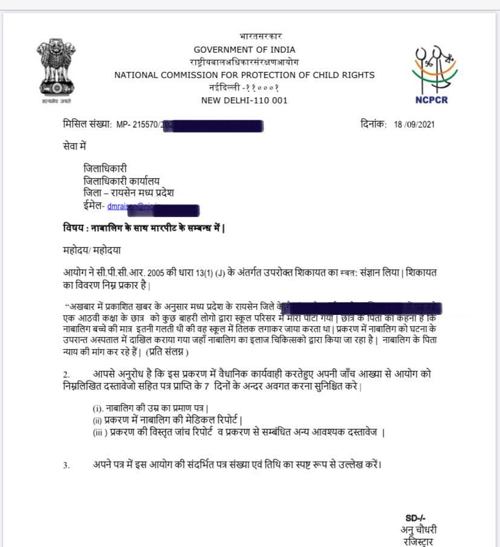
The National Commission for Protection of Child Rights (NCPCR) has written to the Raisen district officer in Madhya Pradesh to carry out a probe in a deplorable incident where a school teacher named Nishaad Begum has been accused of getting a minor boy beaten up for sporting a Tilak to school.

Taking cognisance of the case in accordance with provision 31(1)(J) of the CPCR Act 2005, NCPCR has granted 7 days to the district officer to carry out the probe and submit its report on the same before the statutory body.

In the letter dated September 18, 2021, the statutory body informs that the father of the victim has alleged that his son’s class teacher got his son beaten up by outsiders for merely wearing Tilak to school.

Apprising the Raisen district officer about the case, NCPCR has sought various documents, like the proof of age and the medical reports of the victim, from the officer.

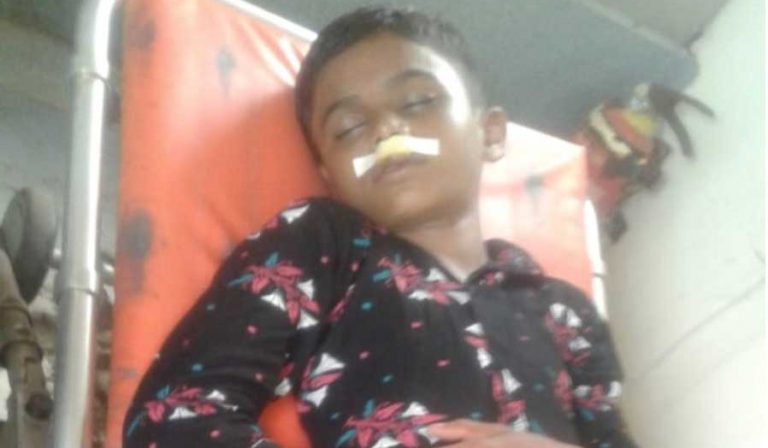
This incident of bigotry and communal hatred came to the fore after various Hindi media outlets reported the matter. According to reports, Pawan Sen, a student of class 8 studying in Government Primary school in Gairatganj Tehsil in Raisen District of Madhya Pradesh was assaulted by some people, who did not belong to the school, on the instructions of his teacher named Nishaad Begum. The teacher was reportedly irked by the fact that the student wore a Tilak to school.

Meanwhile, a video of the injured boy recuperating in the hospital after being assaulted is being widely shared on social media. In the video, the boy is heard telling the media person that he visits a temple every day before going to school where the priest applies a tilak on his forhead.

Pawan Sen further reveals that when he went to school three days ago sporting a tilak, his teacher, whom he identifies as Nisaad ma’am, warned him against wearing the same to school. She threatened Pawan that she would either hit him or get him beaten up if he continues to wear a tilak to her class.

Pawan added that the day the incident took place, he, as usual, went to school wearing the tilak. The agitated teacher then got him beaten up by some people, revealed the minor boy.

According to reports, after the assault, Pawan Sen was taken to Gairatganj Primary Health Center where he received first aid. He was then referred to the District Hospital, Raisen, where he is undergoing treatment.

The father of the victim has submitted a memorandum to the Collector and the Superintendent of Police demanding action against the teacher. Based on the boy’s and his family’s statement, the Gairatganj police have registered a case against the school teacher and the matter is being probed.

The teacher, on the other hand, has come out in her defence saying that a scuffle had broken out between the children in school, in which Pawan Sen got injured.

Karnataka Assembly passes bill to protect religious structures amidst criticism over temple demolition in Mysuru

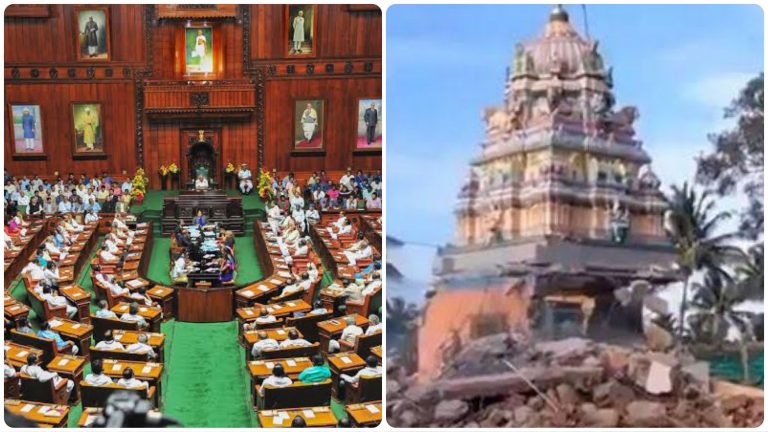
Following the massive outrage across Karnataka after the demolition of a temple in the Mysuru region of Karnataka on September 10, the BJP government in the state has decided to pass a law in the legislative assembly that circumvents the 2009 Supreme Court order and brings the temple demolition drive to an end. 

Amidst heated debate in the state assembly, the BJP government in the state managed to pass the Karnataka Religious Structures (Protection) Bill, 2021 on Tuesday this week. The bill aims to stop the demolition drive of religious structures in the state in the backdrop of the Supreme Court order. 

Introducing the Karnataka Religious Structures (Protection) Bill, 2021, in the Assembly, Chief Minister Basavaraj Bommai said, “The bill is aimed at protecting religious constructions on a public place constructed before the date of commencement of this Act, in order to protect communal harmony and not hurt the religious sentiments of the public.”

The law says that whatever may be the legal provisions of laws and irrespective of orders or guidelines by courts, jurisprudence and authorities, from the date of implementation of the ‘Karnataka Religious Structures Protection Act -2021’, the government will protect religious centres in accordance with the stipulated guidelines.

As per the bill, “religious structure” is defined as a “temple, church, mosque, gurudwara, Bodh vihar, Majar etc, constructed on a public place without authority of law”. The law also adds that “no religious structure and construction shall be allowed by the state government or any local authority in future on a public place”.

The enactment was passed unanimously, with no objection from Congress or JDS, but was criticised by the opposition leaders as a hasty attempt to compensate for the demolition of the Mysuru temple. 

The government also admitted on the floor of the assembly that it was unaware of the demolition drive that led to the felling of the Mysuru temple. Law and Parliamentary Affairs Minister JC Madhuswamyv said the temple was razed down without the knowledge of the government by “over-enthusiastic” officials eager to carry out the SC order. 

However, Leader of the Opposition Siddaramaiah, who had been a strident critic of the government for the demolition of the temple, said the BJP government brought the bill to protect religious structures under duress from right-wing groups linked to the party.

“They are bringing the bill now because of the Hindu Jagaran Vedike and right-wing groups who have brought pressure. I had tweeted and said the demolition should not have been carried out. They demolished the temple and are now seeking to protect it – this is odd,” Siddaramaiah said.

But Chief Minister Basavaraj Bommai was quick in dismissing Siddaramaiah’s contentions. He said from 2010 to 2019, when Congress was ruling in Karnataka, as many as 161 temples, masjids and dargahs had been demolished in Mysuru. “If you fix responsibility on ruling BJP for the demolition of a temple in Mysuru, who will you hold responsible for these demolitions,” he questioned the opposition, adding, “Words are dangerous, we should use them carefully over sensitive issues.”

Temple demolition in Mysuru creates a furore, BJP govt blames district administration for misreading the order

The demolition of a Hindu temple in Karnataka’s Mysuru district had triggered a massive controversy pitting the state government against the district administration. 

After the video of the demolition went viral on social media several politicians including Mysuru-Kodagu BJP MP Pratap Simha and several Hindu organizations registered their protest against the overnight destruction ordered by a tehsildar.

Simha asserted that the district administration misread the Supreme Court order and were selectively targeting temples. 

“The Supreme Court has said that only those structures that have come up in public places after 2009 will fall under its order. That too the Court said the structures should be demolished only if relocation or regularisation is not possible. Officers have to examine each case individually,” he said.

The temple was demolished in the wake of inquiry made by State Chief Secretary P. Ravikumar in August, asking the district administrators for a follow-up report on the pending demolition drive based on the Supreme Court and High Court rulings and the reasons behind the delay in implementing the order. 

The Chief Secretary in a letter to Deputy Commissioners on July 1, 2021, stated that Karnataka has 6,395 unauthorized religious structures in public places. As of September 29, 2009, the number of such structures was 5,688, however in 12 years, the state was able to demolish, relocate and regulate only 2,887 of them.

Reportedly, as per the instructions, the district administrations were asked to demolish at least one illegal religious structure per taluk and per division every week. Thus began the demolition drive and many roadside structures were razed in pre-dawn operations. 

CBI obtains video of Jharkhand Congress MLA asking family of Rupa Tirkey to forget her murder case by taking money, petrol pump and job

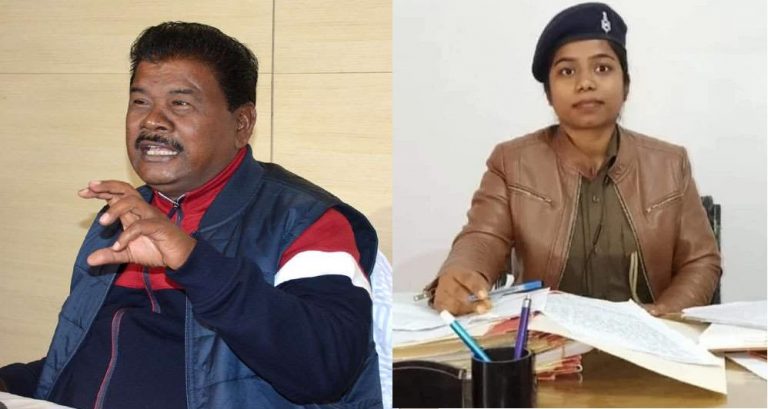
The CBI investigating the suspicious death of a lady tribal police officer of Jharkhand Police Rupa Tirkey has accessed a video that makes sensational disclosure how MLA and working president of Jharkhand Congress Bandhu Tirkey was pressurizing the family not to demand the CBI inquiry of the death.

In the video, the MLA is heard asking family members that they should not press for the CBI inquiry and they should trust the judicial inquiry set up by Hemant Soren led JMM-Congress-RJD government. The former chief justice of Jharkhand High Court Binod Kumar Gupta was appointed to conduct the judicial inquiry. Bandhu Tirkey asked them to settle with a petrol pump, compensation money and a government job for one of the members of the family.

The video, also in the possession of OpIndia, was filmed on the night of June 10 at the Ranchi residence of the victim where Bandhu Tirkey had gone to meet family members of Rupa Tirkey. Well placed CBI sources confirmed to OpIndia that during the investigation, the agency got one such video of the MLA.

The family has alleged that their daughter, an ASI rank official posted at Mahila police station in Sahebganj district, was murdered on the intervening night of May 2 and 3 when her body was found hanging at her official residence.

The family alleged that Pankaj Mishra, a close aide of Jharkhand chief minister Hemant Soren was involved in the murder.

Bandhu Tirkey also tried to convince the family to meet chief minister Hemant Soren once to raise their viewpoints. He further asked the family to settle with one petrol pump, cash as compensation and a job to any of the family members. Bandhu Tirkey informed that he has already spoken to the chief minister in this regard.

But Padmavati Orain, the mother of the 26-years old deceased police officer, refused all and said that they want the CBI inquiry.

Bandhu Tirkey said that the CBI inquiry means the agency will do an operation of this case and had he been in a position to take a decision he would not have ordered the CBI inquiry. On this, a male voice is heard reminding him that initially, he (Bandhu Tirkey) had also demanded the CBI inquiry.

Notably, the single bench of Jharkhand High Court headed by Justice Sanjay Kumar Dwivedi who had ordered for the CBI inquiry of this case while hearing the write petition 139/2021 filed by Devanand Oraon, a CISF employee and father of the deceased, observed how the family was pressurized to forget the case of their daughter.

“It has been disclosed that one person has approached the family members of Late Rupa Tirkey to provide them a Petrol Pump and forget the case of their daughter,” the court in its detailed order has listed it as one among the reasons if for ordering the CBI probe.

The social activist Tirthraj Akash, who from the first day has been fighting for the cause of Rupa Tirkey, said that Bandhu Tirkey is a classic case of a so-called crusader turned hostile.

“Bandhu Tirkey allowed himself to be compromised and now everybody knows for whom he working. He was first to raise the issue of Rupa Tirkey and he constantly visited her family to extend his support. He had even recommended the senior lawyer of Jharkhand High Court Rajiv Kumar as the lawyer who took this case to its logical conclusion. But gradually he started misleading and persuading the family,” said Tirthraj Akash.

The disclosure has left the Congress party equally embarrassed as a senior Congress leader said that the video is in a bad taste. “It was none of his business to act as an intermediary/ facilitator between the government and the family. How his conscience allowed him to ask the family to forget all in a sensitive case like this where the victim is a tribal police official,” the leader said.

Now Bandhu Tirkey is defending himself and stated that he just wanted to help the family.

But a senior Jharkhand High Court lawyer Rajeev Kumar said that video will help to establish the allegation that how the state government has been trying to scuttle the probe from the first day.

“The police deliberately carried a botch-up police investigation and hurriedly concluded as suicide. Police refused to register the FIR on the written statement of the mother of the victim. Later on, police converted it into a case of abetment of suicide against Rupa’s father and a friend of Rupa and police officer SK Kanaujia. But the charge sheet was submitted only against Kanaujia. Important evidence of this case were either ignored or destroyed. Amid investigation, the government started a parallel probe by ordering judicial inquiry. When the court was hearing writ petition to demand the CBI inquiry, the advocate general of Jharkhand scandalized the court. What Bandhu Tirkey is doing is just a part of desperate attempt of the government. Not only Pankaj Mishra but many powerful persons of Jharkhand will slowly land in trouble as the CBI has started probe,” said advocate Rajeev Kumar.

“Males cannot be singled out in voluntary sexual union”: Calcutta HC acquits man accused of consensual sex with minor girl under POCSO

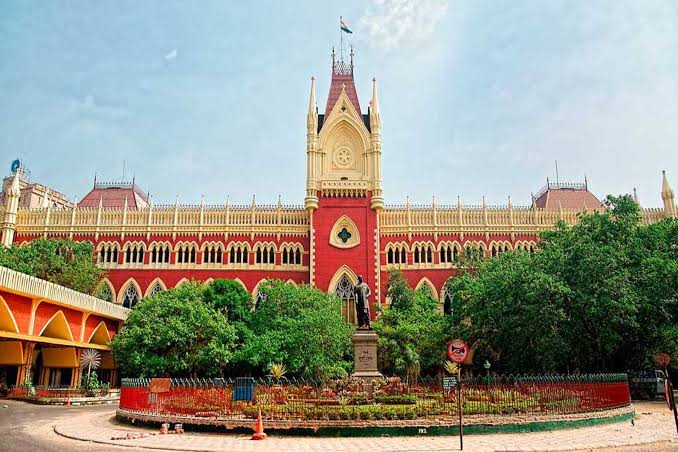
The Calcutta High Court on Wednesday absolved a man booked under the Protection of Children against Sexual Offences Act (POCSO) Act, noting that a male alone cannot be indicted for an act of consensual sex between two sufficiently mature persons.

The court observed that the 16-year-old girl who voluntarily participated in the sexual act and she was not naive to not know about its implications.

“If the union is participatory in nature, there is no reason to indict only the male just because of the peculiar nature of anatomy of the sexual organs of different genders,” a single-judge bench of Justice Sabyasachi Bhattacharyya observed.

The court also declared that in order to convict a person of penetrative sexual assault, the psyche, maturity, and past conduct of the accused with respect to the victim were germane to determining whether it was a unilateral or a participatory act.

For the safety of children, the court said, the provisions of the POCSO Act should be given an appropriate construction so that it is not misused as a tool to force a person to marry another.

The case pertains to an accused aged 22 and the victim who is 16 and a half years old. The accused was convicted by the Trial Court under Section 376(1) of the Indian Penal Code and under Section 4 of the POCSO Act. The accused filed a petition in Calcutta HC highlighting the victim’s admission of her past relationship with him. The prosecution argued that the victim was a minor at the time of the offence and, even if the victim had granted her consent, the same is not material at all.

However, the court said that even if POCSO Act considers the victim’s consent for sex immaterial, penetration out of one’s own free will cannot always be interpreted as an offence under the said law.

“Although the consent of a minor is not a good consent in law, and cannot be taken into account as ‘consent’ as such, the expression ‘penetration’ as envisaged in the POCSO Act has to be taken to mean a positive, unilateral act on the part of the accused. Consensual participatory intercourse, in view of the passion involved, need not always make penetration, by itself, an unilateral positive act of the accused but might also be a union between two persons out of their own volition. In the latter case, the expression ‘penetrates’, in Section 3(a) of the POCSO Act might not always connote mere voluntary juxtaposition of the sexual organs of two persons of different genders,” the court said.

It further added, “Although the question of consent does not arise in case of a minor, in order to attract Section 376(1) of the IPC, it had to be established that the alleged offence was committed against the will of the victim. Read in conjunction, the provisions of Section 376 of the IPC and Section 3 of the POCSO Act ought to be construed on a similar footing and cannot incriminate the accused for a voluntary joint act of sexual union.”

“If the union is participatory in nature, there is no reason to indict only the male just because of the peculiar nature of anatomy of the sexual organs of different genders. The psyche of the parties and the maturity level of the victim are also relevant factors to be taken into consideration to decide whether the penetration was a unilateral and positive act on the part of the male. Hence, seen in proper perspective, the act alleged, even if proved, could not tantamount to penetration sufficient to attract Section 3 of the POCSO Act, keeping in view the admitted several prior occasions of physical union between the accused and the victim and the maturity of the victim”, the Judge said.

Read- ‘Unmarried girls in the country do not indulge in sex just for fun’: Says MP High Court rejecting bail to man accused of rape for consensual sex

Six government employees including two cops dismissed in Jammu and Kashmir for terror links

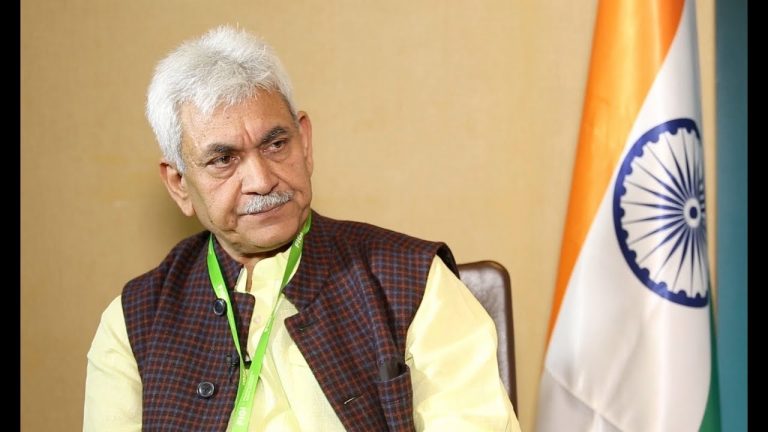
The Government of Union Territory of Jammu & Kashmir headed by Lt. Governor Manoj Sinha has dismissed six employees of the state government for maintaining links with terrorist organizations as well as working as overground workers of terror outfits. The six dismissed personnel include two constables of the Jammu & Kashmir police.

These dismissed employees have been identified as Hamid Wani, a teacher from Anantnag, Zafar Hussain Bhat, a constable of Jammu & Kashmir police from Kishtwar, Mohammad Rafi from Kishtwar posted at Road and building department as a junior engineer, Liyakat Ali Kakru a teacher from Baramula, Tarique Mohammad Kohali of Poonch district posted as a ranger in the forest department and Saukat Ahmed Khan, a police constable from Badgam.  

They have been dismissed by the government under the power conferred by article 311 (2) (C) of the Indian Constitution which states that “where the President is satisfied that the retention of a person in public service is prejudicial to the security of the State, his services can be terminated without recourse to the normal procedure prescribed in Article 311 (2)”.

The intelligence reports of their association with terror organizations were placed before the UT Level Screening Committee which recommended their termination. The committee was formed under the rules of Jammu and Kashmir Civil Services (Verification of Character & Antecedents) Instructions, 1997 for its decision.

Notably, a few days back the Government of Union Territory of Jammu & Kashmir had freshly issued a detailed circular to carry discrete verification of the character and antecedents of its employees in the wake of the reports of direct or indirect involvement of some of the government employees in terrorist activities.

The circular issued by the General Administration Department said that the employees are required to maintain absolute integrity, honesty and allegiance to the Union of India and its Constitution and do nothing which is unbecoming of a Government servant.  

Hamid Wani was the district commander of banned terror outfit Allah Tiger. He got the government job with the help of Jamat-e-Islami. He was on the forefront of anti-India conspiracy after security forces gunned down notorious Islamic militant Burhan Muzaffar Wani, the commander in the Hizbul Mujahideen.

Zafar Hussain Bhat was arrested by the National Investigation Agency in the past in a terror case and he is currently on bail. He was accused of arranging logistics for Hizbul Mujahideen.

Similarly, Mohammad Rafi used to provide shelter to terrorists of Hizbul Mujahideen besides other logistic supports.

Liyakat Ali Kakru had joined the government service in 1983. In 2001 he was arrested and allegedly a huge consignment of arms and ammunition was recovered from his possession. He was also booked under the Public Safety Act. But he was discharged by the court later on due to lack of evidence.

Tarique Mohammad Kohali was involved in the supply of arms and ammunition to terror organizations and he was also allegedly involved in the fake Indian currency note racket to help Pakistan sponsored terrorist activities in Jammu & Kashmir. Saukat Ahmed Khan was involved in a weapon loot case and he was also arrested in 2019 under Public Safety Act.

In the past also the Jammu & Kashmir government had dismissed two sons of Hizbul chief Sayed Salahuddin and 9 others from government jobs for links with terror funding.

Outgoing Delhi Gurudwara committee president Manjinder Singh Sirsa fails Gurmukhi test, disqualified from becoming co-opted member

0

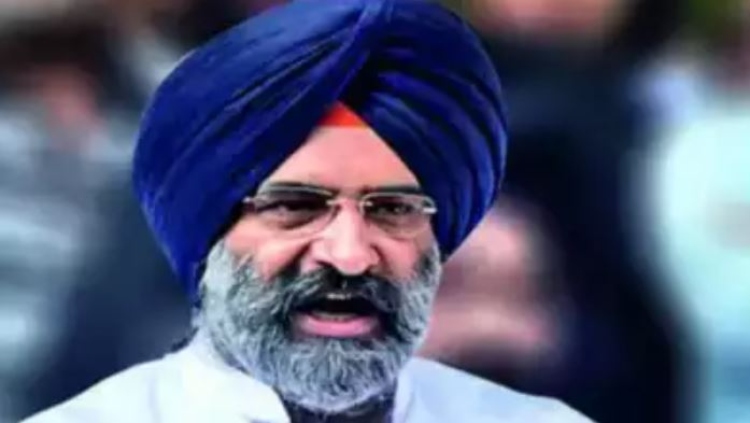
Manjinder Singh Sirsa, the outgoing president of the Delhi Sikh Gurudwara Management Committee and an Akali Dal leader, has been disqualified from being co-opted as a member of the DSGMC. The order was passed by the director of the Delhi Gurudwara election body, Narinder Singh on Tuesday. He informed that Sirsa was not eligible for the post since he did not know how a read and write ‘Gurmukhi’ (the script used by Sikhs for writing Punjabi), a basic requirement to hold the post as per the Delhi Sikh Gurudwara Act, 1971.

The orders asked the SGPC to nominate a new person.

The term ‘co-option’ refers to the process of existing members inviting new members to join a committee or other group.

“The undersigned is constrained to deduce that Manjinder Singh Sirsa is not well-versed with the reading and writing of Gurmukhi and, therefore, does not qualify the eligibility conditions as laid down in Section 10 of the DSGMC Act,” said the order issued on Tuesday by Narinder Singh.

It may be noted that after Manjinder Singh Sirsa had lost the DSGMC polls held on August 22, to Shiromani Akali Dal (Delhi) candidate Harvinder Singh Sarna, SAD president Sukhbir Singh Badal had on August 25 said that Sirsa will continue as DSGMC president. He had then proposed that Sirsa will be co-opted through the quota of the Amritsar-headquartered Shiromani Gurdwara Parbandhak Committee (SGPC).

Shiromani Akali Dal (SAD) has a majority in SGPC.

Manjinder Singh Sirsa made 27 errors in 46 of his own chosen words in Gurmukhi

After Sukhbir Singh Badal’s declaration, Sirsa provided his academic credentials, stating that he received his BA Honours (Punjabi) from Sri Teg Bahadur Khalsa College, Delhi University, between 1990 and 1993. Sirsa also presented a certificate from the Principal of Sukho Khalsa Sr Secondary School, Jail Road, Janakpuri, stating that he had recited Gurbani in Gurmukhi and written Gurmukhi script in front of the Principal.

The Directorate, however, denied both of Sirsa’s claims.

Narinder Singh wanted to put Sirsa’s reading and writing skills to the test. According to the order, “When asked to recite Gurmukhi from Ang (page) 1358 of Sri Guru Granth Sahib, Manjinder Singh Sirsa was unable to do so with proficiency and accuracy, and when Sirsa was given a dictation from Sri Guru Granth Sahib, he flatly refused to write Gurmukhi, claiming that the language was too difficult.”

He was then required to write an application in Gurmukhi, in which he made 27 errors. “Ironically, the said letter written by Sirsa in Gurmukhi in his own choice of words has as many as 27 errors out of 46 words which are indicative of his little knowledge of Gurmukhi”, read the order of the election director, adding that while Sirsa might be able to write a few words in Punjabi, but the spirit of the DSGMC Act, 1971, places great importance to a recitation from the Sri Guru Granth Sahib and the writing of Gurmukhi, where he has miserably failed.

Sirsa being investigated for misappropriation of Gurudwara funds

Notably, Sirsa is currently being investigated into alleged misappropriation of funds during his tenure as the secretary-general of Delhi Sikh Gurdwara Management Committee (DSGMC). In fact, on July 26, 2021, the Delhi police had issued a Look Out Circular (LOC) against the Shiromani Akali Dal (SAD) leader. The court had passed the decision after the complainant’s advocate claimed that Sirsa “is a flight risk.” 

In January 2021, the Delhi Police’s Economic Offences Wing had registered a case against Manjinder Singh Sirsa and other unknown persons in the committee for the misappropriation of funds while Sirsa was the general secretary of the Delhi Sikh Gurdwara Management Committee in 2013.

The order was passed following a complaint by one Bhupinder Singh who had contended that the current DSGMC president Manjinder Singh Sirsa, who was the general secretary of the committee then in 2013, had caused a loss of public funds to the tune of Rs 65,99,729 by showing sham transactions with various entities and raising fictitious bills without any actual goods or services being provided.

Karnataka High Court upholds Arms Act exemption granted to Kodavas & Jumma Land Holders to carry weapons without licence

0

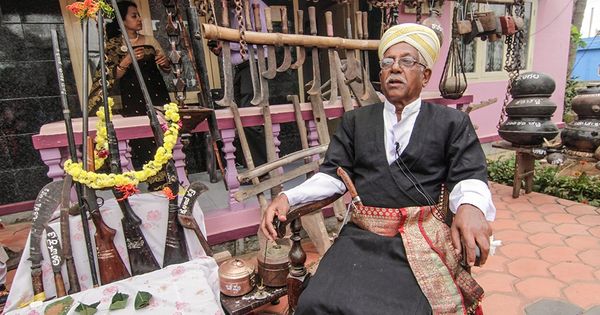
The Karnataka High Court on Wednesday upheld the exemption granted to every person of Coorg by race, and Jumma tenure landholders in Coorg (Kodagu district), from the requirement to obtain a license to carry and possess firearms under the Arms Act.

The order was in response to a petition filed by Capt Chethan Y K (Retd). On behalf of the petitioner, Advocate B V Viyulatha argued that the constitutional notification issued by the Union Ministry of Home Affairs on this exemption was not in the public interest. 

To this, the Bench remarked, “The Kodava community which is a marshal community and Jumma tenure holders are enjoying the benefit of exemption since pre-independence.”

“They have rightly been granted an exemption for a period of ten years. It is not the case that they have been granted exemption indefinitely. The exemption granted is subject to certain terms and conditions. Therefore, the Constitutional validity of the notification is upheld in the petition,” it said further. 

The exemption to the Kodavas has been granted under section 41 of the Arms Act. 

Petitioner- ‘The exemption is casteist

Referring to Article 14 of the Constitution of India, the petitioner had submitted, “By giving such an exemption they are promoting caste and class, when there are 12 to 13 more other races, who practice the same religion and customs and they are in Coorg, but they are not granted exemptions.” 

“Even other than Coorg, the whole of India is procuring license under the Arms Act, why only this particular race is given the exemption, there is no public interest forthcoming,” the petitioner submitted. 

However, the petitioner’s concern was shot down by Additional Solicitor General M B Nargund appearing for the Union of India who said, “A kirpan is allowed to be used by the members of Sikh community and similarly, Gorkha community is permitted to use kukri.”

The advocate further argued that the petitioner ‘wants to get the caste system abolished’ and hence rejected such casteist favours granted to communities. Continuing her argument, she questioned why could not the community obtain a license under Sections 3 and 4 of the Arms Act?

The petitioner insisted that the exemption is not based on a geographical distinction, but it is by class.

SG Nargund opposing the arguments informed that the Kodavas even with the exemption have to undergo a police verification and the exemption certificate is to be issued by the police which is as good as obtaining a license. 

Solicitor General- ‘Kodavas devoid of class system

In a rebuttal to the petitioner’s argument of the exemption being class-based, Nargund informed that Kodavas are a special tribe with no class or caste-based system. 

“What the Kodavas worship are Cauvery Mata (River Cauvery), Arms and they do one pooja. They don’t have priestly classes also among them,” said Nargund. 

SG Nargund concluded her argument by saying, “There is no fundamental right of the petitioner that is affected (due to the exemption).”

Limit to possess firearms 

Senior Advocate Sajan Poovayya appearing for Respondents Kodagu Samaja Bangalore and Kodava Muslim Association also opposed the petition saying, “It is not like that if there are 100 people in a house they can have 200 firearms in the house, the quantity of arms and ammunition and the types of arms are all specified.”

The Karnataka High Court had disposed of the petition filed by Captain YK Chethan (Retired) in 2019 questioning the exemption granted by the Government of India by its notification dated December 26, 1966.