Home Blog Page 4363

“I was concerned about people coming to my house if they were not happy with the verdict”, says alternate juror in Geroge Floyd death trial

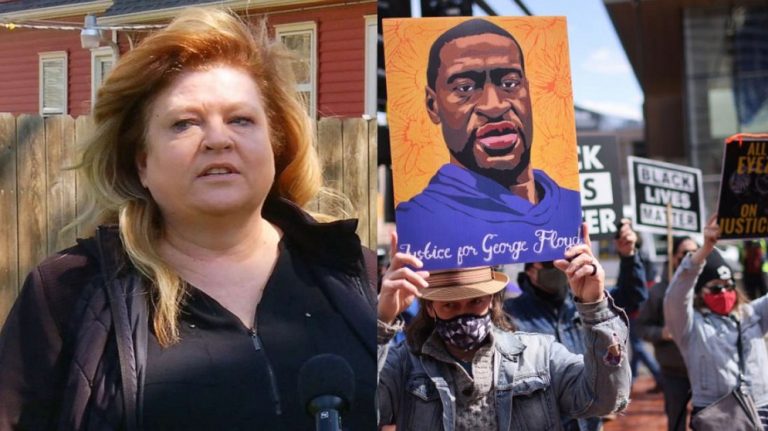
Lisa Christensen, a woman who was an alternate juror for the jury which found ex-Minneapolis Police Officer Derek Chauvin guilty in the world-famous Geroge Floyd death trial, recently gave an interview sharing her experiences.

In this interview, Christensen recalled her hesitancy in being a juror because she was “concerned about people” coming to her house if they were “not happy” with the eventual verdict of the trial. Alternate jurors are selected in some cases to take the place of jurors who may become ill during the trial and therefore hear the evidence the same way as jurors do.

When asked by the interviewer if she wanted to be a juror, Christensen replied, “I had mixed feelings. There was a question on the questionnaire about it and I put I did not know. The reason, at that time, was I did not know what the outcome was going to be, so I felt like either way you are going to disappoint one group or the other. I did not want to go through rioting and destruction again and I was concerned about people coming to my house if they were not happy with the verdict.”

However, Christensen did say that she would adjudge Derek Chauvin to be guilty if she had a vote.

“I would have voted guilty. However, at the end the judge did read us the rules for deliberation, but it was quick, and I could not absorb it. I would have said guilty on some level. After I was excused, I did not look at the jury instructions any longer. I do not know how hard that process was, but I feel like Chauvin is responsible for Mr. Floyd’s death.” said Christensen.

When asked about her impression of Derek Chauvin, Christensen replied, “From where I was sitting, I could look up, and lock eyes with him. It made me feel a little uncomfortable. He had nowhere to look either, so it was just kind of weird.”

In the run-up to jury deliberations in the Geroge Floyd trial, Maxine Waters, a senior Democrat leader from California went to Minnesota and spoke to a group of protestors saying, “We’re looking for a guilty verdict. And we’re looking to see if all of this [inaudible] that took place and has been taking place after they saw what happened to George Floyd.

“And we’ve got to get more active,” Waters continued. “[We’ve] got to get more confrontational. … We’ve got to make sure that they know we mean business.”

These comments kicked up a huge storm, with Chauvin’s defense attorney petitioning the judge to declare a mistrial and set Chauvin free based on the influence such comments would have on the jury, pressuring them to convict. The request was swiftly denied, but Judge Peter Cahill did not so casually dismiss its compelling logic. “I’ll give you that Congresswoman Waters may have given you something on appeal that may result in this whole trial being overturned,” the judge said.

France: Tunisian migrant kills female police officer in Rambouillet, mother of two children, while screaming ‘Allahu Akbar’

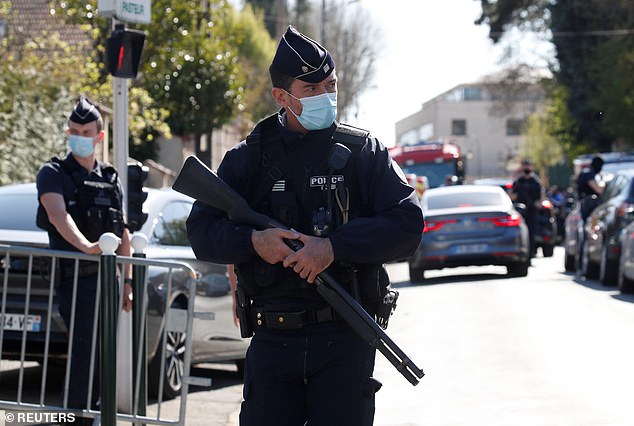
A female police officer in France was stabbed to death in Rambouillet, a town south west of Paris, on Friday. The suspect has been identified as a Tunisian migrant. He was shot dead by her colleagues in the aftermath of the stabbing.

The victim suffered knife injuries to her neck and died shortly after the brutal attack. According to reports, the suspect did not have a police record. It is not yet clear whether the stabbing was a terrorist attack with the motivations of the attacker yet unclear.

Investigations into the matter are currently underway. Counter terrorism officials have reportedly reached the spot. The Interior Minister of France said that he was going there as well. The attacker was 36 years old.

As per reports, the attacker allegedly shouted ‘Allahu-akbar’ while carrying out the attack. The attacked was reportedly not known to the intelligence officials or the police. The 49-year old victim was reportedly the mother of two children. She had returned from her lunch break when the attacker lunged at her and slashed her throat.

‘The attack happened just after 2pm,’ an investigating source was quoted by the Daily Mail as saying. ‘The administrative officer was pounced on by the man, who slit her throat with a knife.’ ‘The assailant was shot dead by police officers soon afterwards, as efforts were made to save the victim,’ the source reportedly said.

Marine Le Pen, a prominent contender for the next presidential elections in France, said, ‘The same horrors keep happening, the same infinite sadness when thinking of the relatives and colleagues of this policewoman, the same profiles of people who are guilty of this barbarism, the same Islamist motives… We can’t take it anymore.’

France has been a victim of Islamist terror attacks since the beheading of Samuel Paty and Emmanuel Macron’s defense of freedom of expression.

Delhi HC suggests using CNG cylinders to transport Oxygen, union govt says not possible: Understanding the technical and legal aspects

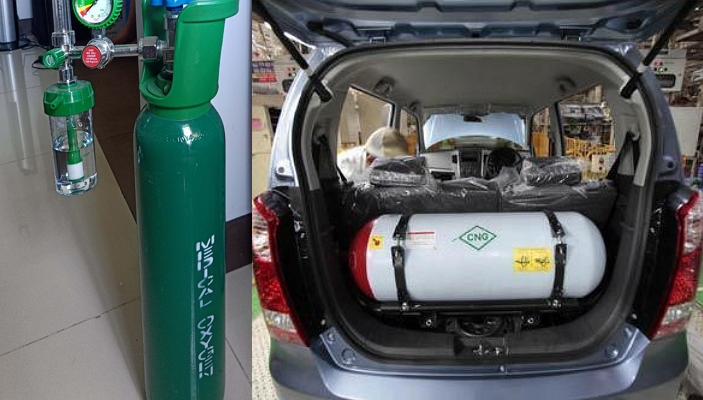
While hearing the matter of severe shortage of oxygen in the hospitals in Delhi due to the surge of Covid-19 cases, the Delhi High Court today asked the govt to use CNG cylinders to transport medical oxygen as an interim arrangement. The court said that there is shortage of gas cylinders to transport oxygen within city limits, and the option to use CNG cylinders for the purpose should be explored.

When the court made this suggestion, central government standing counsel Monika Arora said that it would not be possible, as the there are differences in the composition. To this, the court said an interim solution must be found to transport oxygen, and asked the concerned officer whether CNG cylinders can be used as the cryogenic tanks are in short supply.

Officer Senthil Nathan replied that they have been informed that it is not possible due to changes in constitution. He said that cryogenic tanks are needed for oxygen at specific temperature. To this the court again intervened, saying they are not talking about liquid oxygen that needs cryogenic tanks, but gaseous oxygen, and ordered the officer to find out if CNG cylinders can be used to transport oxygen in gas form.

Advocate Anshul Sehgal informed that court that it is possible to do so legally, as the Gas Cylinder Rules prevent such a possibility. However, the court again rejected that by saying that there must be some logic behind the rule, most possibly the same tanks used for different gases may be a problem, by the cylinders always can be sanitised.

Delhi govt’s additional standing counsel advocate Satykam also added that the same rules also allow conversion of cylinders.

While the Delhi High Court suggested a solution to address the issue of cylinder shortage to transport oxygen, two issues to that came up in the court, technical and legal. While it was said that it is not possible to use CNG cylinder to carry oxygen due to difference in composition, it was also informed that existing rules don’t allow this.

Let us look at both the issues.

While the standing counsel for the central government technically it is possible, it is interesting that the Health and Family Welfare Ministry had proposed the exact solution last year. According to reports, in April 2020, the ministry had asked the Gas Authority of India Limited (GAIL), gas cylinder manufacturers, and their transporters to evaluate the technical feasibility of move oxygen in CNG cylinders. The report said that according to the industry sources, this was deemed as do-able.

However, no report is available on whether such an evaluation was done, and what was the result of the same if it was done. As there is no evidence that CNG cylinders have been used to transport oxygen anywhere, and no research report on this is available, it is not certain whether it is technically possible or not. While in general it seems that CNG cylinder could be used to oxygen after thoroughly cleaning and sanitising them, only experts in the subject matter can take a decision on the matter.

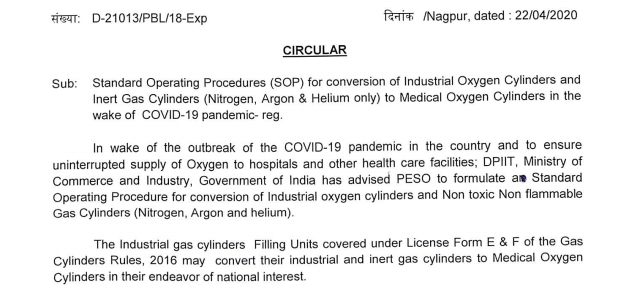
In the same month last year, the Petroleum and Explosives Safety Organisation (PESO) of the government of India had framed rules for the conversion of cylinders used to carry other products to carry oxygen. However, these guidelines were for the conversion of only industrial oxygen cylinders and non-flammable inert gas cylinders to medical oxygen cylinders. The guidelines specifically said that only industrial Oxygen, Nitrogen, Argon and Helium cylinders can be converted to medical Oxygen cylinders.

PESO guidelines on converting cylinders

Even for these cylinders of these gases, PESO had prescribed a detailed sanitisation process of the cylinders, which included cleaning after removing the valves, filling with warm water, fitting oxygen valves etc.

As the guidelines didn’t mention CNG, and it specifically said ‘non flammable gas cylinders’, it makes it clear that PESO had not allow conversion of CNG cylinders into medical oxygen cylinders. It is needless to say that Compressed Natural Gas (CNG) is a flammable gas, used mostly in automobile sector in India.

As Anshul Sehgal noted, the Gas Cylinder Rules also prohibit such a conversion. According to rule 19 of the Gas Cylinder Rules, 2016, no cylinder which has once been used for storage and transportation of coal gas, carbon monoxide, Compressed Bio Gas, Hydrogen, CNG, Coal Bed Methane and methane shall be used for filling with any other gas except a mixture of these gases with inert gases. This means, the CNG cylinders can not be used to store and transport any other gas.

Gas Cylinder Rules, 2016

The Delhi govt’s advocate said that the same rules also allow conversion of cylinders. While that is true, the fact is that it is not applicable for CNG cylinders. According to rule 28 of the rules, inert gas, oxygen and compressed air cylinders can be converted one gas to another after fitting with appropriate valves and fulfilling other requirements of the Rules. Therefore, this rule also makes it clear that CNG cylinders are not allowed to be converted to Oxygen cylinders.

Gas Cylinder Rules, 2016

In conclusion, while the technical aspects of converting CNG cylinders to transport Oxygen are not known and seem to be untested, from the legal point of view it is not permitted in India. Both the Gas Cylinder Rules and the PESO guidelines on converting cylinders for oxygen do not permit use of CNG cylinders for the same. However, if experts find that it is technically feasible, the court may order an amendment of the rules.

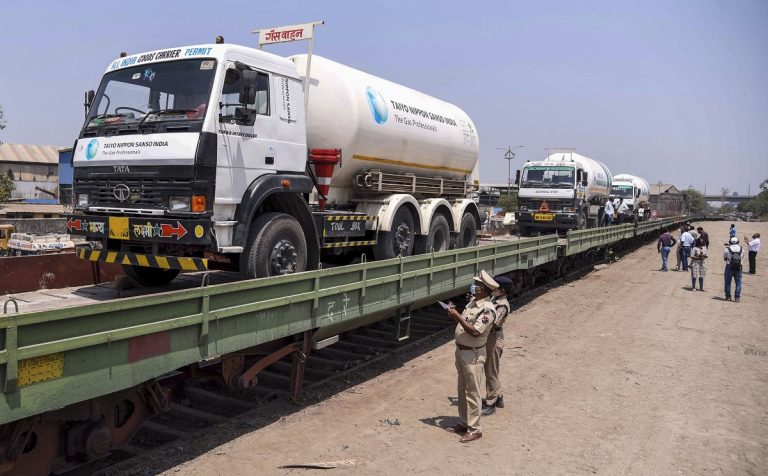
Haryana: Oxygen tanker bound for Sirsa goes missing, FIR filed

0

The police have filed an FIR and launched a probe after a tanker carrying liquid oxygen, travelling from Panipat to Sirsa in Haryana, had gone missing. The case was filed based on the complaint lodged by the district drug controller.

The truck had left Panipat for Sirsa after being filled with liquid oxygen on Wednesday. However, it did not reach its desired destination, said Manjeet Singh, Station House Officer (SHO) of Matlauda, Panipat. The preliminary investigation revealed that the tanker’s driver had switched off his mobile phone shortly after leaving the refinery. The police suspect a conspiracy behind the disappearance of the oxygen tanker.

It is important to note that the Panipat refinery for medical grade oxygen started its operations on Wednesday itself. Indian Oil sent the first batch of medical-grade oxygen to Delhi and then to Sirsa. Indian Oil will supply 150 metric tons of oxygen to various hospitals in Delhi, Haryana and Punjab. For fulfilling the oxygen demand, high purity oxygen used in the mono ethylene glycol (MEG) unit of the Panipat refinery has been diverted to produce medical-grade liquid oxygen.

The incident took place in the wake of the growing demand for oxygen across the country as the number of coronavirus cases soar at an alarming rate. Some state governments have claimed that there has been a shortage of medicinal oxygen, especially after the critical COVID-19 patients demanding supplemental oxygen has increased in the past few weeks.

In a separate incident, Haryana minister Anil Vij on Wednesday claimed that a tanker carrying medicinal oxygen for COVID-19 patients in hospitals, heading from Panipat to Faridabad, was “looted” by the Delhi government when it was passing through their territory.

“One of our O2 tankers was looted by Delhi Govt that was going to Faridabad. From now, I’ve ordered police protection for all tankers,” the minister said. He added that if state governments engage in this kind of activity, the health infrastructure will suffer.

PTI spreads fake news, falsely claims 25 patients died at Sir Ganga Ram Hospital in Delhi due to low oxygen pressure

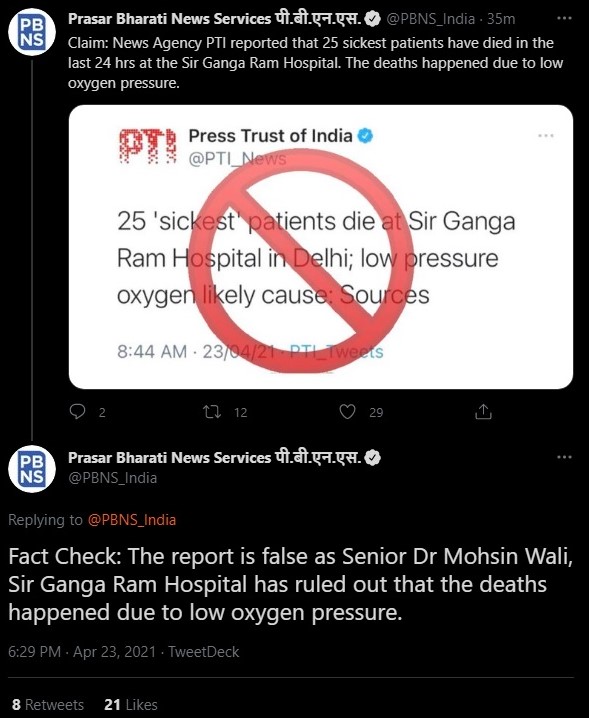
The Press Trust of India (PTI) reported on Friday that 25 people passed away at the Sir Ganga Ram Hospital in Delhi due to low pressure oxygen. In a tweet, PTI said that sources had told them that the cause of death of the 25 ‘sickest’ patient was low pressure oxygen. That claim has turned out to be false.

Prasar Bharti calls out fake news spread by PTI

Prasar Bharati said that a senior doctor at the hospital, Dr. Mohsin Wali, has clarified that the deaths were not due to low oxygen pressure. The Chairman at the hospital also clarified that the reports were false and they did not die due to lack of oxygen.

Meanwhile, the Indian Air Force has already started airlifting oxygen containers, cylinders, essential medicine, equipment and medical personnel for management of the pandemic. With rising number of Covid-19 cases in the country, acute oxygen shortage has been felt across numerous hospitals in the country.

Authorities are working towards ensuring the oxygen supply to hospitals remains hassle free. Also, Zydus Cadila, an Indian multinational pharmaceutical behemoth headquartered in Ahmedabad, Gujarat, has been granted emergency approval by the Drugs General Controller of India (DGCI) for its Pegylated Interferon alpha-2b, ‘Virafin’ in treating moderate COVID-19 infection in adults, which is expected to reduce the oxygen demand.

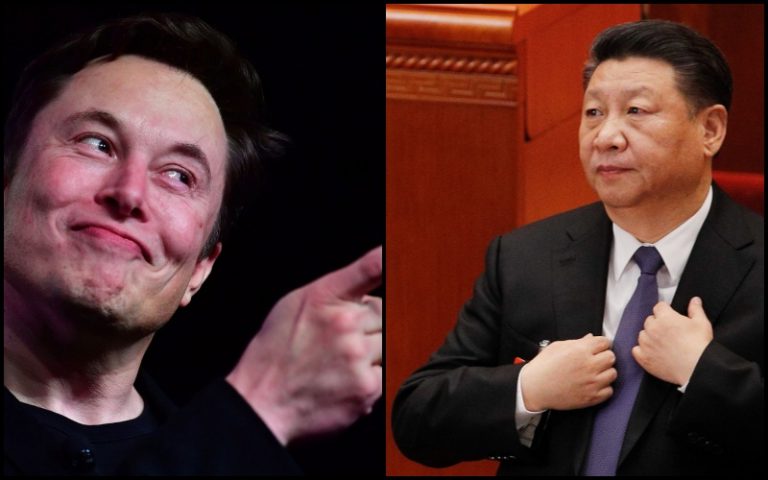
Paranoid China wants to tame Elon Musk, will it succeed? All you need to know about the brewing war between China and Tesla

For a week now, Elon Musk headed Tesla has been facing a pressure campaign in China with Chinese Communist state-backed media and regulators going after the electric automobile company for allegedly disregarding a Chinese Tesla customer’s complaints about her car. The issue blew into the mainstream after the allegedly aggrieved customer protested against Tesla at the Shanghai Auto Show on Monday.

China is a huge potential market for Tesla and any disruption in tapping that market could result in huge financial consequences for Tesla and its investors. Whilst the institutions in China are apparently attacking Elon on the pretext of car complaints, some critics have suggested that this Chinese pressure campaign on Tesla is because of the inherent paranoia and mistrust of CCP elites against foreign business, especially Western business.

On Monday, a woman who claimed to be an aggrieved Tesla customer, stood on top of a Tesla car at the Shanghai Auto Show wearing a T-shirt which read “brakes don’t work” in Chinese. She was protesting Tesla for the alleged brake failure of her Tesla car. This issue is somewhat viral in Chinese social media, with many Chinese social media users claiming to have brake issues with their Tesla cars.

A video of the incident at the Auto show event was released by Chinese state media The Global Times and went viral.

The woman was identified the very next day by Shanghai police and sentenced to 5-day detention for disturbing public order. After the incident, Tesla alleged that the woman got into an accident in February because of “speeding violations”. Tesla also revealed that they had been in negotiations with the woman for two months, alleging that the woman did not allow for a third-party investigation and instead wanted a refund for her car.

Tesla under attack from State Media and Communist Chinese State

In an interview with Chinese news publication Caijing, Tesla’s vice-president for China, Tao Lin claimed that the woman hoped for a high level of compensation which Tesla has no reason to give to her.

In a post on Chinese social media platform Weibo, Tesla said that it would not compromise with “unreasonable demands”.

The Chinese state media and the government reprimanded Tesla in tandem, with the State media publishing a string of critical editorials about Tesla and the central disciplinary commission of the Chinese government issuing a warning to Tesla.

“The arrogant and overbearing stance the company exhibited in front of the public is repugnant and unacceptable, which could inflict serious damage on its reputation and customer base in the Chinese market.”, an editorial in the Chinese-backed The Global Times reads.

According to American news broadcaster CNBC’s translation, another Chinese state media article titled “Three lessons Tesla ought to learn”, cautioned the U.S. electric automobile company to not be “arrogant” and “respect” the Chinese consumer market.

China has always been skeptical of foreign ventures opening up in China, being infamous for engaging in censorship and banning foreign businesses from opening up in China. In 2009-10, China banned three of the biggest websites on the planet, Google, YouTube, and Facebook, arguably in order to impede the free flow of uncensored information to the Chinese people. This is a classical example of the paranoia which is at the center of the Chinese Communist regime.

In two Weibo posts on Monday and Tuesday, Tesla apologized to the woman customer for not solving her car problems in a time-bound manner. Tesla also said that it is willing to co-operate with the authorities. The company has further stated that it will carry out “self-examination and self-correction” to “rectify” problems with its customer service process.

On Thursday, Tesla said that it has handed over the raw data vehicle 30 minutes before the crash to the aggrieved woman customer. The company is also in dialogue with two Chinese market regulators.

The rise of Tesla in China

Tesla has focused heavily on China in the past couple of years, with Elon Musk himself attending the groundbreaking ceremony of the first non-U.S. Tesla factory in Shanghai, China in 2019. In 2020, Tesla started delivering the Model 3 vehicles manufactured at the Shanghai factory to Chinese customers.

Tesla’s sales in China more than doubled in 2020, with Tesla’s Model 3 vehicle becoming the best-selling electric car in China.

Tesla’s CEO Elon Musk met with Chinese Premier Li Keqiang in 2019. But with all this success, also comes scrutiny, probing, and investigation.

Rising scrutiny by China of Tesla and Elon Musk

Negative press about Tesla has increased in China over the past few months. In January of this year, a Tesla Model 3 reportedly exploded in a Shanghai parking lot. A Chinese state media article reported that there have been at least 10 instances in 2020 of Tesla drivers losing control of their car in China.

China has also reportedly restricted the use of Tesla cars for official purposes among state and military personnel over concerns regarding the vehicle’s sensors which can record images of its surrounding areas. The Chinese military has banned the entrance of any Tesla car in military complexes, citing security concerns over vehicle cameras. This is another manifestation of the Communist regime paranoia, which must believe that Musk is some sort of Western intelligence asset using his Tesla cars to spy on China, instead of a bonafide businessman looking for mutual benefit.

In response to the spying allegations, Musk correctly said that his company would be shut down if it used Tesla cars to spy on people.

“There’s a very strong incentive for us to be very confidential with any information,” Musk told a prominent Chinese forum during a virtual discussion. “If Tesla used cars to spy in China or anywhere, we will get shut down.”

Back in February, China’s market regulator, the State Administration for Market Regulation, met with Tesla’s local subsidiaries over increasing consumer complaints of vehicle problems. On Wednesday, the same regulator issued a statement saying it places high importance on the Shanghai auto show incident. The authority also said that it has instructed local regulators to protect consumer interests.

Elon Musk has sought to fend off all of this scrutiny. In March, he gave an interview to China’s state broadcaster CCTV saying that the future of China is “going to be great” and that China will be Tesla’s “biggest market.”

However, it is difficult to tell if Musk’s charm offensive will bear fruit because the Chinese problem with Tesla has more to do with the Communist regime’s boundless paranoia and inherent mistrust of foreign business, rather than anything which Musk can actually solve. Chinese state apparatchik and Editor-in-Chief of the CCP propaganda Global Times, Hu Xijin perfectly explains that unless Musk ingratiates himself with the Chinese communist regime and its laws, China will always view him with an eye of suspicion.

“Our ultimate goal is to make foreign companies adapt to the Chinese market, seriously abide by Chinese laws and regulations, respect Chinese culture and consumers, and become a positive element in the Chinese economy. Whether it is a lesson or help, it all points to the same goal.” explains the Editor-in-Chief of CCP propaganda tabloid Global Times.


West Bengal: Another BJP worker found hanging from a tree in the poll-bound constituency of Bardhaman, party alleges murder

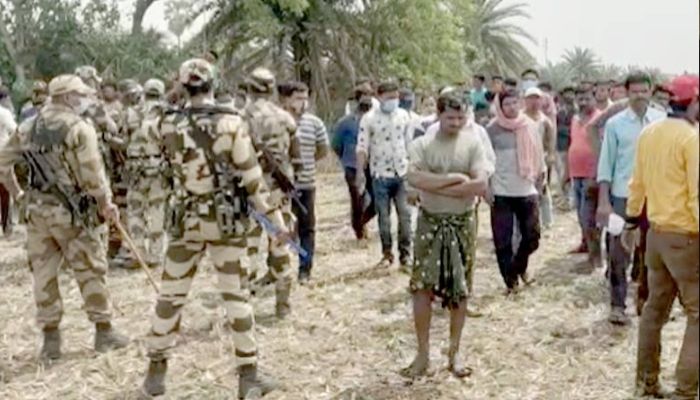
On Friday (April 23), the body of a BJP worker was found hanging from a tree in Alinagar village in Jamuria in Paschim Bardhaman district of West Bengal. The development comes ahead of the 7th phase of Vidhan Sabha polls in the State

As per reports, the victim has been identified as one Kiranjan Ghosh. According to his family members, Ghosh did not return home on Thursday night. It was only on Friday evening that his body was discovered hanging from a tree at a deserted place, near his house. Soon, locals gathered at the site and informed the police. On receiving information, Deputy Commissioner Abhishek Gupta reached the crime scene. A large team of police personnel from Pandabeshwar police station and central security forces has been deployed in the area.

It must be mentioned that Kiran Ghosh was renowned in his area as an active BJP worker. The BJP has alleged that it was a pre-planned murder and that the victim’s body had been hung after the victim was killed. Tapash Roy, the BJP candidate from the Jamuria Vidhan Sabha constituency, has demanded a complete investigation into the matter within 24 hours. He has also demanded that the culprits must be brought to justice.

The victim’s family has not yet registered a case of murder with the police. Nevertheless, the political atmosphere in the area has heated up, following Ghosh’s death. It must be mentioned that voting for the 7th phase of polls will take place in the Jamuria Vidhan Sabha constituency on April 26.

Dead body of BJP worker recovered after he went missing

Earlier on April 18, the body of a BJP worker was recovered from outside his residence in Mandal Para in Roaowari village in the Nadia district of West Bengal. The area falls under the Chakdaha Vidhan Sabha constituency, which went to polls during the 5th phase of Vidhan Sabha elections in the State.

As per reports, the victim was identified as one Dilip Kirtaniya. He was an active BJP worker, who was seen managing booth-level party work on Saturday. Reportedly, Kirtaniya was threatened during the day by some unidentified miscreants. Later, at around 11 pm, he was summoned by an unidentified individual and he left his home. He did not return home the whole night.

The BJP worker’s body was recovered on April 18 morning from the bushes in his home’s backyard. Eyewitnesses recounted that Dilip Kirtaniya was bleeding from his nose, ears and mouth. On seeing his condition, he was immediately rushed to the Chakdaha State General Hospital. The BJP worker was declared dead on arrival.

Maharashtra: Former FDA commissioner says he had warned state govt, proposed road map to handle Covid surge, but was ignored

0

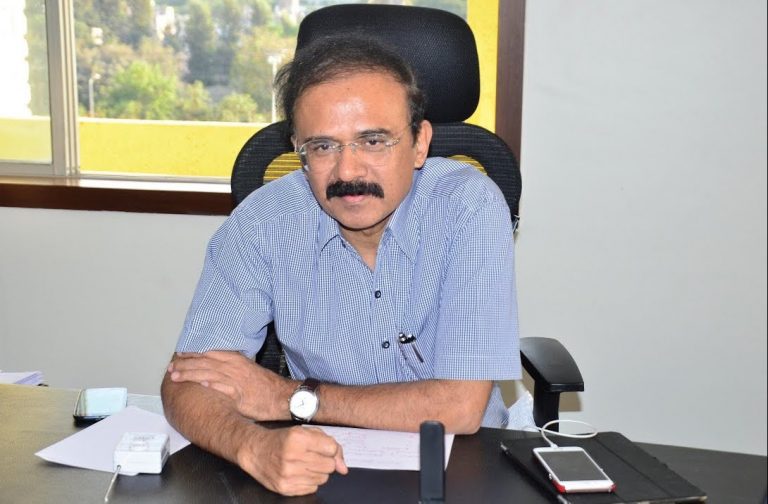
Six months before the second wave of the coronavirus outbreak hit Maharashtra, veteran bureaucrat Mahesh Zagade had reportedly warned the state government of a possible resurgence of the COVID-19 pandemic and had suggested measures to tackle it. But the government turned a blind eye to his suggestions, resulting in the crisis that is currently grappling the state.

Zagade, in his interview with the Times Of India, said that he had written a letter to chief minister Uddhav Thackeray and deputy chief minister Ajit Pawar detailing a comprehensive action plan to combat a resurgent coronavirus outbreak. He now believes that his pleas either fell on deaf ears or the bureaucracy held his letter back.

Zagade stated that he is keen to share his expertise even now without charging a dime for it, but there has been no response from the government.

“Six months ago, I had a long meeting with the Pune mayor, followed by a letter to the CM and other authorities. If we take stringent measures, it should not be difficult to win the battle against Covid-19,” Zagade said.

Had proposed a roadmap, but got no response: Zagade

In a two-page letter addressed to the CM and Deputy CM, Zagade had laid out an elaborate roadmap to combat the coronavirus outbreak. Pointing out the reshuffling exercise by the CM last year when incompetent bureaucrats were shunted out for their inept handling of the COVID-19 outbreak, Zagade said that the whole exercise now seems futile since the state is in the throes of the second wave of the pandemic. He pinned the blame of the recent spurt in the cases on local bodies not exercising their powers.

The veteran bureaucrat had earlier worked as Pune municipal commissioner during which he played an instrumental role in the fight against swine flu. He had also served as the Food and Drug Administration commissioner from 2011 to 2014, during which he had firmly insisted on the rigorous implementation of the Drugs and Cosmetics Act.

The former bureaucrat stated that last year, the state government had shifted a large number of officers for inefficient handling of the first wave of the pandemic. “Now, a year later, the cases have increased manifold. It clearly indicates the entire exercise of shuffling government officers was a futile exercise”, Zagade added. He asserted that the local bodies are not utilising their power.

Maharashtra is among the worst-hit state by the scourge of the second wave of the coronavirus outbreak. More than 50,000 cases have been reported in the state daily in the last two week. Over 67,000 new cases were registered from the state on Thursday. The state is also reportedly facing acute shortages of medicinal oxygen supplies as well as the scarcity of essential and life-saving drugs like Remdesivir.

‘Economist’ Kaushik Basu attempts to spread panic, claims only 1.5% of the population vaccinated: Here is how he is wrong

On Friday (April 23), Cornell University economics professor and Congress sympathizer Kaushik Basu sparked a controversy on social media after claiming that India has vaccinated only 1.5% of the population.

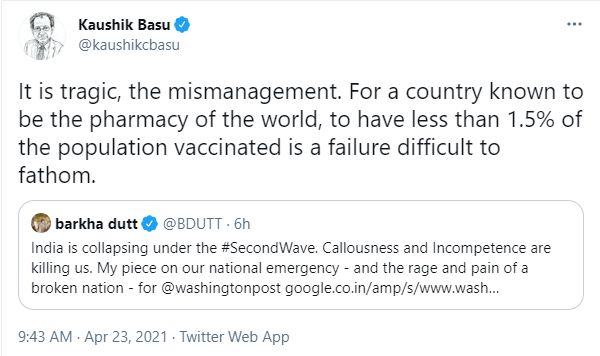
In a tweet, Basu wrote, “It is tragic, the mismanagement. For a country known to be the pharmacy of the world, to have less than 1.5% of the population vaccinated is a failure difficult to fathom.” He was responding to a propaganda piece, written by ‘journalist’ Barkha Dutt, and published in the Washington Post.

Screengrab of the tweey by Kaushik Basu

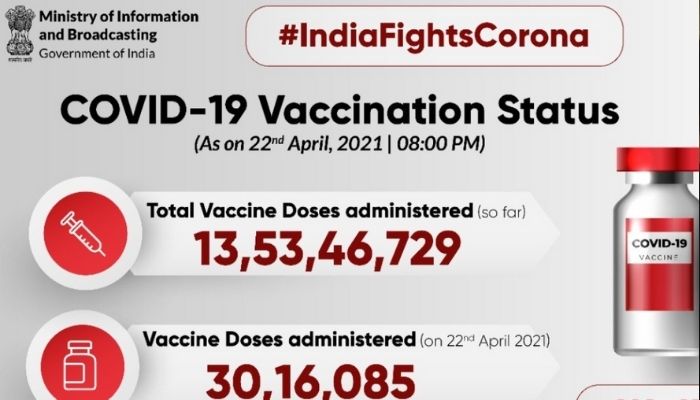
His claims run counter to the actual number of people vaccinated against the Wuhan Coronavirus. As of 8 pm on April 22, a cumulative total of 13,53,46,729 (~135 million) vaccine doses have been administered. On Thursday alone, over 30,16,085 (~3 million) doses have been administered.

Data via I & B Ministry as of April 22, 2021 Screengrab of the tweet by I&B Ministry

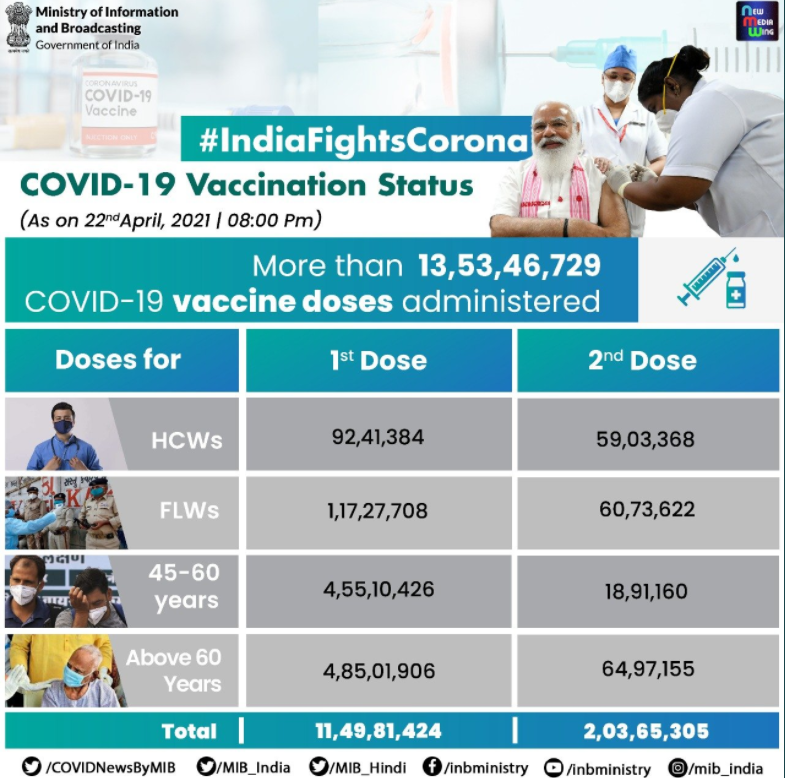
It must be mentioned that an individual needs to take two doses of the vaccine to develop complete immunity against the Wuhan Coronavirus. Only then an individual can be considered as ‘fully vaccinated’. As per the Ministry of Information and Broadcasting, a total of 11,49,81,424 (~114 million) individuals received the first dose while about 2,03,65,305 (~20 million) of them took the 2nd dose (as of April 22). As such, the government has inoculated a total of ~114 million individuals while about ~20 million of them have been fully vaccinated.

Data via I & B Ministry as of April 22, 2021

Given that India’s population roughly stands at 136 crore, it implies that 8.45% (114 million) of the population has been vaccinated. Similarly, around 1.49% (20 million) of the population has been ‘fully vaccinated’. While Kaushik Basu’s tweet, referring to 1.5% of the population, might seem closer to the ‘fully vaccinated’ individuals, it must be mentioned that his tweet makes no such reference.

His choice of words, particularly, ‘to have less than 1.5% of the population vaccinated’ makes no clear indication. It, however, suggests that the vaccination programme has been so slow that the government could only vaccinate just 1.5% of the population. This is however not the case. Given that the vaccination programme kickstarted in India on January 16, it has only been 3 months since the first phase. As India conducted the inoculation programme in several stages, most of the individuals are still not eligible for the 2nd dose.

It must be mentioned that there must be a gap of 4-6 weeks (referring to 1-1.5 months) between both doses. Since vaccination is being undertaken in distinct phases, a comparison must therefore be made on a phase-by-phase basis. Given that most individuals have not yet completed the mandatory lag period of 4-6 weeks, it is therefore not recommended for such individuals to take the 2nd dose. Although Kaushik Basu desperately tried to insinuate that the immunisation programme has been slow, nothing can be further from the truth.

It is also notable that while both the vaccines used in India needs two doses, they provide fair level of protection after the first dose also. Therefore, the people who have received the first dose only are not ‘unvaccinated’, as Kaushik Basu seems to be claiming.

Congress leader Chidambaram wants state governments to unionise to haggle over vaccine costs: Here is why that is a bizarre idea

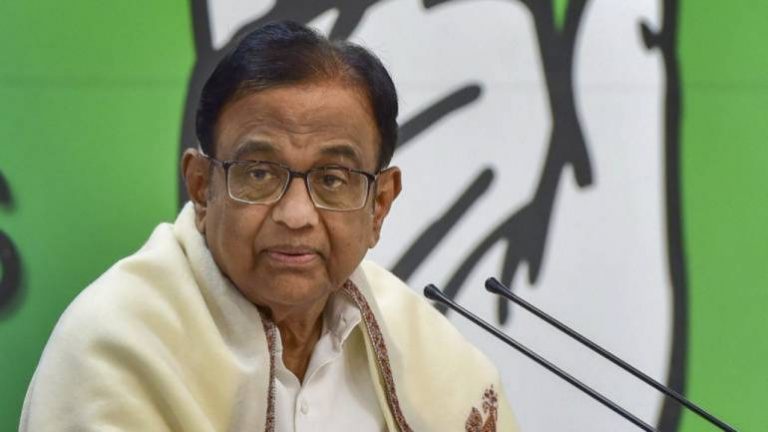
P. Chidambaram, former Union Minister and senior Congress leader, has managed to come up with another spectacularly braindead idea that does not make any sense. It is quite probable that even he is keenly aware that his suggestion will cause great harm if implemented.

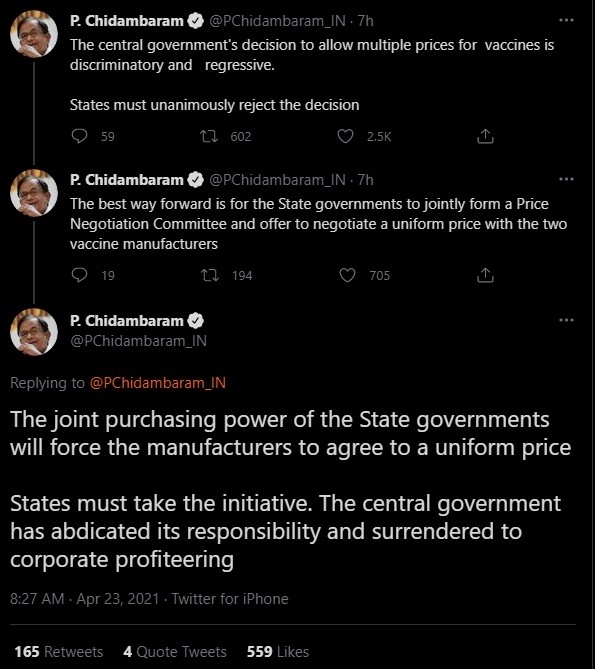
Chidambaram suggested that states should come together to reject the prices for the Covid-19 vaccines that have been set. He suggested that a price negotiation committee ought to be formed jointly by the states and a uniform price could be negotiated. He is basically asking state governments to unionise to haggle over vaccine prices.

P Chidambaram floats grand dumb idea
Chidambaram’s grand dumb idea

Chidambaram said further, “The joint purchasing power of the State governments will force the manufacturers to agree to a uniform price States must take the initiative. The central government has abdicated its responsibility and surrendered to corporate profiteering.”

The whole propaganda by opposition parties began after the Serum Institute of India announced the price of its Covid-19 vaccine for state governments and private hospitals. For the former, the price has been pegged at Rs. 400 per dose while for the latter, it is Rs 600.

There are multiple obvious flaws with the argument. Firstly, there is a uniform price for all the states. It is with the central government that the states have a difference in the cost of Covid-19 vaccines and that too, only for a limited number of doses.

The opposition parties and entertainers accused the SII of profiteering from the crisis. In reality, the cost of Covid-19 vaccines in India is extremely low and it is much higher in other countries. For instance, the cost of Moderna and Pfizer vaccines range from Rs. 2000 to Rs. 3000 per dose.

Currently, the SII is selling the vaccines at Rs. 150 per dose to the central government, incurring a loss in the process. The cost has been set to Rs. 150 for the first 110 million doses and following that, the centre will be charged Rs. 400 as well.

Even under such circumstances, opposition parties are creating a ruckus over the price. It is bizarre to expect a pharmaceutical company to continue to supply vaccines at a price where they are incurring losses. The business is unsustainable if this continues. They also have to pay royalty to AstraZeneca as well.

Nevertheless, Chidambaram first invents a false bogey of a price differential between the centre and states and then recommends an even more bizarre idea. Firstly, SII cannot supply vaccines at an even cheaper rate and continue to remain viable commercially.

Secondly, it does not make sense politically for states to embark upon such a misadventure. Forming a committee to negotiate prices means an inevitable delay in the procurement of vaccine doses. A delay in vaccine procurement will directly translate into jeopardising the health of their citizens. Consequently, such a delay will reflect extremely poorly on the states for haggling over prices that are already extremely low.

Furthermore, states where BJP is in power will not be on board with such theatrics. States can continue to provides vaccines to its citizens for free, as many states have already announced, but for that, they will have to procure the vaccines at the designated prices.

The BJP is currently in power in 17 states or Union Territories, that is, states where they are either the main ruling party or are in a ruling alliance. That leaves only 14 others where opposition parties are still in control. Even among them, it is unlikely that the YSRCP government in Andhra Pradesh, the KCR Government in Telangana or the Naveen Patnaik government in Odisha will go along with such harebrained ideas.

Then there is President’s Rule currently imposed in Jammu and Kashmir and Puducherry. That leaves only 9 states and Union Territories where the the governments may be willing to come together to form the price negotiation committee as suggested by Chidambaram. Even Delhi is unlikely to get on board with the proposal considering the pressure Arvind Kejriwal is in already.

Will they risk losing massive public support haggling over Covid-19 prices? It appears extremely unlikely. The failure by the states to procure vaccines for their citizens will reflect directly on the government’s performance in states. Any delay will build angst towards the government despite their posturing on social media.

Thus, while Chidambaram maintains a pretense of grave seriousness while dishing out the suggestion, it is unlikely to receive support even from states where his party is in power. He also appears to have forgotten that procuring vaccines is not like buying groceries from the market where people feel entitled to demand chilies worth Rs. 5 for every purchase worth Rs. 100.