Home Blog Page 498

Arvind Kejriwal is going to stage a coup against Punjab CM Bhagwant Mann by blaming him for various issues: BJP leader Manjinder Singh Sirsa

0

Bharatiya Janata Party winning candidate from Rajouri Garden, Manjinder Singh Sirsa, on Wednesday alleged Aam Aadmi Party National Convenor Arvind Kejriwal of attempting to stage a ‘coup’ against Punjab Chief Minister Bhagwant Mann.

He further claimed that the next 15-20 days would be crucial for the Punjab CM, as Kejriwal is likely to place blame on Mann for various issues and remove him from office.

This came following AAP’s massive defeat in the recently concluded Delhi Assembly polls, where they lost to the BJP by a significant margin.

Sirsa referred to the ousting of Punjab’s former Health Minister Vijay Singla, questioning if Kejriwal would succeed in replacing Mann with himself. He expressed doubts about Kejriwal’s ability to become the Punjab CM, adding that the situation would further weaken Mann’s position.

“The next 15-20 days are extremely crucial for Bhagwant Mann… He will be blamed for everything… Then he will be removed just like Punjab’s former health minister, Vijay Singla… But, after removing him, will Arvind Kejriwal be able to become the CM? I don’t think so… Arvind Kejriwal is trying to stage a coup against the Punjab CM seat,” Sirsa said.

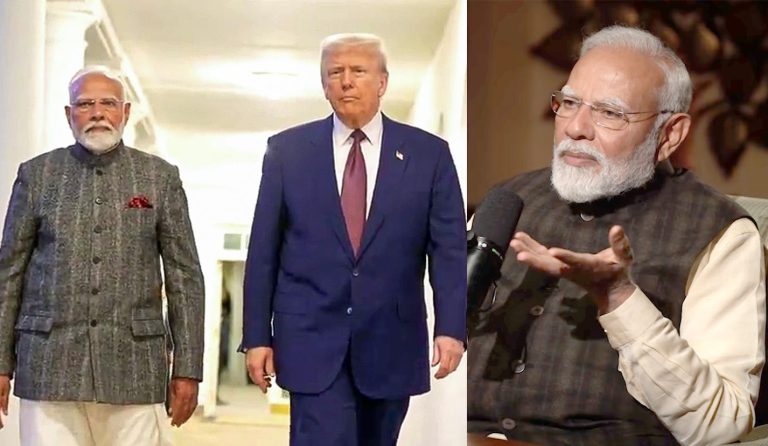
Additionally, Sirsa said that all the winning MLAs in the Delhi Assembly Polls would meet with the National President in the coming days to discuss the party’s CM face and added that the discussion would take place once Prime Minister Narendra Modi returns from his visit to the US.

“All MLAs will meet the National President in the next two days… Our national leadership will discuss the CM face once PM Narendra Modi comes back (from the US visit),” he added.

The BJP had secured a landslide victory in the Delhi Assembly election results, which was declared on February 8, winning a two-thirds majority, while the ruling Aam Aadmi Party (AAP) suffered major setbacks, witnessing a drastic reduction in its numbers in the 70-member assembly.

The BJP won 48 seats in a historic mandate, marking its return to power in Delhi after 27 years. Several AAP leaders, including former Chief Minister Arvind Kejriwal, lost in their strongholds, while outgoing Chief Minister Atishi managed to retain her seat.

The Congress, which was hoping for a revival, once again failed to win a single seat.


(This news report is published from a syndicated feed. Except for the headline, the content has not been written or edited by OpIndia staff)

Gaurav Gogoi’s British wife has ISI links? Assam CM’s cryptic post sparks debate, the Congress MP’s NGO questioned over alleged FCRA violations

Assam CM Himanta Biswa Sarma launched an attack on Congress MP Gaurav Gogoi, without naming him, on the issue of Gogoi’s wife retaining her British citizenship for 12 years after their marriage in 2013. He also mentioned allegations of ISI links against Elizabeth Colburn, saying the questions must be answered.

In a post on X, the Assam CM wrote, “Serious questions need to be answered regarding allegations of ISI links, leading young individuals to the Pakistan Embassy for brainwashing and radicalization, and the refusal to take Indian citizenship for the past 12 years. Additionally, participation in a conversion cartel and receiving funds from external sources, including George Soros, to destabilize national security are grave concerns that cannot be ignored.”

He added, “At some point, accountability will be necessary. Simply deflecting responsibility or attempting to shift the focus onto others will not serve as an easy escape route. The nation deserves transparency and truth.”

While Himanta Biswa Sarma didn’t mention any name, it is apparent that he was talking about Gaurav Gogoi and his wife Elizabeth Colburn, who has retained her British passport after her marriage with Gogoi in 2013.

The Assam CM’s tweet also accused her of leading young individuals to the Pakistan embassy for “brainwashing and radicalization”. He also alleged participation in a conversion cartel and receiving funds from external sources, including George Soros, to destabilize national security, calling them grave concerns. 

Himanta Biswa Sarma also questioned why a lawmaker’s wife was allowed to retain foreign citizenship for such a long time while there is a different rule for officers. He said that he has learnt that IFS officers must obtain prior permission before marrying a foreign national, and the foreign spouse must acquire Indian citizenship within six months.

He tweeted, “During my interactions with an IFS officer in Singapore, I learned that officers in the Indian Foreign Service cannot marry a foreign national without prior permission from the Government of India. Moreover, even when permission is granted, it comes with the condition that the spouse must acquire Indian citizenship within six months. Interestingly, this rule does not apply to our lawmakers. However, allowing a foreign spouse of a lawmaker to retain foreign citizenship for 12 years is far too long. Loyalty to the nation must always take precedence over all other considerations.”

Elizabeth is currently working for Oxford Policy Management, which works on Climate. She also works as a project manager in the Climate and Development Knowledge Network (CDKN) in Delhi. The Assam CM was referring to allegations on social media that Elizabeth is linked to ISI through Ali Tauqeer Sheikh, CDKN’s Regional Director for Asia, who also worked in the Pakistan Planning Commission. Elizabeth worked closely with Tauqeer Sheikh in Pakistan. It is also alleged he was her PhD guide.

Gaurav Gogoi’s NGO suspected of FCRA violation

In December last year, Gaurav Gogoi accused the Modi government of using the George Soros issue to hide its failures. The son of former CM Tarun Gogoi said that to hide its failures in Manipur, BJP was raising the issue of interference by George Soros and his Open Society Foundation.

While Gaurav Gogoi said this as a Congress leader, an interesting point is that he has links with organisations funded by Soros.

Gaurav Gogoi is the founder of Farm 2 Food, an Assam-based organisation with the aim of providing training and tools for taking up sustainable, farm-based livelihoods. The Jorhat headquartered non-profit lists National Foundation of India, an organisation funded by George Soros and other deep state entities, as one of its partners.

Notably, the National Foundation of India lists the Open Society Foundation of George Soros, the Ford Foundation, the Omidyar Network, and the Rockefeller Foundation, among others, as its donors. All these organisations are known as deep state assets working against nationalist governments worldwide, including India. They have funded numerous anti-India campaigns and initiatives. 

Moreover, Farm 2 Food is not registered with FCRA, which means it can’t receive foreign funding. Despite that, the NGO is working with foreign organisations, raising questions about whether the group is violating FCRA provisions.

Farm 2 Food lists the Swiss Re Foundation as one of its partners. The foundation run by reinsurance major Swiss Re works on climate and health sectors. Its website states that it provides grant funding to its partners, apart from other supports.

Farm 2 Food is implementing the School Nutrition Garden Initiative in various schools in Assam. This is an Ashoka Foundation project funded by Swiss Re. However, it is notable that the Ashoka Foundation is FCRA-registered.

As per the 2022-23 annual report of Farm 2 Food, it received grants of ₹1,80,000.00 and donations of ₹14,74,685.16 in that year. However, it does not list its grantors and donors. Therefore, it can’t ascertained whether it received any foreign funding directly.

Shekhar Gupta’s ThePrint vilifies NCPCR to shield madrasas: Read how it rescued a missing Hindu boy converted to ‘Mohammed Umar’ from a UP madrasa

0

The Print recently published an article trashing the National Commission for the Protection of Child Rights (NCPCR) for its momentous efforts to rescue non-Muslim children trapped in madrassas and indoctrinated with hate literature fed to them by Islamists.

In its latest report, ThePrint sought to malign NCPCR’s efforts to rescue Hindu children as an ‘anti-madrasa campaign’—a dog whistle to brand the statutory body as anti-Muslim and attack its former chief Priyank Kanoongo for scrupulously doing his job and harbouring malice towards Muslims for his pointed endeavours to free madrasas from turning into potent breeding grounds for terrorism and religious bigotry.

The article titled “NCPCR has been on an anti-madrasa campaign—to rescue Hindu children” targets former NCPCR chief Priyank Kanoongo and the statutory body, characterising their efforts to rescue Hindu children from madrasas as yet another stick to beat Muslims. 

Screenshot of ThePrint’s recent article

Unsurprisingly, the author of the piece, Heena Fatima, laments that NCPCR, which had shown little interest in probing into the workings of madrasas before the Modi government came into power, has suddenly started showing interest in the Islamic seminaries, many of which are unregistered and face serious allegations of peddling religious supremacism, indoctrinating young impressionable minds, and being centres of sexual exploitation.

Fatima bemoans the fact that Priyank Kanoongo has an unwavering focus on madrasas even after his tenure at the National Commission for Protection of Child Rights (NCPCR). She criticises Kanoongo for being critical of madrasas and arguing that they operate without proper regulation, fail to meet educational standards, and potentially misuse funds.

Funnily, Fatima relies on denunciations from Madarsa boards and Muslim organisations to mount a critique of Priyank Kanoongo, claiming his actions to regulate madrasas, rescue children, and bring them up to the national educational standards are politically motivated and aimed at strengthening the ruling BJP’s vote bank.

The piece also highlights a Supreme Court observation that raised questions about NCPCR’s campaign against madrasas, asking if it had undertaken similar actions against monasteries, pathshalas, and other such centres. While Kanoongo then responded by saying that he devoted only 10 per cent of his time to madrasas and 90 per cent to child-related work during his nine-year tenure at the NCPCR, it is significant to highlight that monastery, pathshalas don’t challenge the existing educational system as the madrasas do, in addition to the ubiquity of crimes reported in madrasas. 

The latest article in ThePrint attempts to downplay the issue of religious conversions occurring in madrasas, as well as the struggles faced by non-Muslim children who are compelled to adopt Islamic practices and culture, which erases their cultural roots.

For instance, even as ThePrint tries to shield Islamists from using madrasas to wage their jihad against a predominantly Hindu society, the NCPCR, under Priyank Kanoongo, rescued a boy named Vivek who had gone missing in Chandigarh in 2016 and was found eight years later in Muzaffarnagar, Uttar Pradesh, living as Mohammad Umar after an alleged forced religious conversion at a madrasa in Saharanpur. A case was filed against four individuals, including a Maulvi, a Maulana, and a village head, on October 14, 2023. One accused was later granted bail, while the others remain at large.

The case came to light when a man named Matloob attempted to change the boy’s Aadhaar details, but biometric verification revealed his original identity. Authorities were alerted, leading to Vivek’s rescue and reunion with his family. Legal action was taken under IPC Section 420 and the Uttar Pradesh Prohibition of Unlawful Religious Conversion Act.

Vivek, now adjusted to his new life, recalled only events from Saharanpur, mentioning dietary changes and marriage plans.

Thus, ThePrint’s article is nothing but a brazen attempt to whitewash the harsh realities surrounding unregulated madrasas and their role in indoctrination, forced conversions, and exploitation of children. By framing the NCPCR’s legitimate rescue efforts as an “anti-madrasa campaign,” the publication seeks to deflect attention from the deeply entrenched issues plaguing these institutions.

Instead of acknowledging the pressing need for oversight and reform, ThePrint paints Priyank Kanoongo’s efforts as politically motivated, ignoring the several cases that underscore the perils faced by non-Muslim children trapped in these environments. The case of Vivek, among others, exposes the real and alarming threats that warrant urgent intervention.

While critics like Fatima attempt to spin the narrative, the truth remains unaltered—protecting children from radicalisation, unlawful conversions, and exploitation is a constitutional obligation, not a political agenda. The NCPCR’s actions under Kanoongo’s leadership were not about targeting a particular community but ensuring that all children, regardless of religion, are protected against abuse and accorded access to quality education in compliance with national standards. Those attempting to undermine these efforts are, in effect, defending an unjust system that prioritises religious indoctrination over children’s rights and well-being.

Broken parts of Somnath Shivling preserved by Agnihotri Brahmins for hundreds of years to be consecrated by Sri Sri Ravishankar

In a historic development, the ancient Somnath Jyotirling which was destroyed by Islamic invader Mahmud of Ghazni hundreds of years ago is set to be revived after its broken pieces were recently discovered.

As per reports, spiritual leader and founder of the Art of Living, Sri Sri Ravi Shankar will be performing the consecration of the fragmants of the Somnath Jyotirling. The broken pieces of the Jyotirlinga were being preserved by generations of Agnihotri Brahmins since its destruction. The pieces are still very active and behave like magnets, Sri Sri Ravi Shankar said.

Sitaram Shastry preserved Somnath Shivling parts for 21 years

Last month, an Agnihotri priest named Sitaram Shastry met Sri Sri Ravishankar and handed over the parts of the Jyotirling which he has been preserving for 21 years. Shastry said that two generations of his family have been preserving the parts of the Jyotirling. He informed that his uncle preserved the parts for his life time before handing them over to him. “I received these statues 21 years ago. Before this, my uncle had kept this. He gave me this and ordered me to install at least two of them in Somnath temple in Gujarat. This is the real idol of Somnath. It’s been 1000 years… My uncle ordered me to install it in Somnath Ji. It was give to him by his guru Pravendra Saraswati Ji. After that my uncle worshipped it for 60 years. The statue has come to me, him and his guru with Guru-pratha only,“ Sri Sri Ravishankar said.

Shastry’s uncle has received the shivling parts from his guru named Parvendra Saraswati Ji who took them to Kanchi Shankaracharya 100 years ago in 1924, as per Sri Sri Ravishankar. Shankaracharya told him that it would take a hundred years for the Shivling to be consecrated in the Somnath temple. He directed him to preserve the parts till that time. Parvendra Saraswati preserved and worshipped the Shivling parts during his life before giving them to Shastry’s uncle.

Saints collected the parts of the destroyed Shivalinga and worshipped them for years

The Somnath Jyotirling is said to have been 3 feet tall Shivling suspended in the air 2 feet above the ground. “A thousand years ago, this Shiva Lingam, that was 3 feet tall and remained suspended 2 feet from the floor, defying gravity. There were multiple attacks by invaders to destroy this Shiva Lingam. The temple was looted too. Invader Mahmud of Ghazni killed almost 50,000 people to enter the Somnath temple. He looted all the precious things that was adorned in the temple and destroyed the Shiva Lingam,” Shastry added.

He further said the broken parts of the Shivling were collected by priests who worshipped them anonymously for years. “After this incident, various saints came and collected the broken fragments, made several statutes from it and started worshipping them. They consensually decided that statues made from these fragmented pieces would be installed in the temple again when the right time will arrive,” he said.

Kanchi Shankaracharya assured Shastry that the Shivalinga will be consecrated after the consecration of Ram Mandir in Ayodhya

Shastry said that he took the Shivaling parts to Jagadguru Sri Jayendra Saraswathi Shankaracharya Swamigal to seek his advice. The Shankaracharya asked him to wait till the consecration of Ram Nadir in Ayodhya. However, the Shankaracharya attained Samadhi before the consecration of Ram Mandir after which Shastry did not know what to do with the Shivaling parts. “I took him to Shankaracharya Ji. He told me that once the work of Ram Mandir gets complete, they will initiate the process of installation of this Shiv Lingam but now he attained the Samadhi,” he said.

After the consecration of Ram Mandir, Shastry took the Shivalinga parts to Jagadguru Sri Shankara Vijyendra Sarawathi Swamigal who succeeded Shankaracharya Jayendra Saraswathi. He advised Shastry to take the parts to Sri Sri Ravi Shankar. “Guru Sri Sri Ravi Shankar has assured that it would be installed in Somnath temple. I am happy. My birth would be successful. The real Somnath Shivling would be installed in the Somnath temple, this is our resolution,” he said.

How Mahmud of Ghazni destroyed the Somnath temple

The Somnath temple in Gujarat was destroyed in the 10th century by Mahmud of Ghazni, Muslim invader from the Ghaznavids dynasty. He demolished the Somnath Jyotirling and slaughtered thousands of devotees who were attempting to protect the temple. Mahmud is said to have looted and plundered India 17 times. He also destroyed temples in Kangra, Mathura, and Jwalamukhi and that’s why was infamously called ‘idol breaker’.

Mahmud of Ghazni destroyed the Somnath temple in 1025, during his 16th invasion in India. He destroyed the Somnath Jyotirling into four pieces, and is said to have taken its pieces tread over the footsteps of the Jama Masjid in Ghazna, Afghanistan.

Australia: Viral video shows NSW health workers Ahmad Rashad Nadir and Sarah Abu Lebdeh threatening to kill Israeli patients, investigation ordered

In a shocking incident, two New South Wales (NSW) health workers threatened to refuse treatment and kill any Israeli patients coming to their hospital for treatment. A video showing the two health workers, said to be employed at Bankstown Hospital in Sydney, making the blatantly hateful and anti-semitic remarks went viral on social media. The two health workers have reportedly been identified as Ahmad Rashad Nadir, a refugee from Afghanistan, and Sarah Abu Lebdeh. They were suspended after the video attracted widespread criticism.

Australian Health Minister orders investigation

Australian Prime Minister Anthony Albanese condemned the incident calling it ‘sickening and shameful’. Responding to the video, Health Minister Ryan Park described the behaviour of the health workers as ‘vile, disgusting and appalling’. “The whole video, from the start to finish, is a concern to me…the fact that they chose to do this in uniform, that they chose to do this while they should have been caring for patients, “ Park said on Wednesday.

Apologising to the Jewish community, Park assured that the community would continue to get first-class care in Australian hospitals. The Health Minister ordered an investigation into the matter to be conducted by the NSW Complaints Commission and assured that anti-semitic views have no place in the country’s health system.

“Obviously, investigative process now takes place. I don’t want to leave a sliver, a sliver of light to allow any of them to be able to think that they will ever work for New South Wales Health again,” Park said.

“There is no place in our hospital and health system for this sort of view to ever, ever take place. There is no place for this sort of perspective in our society, but hospitals are different in the fact that every single Australian and every single resident of this state should be able to go to their local hospital when they need care and attention and get high-quality care that is safe and effective, “ he added.

What is the whole incident?

As per reports, the controversial video in which the two health workers are expressing their antisemitic, hateful views and expressing a desire to let Israelis die without healthcare was posted by an Israeli influencer named Max Veifer on Instagram. Veifer came across Nadir and Lebdeh on an app called Chatruletka, which randomly connects users over video chats.

In the video, Nadir and Lebdeh dressed in scrubs with NSW Health insignia can be seen telling Veifer that any Israeli patient coming to them will be killed. Nadir, after coming to know that Veifer was from Israel, first praised him for having beautiful eyes and then said that he would go to hell for being Israeli.

“I am going to be really honest with you…I am so upset you’re Israeli. Eventually, you’re going to be killed and go to Jahannam (Hell), “ said Nadir.

Then Lebdeh entered the frame and said, “It’s Palestine country, not your country, your piece of shit.” Aggressively cursing Veifer, Lebdeh said, “When your time comes, I want you to remember my face so you can understand you will die the most disgusting death.”

When Veifer asked them what they would do if an Israeli patient came to them, Lebdeh replied, “I won’t treat them, I will kill them”. Nadir boasted that he had already sent many Israeli patients to Jahannam. “You have no idea how many (Israelis) came to this hospital, and I sent them to Jahannam. I literally sent them to Jahannam,” he said.

AI struggles to draw a man writing with his left hand. Netizens flood social media with responses after PM Modi pointed it out in Paris speech

PM Modi spoke at the global AI summit in Paris yesterday, 11 February. In his speech, PM Modi highlighted on many aspects of how Artificial Intelligence has been helpful to people in recent days, to the extent of analysing medical reports and explaining them to users in simple terms.

However, there are some aspects of generative AI that are yet to catch up to expectations. Till a few months ago, generative AI models often made mistakes with human hands, there were more or less fingers, or even more or less hands. But eventually they got better at generating images of human hands.

PM Modi drew attention to a major issue with generative AI models, they can’t generate images where humans are writing with their left hand.

PM Modi’s comment stirred up a social media storm, with people trying to use different prompts to generate images of humans writing with their left hand, without any success.

People shared posts of different AI platforms with their prompts asking for an image of a person writing with left hand, but they actually found that PM Modi was right. AI simply won’t generate an image of a human writing with the left hand.

We tried different AI platforms to generate the same image too. Here is what we found

Bing AI’s generative AI based on DALL.E3 simply could not generate the image of a human writing with left hand, in whatever ways we asked.

The AI made the man sip coffee in his left hand, due to the ‘left hand’ mention in the prompt, but it never generated an image showing left hand writing.

When we insisted on the left hand in a different prompt, it simply generated one extra hand!!! But it never made the guy write with his left hand.

Surprisingly, Bing AI had no problem generating the image of an eagle writing on a scroll with his left talon, however impossible or idiotic that may sound. But humans writing with the left hand is apparently an impossibility.

Image via Bing AI

Grok refused to generate left hand writing too.

Grok AI, too could not generate an image of a person using the left hand to write. In different prompts, we got only right-hand writing. The custom image generative model developed by XAI that Grok uses had the same problem. Though the text answers repeatedly insisted that they can generate an image with a human writing with left hand, the images never had left hand writing. It was always the right hand doing the writing.

We thought may be it is just civilised humans Grok thinks should be writing with their right hands, with the overwhelming ‘right hand’ bias in the datasets it has been trained on. But we were wrong. Grok won’t even generate cavemen doing cave drawings with their left hand.

When asked to generate the image of a monkey using its left hand to eat a fruit, Grok had some similar problems. There was a right-hand supremacy. The left hand can assist, but it cannot be the primary hand for work.

Unlike Bing AI, Grok won’t even allow birds to use their left talons for writing. Grok’s bird just sat grumpy, staring angrily at the paper, refusing to write with its left talons.

Meta AI had almost the same problem. It’s Emu model did not generate the image of a person using their left hand to write. Writing has to be strictly right-handed, as per AI, just as PM Modi said.

When we tried a different prompt, thinking if it could allow children to use their left hand to write, Meta AI refused. It made a little girl absent-mindedly scratching on the wall with left hand while writing with her right hand.

Even cartoons won’t write with their right hand.

This left-hand bias seems to be an intriguing issue.

Plea moved in SC to provide food, jobs, education, healthcare to illegal Rohingyas: Read who Colin Gonsalves is and his links to Soros

A plea has been filed in the Supreme Court by an NGO named Rohingya Human Rights Initiative seeking direction to the Centre and Delhi government to allow illegal Rohingyas staying in New Delhi access to schools and hospitals. As per reports, the matter was heard by Justices Surya Kant and N Kotiswar Singh on Monday (10th February).

Last month, the Supreme Court directed the petitioner NGO to apprise the court about the places where Rohingya refugees are settled in Delhi and what facilities are available to them.

The NGO represented by Colin Gonsalves was asked to submit an affidavit with details of Rohingyas in Delhi since the petitioner is an NGO and not an aggrieved party. Gonsalves told the court that Rohingya ‘refugees’ are denied access to schools and hospitals since they don’t have Aadhaar cards.

“They are refugees having UNHCR (United Nations High Commissioner for Refugees) cards and therefore they can’t have Aadhaar cards. But, for want of Aadhaar they are not being granted access to public schools and hospitals,” Gonsalves said.

The counsel for the Rohingya Human Rights Initiative informed the court that Rohingyas are residing in Delhi’s Shaheen Bagh, Kalindi Kunj, and Khajuri Khas areas. “In Shaheen Bagh and Kalindi Kunj they are residing in slums and in Khajuri Khas they are residing in rented accommodation,” Gonsalves said.

Notably, the plea moved by the said NGO sought direction to Central and Delhi governments to give free of cost school admission to Rohingya children despite them not having Aadhaar cards or Indian citizenship The PIL further sought that these Rohingya ‘refugees’ be allowed to partake in all examinations including class 10, 12, and graduation without government demanding ID proof.

In addition to educational benefits, the plea sought an extension of the government’s free health services in government hospitals for Rohingya illegals. Moreover, the plea demanded subsidised food grains as available under the Antyodya Anna Yojana scheme and benefits under the Food Security Act to Rohingya families, irrespective of citizenship.

Basically, the Rohingya Human Rights Initiative and Colin Gonsalves want the Central and Delhi governments to treat Rohingya ‘refugees’ as Indian citizens without them really having Indian citizenship.

Who is Colin Gonsalves?

Notably, advocate Colin Gonsalves is the founder of the Human Rights Law Network (HRLN) which operates under the aegis of the Socio-Legal Information Centre. It has received funds from George Soros’s NGO in the past. Some of the efforts HRLN has been involved in include the campaign against ISKCON’s Akshaya Patra, a campaign against Indian sedition laws, and it has been providing free legal aid to Rohingya Muslims in India. It has also been engaging in activism for the implementation of the RTE Act that works against Hindu-run institutions. Reports say that Gonsalves’s HRLN also received Rs 50 crores from four European churches to defend the 2020 anti-CAA rioters in the courts.

Furthermore, HRLN is also linked to a plethora of organizations across the country that seek to undermine India’s territorial integrity. Members of the Right to Food Campaign (RFC), an organization HRLN is linked to, were also involved in the protest against then CJI Ranjan Gogoi that sought to undermine the legitimacy of the Indian Judiciary.

Socio-Legal Information Center, a patron of HRLN received a great deal of contribution from Bread for the World. In a recent investigative report, OpIndia found that the has been providing free legal aid to Rohingya detainees across the country. The network has filed PILs related to the implementation of the RTE Act. HRLN has also filed a PIL in the Supreme Court on behalf of Najeeb’s mother, the missing student from JNU, upon which the SC directed the Delhi government, the Police and authorities at JNU to be even more rigorous in their probe to find him. The HRLN was also part of a campaign to abolish sedition along with PUCL, PUDR, APDR, CPDR, and APCLC, which are coordinating organizations of CDRO, an umbrella organization we have reported on extensively.

Interestingly, Colin Gonsalves represented the pro-Hijab students in the Karnataka High Court back in 2022, when a controversy erupted over restrictions on wearing Hijabs in schools. He also represented Alt News co-founder Mohammed Zubair in the Supreme Court when the latter was arrested for his Hinduphobic tweets and facing further charges of insulting Hindu seers and FCRA irregularities

Rohingya Human Rights Initiative (R4R)

Established in 2017, the NGO Rohingya Human Rights Initiative (R4R) was registered as a Public Charitable Trust and non-profit, non-governmental organisation. It receives funds from the Global Statelessness Fund. The GSF is a project of the Netherlands-based Institute on Statelessness and Inclusion. The Global Statelessness Fund and Institute on Statelessness and Inclusion receive funding from regime change specialist and philanthropist George Soros’s Open Society Foundation.

The timing of the creation of R4R is interesting as the NGO came into existence right after George Soros’s Open Society Foundation, UNHCR, Government of Canada’s Global Refugee Sponsorship Initiative which was announced in 2016.

Notably, the Rohingya Human Rights Initiative’s Director of Education & Movement Building, Ali Johar was a fellow in Refugees International’s (RI) inaugural refugee fellows program. Ali Johar (Maung Thein Shwe) came to India in 2005, he is originally from Myanmar’s Rakhine state. The RI’s president Jeremy Konyndyk is a former employee of the controversial USAID which was funding media, ‘activists’, dubious rights groups and even Islamic terror outfits. Jeremy Konyndyk was director of USAID’s Office of US Foreign Disaster Assistance until the Trump administration rendered the USAID defunct.  Ali Johar is a part of the Free Rohingya Coalition. This group also receives funding from the Global Statelessness Fund.

Another advisor in R4R is Ravi Hemadri who runs the Development and Justice Initiative (DAJI). This initiative runs project Right to Nationality and Citizenship Network (RNCN) advocates that every child born in India should get Indian citizenship irrespective of their parents being illegal immigrants. “We at Right to Nationality and Citizenship Network (RNCN) firmly believe that the right to citizenship of no child born on the soil of India can be taken away. It is a natural and birth right of every child,” the RNCN’s website reads.

Interestingly, Ravi Hemadri previously served as the Director of The Other Media NGO that led protests against Vedanta Sterlite in Tamil Nadu. Back in 2023, OpIndia reported about allegations that this NGO was misusing foreign funds to organize protests and demonstrations around Vedanta’s Sterlite Copper plant in Thoothukudi, Tamil Nadu.

85% of the acquisitions by the Indian Army are now indigenous, a big step towards self-reliance: Army Chief Gen Dwivedi

0

Indian Army Chief General Upendra Dwivedi on Tuesday announced that a whopping 85 per cent of the army’s acquisitions are now indigenous, marking a significant milestone in the country’s journey towards self-reliance in defense production.

Speaking on the growing emphasis on self-reliance, he stated, “85% of the acquisition by the Indian Army is indigenous in nature. Since we have a lot of revenue & capital requirements, starting from UAV, counter-UAV, and aviation we are looking at it in a big way as of now.”

The Indian Army is also looking to upgrade its existing equipment and platforms, and General Dwivedi emphasised the importance of collaboration with the Indian industry to achieve this goal.

“We are also looking at ATGMs and MANPATS. These are the issues we are looking at immediately. As far as the upgradation of various equipment and platforms are concerned, we are looking for great support from the Indian industry..,” he said.

One notable success story is the Advanced Light Helicopter (ALH), which has clocked an impressive 40,000 hours of flying time over the past two years, with only one minor issue reported.

General Dwivedi reiterated that self-reliance remains the army’s top priority, and all future acquisitions will be made with a “Made in India” focus.

“As far as ALH is concerned, in the last two years we have flown 40,000 hours. Apart from one, we have no major problem at all…Now, whatever we are looking at has to be made in India as self-reliance will always remain our main priority…,” he said.

With Aero India 2025 setting the stage for advancements in aviation, India continues to strengthen its position as a global leader in aerospace technology, reflecting the vision of Prime Minister Narendra Modi’s Aatmanirbhar Bharat initiative.

In Union Budget 2025-26, a provision of Rs 6,81,210.27 crore has been allocated for the Ministry of Defence (MoD), in line with Prime Minister Narendra Modi’s vision of a ‘Viksit Bharat @ 2047’ with technologically advanced and ‘Aatmanirbhar’ Armed Forces.

This allocation marks a 9.53% increase over the Budgetary Estimate of FY 2024-25 and accounts for 13.45% of the total Union Budget, making it the highest among all Ministries.

This significant increase underscores the Government’s commitment to strengthening national security and defense capabilities.

In a bid to bolster self-reliance and strengthen domestic industries, the Ministry of Defence (MoD) has continued its focus on capital procurement from Indian sources.

Since FY 2020-21, a significant portion of the modernisation budget has been earmarked for procurement from domestic industries, with an increased emphasis on encouraging private sector participation in defense manufacturing and technological development.

For FY 2025-26, the Government has allocated Rs 1,11,544.83 crore, which constitutes 75% of the modernisation budget, for procurement through domestic sources. Furthermore, Rs 27,886.21 crore, or 25% of the domestic share, has been specifically earmarked for procurement from domestic private industries.


(This news report is published from a syndicated feed. Except for the headline, the content has not been written or edited by OpIndia staff)

‘Mrs’ review: Sanya Malhotra’s movie is a solid ‘Prime Number’ for asking some hard questions through a simple story

The world has moved forward. Humans have reached space, are making innovations in science, working on extraordinary projects, and are also these days using artificial intelligence (AI) to ease life. But do Indian women, not the privileged ones, the large majority, from poor to middle class, fall in the category of humans? This question has been raised several times in the past given different circumstances or contexts, but has anyone ever thought about it deeply driving toward the answer? Probably not, and this is the only reason why yet again the same question has been raised by a recently released movie named ‘Mrs.’ starring actress Sanya Malhotra.

The movie which was released on the 7th of February on the Zee5 OTT platform is a remake of the original Malayalam movie named ‘The Great Indian Kitchen’ starring actress Nimisha Sajayan and actor, and comedian Suraj Venjaramoodu. It unapologetically takes the viewers through the life of Indian women who are promised a happy married life, without the faintest idea that they are not marrying a man, but being married off to his family’s kitchen.

Sanya Malhotra in Mrs (left), Nimisha Sajayan in the Great Indian Kitchen (R)

The movie stars Sanya Malhotra as Richa, the new bride wife to Dr Diwakar (played by actor Nishant Dhaiya). It makes the viewers pity Sanya’s character and hate Dahiya to the core, forgetting that he is just playing a character on screen, a character so normalised in millions of households that it takes time to realise the scary reality behind it. Notably, Mrs, which has marked one of the biggest openings on the Zee5 platform, has also aced the career growth graph of Dahiya, who was earlier seen in Bollywood movies like Kedarnath, 83, Meri Pyaari Bindu, and more.

Triggers between innocent and courageous dance sequences

‘Mrs.’ begins and ends with a few dance sequences of Sanya as Richa who has a great passion for her art and wishes to make a career out of it. However, a huge expressional difference can be noted in both sequences given Richa’s loss of starry-eyed innocence. From a young girl full of dreams, she has matured into a strong, confident woman, a solid ‘prime number’, as her character puts it in the movie.

As the 111-minute-long reel begins, Richa is introduced to the viewers as a trained dancer, dancing out with her troupe in the open on the streets, when her parents prepare her to get married to Diwakar, a well-to-do gynaecologist. The families get the two married and the routines begin.

Diwakar goes to the clinic every day, attends patients, returns home, has food, and goes to bed, always making sure he has performed the chore of sex with the sole intention of getting his wife pregnant as soon as possible, without even pausing to observe if the wife wants it or not. He just assumes that since she is the wife, being the object of sex is her duty, no questions asked, no objections made. A duty just like the kitchen chores, sorting his wardrobe and placing his fresh pressed clothes ready on the bed for him to wear the next morning.

His father, Ashwin Kumar, played by renowned actor Kanwaljit Singh sits back at home, demands various types of typical Indian dishes from his wife, and tends to relax in his life after spending years in the medical field. The patriarch father-in-law has some questionable beliefs, and habits, and he expects the women of the household to meet his expectations, to the extent that he doesn’t even bend down to get his own shoes. His wife does that for him, perfectly synchronising her activities to meet the timing of his need for shoes with rocket science precision.

Meanwhile, the newlywed confused bride Richa observes the comforts and luxuries adopted by the father-son duo in the name of living normal lives. She chooses to stay silent throughout and struggles to be a ‘good’ daughter-in-law even when being humiliated by her father-in-law and husband for not knowing how to make chutney or cook meat the traditional way. She is criticized for making use of a food processor while cooking, unintentionally delaying lunch timings, demanding a maid for basic cleaning purposes, and so on. The male duo in the house doesn’t stop there as she puts up her wish to resume her career in dancing.

“Do these things even pay? What is the need to go out and work for money? Careers like dance troupes or arts don’t suit the texture or the image of the family,” Richa is told by her husband and his father as she repeatedly, yet politely seeks permission to resume dance rehearsals with her troupe. She is even sent on a major guilt trip for having her me-time once, while in the kitchen.

As the movie directed by Arati Kadav progresses, Richa is shown keeping dance aside and making immense efforts to make her father-in-law and her husband ‘happy’. She tries to make chutney on the grinding stone, just the way her father-in-law likes, cooks meat in a kadhai and not a pressure cooker, again, just the way her father-in-law likes, and makes useless efforts to prepare shikanji (a lemonade-like drink), just the way her brother-in-law likes, but is never, never appreciated. Instead, she is humiliated by gestures, not by words, and asked to focus on learning cooking skills from her boss’ mother-in-law and forget completely about dancing.

Through scenes of endless chores to meet careless demands, the viewer realises how pointless they are, and more importantly, how ‘normal’ they are in Indian household. The ‘normal’ demand of ‘hot phulka’ fresh from the chulha has a woman running to and fro and her efforts at making rotis going to waste. The chutney has to be manually grinded on stone because the father-in-law believes it tastes better that way. The random demands for ‘shikanji’ from guests and family that exhausts the woman who is already exhausted by the time she serves breakfast.

Through each stroke of the grinding stone, each rolling of roti, each serving of chai or shikanji, we witness Richa’s character dying a little inside. The lights in her starry-eyed face dimmed a little, and her smile became less and less human. The chores are more than symbolic; they are a graph, progressing to show how the woman gets lost in the kitchen in the cacophony of daily drudgery.

It’s just this. The movie just shows Diwakar and his father eating traditional Indian homemade cuisine and of course, the duo criticizing newlywed Richa for having desires, opinions, and dreams. What does patriarchy look like if not this? There are many minor incidents shown in the movie which are actually not new to any Indian household, yet the creation manages to trigger the viewers and question their lives.

Powerful dialogues

The movie has very basic, yet powerful dialogues indicating the actual messages to be seen by the viewers through their own sights. For instance, Richa in one of the scenes is shown struggling with repairing the kitchen sink drainage pipe. She tries but fails, so seeks help from her husband to get it fixed. But, rightly guessed- she simply gets ignored. Richa then decides to place a bucket under the drainage pipe to collect the dirty leaking water. The 1-2 second water leakage scenes frequently shown in the movie signify Richa’s patience level, only for viewers to decide whether she places another bucket replacing the first full or bursts to take a stand for herself. At one point in this entire sequence, it gets so frustrating that given an option viewers might want to go and help poor Richa fix the drain leakage themselves.

In another similar instance, a dialogue by Diwakar reading, “Pehla phulka aksar jal jata hai (first phulka usually burn)” triggers another level of anxiety and sadness as the audiences learn that he actually is not talking about phulkas but women, indicating that ‘women are easily replaceable’, and the second one is usually better.

Apart from this, some direct confrontations between Richa and Diwakar also enrage the audiences as Richa being a woman is dominated, humiliated, and forced to apologize for speaking the truth. A usual fakeness in the husband-wife relationship is also well portrayed by the director when Richa and Diwakar are invited over for dinner once by her friends. Richa, a little high on red wine here, speaks the truth saying that Diwakar had just obtained a ‘free maid and cook’ by getting married, which hurts his male ego. He pauses while pretending to help her clean the table post-dinner and cross-questions, “Do I never help you? Do I treat you like a maid? Is this how you’ll insult me in front of your friends? I am a reputed doctor damn it.”

He fails to realize that he actually never helps her, he treats her exactly like a maid. He mechanically became a part of a system where women are bound by the kitchen and are expected to make male lives better without even expecting love, affection, and appreciation in any form in return. On expecting any of these in such a system, women are easily labeled as ‘characterless’, and made feel inferior. Such thoughts appear when Diwakar judges Richa as she talks about her sensual desires and demands foreplay. He makes her feel like crap when he says that she smells dirty due to her kitchen work, contradicting his own ‘appreciation’ for her in the first 15 minutes when he says, “The smell of the kitchen is the sexiest smell in the world.” He even conveniently forgets that it is he who makes her stay in the kitchen all day.

Does the movie talk about feminism in any way?

The movie takes the women viewers through a roller coaster ride of emotions as every scene is well-thought-directed to make it highly relatable to them. The picture just shows women cooking in the kitchen, facing humiliation, and staying silent to maintain so-called peace within the family. Very few women like Richa get the privilege in India of standing by themselves and working to fulfill their dreams. Many might say that the scenario today has changed and that women are offered ‘equal opportunities’, are supported by families in their careers, and are also helped with house chores. But, one has to be a woman to actually analyze if this is even close to the truth.

There’s no denying that situations ‘might have’ changed in big cities like Mumbai, Banglore, Pune, Kolkata, Chennai, Delhi, Hyderabad, etc where women can ‘freely work without worrying’ about their respective homes, and husbands, but there are hardly any changes seen in the remote localities which still hold on to the Indian patriarchy in the name of ‘Indian culture and traditions’. Women in remote areas are several ‘Richas’ who are forced to put behind their dreams, ambitions, and goals and look after the home chores, kids, and husbands. And there’s no denying it here too.

The women in such localities who chose to run behind their careers are then labeled ‘over-ambitious’, their characters are judged, and then such acts are even justified which hurts more. Movies like these- Mrs, the Great Indian Kitchen, the 2021 Marathi film ‘Jhimma’, the 2023 Marathi film ‘Baipan Bhaari Deva’ starring 7 renowned actresses including Rohini Hattangadi, etc are wrongly celebrated as ‘movies promoting feminism’. These are anything but the ones questioning the patriarchial system, portraying the truth, and eventually triggering the so-called male egos, forcing the entire male community to just look into their approach towards women.

In Mrs, it is not men vs women, it is a woman slowly realising how everyone and everything around her is a cog in the same machine. Richa gets no support from her mother when she tried to to talk to her. Richa’s mother-in-law is not the evil saas portrayed in serials, she is good-natured woman who displays no meanness towards her daughter-in-law, but patiently accommodates her in her world of kitchen, husband-serving and chores. She is a victim of the machine herself. But her light has dimmed and died long back. She no longer questions or objects, but does her chores with a robotic perfection. Richa doesn’t dislike her, she is terrified of becoming her because that is what everyone expects her to.

The system is harsh on men too

Such movies are actually not for women to watch, but for the male community to watch and learn the truth to at least accept it for now. Such movies are further the modes of communication speaking to the patriarchial society on behalf of many ‘Richas’ who fail to have the courage to stand up for themselves.

Again, it’s not like women can’t speak up for themselves or stand up for themselves, but they are forced to stay silent and tolerate or bear the heat of patriarchy, not only by the in-laws’ families but also by their own parents who knowingly or unknowingly imbibe their daughters with all the values and skills for her to become a ‘good daughter-in-law’ in future. Parents at least must also make enough efforts to make their sons become ‘better husbands’ and also humans if not ‘good son-in-laws’ for now.

The movie somehow also exaggerates some events showing just the negative side of the males. It’s not their mistake too, not all of it. It’s the system in which the entire society has grown up, isn’t it? It’s the system in which men expressing their feelings, crying out their emotions, and celebrating feminine energy have never had any ‘respect’. They’ve always been taught to uphold and show off their rigid side and allegedly cater to their male egos. However, in many cities today, patriarchy is ‘vanishing’ as men support their women in careers, help them with household chores, walk towards equity, and run away from rigidity. Whether a society should be like this or not is subjective and a topic of potential debate, but, a world of simple give and take, the question that rises is why can’t some of us just change? The husband of Richa’s friend is never threatened by his wife’s dance career, he makes tea and serves ice cream to guests without feeling discomfort. We see more and more men like him around us every day. It is not the burden of expectations, but a simple nod for mutual respect, and coexistence.

People today are using Artificial Intelligence (AI) to ease their lives but educated, egoistic doctors like Diwakar and his father don’t even want their women to use machines, or food processors to ease cooking and save time. How wonderful would it be if women could use AI for household chores and save time to flourish in their careers and fulfill their dreams? The last dance sequence by Richa in the movie shows her self-confidence though not innocence which probably vanishes away during her marriage with Diwakar. Free Richa in the end, also portrays the importance of courage to stand up for self as she says, “Now I’ll buy flowers for me to be happy.”

4/5 ratings: Monotonicity used as a primary weapon to pile up frustration

Mrs was actually premiered at the Tallinn Black Night Film Festival in the year 2023 and later was appreciated on several international platforms. It was also selected as the closing film at the 2024 New York Indian Film Festival where director Aarti Kadav was nominated for the Best Director category. The movie was further premiered at the 55th IFFI and also made it to the 14th Indian Film Festival of Melbourne (IFFM), 2024. Sanya Malhotra also bagged the ‘Best Actress’ award for her character as Richa at the 2024 New York Indian Film Festival. It was later directly released on the Zee5 OTT platform recently on 7th February, attracting the biggest opening ever on the OTT.

The movie deserves 4 of 5 ratings overall, one less for the monotonicity used as a primary weapon to pile up frustration. Sanya manages to gather all the sympathy’ while Nishant Dahiya excels at evoking hatred, reflecting his subtle yet powerful acting skills. It won’t be an over-exaggeration to say that Dahiya now has emerged as a key actor, awaiting all the love and appreciation from the entire movie fraternity, just like Vicky Kaushal did after ‘Raazi’.

AICWA demands ban and legal action against ‘India’s Got Latent’ show after Ranveer Allahbadia’s crass comments

Podcaster Ranveer Allahbadia has landed himself in a world of trouble following his crass comments on ‘India’s Got Latent’ show. He has been widely slammed on social media for his vulgar comments and is also facing a Police case now. Meanwhile, the All Indian Cine Workers’ Associations (AICWA) has written to the Union Home Minister and Information and Broadcasting Minister Ashwini Vaishnaw, demanding a ban on the YouTube show ‘India’s Got Latent’. The association has also demanded legal action against the creators of the show.

“The All Indian Cine Workers Association (AICWA) vehemently condemns the reprehensible and offensive remarks made on the YouTube show “India’s Got Latent,” hosted by Samay Raina. In a recent episode, Ranveer Allahbadia, who participated in the show, unleashed abhorrent and vile statements that are deeply disrespectful to our societal and family values. Such disgraceful content is utterly unacceptable and poses a significant threat to the moral fabric of our society,” the statement by AICWA read.

“AICWA unequivocally denounces and will never support such despicable shows. Our industry has always stood against content that promotes disrespect and undermines societal harmony,” it added officially boycotting the show.

The statement also sought the filing of FIRs against Samay Raina, Ranveer Allahbadia, and all responsible parties. “We request the Honourable Chief Minister of Maharashtra, Shri Devendra Fadnavis, to ensure that FIRs are lodged against these individuals, followed by strict legal proceedings,” the letter read.

It also called for stringent guidelines to prevent the emergence and spread of such irresponsible content.

This comes a day after the National Human Rights Commission (NHRC) also stepped in and asked YouTube to remove the video with his inappropriate comments. Ranveer Allahbadia issued an apology on Monday, February 10, but it doesn’t look like his troubles are going to end any time soon. Based on a complaint filed by Yogendra Singh Thakur, NHRC has asked YouTube to remove the video featuring Ranveer Allahbadia’s “obscene” remarks.

In its letter to YouTube, NHRC said that it had received a complaint from Yogendra Singh Thakur, who alleged that the YouTube show hosted by comedian Samay Raina contained “highly objectionable, inappropriate, and obscene remarks about Indian society.”

The letter further added, “The commission has come across certain links indicating that a certain episode of the aforementioned show features YouTubers making vulgar and explicit statements concerning women and children. The availability of such content on widely accessible platforms, including YouTube, Instagram, and Facebook, poses a grave threat to the safety, dignity, and the mental well-being of children, including women.”

Ranveer Allahbadia apologized for his comments and said that he didn’t want to give any context or justification for his remarks and was just offering an apology. He called it a lapse of judgment on his part.