Home Blog Page 5527

“When Allah has given so many halal animals, why eat bats and spread virus?” Watch Pakistani cricketer Shoaib Akhtar blame the Chinese on coronavirus

Pakistani cricketer Shoaib Akhtar has been having a total breakdown over coronavirus outbreak. Recently, Akhtar took to his YouTube channel to question the Chinese for eating non-halal animals like bats and then spreading the virus across the globe.

While he has edited the original video uploaded on his channel to remove the criticism of Chinese eating habits, the longer version of the video shows Akhtar talk about the Chinese eating the bats. “Mujhe samajh nahin aa rahi, ki Allah ne halal jaanwar banaye hai, to halal jaanwar kha lo. Zaruri hai chamkadar hi khaane hai? Unki urine peena hai, unka khoon peena hai aur poore duniya mein virus phaila dena hai. Main Chinese ki baat kar raha hoon. Mujhe samajh nahin aati jab itna Allah ne livestock diya hai halal maal mein se, woh kha lo. Kaunsa kha rahe hai? Chamkadar, kutte, billiyan kha rahe hai. Mujhe samajh nahin aa rahi poori duniya ko at stake mein le aaye hai Chinese. (I do not understand that when Allah has given halal animals, then eat halal animals. Is it necessary to eat bats? Drink their urine, their blood and then spread the virus across the world? I am talking about the Chinese. I don’t understand when Allah has given so much halal meat in livestock, eat that. Instead what are they eating? Bats, dogs, cats. I don’t understand how the Chinese have put the entire world at stake),” Akhtar said in his now edited rant.

He again reiterates how eating halal animals never led to such a problem but then the Chinese had to eat the bats and dogs. This outburst against the Chinese eating habits was followed by his raking up the Kashmir issue amidst the pandemic.

With coronavirus outbreak, nations across the globe are taking precautionary measures to contain the spread of virus including self-imposed quarantine and lockdown. Pakistan, which refused to evacuate its own citizens from Wuhan when the crisis first hit, has been acting quite salty over the pandemic.

Day after the Pakistani representative in the SAARC nation video conference to combat coronavirus raked up Kashmir issue and politicised healthcare, Pakistani cricketer Shoaib Akhtar took to Twitter to compare coronavirus related preventive lockdown to the lockdown in Kashmir for internal security reasons.

Netizens were quick to point out one of the major reasons for lockdown in Kashmir has been Pakistan-sponsored terrorism in the valley.

Some even pointed out how Kashmir and Kashmiris are safe and asked about the Pakistanis stuck in China.

Kashmiris also expressed their anger for being the victim of Pakistani-sponsored terrorism for decades.

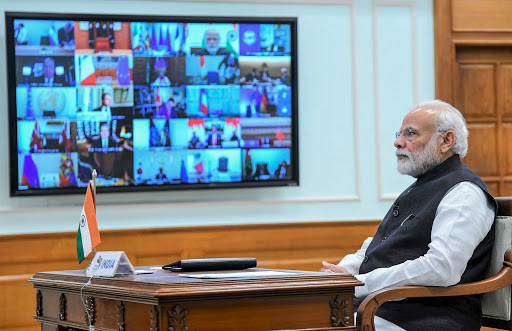
Meanwhile, Pakistan Prime Minister Imran Khan chose to stay away from the video conference of SAARC leaders initiated by PM Modi to combat coronavirus. Moreover, Khan’s representative in the meeting, Dr Zafar Mirza, who also raked up Kashmir issue in the video conference, is now himself under probe over allegations of smuggling 20 million face masks out of Pakistan.

The Rawalpindi Express may do himself good to introspect before leaving the station in a hurry.

President Kovind nominates ex-CJI Ranjan Gogoi to Rajya Sabha and ‘liberals’ and Congressis can’t keep calm

On Monday, President Ramnath Kovind nominated former Chief Justice of India Ranjan Gogoi to Rajya Sabha. Former CJI Ranjan Gogoi, the 46th Chief Justice of India, who was credited for many landmark verdicts on diverse topics like the decades-old politically and religiously sensitive Ayodhya land dispute, had retired as the chief justice of India last year on November 17. President of India nominates twelve members to the Upper House of the Parliament for a period of six years for their contribution in art, literature, science, law and social service.

His nomination to the Rajya Sabha led to a prolonged meltdown of the ‘liberals’ on social media. Aspersions were cast on the independence of judiciary.

Congress leaders also implied that the judgements were passed ‘in favour’ of the government as quid pro quo.

Gogoi’s father, Kesab Chandra Gogoi was a Congress leader and served as Chief Minister of Assam for two months in 1982.

‘Journalists’ also alleged that the nomination to Rajya Sabha is as a ‘bribe’ to Gogoi.

Congress workers were also quite ‘liberal’ fictionalising facts to sensationalise the news.

The Ayodhya verdict was delivered by a Supreme Court bench which also had justice Bobde (current CJI), justice Chandrachud (next in line to be CJI), justice Ashok Bhushan and justice S. Abdul Nazeer. The verdict was unanimous. Similarly, Rafale, too, was a three-judge bench verdict. But why let facts get in the way of a viral tweet?

Irony blatantly fawned over a politician on social media ahead of state assembly elections and got fired.

And here, irony really needs to stalk talking to the voices in her head.

In his last week of tenure as the CJI, Gogoi passed a slew of key landmark judgments pertaining to government matters, religion, politics, and the applicability of the law to his own office. He etched his name in the annals history when a five-judge bench headed by him on November 9, 2019, brought an end to the Ayodhya land dispute, which dates back to even before the Supreme Court came into existence in 1950.

The CJI also headed a bench which, by a majority 3-2 verdict, referred to a larger seven-judge bench the pleas seeking review of the apex court’s historic 2018 judgement allowing women and girls of all ages to enter Kerala’s Sabarimala temple.

Justice Gogoi’s name will also be remembered for heading a bench which gave a clean chit to the Modi government twice — first on the writ petition and then on the pleas seeking review of the December 14, 2018 verdict, in the Rafale fighter jet deal with French firm Dassault Aviation. It also censured Congress leader Rahul Gandhi for wrongfully attributing the “Chowkidar chor hai” remark against Prime Minister Narendra Modi to the top court.

The Supreme Court Bench of CJI Gogoi has also reserved its judgement on pleas challenging the constitutional validity of the Finance Act, 2017 on the ground that it was passed by Parliament as a Money Bill.

On November 13, a five-judge constitution bench, headed by Gogoi, wherein a 3:2 majority verdict, the apex court referred the broader question of whether all provisions of the Finance Act 2017 could be construed as being part of Money Bill and hence didn’t need Rajya Sabha’s approval. The Supreme Court held that a larger bench should look into the correctness of the Aadhaar judgment since the Aadhaar Act was also passed as a Money Bill.

Justice Gogoi, who was sworn on October 3, 2018, as the 46th CJI, had the tenure of a little over 13 months. On his last date at office, Gogoi circulated a parting note to journalists covering the Supreme Court, refusing one-on-one interviews. He said, “bitter truth must remain in memory.”

Former CJI Ranjan Gogoi nominated to the Rajya Sabha by the President

President Ram Nath Kovind has nominated Former Chief Justice of India, Ranjan Gogoi, to the Rajya Sabha.

The Ministry of Home Affairs, in a gazetted notification, said: “In exercise of the power conferred by sub-clause (a) of clause (1) of Article 80 of the constitution of India, read with clause 3 of that article, the president is pleased to nominate Shri Ranjan Gogoi to the council of states to fill the vacancy caused due to the retirement of one of the retired member”.

Gazette notification

Former CJI Ranjan Gogoi, the 46th Chief Justice of India, who was credited for many landmark verdicts on diverse topics like the decades-old politically and religiously sensitive Ayodhya land dispute, had retired as the chief justice of India last year on November 17.

In the last week of his tenure, Gogoi passed a slew of key landmark judgments pertaining to government matters, religion, politics, and the applicability of the law to his own office. He etched his name in the annals history when a five-judge bench headed by him on November 9, 2019, brought an end to the Ayodhya land dispute, which dates back to even before the Supreme Court came into existence in 1950.

The CJI also headed a bench which, by a majority 3-2 verdict, referred to a larger seven-judge bench the pleas seeking review of the apex court’s historic 2018 judgement allowing women and girls of all ages to enter Kerala’s Sabarimala temple.

Read: Read full details: CJI Ranjan Gogoi bats for NRC, slams media and ‘arm-chair commentators’ for their skewed reportage

Justice Gogoi’s name will also be remembered for heading a bench which gave a clean chit to the Modi government twice — first on the writ petition and then on the pleas seeking review of the December 14, 2018 verdict, in the Rafale fighter jet deal with French firm Dassault Aviation. It also censured Congress leader Rahul Gandhi for wrongfully attributing the “Chowkidar chor hai” remark against Prime Minister Narendra Modi to the top court.

The Supreme Court Bench of CJI Gogoi has also reserved its judgement on pleas challenging the constitutional validity of the Finance Act, 2017 on the ground that it was passed by Parliament as a Money Bill.

On November 13, a five-judge constitution bench, headed by Gogoi, wherein a 3:2 majority verdict, the apex court referred the broader question of whether all provisions of the Finance Act 2017 could be construed as being part of Money Bill and hence didn’t need Rajya Sabha’s approval. The Supreme Court held that a larger bench should look into the correctness of the Aadhaar judgment since the Aadhaar Act was also passed as a Money Bill.

Justice Gogoi, who was sworn on October 3, 2018, as the 46th CJI, had the tenure of a little over 13 months. On his last date at office, Gogoi circulated a parting note to journalists covering the Supreme Court, refusing one-on-one interviews. He said, “bitter truth must remain in memory.”

Shaheen Bagh ‘protestors’ to defy coronavirus advisory, circumvent Delhi govt prohibitions by using loopholes: Reports

The Shaheen Bagh ‘protestors’ have refused to follow the containment orders and decided not to curl off their protest even after the Delhi Chief Minister Arvind Kejriwal has ordered that the protestors must comply with the ban on gatherings of over 50 people.

As per a report by Times now, a faction of Muslim protestors gathered there have said that a meeting has taken place where it has been decided that they would not end the protest, instead spilt themselves into groups of 50 and take precautions by sitting at a certain distance.

Another meeting is expected to take place soon after which the ‘protestors’ will take a final call.

The media coordinator of the Shaheen Bagh protest, Qazi Emad, said the protesters respect the ban imposed by the government at cinema halls and events such as IPL. “But those are a form of entertainment whereas our agitation is about our fight for survival. It cannot be compared,” Emad said. As per a statement released by the ‘women of Shaheen Bagh’, they are in talks with the legal and medical experts to see how they could take the ‘protests’ forward.

Moreover, advocate Anwar Siddiqui, a member of their legal team had also said: “We will not take any decision on the protest unless the Supreme Court directs us to do so.”

Earlier in the day, the Delhi Chief Minister Arvind Kejriwal had invoked the Epidemic Diseases Act of 1897 and declared a new set of bans to limit the spread of the highly contagious disease.

In the press release, the AAP supremo announced a complete ban on social, religious and political gatherings of more than 50 people in the national capital. The ban, effective immediately, will also be applicable on Shaheen Bagh ‘protest’ site where Muslim women have been sitting on a ‘protest’ against the amended Citizenship Law for the past three months now, had said the Chief Minister.

Disregarding the government appeal to avoid large gatherings and crowded places, the Shaheen Bagh protestors have been recklessly continuing with their demonstration. They have apparently been praying and reading the Quran at the protest site, believing that praying to Allah would safeguard them from the coronavirus crisis. And now they seem to have found a loophole to circumvent the advisory to continue with their road blockade.

The Delhi government had last Friday ordered a ban on any gathering of more than 200 people, including sports events such as the Indian Premier League (IPL). The government has also shut all cinema halls, schools and colleges till March 31.

For about three months now, protesters in Shaheen Bagh have blocked one of the busiest thoroughfares in the national capital in protest against the enactment of the Citizenship Amendment Act that intends to grant citizenship to a persecuted minorities from the neighbouring countries of Pakistan, Bangladesh and Afghanistan. The blockade of the road is causing massive inconvenience to lakhs of daily commuters who now have to circumvent the blocked road to reach their destination.

In addition, there have been allegations that the protesters at Shaheen Bagh are treating it as an independent enclave, with strict regulations enforced in allowing on who joins them in their protest based on their ideological inclinations.

The apex court, last week, stated that Shaheen Bagh protesters cannot carry out indefinite protests in common area inconveniencing people for eternity. It also issued notices to the Centre, Delhi government and the Delhi Police on the pleas seeking removal protesters from Shaheen Bagh. But the ‘protestors’ have refused to vacate the spot unless CAA is repealed.

Bihar: FIR filed against Chinese President Xi Jinping and Chinese Ambassador to India for the spread of coronavirus, court to hear the matter on April 11

In the wake of the coronavirus outbreak in India, a lawyer in Bihar’s Muzaffarpur has filed an FIR against the President of the People’s Republic of China, Xi Jinping and the Chinese ambassador to India for allegedly spreading coronavirus across the world. Advocate Sudhir Kumar Ojha cited a book written in 1981 to reinforce his stand that China has hatched a conspiracy to disseminate the novel coronavirus in the world.

The matter has been listed by the court to be heard on April 11. Informing about the development, advocate Ojha said, “A book was published in 1981 in which it was written in clear terms that China is surreptitiously preparing a virus in Wuhan which has manifested in the form of coronavirus today. China has deliberately spread the virus through a conspiracy and a lot of people have contracted the virus, while many others have died of it. In this regard, I have filed a case of abetment under Section 120(B)(criminal conspiracy to commit an offence) and Section 270(malignant act likely to spread disease) against Chinese Premier Xi Jinping and the Chinese Ambassador to India Sun Weidong in the Muzaffarabad court. The court has taken the matter seriously and granted a hearing on the case on April 11.”

Coronavirus pandemic is believed to have emerged from one of the streets of the wet markets in the Chinese central city of Wuhan. The contagion spread like a wildfire across the world, affecting about 1,75,000 people globally and has so far claimed lives of more than 6600 people across the globe. The spread of the pandemic in India is so far under control, with about 115 cases reported from the across the country so far. Several state governments and local authorities have endorsed social distancing and ordered closures of public places to curtail the spread of the virus.

It is pertinent to note that the case against the Chinese President was filed by one Sudhir Kumar Ojha who had previously sought to slap a sedition case against Pakistan Prime Minister Imran Khan. He wanted Khan to be tried for waging a war against India and his speech at the UNGA. A serial litigant, Ojha is known for dragging multiple celebrities to court over issues as diverse as obscenity in Bollywood movies and junk food ads. Recently, Ojha had filed a case against self-proclaimed ‘historian’ Ramchandra Guha, actor Konkana Sen Sharma, Shyam Benegal, and other 46 celebrities for writing a letter to PM Modi highlighting the rising intolerance in the country.

In 2006, Ojha filed a complaint against MNS chief Raj Thackeray for calling Chhat festival as “drama”. Ojha claims that a warrant was issued against Raj Thackeray and he had to procure bail from the apex court. The matter is still in the Delhi High Court, he claims. In 2007, he filed a case against the makers of movie Dhoom 2 for promoting obscenity by the film through a kissing scene in the movie. Ojha had also filed a case against Bollywood superstar Amitabh Bachchan in 2013 for encouraging consumption of Maggi which he termed was hazardous to health. The PIL was, however, rejected by the court. Another case was lodged by the serial litigant against former PM Manmohan Singh and former West Bengal CM Buddhadeb Bhattacharjee for their alleged remarks claiming that the Ram Setu between Tamil Nadu and Sri Lanka was a natural structure and not man-made.

Note: The earlier version of the report wrongly mentioned it as Muzaffarabad, Uttar Pradesh instead of Muzaffarpur, Bihar. The error is regretted.

Why Coronavirus suspects ‘escaping’ hospitals is a worry. Here is how just 1 person caused massive spread in South Korea

States and communities across the world are enforcing strict measures to curtail the spread of the novel coronavirus. With the vaccine/antidote of the virus yet to be prepared, the most effective means suggested by the infectious disease experts and epidemiologists to reduce its alarming expansion is “social distancing” and placing those who have contracted the virus in quarantine.

While citizens are expected to assist their respective governments in containing the proliferation of the contagion, there are a few cases in which the victims who tested positive for coronavirus have defied the measures and fled away from the hospitals, potentially sabotaging their country’s efforts to keep the virus at bay.

In one of such cases where victims exhibited flagrantly irresponsible behaviour, 11 persons suspected of coronavirus infection fled from a hospital in Maharashtra’s Navi Mumbai. They were kept in isolation and their test results were awaited. Their escape is a matter of great concern, considering that even if 1 of the 11 patients turns positive, he/she stands to infect hundreds of others who might inadvertently catch the disease after coming in contact with the victim. Earlier, another 4 people suspected of being affected by coronavirus had fled from an isolation ward in Nagpur.

The immensity of the danger posed by coronavirus victims fleeing quarantine is encapsulated by the meteoric rise of outbreak in South Korea, enabled by a coronavirus patient who refused to employ social distancing and now believed to have engendered 80 per cent of the total coronavirus cases in the country.

The rise of the zoonotic contagion, which is believed to have emerged from one of the wet markets in the central Chinese city of Wuhan, was limited and controlled in South Korea until the 31st patient who chose to disregard the measures suggested by the government authorities and acted as vector in the spread. The patient, now accused of being a super spreader, said to have transmitted the virus to at least 1160 people, setting off a chain event and fundamentally altering the coronavirus outbreak in South Korea.

According to a Reuter report, the 31st patient, a woman checked into the Oriental medicine hospital after having met a minor traffic accident in Daegu. While she was at the hospital, she overlooked repeated insistence from the doctor to get tested for coronavirus despite her worsening fever. In between, she attended services at Daegu branch of Shincheonji Church of Jesus and attended a buffet lunch with one of her friends. After her symptoms aggravated further, she visited another hospital for coronavirus test and was declared as country’s 31st case. However, before long, the outbreak snowballed with several others in hundreds tested positive at Shincheonji church and nearby areas.

It is notable to mention that the 31st patient of the coronavirus was a patron of the Shincheonji Church of Jesus, a Christian sect with secret religious practises. It is also accused by the South Korean authorities for the uncontrollable surge of coronavirus patients in the country. Speculations are rife that the death cult had actively participated in disseminating the intractable contagion.

The 36-year-old death cult-Shincheonji Church is led by an octogenarian named Lee Man-hee, who fancies himself the new “messiah” and the leader of a South Korean sect whose teachings are based on his unique interpretation of the biblical texts. In addition, members of the Shincheonji cult are forbidden from fearing diseases, wearing face masks, skipping meetings, and are ordained to pray together in close-knit circles.

Furthermore, it is claimed that Shincheonji Church is based on eschatology- a theological concept concerning death, judgment and the final destiny of the soul and of humankind. Many believe that the cult is not simply biding its time for the Judgment Day, but it is actively seeking ways and means to pursue it. It is, therefore, believed by many that the virus was deliberately spread by the cult.

The investigators in South Korea are planning to criminally charge 12 executives of the controversial Shincheonji Church of Jesus for the rapid spread of COVID-19 in the country, the disease that results from the coronavirus, France 24 reports. The authorities suspect that the cult’s extreme and exclusionary teachings might be one of the motivations for its adherents to defy law and partake in spreading the virus. The sect’s head, Lee, in what appears as an admission of guilt, had tendered his apology for the spread of the disease and asked his patrons to get themselves tested for virus if possible.

The wilful negligence observed even by just one of the coronavirus patients in a populous country like India can spell doom for the whole nation, pushing it in the bottomless abyss of deteriorating public health crisis.

TADA court frames charges against Yasin Malik and 6 others in the murder of IAF officials

The Special TADA court of Jammu has framed charges against the banned terrorist organization Jammu Kashmir Liberation Front(JKLF) chief Yasin Malik in the case pertaining to the murder of four Air Force officers in January 1990. Malik has been charged under sections Ranbir Penal Code (RPC) 302, 307, TADA Act, Sections 3 (3) and 4 (1) of the Arms Act.

According to public prosecutor Rakesh Singh, who is representing the Central Bureau of Investigation, Yasin Malik and Showkat Bakshi and five others have pleaded not guilty and demanded a trial. The court will be listed on March 30, he informed.

Shalini Khanna, the widow of one of the slain Air Force officials- Squadron leader Ravi Khanna, believes that justice will finally be served to her and the families of the IAF officials killed by Yasin and his associates. She had been relentlessly pursuing the case against her husband’s murderers for last 3 decades. Shalini claims that she has been an eyewitness of the atrocity meted out against the 4 IAF personnel. She stated that the 4 IAF officers including her husband Ravi Khanna, were shot dead in front of her eyes by Yasin Malik.

Last year, Khanna said, “Yasin Malik not only killed Squadron Leader Ravi Khanna but also murdered my mother-in-law, my father-in-law and my mother. Childhood of my two small children was lost and our happiness was snatched away from us.”

The TADA court had earlier observed that there is enough prima facie evidence against the JKLF chief Yasin Malik for prosecuting him in connection with the murder of IAF personnel in Kashmir in 1990. The court had stated that there are “sufficient grounds for drawing presumption that the accused Yasin Malik” and others have “prima facie have committed” the crime of murdering Indian Air Force (IAF) officer Squadron Leader Ravi Khanna and three others.

On 25 January 1990, at 7:30 am a group of JKLF terrorists had opened fire at 40 Air Force personnel who were unarmed and waiting at the Sant Nagar crossing, Srinagar, to board a bus. As a result, 40 of the unarmed Air Force personnel were injured, and two of them had lost their lives. CBI filed a charge sheet on August 31, 1990, against terrorist Yasin Malik and other members of JKLF under Section 120-B read with section 302 of RPC, sections 3 and 4 of TADA and Section 27 of arms act in the court of third additional sessions judge against the accused.

Malik is currently lodged in Tihar Jail after the National Investigative Agency(NIA) arrested him in a terror funding case.

Delhi anti-Hindu riots: AAP Councillor Tahir Hussain sent to 4-day police custody in Ankit Sharma murder case

The Delhi Police on Monday arrested suspended Aam Aadmi Party (AAP) councillor, Tahir Hussain, from a court in Delhi in connection with the brutal murder of IB sleuth Ankit Sharma during the recent anti-Hindu riots in northeast Delhi. He has been sent to 4-day police custody.

Chief Metropolitan Magistrate Pawan Singh Rajawat sent the AAP leader for interrogation after police sought his custody for five days. The court, while granting four-day police custody, said: “I find force in the submissions of the IO that to unearth the conspiracy which led to the riots and massive loss of life and property, police remand is required.”

The Delhi police on Monday told the court, that they required Hussain’s custody to “unearth the conspiracy behind the riots which led to the murder of Ankit Sharma and identify other members from the mob”.

Hussain’s lawyers had opposed the police demand, stating that identifying the other accused and recording Hussain’s confession could not be a ground for remand. The Delhi police had filed a case against the AAP leader under Section 302(a) for murder, in the Dayalpur police station of Delhi.

The role of Aam Aadmi Party leader Tahir Hussain in the brutal murder of Intelligence Bureau(IB) employee Ankit Sharma and also inciting riots in the Delhi has now been under scanner.

The dead body of an Intelligence Bureau constable was recovered from a drain in North East Delhi amidst anti-Hindu riots in the national capital. Ankit Sharma, who lived in Chand Bagh, was returning home on Tuesday evening when he was allegedly attacked by a violent mob on the Chand Bagh bridge and beaten to death. The Muslim mob had thrown his body into a drain.

The family of the deceased Ankit Sharma had accused AAP leader Tahir Hussain and his Muslim mob of dragging their son and brutally murdering him.

A day after Sharma’s family alleged his role in the riots and his murder, many crates of petrol bombs and stones have been found on the rooftop of the AAP leader.

Addition to that, in the anti-Hindu riots that erupted in North East Delhi earlier this week, AAP leader Tahir Hussain has emerged as one of the main perpetrators. Many videos have emerged which show hundreds of people throwing stones, petrol bombs from the roof of his building. Other videos show Tahir Hussain allegedly himself supervising the stone and petrol bomb pelting from his building, with a lathi in his hand.

Nirbhaya case: Ahead of hanging, 3 convicts approach International Court of Justice, family members of convicts demand euthanasia

The twists and turns in the Nirbhaya case are far from over as three of the convicts have now approached the International Court of Justice seeking stay on execution. A Delhi court on March 3 had issued a fresh death warrant to all four convicts in the 2012 Nirbhaya gangrape and murder case. The order by the court stated that all four convicts should be hanged on March 20, at 05:30 am. Three of the four convicts, Akshay, Pawan and Vinay have sought stay on execution.

Moreover, just 5 days before the scheduled execution, the families of the convicts on appealed to President Ram Nath Kovind to grant the convicts a death by euthanasia (mercy killing). Reportedly, two letters had been written by family members of Mukesh while 3 letters were written by Akshay’s family. Four letters each were sent to the President, by Mukesh and Vinay’s family members.

On Sunday, the Tihar Jail authorities had asked hangman Pawan Jallad to report by 17th March, three days, prior to the date of execution. Dummy executions would also be conducted after his arrival. Regular counselling and health checkups are also being provided to the convicts.

Earlier, the families of the Nirbhaya rape case convicts had gathered outside the Patiala House Court in Delhi pleading for the rapists and murderers not to be hanged. One of the placards claims that the Nirbhaya case had gained traction because of a conspiracy hatched by ‘Deshdrohi’ Arvind Kejriwal, the Chief Minister of Delhi. Another placard told Ramnath Kovind, the President of India, that he would incur the sin of ‘Brahma Hatya’ if ‘Brahmin’ Vinay Sharma was hanged to death. That particular placard was raised by one Mukesh Jain, the chief of one ‘Dara Sena’.

The 23-year-old physiotherapy intern, who is known as “Nirbhaya” was gang-raped and savagely assaulted by six men (5 adult and one juvenile) on the night of December 16, 2012, in a moving bus in South Delhi. She succumbed to her injuries and died a fortnight later in a Singapore hospital. The execution of the convicts has been postponed several times due to shrewd exploitation of loopholes in the law.

Coronavirus: Case registered against 79 people for gathering to welcome Bigg Boss Malayalam contestant at Cochin airport

Authorities at Cochin have registered a case against 75 unknown persons and 4 others who had gathered at the Cochin International airport on Sunday night to welcome Bigg Boss Malayalam Season 2’s most popular contestant Rajith Kumar.

The charges were invoked for violating the ban on mass gathering issues by the airport authority in the backdrop of coronavirus pandemic.

Ernakulam district collector S Suhas also took to his official Facebook page and informed about a “Case being registered against four known persons and 75 unknown people.” 

In the Facebook post, he wrote in Malayalam that this act by a fans association of a TV show is shameful for every Malayali, at a time when the whole world is taking precautions against the coronavirus outbreak. “The law cannot close its eyes against such blatant breaking of the rules when religious, political and social groups are all avoiding every kind of gathering as part of the precautions to keep the people safe,” he wrote. He further stated that such star worship is generally not part of Malayali culture.

Screenshot of Ernakulam district collector S Suhas’s post on his official Facebook page

As a precautionary measure to prevent the spread of Coronavirus, Cochin International Airport Limited (CIAL) had banned gatherings at both terminals of the airport but hundreds of fans thronged the Cochin airport last night, around 9 pm to welcome Rajith, the reality show contestant.

Rajith Kumar, a lecturer, has been in the news for many of his misogynist and controversial statements. He was one of the contestants of season 2 of Bigg Boss Malayalam hosted by actor Mohanlal. He had to face an unexpected ouster from the show after he applied chilli paste onto the eyes of one of his fellow contestant, Reshma.

With the addition of two fresh cases reported March 15, Kerala’s active coronavirus cases have touched 21. Including the earlier three discharged cases, the state’s total would reach 24.

Due to the increasing number of Covid-19 cases, panic has set in. People have been evading tests, hiding travel histories and fleeing hospitals, which in turn is making the situation worse. In one such case, a couple (in their 50s) and their son(24) who hail from Ranni in Pathanamthitta district of Kerala with recent travel history to Italy evaded health screening at the airport and were reluctant to get admitted at the hospital initially. They have tested positive for coronavirus.

The State of Kerala has declared Health Emergency due to COVID-19 novel coronavirus, cancelling all the public functions for a month. Government has requested cinema halls to stop their operations for the time being. In his press conference, the CM also requested the people to refrain from attending all public functions, festivals and weddings where a large number of people gather. He also requested people to conduct rituals keeping them limited at home.

According to the latest figures available on March 16 (Monday), the total number of positive cases of Coronavirus in India has soared up to 110 as per the Ministry of Health and Family Welfare. Two deaths have been reported in Kalaburagi and West Delhi respectively. 

Taking into consideration the rising number of Coronavirus cases, the Central Government on March 14 decided to treat the deadly virus as a “notified disaster.”