The Child helpline number in India received as many as 92,000 distress calls asking for protection against domestic violence and abuse in the first 11 days of the nationwide lockdown period, imposed to contain the spread of the deadly Wuhan coronavirus in the country.
The data was reportedly shared in an online outreach event organised by the Ministry of Women and Child Welfare, led by Smriti Irani. The outreach programme was organised to orient functionaries and organisers working with vulnerable groups.
Harleen Walia, deputy director of Childline India revealed that the CHILDLINE 1098 helpline for children had received 3.07 lakhs calls in between March 20-31, the first week of lockdown, and 30% of these calls (92,105 calls in total) have pleaded protection from abuse and violence against children, as per reports.
Harleen Walia further added that the number of calls increased by 50% after the mandatory 21 days lockdown was announced on March 24.
This data was shared on Tuesday during an orientation workshop for district-based child protection units and attended by senior Women and Child Development ministry officials.
India has been put under complete lockdown, a mass effort to save lives from the deadly infection, but what is being seen as a downside of this lockdown is that it has left the vulnerable group at risk. Even though we seem to have progressed, this confinement is throwing up the ‘real’ mindsets of partners.
The National Commission for Women (NCW), which receives complaints of domestic violence from across the country, has recorded more than twofold rise in gender-based violence in the national Coronavirus lockdown period. The total complaints from women rose from 116 in the first week of March (March 2-8), to 257 in the final week (March 23-April 2), including 69 domestic violence complaints by the women.
“Domestic violence cases have doubled than what it was before the lockdown. The cases of domestic violence are high in Uttar Pradesh, Bihar, Haryana and Punjab,” says NCW chief Rekha Sharma.
The main reason for the rise of domestic violence, she says, is that the men are at home and they are taking out their frustration on women and they refuse to participate in domestic work. Women are also confined within the four walls of the house and they cannot share their grief with anybody.
The victims are also scared of complaining to the police as they fear repurcussions. Sharma says: “Most of the complaints are coming via email. My team is working 24/7 and we are shifting the victims to hostels or help them to reach their parents’ home.”
Complaints of rape or attempted rape have also risen sharply from two to 13, while cases of domestic violence have increased from 30 to 69 over the same comparative period.
Delhi Sikh Gurudwara Management Committee(DSGMC) has offered its functional 50 bedded Guru Harkishan Hospital and the six-story 500 bedded hospital building Gurudwara Bala sahib for isolation or treatment of Wuhan coronavirus positive or suspected cases to the state government of Delhi, says DSGMC President Manjinder S Sirsa.
Delhi Sikh Gurdwara Management Committee (DSGMC) offers its functional 50 bedded Guru Harkrishan Hospital&6-storey 500 bedded hospital building for isolation/treatment of #COVID19 positive/suspected patients at Gurdwara Bala Sahib to Delhi Govt: Manjinder S Sirsa, President DSGMC pic.twitter.com/hfjho9uVvB
In a letter to Delhi’s Chief Minister Arvind Kejriwal, DSGMC president Manjinder Singh Sirsa said the Delhi government is developing infrastructure including hospitals to face an exponential rise in COVID-19 patients and converting even hotels and banquet halls into health facilities for the purpose of isolation treatment and quarantine.
“It is also stated that DSGMC is running many polyclinics and hospitals to deliver quality health care to the needy population of Delhi for the past several decades. Guru Harkrishan hospital, a fifty bedded multidisciplinary hospital with an intensive care unit is also functional at Gurudwara Bala Sahib.”
The letter added further, “A 500-bedded six-storey building of Guru Harkrishan Institute of Medical Science located in the 11-acre compound of Gurdwara Bala Sahib in Sunlight colony. The use of the proposed state of the art health facility to fill the existing gap between the health resource available and required will work in the nation’s interest.
The letter further added that the coronavirus crisis is a tough time for humanity and we all need to work together.
Earlier today, 20 hotspots of coronavirus spread were sealed off in Delhi. Out of the 669 coronavirus cases in Delhi, 426 are linked to the Tablighi Jamaat event alone. The Delhi government has made masks mandatory for people when venturing out.
The shocking act of discrimination against minorities continues unabated in the terrorist state of Pakistan even at the time of global epidemic as certain families belonging to the religious minority communities have been denied ration.
According to the reports, the religious minorities, especially Hindus and Christians, are facing extreme discrimination in Pakistan during the ongoing global pandemic coronavirus crisis. It is being alleged Hindus and Christian minorities are not being given food supplies by authorities, claiming that they are meant for the Muslims.
In one such incident, while distributing ration to needy people in Karachi’s Korangi area, inhabitant Christians were allegedly forced to recite “Kalma Tayyaba” as a pre-condition to get ration from the local administration. As they refused, the Christians were denied the required essentials.
“Kalma Tayyaba” is the basic tenet of Islam. Reciting the holy verse is mandatory for Muslims and anyone embracing or being converted to Islam recites Kalma Tayyaba.
“They did not give us ration and said that you will get ration only after you will chant ‘La Ilaha Il-Allah Muhammadur Rasul Allah’. We told them that we will not chant. They denied us ration and asked us to leave,” said a Christian woman.
Hindus and Christians have allegedly been informed that they are not eligible for food supplies since it was only meant for Muslims. Hindus in Liyari, Sachal Ghoth and other parts of Karachi as well as all over Sindh are reportedly being denied a share in government food and rations as they belong to minority communities.
The Sindh Government had issued orders to local NGOs to distribute ration to poor daily-wage workers and labourers. However, the Hindus and Christians were singled out and denied their fair share of the ration by a Karachi-based NGO, Saylani Welfare Trust.
Meanwhile, the total number of coronavirus cases in Pakistan has sharply increased to 4194 while the death toll has reached 60.
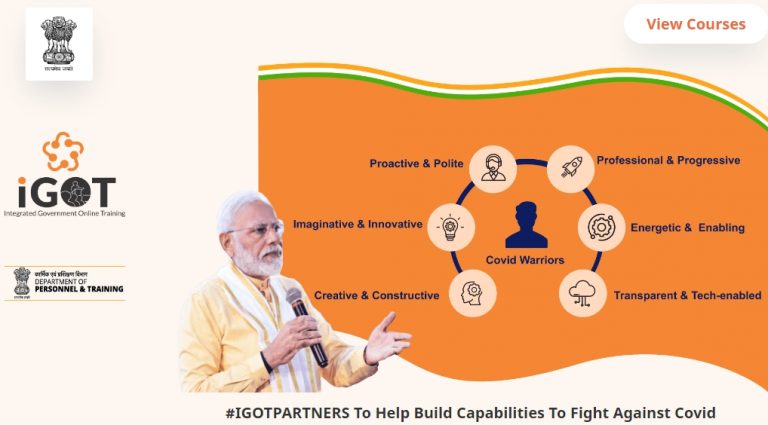
The Government of India has launched a training module “Integrated Government Online Training” (iGOT) for the management of COVID-19. iGOT is a portal available on the Ministry of Human Resource Development’s (MHRD) DIKSHA platform for capacity building of frontline workers in handling the Wuhan coronavirus epidemic efficiently.
The DIKSHA portal has been “retrofitted” to the purpose requested by the Central government’s Empowered Group chaired by Arun Panda, secretary in the Ministry of Micro, Small & Medium Enterprises. This particular group forms a part of the 11 such groups formed to deal with the COVID-19 pandemic by the Home Ministry under the Disaster Management Act.
A statement issued by the Department of Personnel and Training says that India faces a significantly higher threat from COVID-19 pandemic. “India’s first line of workers is already engaged in COVID relief and doing commendable job. However, a larger force will be needed to replace the first line and to tackle the exponential or geometric increase in positive COVID cases in the subsequent stages of the pandemic. Accordingly, to take care of the training needs of the frontline workers, the launch of the iGOT platform has been fast-forwarded, and using the MoHRD DIKSHA as a host, has been retro-fitted to the purpose”, the statement says.
The courses of iGOT have been launched for doctors, nurses, paramedics, hygiene workers, technicians, Auxiliary Nursing midwives(ANMs), state government officers, civil defense officers, various police organizations, National Cadet Corps, Nehru Yuva Kendra Sangathan, National Service Scheme, Indian Red Cross Society, Bharat Scouts, and guides and other volunteers.
The iGOT platform delivers curated, role-specific content, to each learner at their place of work or home and to any device of their choice. The iGOT portal has courses on various subjects like Psychological care of patients with COVID-19, infection prevention through PPE, Quarantine and Isolation, ICU Care and Ventilation Management, Infection Prevention and Control, Laboratory Sample Collection and Testing etc, apart from onboarding training modules for various roles.
The platform will provide the training modules on flexitime and on site basis so that the COVID response can be delivered at scale for the workforce needed to tackle the pandemic. The iGOT platform is customized for the fight against the Coronavirus pandemic and provides a one-stop source for the frontline warriors to learn about critical areas and update their knowledge and capacity.
The portal can be accessed through desktop and mobile phones, making it accessible for all.
As the country’s health workers are doing the commendable job in combatting the virus, this portal came up to build their capacity. However, a large force will be needed to tackle the exponential or geometric increase in the positive Wuhan coronavirus cases in the various stages of the pandemic.
The total number of coronavirus cases in India has reached a mark of 5734, while 166 people have been reported dead. 472 people have been recovered and discharged, as per the Union Health Ministry.
Tablighi Jamaat members were accused of misbehaving with the nurses, taking their pictures and threatening to make them go viral on social media in an insolation centre in Saharsa hospital in Bihar.
As per reports, three suspects of Wuhan Coronavirus infection who attended the Nizamuddin Markaz Tablighi Jamaat were admitted to the isolation center of Saharsa Sadar hospital. As per reports, some members misbehaved with nurses for over an hour. In a video that has gone viral on social media, one can clearly see the Jamaatis misbehaving with nurses.
After the hospital administration informed the district administration, police swung into action. Sadar SDPO Prabhakar Tiwari and Sadar police station in-charge Rakesh Kumar Singh reached the hospital for examination. The nurses on duty had informed the police officer about the incident. The police seized the mobile phone of the accused and warned if the incident is repeated then they will be sent to jail.
After the warning, they started behaving well. Later they tested negative for coronavirus and were discharged on Wednesday from the isolation centre.
Earlier, reports had emerged where Tablighi Jamaat members had misbehaved with in nurses in UP. Some members reportedly walked around naked making lewd gestures at the female healthcare workers. An FIR was also registered against them.
The Coronavirus pandemic has unleashed a mob of activists and what one would call the elite-brigade, who are otherwise occupied with full-time protests, to theorise on what the government should or should not have done to control the spread of the disease. These activists mainly focus on what the government did ‘wrong’, which is pretty much everything per their worldview, that revolves around unbridled hatred for Prime Minister Modi. At the same time, they shield the super-spreaders of Tablighi Jamaat simply because it is their religion that mandated them to defy lockdown, spit and defecate in corridors etc, maintain studios silence when the world takes note and praises the efforts by the Prime Minister to get a handle on the global pandemic and sit at homes, looking pretty, not moving a finger to help the ones they seem so concerned about. One such full-time protestor and part-time actress is Nandita Das.
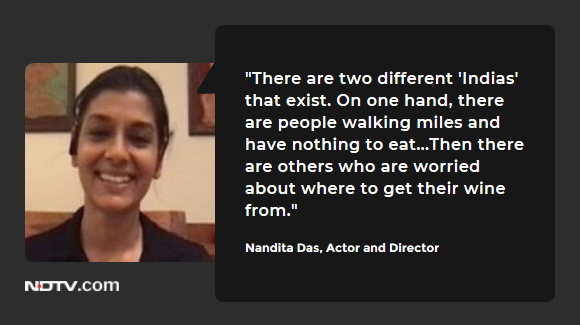
Speaking to NDTV, Nandita Das recently said in respect to how the Coronavirus lockdown has impacted migrant labourers, that there exists two Indias, one where people are walking miles to get home and food, and the other, where people are wondering where to get their wine from.
While there is nothing wrong with the statement made by Nandita Das per se, as the great divide certainly does exist, considering the source of this statement one can only chuckle and wonder what it takes to be a hypocrite on so many levels, so blatantly and openly.
While Nandita Das likes to fashion herself as a frugal activist who identifies with the poor masses and it her, her statement becomes hypocritical because she is exactly the kind of wine-sipping elite who likes to talk about the poor from the comfort of her own home, curse everyone for their plight and do nothing herself.
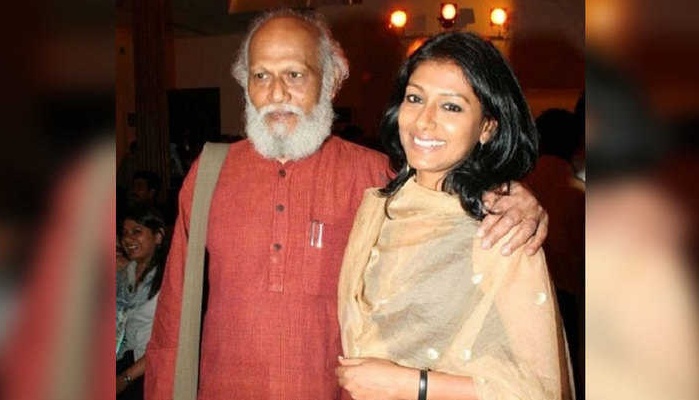
Nandita Das’ father, Jatin Das, who is a famous painter, presumably doing very well for himself, was actually squatting in a government flat until he was served an eviction notice. The father of the women who like to talk about the downtrodden was staying in government accommodation illegally for years when originally the flat was only allotted for 3 years.
It is rather interesting that while Nandita Das waxes eloquent on the plight of the poor, she was using the taxpayer’s money to squat in a government property while her family was more than capable of paying for their own accommodation and had no need to leech off public money.
Jatin Das, Nandita Das’ father, was living in the Asian Games village flat for 26 years. He was meant to use it only for 3.
There are indeed two Indias that exist, but what the media or even Nandita Das herself refuses to acknowledge is that these are the people who belong to the category that wonder where their next bottle of wine is going to come from.
While such wine-sipping elites indulge in blatant poverty-porn, the very people who they abuse have been toiling hard to ensure that the poor man gets food on his plate while the country collectively tries to fight the Wuhan Coronavirus pandemic.
Similar to the RSS, its affiliated organisation, Sewa Bharati, has also been working relentlessly, extending a helping hand to the marginalised at the time of this crisis.
The organisation Sewa Bharati is headquartered in Delhi, from where the relief work is being carried out across the country. From distributing food packets to manufacturing masks at war footing and reaching out and distributing at places facing a scarcity to distributing bed sheets and blankets to providing basic medicines, Sewa Bharati cadres have been in the forefront in extending crucial help to the needy at the time of this pandemic. Moreover, almost 2.10 lakh cadres have been reaching out to the remotest corners of the country in order to extend their assistance.
According to the All India general secretary of ‘Sewa Bharti’, Shravan Kumar, the organization does not see which state are they working in or what is the caste-religion or identity of the person who needs help. He told that the organization is specially engaged in reaching places where even government assistance has not reached.
There are 2.1 lakh volunteers engaged in work across the country under the banner of ‘Sewa Bharati’. The organization has contact with a total of 1200 institutions in India and is working closely with all of them. Together with these 1200 institutions, it is being ensured that no area across the country is missed at the time of this pandemic.
Shravan said that he has direct access to almost 26 lakh people, who are being provided with food by the organisation.
The RSS too stepped in and started helping the authorities. They distributed food, masks and even cleaned the dirty hospitals and quarantine facilities to ensure that the country can fight the pandemic effectively.
Nandita Das is right. There are indeed two Indias. In fact, there are three Indias. One, where the labourers struggle to make ends meet. The other where volunteers like those from the RSS, Sewa Bharati and several good samaritans come forward in the time of pandemic to ensure that those living in the first India are taking care of, and a third India – where people like Nandita Das and her father mooch of government money and then talk about helping the poor and needy.
It is indeed the bane of the country that such hypocrites are considered credible voices by media houses that have a vested interest in projecting the worse about a country of 1.3 billion people, pulling together in solidarity to fight one of the greatest pandemics witnessed by the world.
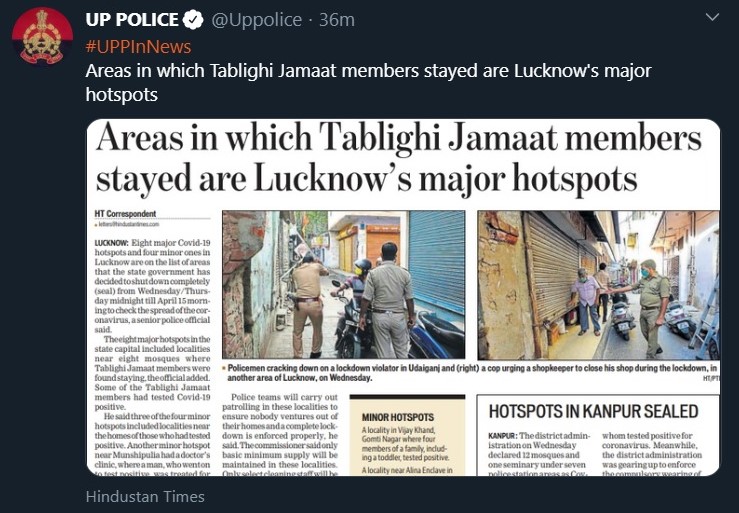
The major hotspots for the spread of the Wuhan Coronavirus in Lucknow, the capital of Uttar Pradesh, are areas where Tablighi Jamaat members stayed in, Uttar Pradesh Police said on Thursday on Twitter while sharing the image of a report by the Hindustan Times. The eight major hotspots included localities near eight Mosques where the members of the Islamic missionary organization were found staying the report said.
Source: Twitter
Three of the four minor hotspots were near the homes of those who had tested positive. Lucknow Commissioner of Police Sujeet Pandey said, “All the hotspots in the city are already barricaded and are being sealed completely till the morning of April 15. All establishments will be closed in these localities and the media’s entry too will be restricted.” As per reports, only the supply of basic minimum essential commodities will be maintained in these hotspots and only selected cleaning staff will be allowed to enter. Police teams will carry out patrolling in these localities to ensure that the orders are not violated and everyone stays in their homes.
The Uttar Pradesh government had decided to seal off the hotspots in 15 districts completely to stop the spread of the Wuhan Coronavirus, announcing curfew-like restrictions in these places. The government assured that it will ensure the doorstep delivery of essential items such as vegetables and milk in these clusters. Passes which were issued earlier to ensure the movement of essential commodities in the regions have been cancelled.
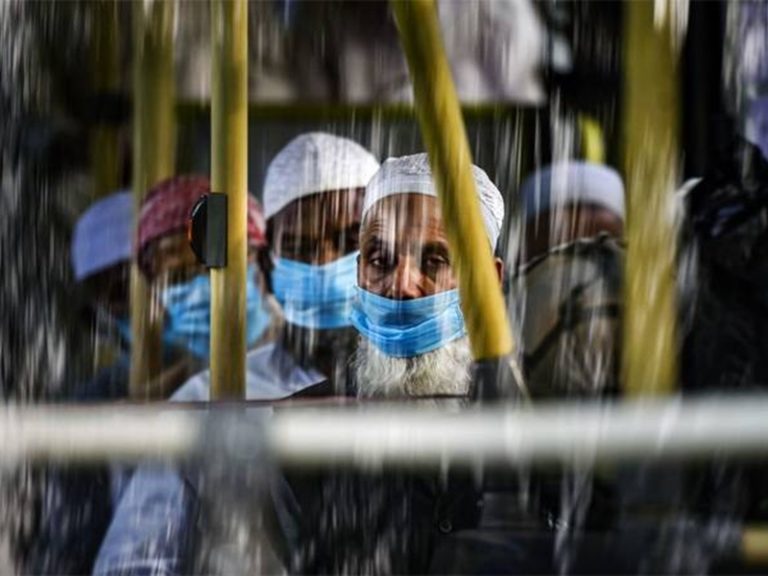
Tablighi Jamaat has played an immense role in the spreading of the Wuhan Coronavirus across the lengths and breadths of India. States which had previously not registered cases of the virus saw people associated with the event at Markaz Nizamuddin of Tablighi Jamaat testing positive for the Wuhan Coronavirus. The Islamic missionary organization has received widespread criticism for its reckless conduct in the wake of the pandemic.
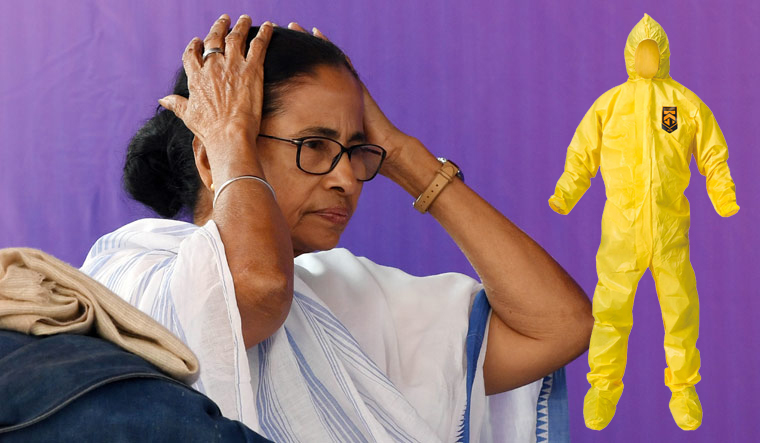
At a time when the entire country is fighting the Chinese menace coronavirus, West Bengal Chief Minister Mamata Banerjee has continued her obsession over political conspiracies. Mamata Banerjee has now stoked a new controversy by politicizing the issue of yellow PPE (Personal Protection Equipment) kits given by the Centre to the state government and hinted that West Bengal might not use it.
Questioning the colour of the PPE kits, Mamata Banerjee said that the state government had asked for one lakh PPE kits but received only 3000 kits.
“And do you know what the biggest surprise was? A colour has been fixed for the kits. I hear the colour is yellow,” she declared during a press conference. Addressing the media at the state secretariat Nabanna, Mamata Banerjee said she was surprised by the choice of the colour and said that doctors don’t usually wear yellow kits but white or blue kits.
“I don’t know if yellow matches with Covid. Doctors usually wear (PPE kits) in white or ash colour. Some of them wear blue or sky blue kits. Some housecoats in nursing homes are pink. But I’ve never seen yellow kits. We’ll have to see what the matter is,” she said.
The chief minister appeared to allege saffronisation of PPE kits by questioning its colour. However, yellow or orange kits are used all over the world to indicate hazard. People who work in hazardous activities wear yellow or orange PPE suits. As attending to Wuhan Coronavirus patients is a hazardous activity, yellow PPE kits for doctors and nurses treating them is appropriate. Moreover, bright colours are handy in alerting people of danger, and are useful for capturing people’s attention.
It is important to note that West Bengal chief minister is objecting to the colour of PPE suits sent by the centre at a time when the doctors in the state are having to use raincoats in the absence of PPE kits while treating COVID-19 patients. Healthcare workers in the state are demanding proper PPE kits, but they are provided with raincoats and gloves, some of which were even torn.
The West Bengal chief minister is particularly fond of white and blue colours, and she had literally painted the city of Kolkata with these colors after coming to power in the state. The Mamata Banerjee government had even given tax waiver for buildings if they are painted white and blue. Therefore, it is not a surprise that she does not like yellow PPE kits and wants them in white and blue.
As of today, West Bengal has recorded 99 positive coronavirus cases with 5 deaths while 13 people have recovered.
A day after Kolkata police nabbed 3 people suspected of carrying Wuhan coronavirus after they fled the government quarantine centre in Kolkata, a Bangladeshi undertrial at Siliguri Correctional Home, who was kept in the isolation centre for coronavirus suspects at North Bengal Medical College Hospital, has fled the hospital on Friday.
According to a report in Times of India, the Superintendent of the correctional facility Kripamoy Nandi lodged a complaint in this regard at Matigara police station in Siliguri, following which the police have started the investigation and launched a manhunt.
The Bangladeshi undertrial was reportedly admitted to the correctional home last Wednesday.
On April 7, 1 woman and 2 children, all three belonging to the same family had fled a quarantine facility at New Town in Kolkata through its rear gate and went to their home about 10 kilometres away from the quarantine centre, sparking panic in Kolkata.
A massive manhunt was launched by the Kolkata police on April 8 morning, after which the three escapees were traced.
After absconding from the quarantine facility, the three suspected COVID-19 patients came in contact with 6 other individuals. Now they are also kept under quarantine by the police after coming in contact with suspected coronavirus patient.
There seems to be a strange dichotomy in the number of cases and deaths due to the Wuhan Coronavirus being reported from West Bengal. An expert committee has also been set up by the state government to ‘audit’ the deaths in the pandemic. In a significant incident on the 2nd of April, after an expert committee announced that seven people had died due to the Chinese Coronavirus in Bengal, Chief Secretary Rajiva Sinha quickly issued an “explanation” to claim that the number of deaths was in, fact, three.
According to data released by the Ministry of Health and Family Welfare, 8 new coronavirus cases were reported as of 4:30 PM on Apr 08 in Bengal, taking the total count to 99. Among the total people infected as on date, 13 have recovered and 5 have passed away. Kolkata had the highest number of Covid-19 cases at 29 confirmed infections.
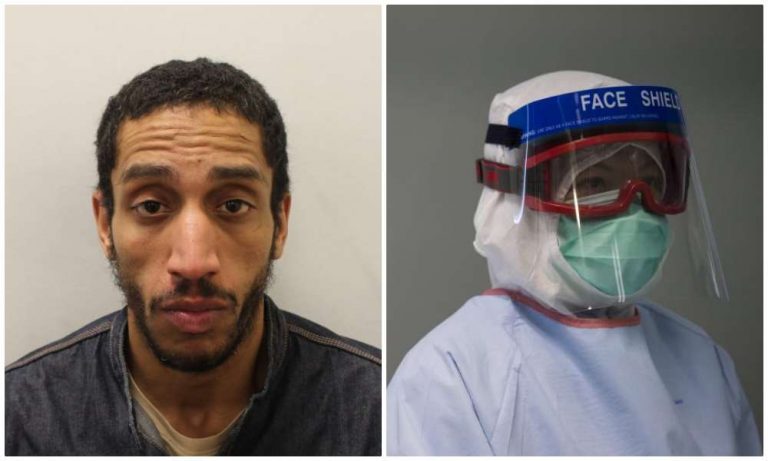
A man has been jailed for stealing face masks from a hospital in the United Kingdom. A 34-year-old man named Lerun Hussain is accused of robbing vital protective equipment from King’s College Hospital in London.
According to the reports, Lerun Hussain, a resident of Worsopp Drive, Clapham has been sentenced to 12 weeks at Croydon Magistrates’ Court on Tuesday following the incident at King’s College Hospital.
The UK Police were called to the hospital in Denmark Hill, Lambeth, at around 11:20hrs on Sunday after Hussain was detained by hospital security staff after he stole three face masks.
The hospital staff had caught Hussain stealing three surgical masks and officers arrested him on suspicion of theft, as well as for being in breach of a court order. His attempt to steal masks from the hospital came as NHS workers in the UK continue to appeal for more personal protective equipment, which many have said is in short supply.
He appeared at Croydon Magistrates’ Court on Tuesday 7 April where he pleaded guilty to theft and was sentenced that same day to three months imprisonment.
The United Kingdom has been one of the highest affected countries due to the Chinese pandemic COVID-19, which is evident with both the country’s Prime Minister Boris Johnson and Health Secretary Matt Hancock tested positive for the Chinese coronavirus.
Meanwhile, 60,733 have been confirmed positive in the United Kingdom and more than 7,000 have succumbed to the Chinese pandemic.
The United Kingdom has been facing severe health crisis as its attempt to ramp up mass coronavirus testing had suffered a huge setback as key components ordered from global suppliers have found out to be contaminated with coronavirus. In another major reversal, it was reported that nearly 3.5 million Coronavirus antibody tests ordered from China was found to be unfit for widespread use in the United Kingdom leaving the UK with limited testing capabilities amid the crisis.