Home Blog Page 5539

Singapore declares lockdown: Here is why the Wuhan Coronavirus is so deadly and why it is not ‘just the flu’

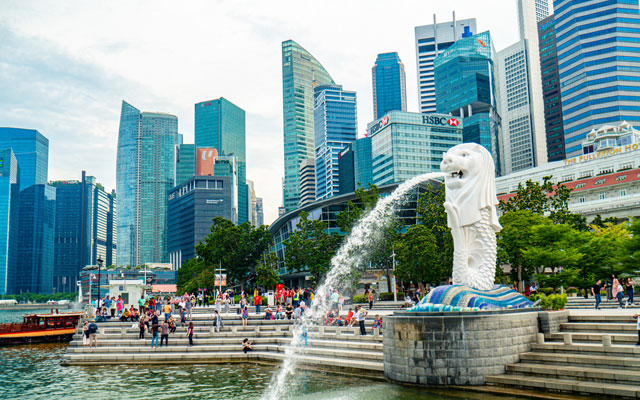
Singapore Prime Minister Lee Hsien Loong declared a near-total lockdown of the country on Friday, barring essential services, from the 7th of April for a duration of one month due to the Coronavirus pandemic. Most schools and workplaces will be shut down during this period, however, essential services and key economic sectors will continue to operate. The city-state, which had managed to curb the spread of the Wuhan Coronavirus for a long time without enforcing a lockdown, has recently seen a sharp spike in the number of new cases.

“We have decided that instead of tightening incrementally over the next few weeks, we should make a decisive move now, to pre-empt escalating infections,” Prime Minister Lee said in his speech. He also urged citizens to stay home as much as possible and avoid socializing beyond one’s own household.

Singapore had hitherto shined as a beacon in the fight against the Wuhan Coronavirus as a state that had managed to tackle its spread without resorting to a lockdown. For a time, it was thought that managing the crisis without a lockdown was even possible given the manner in which the city-state had approached the crisis. However, as the recent increase in cases force Singapore into a lockdown, the world has to reckon with the fact that fighting Covid-19 without a lockdown may well be impossible.

Singapore has used a combination of adequate surveillance measures, efficient contact tracing, proper quarantine facilities, strong community engagement and mass testing to contain the spread of the virus. However, despite it efficient handling of the situation, the city-state has witnessed a sharp upsurge in the number of confirmed cases. Prime Minister Lee admitted that “despite our good contact tracing, for nearly half of these cases, we do not know where or from whom the person caught the virus”.

Thus, until now, Singapore had managed to avoid a lockdown but only thus far, no further. It does force one to change a great many perceptions regarding the nature of the Wuhan Coronavirus. It is also pertinent to note that the United Kingdom had initially planned to go ahead with its ‘herd immunity’ approach. The plan was to allow the virus to spread as much as possible in order to develop a collective resistance to it within the population. However, that plan was doomed to fail from the very beginning as the death toll would have been catastrophically high. Britain eventually backed off from that harebrained idea.

Thus, all things considered, Singapore made a calculated decision to implement a lockdown now in order to ensure that things do not escalate to a point where the virus overwhelms the healthcare system. In other words, the city-state is trying to ‘flatten the curve’. “It will help reduce the risk of a big outbreak occurring and it should also help to gradually bring our numbers down,” Prime Minister Lee said. “If we don’t go out, if we avoid contact with others, then the virus won’t be able to spread. It is as simple as that,” he added.

As Singapore goes into lockdown, here is what makes the Wuhan Coronavirus so deadly

Certain people have pointed towards the fact that the virus has a low death rate. The lower death rate initially has led people to claim that “It is just the flu!” However, the virus spreads at a remarkable speed and is extremely contagious. It can last on surfaces for hours, on certain surfaces up to three to four days. There is some evidence to suggest that it can spread in aerosolized form as well. A person could even get infected just by talking or breathing.

All of these factors combine to cause an exponential growth in the number of cases. Worst of all, even seemingly normal people can be carriers of the virus (asymptomatic carriers) and even when they don’t suffer any symptoms or suffer only mild ones, they could very well infect others who might suffer critical symptoms or could even die.

While people have correctly noted that the virus tends to have a low fatality rate, this holds true only during the initial phases of the spread when the virus is yet to overwhelm the healthcare system. However, once the virus has infected too many people and the healthcare system has been overburdened, the death rate tends to increase too. Take Italy for example. As of 6:32 GMT on the 4th of April, the total number of Coronavirus cases was 119,827 and the total number of deaths was 14,681. That is a more than 10% Case Fatality Rate, well over it in fact.
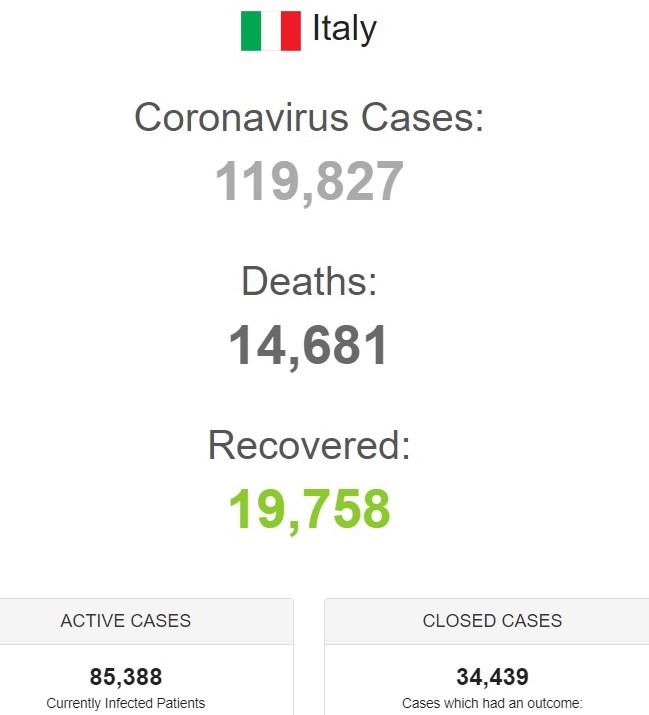
Source: Worldometer

The case is similar with regards to Spain. As of 6:41 GMT on the 4th of April, Spain had a total of 119,199 Coronavirus cases and at least officially, 11,198 people had died due to the virus. Therefore, relying on official statistics alone, that is a death rate of well over 9%. For the past couple of days, Spain has recorded over 900 deaths on both occasions.
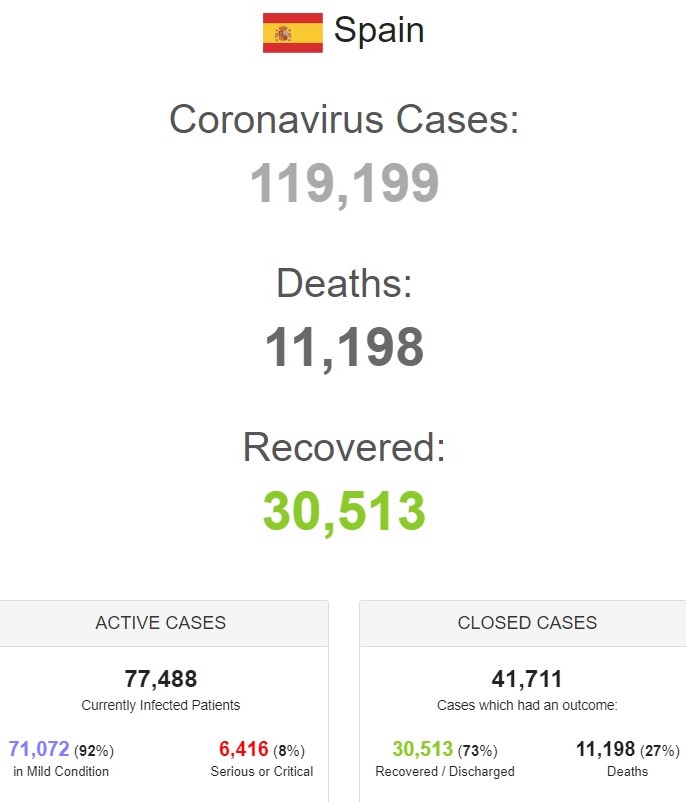
Source: Worldometer

The story is similar in countries most affected by the virus. In Britain, there have been 3,605 deaths out of 38,168 cases with a death rate of 9.44%. Iran, whose official statistics are not reliable at all, say that 3,294 people have died out of 53,183 Coronavirus cases with an official death rate of 62.%. However, these numbers from Iran are not reliable and the number of deaths is most probably much higher. France has recorded 6,507 deaths out of 82,165 Coronavirus cases with a death rate of 7.92%.

There are other countries that have recorded much lower death rates than the countries mentioned. The USA, which is providing one of the most reliable indicators of the potential death rate of the virus, has recorded 7,402 deaths out of a total of 277,476 cases with a death rate of 2.67%. Germany has recorded 1,275 deaths out of 91,159 cases with a death rate of 1.40%. However, there are some allegations that Germany is ‘fudging’ the data. Then, there are countries such as Switzerland, South Korea, Canada and Austria and even India which have managed to contain the virus exceedingly well thus far. Globally, the death rate currently stands at 5.30%. However, it has to be mentioned here that these death rates reflect countries where the healthcare system has not been overwhelmed by the virus. And it includes countries such as China and Iran which haven’t been entirely honest about their death rates.

What happens when the healthcare system has been overburdened like in Italy or Spain? Medical supplies will run out and countries will face a shortage of medical equipment. Before long, doctors will have to make the call regarding who continues to receive medical attention and who doesn’t, essentially, they will have to make the call between who gets to live and who doesn’t. It’s a horrible situation for any doctor to be in but if the healthcare system of the country is overrun, this is what will happen. Thus, when the number of cases starts increasing horribly, the death rate will also increase when medical supplies start falling short.

Experts have said that with increased testing, the death rate is likely to go down. However, it needs to be mentioned that if the number of infected cases are just too many, then the death count could very well run into hundreds and thousands if not millions. The United States, for instance, predicted that anywhere between 100,000 to 240,000 people could die from the virus even if all federal guidelines are followed precisely. The time frame was not mentioned.

Unconfirmed theories of the impact of the Wuhan Coronavirus

There is at least some evidence to suggest that infected individuals who eventually recover carry lasting damage to their system even after recovering from the disease. A report that was published by a team based at the Reproductive Medicine Centre at Tongji Hospital in Wuhan, China and published on the Hubei Government’s website suggested that men who had recovered from the disease should consult experts to determine whether their fertility had been affected by the virus. The report said it was theoretically possible that COVID-19 could impact men’s reproductive health, as a receptor that the virus is thought to use to infect human cells, called angiotensin-converting enzyme 2 (ACE2), is also highly expressed in the testes. However, the report was later removed from the website.

Furthermore, seasonal flu is known to affect male fertility at least in the short term. “Seasonal flus are known to reduce male fertility… We think that it’s due to the fever associated with the illness, which overheats the testicles,” said reproductive urologist Dr. Paul Turek. “Currently, it is believed that the [novel coronavirus] is similar to a common seasonal flu virus regarding its impact on male fertility,” explains Dr. Turek. However, he said that the impact should be temporary. “The effect is similar to that of hot baths or tubs, and is fully reversible,” he said.

SARS, with which Covid-19 (SARs-CoV-2) shares genetic similarities is known to cause damage to testicles. A research paper stated, “All SARS testes displayed widespread germ cell destruction, few or no spermatozoon in the seminiferous tubule, thickened basement membrane, and leukocyte infiltration.” Orchitis, or inflammation of the testicles, is caused by SARS, the research observed. Therefore, it is at least theoretically possible that Covid-19 could have similar consequences but it has not been confirmed yet and it is still too early to say.

Evidence also suggests that at least some of those who have recovered from the disease are likely to sustain severe long-term damage to their lungs, heart, brain and other organs and in certain cases, the damage could very well be permanent. One prominent issue that has been observed is the occurrence of Acute Respiratory Disease Syndrome (ARDS) in recovered patients. Doctors in Hong Long found that out of a small study of 12 recovered patients, two or three had diminished lung function.

The coronavirus has been treated “as though it’s life and death – if you have the right medical care you can survive – but some survivors are having issues that are lingering”, observed Lynn Goldman, dean of the Milken Institute School of Public Health at George Washington University. “Because of how serious the ARDS is, the damage that you can have for that is for a lifetime.” “Large numbers of ARDS survivors are not able to go back to work,” added Onjen Gajic, a critical care specialist at the Pulmonary Medical Department of the Mayo Clinic in Rochester, Minnesota.

“The most severely ill patients require mechanical ventilation to keep their tissues supplied with oxygen until the inflammation subsides,” Julie Fischer, an associate research professor of microbiology and immunology at Georgetown University Fischer, stated. “Both the inflammation and the mechanical ventilation required to help patients survive can damage the delicate tissues of the lung that are involved in oxygen transfer, which may affect the function of the lungs even after recovery from acute COVID-19 disease.”

Thus, the Wuhan Coronavirus could very well have debilitating affect on the people it has infected, even the ones who ultimately recover from the disease. However, the extent of the pandemic means that the lives of everyone will be impacted, to varying degrees. All aspects of an individual’s life will undergo drastic changes and a lot of it may very well be permanent. In short, we could very well be at the dawn of a new age.

Impact of the Wuhan Coronavirus on International Relations

Unsurprisingly, the Wuhan Coronavirus has also impacted the manner in which countries interact with each other and the geopolitics of the world. The USA, for instance, has upped the ante, at least rhetorically thus far, against China which it blames for failing to warn the world of the actual threat of the virus. Calls for manufacturing bases to be moved out of China are gaining momentum and appeals for at least essential medical supplies to be manufactured domestically in the US have gained particularly. And it is not only relations between China and the USA which have been affected or expected to be affected in the near future, Covid-19 has the potentially to alter the fundamental relationships between countries as well.

For instance, countries have been sparring with each other over medical supplies. The Turkish government has reportedly seized medical ventilators Spain bought from China. The supplies were en route to Spain when the plane made a stop at Ankara. Turkish authorities confiscated the supplies there and are expected to use it for their own needs. Not too long ago, thousands of masks sent by China to Italy ended up in Czech Republic after the latter’s authorities seized them. Germany, too, has accused the US of ‘modern piracy’ after it was alleged that Berlin-bound medical supplies were stopped at Bangkok in Thailand and diverted to the USA. There have been other instances of such cases as well. All of this is likely to leave a bitter taste in the mouth of actors at the international level.

International institutions are being undermined by the pandemic as well. As a consequence of the World Health Organization’s (WHO) conduct, people’s faith in global institutions has been vastly undermined. Ever since the beginning of the chain of events, the WHO helped further China’s propaganda at the international level, as a consequence of which many countries that are now severely affected did not take the virus seriously in its early stages. The European Union has seen increasing dissonance between member states. Apart from squabble between Italy and the Czech Republic, there have been regarding the order of affairs among other members as well.

We can expect a resurgence of nationalism and a rejection of Open Borders Globalism going forward. The manner in which countries conduct their trade will change greatly as well. All things considered, we will see a great realignment once the immediate crisis begins to fade. Even in the midst of the crisis, we can already see that calls are being made for drastic changes. Countries have already shut their borders, even in regions such as the European Union where certain member states practiced an open borders policy. The world as we know it is about to change forever.

Changes in Domestic Policies of Governments due to Coronavirus pandemic

Going forward, we are also likely to witness drastic changes in the manner in which governments conduct their business domestically. The internal politics of countries will change too. Although it is too early to say conclusively as of now, it should not surprise anyone if the Coronavirus pandemic marks the end of the age of liberal democracies. Every country has been forced to suspend the personal liberty of individuals, and criminalize the individual’s right to exercise his or her personal liberty, in order to suspend laws that form the cornerstones of liberal democracies. And no one could accuse the countries of acting against the interests of its population.

Furthermore, border patrols will most likely be increased as well and countries will be very hesitant to unilaterally open their borders any time soon. Trade policies will change as well and countries will at least attempt to ensure that essential supplies are either manufactured within their own territories or in countries that they are confident they can rely on in times of distress. Given the conduct of China in recent times, where they have essentially robbed countries of medical supplies during their times of crisis, countries will look to curb their dependence on China for manufacturing and at least distribute their dependence across several countries.

Surveillance measures will gain increasing acceptance in matters of governance. Countries such as Singapore, South Korea and Taiwan have managed to contain the spread of the virus thus far by employing sweeping surveillance techniques. India has attempted to use surveillance techniques as well to effectively monitor those in quarantine, but to a vastly lesser disagree. Going forward, we can expect surveillance measures to have much wider acceptance than they do now. In addition to all of this, industries and businesses will be hugely impacted as well. Work From Home (WFH) is likely to become a permanent feature across several companies. E-Commerce will likely receive a boost as well. But it is much too soon to make sweeping predictions about the consequences of the pandemic on businesses. Wearing masks in public will become a lot of frequent and could very well become the norm. The fog will probably take months to clear.

The Dawn of a New Age?

For all the reasons mentioned above, we are likely at the cusp of a new age. Things will change forever and countries will find it extremely difficult, nigh impossible, to go back to how things were before. For a long time, Singapore was held up as an example of how things could continue to function normally. It was a beacon of hope for people all over the world that business could continue as usual and effective measures could be undertaken to avoid any radical shift from the normal order of affairs. But now, even Singapore is going into a lockdown for a month.

It is not yet clear precisely when the pandemic will begin to recede. Dr. Anthony Fauci, director of the US National Institute of Allergy and Infectious Disease, said that the earliest vaccine for the Wuhan Coronavirus is 12 to 18 months away at the very least. It could very well take longer than that. Despite social distancing and other measures, the only definitive way to prevent a spread of the virus is through a vaccine and a vaccine is a significant time away. A lot of experts do believe it could take even longer than that.

People should not expect life to return to normal anytime soon. While India may well lift the nationwide lockdown at the end of 21 days, and the government has amply indicated its intentions to, other countries are likely to continue with theirs for a significantly more amount of time. In many countries or at least in their states or specific regions, the lockdown could continue for a month or two, maybe even six. Most countries that can afford an extended lockdown will probably increase it. Singapore has declared lockdown for a month. Others could very well have a lockdown for months. But all things considered, the pandemic is likely to remain a part of our lives for at least a couple of years.

*All death counts and total number of cases mentioned were of the time of writing this report unless stated otherwise.


After MMG Hospital, now Tabilighi Jamaat members isolated at Sunderdeep Ayurvedic college at Ghaziabad misbehave with female staff

After the molestation incident of nurses by the members of Tablighi Jamaat kept in isolation in MMG hospital in Ghaziabad, another incident of molestation of nurses has emerged. This time the jamaatis are reported to have passed lewd comments on the female staff in the Sunderdeep Ayurvedic College in Ghaziabad.

The jamaatis, who have been kept in isolation in there after the huge surge in coronavirus cases in the country linked to the event at Nizamuddin Markaz, passed lewd comments on the nurses and the female staff. Some were heard saying to female employees, “come to Hyderabad with us, will show you heaven.”

After this, the Nurses lodged a complaint with the staff administration. The management stated that now only male health workers have been placed to attend the jammatis, they’re also investing in the matter.

It is notable that due the orders of District Health Administration, the coronavirus suspects of Nizamuddin Markaz have been admitted at MMG hospital of Ghaziabad and Sunderdeep Ayurvedic college that had been modified in view of coronavirus outbreak. The administration has provided isolation facilities along with quarantine wards. More than 100 jamaatis have been isolated in these places. The incidents of molestation with female doctors, nurses, and other female staff by the jamaatis are often being heard. Nurses alleged that some chaotic jamaati tell them to take along to Hyderabad, some talk about showing ‘Jannat’. They even try to touch the female staff who is attending them. The female staff has stated even more serious allegations.

CMO Dr. NK Gupta said that he has received a complaint regarding this matter. He said that female nurses and staff have been replaced with the male ones. And the investigation is still underway. Rural SP Neeraj Kumar Jadoun said that they have received the complaint of molestation of female staff in Sunderdeep ayurvedic college, but it isn’t in written form. Once the application is submitted, we’ll take strict action towards the perpetrators.

Futile to treat these Markaz members, they should be shot dead: MNS chief Raj Thackeray on Tablighi Jamaat Coronavirus hotspot

Firebrand politician and MNS chief Raj Thackeray, who is known for not mincing his words, said on Saturday that the unruly and indecent members of Markaz should be shot dead right away. Raj Thackeray further added that Tablighi Jamaat members, who attacked police personnel, should be publicly thrashed to set an example that the miscreants won’t be spared.

“You are abusing police personnel who are coming to your rescue? You are assaulting police officers? Such people should be shot dead right away. I want to ask the government, why are you providing treatment to these unworthy ingrates?” MNS chief Raj Thackeray exclaimed about Tablighi Jamaat members while adding, “They should all be kept in a separate facility and their treatment should be stopped immediately.”

Lashing out at the Tablighi Jamaat members, Thackeray exhorted the authorities to thrash the malevolent Jamaat members and make the videos of their beating viral so that others realise that they cannot get away with it. “Even in these times, these people consider faith bigger than the country, they think they can exploit the tragedy to destroy the country, applying saliva on vegetables and notes, spitting everywhere as well as on nurses and doctors in the quarantine facilities, I ask the authorities to beat the living daylights out of these people and make their videos go viral so that it serves as a lesson for others contemplating of indulging in such behaviour,” Thackeray said.

Read: No pills, Sharing unwashed utensils, washroom and water for Wuzu: How Tablighi Jamaat’s lifestyle made them super-spreaders

Thackeray also launched a scathing attack against the Muslim clerics who come forward during the election times to suggest them about their voting preference. “Where are Mulla-Maulvis who ask them to vote a particular candidate during the elections? Why are they not appealing to the community now? It appears as if they are agreeing with the Tablighi Jamaat members’ unruly behaviour. Don’t blame us if we take strong measures tomorrow,” Thackeray warned.

Besides, Raj Thackeray exhorted people to strictly follow the lockdown and warned of its extension if they failed to do so, on Saturday. Highlighting the listless response of the citizens to the lockdown, the MNS chief said that it is imperative for everyone to observe the lockdown restrictions with complete sincerity in order to deal with the pandemic effectively.  

Persuading people to understand the importance of those providing essential services including the healthcare professionals, police & the media, Raj Thackeray insisted that the gratitude for their selfless services could be paid back only by staying indoors.  

Apprehensions about grid instability due to 9-minute blackout on Sunday are misplaced, other electric appliances will be running: Power Ministry

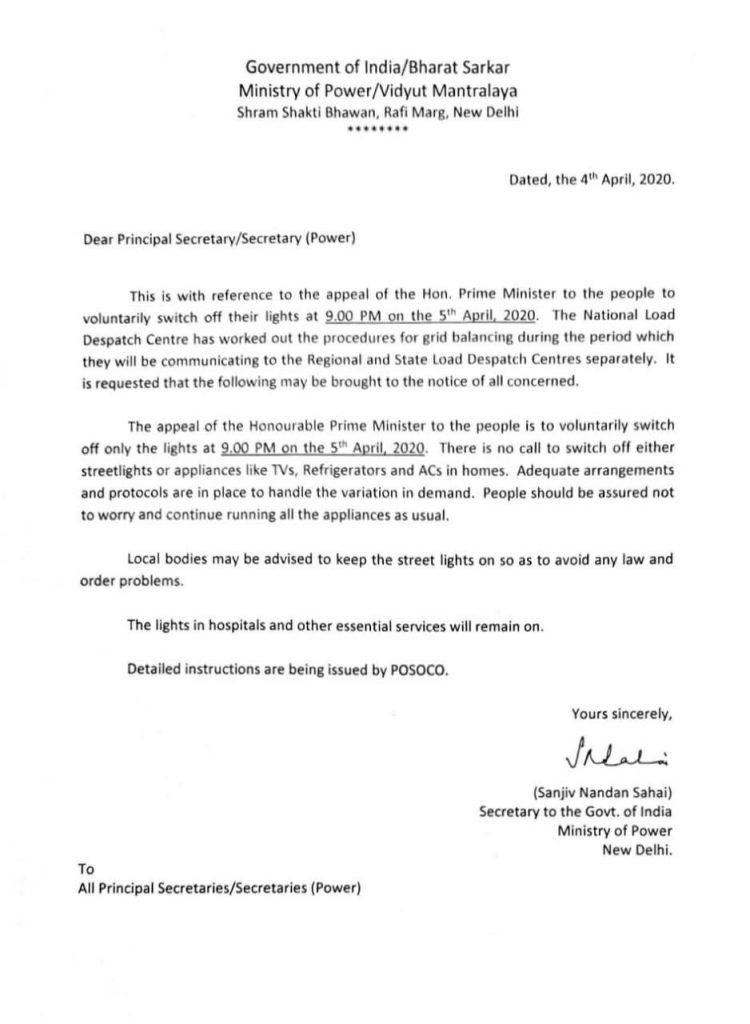
The union power ministry has said that apprehensions about grid failure due to switching off the lights for 9 minutes on 5 April are misplaced. Regarding the call of Prime Minister Narendra Modi to switch off lights in residences for 9 minutes on 5th April, several people had feared that this will cause instability in grid and voltage fluctuation, which may harm electrical appliances, but such apprehensions are misplaced, the ministry has said.

The power ministry has also informed that the National Load Despatch Centre has worked out the procedure for grid balancing during the period. A statement issued by the union power minister says that the grid balancing procedures will be communicated to the regional and state load despatch centres separately.

The statement comes after section of media and opposition parties alleging that switching lights for 9 minutes will cause a collapse of the grid which will take days to recover. It was alleged that the electricity grid will fail due to sudden drop in power demand.

Power ministry statement

Perhaps addressing such concerns, the power ministry has clarified that the prime minister has asked to voluntarily switch off only lights at 9 PM on Sunday. The statement informs that there is no call to switch off streetlights and electric appliances like TV, Refrigerators, ACs etc at homes. The power ministry assures that adequate arrangements and protocols are in place to handle the variation in demand. “People should be assured not to worry and continue running all the appliances as usual”, the statement says.

Power ministry has also asked the local bodies keep the streetlights on to avoid any law and order problems during the light-off campaign. They also informed that lights in hospitals and other essential services will remain on.

Addressing the nation through a video message on Friday, prime minister Modi had urged people to switch off all the lights of the house and stand in the balcony after lighting a lamp, switching on the flashlight of their mobile phone or holding a torch for 9 minutes on 5th April (Sunday) at 9 PM. He has appealed for this to come together to show their grit and collective strength in the war against Wuhan Coronavirus. Prime Minister Modi had said that this collective expression of purpose and togetherness would help the nation get through this time of crisis.

The usual suspects didn’t delay to mock the PM for this call, asking how this will help in treating Covid-19. Soon they started spreading fear that switching off lights for 9 minutes will lead to crash of the grid. Although many people had already pointed out on social media that as only lights in residences are called to be switched off, the it will not cause much drop in demand as other appliances will be running and lights in public places will also be running. Many people had also argued that most lights are switched off before people go to sleep in the night, and during the earth hour also lights are switched off, and as grid does not fail in those occasions, there is no reason why it will fail on Sunday.

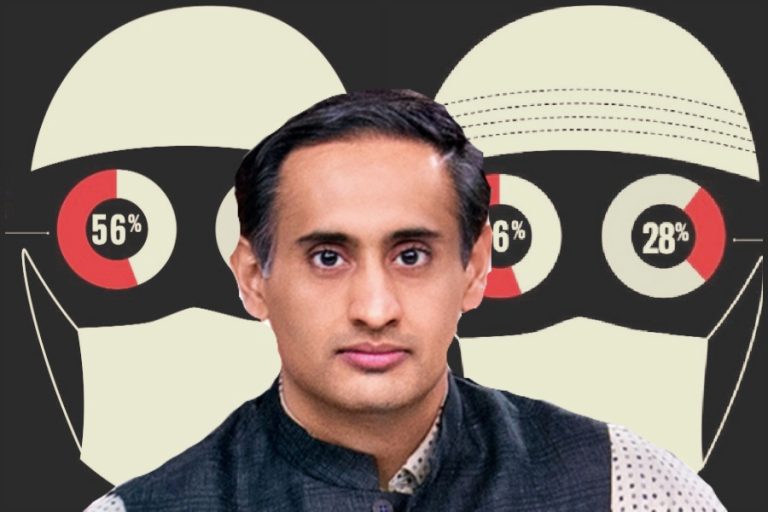
Rahul Kanwal uploads the Tablighi Jamaat infographic with somewhat correct numbers and a picture​ that looks “less Muslim”

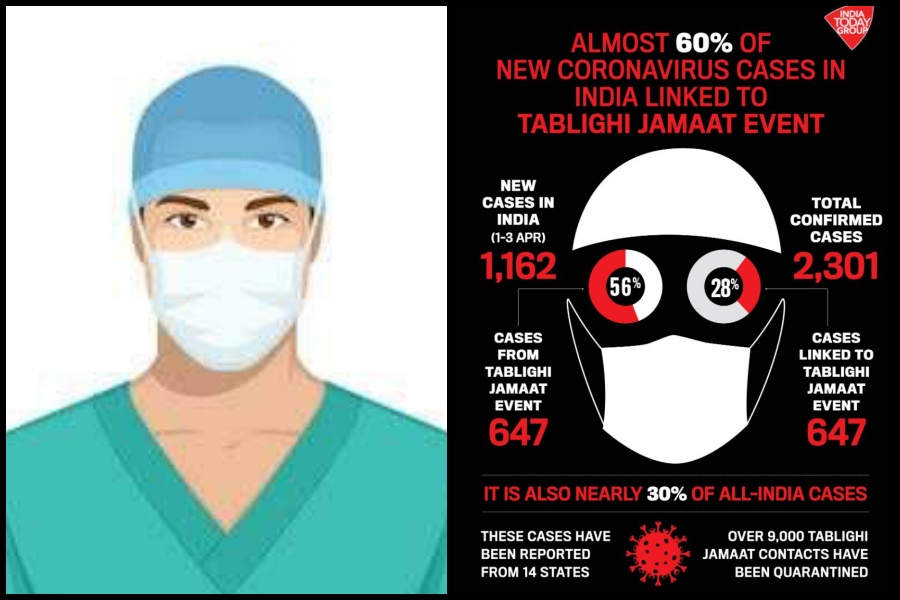
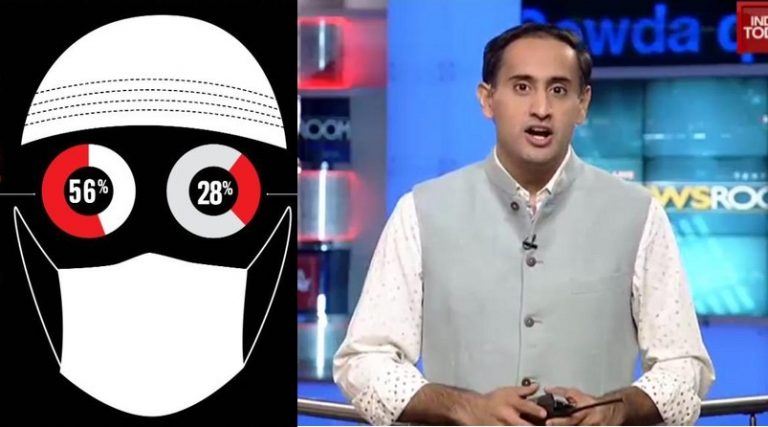
As the Tablighi Jamaat which met in Delhi at Nizamuddin during the first 2 weeks of March has become the epicentre of the Novel Coronavirus spread in the country, media has started reporting how much of the total Covid-19 cases in the country is related to the congregation. In this regard. India Today’s news director Rahul Kanwal had posted an infographic on Twitter last night which was then deleted. Rahul Kanwal claimed that the infographic was deleted due to incorrect data and typos. However, since the infographic tracking Tablighi Jamaat Coronavirus cases had a depiction of a Muslim man wearing a skull cap, many believed that the infographic was deleted because Rahul Kanwal essentially got scared of the allegations of ‘Islamophobia’.

Now, Rahul Kanwal seems to prove suspicions true that one of the major reasons for the infographic to be deleted was indeed the digital depiction of a skull cap-wearing man. Hours after the infographic was deleted, Rahul Kanwal took to Twitter to upload the picture again. However, certain things were distinctly different.

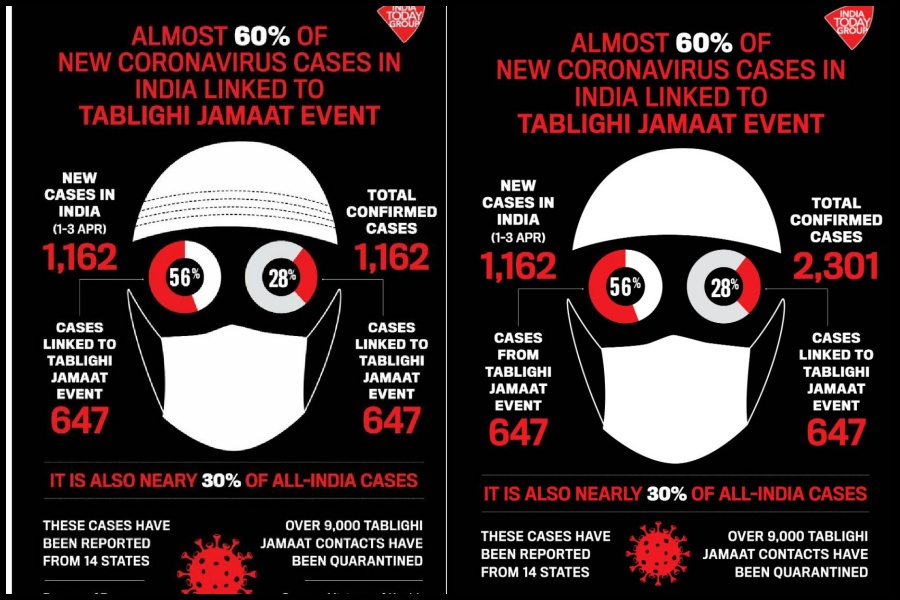
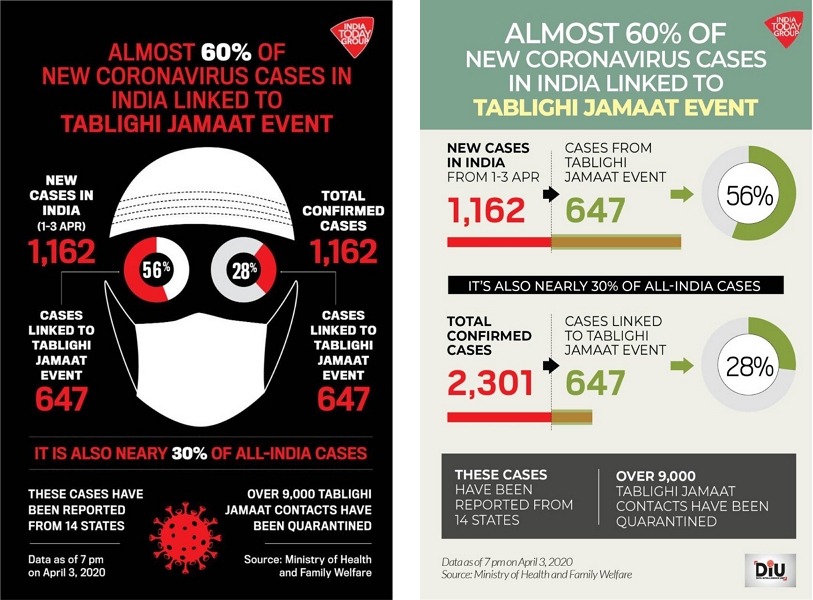
A simple comparison of the previous picture and the current one makes certain things clear. Firstly, the total number of cases, which was earlier misquoted as 1162 was changed to 2301, the correct figure.

The second change was slightly more subtle, however, was very revealing of how India Today and Rahul Kanwal function.

India Today’s deleted infographic vs the current one

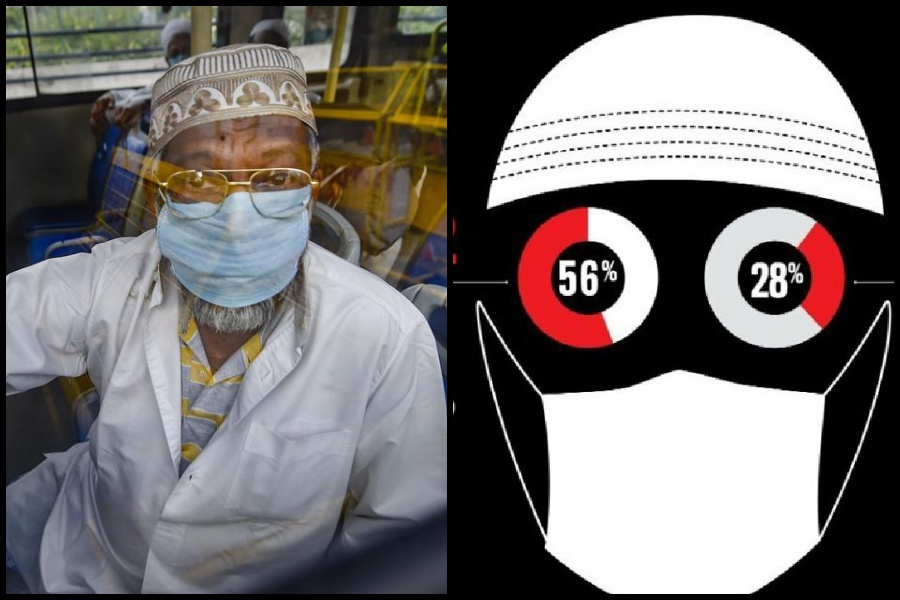
What one notices is that the horizontal lines that gave the impression that the graphic of a man in the picture was wearing a skull cap had disappeared.

While it may be claimed that it is a minor design change, one has to realise that every design change has a specific purpose to it. The purpose here is to clearly ensure that the graphic in the Tablighi Jamaat infographic does not look like it has depicted a Muslim man wearing a skull cap.

In fact, the current picture after removing the lines not just makes the picture look “less Muslim” but one can argue that it sanitises the truth completely. If one looks closely, the picture that is used now (without the horizontal lines) may as well be that of a doctor or a nurse working to fight the cases of Wuhan Coronavirus wearing their face mask and medical cap.

Doctor in mask and cap, India Today new Tablighi Jamaat infographic deleted by Rahul Kanwal

Ideally, however, if the India Today had not chickened out and edited the image, the depiction would be akin to this:

Tablighi Jamaat member in a bus in Nizamuddin area of Delhi, India Today’s old, deleted infographic by Rahul Kanwal

It is also interesting to note that in addition to sanitising the picture of its “Muslim look”, an important factual error has not been removed. Both the charts also mention unnecessary data points, perhaps to make it look data heavy to show the ‘intelligence’ of DIU. While the chart says the share of Tablighi Jamaat in new positive cases in the country is 56%, it also mentions that it is ‘almost 60%’. Similarly, it says that share of the Islamic group in the total positive cases for India is 28%, and nearly 30%. When the infographic is already giving the exact numbers, to give ‘nearly’, and ‘almost’ numbers are completely unnecessary.

It is thus clear that the India Today’s edited version not only leaves out some blatant errors in the information provided, but also “secularises” the graphic to as to not hurt the sentiments of the forever-hurt Islamists of India.

Aligarh: Three arrested, including a Maulvi, for stone pelting, attacking police when asked to disperse from Mosque amidst Coronavirus lockdown

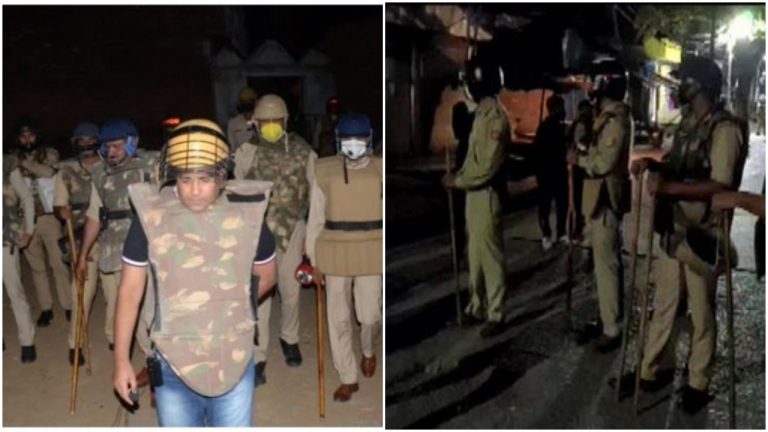
Three persons including a Muslim cleric (Maulvi) of a Mosque have been arrested in connection with attack on police personnel in Aligarh, Uttar Pradesh on Thursday which included stone pelting by the mob. The Uttar Pradesh police have also registered an FIR against 25 people involved in the mob attack on UP Police during the nationwide lockdown.

On Thursday, a Muslim mob had surrounded the police and indulged stone pelting at them in Uttar Pradesh’s Aligarh after the police asked them not to offer group namaz in a mosque. Around 25 to 30 people had arrived at the mosque in Sarai Rahman area to offer prayers defying the nationwide lockdown. The mosque comes under Sarai Rahman area in Bannadevi police station area of the city.

The police soon reached the spot and had appealed to the group not to assemble outside and instead offer Namaz at their respective homes citing lockdown. However, the mob did not heed to the advice and pelted stones at them. Two police personnel were injured in the incident.

The attack on police personnel in Aligarh was one of the many attacks across the country, especially by the Muslim mobs, that has been unleashed against the frontline workers who have put their lives at stake to limit the spread of coronavirus.

Read: Aligarh: Stone pelted on police by mob gathered at mosque for asking them to follow lockdown and not offer Namaz together

On Friday, a large gathering of Muslims in Karnataka’s Hubbali district had attacked police officials when they tried to stop them from offering namaaz en masse amidst the nationwide lockdown to blunt the spread of coronavirus. Four police officials, including one woman constable, were injured by Muslim youths as they pelted stones at the police personnel for stopping them from congregating amidst the looming threat of COVID-19.

In Kannauj, Uttar Pradesh, a Muslim mob who had gathered to offer mass prayer (Namaz) at Jama Masjid, pelted stones at the police personnel who went there to prevent them from doing so amid the Coronavirus lockdown.

Earlier this week, a sub-Inspector and a constable of Uttar Pradesh Police were seriously injured when a police team trying to enforce the ongoing lockdown was attacked by a group of villagers in Muzaffarnagar.

The police team was on patrol in Morna village when they saw locals gathered outside in groups. When they were asked to follow the prohibitory orders, they began pelting stones at the police and some of them even attacked the cops with iron rods, said police personnel. Two policemen were injured during the attack.

Read: Uttar Pradesh: Muslim mob gathered at Kannauj’s Jama Masjid to offer Namaz defying lockdown pelt stones, injure police personnel

Six Muslims associated with controversial Tablighi Jamaat had indulged in the deplorable act of walking around the ward without their trousers on and making lewd gestures towards the nurses during their quarantine at MMG District Hospital in the city. An FIR has also been registered against these people for misbehaving with nurses and hospital staff.

In a similar incident, a Muslim mob had not only assembled at a local mosque in Mainpuri, Uttar Pradesh but also attacked the policemen for asking to avoid mass prayers (namaz) in the view of nationwide lockdown due to the coronavirus pandemic.

In Indore, a medical team was attacked by a mob in Tatpatti Bakhal for visiting the locality to check on a patient with suspected coronavirus symptoms. Yesterday in Bengaluru, a nurse and ASHA workers were also attacked by the residents of Sadiq layout for trying to collect health details and trace symptomatic persons.

Following such heinous attacks on police personnel and healthcare workers, the Uttar Pradesh government has decided to invoke National Security Act (NSA) against those who attack police personnel anywhere in the state during the nation-wide coronavirus lockdown.

India has managed to flatten the Coronavirus curve despite Tablighi Jamaat cases: Here are the facts and charts

Just strategists and experts started believing that India may have flattened the Wuhan Corornavirus curve with the strict 21-day nationwide lockdown, the Tablighi Jamaat super spreader caused a Coronavirus explosion in India and pushed back our efforts in fighting the pandemic.

Over 95% of the coronavirus cases reported over the last two days in India have been found to have links with the Tablighi Jamaat congregation in Delhi. However, due to the relentless efforts of the government to contact trace and quarantine effectively, India’s coronavirus spread curve flattened again yesterday, giving rise to the hope that if we could maintain this, India might be back on track soon.

Economist Shamika Ravi, who is currently the Director of Research at Brookings India and former member, PM’s Economic Advisory Council, in a series of Tweets today shared some graphical representation of statistical data showing a welcome turn in the Coronavirus growth rate in India where the curve seems to have flattened. She believes that even though it is a little too early to comment, but, if this trend continues, it will soon bring some relief for India.

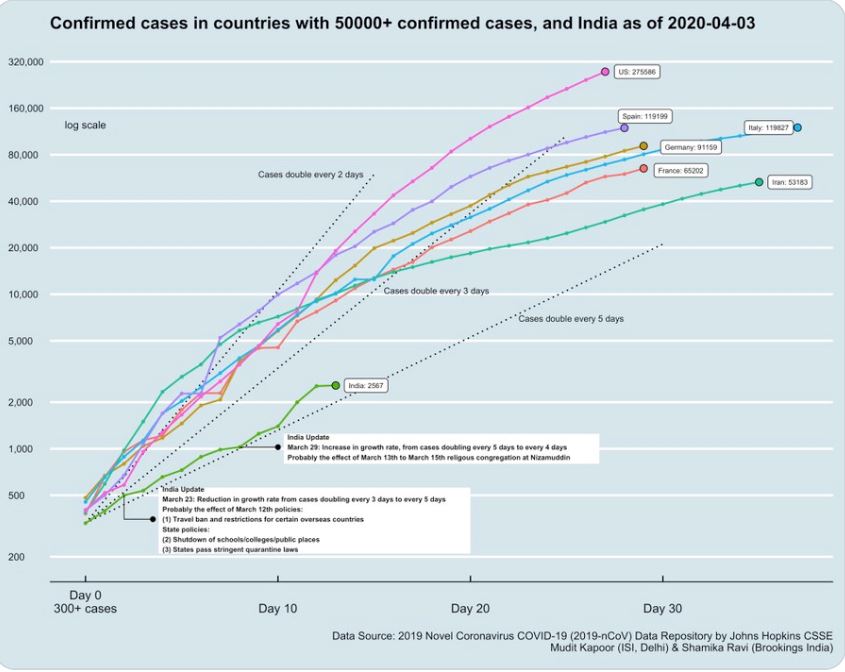
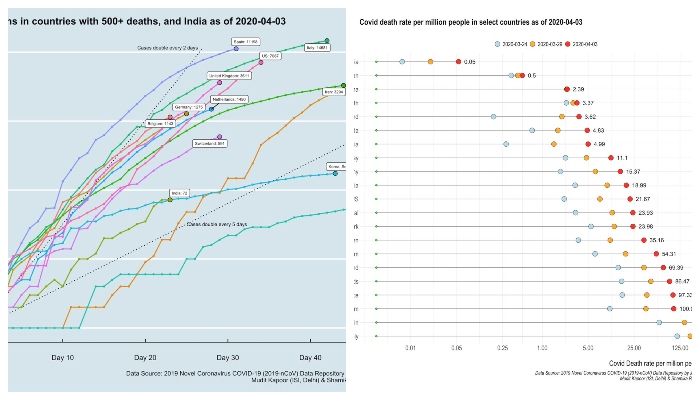
The first graph she shares shows the countries with 50,000+ confirmed cases and India as on April 4, 2020. The graph shows the countries where the confirmed Coronavirus cases have doubled in two, three and five days.

Compared to countries like the US and Spain which have regularly seen cases doubling every 2 days as well as 3 days, as on March 23 India saw a reduction in growth rate from cases doubling every 3 days to 5 days.

The economist credits this to the restrictions imposed by various states and the centre as on March 12, namely:

  • Travel ban and restrictions for certain oversees countries imposed by the central government.
  • State-imposed shut down of school, colleges and public places.
  • States passed stringent quarantine laws

According to the March 29 update, there was once again an increase in India’s growth rate from cases doubling every 5 days to every 4 days. This Shamika Ravi says was probably the effect of the Tablighi Jamaat congregation in Delhi held between March 13 to March 15.

Graph depicting the Coronavirus spread in India shared by Shamika Ravi

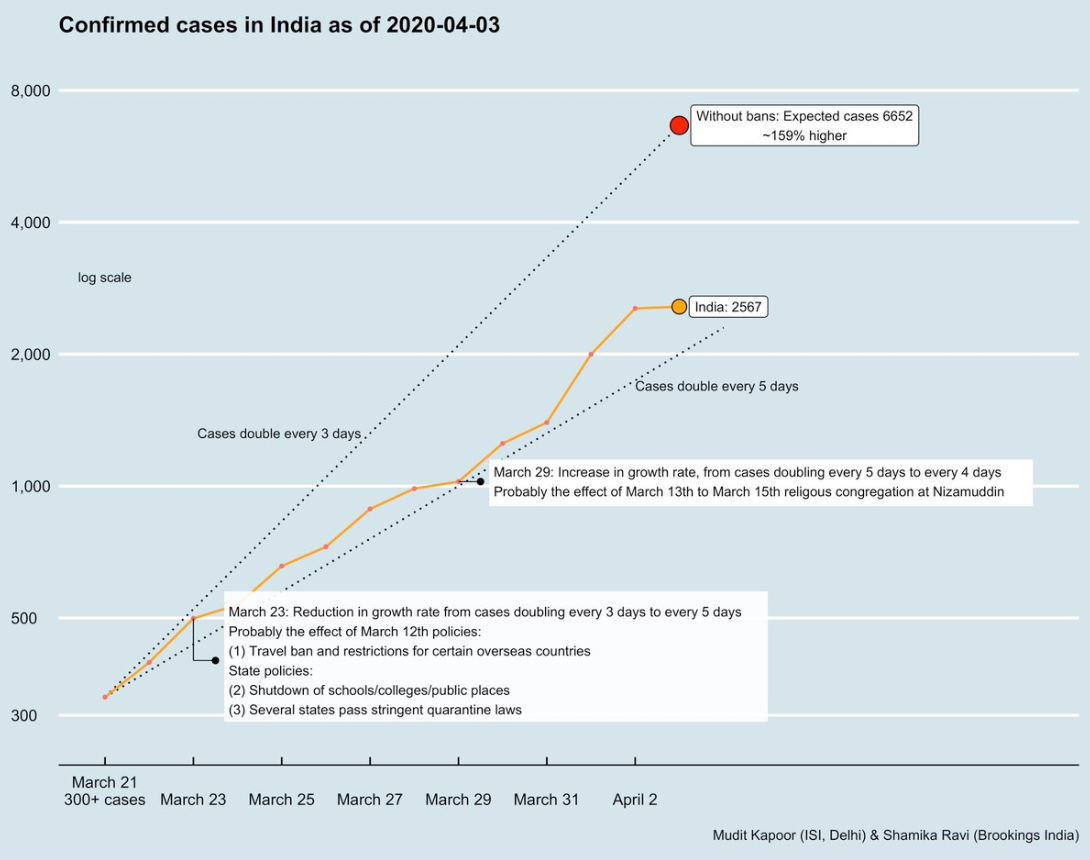
In the second tweet, Ravi shares two graphs, In the first graph the orange line represents the total number of confirmed cases in India from March 21 to April 4. As we can see in the graph India saw a sudden surge in cases from March 31 to April 2, the sudden spike is probably due to the Tablighi Jamaat cases, however, the graphical representation shows that after April 2 until April 4 the yellow line is flat. This means that according to the last two days statistics the growth curve has flattened for India. This can again, safely be attributed to the exemplary efforts of the government who are successfully contact tracing and then promptly isolating those tracked.

Graph depicting the Coronavirus spread in India shared by Shamika Ravi

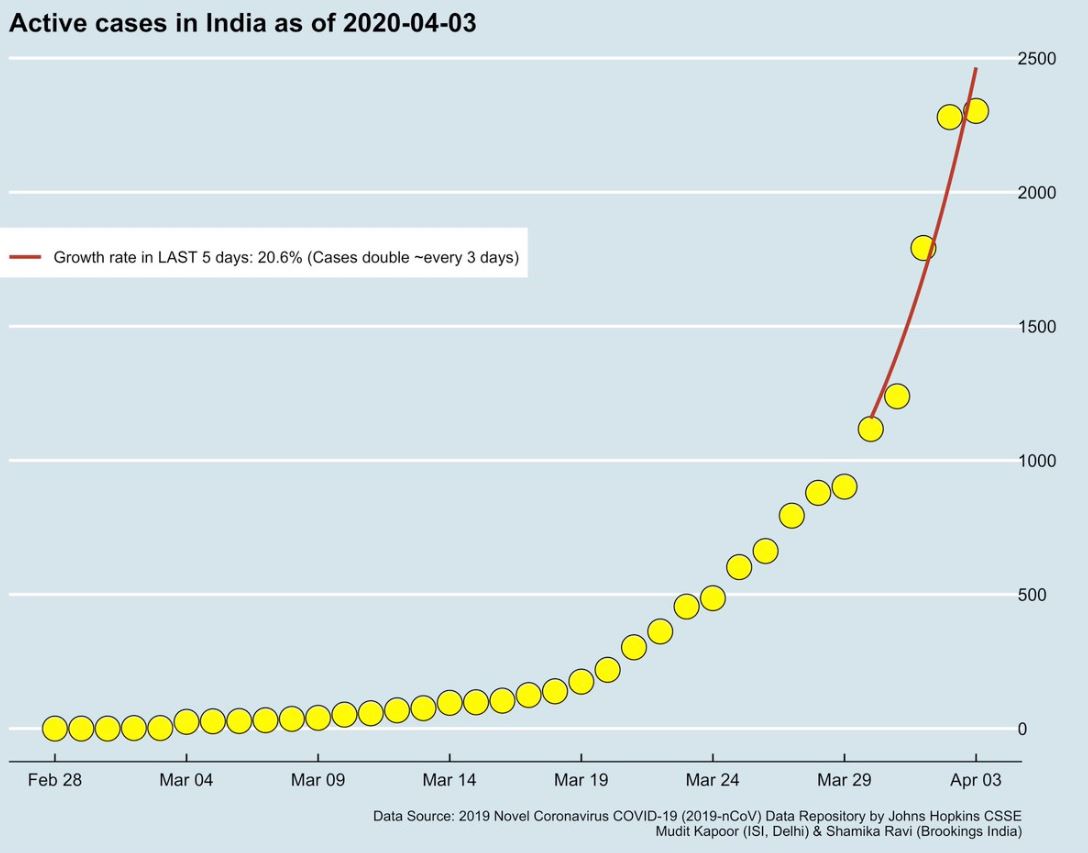
The second graph displays how the active cases in the last five day in India have grown by 20.6%

Graph depicting the Coronavirus spread in India shared by Shamika Ravi

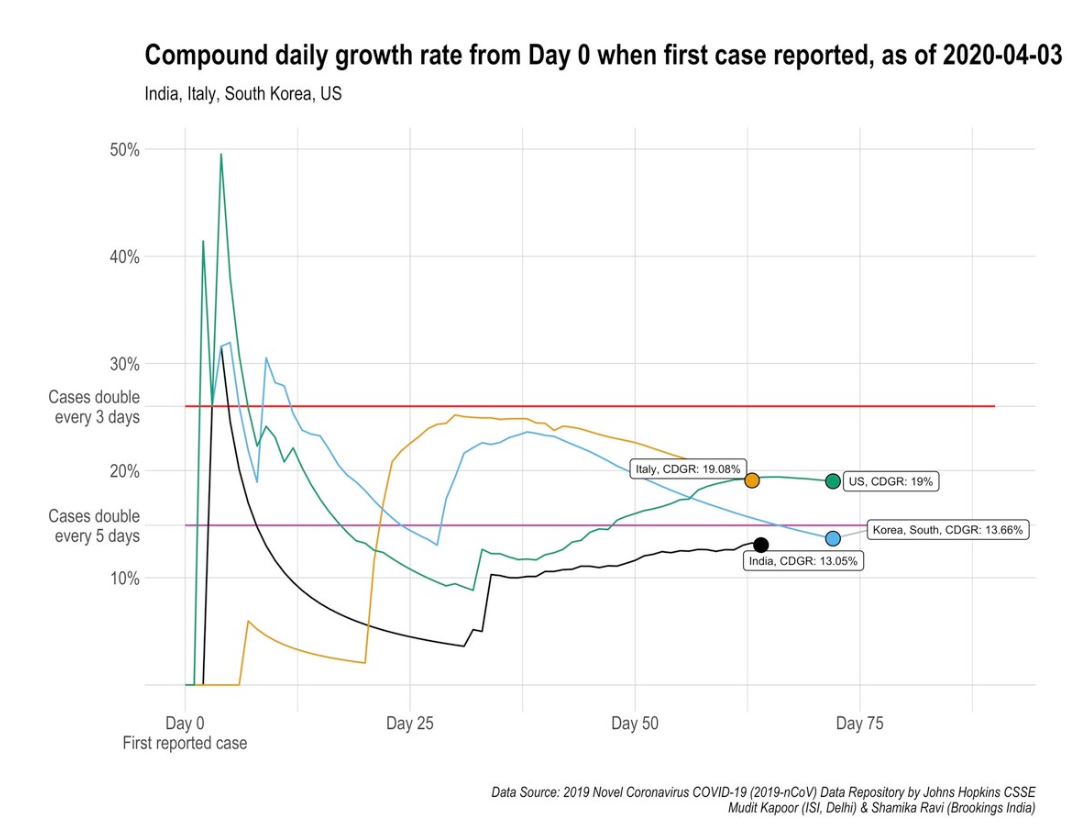
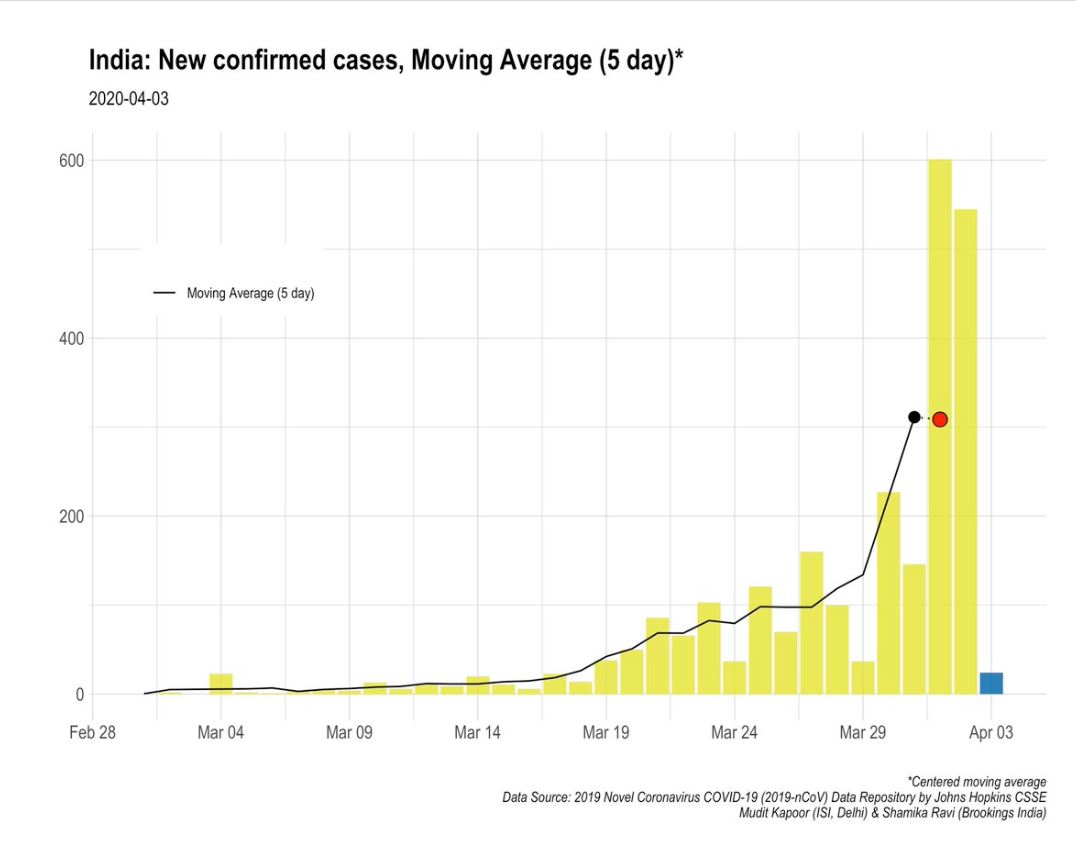
In the next tweet, the economists again by the means to two graphical representation depicts that the Compound daily growth rate of confirmed cases in India has steadied at 13.05%. She confirms that they have “introduced a new statistic for improved understanding of #Covid19India trends – 5day moving average of new confirmed cases – and it shows a welcome flattening”.

The first graph represents the compound daily growth rate from day 0, when the first case was reported, as of April 4, 2020. And the second graph is a reprsentaion of the 5-day moving average of new confirmed cases in India.

Graph 1
Graph 2

In the subsequent tweet, Ravi shows the total Chinese Coronavirus related deaths across major hotspot countries, and in India. According to the graph, amongst all the select countries, the mortality rate per million as on April 4 is the lowest in India.

Graph depicting the Coronavirus spread in India shared by Shamika Ravi

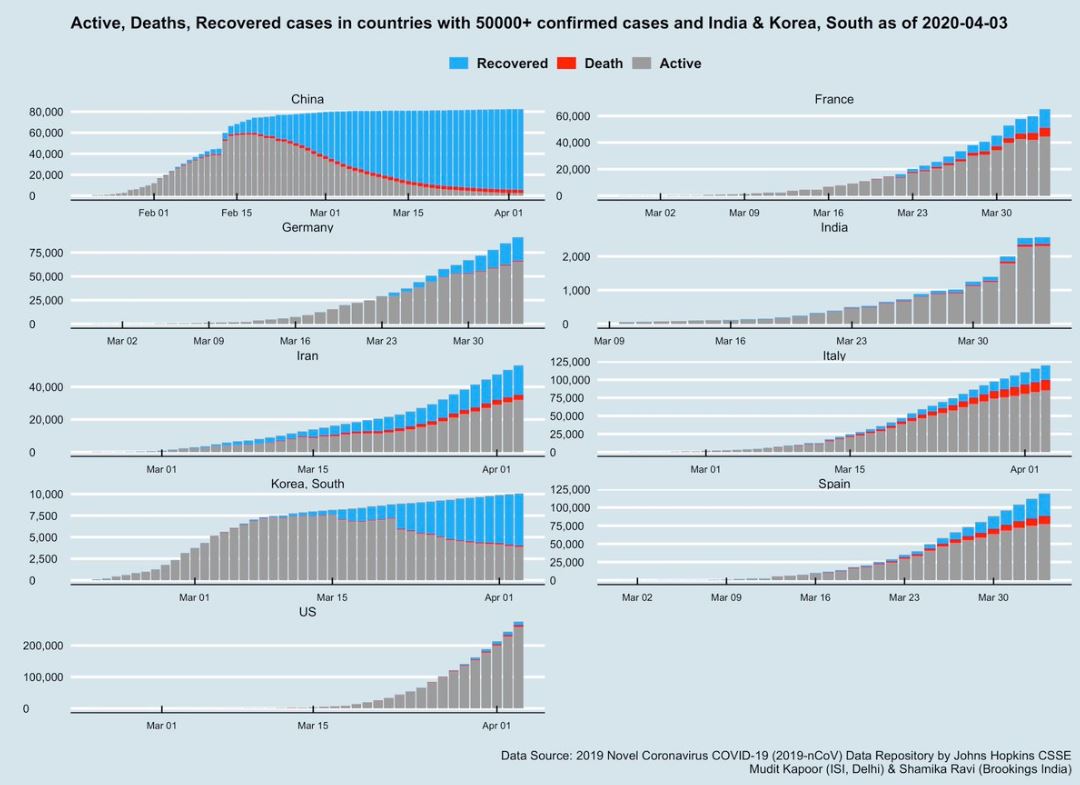
In her last tweet, Ravi graphically breaks up the total confirmed cases into 3 categories:

  • Total number of active cases as on April 4
  • Total number of recovered cases as on April 4
  • Total number of deaths as on April 4

Here she is comparing data from countries which have recorded 50,000+ cases, India and south Korea.

Graph depicting the Coronavirus spread in India shared by Shamika Ravi

If we are to believe these statistics, India’s Coronavirus spread curve has flattened again in the last two days, leading us to hope that the 2-day spike was largely because of the Tablighi Jamaat super spreader effect.

As per the ministry of health and family welfare statistics, the 647 Coronavirus cases reported over the last two days have been linked to the Tablighi Jamaat. The ministry data shows the two-day increase as 664 in India – 328 on Thursday and 336 on Friday.

“There has been an increase in cases over the last two days. Though COVID-19 positive cases were being reported, the surge has happened only over the last two days. This shows that one mistake can have repercussions and can put us back our efforts in fighting such a pandemic,” said Joint Secretary (Health) Lav Agarwal.

Tablighi Jamaat links have been found in cases across 14 states including Andaman and Nicobar, Assam, Delhi, Himachal Pradesh, Haryana, Jammu and Kashmir, Jharkhand, Karnataka, Maharashtra, Rajasthan, Tamil Nadu, Telangana, Uttar Pradesh and Uttarakhand.

The religious congregation has also put Maharashtra at the top of the statewise active Coronavirus cases, pushing behind Tamil Nadu. The state-wise ministry data as on April 4 had Maharashtra with 423 active cases and Tamil Nadu with 411.

The official data according to the ministry’s official website at on Saturday put the total number of cases in India at 2902 and 68 deaths.

A day after testing positive for Coronavirus, pregnant wife of AIIMS doctor delivers a healthy baby

While the whole country is under a severe lockdown due to a novel coronavirus outbreak which has infected nearly 3000 till now in India, a woman who was diagnosed with COVID-19 has delivered a baby on Friday night. The woman is the wife of a senior doctor at AIIMS, Delhi, and he was also tested positive for Wuhan Coronavirus.

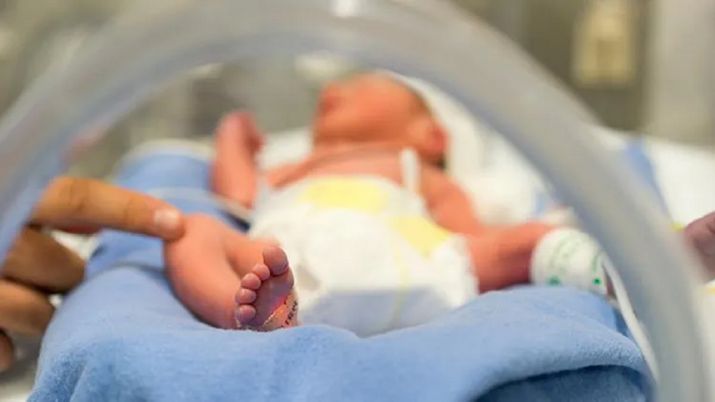
Reports say that both mother and the boy are healthy. However, they have been kept under isolation and being monitored continuously. This is the first baby to be born to a COVID-19 positive mother in Delhi.

“Both the mother and the baby are healthy. The baby was delivered a week early, through C-section. At present, the infant has been kept with the mother since he will require breastfeeding. So far, there is no evidence that the infection can be transmitted through breastfeeding. While the mother has tested positive for COVID-19, she is asymptomatic. We will be collecting samples of the infant too,” a senior doctor from AIIMS said.

According to the World Health Organisation guidelines, Women with COVID-19 can breastfeed if they wish to do so, but they need to take precautions. They should practice respiratory hygiene during feeding, should wear a mask where available. should wash hands before and after touching the baby, and the surfaces they have touched should by routinely clean and disinfected.

WHO says that they still do not know if a pregnant woman with COVID-19 can pass the virus to her foetus or baby during pregnancy or delivery. To date, the virus has not been found in samples of amniotic fluid or breastmilk, they say.

As per reports, the AIIMS doctor and his wife were confirmed positive of COVID-19 on Thursday. The senior resident doctor from the Physiology Department in AIIMS was posted at Emergency. The husband’s report came in the morning while the wife’s report came in the evening. She was 9 months pregnant who gave birth to a healthy baby on Friday night.

On Friday, the doctor’s brother also tested positive for the disease.

About 9 doctors in the National Capital Territory of Delhi have been infected by coronavirus so far. Two resident doctors of Safdarjung hospital were also tested positive of the novel COVID-19 on Wednesday. It was told that a doctor involved in the team treating the COVID-19 patients in the hospital were infected on duty. At the same time, in the postgraduate course in the Department of Biochemistry, a female resident doctor of the third year has also been infected.

She had recently gone abroad. Both showed symptoms of COVID-19 and their test report came positive two days ago. Both are being treated in a separate ward of Safdarjung hospital.

Meanwhile, 50 doctors across India have been tested positive of novel corona virus due to contact with patients and other reasons.

Mumbai: Dharavi man who died of Coronavirus hosted 10 Tablighi Jamaat members

Even as the authorities are struggling to ascertain the extent of damage caused by the mass congregation by the rabid Islamist organisation Tablighi Jamaat at Markaz Nizamuddin, now the Mumbai Police probe into the death of a 56-year old man in Dharavi, who died of COVID-19 on April 1, has revealed that he had hosted 10 Tablighi Jamaat members in the last week of March.

According to the Mumbai Police, “Prima Facie, the man was infected by one of the visitors.” adding that the Jamaat members stayed in the deceased’s one of the vacant houses in Dharavi during the duration from March 22 to March 24 and later visited him before heading for Kerala.

A police official from Shahu Nagar police station in Mumbai stated that they have informed about the Jamaat members to the Kerala government for them to trace, isolate and test them. Confirming the development, Deputy Commissioner of Police Niyati Thaker said that an investigation has been ordered in the matter about the connection of the death with Tablighi Jamaat. The police have also been involved in tracing the deceased man’s contacts.

Besides, a list of 15 immediate high-risk contacts has been prepared by the city’s Municipal corporation which includes the dead man’s wife, his four sons, two daughters, immediate neighbours, the local doctor who he had consulted and two of the staff at the doctor’s clinic. They all have been tested for the novel coronavirus. The test results of the high-risk contacts are still awaited.

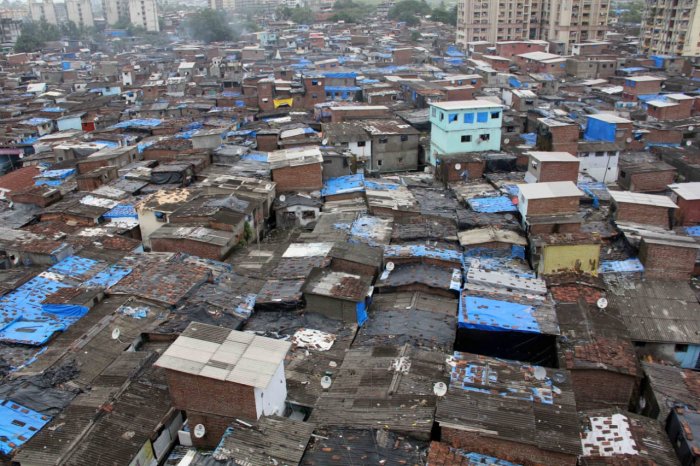
Dharavi has been put under close observation after 3 cases of the coronavirus infection emerged from the region. Many buildings, shops in the neighbourhood have locked themselves to keep all the visitors out.

The cases of Coronavirus in Maharashtra have skyrocketed lately. A total of 490 positive cases, including foreign nationals, have emerged in Maharashtra, making it the state with the highest number of COVID-19 cases nationally. Mumbai, the financial capital of the country and Maharashtra’s capital has been in the grips of the deadly contagion, with 47 fresh cases surfacing on Friday. As many as four people have died of the contagion in Mumbai and the officials are afraid that the city might fast devolve into another coronavirus hotspot like Delhi after Tablighi Jamaat connection with the Dharavi death was discovered.

Last month, several hundred people from across India and abroad had attended the Islamic religious conference by the “Tablighi Jamaat” preachers at the Banglewali Masjid, the Mosque near the Hazrat Nizamuddin Dargah. Many cases of coronavirus deaths have now been traced to the Muslim event at the Banglewali Mosque which had seen a large gathering. Muslim clerics of Tablighi Jamaat organised a congregation in violation of the government’s lockdown orders, providing a conducive environment for the novel coronavirus to proliferate. As per conservative estimates, the congregation organised by Tablighi Jamaat was attended by more than 2000 people, both from various parts of the country as well as from abroad. Authorities are now scrambling to trace and identify the event attendees, who are believed to be “high-risk” carriers of the infection, to avert a snowballing coronavirus crisis in the country.

India Today’s Rahul Kanwal deletes infographic on Tablighi Jamaat: A saga of ‘being apologetic about Islamism’ and wildly incorrect data

As the Tablighi Jamaat which met in Delhi at Nizamuddin during the first 2 weeks of March has become the epicentre of the Novel Coronavirus spread in the country, media has started reporting how much of the total Covid-19 cases in the country is related to the congregation. In this regard. India Today’s news director Rahul Kanwal had posted an infographic on Twitter last night, but now he has deleted that post, raising speculations on why he did that.

The infographic, prepared by India Today’s so-called ‘Data Intelligence Unit’, which is known to prepare totally misleading and illogical infographics, had an image of a skullcap and a mask, with two pie diagrams making up a face. Later Kanwal posted the infographic with difference image, without the skullcap reference. The Tablighi Jamaat is a Muslim religious congregation, and this jamaat has contributed to almost one-third of coronavirus positive cases in India. Therefore, although it may be accused of Islamophobia, the image used in the earlier infographic was representative of the situation.

Left: Deleted Infographic, Right: Updated Infographic

While Rahul Kanwal or others associated with India Today generally don’t delete completely misleading charts, the fact that he deleted this one has raised the suspicion that he did this due to criticism of Islamophobia from the usual suspects.

While Kanwal was attacked by Islamists accusing him of Islamophobia for the graphic, he came under attack from right wing social media after he deleted the tweet, accusing him of not having enough courage to tell the truth. Replying to one such tweet, Rahul Kanwal came up with a strange reply, as he said that he deleted the earlier infographic as the spelling of ‘nearly’ was wrong in. Although it is correct that the word as spelled as ‘neary’ in that, it does not explain why the entire infographic had to be changed due to one typo.

Although it is most likely that the earlier chart was deleted due to accusations of Islamophobia, the chart prepared by India Today Data Intelligence Unit had more serious flaws than a typo, which Rahul Kanwal has completely missed. The chart said that new cases of Covid-19 in India during 1-3 April was 1,162, while the total confirmed cases in the country was also mentioned as 1,162. In the revised chart, the DIU has corrected the total number to 2,301.

Later Kanwal realised his error and tweeted about the same. But it still doe not explain the complete change of the infographic removing earlier imagery. They could have just updated the earlier graphic with correct spelling and number, but instead, they prepared a completely new graphic, removing the art of skullcap.

Read- No pills, Sharing unwashed utensils, washroom and water for Wuzu: How Tablighi Jamaat’s lifestyle made them super-spreaders

Both the charts also mention unnecessary data points, perhaps to make it look data heavy to show the ‘intelligence’ of DIU. While the chart says the share of Tablighi Jamaat in new positive cases in the country is 56%, it also mentions that it is ‘almost 60%’. Similarly, it says that share of the Islamic group in the total positive cases for India is 28%, and nearly 30%. When the infographic is already giving the exact numbers, to give ‘nearly’, and ‘almost’ numbers are completely unnecessary.