Home Blog Page 559

UP: Madani Masjid illegally built over govt land bulldozed in Kushinagar

In Uttar Pradesh’s Kushinagar district, an illegally constructed mosque Madani Masjid was demolished by the administration on 9th February. The bulldozer action came after it was found that the mosque’s map was not approved and some part of it was built by occupying the land of the police station and municipality.

After the complaint, an investigation was started on 18 December 2024. The mosque committee did not respond to the three notices during the investigation.

The administration issued a notice of action on the mosque for not submitting the map. After this, the Muslim side went to the High Court. The High Court stayed the action on the mosque till 8th February. The very next day after the stay expired, the administration arrived with a heavy police force and about half a dozen bulldozers and razed the Madni Mosque located in Hata Nagar to the ground.

Reports say that the construction of this mosque started in the year 1999. When its construction started, at that time only the map of its two floors was approved. Later, bypassing the rules and regulations, four floors and a ground floor were constructed in the mosque. After this, when people complained about this to CM Yogi, he ordered the administration to take action on it.

The administration says that there is no land in the name of the mosque. The Muslim party has only 15 decimals of land in its name. The mosque was being made even bigger by occupying the remaining 23 acres of municipal land. The municipality repeatedly warned about this, but the Muslim party continuously ignored it.

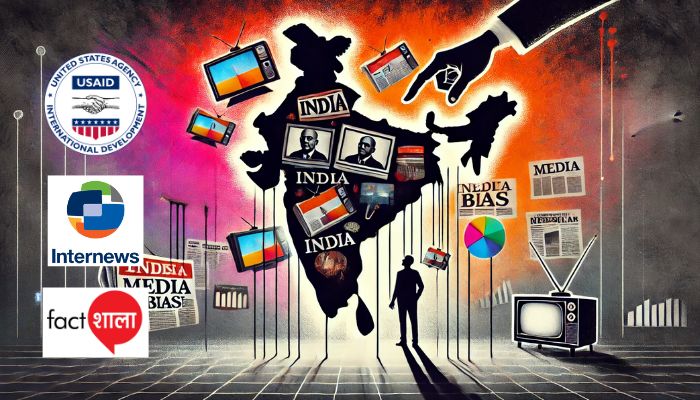
WikiLeaks exposé reveals ties between USAID funded Internews and ‘Factshala’ which has Shekhar Gupta and Faye D’Souza as ‘Ambassadors’

On 8th February (local time), WikiLeaks uncovered a massive funding operation by the United States Agency for International Development (USAID). As per a detailed thread on the social media platform X, WikiLeaks revealed that USAID funnelled around $472.6 million into the Internews Network, an international media non-governmental organisation (NGO).

Internews Network operates under the guise of journalistic development. WikiLeaks revealed that Internews Network has provided financial support to over 4,291 media outlets worldwide, producing extensive media content while engaging in social media censorship and information control strategies in the name of “fact-checking”.

Notably, the revelation came at a time when there have been growing concerns over USAID’s covert influence in global politics. Internews Network has operations in over 30 strategic locations, including Kyiv, Bangkok, Nairobi, and other places. Its footprint aligns with key geopolitical interests, raising serious concerns over its true purpose.

WikiLeaks put a former USAID official, Jeanne Bourgault, at the centre of the exposé. Bourgault leads Internews while drawing a salary of $451,000. Notably, the sum she pays herself is far higher than the standard for an NGO executive. Interestingly, her biography and those of other senior Internews figures mysteriously disappeared from the organisation’s website, deepening suspicions about the activities the organisation is involved in. The profiles, however, are still accessible via archive.org.

Internews’ dubious links and financial inconsistencies

Further investigation into Internews Network revealed suspicious financial dealings. According to WikiLeaks, there is a funding address in Arcata, California, which looks like an abandoned building—a classic sign of financial misdirection, pointing towards a possible shell company. Since 2016, the NGO’s funding has doubled, coinciding with international debates about foreign influence on global media narratives.

Another notable point that WikiLeaks raised was that Bourgault was recently seen at the World Economic Forum (WEF) 2024, where she advocated for the creation of “exclusion lists”—a method aimed at pressuring advertisers to direct funds towards “approved” news sources. The idea was to suppress independent voices in the media, effectively sidelining them by cutting off potential funding. This revelation aligns with broader concerns about growing censorship under the guise of combating misinformation.

The Indian connection – Factshala and Internews’ role to influence narratives

Interestingly, Internews Network has an India link, exposing a far-reaching attempt to influence narratives in prominent media houses operating in the country. The connection that has emerged is with a so-called media literacy programme called “Factshala“.

Factshala claims to be an educational platform for media personnel. It operates under DataLEADS, which is founded by Syed Nazakat and claims to have trained over 75,000 media professionals, reaching an audience of over 6.5 crore. Factshala is backed by Google News Initiative against “misinformation”. However, its crucial link to Internews reveals that there is USAID-backed funding involved. With this revelation, it becomes more evident that USAID was indirectly shaping Indian media education, much like its influence in other politically sensitive regions worldwide.

Source: DataLeads

Factshala has an ambassador programme which has controversial media personalities like Shekhar Gupta of The Print, Ritu Kapur of The Quint and Faye D’Souza of Beatroot News. According to the website, “FactShala Ambassador Programme, is run by DataLEADS in collaboration with The Poynter Institute for Media Studies and its digital media literacy program MediaWise with support from Google News Initiative. It is an initiative to enhance the voice of media literacy in India by empowering people of all age groups to become more critical consumers of content online. In an era of abundant misinformation the Ambassadors will provide invaluable resources and offer knowledge and insights to sort fact from fiction online and slow the spread of misinformation – an opportunity to drive positive change within the community.”

The history of Internews traces back to funding from the Ford Foundation, George Soros, and Omidyar—organisations known for their involvement in politically charged media projects. In fact, George Soros openly announced that he would pump $1 billion to remove Prime Minister Narendra Modi from his post in the 2024 Lok Sabha Elections. Fortunately, he failed.

However, the connection between Internews Network and Factshala raises serious concerns about how media literacy is being used as a tool for ideological influence, instead of educating media personnel to maintain an unbiased approach.

Factshala’s ideological tilt

It is essential to note that those behind Factshala have a clear ideological tilt. Their training programmes cannot be as neutral as the organisation may claim. They partner with groups like the Sambhaavnaa Institute of Public Policy and Politics, a think tank founded and run by Prashant Bhushan under Kumud Bhushan Education Society using his mother’s name. Bhushan is known for his left-leaning bias. Sambhaavnaa conducts workshops at its centre in Palampur, Himachal Pradesh, where training is provided by individuals with definitive political affiliations. These often extend to radicalised thinking, with Naxalite sympathisers like Harsh Mander, Sori Sori and Kavita Krishnan conducting the workshops.

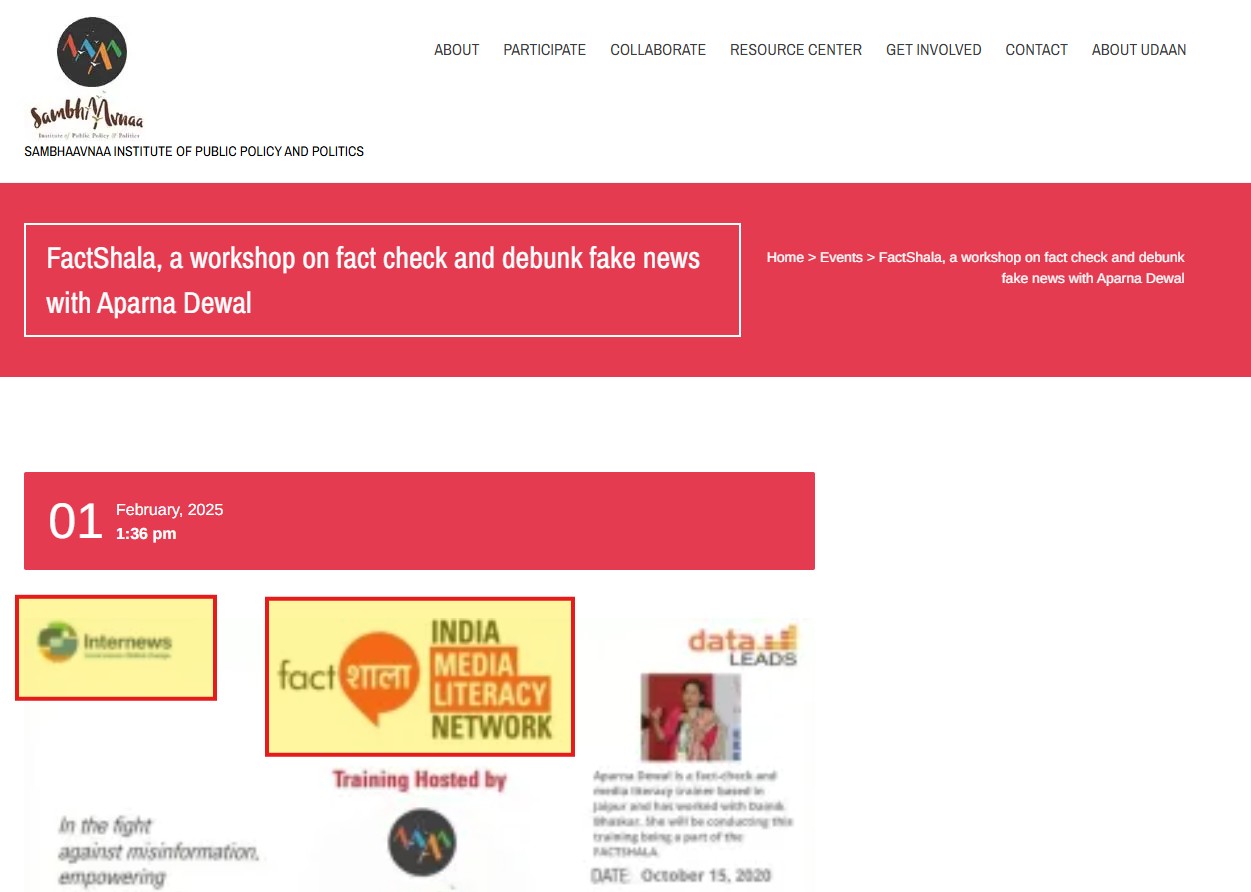
In fact, the most recent Factshala class at Sambhaavnaa took place on 1st February, 2025.

Source: Sambhaavnaa

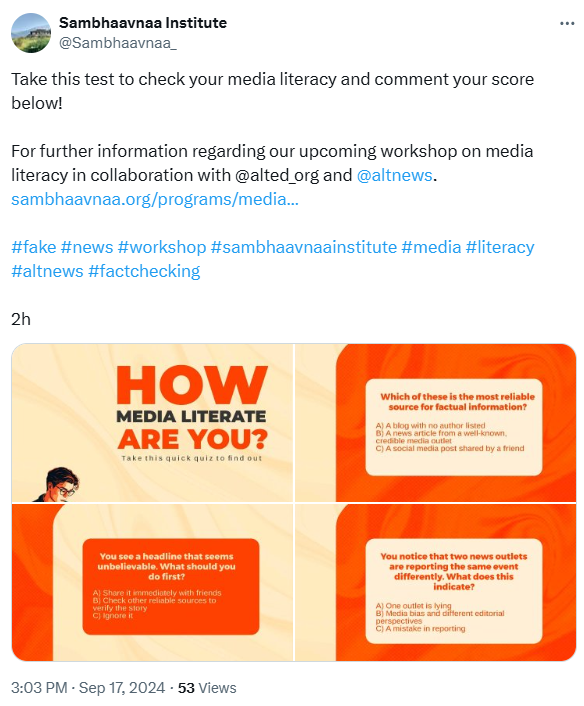
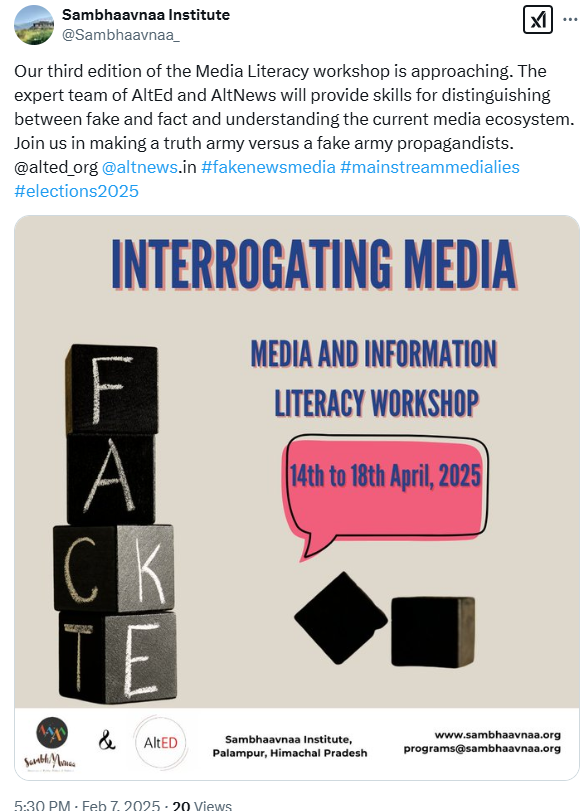
Furthermore, there is a notable link between Alt News and Sambhaavnaa. Alt News, founded by Pratik Sinha and Mohammed Zubair, is a self-proclaimed fact-checking organisation. However, Alt News is known for selective bias, which further muddies the waters for Sambhaavnaa. AltEd, incubated by Alt News, have conducted multiple sessions at Sambhaavnaa.

Source: X

While Factshala presents itself as an effort to combat misinformation, it appears that the initiative is part of a larger media influence operation in India. It aligns closely with Western-funded narratives rather than supporting independent, grassroots journalism.

Source: X

A broader strategy to control narratives

India is emerging as a major global player and is on the path to becoming a strong voice capable of influencing narratives in the developed world. At such a time, foreign influence in media education poses a serious threat to national sovereignty.

Factshala presents itself as a neutral organisation, but its ties to foreign-funded entities with a history of narrative control raise urgent questions about the real motives behind such initiatives. This warrants immediate investigation.

“Congress used all its strength to defeat AAP,” Amanatullah Khan blames Congress for AAP’s defeat in Delhi

0

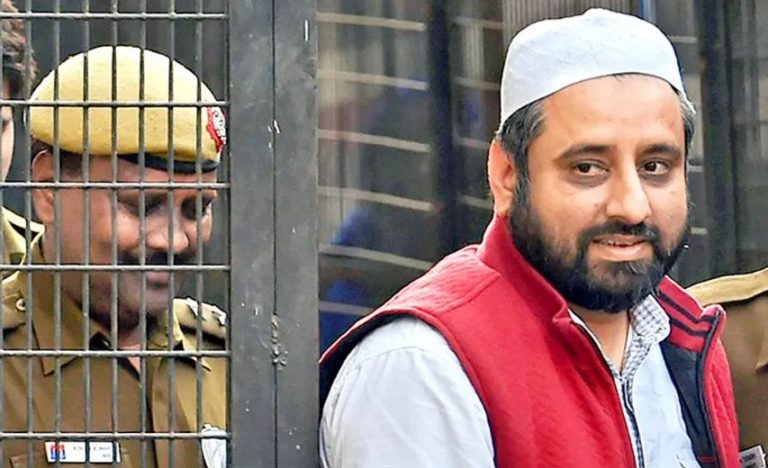
After the BJP’s decisive victory in Delhi, Aam Aadmi Party (AAP) leader and victorious candidate from Okhla, Amanatullah Khan blamed the Congress and All India Majlis-e-Ittehad-ul-Muslimeen (AIMIM) for his party’s defeat.

He alleged that both parties had contested the elections not to win but to defeat AAP and “Congress put all its strength to defeat AAP.”

“…BJP has benefitted from Congress. Congress and AIMIM did not fight to win, they only wanted to defeat AAP. They have a very crucial role in the defeat of AAP…Congress put all its strength to defeat AAP…” Khan stated on Sunday while speaking to ANI.

Reacting to Prime Minister Narendra Modi’s speech following the BJP’s victory, Khan said that the PM should now focus on governance and work for all communities without discrimination.

“BJP has emerged victorious, so now they should work with a positive approach and continue the work we have done. They must work for every community–Hindus, Muslims, Sikhs, Christians, and Dalits–without indulging in selective policies of pick and choose,” he remarked.

Notably, BJP defeated prominent AAP leaders including supremo Arvind Kejriwal from New Delhi, Manish Sisodia from Jangpura, Saurabh Bhardwaj from Greater Kailash, Satyendar Jain from Shakur Basti.

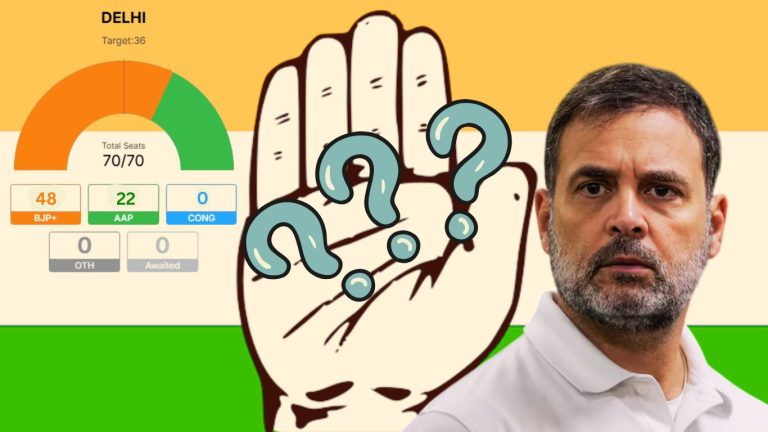
Atishi remained the sole consolatory win for AAP, as she defeated BJP’s Ramesh Bidhuri by over 3500 votes. BJP won 48 seats in a historic mandate, returning to power in the national capital after 27 years.

AAP won 22 seats while the Congress failed to win a single seat for the third time in a row. The verdict came months after the BJP-led coalition swept the Maharashtra polls and the party won Haryana, consolidating its domination of national politics.

The Congress, which was hoping for a revival in the national capital, again failed to win any seat. The party, which ruled Delhi for 15 years from 1998, registered a hat-trick zero tally in the assembly polls.

The counting of votes was taken up on Saturday morning, with votes having been polled on February 5. 

(This news report is published from a syndicated feed. Except for the headline, the content has not been written or edited by OpIndia staff)

Another election lost, another zero scored, lost deposit on 96% seats: Will Congress finally change its central leadership after Delhi elections

0

Once again failing to convince the voters in the 2025 Delhi Assembly elections, the Congress party missed another chance to break its 11-year long dry spell in the national capital. Despite the strong anti-incumbency of two terms against the Aam Aadmi Party government in Delhi, the Congress party could not capitalise on the opportunity.

This was the 6th successive time that Congress drew a blank in an election in the National Capital. The party has scored a duck in the last 3 Assembly elections, and also in the last 3 Lok Sabha elections held in Delhi. Embarrassingly, Congress also lost its deposit in 67 out of 70 seats during the 2025 Assembly elections.

Harping on issues like ‘Constitution in danger’, ‘caste census’ and ‘RSS ideology’, the Congress leadership appears to have lost touch with the ground. The party is not able to tap into the issues of the voters and is refusing to let go of its recurring failing campaign strategies. Stuck in a loop of election failures, the party’s electoral aspirations have sunk so low that it seems to be deriving satisfaction from the election victory and defeat of its opponents. For example, in the 2024 Lok Sabha elections, the Congress party was thrilled to see BJP forming the government with fewer number of seats.

The Congress party, having consistently failed to present itself as a viable alternative, has apparently been reduced to a ‘Vote Katwa‘. In the current elections, while the party failed to get a single seat, its vote share recorded an increase of a mere 2 per cent, seemingly cutting at the voter base of AAP. The vote share of AAP dropped by 10 per cent from 53.57 per cent in the last election to 43.55 per cent in this election. BJP registered a 7 per cent increase in vote share from 38.52 per cent in the last election to 45.76 per cent in this election.

Rahul Gandhi and his caste census rant

The Congress party struggled with the lack of a sound election strategy, strong leadership and clear direction in the 2025 Delhi Assembly elections. There was a lack of clarity on the issues the Congress was fighting on as well decision-making by the top leadership. The Congress election campaign suffered from organisational mismanagement as well as the unwillingness of some of its leaders to contest the elections.

Additionally, Congress’ on-and-off relationship with the AAP also played against it. In the initial phase of the election campaign, the Congress party aggressively attacked the AAP government in Delhi calling it out for not fulfilling its promises. But later on, being an INDI Alliance ally of AAP, Congress weakened its attack on the party leaving the party cadres in a state of confusion.

Besides, the top leadership of the party, including Rahul Gandhi and Priyanka Gandhi, were nearly absent from the election campaign. Rahul Gandhi was away from the campaign for about two weeks, practically leaving the party leaderless. His entire election campaign revolved around caste census, the age-old ‘danger to the constitution’ and the capture of state institutions by the BJP. Among these issues, Gandhi raised the issue of caste census with full fervour suggesting how AI could be used to conduct the caste census and how the use of AI could ensure increased participation of Dalits, OBC and Adivasis in the country.

None of the issues he raised resonated with the people of Delhi. This goes on to show how disconnected the Congress leadership has grown from the ground voter. Be it the Lok Sabha elections or the State Assembly elections, the Congress party’s issues remain unchanged regardless of the voter it is appealing to.

The identity crisis of INDI Alliance

The INDI Alliance of the opposition parties, which includes 28 political parties including the Congress, has landed its constituent parties in an identity crisis. The alliance was forged by the opposition parties before the 2024 Lok Sabha elections to counter the BJP. However, the constituent parties of the INDI Alliance often fight individually in state assembly elections leaving voters in a state of confusion. A similar situation was seen during the Delhi Assembly elections, where the Congress found itself in a fix over campaigning against the incumbent AAP government.

Interestingly, the Congress’ INDIA bloc allies are blaming the party for the entire opposition’s failure to defeat the BJP. Senior Samajwadi Party leader Ram Gopal Yadav said that the attitude of the Congress was very bad during the Delhi elections for attacking its ally Arvind Kejriwal. CPI General Secretary D Raja also held the Congress party responsible for the victory of the BJP and said that the election results were a wake-up call, particularly, for the Congress. He said that the opposition needs introspection and unity to save the Constitution.

The future of the Congress party does not appear very bright with the same leadership and election strategies. The party is in dire need of a major overhaul in its central leadership as well as election strategies. Rahul Gandhi has been a consistently bad performer on the election front. Despite this, the Nehru-Gandhi family-led party refuses to introspect and provide opportunities to other leaders from the party.

No Chicken Biryani on sundays, only Beef Biryani due to “popular demand”: Notice from Aligarh Muslim University goes viral

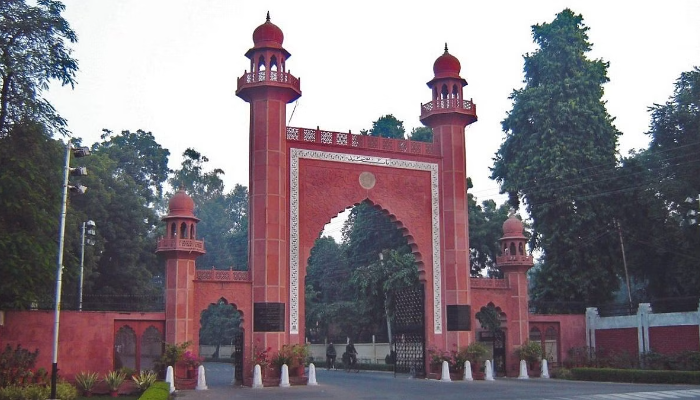
Aligarh Muslim University has always been embroiled in one controversy or the other. Now, they have entered a fresh controversy on Sunday, February 9, with their notice about the change in the menu at the University located in Uttar Pradesh.

A notice by the University on a change in the menu from Sunday has gone viral on social media. The notice said that due to popular demand, instead of Chicken Biryani, Beef Biryani will be served in Sunday lunch menu. The alleged notice also hoped that the residents of the University enjoy the new menu.

The notice is apparently about the food menu in the Suleman Hall mess in Aligarh Muslim University. The notice bears the names of Mohammad Faizullah and Mujassim Ahmed Bhati, of the Senior Food Dining Hall.

The notice says, “This Sunday’s lunch menu has been modified based on popular demand. Instead of Chicken Biryani, we will be serving Beef Biryani. This change is in response to numerous requests from our resident members. We hope you enjoy the new addition to our menu.”

Taking cognisance of the viral news, Aligarh Police commented that having taken note of it, they are acting on it as per the rules.

Notably, Aligarh Muslim University has 20 hostels for male and female students which serve 3 meals a day to the residents.

Meanwhile AMU Proctor Professor Mohammad Wasim Ali told ETV Bharat that it was a typographical error. Apparently they typed Beef Biryani instead of Chicken Biryani while talking about the change in menu from Chicken Biryani.

While AMU is promising Beef Biryani to its residents, it is important to note that under the Uttar Pradesh Prevention of Cow Slaughter Act, 1955, the slaughter of cows, sale and transport of beef is prohibited and causing physical injury to cows and their progeny is considered a criminal offence.

Currently, cow slaughter is punishable with a 10-year jail term in the state, and may also invite a fine of up to Rs five lakh.

Arnab Goswami tears into Arvind Kejriwal, exposes his contradictions and lies one by one: Details

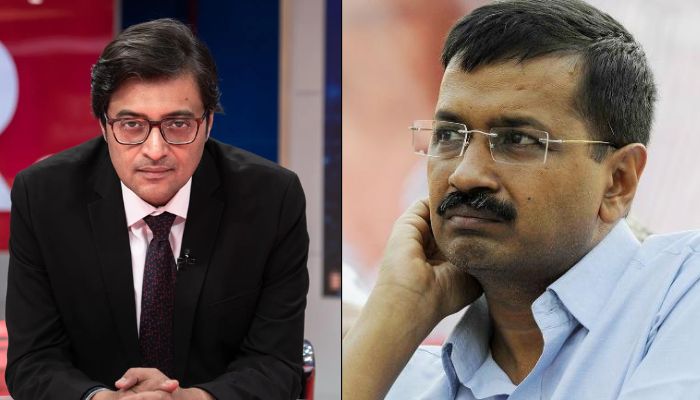
On Saturday (8th February), veteran journalist Arnab Goswami tore into Aam Aadmi Party (AAP) supremo Arvind Kejriwal following his shameful defeat in the 2025 Delhi Vidhan Sabha election.

Goswami remarked, “The problem is Arvind, from 2015 to 2025, you forgot your true purpose. You said you would be an activist. Today, your whole political life is a story of dangerous contradictions.”

He stated, “First you (Arvind Kejriwal) said I would not join politics, then you joined politics. Then you said you would not take security, you took security. You said you would move around in a Waggon R car you have a luxury fleet around you right now of SUVs. You said I would never take a government bungalow, then you built yourself a hundred crore Sheesh Mahal, which is so embarrassing.”

“It looks like Mar-a-Lago. Even Trump does not have a palace like that. Then you fooled the people. You said you will be a party of technocrats. You said I am an IITian. We are a party of the educated. But today, you are a partner of people like Tahir Hussain and Amanatullah Khan. And the irony is they are doing better than you,” Arnab Goswami continued.

“You said that you would create an anti-corruption ecosystem. Today, when there are investigations against your corruption, you are the first person to protect yourself by blocking the ED, CBI, and Anti-Corruption Bureau. You said as soon as an allegation is made against a politician, they should resign. Then you went to jail. You refused to resign,” he further added.

Arnab Goswami exposed Kejriwal’s U-turns. He said, “You made Manish Sisodia resign. But you held on to your chair. So you created two rules within your own party. One for Manish Sisodia and the others and one for yourself. Then you said you are against Parivarwad. The moment you went to jail, you followed the Rabri Devi model. You installed your wife to lead all the rallies because you were insecure of everyone else.”

“You made your wife address from the Chief Minister’s chair, the same chair that Atishi refused to sit on her first day as Chief Minister of Delhi. But most importantly, you said that in your whole life, you will never ally with the Congress party. Days after your first election, you went in with the Congress. You enthusiastically became part of the India Alliance,” Goswami tore into the AAP supremo.

What next for AAP: After Delhi’s defeat, is Punjab also at risk

8th February came as an earthquake for the Aam Aadmi Party (AAP) shaking their foundations. The Arvind Kejriwal-led political party saw its “fort” slip out of its hands as the Bharatiya Janata Party (BJP) emerged victorious in the 2025 Delhi Assembly Elections. Critics are calling it AAP’s worst electoral defeat since its inception, as the party had become a “synonym” for the ruling government in Delhi among its followers.

With this defeat, the political survival of AAP is now being questioned. More importantly, the impact of the loss in Delhi is expected to go beyond the national capital and have a lasting effect on its hold over Punjab as well. AAP’s national ambition was never considered a real possibility, at least in the near future, but even its critics agreed that it can rule Delhi and Punjab for a long time, but now one of them is gone.

Will Punjab slip away too from AAP?

In 2022, AAP secured victory in Punjab as the party’s Punjab chapter piggybacked on the “Delhi model of governance”. Since coming to power in Delhi, AAP leaders, especially Arvind Kejriwal, had painted a very shiny picture of AAP’s governance—an image that projected good governance, free electricity, and welfare schemes. However, as Delhi voters have now clearly turned against the party, and more importantly, against Kejriwal himself who lost his own seat, it is going to be extremely tricky for AAP to save Punjab in the future.

The same community that gave AAP its political rise in Punjab is also now drifting away. Questions are being raised about AAP’s credibility, its leaders, and its governance model. AAP’s situation in Punjab is already far from stable. Farmers are unhappy with the current government, the state government’s debt is rising due to freebies like free electricity, and above all, there is almost no investment coming from business houses.

With Delhi’s loss, the risk for AAP in Punjab is expected to intensify. There has always been a perception that the Punjab government is being controlled remotely by Kejriwal from Delhi. This perception has hurt Bhagwant Mann’s position as Chief Minister in the state. As Kejriwal’s influence weakens, there is a possibility that he will find it difficult to influence the decision-making process in Punjab. In short, Punjab could soon become another lost battle.

The funding crisis – End of AAP’s national dreams?

AAP has always come under fire for its massive advertising campaigns, which were often disguised as governance promotions. These advertisements were published across the country, even though AAP had no presence in those states, and Delhi Government had no role there. The idea was to establish Kejriwal as a national leader. The money came from the Delhi Government’s advertisement budget, which rose exponentially over the years. Delhi High Court, from time to time, raised questions over ad spending by Kejriwal Government.

Now, as the party has lost its grip on Delhi, AAP’s advertisement funds will dry up. The party claims to have no money anyway. The only way out for AAP would be to publish advertisements via the Punjab Government, but that would put immense pressure on the cash-strapped Mann-led government, which is already facing scrutiny from the Punjab and Delhi High Courts over ad spending.

Who will lead AAP if Kejriwal is jailed?

Another major challenge for AAP is the possibility that Kejriwal may soon go back to jail in the liquor scam. Multiple cases are active against Kejriwal, Manish Sisodia, Satyendar Jain, and others. Atishi, who is among the few leaders who managed to secure victory in the 2025 Delhi Assembly Elections, was called a “temporary CM” by Kejriwal. Even Delhi LG had objected to it. AAP is currently in chaos, and Kejriwal won’t relinquish control of the party to Atishi, one senior AAP leader who won her seat in Delhi.

Moreover, Atishi, Saurabh Bharadwaj, and others do not have the mass appeal that Kejriwal and Sisodia enjoy. Bhagwant Mann could be a possible face to run AAP, but that would lead to a massive ego clash between him and Kejriwal. Raghav Chadha is anyway busy with his Rajya Sabha commitments. However, Kejriwal’s wife, Sunita Kejriwal, may lead the party in his absence, as she did when he was in Tihar Jail in connection with the liquor scam.

But that is only a theory. In reality, AAP seriously lacks a succession plan if a leadership shift becomes necessary in the future.

The road ahead – A slow collapse?

With no financial backing from Delhi, Punjab slipping out of control, and key leaders entangled in legal troubles, AAP’s future looks bleak. The party’s dream of national expansion is effectively over, and even retaining Punjab beyond 2027 will be a challenge.

International Development and a forgotten Laos war: USAID, the Heroin Golden Triangle and CIA favoured militias

The USAID has long been regarded, at least unofficially, as a regime change operator of the USA. The United States Agency for International Development (USAID) was set up in the early 1960s to administer humanitarian aid programmes on behalf of the US government – however, behind the lofty punch words, lies a murky world of regime change operations, clandestine funding and undermining of sovereign nations. 

After Donald Trump took the oath as President of the United States, he tasked billionaire Elon Musk with heading DOGE (Department of Government Efficiency) to ensure efficiency in government spending. Musk disbanded USAID and dubbed it a ‘criminal enterprise’. Ever since, there has been intense scrutiny on how USAID and the US State Department have indulged in regime change operations and created chaos in several nations across the world for decades. With the heightened scrutiny, it is perhaps time to revisit a forgotten war by the deep state that evidences the shady, clandestine operations of the US deep state and how it has contributed to destabilising nations across the world.

The Insurgency in Laos and the creation of the Heroin Golden Triangle

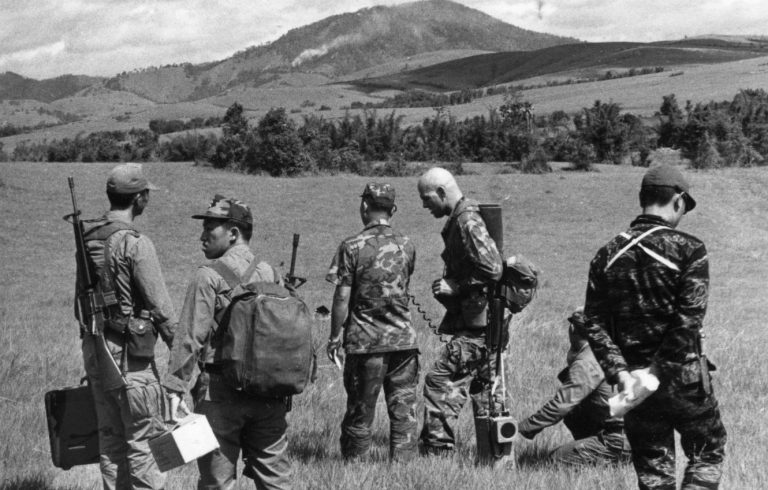
At the peak of the Cold War between the West led by America and the Communist bloc, led by the Soviet Union, America prosecuted a war in Laos between March 1964 and March 1973. For close to a decade, the Royal Laotian forces, CIA-trained tribal guerilla forces, CIA-funded Thai mercenaries and US forces waged war against North Vietnam and Pathet Lao (a Laotian Communist Rebel force).

The keynote of the conflict was ‘Operation Barrel Roll’ – an air support campaign in which US Navy and Air Force bombers dropped 260 million bombs on the soil of Laos or roughly 100 bombs for each man, woman and child alive in Laos at the time.

Laos was officially neutral in the Vietnam conflict, so the entire war was waged in secret, as it was in contravention of the Geneva Convention.

In this brief article, we will record the involvement of USAID, a civilian agency of the US Government tasked with development aid. In reality, USAID used the cover of humanitarian aid to fund various aggressive programs in far-flung corners of the world.

Meo Tribes and Irregular Forces

The Hmong or Meo are an ethnicity originating in a contiguous area of Thailand, southern China and Laos, with a small minority in North Vietnam. This community was subject to pressure from the Han majority of China during the Qing Empire and were forced southwards. They are one of the official 56 nationalities in China, registered as Miao. 

Missionaries from the Netherlands and the United States worked in these regions from the 1930s onwards and started finding traction during the 1950s when Hmong people began to convert to Christianity in numbers.

For nearly a century, the Meo of Laos had been largely left to themselves by the majority Buddhist lowland and mountain Lao tribes. However, this changed drastically when the civil war in Vietnam broke out. The United States had been active in Vietnam for decades in combating Communism. Vietnamese influence created a Communist party in Laos that threatened to topple the monarchy. To counter their influence, the United States, through various agencies, began to prop up the Royal Laotian Army. The Army proved fairly ineffective in dealing with a North Vietnamese occupation and in countering the Pathet Lao, a Communist guerilla movement said to be propped up by the Vietnamese.

This is when the CIA began to utilize contacts made with the Hmong/Meo people.

In their hill habitat, Meo were isolated from lowland Lao people, were migrants from China and had less than 200 years of history in the Laos highlands. They were an ideal population to recruit an army –  culturally and by religion, insulated from the rest of the country and malleable to outside influence.

The CIA built an army of Meo insurgents, to which nearly 60% of the adult male population of Meo signed up. A declassified RAND Corporation from 1972 (Balufarb) describes how USAID money for refugee relief was routed towards food security programs for the families of Meo fighters. This security and payments provided to the family by USAID is what gave the men the incentive to enlist in the irregular fighting force. 

USAID funds also went towards creating small airstrips close to the North Vietnamese border.

Opium – An Old Scourge

In the 19th Century, British and American traders flooded China with opium sourced from Indian farmers. The Anglo-American rulers used financial might and the British Navy to prosecute the Opium Wars, designed to keep China open to opium imports. At the same, Britain used its colony India to cultivate poppies. Entire American business and political dynasties were created on the wealth from the opium trade in China.

However, with India’s independence and Mao’s takeover of China, both the supply and demand for the opium trade were affected.

From the 1920s onwards, Indian independence activists struggled and began restricting poppy cultivation. As a result, poppy cultivation was forced to move to the ungovernable regions of the Laos highlands, Thai border regions and Burmese provinces like the mountainous Shan region.

The Meo were among the tribes with whom Chinese traders had maintained contact, due to their habitation of the Chinese provinces of Yunnan, Sichuan and Hunan provinces. Here, they handed out contracts to Meo farmers to cultivate poppy. The Chinese triads provided armed support to this illicit trade. 

In the 1950s, a victorious Mao began a brutal crackdown on opium traders – executing thousands of peddlers, and gang members, destroying poppy crops forcefully and rounding up millions of drug users into re-education programs.

Faced with this loss of livelihood, the drug industry shifted to a new market – American hippies of the 1960s and a new drug – the even more potent heroin, synthesised from opiates. 

The early postwar wave of heroin was in the ghettos of industrial towns in the North-Eastern and Mid-Western United States, dominated by African Americans. Italian organized crime syndicates controlled this trade and law enforcement authorities were somewhat lenient, due to the racist influence of the time.

In the 1950s, heroin entered popular American culture through prevalent use among jazz musicians and then entered the beat culture of the 1950s, precursors to the hippies of the 1960s. Heroin was initially processed and smuggled into America by the Corsican and Sicilian organized crime cartels. 

The Vietnam War brought thousands of American servicemen to these lands where opium had been in use for centuries. The restraint-free environment, the glamour of heroin usage that the musicians and entertainers gave and the stresses of war created the perfect conditions for a market. By the end of the 60s, nearly 10% of American servicemen in Vietnam were addicted to heroin.

Enter the CIA

French, and British colonial powers, as well as the Thai and Vietnamese royal powers, had long used opium production as a means of generating income. Marginal tribes like Shan, Tai and Meo living in remote, ungovernable regions and with few other means of livelihood provided the farming labour to cultivate the crop.

Yunnanese and Hong Kong triads had controlled the trade and distribution. Now, warlords in the Royal Laotian Army and tribal militias moved into this business, with the American Government agencies looking the other way and in some cases, even assisting them. 

The earliest involvement of the CIA in this trade was when they financed the entry of fleeing Kuomintang forces into the Shan region of Burma, in the hope that they would regroup and invade Southern China. As had been their wont, the KMT had no appetite for a real fight. What they did well, was, however, to settle in the Shan hills and take over the poppy cultivation protection and opium trade businesses. They sold the opium to General Phao Sriyanonda of the Thai Police, who was propped up by the CIA as a rearguard for the KMT. General Phao was supplied with aircraft, motor vehicles and boats ostensibly to combat the Communist menace, but which he used to make Bangkok the hub for 30% of the world’s heroin trade. This arrangement lasted until the KMT were evicted by the Burmese military in 1961. The KMT are long gone, but the supply trains established by them, in the mountainous regions of Shan State into northern Thailand form the core of the Golden Triangle to this day.

While the overland route to Bangkok continued, with the creation of the Meo irregular force in the 1960s, a new means of transport was created, air cargo of opium, ferried to Saigon from the airstrips helpfully financed by USAID and constructed by the CIA. Since this was an entirely ‘off-the-books’ operation, aircraft from the World War 2 Chinese operation – again privately run as a corporation – were repurposed for supporting the guerilla war in Laos. General Vang Pao of the Meo Irregulars and General Rattikone of the Royal Laotian Army were the big players in this operation. 

Newspaper reports in the US, vehemently denied, speak of large-scale opium trafficking and even heroin processing laboratories in Laos, run by General Rattikone. Opium and heroin were airlifted using aircraft supplied by the CIA to Saigon, where they were sold to American GIs.

The Party Ends

By 1971, the Nixon administration began to note the dangers of large-scale heroin usage and the alarming rates of addiction in the American military. A war on drugs was launched, with large sums given to the identification of sources of heroin and blocking routes. Though the RAND Corporation assessment notes with approval the utility of tribal guerilla movement as opposed to a conventional force like the Laotian Armed Forces, AID funding was reduced to the tribal program, starting in 1968. In 1972, with Nixon’s rapprochement with China, the importance of Laos in the anti-Communist fight began to reduce. After the exit of the US from Vietnam in 1975, American interest was reduced further. Since the engagement in Laos had always been a secret, this became a forgotten war.

However, the lessons were learned – the creation of informal CIA-funded militias, allowing favored militant groups the benefit of drug profits and use of USAID money for support programs under the guise of relief. This is a template repeated in Colombia in the 1980s and in Afghanistan in the 2000s.

Many former Hmong guerillas and their families were rehabilitated and accepted as refugees in the US.

The Golden Triangle, however, continues to be a source of drugs and is a lawless region racked by ethnic conflicts and ruled by warlords. 

Chhattisgarh: Sai Tangartoli, once a tribal village, now a Muslims dominated panchayat, read how the demography changed

0

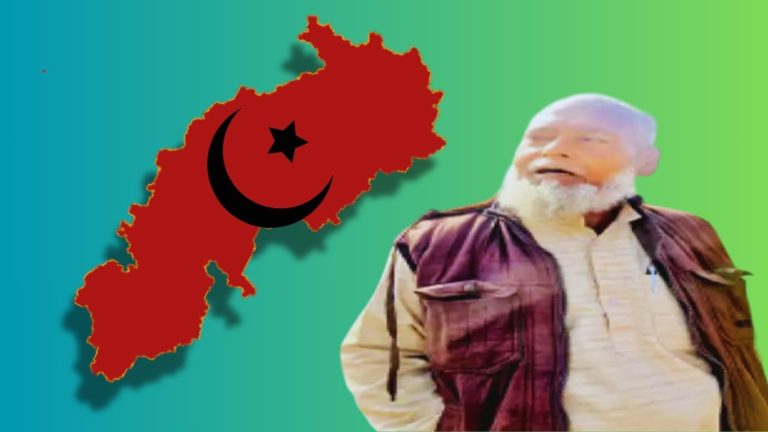
Almost the entire tribal population in Sai Tangartoli village panchayat in Jashpur district of Chhattisgarh has converted to Islam. The village, which is a reserved tribal seat, was once a tribal village, however, the demography has changed over time. Out of a total of 1760 votes, 90 votes are Christians, while the rest are Muslims.

As per a report by Dainik Bhaskar, village panchayat elections are going to be held in Sai Tangartoli village. A person named Baris Ali, who once used to be Prasanna Ram, is going to contest the village panchayat elections. A local villager named Brijesh Singh informed that in 1970, the village had 32 tribal and 30 Muslim houses. He said that Prasanna Ram’s family was the only tribal family but they too converted to Islam. Prasanna has changed his name to Baris Ali but he introduces himself as Prasanna Ram. Out of the last 25 years, people from his family have been leading the village panchayat elections for 15 years.

The only tribal in the village, Prasanna Ram, changed his name to Baris Ali after converting to Islam

As per, Prasanna Ram alias Baris Ali, he belongs to Gaud tribal caste. He is a proud Muslim who has grown a beard and offers namaz five times a day. He has not been to Hajj yet but is hopeful. “I came here 50 years ago. I have 2 sons and 4 daughters. My son offers namaz every Jumma (Friday) and is the Sarpanch of the village. But I am not satisfied with his work, therefore, I will make my wife Jaymuni Bai and daughter Shaghufta contest elections on the reserved women’s seat this time”, Prasanna told Dainik Bhaskar. There are a total of four candidates including Sumanti Bai, the second tribal wife of one Jabbar, and Marsela Ekka, former Sarpanch and wife of one Ahmed.

Several Muslim men have married tribal women who have been contesting elections on the tribal seat

Before 1999, the village used to be a general village panchayat but later became a reserved tribal seat, as informed by Deputy Sarpanch Naved. He further said the Prasanna Ram was the only tribal in the village back then. He contested the panchayat elections and won. In 2004, Ahmed married Marsela Ekka, she contested the elections and won. In 2009, wife of Prasanna Ram was elected as Sarpanch. Later in 2013, Jabbar made his trial wife Praveen Kujur contest the elections and she won. At present, Dubraj, son of Prasanna Ram, is the Sarpanch. Around 6 Muslims in the village have married tribal women. Jabbar has four wives. In the village elections, either these tribal wives or members of Prasanna Ram’s family have been winning the elections.

The village is notorious for cow slaughter

According to Jashpur SP Shashimohan Singh, the village used to be a safe haven for cow slaughter. Cows from across the state were brought here to smuggle to Bangladesh. “When I came to Jashpur, I was told that the entry of police is prohibited in the village and any policeman who entered the village was for sure attacked,” said SP Singh. “I planned operation Shankhnad. First, we sent the person providing them cover to jail. We confiscated the vehicles caught smuggling cattle. One day when we entered the village in a planned manner, we were attacked by the women. We pacified them and seized several cows. Now the situation in the village is normal,” he added.

As BJP wins big in Delhi Vidhan Sabha election, ‘political pundits’ blame Congress for making AAP lose: Here is why they are wrong

The Aam Aadmi Party (AAP) took a severe drubbing in the 2025 Delhi Vidhan Sabha election, losing its seat count from 62 in 2020 to just 22. The BJP emerged victorious and bagged 48 seats. The Congress party failed to win a single seat.

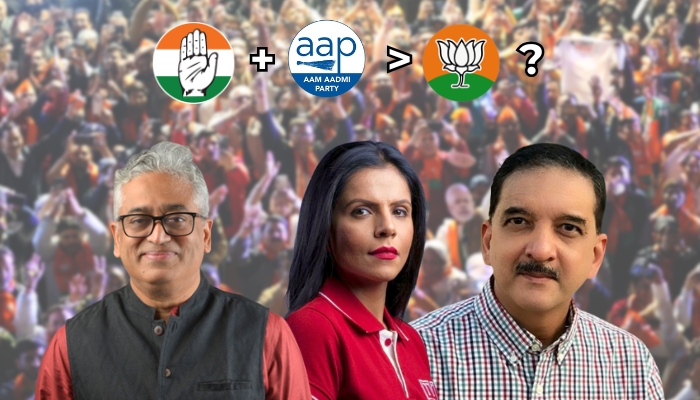
Political pundits and controversial ‘journalists’ soon began claiming that had Congress entered into a political alliance with the Aam Aadmi Party, the latter would have ended close to the majority mark.

They even went on to reprimand the Congress for somehow letting the BJP win. ‘Political pundit’ Sumanth Raman lashed out, “Congress
has done a near-perfect demolition job. Predicted this both on TV and on X days ago.”

He claimed that AAP would have won 10 extra seats if Congress somehow did not ‘cut votes’, taking the total tally of the Arvind Kejriwal-led-party to 32 and close to the majority mark of 36.

Controversial ‘journalist’ Rajdeep Sardesai made similar allegations, although he suggested AAP would have benefitted in 13 Vidhan Sabha constituencies (instead of 10) without a direct contest with the Congress party.

He brazened out, “As many as 13 constituencies where Cong candidate got more votes than the gap between BJP and AAP.. (Cong finished second in one constituency). Had AAP and Cong fought together, several more seats might have seen a neck and neck fight in Delhi.”

Similar claims were made by another ‘journalist’ turned ‘political pundit’ Preeti Choudhry. She alleged, “What if the Congress had fought alongside the Aam Aadmi Party? It was an open option until at least 2 months ago.”

“Delhi right now seems to suggest that if the Congress and AAP would have gone together, you could have won this election… It is touching 10%,” Preeti Choudhry continued.

Problems with the suggestion that the AAP-Congress alliance would be a ‘game changer’

For starters, electoral politics is not a zero-sum game. Votes do not simply transfer from one party to another, especially given the fact that AAP had originated as a counter to corruption of the Congress party.

Political pundits are using their ‘hindsight bias’ to suggest miraculous, arithmetic addition of votes along constituencies. They are making sweeping conclusions that AAP would have somehow won the election in the presence of a pre-poll alliance with the Congress.

Interestingly, political strategies are not made in isolation. Had there been a pre-poll alliance in place, the BJP would have strategised differently. A case in point is the election result of the Mehrauli Vidhan Sabha constituency.

BJP’s Gajender Singh Yadav won the seat by 1782 votes. Congress candidate Pushpa Singh had received 9338 votes. One could suggest in hindsight that in the absence of the Congress candidate, AAP’s Mahender Chaudhary would have won the seat.

It is interesting to note that Balyogi Baba Balaknath, who contested the polls independently, got more votes than the Congress candidate. He went about his own way after being denied a ticket by the BJP.

Had the BJP known about the Congress-AAP alliance, the saffron party might have given a ticket to Balyogi Baba Balaknath or persuaded him not to contest independently.

Another interesting point to note is that Congress and AAP fought in an alliance in Delhi during the 2024 Lok Sabha election. The result was a clean sweep of 7 Parliamentary constituencies by the BJP alone.

According to data points shared by journalist Padmaja Joshi, the vote share of AAP is higher in the 2025 Delhi Vidhan Sabha election than it was during the AAP-Congress coalition in the 2024 Lok Sabha election.

“This suggests that a section of the AAP’s voter base is actually averse to voting for the Congress and a mechanical addition of the Congress and AAP vote share in the 2025 elections is not the correct way to estimate the efficacy or lack of it of a possible Congress-AAP alliance,” she pointed out.

No incentive for AAP-Congress alliance

This again highlights the fact that there is never an arithmetic transfer of votes. There is however another larger point that journalist Rahul Kanwal told Preeti Choudhry when she suggested that a pre-poll Congress-AAP alliance would have ensured victory in Delhi.

He had pointed out how there was no incentive for AAP, which had an incumbent government in Delhi, to ally with the Congress party.

For context, AAP won 67 seats in the 2015 Delhi Vidhan Sabha election while Congress won 0 seats. Again, AAP won 62 seats in the 2020 Vidhan Sabha election and Congress won 0 seats.

While AAP was well aware that it was on shaky grounds this time around, it made perfect sense to not ally with a party that could only get 0 seats in 2 previous elections.

It would be mind-boggling if AAP had gone into a seat-sharing model with Congress, despite winning 62 seats last time around. And that too with a party that has nil performance in the past 10 years.

While politically motivated ‘journalists’ and ‘pundits’ alike are trying to eulogise a Congress-AAP alliance in hindsight, the overwhelming evidence suggests that it would have made no difference to BJP’s thumping victory in 2025 Delhi Vidhan Sabha election