Home Blog Page 5962

Just like poor get subsidised ration, will subsidise Whiskey and Beer: Independent candidate’s bizarre promises Maharashtra constituency

An Independent candidate Vanita Raut from Chimur village in Chandrapur district of Maharashtra has announced a bizarre set of promises, assuring the locals of the village that if she is elected to power, she would grant licenses and permits to the unemployed youth to open beer bars in the village.

(Source: Twitter)

The election letter distributed by Vanita Raut has gone viral as she asserts that she would put an end to the liquor ban in the region after being elected. She claimed in her letter that she is extremely aggrieved to see people in her constituency employ devious means to obtain alcohol. Raut says that despite the ban, the liquor sale continues to proliferate, although in an illegal manner. She assured that if she is elected to power, she would strive to get the liquor ban removed.

Raut has centered her campaign around the ban on liquor in Chandrapur district from the last 4 years. Slamming the alcohol ban, she said, “If I am elected, I will grant permission to build beer bars across the village. I will grant licenses of beer bar to unemployed youth for starting up bars and liquor shops if I secure majority in the elections.”

[youtube https://www.youtube.com/watch?v=lWJ2fSs1kbI]

She further continued, “Just like people below the poverty line (BPL) get ration at a subsidised rate, similarly, If I am elected to power, I will sell whiskey and beer at a subsidised rate. A pint of beer which usually costs Rs 80 will come at Rs 20. Therefore, people will not drink it with their friends which invariably ends up in a brawl. They will bring the alcohol bottle home, along with 3-4 eggs for their children and drink with their family. This way, they would drink in limit, their children will get scrumptious meal and their family will be happy.”

Ram Janmabhoomi case: Supreme Court concludes hearing of all parties, reserves judgement

0

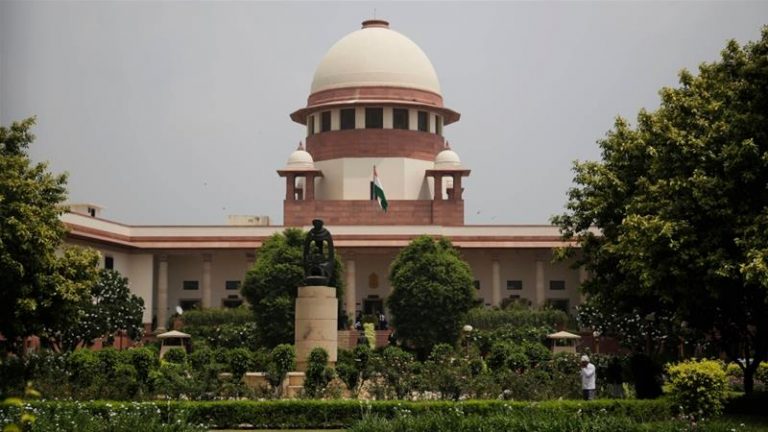
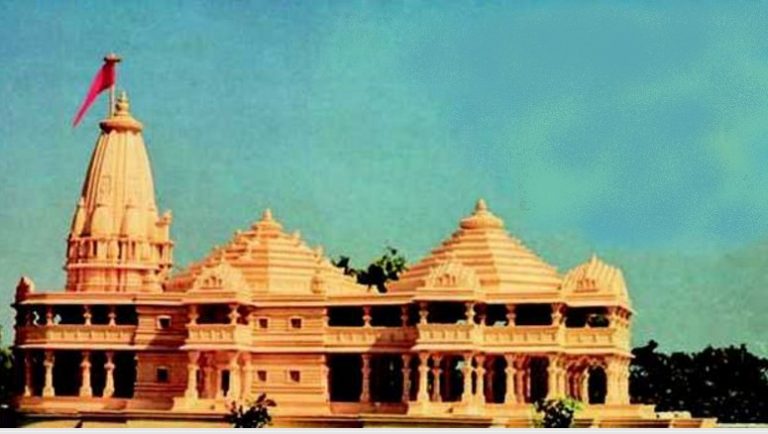
The Supreme Court on Wednesday reserved its judgement in the Ram Janmabhoomi-Babri Masjid title dispute case after hearing arguments from all the concerned parties.

The marathon hearing concluded after forty days, making the Ayodhya hearing as the second-longest in the history of the Supreme court after the landmark hearing in Keshavananda Bharati case which lasted for 68 days.

Reportedly, the Supreme Court has finished hearing all arguments in the Ayodhya case one hour before the set deadline. The Supreme Court has allowed the parties to submit their written notes over the next three days.

Senior advocate Rajeev Dhavan, representing the Muslim parties in the Ram Janmabhoomi – Babri Masjid land dispute case, suffered a meltdown and tore up a pictorial map showing the exact birthplace of Lord Ram during the hearings in the Supreme Court on Wednesday.

Read: Shia Waqf Board wants Ram Temple built, Sunni Waqf Board lawyer says ‘Hindu Taliban destroyed Babri’

The Senior advocate Vikas Singh sought to place on record the book ‘Ayodhya Revisited’ by former IPS Kishore Kunal. Senior advocate Singh is representing the Hindu Mahasabha and the book ‘Ayodhya Revisited’ talks about pre-existence of Ram Temple in Ayodhya. This was when Dhawan had a complete meltdown and it the frenzy he started tearing off papers and maps handed over to him by the Hindu Mahasabha as he strongly opposed the party in the Supreme Court.

Earlier in the afternoon, the Supreme Court witnessed a high drama on the last day of hearing after the CJI fixed 5 pm as the deadline for concluding arguments in the protracted legal battle. “Enough is enough”, had said the bench, which revised the deadline for the case from October 17 to a day earlier.

The Supreme Court is hearing a total of fourteen appeals filed against the 2010 judgment of Allahabad High Court which ordered that the 2.77-acre land in Ayodhya be partitioned equally among three parties – the Sunni Waqf Board, the Nirmohi Akhara and Ram Lalla.

Read: Shia Waqf board chief calls ‘Babri Masjid a blot to India’, says it is a ‘crime to call it a mosque’

A five-judge Constitution Bench headed by Chief Justice of India (CJI) Ranjan Gogoi had earlier asked for parties to conclude their arguments in the land dispute case to be concluded by October 17. The bench also comprises of Justices S A Bobde, D Y Chandrachud, Ashok Bhushan and S Abdul Nazeer, who are hearing appeals against the September 30, 2010, verdict of the Allahabad High Court.

The Supreme Court has been carrying out day-to-day hearing of the case and the arguments were to be concluded by 18th October but then, October 17 was given the last date for arguments. The Supreme Court had earlier warned that the parties will not be given any extra day. It is speculated that the Supreme Court will deliver the judgement on or before November 17, the day CJI Ranjan Gogoi retires.

400 govt departments going to be closed down, don’t hope for govt jobs: Pakistan minister tells students

0

Fawad Chaudhary, the science and technology minister of Pakistan on Tuesday asked the youths of his country not to look for government jobs anymore, reports The News.

Addressing the second Deans International Conference of Engineering Institutions in Islamabad, Fawad Chaudhary said that the Imran Khan government could not provide jobs to the youths of the country. At the conference, the minister also disclosed that the government had decided to close down 400 government departments.

Chaudhry further said governments were shrinking in Pakistan or elsewhere in the world. “It is imperative to tell people that the government cannot provide jobs. If we start looking towards the government for jobs, then the framework of our economy will collapse.”

He further added that it was the mindset of the 1970s that governments would provide jobs but now the private sector has replaced the government in providing jobs. Chaudhry said it was not the government but the private sector that provided jobs adding that the government provided an environment in which new jobs were created. It is not necessary that everyone gets a government job, he added.

In the run-up to elections, the Imran Khan’s Pakistan Tehreek-i-Insaf had promised to provide 10 million jobs to the youth in its election manifesto.

A controversy broke out in Pakistan following Chaudhary’s announcement. Later, the minister took to Twitter to say he was amazed how a headline was made after taking his statement out of context.

He added, “I said that the private sector and not the government provides jobs. The government has to create an environment where jobs are available. It shouldn’t be the case that everyone is looking for a government job.”

Hindus have been demanding restitution since 1528 for the Ram Temple destroyed by Islamist barbarians, Rajeev Dhavan

Senior Advocate Rajeev Dhavan, who is representing one of the Muslim parties in the Ram Janambhoomi dispute, is having a pretty bad day. After suffering a complete meltdown in the Supreme Court when he ended up tearing documents and maps submitted by the Hindu Mahasabha, he has been reduced to making obtuse arguments in front of the Bench.


If the argument in favour of Babri Masjid is going to be made on the basis of restitution, then it’s not one that the Muslim parties have any hope of winning. There is enough evidence that proves the Masjid was indeed built after the destruction of a Temple and that Hindus have been fighting for restitution since 1528. In addition to that, there is a great deal of historical evidence which shows that the destruction of the Ram Mandir at Ayodhya was not an exception but the norm during the rule of Islamic barbarians.

Persecution of Hindus was state policy under Islamic invaders and the destruction of Temples was pursued with a religious zeal. It is not an accusation that is borne of Hindu fundamentalism or bigotry, as the Left and the Islamic fundamentalists would have us believe. In fact, if the spirits of Islamic invaders were to resurface today, they would be disgusted and revolted by how they are being portrayed by these elements.

The Islamic invaders never shied away from proclaiming that they were fighting, raping and pillaging the Kaafirs for the sake of Jihad. They took pride in it and took great joy in the persecution of idolators. If Aurangzeb were told that he was one of the most liberal Emperors to have ruled, as Rajeev Dhavan argued in Court, he would bang his head against the wall and keep banging it until his head split open. These are not statements borne of bigotry, these are facts.

Therefore, the argument by Rajeev Dhavan that the Muslim parties merely want the Babri Masjid to be returned to them and seeking a verdict in favour of it on the basis of restitution does not work in their favour. The Babri Masjid was the product of religious bigotry and persecution, a stone structure that was evidence of the atrocities Hindus were forced to endure during the rule of Islamic invaders.

Read: Ayodhya Dispute: Muslim parties seem to have given up hope for a favourable verdict and are afraid of the floodgates opening

For centuries, Hindus have been waiting for the restoration of the Ram Temple at Ayodhya. What happened on the 6th of December, 1992 was the outburst of collective anger of having denied the basic right to have a Temple at the birthplace of the King of Ayodhya. It may be difficult for some people to comprehend but Rama will always be the King of Ayodhya and He will always rule the hearts and minds of pious Hindus.

The restoration is important not merely for the purpose of justice but for the sake of our civilizational identity. The restoration of the Ram Mandir at Ram Janambhoomi will be a confirmation of the fact that our civilization is not destined for the museums. We are a living and breathing civilization, our Gods are still worshipped here and a legacy that goes back thousands of years is still cherished and carried forward by the people of this land.

Rajeev Dhavan says that the verdict should be in favour of Babri Masjid and he seeks restitution. Unsurprisingly, he also believes Aurangzeb was one of the most liberal rulers. If India is to emerge as a power to reckon with and fulfil its greater objective in the world, our country cannot afford to be held hostage to such a delusional worldview. We must confront our past on honest terms instead of attempting to whitewash the brutalities of the horror Hindus suffered in medieval India.

Read: Ram Janmabhoomi case: Senior Advocate Rajeev Dhawan representing Muslim parties has a complete meltdown, tears up maps, papers

A strong country cannot be built upon a foundation of lies. India was not born on the 15th of August, 1947. Our country was the manifestation of the great Hindu Civilization in an era of nation-states. And that is why the Ram Mandir must be rebuilt. The restoration of it would be akin to a phoenix rising from its ashes. The restoration of the Ram Mandir at Ram Janambhoomi does have the potential to open floodgates and initiate new dawn for our civilization.

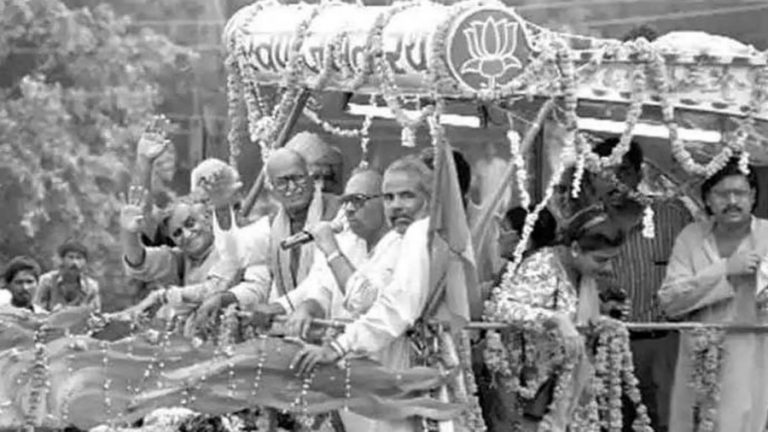
The stories that are told of the Ram Janambhoomi Movement fill Hindus with pride and joy but also make them grieve for the Mandir that has not yet been built. The Ram Janambhoomi movement was the first true demonstration of Hindu unity in Independent India. It was a reminder to those who seek to divide us that we are still one. And that sent shockwaves across the secular establishment.

The edifice of Hindutva’s utter domination of the political arena was built on the back of the movement. It has transformed and changed and accommodated new things to propel itself further but no one could ever possibly forget where it all began. At the end of the day, the Return of the King of Ayodhya to His sacred abode would mark a new beginning, a new dawn for a New India. And it is on the foundation of our civilizational identity, that we shall aspire to reach new heights of greatness as a country.

Ram Janmabhoomi case: Rajeev Dhavan representing Muslim parties justifies his meltdown in court, says CJI gave him permission

Senior advocate Rajeev Dhavan, following his epic meltdown in Supreme Court on the last day of the hearing on Ram Janmabhoomi case, justified his tearing off the papers and maps as he had done so after CJI Ranjan Gogoi asked him to tear them up. Speaking on the incident of tearing of the pages in Court in the morning session, he said: “The incident is going viral. But the fact is that I wanted to throw the pages away and the CJI said I may tear them. And I tore them so I’d say it was with the permission of Court.”


Sarcasm is clearly lost on Sr Advocate Rajeev Dhavan. CJI then sarcastically said that yes, he indeed asked the senior advocate to tear off the papers and hence he tore them off.

Senior Advocate Rajeev Dhavan, representing the Muslim parties in the Supreme Court in the Ram Janmabhoomi – Babri Masjid case had a complete meltdown during the hearing in the case today. Dhavan had torn off papers and maps handed over to him by the Hindu Mahasabha as he strongly opposed the party in the Supreme Court.

Read: Rajeev Dhawan’s effusive praise for Aurangzeb captures brilliantly the essential position in favour of Babri Masjid

The Senior advocate Vikas Singh sought to place on record the book ‘Ayodhya Revisited’ by former IPS Kishore Kunal. Senior advocate Singh is representing the Hindu Mahasabha and the book ‘Ayodhya Revisited’ talks about pre-existence of Ram Temple in Ayodhya. This was when Dhawan had a complete meltdown and it the frenzy he started tearing off papers and maps handed over to him by the Hindu Mahasabha as he strongly opposed the party in the Supreme Court.

At one point Dhavan presented such loud arguments in court that CJI took exceptions and said that the judges would get up and go if proceedings went on like this.

Though the CJI later clarified that he had indeed given permission to Dhavan to tear off papers, the fact that Dhavan resorted to such frenetic steps only go on to exhibit his apprehensions regarding the judgement into the politically sensitive case.

Today is the last day of arguments and CJI Ranjan Gogoi has announced that the bench will wrap up the hearing by 5 PM.

AMU students create ruckus inside campus after a student’s alleged suicide, attack Aligarh SP

0

A PhD aspirant studying in Aligarh Muslim University, identified as one Anas Shamsi, who had completed his post-graduation in social works, allegedly committed suicide by hanging himself from a fan inside his hostel room in the evening of October 15.

After learning about the incident several AMU students led by one Mohd Umar Farooq created a ruckus in the University campus not allowing police to enter the premises. They alleged that the administration and police arrived late.

Over 150 students of the University were booked by Aligarh police on Wednesday in connection with the violence on Tuesday night after police forcefully entered the campus to investigate the incident.

As per reports, the students were objecting to the police trying to take the body of Shamshi for completion of formalities and a post-mortem. Some students had also reportedly gathered around the VC’s lodge demanding the police to be sent back.

According to Aligarh police, six students have been identified for indulging in violence and destruction of government property. Police have registered an FIR against the students under sections 147 (rioting), 342 (wrongful confinement), 336 (act endangering life or personal safety of others), 352 (assault or criminal force otherwise than on grave provocation), 353 (Assault or criminal force to deter public servant from discharge of his duty), 332 (voluntarily causing hurt to deter public servant from his duty), 504 (intentional insult with intent to provoke breach of the peace) of IPC and section 7 in the Criminal Law Amendment Act 1932.

According to reports, the outraged students attacked Aligarh Superintendent of Police, Abhishek when he arrived at the campus to probe the alleged suicide. The students allegedly pelted stones, bricks and vandalised SP’s car. However, the SP escaped unhurt. Police forces and RAF were deployed outside the campus but the uproar continued till late in the night.

They raised slogans against the police administration and blocked them from entering the campus. A large number of students gathered at the vice-chancellor’s lodge demanding that the police be sent out from the campus.

As per reports the deceased student, Anas Shamsi, was a resident of Pilibhit district in Uttar Pradesh. He has completed his Master in Social Work (MSW) course from Aligarh Muslim University (AMU) and was preparing for his PhD. He shared room no. 22 of the Mumtaz hostel with three other students.

On Tuesday night when one of his roommates reached the hostel room, he found Anas hanging from the fan. Panicked to see his roommate hanging from the ceiling fan, he called upon other students who then brought Anas down only to find him dead. The students immediately apprised the University authorities of what had transpired.

After the AMU administration arrived the body was taken for post mortem and thereafter kept at a mortuary in the Medical college. The reason for suicide is not yet known. Investigations are underway.

Half Time: Read what the litigants in the Ram Janmabhoomi case argued on the last day of the hearing up until lunch

0

There finally seems to be light at the end of the tunnel as India gears up for the final verdict in the long-drawn Ayodhya dispute. CJI Gogoi had already declared that today will be the last day of the hearing of the protracted dispute which has been continuing for over several decades now. The final day witnessed passionate arguments from all the litigants as each side placed argument before the 5-judge bench headed by the CJI Ranjan Gogoi.

Read: Ram Janmabhoomi case: Senior Advocate Rajeev Dhawan representing Muslim parties has a complete meltdown, tears up maps, papers

Starting with the submissions for Gopal Singh Varshad, Senior Advocate Ranjit Kumar argued that the tenets of Islam will decide if the disputed structure was a mosque or not and it is beyond the purview of the judiciary to evaluate the authenticity of the structure. He further added that the decision on the nature of the building cannot be based on the faith of the Muslims. He also said that the plaintiffs couldn’t prove against his pre-existing right to worship at the said place.


Senior Advocate Jaydeep Gupta, representing Mahant Dharam Das stated his position the shebait rights. He stated that Baba Abhiram(Dharam Das being his disciple) is a Pujari and a Shebait. Gupta asserted that it is already recognised that idols were placed by Baba Abhiram, who is the only person who has direct evidence of shebsitship. According to advocate Gupta’s claim, Baba Abhiram was also a priest of the disputed structure and was later disowned by Nirmohi Akhara.

All India Hindu Mahasabha’s stance was elaborated by Senior Advocated Vikas Singh. Singh attempted to submit a copy of Ayodhya Revisited by Kunal Kishore but was vociferously objected by defence counsel Dhawan who urged the bench to not take it on record citing that the piece of literature was produced recently and cannot be treated as evidence.

A rattled Dhawan also tore maps and documents submitted by the All India Hindu Mahasabha as he vehemently protested against the submissions made by them. The CJI then sarcastically asked him to shred them further and Dhawan tore off more pages.


Making an incisive point, Singh argued that Hindus consider a place sacred even if the deity is removed. He contended that the original place is the Janmsthan, Hindus were consigned to worship 15-20 metres away from the actual Janmsthan because they were not allowed to go any further.


Defending Nirmohi Akhara, Senior Advocate SK Jain Jain argued that building was always a temple, regardless of what Babur did.


The court broke off for lunch and the remaining arguments were directed by the bench headed by the CJI Ranjan Gogoi to be listened after lunch and wrapped up by 5 PM.

Doob Maro: PM Modi to those casting aspersions and linking abrogation of Article 370 to Maharashtra polls

Lashing out on those alleging Article 370 abrogation to Maharashtra state assembly elections, PM Modi asked them to ‘doob maro’ (go drown yourself). Taking on the political opportunists, PM Modi in an election rally in Maharashtra’s Akola on Wednesday said that there is no need to explore links between abrogation of Article 370 and Maharashtra assembly polls as Jammu and Kashmir and its people are “children of Maa Bharti”.


PM Modi lashed out at his political opponents saying that it pains him to the core that people are associating his government’s decision to repeal Article 370 with the Maharashtra Assembly polls. “For political gains, some opportunists are saying that Article 370 is connected with the Maharashtra polls. I want to tell them that Jammu and Kashmir and its residents are sons and daughters of Maa Bharti only. How can they question that abrogation of Article 370 was linked with Maharashtra polls? Doob Maro! Doob Maro,” PM Modi hit out.

Read: India’s share of water going to Pakistan will be stopped and diverted for the farmers in India: PM Modi in Haryana

PM Modi also hailed the contribution of soldiers from Maharashtra in ensuring peace in Jammu and Kashmir and eliminating terrorists exported from Pakistan to disrupt the law and order in Jammu and Kashmir as well as other parts of India. PM Modi asserted that every Maharashtrian soldier must be feeling proud of belonging from the land of Chhatrapati Shivaji Maharaj.

Lauding Maharashtra CM Devendra Fadnavis, PM Modi said Maharashtra is witnessing unprecedented growth and development under Fadnavis’ leadership. “Before Fadnavis, you witnessed governments who sole aim was to further dynasty politics and progress of their own family members. But with Fadnavis government, you have a government whose sole aim is to develop Maharashtra,” he said.

Maharashtra, along with Haryana, goes to polls on 21st October and results are likely to be declared on 24th October.

‘Liberal-friendly’ leadership left behind such a nasty stink of corruption that we are cleaning up even today: Nirmala Sitharaman on Raghuram Rajan’s tirade

Union Finance Minister Nirmala Sitharaman said that the Indian public sector banks had the ‘worst phase’ under former Prime Minister Manmohan Singh and RBI Governor Raghuram Rajan.

Finance Minister Nirmala Sitharaman, delivering a lecture at the Columbia University’s School of International and Public Affairs here on Tuesday, said that her primary duty today was giving ‘lifeline’ to all the public sector banks.


“I’m taking a minute to respond and I do respect Raghuram Rajan as a great scholar who chose to be in the central bank in India at a time when the Indian economy was all buoyant,” Sitharaman said during the lecture organised by the Deepak and Neera Raj Centre on Indian Economic Policies of the Columbia University.

Responding to Raghuram Rajan’s constant tirades against the Modi government, Sitharaman said that it was during Rajan’s time as Governor of the Reserve Bank that loans were given just based on phone calls from crony leaders. She said the banks are depending on the government’s equity infusion to get out of that mire till today.

Read: All you need to know about what the Modi govt is doing to solve the NPA mess

The Union Minister said that there were major issues with bank loans during Rajan’s tenure as the central bank head.

Rajan had commented during a recent lecture at Brown University in which he had claimed that the Narendra Modi government had not done better on the economy because the government was extremely centralised and the leadership did not have a consistent articulated vision on how to achieve economic growth.

“Dr Singh was the Prime Minister and I’m sure Dr Rajan will agree that Dr Singh would have had a ‘consistent articulated vision’ for India,” Sitharaman said, amidst laughter from the audience.

Read: Congress’ NPA mess: PM Modi talks about the legacy of loans increasing from 18 lakh crore to 52 lakh crore

She added, “With due respect, I’m not making fun of anybody but I certainly want to put this forward for a comment which has come like this. I have no reason to doubt that Rajan feels for every word of what he is saying. And I’m here today, giving him his due respect, but also placing the fact before you that Indian public sector banks did not have the worst phase than when the combination of Singh and Rajan, as Prime Minister and the Governor of Reserve Bank, had. At that time, none of us knew about it,” she said.

 “I am grateful that Rajan did an asset quality review but I’m sorry, can all of us put together also think of asking what ails our banks today. Where has it been inherited from,” she added.

Sitharaman said that while economists can take a view of what prevails today or prevailed years ago and said she wanted answers for the time when Rajan was in the Governor’s post speaking about the Indian banks, for which today to give a lifeline is the primary duty of the Finance Minister of India.

Responding to the question of whether there has been a centralised leadership in the present government, Sitharaman took a dig at Rajan by pointing out that if there was a feeling that there’s been a centralised leadership currently, then I would like to say that very ‘democratised leadership’ led to a whole lot of corruption.

Read: NPA crisis could be Congress-led UPA’s biggest scam

“You need to have a country as diverse as India with effective leadership. A rather too democratic leadership, which probably will have the approval of quite a lot of liberals, I’m afraid, left behind such a nasty stink of corruption, which we are cleaning up even today,” she said.

The event was also attended by former NITI Aayog Vice-Chairman Arvind Panagariya, professor and eminent economist Jagdish Bhagwati and India’s Consul General in New York, Sandeep Chakravorty.

MP cabinet minister promises to make state roads as smooth as Hema Malini’s cheeks

0

Madhya Pradesh Cabinet Minister, PC Sharma, in a shocking statement, has compared the condition of roads in the state to the cheeks of BJP leader Kailash Vijayvargiya and said that Congress government will soon make them like cheeks of Bollyood superstar and Lok Sabha MP Hema Malini.

“Roads in Madhya Pradesh were built like that of Washington. What has happened to these roads now? After heavy rain, there are potholes everywhere. Presently, the condition of roads is like stains of smallpox. It seems that the condition of the roads has become like Kailash Vijayvargiya’s cheeks,” he told reporters in Bhopal.

“These roads will be repaired within 15 days on the orders of Chief Minister Kamal Nath. Very soon we will make these roads like cheeks of Hema Malini,” he said.

Sharma’s shocker came in the aftermath of Gopal Bhargava’ (leader of Opposition in Madhya Pradesh assembly) last week statement where he had criticised the Kamal Nath government over the deteriorating condition of roads in the state.

Also Read: Bats are the reason behind power cuts in Madhya Pradesh, say officials in Kamal Nath government

He said, “roads in the state are shabby. Due to which, accidents are taking place every day. Instead of working, the state government runs away from responsibility by accusing the central government of not cooperating on everything. The state government has a large amount of budget. Out of which the government should spend to repair the roads.”

Long ago, the former chief minister of Bihar and fodder scam convict, Lalu Prasad Yadav had made a similar comparison claiming that roads in Bihar were ‘as smooth as the cheeks of Hema Malini’.

A Madhya Pradesh Minister said likewise in 2013 as did Chhattisgarh’s Public Works Department minister.