

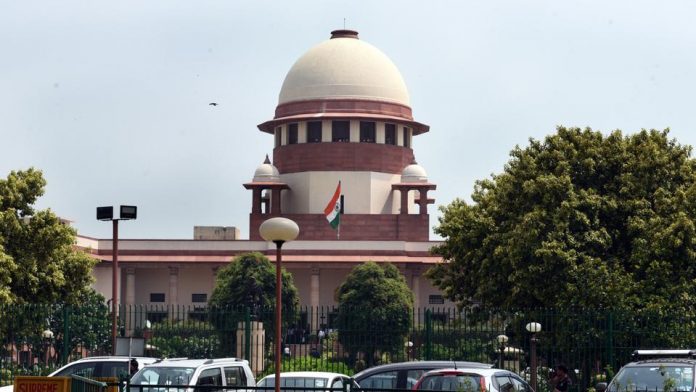
There finally seems to be light at the end of the tunnel as India gears up for the final verdict in the long-drawn Ayodhya dispute. CJI Gogoi had already declared that today will be the last day of the hearing of the protracted dispute which has been continuing for over several decades now. The final day witnessed passionate arguments from all the litigants as each side placed argument before the 5-judge bench headed by the CJI Ranjan Gogoi.
Starting with the submissions for Gopal Singh Varshad, Senior Advocate Ranjit Kumar argued that the tenets of Islam will decide if the disputed structure was a mosque or not and it is beyond the purview of the judiciary to evaluate the authenticity of the structure. He further added that the decision on the nature of the building cannot be based on the faith of the Muslims. He also said that the plaintiffs couldn’t prove against his pre-existing right to worship at the said place.
A decision on the nature of the building cannot be based on the faith of Muslims.
Plaintiffs in suit 4 couldn’t prove their case against my pre existing right to worship: Ranjith Kumar— Live Law (@LiveLawIndia) October 16, 2019
Senior Advocate Jaydeep Gupta, representing Mahant Dharam Das stated his position the shebait rights. He stated that Baba Abhiram(Dharam Das being his disciple) is a Pujari and a Shebait. Gupta asserted that it is already recognised that idols were placed by Baba Abhiram, who is the only person who has direct evidence of shebsitship. According to advocate Gupta’s claim, Baba Abhiram was also a priest of the disputed structure and was later disowned by Nirmohi Akhara.
All India Hindu Mahasabha’s stance was elaborated by Senior Advocated Vikas Singh. Singh attempted to submit a copy of Ayodhya Revisited by Kunal Kishore but was vociferously objected by defence counsel Dhawan who urged the bench to not take it on record citing that the piece of literature was produced recently and cannot be treated as evidence.
A rattled Dhawan also tore maps and documents submitted by the All India Hindu Mahasabha as he vehemently protested against the submissions made by them. The CJI then sarcastically asked him to shred them further and Dhawan tore off more pages.
#AyodhyaHearing– Sr Adv Rajeev Dhavan TEARS documents and maps submitted by the All India Hindu Mahasabha as he vehemently objects to their submissions. CJI asks him to shred it further. Dhavan tears more paper.
“We could just get up & walk out”, exclaims CJI
— Live Law (@LiveLawIndia) October 16, 2019
Making an incisive point, Singh argued that Hindus consider a place sacred even if the deity is removed. He contended that the original place is the Janmsthan, Hindus were consigned to worship 15-20 metres away from the actual Janmsthan because they were not allowed to go any further.
A place can be sacred even if the deity gets removed for Hindus.
The original place is the Janmasthan. Inspite of conversion to a mosque, Hindus continued to worship uninterruptedly. There are specific marks where people worship. We do puja to a deity 15 to 20 m away.— Live Law (@LiveLawIndia) October 16, 2019
Defending Nirmohi Akhara, Senior Advocate SK Jain Jain argued that building was always a temple, regardless of what Babur did.
The building was always a temple. Irrespective of what Babur did. Babur did not demolish temple. It has been unnecessarily said that the temple was demolished and a mosque was built#AyodhyaHearing #AyodhyaCase #Ayodhya
— Live Law (@LiveLawIndia) October 16, 2019
The court broke off for lunch and the remaining arguments were directed by the bench headed by the CJI Ranjan Gogoi to be listened after lunch and wrapped up by 5 PM.


