Home Blog Page 6058

Karnataka: Chief Minister BS Yediyurappa orders probe against irregularities in Indira Canteen and Nagarothana scheme

Karnataka Chief Minister BS Yediyurappa has now directed officials to initiate a probe against the alleged discrepancies in subsidies issued to contractors for the Indira Canteens and also a separate probe into suspected irregularities in urban renewal initiative ‘Mukhya Mantri Nagarothana’, reports Times of India.

Reportedly, Chief Minister Yediyurappa on Monday, directed Karnataka Additional Chief Secretary of Urban Development Department, BH Anil Kumar, to initiate a probe into the matter.

The Chief Minister has also directed Chief Secretary Vijay Bhaskar to look into alleged irregularities of money spent on the Nagarothana scheme, an infrastructure development project that was started in 2016 by the then Chief Minister Siddaramaiah. Yediyurappa has ordered the Chief Secretary to submit the investigation report within three months.

“There are allegations that the contractors have inflated the number of people eating at these canteens and are cheating the government on subsidy. Therefore, an inquiry is necessary,” Yediyurappa said in a letter to BH Anil Kumar, additional chief secretary of the urban development department.

Alleged irregularities in Indira Canteen:

The Bruhat Bengaluru Mahanagara Palike (BBMP) had awarded the contract of running 174 Indira Canteens and 15 mobile canteens to two companies – Cheftalk Food & Hospitality Services Pvt Ltd and Rewards. According to the Chief Minister’s letter to the Chief Secretary, the state government is paying the two contractors Rs 6,82,82,373 in the form of subsidies.

The government officials suspect the two companies have been overstating the number of customers. Reportedly, the irregularities arose when Cheftalk and Rewards began billing the same amount every month.

In addition, sources in the government said that the state government is mulling over changing the contractors for the canteens. The 2019-2020 budget has not allocated any funds for the Indira Canteens and the previous government led by HD Kumaraswamy had instructed BBMP to bear the costs.

Probe into Nagarothana Scheme:

According to the letter directed to the Additional Chief Secretary, Chief Minister BS Yediyurappa has also ordered him to probe the monetary clearances issued by the State High-Level Clearance Committee (SHLCC) for the Nagarothana Scheme.

In 2016, then Chief Minister Siddaramaiah had announced the ambitious Nagarothana Scheme to develop infrastructure development in Bengaluru and other two-tier cities in Karnataka. The Nagarothana Scheme in Bengaluru alone was allotted Rs 7,300 crore. In order to ensure that the monetary clearances were done in a speedy manner, Siddaramaiah had set up the SHLCC, which he headed.

“Between November 3, 2016, and June 30, 2019, works worth thousands of crores have been taken up in BBMP jurisdiction. Most works are alleged to have been awarded to contractors who quoted 32% more than estimated costs,” Yediyurappa said.

The project for Bengaluru included the development of four stormwater valleys in six packages at a cost of around Rs 800 crore and stormwater drain projects worth Rs.171 crore and Rs.1,144 crore, for which tenders were invited recently, will be probed.

The probe will also include the reconstruction of 25 roads under TenderSURE, mainly in Gandhinagar and surrounding areas, white-topping scheme, lake rejuvenation, creation of solid waste management plants and works executed through the traffic engineering cell are also under scrutiny.

Soon after the BJP came to power, it has initiated probes on previous government’s decisions and controversies including the IMA fraud, phone tapping claims and white topping works, for which money was allocated during Siddaramaiah and HD Kumaraswamy’s tenure.

Delhi’s AAP government promised 30,000 new beds in hospitals, delivered only 394 new beds in hospitals between 2015-2018

Despite harping about Delhi government’s initiatives in public healthcare sector, the reality seems far from what is advertised. Arvind Kejriwal led Aam Aadmi Party government in national capital informed the state assembly on Monday that only 394 new beds are added in government hospitals between 2014-2015 and 2017-2018.

The reply was given by Delhi’s Health Minister Satyendar Jain to a question raised by BJP MLA O. P. Sharma. Jain said that there were 10,959 beds in Delhi’s government hospitals in 2014-15 and as per the annual report of 2018-19 of the health department, there were 11,353 beds in 2017-18. That means an increase of less than 400 beds.

Aam Aadmi Party’s 2015 Assembly election manifesto promised to increase total bed strength in Delhi hospitals to 40,000 and had even said that the strength would be doubled in first two years. In 2019-20 budget, the Delhi government had allocated Rs 7,485 crore (about 14% of the budget) to medical and public health.

Jain also informed the assembly that a total of 440 ventilators are available in Delhi hospitals, of which 10% are not working. Similar has been the fate of the ambitious Mohalla Clinics. AAP had promised 1,000 Mohalla Clinics, against which only 189 were opened as per a report in January this year. There, too, AAP had blamed the Narendra Modi led BJP government in Centre for the delay.

Mohalla Clinic has also been under scanner after the Vigilance Department received complaints that the Mohalla Clinics’ doctors were seeing a very high number of patients during their stipulated clinic hours, which was practically not possible. There were allegations that the doctors were making up false patients as their earning depended on the number of patients they treat.

Prior to that, Jain’s own daughter, was put in charge of heading these clinics, which sparked the row of nepotism. Following the outrage, she was asked to step down. There were also allegations that the Mohalla Clinics were employing unqualified staff for treating patients and dispensing medicines.

The Delhi state assembly elections are expected to be held early next year.

Tongpang Ozukum, PWD Minister of Nagaland roots for Hindi in breaking barriers and enabling Nagas to converse with the rest of India

0

Tongpang Ozukum, Minister of Public Works Department (PWD) in Nagaland, suggested that learning Hindi will help the people of his state in connecting with the rest of the people of India.

According to a report, Ozukum said that he thinks learning Hindi is the right step for the tribal state which has its own linguistic culture, to strike conversations with the outside world. He added that Hindi is one language that hinders the Nagas from communicating with people from other parts of India. He said learning Hindi will benefit then in progressing forward and be at par with other states of the country.

“We can’t remain in cocoon for long,” Ozukum asserted.

Ozukum however, clarified that he was talking from a personal viewpoint and experience and that he wasn’t trying to stand up for other states and their leaders on this matter.

“I cannot speak on behalf of other states but I am talking from my personal experience, when we go out of Nagaland we find it difficult to converse with other people. It is not only important to converse with people in English, sometimes we have to speak Hindi too. So I wish my people should learn Hindi and should know how to read, write and speak the language,” he said.

The PWD minister added that he will suggest the lower-level administration in his state to ensure learning Hindi becomes compulsory.

“So far I have not made any such suggestion to the government of Nagaland but I will do so for lower-level administration now,” he said.

He pointed out that making Hindi a compulsory language is not wrong as it is not about accepting a religion but a language that will enable the people of his North-Eastern state in breaking barriers and enabling them to converse with the rest of the people from across the country.

Srinagar: District Admin and Drug Controller Office deny report of shortage of medicine, hospital says no doctor talked to the reporter

The District Administration has refuted media reports claiming that there is a shortfall of medicines in Jammu and Kashmir due to ongoing restrictions in the state. They said that against the claim made in a News 18 report that the government-run hospital is running out of medicines, they have reported the availability of medicines for 5-6 weeks. The Twitter handle of the administration posted a stock list of SMHS hospital in Srinagar, showing that there is enough stock of medicines there.


The district administration also said that the News 18 report claiming that doctors at the SMHS hospital had warned about shortage of medicine is not correct. The report had quoted doctors in the hospital saying that if people who are on lifesaving medicines don’t get their medicine on time, they will die.


But the district administration has said that none of the doctors at the SMHS spoke to the reporter. They also posted a letter by the Medical Superintendent saying that the hospital has sufficient quantity of life saving medicines and no doctor has complained about lack of medicines.

A statement issued by the Office of the Deputy Drug Controller informs that medicines worth ₹ 31.76 crore have been supplied to pharma dealers and distributors in the state in last 35 days, from July 20 to August 23, and stocks were being replenished regularly. The supplied medicines include a wide range of drugs from all categories including antibiotics, anti-diabetic, proton pump inhibitors, anti-hypertensives, antacids, NSAIDs, anticancer drugs, cardiovascular drugs, anti-tuberculars, anti-depressants, psychotropics among other lifesaving drugs. Some distributors in Kashmir are sourcing medicines from Jammu on their own effort, and many stockists and distributors are procuring drugs from manufacturers, Super Stockists, distributors located outside the state also.


They have informed that this was ascertained after teams of Drug Control officers were deputed to depots, C&Fs and consignees of major pharmaceutical companies to collect the relevant data regarding supplies of medicines and pharmaceutical drug formulations made to pharma dealers and distributors across the Kashmir valley in the last one month.
The Deputy Drugs Controller informed that special efforts are being made to ensure and facilitate timely supply of medicines which require specialised storage conditions to authorised stockists and stakeholders in the Kashmir valley.

Apart from private medicine stores, all outlets of the Pradhan Mantri Jan Aushadi are fully operational at different locations in Srinagar and have sufficient stocks of all categories of drugs. In addition to this, there are 39 outlets operational under the PMJAY scheme in the Kashmir division catering to those in need.

The Department has said that it is in constant touch with heads of all health institutions of the valley to assess their availability and requirement of medicines. It said any instances of unavailability of medicines are dealt with on priority, they assured.

Terrorists threaten apple orchard owner in Shopian, offload consignment in a bid to wage economic warfare in the valley

0

Ever since the abrogation of Article 370 from Jammu and Kashmir (J&K) on August 5, 209, the situation in the now Union Territory (UT) of J&K is under control with no loss of life reported so far. While the government of India is trying to bring peace and normalcy back to the terror-infested region, certain elements are trying hard to create unrest to with an ulterior motive of derailing the peace process.’

Today, Official Twitter handle of Department of Information and Public Relations, Govt of Jammu & Kashmir @diprjk tweeted that some militants barged into an apple orchard in Wattoo, Shopian and threatened the owner. They went ahead and unloaded the apple consignment, dissuading the owner from shipping the consignment to its destination.


As per the tweet, this is the first of its kind attempt by terrorists to wage an economic warfare in the valley. This is a clear cut endeavor to disrupt the peace process in Kashmir where people have supported the government’s bold move to usher in a new dawn of peace and development in the region battling with terrorism.

Certain elements have been trying to create fear by spreading fake news and inventing bogus “clampdown stories” in the valley. Despite being confronted, the agenda based lies continue unabated with a motive to create doubts in the minds of the people about the callous approach of the government in dealing with the crucial situation.

RBI to transfer surplus of Rs 1.76 lakh crore to the government as per Bimal Jalan Committee recommendation

The Reserve Bank of India has decided to transfer an amount of ₹1,76,051 crore to the Government of India. The central bank took this decision by accepting the recommendations of Bimal Jalan Committee on surplus transfer to the government.

The ₹1.76 lakh crore to be transferred consists of ₹1,23,414 crore of surplus for the year 2018-19 and ₹52,637 crore of excess provisions, which were identified as per the revised Economic Capital Framework (ECF) adopted at a meeting of the Central Board of the bank today.

A statement issued by RBI said that “the Committee’s recommendations were guided by the fact that the RBI forms the primary bulwark for monetary, financial and external stability. Hence, the resilience of the RBI needs to be commensurate with its public policy objectives and must be maintained above the level of peer central banks as would be expected of a central bank of one of the fastest growing large economies of the world”.

The Bimal Jalan Committee has recommended that a clearer distinction between the two components of economic capital, realized equity and revaluation balances, should be maintained. They said that realized equity could be used for meeting all risks/ losses as they were primarily built up from retained earnings, while revaluation balances could be reckoned only as risk buffers against market risks.

The Committee says that RBI’s provisioning for monetary, financial and external stability risks is the country’s savings for a ‘rainy day’ (a monetary/ financial stability crisis) which has been consciously maintained with the RBI in view of its role as the Monetary Authority and the Lender of Last Resort. The committee has recommended that a Contingent Risk Buffer (CRB) should be maintained within a range of 6.5 per cent to 5.5 per cent of the RBI’s balance sheet, comprising 5.5 to 4.5 per cent for monetary and financial stability risks and 1.0 per cent for credit and operational risks.

The committee also recommended a surplus distribution policy, saying that if the realized equity of RBI is above the minimum required level, the entire net income would be transferable to the Government. On the other hand, if it is below the required level, risk provisioning will be made to the extent necessary and only the residual net income (if any) will be transferred to the Government.

The Bimal Jalan Committee was formed to resolve a flashpoint between the central government and the central bank. The government was of the view that RBI was sitting on too much capital which should be transferred to the government, while some officials of the bank didn’t agree with the same. In December, both the RBI had agreed to form a committee to review the capital framework of the bank. The committee was headed by former RBI governor Bimal Jalan, and it included former RBI Deputy Governor Rakesh Mohan, central board members Bharat Doshi and Sudhir Mankad, Economic Affairs Secretary Subhash Chandra Garg and RBI Deputy Governor NS Vishwanathan.

The committee reviewed the capital requirement of the bank for various provisions, reserves and buffers needed to be held by RBI, and transfer of any excess fund to the government.

As the current realised equity of the central bank is 6.8%, which is above the recommended level of 5.5-6.5%, there was an excess amount for risk provision to the extent of ₹52,637 crore at the lower limit and ₹11,608 crore at the upper limit. The RBI decided to maintain the realised equity at 5.5% level, and the excess amount was written back.

On the other hand, the central bank’s net income for the year 2018-19 was ₹1,23,414, and as its financial resilience is well within the desired limit, it was decided to be transferred to the union government. ₹28,000 crore from this amount has already been paid as interim dividend.

As a result, a total of ₹1,76,051 crore will be transferred to the government.

The statement said that as on 30 June, the Reserve Bank of India stands as a central bank with one of the highest levels of financial resilience globally. This observation proves that the government was correct in assessing the financial status of RBI.

Preparing military action for the last 20 days, Pakistan quietly gathers supplies in PoK and near LoC: Reports

0

Pakistan has been strategizing a military response to India’s decision to revoke Article 370 from Jammu and Kashmir. Since the last 20 days Pakistan Army has been collecting heavy artillery and ammunition on LOC, reports Dainik Bhaskar.

A commanding officer of Pakistan military who is posted in the PoK Dana sector said that the current situation is no less than preparing for war. The way ammunition and equipment are being collected close to the LoC is not common. From the given situation, it seems that war can break out at any time.

According to reports, another high-level source from the Pakistan Army has said that 6 brigades of the Pakistan army have been deployed in every area of the LoC. The main focus of the Pakistan army is the Dana and Bagh sectors, as these areas are very important logistically and strategically, claimed the source.

Moreover, according to a News 18 reports that along with these brigades, heavy artillery is also being moved to these areas. The maximum heavy artillery is being mobilized in the Tiger, Lipa and Chamb sectors.

There are further reports that Pakistan is plotting a big conspiracy against India. Open-source intelligence (OSINT) recently sent some pictures from the satellite which depict that Pakistan has been planning major operations against India. The pictures show that Pakistan’s three major naval ports – Karachi, Oramara and Gwadar – have been completely evacuated. Moreover, the picture captured through satellites also shows three ships anchored on the naval dock of Karachi.

Image courtesy @detresfa_, used with his permission. The image was first used by Abhijit Iyer-Mitra in his The Print article.

Pakistan has been completely rattled since India’s went ahead with its historic move of repealing Article 370. Venting his frustration Imran Khan on Sunday issued a nuclear war threat to India and said that Islamabad will go to any extent on Kashmir. In an address to his country, Imran Khan said that like India, Pakistan too has nuclear weapons and if the Kashmir issues go to war, it will have global ramification.

Reacting to India’s internal matter, terrified, Imran Khan had earlier also said the abolition of Article 370 will lead to terror attacks, which in turn will lead to India-Pakistan war. He had threatened India saying that “incidents like Pulwama are bound to happen again”.

ED files chargesheet against Gandhi family controlled Associated Journals, Congress leaders ML Vora and BS Hooda in land allotment case

The Enforcement Directorate has filed a chargesheet against Associated Journal Limited and Congress leaders Moti Lal Vora and Bhupinder Singh Hooda in the Panchkula land allotment case. Associated Journal Limited is owned by Young Indian, a company controlled by the Gandhi family. AJL publishes the National Herald newspaper.


The ED informed that a Prosecution Complaint against the company and two Congress leaders have been filed at before a special PMLA court in Panchkula.

The case relates to irregularities in allotting a plot of land at Panchkula to AJL by the then Hooda government in Haryana.

According to ED investigation, the plot number C-17, sector 6, Panchkula was allotted to the AJL in the year 1982 as per the request of the company to start the Nav-Jivan newspaper. However, the AJL did not abide by the terms and conditions of the allotment, and therefore in 1992 the estate officer, HUDA, Panchkula had ordered to take back the plot on the ground that  AJL violated the necessary terms and conditions of the allotment letter by not starting the construction and completing the same within the specified time period.

However, the Bhupinder Hooda government had, in 2005, re-allocated the plot to AJL under for the original price plus interest at a mere 59.39 lakh rupees.

In May this year, the ED had permanently attached the property in Panchkula in relation to the case, which is valued at Rs 64.93 crores.

Former Haryana Chief Minister Bhupinder Singh Hooda is being probed by ED and CBI in several corruption cases. Among several land allotment scams, one is related to granting licences to Vadra’s Skylight Hospitality for building a colony in Gurgaon.

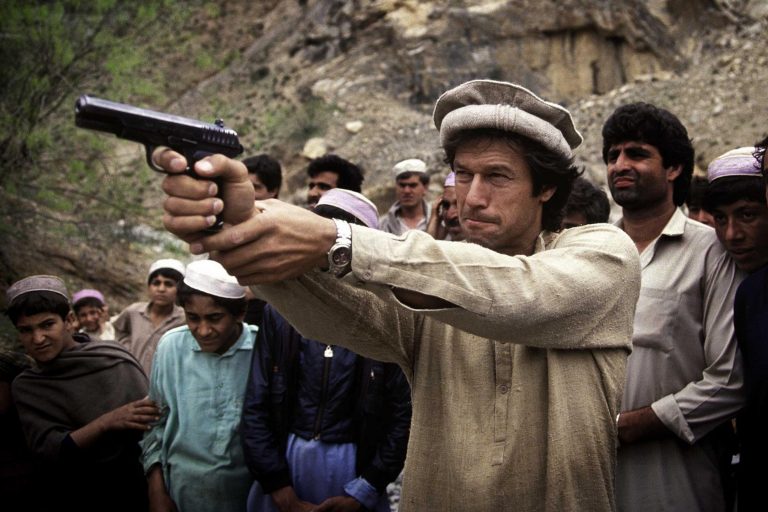
Imran Khan nominates himself as the ambassador of Kashmir, Indians nominate themselves as Jedi, Captain America and more

Imran ‘Taliban’ Khan has been running helter-skelter to try and save face in front of the people who inhabit the failed Islamic Republic of Pakistan. After being snubbed by the UN and every other country that deemed the abrogation of Article 370 by India as an internal matter, Imran Khan has now decided to seek attention by nominating himself as aa ambassador of Kashmir.

Earlier, speaking to students in Khyber Pakhtunkhwa, Imran Khan said, “I have nominated myself as the Ambassador of Kashmir and will fight the case for freedom of Kashmir till the very end”.

It is this statement that captured the imagination of India. On social media, Imran Khan’s statement of nominating himself as the ambassador of Kashmir inspired a flurry of jokes and memes.

Taking inspiration from Imran Khan, Indians on Twitter proceeded to nominate themselves to various positions that nobody had offered to them.

Some proceeded to nominate themselves as Jedi Grandmaster Yoda and Captain America.


Others nominated Amit Shah as the ambassador of Pakistan. Unlike some other responses, considering the condition of Pakistan, this one was much closer to the realm of possibilities.


Continuing the saga of the impossible, one Netizen proceeded to nominate Salman Khan as the Brand Ambassador for the safety of endangered species and road safety.


Another Netizen thought Imran Khan’s statement was ‘no big deal’ considering P Chidambaram too, who is now in the custody of CBI had ‘nominated himself as the ambassador of Tihar jail’.


As if Imran Khan was not done making a fool of himself, on Monday, Imran Khan decided to talk to the people of the Islamic Republic of Pakistan in a special address in order to inform the parody nation what he planned to do after India had abrogated Article 370.

“Pakistan’s Kashmir policy is at a decisive point. So I have decided to take the nation into confidence over the Kashmir issue. My dear Pakistanis, today I only want to talk on Kashmir; what the issue is, what we have done so far and what is the way forward,” he said.

He further said that Pakistan had managed to internationalise the Kashmir issue and Imran Khan has spoken to world leaders. “UN for the first time since 1965, convened a meeting on Kashmir issue. Even international media has picked it up”, he said.

Of course, what he did not tell his nation is that even at the United Nations, Pakistan was snubbed and thereafter, member nations have sided with India.

He further stated that India’s decision to abrogate article 370 was not only against UN decisions but also against the Indian Constitution and the promises made by Jawaharlal Nehru and Mahatma Gandhi. “We tried engaging India to a dialogue several times. But India was also going through the election phase so we waited for that to end. Just then Pulwama happened and they instantly pointed fingers towards Pakistan,” said Khan.

The other side of Mother Teresa: The not so pious history of the Catholic Church’s saint

Under normal circumstances, if we were told that RSS Chief Mohan Bhagwat and the noted atheist Christopher Hitchens were on the same side of a contentious issue, we would assume that we had somehow been teleported into an alternate universe where unicorns farted rainbows and Rahul Gandhi made sense.

But such is the enigma of Mother Teresa’s legacy that two people, one deceased and one alive, who probably differed on every controversial topic under the Sun agreed with each other on Mother Teresa. On her birth anniversary, we shall explore a facet of her personality and legacy that is often brushed under the carpet.

All criticisms of the Catholic icon is deemed as bigotry. But these are exciting times we are living in, not even icons such as Raja Ram Mohan Roy are spared scathing criticisms. Therefore, it’s only natural that Teresa’s legacy is evaluated in light of all the facts we have at our disposal. And we should not fear to tread wherever facts lead us for it is only on a foundation of truth can people build castles of harmony.

If we are to believe the official version of events, which also happens to be the one believed by wide sections of society, Teresa was a messiah of the poor. Anointed with sainthood by the Church, we are told she dedicated her entire efforts to the welfare of the downtrodden. But there are certain facts about her life that punctures holes into the hallowed image that has been carefully constructed over the years.

Contrary to the narrative that Teresa was a friend of the oppressed, she had great relationships with dictators. During her life, she often endorsed brutal dictators and thereby, attempted to give their tyranny the veneer of legitimacy. She had a good relationship with the Duvaliers who ruled Haiti as a police state between 1971-86. During her visit in 1981, she described the regime as ‘friend’ of the poor, the very same regime whose rulers robbed Haitians of millions of dollars as they fled following the uprising of 1986.

Not merely that, she also laid a wreath at the grave of the Communist dictator, Enver Hoxha, who had violently suppressed religion in her native country, Albania. Closer home, Teresa endorsed the brutal imposition of Emergency and had said infamously, “People are happier. There are more jobs. There are no strikes.”

One particular incident that infringes upon Teresa’s personal integrity is her relationship with Charles Keating, a Catholic himself, who was convicted of fraud, racketeering, and conspiracy in the USA for his involvement in the Savings and Loan Scandal. The criminal had conned numerous customers into purchasing worthless junk bonds. He had donated a significant amount of money to Teresa in the 80s and in return, she appealed for clemency while he awaited sentencing.

The prosecuting attorney, Paul Turner, was not amused. In a letter, he told her, “No church… should allow itself to be used as a salve for the conscience of the criminal.” Furthermore, he suggested that Teresa return the money to the hardworking people who had been cheated. Turner never received a response to his letter, nor was the money ever returned.

The greatest assault on the hallow that surrounded her was launched by Christopher Hitchens in his book, ‘The Missionary Position: Mother Teresa in Theory and Practice’. In the book, Hitchens meticulously documented the holes in the Teresa myth. One of the most damning, perhaps, was his deconstruction of the ‘miracles’ that led to her beatification. He mentions an incident where a “technically unaccountable light” was observed at the Home of the Dying which was touted to be “the first authentic photographic miracle”. In reality, what was thought of as a miracle was a natural consequence of the cameraman using the latest Kodak film, as said by the cameraman himself?

Another miracle that is often attributed to her and which contributed to her sainthood was one that involved the ‘miraculous’ cure of a tumour in the abdomen of an Indian woman, Monica Besra. The doctors insisted that the woman was cured by modern medicine. “It was not a miracle. She took medicines for 9 months to a year,” said the doctor who treated her. Besra’s husband stated, “My wife was cured by doctors and not by any miracle.” But that didn’t prevent the Church from recognizing the cure as a ‘miracle’ committed in the name of Teresa. Even more damningly, authorities at the hospital where Besra was treated claimed that they were being pressurized by the Catholic Church to declare the cure as a miracle, contrary to every observable fact.

As it turns out, there were gaping holes in the myth of her supposed charity towards the poor. Numerous volunteers at her clinics, Mary Loudon and Susan Shields being the most prominent examples, have spoken out against the severe lack of amenities at the clinics. The scene that eyewitness accounts and eminent personalities such as Robin Fox of The Lancet depict is completely at odds with what we have been told by the mainstream narrative.

Decrepitude appears to be the defining feature of these clinics. No tests were ever performed to determine the cause of the patient’s misery, patients suffering from terminal cancer and other serious diseases who were suffering terrible agony were given no painkillers apart from aspirin and hospital was out of the question. Symbolic of the neglect was the fact that needles were rinsed with tap water and reused without any sterilization. On certain occasions, patients, who otherwise could have recovered if they were given proper treatment, died due to sheer neglect. It is criminal negligence on the part of the clinic authorities which have been intentionally buried to create a fictional narrative around her.

Teresa’s personal opinions on misery and poverty demonstrate that the state of her clinics was perfectly consistent with her worldview. She once said infamously, “I think it is very beautiful for the poor to accept their lot, to share it with the passion of Christ. I think the world is being much helped by the suffering of poor people.” On another occasion, she opined that AIDS was “just retribution for improper sexual conduct.” Imagine if anyone else had said such morbid things, would he or she have been spared?

On another occasion, which could have easily been mistaken as dark humour, she told a man dying of terminal cancer and in harrowing pain that he should consider himself fortunate: “You are suffering like Christ on the cross. So Jesus must be kissing you.” The man replied, “Then please tell him to stop kissing me.”

Her opinions on contentious issues, too, appeared to differ according to her audience and the people involved. “It is a good thing that it is over,” she said of Princess Diana’s divorce with Prince Charles. Almost simultaneously, she campaigned against legal divorce in Ireland.

How could it be that nearly every major media organization missed the obvious story? How could it be that not a single media organization attempted to highlight what was happening? It would have been the story of the decade and yet, it is hard to believe that no one bothered to look under the veil. On a lot of issues, no one even needed to look under the veil, it was right in front of their eyes and yet, they chose to ignore it. Why is that so? Such questions need to be answered.

Last year, when news surfaced that nuns at an orphanage run by the Missionaries of Charity were involved in selling babies, people were shocked. They wouldn’t have been had they bothered to look into the conduct of its founder. If Teresa’s clinics were cesspools of misery, it begs the question, where did all the money go? She received millions and millions of dollars in donation and yet, her clinics continued to lack in everything apart from the most basic amenities. What happened to all that money? How was it utilized? Unfortunately, no investigation was ever conducted to delve into the matter.

Moreover, there are other grave allegations against her clinics as well. Eyewitness accounts have revealed that patients were converted on the deathbed on the promise of a ‘ticket to heaven.’ It turns out, Mohan Bhagwat was not off target when he said, “It’s good to work for a cause with selfless intentions. But Mother Teresa’s work had an ulterior motive, which was to convert the person who was being served to Christianity.” “In the name of service, religious conversions were made,” he had added.

Teresa’s story is indeed very intriguing. Anjezë Gonxhe Bojaxhiu, born into an ordinary family in an ordinary city, went on to become a globally revered messiah. Despite her obvious shortcomings, which would have otherwise destroyed the career of almost any other individual, the myth that surrounds her continues to be believed by wide sections of Indian society.

That she rose through the ranks of the Catholic Church isn’t too much of a surprise. As recent events have demonstrated, the highest echelons of the Church are dominated by people of extremely questionable character. It is a den of paedophiles and criminals. While no such allegations have surfaced against Teresa herself, it is easy to understand why her conduct has remained in the shadows all this while. Considering the number of years it took for the entrenched paedophilia to come to light, a crime that has effectively been kept buried for decades, it is no surprise at all that Teresa’s conduct of considerably lower magnitude in the monstrosity scale has received so little attention.

In Teresa, the Church found a frail old woman with the natural aura of kindness that most old women tend to inspire. The Church found the material for a grand story that ordinary people would buy hook, nail, and sinker at a time when it was trying to aggressively push its evangelical goals in India. The institution had vast resources in its treasury, almost indefinite, to run one of the best publication campaigns the world had ever seen. And it was successful in its endeavour, the Church was able to completely manufacture an image of Teresa that simply didn’t exist on the ground, it was created out of thin air.

That the Church was overeager to grant her sainthood becomes obvious from the fact the five-year rule, which mandated that a person could not be granted sainthood within five years of her death, was waived off specifically for her. She was fast-tracked for sainthood merely a year after her death.

Hitchens said of her, “Everything everyone thinks they know about [Mother Teresa] is false. It must be the single most successful emotional con job of the twentieth century.” Another critic, Michael Hakeem said, “Mother Teresa is thoroughly saturated with a primitive fundamentalist religious worldview that sees pain, hardship, and suffering as ennobling experiences and a beautiful expression of affiliation with Jesus Christ and his ordeal on the cross.”

The nail in the coffin, perhaps, came from academics at the Universities of Ottawa and Montreal. In 2013, in a published paper, the Canadian Academics criticized Teresa’s “rather dubious way of caring for the sick, her questionable political contacts, her suspicious management of the enormous sums of money she received, and her overly dogmatic views regarding, in particular, abortion, contraception, and divorce.”

They asserted that her “hallowed image” could not withstand rigorous scrutiny and her reputation was “orchestrated by an effective media relations campaign”. They also noted that independent doctors who visited the clinics “observed a significant lack of hygiene, even unfit conditions, as well as a shortage of actual care, inadequate food, and no painkillers”.

Our mainstream media has a lot to answer for. It has constantly patted its back claiming to be the sole voice of the oppressed. And yet, it berates anyone who speaks out against the myth of Teresa. That she continues to be glorified is an indictment of every single media organization in the country. The other side of Teresa deserves to be told, it should be told as often as possible with as much frequency as decency permits to demolish one of the biggest lies manufactured by one of the most corrupt organizations in the entire world. Until then, the garland of shame that continues to adorn the mainstream media’s neck will continue to be the albatross around their necks.