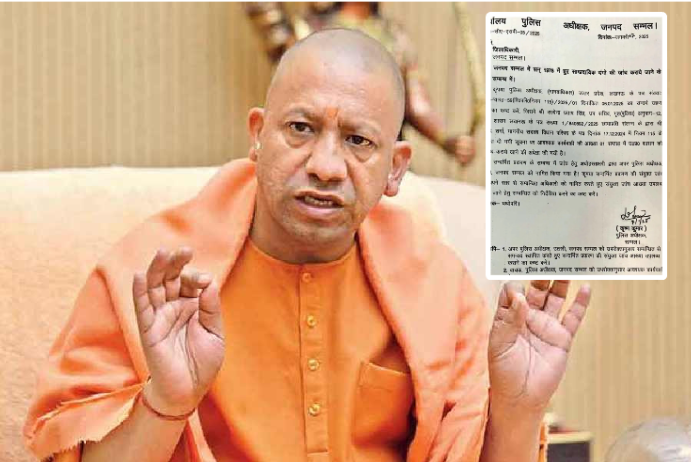
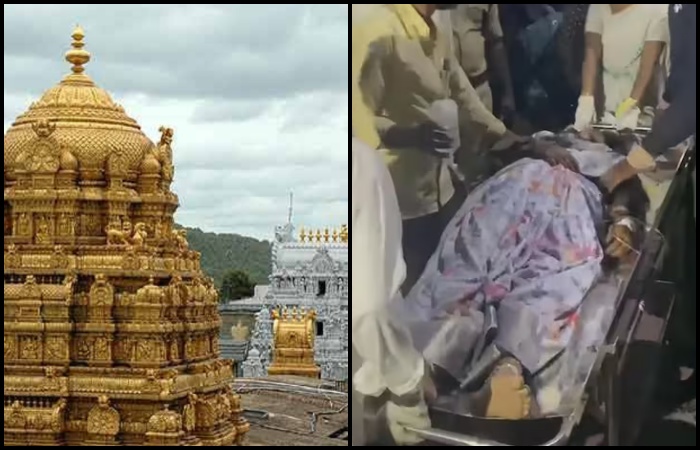
In Telangana, the Bahubali main gate (main entrance) at the Secretariat has been removed to the surprise of the locals. On Sunday (17th November), the main entrance passage to the Secretariat was closed off with blue tin sheets due to Chief Minister Revenath Reddy’s concerns about the Vaastu. As per a News18 report, the Telangana Congress government is splurging a whopping Rs 3.5 crore on building a new gate for the Telangana secretariat which will be built as per Vaastu stipulations.
As per the official documents, the estimated cost of constructing the Vaastu-compliant gates at the state Secretariat in Telangana will be Rs.3.50 Crore. The stages of the construction work include laying of new internal road 48 wide from North East gate no 4 to South East gate no 2 on the east side including the construction of side drains and a Footpath, providing an additional Gate on the east side compound wall, providing External Electrification along the new road and providing External Electrification along new road. Meanwhile, as the present stage of work mentioned in the document, road excavation work is in progress.
This comes at a time when the Congress government in Telangana is yet to implement many of its schemes guaranteed by the party during state elections. It should be noted that in September of last year, the Congress party promised the people of Telangana six promises if elected to power in the state within 100 days. The party promised that all Telangana activists would receive a 250-yard house site, a housing program worth 5 lakh rupees, a monthly old-age pension of 4,000 rupees, and up to 10 lakh rupees in health insurance. While Congress has yet to deliver on its much-hyped six promises, and Telangana’s financial situation is not believed to be very good, CM Reddy is spending public money to build Vaastu-compliant gates.
Criticising the Telangana government for allegedly squandering taxpayers’ money on misplaced priorities, BJP leader NV Subhash said that while the state’s economy is in shambles, the exchequer is dried up and hardly any money is left to pay the salaries of government employees, CM Revanth Reddy along with his cabinet ministers is spending huge amounts of money on the interiors of their offices and houses. “This shows that they [Telangana Congress] are not committed and they just wanted the luxury and are leaving the people in doldrums…” the BJP leader told News18.
Meanwhile, the Congress spokesperson Shujath Ali attributed the secretariat entrance revamp and separate entrance passage construction for CM Reddy to increased public footfall rather than the Vaastu stipulations.
Former CM KCR’s fixation with the ‘Vaastu’ of Telangana Secretariat
While the Telangana Congress and Chief Minister Revanth Reddy are receiving flak over their alleged obsession with the Vaastu of the secretariat, former CM KCR also had a similar fixation. As OpIndia reported earlier, in a press conference in the year 2015, KCR announced that the existing secretariat building has very “bad vaastu”, and that’s why no CM ever had a good time there.
He was referring to the history of incomplete CM terms in the state. He was alluding to this history while commenting that the existing secretariat building is basically not safe for him to work in (though he actually claimed that this was not good for Telangana)!
In 2015, the BRS Chief claimed that the construction cost for the new secretariat will be about Rs 150 crore and he will demolish the Chest Hospital building in the city. There was widespread outrage by people at this decision to demolish the heritage chest hospital building. This outrage forced KCR to back off from the proposed new building here.
After some time, KCR put the onus on the central government to give the Bison Polo grounds – grounds that belong to the Ministry of Defence. The Prime Minister had given in-principle approval for the same in the year 2017. However, there was again outrage from the citizens; and also, the nitty-gritty between the state and the central government on the actual terms of transfer of this land was taking too long (even though the High Court approved the construction on Bison Polo Grounds).
At this point in time (2018), KCR claimed that the construction cost for the new Secretariat will be 250 crores. This, blatant wastage of public money was widely criticised by the people of Telangana, and their resentment over the same reflected in the state elections as they ousted BRS from power. However, now its successor Congress is also allegedly heading the same way.
On Monday, 18th November, the Himachal Pradesh High Court issued an order attaching Himachal Bhavan in Delhi after the Sukhvinder Singh Sukhu-led Congress government failed to pay energy bills totaling over Rs 150 crore. The Himachal Bhavan is located at Mandi House in New Delhi.
In 2009, the Himachal Pradesh government awarded the Seli Hydro Company a 320 MW power project in the Lahaul and Spiti districts. The Border Roads Organisation was also dispatched to assist with the project’s road building.
According to the agreement, the state government needed to provide essential amenities for the hydro firm so that it could start construction on the project on schedule. However, this didn’t happen. In response, the company filed a writ petition with the High Court in 2017. The firm’s lawyer told the court that due to a lack of facilities to set up the project, the company was forced to shut it down and return it to the government.
During the proceedings, the court ordered the Congress-led administration in Himachal Pradesh to pay the company an upfront charge as well as 7% interest. It directed the Principal Secretary of Energy to initiate an investigation within 15 days to determine the role of officers in the non-payment of dues, and recover the amount from the persons. The case will be heard next on December 6th.
The government, after this, seized the upfront premium. Following a hearing from both parties, the court directed the government to pay an upfront premium of Rs 64 crore to the corporation. However, the Himachal government has filed an LPA challenging the court’s ruling.
Chief Minister Sukhvinder Singh Sukhu commented on the developments and said, “The upfront premium is based on a policy under which, when the energy policy was made in 2006, I was the main architect. We had kept a reserve price per megawatt on which the companies had bid. There was a decision made by arbitration in the matter of upfront premium. Our government went to the High Court against the arbitration order and the government had to deposit Rs 64 crore in arbitration.”
The BJP, meanwhile, accused Chief Minister Sukhvinder Singh Sukhu of gross economic mismanagement of the state. Shehzad Poonawala, the BJP national spokesperson, chastised the Himachal government for failing to pay their employees’ salaries and for economic mismanagement. Poonawala said that wherever the Congress has come to power, it has brought destruction.
“They (Himachal government) are busy investigating samosas and the situation is such that the Himachal Bhawan is now on the verge of being sold to pay the dues of power companies,” according to him.
The BJP spokesperson was pointing to a recent scandal involving samosas that went missing from an event attended by Chief Minister Sukhu. The incident took place at the CID headquarters when cartons of food destined for the Chief Minister went missing.
Criticizing the Congress for the development, BJP leader CR Kesavan further stated that party MP Rahul Gandhi’s unsound, unsafe, and strange economic ideas have turned out to have a disastrous domino effect on Himachal Pradesh. “As a result, the Himachal government’s economy stands wrecked and ruined so much so that they can’t even pay electricity dues to power companies… This shows the recklessness and the careless attitude of the Himachal government,” he said.
The court’s ruling came after the Sukhu government defied previous orders to refund Rs 64 crore, which has since risen to nearly Rs 150 crore due to interest.
The violence in Manipur has flared up yet again which has rendered the state in a critical situation. Murder and arson occurrences are rampant. Meanwhile, a plot to incite further unrest has been uncovered, according to a report by News18 which claimed to have gotten hold of an intelligence report. It revealed that a women’s brigade had been formed by the terrorist factions and non-local workers were being subjected to weekly extortions. The armed outfits including Kangleipak Communist Party (KCP), Kuki National Front and United People’s Party of Kangleipak are hell-bent on burning the state.
KCP has installed its own drone system for surveillance in Kadtan and Chingkhong areas which are located in the Senapati region. Its purpose is to continuously monitor the activities of the security forces. Additiona lly, it prepared its cadres to collect personal tax from Manipur’s businessmen and target the members of the Bihari and Nepali communities residing in the state. They wanted to collect at least Rs 1 to 1.5 lakh from each businessman.
According to intelligence assessments, these armed groups have properly trained their cadres to use AK-47 rifles in the Ukhrul district. United National Liberation Front (UNLP) had developed a 45-day training course to equip its cadres for engaging in violent acts. The document unveiled that a women’s brigade has been organized to perpetrate violence throughout Manipur. Women commandos were taught to utilize modern weaponry and were prepared in batches of 50.
If the documents are to be believed, girls between 15 to 20 years of the Meitei community are also given military training. One batch consists of fifty girls who, after completing training also indulge in violence. The odd thing is that these camps are allegedly conducted in relief camps run by the government. Moreover, Rs 1000 is being obtained every week from non-local construction workers in the state.
Manipur is on high alert after authorities recovered the bodies of six women and children, who belonged to the majority Meitei community and were reportedly murdered by Kuki terrorists. It was the family of Laisharam Herojit, a low-level worker in the state government. The deceased were identified as his two children, wife, mother-in-law, wife’s sister and her son. They were taken hostage by the culprits during an encounter with CRPF (Central Reserve Police Force).
The incident resulted in vandalism and violence in different parts of the state. The houses of many Bharatiya Janata Party leaders and MLAs were attacked. A mob also ransacked the offices of BJP and Congress and one protester died during the agitation. Union Home Minister Amit Shah also called a meeting to address the deteriorating situation in the state.
On 18th November, the newly constituted Tirumala Tirupati Devasthanams (TTD) Board passed resolution to request the Andhra Pradesh government to remove non-Hindu employees from the temple administration. The resolution aligns with Article 16(5) of the Constitution of India, which permits religious institutions to restrict employment to individuals of the same faith to ensure the sanctity of such institutions is preserved.
The decision was taken by the new TTD Board in its first meeting, chaired by BR Naidu, a staunch devotee of Bhagwan Venkateswara and a prominent media personality. Suchitra Ella, Co-Founder and MD Bharat Biotech International Ltd is among the members. The meeting, held at Annamayya Bhawan in Tirumala, included discussions on safeguarding the religious character of the Tirumala temple. Notably, the Tirumala temple is considered the world’s richest Hindu shrine.
Following the meeting, Naidu announced that all non-Hindu employees at the temple would either be offered a Voluntary Retirement Scheme (VRS) or transferred to other government departments. The board has begun an assessment to determine how many non-Hindu employees are currently serving at the temple. Initial estimates indicate that there are around 300 permanent staff members and an unspecified number of contract workers.
Employee unions have extended their support to the decision, arguing that it is consistent with the Andhra Pradesh Endowments Act, the TTD Act, and a 1989 government order mandating that only Hindus be employed in temple-related roles.
Historical and legal context
The Tirumala temple’s administration has long been governed by laws reinforcing its religious identity. The TTD Act has been amended three times to ensure the exclusivity of Hindu employees. Recent rulings by the Andhra Pradesh High Court have further strengthened this mandate by upholding the validity of rules requiring staff at religious institutions to adhere to the faith of the institution.
Despite these safeguards put in place by the TTD Board, complaints have persisted that non-Hindu staff members were retained during previous administrations, particularly under the YSR Congress government. The decision by the newly formed TTD Board seeks to rectify oversights that continued during previous governments.
Addressing controversies and enhancing transparency at Tirumala Temple
The board’s resolution follows a recent controversy surrounding allegations that adulterated ghee containing animal fat was used to prepare the temple’s iconic Tirupati Laddus during the previous regime. The board announced the formation of a quality-monitoring committee to oversee prasadam preparation, ensuring no such incidents occur in the future.
Furthermore, the board has decided to transfer all TTD cash deposits from private banks to nationalised banks to ensure financial security. A formal decision on this transfer is scheduled for the next board meeting.
– Scrapping tourism darshan quota due to irregularities – Renaming Srinivasa Setu Flyover as Garuda Varadhi – Enhancing safety by moving TTD deposits to nationalized banks – New Annaprasadam menu & quality improvements in Srivari Laddu
— Tirumala Tirupati Devasthanams (@TTDevasthanams) November 18, 2024
Technological and operational reforms
The current darshan waiting time is around 20-30 hours. The board has announced plans to utilise advanced technology, such as artificial intelligence, to improve the darshan experience for devotees. It aims to reduce the waiting time significantly to 2-3 hours. The board will consult experts to implement these technological advancements effectively.
Additionally, the board has decided to merge the SRIVANI Trust into the main TTD account to streamline financial operations and rename the Srinivasa Setu Flyover as Garuda Varadhi. It has also decided to withdraw the 20-acre land allotment to the state tourism department at Alipiri and cancel the lease of Visakha Sarada Peetham, stating that these allotments violated TTD rules.
Ban on political statements and ensuring discipline
Another significant decision taken by the board to maintain the spiritual and non-political environment of the temple is the ban on political statements on Tirumala Hills. Chairman Naidu warned that strict legal action would be taken against individuals or groups attempting to propagate political agendas on temple premises.
The board has also decided to increase the remuneration of TTD employees participating in the annual Brahmotsavams by 10 per cent, with allowances ranging from Rs 7,535 to Rs 15,400. Furthermore, locals from Tirupati will be allowed special darshan on the first Tuesday of every month, recognising the contributions of the temple town’s residents.
The resolution to remove non-Hindu employees not only adheres to constitutional provisions but also reflects the TTD Board’s determination to preserve the temple’s religious traditions.
On Monday, 18th November, former BJP municipal councilor’s son, Tapan Parmar was brutally murdered inside the Sir Sayajirao General Hospital (SSG Hospital) campus in Gujarat’s Vadodara. The incident happened on Monday morning in the presence of the police officers as per the victim’s father. The accused persons have been identified as Babar Pathan, Mehboob, Wasim, and others.
As per the reports, Tapan, son of Ramesh Parmar, and his friend Mitesh Rajput had gone to the SSG Hospital to inquire about the health and treatment of one of their friends Vikram Parmar, who had allegedly been stabbed by history-sheeter, Babar Pathan, during a fight in the Nagarwada area. After checking on Vikram, Tapan and Mitesh went to the hospital canteen. Soon after, Pathan and his associates arrived at the scene and stabbed Tapan multiple times, resulting in his death.
Several people gathered at the Police Station in the Mehta Wadi area of Vadodara yesterday and agitated over the murder of the former BJP councilor’s son at the hands of Babar and his associates. They demanded the strictest punishment against the accused individuals.
#WATCH | DCP Vadodara, Panna Momaya says, "…In Maheta Wadi area, a fight started between Hindu and Muslim men and it escalated into a brawl. Men from both sides went to a hospital for treatment. From there, Police station received an MLC. Before the Police could reach there, a… pic.twitter.com/c7a71eX2ff
According to the FIR lodged by Mitesh Rajput at Raopura police station, two individuals restrained Mitesh while Pathan stabbed Tapan. Mitesh managed to escape and returned with help, but by then, Pathan and his accomplices had fled from the spot. Tapan was then immediately rushed for medical treatment but succumbed to his injuries shortly after.
Ramesh, the father of the deceased who was informed of the incident, rushed to the hospital and said while talking to the media that the attack occurred in the presence of police personnel. Rajput and the police officials further reviewed the hospital’s CCTV footage and identified two more individuals involved, Shabnam Mansuri and Shabbir, also known as Lakha. Shabnam is the wife of Wasim Mansuri, who was also injured in the initial clash at Nagarwada while accompanying Pathan.
Joint Police Commissioner Manoj Ninama took cognizance of the event and explained that the altercation between the groups had originated at Mehtawadi in Nagarwada, where Wasim, Vikram, and another individual, Dharmesh Patel, were injured. An attempt to murder case was subsequently registered at Karelibaug police station concerning the incident. Ninama stated that the conflict was linked to a dispute over gambling money.
Following the clash, Wasim was sent to SSG Hospital for treatment, and Pathan went to Karelibaug police station to file a complaint. While the complaint was being processed, Pathan claimed he felt unwell and was allowed to go to SSG Hospital accompanied by Shabbir. Police suspect that Pathan faked illness to visit the hospital and execute ‘revenge’ against Parmar.
“In the Mehtawadi area, a fight started between the men and it escalated into a brawl. Men from both sides went to a hospital for treatment. From there, the Police station received an MLC. Before the Police could reach there, a man named Babar stabbed Tapan. This led to Tapan’s death. We have started action. We have deployed the team in the area to maintain peace. We are assuring the people that strict action will be taken and the accused will be punished. The investigation is underway, we are examining the CCTV footage.. Tapan’s friend was taken to the hospital for treatment, so he had gone there. He was not involved in the brawl.. Babar has a past history and he has been arrested several times.. He is a history sheeter,” said DCP Vadodara, Panna Momaya.
The father of the deceased meanwhile confirmed that there was an altercation in Mehtawadi, however, he claimed that his son was murdered using a sword. Dr. Vijay Shah, the BJP city unit president, said that he had spoken with state home minister Harsh Sanghavi after the incident. Shah mentioned that CCTV footage showed Pathan being handed a bladed weapon within the hospital premises, which was then used in the attack.
5 persons including Pathan have been arrested and a case under relevant sections of the law has been filed. It is learned that Pathan has several criminal cases and past detentions under the Prevention of Anti-Social Activities Act (PASA).
On 18th November, Samajwadi Party leader Abu Azmi met Islamist hate preacher Mufti Salman Azhari ahead of the Maharashtra assembly elections. During the meeting, the President of Samajwadi Party’s Maharashtra unit and Mufti Azhari, the latter demanded that a strict law be passed to punish those who ‘insult’ Prophet Muhammad.
SP’s candidate from Mankhurd Shivaji Nagar, Abu Asim Azmi also told Mufti Azhari that in his poll manifesto, he mentioned that if voted to power, he would ensure that those accused of making ‘blasphemous’ remarks against Prophet Muhammad be booked under the stringent UAPA. Other than this, the duo discussed how it is crucial that the Muslim vote does not get divided which may benefit the BJP.
“I only want that…my mission is to protect the Namoos-e-Risalat (honour of Prophet Muhammad). I want that no one dares to raise a finger against the Prophet’s honour or does any Gustakhi…If you [Abu Azmi) win the election and move ahead, give me the assurance about what you will do in this respect?” Azhari asked.
Responding to this, Abu Azmi said, “I have for at least a hundred times demanded from the government and on the road that if someone has insulted Prophet Muhammad, then these [laws] like 153a are useless and at least UAPA be invoked against such people. Even in my manifesto released 20 days ago, I have said that whoever indulges in insulting Prophet Muhammad, must be charged under UAPA since this is the biggest form of terrorism.”
आज मुफ़्ती सलमान अज़हरी साहब से ख़ास मुलाकात और गोवंडी के मुद्दों पर हुई बातचीत। नामूस-ए-रिसालत हमारा मिशन है, हमारी मांग रही है की जो भी आप सल्लल्लाहु अलैहि वसल्लम की शाम में गुस्ताख़ी करता है उसके खिलाफ आतंक विरोधी कानून बनाया जाए,और हम तब तक चैन से नहीं बैठेंगे जब तक ये कानून… pic.twitter.com/qFEv8EMKqL
Taking to X, Abu Azmi shared a video of his meeting with Mufti Salman Azhari and said, “Today, I had a special meeting with Mufti Salman Azhari and discussed the issues of Govandi. Namoos-e-Risalat is our mission, our demand is that an anti-terror law should be made against anyone who disrespects the evening of the Prophet (peace be upon him), and we will not rest until this law is made.”
It is pertinent to recall that Mufti Azhari has a long history of making derogatory remarks towards Hindus. In February 2024, Mufti Salman Azhari made headlines for his provocative speech in Junagadh. An FIR was registered against him, along with two organisers, for his comments. The speech was given on 31st January during a programme attended by a large number of Muslims on the grounds of Narayan Vidya Mandir near the Junagadh court. In the video, Azhari is heard saying, “Abhi to Karbala ka akhiri maidan baqi hai… Kuch der ki khamoshi hai, fir shore ayega… Aaj kutton ka waqt hai, kal hamara daur ayega.” (The final battle of Karbala is yet to come… a moment of silence, then there will be noise again. Today is the time of the dogs, tomorrow will be our time).” After saying this, he chants, “Labbek Ya Rasulullah” and the crowd in front repeats it.
In another provocative speech, Mufti Azhari was heard using casteist and derogatory slurs against Uttar Pradesh CM Yogi Adityanath. Azhari asserted that CM Yogi was bulldozing houses and shops of poor Muslims and while doing this he was heard using highly derogatory slurs against Uttar Pradesh CM. This video was shared by a YouTube channel named ‘Barakati Network’ on 5th November 2023.
Multiple cases have been registered against Azhari after several videos of his incendiary speeches went viral. It also came to light that Mufti Salman Azhari withdrew ₹27.75 lakh from a charitable trust account within 1 year. The matter came to light during a probe by the Local Crime Branch (LCB) of Junagadh district police into the financial dealings and foreign trips of Salman Azhari.
In addition to Mufti Azhari, Samajwadi Party leader Abu Azmi also has a record of making controversial statements. Earlier this year, Abu Asim Azmi said that Uniform Civil Code (UCC) is against Islam. Speaking at the annual conference of Shikalgar Jamaat Trust, Azmi advised Muslims to ensure they have all their valid government documents ready. In December last year, Abu Azmi demanded the withdrawal of a police case filed against 11 Muslims in Dharangaon, Jalgaon, Maharashtra for allegedly raising Hamas and Palestine flags and raising anti-India slogans on 8th November 2023. Back then, OpIndia obtained the FIR registered in the case and reported that slogans like “Gustakh-e-Nabi ki ek hi saja, Sar Tan Se Juda Sar Tan Se Juda,” “Hinduo ka raja, Mera Khwaja,” “Hamas Jindabad, Bharat Murdabad,” and “Hamas tera naam roshan hoga, insha allah insha Allah”, were raised by the Muslim mob.
On 18th November, officials and companies revealed that two undersea fibre-optic communications cables in the Baltic Sea were severed, including a critical link between Germany and Finland. Officials have expressed concerns about sabotage. The incident echoes similar cases from the past, where malicious activity was suspected in the Baltic Sea, including damage to a gas pipeline and undersea cables in 2023, and the 2022 explosions targeting the Nord Stream gas pipelines.
Finland-Germany link disrupted
According to the Finnish state-controlled telecom and cyber security firm Cinia, at around 2:00 GMT on 18th November, the 1,200 km (745-mile) long cable connecting Helsinki to the German port of Rostock stopped functioning.
Meanwhile, Lithuania’s telecom company in the Baltic States, Telia Lietuva, reported that another 218 km (135-mile) internet link between Lithuania and Gotland Island in Sweden went offline at around 8:00 GMT on 17th November. The cable is operated by the Swedish telecom company Arelion, and it carries Telia Lietuva’s internet traffic.
Joint response from Finland and Germany
In a joint statement, Finland and Germany expressed their “deep concern” over the incident and announced investigations into what they described as an event raising “immediate suspicions of intentional damage.” They also highlighted the ongoing threats to Europe’s security posed by the Russia-Ukraine war and hybrid warfare tactics by unnamed malicious actors.
We are deeply concerned about the severed cable in the Baltic Sea, raising suspicions of intentional damage. An investigation is underway. Our shared security relies on protecting critical infrastructure. Full statement by @ElinaValtonen and @ABaerbock: https://t.co/jfgHlFLduPpic.twitter.com/5oM46cFZdb
The statement read, “We are deeply concerned about the severed undersea cable connecting Finland and Germany in the Baltic Sea. The fact that such an incident immediately raises suspicions of intentional damage speaks volumes about the volatility of our times. A thorough investigation is underway. Our European security is not only under threat from Russia’s war of aggression against Ukraine, but also from hybrid warfare by malicious actors. Safeguarding our shared critical infrastructure is vital to our security and the resilience of our societies.”
Swedish minister calls for answers
Underlining the urgency of the situation, Sweden’s civil defence minister, Carl-Oskar Bohlin, said: “It is absolutely central that it is clarified why we currently have two cables in the Baltic Sea that are not working.” According to the CEO of Cinia, Ari-Jussi Knaapila, it will take approximately 5 to 15 days to repair the disruption to the Finland-Germany cable, which occurred near Sweden’s Öland Island.
Past investigations into Baltic Sea incidents
The Baltic Sea is a vital commercial shipping route surrounded by nine countries, including Russia. This is not the first time an incident of severed cables under Baltic Sea has occured. It has experienced similar incidents in the past. Investigators of a 2023 case involving damage to telecom cables and a subsea gas pipeline pointed to a Chinese container ship as the possible culprit. They believed that the ship dragged its anchor, resulting in the damage. However, it remains unclear whether the incident was deliberate or accidental.
Similarly, in 2022, explosions destroyed the Nord Stream gas pipelines that connected Russia and Germany. The investigation into the matter by German authorities is still underway. In February 2023, Pulitzer winner investigative journalist Seymour Hersh alleged that it was the USA Navy that blew up the Nord Stream pipeline.
Sweden distributing 5 million pamphlets urging residents to prepare for potential war
According to a Daily Mail report, Sweden is distributing five million updated pamphlets urging residents to prepare for potential war. Sweden has cited escalated tensions with Russia as the reason.
The pamphlet, titled “If Crisis or War Comes,” advises residents to stockpile essentials and seek shelter in case of a nuclear attack. It also warns of increased military threats and the need for resilience amid the deteriorating global security situation.
??? SWEDEN TELLS CITIZENS TO PREPARE FOR WAR
Sweden is sending 5.2 million “If Crisis or War Comes” pamphlets to households, urging people to stockpile food, water.
The booklet, updated for modern threats, declares, “We will never give up.”
The initiative came after Sweden’s NATO membership earlier this year. It reflects heightened security concerns since the Russia-Ukraine war began. Sweden and Finland, previously neutral countries, have ramped up defences in recent times, including conscription, fortified shelters, and increased military spending. Notably, Finland is also building a 125-mile border fence with Russia.
Meanwhile, tensions between Russia and NATO have deepened as the US has granted Ukraine approval to use long-range missiles to strike inside Russia. Reacting to the approval, Moscow labelled it a red line, and pro-Putin experts have warned of nuclear escalation. On 17th November, NATO scrambled jets after a Russian missile targeted infrastructure in Ukraine, prompting emergency power cuts in the region.
Defence officials in Sweden have warned that Russia’s aggression poses direct risks despite its current focus on Ukraine, urging Swedes to be mentally and logistically prepared for war.
The law and order situation in Beldanga in the Murshidabad district of West Bengal is far from normal. A state of unrest ensued after a Muslim mob unleashed attacks on Hindu homes on Saturday (16th November) over alleged ‘blasphemy.’
The mob resorted to large-scale violence, vandalism and arson. While speaking to OpIndia, a resident of Baldanga informed us on the condition of anonymity that crude bombs were hurled and over 20 Hindus were injured.
Official figures, as reported by the media, suggest only 6 injuries. The West Bengal police have claimed that there were no casualties.
Do you have the guts to reveal the identity of the 'two groups' who clashed over 'some condemnable mischief'? Also, clash means a violent confrontation between two parties, but what happened in Beldanga is at the best can be described as a concerted attack by one party on the… https://t.co/FwklnDa7GBpic.twitter.com/AuW9VnoLJs
So far, around 17 people have been arrested in connection to the case. At least 8 of them were produced before a local court.
The local administration had imposed prohibitory measures under Section 167 of the Bharatiya Nagarik Suraksha Sanhita (BNSS), thereby preventing the assembly of more than 5 people.
Internet services continue to be suspended. The ruling Trinamool Congress government, led by Mamata Banerjee, has alleged that the situation in Beldanga has returned to normalcy – a claim denied by our source.
Beldanga, a predominantly Musl!m area, has witnessed its third such attack this year.
The pandal’s lighting system owner was also Musl!m.
On Monday (18th November), TMC leader Kunal Ghosh alleged, “There was provocation in Beldanga due to which clashes broke out. However, the situation is peaceful now in the area. Evil forces are trying to provoke people in Beldanga.
“They (evil forces) are trying to create confusion. What happened in Beldanga was due to the confusion created by these evil forces,” he further claimed.
Our source told us that the ban on internet services is preventing more videos and photos of violence in Beldanga from emerging on social media.
West Bengal Governor intervenes
In the meantime, West Bengal Governor CV Ananda Bose sought an ‘action-taken’ report from Mamata Banerjee over the onslaught on the Hindu community in Beldanga.
An official told PTI, “The Governor sought an immediate action taken report from Chief Minister Mamata Banerjee on the incident in Beldanga in Murshidabad district. He is very disturbed and expressed his anguish about the developments there. If the situation demands, the governor may visit Beldanga on Tuesday.”
Governor CV Ananda Bose is reportedly monitoring the situation from Raj Bhavan and has cancelled all his other engagements.
Shahdara Cyber Police Station in the national capital has arrested a Chinese national, Fang Chenjin, in connection with a major cyber fraud case involving the cheating of over Rs. 43.5 lakhs, DCP Shahdara said.
DCP Shahdara, Prashant Gautam said, “The fraud was carried out through online stock trading scams orchestrated via WhatsApp groups, targeting individuals. Further investigation revealed that Fang Chenjin is linked to two other significant fraud cases involving cybercrime and money laundering in Andhra Pradesh and Uttar Pradesh.”
He further said that there are also 17 criminal complaints registered with the Cyber Crime Portal, all linked to the same Fincare Bank account with the total amount defrauded exceeding Rs. 100 crores.
A complaint was lodged by Suresh Kolichiyil Achuthan on July 24 at the Cyber Crime Portal wherein the complainant reported that he was lured into fraudulent stock market training sessions and subsequently tricked into investing Rs. 43.5 lakhs in several transactions. These investments were directed to multiple bank accounts controlled by the fraudsters.
During the course of the investigation details of bank accounts in which the cheated amount has been transferred were obtained and call details of the suspect mobile number were analysed. A thorough investigation was conducted in terms of bank accounts and mobile numbers connected to all the suspect persons. Technical analysis and sincere efforts of the team led to the link connected to fraud.
The team meticulously worked and traced the funds to a bank account in the name of Maha Laxmi Traders located in Mundka, Delhi. This account was found to be linked to fraudulent transactions, with one transfer of Rs. 1.25 lakhs being made on April 24.
Further inquiry led the team to a mobile phone registered which led the team to Fang Chenjin. Fang Chenjin, a Chinese national residing at Safdarjung Enclave, Delhi, was arrested after evidence, including a mobile phone and WhatsApp chat logs were recovered from his possession. The WhatsApp conversations between him and an associate clearly showed that he was directing the fraudulent activities, including the recharge of the mobile number used in the scam.
Mobile phone was used in the commission of the crime. WhatsApp chat revealed Fang Chenjin instructed his associate to recharge the mobile number involved in the fraud.
Further investigation is underway.
(This news report is published from a syndicated feed. Except for the headline, the content has not been written or edited by OpIndia staff)
Every year, from October to January, Delhi and the other northern states struggle with the air pollution brought on by multiple souces, including falling temperatures, smoke, dust, low wind speeds, vehicle emissions and, burning crop stubble.
Low visibility causes flights to and from Delhi to be canceled. Schools are closed, commuters encounter severe difficulties, and everyday life turns into an upheaval task as the situation leaves everyone helpless. The visibility is extremely low and the thick blanket of smog can be even seen from space as people are left to breathe in the toxic air which can lead to hazardous health conditions.
With an AQI of 441 on 17th November, Delhi’s air quality dropped further, thereby ranking as the nation’s second most polluted city. The 24-hour Air Quality Index (AQI) for the city, which is measured every day at 4 pm, was 441 and fell into the “severe” category. The AQI was 417 a day earlier. As people grapple to cope with this terrible reality, the usual suspects prepare for their yearly blame game, which involves trying to shift accountability and secure political points rather than offering a tangible solution to the critical issue.
It is also the time for skewed-facts and full of lies research articles which might look like a sincere effort on the surface but in reality, lack a comprehensive picture, are devoid of overall numbers, and serve mainly as a political tool and furthering a particular narrative. The most recent example of the same was a ‘research’ analysis published on 15th November by the Centre for Research on Energy and Clean Air (CREA) titled, “Increased SO₂ emissions from coal-fired power plants: FGD installation should not be delayed further,” by Manojkumar N.
The report was then used by multiple media platforms including Moneycontrol, Business Today and The New Indian Express among others declaring that the air in Delhi NCR (National Capital Region) is 16 times more polluted by thermal power plants than by stubble burning.
Image via Moneycontrol
Image via Business Today
Image via The New Indian Express
People seized the opportunity and were the first to endorse the piece on social media as it deflected the attention away from stubble burning. Reacting to the post of the author and columnist Devinder Sharma who shared the report on X (formerly Twitter) highlighting, “So, thermal plants in Delhi emit 16 times more pollution than stubble burning,” ‘journalist’ Ravish Kumar claimed, “No one is interested in these facts. They just want to kill time. They want someone else (to blame) in every matter. It is best to make everyone beat the plate. They will be happy too.”
Unsurprisingly, he yet against blamed the center and mocked Prime Minister Narendra Modi’s request to show gratitude to health workers at the forefront of the fight against the novel coronavirus outbreak in the country during COVID-19 in 2020. He, just like the rest of his cabal, has no remedy to the problem apart from expressing his contempt for the Modi government and the people who voted for it, which was again along very predictable lines.
Meanwhile, Decision Support System (DSS) for Air Quality Management had stated that “vehicular emissions contributed approximately 15.8 percent to Delhi’s pollution on Sunday.”
The system also reported that stubble burning was the main contributor to the capital’s air pollution on Saturday, accounting for 25 percent of the total pollution. “Meanwhile, the prominent pollutant was PM2.5, according to the CPCB. PM2.5 refers to fine particles with a diameter of 2.5 micrometres or less, about the width of a human hair. These particles are so small that they can penetrate deep into the lungs and even enter the bloodstream, posing significant health risks,” it added while concluding the article.
What is the main point of the CREA report
Let’s now concentrate on the claims made by the reports that based its findings on the Centre for Research on Energy and Clean Air (CREA) which read, “A study conducted by the Centre for Research on Energy and Clean Air (CREA) has found that thermal power plants in the national capital region (NCR) emit 16 times more air pollutants than stubble burning. Thermal power plants in NCR emit 16 times the 17.8 kilotonnes released from burning 8.9 million tonnes of paddy straw.”
According to CREA estimates, 281 kilotonnes of sulphur dioxide (SO₂) were released by coal-fired thermal power plants in NCR between June 2022 and May 2023. It then discussed how India’s coal-dependent energy sector is the main reason for SO₂ emission, accounting for almost 20% of all anthropogenic SO₂ emissions worldwide and stated, “India’s SO₂ emissions from electricity generation were measured at 6,807 kilotonnes in 2023, surpassing emissions from other major emitters like Turkey (2,206 kilotonnes) and Indonesia (2,017 kilotonnes).”
“A comparison between NCR thermal power plant emissions and paddy straw burning emissions in Punjab and Haryana highlights the scale of SO₂ pollution. Thermal power plants in NCR emit 281 kilotonnes of SO₂ annually, 16 times more than the 17.8 kilotonnes emitted by burning 8.9 million tonnes of paddy straw. While paddy straw burning causes seasonal spikes, thermal power plants represent a larger, persistent pollution source year-round, underscoring the need for stricter controls on thermal power plant emissions. Yet, thermal power plants often receive leniency and repeated compliance extensions, especially for installing FGDs, whereas stubble burning is heavily penalized, with strict enforcement on farmers during the burning season,” news reports alleged while citing CREA.
Badarpur Thermal Power Station located at Badarpur area in NCT (National Capital Territory) Delhi near Faridabad. (Source: Hindustan Times)
According to the data, burning crop residue results in a seasonal increase in pollution in Delhi-NCR, however, thermal power plants are running throughout the year. Eleven coal-based thermal power plants are located within 300 kilometers of Delhi, and one outside that area, the Goindwal Sahib Power Plant in Punjab, which is also taken into account when making decisions about the plants.
The CREA analysis undermined that if the flue gas desulfurization (FGD) technology were used more rapidly, emissions in the NCR would drop to 93 kilotonnes, or 67 percent. Manojkumar, Analyst, CREA voiced, “Over 96 percent of particulate pollution from coal-fired power plants in the NCR is secondary in nature, primarily originating from SO₂. Reducing SO₂ emissions can significantly decrease the secondary particulate matter load, thereby reducing the health risks associated with prolonged exposure to these particles.”
He further conveyed, “SO₂ levels often meet the NAAQS because, once released, it quickly transforms into sulfates, secondary particles that are major components of PM2.5. These secondary particles have a longer lifetime and pose serious health risks. This hidden transformation of SO₂ into harmful particles emphasises the necessity for FGD installation.”
A lopsided analysis and the sensationalization of a serious issue
No sane person would ever argue that thermal power plants don’t contribute to air pollution, but the analysis seems to be unfair and dishonest. Stubble burning usually takes place from the last week of September to November (when pollution peaks in Delhi) as compared to thermal power plants which operate throughout the year.
It is important to consider the same time period for an accurate and impartial evaluation to obtain an unbiased result regarding the larger pollutant as statistical methods and reasons could be deceptive if they aren’t utilized by researchers themselves.
A source that remains operative throughout the year has been compared to another source that is active for a restricted amount of time. This effectively dilutes the contribution of a pollutant as the intensity is artificially spread over a year. It could be better understood with an example of a study that claims that ‘stubble burning is causing just 5% of total pollution (on an annual basis)’ which might appear small figure, but translates to that it is responsible for 60% of the pollution in that short period when it was present, compared to other months when it is not.
For additional clarity, comparing the results of one student’s annual examination to the other’s score on a single test cannot reliably assess the academic performance of the two pupils. It would only be feasible if they were evaluated on the same basis either through the single test or the annual exam. Therefore, it is more significant to appropriately recognise causes and information in context than it is to assign blame which is why such comparisons (whether by ‘researchers,’ activists or journalists who create headlines out of such pieces) are misleading.
Most importantly, the poor quality of the air in the north during the same time as the burning of agri-residue should be enough of an indicator to stress the vast negative effect it leaves on the environment. On the other hand, farmers were reportedly found to be coming up with ways to evade satellite monitoring. Experts now think that farmers might be intentionally avoiding detection by changing the time of stubble burning.
Stubble burning. (Source: NewsBytes)
According to reports, Punjab saw a sharp decline in farm fires, going from over 79,000 in 2021 to about 32,000 in 2023. The figures were derived from satellite image analysis. However, the truth surfaced soon enough that the farmers have been employing tactics to dodge satellite surveillance to give the impression that the number of stubble-burning occurrences in the state has been declining. The number of farm fire incidents in Punjab this week surpassed 7000, according to NASA scientist Hiren Jethva, with 400 new cases reported.
“We use the afternoon satellite overpass time data from NASA Satellites like Suomi NPP and Aqua. They overpass the region around 1:30-2:00 pm but somehow they (farmers) have learnt that they can bypass the satellite overpass time and can burn the crop residue in the late afternoon. This is confirmed by the South Korean geostationary satellite that the majority of the crop burning happens after 2 pm once the NASA satellites overpass the region when there is no surveillance. However, the fires cannot be hidden from geostationary satellites which take a picture of the region every five minutes,” he informed.
A variety of pollutants make up overall pollution, including gases like SO₂ and CO₂ as well as particles like dust and smoke. During this time of year, Delhi and other places record extremely high percentages of these particles (PM2.5 and PM10). PM2.5 are tiny particles that are roughly the width of a human hair and have a diameter of 2.5 micrometers or less. These are so small that they can penetrate deep into the lungs and even enter the bloodstream, posing significant health risks. PM10 are coarser particles that are roughly the breadth of ten human hairs and have a diameter of 10 micrometers or less. These can aggravate respiratory issues and irritate the airways, although they are not as dangerous as PM2.5. Thermal power plants are a source of these particles but activities like stubble burning, construction dust and others are also major contributors to the same.
The invalid comparison
“Despite the significant health and environmental impact of CFPP (Coal-fired power plants) emissions, regulatory enforcement on these power plants remains far less stringent compared to the seasonal restrictions and penalties imposed on stubble burning. During the stubble burning season, farmers face heavy fines and rigorous monitoring, with strict enforcement of pollution control measures. In contrast, CFPPs are often granted leniency, with delays in implementing necessary technologies like FGD and repeated extensions for compliance,” the analysis stated.
Pertinently, things are not as they seem on the surface. While appropriate anti-pollution regulations are established for industries, construction, automobiles and others, such norms are either absent or disregarded by farmers. A recent example of it has been the protests against Compressed Biogas (CBG) Plants which were considered to be a sustainable way to address the problem of stubble burning in the long run.
However, only five of the thirty-eight facilities that were initially planned to be active are now operational, and none are operating at full capacity as a result of the project being stalled by ongoing farmer protests. The plants were designed to be a two-pronged solution that would produce compressed natural gas from agricultural waste, such as crop stubble, cow manure, and press mud. Farmers were encouraged to send their crop residue to these plants rather than burning it in the hopes that it would reduce pollution and produce biogas and other byproducts.
“The plant was established with the aim of tackling the stubble issue and also helping the environment. Today, Punjab is becoming a threat to the industrial sector. A total of Rs 70 crores was spent on establishing the plant. Although the plant is closed due to protests, we are still paying hefty EMIs and salaries to the employees. Not only this, three other plants in the region are halted, and we have been knocking on doors but nothing has been done by the state,” voiced operational head, CBG plant in Gunghrali village (Ludhiana), Pankaj Singh.
AAP also opposed thermal power plants before taking a U-turn
U-turns have become synonymous with the Aam Aadmi Party (AAP) and another one in the series transpired in 2021 over the coal shortage situation that struck the national capital affecting power generation in the city. “For the last 3-4 days, the chief ministers across the country are flagging the issue to the central government. Amidst all this, the Union Power Minister is saying that there is no crisis at all. He said that Delhi Chief Minister should not have written a letter. Such an irresponsible approach of the centre is very unfortunate,” then Deputy Chief Minister Manish Sisodia alleged.
A “complete blackout” in the national capital could result from the coal shortage, according to Satyendar Jain, if they do not obtain a supply of coal immediately. He asserted that the government of Delhi was prepared to purchase pricey electricity as well. Interestingly, AAP administration declared that coal-based power plants would no longer operate in Delhi in 2019. It took things a step further by outlawing the sectors that relied on coal for electricity. In 2020, the party alleged rampant violation of environmental norms by thermal power plants in Punjab, Haryana and Rajasthan and demanded that they should be immediately shut down.
In a letter to former Union Minister RK Singh in 2020, then Power Minister Satyendra Jain urged him to close 11 thermal power plants that were located within 300 kilometers of Delhi. The Delhi government took a step forward three months later in June 2021 when it petitioned the Supreme Court for orders to shut down eleven coal-fired power facilities in Uttar Pradesh, Punjab and Haryana.
“AAP wants to know why CPCB is silent over the rampant violation of pollution norms by thermal power plants in Haryana, Punjab and Uttar Pradesh. Despite the Supreme Court order and Central government’s direction, 13 coal-based thermal power plants in these states have not yet adopted anti-pollution technology,” stated then AAP spokesperson Saurabh Bhardwaj. “When the Delhi government can shut down these power plants, then why can’t the other states do the same?” he asked, referring to the Delhi Badarpur Thermal Plant, which was shut down in 2018.
After boasting about closing down thermal power facilities, the party of former Chief Minister Arvind Kejriwal started to blame the Modi administration for the electricity deficit after they probably realized that they had shot themselves in the foot and needed to shift the blame. In actuality, this is nothing new because the left liberal cabal and the political parties they support have long exploited the phrases “for the sake of the environment” and “protect the environment” to impede the nation’s progress.
AAP’s cracker ban also failed to improve air quality in Delhi
The Aam Aadmi Party-led Delhi government decided to prohibit the manufacture, sale, and use of firecrackers in the nation’s capital in September in an attempt to “fight air pollution” during the approaching winter delivering a jolt to the industry and affecting millions of livelihoods. “There is a risk of increased air pollution in Delhi during the winter season. Burning firecrackers during this time further exacerbate pollution,” Environment Minister Gopal Rai declared in September.
He added, “In light of this situation, like last year, we are imposing a complete ban on the production, storage, sale, and use of all types of firecrackers, so that people can be protected from pollution. There will also be a complete ban on the online sale and delivery of any kind of firecrackers. To avoid any confusion, this ban applies to all types of firecrackers. The ban will remain in effect in Delhi until January 1, 2025, to provide relief to Delhiites from the pollution caused by burning firecrackers.”
Notably, bursting crackers are only allowed to celebrate Arvind Kejriwal’s return from Tihar Jail. Nonetheless, the ban yielded no results as the air quality remained unchanged with the possibility of additional decline. The amount of work AAP put into cleaning up the Yamuna, which is still quite dirty and where people were compelled to observe the Chhath festival amid the poisonous foam is a clear indication of the party’s dedication to a clean environment.
The Delhi government was also slammed by the Supreme Court for not enacting a year-round ban on firecrackers to solve the ongoing air pollution problem in Delhi and for not enforcing the crackers ban strictly. It also examined the government’s order that makes exceptions for weddings and elections. The AAP appears to be more concerned with a day or two of Hindus bursting crackers than with taking proactive measures to address the real issue.
Why defend the indefensible
The opposition, the media, and their ecosystem are prepared to play politics and shift responsibility on anyone anyone instead of identifying the actual problem. They will happily point their fingers at Diwali (a Hindu festival because of their obvious aversion to all native things including its culture and religion), industries, power plants and maybe one day even aliens. There is no disputing that industries contribute to pollution, but at least they serve the purpose of fueling the country’s growth, but what does stubble-burning achieve besides causing pollution? Why defend it so shamelessly?
What alternatives do these people have in the event that the thermal power plants are closed? How are they going to manage the electricity demand of over 33 million residents of Delhi NCR? Since cars also contribute to pollution, we ought to outlaw them as well? Do Ravish Kumar and those who promote such narratives don’t own cars or air conditioners?
The energy we use still majorly comes from fossil fuels combustion. Arvind Kejriwal’s opulent official residence is reported to have 50 air conditioners, a 250-tonne air conditioning plant, 12 large chandeliers and 57 ceiling fans. Given his concern for the environment and his opposition to power plants, he appears to have discovered another means to provide electricity in addition to a few environmentally friendly air conditioners.
Industrial expansion is essential to the nation’s economic development, and their first strategy focuses on ways to target the means that could accelerate India’s economic growth or attack Prime Minister Narendra Modi’s administration rather than attempting to find practical answers to the pressing issue. It only indicates that they are not bothered about the problem and only want to exploit the issue to get at their political opponents. Moreover, the ‘research’ studies that fail to consider all the factors and are not conducted on equal footing only serve to support their story, irrespective of their real objectives.
Their unreasonable propaganda against thermal power plants is reminiscent of the West, which has just realized the perils of climate change and wants India and other developing countries to control their carbon emissions after they flourished their economies not only through colonization, but also using coal.
To put it simply, concrete solutions that do not aim to hamper the country’s economic advancement, are not predicated on petty political maneuvers and absurd blame games that might be advantageous to the polity but definitely not the nation or its people must be devised to deal with the pollution problem. Thermal power plants and other elements that lead to pollution must be regulated, and steps should be taken to minimize their contribution to the problem. However, the issue calls for a comprehensive approach and effective methods. Only individuals with personal or political agendas can gain from blaming half of the reasons and ignoring the other half.