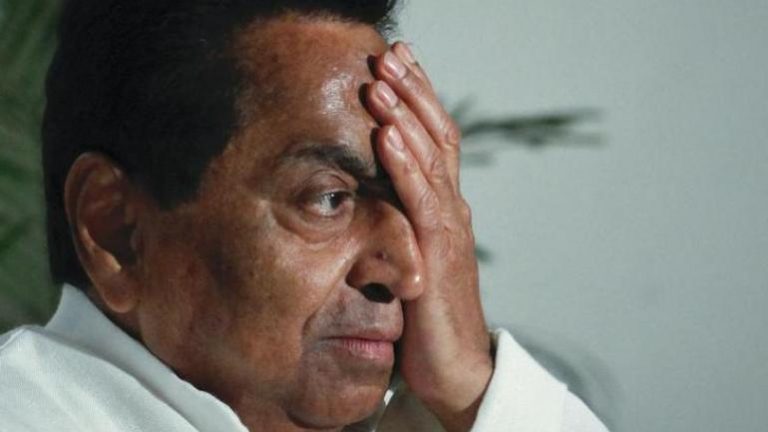
The Bhartiya Janata Party veteran leader, Kailash Vijayvargiya, breaks his silence over his son and BJP MLA Akash Vijayvargiya’s arrest for thrashing a municipal officer in full public view, for which he was later granted bail.
Kailash said that the incident was “very unfortunate” and that there was “mishandling from both the sides”. “Kachhe Khiladi hain, Akash ji bhi aur Nagar Nigam commissioner. It wasn’t a big issue but was blown out of proportion,” the national general secretary of the BJP said.
Kailash Vijayvargiya also said that the civic officers should not be arrogant and should talk to people’s representatives asserting that both parties should be made to understand ao that such incidents are not repeated. “I think officers should not be arrogant, they should talk to people’s representatives. I saw a lack of it and to ensure that it doesn’t happen again, both of them should be made to understand,” Kailash Vijayvargiya said.
Kailash Vijayvargiya, BJP on his son & BJP MLA Akash Vijayvargiya: I think officers should not be arrogant, they should talk to people’s representatives. I saw a lack of it and to ensure that it doesn’t happen again, both of them should be made to understand. https://t.co/BhTbirUNIj
The Senior BJP leader said that he himself was once a “the councillor, mayor and a minister of the department”, and therefore know that no residential building is demolished during rains.
“I don’t know if an order for the same was issued by the government. If it wasn’t, it’s a fault on their part,” he said. “If a building is being demolished anyway, then arrangements are made for the residents to be shifted to a ‘Dharamshala’. There was mishandling from Nagar Nigam. Women staff and women police officers should have been there. It was immature. This should not happen again,” Kailash said.
Akash Vijayvargiya, the BJP MLA representing the assembly seat of Indore-3 in Madhya Pradesh, was released from Indore district jail on Sunday, after being granted bail on Saturday.
Akash Vijayvargiya who was arrested four days ago was garlanded by supporters as he walked out of the jail. He had maintained that he was not embarrassed or guilty of thrashing the municipal corporation officer as he could not think of anything else when women were being mistreated.
“I am not guilty or embarrassed about what I did as it was in public interest. A woman was being dragged brutally in front of the police and I couldn’t think of doing anything else,” he said, adding that he hopes he would not have to pick up the cricket bat again.
Earlier, Akash had said that he will not tolerate hooliganism and corruption at any cost. “I warned them to leave in ten minutes, or they will be responsible for the consequences. But they did not listen to me. This is just the beginning,” he said.
The Indore police had arrested senior BJP leader Kailash Vijayvargiya’s son Akash Vijayvargiya under IPC sections 353, 294, 506, 147, 148, for assaulting and obstructing a public servant from performing his duties on Wednesday.
The BJP MLA was recorded thrashing a civic body official using a cricket bat who was in the Ganji Compound area to carry out an anti-encroachment drive. Akash along with his supporters chased the official. The incident took place in full public view including the presence of policemen and television crews.
The arrest of the BJP MLA had let to national outrage. Posters supporting Akash Vijayvargiya appeared in parts of Indore which read, “Salute Akash ji”.
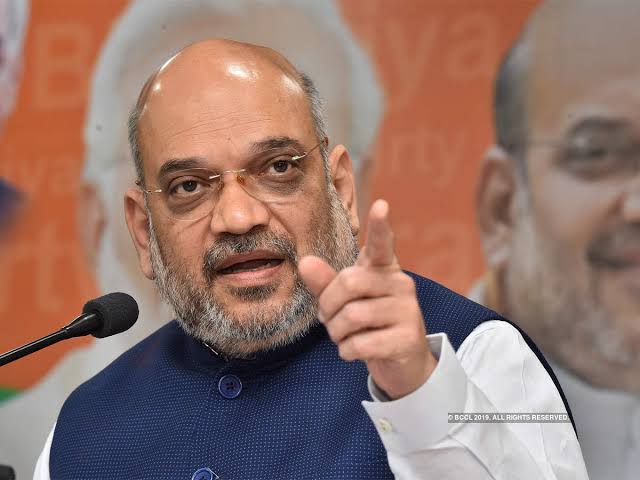
Union Home Minister, Amit Shah had also sought a report after Madhya Pradesh BJP MLA was arrested.
It’s July 1, 2019. Exactly two years since India’s tax system was completely overhauled and replaced with the Goods and Services Tax (GST) on July 1, 2017.
The 2019 election set many historic ‘firsts’ at the domestic level: after all, this is the first time in decades that a full majority government served out a full term and got re-elected with another full majority. When did that happen the last time? Under Nehru in 1962!
But one of the most stunning (and relatively unnoticed) feats was a global ‘first.’
A government that introduced GST voted back to power with thumping majority
Indian Prime Ministers had been toying with the idea of GST for a very long time. But there was a reason they kept backing away. Because GST is the electoral equivalent of ‘bad luck charm.’ No government anywhere gets reelected after implementing GST.
The reasons are not difficult to understand. Overhauling the entire tax system creates tremendous short term pain. And whichever government is in power faces the brunt of public anger. Obviously, GST is a long term investment in the economic future by getting rid of a thicket of central, state and local taxes. But elections always happen in the short term.
Add to it the diverse, chaotic and hyper-competitive Indian political scene and you begin to see the enormity of the GST challenge. Not only does GST threaten revenue collection of the Central Govt, but it also puts the autonomy of state governments on the line. These problems assume bitter regional dimensions when you look at richer Southern and Western states versus the poorer states in the North and East.
It takes a brave man to put his mandate on the line over the GST bet, knowing that nobody else has won that bet before.
The GST challenge can be broken down into three parts
(1) The first was simply generating the political consensus around GST
A Constitutional Amendment would be required. Two-thirds majority in both houses of Parliament and ratification by at least half the states. How difficult is that when you have an opposition determined to block ‘everything’ and calculates that it has nothing to lose?
The miracle here was the creation of the unique body called the GST Council. How the council works is a marvel that is rarely ever explained.
The Council consists of representatives of the Center as well as the states. But here is how the voting powers break down:
Center : 1/3rd of the vote
States: 2/3rd of the vote
The first question here is which state gets how much vote? Well, every state gets the exact same number of votes! No matter how big, how small, how rich or how poor.
Imagine the political skill that went into creating a consensus like this across state governments. Imagine the hornet’s nest of political egos, regional chauvinism and old rivalries that had to be overcome for this.
Observe also the strategic climbdown for the Center to just 1/3rd of the votes, making the states feel that the Center was not looking down on them. You realize how little power the Center kept for itself when you learn that the GST Council can only take a decision if 75% of the votes are in favour.
So the Center (with 33% vote) effectively has veto power in the GST Council which needs at least 75% to agree on any decision. But not much more. In order to reach the magic figure of 75%, the Center must take 18 of the 29 states along or it won’t get its way.
On a side note, perhaps you can now see why it was so important for Modi to have NEDA governments in North Eastern states, no matter how tiny. The GST Council is where the real action is.
Over the last two years, this miracle called the GST Council has been managed so smoothly that its inner workings have rarely made news. Building this council was a balancing act with no parallel in recent history.
(2) The second challenge was to manage the short term economic pain after GST
Here are two charts, showing what happened to GDP growth when Australia and Canada tried to implement GST.
GST implemented by Canada on 1st January 1991GST implemented by Australia on 1st July 2000
See the plunge that GST caused! Now let us put in context the challenges in India versus a first world country like Australia or Canada. More people live in Delhi than in any of these countries!
The first thing India did was to adjust to the realities of our economy. Instead of a true GST with a single rate, India went for 5 brackets: 5%, 12%, 18%, 28% and 35%. Lots of basic food items, etc were put in the 0% bracket and you could call it the sixth slab of GST if you want.
It’s less than ideal, but surely a mega improvement on the previous system of every item having at least 3 taxes on it: Central, State and Local. If you are lucky. In addition to VAT, service taxes, etc, etc, etc. The old system had literally hundreds of different tax rates on various items. Now, anybody could remember the sequence 5%, 12%, 18%, 28% and 35%.
When GST was implemented, the fears were many. Government revenue could have dropped precipitously. The onus was on the government to ensure compliance and manage the anger of people trying to adjust to the new system. Without choking the economy completely as had happened in every other country.
But none of the fears came true. India’s economy slowed down, but it still remained the fastest growing in the world. GST compliance burden was reduced from monthly filings to quarterly filings that most businesses would already have been familiar with. Items were constantly moved into lower and lower tax brackets (the 35% bracket is now almost empty), but total tax collection kept growing at a healthy pace.
(3) The third challenge was to handle the political fallout of GST
When GST was launched on July 1, 2017, PM Modi graciously invited all ex-Prime Ministers to be present by his side, reflecting the consensus around the passage of the GST bill and the non-partisan nature of the GST Council.
But in a characteristically cowardly move, Dr Manmohan Singh declined the invitation. The Congress was making it clear that GST would be Modi’s tax. And he would be on the line for all the immediate inconvenience that would follow. And as India’s economy shut down for a month before and after July 1, 2017 to adjust to the new regime, the Congress made the most of the low GDP numbers. Before the crucial Gujarat election.
Who remembers that Sonia ji’s UPA government had said India was ready for GST already in 2010? Nobody. You know it was Chidambaram who had set Apr 1, 2010 as the GST deadline. But, suddenly in the summer of 2017, Congress and its entire ecosystem told us that GST is “premature.”
Modi was on his own to handle the fallout. The fact that people stuck by him is a historic masterclass in leadership. In July 2017, the election was less than 2 years away. He showed confidence in the people. And the people in turn showed confidence in him.
People rarely listen to government assurances when they are hit in the pocketbook. Modi had to ensure those hits were kept to an absolute minimum and make people believe he was doing his absolute best.
The GST isn’t perfect yet, but it’s getting there. As I mentioned before, the top slab of 35% is now almost gone and the 28% slab is gradually getting hollowed out as well. Three things: fuel, real estate and alcohol are still outside GST.
The biggest takeaway here is that India and Modi sarkar survived an economic and political storm like no other. And came out relatively unscathed. Here’s to the Ease of Doing Business!
The Kolkata police have arrested a man after a 35-year-old woman had accused him of taking pictures of her inside a moving bus. The woman who had boarded the bus on Sunday morning with her husband and daughter allegedly caught the man sitting in the opposite seat recording her.
Accused of voyeurism, 24-year-old Mohammed Khan has been arrested by Muchipara police station. Khan is a resident of Uluberia in Howrah and was arrested under Section 354 of the Indian Penal Code.
Reportedly, the woman had boarded a private bus on the Dhulagarh-Sealdah route on Sunday morning. The accused sat opposite her. A co-passenger had informed the woman that the accused was taking pictures of her
“One of the co-passengers first noticed that the man was taking my photos. When we challenged him, he denied. But then we found the photos on his cell phone. So I dialled 100 and sought help from the police”, said the woman.
The woman made the call while the bus went past the Wellington crossing on Lenin Sarani. An officer of the control room immediately asked the officer-in-charge of Sealdah Traffic guard to intercept the bus and look into the matter. The accused was apprehended within minutes of the woman’s call to police.
Before the police could arrive, passengers already started to assault him after they found out that he had recorded several other women in public. On learning that the police have been called, the accused fell at the feet of the woman asking for mercy. But the women decided to teach him a lesson and handed him over to the cops.
According to the police, the bus was stopped in front of the NRS hospital. The accused was handed over by the passengers but his friend had managed to flee. The youth had then been taken back to Muchipara police station.
The prompt response of the police, in this case, is being appreciated by many. This incident comes after former Miss India Ushoshi Sengupta had complained of police apathy in Kolkata when she and her Uber driver were harassed by a mob two weeks earlier.
With Prime Minister Modi back in power, the long-established ‘ecosystem’ that drove the narrative is in massive flux. With the ‘establishment’ having a meltdown after their campaign against PM Modi failed, several questions have been raised on the credibility of ‘thought-leaders’ who have driven the narrative thus far. From opinion pieces in national and international media to NGOs and media-persons, the collective credibility of the ‘cabal’, so to speak, took an irreparable hit. One of the areas that got spoken of rather threadbare, was that of psephology.
With the credibility of the field taking a drubbing the world over, people at large started questioning whether there was any merit to the surveys and predictions that psephologists made. Many even wondered whether the numbers were sometimes simply put out there to drive a certain narrative home in the hopes of influencing the elections.
One recalls how in 2014, most psephologists barring a few got BJP’s numbers vastly wrong. Perhaps this was in tune with the global trend of underestimating ‘right wing’ votes in general, as we saw in the Trump election, the UK referendum or even elections in Australia.
India saw its own share of controversies. For example, the Exit Poll put out by NewsX in collaboration with Neta was dubious since it depended largely on a mobile application and the responses received on it. The Neilson Director ended up admitting on National Television that they had selectively altered responses in favour of Prime Minister Modi.
Through it all, with dwindling credibility, India also saw the rise of a young psephologist, Pradeep Bhandari. Bhandari, all of 28-years-old, managed to infuse young blood, renewed energy and frankness of opinion that was missing from the psephology scene thus far.
From Daly college, Indore, Pradeep bought the same passion to his profession of psephology that he had while debating or playing cricket. He went on to do Engineering in Electronics and Communication from MIT Manipal and later Theatre and Economics and Public Policy. His interest in social issues stems from an aware set of parents. His mother runs the largest NGO on Thalassemia, and his father was a President Awardee police officer.
A staunch nationalist, Pradeep prides himself for being honest about his political ideology and preferences while being completely transparent and unbiased in his psephology.
Pradeep recalls, “Post 2013 I came back to Indore where I wanted to contribute to the system so I thought of preparing for civil services. But during my preparation, rather than studying, I used to spend my time watching Narendra Modi speeches, reading 15 editorials a day, and watching news day in and out, especially Arnab Goswami debates. I was never a status quoist. In my free time, I used to volunteer in a non-institutional way and I had this craze to be a contributor in Narendra Modi victory. I was a youth could see hope”.
Following his passion, Pradeep also briefly worked with the Haryana Government, especially in designing a new skill development policy, but since being away from people wasn’t his forte, it didn’t quite get his creative juices flowing.
It was after his stint with the Haryana government that one afternoon, bored and in Indore, Pradeep recorded an episode of ‘Jan ki Baat’ and uploaded it on Facebook. After the one episode went viral, he started asking people for their opinions on various subjects, armed with a selfie stick and a phone. When these short Facebook clips started going viral, Pradeep instituted his company, Jan Ki Baat, with a few lacs borrowed from his family and his professor Mukul Asher, who he thanks wholeheartedly for whatever success he has seen. He also credits his teammate, Akriti, who he says stood by him through the entire process of instituting his company. She was his first teammate, apart from others.
Just before the Uttar Pradesh elections, Pradeep decided to start touring the state and getting opinions from the ground. He had developed massive goodwill by now and had several citizen journalists who were willing to feed him information from ground zero. He sensed an absolute majority for BJP, something no psephologist had managed to do at that time.
Pradeep says, “Siddharth Zarabi, Executive Editor BTVi knew me through a common link and was following me continuously and he happened to give me space to put the survey. The results matched with the survey trend and my performance on the tv debate was appreciated”.
He adds, “A leap forward happened when I went to Gujarat. I hired a core team of field investigators and we built a huge network of citizen reporters. My team reported in Gujarati. By then we had built our own indigenous model of prediction, which I call probability map of the outcome, and had the ability to gauge lakhs of sample size and come out with opinion poll. One of my mentors Shubhranshu introduced me to Republic TV CEO. This was when my poll was launched on Republic. I would not have been where I am without the support of Arnab Goswami. The opinion poll made big headlines, as when Yogendra Yadav who was considered a big voice was preaching a BJP loss in Gujarat, I was saying a BJP win in Gujarat. I remember that in order to check if we are correct I visited Mehsana (the birth of Patidar movement) 11 times and predicted that Nitin Patel will win it. I was called all sorts of names and abused but later I stood vindicated on that seat too. On exit day also Republic gave me some space, and News24 also published my survey in the poll of polls. Gujarat was my 2nd success”.
Pradeep then went on to tour the Northeast. He used to spend months on the road, even in Tripura, something no psephologist does.
One of these success stories is that of the Karnataka polls. Karnataka was historic because it was a direct face-off between Jan Ki Baat and the rest. Most opinion polls were giving Congress the edge. It was only Pradeep giving INC 77 seats and BJP 104 seat. In partnership with Republic TV, Pradeep stood vindicated by the end of it all.
For 2019, Pradeep travelled for months in over 400 constituencies and had a unique connection with the people. He rode auto-rickshaws, worked with the farmers and basically, became one with the people he wanted to understand. His show Lalkar on Republic TV saw him in the most colourful manner, trying to get people to talk to him so as to accurately predict the 2019 elections.
After coming from nothing in a closed field that resists change, Pradeep has managed to make his mark in a field that was fast losing credibility. Unafraid to voice his opinions and stick his neck out when most psephologists shy away, Pradeep stands out as the young beacon in an ageing profession.
The GST (Goods and Service Tax) was implemented on 1st July 2017. As it enters the third year, former Union Finance Minister Arun Jaitley took to Facebook to write about the difficulties and hiccups faced along with the consequences of restructuring the indirect tax system.
His Facebook post has been republished in its entirety below:
Today, the Goods and Services Tax regime enters its third year. The monumental restructuring of one of the world’s clumsiest indirect tax system was not an easy task. The challenges to implement the GST were compounded by some outlandish and exaggerated comments of the not so well-informed. It would, therefore, be only fair to look back the last two years and analyse the implementation and the impact/ consequences of the GST.
The pre-GST regime
In a federal structure, both Centre and States were entitled to impose indirect tax on goods. The States had multiple laws which entitled them to impose taxation at different points. There were twin challenges. Firstly, to get the States to agree because some of them felt they were losing their fiscal autonomy to tax and, secondly, to develop a consensus in the Parliament. The States were scared of the fear of the unknown. The critical point which enabled the Government to persuade the States was to cushion them with a 14% annual increase from the tax base of 2015-16 for a period of five years.
The GST merged all these seventeen different laws and created one single taxation. The pre-GST rate of taxation as a standard rate for VAT was 14.5%, excise at 12.5% and added with the CST and the cascading effect of tax on tax, the tax payable by the consumer was 31%. The entertainment tax was being levied by the States from 35% to 110%. The assessee had to file multiple returns, entertain multiple inspectors and additionally face the inefficiency – trucks being stranded at the State boundaries for days altogether.
The GST changed this scenario completely. Today, there is only one tax, online returns, no entry tax, no truck queues and no inter-state barriers.
Consumer and assessee friendly
After two years, one can confidently argue, without fear of contradiction that GST proved to be both consumer and assessee friendly. The high taxation of pre GST era pinched the consumers’ pocket and acted as a disincentive against tax compliance. The last two years have seen each of the meetings of the GST Council reducing the tax burden on consumers as the tax collections improved. An efficient tax system certainly leads to better compliance. The 31% tax, which was temporarily 28%, has seen the largest single reform. Most items of consumer use have been brought in the 18%, 12% and even 5% category. Only luxury and sin goods remain in addition to some white goods. A sudden reduction of all categories can lead to a massive loss of government revenue leaving the government without resources to spend. This exercise had to be done in a gradual manner as the revenues increased. The Cinema tickets, earlier taxed at 35% to 110%, have been brought down to 12% and 18%. Most items of daily use are in the zero or 5% slab. The loss to the revenue on account of this reduction collectively has been more than Rs.90,000 crore annually.
Widening tax base and higher revenue
The assessee base in the last two years has increased by 84%. The number of assessees covered by the GST were around 65 lakh. Today, they are at 1.20 crores. This obviously leads to higher revenue collections. In the eight months of 2017-18 (July to March), the average revenue collected per month was Rs.89,700 crore per month. In the next year (2018-19), the monthly average has increased by about 10% to Rs.97,100 crore. The fear of the States today is that for the first five years they get a guaranteed 14% increase. The lurking doubt is as to what will happen after five years? Every State has been paid its share of tax as also from the compensation fund, if necessary. We have just completed two years of GST. Already after the second year, twenty States are independently showing more than a 14% increase in their revenues and the compensation fund in their case is not necessary.
Simplification and compliance
Businesses upto an annual turnover of Rs.40 lakh are GST exempt. Those with a turnover upto Rs.1.5 crore can make use of the composition scheme and pay only one percent tax. There is now a single registration system which works online and the procedures for the trade and business are reviewed and simplified regularly.
A response to certain misconceived ideas
Many warned us that it may not be politically safe to introduce the GST. In several countries, governments lost elections because of the GST. India had one of the smoothest transformation. Within the first few weeks of the implementation, the new system settled down. There were a few protests in Surat. The issues were resolved. The BJP won all the Assembly seats in the Gujarat poll in Surat. In 2019, the BJP won the Surat seat by the highest margin in the country. Those who argued for a single slab GST must realise that a single slab is possible only in extremely affluent countries where there are no poor people. It would be inequitable to apply a single rate in countries where there are a large number of people below the poverty line. The direct tax is a progressive tax. The more you earn, the more you pay. An indirect tax is a regressive tax. In the pre-GST regime, the rich and the poor, on various commodities, paid the same tax. The multiple slab system not only checked inflation, it also ensured that the Aam Aadmi products are not exorbitantly taxed. Illustratively, a Hawai chappal and a Mercedes car cannot be taxed at the same rate. This is not to suggest that the rationalisation of slabs is not needed. That process is already on. Except on luxury and sin goods, the 28% slab has almost been phased out. Zero and 5% slabs will always remain. As revenue increases further, it will give an opportunity to policy makers to possibly merge the 12% and 18% slab into one rate, thus, effectively making the GST a two rate tax.
The Role of the GST Council
The GST Council is India’s first statutory federal institution. The Centre and the States jointly sit and decide. Both have pooled their fiscal rights in a collective forum to create one common market. My own experience of two years while chairing the GST Council, was that Finance Ministers’ of States, notwithstanding the political position their parties take, have displayed a high level of statesmanship and acted with maturity. The Council worked on the principle of consensus. This has added to the credibility of the decision making process. I am sure this trend will continue in future.
Tensions have gripped Kaliachak and Baishnabhnagar areas in Malda, West Bengal, after a 24-year-old youth named, Shanaul Sheikh died two days after being beaten up by a group of people on June 26 on suspicion of involvement in a motorbike theft.
Sheikh, who was referred to Kolkata’s SSKM Hospital by doctors at Malda Medical College and Hospital after suffering injuries in his private parts, eyes and ears, died in Kolkata after his condition deteriorated. Sheikh is survived by his wife and a six-month-old daughter.
The incident came into fore after a video of Sheikh being beaten up on the suspicion of being a bike lifter went viral on social media.
The protests escalated after the body of the youth was brought back to his village, Baishnabhnagar, in Malda, on Sunday. According to police sources, hundreds of villagers, who demanded the immediate arrest of the accused, blocked NH-34 and ransacked shops and other establishments in Kaliachak.
“Protesters belonging to the minority community protested on NH 34 in Kaliachak area. They were protesting against the killing of a youth,” a police officer said, furthering that “A large contingent of the police force has been deployed in the area. The situation is peaceful now.”
On Sunday, protests were also held outside Baishnabhnagar police station.
“We have identified some people from the video. One person identified as Mithu Choudhury has been arrested”, said Sanjoy Biswas, inspector-in-charge of Baishnabnagar police station. “We have started a case under IPC sections 302, 341, 325 and 34. Efforts are on to arrest the other accused,” furthered Malda SP Aloke Rajoria.
Shanaul’s mother, Sufia stated that two ‘unknown assailants’ came on a bike to their house in Gaddipara and took her son along on Wednesday. Some locals alleged that Shanaul was brutally assaulted by the two that night. According to the family, Sanaul was stripped and hit with iron rods.
The police sprung to action after the video of the assault went viral on social media. The police reached the crime spot and rescued Shanaul, after which he was taken to Bedrabad primary health centre. The police then took him to Malda Medical College and Hospital where a CT scan revealed a blood clot in his brain. He was shifted to Kolkata’s SSKM Hospital where he was supposed to be operated on Saturday. However, Shanaul succumbed to his injuries late on Friday.
“I lost my husband a few years ago. Shanaul was my eldest son. He was the only earning member,” his mother Sufiya said, claiming that Shanaul worked in a brick kiln.
Local BJP MLA Swadhin Sarkar condemned the act and demanded that the culprits be immediately arrested and punished. He added that even though he was accused of bike theft, the people should have let the police handle the matter.
Congress leader and Sujapur MLA Isha Khan Choudhury, who met Sheikh’s family, called for peace and demanded arrest of the accused.
While Block Trinamool leader Khalilur Rahman called it a planned murder and demanded culprits to be arrested right away, several Bangla Sanskriti Mancha members visiting Shanaul’s home on Sunday demanded strict punishment for the culprits. The youth, they said, was a father to a six-month-old child. “We want punishment for the culprits,” said Md Nazim, one of the members.
In a bizarre incident, a 30-year-old woman has been assaulted and given triple talaq by her husband on Saturday after she asked for Rs.30 from him to buy vegetables.
According to the reports, the accused, identified as Sabir also hit his 30-year-old wife Zainab with a screwdriver. The couple lived in Nai Abadi Mohalla in Dadri with their three daughters and a son. The victim has lodged a complaint against her husband and in-laws alleging that they subjected her to domestic violence.
The victim’s father said his daughter had a difficult relationship with her husband since she got married. He further accused Sabir of previously thrashing Zainab while hitting her with a stick on her head. The father also accused Zainab’s in-laws of misbehaving with her.
“On Saturday evening, my husband Sabir, brother-in-laws Zakir and Idris, sister-in-law Sama and mother-in-law Najjo thrashed me. They also gave me electric shocks with a wire. My husband divorced me by triple talaq, spat on my face and ousted me from the house,” alleged Zainab. Reports state that Zainab was brutally thrashed and she had fallen unconscious when the neighbours found her. The thrashing allegedly started after Zainab asked Shabir for Rs 30 for buying vegetables.
An FIR has been registered at Dadri police station against Sabir, his mother Najjo and his sister Shama under sections 498A (husband or relative of husband of a woman subjecting her to cruelty), 504 (intentional insult with intent to provoke breach of the peace) and 506 (criminal intimidation) of the Indian Penal Code.
“We have arrested Sabir and produced him before Dadri city magistrate. He was released on bail on June 30. The other family members named as accused are absconding,” said Niraj Malik, SHO, Dadri.
India lost their first match of the 2019 Cricket World Cup when they went down to England by 31 runs. However, the final figure was irrelevant, India conceded defeat once Woakes pulled off an excellent catch in the deep to send Rishabh Pant back, with over 10 overs left in the game.
What followed was a bizarre period of play with Indian batsmen looking to knock singles and try to survive till the end. A display that left most onlookers scratching their heads, and former Indian captain Sourav Ganguly (on air) absolutely livid.
In their chase of England’s 338, India lost KL Rahul early and spent the next 10 overs playing cautiously, very cautiously.
Rohit Sharma and Virat Kohli took their time to settle down and let the asking rate balloon over 8. However, gradually they grew into the innings and some really attractive shots flew from both ends as they tried to catch up to the required rate.
Just when England were starting to get worried, their middle overs expert Liam Plunkett provided the vital breakthrough by removing Kohli. Rohit Sharma went on to complete his 100 but fell shortly afterwards to the same bowler while trying to accelerate the scoring.
With Pant and Pandya in there, Indian fans were still hopeful and they were in good spirits when the duo started finding the boundary regularly, with Pandya hitting 3 fours in succession off the excellent Woakes. However that was as good as it was going to get for India. Pant tried his trademark falling over to the off-side pull which was taken on the boundary by a diving Chris Woakes, and that was the end of the Indian resistance.
At this stage, India was only slightly behind England in their innings, and a chase was still on, but the remaining batsmen had other ideas. After one hit down the ground, new batsman Dhoni tried looking for only singles as the required rate kept increasing. Pandya kept thrashing the ball powerfully but kept smashing it to Long On and Long Off for singles.
Pandya tried to hit a boundary at last but holed out to Long On bringing Jadhav in. At this stage India needed 72 from 31 balls, an equation that doesn’t faze lower middle order batsmen in the T20 age. However, there was no intent at all from the two batsmen in the middle as they kept looking only for 1s.
English bowlers were bowling slow cutters throughout this period and there was no attempt to put them off their game. England were happy bowling 6 off cutters an over, Indian batsmen were happy taking 4-5 singles per over.
The target was forgotten, the fans were confused, the commentators were clueless as to what was happening.
Just to rub salt into the wounds, Dhoni showed in the last over that he can hit those fast bowlers for a boundary, and then started refusing singles with 40 needed off 4 balls for some strange reason.
At no point in the last 10 overs India tried to go for the target. While chasing 339 for a win, most teams will take 100 from last 10 with 6 wickets in hand but apparently it was an impossible target for India so they concentrated on getting that Not Out at the end.
Virat Kohli spoke about the short square boundary but the Indian batsmen made no effort to try and exploit that short square boundary. It was physically painful to watch those last few overs. We have seen more intent from Rahul Gandhi during an election campaign than from Indian batsmen during the final few overs.
It is not all doom and gloom for India, they are still sitting pretty in the table, they still have the best bowling attack in the competition even though the spinners had an off day against England, they can still win any game as long as Kohli or Rohit Sharma bat 50 overs. However, if those 2 get out early, don’t expect the Indian middle order to chase anything beyond 6 RPO.
After a long one-and-a-half month summer recess, the Supreme Court will assemble back on Monday. For the first time in a decade, the top court will be functioning full strength with all 31 judges including the Chief Justice.
Reportedly, nearly 1,100 cases are pending before the Supreme Court. These include a batch of petitions against the law to provide 10 per cent reservation to the economically weaker section. Petitions concerning with the Ayodhya land dispute and a bunch of other petitions challenging the constitutional validity of Article 35A and Article 370 of the Indian Constitution which grant special status to Jammu and Kashmir are among sensitive cases to be heard after the Supreme Court re-opens after a six-week vacation on July 1.
The Supreme Court will also hear the sexual harassment charges hearing against Chief Justice Ranjan Gogoi. Even though the internal committee constituted to probe the allegations, comprising Justices Bobde, Indira Banerjee and Indu Malhotra had given a clean chit to the CJI, the Supreme Court had constituted a panel with former SC judge Justice AK Patnaik to look into the conspiracy plot behind the allegations against the CJI. Before the summer break, Justice AK Patnaik had sought time to probe the matter and is likely to take up the investigation as the top court assembles again.
The top court is also likely to deliver its verdict in the review pleas in Rafale case. The petitions have sought review of the apex court’s judgment dismissing all pleas challenging procurement of 36 Rafale fighter jets from France. Ex-Union ministers Yashwant Sinha and Arun Shourie, and lawyer Prashant Bhushan are amongst the petitioners.
A three-judge bench headed by the Chief Justice Gogoi will decide on the contempt petition filed BJP MP Meenakshi Lekhi against Rahul Gandhi. The contempt petition is for wrongly attributing to the top court his “chowkidar chor hai” jibe against Prime Minister Narendra Modi.
Last week, Chief Justice of India (CJI) Ranjan Gogoi had written three letters to Prime Minister Modi with solutions to tackle to vast pendency of cases. The CJI had made 3 specific requests to the Prime Minister – increase the number of Judges in the Supreme Court which currently stands at 31, increase the retirement age of Judges from 62 to 65 and revive the tradition of tenure appointments of retired SC and HC Judges so they can be assigned pending cases.
Currently, the Supreme Court currently has 58,669 cases pending. Out of which, there are 26 cases which are pending for more than 25 years, 100 cases pending for 20 years, 593 cases pending for 15 years and 4977 cases pending for 10 years.
As India faces a deficient monsoon season and a widespread water crisis, the Narendra Modi led NDA government is launching a pan-Indian campaign, the “Jal Shakti Abhiyan” to target water-stressed areas to being conservation initiatives.
The campaign will be launched across the country on July 1 by Jal Shakti minister Gajendra Singh Shekhawat. Reportedly, the minister has roped in 255 bureaucrats across different departments and ministries, nominating them for one water-stressed district each. They have been appointed as Central Prabhari Officers of 255 water-stressed districts for coordinating the Jal Shakti Abhiyan.
The Central Prabhari officers will visit identified blocks and districts, and coordinate the implementation of various water harvesting and conservation measures.
“We have to start going on the field for conservation efforts and mobilise the public to take part in water conservation,” a senior government official said.
The objective of the programme is to increase the water table in the stressed areas through dams, ponds, afforestation. The campaign will also involve cleaning up of water bodies, especially the old and neglected ones. In order to make it a public movement, a team of officials from the centre to the local level will head to water-stressed areas to involve the local community, students to drive the campaign.
“The first step will be to draw an inventory of water resources and the groundwater availability in these areas,” said a government official.
The campaign will run till September 15 in the states that receive rainfall from the south-west monsoon. For the states which receive the retreating north-east monsoon, the campaign will be held from October 1 to November 30.
Reportedly, the Jal Shakti Abhiyan would aim to accelerate water harvesting, conservation and borewell recharge activities augmenting the existing activities under the Mahatma Gandhi National Rural Employment Guarantee scheme and the Integrated Watershed Management Programme of the Rural Development Ministry.
Block and district-level water conservation plans would be drafted, and Kisan Vigyan Kendras would hold melas to promote better crop choices and more efficient water use for irrigation.
A major communications campaign on TV, radio, print, local and social media would be carried out, similar to PM Modi’s Swachch Bharat Mission in 2016, in which a mass movement was initiated with celebrities mobilised to generate awareness for the campaign.
As India is set to face a deficient monsoon this year and the country is already facing a drought-like condition ahead of the monsoon, water conservation measures are need of the hour. The ‘Jal Shakti’ Abhiyan will be implemented in two phases between July and September, during the monsoon season, during which government officials will visit their respective districts at least three times.
A recent NITI Aayog study has predicted that by 2030, the country’s water demand is going to be increased two times the available supply, implying severe water scarcity for millions of people, which may impact with 6 per cent loss in the country’s GDP.
In his maiden Mann Ki Baat speech after his re-election, Prime Minister Narendra Modi had called upon people to start a mass movement for water conservation and resolve to save every drop of water amidst water scarcity in several parts of the country.
Prime Minister Modi had said an awareness campaign should be started which should not only focus on water-related problems but also propagate ways to save water.