Home Blog Page 6255

34 Pakistani migrant Hindus from 3 districts of Rajasthan granted Indian citizenship

The Rajasthan government has granted Indian citizenship to 34 Pakistani migrant Hindus living in 3 districts in Rajasthan. Recently, additional chief secretary (home) Rajeeva Swarup has informed that in the month of June, 34 Pakistani Hindu migrants were granted citizenship by the government.

As per reports, many of these Hindus have been living in India for over a decade. The group includes 19 people from Barmer, 10 from Pali and 5 from Jalore district in Rajasthan.

In Barmer, district collector Himanshu Gupta and additional district collector Rakesh Kumar Sharma had handed over the certificates of citizenship to the 19 Hindu migrants at the conference hall in the collectorate on last Wednesday.

The collector also asked the new citizens to get their names registered in the voters’ list to avail all facilities extended to the citizens of India.

As per reports, from January 2019 to June 17, 2019, as many as 79 displaced Pakistani Hindus have been granted Indian citizenship. Previously, in March, 44 migrant Pakistani Hindus were granted citizenship in Rajasthan. Of the 44 people, 12 were from Barmer, 15 from Udaipur, 11 from Pali, and 06 were from Jalore district.

Hindus in Pakistan are subjected to blatant injustice, persecution and forced conversions. Every week, many Hindu families board the Thar express under Indian visa and travel to India, never to go back again. At present, there are hundreds of Pakistani Hindu families living in several areas in Rajasthan and Gujarat.

As per reports, the migrant Hindus from Pakistan have to go through an extensive and long process to be eligible for Indian citizenship. The reports by the Intelligence Bureau and state CID are necessary to initiate the process. Passport expiry and visa validity periods are also crucial.

Many of the Pakistani Hindus often live in temporary camps and earn a meagre living by selling from carts. Even the educated Hindu migrants fail to secure jobs because of the lack of necessary documents.

Watch: Indian Air Force commemorates 20 years of Kargil War, recreates Tiger Hill attack and victory

Commemorating 20 years of the Kargil War, the Indian Air Force on Monday recreated Tiger Hill attack and static display of Mirage-2000 and other aircraft used during ‘Operation Vijay’, reports ANI.


Ahead of the 20th anniversary in July of the India-Pakistan war, the IAF has planned several activities at the Gwalior Air Base. Air Chief Marshal BS Dhanoa will be the Chief Guest at the event to honour the brave soldiers who had laid their lives during the Kargil war.

Reportedly, several gallantry award winners, both serving and retired, who had participated in ‘Operation Vijay’ would be attending the event at the Gwalior Air Base. A number of events have been also planned by the Indian Army in Delhi and Dras in Jammu and Kashmir next month to mark the 20th anniversary of the ‘Kargil Vijay Diwas’, officials earlier said.

The anniversary celebrations for this year will be spread over three days from July 25-27.

“However, as part of the build-up to the main event, numerous activities have been planned to be organised all over the country from the first week of July,” an official said.

Reportedly, the celebrations in Delhi will begin on July 14 with the illumination of a ‘Victory Flame’ from the National War Memorial here, which would traverse through 11 towns and cities to finally culminate at Dras where it will be merged with the eternal flame at the ‘Kargil War Memorial’, he said.

The objective of these celebrations is to evoke a feeling of patriotism through nationwide campaigns especially amongst the youth and to pay homage to the valiant soldiers.

“The Kargil War will always be remembered for its strategic and tactical surprises, the self-imposed national strategy of restraint in keeping the war limited to Kargil-Siachen sectors, and the swiftly executed tri-services military strategy and plans,” the Army had said.

The Kargil war took place between May and July of 1999 in Jammu and Kashmir’s Kargil district. The conflict was orchestrated by the then Pakistan army chief General Pervez Musharraf without the knowledge of the then Pakistan Prime Minister Nawaz Sharif.

The war began with the infiltration of both Pakistani troops and terrorists into Indian territory. The infiltrators positioned themselves in key locations that gave them a strategic advantage during the start of the conflict. After local shepherds became aware of the incursions, the Indian Army was able to ascertain the points of incursion and launch “Operation Vijay”.

The Battle of Tiger Hill is one of the bravest battles fought around the peak of Tiger Hill by the Indian Army against Pakistan from May to June in 1999, during the Kargil War. The Indian Army had launched an offence against the Pakistani intruders on top of Tiger Hill, The three battalions of the Indian Army, namely 18 Grenadiers, 2 Naga, and 8 Sikh, were given the responsibility to capture the peak, with additional support from the artillery.

After a difficult operation, which lasted 36 hours, the Indian Army re-captured Tiger Hill. In all, 38 Indian troops were killed in action, while 92 Pakistani troops were killed in action. Yogendra Singh Yadav of 18 Grenadiers was awarded the highest military honour of the Indian Republic, the Param Vir Chakra. Overall Yadav was hit by 14 bullets and played a major role in the capture of Tiger hills.

RBI Deputy Governor Viral Acharya resigns, six months prior to scheduled end of term

Reserve Bank of India’s Deputy Governor Viral V Acharya has resigned from his post, six months before the scheduled end of his term.


According to the reports, Viral Acharya who had joined the Reserve Bank in January 2017, was the RBI’s youngest deputy governor, post-economic liberalisation. Reportedly, Acharya will be returning to New York University in his previous job as the CV Starr Professor of Economics.

Acharya had resigned a few weeks before the last meeting of RBI’s Monetary Policy Committee (MPC) that was held on June 6. However, his last days as Deputy Governor will end a few days before the July end.

Acharya, known for his hawkish monetary policy, reportedly had a difference of opinion with Reserve Bank Governor Shaktikanta Das over easing of interest rates to boost economic growth. While Das stood for cutting policy repo rate to focus on economic growth, Deputy Governor Viral Acharya had advised against another rate cut fearing another inflation cycle.

However, the six-member Monetary Policy Committee (MPC) had decided to reduce the policy repo rate by 25 basis points to 6 per cent in a 4-2 majority decision.

Currently, Viral Acharya is in charge of the Financial Stability Unit, Monetary Policy Department, Department of Economic and Policy Research, Financial Markets Operation Department, Financial Market Regulation Department, among others at the RBI.

Acharya has co-authored several research papers with former RBI Governor Raghuram Rajan and has also called him his ‘inspiration’.

At the wake of Acharya’s resignation, another Deputy Governor of the RBI, NS Vishwanathan, whose term is also due to end in the first week of July will reportedly stay back for another two-years.

Cricket World Cup: Video and statistical highlights from Pakistan v South Africa match

South Africa’s horrifying performance continued on Sunday, resulting in an early exit from the World Cup. The good news is for Pakistani fans, as the win keeps their hopes alive to reach the semis.

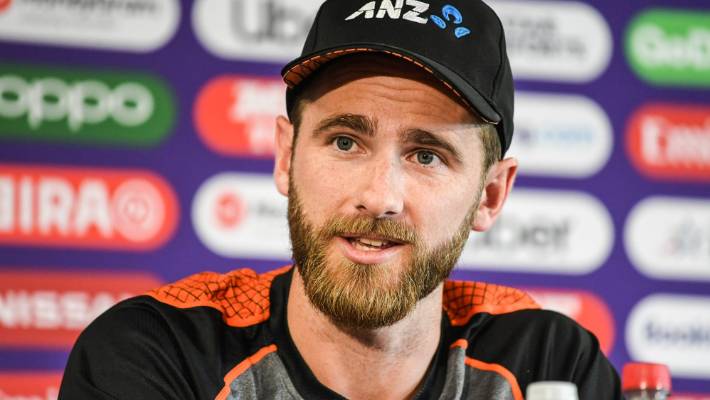
After winning the toss, Sarfaraz decided to bat first. The openers gave a fabulous start by adding 81 runs in 15 overs — the kind of start every team wants to have in important games like this. Their number one batsman Baba Azam batted beautifully for his 69, but their main man Harris Sohail who was making a come back in the team smashed 89 off 59 balls. Sohail’s 89 is the third fastest World Cup innings for Pakistan. The innings helped Pakistan to reach a score of 308. Probably more than enough against the fragile batting line up of South Africa. Ngidi took three wickets but was the most expensive bowler of their side.

Watch: Pakistan Innings


South Africa, started poorly, as the out of form opener failed again, Amla got out in the second over of the innings for just two runs. Faf and de Kock then tried to build the innings and added 89 runs in 18 overs. The pace with which they were scoring wasn’t enough to chase down a score of 308. The partnership though added 89 runs, but it was composed at below five an over. Ultimately it built an added pressure on the incoming batsmen, and they kept giving away their wickets in search of getting runs quickly. Even though Pakistan dropped 4-5 catches in the match, South Africa never looked like chasing down the target. Wahab and Shadab took three wickets each while Amir got 2. Pakistan won the match by 49 runs and Harris Sohail was adjudged Man of the Match.

Watch: South African Innings (Fall of Wickets)


STATS

  • Imran Tahir becomes the highest wicket-taker for South Africa in World Cup history. He has now taken 39 wickets.
  • Harris Sohail scored 89 runs at the strike rate of 150.84, the third best strike rate for Pakistan in World Cup after Imran Khan (169.69 v SL in 1983) and Inzamam (162.16 v NZ in 1992).
  • Forty-four runs by Fakhar and Imam today is the highest same score by openers in a WC match.

Devotees throng a Khodiyar Mata temple in Gujarat after a crocodile, worshipped as Goddess’ vehicle, strays inside the temple

A crocodile strayed inside a Khodiyar Mata temple in Central Gujarat and the devotees who noticed the reptile started worshipping it believing the crocodile was sent by the Goddess Herself for the protection of the temple. As per reports, there was a theft in the temple a few days back.

Incidentally, the crocodile is also worshipped as a vehicle of Khodiyar Maa, the main deity of the temple where the crocodile had strayed. Many Hindu castes, especially the Leva Patels worship the Khodiyar Maa as the Kuldevi. The crocodile was then rescued by the Forest Department officials.


The local people believe this was a sort of divine intervention since the crocodile went up to the idol and stayed there without moving despite their attempts to move the crocodile. Initially, the people even opposed rescue operation for the crocodile but later on gave in after the forest department officials explained that the reptile needs to go where it belongs.

Irshad Ali tries to open IndiGo airlines’ airborne flight’s door forcibly breaching safety procedures

Twenty-two year old Irshad Ali on an IndiGo flight from Hyderabad to Guwahati when the flight was diverted to Bhubaneshwar to deboard him after he got ‘impatient’ and tried to open the aircraft door mid-air.

As per the reports, Irshad Ali breached safety procedures and did not even listen to the cabin crew’s instructions as he forcibly tried to open the door of the airborne aircraft. The flight was then diverted to Bhubaneshwar where the Central Industrial Security Force (CISF) personnel deboarded Ali and handed him over to the airport police. Abdul Karim, who was travelling with Ali, too, deplaned voluntarily at Bhubaneshwar.

So far no FIR has been filed against Ali. According to the police, Ali’s mother had passed away on Saturday and was on his way to attend his mother’s funeral. However, Ali grew ‘impatient’ and tried to open the door mid-air.

Earlier this month, a Pakistan International Airlines’ passenger on an Islamabad-bound flight accidentally opened the emergency exit mistaking it for the toilet and activating the emergency chute.

Pakistan urges the UN to take urgent action against Islamophobia and anti-Islamic speech

Pakistan has urged the United Nations (UN) to act against what it considers as Islamophobia and hate speech that according to the country is being used to secure narrow political and electoral gains in many parts of the world, including South Asian region. During a Security Council meeting on a hate speech proposal held on Wednesday, Pakistan’s Ambassador to UN Maleeha Lodhi termed Islamophia as the most prevalent expression of racism and hatred.

She said that Pakistan’s Prime Minister Imran Khan has called for urgent action to counter Islamophobia. “My Prime Minister Imran Khan has recently again called for urgent action to counter Islamophobia, which is today the most prevalent expression of racism and hatred against the other”, Lodhi told the UN officials. Cricketer-turned-politician Imran Khan had blatantly supported Pakistan’s vague blasphemy laws during the general elections in Pakistan last year.

At the 14th Summit of the Organisation of Islamic Cooperation (OIC) held earlier this month, Khan had urged the OIC to safeguard the religious sentiments of Muslims. “It was up to us to explain to the western people the amount of pain they cause is when they ridicule or mock our Holy Prophet. I would like to say from this platform that in the forums like the United Nations and the forums like the European Union, we must explain to them that they cannot hurt the sentiments of 1.3 billion people under the garb of freedom of expression”, Khan had said.

It was up to us to explain to the western people the amount of pain they cause us when they ridicule or mock our Holy Prophet,” Khan said at the OIC’s 14th Islamic Summit in Mecca. “I would like to say from this platform that in the forums like the United Nations and the forums like the European Union, we must explain to them that they cannot hurt the sentiments of 1.3 billion people under the garb of freedom of expression.”

Lodhi talked about the need to evolve ways to hold information technology companies accountable for the content capable of causing violence. “Words don’t just have consequences. Words can kill. It is time that we evolve ways to ensure that information technology companies are held accountable for the content that incites violence and weaponises individuals”, she said.

She expressed the commitment to supporting the UN strategy on hate speech. “We are fully committed to support the UN’s strategy on hate speech. This is a moment for all of us to come together to reverse the tide of hate and bigotry that threatens to undermine social solidarity and peaceful co-existence”, said Lodhi.

UN General Secretary Antonio Guiterrez while addressing the Security Council’s session said that the UN, governments, technology companies, educational institutions need to step up their response with the increased reach of hate speech through new channels. He announced plans for a conference on the role of education in addressing hate speech.

Blast in military hospital in Rawalpindi and its blackout by Pakistani media sparks speculation

The military hospital in Rawalpindi in Pakistan was rocked by a huge blast on Sunday evening. Footages shared by local people on social media show black smoke coming out from the hospital premises after the blast.


The blast took place near the Armed Forces Institute of Cardiology, which is located inside the Rawalpindi cantonment. According to reports, at least 10 persons were shifted to the emergency ward of the hospital following the explosion.


The blast in the hospital assumes significant because Jaish-e-Mohammed chief Masood Azhar was reportedly being treated here. The terror leader was reported to be suffering from renal failure and he was undergoing regular dialysis at the army hospital. Although later reports had suggested that Azhar was shifted from the hospital to a highly secured location after the Balakot strikes.

[youtube https://www.youtube.com/watch?v=3DwLB03LjSM]

There is no clarity on the cause of the blast yet. Although many people reported it to be a bomb blast, some people claimed that it was a gas cylinder or a gas pipeline blast. Some others also claimed that the blast was caused by a malfunctioning AC unit, and others said it happened in a boiler room. And as this is a highly protected are being a military hospital, the possibility of it being a terrorist attack seems minimal, therefore it is more probable to be an accident.

Although the news of the blast was reported widely by social media uses, there was no news about the same on Pakistani media. This media blackout about the incident had led to many people to speculate that it may be more than a simple accident. Even if it was an accident, it should have been reported by media as it is a major army hospital, and it was widely reported on social media.

We can survive without a Nehru-Gandhi as the titular head of the party, provided the family remain active: Mani Shankar Aiyar

Senior Congress leader Mani Shankar Aiyar hinted at the possibility of a non-Gandhi president of Congress Party, however, asserting that the Nehru-Gandhi family must remain active within the party. “I am sure we can survive if we have to without a Nehru-Gandhi as the titular head of the party, provided the Nehru-Gandhis remain active in the party and can help resolve a crisis in case serious differences arise”, Aiyar said.

He said that Rahul Gandhi has given the party one month’s time to decide on the question of the party President. “Rahul has given a month to the party to find a replacement and there have been confabulations within the Congress over the issue with the feeling in the party overwhelmingly in favour of Rahul staying on”, he said.

He added that it would be best if the present Congress President Rahul Gandhi continued to hold the post but his wishes must be respected. “It would be best that Rahul Gandhi remains Party chief, but at the same time, Rahul’s own wishes must also be respected”, said Aiyar.

Calling the slogan of Gandhi-mukt Congress a trap of the BJP, Aiyar said that it is not a matter of personalities. “I don’t think it is a matter of personalities. I know it is the objective of the BJP to have a Gandhi-mukt Congress so as to have a Congress-mukt Bharat. I don’t think we should be falling into the trap of thinking that they have discovered something that we are not able to discover” he said.

Expressing hope for the comeback of his party Aiyar called it the natural leader of the ‘Idea of India Movement’. “I have every confidence that whether with Rahul Gandhi at the helm or somebody else, the party will fight back and resume in the fulness of time its position as the natural leader of what I call the Idea of India Movement”, said Aiyar.

Rejecting the expression ‘soft Hindutva’ Aiyar admitted that the hesitation in using the word secularism shows a lack of confidence in the idea of secularism. “I reject the expression ‘soft Hindutva’ because I don’t believe the Congress has moved in that direction of becoming a soft Hindutva party, but it is clear that the absence and hesitation in using the word secularism and trying to find synonyms like pluralism indicate a certain want of confidence and conviction in the idea of secularism”, he observed.

Aiyar was suspended by the Congress Party in 2017 after he made an extremely derogatory remark against PM Modi calling himNeech Insaan” (low life). However, his suspension was revoked by the party last year.

Keeping up its election manifesto’s key promise, Modi government to announce Rs 70000 crore rural road building project

Understanding that connectivity plays a vital role in the economic prosperity and poverty reduction, the Modi Government kickstarted India’s road building mission with an ambitious and exacting daily target of several kilometres of newly built roads.

After achieving satisfactory results during its first tenure, the Modi government is all set to announce a Rs 70,000 crore road building project over the next five years, linking villages with nearby mandis (local markets) to boost the rural economy.

According to officials, this would require the construction of over 1,25,000 kilometres of roads and would form part of the third phase of the Pradhan Mantri Gram Sadak Yojana (PMGSY).

Moreover, officials added that 40 per cent of the cost would be borne by the State governments, while the remaining 60 per cent will be taken care of by the Central government.

“Several villages and rural areas do not have proper road connectivity with mandis which hinders the smooth movement of farm produce and impacts incomes. Having good road connectivity will indirectly boost farmers’ income,” a senior official said, adding that “Within villages work is already on by state governments to build cement roads with proper drainage facilities.”

Moreover, keeping up to one of its key promises in the election manifesto, that is the promise of roads in even the smallest and remotest hamlet, the Modi government is also planning to connect all villages with roads, irrespective of the villages’ size or population, before the Prime Minister’s Independence Day speech on August 15.

This will mark a departure from the policy to date under which roads connected all houses in villages with more than 500 persons in the plains and more than 250 persons in hilly areas.

Officials confirmed that, in order to connect all villages, the Centre might, instead of relying on the general norm since 2000 of ‘black-topping’ the roads, use gravel or similar material as sparsely populated villages may not need a fully developed road.

In 2014, when Modi came to power, around 178,184 eligible and feasible habitations remained unconnected with all-weather roads under PMGSY-1 which were started in the year 2000 under the UPA government. However, by the end of Modi’s first term, more than 97 per cent of these homes were connected with rural roads.

Only around 5,345 habitations in states such as Assam, Jammu & Kashmir, Odisha and some Naxalite-affected regions remained unconnected.

However, in 2017, in an effort to expedite development push in Red corridor also, the Centre had decided to spend a whopping Rs 11,000 crore for providing road connectivity to 44 Maoist-affected districts, including Chhattisgarh’s Sukma.

“In the next five years, these 5,345 habitations under PMGSY-1 will also get connected,” confirmed the official having knowledge about the same.

In addition to this, the Modi government also plans to build 5,000 kilometres of roads by 2022 in areas which have been already identified by the Home Ministry. Moreover, in the next five years, around 18,000 kilometres of roads built under the initial phases of PMGSY will now be widened and strengthened.

“But rural roads built so far can only be widened and strengthened in those states where 97 per cent road construction has been completed in the first phase,” said the official.

The Modi government has got down to serious business the minute it took the oath for its second tenure. Recently, Union Minister of Agriculture, Radha Mohan Singh elaborated on the steps that had been taken to improve the affairs of the agricultural sector by Modi government 2.0. Singh reaffirmed the government’s commitment toward doubling farmers’ income.

Moreover, Modi himself, on June 20, interacted with farmers across the country via the NaMo app and reasserted his government’s commitment to its goal for India’s agriculture sector of doubling farmers’ income by 2022.

Recently, Minister of Commerce and Industries, Suresh Prabhu had also announced that the UAE and Saudi Arabia had decided to use India to address their food security concerns and that the two countries were looking to invest in the agricultural sector in India. He had further stated that the NDA government has removed restrictions on organic and processed products which will benefit Indian farmers who are looking for a higher price for their products.