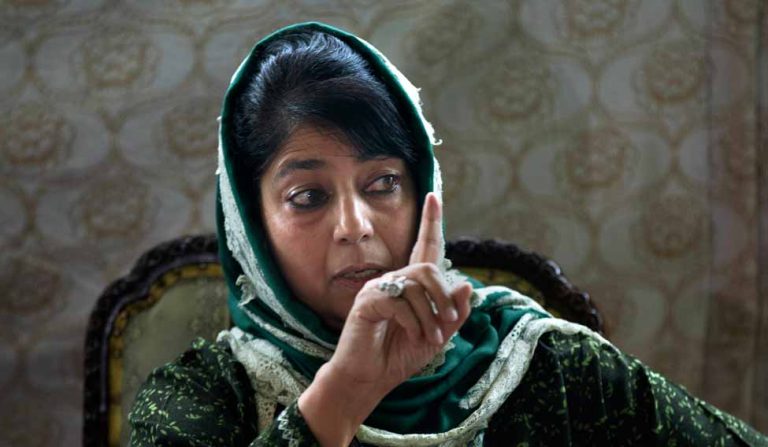
A complaint filed against former J&K Chief Minister and PDP chief Mehbooba Mufti for making seditious statements over the removal of Article 35A has been forwarded by Jammu District Magistrate to a senior police officer for examination and appropriate action.
Suresh C Kahjuria, a social activist had filed a complaint with District Magistrate seeking action against Mufti for her remarks. “The complaint seeking action against the PDP president for her seditious statement on the national flag, which represents the national honour and her threat of 1947-like violence erupting in the state if Article 35A is repealed, was forwarded to the senior superintendent of police (SSP), Jammu”, said Khajuria.
In the month of February this year, Mufti had made inflammatory remarks when a petition challenging the validity of Article 35A came up before the Supreme Court for hearing. Referring to the removal of Article 35A, she had warned the Central government not to play with fire, else the country would see a situation that it has not seen since 1947. She had asserted that she could not tell, which flag the people of J&K would pick up instead of the tricolour.
An RTI was filed by Khajuria on March 30 seeking information about action taken on his complaint. He was informed that his complaint has been forwarded to the SSP for examination and appropriate action. “I am directed to forward a copy of the representation received from Khajuria for initiation of action under section 196 CrPC, and a request for filing a complaint against the former Chief Minister for the commission of an offence under section 124-A of Ranveer Penal Code (RPC) and other relevant provisions of laws of the state. In this context, you are requested to examine the complaint and take appropriate action warranted under the law in the matter,” read the letter sent to SSP Jammu by Additional District Magistrate, Jammu.
We had reported in February how Mufti, ahead of the likely hearing in the Supreme Court on the petition challenging the validity of Article 35A of the constitution, had strongly objected to the same.
The award wapsi gang consisting of the ‘concerned citizens’ and academics, veterans of the Armed Forces and retired civil servants is back. A letter signed by 147 citizens was written to the Chief Election Commission drawing the EC’s attention to ‘very troubling and still unexplained issues’ pertaining to the conduct of the 2019 General Elections.
In the letter, they have cited media reports claiming ‘irregularities’ in the conduct of the elections. Alleging the 2019 elections to be one of the least free and fair elections the country has had in the past three decades, the ’eminent citizens’ insinuated that the ECI stood a mute spectator as the ‘democratic process’ was subverted and even undermined the same.
They accused the ECI of bias towards ‘one particular party’ and having adjusted itself for Narendra Modi and BJP. The letter even cites media reports which claimed that voters from ‘certain minority community’ were excluded. Amusingly, Congress, too, had alleged large-scale errors in Madhya Pradesh voter’s list. The EC said that the field verification showed that the charges made by the Congress were not true.
This letter, amusingly, echoes what former Congress President Rahul Gandhi had said in his resignation letter which he shared on social media. He hinted that the 2019 Lok Sabha elections were not free and fair.
Rahul Gandhi said that Congress party didn’t fight a political party in the 2019 Lok Sabha elections, but they fought the entire machinery of the Indian state. He alleged that every institution of the country was marshalled against the opposition. He even said that once cherished institution neutrality no longer exists in India.
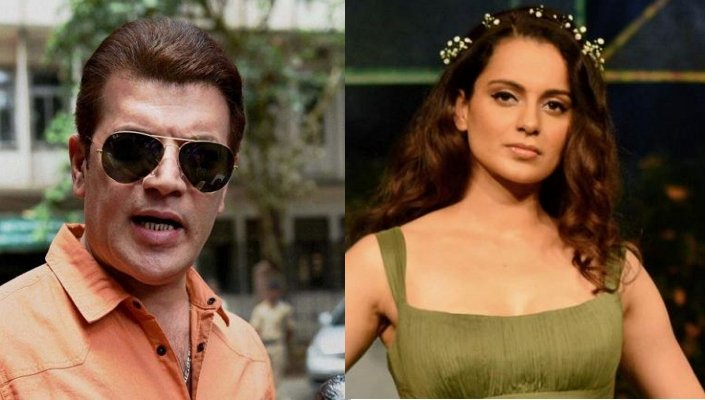
Last week, Mumbai police registered an FIR on rape charges against actor-producer Aditya Pancholi based on the allegations levelled by actor Kangana Ranaut. Kangana had accused Pancholi of ‘assault and exploitation’ for an alleged incident that took place almost a decade ago.
Mid-day, a morning daily journal, has accessed Kangana’s two and a half page statement, which the Queen actress submitted to the Versova police on June 26, 2019, narrating her ordeal. It was on the basis of this statement that Versova police had registered a case against Pancholi under sections 376, 328, 384, 341, 342, 323, 506 of the Indian Panel Code, the next day.
Nearly two weeks prior to this, Ranaut’s sister, Rangoli Chandel had also sent an email complaint to the Versova police on behalf of Ranaut. In the email complaint, Rangoli had explained in detail the physical torture and mental harassment Ranaut had to endure at the hands of Pancholi.
After that Pancholi had refuted the allegations claiming that Ranaut was misusing the law to settle a personal score with him. He had, in fact, lodged a complaint against Ranaut and her lawyer Rizwan Siddiqui fearing arrest under rape accusations made by them. Moreover, Pancholi also filed for an anticipatory bail in the Dindoshi sessions court.
On July 2, two days later, Justice H B Gaikwad of Mumbai City Civil and sessions court granted interim bail to Pancholi till July 19 on a personal bond of Rs 30,000.
Ranaut in her statement alleged that Pancholi had drugged her and raped her when she was 17. In her statement, she also mentioned that Pancholi took her photos to blackmail her. She claimed she had lodged a complaint to a senior IPS office in 2004-06 but no action was taken.
The actress, in her statement, divulged her journey to Bollywood and how she met Pancholi, who was then a popular name in the industry. “That year, I met Aditya Pancholi, who was then 38 years old, almost 22 years older than me. I used to stay at a hostel with a group of girls while he was married and had two children; his daughter was my age then,” she wrote.
She alleged that Pancholi had spiked her drink and later raped her in his car. “In 2004, I went to a party with him. Sometimes after having a drink, I started feeling dizzy. I suspected then that he (Pancholi) had spiked my drink. After the party got over, Pancholi said he will drop me home. So I went with him in his Range Rover car. He stopped it in the middle of Yari Road and started getting forcefully physical with me. He also took photographs, which I wasn’t aware of. When we met the next time, he said we now share a relationship like the one between a husband and wife and we will live that way. I told him he was my father’s age and I want to marry someone who is as old as me. Then, he showed me all the photographs he’d taken of me inside his car and started blackmailing me. He threatened to show these pictures to others. At the time, I was quite young, I had no one in Mumbai and he took advantage of that,” she wrote.
Ranaut further added that between the year 2004 to 2006, Pancholi met her several times and forcefully tried to get into physical relationship with her. The actress recalled that once while she was on her way to the police station to file a complaint against the actor, he stopped her auto rickshaw and thrashed her. “I was rescued by a pedestrian who saw me getting thrashed. At the time, I met and informed senior police officer Bipin Bihari about the incident.”
“Between 2004 to 2005, I shifted to Pallavi Apartment with my aunt. Pancholi would come to that flat all the time with his friends and get forcefully physical with me. Every time, he would carry some medicine to spike my drinks. I used to feel dizzy after having them. He locked me in whenever he left my apartment. He would also assault me. He would give me drugs and click my photos; at the time, he used to get MDMA and ecstasy,” she further stated.
The actress has mentioned in her statement that Pancholi had managed to access the keys of her Versova apartment where she shifted in 2006-2007 leaving her aunt’s apartment and regularly started trespassing into her house to assault her.
“Fed up with him, in 2006-2007, I bought a flat in Versova and started living alone. Pancholi came there, made duplicate keys and trespassed into my house and assaulted me. He started breaking everything inside my house and screamed in a completely drunken state. He took all of my keys and left after locking me inside,” she wrote.
She added that later in 2008-2009 she shifted to a house in Bandra and was accompanied by her sister there. Pancholi started visiting her new apartment also and now began to hit her sister also. “My sister, who was unwell then, came to my house and we were living together. When I was away at a shoot, he came to my house and beat up my sister. When I returned home, I saw my sister was shivering and completely scared. I asked her what happened and she told me about how Pancholi had beaten her.”
Kangana in her statement mentioned that Pancholi demanded Rs 1 crore from her as a price to stop troubling the sisters. She said, “He demanded money saying that [I should pay] whatever he has spent on me. He asked for Rs 1 crore. In fact, I paid Rs 50 lakh and he stopped troubling us for a bit.”
Ranaut asserted once the actress shot to fame, Pancholi once again started harassing her and demanded money by blackmailing her with her old photographs.
The next hearing in the case is scheduled on July 19.
Keshav says that he was attacked specifically after the Muslims who attacked him came to know he was Hindu. He was asked what his religion was and if he stayed in the locality and was attacked after he answered their questions. He says that a Muslim elder, who he doesn’t appear to recognize, intervened in the matter and managed to rescue him.
In our ground report, we had reported that his parents were extremely distressed over his plight. His father had even threatened to commit suicide if he didn’t return safely. The mainstream media tried its best to hush up the entire matter and totally ignored the fact that a boy was missing.
Meanwhile, the situation was still tense in the locality. Hindus are unhappy with the conduct of the Police and believe that even the Police made attempts to cover up the desecration of the Hindu Temple. They also believe that Muslims in the area wish to drive them out of the locality, the lane they currently occupy is the only area in the neighbourhood where Hindus reside.
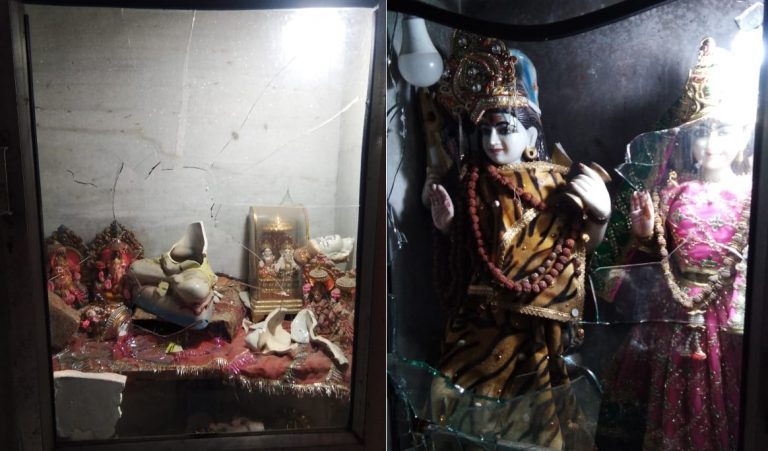
The incident occurred on the night of 30th of June when a frenzied Muslim mob desecrated a Hindu Temple after a fight ensued allegedly over parking space. The Police are reported to have made only 4 arrests till now. Home Minister Amit Shah is reported to have admonished the Police for its inefficiency.
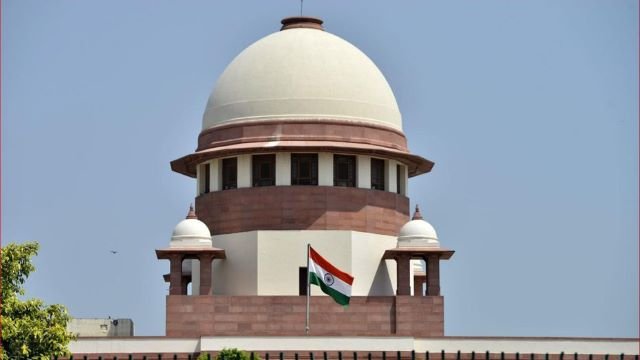
The Supreme Court has decided to make its judgements available in regional languages. The court which produces its judgements in English at present would be making translations of the same available on its official website by the end of this month.
This would be done so as to enable litigants to check out the status of their cases without having to depend on lawyers. To begin with, judgements would be translated into Assamese, Hindi, Kannada, Marathi, Odia and Telugu. As per reports, Chief Justice Ranjan Gogoi has formally cleared the use of an indigenously developed software by the Supreme Court’s “in-house” electronic software wing for this purpose.
The six languages were selected based on the volume of requests coming to the top court from various states. There would be a second phase in which the same exercise would be repeated. However, unlike English judgements that are posted on the same day, the translations would only be posted within a week.
Reportedly, cases relating to individual litigants in civil disputes, criminal matters, landlord-tenant issues and matrimonial discord would be given priority initially.
The idea to translate judgements into regional languages was first suggested by President Ram Nath Kovind in 2017 while he was addressing a conference in Kochi. He highlighted the importance of doing so for the benefit of non-English speakers. Litigants who aren’t conversant in English depend on lawyers to read the judgement. He says that this could add to the time and cost.
Earlier in November 2018, during an informal discussion, CJI Gogoi had also expressed his determination to ensure that judgments were translated to regional languages.
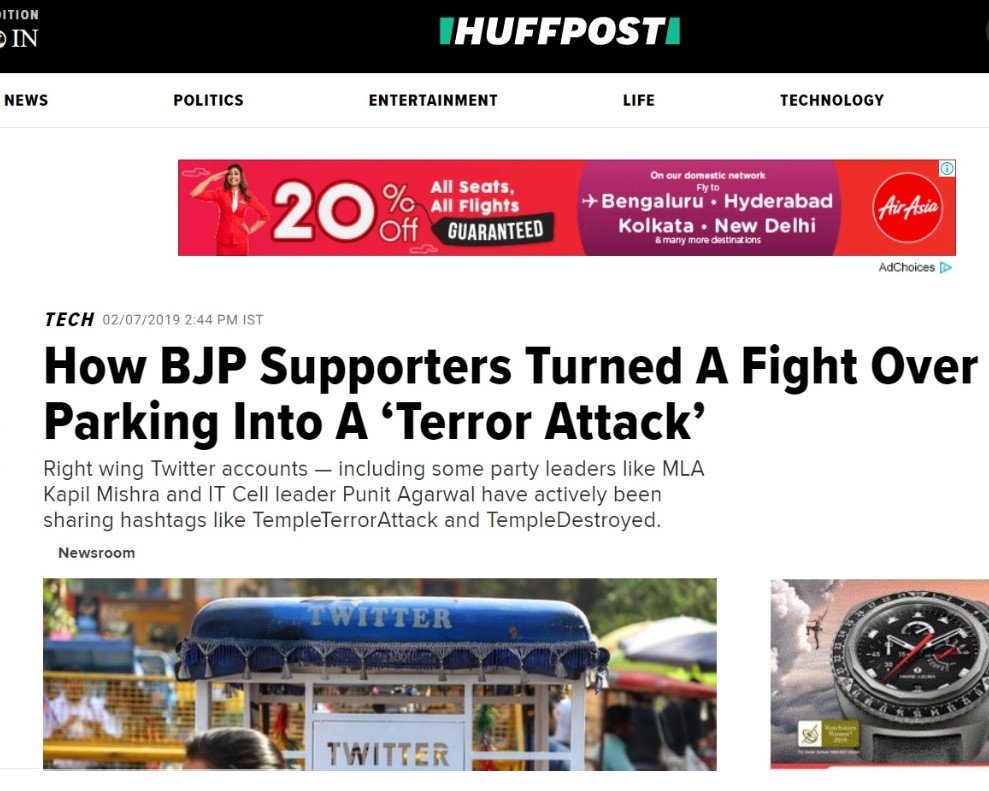
Ever since a Muslim mob vandalized a Temple in Old Delhi, there has been a concerted attempt to whitewash the entire matter. People from expected quarters have attempted to reduce it to a fighter over parking space while others have accused BJP supporters giving the incident a communal spin.
Some have called it a ‘minor communal flare-up’ and others claim that the incident has nothing to do with religious bigotry at all, in purposeful denial of the obvious facts.
Minor communal ‘flare up’ in Chandni Chowk over a parking brawl amongst a group of drunken youth. today,there was a peace march in the area.most news channels have ignored the efforts of community leaders on both sides to ensure peace prevails. ‘Nafrat’ sells, ‘pyaar’ doesn’t.?
— Rajdeep Sardesai (@sardesairajdeep) July 2, 2019
I hope you realise it wasn’t an organised or orchestrated “let’s vandalize the temple” incident which is why he brings up Advani to show that was organised.
It was a fight over parking. Please read the DCP’s tweet if you don’t believe me.
Thus, a pattern appears to be emerging here. Despite the fact that a Temple was desecrated, attempts are being made to disassociate it from religious bigotry. One has to ask the obvious here, why would people desecrate a Temple over a fight related to parking space if there wasn’t deep-seated religious hatred involved?
For those who have been observant of the conduct of the mainstream media over the years, it is nothing out of the ordinary. For as long as one can remember, they have whitewashed the crimes of the minority while portraying Hindus as aggressors and rabid communal bigots when the reality is quite different.
Therefore, we must address a harsh reality. The mainstream media is almost like the propaganda wing of Islamic extremists. To divert attention from the intolerance of the minority, they invent fake hate crimes to demonize Hindus while ignoring the spate of actual hate crimes that Hindus have been suffering. It does appear that the fake hate crimes are invented specifically to divert attention from the toxic elements of Muslim society.
That the mainstream media has been carrying out propaganda for the extremist sections of the Muslim community becomes obvious when one observes their coverage of Asaduddin Owaisi. They have turned him into a beacon of secularism waging a lonely battle against the oppressive forces of Hindutva.
In reality, Asaduddin Owaisi is the brother of the infamous Akbaruddin Owaisi. Akbaruddin is the same person who had once infamously said that Police ought to withdraw across the country for 15 minutes, then Muslims would show Hindus who the boss is. Asaduddin, who is being portrayed by the media as a great secular leader, took no action against his brother. As a consequence, Akbaruddin is now an elected representative in the Telangana Legislative Assembly.
More than that, whenever Hindus suffer hate crimes, the instinctive reaction of the mainstream media is to suppress the news of it. Even when they are forced to report it, they try very hard to deny the communal nature of the crimes and propose secular reasons for the crimes.
Despite all evidence to the contrary, the mainstream media operates within the theory that Hindutva is more of a threat to the country than Islamic extremism. While they continue to focus on Hindutva disproportionately and accuse it of crimes it hasn’t committed, it not only ignores the elephant in the room, it denies its very existence even while staring right at it.
The manner in which the mainstream media props up caste conflict and focuses on the fault-lines within Hindu society also indicates ulterior motives as well. While they cheer for parties that attempt to create a Dalit-Muslim or Yadav-Muslim vote-bank, they try every trick under the Sun to slander the political consolidation of Hindus of all castes under one banner.
The manner in which Zaira Wasim’s decision to quit Bollywood was projected by certain elements in the mainstream media speaks volumes as well. They portrayed it as a personal decision while entirely ignoring the influence the toxic elements of Islamic society must have had upon her. She was even chastised for bringing religion into it as if she was not supposed to reveal the actual motivation behind her decision.
The entire effort and the huge resources in possession of the mainstream media is directed towards deflecting attention from the extremist elements of Islamic society. They often as their first line of defence. They have turned rabid communal bigots into secular heroes, cattle smugglers into role models for society and without a sense of shame, they obfuscate matters to trivialize hate crimes against Hindus.
The denial of the very real phenomenon of Love Jihad, humanizing terrorists and providing a platform to the families of these terrorists to cast aspersions of the motivations of the Indian Army, every bit of it is tailor-made to serve the interests of Islamic extremists. There is no doubt at this moment that the mainstream media very much is the Enemy of the People.
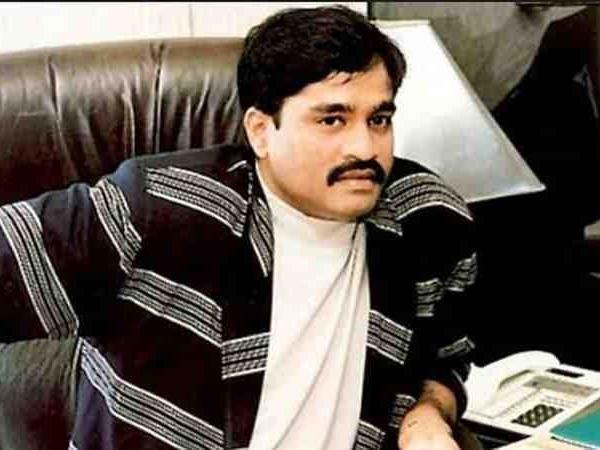
After the Indian government’s repeated claims of the international mafia don Dawood Ibrahim operating out of Pakistan, the US government has now asserted that the dreaded gangster indeed operates his illegal activities from the safe confines of Pakistan’s Karachi metropolis. However, Pakistan has always shrugged off the allegations of sheltering India’s most wanted, Dawood Ibrahim.
The FBI in London court said that Dawood is running his international crime syndicate from Karachi in Pakistan. Prior to the trial for the extradition of Dawood Ibrahim’s top henchman, Jabir Motiwala, the US government’s advocate stated in the court that the D Company’s network spreads in Pakistan, India and the UAE.
Infamous for committing multitudes of crimes and his role in the Mumbai bomb blasts, the founder and head of the D Company, Dawood Ibrahim is living in Pakistan and is running the entire operation from the there. On behalf of the FBI, the advocate said in the court that Dawood and his brother were successful in fleeing India after Mumbai blasts in 1993.
The FBI counsel also contended that Dawood has been trying since a decade to build his network in America, especially through his money laundering racket and other illegal activities such as extortion. The US is seeking to extradite his top henchman Jabir Motiwala, who was caught in London last year, to the US to face the law for charges of conspiracy to commit extortion.
The FBI has submitted in court that during the trip to Pakistan in December 2011, Jabir Motiwala introduced an FBI confidential source to his co-conspirator, who was the lead money launderer for D-Company. In the meetings in 2011, the confidential source and Motivala discussed debt collection and extortion and how D-Company used its brute power to settle Business disputes. The US government’s counsel, John Hardy argued that Motivala and the FBI confidential source also discussed debt collection by D-Company in the US and abroad.
Dismissing the assertions made by the US government’s counsel, Edward Fitzgerald QC, representing Motivala, claimed that the evidence was gathered in Pakistan without following the due procedures and was in contravention with the international law and sovereignty.
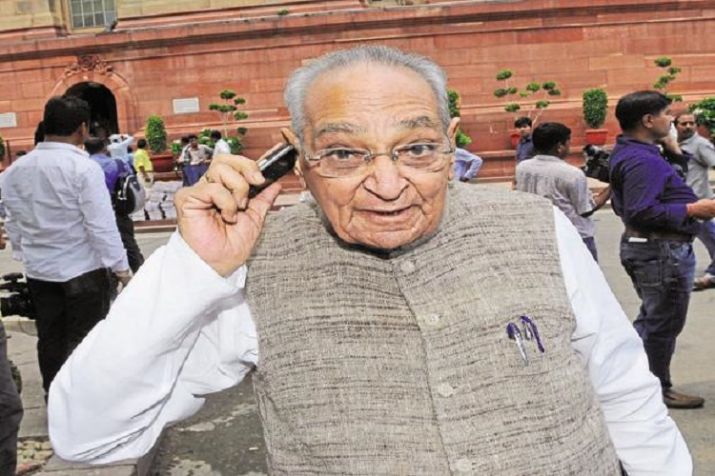
“Mujhe kuch pata hi nahin (I don’t know anything)” said Congress veteran leader Motilal Vora who was widely speculated to be the interim chief after Congress President Rahul Gandhi stepped down making contradictory claims in the resignation letter posted on social media.
Senior Congress leader Motilal Vora on reports that he will be the interim president of the party: I have no information about this. pic.twitter.com/SE6lZP5aHi
Vora, who is a co-accused in the National Herald scam, said that Rahul Gandhi took steps to strengthen the party and continues to be their leader. As per Republic TV, Vora credited Rahul Gandhi for forming government in Rajasthan, Madhya Pradesh and Chhattisgarh state assemblies. Vora added that Rahul Gandhi continues to be the leader. He said that he still considers Rahul Gandhi as President and Congress leaders will insist Rahul Gandhi takes back his resignation.
It was also speculated that Congress may appoint Sushil Kumar Shinde, a popular Dalit leader in poll-bound Maharashtra as party chief. It is widely believed that after the unexpected victory of 2004, Sonia Gandhi chose Dr Manmohan Singh to run the UPA government since she was facing resistance. It was speculated that to make sure allies like NCP, which had broken away from Congress on Sonia Gandhi’s foreign citizenship find it easier to support the Congress, Dr Singh was picked up as the face of the government. It seems like Rahul Gandhi could also be using similar tactics after the not-so-unexpected 2019 poll defeat.
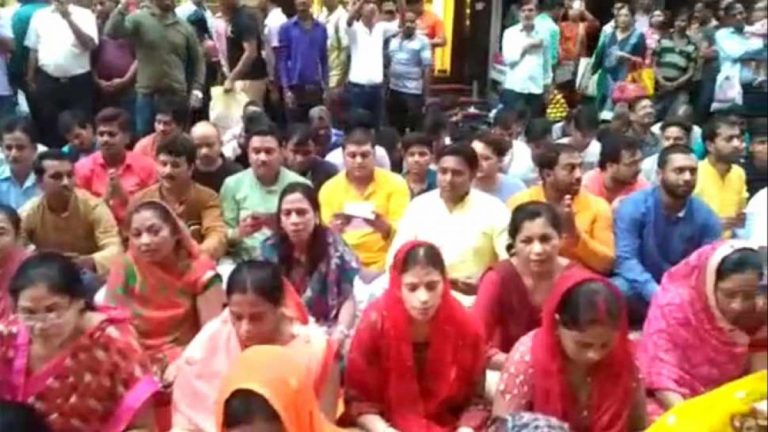
The BJP Bengal youth wing has again taken to the streets of Howrah to recite Hanuman Chalisa on Tuesday. This time women and children also participated in the protest. The gathering assembled on July 2, 2019, in front of a Hanuman Mandir at the AC Market, Howrah. The road was reportedly blocked for an hour.
The protest was led by the BJYM (Bharatiya Janata Yuva Morcha) President, Om Prakash and Priyanka Sharma, the BJP Bengal youth leader, who had last week also spearheaded a similar protest in Howrah as a mark of protest to the Friday namaz which are offered on the streets.
The BJYM President, Om Prakash had said that if Muslims can block roads every Friday to offer Namaz and the administration does nothing to prevent it, why can’t they do the same to recite Hanuman Chalisa. He furthered that, henceforth on every Tuesday, as a mark of protest the BJYM will gather to recite Hanuman Chalisa on the road, at various locations where there were Hanuman Mandirs in Howrah.
Last week, over 100 members of the Bharatiya Janata Party’s youth wing sat on the street of the Bally Khal area in Howrah district and recited ‘Hanuman Chalisa’ on Tuesday night in a bid to put pressure on the state administration to prevent Muslims from offering Friday namaz on the roads and blocking traffic.
Om Prakash had said that the GT Road in Howrah is blocked for Friday namaz which is being offered on the roads. As per him, the road blocked because of namaz leads to chaos, traffic jams and causes a lot of harassment to people including patients who are trying to reach hospital and office-goers.
“In Mamata Banerjee’s rule, we’ve seen Grand Trunk Road and other main roads are blocked on Fridays for namaz. Patients die, people can’t go to the office on time. As long as it continues, we’ll recite Hanuman Chalisa on Tuesdays on all main roads near Hanuman temples,” he had added.
Illegal gatherings for namaz has been a constant source of bother for authorities. Hindu outfits had demanded a ban on namaz at public places in Haryana. Haryana CM Khattar had also criticized them saying that namaz should be offered at mosques and not on public spaces. The Madras High Court had ruled in July that public places cannot be encroached upon for the purpose of offering prayers.
In December last year, the Noida Police had issued an advisory notice to companies in sector 58, asking their administrations to dissuade their employees from visiting nearby parks for offering namaz. The police had asserted that the companies must ensure that their officials use office premises or mosques for Namaz but not public places.
A few days ago, The USA came very close to launching military strikes against Iran after an unmanned drone was brought down by the middle-eastern country, allegedly over international waters but widely speculated to be over its own territory. POTUS Donald Trump said in public statement later that he called off the attack with only 10 minutes to spare as he believed the estimated 150 deaths was disproportionate to the loss of a single unmanned drone.
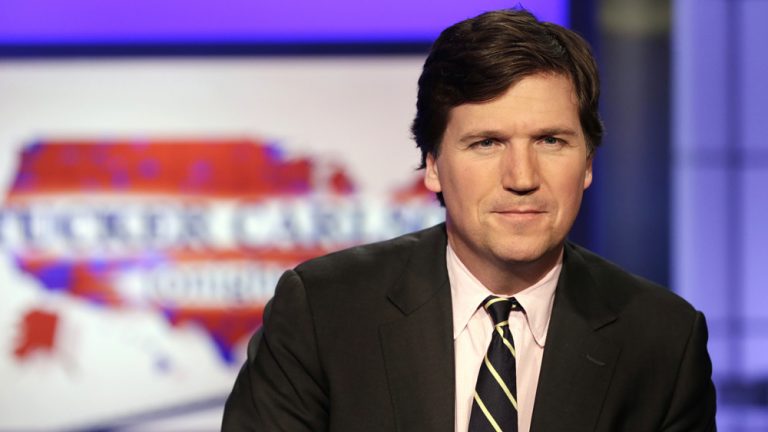
The military strikes, no doubt, would have elicited an equally strong response from Iran and inevitably, the two countries would have been at war before too long. The entire establishment was clamouring for it, too. However, Trump ignored the advice of people in his own administration, the military generals and the mainstream media which was clamouring for war. But he did listen to one person and that man is being credited with stopping a potential US-Iran War. That man is, of course, Fox News Talk-Show host, Tucker Carlson.
It’s not really a secret that Donald Trump is quite fond of Tucker Carlson. He often quotes Tucker on Twitter and links his videos. He has been doing that often in the past. It’s not surprising since after all, Tucker Carlson is the solitary voice of the Trumpian Right in the US mainstream media and arguably, the most popular talk show host on the Right
The Trumpian Right is very distinct from the traditional base of the Republican party. It is very populist, not obsessive about libertarian economics, is skeptical of unchecked free-market Capitalism, wary of the ever-growing power of tech giants, extremely worried about illegal immigration and very much concerned about the breakdown of traditional culture.
The greatest difference of opinion between the Republican establishment and the Trumpian Right is their opinions on Russia. While the establishment considers Russia a great enemy, the Trumpian Right, like POTUS, believes if the two countries can get along without the looming threat of nuclear war and some collaboration on certain common issues, it would be great.
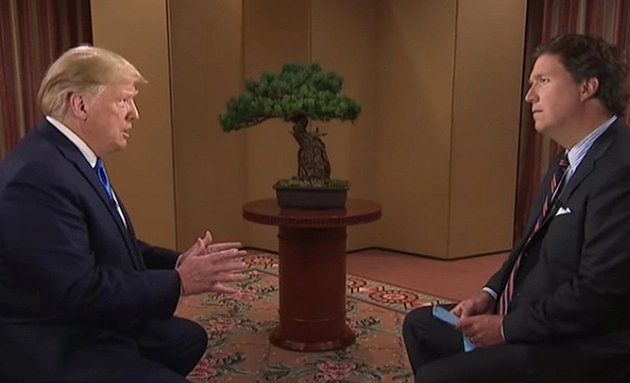
Tucker Carlson interviewing Donald Trump
For a long time, Carlson has advocated strongly against US military intervention abroad and with regards to Iran, as well, he maintained that it will have a devastating impact consistent with the fates of every military adventure since the turn of the century. Tucker praised Trump for not going through with the strikes on Iran and ripped into his National Security Adviser, John Bolton, who he described as a “bureaucratic tapeworm”. He also claimed that Bolton was not “normal”.
“According to John Bolton, [Iraq is] a raging success. We killed hundreds of thousands of people, lost thousands of our own troops, spent more than $1 trillion — all to eliminate a WMD threat that, despite John Bolton’s assurances, never existed in the first place,” said Carlson. “Bolton is glad we did all that. Really happy about it. That’s demented. Normal people don’t talk about that. There’s nothing normal about John Bolton,” he added.
The New York Times reported, “He heard from his generals and his diplomats. Lawmakers weighed in and so did his advisers. But among the voices that rang powerfully for President Trump was that of one of his favorite Fox News hosts: Tucker Carlson. While national security advisers were urging a military strike against Iran, Mr. Carlson in recent days had told Mr. Trump that responding to Tehran’s provocations with force was crazy. The hawks did not have the president’s best interests at heart, he said. And if Mr. Trump got into a war with Iran, he could kiss his chances of re-election goodbye.”
It is well known that Donald Trump’s candidacy for Presidency was a remarkable shift from traditional politics in America. One of the primary reasons why he succeeded in defeating Hillary Clinton was his staunch opposition to wars in the Middle East while Clinton had her disastrous track record as Secretary of State during the Obama administration. The Americans were tired of everlasting wars and Trump promised to end that.
While he hasn’t succeeded in ending any wars yet, he has demonstrated a remarkable tenacity in resisting the warmongers in his midst. However, for all the tectonic shift he succeeded in bringing about in US politics, his administration has extremely few members that reflect that shift and in the mainstream media, there’s only one person reflecting the opinions of the Trumpian Right. And that person is Tucker Carlson.
The Trumpian Right has a lot in common with the Bernie Left. One of the major reason Trump succeeded in defeating Hillary Clinton was that a significant section of Bernie Sanders supporters voted for him in the Presidential elections in swing states. The difference between the Trumpian Right and the traditional establishment of the Republican party became evident in the interview he gave to Conservative political commentator Ben Shapiro.
[youtube https://www.youtube.com/watch?v=Bh8vqof9hAk]
Unlike the traditional Republican establishment, Tucker is not a devotee of Capitalism and recognizes that the system has its own follies. He says, “Anyone who thinks the health of a nation can be summed up in GDP is an idiot.” In a critique of Capitalism, as it exists today, Tucker wrote, “The overriding goal for America is more prosperity, meaning cheaper consumer goods. But is that still true? Does anyone still believe that cheaper iPhones, or more Amazon deliveries of plastic garbage from China are going to make us happy? They haven’t so far. A lot of Americans are drowning in stuff. And yet drug addiction and suicide are depopulating large parts of the country.”
He proceeded to add, “The goal for America is both simpler and more elusive than mere prosperity. It’s happiness. There are a lot of ingredients in being happy: Dignity. Purpose. Self-control. Independence. Above all, deep relationships with other people. Those are the things that you want for your children. They’re what our leaders should want for us, and would want if they cared.”
Criticizing the Conservative approach to market economics, Tucker says, “Social conservatives, meanwhile, come to the debate from the opposite perspective, and yet reach a strikingly similar conclusion. The real problem, you’ll hear them say, is that the American family is collapsing. Nothing can be fixed before we fix that. Yet, like the libertarians they claim to oppose, many social conservatives also consider markets sacrosanct. The idea that families are being crushed by market forces seems never to occur to them. They refuse to consider it. Questioning markets feels like apostasy.”
The entire critique is worth reading in its entirety and it reflects a very observant mind with sound intellect. It can be read here. Tucker accurately describes in great detail what exactly has been going wrong with America. On a particular segment, he touched upon the notion that Young Americans are being drawn towards Socialism because the current economy is not working for them and not merely because they are misinformed idiots. Even entertaining such notions are considered heresies by the American rightwing.
In his interview with Shapiro, Tucker admits that he won’t hesitate to ban self-driven trucks to allow the truck drivers to still hold a job. The societal cost, he argues, will be much greater to whatever money that could possibly be saved by having self-driven trucks. When Shapiro asks him if he would consider banning self-driven trucks, he replied incredulously, “Are you joking?! In a second.” He then proceeded to assert that if he were President, he would tell the Department of Transportation that ‘we are not letting driverless trucks on the road’ because driving trucks was the most popular job with high school graduated students in the country.
Tucker appears to have a real concern for people living with limited income and worries that the expected AI revolution will take away most of their jobs. In one of his segments, he said, “Automation is accelerating. This is real. It’s going to have a nearly unimaginable effect on what Americans do for a living, and on American society itself. Our country’s low-skilled workers already live in a pretty precarious spot. Their wages and their benefits have stagnated for decades. In fact, millions of them aren’t really workers at all but, instead, get by on disability payments or other government programs.”
More than such matters, Tucker often touches on controversial matters as well which others are too afraid to say. In his critique of Capitalism, he mentions how the entry of women into the workforce and the loss of manufacturing jobs for men has led to a situation where women earn more than men and marriages simply don’t work. He mentions that study after study repeatedly shows that women do not want to marry men who earn less than them. Consequently, it has a devastating impact on social stability.
Tucker has developed a knack of saying uncomfortable truths as a matter of fact. Recently, on North Korea, he said, ‘There’s no defending the North Korean regime, which is a monstrous regime, it’s the last really Stalinist regime in the world, it’s a disgusting place obviously, so there’s no defending it.”
He went on: “On the other hand… you’ve got to be honest about what it means to lead a country, it means killing people. Not on the scale that North Koreans do, but a lot of countries commit atrocities, including a number that we’re closely allied with… it’s important to be honest about that.”
“It’s not necessarily a choice between the evil people and the great people, it’s a choice most of the time between the bad people and the worst people,” Carlson added. “That’s kind of the nature of life, and so the nature of power.”
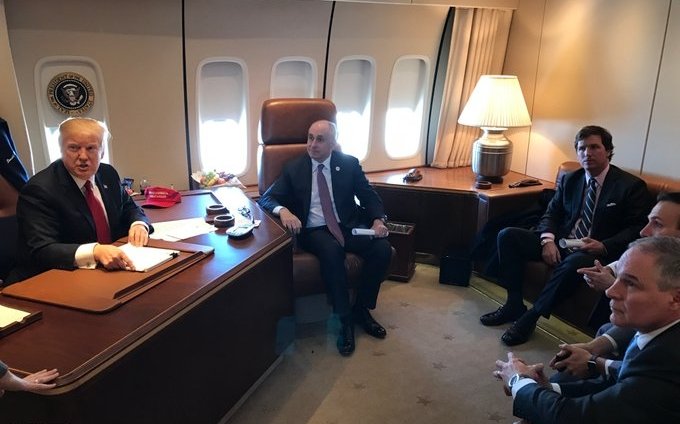
Tucker Carlson on Air Force One
Tucker’s book ‘Ship of Fools’ which was released last year became a No. 1 Best Seller. In the book, he argues that the ruling elite of America has failed Americans in every way. It’s an opinion he has voiced on numerous occasions. The core of his argument is: The ruling elite is no longer accountable to the people of America. They simply do not care.
Despite accusations of being a White Nationalist from some quarters, he is well liked by a lot of progressives. Jimmy Damore, a committed progressive, regularly quotes Tucker Carlson in his show. After news broke out that Tucker may have convinced Trump to not launch strikes against Iran, Damore in his talk show on YouTube was all praise for him and expressed his relief that Trump was listening to Tucker and not the likes of Rachel Maddow and CNN and MSNBC.
Another issue where progressives such as Damore agree with Tucker is the Russian collusion delusion. There is a significant section of progressives which believes that the entire Russian interference propaganda was launched to protect Hillary’s image. They agree that Hillary was such a terrible candidate that it’s no wonder that many people considered even Trump to be a better choice for President.
Tucker Carlson, on his part, does not hesitate to admit that his criticisms of the market do sound a lot like Bernie Sanders’ or someone from the Left. However, the difference between the two sections comes with respect to illegal immigration, gender politics, the abortion debate and the sort. However, the critique of the market is one thing that both sides agree on.
When Trump decided on his cabinet, many of his core supporters believed that it was filled with establishment politicians and not enough who represented the Trumpian Right. And their criticism does appear legitimate on the wider aspect of things. However, on the question of Iran, Trump’s core supporters will be glad to know that it is Tucker Carlson who has the President’s ear and not the Republican Establishment.