Home Blog Page 6615

Yogendra Yadav’s malicious article in The Print should be welcomed: It is almost an admission that Modi is coming back to power

It is election season and I realize that claims, counter-claims will be made during the upcoming elections with the agenda of getting people to vote for their party. This is a natural process of electoral campaigning and there is nothing wrong with it. However, I have a problem when academics venture into politics, so much so that they even contest elections, yet they claim to be unbiased while objectively commenting on matters of public relevance. No politician, political worker or an ardent supporter of any political party or leader can ever be unbiased.

This is relevant for Mr Yadav who recently published an article for The Print which had to be given a befitting rebuttal. I have a good test to check if someone is “biased” or not- look at 5 positive and 5 negatives of all governments, if they criticize and appreciate 3 out of both then they’re unbiased. If not, then well, take everything they say with a pinch of salt. Despite the progress of Gujarat under then Chief Minister Modi and the strong track record of India under Prime Minister Modi, I am yet to find Mr Yadav appreciate him for everything that he’s got right- and believe me, he has got a lot of things right (and wrong too, but that’s how it works)!

It is no secret that Mr Yadav has contested elections and has a strong political interest. It is further evidence that his political interest is conflicting with the interest of the incumbent government so clearly, he is well within his right to not appreciate the current government. I am certain that the government too is not looking for his appreciation- the only appreciation they desire is from the people of India and boy- they do appreciate Modi for the toilets, the gas cylinders, electricity and houses that have been provided to them.

There has been a constant discussion amongst many of my peers and seniors about how the government is dismantling the democracy of India- of how it is trying to silence any form of dissent or how it is intolerant. But the fact that we can have such discussions and criticize the Prime Minister for everything- including for working too hard- suggests that India has a very vibrant space for criticism. So, in that sense, I’ve always found such discussions devoid of any substance as we criticize the government for not allowing us to criticize the government.

The article was amusing as it states that Pulwama will allow the BJP to “capture” the elections as it highlighted how Pulwama was benefiting the BJP’s election fortune and it was shifting the focus from “jobs” and “rural” issues.

First, let us highlight that the issue of jobs has been unnecessarily politicized. The assertion that there has been widespread unemployment in the country is devoid of any reliable evidence, most people cite CMIE but CMIE shows too pessimistic a picture of job creation. The CMIE numbers don’t align with any other indicator of job creation and thus, when all other indicators are showing robust jobs growth then clearly there must be some issue with the CMIE data. Problems with the CMIE data have been explored extensively by Dr Surjit S. Bhalla and he, along with Dr Tirthatanmoy Das have explored the issue of jobs in great detail in their paper on the same (The paper can be accessed by clicking here). In fact, CMIE has an irrefutable link to Congress leader P Chidambaram and thus, is probably prone to bias.

Similarly, on the rural issue, one must look at the situation of the farm sector over a period of time to arrive at whether the situation has worsened for the farmer or if it has improved. The farm and rural economy have faced its own set of challenges and the fact that 2014 and 2015 were two consecutive drought years have not benefitted the farmers. However, with the historic income support scheme, the government has made a departure from the price policy and this, in my opinion, is a major change in India’s agricultural policy (A paper that advocated for cash transfers as an alternative to price policy can be accessed by clicking here).

There has indeed been an attempt to create an environment of dissatisfaction with the current government on a wide range of issues and this is to be expected given that 2019 is an election year. In fact, a bulk of this disenchantment was being propagated by certain people who’ve for long been benefactors of the UPA. The important question is if people were disenchanted with the Prime Minister and repeated opinion polls and surveys have indicated that this is not the case- India’s Prime Minister continues to be a popular and the prime choice for the post of Prime Minister in 2019.

Mr Yadav in his article has assumed that the 100-seat slide was to be true for the BJP in 2019 and that, this slide is likely to reduce post-Pulwama. He bases this assertion on his opinion that the BJP is using this issue and is using the pretext of “national security” to silence the opposition. But his opinion is at best an opinion and it finds no basis in facts as several people post Pulwama termed it as a conspiracy theory despite the JeM taking full responsibility for the attack. The bodies of our brave men had not even reached their homes, but a leading spokesperson of the Congress had tweeted attacking the Prime Minister and politicizing the entire issue. This was even before the BJP made any statements about the Pulwama attacks.

If the BJP is politicizing the Air Strikes, then so is the opposition which lacks the maturity and the decency to handle such complex issues with utmost caution.  Opposition’s repeated insistence for proof along with frequent equation of the air strikes with elections has given Pakistani media enough fodder to run their propaganda in their own country. Additionally, the article states that the BJP has controlled the narrative on this from the first day itself, but I hate to point it out that even after Uri, surgical strikes happened and even then, the opposition questioned it and sought proof for the same. The fact that India’s response to terror has changed didn’t happen in January 2019 but it happened long ago so to equate India’s current reaction to elections is outlandish and driven purely by political considerations.

But I do agree with Mr Yadav, the standards for truth have been lowered by certain people in the media as they continue with the falsehood on Rafale day after day. They continue to peddle lies and come out with “exclusive” evidence which is devoid of any substance, however it is done repeatedly purely for electoral considerations. It must be condemned that political parties in the opposition have colluded with certain people in the media to malign the acquisition of the aircraft purely for petty political considerations. Politicization of defence policy and strategic interests began by the opposition so it has no right to cry foul now when the BJP tries to take credit for showing the political will for the recent air-strikes. If UPA had such a political will in 26/11 it surely would have taken its credit just as they continue to take credit for the creation of Bangladesh.

The fact that they didn’t respond is a manifestation of the choice undertaken by the political leadership then and the fact that the NDA responded is a manifestation of the choice undertaken by the current political leadership. Nobody is denying the credit to the armed forces- they indeed performed with utmost professionalism while protecting the honour and dignity of our country. In fact, their response was to ensure peace and stability within the region, so it was well received by the global community. However, the fact remains that such an action was made possible by the political will and capacity to undertake such a risk which was displayed by India’s Prime Minister so of course, he must be given due credit for such a bold decision.

The article by Mr Yadav erroneously assumes that it is the ruling party that is playing politics on the air-strikes, but it omits the fact that politicization of the issue started by leaders of the opposition. Additionally, he assumes that the state machinery will be used for elections while he provides no concrete evidence of any past incident that has led him to such a conclusion.

The article, however, I must welcome because it demonstrates a sign of frustration that certain individuals must be dealing with given that their elaborate attempts at constructing a narrative against the government are failing. In fact, the article can be viewed as an indirect recognition of Prime Minister Modi coming back to power so we must welcome it.

AMU Students Union opposes ban on Jamat-e-Islami, calls government’s action ‘hard core Hindutva politics’

After former Chief Minister of J&K Mehbooba Mufti came out in support of Jamat-e-Islami organisation, suspected of funding terrorist organisation Hizbul Mujahideen, post the massive crackdown by the government resulting in raids and arrest of Jamat-e-Islami leaders, now Aligarh Muslim University (AMU) Students Union has sought a review on the ban.

AMU Students Union President M Salman Imtiaz has issued a statement saying that the ban on “socio-religio-political outfit” Jamat-e-Islami has come as a shock.

“Jamaat is neither an underground outfit nor a terror outfit. It has been part of the electoral process in the state. It is only after mass rigging of elections in 1989 that Jamaat abandoned the electoral process. We, at AMU, take strong notice of the repulsive response against the ban in Jammu and Kashmir and want the government of the day to come clean on charges against Jammat,” Imtiaz’s statement said.

The statement termed the action of the government as politically motivated and accused BJP of indulging in hardcore Hindutva Politics. “As BJP rule is coming to an end and elections are just a few weeks away, the ban on Jamaat appears to be a decision that has little to do with unlawful activities and more to do with the hardcore Hindutva policies. The religious leadership in Kashmir, civil society and traders have also condemned the ban as politically motivated,” the statement added.

The statement has drawn condemnation from Aligarh BJP MP Satish Gautam who called AMU a hub for anti-national activities. “It is sad that AMUSU has asked for lifting the ban on Jamaat. Our soldiers are dying on the border and AMU students are protesting against the ban on the outfit,” Gautam said. “The mentality of AMU students is being exposed every day. They are against ‘Bharat Mata’ and raise anti-national slogans regularly. I will speak to the varsity’s VC about this and demand action against the students involved in this,” he added.

Gautam was joined by the District President of Bharatiya Yuva Morcha Mukesh Singh Lodhi who met the SSP Akash Kulhari and demanded action against Imtiaz. SSP Kulhari assured Lodhi to write to the AMU Vice Chancellor and the Proctor in this regard.

Mizoram Governor Kummanam Rajasekharan resigns, speculated to fight LS elections from Kerala against Shashi Tharoor

Mizoram Governor Kummanam Rajasekharan has resigned from his post on Friday, nine months after he had taken the oath. This comes as BJP’s Kerala unit is rising demands to recall Rajasekharan and field him from Kerela’s Thiruvananthapuram in Lok Sabha elections, which is currently held by Congress leader Shashi Tharoor since 2009.

A Rashtrapati Bhavan press communique has stated that President Ram Nath Kovind has accepted Rajasekharan’s resignation. Assam governor Professor Jagdish Mukhi will be given additional charge of Mizoram until a new governor is appointed for the state. Kummanam Rajasekharan was the seventh governor of the state in the last 5 years. After Vakkom Purushothaman – a former Congress leader – had resigned following his transfer to Nagaland by the government in July 2014, Kamla Beniwal, Vinod Kumar Duggal (additional charge), K. K. Paul (additional with Meghalaya), Aziz Qureshi, Keshari Nath Tripathi (additional charge) and Lt General (Retd) Nirbhay Sharma had served as governor of Mizoram before Rajasekharan.

The decision to recall Rajasekharan back to electoral politics is said to have been taken in BJP general secretary meeting in New Delhi, on Monday. It was also the wish of RSS, BJP’s ideological ally, to field Rajasekharan from Kerela’s seat, reports said.

Rajasekharan started his political career as an RSS activist. In 1987, he resigned from a government post and became a full-time RSS worker. He has been part of various organisations like Kerala’s Vishva Hindu Parishad (VHP), Kshetra Samrakshana Samiti, Balasadanams and Ekal Vidyalayas. He was also secretary of Hindu Aikya Vedi and Sabarimala Ayyappa Sewa Samajam.

BJP’s State president P.S. Sreedharan Pillai also said that they welcome the prospect of fielding Rajasekharan from Thiruvananthapuram Lok Sabha seat, from where the party has a good electoral history.

This will make the contest on Thiruvananthapuram Lok Sabha seat triangular, between BJP, Congress and CPI.

Rajasekharan has also served as BJP’s state president from 2015-18 until he was transferred to Mizoram as governor. During his tenure, he had helped BJP make an electoral dent in the state, where the national party was still not able to win a seat. He had also contested from  Vattiyoorkavu constituency in Thiruvananthapuram district during the 2016 Kerela assembly elections, where he had come second to Congress candidate.

Baijayant Panda appointed as national vice-president and spokesperson of BJP

Baijayant ‘Jay’ Panda, the former Biju Janata Dal (BJD) MP, who had recently joined the BJP, has been now appointed as the National Vice-president and Spokesperson of BJP.


After nine months of introspection, Jay Panda had finally taken to Twitter to announce that he had decided to join the Bharatiya Janata Party ahead of the 2019 General elections. He also expressed his keenness to work under the leadership of Prime Minister, Narendra Modi.


Speculations regarding his political discourse were rife ever since he had quit BJD and resigned from the post of MP in May last year considering his deteriorating relations with the party. Prior to his resignation Panda was suspended from the Biju Janata Dal (BJD) in January last year. Before this, he was also suspended as the spokesperson of the party.

Panda had won Lok Sabha election twice from the Kendrapada constituency, in 2009 and 2014. He was also a Rajya Sabha MP prior to that.

While submitting his resignation to the BJD he expressed deep anguish that no leader from BJD had come to pay their respect to his deceased father. Panda also claimed that the BJD has been deviating from its original philosophy of humility and transparency to corruption and goondaism, which he claims was brought to Chief Minister Naveen Patnaik’s attention multiple times.

Panda expressed his gratitude at being appointed the spokesperson and national vice president. He added that he will do his best for the party’s continued success and work under PM Modi’s leadership for a new India.

Panda joined the BJP on March 4th, in the presence of Union minister and BJP leader Dharmendra Pradhan in New Delhi. He later met BJP president Amit Shah at the BJP headquarters in the capital.

At a press conference, Panda called out his former party, saying the governance under Odisha Chief Minister, Naveen Patnaik had deteriorated sharply in recent years.

“I have admired Prime Minister Narendra Modi’s leadership and direction in which he is taking the country and also BJP president Amit Shah’s leadership that has made this party not just the largest in the country, but the largest and the most effective party in the whole world,” he said.

“In the early years, when it (BJD) was an ally of the BJP, there were certain norms that had been followed which have been lost in the recent years,” he said.

Panda’s decision to join the BJP is likely to boost the party’s electoral prospects in Odisha, a state where the BJP is looking to gain some seats in the Lok Sabha to compensate for potential losses elsewhere.

‘All can see through the lie, deceit and deception of terror sponsors’: Army after meet with Commander US Special Ops

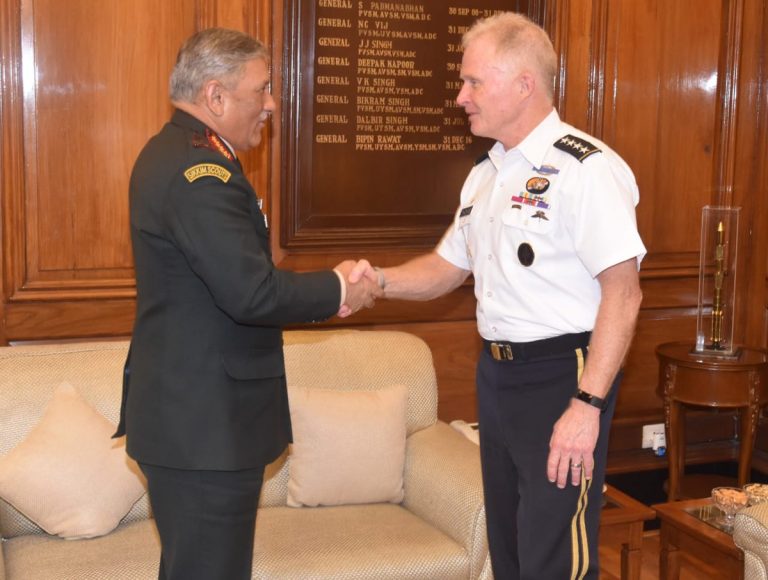
The Indian Army has issued a statement over the visit of General Raymond Thomas, Commander of United States Special Operations Command. He met with the Indian Army Chief General Bipin Rawat and discussed matters of regional security.

Source: Shiv Aroor (Twitter)

The statement reads, “Both the Generals deliberated on the developing regional security environment, issue of global terrorism and Pakistan’s continued support to terrorism was also discussed. Acknowledging India’s role in peace and stability in the region, gen Raymond emphasized on the need for further military cooperation in the field of technology and military to military exchanges between the two countries.”

The statement reads further, “In the current scenario, the Indian Army remains fully prepared for emerging challenges. In the last three weeks, a disinformation campaign by the adversary on digital media has increased. All ranks have been well sensitized of these disinformation campaigns and all ranks can see through the lie, deceit & deception of the terror sponsors.”

The last sentence of the statement is remarkable here as it refers to Pakistan directly as ‘terror sponsors’. The digital misinformation campaign mentioned in the statement likely refers to the propaganda video of Wing Commander Abhinandan released by the Pakistanis before his release and the recent epidemic of Fake News being spread even by journalists and Congress politicians which claimed that the 21 Sikh Regiment had refused to fight for India.

In recent weeks, there have been considerable tensions between the two countries in the aftermath of the Pulwama terror Attack. India responded to the act of terrorism by Pakistan backed terrorists with airstrikes within Pakistani territory that decimated terror camps.

The airstrikes were followed by Pakistan’s attempt to attack Indian military installations which resulted in the loss of an F16 jet for them which was brought down by a MiG-21 Bison. Tensions between the countries appear to have de-escalated since then although ceasefire violations continue to occur at the border.

US military veteran and defence expert terms Pakistani crackdown on terrorist organisations as an “eyewash”

US-based defence commentator and US military veteran Bill Roggio has termed Pakistan’s ‘efforts’ of curbing terrorism on its land as an “eyewash to placate Western governments in the wake of major terror attacks emanating from Pakistani soil”. In an article published on FDD’s Long War Journal, where Roggio is the managing editor, he has claimed that considering the past practice, the Pakistani government is shuttering terrorist institutions like Jamaat-ud-Dawa (JuD), founded by the UN-designated terrorist Hafiz Saeed, only to allow them to reopen a few months later.

FDD’s Long War Journal reports on and analyses the global war on terror. The journal is published by Foundation for Defense of Democracies (FDD), a think tank focused on national security and foreign policy based in Washington DC, and Roggio is a Senior Fellow at FDD.

The report said that Pakistan is shutting down JuD offices and detaining its leaders under international pressure. It claims that despite Pakistani Generals and government officials routinely claiming that terrorist groups were not permitted to operate on Pakistani soil, JuD operates freely in Rawalpindi where the headquarters of Pakistani military are located. Exposing the shallowness of Pakistan’s claims of dealing terrorist organisations stringently, the report said that this is not the first time when Pakistan is pretending to have taken Hafiz Saeed under ‘protective custody’, the country has done the so four times in last twenty years and has released the terrorist every time. Saeed was allowed to travel and give sermons at Lashkar-e-Taiba and Jamaat-ud-Dawa- run mosques in Lahore while in custody.

The report cites several examples where similar “cosmetic efforts” were made by the Pakistani government against Hafiz Saeed and his organisations. After the 26/11 Mumbai terror attacks in 2008, Pakistan had claimed to have shut down LeT/JuD offices and detained Hafiz Saeed but the offices were quietly reopened later and Saeed was also released from the so-called house arrest.

Pakistan had made similar shallow claims in 2017 saying that it had closed down JuD’s Markaz-e-Taiba complex in Muridke having facilities like hospital, mosques, madrassas, stores and training facilities for Jehadis. JuD banners were also removed from the roads of Lahore. All this was done to be undone later.

The report raises suspicion on the sincerity of Pakistani action against terrorism. It claims that Hafiz Saeed and his organisation enjoys the support of the State of Pakistan and that the State provides protection to terrorist leaders by placing them under protective custody and releases them as the international pressure decreases

“There is little reason to believe this latest “effort” will be any different”, the report said.

Third Congress MLA resigns from Gujarat assembly, party reduced to 73 in the state

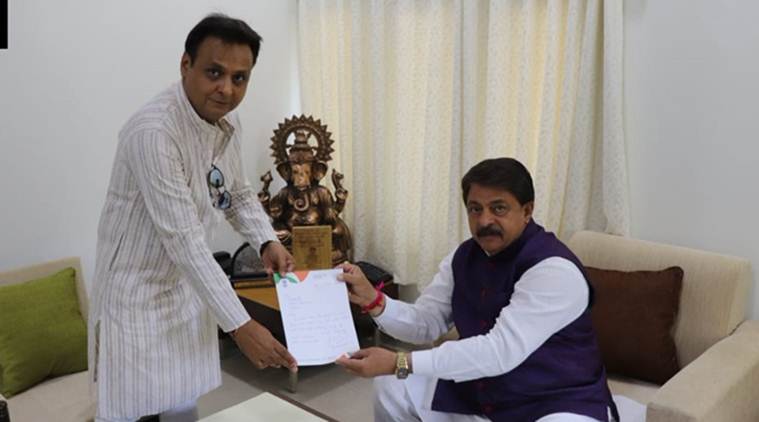
Jawahar Chavda, Congress MLA from Gujarat, has tendered his resignation to the speaker of the assembly, Rajendra Trivedi.


Chavda is the third Congress MLA to resign from the current Assembly after Kunvarji Bavaliya and Asha Patel. With his resignation, Congress has been reduced to 73 seats in the state.

The four-time MLA represented the Manavadar seat in Junagadh district and is considered to be an influential leader from the Ahir community. Assembly Speaker Trivedi, confirming Chavda’s resignation, said, “Chavda has resigned as MLA from Manavadar seat. He came to my residence and handed over his resignation letter. I have accepted his resignation. He has not cited any particular reason. Chavda ceases to be an MLA from today.”

Last year in July, Kunvarji Bavalia had resigned as an MLA and was then inducted in the BJP government as a cabinet minister. Then last month, Congress MLA from Unjha, Gujarat, Dr. Asha Patel, had resigned from her seat citing infighting. She also appreciated Prime Minister ’s introduction of a quota for people from the Economically Weaker sections of the society which she said will benefit the Patel community. She had later joined the BJP.

Like his colleagues, Chavda too is expected to join the BJP soon.

“Our people” were martyred when Indian Air Force “attacked” Pakistan: Thus spake the poster boy of Pakistan

Rahul Gandhi, the President of Indian National Congress was delivering a speech in Koraput, Odisha today. As is the norm, no speech of Rahul Gandhi can ever be delivered without a dash of gaffes and a bucketload of self-goals. During the speech today, Rahul Gandhi said that a few days ago, the Indian Airforce “attacked” Pakistan and dropped bombs. In the process, some of our men also martyred. Then, out of nowhere, he talks about HAL manufacturing fighter jets and how PM Modi took money from the Airforce and gave it to Ambani.


There are several problems with Rahul Gandhi’s statements.

Did India “attack” Pakistan, as claimed by Rahul Gandhi?

In his speech, Rahul Gandhi has claimed that a few days ago, India “attacked” Pakistan and dropped bombs in their territory. When Rahul Gandhi says India “attacked” Pakistan, it would essentially mean an act of aggression against a sovereign state. India, as is evidenced by History, has never “attacked” another Nation. So too, in the case of Balakot strikes, there was no “attack” as claimed by Rahul Gandhi. India merely excercised its right to self defence and bombed terrorist camps that were breeding grounds for the very suicide bombers that carried out the Pulwama attack and several similar terrorist attacks. Even in its official stand, India termed the strikes as ‘non-military pre-emptive strikes’, meaning, this was not a military action against the sovereignty of a state, but an act of self-defence against terrorists.

In fact, it was Pakistan that carried out the “attack” against India when it attacked India’s military installations in response to India taking action against terror camps. Thus, for Rahul Gandhi to say that India “attacked” Pakistan, it reaks of malicious propaganda against India and the Prime Minister.

Were “our men” martyred in the Balakot airstrikes?

Well, depends on which side of the fence one is on. If one is a Pakistani, or the ‘poster boy of Pakistan’, one might certainly say that “our men” were martyred, assuming they consider Jaish-e-Mohammad terrorists ‘their own people’. However, if one is from the Indian side of the fence, one would know that none of men were lost in the Balakot airstrikes. It was a clean operation were 12 Mirage 2000s crossed over, flattened terrorist camps and came back unscathed.

One could, of course, assume that he is talking about the Helicopter crash where 6 people lost their lives. However, India has maintained that the Helicopter crash was due to a technical glitch and not due to any hostilities with Pakistan. In such a scenario, it seems unlikely that Rahul Gandhi would be speaking about the Helicopter crash as right before he statement, he mentions India’s “attack” on Pakistan.

Were the jets used in the Balakot airstrikes made by HAL?

It was almost as if Rahul Gandhi was in a hurry to get the bit about HAL and Anil Ambani and hence, fumbled his way there. Surprisingly, even when he got to the bit he loves to talk about, he sounded either confused or wilfully silly. Rahul Gandhi, after talking about the Balakot airstrikes said that HAL has been manufacturing fighter jets for over 70 years and that PM Modi took money away from the Airforce and gave it to Anil Ambani.

Now, considering he spoke of HAL manufacturing jets right after he spoke of the Balakot airstrikes, one can assume that he meant the fighter jets used in the Balakot airstrikes were manufactured by HAL. This, however, is another lie. The fighter jets used by the Indian Airforce in the Balakot airstrikes were mostly Mirage 2000s which have been manufactured, incidentally, by Dassault.

Also, PM Modi has not taken away anything and given to anyone. Anil Ambani is not manufacturing Rafale, Dassault is. Anil Ambani has got only a part of the off-set contract which amounts to roughly Rs. 800 crores and not the outlandish figures that Rahul Gandhi keeps claiming.

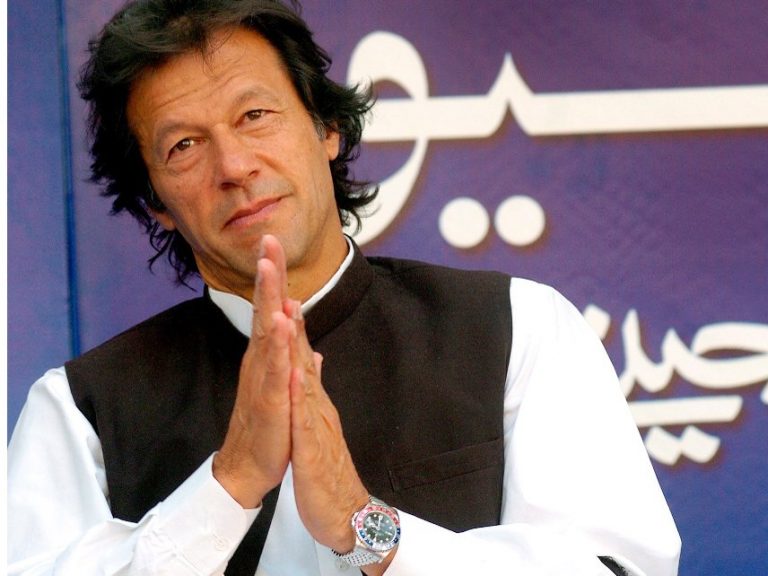
Interestingly, the line Rahul Gandhi has taken in this speech is exactly one taken by Pakistan. Rahul Gandhi and his band of buffoons, who have proven themselves to be the poster boys of Pakistan, have repeatedly toed the Pakistan line, and in this speech too, Rahul Gandhi has proven yet again why the country is beginning to think of him as Imran Khan’s lost brother.

Rahul Gandhi adds another falsehood to his Rafale lies, says Rafale engine was to be made in Odisha

Perhaps realising that people are getting bored listening to the same lies on the Rafale deal, today Congress president Rahul Gandhi added a new lie to his long list of Rafale lies. While talking to a group of women in Odisha on the occasion of Women’s Day, he said that the engine for the Rafale fighter jet was to be made in the engine plant of HAL in nearby Koraput.

During his interaction with few female college students, one girl had asked that Congress has claimed if the party comes to power in Odisha, it has promised free education on engineering and medicine, but what the party is offering for the girls interested in the sports sector. The Congress president didn’t have an answer for the question, so he did what he does best these days, saying that the sports infrastructure in Odisha is bad because Narendra Modi gave 30,000 crore to Anil Ambani in the Rafale deal.

After that Rahul Gandhi gave a short speech on now familiar allegations on the Rafale deal. The young girl, who is interested in sports like badminton and hockey, and wanted to know Congress plans for developing the sports sector in the state, was listening to how Modi snatched some aeroplane deal from HAL and gave way to Anil Ambani. He added that the Koraput engine plant of HAL was going to manufacture engines for the Rafale jet, but Modi gave that business to Anil Ambani.

Although Hindustan Aeronautics Limited has an engine manufacturing and overhauling unit in Koraput, it is absolutely false to claim that the plant was scheduled to make Rafale engines.

Under the original bid to buy 126 MMRCA Medium Multi-Role Combat Aircraft (MMRCA), which was won by Dassault Rafale, 108 planes were to be made in India by HAL, after 18 jets were to be made in France. But that deal was never finalised due to differences between Dassault and HAL. Dassault was not willing to take responsibility for HAL made planes, and it also didn’t agree with the fact that HAL had demanded 2.7 times higher man-hour compared to Dassault, which would have pushed the cost higher. The CAG has also noted that if HAL demand was accepted, the Rafale would not have remained the lowest bidder, making the entire process faulty.

The second and important point is that, even if the deal was finalised, or if Dassault wins the new bid for IAF jets and makes the Rafale in India, there is no certainty that the HAL plant in Odisha will get the order for making the engine. When Rafale was announced as the winner in 2012, HAL had started preliminary work for the production of the jets in India, and the company had said that it had shortlisted two locations in its HAL estate in Bangalore for making the airframe and engines of the jets. This means HAL was preparing to make the engines in its Bangalore facility, not Koraput.

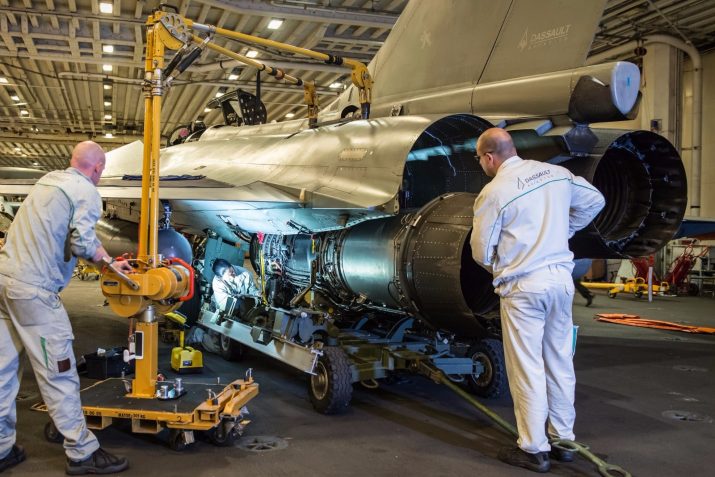
In the case of buying aircraft, the deal for the engine is done separately with the engine manufacturer. In case of Rafale, it is French company Safran (formerly Snecma) which makes the Snecma M88-2 engines used in the Rafale jets. Safran already has a joint venture with HAL to manufacture some parts of the M88 engine in India. Snecma HAL Aerospace Private Limited plant is located in Whitefield Industrial area in Bengaluru. Which means, if Safran makes the engines in India, they will most probably make it in their own JV company with HAL, not the HAL engine plant in Odisha.

After repeatedly claiming India’s air strikes damaged nothing, Pakistan denies international media access to Balakot site, again

The International Media group Reuters’ team has been denied access to the location of Balakot air strikes by the Pakistani government. Pakistani security officials prevented a Reuters team from climbing the hill to a site of a madarsa and adjoining 4-5 buildings in Balakot which were bombed by the Indian Air Force on February 26, 2019, in the retaliatory attacks in the aftermath of Pulwama attack.


This is not the first time that Pakistan has blocked media access to the IAF’s air strike site. The journalists from Reuters have trekked up to the hill thrice in last 9 days and their request to access to the buildings including the Jaish-e-Muhammad’s purported religious school has been denied all 3 times.

The Indian foreign secretary, Vijay Gokhale, in his press conference, a few days ago had claimed that a very large number of JeM terrorists, commanders, senior leaders have perished in the air strikes carried out by the Indian Air Force. Even the Air Chief Marshal BS Dhanoa confirmed it in his press conference that his team had indeed hit the terror camps that were intended to be targeted.

Pakistan had earlier claimed that Indian bombs had destroyed nothing but a few trees in the region. However, Pakistan’s repeated denial to access the location where JeM madarsa was operational suggests that there’s more to this than meets the eye.

While Pakistan has been insistent on its claim that the Indian air strikes achieved nothing, its denial of access to international media groups to the site raises further doubts on its claims. The sentries guarding the madrasa, who have refuted the claims of Indian attack, have asserted that ‘security concern’ is the reason for denying access to media representatives.