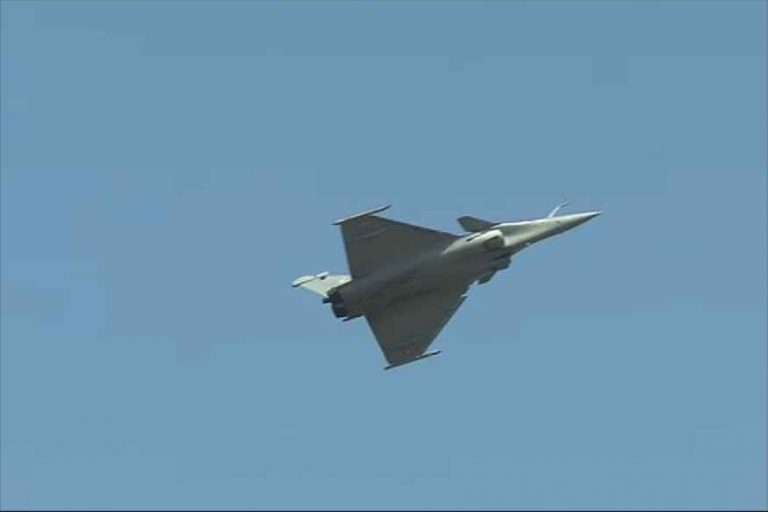
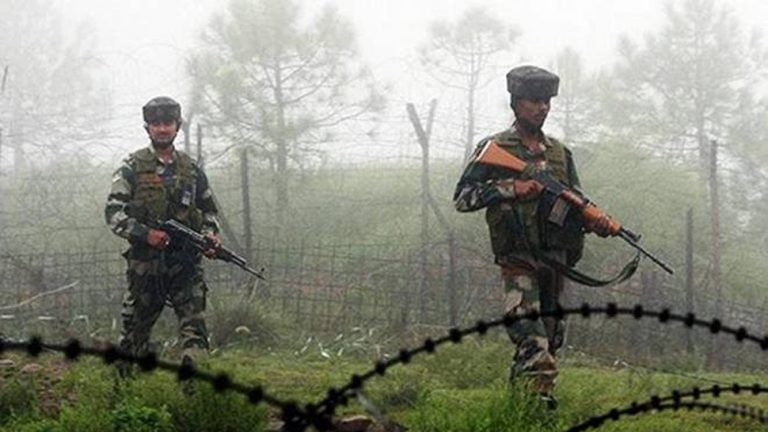
After the Pulwama attack, the Indian Air Force carried out airstrikes deep inside Pakistan territory to neutralise Jaish-e-Mohammad terror bases. IAF went all the way up to Balakot, which is only a few kilometres away from Abbottabad, where Osama Bin Laden was killed by the USA. Following this, Pakistan resorted to heavy shelling on the Line of Control and also infiltrated Indian airspace today, as a consequence of which, news has emerged that one of their F16s have been shot down.
Following Pakistan’s misadventure, TimesNow has now reported that the United States of America has cautioned Pakistan against using American defence equipment without its permission. The F16s are also American fighter jets that were sold to Pakistan.
The USA has a strict end-use monitoring agreement where the F16s supplied to Pakistan cannot be used to escalate. At best, the F16 can be used to defend itself and in this case, Pakistan used it to breach Indian airspace and was subsequently shot down. Pakistan has apparently done so without the permission of the USA and hence, this warning has been issued to Pakistan.
Even in 2016, when Pakistan was contemplating buying the F16 from another country other than the USA, US State Department had said that under the US law, any retransfers of US-origin defence items to a third party require approval from the US government and would be subject to end-use monitoring.
It hence stands to reason that the USA has the authority to ban Pakistan from using the F16 for purpose of aggression and escalation, as it seems to have done now.
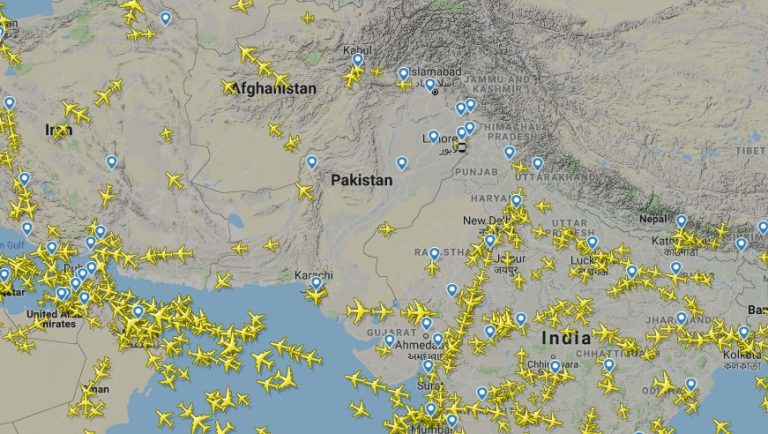
Earlier we had reported that flights to Jammu and Kashmir have been suspended following heightened tension between India and Pakistan after India bombed Jaish‑e‑Mohammed terror camps in Pakistan yesterday. Now it seems that the entire airspace over India-Pakistan has been closed, and airlines avoiding fling to Pakistan, are as several flights on that route have returned.
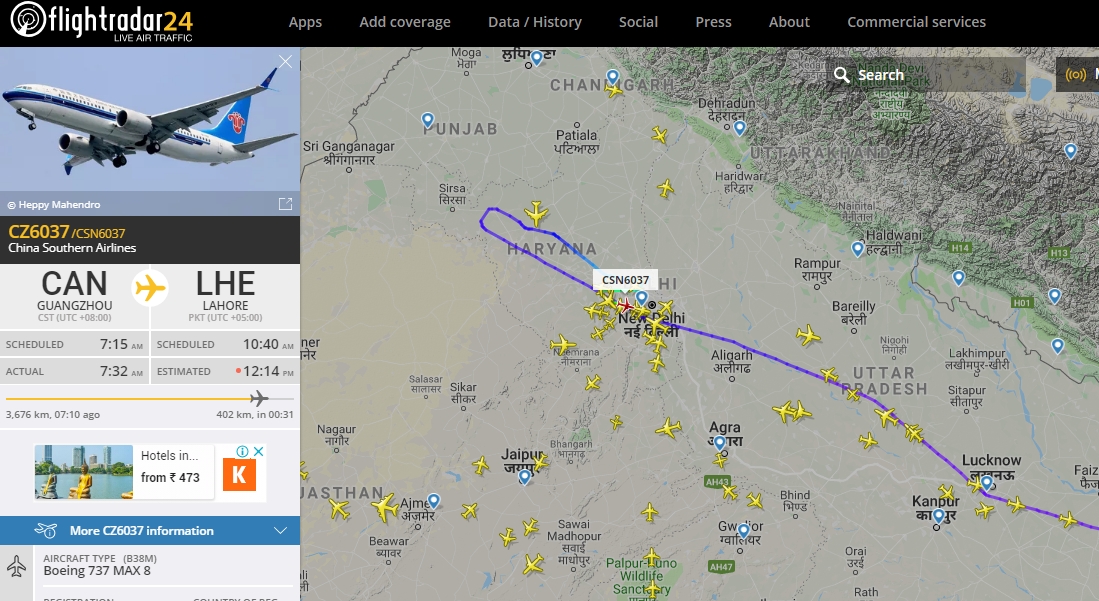
According to the status of flights shown on live flight tracking website Flightradar24, several flights scheduled to fly over Indo-Pak border have either returned or diverted to avoid Pakistani airspace. The flight no CZ6037 of South China Airlines, on its way from Guangzhou in China to Lahore in Pakistan, seems to have landed in Delhi.
Similarly, Flight RQ766, a cargo plane of Geo Sky which usually flies to Afghanistan and the Middle East, has landed at Delhi after taking off earlier today. The Singapore Airlines flight SIA308 on Singapore-London route has returned from the Indo-Pak border over Rajasthan. One TUI Airways flight from Krabi in Thailand to Helsinki in Finland also has returned from that airspace.
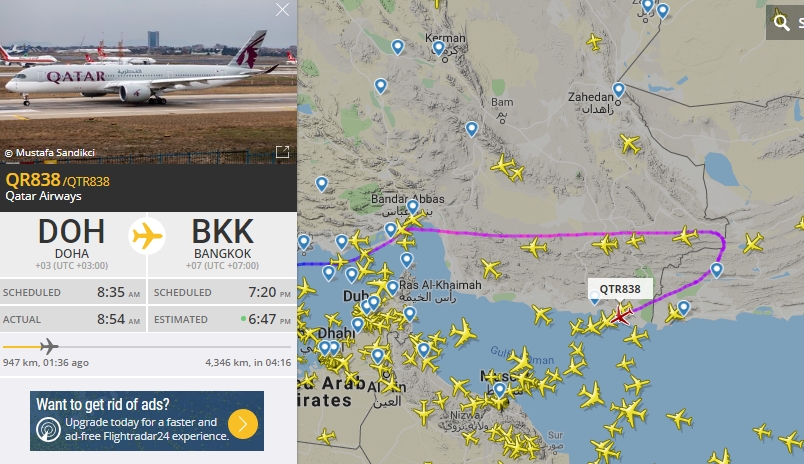
A similar situation has been observed on the Pakistan side too. As many as four flights of Qatar Airlines – Doha-Bangkok, Doha-Hong Kong, Doha-Kathmandu and Doha-Dhaka flights – have returned from Pakistan’s western border. Similarly, Etihad’s Abu Dhabi-Kathmandu flight has also returned.
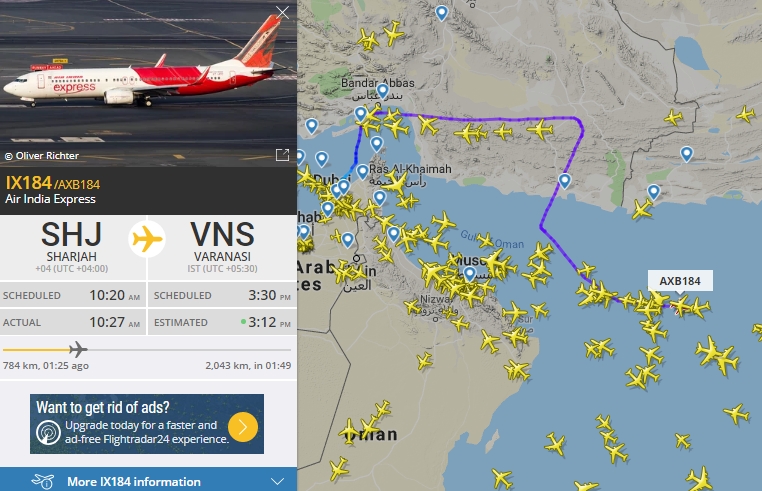
Some of these flights seem to have taken a detour instead of returning to origin airport. They have returned from Pakistan-Iran border, moved southwards and flying over the Arabian Sea, avoiding the Pakistan air space. They may directly go to the original destination or may stop at India for re-fuelling due to increased flight distance.
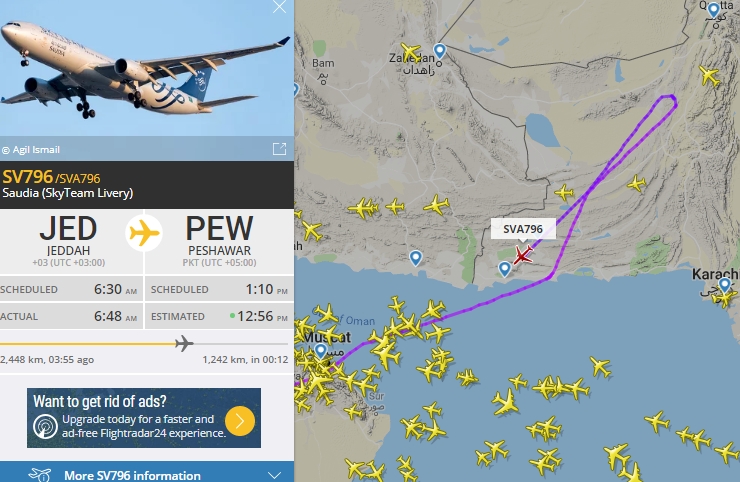
Shariah Varanasi flight of Air India Express has taken a similar extended route over the Arabian Sea. Interestingly, one Jeddah-Peshawar flight of Saudia has returned from inside the Pakistan airspace. A lot of Pakistan bound flights seem to have returned or cancelled, as we can hardly see any flights coming into the country as per Flightradar24, although we can see flights going out of Pakistan.
These means that Airlines are apprehensive of flying to or over Pakistan, as they anticipate an escalation of tension between India and Pakistan. Indian Air Force Planes bombed terror camps inside Pakistan, and after that, there are reports of a Pakistan Air Force F-16 jet shot down by India. Therefore, the airspace over India-Pakistan has become extremely dangerous, and it is natural that civilian airlines, both passenger and cargo, have decided not to fly over that zone.
Special Task Force of West Bengal police has nabbed two operatives of Jamaat-ul-Mujahideen Bangladesh from state’s Murshidabad district, with possession of explosives materials, taking the number of arrested operatives this month to six.
Jamaat-ul-Mujahideen Bangladesh or JMB is a terrorist organization which operates from Bangladesh. It was reported to be behind the Dhaka Terror attack of 2016. They have been active in Bangladesh, and demand formation of an Islamic theocratic state based on sharia, replacing the constitutionally secular republic of Bangladesh.
Moshibur Rahman alias Farooque, age 35, and Ruhul Amin alias Saifullah, age 26, were nabbed by collective efforts of Kolkata Special Task Force and Murshidabad area police.
“Both Moshibur and Ruhul, residents of Murshidabad district, are active members of the outlawed JMB. A cache of explosive materials, including aluminum dust, Calether (spirit of ether) and sulphuric acid, have been recovered from their possession,” An official was quoted by Press Trust of India.
Both the nabbed operative are associated with Kauser and Sajjad, also operatives of JMB, who were arrested last month in connection with 2014 Burdwan blast case. On 2nd October 2014, an explosion had occurred in a two-storeyed building in the Khagragarh locality of Burdwan. The budling was later discovered to be owned by a TMC leader Nurul Hasan Chowdhury. Two people had lost their lives due to blast.
According to police, Moshibur Rahman and Ruhul Amin were planning to get Kauser released, with help of acid Bombs.
On 16th February, Ariful Islam alias Arif was nabbed from Babughat area. He was nabbed in connection with the low-intensity bomb blast that exploded in Bodh Gaya’s Mahabodhi Temple complex, in 2018.
In 2017, it was reported that JMB is coordinating with the Islamic State to spread terror in Bangladesh and India. Some of the larger plans of the JMB was publicity for IS in India and to also spur recruitment for the group.
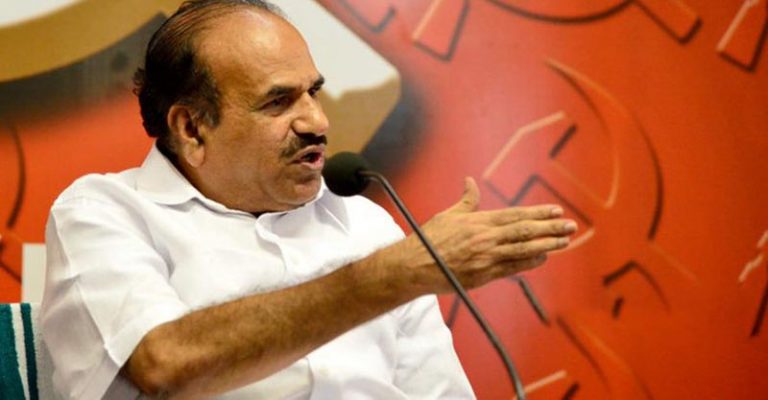
CPI (M)’s Kerala General Secretary Kodiyeri Balakrishnan has claimed that the Indian Air Force’s air strikes destroying Pakistani terror camps in the wee hours of Tuesday morning were a part of an attempt to trigger a war and derail the upcoming general elections by the BJP.
CPI(M) leader Kodiyeri Balakrishnan at an event in Kerala yesterday: Before declaring Lok Sabha poll dates,RSS is aiming at creating war-like situation & sabotaging polls. BJP has foreseen their loss in the Lok Sabha polls, trying to sabotage polls & impose emergency. pic.twitter.com/YmIHKdstuo
He said that the BJP is trying to lead this ‘problem’ into war and use it to ‘propagate hate against Pakistan’. He further alleged that the BJP is using this to create hatred against Muslims in the country. “RSS aims to create communal polarisation in the country,” he added. Stating that this could be a way to divert attention from upcoming Lok Sabha polls, Balakrishnan added, “Before declaring Lok Sabha poll dates, RSS is aiming at creating war-like situation and sabotaging polls. BJP has foreseen their loss in the Lok Sabha polls, trying to sabotage polls and impose emergency.”
“Instead of finding a solution to the insurgency in Kashmir, the BJP government is trying to make things worse by making the people of Kashmir enemies of the state,” he reportedly said while addressing a rally in Kerala.
In the wee hours on Tuesday morning, Pakistan has been reporting heavy movement along the Line of Control between India and Pakistan. Pakistan has claimed that the Indian Airforce crossed the Line of Control and breached the Pakistani airspace. The air strike was carried out at 3:30 am in Balakot. One of the targets destroyed by IAF Mirage jets was in Pakistan’s Khyber Pakhtunkhwa area.
Balakot, Chakothi and Muzaffarabad terror launch pads across the Line of Control completely destroyed in IAF air strikes. Jaish-e-Mohammad control rooms also destroyed.
The horrific Pulwama attack had left the entire nation in a state of shock and rage. The Indian government, resolute to discipline Pakistan has taken several measures against them. The most favoured nation status accorded to Pakistan under WTO norms were withdrawn, and then customs duty of 200% was imposed on all imports from Pakistan. Government is also working towards isolating Pakistan on the global front. PM Narendra Modi had announced after the Pulwama attacks that the Indian Army has been given a free rein to plan and execute a retaliatory action.
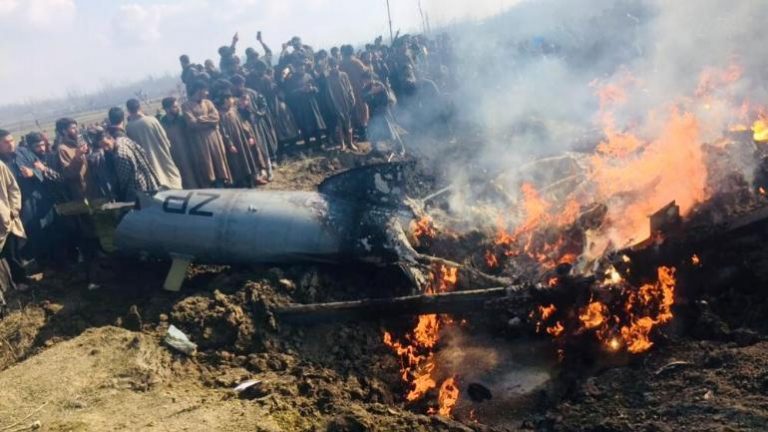
An Indian Air Force aircraft has crashed in Budgam district of Jammu and Kashmir on Wednesday morning. As per reports, The aircraft crashed in an open field near Garend Kalaan village in Budgam around 10 am. It reportedly caught fire immediately after breaking into two. Soon after, Pakistan began to spread fake news.
The cause of the crash is believed to be a technical slag, as per reports. The Pakistani media, however, is claiming that the aircraft was brought down by Pakistani jets. In reality, the Pakistani aircraft did attempt to violate India airspace but were rebuffed by Indian jets and forced to go back. Reports have also emerged of one PAF F16 being shot down in the process.
Pakistan has been spreading numerous fake images claiming that they have indeed brought down some Indian aircraft. Images from a crash in 2016 are being peddled as PoK crash today.
Desperate PsyOps by Pak? Playing mind games? 2016 MiG 27 Jodhpur shown as PoK crash today, reports @sachinsingh1010. Social media warfare by Pak? https://t.co/tJ2o3mkvaE
Moreover, as pointed out by others, the distance between Rajouri, the place where PAF violated Indian Airspace, and Budgam is about 200 km. Therefore, it’s nearly impossible for the Pakistani jets to have brought down the Indian aircraft.
Pakistan fighter jets violated Indian airspace in Rajouri, Indian fighter jet crashed in Budgam.
Distance between these two places is around 200 kilometres. It is highly unlikely that Pakistan jets shot the Indian warplane. https://t.co/542RaHIt0q
The propaganda being peddled is likely intended to give the Pakistani Army a face-saver in front of their own citizens after they were left embarrassed as Indian aircraft managed to hit terrorist camps within Pakistani territory without incurring any damage.
The pilot and co-pilot of the aircraft are believed to have unfortunately died in the incident. Reportedly, in total, 4 people have lost their lives.
Confirmed. Very sad. This crash was a Mi-17 V5 helicopter. There was likely a technical malfunction (expect Pak to claim they shot it down, but very unlikely). Four killed in this accident, reports @RahulSinghx. pic.twitter.com/GnjqeLMQlc
Reports have emerged that Airports in Leh, Jammu, Srinagar and Pathankot have been told to be high alert after an Indian Air Force fighter jet crashed in Budgam district of Jammu and Kashmir on Wednesday morning.
The airspace here has been suspended due to security reasons and many commercial flights have also been put on hold, reported ANI.
Pakistani jets have allegedly violated Indian airspace on Wednesday morning and entered the border areas of Jammu and Kashmir’s Rajouri district reported ANI. They reportedly dropped bombs but were pushed back by Indian aircraft.
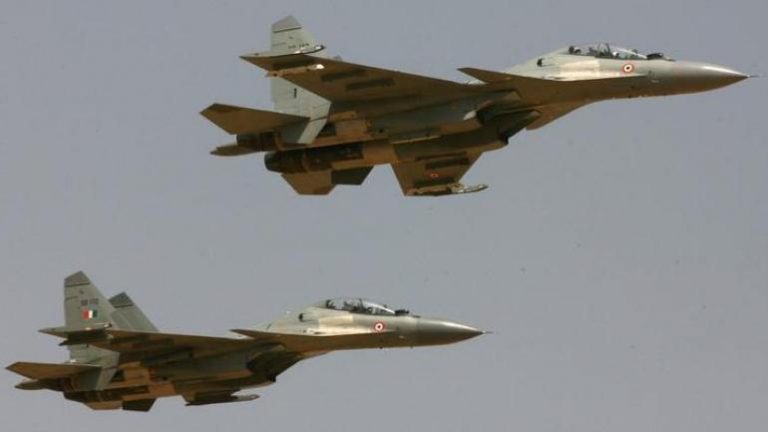
The PAF jets were confronted by the Indian Airforce and the bid to infiltrate was thwarted. Reportedly, Pakistan F-16s attempted to infiltrate but were pushed back by Indian SU-30s.
Initial reports also suggest that Pakistan Air Force’s jet F-16 that violated Indian air space has been shot down in Indian retaliatory fire 3 kilometres within Pakistan territory in Lam valley, Nowshera sector. Parachute seen as Pakistan Air Force’s F-16 was going down, the condition of the pilot is unknown.
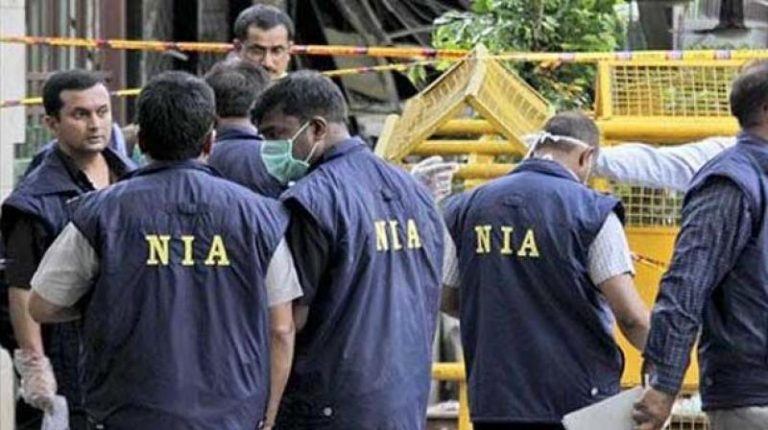
On the day the Indian Air force conducted ariel airstrikes bombing Jaish terror camps in Pakistan, the NIA continued its massive crackdown on the separatist leadership in the Kashmir Valley.
The raids were part of a search operation linked to the agency’s investigation in the alleged terror-funding case. It raided seven locations including, the residences of Moderate Hurriyat Conference chairman Mirwaiz Umar Farooq and JKLF chairman Mohammad Yasin Malik, in Srinagar. Apart from these, houses of Muhammad Ashraf Sehrai, Zafar Akbar Bhat, Naseem Geelani, Masrat Alam, and Shabir Ahmed Shah were also raided.
Shah is already lodged in Tihar jail on money laundering charges while Masrat Alam is in prison since 2010. Yasin Malik was recently taken into custody and lodged in Kothi Bagh police station.
Hurriyat head Syed Ali Shah Geelani’s son, Naseem Geelani and his close aide and chairman of Tehreek-e-Hurriyat, Mohammad Ashraf Sehrai were also raided.
The raids came hours after the IAF fighter jets conducted airstrikes at the Jaish-e-Mohammad facility in the Pakistan territory and barely few days after the government launched a major crackdown against separatist leaders in the valley.
In the massive crackdown, almost the entire leadership of Jamat-e-Islami and several other top separatist leaders had earlier been detained and their security cover was withdrawn.
The NIA in an official release claimed, “During the searches, NIA teams recovered incriminating documents including property papers, financial transactions receipts, and bank account details. Electronic devices including laptops, e-tablets, mobile phones, pen drives, communication system, and DVRs were also seized during the searches,” furthering that, “Significantly, letterheads of different terrorist organisations, as well as documents relating to recommendations for a visa for admission in Pakistan educational institutions, were found.”
The NIA statement also claimed that a “hi-tech internet communication set-up” was also recovered from Mirwaiz Umar Farooq’s residence.
Joint Resistance Leadership (JRL) of separatists, a conglomerate of Hurriyat leader Syed Ali Shah Geelani, Moderate Hurriyat Conference Chairman Mirwaiz Umar Farooq and Jammu and Kashmir Liberation Front (JKLF) chairman Mohammad Yasin Malik, has called for two-day protest strike against NIA raids, wide spreads arrests and attempts to tinker with State subject Law under the section 35 A.
“Widespread raids of NIA against almost whole resistance leadership, an extensive spree of arrests in nooks and corners of Kashmir valley during which thousands have been put behind bars and threats to tinker with state subject law (35a) are all acts aimed at suppressing our voices of Kashmiris,” said the separatist trio.
Uttarakhand based SAG officer Ashish Joshi, who was accused of being involved in ‘blanket-tea scam’, on Monday threatened to lodge a police complaint against AAP rebel MLA Kapil Mishra using his official letterhead. He posted the letter on his social media account showing his support for JNU freelance protestor Shehla Rashid and others. The letter was then circulated as an official circular from the Department of Telecommunications, Uttarakhand, as having issued by the government against Kapil Mishra.
Department of Telecommunications circular against the video uploaded by Mr. Kapil Mishra. It is copied to @DelhiPolice as it violates IPC and IT Act provisions. pic.twitter.com/tXJLK62QVa
The letter, which was signed by Ashish Joshi, was written on the official letterhead of Government of India, Ministry of Communications, which could give an impression that it was an official circular issued by the Department of Telecommunication. However, the letter was in his personal capacity, which he never clarified explicitly. Even when the letter went viral as ‘Department of Telecommunication circular’, he did not clarify that it is not a circular issued by the department but a letter he wrote in his personal capacity.
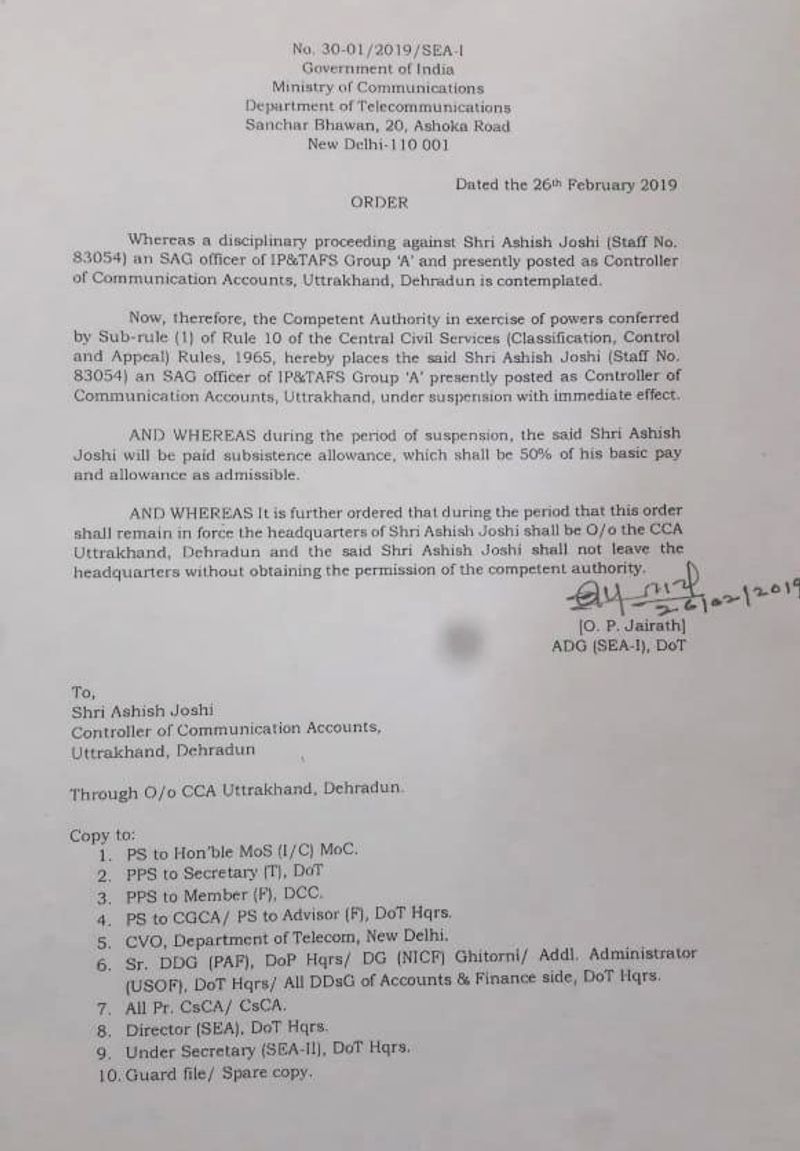
Following this, the Department of Telecommunications has taken disciplinary action against him and suspended him with immediate effect.
Ashish Joshi’s suspension letter (image via MyNation)
While the suspension letter does not mention the reason for his suspension, it could be owing to misuse of office for using official government letterhead for a letter written in a personal capacity. Media houses which covered the story, publications like left-leaning portal Scroll chose not to mention that Joshi was suspended not for complaining against Kapil Mishra, but for ‘misusing his office’ since he wrote a personal letter on his official letterhead.
Scroll being selective on Ashish Joshi
Moreover, Scroll even wrongly describe him as an IAS officer in the headline when he is not one.
Scroll’s factually incorrect headline
Ashish Joshi is not an IAS, but An Indian Post & Telecommunication Accounts and Finance Service (IP & TAFS) officer.
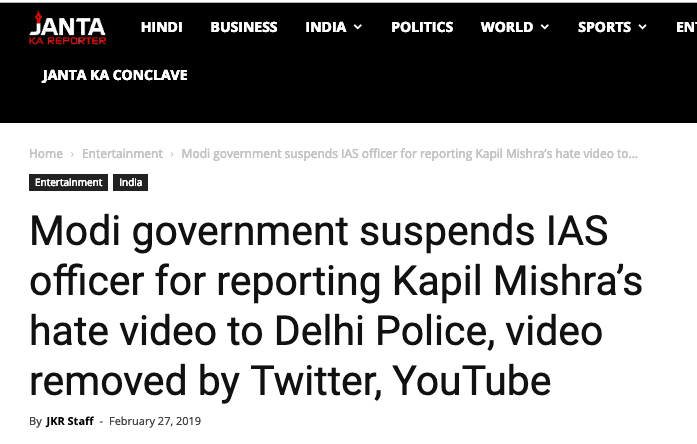
Pro-AAP blog, Janta Ka Reporter chose to sensationalise the report by lying that Modi Government suspended an IAS officer for reporting Mishra’s video to Police.
Janta Ka Reporter fake news
The news, which is categorised as ‘entertainment’ is fake considering Ashish Joshi is not an IAS officer.
Ashish Joshi’s history
Ashish Joshi was an AAP man, who was hand-picked by Aam Aadmi Party government in Delhi to be a member secretary of the Delhi Dialogue Commission. However, he turned against Kejriwal and ended up filing a complaint against Delhi Government’s then Principal Secretary Rajendra Kumar which led to raids at his house in connection with a corruption case.
Ashish Joshi was always on the radar of the AAP Government. After the first AAP Government quit Delhi, it was Joshi who had sent an eviction notice to former Education Minister Manish Sisodia to vacate his Government bungalow. Later, Joshi stood up to an order from AAP leaders to appoint six AAP volunteers as coordinators of different task forces by flouting the rules. After this, Joshi was removed from his post of member-secretary of the Delhi Dialogue Commission (DDC) and sent back to the Central Government.
When asked about the reason behind Joshi’s sudden exit, AAP leader Ashish Khetan said, “I don’t have to tell you that”. Later, Khetan, in a letter stated that Joshi was removed for running a “systematic vilification campaign” against the Delhi government. The letter also gave such flimsy grounds like “on several occasions, he (Joshi) has been found smoking cigars and chewing tobacco within office premises.”
Soon after, Joshi complained to Delhi Govt’s ACB against another bureaucrat, Rajender Kumar accusing him of allegedly indulging in corruption. In his complaint, Joshi alleged that Kumar, as director of Education (from May 2002 to February 2005) and later Secretary (IT), Secretary (Health) and Commissioner (VAT), had allegedly set up various companies to award work orders of departments without tenders which caused “financial loss” to the city’s government. The complaint was purely from the time when Sheila Dikshit was the CM and had nothing to do with the AAP Government.
Meanwhile, Joshi was accused of ‘blanket-tea scam’ where it was alleged that he misused funds to the tune of Rs 12 crore allotted to the Delhi Urban Improvement Shelter Board from Centre for Holistic Development, an NGO that works for the homeless. It was alleged that an estimated 20,000 blankets, sheets and other provisions were procured at double the price from the market while tea, which was supposed to be provided for free to those living in the shelters was procured at Rs 9 per cup instead of the Rs 4 per cup which was sanctioned. Joshi was also accused of being involved in ‘large scale scam’ in the utilisation of funds meant for de-addiction centres under the government.
Initial reports indicate that Pakistan Airforce attempted to infiltrate Indian airspace on Wednesday. The PAF jets were confronted by the Indian Airforce and the bid to infiltrate was thwarted. Reportedly, Pakistan F-16s attempted to infiltrate but were pushed back by Indian SU-30s.
Pak F 16s apparently tried to intrude into Indian airspace in Rajouri but Su 30s pushed them back.
This comes a day after the Indian Airforce conducted airstrikes deep inside Pakistan territory, with India’s nuclear-capable Mirage 2000 going right up to Balakot, Khyber-Pakhtunkhwa. In the raid, it is reported that Pakistan suffered over 200-300 casualties of their Jaish-e-Mohammad terrorists. India had struck the terror camps in three areas, one of which was Balakot.
According to ANI, the PAF jet that violated Indian airspace has been shot down by Indian Air Force.
Pakistan Air Force’s F-16 that violated Indian air space shot down in Indian retaliatory fire 3KM within Pakistan territory in Lam valley, Nowshera sector. pic.twitter.com/8emKMVpWKi
Perhaps to obfuscate the fact their PAF jet has been shot down, now Pakistan is claiming that they did not violate Indian airspace and that this was a display of their “intent”.
Formal statement from Pak foreign office appears to make virtue of not violating Indian airspace (unsurprising — why would they want to run into a Su-30 patrol?) and not hitting targets (India doesn’t have terror facilities). My assessment: show of strength for domestic audience. pic.twitter.com/q4ELBIBVYJ
Pakistan had first denied the attack and then, cried foul. In response to our airstrikes, Pakistan had resorted to heavy shelling along the Line of Control last night. In response, India had destroyed 5 Pakistani Army posts and had airlifted 2 jawans to the hospital, who had been injured.
UPDATE: An official statement was released by the MEA officials confirming that Pakistan tried to target Indian military assets. IAF thwarted those attempts and shot down Pakistan’s f-16. In the process, we lost one MiG 21 too. One pilot’s whereabouts are unknown and the government is trying to ascertain the veracity of claims that he is in Pakistan’s custody. Read the statement here.
After Indian Air Force conducted airstrikes in Pakistan to destroy the terror camps of Jaish-e-Mohammad (JeM), a humiliated Pakistan on Tuesday resorted to multiple ceasefire violations across the LoC in Jammu and Kashmir, reports ANI.
According to the reports, the Pakistan Army has targeted civilian areas while violating the ceasefire by resorting to heavy mortar shelling on 55 forward areas in Jammu, Rajouri and Poonch districts on Tuesday. The Indian Army retaliated to the ceasefire violation and a heavy exchange of fire took place last night. Officials said the Pakistan army had earlier resorted to small arms firing along the LoC in Nowshera sector early Tuesday but there was no report of any casualty.
The sectors targeted include Krishna Gati, Balakote, Khari Karmara, Mankote, Tarkundi in Poonch district, Kalal, Baba Khori, Kalsian, Laam and Jhangar areas in Rajouri and Pallanwala and Laleali in Jammu.
Reportedly, the Indian Army said that the ceasefire violations by Pakistan began at around 6:30 pm on Tuesday. Pakistan initiated unprovoked ceasefire violation by shelling heavy calibre weapons in 12 to 15 places along the LoC. It added that Pakistani troops fired mortars and missiles from civilian houses, and used villagers as shields. However, the Indian Army targetted the Pakistani posts away from civilian localities.
The Pakistani military yet again violated ceasefire along the Line of Control on the early morning of Wednesday, injuring five Indian Army personnel. Two of the personnel have been shifted to Military hospital for further treatment. The condition of the injured soldiers is stable. India, in response, destroyed 5 Pakistani posts along the Line of Control.
Meanwhile, a massive encounter broke out between terrorists and security forces in Memander area of Shopian district, ANI reported. Two Jaish-e-Mohammad terrorists were killed in the encounter. Five Indian Army soldiers suffered minor injuries as the fire was exchanged in the encounter in Shopian.
In the wake of the escalating tensions between India and Pakistan on the border, the district magistrate of Poonch on Tuesday ordered all government and private schools located within 5 kilometres range from LoC in the district to remain shut on Wednesday.
The desperation of Pakistan to attack India through a series of ceasefire violations comes at the backdrop of airstrikes carried out by the Indian Air Force to destroy the terror camps belonging to Jaish-e-Mohammad present in Pakistan. Six different locations in the area spread over 60 acres in Balakot, had been bombarded by the IAF in the early hours of the day.
Indian Air Force Mirage 2000 fighters destroyed multiple terrorist camps deep inside Pakistan to avenge the death of soldiers in the Pulwama terror attack. The Indian Air Force had carried out the pre-emptive attack to destroy the terror camps operated by the proscribed terror outfit Jaish-e-Muhammad. It was reported that the IAF jets had pulverised terror camps in Balakot (Pakistan), Muzaffarabad (PoK) and Chakoti (PoK) in the well-planned strike involving a fleet of IAF jets and other military jets.