The BJP on Monday approached the Supreme Court to seek its intervention to hold its scheduled rally in West Bengal. BJP had planned to commence the ‘Ganatantra Bachao’ Rath Yatras in the state but the division bench of Calcutta HC had overturned its earlier decision of granting permission to the BJP and put the yatras on hold last week.
West Bengal BJP files appeal in Supreme Court against Calcutta High Court division bench order refusing permission for BJP’s Yatra in the state. pic.twitter.com/rfSpPYpq13
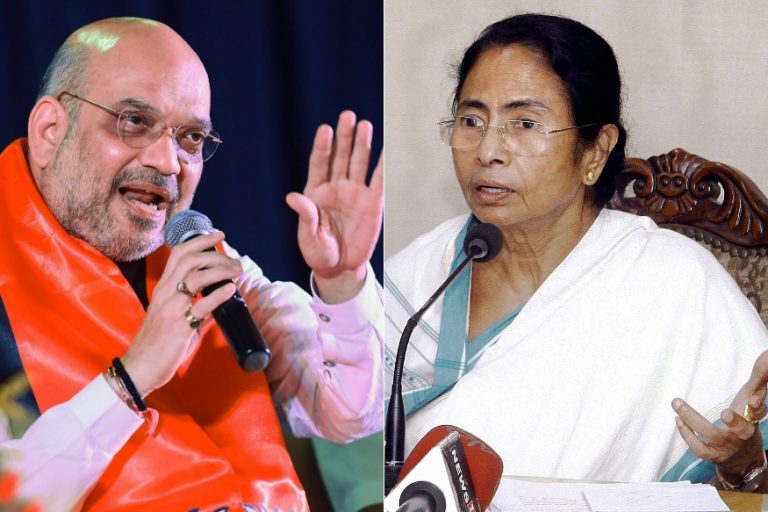
The West Bengal BJP unit had moved to the Supreme Court after the proposed plan to hold Rath Yatras in the state hit a roadblock. West Bengal BJP President Dilip Ghosh has claimed that the Mamata Banerjee led government has laid impediments on the path of BJP’s Rath Yatras and is working only on the basis of assumptions.
The BJP was supposed to organise 3 Rath Yatras from different locations crisscrossing in the state before finally culminating in Kolkata. Amit Shah was supposed to flag them off and PM Modi was meant to end the campaign by addressing a rally in Kolkata. The state police and administration had then denied permission citing threats of ‘communal disharmony’ in the state.
The BJP then filed a plea in the Calcutta HC against the state government’s denial and got the permission to hold Rath Yatras in the state. However, the division bench of the court overturned the decision within 24 hours following Mamata Banerjee’s government’s urgent hearing appeal against the judgment.
Justice Tapabrata Chakraborty had on Thursday granted BJP the permission to hold rallies and asked the state police to ensure law and order. But a division bench of the HC overturned the order the very next day and put the Rath Yatras on hold.
According to data obtained by the Department of Pay and Accounts Office of the Cabinet Division, there has been a considerable dip each year in the foreign travel expenses incurred by the NDA government in the last 4 years.
As per the data, the NDA government has in totality spent Rs 239.05 crore on official foreign trips, which include Rs 225.30 crore spent by the Cabinet Ministers and Rs 13.75 crore on Ministers of State from April 1, 2014, till March 31, 2018.
The total amount mentioned above is expected to be marginally higher since the 2014-15 bill submitted to the Pay & Accounts Office, Cabinet Affairs could include foreign trips undertaken by the previous UPA Council of Ministers, before the NDA government took charge on May 27, 2014. This remains unclear as the response did not include details or a break-up of expenditure.
Currently, the Council of Ministers comprises of 25 Cabinet Ministers and 45 Ministers of State, including 11 with independent charge.
The data, however, reveals a significant and constant decline in the amount spent on these official foreign trips by the Council of Ministers in the last four and a half years since BJP has been in power.
The figures reveal a constant dip in the travelling cost incurred by the NDA cabinet over the last four years
The Minister of States, External Affairs, V K Singh, in a reply dated December 13 to the Rajya Sabha, had stated that a total of Rs 2,021.58 crore was spent on the Prime Minister’s 48 official trips abroad so far, including for aircraft maintenance, chartered flights and a secure hotline.
Even though the Congress had earlier gone hammer and tongs, accusing PM Modi of going on an exorbitantly high number of foreign trips during his tenure, a report published earlier in July 2018, had proved that PM Modi in comparison to Congress’ Manmohan Singh, has done more trips and spent more days abroad in almost the same cost.
PM Modi until July 2018 had completed 184 foreign trips at almost the same cost as incurred by the UPA to complete 161 abroad trips during its five years of leadership under the then Prime Minister, Manmohan Singh.
Though Modi’s foreign trips have often become a point of contention for the opposition to target him, recent reports validate that the NDA government, have been watchful and vigilant.
After facing a severe onslaught from Indian security forces, Pakistani sponsored Islamist terrorists have been pushed into a corner and have resorted to looting weapons of fellow terrorists, reported Times of India.
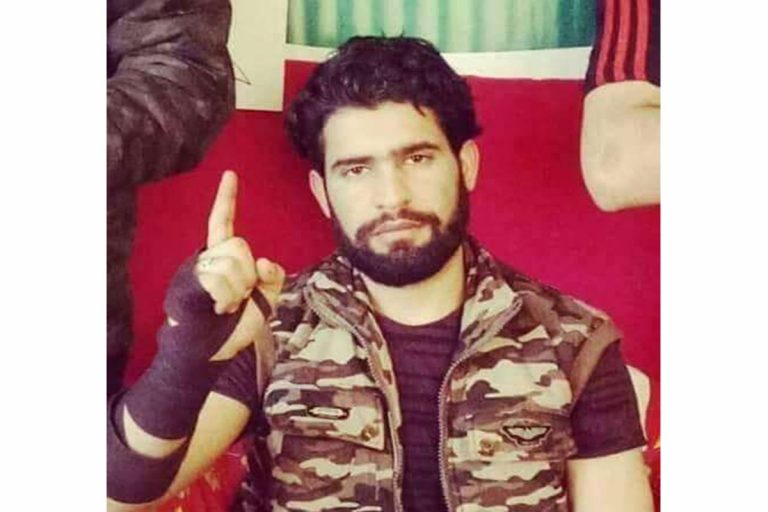
Reportedly, few terrorists belonging to Zakir Musa‘s Ansar Ghazwat-ul-Hind (AGuH), an Al-Qaeda affiliate present in south Kashmir had been in contact with Musa’s former group, Hizbul Mujahideen, who had sought a meeting with Musa’s men. Four AGuH terrorists had arrived in Pulwama to meet the Hizbul commanders but later realised that they were fooled as their weapons were looted by Hizbul terrorists.
Zakir Musa, a former Hizbul Mujahideen commander was also a close aide of dead terrorist Burhan Wani. Zakir Musa had left the Hizbul in May 2017 and had claimed to lead Ansar Ghazwat-ul-Hind, a local affiliate of Al-Qaeda.
The Ansar Ghazwat-ul-Hind, which is being eliminated by the security forces has been facing an existential crisis. The Indian army has executed six terrorists belonging to AGuH this week which has resulted in only a few terrorists being alive. Facing with severe resource constraint and failure to gain any foothold in Kashmir, Zakir Musa’s AGuH has been incompetent to inflict any terror in Jammu and Kashmir.
The looting of weapons belonging to AGuH by Hizbul Commanders is going to be a setback for them despite the fact that Zakir Musa’s outfit is being supported by few Islamic state-linked terrorist groups. Interestingly, Pakistani backed terrorist groups like Lashkar-e-Taiba and Jaish-e-Mohammad are averse to the idea of Zakir Musa being the face of Kashmiri terrorism.
“While there is potential for Musa’s outfit to grow in popularity and attract a large number of Kashmiri youth, lack of funding and source of weapons has prevented it from growing into a major threat,” said an army officer.
The security forces have killed most of the terrorists belonging to AGuH, leaving Zakir Musa severely resource constrained, especially weapons. Weapons have also been recovered from the dead terrorists, further restricting firepower of AGuH. Musa has been facing a tough situation as the flow of funds is restricted and sourcing weapons have also become difficult leading him to lay low for a while.
A senior officer said that Musa possibly realises that with little financial backing and weapons, his men cannot make much of an impact on the terror/militancy scene in J&K. “He is believed to be lying low, is possibly not using a phone to communicate for fear of being tracked and may have also disguised his appearance to escape detection by human intelligence assets of Jammu and Kashmir police,” the officer said.
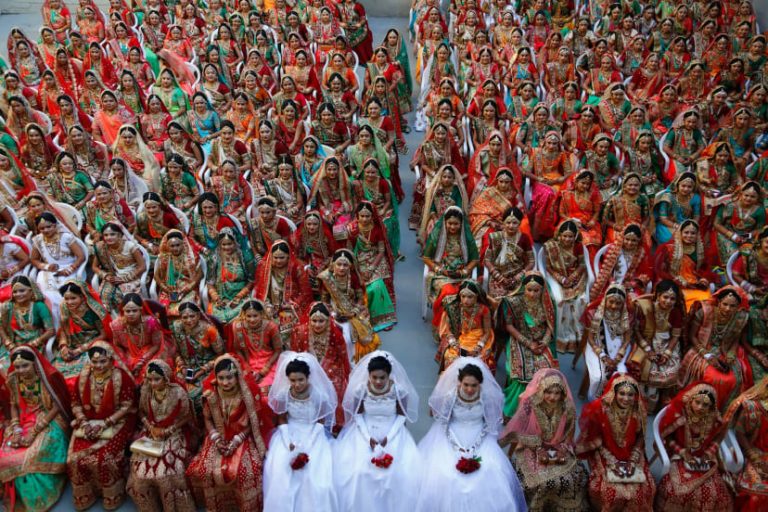
In a mass-wedding ceremony organised in the city, Surat-based businessman Mahesh Savani got as many as 261 girls, who were orphaned or did not have a guardian, married. Savani started the tradition in 2010 after he got took the responsibility of getting his nieces married when his brother passed away in 2008 right before their wedding.
Surat mass wedding (image courtesy DNA)
Gujarat CM Vijay Rupani graced the occasion and blessed the couples. Many gazetted officers, including IAS and IPS performed the ‘Kanyadaan’ of a few HIV+ brides. Many HR heads of corporates, as well as spiritual gurus, also performed the ‘Kanyadaan’ of many brides.
Surat mass wedding (image courtesy DNA)
As of now, he has got as many as 3,172 couples married in last eight years. Of the 261 girls who got married this year, 6 were Muslim brides and 3 were Christians.
The couples were also given Rs. 2 lakh insurance under Pradhan Mantri Bima Yojana along with various gifts to start a new home. The mass wedding is not just limited to Gujarati brides and girls from states such as Rajasthan and Karnataka were also part of the ceremony.
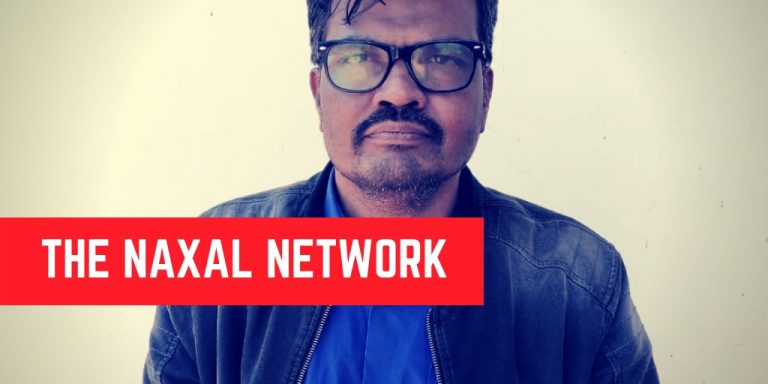
Yesterday, OpIndia.com broke the news that Chhattisgarh Police has secured the arrest of Narayan Venkat Rao alias Narayan Murthy, a highly placed government functionary who has been arrested for his connection to Naxals after surrendered Maoist Pahad Singh tipped them off.
OpIndia.com was also told that Venkat Rao’s brother is the President of PUCL, Hyderabad. Although we could not independently verify the claim of his association with PUCL, we learnt that his brother, N Narayan Rao, is the general secretary at Civil Liberties Committee (CLC), Telangana.
The CLC, earlier called the Andhra Pradesh Civil Liberties Committee (APCLC), has a long history of its members being arrested for links to Naxals. Two of its ‘activists’ were arrested in December 2004 by the Warangal Police after they were allegedly found moving with armed Maoists.
In 2009, an APCLC ‘activist’ was arrested on charges of assisting Maoists in the murder of ZP vice-chairman Samida Ravishankar in 2007. In 2012, Andhra Police arrested 2 APCLC activists along with 18 members of Chetna Natya Manch (CNM), a Maoist ‘cultural’ outfit.
The Police claimed that members of the CNM had arrived at Hyderabad from Khammam on the invitation of the APCLC members to create awareness among people against encounter of civilians by anti-Maoist forces.
In 2003, Andhra Pradesh Police had arrested three APCLC activists in connection with an attack on Chief Minister Chandrababu Naidu including the outfit’s Chittoor district president Hari Prasad, a move that was condemned by an organization it is associated with, Association for Protection of Democratic Rights (APDR).
In 2014, the Police in Hyderabad stopped Pratyamnaya Rajakeeya Vedika (Forum for Political Alternative) from holding a meeting, asserting that it’s a frontal organisation of a banned Maoist Party.
Varavara Rao, one of the leaders of the forum, was among the 50 leaders and activists who were arrested by the Police. As per the High Commissioner of Police, the High Court had denied permission to the forum to hold the meeting. In the recent arrest of the government official who was a Naxal, IG GP Singh confirmed that Narayan Venkat Rao was in touch with Varavara Rao.
Chilaka Chandrashekar, the General Secretary of APCLC, and other members of the organization were also detained as per the statement released by the members of various organizations working under CDRO. As per reports, according to Intelligence agencies, Varavara Rao, which the APCLC appears to have links with, attended the funeral of a Maoist killed in Gadrichholi last year and also attended a meeting to commemorate the first death anniversary of slain Maoist commander Kapuka Prabhakar.
The Warangal police in July arrested district CLC Secretary Penta Ramesh Chandar, for allegedly being a ‘courier for Maoists’. For its part, the CLC alleged that police were trying to frame Ramesh.
Controversial author Arundhati Roy attended the CLC’s first Telangana State Congress in April this year. Academic-activist Nandini Sundar, who is an accused in a murder case, also attended the event.
As we have mentioned in our previous reports, the CLC is a coordinating organization working under the umbrella organization, CDRO. The PUCL is also a coordinating member of the CDRO and has intimate links with the arrested ‘Urban Naxals’. It is part of the Right to Food Campaign as well that has launched an attack on Akshaya Patra for the latter’s mid-day meals.
OpIndia has been tracking organisations like CDRO and PUCL for the past few months. All the arrested Urban Naxals have links to these institutions and the details can be read here.
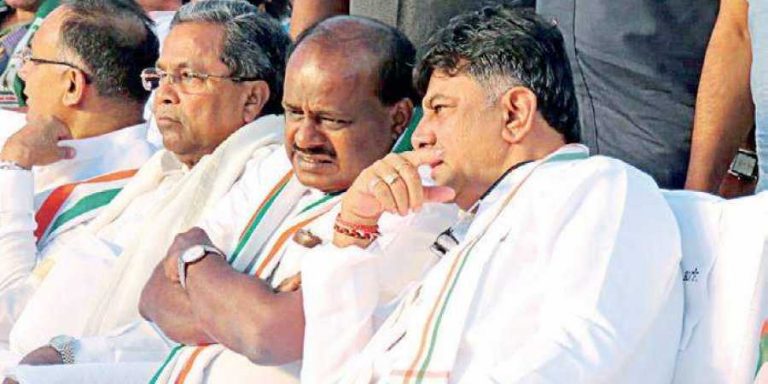
The Congress-JDS coalition is the state is reportedly set to face fresh troubles after the recent cabinet expansion. As per reports, several senior Congress leaders are unhappy over being denied a cabinet berth.
A day after senior Congress leader Ramesh Jarkiholi was axed from the HD Kumaraswamy cabinet, speculations of the Congress strongman quitting the party and joining hands with BJP has been gaining severe traction across the state. Ramesh Jarkiholi who is believed to have considerable support from fellow Congress MLAs may play spoilsport for the Congress-JDS coalition if he quits the party to join the BJP.
Interestingly, an audio clip of an alleged conversation between Ramesh and another person, reportedly a TV reporter, has surfaced triggering speculations about their defection to the BJP. In the audio, which has gone viral now, one person is heard asking a person claimed to Ramesh Jarakilholi whether he would resign as an MLA. The second person says it is confirmed and will resign in a week. He further added that he will not reveal the number of other disgruntled MLAs.
Meanwhile, senior Congress leader and seven-time MLA Ramalinga Reddy and his daughter Sowmya Reddy, MLA from Jayanagar are also reportedly unhappy after they failed to make the final list of newly inducted ministers. The father-daughter duo was expecting to be inducted into the cabinet, but both have been overlooked by the HD Kumaraswamy government. While expressing disappointment against their non-inclusion into the cabinet, Ramalinga Reddy said that forces within party scuttled his bid to become a minister in the government.
Soumya Reddy, the MLA from Jayanagar, also expressed her displeasure over her father’s exclusion from the cabinet. Soumya’s name was dropped from the final list of parliamentary secretaries. She had shared on Twitter that her father, a seven-time MLA and four-time minister, deserved a cabinet berth. She had also added that there are 15 Congress MLAs in Bengaluru today because of her father.
There were speculations of possible tussle and discontent among leaders of both Congress and JDS over cabinet berths as JDS, despite having only 17 MLAs became a part of the government and got the CM’s post.
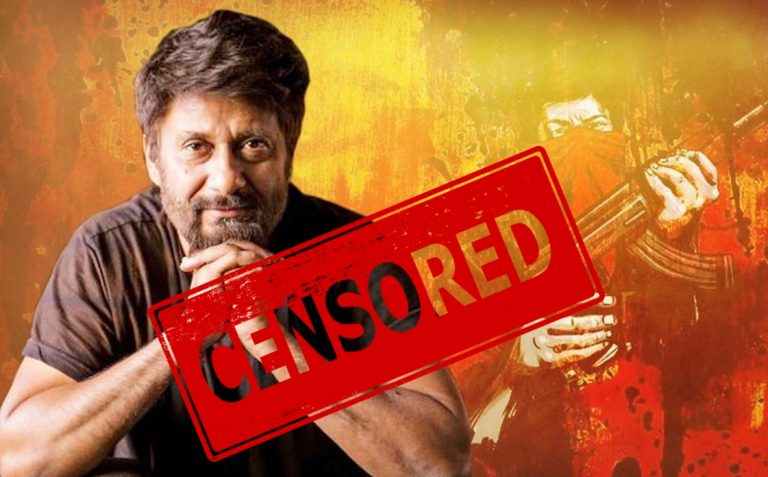
Vivek Agnihotri, the author cum filmmaker has been rather vocal about the Urban Naxal phenomena that have come to the fore recently. In his book, Urban Naxals, Vivek talks extensively about how the Naxals have an entire urban network that often goes unnoticed because they are disguised as activists, lawyers, etc.
With the recent arrest of several urban Naxals who were working actively as conduits for the Naxal terrorists, his book gained even more popularity and relevance.
Recently, Agnihotri was approached for an interview by Times of India but for some reason, the interview was never published. Vivek says he never got a forthcoming answer and he was just told it was against ‘policies’ of Times of India, which he found rather strange.
Following is the interview that Times of India considers against its policies.
1. What is urban Naxalism and how does it spread its wings?
Urban Naxalism is the fourth generation (4G) war. It is complex and long-term. In 2004, Communist Party of India (Marxist–Leninist) People’s War, usually called People’s War Group (PWG), merged the Maoist Communist Centre of India (MCC) and formed Communist Party of India (Maoist) pledging to the ideology of Marxism-Leninism-Maoism. The party became a member of the Coordination Committee of Maoist Parties and Organizations of South Asia (CCOMPOSA).
This new entity drafted five vision and strategic documents under an urban perspective plan — a blueprint for their urban movement/activities. It is believed that Kobad Ghandy alias Rajan, who was arrested in September 2009 in New Delhi, played a major role in the preparation of this urban perspective plan.
These five, ‘Strategy and Tactics’ document and ‘Urban Perspective Document’ admits that enemy (Indian State) is very strong in urban areas and therefore never to engage with the enemy until the conditions are favourable. And to make them favourable, it suggests, exploring and the opening of opportunities, organize people through frontal organizations (FOs). Target the ‘vulnerable group’ of minorities, women, Dalits, labours and students through influencers who work as under-covers for a long time and accumulate strength. The document stresses uniting industrial proletariats, weak and students and uses them as vanguards who can play a direct role in the revolution.
The strategy is to make a direct attack on the enemy’s (Indian State) culture, including genocidal acts against civilians and wage a highly sophisticated psychological and cultural warfare, especially through media manipulation and lawfare. To create a state of unrest chaos and conflict leading to a civil war. For this purpose, legal professionals are required, media professionals are required, creative people, varied intellectuals and academicians are required, and civil society leaders are required, especially those who are connected with NGOs for smooth transaction of funds and to hide behind compassionate human rights causes. It begins with low-intensity conflicts where all the actors attack from different platforms.
So, an invisible Naxal-intelligentsia-lawyers-media-academia-NGO-Activist nexus works as strategic fortification with the ultimate aim of taking over Indian State to achieve Maoist rule. They have identified Pune-Mumbai-Ahmadabad as Golden Corridor. Delhi-Kanpur-Patna-Kolkata as Ganga Corridor. And KKT’s (Kerala, Karnataka & Tamilnadu) Chennai-Coimbatore-Bengaluru as Tri-junction. The key universities like JNU, JU, Osmania, HCU, Tiss etc work as R&D of Urban Naxalism.
Anyone who directly or indirectly works to accomplish these objectives is an Urban Naxal. Anyone who sympathizes with them is a potential Urban Naxal. But I always insist that the critics of the government, anti-establishment activists or dissenters of the system must not be confused with the real enemies – Urban Naxals.
The following chart illustrates the Urban Naxalism network.
Urban Naxal Network
2. According to your experience, how do urban Naxalites communicate and remain in touch with the Naxalites on the field in forest areas?
This is a very well-structured operation. You can blame them for anything but never for their organizational abilities. While the Naxals in jungles engage the security forces, the Urban Naxals engage the government and legal system. They infiltrate into the enemy camp (Indian state) in critical departments like finance, military, police, power, IT, defence production and disrupt the activities from within by gaining control over the workers. Slowly, passive protests and continuous grievances lead to a domino effect in an already disgruntled nation.
They create a network of doctors and hospital attendants sympathetic to their cause who shall treat their injured cadres with utmost secrecy.
They create cadres in urban areas who are technically qualified to handle the modern communication with their cadre spread in jungles. They possess drones, satellite phones. There are technical teams which handle latest arms and ammunition.
They have formed groups of highly motivated individuals who constitute what the Maoists call as ‘City Action Teams’. These members are entrusted with the destruction of high-value targets or the annihilation of individuals of importance. The identity of such members is unknown even to the local urban party structure.
Their most critical arm deals with the collection of centralised intelligence and cyber-warfare. The party tries to use modern electronic means to infiltrate into the enemy’s networks and collect vital information. For this, they need to have individuals with requisite skills, who can only be found in urban areas and who, because of the nature of their job, need to be based therein. Such persons are under the direct control of the highest party echelons.
Then they use various FOs like Kabir Kala Manch which travel all across for propaganda and in the garb of events they communicate between the cadre and Urban Naxals.
3. Why does Naxalism spread – is it because of the ideology or due to something else?
When the armed Naxal movement began, the gun became a symbol for land redistribution and the end of an oppressive and corrupt system. A lot of young tribals were fascinated by this quick form of justice and they also picked up guns. They attacked the policemen who always sided with the influential and powerful. They used violence to demand better wages and rates for their produce. And they got it. Insurgency spread and soon the area became the theatre of a new kind of warfare. A parallel government started taking shape. Personal justice became the order of the day.
‘Apni Satta, Apna Kanoon’(Our governance, our laws) became the motto. Kangaroo courts got set up. Naxalism became the new establishment.
The establishment has to survive. Survival requires funding and an ecosystem. Therefore, it becomes a compulsion to form a nexus with the politicians, police, and the middlemen. They also started looting contractors, trucks, and godowns.
Today Naxalism is a big enterprise. People have to be fed. Arms to be procured. Ammunition to be replenished. And above all, the terror to be maintained so that the government officials don’t dare enter the area and therefore they block all kinds of developments. Terror has a quality –its virality can’t be controlled. Naxals become service providers for interpersonal rivalries and start facilitating revenge on the condition that the person will join them and become a Naxal. Kangaroo courts are used for this purpose. ‘Adha foot kam kar do(Shorten the man by six inches)’ means ‘Behead him’. Extortion is used to feed this mafia. They kill those who don’t subscribe to their ideology. They kill to create a power and governance vacuum and soon they fill up this space. They attack schools because education promotes awareness and empowers youth with skills for a livelihood other than farming and forest-related jobs. This is how they keep the population in their area of influence out of the mainstream milieu and spread their terror and grow from localized movement to a pan-Indian shape, in the form of urban Naxalism to accomplish its real goal– to wage a full-fledged war against the Indian State.
3. According to your research, how long do you think will Naxal movement last in India?
This is not a 100-metre race. It’s a marathon. Naxal movement in jungles is already on the decline. I think post-2019 elections it will further get diluted. But the Urban Naxalism is on the rise. A lot of funding from vested agencies is being pumped into the system. Sometimes even actors don’t know that they are part of this ant-state theatre. There was a time in Bollywood when the producers weren’t aware of the mafia money being pumped through legal routes. For example, you have a digital media platform and you need funding, you start publishing articles which promote Naxal objectives, the funding will present itself to you through the legal route. As long as we have competitive democracy with identity groups, vote banks and ambiguous laws on such activities, it is very difficult to eliminate them. The nexus will be formed by the vested interests. It’s a money-making enterprise with powerful middlemen.
4. It is believed urban Naxalites undertake detailed planning and strategizing of many Naxal activities an also raise funds for their cause, is it true and how can this menace be controlled?
A wrong narrative has been created that Naxals extort big business houses to help the poor tribals. In fact, Naxals extort poor adivasis. This movement survives on terror funding which is being used to buy arms & ammunition, intelligence devices, drones, training, infrastructure etc. This terror funding comes from Communist terror organisations from the east and from Islamic terror organisations in the west.
Then a huge amount of money is collected through extortion of the poor. You will be surprised to know that they extort poor Tendu leaves sellers to the tune of 60 cr in one season. There was a case in Maharashtra last April/May when tendu leaves contractors were arrested with crores of cash. Any major construction like roads in the area is charged at 15%. Minor construction and other works at Panchayat level -10 to 15%. Levy on vehicles and any business based on four wheelers or passenger bus etc at 5-10% of earnings. Salary of one month of Govt servants like teachers, ashram staff, hostel staff etc. is taken as extortion. Operators of tractors and machinery in agriculture – usually one month’s earnings or 10%. Commission from all funds granted to panchayats in the affected area is extorted. Mining is charged at 10-15%.
On an average 1 km road in Bastar is built at around 2 to 2.5 cr if it’s NH and 1 to 1.5 in other cases. In 2016, more than 230 km of roads were completed in Bastar. So estimated extortion is around 65-70 cr on roads.
It is estimated that 1100cr-1500cr is extorted every year from the affected area and most of it is used for the Urban Naxal activities.
5. What are the top steps that the law enforcement agencies have to take to eradicate Naxalism from India?
Fast-tracking building infrastructure, with a focus on solar lights, mobile towers with 3G connectivity, and road-rail connectivity.
Cut their lifeline completely, i.e funding. Prevention of Money Laundering Act (PMLA) must be reviewed to ensure effective choking of fund flow to LWE groups. NGOs must be vetted and thorough scrutiny of foreign funding,
A complete overhauling of our education system with a focus on meritocracy aimed at a positive and constructive approach to nation-building. Zero tolerance approach to ‘Naxal sympathisers’ in academia. Direct legal action against anyone who is directly or indirectly connected with Naxalism like the USA did with communism.
Ban political party/politicians which even remotely work with Naxals or Urban Naxals.
Is Naxalism a sign of a failed government?
When India found freedom, many fundamental issues remained unaddressed. Naxalism grew because of social disparity, oppression and the state’s indifference to certain sections of the society and certain regions. This has caused wide disparity in society. Naxals take advantage of this. The only way to defeat them is to fill this disparity. Sadly, no government in the past focused on development. In a democracy of India’s size, there are huge groups of alienated and angered people with no real idea of the perceived sense of injustice, oppression, and loss of dignity. Naxals are cleverly exploiting this sentiment to their advantage – caste conflicts in Bihar, resentment against landlords in Andhra, discontent against forest laws in tribal areas, unemployment amongst youth and radicalism among Muslims are all given the prescription of capture of power through violence as the ultimate solution of all their problems. While the local grievances need to be effectively addressed through improved governance and ruthless accountability, there is also a need for creating mass awareness of the ultimate designs and consequences of what the extremists stand for.
Good news is that in the last few years due to the increased pace of development in Bastar, Naxalism is getting diluted.
6. Or is it driven by political goons or terrorists?
Today, Naxalism is well connected with international terror organisations. They have the common enemy – Indian State. Recent studies say that the Naxals have well-established linkages with other insurgent groups and a few Muslim Fundamentalist Organizations (MFOs). These links provide the movement not only with psychological support but also material support in the form of money and weapons. If police and other sources are to be believed, the Naxalites, with the help of Dalit youths and the Islamist terrorist group Indian Mujahideen (IM), want to have their own government in the country. The revolution is believed to emerge from the conflict of Hindus on one side and Dalits and Muslims on another. Two consolidated rebellious, energetic forces pumped with raw adrenaline, will go for each other’s blood. And then it will be opportune to hijack and change the narrative to oppressed, the proletariat, and marginalized vs bourgeoisie, elites, and Brahmins. This attracts poor and intellectuals both. In this case, the Adivasi, Dalits, Muslims, and other “forgotten people”, united under one common red flag, will demolish the State. That’s the ambition. And they also have a plan.
Australian Cricketer Mitchell Johnson has expressed surprise over his ‘interview’ published in the Times of India Sports section on 22 December. Johnson has claimed that he is not in Melbourne and he has never given an interview to the media house.
Mitchell Johnson’s tweet
The concerned article, published by TOI Sports on December 22, claims a personal interview with Johnson and describes his attire and personality in the beginning. The ‘interview’ goes on asking Johnson questions about his sporting career, his post-retirement plans and his views about current Indian pace bowlers. The article even quoted him praising Jaspreet Bumrah.
The TOI Sports article was further shared by the official Twitter handle of ICC, attributing the same quote of praising Bumrah to Johnson. Mitchell Johnson had tweeted that he does not agree with parts of the ‘interview’ and he does not recall ever giving that ‘interview’.
Where has this come from? I don’t recall this. Who wrote this? I do agree with parts of it but I never sat down with anyone from memory https://t.co/mlqSWdFuFS
Times of India accused Johnson of having ‘faint memory’ and said that the journalist spoke to Johnson during the perth test. TOI has asserted that the “interview” was carried out during several “informal sessions” and that it wasn’t a sit down interview.
While TOI has denied Johnson’s charges, it does seem dubious that an informal chat was passed off as a formal interview by TOI. This practise, though popular among conventional journalists, is debatable.
Note: This article has been updated to reflect Times of India’s official clarification
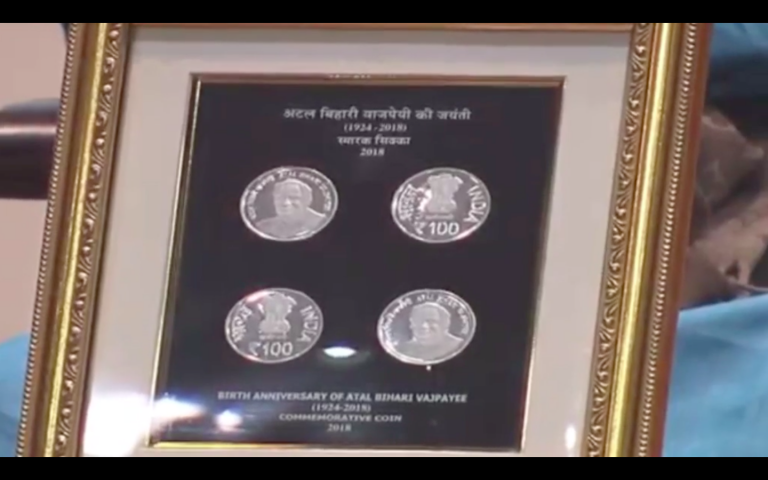
On the eve of former Prime Minister Atal Bihari Vajpayee’s birthday, which is also celebrated as Good Governance Day, Prime Minister Narendra Modi released a Rs. 100 commemorative coin in his memory.
Speaking at the event, Prime Minister Modi said that the party built by Vajpayee has become one of the largest political parties. “For some people, power is oxygen… they can’t live without it. A major part of Atal Ji’s career was spent in the opposition benches but he spoke about national interest and never compromised on the ideology of the party,” PM Modi said.
Adding that Vajpayee thought democracy was supreme, he said, “He built the Jana Sangh but when the time came to rescue our democracy he and others went to Janata Party. Likewise, when the choice was between remaining in power or comprising on ideology, he left Janata Party and formed the BJP.”
In a display of massive hypocrisy, Congress had opposed the recent GST tax rate cuts of several times that would benefit the middle-class during the recently concluded GST council meet. On 22nd December 2018, the Modi government had slashed the GST tax rate for several items with only 28 sin goods remaining in the high 28% category, and surprisingly, it face stiff opposition from Congress, whose President Rahul Gandhi has been calling GST ‘Gabbar Singh Tax’ and demanding rate cuts during his election speeches.
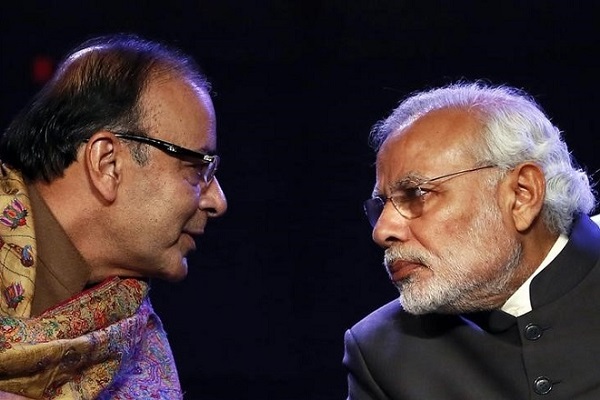
On December 18th, during his keynote speech at Republic Summit, the Prime Minister had asserted that soon, 99% items would be clubbed in the 18% or lower GST tax slab and the Finance Minister, Arun Jaitley had delivered on that promise promptly, within 4 days of that announcement.
However, the passage of the tax cut was not without opposition from the strangest quarters. According to our sources, at the GST council meeting, all three Congress-ruled states namely Rajasthan, Chhattisgarh and Madhya Pradesh opposed the rate cut.
Our sources have confirmed that Congress opposed the rate cuts in general, but on certain items, their opposition was most vehement. Here are the specific items that met the stiffest opposition from the Congress.
1. Cinema Tickets: GST for cinema tickets less than Rs 100 reduced from 18% to 12%, for tickets above than Rs 100, GST reduced from 28% to 18%.
2. Monitor and TV up to 32 inches: Rate cut from 28% to 18%
3. Music Books and vegetables (uncooked or cooked by boiling in water): Music books and vegetables (uncooked or cooked by steaming or boiling in water), frozen, branded and put in a unit container and vegetables provisionally preserved but unsuitable in that state for immediate consumption have been exempted from GST. Music Books went from 12% to be exempt, and vegetables went from 5% to be exempt.
4. Fly Ash blocks: GST reduced from 12% to 5%
5. Video games: Video game consoles and other games and sports requisites falling under HS code 9504 went from 28% to 18%.
6. Digital cameras: Digital cameras and video camera recorders went from the 28% slab to 18% GST slab.
7. Jan Dhan: Services supplied by banks to Basic Saving Bank Deposit (BSBD) account holders under Pradhan Mantri Jan Dhan Yojana (PMJDY) shall be exempted.
The above listed 7 items’ GST rate reduction met with the stiffest opposition from specifically Congress. Most of these items would benefit the middle-class especially the reduction of GST on Cinema tickets, Monitors and TVs up to 32 inch, video games, digital cameras and even vegetables.
Congress opposing items that can benefit the middle class is a classic case of Congress trying to stymie benefit to the people of the country for petty political gains. Congress led by Rahul Gandhi also perhaps opposed the rate cut because the party’s prevalent narrative is that the Modi government has not done much for the middle-class, which is also considered BJP’s core vote bank.
With these rate cuts, the Modi government has taken a giant leap in assuaging the anger of the middle class, and it is no surprise that Rahul Gandhi and his motley party would do everything in their power to hinder that process for electoral gains.