Home Blog Page 6995

Business Standard article on Coal auction revenues ‘falling short’ is sensationalist and poorly argued

A Business Standard article published earlier today suggested that proceeds from coal block allotments and auctions by the Modi government is woefully short of what the government had estimated.

The article titled “After bold estimates, coal auctions, allotments get Rs 56.84 bn in 3.5 yrs”, pitched an amount of Rs 5,684 crore earned till date against a total of Rs 3,35,000 crore that was estimated to flow to states through coal mines e-auctions and allotments over 30 years.

The Business Standard article, which is behind a paywall, makes the following assumptions and assertions:

  1. The government claimed that the potential revenue claimed by the government was Rs 3.35 lakh crore and when these claims were made, 67 coal mines had already been auctioned or allocated. The article does concede that the press release of the government mentioned that this total revenue was to flow over a 30 year period.
  2. The article arrives at an estimated figure of Rs 22,400 crores that “should have been” earned in two years from 67 operational mines and compares that with Rs 5,684 crore earned till date. Here, the author draws a conclusion that all 67 mines are operational and that the revenue cycle would be uniform throughout the period of estimation i.e. he divides 3.35 lakhs by 30 to arrive at an annual figure.
  3. The article assumes that it is the government’s job to put out the ‘potential revenue’ the 83 mines auctioned and allocated by August 2018 could generate if they were working to meet their approved mine plans. A job that the government hasn’t done.
  4. The article says that the government had also claimed that just the first two rounds of the auction (of 29 coal blocks) would see power rates coming down. These rate cuts would be offered (to consumers) by companies bagging coal blocks reserved for the power sector. But the government or its agencies have not put out an assessment of how the benefits of cheaper coal to the power sector have been passed to the consumers through lower electricity tariffs.

Before looking at the numbers closely, it is pertinent to note that some of the assumptions that the author of the article, Nitin Sethi, makes, are too simplistic and thus faulty when employed to suggest success or failure of any big public sector scheme.

The fact that the author assumes that the revenue generation cycle would be uniform and there might not be frontloading or backloading of revenues, is against the common understanding of how any business works. In the case of mines, the revenue generation process is backloaded, as initial phases go into incidents like compliance, capacity building, and making the mines operational.

The same was confirmed by sources in the Ministry of Coal, who further told OpIndia that any delay in operationalisation and non-generation of revenue in the initial year does not represent any loss, but only shifts the incoming revenue from one time period to another.

The data as provided by the ministry officials was not too different when it came to the estimated total revenues over 30 years. The ministry officials put that figure as Rs 3.17 lakh crore as opposed to the Rs 3.35 lakh crore mentioned in the article.

However, they officials pointed out that out of these Rs 3.17 lakh crore, Rs 1.19 lakh crore were towards royalty proceeds i.e. almost 37% of the total proceeds were in form of royalties. The figure of Rs 5,684 crore, which Business Standard tried to pitch against 3.17 lakh crore, however, did NOT include royalties.

The article itself makes mention of that. “These are the proceeds from the auction of 31 and allotment of 58 coal blocks. This revenue is in addition to royalties that the states have always collected from coal mining.” the article says.

Therefore, even if the overly simplistic calculation of the author was employed, the author should have compared the figure of Rs 5,684 crore to an amount that did NOT include the royalties for a fair assessment. Was this an oversight or a deliberate comparison to a much higher number to show ‘failure’, we leave it upon the readers to conclude.

The ministry sources also pointed out that the number of operational mines currently is at 23, which is far below the number of operational mines assumed in the Business Standard article. Since the number of operational mines are less, it is obvious that any comparison with a much higher number would show that the revenues have ‘fallen short’ of the target or original estimates.

If we are to undertake similar simplistic calculations as the author of Business Standard article has undertaken, firstly the figure of Rs 22,400 crore that the article puts as revenue that should have been generated in two years, comes down to Rs 14,112 crore after we remove the royalties part for a fair comparison. And it further comes down to Rs 4,844 cores when adjusted for 23 operational mines as against 67 assumed in the article. So the figure of Rs 5,684 crore, which has actually been accrued, can be argued to be higher than what was originally estimated!

When asked why the number of operational mines were so less, the ministry source explained that after the cancellation of 6 coal blocks, of the remaining 83 coal mines, 33 were Schedule II coal mines i.e. mines which were operational/producing/likely to produce shortly as on date of their cancellation. Remaining 50 coal mines were Schedule I/III coal mines, which are expected to become operational from 2018-19 to 2022-23: 

They clarified that as far as Schedule III coal mines, which are the new mines, the delays have been due to legal and technical issues at the state level. However, for some mines, they are actually ahead of schedule. Thus the article does a very unfair job of assumption about number of mines being operational and revenues being generated in the first couple of years.

Next, when the article assumes that it is the government’s job to put out the ‘potential revenue’ the 83 mines auctioned and allocated by August 2018 could generate if they were working to meet their approved mine plans. It is another fallacious assumption. The estimations are meant to be released by bodies like the CAG or independent research institutions. The government’s job is not to publish presumptive figures on some regular basis.

On the issue of power rates not coming down, the ministry source revealed that these benefits have not been passed on to the consumers yet due to legal troubles.

“Out of the 9 coal mines auctioned for the power sector, 6 coal mines got engaged in litigation as the Successful Bidders of these coal mines have approached the Hon’ble High Court of Delhi challenging the resolution of Ministry of Power for capping the fixed charges of power tariff. Out of the blocks allotted to PSUs (NTPC & State PSUs), 8 are in Court due to dispute with the Mine Developer and Operator. Once these legal hurdles are over the coal supply to the power sector will increase and will have the expected effect on the prices of power,” the ministry source said.

Fact check: Sikkim airport is really India’s 100th operational airport, here is how

While inaugurating the Sikkim airport on 24th September, Prime Minister Narendra Modi said, “Today, it is not only a historic day for Sikkim but also for the country. With the inauguration of the Pakyong airport in the state, the country got its 100th operational airport.” Soon ‘fact checkers’ were working in full force to prove the figure wrong. Unfortunately for the Ministry of Civil Aviation, the figures put by them in the public domain prima facie appear contradictory. Here is the excerpt from the message of Suresh Prabhu, Minister of Civil Aviation and Commerce & Industry from the coffee table book released by the Ministry of Civil Aviation [pdf].

Excerpt from Civil Aviation Ministry coffee table book

Suresh Prabhu claims as of 2013, 76 airports were scheduled for operations by air carriers.

December 2014 reply in Lok Sabha by former Minister of Civil Aviation, Ashok Ganapathi Raju

In December 2014, in a response to a question raised in the Lok Sabha regarding number of operational airports, former Minister of Civil Aviation, Ashok Ganapathi Raju had said there are 125 airports/civil enclaves in the country managed by Airports Authority of India (AAI), of which 94 airports/civil enclaves are operational.

July 2018 reply in Lok Sabha by Minister of State in the Ministry of Civil Aviation, Jayant Sinha

This year in July, Minister of State in the Ministry of Civil Aviation, Jayant Sinha, in response to the question, how many functioning airports are there in the country, he said that the AAI owns 129 airports/civil enclaves in India, of which 101 are operational. [pdf]

OpIndia.com reached out to Ministry of Civil Aviation for clarity on the figures. A senior official from the ministry explained, “There is a difference between an operational airport and an operational airport which has flights scheduled for the common person.” He elaborated, “An airport is operational if it has basic facilities in place, like security, fire station, there is someone manning the airport, keeping it running, whether or not it is open to general public. For example, Bikaner Airport is an operational airport, but there was no scheduled commercial flight for which the general public could buy tickets. Now, with the UDAN scheme of the Central government which aims to increase regional connectivity, the airport is not only operational, it has also got scheduled flights operated by Alliance Air which regularly arrive and depart from the airport. Similarly, Sikkim airport is the 100th such operational airport from which have regular scheduled flights will take off and land. This is the difference between an operational airport and an airport in regular use by the travelling public.”

So essentially, there are over 400 airports, airstrips, flying schools and military bases available in the country of which 130 or so airports are operational, but only 100 (including the newly inaugurated Sikkim Airport) has scheduled flights arriving and departing at these operational airports. Thus, there are now 100 airports available for the common person.

Even after dismissal by France, Rahul Gandhi repeats his lie about the French President on Rafale deal

0

Rahul Gandhi is not only telling one lie after another about the Rafale deal, but he is also repeating them. Perhaps the party has run out of ideas to generate falsehood, that’s why Rahul Gandhi is recycling the lies, even after they have been proven to be fiction.

Addressing a rally in Madhya Pradesh on Thursday, Rahul Gandhi repeated the lie that the French President told him that there is no secrecy clause in the Rafale deal and Indian PM can disclose the details if he wants to do so.


Rahul Gandhi had made this claim in Parliament during the debate on the no-confidence motion against NDA government on July 20 this year.

Immediately after Rahul Gandhi’s ‘explosive’ revelation, France had released a statement denying the claim. The French government said that Rafale deal comes under the security agreement signed between India and France in 2008, and sensitive information about the deal can’t be revealed. Thus proving that Rahul Gandhi had, in fact, lied on the floor of the Parliament.

The statement said:

We have noted the statement of Mr Rahul Gandhi before the Indian Parliament. France and India concluded in 2008 a Security agreement, which legally binds the two States to protect the classified information provided by the partner, that could impact security and operational capabilities of the defence equipment of India or France. These provisions naturally apply to the IGA concluded on 23 September 2016 on the acquisition of 36 Rafale aircraft and their weapons. As the President of the French Republic indicated publicly in an interview given to India Today on 9th March 2018, in India and in France, when a deal is very sensitive, we can’t reveal all details.

French President Emmanuel Macron has also confirmed the existence of the confidentiality pact in the defence deals between the countries in an interview given to India Today. He had said that when a deal involves extremely sensitive business interests, it is not desirable to give out details of such a deal. The details of the commercial agreements should not be made known to rival companies as doing so may hamper the interests of the firms and hence, secrecy is justified, Macron has said.

Rahul had also picked up a French media article and targetted PM Modi recently. The article claimed that former president Francois Hollande has stated that the Indian government had pressurised Dassault to choose Anil Ambani’s Reliance defence. Even this claim was rubbished by both France and Dassault Aviation.

Delhi Commission for Women chief Swati Maliwal wants adultery to continue being crime, gets slammed

Delhi Commission for Women chief Swati Maliwal today expressed her displeasure at the Supreme Court of India verdict on declaring section 497 of the Indian Penal Code on adultery, unconstitutional and calling it “manifestly arbitrary”. Taking to Twitter, Maliwal said that decriminalising section 497 will give licence to married couples for adulterous relationships.


Calling it ‘anti-women decision’, Maliwal said that instead of making the law gender neutral, it was decriminalised. However, her observation didn’t quite go down well with Twitter users who explained it to her that while section 497 is decriminalised, adultery is still a valid ground for divorce but not for criminal prosecution.


Earlier, the law didn’t punish the woman for committing adultery, but instead, the lover could be punished. That way, this step is one more step towards gender neutrality.

A Twitter user even explained to her that the sanctity of marriage she talks about essentially depends on the couple and that it means nothing if one or either of them doesn’t respect and love each other to cheat.

‘Liberals’ have a meltdown after SC refused to refer the Ayodhya dispute to a larger bench

Rajiv Dhawan, counsel for a petitioner in the Ayodhya dispute has expressed his dissatisfaction with the Supreme Court’s latest verdict on the matter. As we have reported earlier, in a majority judgment, the Supreme Court refused to refer the Ram Janambhoomi case to a larger constitution bench. According to Dhawan, the majority judgment will please the majority.


Ashok Swain, who is a professor in Sweden, went so far as to assert that the Supreme Court was now divided along religious lies. His remark perhaps stems from the fact that both the judges who endorsed the majority judgment were Hindus and the only judge who dissented is presumably a Muslim.


Like Dhawan, liberals appear mighty displeased with the verdict which is expected to hasten the resolution of the dispute. Journalist Rajdeep Sardesai speculates that the verdict on the Ram Janambhoomi case would be reached before the 2019 General Elections, thus benefiting the BJP electorally.


Shahid Siddiqui took an issue with bhakts of Shri Rama celebrating the Court’s verdict. He declared that Ram Janambhoomi is ‘Masjid land’.


Journalist Seemi Pasha asserted that the BJP had argued that Mosques are not essential to Islam before the Supreme Court while Haryana CM Khattar issued orders that namaz should be offered only at mosques. She says the BJP should make up its mind. However, one fails to see the connection between the two and she comes off as more confused than anything else.


Another journalist wondered why Mosques are not required for prayers. Perhaps, she isn’t aware that the Ismail Faruqui judgment is concerned with the acquisition of religious places by the state and observed that offering namaz at a mosque wasn’t integral to Islam as long as the Masjid did not hold any special significance in Islam.


Editor of the pro-AAP mouthpiece, Janta Ka Reporter, Rifat Jawaid is particularly displeased with the judgment.


As said before, the judgment by the Supreme Court today is likely to hasten the resolution of the biggest dispute in the country by a great deal. It is rather unfortunate that one section of the political spectrum is very disgruntled by it.

Congress in trouble as many regional leaders distance themselves stating problems with the party’s current policies

0

Trouble seems to be mounting for the Congress party ahead of 2019 Lok Sabha elections, as their veteran leader and Uttar Pradesh Congress Committee Vice-President Mani Shankar Pandey, who has been closely associated with the party for over 45 years, has resigned from the party.

The veteran attributed the party’s desperation to regain power, and stated that the party has now been rendered direction-less and deviating frequently from its principles.

While sending his resignation letter to the Congress president, Rahul Gandhi, Manishankar said that the attitude of the Congress leadership had forced him to break his ties with the party. He further stated in his letter that the coalition-politics (Mahagatbandhan) which the party is resorting to in its desperation to attain power is against the party ideologies.

The veteran leader while reconciling his resignation said that he is deeply saddened as today’s Congress is not the Congress which once followed the ideologies laid by Jawaharlal Nehru, Indira Gandhi and Rajiv Gandhi.

Slamming the Congress for appointing actor turned politician, Raj Babbar as a state president, Manishankar lambasted saying that there is no room left for experienced, dedicated and old members of the party since the most important offices have been acquired by the non-Congressmen.

Recently, in a similar setback, senior Congress leader and 4 times Meghalaya CM DD Lapang had resigned from the party after citing frustrations due to faulty party policies. Lapang had stated in his letter that Congress is now sidelining senior leaders and phasing them out.

Carrying on the latest trend four suspended Bihar Congress leaders had in February bid goodbye to the Congress and joined Nitish Kumar led Janata Dal (United).

Similarly, in the month of April, we reported the Youth Congress leaders from the Dakshin Kannada district submitted mass resignations over the party’s decision to deny a ticket to Youth Congress president of Dakshina Kannada District.

As per the general secretary of the Dakshina Kannada District Youth Congress Committee – Kiran Kumar, the denial of ticket to Rai had ‘pained’ the district’s youth leaders. As a result, he claimed youth leaders weren’t showing much interest in working for the party, which resulted in the mass resignations.

During the same time, we also reported Congress MLC Dinesh Pratap Singh, MLA Rakesh Pratap Singh and the Zilla Panchayat chairman Awadhesh Pratap Singh, from Rae Bareli, which is one if the key constituency of the Congress, quitted the party citing neglect from top leaders of the party despite winning consistently from the constituency.

Did anti-Aadhar brigade lose interest in Cambridge Analytica because Congress’ name came up?

0

The historic Supreme Court verdict on Aadhaar is finally out. And with it, the matter of data protection and privacy is back in the public debate. And while data privacy is a something very serious, I can tell you which people are not serious.

Those would be the entire food chain of Aadhar privacy hawks, starting from the lowly social media trolls to the furious talking heads on TV and all the way to ‘activist lawyers’ of Lutyens Delhi who file the same case over and over again.

There is a simple litmus test to spot these anti-Aadhaar trolls (from social media to mainstream media to lawyers). If they are not talking about Cambridge Analytica, they are just trolls. They don’t care about data protection and/or privacy. At best they are mindless critics, out to stop Aadhaar simply because Modi seized upon it as a key tool to clean up the system. At worst, they are in the pay of vested interests who find their settled fiefdoms to be under threat from the very same cleanup.

Now, the concept of data theft, which stems from the idea of “data as property” is somewhat new and deserves to be explained in simple words. Let me make a humble attempt to do just that.

Simply put, what is property? Several thousand years ago, the only possible property you could own were things like land, cattle, crops, pieces of gold and silver, etc.

Then, as human society grew more complicated, more sophisticated notions of a property had to be defined and protected. For example, if you wrote a book or a poem, no one else could claim it as theirs. If you came up with an idea for a new technology, no one else could profit from it without your permission. This was ‘intellectual property’. And in order to protect intellectual property, copyright laws and patent laws were born.

Today, the modern world has given rise to another new notion of property: that of your personal data. This not only includes your name and age but also your personal preferences: what you like to eat, what you like to watch, where you like to travel. Everything that makes you the person that you are.

And this information is very valuable in a commercial sense. For example, online shopping websites would love to know about your choices in clothes, books, electronics and so on. It is not hard to see that a political party would want to know how you think so that they can deliver tailor-made messages to you.

This is the concept of ‘your data as your property.’ Platforms such as Facebook, where users put out large quantities of their personal information, therefore claim publicly that they will not allow unauthorized harvesting of your data by third parties. They say that ‘data is the new gold.’

Which is what makes the Cambridge Analytica scandal so serious. A shady corporation harvested from Facebook the personal data of hundreds of millions of users. And we will probably never know exactly how many people had their data stolen and who exactly this data was sold to.

So how is it that India’s anti-Aadhar volunteer army never spoke about Cambridge Analytica? The Aadhaar consists of giving your name, age and biometric data to our democratically elected government. The benefits of Aadhaar in cutting out waste/theft from welfare schemes and its use as an anti-corruption tool couldn’t be more obvious.

None of these upsides is present in the case of the Cambridge Analytica scandal. The amount of data that people put out on Facebook is several orders of magnitude bigger than anything they have given for Aadhaar. We all know (lots of) people who put out every little detail of their lives on Facebook and many of us might be guilty of it ourselves. And all this data might have been stolen by a shady foreign corporation who might have sold it to anyone.

What did the anti-Aadhaar troll army here in India say about Cambridge Analytica? Silence.

You might remember that there were some initial absurd efforts to link BJP to Cambridge Analytica by means of some son or daughter of some BJP ally. But then just as the big details of the story came out in hearings before the UK Parliament, the Cambridge Analytica story vanished completely.

Could this have been the reason why?

Untitled.png

This seems to have been the precise moment when Indian media lost all interest in the Cambridge Analytica story.

Even a picture of a clearly visible Congress election symbol in Cambridge Analytica CEO’s office which was found in a 2017 BBC Documentary failed to revive media interest in the story.

Untitled.png

The story had everything. The video grab was for everyone to see. It couldn’t have been more prominent.

Untitled.png

And yet, somehow the media still managed to lose interest in the story.

We will never know if Cambridge Analytica actually stole data for the Congress Party. I guess we will just have to accept the possibility that the CEO of Cambridge Analytica randomly puts up in his office posters of organizations that he is not dealing with in any way.

Just the way we will have to accept that Cambridge Analytica has now closed down, it’s owners have voluntarily destroyed their mountain of data goldmine, given up all worldly possessions and gone into the forest in search of enlightenment. We will never know.

What we do know, however, is how our domestic data privacy warriors behaved about the whole Cambridge Analytica scandal the moment the name of the Congress came up.

Telangana : IT raids on state Congress Working President Revanth Reddy over misappropriation of funds

0

The Income Tax officials have conducted raids on Telangana Pradesh Congress Committee (TPCC) working president, A. Revanth Reddy’s properties in Hyderabad on Thursday morning.

According to the reports, IT officials reached Reddy’s residence early in the morning and conducted raids at more than a dozen places related to Revanth Reddy and his brothers. The raids were also conducted at his Kodangal residence, where he was residing yesterday during his campaigning.

The Income Tax raids took place at the wake of some alleged misappropriation of funds related to an infrastructure company named Bhupal Infrastructure Pvt Limited belonging to Revanth Reddy’s brother. Reportedly, the company is involved in various irrigation and road construction projects in Telangana and the officers are investigating alleged mismanagement of accounts of the company and unaccounted money transactions done by the firm.

The Congress, however, sees a conspiracy against its party leader and alleged that the Income Tax raids were aimed at preventing Revanth Reddy and other party leaders from campaigning in Telangana. Uttam Kumar Reddy, Congress state chief alleged that these raids are conducted owing to a tacit understanding between the TRS government of Telangana and the Narendra Modi government at the Centre.

Revanth Reddy who was appointed as one of the working presidents of Telangana Congress is known to be the face of Congress in the state. Revanth Reddy has been very critical of the K Chandrashekar Rao government of Telangana lately. The Congress leader was earlier with the Telugu Desam Party (TDP) and was jailed in cash for vote scam.

It is notable here that after the TRS cabinet dissolved the Telangana state assembly, the state is now under a caretaker government and the Election Commission is soon to announce the dates for the next assembly elections in the state.


Day after court orders FIR against Congress leaders in Vyapam case, Rahul Gandhi raises it

0

There is no end to gaffes by Rahul Gandhi. On a day after a Bhopal court had directed police to FIR against Congress leaders Kamal Nath, Digvijay Singh and Jyotiraditya Scindiya on the accusation of submitting forged documents in the Vyapam Scam case, Rahul Gandhi mentioned the Vyapam to attack BJP. Speaking at a rally in Chitrakoot, Rahul Gandhi took on the Madhya Pradesh government, he said that the state is number one in scams, alleging that Madhya Pradesh Chief Minister Shivraj Chauhan has given the biggest scam in India, and the Vyapam scam has damaged the education system of the state from inside.

Perhaps he is not aware that CBI has given clean chit to Chauhan, and now his own party leaders are facing the law for allegations of producing fake evidence to implicate the MP CM in the case. Not only that, Madhya Pradesh Congress spokesperson KK Mishra was awarded a jail sentence of two years in a defamation case filed by MP CM, for his comments alleging Chauhan’s link with the scam.

The only allegation against BJP that Congress has is that the CM had tampered with an Excel sheet which was recovered from a computer during the investigations in the scam. But the Forensic Science Laboratory has clarified that there was no tampering with the data, and the court had already rejected Congress claim. But still, Congress was making the same allegations, which has resulted in FIR against its top 3 leaders in the state.

Not just that, despite the clarification from all sides that the share of Reliance in Rafale’s offset business is no more than ₹700 crore, he continued with the lie that Modi has gifted his friend ₹30000 crore. He also lied about the Sardar Patel’s statue being ‘made in China’, despite the fact that it has been debunked by OpIndia back in October 2015 itself.

Before the rally, Rahul Gandhi visited Kamtanath temple, continuing with party’s soft-Hindutva strategy of ‘temple run’ ahead of MP elections.

Supreme Court declines to refer the Ayodhya dispute to a larger bench in a majority judgment

0

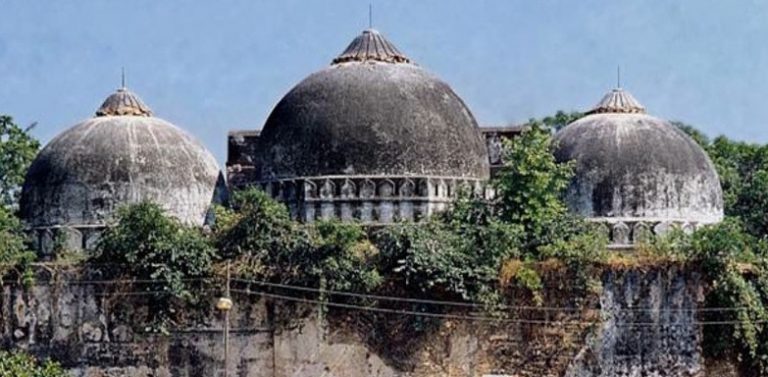
In a crucial judgment, a three-Judge Bench of the Supreme Court has ruled that the Ram Janambhoomi case will not be referred to a larger bench. Justice Abdul Nazeer disagreed with the majority opinion.


The judgment was in connection with the 1994 Ismail Faruqui verdict which dealt with the acquisition of religious place by the state. The verdict had concluded that offering Namaz at the Mosque was not integral to Islam as long as the Masjid did not have any particular significance in Islam.

Justice Nazeer, the judge who dissented, asserted that a constitutional bench is required to answer whether a mosque is an integral part of Islam. He was of the opinion that contentious observations made in the Faruqui verdict have influenced the Allahabad High Court’s decision in the Ayodhya dispute.


Senior advocate Rajeev Dhawan, representing a litigant from the Muslim side, had argued for the reopening of the 1994 verdict and had pleaded for the entire case t be referred to a larger constitution bench. He had pleaded, ” A mosque is forever, it does not lose its significance and remains a place of worship even after it is demolished.”

The bench also clarified that observations in the Faruqui verdict will not impact the title dispute in the Ayodhya dispute. The bench stated that the Court will pronounce the order tomorrow on whether the Faruqui verdict requires reconsideration by a larger bench.