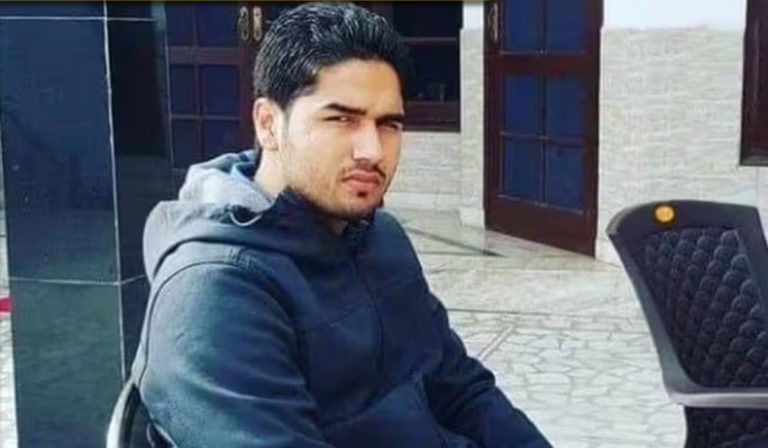
The Ministry of External Affairs (MEA) on Thursday called on Canada to extradite Arsh Dalla, a Khalistani terrorist to “face justice in India.”
Canadian authorities have arrested designated Khalistani terrorist Arshdeep Singh Gill, alias Arsh Dalla, following a violent shooting incident in Milton, Ontario, according to a report in local Canadian television outlet CTV.
In response to media queries regarding the arrest of a designated terrorist Arsh Dalla in Canada, MEA Official Spokesperson, Randhir Jaiswal said, “In view of the recent arrest, our agencies will be following up on an extradition request. Given Arsh Dalla’s criminal record in India and his involvement in similar illegal activities in Canada, it is expected that he will be extradited or deported to face justice in India.”
Dalla, has been charged in a case related to the shooting in Ontario on October 28, as per a report by Adrian Ghobrial on CTV.
“We have seen media reports circulating since November 10 on the arrest in Canada of proclaimed offender Arsh Singh Gill alias Arsh Dalla, the de facto chief of the Khalistan Tiger Force. Canadian print and visual media have widely reported on the arrest. We understand that the Ontario Court has listed the case for hearing,” read the press release of the MEA.
Arsh Dalla is a proclaimed offender in over 50 cases of murder, attempt to murder, extortion and terrorist acts including terror financing. In May 2022, a Red Corner Notice was issued against him.
“He was designated in India as an individual terrorist in 2023. In July 2023, India requested the Canadian government for his provisional arrest. This was declined. Additional information was provided in this case,” added the release.
Dala is a close aide of Hardeep Singh Nijjar, who was killed outside a Gurudwara in Surrey in June 2023. In January 2023, the Union Home Ministry had declared him a “terrorist” under the Unlawful Activities (Prevention) Act. He is among the most wanted terrorists in the country and has been charged in various cases of targeted killings and extortion.
A separate request was also sent to Canada under the Mutual Legal Assistance Treaty (MLAT) to verify Arsh Dalla’s suspected residential address, his financial transactions to India, moveable/immovable properties, details of mobile numbers etc- all of which were provided to Canadian authorities in January 2023. In December 2023, the Department of Justice of Canada sought additional information on the case. A reply to these queries was sent in March this year.
Dalla had come to Canada from Punjab in 2018 and lived in Surrey as per a report in Canada’s Globe and Mail newspaper, which said he is the reported head of the Dalla Lakhbir gang, accused of using Canada as a base for a violent extortion ring in Punjab.
The MEA’s request comes amid tensions between India and Canada, with India denying allegations of involvement in the killing of Nijjar.
(This news report is published from a syndicated feed. Except for the headline, the content has not been written or edited by OpIndia staff)
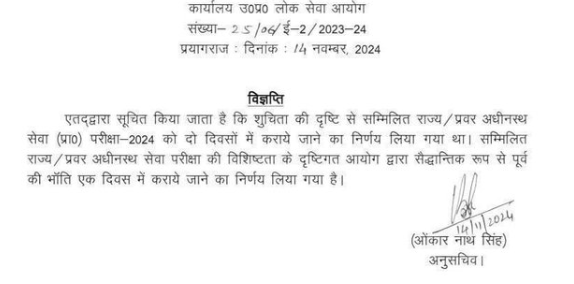
In response to protesting candidates’ demands, the Uttar Pradesh Public Service Commission (UPPSC) on Thursday, 14th November, decided to conduct the Provincial Civil Service (PCS) Preliminary Exam in a single day. This decision follows widespread protests in Prayagraj, where students demanded that the exam be held in a single day and single shift.
As per the reports, the preliminary exams for Review Officers (ROs) and Assistant Review Officers (AROs), which were planned to take place in three shifts on December 22nd and 23rd, have been postponed. Similarly, the PCS Exam, which was initially scheduled for December 7th and 8th in two shifts, will now be held on a single day.
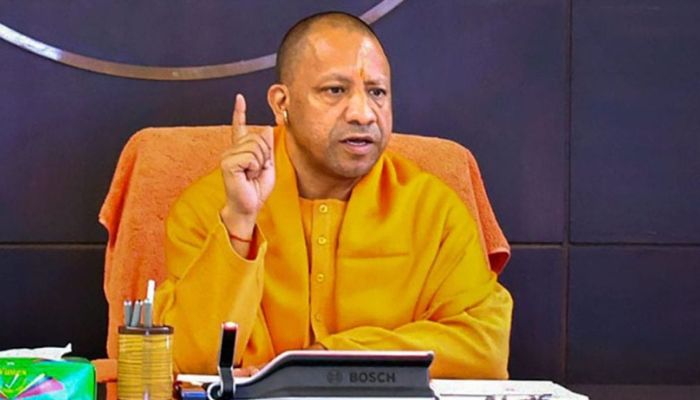
The students had earlier assembled outside the UPPSC building in Prayagraj, asking that both tests be administered in a single shift on the same day. Reacting swiftly to that, the Yogi Adityanath government decided that the exam will be held on the same day in a single shift.
Uttar Pradesh Chief Minister Yogi Adityanath acknowledged the students’ concerns and directed the UPPSC to interact with the demonstrators. He asked the Commission to make the necessary adjustments and work with students to finalize the decision to hold the PCS Preliminary Examination 2024 on a single day.
Student demonstrations regarding this issue called for a ‘one day, one exam’ policy for UPPSC admission exams. Several videos of the protest emerged showing large numbers of students storming through barricades in Prayagraj to reach Gate No. 2 of the commission, challenging the UPPSC’s decision to hold exams over two days.
UPPSC secretary Ashok Kumar had earlier taken cognizance of the protests but had backed the schedule of exams for two days. “For the PCS exam, 5,76,000 candidates are registered, but suitable examination centers are available for only 4,35,000 candidates across all 75 districts. In such a situation, conducting the examination over two days is a necessity,” he had said. However, the schedule now has been changed.
Meanwhile, the Prayagraj Police reported that some criminal miscreants infiltrated the student demonstration and attempted to mislead them. Deputy commissioner of police (City) Abhishek Bharti said, “Some miscreants with criminal tendencies entered among 50-60 students and tried to stop the students who were communicating with the administration. We will take legal action against these ‘miscreants’. Also, students who protested by blocking the road in front of the Commission were requested to go to the designated protest site and protest peacefully.”
On Thursday, November 14th, a video went viral on social media in which the Khalistanis could be seen asking the Canadians to leave their own country. A viral two-minute video of a ‘Nagar Kirtan’ in the country Khalistan supporters called Canadians “invaders”, telling them to “go back to England and Europe”. “This is Canada; our own country. You (Canadians) go back. White people should go back to Europe, England, and Israel. This is our country. Simon go back. We are the owner of this country,” people in the procession could be heard yelling.
Khalistanis march around Surrey BC and claim “we are the owners of Canada” and “white people should go back to Europe and Israel”. How are we allowing these r*tards to shape our foreign policy? pic.twitter.com/9VmEnrVlGP
The calls were made at a Khalistani event at Surrey in British Columbia, an epicentre of Khalistani movement in Canada.
This is probably after the Prime Minister of Canada, Justin Trudeau, for the first time, explicitly acknowledged that pro-Khalistani elements were present in Canada and stressed that these individuals “never represented the Sikh community as a whole.” His remarks were made during the Diwali celebrations at Ottawa’s Parliament Hill.
The statement came amidst rising tensions between India and Canada. The diplomatic relations between the 2 countries deteriorated following baseless allegations against Indian agents, diplomats, and top officials, including Home Minister Amit Shah, of being involved in “criminal activities on Canadian soil” in the backdrop of the murder of Khalistani terrorist Hardeep Singh Nijjar in June 2023.
In his statement, Trudeau said, “There are many supporters of Khalistan in Canada, but they do not represent the Sikh community as a whole.”
The diplomatic relations between India and Canada have been strained since Trudeau accused Indian agents of killing Khalistani terrorist Hardeep Singh Nijjar during his speech in the Canadian Parliament in September 2023. India firmly denied the allegations, stating that no credible evidence was shared by Canadian counterparts with the Indian government despite repeated requests. The dispute escalated in the following months, leading to the expulsion of several diplomats from both sides.
As reported earlier, Trudeau’s government has been lenient towards Khalistani terrorists and pro-Khalistani elements for electoral gain for a long time. India has been cautioning Canada about pro-Khalistani elements but there have been no concrete action and requests for extradition of Khalistani terrorists have been repeatedly rejected. The inaction from Canadian law enforcement agencies has given a free hand to Khalistani elements to threaten and attack Indian diplomats on Canadian soil. Recently, they barged into the Hindu Sabha Temple in Brampton and attacked Hindu devotees, which led to considerable backlash not only from the Hindu community but also from Canadians who found themselves in the middle of a dispute that flourished because the Canadian government provided shelter to Khalistani elements.
Indian intelligence agencies meanwhile have raised concerns, characterizing recent developments in Canada as part of a ‘new normal,’ where Khalistani groups appear to be expanding their influence without restriction. Reports indicate that some Hindu communities are being pressured for protection money, and there is a growing sense of unease among Canadian residents in certain areas.
They also believe Trudeau is aiding Khalistani groups to assure MP Jagmeet Singh’s support in next year’s election. Trudeau’s popularity has dropped and he is trying to keep his administration together, especially after acknowledging that his claims against India were based only on intelligence inputs and that he has “no concrete evidence”.
After targeting Indians, and their temples, the Khalistani elements now have found a new foe, those being Canadian themselves. The sudden change in Trudeau’s stance on the presence of Khalistani elements and the distinction between them and the Sikh community and further the Khalistanis seeing Canadians as their ‘enemies’ may have an effect on the upcoming General Elections in Canada.
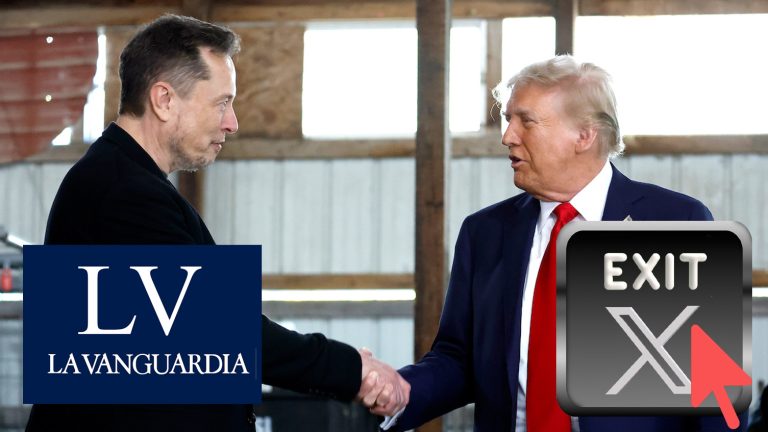
Spanish newspaper La Vanguardia has announced that it will no longer publish tweets directly on the social media platform X, formerly known as Twitter, and will suspend its accounts.
In a statement on its official website on Thursday, the Spanish newspaper said, “La Vanguardia will stop publishing tweets directly on social network X and will suspend its accounts. This social network has become a platform for conspiracy theories and misinformation, ideas that have a way of multiplying their reach in what was once Twitter, which they would not have if it had effective and reasonable moderation.”
“This newspaper notes that ideas that violate human rights, such as hatred of ethnic minorities, misogyny and racism, are part of the viral content distributed on X, where they become viral and capture more user time in order to earn more money from advertising inserts,” the statement added.
In addition to the decision to stop publishing on X, this newspaper said that it will continue to monitor people, entities, companies and institutions on this network to promptly inform its readers of messages and debates that may occur on it.
Notably, the newspaper said that its decision comes as Donald Trump announced he would name Elon Musk and former Republican candidate Vivek Ramaswamy to lead a new Department of Government Efficiency (DOGE) aimed at cutting back on US government spending.
The decision by the Spanish newspaper comes after British news publisher The Guardian on Wednesday said that it is quitting the X, citing billionaire owner Elon Musk’s influence during the US presidential election process. The Guardian in a statement said that the publication said it will no longer post from any official Guardian accounts on the site. Further, it said that the recent US election underlined its view that X is a “toxic” platform and that Musk uses it to influence politics.
Last year, the US media organisation National Public Radio [NPR], stopped posting on X after the social media platform labelled it as “state-affiliated media.”
PBS, a US public TV broadcaster, also suspended its posts for the same reason.
Meanwhile, after the 2024 United States Presidential election that confirmed Trump’s victory, social media platform X witnessed its largest user exodus since Elon Musk acquired it in 2022, with users migrating to alternatives like Bluesky, CNN reported.
More than 1,15,000 US users deactivated their X accounts the day after the election, and this figure only includes those who deactivated through the website, excluding mobile app users, CNN reported citing a report from digital intelligence platform Similarweb.
This shift follows Musk’s influential role in the US presidential election. Bluesky’s user base has doubled in 90 days, reaching 15 million after gaining 1 million new sign-ups in a single week.
(This news report is published from a syndicated feed. Except for the headline, the content has not been written or edited by OpIndia staff)
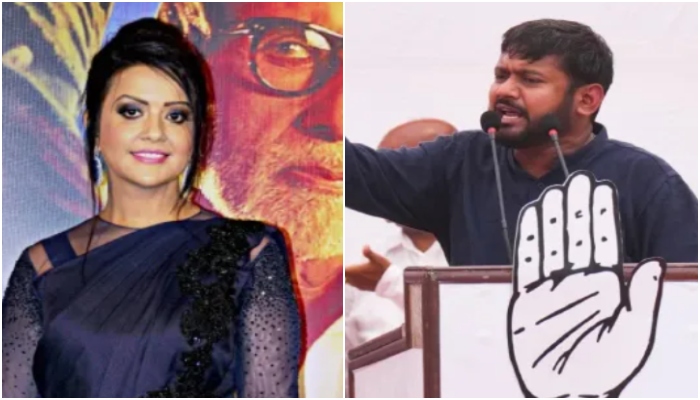
On Wednesday, 13th November, Congress leader Kanhaiya Kumar made derogatory and alleged sexist remarks against Dy CM Devendra Fadnavis’s wife as he addressed a rally in the Nagpur district of Maharashtra ahead of the polls. Kanhaiya accused Fadnavis of spreading divisive discourse and questioned why the public ought to be responsible for saving religion while his wife could be busy making Instagram reels.
The statement was aimed at Fadnavis, who is contesting for the Nagpur Southwest constituency. The former Chief Minister is up against Congress candidate Prafulla Gudadhe. Kanhaiya Kumar, without specifically naming Amruta Fadnavis, targeted her for being extremely active on social media.
“If this is a ‘dharma yudh’ (religious war), then question any leader who gives you speeches about saving religion. Ask them if the leader’s own sons and daughters will also join in the fight to save religion. How is it possible that the public saves religion while the leader’s children study abroad? How can the public be responsible for saving religion, while the Deputy Chief Minister’s wife makes Instagram reels?” Kanhaiya Kumar said indicating that former CM’s wife or family members of BJP leaders didn’t work to save religion.
BJP took cognizance of the event and slammed the Congress party for being a hypocrite. BJP spokesperson Shehzad Poonawalla commented on the event and slammed Kanhaiya Kumar for insulting Amruta Fadnavis. He said that on the one hand Congress believes in ‘Ladki hu lad sakti hu (I am a woman and I can fight) and on the other hand, they insult women. “This is what is Congress,” he said.
Sun le Naxali Afzal Guru Samarthak Congress ke Kanhaiya Kumar
Teri itni himmat ki Maharashtra ki beti ka apman karega
Amruta Fadnavis ji ka yeh apman ek ek Marathi ladki behen ka apman hai
— Shehzad Jai Hind (Modi Ka Parivar) (@Shehzad_Ind) November 14, 2024
“How dare Kumar, who is the supporter of terrorists like Afzal Guru insult Maharashtra’s daughter, our sister, and former CM’s wife? The Congress should have an answer to this when they say women can fight and should stand for themselves,” he said.
However, Congress defended the remarks made by Kanhaiya Kumar saying that there was nothing ‘insulting’ that Kumar said. Congress leader Pawan Khera said, “He did not insult anyone.”
मुंबई: महाराष्ट्र के उपमुख्यमंत्री देवेंद्र फडणवीस की पत्नी के बारे में कांग्रेस नेता कन्हैया कुमार की टिप्पणी को लेकर कांग्रेस नेता पवन खेड़ा ने कहा, "उन्होंने किसी का अपमान नहीं किया।" pic.twitter.com/0tj2NFHGj1
Meanwhile, Kumar also targeted Jay Shah, who chairs the International Cricket Council (ICC) and is the son of Home Minister Amit Shah. “Will Amit Shah’s son, Jay Shah, join in to save religion or not? He is forming IPL teams in BCCI, while we are being told to make teams on Dream 11. They show dreams of becoming cricketers, but we end up as gamblers,” he said.
Kanhaiya Kumar, the controversial JNU student leader has been a part of several controversies to date. From being that of his close aide accused him of being a ‘liar’ and ‘casteist’, to the worst when Kanhaiya was accused of flashing his d***k to a woman. He was further arrested by the Delhi Police in the 2016 Delhi sedition case. This is after an event was organized by JNU students in the university campus to commemorate the second anniversary of the hanging of Parliament attack convict terrorist Afzal Guru.
We had earlier also reported how Kanhaiya Kumar had used a disreputable journal, which is blacklisted internationally, to get his article published for PhD thesis submission.
The 288 legislative assembly seats in Maharashtra will go to the polls in a single phase on November 20th while the counting of votes will take place on November 23rd.
India’s exports surged by over 19 per cent in October. As per the Ministry of Commerce and Industry, data merchandise exports were up by over 17 per cent while services exports were up by over 21 per cent.
Commerce Secretary Sunil Barthwal was upbeat on the trade data and said, “It has been an extremely good month for us, and not only our overall export progress has been extremely good, but if you look at April to October, this has been the highest ever non-petroleum exports from this country ever. So we have broken all the records.”
In India’s trade history, from April to October this is the highest so far. Between April and October 2024, India’s total export stands at around USD 468.27 billion, up 7.28 per cent year-on-year.
On USD 800 billion for FY25, Commerce Secretary, said, “I hope that if we continue in this manner, then definitely, we are going to cross more than USD 800 billion of our exports in this year, and we will break the records.”
The Commerce Secretary said that the government’s strategy to focus on exports has yielded results.
“Our strategy of focusing on, certain sectors, our strategy of focusing on certain countries, is perhaps now yielding results. It is also that our manufacturing competitiveness, which is coming because of our focus on PLI is now yielding results” said Barthwal.
Government focus on key sectors like manufacturing, engineering, textile etc has helped in boosting exports.
He said, “Engineering goods exports have increased by more than 39 per cent, electronic goods export have increased by more than 45 per cent, organic and inorganic chemical exports have increased by more than 27 per cent and thankfully now, because of the export controls which we had in view of the food security on rice, rice exports have also increased by more than 85 per cent.”
He added, “The best part is that if you look at our labour-intensive exports, particularly readymade garments, of textile they have also increased by more than 35 per cent. So all our focus sectors are doing extremely well.”
However, the trade deficit too widened from USD 60.02 billion to USD 63.24 billion in 2024-25 which remains a concern for the government. The overall trade deficit has lowered from USD 121.6 billion in 2022-23 to USD 75.6 billion in 2023-24.
(This news report is published from a syndicated feed. Except for the headline, the content has not been written or edited by OpIndia staff)
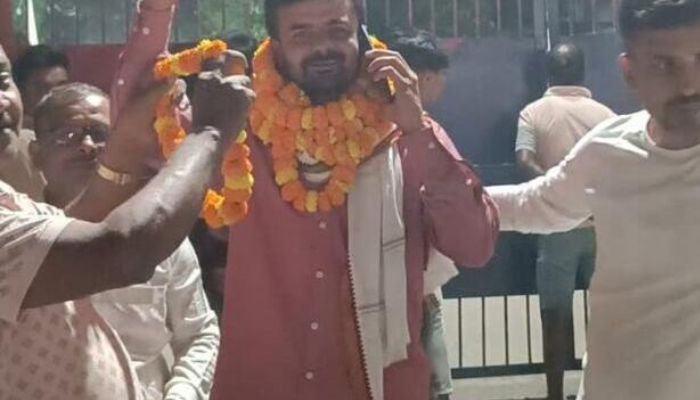
A month after his arrest over allegedly “inciting” a crowd of flood-affected locals, journalist Mithun Mishra has been released from jail on 12th November. Mishra, widely known as the “Manish Kashyap of Muzaffarpur” had also exposed the Christian conversion activities going on in the Aurai block of Muzaffarpur. Mithun Mishra’s exposé on the conversion camps being set up to lure poor Hindus to Christianity is said to have played a key role in his arrest.
Mithun Mishra runs a YouTube channel named “Bihar Wala News” and has amassed over 66,000 subscribers.
Mishra’s arrest came just a few days after he confronted the Christian missionaries running their camps in Aurai. As reported earlier, Mithun Mishra was also reporting on the extreme floods in Bihar, highlighting the damage caused by the surging Bagmati River, which had rendered several locals homeless. It was reported that after not receiving adequate relief measures, the flood victims staged a protest at Gopalpur Chowk in Muzaffarpur. During the protests, the flood-affected people and the police had clashed leaving many on both sides injured.
The police said that Mithun Mishra, who recorded the incident, allegedly instigated the crowd, resulting in an assault on police officers. He was charged under BNS sections 74, 76, 109, 115(2), 118(1), 121(1), 121(2), 132, 190, 191(1), 191(2), 303(2), 351(2), and 352.
After coming out of jail, Mithun Mishra said that if exposing the illegal Christian conversion activities is a crime, he will commit this crime again. “I went to jail and came out. My system has been destroyed. Me and my family are shattered what crime have I committed? Was showing how Christian missionaries were operating to convert the people of the Hindu faith into Christianity a crime?” Mishra said adding that if reporting the ordeal of flood-affected people and the administration’s failure is a crime, he will continue to commit it.
Donald Trump’s victory in recent US elections has pushed the left-liberals across the world into delirium. The left-liberal media is finding it hard to fathom that despite their well-oiled propaganda machinery at work, the Americans handed a historic triumph to the Donald. On Wednesday, the 13th of November, UK-based left-wing media outlet The Guardianannounced that it would stop posting on social media site X (formerly Twitter). The Guardian further blamed X’s new owner and Trump supporter Elon Musk for the leftist propaganda outlet’s departure from the popular social media platform.
The leftist propaganda outlet claimed that after the change of ownership, the micro-blogging site now promotes or distributes disturbing content, “including far-right conspiracy theories and racism”. The statement stated, “The US presidential election campaign served only to underline what we have considered for a long time: that X is a toxic media platform and that its owner, Elon Musk, has been able to use its influence to shape political discourse.”
The Guardian archived its X posts on 13th November 2024
Contrary to the expectations The Guardian must have had, the X users expressed their joy over The Guardian’s decision to quit posting on X with many calling it a “good riddance”. Some X users also pointed out that The Guardian fears that X’s Community Notes would not let the British publication peddle its lies and propaganda unchecked.
One X user said, “Scared of getting called out for your propaganda and lies? The news happens on X. Which means you are no longer the media.”
Scared of getting called out for your propaganda and lies?
Meanwhile, Spectator columnist Samantha Smith said, “You might be able to disable comments and refuse feedback on your website. But on X, all journalism is subject to scrutiny and disapproval. You simply hate that people they disagree with are allowed to exist and have a voice here. So, you’re jumping ship. What poor journalism.”
You might be able to disable comments and refuse feedback on your website.
But on X, all journalism is subject to scrutiny and disapproval. You simply hate that people they disagree with are allowed to exist and have a voice here.
The Post Millennial’s senior editor Andy Ngo pointed out how The Guardian has published fake news over the years, “This “quit posting on X” decision could be a gimmick to lure people, particularly the Trump-hating lot, into downloading its app and donating to the anti-Trump campaign. This could possibly be true, given The Guardian’s dwindling readership”, he said.
“Left-wing newspaper The Guardian has announced it is rage quitting X because of Donald Trump and @elonmusk. But it appears to be a cynical stunt to direct people to download its app and to donate to its anti-Donald Trump campaign. Blinded by its left-wing bias, the paper has published a number of fake news articles over the years, such as when it published lies by reporters @loisbeckett @SamTLevin claiming the Wi Spa trans indecent exposure incident was a hoax by women,” Ngo said adding that while The Guardian called the Wi Spa trans indecent exposure incident a ‘hoax’, charges were filed against a serial sex offender in this case by the Los Angeles Police Department.
Left-wing newspaper The Guardian has announced it is rage quitting X because of Donald Trump and @elonmusk. But it appears to be a cynical stunt to direct people to download its app and to donate to its anti-Donald Trump campaign.
While The Guardian claims to offer “brilliant” journalism, its past articles suggest that its journalism is anything but brilliant. An X user called out the “hard-hitting” journalism of The Guardian and attached screengrabs of some of the ‘gems’ of the leftist propaganda outlet wherein its columnists peddled hatred and furthered their leftist-woke agenda.
Make sure to download the Guardian app for hard hitting journalism like this! pic.twitter.com/IVfbciT1su
Is The Guardian quitting X due to ‘toxicity’ and ‘racism’ or because it can no longer shape and control political narratives?
The Guardian’s decision to stop posting on X under the pretext of it becoming a ‘toxic’ platform is ironic given the propaganda publication’s one-sided advocacy and its own political-ideological bias. The leftist propaganda outlet’s contention that X is now a battleground for toxic discourse, manipulated by its owner Elon Musk, is conveniently skewed.
What The Guardian fails to admit is that its resentment stems not from the platform’s supposed toxicity, but from the fact that it no longer has control over the political narratives it finds palatable. It is unfathomable for The Guardian and other leftist propagandist legacy media that the era where they used to set the narratives with the people hardly having any say or questioning and critiquing them is gone.
The Guardian says that “X is a toxic media platform and that its owner, Elon Musk, has been able to use its influence to shape political discourse.” However, it has no qualms about being absolutely biased and using its reach to shape pro-left-liberal opinions. Media is supposed to be unbiased, however, The Guardian has its own standards of bias.
When Elon Musk allows people from all walks of life with their own differing ideologies and views to express themselves on X, he is influencing political discourse, but The Guardian serving as a Democrat’s stooge is brave and fair journalism and suffers a massive meltdown when Kamala Harris loses.
For many years, The Guardian not only used but also thrived on platforms like X, where conversations were heavily regulated to fall in line with the leftist narrative and right-wing voices were muzzled. However, after Elon Musk bought X, the platform has witnessed a significant shift towards a more free discourse, allowing a broader spectrum of perspectives to have a say without being scrutinised. Perhaps, this is the main cause of The Guardian’s chagrin: It can no longer dominate the discourse particularly during the election cycle.
Clearly, The Guardian is throwing tantrums since it can no longer use X to push its leftist agenda and escape criticism as it used to in the pre-Musk Twitter era. Contrary to its holier-than-thou assertion that it cannot tolerate racism and ‘toxicity’ rampant on X, it is simply dejected by the fact that X has in a short time emerged as an alternative to the inherently biased legacy media and people are no longer blindly consuming the propaganda mainstream media offers them under the garb of news.
What’s even more amusing is that like any other average left-liberal propaganda outlet, The Guardian also positions itself as a ‘defender’ of freedom of speech, and claims to be fighting against the ‘authoritarians’ who have no regard for press freedom, but cries hoarse when those of the opposing view exercise the their freedom of speech. It is quick to label anything out of its ideological bubble as ‘toxic’, ‘fascist’, ‘racist’ and whatnot but passes off its own leftist and woke agenda as ‘open’ and ‘independent’ journalism.
Liberals across the world share this trait, they talk about democratic values and press freedom, liberty and what not but only till they control the things, they reveal their true ‘fascist’ character in the face of slight deviance by anyone from their established and control ‘system’.
OpIndia reported earlier, how the traditional Democrat propaganda factory The Washington Post received flak from liberals after its owner Jeff Bezos announced that the publication will not endorse any candidate ahead of the 2024 presidential elections in the US. Now, The Guardian’s hissy fit reveals that left-liberals are not actually interested in open discourse allowing diverse, opposing and critical voices to exist and are actual fascists who only loves to brag about it when they control the discourse. Probably, that is why when the The Guardian saw it can no longer push its mendacious narratives with Trump returning to power and Musk transforming the leftist eco-chamber Twitter into a truly unbiased platform X, it decided to pack and leave while throwing allegations of ‘toxicity’ on its way out.
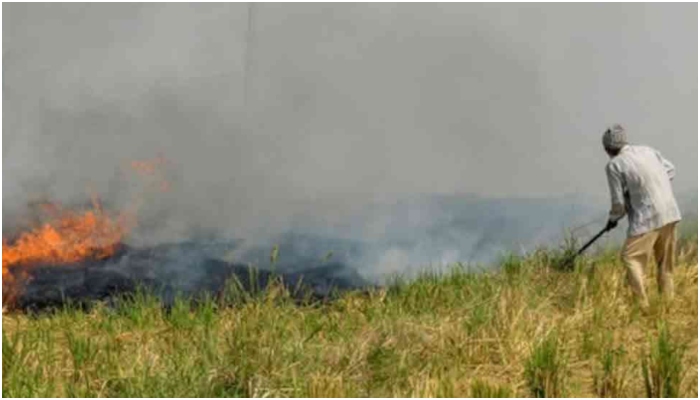
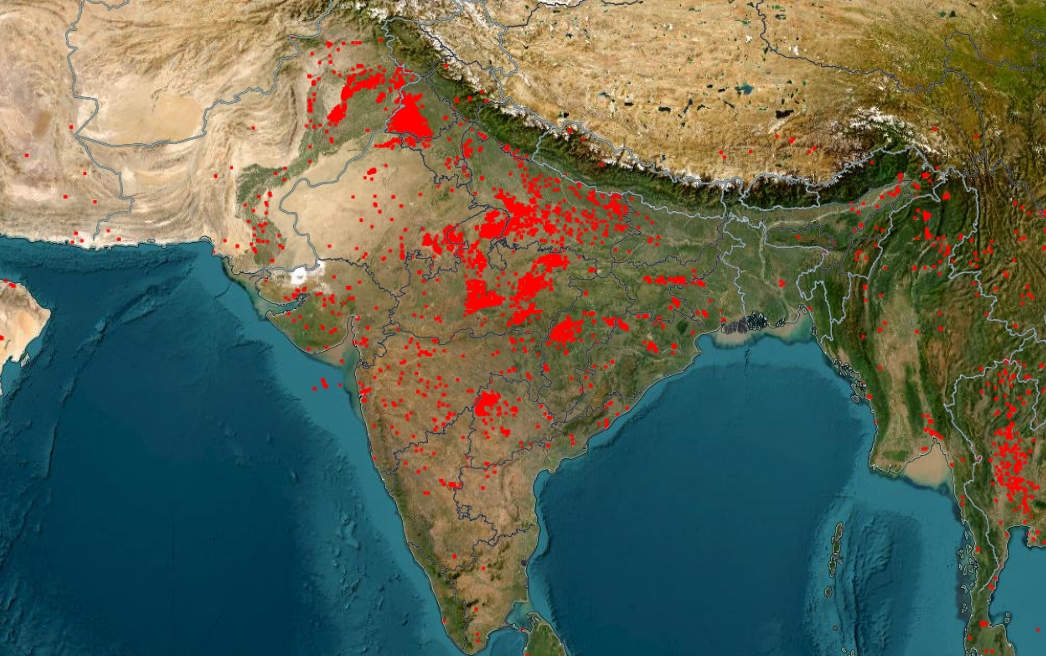
Stubble-burning incidents contribute significantly to air pollution in North India, especially in the capital city of Delhi. These trends have shown shifts among states in the recent while. While traditional hotspots such as Haryana have had success in lowering instances resulting in stubble burning, Punjab still leads with the highest incidents of farm fires, and such incidents have increased significantly in other states like Madhya Pradesh, Rajasthan, and Uttar Pradesh. As per the reports, Madhya Pradesh, in particular, exceeded Punjab in the number of farm fires reported on Monday and has reported the second-highest number of farm fire incidents this season.
The number of incidents recorded to date across states is 10,693. Punjab still is the highest contributor to such cases with 4,394 cases, followed by Madhya Pradesh with 2,875 of 10,693. This modification in the pattern has introduced a new dimension to the continuing agricultural activity, which is well-known for contributing to severe air pollution in North India during harvest.
As of Monday, 13th November, the state of Madhya Pradesh reported a record 506 stubble-burning incidences in a single day, exceeding its earlier seasonal high of 296 cases on November 2nd. This statistic represents more than half of all instances registered nationwide that day, indicating a significant increase in the state. In contrast, Punjab, which had 587 instances on November 1st, was able to lower this number to 262 by November 4th, demonstrating an uptick in crop residue control.
Uttar Pradesh and Rajasthan, like Madhya Pradesh, have experienced an alarming increase. On Monday, the 13th, Uttar Pradesh recorded 84 instances, up from only 16 the day before. Similarly, Rajasthan’s statistics increased from 36 to 98 instances, making it the second-highest total for the season after October 16th, which witnessed 100 incidences.
The Indian Council of Agricultural Research (ICAR) meanwhile reports that satellite remote sensing identified 1,357 active stubble-burning events on November 10th alone, spanning Punjab, 345 cases, Haryana, 22 cases, Uttar Pradesh, 128 cases, Rajasthan, 79 cases, and Madhya Pradesh, 783 cases. These fires accounted for 8% of the season’s total fires.
NASA Fire map
Haryana has seen a progressive decrease in stubble burning, with incidences falling from 42 on October 31st to 13 by November 4th. However, Punjab on the other hand continues to contribute the most cases even today.
According to the ICAR, from September 15th to November 10th, 17,003 instances of residue burning were found in these states, also including Delhi. Notably, Madhya Pradesh to date has recorded 5,818 fires among this 17,003, down from 7,891 last year, Haryana recorded 981 fires, down from 1,676 last year and the lowest in the last five years, and Punjab has recorded 6,611 fires, down from 23,626 last year and the lowest in the last five years, but maximum as compared to other states this time. But, the state seeing a dramatic drop in farm fires, with just 6,611 occurrences reported this year is worth lauding. This is a considerable decrease from the previous five years, when the number of instances went as high as 72,499 in 2020.
Stubble (parali) burning is a method of removing paddy crop residues from the field to sow wheat from the last week of September to November. Almost everyone has agreed that stubble burning by farmers in the nearby states, mainly in Punjab and Haryana, has been the primary reason behind deteriorating air quality in Delhi. From the record now, Haryana has also improved its condition by reporting the fewest incidents in the previous five years.
However, recently, it was reported that Punjab’s particular program to reduce agricultural waste is experiencing major obstacles as northern India struggles with a severe pollution crisis exacerbated by stubble burning. As a long-term solution to the stubble-burning issue, the government started a plan to establish Compressed Biogas (CBG) Plants which are considered as a sustainable solution to the stubble-burning issue. Nevertheless, the project has been halted by persistent farmer protests, resulting in only five of the thirty-eight facilities that were originally intended to be operational and none running at full capacity.
States that have recently seen a spike in fire incidences include Rajasthan, 1,655 fires, up from 1,191 last year, Uttar Pradesh, 1,926 fires, up from 1,533 last year, and Delhi, 12 fires this year compared to 4 last year. In the last five years, Rajasthan has also seen the strongest trend, with 434, 755, and 1,100 fire incidences reported in 2021, 2022, and 2020, respectively.
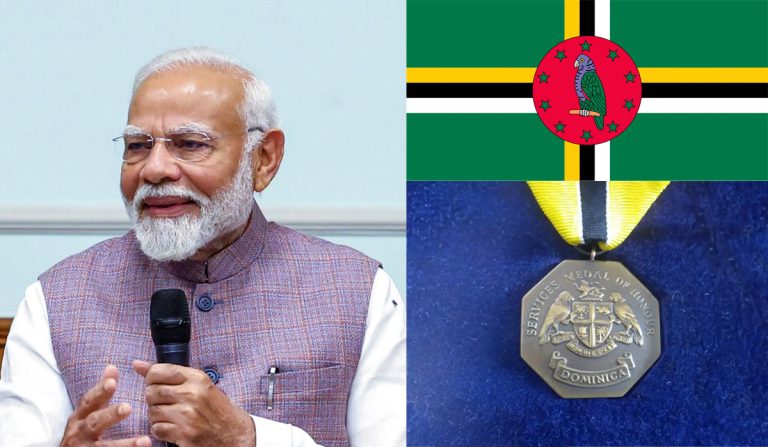
The Commonwealth of Dominica will bestow its highest national award, the Dominica Award of Honour, upon PM Narendra Modi, in recognition of his contributions to Dominica during the COVID-19 pandemic and his dedication to strengthening the partnership between India and Dominica.
Sylvanie Burton, President of the Commonwealth of Dominica, will confer the award during the upcoming India-CARICOM Summit, scheduled to take place in Georgetown, Guyana from November 19 to 21, 2024.
In February 2021, India supplied Dominica with 70,000 doses of the AstraZeneca COVID-19 vaccine-a generous gift which enabled Dominica to extend support to its Caribbean neighbours.
The award also recognizes India’s support for Dominica in healthcare, education and information technology under Prime Minister Modi’s leadership, as well as his role in promoting climate resilience-building initiatives and sustainable development on a global level.
Prime Minister of Dominica, Roosevelt Skerrit says the award is an expression of Dominica’s gratitude for Prime Minister Modi’s solidarity with Dominica and the wider region.
“Prime Minister Modi has been a true partner to Dominica, particularly during our time of need amid a global health crisis. It is an honour to present him with Dominica’s highest national accolade as a symbol of our gratitude for his support and as a reflection of the strong ties between our countries. We look forward to building on this partnership and advancing our shared vision of progress and resilience,” he said
In accepting the offer of the award, Prime Minister Modi emphasized the importance of collaboration in tackling global challenges such as climate change and geopolitical conflicts, and affirmed India’s commitment to working alongside Dominica and the Caribbean in addressing these issues.
Sylvanie Burton, President of the Commonwealth of Dominica and Prime Minister Roosevelt Skerrit will attend the India-CARICOM Summit, a forum to discuss shared priorities and new avenues for cooperation between India and CARICOM member states.
(This news report is published from a syndicated feed. Except for the headline, the content has not been written or edited by OpIndia staff)