Home Blog Page 7061

Long before the Quit India Movement, the Ghadar Party united against the British

0

India’s freedom in 1947 has been largely painted as the result of a non-violent and unipolar resistance by Mahatma Gandhi and his Congress party. But it was certainly not the case. There were many revolutionary leaders, many groups and organisations that had played their part in the long struggle and stirred the collective psyche of Indians towards creating a national identity and seeking independence from colonial powers that held it in captivity. One such attempt was the Ghadar movement that originated on foreign soils and made its impact in India through its courageous leaders who not only displayed exemplary courage in standing up to the British rule but also created a flame of resistance through their speeches, slogans and literature that mobilised countless Indians in the subcontinent and beyond.

The last years of the 19th century had seen a massive migration of Punjabi peasants and Sikh soldiers of the British Army to the west. In addition to British ruled colonies in Asia like Hong Kong and Singapore, large numbers of Sikhs had migrated to USA and Canada in search of better prospects and livelihood. Though they were able to find livelihoods there and settled in distinguished small groups in several cities, gradually discrimination and eventually administrative campaign to dissuade immigrants started in those countries. The Sikhs had been loyal soldiers of the British Army and had valiantly helped in securing many victories. In return, the Sikh community expected to support and assistance from the British Government for Indian origin settlers in Canada and the USA. Instead, harsh and unacceptable laws like the Continuous Passage Act were brought in to deny the incoming Indian migrants entry into foreign soil.

Amidst the growing discontent among the Sikhs settled abroad, community leaders like Lala Hardayal and Sohan Singh Bakhna established the Pacific Coast Hindustan Association in 1913 which later came to be known as the Ghadar Party. Sohan Singh Bakhna was its President. They also published the first issue of the magazine ‘The Ghadar’ in November 1913.

courtesy: SF Funcheap.com

A pivotal event in 1914 further motivated the Ghadar Party to steel their resolve and take their struggle against the British to a more defined phase. In 1914, 376 Indians onboard a ship Komagatamaru were denied entry at Vancouver after a long and expensive journey from Hong Kong. After agitations by Indians in Vancouver, only 24 were allowed to disembark.  The Continuous Passage Act was cited as the reason. The ship was owned by a Sikh man too. It was turned away from Vancouver and upon reaching the Hoogly harbour in India, the British Government of India declared the passengers as rebels and opened fire on them after they refused to go back to Punjab. More than 200 passengers were herded in jail. The incident of Komatagatamaru had a profound impact on the Ghadar Party’s resistance movement.

The Ghadar Party housed in Yugantar Ashram, San Fransisco was already publishing their paper The Ghadar and its bold words against the injustice done by the British was gaining popularity among Indians in USA, Canada and even Hong Kong, Malay and Singapore. After the Komagatamaru incident, many Sikh leaders returned to India to carry on the struggle for independence from the British Rule. The Ghadar Party and its literature had received wide acceptance among Indians abroad and were successful in mobilising an entire generation of Indians against the British Rule. In Punjab and northwestern India, the Ghadar movement was the foundation stone that saw the birth of many future revolutionaries like Bhagat Singh and his contemporaries.

The Ghadar Party was clear in its message that it wants an independent and self-governed India free of the British rule. It carried fearless criticism of the British rule and was bold and open in its views. Much before the Quit India movement or other defined struggles for freedom were even thought of, the Ghadar movement had created a consciousness of secular, sovereign and Independent India. While Lala Hardayal had escaped from the American authorities to Berlin and formed the Indian Independence Committee there. With the first world war commencing in 1914, the British were vulnerable and hundreds on ex-patriot Indians returned with funds and arms. Through its literature and speeches, the Ghadar Party had managed to awaken a large number of Indians to a nationalistic goal of driving the British forces out. The leaders had met and February 21, 1915, was set as the date of armed revolt against the British in many locations.

The movement inspired revolutionary heroes of India’s independence struggle. Lala Lajpat Rai, Bhagat Singh, Ram Prasad Bismil, Gulab Kaur and many others. Though the movement itself failed to launch a substantial attack on the British regime because the British were able to get information of it beforehand, the movement had created a much-needed push to the Indian conscience at large. Just before the February revolt was to be executed, the British got whiff of the plan details and descended upon the Ghadar leaders with massive force. Under the Defence of India Act formed by the Brtish, all key leaders were arrested and 42 were executed. 114 leaders got life sentences and 93 others got prolonged sentences in the first Lahore Conspiracy Trials. 18-year-old Kartar Singh Sarabha, Kala Singh, Vishnu Pingle and many others were hanged in 1915. Several leaders were sent to the cellular jail in Andaman.

The heroes of the Ghadar movement are mostly forgotten. Our history books and the popular narrative is full of odes on Mahatma Gandhi and his methods of non-violent struggles but countless lives that were dedicated to create, mobilise and inspire thousands of Indians across the globe are hardly mentioned. The Ghadar movement saw Indians regardless of class, regionalism and caste unite to bravely face the tyrannies of the British. Though started mainly as a front for Sikhs, Ghadar movement was soon joined and carried forward by leaders of many communities. It stoked the nationalistic identity of Indians living all over the globe and created a momentum that was carried forward by Bhagat Singh, Bismil and many patriots of their time. Though the armed revolt that was planned never happened, the Ghadar movement provided fuel for an entire generation of Indians to stand up and raise their voices.

RTI reveals Siddaramaiah government spent Rs 36 crore on phone bills: India Today

0

As per an India Today report, the Congress government in Karnataka under Siddaramaiah, which was ousted from power earlier this year, spent Rs. 36 crores on phone bills of MLAs and MLCs during its rule, an RTI has revealed. Each of the 224 MLAs and 75 MLCs received Rs. 20,000 per month as phone allowance.

“You can get unlimited calling for Rs 500 for three months too, certain plans are there. Why are MLAs and MLCs getting paid so much? It’s taxpayers’ money being wasted,” the report quoted RTI activist Bhimappa Gadad as saying.

Current Cooperation minister in H.D. Kumaraswamy’s Karnataka cabinet, Bandeappa Kashempur was also reported to be in agreement with the assertion that the government was paying too much for phone bills. “I agree that government is paying too much money. I pay around Rs 1000 per month on my phone. If the government agrees to cut the allowance I welcome it and it should be done,” he is reported to have said.

The Siddaramaiah government had hiked the phone allowance for MLAs and MLCs from 15,000 rupees to 20,000 rupees in 2015 as part of a larger salary hike for Karnataka legislators.

Recently, it was revealed that the state hospitality department splurged 42 lakh rupees to host political leaders during the swearing-in ceremony of H.D. Kumaraswamy. It has been a general trend of Indian politics that taxpayers have to bear the brunt of politicians wasting money on luxuries.

Financial experts give Nidhi Razdan a reality check after she tried to mock Rupee at 70

0

The poor man’s Barkha, Nidhi Razdan of NDTV has a penchant for making a fool of herself on social media. In the past, she has been lampooned by social media users for revealing her ignorance on all sorts of issues: Be it RSS, or loan “write-offs” or even basic statistics. But such minor issues do not stop foolish fearless journalists.

Today, the rupee breached the Rs 70 per dollar mark. Wasteful journalists would have spent time trying to analyse this from an economic perspective, but smart cookies like Nidhi chose to do some more meaningful work: digging up old tweets of BJP supporters. Nidhi pulled up a tweet from 2013 by one such supporter, who had expressed anguish about the rupee heading to 70.


The tweet which Nidhi dug up was from 2013, and Nidhi thought it best to use it to make a point. Unfortunately, far from making her point, this tweet actually ended up proving the opposite.

Sandeep Parekh, a financial sector lawyer attempted to explain the same to her i.e. if the rupee had reached near 70 in 2013 and after 5 years, it had re-reached that mark, and considering the inflation rate and the expected depreciation in the rupee, the currency had actually performed better than expected:


Similarly, another banker laughed off the “class IV maths” of Nidhi:


Perhaps, if Nidhi had spent time reading up, instead of digging up (old tweets), she would not have been in this position. Other financial experts and economists also weighed in on the rupee issue and explained in detail why this was inevitable:


They highlighted various facts such as how the rupee had actually gained by 20% in 4 years, in terms of the real effective exchange rate and was actually gaining power internationally. Hence, keeping in mind domestic inflation, there was bound to be a time when the rupee finally fell. Further, international pressures like the Lira crashing by 70% also had its impact on the rupee, as other global currencies too saw pressure.

Of course, these are small issues to big journalists like Nidhi Razdan, who in spite of getting it from Left, Right and Centre, would probably prefer to hold her shaky ground, rather than admitting that the Buck stops here. We only hope her prime-time debate focuses on facts, or else it might end up being another occasion when she conducts an entire debate on fake news. 

India has one of the least number of prisoners and one of the highest number of pre-trial detainees

0

Indians prisons are generally overcrowded and no one seems to talk about prisons or the inmates who occupy such correctional institutions. Seldom, we get to know about the inner workings of our correctional facilities and even lesser to compare them with other leading economies around the world. It is important because of the ability of these inmates to reintegrate themselves into the societal life almost entirely hinges upon the ability and the capacity of such correctional institutions.

India has one of the least prison population rates among the leading economies. The data we found on National Crime Records Bureau’s prison statistics in 2015 and the Institute for Criminal Policy Research showed that the perceived notion of Indian correctional facilities being incompetent is not representative of reality.

Prison Population

According to the available data, India occupies the fifth rank in the whole world as far as the prison population is concerned. India has a total prison population of 4,19,623. Prison population here denotes the entire population of inmates within correctional facilities within the country. The highest number of prison inmates is in the United States of America. The USA’s prison population is 21,21,600. The second place belongs to China with 16,49,804 inmates. The third-place occupant is Brazil with 6,82,901 inmates and The Russian Federation occupies the fourth place with 5,90,635 inmates.

If we compare the numbers in proportion to the respective country’s population India has one of the lowest incarcerated population in the world, among the leading economies. The implications of having this large population will be dealt with in the later section of this article.

Source – Times graphics

Prison Population rate

As mentioned earlier for India’s large population, the country receives a lot of adverse response from the world media community. Realistically, if one chooses to look at the number of people incarcerated by states then one must look into the Prison population rate of that country. The prison population rate here denotes, the number of people incarcerated per 1,00,000 population.

India occupies the rank of 213 out of 222 in population rate. India has a prison population rate of 33, which if put in comparison with the leading economies of the world is a great achievement for India. The United States tops the chart with a prison population rate of 655. Russian federation’s prison population rate is 408. Brazil has a prison population rate of 328. Germany has a prison population rate of 78. China has a population rate of 118.

Pre-Trial Detainees

In this issue, India is lagging behind. We have heard the phrase ‘justice delayed, justice denied’. Pre-trail detainees here denotes people who are in prison awaiting trial. India ranks 16th in the world with a whopping 67.2% of its prison inmates are pre-trial detainees. The other major economies fared much better and their numbers are as follows- the United States of America has 21.6% of pre-trial detainees. Brazil’s percentage stands at 36.6 %. Russian Federation only has 17.7 % of pre-trial detainees. Chinese number was unavailable possibly because of the strict control over such data by the Chinese government.

This proves that there is a need of much improvement in India’s judicial system and there need to be instruments put in place to make our judicial process more efficient without compromising the gravity and the quality of the judgements.

Source – Times graphics

Female Prisoners (percentage of total inmate population)

This particular aspect of these statistics is extremely interesting. The notion that men commit more crimes than women, stand true in almost every country’s case. As far as the percentage of the female population in relation to the total prison population is concerned.  India’s female prison percentage is 4.3% and the country occupies the 116th spot out of 222 countries. India shares the spot with Bhutan. The USA’s female prison percentage is 9.8%. China has a female percentage of 6.5% and Brazil’s percentage stands at 6.9%. Russian Federation’s 8.1% of the total prison population is female. Germany comes at 5.8%.

All in all, according to these statistics India’s female prison population is much lesser in terms of percentage than the other leading economies around the world.

Occupancy rate

Occupancy rate here denotes the rate of occupancy in these country’s jails and hints at the infrastructure available to the state for correctional facilities and assorted services. India occupies the 90th position in the occupancy rate. It has an occupancy rate of 114.4% meaning Indian jails are slightly overcrowded. In comparison the USA has an occupancy rate of 103.9%, Brazil has 165.4% and the Russian Federation has 79.0%.  Once again China’s statistics are unavailable for this specific classification.

One can easily derive from the aforementioned statistics that Indian jailing infrastructure is not adequate but they are not abysmal either. Thus, India needs to balance between adding infrastructure and capacity building in this particular sector.

Outside of these comparative statistics, there are a few key takeaways from these statistics with regards to the Indian states and the status of their prison infrastructure. India has been gradually lowering its occupancy rate with each year, which indicates at the progress being made to accommodate the prisoners better. In 2013 the occupancy rate was 118.4% which came down to 117.4% in 2014 and finally to the latest (2015) 114.4%.

Source – Prison Statistics 2015, NCRB

The highest numbers of inmates were from Uttar Pradesh. A total of 88,147 inmates were reported from the stated. Madhya Pradesh reported the second highest number of inmates with 38,458 inmates reported from the state.  Maharashtra with 29,657, Bihar with 28,418 and Punjab with 23,645 inmates consecutively became the third, fourth and fifth state with the highest number of inmates.

The top three regions with the highest overcrowding in prisons are D&N Haveli (276.7%) followed by Chhattisgarh (233.9%) and Delhi (226.9%).

Islamic terrorist organisation Al-Qaeda intends to carry out terror attacks in India: UN report

0

The Islamic terrorist organisation Al-Qaeda’s India affiliate, Al-Qaeda in the Indian Subcontinent (AQIS) is said to be “ideologically inclined” to carry out attacks in India suggests a new report submitted to the United Nations by the Analytical Support and Sanctions Monitoring Team. The reports, however, says that the Islamic terror group’s capability to carry out any attack is relatively low due to increased security in the country.

Al-Qaeda in the Indian Subcontinent (AQIS), the Al-Qaeda’s newest affiliate, despite being “relatively isolated” owing to increased security measures seeks to look for the security gaps for opportunistic attacks.

The report, which was submitted to the UN Security Council Al Qaeda Sanctions Committee, said that the strength of Al-Qaeda in the Indian Subcontinent, presently exists in Afghanistan has a strength of several hundred people located in Laghman, Paktika, Kandahar, Ghazni and Zabul provinces.

AQIS was formed in 2014 and was led by Asim Umar, who is believed to be an Indian belonging to the Pakistan-based Harkat-ul-Jihad al-Islami, which was itself an Al Qaeda sponsored organisation.

The report noted that Al-Qaeda still has a presence in South Asia and it reported the ability of the Islamic terror group to adapt to the local environment by trying to associate itself into local struggles and communities. The report also speaks about the AQIS’s close relations with the Taliban.

According to one Member State, even though the Islamic State in Iraq and the Levant (ISIL), known as IS poses to be an immediate threat, but, Al-Qaeda is the “intellectually stronger group” and remains a long-term threat.

The report added that some members of the Al-Qaeda core, including Aiman al-Zawahiri and Hamza bin Laden, son of dead Al-Qaeda leader Osama bin Laden, are reported to be sheltered in the Afghanistan-Pakistan border areas. The report also indicates that other core members of the Al-Qaeda may leave for more secure areas.

The report said that there are still between 20,000 and 30,000 Islamic State fighters remain in Iraq and Syria and addition to these fighters, there are a still a significant number of active foreign terrorist fighters. One Member State reports that some recent plots detected and prevented in Europe had originated from ISIL in Afghanistan.

The report has revealed that the ISIL has been successful in establishing its presence near the regions of Afghanistan and trying to capture the ground in other countries in the region.  The report says that ISIL in Afghanistan is responsible for at least one attack in the Kashmir region. However, there is no mention about the details of any attack in Kashmir in the report.

The report added that in Afghanistan, ISIL has continuously tried to expand its presence, despite pressure from the Afghan National Defense and Security Forces, the International coalition and the Taliban. The report noted that that ISIL has between 3,500 and 4,000 members in Afghanistan, including between 600 and 1,000 in northern Afghanistan led by Abu Sayed Bajauri and other former members of Tehrik-e Taliban Pakistan

ISIL currently holds the eastern provinces of Kunar, Nangarhar and Nuristan, and is also active in Jowzjan, Faryab, Sari Pul and Badakhshan provinces in the north. The group has the intention to expand into Ghazni, Kunduz, Laghman, Logar and Uruzgan provinces.

See how Twitter reacted to Business Standard’s ‘Kanwariyas are jobless’ insinuation

0

While many media outlets and left-leaning journalists are hell bent on maligning the Kanwar Yatra by painting the yatris as hooligans and miscreants, Business Standard yesterday shared a tweet with their article on Kanwariyas and their projected numbers expected to gather at Haridwar this year. The Tweet claimed that 30 million Kawariyas are to gather in Haridwar which is 7% of India’s total labour force and 7.3% of total employed people in the country. They posed a question that what do the numbers tell about India’s employment situation.

The tweet seemed to be insinuating that Kanwariyas are unemployed and a waste of the nation’s resources. This did not quite go down well with the Twitter users.

Twitter user Ashish Chandorkar had replied that it shows that for Hindus, practising their faith is beyond mundane routines and it is beyond the comprehension of newsrooms.


Some tried point to the fact that Kanwar Yatras are about faith and people take leave and plan for it.


Many even called out the blatant Hinduphobia displayed in the tweet which targetted a Hindu pilgrimage whose expenses are borne by the pilgrims themselves.


Columnist Shefali Vaidya taunted that rather than the employment situation in the country, Business Standard should worry about their ‘editorial situation’.


This is not the first time media has shown Hindu bias and Hinduphobia. We had seen how the racist Washington Post India head was seen displaying her Hinduphobia on Rudra Hanuman image. Reuters, too, had displayed its blatant Hinduphobia by comparing Hindu Swastika to the Nazi Hakenkreuz. We have also seen digital media outlets use feminism and liberalism to push religious bigotry.

Step towards simultaneous polls: BJP looks to hold elections in 11 states along with 2019 Lok Sabha poll

The president of the Bharatiya Janata Party has written to the Law Commission in support of the simultaneous elections in the country. Reportedly, the BJP and other parties of the NDA coalition are likely to support the idea of ‘One Nation-One Poll’ and hopeful of simultaneous polls in at least 11 states along with the general elections in 2019


The Narendra government is positive about holding simultaneous elections in the country and several leaders including the PM and the President, have called for a wider debate on the issue. Amit Shah on Monday wrote to the Law Commission saying, “There is a need for a regular discourse on the simultaneous elections and all political parties need to come together on the matter.”

Amit Shah further said that the idea of ‘One Nation- One Poll’ is beneficial for parliamentary policies. He added that due to the election in one state or another throughout the year, work of both the state and central government gets affected. He emphasized the fact that the simultaneous elections will lead to cutting down on electoral expenditure.

The BJP is looking to conduct simultaneous elections of eleven state assemblies, which are otherwise to be held within a time frame of 6 to 12 months. Reportedly, the party is exploring the possibility of deferring assembly elections of some states by a few months and advancing some others to ensure they are held simultaneously with the Lok Sabha polls.

If everything goes as per the government’s plan, the Lok Sabha election in 2019 may turn out to be a mini showcase of simultaneous elections, with a few variables. There are few states slated to go into polls around the time of Lok Sabha general elections. These states are:

  1. Andhra Pradesh goes to poll tentatively on 18.06.2019
  2. Odisha goes to poll tentatively on 11.06.2019
  3. Sikkim goes to poll tentatively on 27.05.2019
  4. Telangana goes to poll tentatively on 08.06.2019

There are four other states whose elections if postponed for 6 or lesser, can also be conducted simultaneously:

  1. Rajasthan goes to poll tentatively on 20.01.2019.
  2. Madhya Pradesh goes to poll tentatively on 07.01.2019.
  3. Mizoram goes to poll tentatively on 15.12.2018.
  4. Chattisgarh goes to poll tentatively on 05.01.2019.

There are another three states whose elections, if brought forward for six or lesser, can be conducted simultaneously:

  1. Haryana goes to poll tentatively on 02.11.2019.
  2. Jharkhand goes to poll tentatively on 05.01.2020.
  3. Maharashtra goes to poll tentatively on 09.11.2019.

Along with this, there is also a possibility of states like Bihar, Goa and Tamil Nadu facing early elections, while fresh elections to Jammu and Kashmir may also take place during the general elections. The BJP has influence in all the four states and may push for simultaneous elections in all these states.

There is also no need of any constitutional amendment to implement ‘One Nation-One Poll’. The NDA government at the centre is looking for a larger consensus for simultaneous elections and the party is thinking of calling an all-party meeting over this issue soon. Some regional parties like Samajwadi Party (SP) and Telangana’s Telangana Rashtra Samithi (TRS) have backed the Law commission’s proposal to hold simultaneous state assembly and Lok Sabha elections, while DMK, TMC and Communist parties are against the idea.

The idea of simultaneous polls is not new to this country as the first four of its general elections from 1952-1967 followed the proposed line of a simultaneous election where the electorate elected the state assembly and the central government representatives. The Law Commission has also written in favour of simultaneous elections was in its 117th report on the Reform and Electoral Law (1999).

Naxals behead man in Bihar, hide bombs in his body and throw it near temple

0

In a barbaric act, Naxals in Bihar had beheaded a young man and thrown his body near a temple. According to reports, the police in Chandramandi station area in Jamui district in Bihar were informed about a body thrown near the Gitadham temple today. But when policemen approached to move the body, the bombs hidden in it exploded.

Six policemen have reportedly been injured in the incident. In Satpokhra village, local villagers had seen the body of a young man thrown near the Gitadham temple. Police personnel had arrived after information from the villagers. According to reports, the Naxals had killed the man by slitting his throat.

As per reports, the police have informed that the murdered young man has been identified as one Chhotu Kumar who worked as SPO in a nearby area. The Naxalites had torched Chhotu Kumar’s motorcycle and had left a note at the spot. Kumar was identified from his identity documents recovered from the spot.

The injured policemen had been admitted to hospital and the bomb squad had been called to inspect the scene. Several onlookers and journalists too have had a narrow escape. Police have surrounded the area and the CRPF have launched search operations for the perpetrators of the crime.

Fitting bombs on dead bodies have been done by Naxals before. In January 2013, Naxals in Jharkhand had killed 9 CRPF personnel and had planted pressure bombs on the bodies of five of them. 3 villagers who had tried to retrieve their bodies were killed when 2 bodies of slain jawans had exploded into pieces. In the same incident, the Naxals had eviscerated the body of one jawan and had placed 2.5 kgs of gelatin sticks after removing the internal organs. The body was then carefully stitched up. The explosives were found fortunately before any further mishap.

The central government had launched a massive crackdown on Naxals and is intent on eliminating left-wing terrorism. Many districts in Jharkhand, Bihar, Odisha, Andhra and Telangana had been declared free of Naxals.

Despite no conclusive proof, AltNews declares journalist’s account ‘false’ to suit a narrative

0

News surfaced yesterday that Umar Khalid, the rusticated student who is charged with sedition, had been shot and escaped unhurt. As soon as Media broke the news, several people, including journalists and left propagandists started blaming Republic TV, Times Now and its anchors like Arnab Goswami for the attack. As bizarre it may sound, a bunch of journalists got together on social media, and squarely blamed the alleged attack on Umar Khalid on journalists who had expressed their opinions on national television, at the same time, they hailed Umar Khalid as a freedom of expression warrior whose voice was being stifled. Some portals then proceeded to discredit eyewitness account because it didn’t suit their narrative.

As the day progressed, while the propaganda remained the same, conflicting versions of the episode started emerging. First, Rajdeep Sardesai, a senior journalist from India Today tweeted that the police had confirmed the India Today that no such firing incident had taken place. Rajdeep also tweeted that two people were apprehended with guns in the vicinity of constitution club. One wonders why Rajdeep wasn’t attacked and discredited then.

Then, ANI tweeted another version claiming that the police were investigating the matter and trying to confirm the veracity of Umar Khalid’s claims. Khalid had claimed that assailants jumped him and tried to shoot him when their gun jammed and they couldn’t fire. In the meantime, his friends overpowered the assailants, and they ran, later, firing shots in the air.

Within minutes of the assault news, minutes, Quint published a report where Umar was saying that he thought his Gauri Lankesh moment was here.

Soon, an ABP journalist released a video of another journalist from Dainik Bhaskar who claimed that he was an eyewitness. He said on the video, that he saw some boys get into a scuffle. In the process, one man fell down and the other tried to shoot him but couldn’t. Later, the assailant ran and fired a shot in the air. The clincher was, however, when he claimed that Umar Khalid was not present at the sight of the altercation at all and that he saw Khalid later come out of the constitution club.

The journalist whose statement was recorded and the one who shared the video were subjected to abuse and attack. Some even tagged him on Twitter.


After a while and after being subjected to abuse, the journalist recanted his story partially and said “he wasn’t sure” if the man who was pinned to the ground was Umar Khalid. He could be Khalid or he couldn’t be Khalid.

Interestingly, there was another eyewitness account of a man who has now been revealed to be close to Aam Aadmi Party. His version as well was similar, but he asserted that the attack actually happened on Umar Khalid. His version too changed over a period of time. He first said the bullet missed Umar Khalid and then shared a news clip that said the pistol jammed and couldn’t fire. 

Now, just as every other portal including AltNews is working towards discrediting the journalist, should this witness then also be completely dismissed considering his version has changed dramatically and the journalist only expressed doubt?

In all of this, there is absolutely no clarity about what happened. It is being reported that there is CCTV footage and the police have filed a case against unknown assailants. The contents of the CCTV footage have not been revealed yet and the perpetrators have not been apprehended, though, a suspect photograph captured from CCTV footage has been released. Umar Khalid is not in the photograph.

The truth, at this point of time, cannot be ascertained by any journalist or commentator. Maybe Umar was genuinely attacked. Maybe he wasn’t. Maybe the eyewitness who was quoted by ANI is right and it was indeed him who was attacked. Or maybe, the Dainik Bhaskar journalist got it right the first time around and Umar wasn’t even present.

It certainly isn’t beyond the realms of reasonability that Umar is capable of lying. After all, Umar’s buddy and comrade Kanhaiya Kumar had alleged that he was strangulated in an aeroplane by a Modi supporter and then, it turned out it was only a petty fight of two people pushing each other like school children.

After all, Umar’s second and third buddy, Shehla Rashid and Jignesh Mevani too lied about the police assaulting Mevani when it was, in fact, him who abused officers. An entire narrative was spun around how Mevani was abducted, assaulted and abused. The truth? The police had politely asked him to not enter a restricted road and he, in turn, abused. Called the police “Lakhota” (testicle) and asked the police whether Gujarat belongs to his father.

The victim card is indeed played multiple times, often laden with lies, simply to further a narrative. Umar Khalid even took to Facebook to talk about how he doesn’t blame the alleged assailants but TV anchors and BJP spokespersons. On the face of it, the narrative looks wholly coordinated to silent people who don’t agree with Umar or his comrades. To ensure that a line is toed. After all, who would dare to criticise anyone if any future attack on them (heaven forbid) can be blamed on the one who dares to criticise?

When Shujaat Bukhaari was brutally murdered by terrorists, the blame didn’t lie with the terrorists for slaughtering a journalist. The blame, however, rested with scientist Anand Ranganathan who had a few days prior to Shujaat’s murder dared to criticise him. Everyone who is often criticised piggybacked on Shujaat’s not-even-cold murdered body, to ensure nobody ever dares to criticise them again.

There is, for now, absolutely no conclusive proof that Umar Khalid was attacked in some pre-planned manner by someone driven by any political or ideological reasons. Right now, all journalists have are conflicting reports, varied versions and a hanging question – was Umar there at all? Considering what AltNews and so many others choose to call “fake eyewitness testimony” wasn’t “fake necessarily”. The U-Turn was of unsurety and not of surety that Umar was indeed there. There was no 100% backtrack or denial or disassociation with the testimony.

Maybe Umar was attacked. Maybe he wasn’t. The only thing that will prove what happened is a thorough police investigation and the patience by everyone to know the truth sans agenda. However, using this incident, using this narrative, to shut down criticism is diabolical. Using this to target journalists whose opinions are starkly against you is fascism. Nazi-like fascism. That it is done by impunity, shows the strength of the establishment even when out of power.

Uttarakhand High Court declares itself as the legal guardian of the cows

0

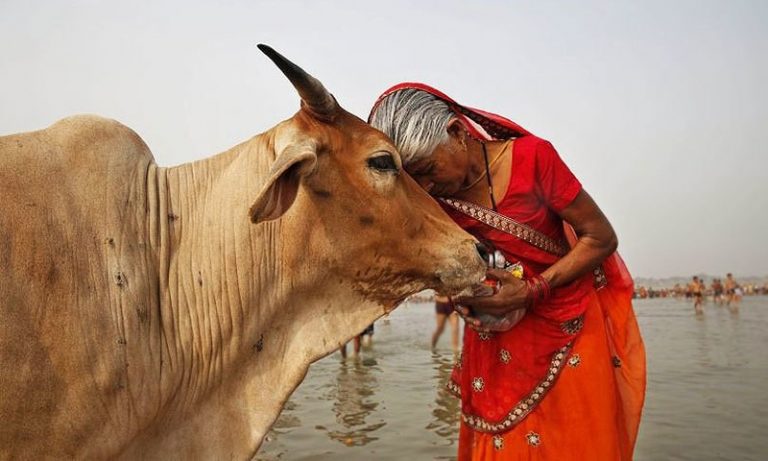
In a bid to protect cows from illegal slaughtering and welfare of cows in the state, the Uttarakhand High Court on Monday issued a comprehensive order to the state authorities.

A High Court bench comprising of Justice Rajiv Sharma and Justice Manoj Kumar Tiwari issued the judgement while hearing a petition regarding illegal slaughtering of cows and other animals in the state. The petitioner had approached the court against the state, for failing in its duty to enforce the provisions of the Uttarakhand Protection of Cow Progeny Act, 2007, Municipal Laws and Prevention of Cruelty to Animals Act, 1960.


The Uttarakhand High Court has invoked the doctrine of ‘Parens patriae’ to become the legal guardian of cows and other stray cattle, directed the state to follow mandatory provisions towards cow protection. The bench has given an order which comprises of almost all pertinent issues relating to the protection of the cows. “The Court by invoking the ‘Parens patriae’ doctrine issues mandatory direction in the welfare of the cows and other stray cattle”, the bench said.

The High Court, in its judgement, has invoked ‘Parens patriae’, which translates from Latin into “parent of his or her country”, which gives power to a state to provide protection to those who are unable to take care of themselves.

The Court, however widened the scope of the petition and took a strong note on the deficiencies in existing laws. The judgement highlighted the necessity to show compassion towards living creatures. It has also ordered banning slaughter and export “for the purpose of slaughter” of “any cow, bull, bullock, heifer or calf”, and selling of beef and beef products across Uttarakhand.

The court directed all Circle Officers in the state to “to patrol the rural areas once in 24 hours to ensure that no cow is slaughtered”. Further, the court directed that owners of cattle be prosecuted if the cattle are “found on the streets, roads and public places”. The case will be registered under Section 289, 428 and 429 of the IPC and also under various provisions of the Prevention of Cruelty of Animals Act, 1960 as well as section 7 of the Uttarakhand Protection of Cow Progeny Act, 2007.

The court has directed the chief engineers of national highways and state highways, the village panchayats, and the municipal bodies to ensure that no stray cattle including cows and oxen come onto the roads. It has ordered the state functionaries to show “utmost compassion” towards cattle and no unnecessary pain and suffering is inflicted on them while being transported.

The High Court has instructed the District Magistrates, Municipal Corporation and municipal bodies including zila parishads to construct ‘Gau-Shalas’ in their respective jurisdiction for housing cow progeny and stray cattle within a period of one year. The court requested the religious heads to assist in the construction of such shelters.

For the treatment of stray cattle, the court mandated that all veterinary hospitals in the state to provide medical treatment to the “cows and animals” brought to them by any citizen. Earlier the Uttarakhand High Court had declared all animals, including avian and aquatic species, as legal entities, with the “rights, duties and liabilities of a living person”. In another judgement, the High Court had declared the River Ganga to be the first living entity of India.