Home Blog Page 7062

The apotheosis of Gandhi: A political project

0

There is one particular song about Mohandas Karamchand Gandhi that never fails to make me laugh with derision. The lyrics of the song makes it appear that Gandhi was a certain superhero from Krypton who single-handedly won us our freedom without the slightest bit of help from anyone else. The song titled ‘Sabarmati ke Sant’ isn’t merely a gross overestimation of Gandhi’s contribution but a massive disrespect to every freedom fighter who contributed to India’s struggle for Independence.
[youtube https://www.youtube.com/watch?v=PIKLTEtntI8]

Here is a portion of the lyrics:

“धरती पे लड़ी तूने अजब ढब की लड़ाई
दागी न कहीं तोप न बंदूक चलाई
दुश्मन के किले पर भी न की तूने चढ़ाई
वाह रे फकीर खूब करामात दिखाई
चुटकी में दुश्मनों को दिया देश से निकाल
साबरमती के संत तूने कर दिया कमाल
दे दी हमें…
रघुपति राघव राजा राम”

Mahatma Gandhi was not Shaktimaan and I assume that Gandhi’s participation in the struggle for Independence which lasted for over 3 decades cannot be dubbed “चुटकी में दुश्मनों को दिया देश से निकाल”. The deification of Gandhi was of course driven by political goals. His assassination gave Nehru’s Congress a golden opportunity to remove the Hindu Right from the corridors of political power. And his glorification and incessant adulation only served to remind the general public of the horror that awaited should the Hindu Right ever came to hold political power.

Mahatma did contribute a lot towards India’s independence, perhaps, however, for a country that is called ‘Bharat’ after a King from its glorious ancient past, the title of ‘Father of the Nation’ is a bit of a stretch. Mohandas Karamchand Gandhi was a great man, did some terrible things and said a lot of terrible things, but he was a great man. However, the adulation showered on him in this song is quite a few degrees over the top. Gandhi did not give us our freedom and it could be very well argued, as many great men already have in the past, that Gandhi wasn’t even the principal factor which caused British to surrender its power over India.

Such adulation of Gandhi ignores the contribution of other stalwarts such as Netaji Subhash Chandra Bose. who perhaps had more of an impact on the decision of the British to leave India. George Orwell, the great author, once said, “Those who ‘abjure’ violence can do so only because others are committing violence on their behalf.” Gandhi could afford to abstain from violence because there were other great men who had embraced violence for the cause of Indian independence.

The deification of Gandhi has relegated many significant events of the Indian struggle for Independence to historical obscurity. The one event which suffered the most was perhaps the British Indian Royal Navy uprising of 1946. Protests against the poor quality of food and racism by the British which began at HMIS Talwar soon spread to Castle and Fort barracks onshore and 22 other ships and other naval establishments. They demanded the release of political prisoners and Indian National Army (INA) personnel.

The mutineers had widespread support among the public. They carried aloft a portrait of Netaji Subhash as they took out a procession in Bombay and flew flags of different hues which signalled the unmitigated desire for independence that had gripped the nation. Ultimately, an army battalion had to be inducted to save the situation for the British. After many dead and injured civilians and following assurances of sympathetic treatment by senior leaders of the Congress who were against the mutiny from the very beginning, the mutineers eventually surrendered.

Nehru’s Congress party won the battle for control of the Indian union in 1947. They defeated other factions within the Congress itself and other external forces to claim control of independent India. Thus, after 1947, they systematically propagandized the narrative that it was solely the Congress party which won India its freedom and it was Mohandas Karamchand Gandhi with his enigmatic leadership who magically bestowed India with freedom through the sheer power of non-violence alone.

Nehru’s Congress furthered this narrative because they chose to gain from it. Stalwarts like Netaji Subhash Chandra Bose needed to be pushed aside, the memory of Veer Savarkar needed to be tarnished, the contributions of various other freedom fighters needed to be sidelined so that the Congress party with Gandhi as its face and Nehru as his ever faithful disciple came to be regarded as the saviour of Indians.

Nehru and Gandhi committed many unfortunate errors and harboured many problematic notions. And Nehru sought to bury all of them under the deification of Gandhi.

As Ashutosh quits AAP, Social Media erupts with speculations and mirth

0

Senior leader of the Aam Aadmi Party, Ashutosh, took to Twitter on Independence Day to state that he has quit the party due to personal reasons. He wrote, “Every journey has an end. My association with AAP which was beautiful/revolutionary has also an end. I have resigned from the PARTY/requested PAC to accept the same. It is purely from a very very personal reason. Thanks to party/all of them who supported me Throughout. Thanks.”


Speculations have become rife following Ashutosh’s resignation from Kejriwal’s party. Some appear to believe that he is set to return to TV Studios before 2019.


Others see it as an indication that Kejriwal may be contemplating a merger with the Congress party ahead of the 2019 General Elections. They speculated that just like Ashish Khaitan, Ashutosh is now leaving the party to these people can fight for Sonia Gandhi from the TV studios instead of being a part of AAP officially.


Some appear to believe that not being elected the Rajya Sabha candidate from his party prompted Ashutosh to offer his resignation.


Others chose to see the funny side of things.


Whatever may be Ashutosh’s reason for quitting the Aam Aadmi Party, Arvind Kejriwal has some serious cause for introspection. With the Delhi government at war with its bureaucracy and him, Manish Sisodia and 11 other MLAs having been charge-sheeted by the Delhi Police, there appears to be no end to Kejriwal’s troubles.

21 points that sum up PM Modi’s speech on India’s 72nd Independence Day

0

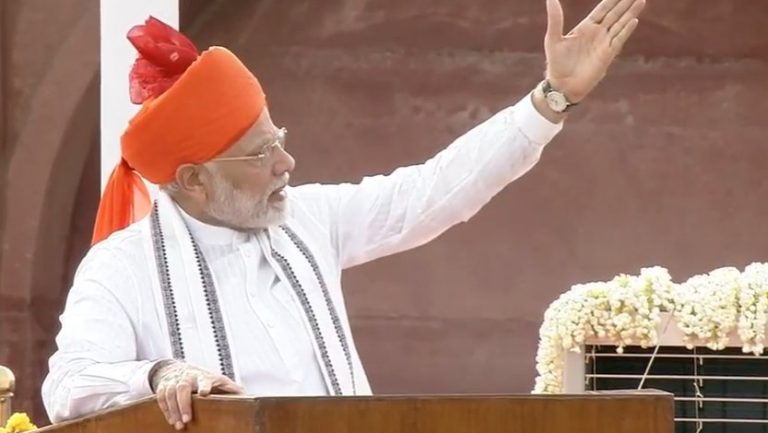
PM Narendra Modi’s today addressed the nation from the ramparts of the iconic Red Fort on the occasion of India’s 72nd Independence Day. India’s progress so far as a country, as a representation of its more than a billion people and the future ahead was the focus of PM’s speech. Being a skilful orator and an inspirational leader, PM Modi is immensely popular among Indians and his speeches attract both crowd and attention. This was PM Modi’s fifth speech from the ramparts of the Red Fort as the Prime Minister of India.

The highlights of the PM’s speech in 21 points are as follows:

  • PM Modi started his speech by stating that our nation today is full of confidence and energy. Citing the blue Kurinji flowers that bloom every 12 years in the Nilgiris, like the Ashok Chakra on our national flag, the entire Nilgiris right now are blue tinged as if coming together to celebrate our independence day. He hailed the women sailors of INS Tarini who have unfurled the Tricolour all across the oceans of the world. He also celebrated the tribal children who have successfully climbed Mount Everest and have waved the flag there.
  • He stated that the recently concluded sessions of the parliament were dedicated towards social justice and in one of the most successful parliament sessions ever, the OBC Commission has been given constitutional status.
  • Every Indian living anywhere in the world now feels proud of being an Indian, We are now the world’s 6th largest economy.
  • PM hailed our freedom fighters who spent their lives fighting for the country and dedicated their best years to struggle and hardships. He hailed the armed forces who bravely defend our borders to protect our sovereignty.
  • He addressed the recent flood situations in many states and stated that his prayers are with those who have lost their lives and stated that the nation stands with flood victims with all its might and all possibles measures are being taken to face the situation.
  • PM stated that next year, it will be the 100th year anniversary of the Jalianwalabag massacre, the incident that reminds us how even common, poor Indians had laid down their lives for the country. He mentioned that our freedom came at a great cost but our freedom fighters also preserved the dream of the India of the future. He cited the great Tamilian poet Subramania Bharti who had written that India will pave the way for freedom from every shackle that ties down humanity to the people of the world.
  • He mentioned that in 2014, the people of the country did not just stop at bringing in a new government but they have also participated and worked to bring the change in our nation. Hailing Sri Aurobindo, he stated that the nation is powered by its billion people with every individual contribution.
  • He stated that if we take 2013 speeds into account, the country would have taken decades to build the number of toilets we have built in 4 years, at least two decades more to electrify the number of villages we have in 4 years and maybe a 100 more years to provide LPG connections to the number of people we have freed from smoke in these four years.
  • Asserting his government’s commitment to bring justice to Muslim women, he stated that despite attempts by the opposition to derail the Triple Talaq bill, he assures Muslim sisters and daughters that their rights will be protected and he will make sure their aspirations are met.
  • He declared that Indians will have Housing for all, electricity for all, cooking gas, healthcare, sanitation, skill development and connectivity for all. He stated that he is anxious, restless and impatient to bring in development for all Indian citizens.
  • He hailed young Indians for their efforts, innovations and entrepreneurship skills shown to take the country socially and economically forward. 13 crore Mudra loans are a testimony to that.
  • PM has asserted that his promise for ‘healthcare for all’ will be delivered and poor families will not be allowed to delve into poverty for rising healthcare costs. He announced that Ayushman Bharat will ensure 10 crores families of an economically backward class will get healthcare benefits worth Rs 5 lakh and soon the program will include middle-class Indians too. He stated that Ayushman Bharat will be technologically driven to ensure efficiency and transparency. He stated Ayushman Bharat will be launched on September 25. He declared that the number of Indians benefitting form Ayushman Bharat will be equal to the population of Europe.
  • The PM announced that women in the armed forces will get permanent commission equal to that of male officers and it will be done through a transparent selection process.
  • Asserting his government’s promise of doubling farmer’s income by 2022, he declared that it is being done and the target will be achieved.
  • In an important announcement, PM Modi stated that India is very close to launching a manned space mission and ‘Gaganyan’ will leave for space with Indian astronauts onboard in 2022 and the Tricolour will be unfurled in space.
  • PM stated that the North Eastern states are witnessing unprecedented connectivity and infrastructure development. He also hailed the efforts underway to maintain peace in the NE states and mentioned that from the earlier 126, Left Wing extremism has been limited to 90 districts in the country.
  • He mentioned the fast track courts working in Madhya Pradesh and Rajasthan to ensure speedy trials to punish rapists and mentioned that our society needs to be freed from the dastardly mentality of rape.
  • PM stated that now the culture of power brokers and lobbyists has been wiped out from the national capital. His government is dedicated to putting an end to nepotism and favouritism, tightened the law on the corrupt and ensured transparency in the industry and finance sector too.
  • PM saluted the honest taxpayers. He stated that as hoarding and black-marketing of rations has been stopped, food and essential commodities have been made affordable. He stated that each time an honest taxpayer pays his taxes, three poor families get food to eat. Hailing the Swachh Bharat Abhiyan, PM stated that an estimate says 3 lakh children have been saved from diarrhoea due to the success of Swachh Bharat Mission. He equated Swachhagrahis to Satyagrahis in the freedom struggle and stated they are ensuring India gets freedom from pollution and diseases.
  • PM also stated that with India’s growing economic and diplomatic strength, we are increasingly being heard at the world stage and the doors of many international forums that were closed before, have now been opened.
  • He mentioned socio-economic reforms like the MSP and GST have been cleared after years of delay.

Speaking with his usual energy and infectious positivity, PM Modi thanked every Indian citizen for his/her efforts and promised that he and his government will leave no stone unturned in their efforts to take the nation to greater heights of glory.

Dadabhai Naoroji: One of the founders of Congress and an Indian voice that reverberated in British parliament

0

Indian independence movement has a number of unsung heroes whose contribution outweighs the space they have been able to occupy within the minds of the Indian public. There is one person among that category who was the first Indian to be a British MP. Dadabhai Naoroji was the first to raise the issue of colonial exploitation of the Indian subcontinent within the colonial chambers of the British parliament. He was elected to the House of Commons from Finsbury Central.

Early Life

Born to a Gujarati speaking Parsi family, Naoroji grew up to be a deeply religious man. He was born on 4th September 1825 and educated in the prestigious Elphinstone Institute School. Patronised by the Maharaja of Baroda, Dadabhai started his career as a Dewan (Minister) to the Maharaja in 1874.

As mentioned earlier, Dadabhai was a deeply religious man and worked tirelessly to promote Zoroastrian customs and social norms. He founded a Gujarati fortnightly publication “Rast Goftar” to promote the same in 1854.

Prior to his induction in Public life as the Prime Minister of Baroda, and a member of the legislative council of Mumbai (1885-88), he was appointed a professor of mathematics and natural philosophy at the Elphinstone College in Bombay.

The Colonial Citizen and many firsts

Dadabhai has been in many ways the first Indian voice which found an audience in the British society. His appointment as the professor of the Elphinstone College was also the first of its kind. He was the first Indian who held such an academic position. He travelled to London in the year 1855 to become a partner in a company called ‘Cama & Co’. Here too he did something which was unprecedented at that point in time. This company opened a Liverpool location, becoming the first Indian company to be established in Britain. Dadabhai would resign within the next three years and open his own trading company ‘Dadabhai Naoroji & Co.’

In 1861, he set up Zoroastrian Trust Funds of Europe along with Muncherjee Hormusji cama. From then on he devoted a considerable amount of his time in setting up and presiding over institutions for propagating the Indian viewpoint.

Colonial Indian experience and Institution builder

In 1865, Dadabhai Naoroji set up of the ‘London Indian Society’ with the purpose of discussing Indian political, social and literary issues and subjects. He was also instrumental in setting up the ‘East India Association’. The East India Association played a major role in counter-reacting to the propaganda promoted by the ‘Ethnological Society of London’, which in 1866 tried to promote inferiority of Asians to the Europeans.

Naoroji was also a member of the Indian National Association founded by Surendranath Bannerjee in Calcutta. Naoroji is considered to be one of the three founders of Indian National Congress. His and Banerjee’s association both merged into the newly created Indian National Congress with the same objectives and Naoroji was elected its president in 1886.

He was subsequently elected INC’s president for two more times, in 1893 and 1906. Naoroji gained considerable influence both in Britain and colonial India by this time.

British parliament & Colonial policy of draining India

Naoroji ran for British public office in 1886 for the first time but he was unsuccessful. However, in his second attempt in 1892, he managed to win from Finsbury, London with a meagre margin of five votes. This turn of events made him the first Indian to be elected in the British parliament.

He raised issues related to the ‘Indian situation’ in the British parliament. He was particularly vocal about the British colonial fiscal policies and its adverse effects on the Indian populous. He was the first to put up a substantive number of the losses faced by the Indian masses.

He became widely known for his unfavourable opinions of the British fiscal policies in India. Naoroji was also appointed as a member to the Royal Commission on Indian expenditure for the year 1895.

Naoroji was the first man to state to the British that their preconceived notion of internal factors being the reason for poverty in India is at best flawed. He blamed the colonial forces for draining the wealth and prosperity out of the country. In his book ‘Poverty and Un-British rule In India’, he states that roughly 200-300 million pounds are being drained from India every year.

Naoroji’s six points on ‘The Drain Theory’

  • External rule and administration in India.
  • Funds and labour needed for economic development was brought in by immigrants but India did not draw immigrants.
  • All the civil administration and army expenses of Britain were paid by India.
  • India was bearing the burden of territory building both inside and outside India.
  • India was further exploited by opening the country to free trade.
  • Major earners in India during British rule were foreigners. The money they earned was never invested in India to buy anything. Moreover, they left India with that money.

He not only attributed these factors to the draining of India, he also countered the colonial idea that India should pay tributes for all the infrastructure Britain has brought to the sub-continent. Naoroji argued with the example of the railways. The railway is considered to be one of the greatest services brought to the sub-continent by the British but Naoroji argued that revenue generated from such services was being taken away from India.

He argued this type of drain was experienced in different ways as well, for instance, British workers earning wages that were not equal with the work that they have done in India, or trade that undervalued India’s goods and overvalued outside goods. Englishmen were encouraged to take on high paying jobs in India, and the British government allowed them to take a portion of their income back to Britain. Furthermore, the East India Company was purchasing Indian goods with money drained from India to export to Britain, which was a way that the opening up of free trade allowed India to be exploited.

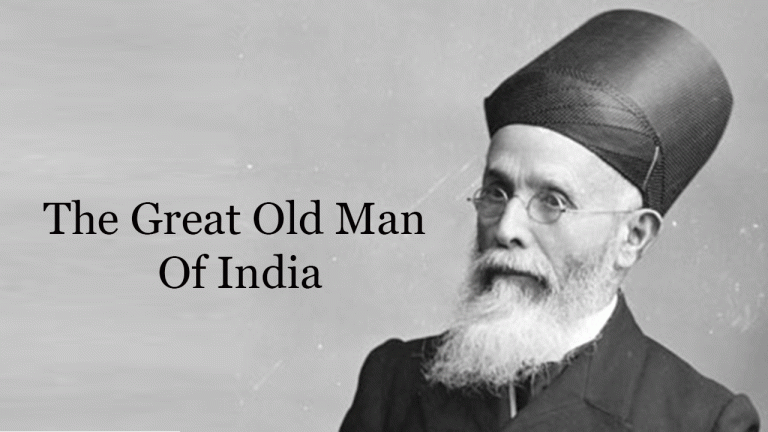
It was Naoroji who first talked about the colonial exploitation of Indian sub-continent. Dadabhai Naoroji deserves far greater space in the minds of the Indian public, a true nationalist who advocated for Indians and criticized British policies in the British parliament. He is rightly called ‘the great old man of India’ and on this independence day let’s give this ‘old man’ a tribute he deserves.

Long before the Quit India Movement, the Ghadar Party united against the British

0

India’s freedom in 1947 has been largely painted as the result of a non-violent and unipolar resistance by Mahatma Gandhi and his Congress party. But it was certainly not the case. There were many revolutionary leaders, many groups and organisations that had played their part in the long struggle and stirred the collective psyche of Indians towards creating a national identity and seeking independence from colonial powers that held it in captivity. One such attempt was the Ghadar movement that originated on foreign soils and made its impact in India through its courageous leaders who not only displayed exemplary courage in standing up to the British rule but also created a flame of resistance through their speeches, slogans and literature that mobilised countless Indians in the subcontinent and beyond.

The last years of the 19th century had seen a massive migration of Punjabi peasants and Sikh soldiers of the British Army to the west. In addition to British ruled colonies in Asia like Hong Kong and Singapore, large numbers of Sikhs had migrated to USA and Canada in search of better prospects and livelihood. Though they were able to find livelihoods there and settled in distinguished small groups in several cities, gradually discrimination and eventually administrative campaign to dissuade immigrants started in those countries. The Sikhs had been loyal soldiers of the British Army and had valiantly helped in securing many victories. In return, the Sikh community expected to support and assistance from the British Government for Indian origin settlers in Canada and the USA. Instead, harsh and unacceptable laws like the Continuous Passage Act were brought in to deny the incoming Indian migrants entry into foreign soil.

Amidst the growing discontent among the Sikhs settled abroad, community leaders like Lala Hardayal and Sohan Singh Bakhna established the Pacific Coast Hindustan Association in 1913 which later came to be known as the Ghadar Party. Sohan Singh Bakhna was its President. They also published the first issue of the magazine ‘The Ghadar’ in November 1913.

courtesy: SF Funcheap.com

A pivotal event in 1914 further motivated the Ghadar Party to steel their resolve and take their struggle against the British to a more defined phase. In 1914, 376 Indians onboard a ship Komagatamaru were denied entry at Vancouver after a long and expensive journey from Hong Kong. After agitations by Indians in Vancouver, only 24 were allowed to disembark.  The Continuous Passage Act was cited as the reason. The ship was owned by a Sikh man too. It was turned away from Vancouver and upon reaching the Hoogly harbour in India, the British Government of India declared the passengers as rebels and opened fire on them after they refused to go back to Punjab. More than 200 passengers were herded in jail. The incident of Komatagatamaru had a profound impact on the Ghadar Party’s resistance movement.

The Ghadar Party housed in Yugantar Ashram, San Fransisco was already publishing their paper The Ghadar and its bold words against the injustice done by the British was gaining popularity among Indians in USA, Canada and even Hong Kong, Malay and Singapore. After the Komagatamaru incident, many Sikh leaders returned to India to carry on the struggle for independence from the British Rule. The Ghadar Party and its literature had received wide acceptance among Indians abroad and were successful in mobilising an entire generation of Indians against the British Rule. In Punjab and northwestern India, the Ghadar movement was the foundation stone that saw the birth of many future revolutionaries like Bhagat Singh and his contemporaries.

The Ghadar Party was clear in its message that it wants an independent and self-governed India free of the British rule. It carried fearless criticism of the British rule and was bold and open in its views. Much before the Quit India movement or other defined struggles for freedom were even thought of, the Ghadar movement had created a consciousness of secular, sovereign and Independent India. While Lala Hardayal had escaped from the American authorities to Berlin and formed the Indian Independence Committee there. With the first world war commencing in 1914, the British were vulnerable and hundreds on ex-patriot Indians returned with funds and arms. Through its literature and speeches, the Ghadar Party had managed to awaken a large number of Indians to a nationalistic goal of driving the British forces out. The leaders had met and February 21, 1915, was set as the date of armed revolt against the British in many locations.

The movement inspired revolutionary heroes of India’s independence struggle. Lala Lajpat Rai, Bhagat Singh, Ram Prasad Bismil, Gulab Kaur and many others. Though the movement itself failed to launch a substantial attack on the British regime because the British were able to get information of it beforehand, the movement had created a much-needed push to the Indian conscience at large. Just before the February revolt was to be executed, the British got whiff of the plan details and descended upon the Ghadar leaders with massive force. Under the Defence of India Act formed by the Brtish, all key leaders were arrested and 42 were executed. 114 leaders got life sentences and 93 others got prolonged sentences in the first Lahore Conspiracy Trials. 18-year-old Kartar Singh Sarabha, Kala Singh, Vishnu Pingle and many others were hanged in 1915. Several leaders were sent to the cellular jail in Andaman.

The heroes of the Ghadar movement are mostly forgotten. Our history books and the popular narrative is full of odes on Mahatma Gandhi and his methods of non-violent struggles but countless lives that were dedicated to create, mobilise and inspire thousands of Indians across the globe are hardly mentioned. The Ghadar movement saw Indians regardless of class, regionalism and caste unite to bravely face the tyrannies of the British. Though started mainly as a front for Sikhs, Ghadar movement was soon joined and carried forward by leaders of many communities. It stoked the nationalistic identity of Indians living all over the globe and created a momentum that was carried forward by Bhagat Singh, Bismil and many patriots of their time. Though the armed revolt that was planned never happened, the Ghadar movement provided fuel for an entire generation of Indians to stand up and raise their voices.

RTI reveals Siddaramaiah government spent Rs 36 crore on phone bills: India Today

0

As per an India Today report, the Congress government in Karnataka under Siddaramaiah, which was ousted from power earlier this year, spent Rs. 36 crores on phone bills of MLAs and MLCs during its rule, an RTI has revealed. Each of the 224 MLAs and 75 MLCs received Rs. 20,000 per month as phone allowance.

“You can get unlimited calling for Rs 500 for three months too, certain plans are there. Why are MLAs and MLCs getting paid so much? It’s taxpayers’ money being wasted,” the report quoted RTI activist Bhimappa Gadad as saying.

Current Cooperation minister in H.D. Kumaraswamy’s Karnataka cabinet, Bandeappa Kashempur was also reported to be in agreement with the assertion that the government was paying too much for phone bills. “I agree that government is paying too much money. I pay around Rs 1000 per month on my phone. If the government agrees to cut the allowance I welcome it and it should be done,” he is reported to have said.

The Siddaramaiah government had hiked the phone allowance for MLAs and MLCs from 15,000 rupees to 20,000 rupees in 2015 as part of a larger salary hike for Karnataka legislators.

Recently, it was revealed that the state hospitality department splurged 42 lakh rupees to host political leaders during the swearing-in ceremony of H.D. Kumaraswamy. It has been a general trend of Indian politics that taxpayers have to bear the brunt of politicians wasting money on luxuries.

Financial experts give Nidhi Razdan a reality check after she tried to mock Rupee at 70

0

The poor man’s Barkha, Nidhi Razdan of NDTV has a penchant for making a fool of herself on social media. In the past, she has been lampooned by social media users for revealing her ignorance on all sorts of issues: Be it RSS, or loan “write-offs” or even basic statistics. But such minor issues do not stop foolish fearless journalists.

Today, the rupee breached the Rs 70 per dollar mark. Wasteful journalists would have spent time trying to analyse this from an economic perspective, but smart cookies like Nidhi chose to do some more meaningful work: digging up old tweets of BJP supporters. Nidhi pulled up a tweet from 2013 by one such supporter, who had expressed anguish about the rupee heading to 70.


The tweet which Nidhi dug up was from 2013, and Nidhi thought it best to use it to make a point. Unfortunately, far from making her point, this tweet actually ended up proving the opposite.

Sandeep Parekh, a financial sector lawyer attempted to explain the same to her i.e. if the rupee had reached near 70 in 2013 and after 5 years, it had re-reached that mark, and considering the inflation rate and the expected depreciation in the rupee, the currency had actually performed better than expected:


Similarly, another banker laughed off the “class IV maths” of Nidhi:


Perhaps, if Nidhi had spent time reading up, instead of digging up (old tweets), she would not have been in this position. Other financial experts and economists also weighed in on the rupee issue and explained in detail why this was inevitable:


They highlighted various facts such as how the rupee had actually gained by 20% in 4 years, in terms of the real effective exchange rate and was actually gaining power internationally. Hence, keeping in mind domestic inflation, there was bound to be a time when the rupee finally fell. Further, international pressures like the Lira crashing by 70% also had its impact on the rupee, as other global currencies too saw pressure.

Of course, these are small issues to big journalists like Nidhi Razdan, who in spite of getting it from Left, Right and Centre, would probably prefer to hold her shaky ground, rather than admitting that the Buck stops here. We only hope her prime-time debate focuses on facts, or else it might end up being another occasion when she conducts an entire debate on fake news. 

India has one of the least number of prisoners and one of the highest number of pre-trial detainees

0

Indians prisons are generally overcrowded and no one seems to talk about prisons or the inmates who occupy such correctional institutions. Seldom, we get to know about the inner workings of our correctional facilities and even lesser to compare them with other leading economies around the world. It is important because of the ability of these inmates to reintegrate themselves into the societal life almost entirely hinges upon the ability and the capacity of such correctional institutions.

India has one of the least prison population rates among the leading economies. The data we found on National Crime Records Bureau’s prison statistics in 2015 and the Institute for Criminal Policy Research showed that the perceived notion of Indian correctional facilities being incompetent is not representative of reality.

Prison Population

According to the available data, India occupies the fifth rank in the whole world as far as the prison population is concerned. India has a total prison population of 4,19,623. Prison population here denotes the entire population of inmates within correctional facilities within the country. The highest number of prison inmates is in the United States of America. The USA’s prison population is 21,21,600. The second place belongs to China with 16,49,804 inmates. The third-place occupant is Brazil with 6,82,901 inmates and The Russian Federation occupies the fourth place with 5,90,635 inmates.

If we compare the numbers in proportion to the respective country’s population India has one of the lowest incarcerated population in the world, among the leading economies. The implications of having this large population will be dealt with in the later section of this article.

Source – Times graphics

Prison Population rate

As mentioned earlier for India’s large population, the country receives a lot of adverse response from the world media community. Realistically, if one chooses to look at the number of people incarcerated by states then one must look into the Prison population rate of that country. The prison population rate here denotes, the number of people incarcerated per 1,00,000 population.

India occupies the rank of 213 out of 222 in population rate. India has a prison population rate of 33, which if put in comparison with the leading economies of the world is a great achievement for India. The United States tops the chart with a prison population rate of 655. Russian federation’s prison population rate is 408. Brazil has a prison population rate of 328. Germany has a prison population rate of 78. China has a population rate of 118.

Pre-Trial Detainees

In this issue, India is lagging behind. We have heard the phrase ‘justice delayed, justice denied’. Pre-trail detainees here denotes people who are in prison awaiting trial. India ranks 16th in the world with a whopping 67.2% of its prison inmates are pre-trial detainees. The other major economies fared much better and their numbers are as follows- the United States of America has 21.6% of pre-trial detainees. Brazil’s percentage stands at 36.6 %. Russian Federation only has 17.7 % of pre-trial detainees. Chinese number was unavailable possibly because of the strict control over such data by the Chinese government.

This proves that there is a need of much improvement in India’s judicial system and there need to be instruments put in place to make our judicial process more efficient without compromising the gravity and the quality of the judgements.

Source – Times graphics

Female Prisoners (percentage of total inmate population)

This particular aspect of these statistics is extremely interesting. The notion that men commit more crimes than women, stand true in almost every country’s case. As far as the percentage of the female population in relation to the total prison population is concerned.  India’s female prison percentage is 4.3% and the country occupies the 116th spot out of 222 countries. India shares the spot with Bhutan. The USA’s female prison percentage is 9.8%. China has a female percentage of 6.5% and Brazil’s percentage stands at 6.9%. Russian Federation’s 8.1% of the total prison population is female. Germany comes at 5.8%.

All in all, according to these statistics India’s female prison population is much lesser in terms of percentage than the other leading economies around the world.

Occupancy rate

Occupancy rate here denotes the rate of occupancy in these country’s jails and hints at the infrastructure available to the state for correctional facilities and assorted services. India occupies the 90th position in the occupancy rate. It has an occupancy rate of 114.4% meaning Indian jails are slightly overcrowded. In comparison the USA has an occupancy rate of 103.9%, Brazil has 165.4% and the Russian Federation has 79.0%.  Once again China’s statistics are unavailable for this specific classification.

One can easily derive from the aforementioned statistics that Indian jailing infrastructure is not adequate but they are not abysmal either. Thus, India needs to balance between adding infrastructure and capacity building in this particular sector.

Outside of these comparative statistics, there are a few key takeaways from these statistics with regards to the Indian states and the status of their prison infrastructure. India has been gradually lowering its occupancy rate with each year, which indicates at the progress being made to accommodate the prisoners better. In 2013 the occupancy rate was 118.4% which came down to 117.4% in 2014 and finally to the latest (2015) 114.4%.

Source – Prison Statistics 2015, NCRB

The highest numbers of inmates were from Uttar Pradesh. A total of 88,147 inmates were reported from the stated. Madhya Pradesh reported the second highest number of inmates with 38,458 inmates reported from the state.  Maharashtra with 29,657, Bihar with 28,418 and Punjab with 23,645 inmates consecutively became the third, fourth and fifth state with the highest number of inmates.

The top three regions with the highest overcrowding in prisons are D&N Haveli (276.7%) followed by Chhattisgarh (233.9%) and Delhi (226.9%).

Islamic terrorist organisation Al-Qaeda intends to carry out terror attacks in India: UN report

0

The Islamic terrorist organisation Al-Qaeda’s India affiliate, Al-Qaeda in the Indian Subcontinent (AQIS) is said to be “ideologically inclined” to carry out attacks in India suggests a new report submitted to the United Nations by the Analytical Support and Sanctions Monitoring Team. The reports, however, says that the Islamic terror group’s capability to carry out any attack is relatively low due to increased security in the country.

Al-Qaeda in the Indian Subcontinent (AQIS), the Al-Qaeda’s newest affiliate, despite being “relatively isolated” owing to increased security measures seeks to look for the security gaps for opportunistic attacks.

The report, which was submitted to the UN Security Council Al Qaeda Sanctions Committee, said that the strength of Al-Qaeda in the Indian Subcontinent, presently exists in Afghanistan has a strength of several hundred people located in Laghman, Paktika, Kandahar, Ghazni and Zabul provinces.

AQIS was formed in 2014 and was led by Asim Umar, who is believed to be an Indian belonging to the Pakistan-based Harkat-ul-Jihad al-Islami, which was itself an Al Qaeda sponsored organisation.

The report noted that Al-Qaeda still has a presence in South Asia and it reported the ability of the Islamic terror group to adapt to the local environment by trying to associate itself into local struggles and communities. The report also speaks about the AQIS’s close relations with the Taliban.

According to one Member State, even though the Islamic State in Iraq and the Levant (ISIL), known as IS poses to be an immediate threat, but, Al-Qaeda is the “intellectually stronger group” and remains a long-term threat.

The report added that some members of the Al-Qaeda core, including Aiman al-Zawahiri and Hamza bin Laden, son of dead Al-Qaeda leader Osama bin Laden, are reported to be sheltered in the Afghanistan-Pakistan border areas. The report also indicates that other core members of the Al-Qaeda may leave for more secure areas.

The report said that there are still between 20,000 and 30,000 Islamic State fighters remain in Iraq and Syria and addition to these fighters, there are a still a significant number of active foreign terrorist fighters. One Member State reports that some recent plots detected and prevented in Europe had originated from ISIL in Afghanistan.

The report has revealed that the ISIL has been successful in establishing its presence near the regions of Afghanistan and trying to capture the ground in other countries in the region.  The report says that ISIL in Afghanistan is responsible for at least one attack in the Kashmir region. However, there is no mention about the details of any attack in Kashmir in the report.

The report added that in Afghanistan, ISIL has continuously tried to expand its presence, despite pressure from the Afghan National Defense and Security Forces, the International coalition and the Taliban. The report noted that that ISIL has between 3,500 and 4,000 members in Afghanistan, including between 600 and 1,000 in northern Afghanistan led by Abu Sayed Bajauri and other former members of Tehrik-e Taliban Pakistan

ISIL currently holds the eastern provinces of Kunar, Nangarhar and Nuristan, and is also active in Jowzjan, Faryab, Sari Pul and Badakhshan provinces in the north. The group has the intention to expand into Ghazni, Kunduz, Laghman, Logar and Uruzgan provinces.

See how Twitter reacted to Business Standard’s ‘Kanwariyas are jobless’ insinuation

0

While many media outlets and left-leaning journalists are hell bent on maligning the Kanwar Yatra by painting the yatris as hooligans and miscreants, Business Standard yesterday shared a tweet with their article on Kanwariyas and their projected numbers expected to gather at Haridwar this year. The Tweet claimed that 30 million Kawariyas are to gather in Haridwar which is 7% of India’s total labour force and 7.3% of total employed people in the country. They posed a question that what do the numbers tell about India’s employment situation.

The tweet seemed to be insinuating that Kanwariyas are unemployed and a waste of the nation’s resources. This did not quite go down well with the Twitter users.

Twitter user Ashish Chandorkar had replied that it shows that for Hindus, practising their faith is beyond mundane routines and it is beyond the comprehension of newsrooms.


Some tried point to the fact that Kanwar Yatras are about faith and people take leave and plan for it.


Many even called out the blatant Hinduphobia displayed in the tweet which targetted a Hindu pilgrimage whose expenses are borne by the pilgrims themselves.


Columnist Shefali Vaidya taunted that rather than the employment situation in the country, Business Standard should worry about their ‘editorial situation’.


This is not the first time media has shown Hindu bias and Hinduphobia. We had seen how the racist Washington Post India head was seen displaying her Hinduphobia on Rudra Hanuman image. Reuters, too, had displayed its blatant Hinduphobia by comparing Hindu Swastika to the Nazi Hakenkreuz. We have also seen digital media outlets use feminism and liberalism to push religious bigotry.