Home Blog Page 7071

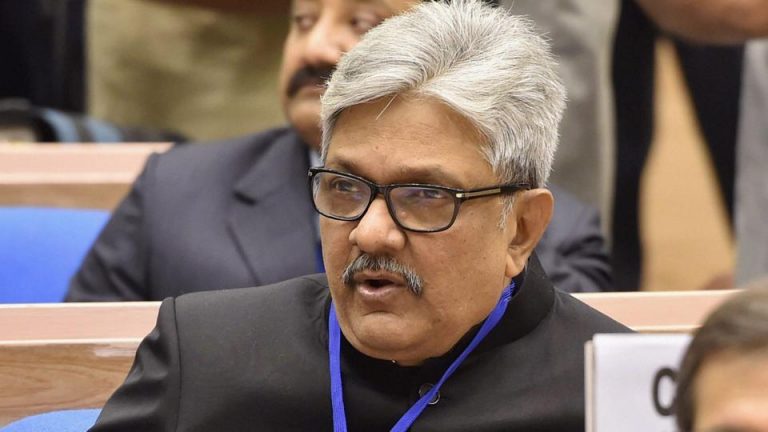
Why is media losing sleep over Justice KM Joseph

0

Something doesn’t seem right here. All the four major English dailies – Indian Express, The Hindu, Times of India, Hindustan Times – on Monday (August 6, 2018) had a front-page blockbuster story of “some” Supreme Court judges planning to corner Chief Justice of India (CJI) Deepak Misra on Monday over the “downgrade” of Justice KM Joseph.

A background is thus necessary. The President of India has cleared Madras High Court Chief Justice Indira Banerjee, Orissa HC CJ Vineet Saran and Uttarakhand HC CJ KM Joseph as judges of the Supreme Court. However, Joseph has been put last in the list of seniority and this has got the hackles up for a few Supreme Court judges, as these pious newspapers claim.

You could belong to one of the three categories below:

(a) A complete innocent on the “judicial-activism-of-Supreme-Court-kind” who would instantly ask if this is true and whether the Centre has indeed been manipulative.

(b) A general reader who probably knows that government had asked SC collegium to reconsider Joseph’s name but after being re-recommended by the SC, has now acceded to their request.

(c) A keen hawk of Indian politics who knows all about the “puppets” (i.e. media) and their “masters” (Left-Liberal lobby).

If you are a complete innocent then it’s important to know that the government is strictly going by the book. As per Article 124 (2) of the Constitution, The President may but is not obliged to consult Supreme Court judges. As for seniority, KM Joseph is least senior amongst the three in terms of dates when they were appointed High Court judges (see image).

I leave it to you what to make out of the unnamed judge’s plea that “Joseph must be recommended senior-most since his name was recommended first.” What logic? Juvenile, I say.

Now, if you are one from the second category, a general reader who knows basic details, you are still wondering why there’s so much of fuss over Joseph’s name. Well, the media tells you that’s because as Uttarakhand High Court Chief Justice, he overturned the President’s Rule in the state two years ago (and that’s why the Modi government is being vindictive). It might help you to know that as per law minister Ravi Shankar Prasad at that time, there are presently 11 more Chief Justices of various HC who are senior to Joseph; and that Kerala HC already has a judge in the SC.

And finally, if you are in the third category, a keen hawk, you would dribble out a few simple questions: How come all the newspapers have the same story and same detail without anyone being named? Was there a press conference? Did all those Supreme Court judges who intend to corner CJI Deepak Misra on Monday ring up newspaper offices? Or is it there is a “diktat” to our Lutyens’ Media to roll out the story as they have been told? Or whether a favourable judge today could be a difference between imprisonment and freedom for those out on bails or being pursued by state agencies such as Enforcement Directorate (ED)?

Does the “deep state” of India, read long-ruling Left-Liberal combine who control media and academia in this country, have the ears, if not the pockets, of both judiciary and media? Maybe they are doing out of fear. Or they are compromised. One thing though could be said with certainty: in this harmonica, all the notes are one and coming out of a single mouth.

The danger is acute. Supreme Court seems to be exercising its overreach. It’s getting into the crosshairs of the executive, that’s the government. A showdown is not far off. As the SC/ST Act has shown, the government is prepared to reverse an SC ruling when it suspects an intrusion into their authority and responsibility. More such repeats could happen.

Supreme Court must appear neutral; never show bias or prejudice or overreach for people are beginning to impute motives. It should never be seen doing a PR exercise. The people have noticed how a press conference by a few honourable SC judges was not criticized, how shamelessly an “impeachment” notice against CJI was moved, how retirement of SC judges – from ‘packers and movers’ to full-page interviews – was covered, or how the KM Joseph non-issue is being given wind to by Lutyens media and their masters.

Who cares if long-established norms and institutions are brought down, anarchy is served for the course and blood is your drink for the night.

Yogi on Deoria rape: Irregularity detected in SP regime, license cancelled in 2017, errant DPO suspended now

0

Uttar Pradesh chief minister, Yogi Adityanath resolute to take action against the Deoria rape case, in which 24 girls were rescued after being trafficked, today ordered the Central Bureau of Investigation (CBI) to take over the case, as reported by ANI.


Amid the attack from the opposition regarding governments incompetence in providing women safety, CM Yogi Adityanath, putting the onus on the previous government and the district administration, said, “The CBI had said in 2015-16 there were financial irregularities here, when we came to power in 2017 we ordered its closure. District administration did not act on time, so District Magistrate was transferred and today we have decided to charge sheet him.”

The investigation suggested that the shelter home was functioning since 2009, hence the incumbent government blamed the previous government and held them responsible for giving funds and overseeing the functioning of this shelter home.

Earlier in the day, four people were arrested and the District Probation Officer (DPO) suspended in connection with the case.

Speaking to ANI, District Magistrate Amit Kishore said, “DPO has been suspended. The DPO made a mistake, the license of this shelter home was revoked last year but girls were still sent to this shelter home. Four people have been arrested in the case and others will be arrested soon.”

The illicit activities administered by this shelter home came to light on 5th August after a ten-year-old escaped from the shelter home and informed the police about the ‘servant-like’ treatment meted out to the girls. Reports suggest about 18 girls who were registered with the shelter home are still not traced and are ‘missing’. According to police, the girls faced sexual abuse in the shelter home.

With a chilling likeliness to the Muzaffarpur shelter home case in Bihar, which shook the entire nation, as many, as 24 girls were rescued from this shelter home as well after its license being revoked, following an inspection by the Central Bureau of Investigation (CBI).

The Yogi’s government has set up a special investigation team(SIT) to probe the case. The team would also have two women officers, Additional Director General (women helpline) Anju Gupta and additional chief secretary (women’s welfare) Renuka Kumar.

Keeping in mind the safety of rescued girls, they had been shifted to a government shelter home in Varanasi.

Brajesh Thakur wanted to contest elections on Congress ticket: Accused in Bihar shelter home case puts party in dock?

0

The controversy around the prime accused in the Bihar shelter home sexual exploitation case, Brajesh Thakur does not seem to be dying down any time soon. Thakur today has disclosed that he was set to contest elections from the Muzaffarpur constituency as a Congress candidate, and hence he is being ‘targeted’.


Brajesh Thakur, while talking to media persons, revealed that it was almost decided that he will be joining Congress and fight the elections from the party’s ticket. Though it is not clear whether he was planning to contest the legislative assembly elections or the general elections which are due to be held next year.

It should be noted here that in a sordid saga of solidarity, the politicians had used this incident as a platform to settle political scores, where Congress’ prime ministerial candidate Rahul Gandhi had joined a protest rally organised by RJD’s Tejashwi Yadav, where Rahul Gandhi was caught smiling while posing for pictures to protest against the heinous crime.

Thakur’s alleged association with Congress isn’t the only embarrassment for the party which has been accused of shielding members accused of sexual harassment. Last year, former Bihar Congress Vice President and brother of journalist Ravish Kumar, Brajesh Kumar Pandey, was named as one of the accomplices of Nikhil Priyadarshi, a businessman accused of running sex scandal. However, the scandal which was pegged by many in the local media to have potential to rock local politics and unmask many other high profile people in the state was buried when the complainant, a girl from the Dalit community, got ready to marry the person whom she had accused of running a sex racket and sexually exploiting her.

Karunanidhi’s troubled legacy: 1990 Wikileaks cable reveals his unprecedented support for LTTE

0

After a long and fulfilling life, DMK Patriarch and one of the stalwarts of the Dravidian movement, Karunanidhi, passed away at a hospital in Chennai at the age of 94. And after a significant controversy, the High Court of Madras, in its infinite wisdom and boundless time to entertain themselves with such matters, has ruled that Karunanidhi will have his burial site at Marina after all.

The Kalaignar, however, had a troubled political past and a legacy that made him unpopular with large sections of the population. One of the most shameful incidents was perhaps when the former Chief Minister of Tamil Nadu, the late Jayalalitha was assaulted by DMK MLAs and attempts were made to even disrobe her, all the while as Karunanidhi, who was Chief Minister then, looked on. Apart from this sordid spectacle, Karunanidhi has also denigrated Shri Rama in the past and was also accused of abetting the assassination of former PM Rajiv Gandhi.

A confidential Wikileaks cable from the 1990s has emerged which discusses Karunanidhi’s unprecedented support for the LTTE and the concern among authorities for the same. The cable also mentions that Karunanidhi’s declarations of support for the LTTE were unlikely to yield political benefits.

The cable reads, “Chief minister Karunanidhi’s obvious tilt towards the LTTE is generating widespread controversy and dismay in Tamil Nadu, particularly in light of the DMK leader’s strained relations with the Tigers in the past. Since December, and especially in the last two months, the Chief Minister has gone out of his way to demonstrate his commitment to the Tigers — at what would appear to be significant political cost. No political figure here, least of all from the DMK, can explain to anyone’s satisfaction the gamebook Karunanidhi is using. As he becomes more and more of a “Tamil Eelam hardliner”, some may feel he is burning bridges with Delhi. We are at present baffled.”

The cable mentions that everyone was perplexed with Karunanidhi’s sudden change of heart and some even speculated that Karunanidhi desired a ‘Tamil Eelam’ variant in India itself. Although there were several theories about Karunanidhi’s unquestioned support to the LTTE at the cost of significant political capital, none could quite explain his change of heart.

Political leaders across the spectrum were dismayed with the DMK leader’s staunch support for the LTTE. Things reached a climax when Karunanidhi refused to attend the reception of the Indian Peace Keeping Force (IPKF) causing his political opponents to question his patriotism. His insult to the Indian Army was not appreciated even by his allies. Karunanidhi had even called the IPKF as ITKF: Indian Tamil Killing Force. His government was also dismissed on the ground that he had passed state secrets to the LTTE.

The LTTE was known to attack not only Sri Lankan Army but also other Tamil militant groups which it viewed as competition. The brutality of the organization also exposed by former members of the terrorist group. Karunanidhi even pursued a pact between rival Tamil militant groups but to no avail.

In her memoir, a former member mentioned how they had instructions to shoot at the legs of innocent Tamilians who were crossing over to government controlled lands during the closing stages of the War.

Tata’s Sanand factory working at peak capacity, after the usual suspects had predicted doom

0

The Tata Motors plant at Sanand, Gujrat has recently reached 100% capacity utilisation. The plant, which was initially set up to manufacture the Tata Nano compact car, now produces Tata’s successful models Tigor and Tiago and Tigor-electric. The plant has now reached its maximum production capacity of 150,000 units per anum.

According to reports, the manufacturing plant at Sanand, Gujarat alone contributes to 60% of the total passenger vehicle production of Tata Motors and since its inception in 2010, has rolled out a staggering 4,50,000 units. With the current production rates at maximum capacity, the plant will reach the number of 5,00,000 rolled out units by October this year.

Going further on its efficiency, the plant also has produced the Tigor Electric. As part of the order received from the Energy Efficiency Services (EESL) Ltd, the plant has rolled out 250 EVs so far. As per the contract with EESL, the plant had to make 5000 EVs for various government departments.

It is curious though, how such a vibrant and successful manufacturing facility, which is at its peak of production, was termed ‘dead’ by none other than Congress President Rahul Gandhi. Rahul, during his campaign for Gujrat assembly elections, had declared that 33,000 crores of tax payer’s money were turned to ‘ash’.


Rahul had shared a report in Business Standard that stated that dealers have stopped placing orders for Tata Nano car and the vehicle is seeing nominal, almost single-digit sales in the past months. From that Rahul had propagated the idea that since Nano productions are almost over for lack of demand, the Tata manufacturing plant will now be ruined and closed. Which is totally false.

Even the claim of 33,000 crores of Tax payer’s money was debunked by Tata Motors themselves. They had issued a clarification letter stating that Rahul’s claims were wrong and the Sanand plant had only received a loan of Rs 584.8 crores from the Gujrat government.

As usual. Rahul’s ideas were soon picked up by the usual suspects.

Then again, in July this year, when it was officially announced that the Sanand Plant will not be producing Tata Nanos anymore, similar claims were furthered.


It is evident here, that the individuals have picked up the idea of the plant ‘dying’ along with the Nano model which is baseless and fact-free. The plant stopped producing Tata Nanos because of low demands and lack of popularity of a single model. A particular model being discontinued after a certain time is not out of the ordinary in the auto industry and happens all the time. The Tata Nano had started with much fanfare and had created wide curiosity for being the cheapest car. But it failed to find customer popularity after a while, and hence the company eventually decided to stop manufacturing.

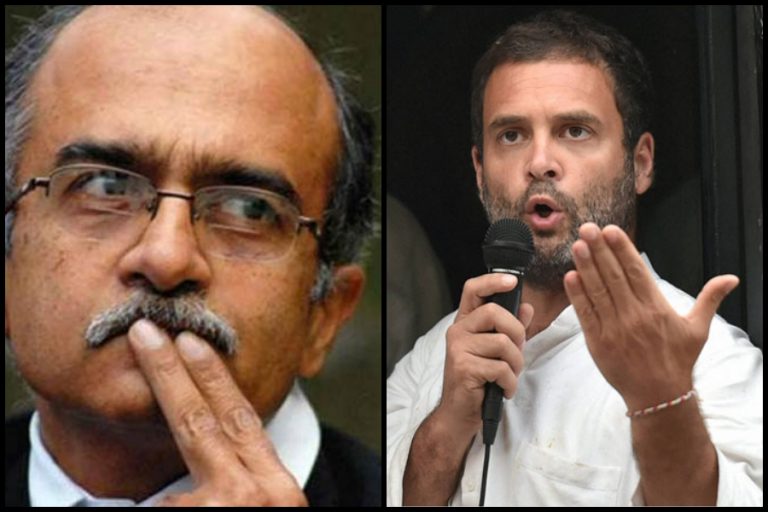
But a manufacturing plant the size and level of the Tata plant in Sanand is never exclusively designed for one model. The Sanand plant has been manufacturing other Tata car models and quite successfully so, a fact that has been so conveniently ignored by people who were quick to declare that the plant was a ‘waste of tax payer’s money’. It is notable here that the article quoted by Rahul Gandhi and Bhushan itself says that Tigor and Tiago models are actively being produced. One Twitter user, Dhaval Patel, reminded Prashant Bhushan of his old claims.


Rahul Gandhi is used to making false claims. Recently he had even lied on the floor of the parliament regarding the Rafale deal during the discussion on the no-confidence motion against the NDA government.

All you need to know about the new RBI Director, Swaminathan Gurumurthy

0

The central government has appointed noted economist Swaminathan Gurumurthy and Satish Kashinath Marathe as the new part-time, non-official directors on the central board of Reserve Bank of India. According to reports, the Department of Personnel and Training (DoPT) has issued the notification after the Appointments Committee of the Cabinet (ACC) headed by PM Modi approved their names. The names were reportedly recommended by the Department of Financial Services of the Ministry of Finance.

The RBI central board has a group of official and non-official directors. The official directors include the governor and four deputy governors. Ten unofficial directors are nominated by the government as per the RBI Act. Well-known economists and persons with strong careers in finance and banking are usually nominated.


Swaminathan Gurumurthy was born in a poor family in Tamil Nadu. He started his own charted accountancy practice in 1975 and built a successful business which saw many prominent business houses as his clients. Gurumurthy was ranked at number 30 in the 2017 list of India Today’s 50 most powerful people in the country. Gurumurthy was closely associated with Indian Express’ founder Ramnath Goenka. Gurumurthy rose to national prominence when he and Goenka took on the Reliance Industries in the 1980s. Gurumurthy and Goenka ran a series of exposes on the crony capitalism and policy influencing practised in the polyester industries.

Since then Gurumurthy has been a crucial part of many corporate world powerplays. He had never shied away from criticising government policies and had carried on relentlessly on his idea of economic development through promotion of Swadeshi culture and practices. He had also exposed bribery cases in the Bofors arms deal, called out corrupt officials in the Indian government many times and still continues his investigative journalism. He was arrested and put in jail by the then Rajiv Gandhi government too.

Gurumurthy had reportedly played a crucial role in resolving many corporate feuds. He had reportedly resolved issues between Rahul Bajaj and Shishir Bajaj of the Bajaj industries and played a vital role in L&T- Grasim Cement deals with two Indian conglomerates Larsen and Toubro Ltd and Aditya Birla Ltd. Gurumurthy’s advise on corporate and financial affairs is sought by business tycoons like AM Naik, Kumar Mangalam Birla and many more.

He regularly writes on economic policies. He is the current editor of the Tamil political weekly Thuglok. He is also the co-convenor of Swadesh Jagaran Manch, the nationalist political and cultural organisation affiliated to the Rashtriya Swayamsevak Sangh. He is known for his strong views on economic and corporate affairs. Throughout his long career in the print media, his articles have always created a stir for their deep economic insight and bold opinions.

Swaminathan Gurumurthy has been associated with the Rashtriya Swayamsevak Sangh since his college days and is a strong believer in the Sangh’s ideologies. He is also the chairman of the think tank Vivekananda International Foundation, a visiting faculty in IIT Bombay and a distinguished professor in Sastra University.

Gurumurthy was also the key person behind exposing the dubious financial dealings of the Chidambaram family. He had exposed Karthi Chidambaram‘s links with the Advantage Strategic Consultancy Pvt Ltd and brought the numerous proxies and benamis used by the Chidambaram family out in the open. Karthi was subsequently arrested by the CBI in February this year.

He had praised the Modi government’s move of demonetisation and had debunked ideas propagated by former PM Manmohan Singh that claimed demonetisation will harm the Indian economy.

A thorough nationalist and a person with deep understanding of Indian economy, Gurumurthy is the perfect choice for the role of an RBI Director.

Rahul Gandhi tries to teach lesson in ‘magnanimity’, gets reminded of his family legacy of pettiness

0

Following the demise of Tamil Nadu’s former chief minister M. Karunanidhi last night, a controversy erupted over the burial of the mortal remains of the DMK patriarch. The DMK wants Kalaignar to be laid to rest, and his memorial built, next to his mentor Annadurai’s samadhi at the Anna square on Marina beach, Chennai. When the Tamil Nadu government did not agree, DMK moved Madras High Court. The High Court has accepted DMK’s plea to have the burial at Marina beach which will be his final resting place.

Congress President Rahul Gandhi, who had smiled eerily while visiting the ailing Kalaignar a few days back, took this as an opportunity to try and score a political brownie point by asking the AIADMK government in Tamil Nadu to be ‘magnanimous’ in this time of grief by letting the Marina beach be the final resting place for Karunanidhi.


Twitter users, who seem to know Congress’ legacy better than the ones who are in charge of running the party’s social media, reminded Congress’ prime ministerial candidate of the time his mother was not really magnanimous enough.


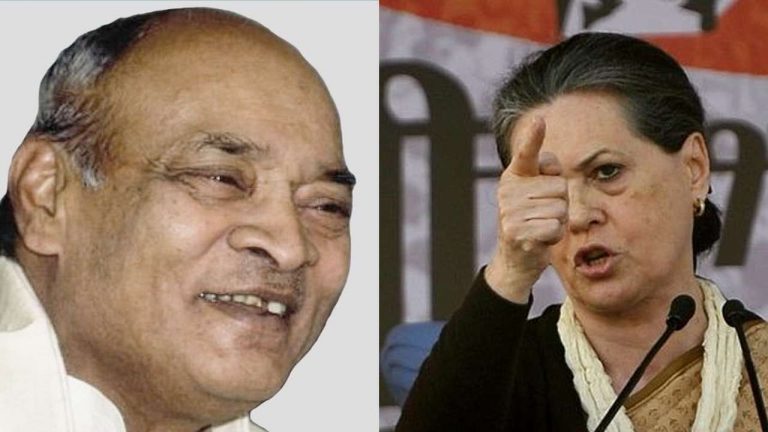
Former Congress President and Rahul Gandhi’s mother Sonia Gandhi loathed former Prime Minister and Congress President P.V. Narasimha Rao enough to not allow his mortal remains to enter the AICC (All India Congress Committee) compound. His body stayed parked in a carriage outside the gate. There was no state funeral for him, whereas Sanjay Gandhi, who forced sterilization during the Emergency and was just an MP from Amethi for little over six months got a state funeral and a samadhi in Delhi. Sonia Gandhi, it is believed, was ‘upset‘ about the way the investigation on Rajiv Gandhi assassination had proceeded.

Rao passed away on 23rd December, 2004. On 27th December 2004, M D Nalapat, Indian academic and columnist wrote (emphasis added):

In fact, despite being a former AICC president and a prime minister, Narasimha Rao was not just excluded from the Congress Working Commitee since the current heir to the Nehru dynasty took charge of the party in 1998, he was not even allowed to become one of the numerous ‘special invitees’, most of whom get selected for their cheerleader skills rather than any other contribution.

Nalapat talks about the death of Rao and the posthumous humiliation by Congress under the leadership of Sonia Gandhi (emphasis added):

Sometime after noon on December 23, 13 days after he had been brought to the hospital early in the morning following a cardiac incident, PV decided to call it quits. It was more than an hour before the doctors finally did.

Strangely — or perhaps entirely expectedly — despite a special Union Cabinet meeting at 3 pm on the subject of his funeral, at his 9 Motilal Nehru Marg home there were no arrangements made to receive the body and place it on a platform, nor flowers, nor any laying out of carpets by the administration for the mourning crowds to sit down on, nor even a shamiana on the lawns.

Finally, Kishore, a friend of PV’s, made arrangements for both. The shamiana could get erected only by 8.15 pm. Carpets and flowers too were provided by family and friends and not by what seemed to be a totally bankrupt Government of India. As if to atone for his visible helplessness, the prime minister, Sardar Manmohan Singh, looked visibly moved as he quietly remained by the side of the body, which had been brought in from the hospital a little before 5 pm. As a gesture of supreme graciousness, Sonia Gandhi turned up and even stayed for a few minutes.

While some of those present then may be made to deny this later, the fact is that the family members — as well as the crowd of mourners — would have been happy to see the father of economic reform and the first prime minister from the south in the history of Free India be given the same honours as Sanjay Gandhi and Charan Singh, a State funeral in New Delhi and an appropriate memorial.

And the final humiliation of Rao before his remains left for Hyderabad (emphasis added):

The next day, December 24, the body of the former Congress prime minister was brought to the gates of the AICC office at 24, Akbar Road and kept there for 20 minutes, ‘to pay homage.’ Apparently, the body was so heavy that it would not have been possible to lift what was left of PV from the gun carriage into the Congress headquarters, which would have been the civilised thing to do.

After this final humiliation, P V Narasimha Rao left New Delhi for Hyderabad, this time for good.

Ten years after he died, it was in 2015 when the former Prime Minister got a memorial in Delhi, that too by NDA government led by Narendra Modi.

Given the circumstances, it is mighty rich of Rahul Gandhi to talk about ‘magnanimity’.

NIA arrests deputy chief of Bangladesh terror group Jamaat-ul-Mujahideen for Bodh Gaya blasts

0

The National Investigative Agency (NIA) has arrested the deputy chief of Jamaat-ul-Mujahideen Bangladesh (JMB), Mohammed Jahidul Islam alias Boma Miyan for allegedly carrying out the blasts in Bodh Gaya in January this year ahead of a visit by the Dalai Lama.

Bangladeshi National Mohammed Jahidul Islam, who also goes by names like Kausar, Munna, Mizan and Boma Miyan, is considered to be the mastermind behind the bomb blast at Bodh Gaya. Reportedly, Kausar is also alleged to be responsible for Burdwan blasts.

NIA officials have also arrested another accused Adil alias Assadullah, a resident of village Elsiabad in district Murshidabad of West Bengal in Bangalore on Tuesday. The police have recovered mobile handsets, bank slips, handwritten notes in Bangla language and a note containing chemical formulas for preparation of IEDs. He is considered to be the right-hand man of Jahidul Hasan, the deputy chief of Jamaat-ul-Mujahideen Bangladesh (JMB).

Jahidul Hasan is also wanted in various terror cases in Bangladesh. He was sentenced to 95 years of imprisonment by the Bangladeshi courts. It is reported that he escaped from custody in Bangladesh and illegally entered India.

The NIA registered a case under IPC Sections 120, 121-A, 122, 123 & 153(A); Sec 16, 18 and 20 of UA (P) Act, 1967; Sec 14, 17 and 19 of Weapons of Mass Destruction and Delivery System, UA (P)Act, 2005; and Section 4 and 5 of the Explosive Substance Act to investigate the recovery and explosion of IEDs near Kalchakra Maidan, Bodh Gaya, in Bihar.

In another severe crackdown, the NIA has also arrested two other Jamaat-ul-Mujahideen Bangladesh (JMB) terrorists in Kerala in relation to Bodh Gaya blasts. The alleged terrorists Abdul Karim and Mustafizur Rehman are arrested for planting three IEDs at Mahabodhi temple in Bodh Gaya in January.

The NIA is suspecting the role of few other Bangladeshi nationals in terror cases. The alleged terrorists belong to Jamaat-ul-Mujahideen Bangladesh (JMB), a terrorist outfit active in the border areas of India and Bangladesh.

“The two people arrested were part of the group of around half-a-dozen JMB men who planted the IEDs. Their associates were involved in the Burdwan incident of 2014 when an accidental blast revealed the presence of a huge JMB network in the border region of Bengal. We have reason to believe that a wanted accused in the Burdwan case is the mastermind of the January Bodh Gaya incident,” said the official, who added that NIA had earlier arrested three other people in the case.

The intelligence agencies have warned the state governments that the JMB terrorists based in Bangladesh may enter states of West Bengal and Assam to increase its presence in the country by recruiting Indian Muslims into their organisation to inflict terror in the country.

The Mahabodhi temple, being one of the heritage places in the country is also a UNESCO world heritage site. The historic site has been under the target of Islamic terrorists for a very long time. The January incident was not the first time that terrorist targeted the temple. Earlier, In July 2013, more than a dozen IEDs were planted in and around the Mahabodhi temple, causing injuries to five people.

A tale of two titles: John Abraham’s Parmanu, and the new Netflix sensation Sacred Games

Having finished watching Netflix’s new sensation in India- Sacred Games- the other day, I was in search for something less intense to unwind on a lazy weekend, when I chanced upon the thumbnail for John Abraham’s Parmanu: The Story of Pokhran.

The movie, to this writer, appeared to be the latest in a list of movies inspired from the most up-voted answers on Quora to the questions like “What are some of the most fascinating stories about India?”. Any Quora visitor would attest that the platform introduced thousands to the Dashrath Manjhis and Neerja Bhanots before their inspiring lives were lapped up by Bollywood and turned into silver-screen successes (deservedly so). It was Quora where people first read about the struggles of field hockey star Sandeep Singh, felt proud about the Indian evacuation from Kuwait, or read about the real-life Pad-Man Arunachalam Muruganantham.

It cannot be anyone’s case that these stories didn’t deserve to be retold to a wider audience and the article will not take a stand on the paucity of quality story-tellers in Bollywood capable of weaving engaging stories without the crutches of inspiration from true events. But a logical progression of this trend should mean that some of the other widely celebrated Indian stories would also see a silver screen adaptation in times to come. However, seeing how a movie depicting one of independent India’s finest moments was found to be propagandist and jingoistic by the leftist newspaper The Hindu, one can rest assured that such movie adaptions will only be few and far in-between. I present my case in the following paragraphs.

It can safely be posited that The Hindu’s film-reviewer Kennith Rosario, was ruffled by how fondly former Prime Minister Vajpayee and President Kalam will be remembered by anyone who watches the movie. (For this writer at least, the interspersion of clips of Vajpayee’s spirited speeches was a welcome change from the staid screenplay and auto-piloted acting in the movie though). Kennith, though, wasn’t the only critic to pan the movie, with reasons varying from acting to its stylized yet disingenuous fictionalization of events. Yet the movie notched up an impressive crowdsourced rating of 8.4 on IMDB, drawing unmistakable parallels with a certain tea-seller who ruffles feathers in the intellectual circuit while being adored by millions.

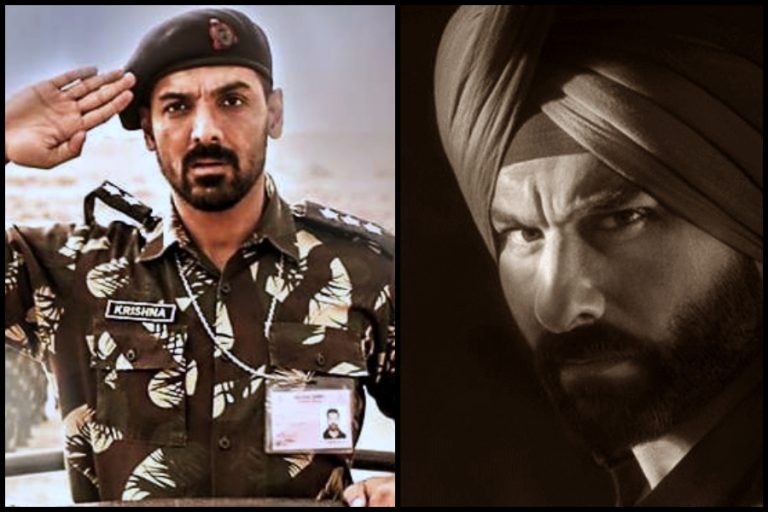
This critically ‘underwhelming’ movie’s positive message stands in stark contrast to my other recent Netflix watch- the glum and dark (literal) world of Sacred Games. The show has won universal acclaim, and I would be the first to concede that the acting and production values are notches above anything I have seen on Indian television. This though does not absolve the show-makers from being called out on what clearly is an anti-majoritarian agenda. The needless references to beef during the dinner scenes are painful to watch and look more like an after-thought to scratch the screenwriter’s secular itch. The hark-back to Rajiv Gandhi’s communal agenda at the beginning of the series is a plain counter balance designed to insulate the show-makers from criticism over the impending anti-Hindu story arcs.

The subtlety with which guilt is designed to be drilled into Hindus watching Sacred Games is remarkably well crafted when compared to Parmanu’s crude ways to instil pride. While Parmanu spells out for you how Vajpayee ensured that India gets its deserved place in the global high-table of nuclear-capable states in as many words, Sacred Games sows the seed somewhere deeper that Hindu nationalists (like Vajpayee was) are hatred filled warmongers willing to detonate a bomb and blame Muslims. (cough…Quantico…cough!)

Obviously, an idea which a viewer believes has germinated organically in his mind takes deeper roots compared to statements shoved down your throat by a poorly narrated story. As someone who follows the makers of Sacred Games on social media, I am willing to go out on a limb to assert that the second season, scheduled to coincide with the 2019 elections, will be aimed at the end-game of showing the ruling dispensation in a negative light. This is the same tactic adopted by Anurag Kashyap when he coincided the brilliantly made Udta Punjab, with the Punjab elections to influence the narrative using a compliant media. Post elections, we are yet to see any concerns about the drug abuse by his ilk, even as the problem continues unabated in a now Congress-ruled Punjab. The Udta Punjab episode, like many else, demonstrates the influence wielded by the motion pictures over narrative in India.

Jio democratized the internet and opened up the internet to the masses. The upcoming Jio GigaFiber and TV set-top boxes are expected to do the same with streaming TV shows and films in the Indian living rooms. Prime Minister Modi had said that the 2019 election will be fought through mobile phones, and he will do good to realize sooner than later that some of the ideological battle-lines will also be drawn inside the living room within the expanse of the few feet that separate the couches from the TV screen.

Buddha in a Traffic Jam, Indu Sarkar, Baadshaho and now Parmanu, to an extent, have already been branded as propaganda and the Accidental Prime Minister and Uri are expected to go down the same route. While our best film-makers remain busy filming eulogies for convicted criminals, the Indian right-wing awaits its own Clint Eastwood, who is not afraid to tell India’s story in a fashion that forces everyone to stand up and take note, even if begrudgingly.

DMK patriarch M. Karunanidhi dies at 94 : Read about the ‘Kalaignar’

0

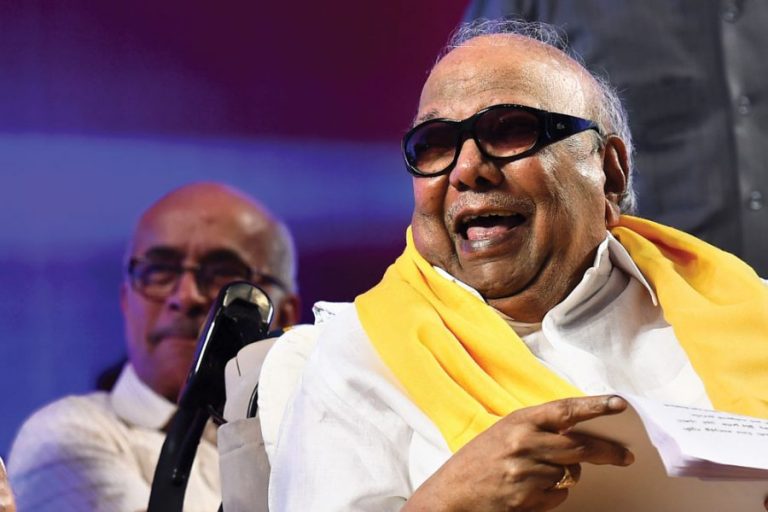
Muthuvel Karunanidhi, popularly known as Kalaignar (artist) today breathed his last in Chennai. The five-time chief minister of Tamil Nadu was a screenwriter in Tamil Nadu film industry before entering politics. Born in Thirukkuvalai village in Nagapattinam district, Karunanidhi has been heading the Dravida Munnetra Kazhagam (DMK), the Dravidian party founded by C. N. Annadurai in 1949, since 1969. Starting his career as a screenwriter in Tamil film industry and began using Tamil cinema to propagate his political ideas through the movie Parasakthi. Karunanidhi is also known for his contributions to Tamil literature in form of poems, letters, screenplays, novels, biographies, historical novels, stage-plays, dialogues and movie songs.

At 14, Karunanidhi was inspired by Azhagirisamy of the Justice Party, an organisation which represented the non-Brahmins in Madras, and participated in anti-Hindi agitations. At 33, he entered the Tamil Nadu Assembly by winning the Kulithalai seat in the 1957 election. When Annadurai passed away in 1969, he became the chief minister of Tamil Nadu. Over the years, he has held various positions in the party as well as in the government and has been elected to the Tamil Nadu Legislative Assembly 13 times.

However, his long political career had its own share of controversies. A clipping from Jayalalitha, former Tamil Nadu CM and his rival, AIADMK’s J. Jayalalitha who passed away in December 2016, shows how bitter the rivalry was between the two parties.


Jayalalitha recalled how on 25th March 1989, she was manhandled and attacked on the floor of Tamil Nadu Assembly by DMK MLAs in front of Karunanidhi, who was then the chief minister, and both his wives watching it from the VIP boxes as the DMK MLAs physically assaulted her and one of them even tried to pull up her saree. She said that that day, she left the Assembly in tears and angry and vowed to not set foot in the Assembly again till Karunanidhi was not unseated as the CM. Two years later, Jayalalitha took oath as the chief minister of Tamil Nadu.

Karunanidhi’s personal battle with Jayalalitha grew so intense that on 30th June 2001 at 1:45 am, Karunanidhi was woken up by police, roughed up and arrested in connection with the ‘flyover scam’ which resulted in alleged losses amounting to Rs. 12 crores in the construction of mini-flyovers in the city. It was reported that Karunanidhi was physically lifted by the police and he was screaming that police was attempting to kill him as he was dragged down the stairs of his house. Many political parties, including Congress, condemned this arrest and Principal Sessions Judge P Ashok Kumar came down heavily on the police and called it an abuse of power.

Karunanidhi had kicked up a storm in 2007 when he had questioned the existence of ‘Ram Setu’. At a function in Erode in 2007, he had reportedly asked for proofs of the Ram Setu. ‘”Who is this Raman (as Lord Ram is referred to in Tamil)? In which engineering college did he study and become a civil engineer? When did he build this so-called bridge? Is there any evidence for this?” he had said.

Not only that, Karunanidhi had also been accused of abetting the assassination of former prime minister Rajiv Gandhi by LTTE (Liberation Tigers of Tamil Eelam). The 5,280-page Jain commission interim report held Karunanidhi responsible for abetment, but the final report had no such mention. In yet another interview, Karunanidhi had claimed that LTTE chief Prabhakaran was his ‘good friend’ and said he would be saddened if he is killed in the war in Sri Lanka.

The ailing DMK chief had been admitted to Kauvery Hospital in Chennai a few days back and his health had been deteriorating. He breathed his last today.

The Kauvery hospital released a statement saying that M Karunanidhi passed away today, 7th August, at 6:10 PM.