Home Blog Page 7108

Congress’ Abhishek Singhvi defends Female Genital Mutilation as ‘religious practice’, govt and petitioner seek ban

0

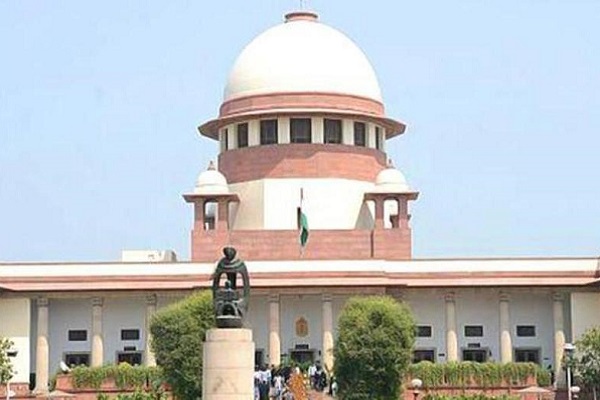
Hearing on a PIL filed by petitioner Sunita Tiwari, with the support of several gynaecologists and women organisations, the Supreme Court today slammed the practice of Female Genital Mutilation practised by the Dawoodi Bohra community in India. According to reports, a bench comprising of CJI Deepak Mishra, Justice DY Chandrachud and justice AM Khanwaliker today stated that the bodily integrity of a woman cannot be subjected to any religious practice.


The Supreme Court bench agreed with the petitioner Sunita Tiwari on the issue that the practice is covered under the POCSO Act, 2012 under which, touching the genitals of a girl under 18 is an offence. Attorney General KK Venugopal, appearing on behalf of the government of India has stated earlier that the government is seeking a complete ban over the practice and no girl child should undergo such trauma in the name of religion.

Congress leader and advocate Abhishek Manu Singhvi, appearing on behalf of the Dawooodi Bohra Women’s Association for Religious Freedom, argued in favour of the practice. He stated that the Bohra community practises female circumcision and it is a 1000-year-old practice. He further added that it is an essential and integral practice for the community based on religious grounds.


Attorney General KK Venugopal reportedly countered the argument stating that even ‘sati’ was an ancient practice and any practice by a community on religious grounds are subject to public order and morality.

Petitioner Sunita Tiwari, through counsel Indira Jaising, has argued that the UN Convention of the Rights of Child has categorised 4 types of FGM, from which the Bohras in India practice the type-1, which involves cutting the prepuce of girl children usually around 7-8 years of age. Her PIL further stated that a UN resolution passed in 2012 has denounced FGM in all its forms and it is signed by 194 countries around the world, including India. Unfortunately, India has no specific laws against it yet and hence certain religious groups are promoting it.

Tiwari’s counsel Indira Jaising also reportedly argued that it is more a cultural practice rather than religious because the Bohras are the only Muslim community in India who practice it. Upon Singhvi’s argument that it is ‘circumcision’ and not mutilation and should be protected under the religious freedom granted, AG Venugopal reportedly retorted that male circumcision is done on infants and as there are even medical benefits attributed, female genital mutilation cannot be compared to it and FGM leads to several physical and psychological complications. Indira Jaising also reportedly argued that FGM causes girls undergoing FGM suffer from a trauma that continues in adulthood.

Around 5 lakh Bohras live in India. According to reports, almost 90% of Bohra women undergo the painful practice at 7-8 years of age. The FGM is almost always performed by women of the community or non-medically trained midwives. It not only causes pain and humiliation risking the hygiene and health of the girl but also causes a lasting memory of the ordeal, adding to long-term trauma.

The Supreme Court bench has deferred the matter to July 16 for further hearing. Singhvi has stated that the issue, like triple talaq, nikah halala and polygamy, should be referred to a five-judge constitutional bench.

It is only ironic that while one Congress leader Singhvi defends the barbaric practice, another has seen preaching against it.


Congress had maintained shameful double standards during the matter of Triple Talaq too. They had created hurdles in the Rajya Sabha where numbers were in their favour. Sonia Gandhi was holidaying in Goa when the bill was being discussed in the parliament. While the party uses ‘women empowerment’ as an election tool, its leaders are often seen supporting misogynistic practices in the name of appeasement.
Congress files complaint against makers of show ‘Sacred Games’ for depicting Rajiv Gandhi in ‘poor light’

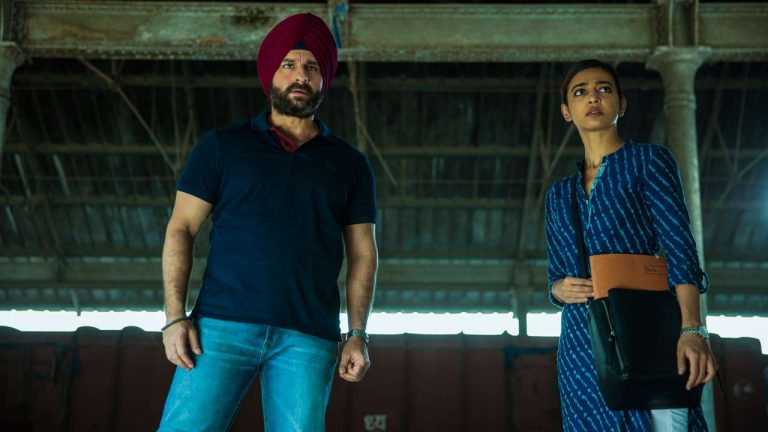
There has been much talk about India’s first Netflix series, Sacred Games. The online series, which released last week, has now made the headlines for allegedly “defaming the Congress party”. The Congress party’s workers from West Bengal, a party that pretends to be the harbingers of freedom of expression, have now filed a complaint against the show for “showing the leaders of the party in a negative light”.

The complaint mentions that in the show, Nawazuddin Siddique has called Rajiv Gandhi “fattu” (coward) and misrepresented facts. The Congress party workers have filed a complaint with the Kolkata Police.

This much anticipated online show has touched upon subjects comprising various events happened in the country in the past. The show has references to certain controversial religious and political events which occurred during various political regimes.

The reason for this discontent of the Congress party is because, the Congress party believes that the makers of the show have depicted their leaders in poor light. The show has dealt with the alleged irregularities in the Bofors deal during the tenure of Rajiv Gandhi as the Prime Minister of the country.


It also has references to Rajiv Gandhi’s failure in dealing with the Shah Bano case. There is a reference to the alleged betrayal done to the women of the Muslim community by the then Prime Minister Rajiv Gandhi. The Congress party seems to be intolerant about the production of any artistic content related to their controversial leaders.


After the release, it seems that the show has angered the Congress party workers, as the storyline has various incidents showing events which have occurred when the party was in power. The depiction of Indira Gandhi’s decision to impose Emergency in India has not been received well by the Congress Party. The show has touched upon on subjects like forced sterilization by Sanjay Gandhi during his mother Indira Gandhi’s tenure.

Interestingly, apart from the inclusion of the historical deeds of the Congress party, it has also shown the incidents occurred during the days of the Babri Masjid demolition and the agitation happened during V P Singh’s government over the Mandal Commission report.

It seems that only Congress party has an issue with the content of the recently released show, as no other political party has lodged any protest with respect to the depiction of their leaders in the show.

It is interesting to see the reactions of the Congress party president Rahul Gandhi, as he has been claiming to be the guardian of the free speech. He had associated himself in the past with the JNU students calling for breaking up the country. He had even supported their fundamental right to free speech.

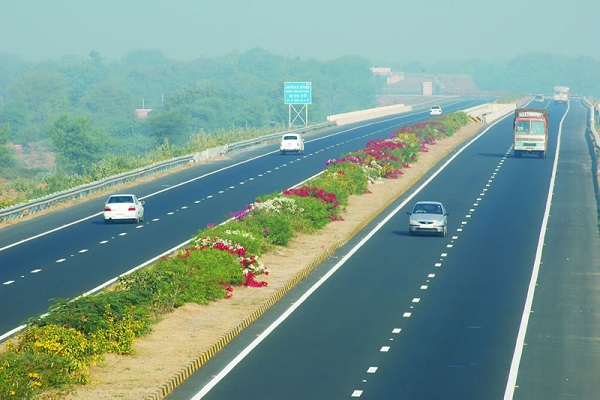
Highway construction under BJP govt clocked at 26 KM per day, UPA’s highest was 16 KM per day

The highway construction under the April to June quarter has touched 26 kilometres per day, marginally up from 25 kilometres per day, clocked in the same period last year as reported by the Financial Express.

As per the figures provided, this speed has seen the construction of 2,345 KM of roads in the three month period. As compared to this, 2,260 KM of roads were constructed in the same quarter last year.

Even though the total construction rate has remained stable, the National Highways Authority of India (NHAI) has significantly increased its pace from 1.8 KM per day to 8.3 KM per day in the periods mentions above.

If the figures provided hold up, it would mean that the rate of road construction under the BJP government has surpassed the highest ever tally clocked under the erstwhile UPA government.

As reported in a Times of India article, the highest rate of road construction by the union ministry under the UPA government was, 16 KM per day during the 2012-13 period, and the second highest was 14 KM per day in 2009-10.

Even the yearly rate of road construction under the NDA government has surpassed its UPA counterpart’s highest record.

As reported in April last year, the road construction rate for 2017-18 was clocked at 28 KM per day resulting in the construction 10,000 KM worth of roads. Prior to that in 2016-17, 8,231 KM worth of roads were constructed which translates to 22.55 KM per day.

Despite the improvement in the road construction rate, scope still remains for further advancement as, by union minister for road transport and highways – Nitin Gadkari’s own admission, they are aiming for a road construction rate of 45 KM per day.

Defense personnel take offence over message printed on railway tickets, government clarifies

Nirmala Sitharaman, the Defense Minister of India, took to Twitter today issuing a clarification to the defence personnel’s irked over a message printed on Indian Railway tickets.


Yesterday, a retired navy officer, Vikram Waman Karve, fairly active on Twitter since 2014, wrote to the PMO attaching the press clipping with letter from a retired Lt. Colonel, which was further retweeted by Satish Bahri, projecting his discontentment over a message imprinted on Railway tickets which reads, ‘are you aware that 43% of your fare is borne by common citizens of the country’.

Being of the opinion that this message was only imprinted on the tickets handed out to defence personnel, the Lt. Colonel who’s letter was attached by Karve in his tweet to the PMO, took offence saying that these messages were meant to undermine the sacrifices made by the armed forces of the country.


The Defense Minister, in her tweet, attached a letter written by Neeraj Sharma, who is the executive director, passenger marketing, Indian Railways, addressed to Rajiv Singh Thakur, the Joint Secretary (Army), which clearly mentions that the message on the tickets were imprinted with a clear intention to impart information to all passengers and not to hurt any individual or service in particular.

The letter also mentions that in accordance with the countrywide drive to make people aware of the concessions which are being provided to the public by the Government by giving railway tickets at a highly subsidized rate recovering only 57% cost of travel in non-suburban and 37% on suburban sections, the message was being printed on railway tickets and, to clear all misconceptions the last line in the letter reiterates that this message is for all passengers using the India railways and not for anyone in particular.

It also mentioned that the message is, however, not being printed for the trains with flexi-fare and after the implementation of GST, it is also not being printed on tickets issued from computerised reservation counters.

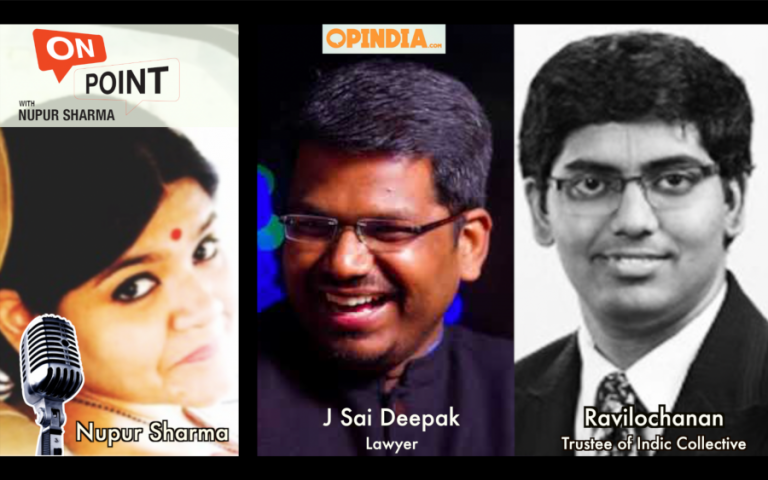
On Point with Nupur Sharma: Discussing Jagannath Temple SC order with arguing counsel and Trustee of Indic Collective

The Supreme Court of India on 5th July 2018 sat for the third time to hear the Lord Jagannath Temple petition case in which it had earlier on 8th June 2018 directed the Puri district judge, among other things, to submit an interim report on difficulties faced by temple visitors, exploitative practices or lacunas in the management, if any. It had directed the district judge to submit an interim report to the court.

On 4th of July 2018, lawyer J Sai Deepak, on behalf of Indic Collective sought permission to file an impleadment application. The bench comprising of Justices Sri Adarsh Kumar Goyal and Sri Abdul Nazeer assured Sai that he would be heard on 5th July and accordingly, he was.

J Sai Deepak was the arguing counsel and made several interesting points with regards to temple control by governments. In this podcast, we discuss Indic Collective’s impleadment motion and the subsequent Supreme Court order with regards to the Jagannath temple and Government control of temples.

[youtube https://www.youtube.com/watch?v=l5ocSzSZPp0]

The Podcast can also be heard on YouTube.

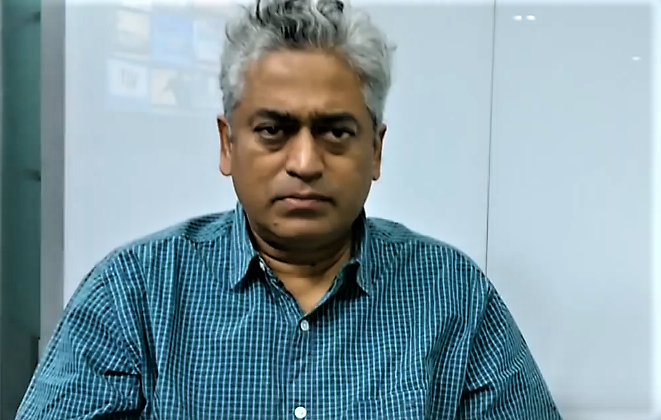
Patron Saint of hypocrisy, Rajdeep Sardesai, downplays human trafficking charges against Mother Teresa’s charity

The horror unfolding at Mother Teresa’s Missionaries of Charity is awful and would make any sane person’s blood boil. Babies born to unwed mothers sold to the highest bidder, in a sordid tale of human trafficking. In fact, there were also reports that as many as 280 babies are missing from the Missionaries of Charity.

With sex scandals and rape cases tumbling out of the Church’s closet, it was obvious for questions to be raised. But the patron saint of hypocrisy and chief sermoniser Rajdeep Sardesai was busy shielding the Church and drawing wildly false equivalences instead of asking the questions a journalist should be asking.

Rajdeep, after a long spell of silence, tweeted that the baby-selling scandal is ‘shocking’ BUT, the criminal acts of few should not be allowed to ‘tarnish the legacy of Mother Teresa or make this about Christianity’.

He then proceeded to draw a horrid equivalence that only insults the children being sold like products. He asked if “a robbery in Tirupati temple tomorrow become about Hinduism”?

Numerous scandals are being exposed with respect to the Church recently. There are scandals, rapes, and now, there is a human trafficking scandal that tumbled out of the Missionaries of Charity’s closet. The Church’s magazine today published an article that shielded the rapist and blamed the victim for the crime committed against her.

When one looks at Rajdeep’s tweet, one realises that the zeal with which the Church Magazine protected the organisation even at the cost of grave insensitivity is mirrored by many journalists who shy away from asking real questions.

Apart from the glaring insensitivity of Rajdeep’s tweet, in his bid to protect Christianity and the Church, he has exposed his hypocrisy even further.

Rajdeep has often shamelessly tried to justify crimes against Hindus and blame all Hindus and malign the religion. For example, when Hindu activist Prashant Poojari was brutally murdered, Rajdeep Sardesai had no problems assigning a “political context” to the killing. He went on to explain how Dadri was a brutal murder that must be condemned by one and all, and he was right, but Prashant Poojari’s murder had a context, and the brutality couldn’t be compared.

After the conviction of Lalu Prasad Yadav, Rajdeep Sardesai had proceeded to peddle an extremely casteist narrative giving the impression that Lalu was convicted because of his caste and some others were not because they belonged to “higher castest”. In effect, to prove that Lalu was an innocent man, he was willing to malign not only the Judiciary but also Hindus for cheering the conviction of a scam accused.

When 2 BJP workers were successively murdered in West Bengal, Rajdeep Sardesai ironically took to Twitter to urge everyone to ‘hold their peace’ until a thorough investigation was conducted and asked people to ‘stop playing politics over dead bodies in Bengal’. He was referring to the 2 BJP workers who have been found brutally murdered and hanging from trees in Purulia district of West Bengal within a week. Incidentally, Mamata Banerjee, Bengal Chief Minister’s nephew had not too long ago stated that he wanted to make Purulia ‘opposition free’. The BJP has squarely blamed the TMC government for murdering BJP cadre.

It was ironic that Rajdeep Sardesai would take this line of argument, considering when a boy called Junaid was lynched, he was quick to conclude that Hindus were responsible and that Junaid was killed because he was carrying Beef. The courts had rubbished the claim later and asserted that he was killed over a seat dispute.

In fact, when the horrific Kathua rape had happened and some lawyers, who were later vindicated by the Bar Council of India had demanded a CBI enquiry, Rajdeep was one among many who had tried to “shame Hinduism” and all Hindus.

For some reason, Rajdeep painted the ones seeking a CBI enquiry as people supporting the rapist and then proceeded to shame Hinduism.

In the light of Rajdeep’s history, who is now reportedly out on bail after conducting a fake sting operation, his sermonising with respect to the human trafficking scandal at Mother Teresa’s Missionaries of Charity was amusing to many.

Twitter too reacted to his insurmountable hypocrisy.

Prof Anand Rangarajan, who has been responding to Rajdeep and exposing his hypocrisy in style, also commented on his brand new u-turn by calling him the “Michelangelo of Hypocrisy”.


Some were too exasperated to comment.


It was pointed out by one user that on 9th, spokesperson of Missionaries of Charity was on a debate with Rajdeep and how the “journalist” kept “interpreting” what the Spokesperson was saying and drew the conclusion that this was a one-off incident and shouldn’t be used to blame entire Missionaries of Charity.


While nobody expects the controversial journalist to reform, it is bemusing that the ethical standards maintained by Rajdeep are only lower than his intelligence, since clearly, he is not even intelligent enough to mask his hypocrisy effectively.

Blame the victim and shield the accused: Church’s way of dealing with rape accusations

0

The weekly magazine Indian Currents, owned by the Catholic church and published under the patronage of the Capuchins of the Krisht Jyothi province of North India, has published a guest column by author AJ Philip. The article, titled ‘Villians as victims’ openly supports the rape accused Bishop Franko Mulakkal and the priests of the Malankara Orthodox Church against whom allegations of rape and abuse were filed recently.

The article starts with hailing the cordial behaviour and sense of humour of Bishop Fanko, with several anecdotes and examples, the author tries to establish that the Bishop was a great man. The author also mentions he knows the bishop personally and how he had inspired them to write an article about the canonization and subsequent sainthood of sister Alphonsa. He also cites how a priest in the US was ‘caught’ by a camera installed by a woman’s husband while he had gone to their house to settle a marital dispute between the two.

On the issue of the rape allegations against the priests of the Malankara church, the author states his mother belonged to that church and thus he has some idea about their traditions.

He goes ahead to assert why pre-marital counselling is important by citing a trivial anecdote of an incident in Delhi when a husband slapped his wife on their wedding night because she drank the whole glass of milk.

The author makes great attempts to malign the nun who had put rape allegations against bishop Franko. He insinuates that the nun was at a prominent position in the church and hence she presumably could not have been raped. He also questions the fact that why did the nun not complain when she was ‘getting raped’.

The author even tries to paint the rape accusation as being a motivated assault as the nun wanted to be posted in a prominent position and did not want to be transferred elsewhere.

Coming to the rape allegations on the priests of the Malankara Orthodox Church, the article even goes some extra lengths to project that the woman, when she was 16, had consensual sex and it was not rape.

The author further attempts to suggest that the woman was in a physical relationship with many men. He specifies that 2 of these men were Hindu. The article states, “As I mentioned if the “rape” at age 16 was indeed a “rape”, it was not at all a sin to be confessed. She should have told her parents about the rape and they would have seen to it that the man was put behind bars. He would not have become a priest in due course.” He suggests that as the woman in question had not told her parents about being raped at 16 and had at no point complained to the authorities about being raped by the priests, her intentions must be questionable. He states that the case came to highlight only because her husband got to know of a credit card transaction made at a hotel in Kochi where the woman had spent a day with one of the priests.

In an attempt to totally absolve the priests and bishop of any wrongdoing, the article even brings in Adam and Eve. Insinuating the intentions of the victims and a superior agenda in both the cases, the article states “sex is never a one-sided affair’.

Ironically, as per a report in the Times of India, the cover story of the magazine published an editorial and the main story pointing out that women’s safety is a big issue in India.

Crimes against women, children and numerous allegations of sexual abuse and rape have always maligned the Catholic Church worldwide. Indian churches are no exception. The irony, however, is that the church mouthpieces and authorities, while being overtly vocal to preach on political and other trivial issues, even claiming random incidents of vandalism as ‘Christianity under attack in India’ maintain a conspicuous silence over it. None of the church authorities has come out to condemn the case of child trafficking in Jharkhand. On the other hand, an active propaganda to whitewash the crimes committed by priests seems to be underway.

Assam: Woman accuses AIUDF MLA of raping her, then offering her money to withdraw the case

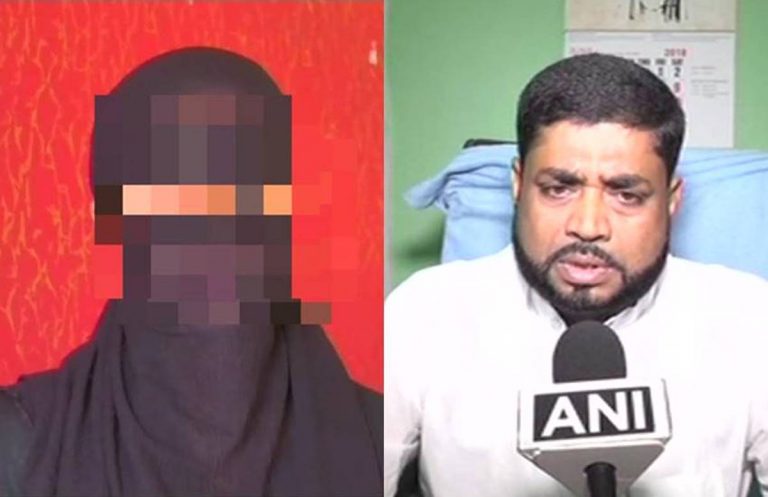
In a recent incident, a woman from Assam has accused the All India United Democratic Front (AIUDF) MLA Nizam Choudhury of raping her and also threatening her to withdraw the case.


The police have registered the case against the Algapur MLA, Nizam Choudhury in Hailakandi Sadar Police Station. It is also alleged that the victim’s husband was a part of the crime. The police have arrested the husband of the victim from Guwahati Airport as he was trying to flee to Mumbai.

The victim has accused both her husband and the AIUDF MLA of sexual harassment and she has also said that her husband had confined her and facilitated rape on two occasions in May. “I was raped by Nizam Choudhury and my husband is involved in it. I demand justice or I’ll commit suicide. The MLA has offered me Rs 5 lakh to withdraw the case,” the woman said on Saturday.

However, the AIUDF MLA Choudhury has rejected the charges and said that entire episode as a ‘political conspiracy’. Choudhary said that all the allegations against him are false. He denied any involvement in this issue. He is of the view that, the charges are made to tarnish his political image.

“It is a political conspiracy. This is being done to tarnish my image in front of the people. I will not take any actions against her. I will wait for the police to investigate this case,” he added.

Today is indeed a historic day in the long fight for the rights of the LGBT community

0

On Tuesday, a bench consisting of Justice Rohinton Nariman, Justice Indu Malhotra, Justice AM Khanwilkar Justice DY Chandrachud and Chief Justice Dipak Misra began hearing a set of petitions, filed in order to challenge Section 377 of the Indian Penal Code.

This section of the IPC is intended to combat “unnatural offences,” ensuring that “whoever voluntarily has carnal intercourse against the order of nature with any man, woman or animal shall be punished with imprisonment for life, or with imprisonment of either description for a term which may extend to ten years, and shall also be liable to fine.”

It becomes apparent section 377, holds the crux of not only prohibiting homosexuality but also criminalising any instances that get reported. Furthermore, such a law was first imposed by the British in 1860, which believed that the primary reason to ban homosexuality, was because it was against the “order of nature.” What causes most of the debate and outrage today, is the question of whether or not such a law falls in line with our expectations of a pluralistic nation. What makes the day significant, is the fact that this law has been repeatedly revisited over the last decade.

Back in 2009, homosexuality had been decriminalised by the Delhi High Court, which said in its 105-page judgement that, “As it stands, Section 377 denies a gay person a right to full personhood which is implicit in the notion of life under Article 21 of the Constitution.”

However, in December 2012, the Supreme Court decided to reverse the decision. The thrust of the decision was based on the suggestion that a “miniscule fraction of the country’s population constitute LGBT” as it claimed that ‘in over 150 years less than 200 people were prosecuted for committing an offence under the section’.

It is also well worth noting that the Supreme Court of India decided to hold the Right to Privacy as a fundamental right in August 2017, calling the right to privacy and sexual orientation- “the core of the fundamental rights guaranteed by Articles 14, 15 and 21 of the Constitution.” The mentioned verdict directly clashes with the earlier judgement and therefore might hold significance today in Court.

The Supreme court revisiting Article 377 would imply a thorough reconsideration of what it terms an ‘unnatural offence’, and while bestiality needs a law criminalising it, the Court’s refusal to delay the hearing concerning homosexual acts means they will take a strong stance on the infringement upon the right of several stakeholders.

While the nation awaits the court’s judgement, it is safe to say that this will go down as a truly historic day in the Indian society.

Modi giving Rs 1000 crores to Ambani’s Jio Institute? How lies were spread over ‘Institutes of Eminence’ list

The Ministry of HRD had yesterday announced that six institutions, 3 public and 3 private will be granted the ‘Institutions of Eminence’ (IOE) status. The IOE status enables the institutions to get full autonomy and special incentives to establish them as world-class institutions.


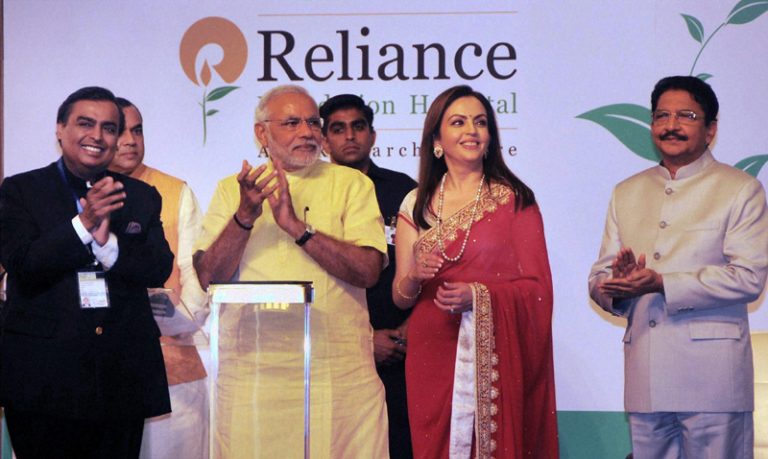
The public institutes granted the IOE status were IIT-Bombay, IIT-Delhi and IISC-Bangalore. The 3 private institutions that were given the IOE status were Jio Institute by Reliance Foundation, Manipal Academy of Higher Education and BITS Pilani. HRD Minister Prakash Javedkar had also shared that the 3 public institutes will get a funding of about 1000 crores over the next five years to help them achieve world ranking.

However, soon after the names of the IOE were announced, criticism and backlash on social media followed. Most of it was directed against the inclusion of Jio Institute by the Reliance Foundation. Though there were several people criticising and questioning the inclusion of a yet to be a functional institution like the Jio Institute in the IOE list, there were many handles spreading misinformation that the Jio Institute will be receiving a government grant of Rs 1000 crores. Due to some very prominent handles spreading false information, soon it caught the attention of the general public too and the whole narrative of ‘Modi giving 1000 crores to Ambani’s institute’ was being circulated on social media.

Congress’ AICC Jt Secretary, National in-charge, NSUI also indulged in the same lie.

So-called journalist Paranjoy Guha Thakurta also peddled the lie without cross checking facts.

It was pointed out that even the Outlook Editor who was allegedly sacked from the Magazine indulged in furthering this false narrative.


This was the deliberate spreading of false information because the HRD Minister had already mentioned that the grant of Rs 1000 crores will be for public institutes only and not the private institutes. On the basis of the inclusion of a yet to be functional institute in the IOE status the HRD Ministry later issued a clarification stating that Jio’s inclusion was due to its greenfield status.


In its clarification, the Ministry of HRD shared that the clause 6.1 of the UGC regulation 2017, for Institutes of Eminence Deemed to be Universities, does provide for a proposed institution to be considered under the status provided it meets the required criteria. Hence a separate category of applications was invited from the sponsoring organisations for setting up new greenfield projects.

They stated that the EEC ( empowered expert committee) had received a total of 11 applications under the greenfield projects and from them, only the Jio Institute had met the specified criteria. The 10 other institutes that had applied under the category reportedly included Airtel’s Bharti University, Anil Agarwal’s Vedanta University in Odisha and KREA University in Bangalore which has former RBI Governor Raghuram Rajan as an advisor.

The HRD Ministry stated that the criteria for greenfield projects to be considered under IOE were:

  1. Availability of land for construction of the institution
  2. Putting in place a core team of highly qualified and widely experienced individuals
  3. Making funds available for the institution
  4. A strategic vision plan with clear annual milestones and action plan

The document also clarified that the private institutions selected under IOE will not be given government funding.

Though the HRD Ministry clarified its stand on selecting the Jio Institute, many on social media questioned the decision.


Though there are mixed opinions about selecting a yet to be established institution like the Jio Institute under the IOE tag it was once again clear that just to further the agenda of criticising the government, deliberate lies are often being spread over social media. Blaming the PM for being partial to certain industrialists has long been the attack tool for the opposition and certain selected media outlets. It was another such attempt.