Home Blog Page 7113

Fact check: Did Kunal Kamra’s tweets really lead to protests?

India is a democracy, where protests are used as a powerful weapon to register displeasure. Usually politically motivated, mode of protests range from lodging oneself on the sofa of the one you’re protesting against to just throwing milk and vegetables on the road, just because you can in the name of democracy.

One of the oldest methods of protesting is raising slogans. Indian history is full of brilliantly coined slogans which changed our history. From ‘Simon, Go Back’, to ‘Tilak, Tarazu aur Talwar, Inko maaro joote chaar’ to ‘5 Saal Kejriwal’ to ‘Bharat tere tukde honge, inshallah, inshallah’, we’ve had both powerful and terrifying slogans which reflect the minds of our politicians.

One such protest video went viral on social media yesterday, which according to the one who posted it was of activists who had taken to streets after reading propagandist masquerading as ‘comedian’ Kunal Kamra’s tweets.


In the video, a woman seems to be leading the protest while sloganeering, ‘band karo, band karo, khule mein hagna band karo’ (stop defecating in the open). ‘Bahar mein jo hagega’ (the one who defecates in the open), followed by a crowd which says ‘apna ghu khayega’ (will eat their own excreta). While some may dismiss it as an awareness campaign to make India open defecation free, one look at Kamra’s tweets, one realises India has a long way to go until we achieve the goal. With a history of embarrassing tweets and playing the victim when being called out for his hateful behaviour, Kamra these days spends his time obsessing over nameless, faceless people over the Internet alongside women who get reduced to vaginas after watching a movie.

The above video went viral after Kamra posted a tweet making fun of Jaapi, the hat-like headgear which is a cultural icon of Assam.

Kamra mocking Assamese culture to make fun of Modi.

He referred to the Jaapi as ‘waffle cone’ and when his ignorance and arrogance was pointed out to him, he deleted his tweet. Kamra has since then ‘apologised’ for ‘unknowingly making fun’ of a cultural reference for Assam.

So when the video went viral on social media, many people considered it to be true, because it really appears believable in a country where Arvind Kejriwal gets elected as chief minister twice.

However, on closer inspection, we found that the above tweet was sarcastic, even though it seems genuine. Just as this article is sarcastic, though it may seem real. Very real.

Catholic Bishops block Savio Rodrigues on Twitter for asking questions on crimes by nuns and priests

Former Goa Congress leader and Christian activist Savio Rodrigues has today shared that he has been blocked by the Twitter handle representing the bishops of the Catholic Church in India. Rodrigues has long been criticised and even threatened for his nationalistic stand and recently he has been asking questions to bishops of India on their silence over recent events where many a church priests and nuns have been involved in serious crimes. The Catholic Bishops Conference of India which runs the Twitter handle @indianbishops has blocked Savio Rodrigues today.


Savio has recently been asking questions to the Archbishop and other bishops of India over their conspicuous silence on cases where nuns and priests have been booked for serious crimes. He mentioned incidents where priests and even a bishop have been booked for rape and especially brought the matter of the recent case of nuns of Missionaries of Charity attempting to sell babies.

Rodrigues had specifically mentioned the Archbishop of Delhi Anil Cuoto and Archbishop Ferrao stating that they were quick to brand India as unsafe and intolerant of India after a few stray incidents. He had questioned that why the usually vocal bishops are maintaining silence over crimes committed directly by members of the Church.


In a disturbing incident in Ranchi, Jharkhand this week, two nuns of the Missionaries of Charity were arrested by the police for allegedly selling two babies in Nirmal Hriday home in Ranchi. Human trafficking is suspected in the case and 22 children residing in the home have been shifted and there are reports emerging that the records of several other babies have been missing from that organisation. There are speculations that a full-fledged human trafficking racket might have been aided and operated by Missionaries of Charity.

Allegations of crimes committed by Catholic institutes have been on the rise recently. Earlier this month, 4 priests of the Malankara Orthodox Church were also booked for blackmail and repeated rape of a married woman.

Savio Rodrigues had earlier questioned Archbishop Anil Cuoto for his controversial letter to all Christians to pray for a new government in 2019. He had also come out with a strong response against Archbishop Thomas Macwan when he had called for people of India to gather against nationalistic forces right before the Gujrat elections.

Rodrigues is often abused and threatened on social media for his nationalistic stand and his critical view of the high authorities of the church. He has stated that he has been threatened multiple times and issued warnings for raising his voice against crimes of the church.

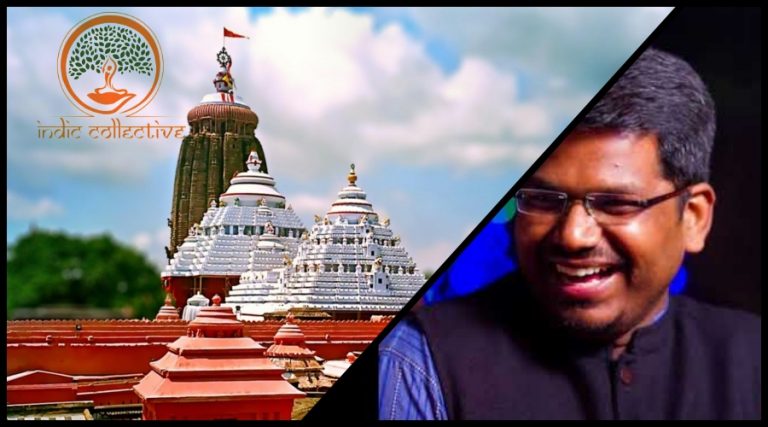
Temple Management Case: Indic Collective takes Indic issues out of the op-eds and into the court room

The Supreme Court of India on 5th July 2018 sat for the third time to hear the Lord Jagannath Temple petition case in which it had earlier on 8th June 2018 directed the Puri district judge, among other things, to submit an interim report on difficulties faced by temple visitors, exploitative practices or lacunas in the management, if any. It had directed the district judge to submit an interim report to the court.

On 4th of July 2018, lawyer J Sai Deepak, on behalf of Indic Collective sought permission to file an impleadment application. The bench comprising of Justices Sri Adarsh Kumar Goyal and Sri Abdul Nazeer assured Sai that he would be heard on 5th July and accordingly, he was.

The Impleadment Application filed by Indic Collective 

J Sai Deepak made many interesting submissions to the court. He, first and foremost, pointed out to the court that the order of June 8th itself does not limit the scope of the Court’s direction to only the Jagannath temple and in fact, it does not limit itself only to Hindu religious institutions. The interesting aspect of this submission is that Indic Collective put the ball squarely with the Court. The discussion surrounding discrimination against Hindu shrines and that of judicial over-reach has been gathering steam recently. For most, Hindus wonder why the Court feels it is within its right to interfere with Hindu faith, and on several occasions develops cold feet when it comes to the Muslim or Christian community.

What Sai did by arguing that the order pertaining to this case or any Hindu shrine applied to all religious institutions, is he, in essence, said that if the Court deems interference in Hindu shrines fit, it must also do so with Muslim shrines and Christian shrines. If it deems interference with Muslim and Christian institutions as Judicial overreach, it should assume the same for Hindu institutions.

The application by Indic Collective went on to talk about the Hindu Religious and Charitable Endowment Legislation. He argued that there was too much power with the state in case of Hindu temples and argued that Hindus should be consulted before decisions pertaining to Hindu shrines are taken. He mentioned the state of Maharashtra specifically as an example where the state’s interference is disturbingly growing. He pleaded in his application that firstly, the Law Commission should be roped in to present a report as to how the HRCE Legislation can be rationalised and also suggested that ‘Community Management Structures’ should be developed.

In conversation with OpIndia, Sai explained that the Gurudwara Act, for example, makes provision for ‘Community Management Structures”. Such structures mean that the community itself elects representatives to sit on the Gurudwara Board so their interests are better represented.

Another extremely important point that he raised was that of the State controlling the “Secular activities of a religious place”. Indic Collective’s petition argued that the line between ‘Secular activities’ of a religious place and ‘religious activities’ of a shrine are extremely blurred. The state essentially considers asset management of the temple as a ‘secular activity’ related to the temple. Which is to say, the State says that it is well within its right to manage temple funds. Indic Collective argued that the lines between secular and religious activities are thin. Money of the temple, for example, can be considered a part of the religious activity as, without the temple fund, the institution wouldn’t have the money to carry out religious activities.

Indic Collective argued that the state should limit itself to monitoring malpractice, if any, within the temple and its management, and divorce itself from other activities.

It pleaded that countrywide, and state by state consultation should be undertaken with all stakeholders to arrive at a report by the Law Commission.

J Sai Deepak argued that a Model Central Legislation should be introduced. Since this issue comes in the concurrent list, the states would be free to adopt the model legislation according to the specific needs of the state. However, when an issue is in the concurrent list, while the state is free to make changes, the state is not allowed to contravene the spirit of the central legislation. If it chooses to do so, the state legislation is liable to be struck down by a constitutional court.

Essentially, the aim of Indic Collective was to ensure that the states are not free to contravene the spirit of the central legislation which should be formulated after discussion with all stakeholders, which in this case, would be Hindus. This could eliminate the chance of individual states indulging in discriminative practices against Hindus.

The Impleadment application also argued that preservation of cultural rights is enshrined in the constitution under article 29. While the state often uses these provisions to protect the religious minorities, nowhere in the article does it mention that the protection should be limited to religious minorities. This would essentially mean that all faiths, including denominations within the Hindu fold, are free to protect their cultural practices if they can establish the importance of the practice to the preservation of their culture.

With this argument, Indic Collective ensured that if the court hesitates to strike down the cultural practices of the Muslims and Christians, it should apply the same standards to the Hindu community and not indulge in Judicial overreach.

The Supreme Court Order 

The Supreme Court order created quite the flutter among many, including the Media and the Hindu community. The one aspect of the order that was misinterpreted over and over again, was the part where the court says ‘people of all faiths must be allowed to enter the temple’. In our conversation with J Sai Deepak, he explained that first and foremost, this suggestion only pertained to the Jagannath temple and no other Hindu religious shrine. Secondly, he clarified, that this was a mere suggestion by the Bench. If the Judge had pronounced it as a direction or recommendation, the central government would be bound to follow it while drafting the legislation. However, this was neither. This was a suggestion which the central government, stakeholders and the shrine are free to reject. Further, Sai confirmed that the Indic Collective intends to submit its objection to the said suggestion.

The Supreme Court ordered that the Amicus Curiae must engage all stakeholders while coming up with his suggestions. The Supreme Court directed the Central Government to form a committee within two weeks and deliver its report by the 31st August. In this case, the Amicus Curiae would come up with an independent report that would act as suggestions to the Court. The central government, along with inputs from the Ministry of Culture and Ministry of Law and Justice would draft its own set of suggestions. The Orissa Government would draft suggestions pertaining only to the Jagannath temple and other parties, including the Indic Collective would be able to make its submissions as well. In the order, however, the Court did not take cognizance of Indic Collective’s submission to involve the Law Commission since it had already directed the formation of a committee by the central government to look into the management of religious institutions of all faiths.

There are two extremely relevant takeaways from the Supreme Court’s order.

1. In Paragraph 13 of the order, the court mentions a host of Hindu shrines that should be looked into. In that list, it also includes the Dargah Khwaja Moinuddin Chisti, Ajmer, which the mainstream media has conveniently ignored. This was a direct result of Indic Collective vehemently reiterating that if the state and the Court deems interference in Hindu shrines fit, they must extend that to shrines of all faiths otherwise, it would be discriminatory and/or judicial overreach.

2. As a result of the intervention, the central government and the ministry of culture has been roped into the issue. Sai Deepak said, the government “ought to take a proactive interest in addressing the grievances of stakeholders with respect to Temple management”.

The Puri district judge’s recommendations have not been very well received by the people at large including the Indic Collective. Various recommendations have been made with respect to abolition of hereditary sevaks/appointment of sevaks; prohibition to collect money for Annadan Atika by sevaks, ban on placing thali and pitches by sevaks to receive offerings; temple management to take control of rosaghar and chullas; proposed amendments in Sri Jagannath Temple Act, 1954, and so on.

Sai Deepak clarified while speaking to OpIndia, “The District Judge’s report was made available online only after the hearing of the July 5th and hence, we didn’t have the opportunity to respond or object to the recommendations during the hearing. Indic Collective will respond to each and every point of the report in detail and will submit its recommendations to the committee that is to be formed by the central government and to the Amicus as well.”

With the next date of hearing marked for 5th September 2018, Sai Deepak and Indic Collective seem to be gearing up to oppose the controversial recommendations of the district judge, point for point and also submit its recommendations to the committee that is to be formed by the central government and Amicus Curiae.

Importantly, the IC also intends to submit its objections with respect to the Court suggestion to allow entry of Non-Hindus into the Jagannath temple. Therefore, the impression among Indics that the order of the court is final is far from the truth.


TRS and SP supports simultaneous elections while DMK deems it unconstitutional

The polity of India has been abuzz with the idea of simultaneous elections, a procedure India had done away with after its third general elections in 1967. Prime Minister Modi has been hinting towards this particular idea since he assumed office in 2014.

According to reports, Samajwadi Party (SP) and Telangana’s Telangana Rashtra Samithi(TRS) have backed the Law commission’s proposal to hold simultaneous state assembly and Lok Sabha elections. However, all are not so impressed by this idea as DMK leader Stalin refused to lend his support to this idea.

Earlier we had reported on Law Commission’s proposed meeting with the Election Commission to discuss the same. This round of talks, which kicked off on Saturday, the Law Commission is discussing the idea of holding simultaneous elections in the nation with various leading political parties.

While Samajwadi Party leader Ram Gopal Yadav expressed his party’s support for simultaneous elections, he added that this should happen only after 2019 and that new rules are secure from horse-trading. Similarly, Chandra Sekhar Rao of the TRS also extended his ‘strong support’ for the Law Commission’s proposal.

However, the DMK has not warmed up to the idea and said it ‘goes against the basic tenets of our constitution’. In his letter to the Law Commission, DMK’s working President MK Stalin said, DMK are of the firm opinion that the proposed call for simultaneous elections to Lok Sabha & State Legislatures goes against the basic tenets of our Constitution.’

Other parties like AIADMK and Shiromani Akali Dal have extended support to simultaneous elections while TMC and CPM are opposing it.

Earlier in April, Law commission had stated that simultaneous elections to the Lok Sabha and State Assemblies could be held in two phrases from 2019 if at least two provisions of the Constitution are amended and ratified by a majority of the states.


Sikh girl in Kashmir accuses Muslim classmates of trying forced conversion, college dismisses it as ‘joke’

Last week, a Sikh girl was allegedly attacked by bike-borne assailants at Tral, Jammu & Kashmir. In a video which went viral on social media, the girl had claimed that some of her Muslim classmates had harassed her during Ramzan. She also said that she was forced to observe fast and wear a headscarf by her classmates.


In the video, she has accused her classmates of forcing her to observe fast during Ramzan and offer namaz. She further accused her classmate of saying that they have a problem with her religion. She even accused one of her classmates of giving her death threats for not converting and trying to strangle her.

While the Jammu and Kashmir Police is still investigating the incident, the college, where the girl studies, has dismissed the incident as ‘joke’ by her classmates.

The girl studies at the Islamic University of Science and Technology, Awantipora and had complained to the Vice Chancellor but according to her, he did not take any action. In fact, as per reports, Mushtaq A Siddiqi, the VC, following an ‘internal probe’ dismissed the incident as ‘joke’.

Former bureaucrat KC Singh wants journalists jailed for not being anti-Modi enough

0

Krishan Chandra Singh (KC Singh) is a former diplomat. One would image, that a civil servant and a former diplomat to Iran would have a broader view of how inextricably dissent and democracy are intertwined. The spirit of the latter being preserved by the dogged freedom to indulge in the former.

However, with Prime Minister Narendra Modi assuming power in 2014, it would appear that many have betrayed the tenets they pretended to hold dear and espouse. One of them seems to be KC Singh.

KC Singh, on the 4th of July, made a rather interesting comment. He took to Twitter to critique a Times Now report and asserted that post elections, presumably talking about the 2019 general elections, if the Modi government is voted out, commissions of enquiry need to be set up by the new government (presumably meaning Congress) to probe the “misuse” of media, social media and electronic media by owners and anchors. He said the enquiry should be conducted into how they “incite people and debase polity”.

In a shocking epilogue, he asserted that “some need to be fined/jailed and their licenses need to be rescinded.


The report on Times Now that got KC Singh so riled up was a rather simple one and an important one. The Times Now report investigated how the activism against the elected leader of India is emanating from Pakistan. The Pakistani group uses Social Media to sow discord in India against its Prime Minister, who happens to be Narendra Modi. It observed that this “activism” that emanates from Pakistan peaks during certain protests like the one held in support of arrested Maoist GN Saibaba. It observed that on the day GN Saibaba was arrested, there were several tweets under an anti-India hashtag that got almost 1 million impressions and over 86% of those tweets came from Pakistan.


Navika Kumar’s report on Times Now was an important one. It showed how Pakistan is actively campaigning to create discord in the country especially when terrorists and Maoists are arrested. The ones who want to break the country up. It is this surprising that KC Singh took offence to a report that implicated Pakistan. In fact, OpIndia had also reported earlier how fake Pakistani websites were being used to burn India in a vicious caste war.

No matter who the Prime Minister of the country is, a foreign country, that too an enemy country, actively creating discord must be countered. It is rather tragic that a former diplomat would lose sight of that simply because the Prime Minister is someone he doesn’t agree with. In essence, the babu got irked because the report by Navika exposed Pakistan wanting Modi to be pulled down. In essence, he wanted journalists who do such reports jailed because he wants Modi to be pulled down too. He wanted journalists jailed if Congress comes back to power, for not hating Modi enough.

This report by Navika Kumar triggered the babu so much, that he demanded an enquiry on journalists and possible jail term for the ones who didn’t display as much hatred against Prime Minister Modi as himself or perhaps as much as Sidharth Bhatia (whose tweet he quoted), the co-founder of propaganda website ‘The Wire’.

It is no surprise that Pakistan has a plan to break India up and create fault lines. In fact, there was a Senate report on how Pakistan should go about doing it, and we had analysed how the Pakistani line is toed by many in the media fraternity, knowingly or unknowingly, in their hate for Modi.

It is bemusing that the very people who accuse the current dispensation of being ‘fascists’ and ‘dictatorial’ with an inherent hatred for freedom of the press and freedom of expression would want the ones who don’t share their hatred to thrown in jail, much like the Emergency imposed by Indira Gandhi or like the regime cherished by Saudi Arabia. The underlying principle being. People like KC Singh are the very people who would put an asterisk and write in miniscule letters that free speech is free, but with conditions applied. The condition being that of absolute subservience to their line of thinking.

One marvels at the so-called sanghis never asking for such reprisals. The ‘right’ seems to lead a crusade against fake news, while the left and its assorted supporters seem to run a crusade against ‘dissent’, all along, branding the ‘sanghis’ as supporters of a totalitarian state and a dictatorial ruler. It is the left and its ideological supporters who seem to give ‘political context’ to murder when someone they don’t agree with turns up brutalised or dead. It is them, who want jail or worse for the ones who dare to disagree. The ones who dare to toe the path of truth, and not of ideological subservience to the left.

Perhaps this Twitter user put it in the best possible words.


They are dreaming of unleashing real emergency if they come back to power in 2019.

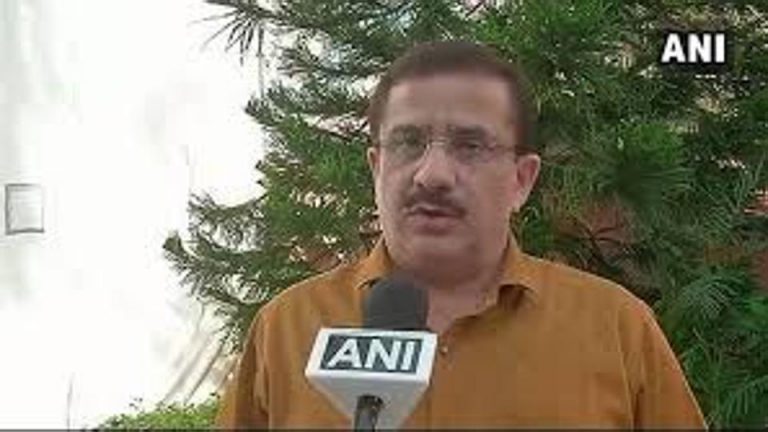
Shia Central Waqf Board chief says Muslims who keep beards without moustache are terror supporting fundamentalists

Shia Central Waqf Board chairman Wasim Rizvi has sent a video to media stating that the Muslims who keep beard without moustache are fundamentalists who have become the scary face of terror in India and the world. In a video shared by Times of India staffer Rohan Dua, the Shia Board chairman is seen saying that the fundamentalists are the same people who are creating fear in the hearts of people worldwide.


Rizvi has stated in the video that keeping a beard is ‘sunnah’ (way of life as prescribed in Islam), but not keeping a moustache is not. He added that the fundamentalists have made it a norm deliberately to create fear among people because a beard without a moustache make the face scary and is it ‘haram’ to create fear among people.

Rizvi further added that such fundamentalists then start interfering in the personal lives of the common public and issuing fear mongering fatwas that common traditional symbols like bindi or sindoor are haram. He added that sporting a traditional attire or harmless traditional symbol can never be haram, but creating an environment of fear among the people is haram.

Rizvi has further added that such fundamentalists should be booked under sedition and treason charges because nobody has a right to create laws and regulations apart from India’s law and constitution.

Wasim Rizvi went ahead to add that these Islamist fundamentalists are being inspired and encouraged by the occasional ISIS flags spotted in Kashmir and they are under the impression that they will be able to establish an Islamic fundamentalist regime in India too. He has added that these Islamist fundamentalists are leading towards causing major violence and bloodshed in the country and timely strict action needs to be taken against them.

It is notable here that the Shia Board chairman has been severely opposed by Sunni groups and has been very vocal against the All India Muslim Personal Law Board. He had earlier stated that mosques built over Hindu temples should be returned to Hindus. He had also been supportive of the Ram Temple in Ayodhya. He has also stated in the past that madarsas are the breeding grounds for terrorists, for which a Muslim group had put a bounty of Rs 10 lakh on his head. There had also been threats to his life and in April, the Delhi police had arrested some suspected aides of Dawood Ibrahim over a plot to kill Rizvi.

280 babies missing? Why CBI needs to probe Missionaries of Charity scandal

It now seems that the baby-selling racket unearthed at Missionaries of Charity in Ranchi could be much bigger than anyone could have imagined.

Untitled.png

As per the report in The New Indian Express:

“According to police sources, 450 pregnant women were admitted in various homes, run by the order founded by St Teresa, here between 2015 and 2018, but there are records of only 170 childbirths and no information about the remaining 280.

“We are investigating all angles… of the sale of children to childless couples. We have gone through records of the pregnant women and newborn babies. There are discrepancies in the records,” a police official investigating the case told IANS.”

So as many as 450 pregnant women were admitted in various homes but only 170 childbirths have been recorded. What happened to the other 280?

This is no longer a crime that could have been managed by one or two nuns and one or two low-level employees. If as many as 280 babies have been trafficked, it would require an active nationwide distribution network to match the “customers” to the traffickers. And there would have to be a sophisticated system of making illegal payments at every link in that chain.

The Jharkhand Police may have blown the lid off something massive here. At the very least, this calls for a full-scale CBI inquiry.

And we cannot just assume that the babies were sold to childless couples. The children could have been handed over to anybody … paedophiles, organ harvesters …. absolutely anybody. We really don’t know how cruel child traffickers can get.

There are four things that need to happen here.

First, there needs to be a CBI inquiry. Only the CBI would have the expertise and the authority to investigate this matter with the seriousness it deserves.

Second, the top administration of Missionaries of Charity can no longer dissociate themselves casually from this massive scandal. So far, they have been let off with “form denials”, with mere disclaimers and condemnations and some vague promises of an internal investigation. It is time to put their top management in the dock. A scandal of this magnitude is not likely to have happened without their active connivance.

Third, the scope of the investigation needs to be nationwide. This should take the form of massive search, seize and rescue operations at properties of Missionaries of Charity across the country. This is also a time sensitive matter since any delay could give time to the offenders to destroy records that would expose their crimes.

Finally, the mainstream media and social media should put together a massive awareness campaign to prevent more expectant mothers from falling into the hands of these child traffickers. The Jharkhand government has already blacklisted the Missionaries of Charity, but it is important that other states follow suit and further, that the general public should become aware of it. Whether the mainstream media will cooperate is anybody’s guess, especially because of the religious identity of the accused. This makes it a job for social media to take up as a top priority because child trafficking has no religion. We can’t let them be protected by the veil of secularism.

Manipur on the edge as a border pillar shifted 3 kms inside Indian territory

As per reports, prohibitory orders are imposed in some parts of Moreh subdivision in Manipur on Saturday after tension flared over alleged shifting of border pillar 3 kms inside the Indian territory along the India-Myanmar border. On 22nd June, a border pillar at the otherwise porous India-Myanmar border was erected at Kwatha Khunou. Following an inspection, it was claimed that the pillar stood at least 3 kms inside Indian territory.

Manipur revenue minister Karam Shyam visited the area and said that a high power committee will submit a detailed report on the disputed pillar, which was originally erected in 1969-70. The residents of Kwatha Khunou had flagged the issue last month.

According to reports, following this incident, Tengnoupal District Magistrate A Tombikanta ordered imposition of prohibitory orders under Section 144 of CrPC during the night hours for the next six months in some parts of the sub-division. Manipur Chief Minister N Biren Singh said that the ‘relocation’ of border pillars was a sensitive issue and it is too early for the state government to take any decisions.

Child rapist convicted, awarded death penalty within 46 days in Madhya Pradesh

In one of the fastest trials in the country, a 40-year-old man who was arrested for raping a 9-year-old girl, has been convicted and awarded the death penalty within 46 days of committing the crime. According to reports, Bhaggi alias Bhagirath Patel has been sentenced to death by the Additional District Judge in Sagar, Madhya Pradesh.


Bhagirath alias Narayan Patel was reportedly arrested on May 22 for raping a 9-year-old girl at a temple in Raheli, Sagar district. Patel was arrested by the Sagar police the very next day and was booked under section 376, 366 and sections 3, 4 and 5 of the POCSO Act. Acting with remarkable speed, the Madhya Pradesh Police had filed the charge sheet in the case within 72 hours of arrest. Additional District Judge Sudhanshu Saxena passed the verdict yesterday.

Sagar police, in a statement, has declared that this is the first case where death penalty awarded after the Madhya Pradesh government announced the death penalty for child rapists in the state.

Sagar Police

Madhya Pradesh Chief Minister Shivraj Singh Chouhan has also shared the news and stated that he welcomes the court’s order and he has always believed that monsters who sexually abuse children have no place in a civil society. The CM has expressed his gratitude to the state police for taking the case to a conclusion and ensure a speedy trial.

The BJP government in Madhya Pradesh had passed the law to sentence rapists of children below 12 years of age to death in January. Later even the central government had amended the POCSO Act and IPC through an ordinance in April to include the death penalty for child rapists and ensured maximum imprisonment for child sexual abusers.