Home Blog Page 7142

President Kovind rejects TN government’s proposal to release Rajiv Gandhi’s assassins

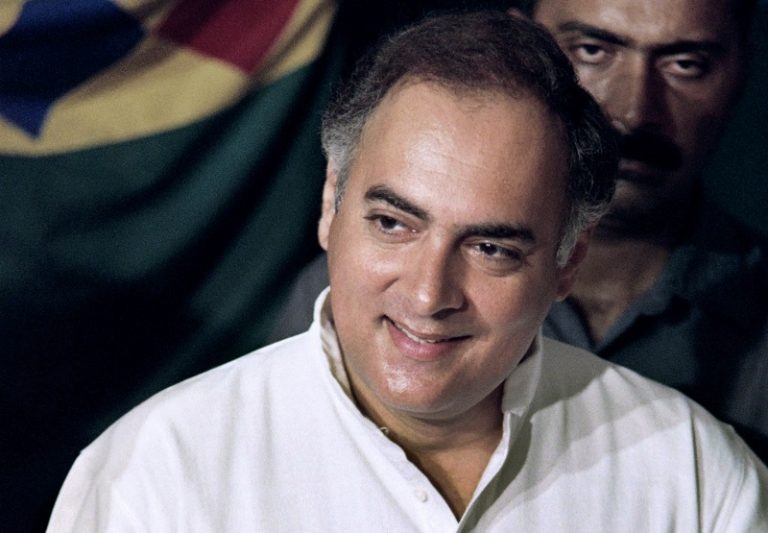
President Ramnath Kovind has rejected the Tamil Nadu government’s proposal to release the seven convicts serving sentences for former Prime Minister Rajiv Gandhi’s assassination. According to a report in The Hindu, the President has conveyed to the Tamil Nadu government that the Centre does not agree with their views on the matter.

The Tamil Nadu state government has written to the centre twice for the release of the seven convicts ‘on humanitarian grounds’. The Hindu quoted a government officials saying that the President has rejected the proposal after consulting with the Home Ministry and this has been conveyed to the state. The official added that the assassins of a former Prime Minister cannot be allowed to walk free.

The seven convicts are Nalini Sriharan, V Sriharan (Murugan), AG Perarivalan, T Suthendraraja, Jayakumar, Robert Pious and Ravichandran. Earlier in 2014, the convict Nalini had moved to the Supreme Court seeking mercy release for having served more than 14 years in jail. The SC had rejected the mercy plea. Nalini was initially awarded death sentence which was commuted to life imprisonment by the governor of Tamil Nadu in April 2000.

This year too, Nalini’s release plea was rejected first by the Madras High Court, following which the convicts had moved to the Supreme Court which had directed the Home Ministry to seek details of the physical and mental health, socio-economic backgrounds and criminal history.

The Supreme Court had stated earlier that the state government has no power to release the convicts without the nod of the central government.

MP and legal activist Subramanian Swamy has welcomed the President’s decision.


According to reports, the Centre has filed a report before the Supreme Court regarding the investigation being carried out on the conspiracy aspect behind the former PM’s assassination. Convict Perarivalan had claimed that certain aspects regarding the making of the bomb, missing security files and murder of journalist Rajinder Kumar Jain were not being probed in this matter.

Former PM Rajiv Gandhi was assassinated by a suicide bombing attack while interacting with the public in Tamil Nadu’s Sriperumbudur on May 21, 1991.

How ‘journalists’ used terrorist attack on one of their own to score a political point and bully others

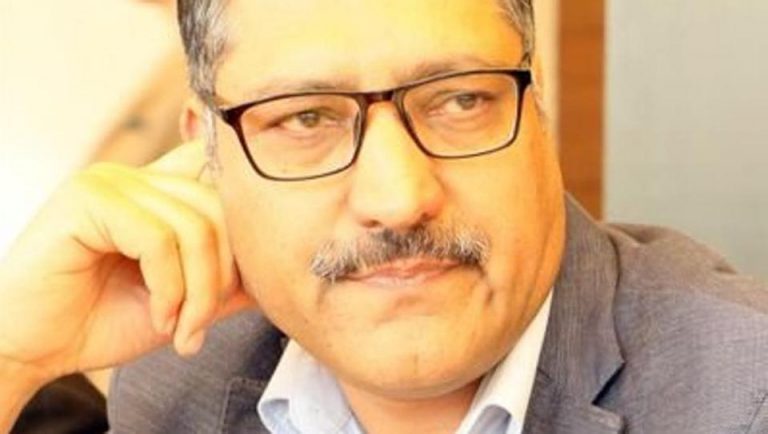
‘Rising Kashmir’ journalist Shujaat Bukhari was shot dead last night by terrorists in Kashmir, days before Eid during the holy month of Ramzan. A bullet-ridden body of an Army jawan Aurangzeb, who was abducted earlier in the day, was also recovered from a village in Pulwama district. Bukhari was the brother of Bashrat Bukhari, a minister in the Jammu and Kashmir government.

No sooner did the news of the terror attack on him came out, the journalists, many of whom have talked about the threat to their own life recently, took to Twitter to blame the terror attack on Bukhari on ‘internet trolls’ and use it to bully scientist and columnist Anand Ranganathan. Instead of blaming the terrorists and terror sympathizers for the valley, these ‘journalists’ blamed someone for voicing his opinion against Bukhari’s public views days before the assassination took place.

Earlier this week, Ranganathan had spoken at ORF forum on biased reporting regarding insurgency in Kashmir and other parts of India like Bastar.


He had quoted Bukhari and said how in one of his tweets he had said when it comes to Prophet Mohammad, he is proud to be intolerant. That when it comes to faith, there is no absolute freedom of speech. He was explaining how the ‘fourth pillar’ of the media sometimes misreports insurgency, thereby sympathising with the stone pelters and terrorists. Earlier in the day, Bukhari had defended his stand as an editor.


However, the media vultures decided to take this as the launchpad to attack and bully Ranganathan and Aditya Raj Kaul, a journalist with the channel Republic, who has also been very vocal about the rising insurgency in Kashmir, where he hails from.


In a bid to deflect the blame from the terrorists, who actually killed Bukhari, some blamed a man who simply pointed out to the rampant terrorism in the valley and other parts of India, like Bastar.


And some even tried to put the blame on ‘Twitter fundamentalists’ for being sceptical of those who cry ‘death threats’ especially when they have a new venture lined up.


What a way to shift blame from the actual terrorists who actually killed one of their own to people on Twitter who disagree with them!

And suddenly the blame was shifted to ‘armchair patriots’, while completely forgetting that Bukhari was assassinated by Islamist extremists.


Of course, speaking out against their fraternity for their biased reporting also made Ranganathan ‘vile supremacist’.


Oh, and some even tried to put the blame on ‘right wing’.


Again, let us remind you, Bukhari was killed by Islamist terrorist, not by someone who disagrees with mainstream media on Twitter.


Unfortunate that at a time when one of their colleagues is shot at and killed by terrorists, these journalists, instead of mourning and condoling his death were busy scoring political points and indulging in hate mongering and bullying private citizens.

According to journalist who has been covering Kashmir for quite sometime, Bukhari was shot by Lashkar’s Fahad Waza and Mehrajuddin Bangroo. Not Twitter trolls or Scientists and columnists giving speeches. Actual terrorists with guns.


Meanwhile, Kashmir Police has released visuals of suspects who could have killed Bukhari and has asked the general public to help identify them.

The politics of violence and what follows it

0

Political violence is a fact of life in India, unfortunately. We have, more than once, been witness to the killing, assault of people due to their political opinions and beliefs. These crimes represent the fact that we are an underdeveloped polity, where rule of law takes a back seat to the aims of the ruling party of the day. The lack of proper policing and prosecution systems is where the crux of the problem lies. But let us take a 90° turn and talk about how the media has covered the recent violence in West Bengal, particularly the gruesome murder of 20-year-old Trilochan Mahato. I have already written about this, but I’d like to dwell on it a little more.

Political violence is rampant in Bengal and has been the case in the earlier Communist regime and the current Trinamool Congress government. The Panchayat elections held earlier this year witnessed countless instances of violence, and the Supreme Court stepped in to ensure that free and fair elections be conducted in the state. In the most revolting action reported, a pregnant relative of a BJP Candidate was raped by Trinamool Congress goons.

The violence, however, did not stop after the elections. Trilochan Mahato, a 20-year-old Da BJP worker was killed and hanged in public, with the words “This is for doing BJP politics from age 18. Been trying to kill you since the vote. Failed. Today you are dead” written on the back of his T-shirt. Rajdeep Sardesai meanwhile, tells us not to ‘play politics over dead bodies’ when it was politics itself that led to the murder of a young life.

When a Bajrang Dal activist named Prashant Poojary was murdered some days after the Dadri lynching, Sardesai wrote a whole article on how there was ‘political context’ to the murder and therefore incomparable.

“Poojary has been allegedly involved in cases of intimidation and violence in the region. He was fighting the “beef Mafia” as part of the anti-cow slaughter agitation.” he wrote in his Scroll article. Poojary was ‘allegedly involved’ and his activism against cow slaughter can also be framed in a positive manner. His attempts were, after all, meant to ensure compliance with the law, not meant to create extra-judicial terror. The very fact that such an article was written should show you the bias of the media establishment.

Rajdeep’s wife, Sagarika Ghose had also given ‘context’ to the murder of Poojary, as given under this Times of India Op-Ed about how the media was not “Anti-Hindu” she wrote:

“Utterly condemnable as it was, the Moodbidri killing occurred in the context of spiralling political violence and was not a single attack on an apolitical citizen as in Dadri.”

She’s basically saying that there is a hierarchy for outrage in the case of murders. What comment does she have to make about the murder of Trilochan Mahato?

Apparently, none. She did share a Hindustan Times report about the police claiming that death of another BJP activist in Purulia was suicide. Otherwise, she has made no comment on the murder of Trilochan Mahato.

A similar search on tweets from Barkha Dutt yielded no results, while she was more than proficient in covering the Dadri Lynching case. If this is not a case study on the bias, what is?

Take another tweet of Rajdeep when asked about his hypocrisy vis-a-vis Gauri Lankesh’s murder and Mahato’s murder:

For context, here is what the Twitter user, @Vijendra3004 posted:

Did Rajdeep not play politics over the death of Gauri Lankesh? Look at how he has phrased the tweet ‘critic of Hindutva’ – clearly factual. But he could have avoided mentioning that, or he could have mentioned that the murdered journalist was a person convicted of defamation. The phrasing of the tweet shows the intention behind it, and a twitter search on Rajdeep’s tweets clearly reflects the same.

I am not in any way condoning the murder of Gauri Lankesh, but rather pointing out how the media frames that murder to go along with their narrative. While the murder of Gauri Lankesh is still being actively discussed, we have forgotten the murder of Sudip Dutta Bhowmik, another journalist murdered 15 days after Ms Lankesh in Tripura. We have forgotten one murder but not the other. That is the power of the narrative that has been framed.

You will see that people in the left-liberal establishment will only mention and pontificate about the ‘right’ kind of violence. This can clearly be seen in the now defunct Hindustan Times ‘Hate Tracker’. The tracker was meant to show instances of ‘Hate Crime’.By design, this ‘tracker’ only featured a particular format of violence and completely ignored the violence originating from the ‘wrong side’, as brilliantly exposed by Anand Ranganathan.

Rajdeep will say not to play politics over death with respect to Mahato and the murder of other BJP workers, he will call for an independent enquiry by the CBI and till then we are to ‘remain silent’. It is a wonder that Mahato’s murder was ever brought up in English mainstream media, and I guess at the end we must be satisfied with that. His murder and his murders will be soon forgotten, only occasionally remembered by the Bharatiya Janata Party and its sympathizers. His murder did not provoke outrage among a great many public intellectuals of yore, or among the otherwise hyperactive ‘members of civil society’. Mahato’s murder does not scale high on the outrage meter, for he believed in the wrong ideology. His death could not be marketed and fit into the preexisting narrative of ‘majoritarian violence’ threatening the ‘idea of India’, so he will be forgotten. Political violence, or any violence for that matter, is not created equal.


India vehemently rejects United Nation’s report on Kashmir, calls it motivated

In a strong reaction, India on Thursday rejected a UN report alleging human rights violations in Kashmir as “fallacious, tendentious and motivated”. The Ministry of External Affairs (MEA) said the report is “overtly prejudiced” and seeks to build a “false narrative”.


The government even questioned the intent in bringing out such a report. “It is a selective compilation of largely unverified information. It is overtly prejudiced and seeks to build a false narrative,” slammed a MEA statement.

“The report violates India’s sovereignty and territorial integrity. The entire state of Jammu and Kashmir is an integral part of India. Pakistan is in an illegal and forcible occupation of a part of the Indian state through aggression. We have repeatedly called upon Pakistan to vacate the occupied territories. The incorrect description of Indian Territory in the report is mischievous, misleading and unacceptable. There are no entities such as “Azad Jammu and Kashmir” and “Gilgit-Baltistan,” stated MEA.

The MEA called the report as a motivated campaign and protested against the Office of the High Commissioner for Human Rights. “Our protest and views in the matter have been conveyed unequivocally to the Office of the High Commissioner for Human Rights. We are deeply concerned that individual prejudices are being allowed to undermine the credibility of a UN institution. Such malicious reports cannot undermine the will of the people and the Government of India to take all measures necessary to protect the sovereignty and territorial integrity of the country from cross-border terrorism.”

In the report released on Thursday, the UN talked about alleged human rights violations in both Kashmir and Pakistan occupied Kashmir, and sought an international inquiry into these abuses.


The 49-page report, the first ever issued by the UN on the human rights situation in Kashmir and Pakistan occupied Kashmir, details human rights violations and abuses on both sides of the Line of Control, and highlights a situation of chronic impunity for violations committed by security forces.

The report states that “There is an urgent need to address past and ongoing human rights violations and abuses and deliver justice for all people in Kashmir, who for seven decades have suffered a conflict that has claimed or ruined numerous lives.”

UN High Commissioner for Human Rights Zeid Ra’ad Al Hussein said, “The political dimensions of the dispute between India and Pakistan have long been centre-stage, but this is not a conflict frozen in time. It is a conflict that has robbed millions of their basic human rights, and continues to this day to inflict untold suffering.”

Zeid also requested to set up a commission to investigate into allegations of human rights violation in Kashmir. He also urged Indian authorities to take immediate and effective steps to avoid a repetition of the numerous examples of excessive use of force by security forces in Kashmir.

The report also urged Pakistan to end the misuse of anti-terror legislation to persecute those engaging in peaceful political and civil activities and those who express dissent. The report suggested Pakistan amend the constitutions of Azad Kashmir and Gilgit-Baltistan to end the criminalization of Ahmadiyya Muslims.

Indian student at Cambridge University racially abused by Briton who said ‘Brexit, go back home’

As per reports, an Indian Political Science student at Cambridge University claimed that he was racially abused by a man for defending a woman clad in a hijab at the Conford House Surgery. The Briton shouted “Brexit, go back home” after he was confronted by Rickesh Advani for making disparaging comments towards a woman. The Police are now investigating the matter.

The comment by the middle-aged White man is being interpreted as a reference to the non-white skin colour of the Indian student who believes that he was told to get out of Britain because of his skin colour despite the fact that he was born and brought up in the country. “I was absolutely disgusted by what I had heard and couldn’t believe that in 2018 people can be so bigoted. At the very first opportunity I told him to politely stop and hoped that would be the end of it,” Advani said. “Any reasonable human in that situation would have accepted his wrong but he became unnecessarily aggressive to me,” said the student who also runs a charity for homeless people.

Advani also lamented the fact that no one stood up for him during the row. He said, “I was very shocked that I was the only one that stood up and said, ‘no this is not right’. Even when I asked someone to call the police, everyone just sat there and I hoped people would stick up for something so wrong.”

Simon Gridley, a manager at the surgery, personally apologized to Rickesh Advani in a letter for the conduct of the authorities during the incident. He wrote, “I would like to apologise for our handling of the racial abuse you received on that day. My colleague mentioned that you felt you were unfairly treated as you [were made to feel] that you were the guilty party, when you had, quite rightly, stood up for another member of the public. This I would particularly like to apologise for, as this was not our intention. Our intention was to simply defuse the situation before it turned into something physical, and I deeply regret that the way we did this made you feel like you had done something wrong.” He further added, “I know an apology is not the same as getting it right the first time, but again, I sincerely apologise.”

Solar panels and lights stolen, beautification defaced – Eastern Peripheral Expressway two weeks after inauguration

On 27 May Prime Minister Narendra Modi inaugurated the 135 KM Eastern Peripheral Expressway acting as a bypass to Delhi. The Rs 11,000 crore expressway completed within 500 days, set itself apart from other highways, thanks to the renewable energy initiatives along the length of it.

As reported, the expressway became the first Indian highway having its lighting completely powered by solar energy. To achieve this, eight solar power plants with a combined capacity of 4 mega watt were established. Besides this, rainwater collecting centres were set up at every 500 metre of the road.

Sadly, just two weeks after the expressway’s inauguration, its renewable innovations have started to cut a sorry state after being marred by thievery.

As per a Hindi News18 report, solar panels, lamp posts and fencing protecting the expressway has been reported stolen. A National Highways Authorities of India (NHAI) official quoted by the report claimed that, the panels and their batteries were set up at inter changes, despite which they were stolen. He claimed that electric wires have also been stolen from the highway. A video carried by the media outfit claims that even lights illuminating the underpasses have been taken away.

Incidentally the expressway was beautified by installing fountains and replicas of national monuments like India Gate, Sarnath, Qutb Minar along the highway, which too were not spared. As per the report, the fountain equipment was stolen and India Gate was defaced.

An Amar Ujala report has claimed that the loss due to the thievery runs into lakhs. As per the report, the NHAI is in the process of making a list of the stolen and damaged equipment.

Incidentally this isn’t the only time a state of the art public property has been ruined in no time in India. We had reported how headphones were stolen, interactive screens vandalised and toilets were not flushed during Tejas express’s maiden trip.

Tamil Nadu in talks with National Gallery of Australia to get back 7 stolen ancient idols

The government of Tamil Nadu has initiated talks with the National Gallery of Australia to recover several crores worth seven ancient temple idols stolen from the state and displayed in the Canberra-based museum.

Minister for Tamil Official Language and Tamil Culture ‘Ma Foi’ K. Pandiarajan met Australian Consul General Susan Grace and NGA deputy director Kristen Paisley. He said that the Australian government had agreed to return all idols belonging to the state and signed an agreement on this count.

“We have shared information on the antiquity of the idols, its origin, temple location and even literary proofs with the Australian authorities to stake a claim on the seven idols which were stolen from Tamil Nadu several years ago and being displayed at their museum at Canberra in Australia,” said Minister Pandiarajan.

He said he was hopeful of recovering the stolen idols from Australia at the earliest and pointed to the existence of an extradition treaty between India and Australia to recover the artefacts.

He pointed out that India and Australia have an agreement that covers the return of antiques and artefacts. The Australians, on their part, agreed that the idols were meant for worship and not to display, the minister said, adding, “We are working on modalities on how to bring back the antique idols displayed in the Australian Museum.”

The state government has claimed a 1,300-year-old standing Sambandar bronze idol, another rare bronze, a 1000-year-old dancing Sambandar, stolen from the Naganathaswamy temple at Manambadi village in the Tiruvidaimaruthur taluk of Nagapattinam district which was sold for Rs 4.59 crores.

The state has claimed many idols, a 1000-year-old of Arumugan from Manambadi, an 1100-year-old Nandi idol, Bhadrakali idol of the Kailasanathar temple at Kollumangudi, in Mayiladudurai taluk, and two stone Dwarapalakar idols from Udayar Sivan temple in Atthanallur, Tirunelveli. These idols were smuggled out of the country by various antique dealers at various points in time.

In the absence of consistent efforts and documentation with the Hindu Religious and Charitable Endowments Department since 1959, nothing much was done to retrieve the stolen idols.

Ponn Manickavel, after taking charge, reopened investigations and booked fresh cases. Some of the offenders responsible for the theft and illegal export of these idols were identified. This recovery of idols was a part of a very long process to identify and find the lost treasures.

The Tamil Nadu idol wing police have booked seven persons, including notorious artefact smuggler Subhas Kapoor, Vallavaprakash and Aditya Prakash of Indo Nepal Art Centre in Mumbai and Nachu alias Lakshmi Narasimman of Silpa Vatika Gallery for the offence of theft, smuggling and illegal export of idols including these seven idols. Idol wing chief Pon Manickavel solved the 22-year-old idol theft case whose file was in 1996 as untraceable a year after registering the case.

Recently, two 1000-year-old bronze idols of Rajaraja Chola and his wife, Lokamadevi, were returned to Tamil Nadu after they were stolen from Brihadeeshwarar temple at Thanjavur over 50 years ago. The idols were retrieved from the Calico museum Sarabhai Foundation galleries in Ahmedabad. at Ahmedabad and will be installed at the Temple

Two years ago, Australia had returned three artefacts, including an idol of goddess Pratyangira, stolen from a Shiva temple in Cuddalore district in Tamil Nadu. In 2014, then Australian Prime Minister Tony Abbott had returned two statues of Nataraja and Ardhanariswarar stolen from temples in the state.

Dalit family set on fire in Katihar, Abdul Rehman and wife arrested

0

Members of a Dalit family have been reportedly set afire by their neighbours in Katihar, Bihar. According to reports, their thatched house was set on fire by locals while the family slept. 2 little girls died in the fire while their parents are in critical condition.

The incident reportedly occurred in the Gordah village under Azamnagar police station in Katihar district in Bihar on the night of 10th June. The Dalit person named Bajjan Das reportedly ran a tea stall on a piece of government-owned plot. The family lived in a thatched house nearby. According to reports, some of their neighbours were pressurising them to vacate the area so they could use it themselves. The Dalit couple has been refusing to move from the area.

On Sunday night, some of the neighbours reportedly locked the house from outside, poured petrol over the thatched house and set it on fire while the Dalit family slept inside. The couple’s two young children died in the fire while Bajjan and his wife are critical and struggling for their lives in a Katihar hospital. 2 of the neighbours, Abdul Rehman and his wife have been arrested by the local police for the crime. Other accused are absconding.

Katihar SP Vikas Kumar has been reportedly camping in Azamnagar after the incident. He has told the media that other eight accused are absconding and the police are after them. He assured that the critically injured couple are receiving medical care and the police will not spare the perpetrators.

Bajjan’s wife Manjula has stated that a neighbour named Muzlim had been threatening and harassing them to vacate the plot. Just a week ago he had threatened to kill them if they do not move from the plot.

Recently, several Dalit families were rendered homeless in Raghopur when suspected RJD supported goons set fire to their houses.

Jignesh Mevani is bizarre and probably needs help

0

As Spiderman said, with great powers, comes great responsibilities. And not everyone can digest power, let alone be responsible about it. We have seen the downfall of activist turned politician Arvind Kejriwal who came to power on the plank of anti-corruption crusade and then went ahead and hugged the brand ambassador of corruption. He went from being a ‘hope’ to a joke by his lack of willingness to work and then blaming his inefficiency on Prime Minister Modi.

Even as we recovered from the Kejriwal catastrophe, another one was brewing in the background.

Jignesh Mevani started his career with Mukul Sinha, a very vocal Modi hater for about 8 years, working with him on the 2002 riots cases Sinha was working on. He claims to have worked on various Dalit issues and joined Aam Aadmi Party, then a rising political outfit, in Gujarat as an extension to his political ambition. After the Una agitation, he formally quit Aam Aadmi Party, perhaps realising his association with the sinking ship may bring down his own ambitions.

Soon after quitting Aam Aadmi Party, Jignesh decided to contest the Gujarat Assembly elections as an ‘independent’ candidate from Vadgam, and Congress had supported him in his venture. With BJP facing 22 years anti-incumbency in Gujarat, it became easier for fringe politicians to become mainstream. Mevani was one of them. He won the election, became an MLA, but could never come out of his ‘activist’ image.

Unlike his contemporary, Alpesh Thakore, Congress MLA and one of the three faces of Gujarat politics, Mevani has a ‘national appeal’. Because he’s very active on Twitter and regularly shares a stage with Delhi-based freelance protestors and also allegedly indulges in inciting mobs to take to violence. And when he’s not busy spreading lies, he shares photoshopped images of private citizens to target-bully them.

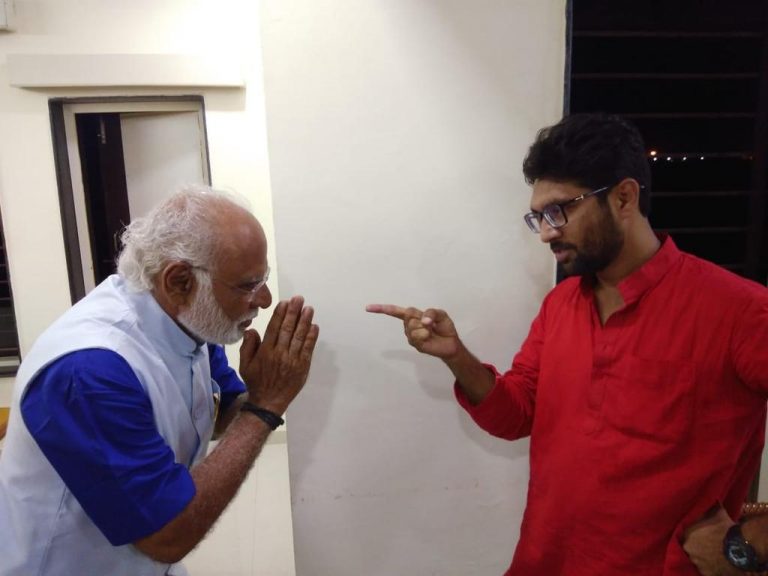
Today, Mevani tweeted an image of himself with another person dressed as Prime Minister Modi, where he appears to be apprehending the Modi-lookalike asking him to ‘end his drama’ and give answers about the promises he had made regarding job opportunities.


Even if you dismiss the fact that the dressed up fellow looks like a badly photoshopped version of John Dayal, Even as a lawyer himself, Mevani’s disregard for the law and basic sense of decorum is shocking.

While the jury is still out on who mentored him on his crass behaviour, Sinha or Kejriwal, one thing is for sure he needs some help before he becomes fully Kejriwalified.

Fadnavis govt announces pension for those who fought against Indira Gandhi imposed emergency

The Devendra Fadnavis led Maharashtra government on Wednesday announced a Rs 10,000 monthly pension for those jailed during the emergency, The Hindu has reported. In case one was jailed for less than a month, they would be eligible for a Rs 5,000 monthly pension.

Additionally, the wives of those jailed for more than a month would receive Rs 5,000 and in the other case, they would receive Rs 2,000. As per a PTI report, the scheme would also extend to the widows of those jailed during the 21 month period from 1975 to 1977.

As per an Asian Age report, the pension would be granted to those arrested and jailed for more than a month during emergency imposed by the Indira Gandhi led Congress government in the 70s. All the agitators were arrested in the 1970s under the draconian Maintenance of Internal Security Act (MISA) act while protesting against the lack of democracy.

This announcement was made following the approval by a three-member ministerial group which has been empowered to take decisions in the Chief Minister’s absence. About a month earlier this proposal was cleared by the Maharashtra cabinet.

As per Relief and Rehabilitation minister Chandrakant Patil, guidelines have been set up with regards to the pension disbursement, which would be revealed in the future.

We had reported back in December that the Maharashtra government was planning to bring in this welfare scheme following similar implementations by other states like Uttarakhand, Rajasthan, Madhya Pradesh and Chhattisgarh. For example, the Madhya Pradesh government pays an honorarium about Rs 25,000 per month.

Incidentally, the Congress party has criticised this decision by the Maharashtra government by stating that it was an insult to freedom fighters if emergency detainees are accorded the same status and respect as them.