Home Blog Page 7177

Now get a 5% discount on Railway tickets if you book them via the UTS app

The Southern division of Indian Railways has announced a 5 per cent discount on tickets booked via the UTS mobile app to encourage paperless transactions, Financial Express has reported.

This 5 per cent discount would be applied on the new recharges done to the internal Railway Wallet also known as R Wallet. For example if you recharge the wallet by Rs 100, the total amount credited for the usage would be Rs 105. The wallet can either be recharged online via the app or via a railway ticketing counter.

Going by a Times of India report, this discount effective from 24 May has been approved by the Railway board and would remain in place for the next three months.

The UTS app which is available for Android, and IOS powered smartphones can be used in select locations for booking unreserved train tickets tickets. We had reported during demonetisation how the app could be an excellent vehicle to help the poor learn cashless transactions, if it was improved by the railways.

Currently going by reports, the service is used by 3 per cent of the total unreserved passengers – a number which might go up owing to the available discounts. The factor which might also help encourage such transaction is that, the service has now been extended to all the railway stations in the southern division.

Commuters are warming up to this app, which can be gauged by the fact that out of the 11.90 lakh passengers who used the train service in Chennai between 14 April to 14 May, 2.08 lakh booked tickets via the UTS app.

Even though the above reports claim that the discount has only been offered by the Southern Railways, the official website of UTS, carries a notification that “Indian Railways offers bonus on recharge of Railway Wallet (R Wallet) effective from 24.05.2018”:

Now get a 5% discount on Railway tickets if you book them via the UTS app
Indian Railways offers discount on UTS tickets

Hence it raises the question whether the said offer is applicable not just for the Southern Railway, but for all the railway divisions where this service is available.

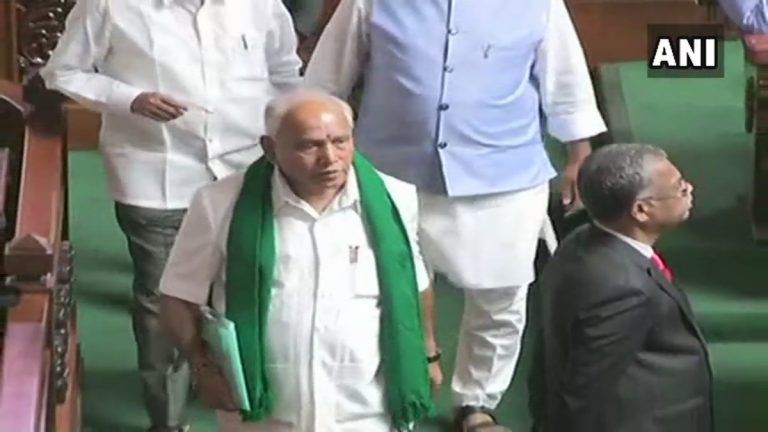
BJP MLAs walk out of assembly, Kumaraswamy wins floor test

The long-awaited floor test in the Karnataka assembly was held today. HD Kumaraswamy and his coalition government have won the floor test with 117 votes cast for them. According to reports, all the MLAs od the BJP staged a walkout before the floor test.


JD(S) leader and newly sworn-in CM of Karnataka HD Kumaraswamy moved a motion of confidence in the assembly today. Earlier, Congress leader Ramesh Kumar was appointed speaker of the assembly. BJP had reportedly withdrawn the nomination of its candidate Suresh Kumar and Yeddyurappa had stated that they had withdrawn the nomination to maintain the dignity of the post, they want the speaker to be elected unanimously. After the motion of confidence, leader of the opposition BS Yeddyurappa in his speech declared that from now on his struggle will be against the corrupt father-son duo of HD Devegowda and HD Kumaraswamy.

Yeddyurappa asserted his commitment to the farmers of the state and stated that the BJP will start statewide bandh if Kumaraswamy does not waive of farmer loans. Yeddyurappa has given a 24 hour time for the new state government to waive off farmer loans and declared that the BJP will organise state-wide bandh on Monday.


According to reports, HD Kumaraswamy has reacted to the BJP’s bandh call by saying that he is not deterred by threats of bandh and alleged that the BJP is trying to play with the emotions of the people with such statements.

Earlier today, Congress leader and the new deputy CM G Parameshwara had stated that the Congress has not taken any decision on whether to support HD Kumaraswamy for a full five-year term.

BJP is set to lose MP and Rajasthan, says CSDS. Here is their track record

According to the latest CSDS survey on the Madhya Pradesh and Rajasthan Assembly elections to be held later this year, the Congress leads the BJP in the two states by a healthy margin. In Madhya Pradesh, Congress has a lead of 15 percentage points while in Rajasthan, it has a lead of 5 points over the Bharatiya Janata Party.

The survey has given the detractors of the BJP something to cheer about.


However, the track record of the CSDS has been sketchy at best. The agency’s pre-polls got it wrong big time in Punjab, Uttar Pradesh, Bihar and Karnataka while its survey for Uttarakhand was pretty accurate but in Gujarat, the agency underestimated the BJP’s vote-share by a healthy margin.

Punjab

In Punjab, the pre-polls conducted in December 2016, two months before the Assembly Elections in February 2017, the agency gave the BJP-SAD alliance the advantage by a vote-share of 34%-31% over the Congress. When results were finally out, the Congress had secured 38.5% votes while the SAD+ alliance managed only 25.2% of the vote-share. However, it appears that the agency did manage to recover some sort of respectability for their predictions by predicting Congress to be the single largest party by January with 51 seats, which is still woefully off target from the 77 that Congress won eventually.

Bihar

In Bihar, a pre-poll survey conducted by the CSDS in the month of September for elections that began on the 12th of October gave the BJP and its alliance partners a 4-point lead over the Mahagathbandhan with the expected vote-share being 42% and 38% respectively. However, the Mahagathbandhan gave the BJP a sound thrashing by securing a vote share of 41.9% while BJP+ managed only 34.1% of the votes.

Uttar Pradesh

In Uttar Pradesh, the agency got it wrong even more spectacularly. The CSDS predicted in its pre-poll 192 seats for the Rahul-Akhilesh alliance while giving the BJP and its alliance partners only 123 in an election. The saffron party won over 300 seats and the Congress was reduced to 7.

Karnataka :

Even in Karnataka, CSDS’ pre-poll predicted Congress to emerge as the single largest party with 92-102 seats for the Congress and 79-89 seats for the BJP. However, according to final results, the BJP won 104 seats while the Congress managed only 78.

Uttarakhand

In its Uttarakhand pre-poll survey conducted in December, although the agency correctly predicted the BJP to win the elections with a 40% vote-share, it underestimated BJP’s vote-share by a significant margin as the saffron party secured over 46% of the votes.

Gujarat

In Gujarat, its final round of pre-poll surveys for the state pegged the BJP at 43%, tied with the Congress in terms of vote-share. However, the BJP secured a vote-share of over 49% according to final results.

Thus, the track record of the CSDS indicates that its current pre-poll surveys in Rajasthan and Madhya Pradesh are most likely to be inaccurate. In this report, we have ignored assembly election results of other states as the agency had either not conducted any pre-poll results or the Congress and the BJP were not significant contenders for the formation of the government.

All 5 accused in Bodh Gaya blast case convicted by Special NIA Court

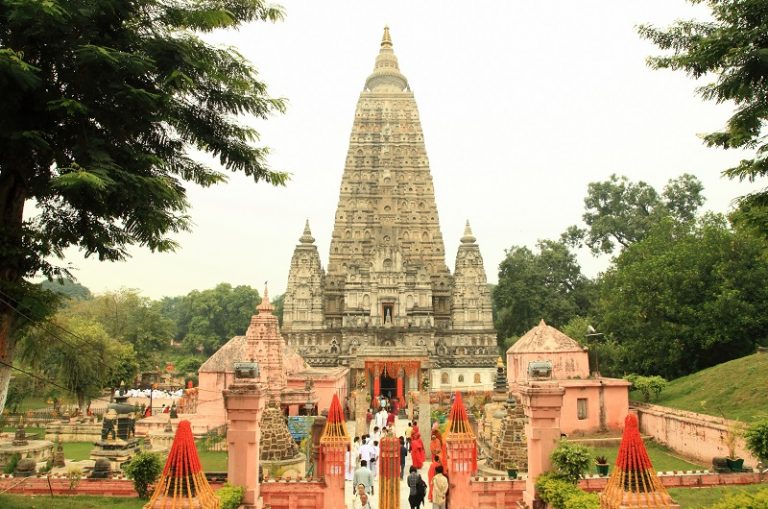
All five accused in the Bodh Gaya blast case was declared guilty by the Patna Court on Friday by special NIA court. On the 7th of July, 2013, the Maha Bodhi Temple, situated where Gautama Buddha attained enlightenment, was rocked by a series of 10 explosions in which five people, including two Monks, were injured. Judge Manoj Kumar pronounced Haider Ali alias Black Beauty, Imtiaz Ansari, Umar Siddiqui, Azharuddin Quraishi and Mujibullah Ansari guilty of planting the bomb.

Earlier, it was reported that the attacks were in response to the alleged Buddhist atrocities against Rohingya Muslims in Myanmar. “Buddhists from all over the world used to come there and a message will be sent to all,” a juvenile court’s order that convicted an 18-year old of planting the bombs at the site said.

In January this year, a low-intensity explosion had occurred near the Kalachakra grounds at Bodh Gaya during Dalai Lama’s visit. Two cane bombs were also recovered during a search operation by the Police. The motive behind the incident too was believed to have been vengeance against Buddhists for their alleged persecution of Rohingyans.

The Maha Bodhi Temple Complex is a UNESCO World Heritage Site in Bihar. The National Investigation Agency (NIA) had declared that the Indian Mujahideen was responsible for the bombings in November 2013. The quantum of sentence shall be announced on the 31st of May.

But for social media, ‘The Hindu’ would have whitewashed the Bengal Panchayat poll violence

Thank God for Social media! Otherwise, this is what I would have read in the Kolkata section of The Hindu and believed it:

This news item was updated on the morning of May 14th. Curiously, there is an update in the “other states” section of the paper, in the afternoon of May 14th.


The morning update mentions only sporadic violence and doesn’t tell us about any deaths that have happened before May 14th. If there were no social media, I would just think that there were some clashes in which few got injured.

The afternoon update, however, tells us this:

Entire election process marked by violence: more than 20 persons were killed and with Monday’s killings, the death toll has crossed 30

Whoa! More than 20 persons were killed *before* May 14th, and The Hindu found it fit to classify it as merely “Sporadic”. With 12 more people dead, the situation has merely graduated to “grim”. 32 deaths till the afternoon of May 14th, and the situation is just “grim”. Well, this language is perhaps in line with what Derek O’Brien has already professed in his now infamous tweet:

The benchmark is 40 deaths in 2003 when the Left Front is ruling. And because that benchmark hasn’t been breached yet, perhaps The Hindu was ok to classify the deaths of 32 people as “grim”. But come results day, the situation was no longer “grim”. A report was published on May 17th, and guess what – there is NO mention of any “grim” violence. In fact, there is NO mention of even “sporadic violence”.

The table also tells us that nearly 18,000 seats went uncontested. But the report doesn’t tell us anything about those seats. Now I am confused thoroughly. Did 32 people really die? Are those deaths so insignificant for this newspaper that they don’t even find a passing mention?

The next news on Mamata Banerjee is her comments on the Karnataka politics, and I had to wait for 4 more days to read an editorial that screamed:

“Grim” situation has now become “high cost”. Trinamool’s sweep has come at a high cost it seems. After 235 words in a 502-word editorial, we are slowly told this:

Around 50 people were killed; the security provided for the election was clearly insufficient, and lumpen elements had a free run.

Whoa! We started the week with “sporadic violence”. We went to 32 deaths in no time. And then after a week, we are told that “around 50 people were killed”? Does this mean people were killed *after* the elections were over too? Or does this mean The Hindu is just recalibrating its numbers? 50 deaths are also greater than the 40 deaths that occurred in the 2003 polls, that Derek O’Brien called as “normal”. But then The Hindu has a different story to tell us:

But the kind of ferocity of the violence before and during last week’s poll has not been seen since the Left Front was ousted after 34 years in power in 2011. 

Now, this made me even more curious. Because this line meant that the violence before 2011 was much higher, when the harbinger of peace, the Left parties were ruling the state! In the previous elections of 2008, 2003 etc, there was actually no social media (or it was in its budding stages). A quick google search yielded this article of The Hindu that said 14 people were killed in the 2003 violence in West Bengal. Not 40 as Derek O’Brien claimed. About 3 weeks after this article, we are told in an Op-Ed in the same newspaper, The Hindu that according to another newspaper (phew!) Anand Bazaar, 47 people were killed! Why is it so difficult to get an official version of the numbers? A 2008 report in Times of India tells us that 30 people were killed in Panchayat violence in 2008, “making it the bloodiest in Bengal’s history, surpassing even the 2003 death count.”

Here is the summary:

1. A 2003 Op-Ed in The Hindu claims, with 47 deaths that “The recent elections surpassed all State records in violence, killings, coercion, intimidation and terror tactics.”

2. A 2008 news report in The Times of India states that the 2008 elections, with 30 deaths are the “bloodiest in Bengal’s history, surpassing even the 2003 death count.”

We have all seen how the English media brigade has hyped up cases of “intolerance”, exaggerated instances of “attacks”, and has been subdued when actual violence and murders have taken place in states ruled by parties other than the BJP. Even the latest editorial in The Hindu seeks to do an equal-equal argument by saying that “The TMC and the BJP accuse each other of fomenting the violence.”

This is the same media that loses no time in seeking explanations from the Prime Minister himself, for every small statement made by ward members of BJP also. This is the same media that is now calling the violence in West Bengal as a “no holds barred tactics” by Mamata Banerjee. This is the same media that chooses what numbers to publish when it comes to deaths.

Like I said at the beginning – Thank God for Social Media!

AMU opposes JNU’s proposed course on ‘Islamic Terrorism’, urges HRD ministry to intervene

Amidst the controversial inclusion of a course on ‘Islamic Terrorism’ in the curriculum proposed by Jawaharlal Nehru University (JNU), Aligarh Muslim University Students’ Union (AMUSU) approached the HRD minister, Prakash Javadekar today, urging him to direct JNU to roll back its proposal.

President of AMUSU, Maskoor Ahmad Usmani said in the letter written to the HRD ministry that it is ‘disgusting and shocking’ to see how JNU is giving ‘religious colour to terrorism.’ “It perhaps reflects their deep-rooted agenda to malign a specific religion,” he said.


According to the Usmani, the course would push the students into going along with a black and white understanding of an issue that itself thrives on various ambiguities, rather than encouraging them to get a deeper perception of this complex anomaly. He further stated by starting a course on ‘Islam terrorism’, the entire community was being branded as terrorists. He added that it is rather ironic that while JNU has no funds for regular courses, these ‘divisive’ courses were being introduced.

The academic council of the JNU had passed a proposal which would look into setting up a center for National Security that would include a course on ‘Islamic Terrorism’. Apart from Islamic Terrorism, the center will also cover the military modernization of China and Pakistan, defense economics, nuclear proliferation and data arms control and disarmament, civil-military relations, Naxalism and other aspects.

JNU Students Union President Geeta Kumari had said, “This grotesque propaganda of Islamophobia in the name of academic courses is deeply problematic. It seems the RSS-BJP’s election propaganda material will be prepared through these courses rather than studying the nature of terrorism in general.”

On 22nd May, the Delhi Minorities Commission issued a notice to the registrar of JNU asking him for an explanation for the proposal of including ‘Islamic terrorism’ in the curriculum, which was opposed by sections of teachers and students at the JNU.

Enemies, ‘trolls’, or friends? Twitter speculates about the Mamata-Modi equation

Prime Minister Narendra Modi and West Bengal’s Chief Minister Mamata Banerjee shared a stage on Friday during the convocation at the Visva Bharti University in the state’s Birbhum district.

Even though the meeting between the political duo came on the heels of reports of massive electoral malpractices supposedly carried out by the TMC during the recently concluded Panchayat polls, the netizens’ focus mainly remained on the political relationship between the duo.

The incident in question which fuelled this speculation involved Mamata Banerjee receiving PM Modi while he landed from his helicopter in Shanti Niketan:


Following the aforementioned video by ANI, the most prominent point noticed by Twitter users involved PM Modi supposedly trolling Mamata by making her walk to the helipad. This gesture by the PM came in the light of Mamata lambasting Karnataka’s DGP after she was made to walk a short distance while attending HD Kumaraswamy’s swearing-in-ceremony. This episode supposedly led to the transfer of the DGP, a claim which has now been refuted.

Predictably various users had a bit of fun while pointing out how Modi trolled Banerjee:


But interestingly the analysis didn’t end here and some felt that Mamata had disrespected Modi by making him wait after his landing:


Probably the most fascinating of the lot was when a few people wondered whether the jovial interaction between the PM and Mamata meant that the duo had some form of a political understanding, which might lead to a future alliance:


Whatever might be the truth about their political equation, it was worth noting in the video that Mamata took PM Modi’s joke in good spirit even though she is known to be very intolerant about such matters. This might either be owing to the protagonist being the PM of the country or as some are claiming it was Mamata “keeping her cards open” with 2019 looming over the horizon.

Assam : CM Sonowal vows to seal border with Bangladesh completely by December this year

The BJP-led government in Assam came to power on the basis of promising deliverance on many issues, one of them was to put an end to the Bangladeshi illegal immigrant infiltration into Assam. Commenting on the government’s commitment, The Chief Minister Sarbananda Sonowal on Wednesday stated, “the target for completion of stealing of Indo-Bangladesh border is December this year”.

This was in the context of the state governments promise to secure the Assam’s border with Bangladesh in a timely and comprehensive manner. Assam shares a border of 262 kilometres with Bangladesh.

In this 262 KM stretch, there are many areas which cannot be fenced with physical barriers due to the geographical limitations. There are riverine areas along the borders which are to be secured by non-physical barriers and the land boundaries would be secured by deploying smart fencing to deter the illegal immigrants from crossing over to the Indian side.

The issue of illegal immigrants in the state is not a new one. It first started in the immediate aftermath of 1971 war when a huge number of illegal immigrants entered India. This lead to an agitation by the natives of Assam, which then lead to the signing of the Assam Accord. The accord seeks to deport all foreigners who entered the state after 1971. The recent initiative to secure the border is consistent with the commitment made in the accord.

Sonowal furthered that his government has also been cracking down on corruption in addition to taking measures to prevent the influx of illegal immigrants in the State. The chief minister was speaking at an event marking the completion of two years of his government in Assam.

Modi vs All : Shiv Sena ready to ally with erstwhile opponents to defeat Narendra Modi

Shiv Sena, one of the members of the National Democratic Alliance, on Thursday said that it is open to joining the grand alliance of opposition parties if a proposal comes. Earlier, Shiv Sena has announced that it will contest 2019 Lok Sabha polls alone.

Shiv Sena leader, Arvind Sawant speaking about the alliance, first said, “If a proposal comes, naturally we’ll think about it and party chief will take a decision on it, Right now, it’s not a question of being a part of a grand alliance. The government failed miserably to deliver acche din which it promised. Therefore, we have to defeat them for which we should come together”. The Shiv Sena leader specifically said that they are open for a grand alliance to defeat the BJP. Uddhav Thackeray had earlier called for all the parties to come together.

Sawant also said that the regional parties’ coming together is desirable. He said the decision about joining any alliance should be taken at the highest level, and they are looking forward to discussing it. When asked about when they should come together, Sawant said that there was a lot of time and they would wait for the right time.

Earlier, the number of opposition parties and regional parties had united to show the strength of the alliance on the occasion of HD Kumaraswamy’s swearing-in as Karnataka Chief Minister. Congress president Rahul Gandhi, his mother and UPA chairperson Sonia Gandhi were present. Many regional leaders like N Chandrababu Naidu, Pinarayi Vijayan NCP leader Sharad Pawar, CPM general secretary Sitaram Yechury, and socialist leader Sharad Yadav were also in attendance. The leader of Opposition in the Bihar Assembly Tejashwi Yadav, BSP chief Mayawati and SP leader Akhilesh Yadav,  Interestingly, Shiv Sena was invited to the ceremony, but Uddav Thackeray had politely rejected to join the opposition in Bangalore.

After Shashi Tharoor was chargesheeted, now Sunanda suicide case transferred to fast-track court

The 2014 Sunanda Pushkar suicide case, in which Congress Lok Sabha member and her husband, Shashi Tharoor has been charge-sheeted for abetment to suicide, has been transferred to a special fast-track court.

Following a Supreme court judgment which said that cases against politicians would be heard in a fast-track court, Metropolitan Magistrate Dharmendra Singh transferred the case to the designated court of Additional Chief Metropolitan Magistrate Samar Vishal. The matter would be taken up on 28th May.

The Dehli police had filed a nearly 3000 page charge sheet against Congress leader, Shashi Tharoor on 14th May, under Sections 306 and 498A of the Indian Penal Code, pertaining to abetment to suicide and cruelty to the wife which necessitates a jail term that may extend up to 10 years and claimed of having sufficient evidence against him which could prove him guilty.

The Congress leader had termed the charge sheet “preposterous” and said that he intends to contest it “vigorously”. The court is yet to take cognizance of the charge sheet and summon Shashi Tharoor.

Last year BJP leader Subramanian Swamy had filed a PIL seeking court-monitored SIT probe into the death of Sunanda Pushkar which was later dismissed by the Delhi High Court. Later Swamy moved the Supreme Court against the High court order, which had then asked him to satisfy it on the question of maintainability of his plea. The special investigation team (SIT) on 20th April told the top court that a draft final report has been prepared after conducting “thorough professional and scientific investigations” in the case relating to the death of Congress leader Shashi Tharoor’s wife.

Sunanda Pushkar was found dead in a five-star hotel room on the night of January 17, 2014, days after she alleged that her husband was having an affair with a Pakistani journalist.