Home Blog Page 7185

In an open letter, Savio Rodrigues slams Delhi Archbishop who appealed to ‘pray for new govt in 2019’

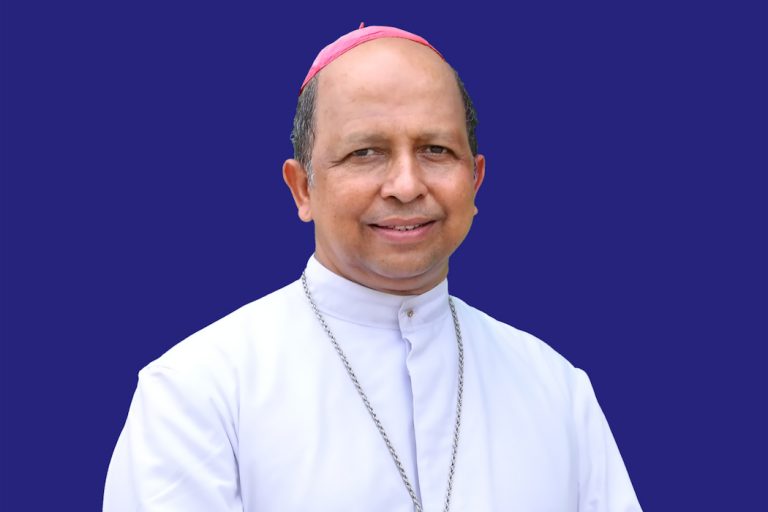
The Archbishop of the Archdiocese of Delhi, Anil Couto, has issued a letter calling for the Catholics of India to start a campaign of fasting and prayers for a new government in upcoming general elections in 2019. Savio Rodrigues, former senior Congress leader from Goa, who resigned after the Goa election debauchery took to Twitter to express his shock on the Catholic Church walking on biased propaganda.


Condemning Archbishop’s letter, he questioned the media for not calling out the communal propaganda.


He then took to Goa Chronicle, a publication he owns, to pen a stinging open letter addressed to the Archbishop.

His letter has been reproduced here in totality with due permission. He writes :

The Holy Bible in the Chapter 11:11 of Gospel of Luke, “Jesus asks, “What father among you, if his son asks for a fish, will give him a snake instead.”

It is with extreme disappointment that I have to once again write on a topic that disturbs me because the values of peace, love and hope that I have imbibed in me comes from my unflinching beliefs in the teachings of Jesus.

Unfortunately its the Catholic Church who acts as custodian of Jesus’s teachings that appears to be walking the path that is completely opposite to the lessons in humanity that Jesus expressed through his teachings. Instead of offering a fish are we attempting to offer the child a snake.

With due respect to your office and your vocation as Archbishop of the Roman Catholic Archdiocese of Delhi, I am shocked, disappointed and downright angry reading the contents of your pastoral letter.

Here is an extract of that letter that has disturbed me the most:

“We are witnessing a turbulent political atmosphere which poses a threat to the democratic principles enshrined in our Constitution and the secular fabric of our nation.”

This country has witnessed immense communalism, terrorism and rampant corruption in every corner of democracy from Emergency to communal riots under the watch of different political parties in power and every Indian knows this to be true. But are you categorically stating the India is currently witnessing a turbulent political atmosphere that is different from any other political year in the past.

Please tell the people of India what is your view on the Emergency that took the very principle on which the country was formed on and threw it in the dustbin because one particular political leader thought its was her birthright to do what she felt was right for her political party in the guise of doing it for the country. I was not even born when it happened, I would like to know what was official stand that the Catholic Church took at that time.

Please tell the people of India when innocent Kashmiri Pandits were raped and killed by Kashmiri Muslims driven out of their home and left to fend for themselves, what was the stand of the Catholic Church and did it official condemn the rape and murder of innocent Indians. Was there not a political turmoil at that point of time.

Please tell the people of India more recently what is stand taken by the Catholic Church in the numerous killings of Hindus on the grounds of religion and politics in different parts of India. Do I, as a Christian turn a blind-eye to this truth or does the Church see only Christians and Muslims as victims of atrocities?

Please tell the people of India the stand of the Catholic Church of the media reports and cases filed against Priests abusing minors in different parts in India and the world; is that not turmoil in the innocent minds that have been brutally violated by a representative of God.

The game that the Catholic Church is playing of division is devious and demonic in nature. The democratic principles of this country is not only for us minority but for the majority as well.

Look at the India around you and don’t go by media reports, its a Hindu at St Michael’s Church in Mahim, a Christian at the Ajmer Dargah and a Muslim at the Shantidurga Temple in Goa. This exist is because they understand the true meaning of secularism.

Secularism is not acceptance of all religion in governance, it is the acceptance of no religion in matters of governance.

I agree with you that we should fast and pray but this must be done to eradicate all those who on the basis of religion divide us Indians.

I am proud of my Hindu lineage, it has helped me understand the message of Jesus and the purpose to my life.

It is my belief in the teachings of Jesus that I have the courage to stand up and tell you that as Christians we must unite all, even those that we think are the sinners; but repentance must come from us first before we go to change others.

The Bible says, “I have carved you on the palm of my hands”. I was taught by my parents that, that line in the Bible was for every single human creation of God and not only those who follow the Catholic Church.

India is a nation of unity in diversity, I believe we are more spiritual a nation than religious.

Savio Rodrigues, known for his extremely forthcoming views, had earlier also slammed Archbishop who appealed to ‘save India from nationalist forces’.

Bhakt, Sanskar, Bhagwa – how meanings are being twisted to malign a culture

0

While suggesting his preference for the word ‘Reading’ in place of ‘Interpreting’ Karl Popper in his lecture ‘Source of Knowledge and Ignorance’ says:

“I assert that the meaning of ‘interpret’ (though not in the sense of ‘translate’) has changed in exactly the same way, except that the original meaning-perhaps ‘reading aloud for those who cannot read themselves’-has been practically lost. Today even the phrase ‘the judge must interpret the law’ means that he has a certain latitude in interpreting it; while in Bacon’s time it would have meant that the judge had the duty to read the law as it stood, and to expand it and to apply it in the one and the only right way. Interpretation juris (or legis) means either this or else the expounding of the law to the layman. It leaves the legal interpreter no latitude; at any rate, no more than would be allowed to a sworn interpreter translating a legal document.” (Conjectures And Refutations, Source of Knowledge and Ignorance – IX)

Though produced in a dissimilar context, this example underlines a great problem in quoting from the literature of the times when the language and its forms differed from the present time. On the streets of 14th century Europe, if a person would understand you to be nice, your leisurely walk could turn into a troublesome experience. The word ‘Nice’ is derived from the Latin word nescius which means ignorant or foolish. The word changed its course through history, kept moderating in texture through time, and became synonymous with ‘good’ in as late as the 18th century.

In the study of language, this phenomenon is referred to as Semantic Change by Amelioration. However, a more commonplace semantic shift occurs by Pejoration. The word ‘Attitude’ originally meant pose or position. From there to today’s colloquial usage meaning arrogance, the word has undergone pejoration and is used in a negative sense many a time.

Not only is pejoration the most common kind of semantic shift, it is perhaps also the most dangerous one. When applied to words which encompass a phase of human development, pejoration can rob a society of its own history, culture, and the inherited wealth of knowledge because unlike ‘Nice’, there are words that define centuries of growth and achievements of the society. The situation gets disquieting when we look at our own society in India. Words are fast changing their meanings and we are the rats of the pejoration experiments being carried out inside the Indian laboratory. One of the earliest mentions of the term Bhakti appears in the Shvetashvatara Upanishad:

यस्य देवे परा भक्तिः यथा देवे तथा गुरौ ।
तस्यैते कथिता ह्यर्थाः प्रकाशन्ते महात्मनः ॥ २३ ॥

He who has highest Bhakti of Deva (God),
just like his Deva, so for his Guru (teacher),
To him who is high-minded,
these teachings will be illuminating.

(Shvetashvatara Upanishad 6.23)

The word ‘Bhakt’ has found a mainstream acceptance today to call out any supporter of the present Government or Narendra Modi. Modi Bhakt is being employed as an invective against the voters and supporters of Modi. This malicious usage stands on the assumption that ‘Bhakt’ has a negative connotation or more appropriately, as an adjective, is something to be ashamed of. Not that it has had any effect on the blind followers of our Prime Minister, but such a habit has definitely smeared the word itself. Not only any intelligent argument by anyone who likes to think with a certain degree of objectivity is killed by such verbal violence if his objectivism leads to an acknowledgement of any positive step taken by the government but such a usage also demeans the word every time it is used.

Though I am against simple generalizations, the group that honeys this phrase and uses it with great generosity is the left-wing of the country from under the hides of journalism, intellectualism, and elitism. More important than the question of its first usage, is to note that this phrase has been internalised and is being propagated by the social media sniffers of the left, the activists, and the comedians who have one leg in their chosen field and another in politics, to deride anything remotely in support of Mr Modi. The madness has grown to the extent that many of these times, the phrase is used to scoff logic as well. In the epidemic of blindness inflicted by elitism, one forgets that as not all logical people may support Modi, it follows that not all Modi supporters may be illogical.

Swami Vivekananda while describing Bhakti Yoga quotes Narada from his explanation of the Bhakti-aphorisms:

“Bhakti is intense love to God”; “when a man gets it, he loves all, hates none; “he becomes satisfied forever”; “this love cannot be reduced to any earthly benefits”, because so as worldly desires last, that kind of love does not come; “Bhakti is greater than Karma, greater than Yoga, because these are intended for an object in view, while Bhakti is its own fruition, by its own means and its own end.” (Complete Works of Swami Vivekananda Vol 3. Bhakti Yoga)

Bhakti is a function of love – a love for God that transcends to love for everyone. Bhakti doesn’t understand the hate. From Narada, Prahlada, Dhruv to Ramanuja, Nimbarka, Chaitanya, Tulsidas, we have had great souls in the Bhakti tradition who have in one way or the other shaped the cultural heritage of India. It won’t be hyperbolic to say that the idea of India as we know of it today, finds its roots in the philosophy of these spiritual pursuits. Bhakti stands for oneness with God and quite naturally, a true Bhakt realizes the oneness of all beings. Is it surprising then that the Bhakti-Path became a great force against caste system and sectarian disharmony that ailed the 15th century India?

Far from being subservient to the rulers of the day, the 15th-16th-century Bhakti movement broke the status quo of polarised identities, unified the populace irrespective of gender or birth status, and established the potential perfection of every soul. Kabir, through his couplets, criticised the prevailing superstitious practices of the society. Meera who was born in a royal family had Ravidass, from a so-called lower caste as her teacher and renounced her family, fame, and fortune for the love of God. Both these saints and many more stood as a challenge to the existing ills of the country and awakened the self-esteem of the masses through their life and work. Bhakti movement brought about a spiritual enlightenment across the country, first in the South and then in the North. How unfortunate it is then that a word like ‘Bhakt’ has almost taken the form of a slur in common parlance today!

A similar treatment has been meted out to many other words like Sanskar, Sangh, Brahmin, Bhagwa etc. It is difficult to keep a finger on one cause for the pejoration of these words but a symptomatic assessment tells us that the west inflicted urban ignorance of our past has a role to play in this phenomenon. This ignorance was further accentuated by the popular media, including but not limited to news agencies. However, one must look beyond the obvious and take into account the other peoples of India.

Part of my childhood was spent in a village called the Brahmapura in the Darbhanga district of Bihar and I completed my education in a small town called Kathara in the Bokaro district of Jharkhand. These words still held their original meanings till my time in the cultural space of these places while I grew up. It is difficult to translate Sanskar into English but the closest word to mimic the meaning of Sanskar is perhaps Ethics which still finds favour with the urban population and is ‘cool’. The complex of qualities like truthfulness, morality, incorruptible speech and action defined positive sanskar for us. However, as I moved to the cities, I found out to my surprise the deformed word ‘Sanskari’ that meant anything uncool measured against the standard of the status quo.

It is important to remember the vulgar role of our filmmakers in this process. The creation of a patriarch in Hindi movies who was essentially a fascist but hid all of his fascism under the garb of the word Sanskar has an ignoble stake in the deformation of the word. This was mostly a lazy job by people who had no knowledge of the Indian schools of Philosophy and the place of the word Sanskar therein. In Vedanta, all activities lead to the formation of Sanskar. These sanskaras define one’s personality. The concept differs more in syntax than in essence in various schools of Indian thought.

Sanskar is what forms inside us through our present actions and thoughts and this Sanskar, in turn, is manifested in our actions and thoughts in times to come. As such, a snide usage of the term Sanskari holds no meaning because all of us as living beings are Sanskari by virtue of our sensory organs, external and internal. That’s not all, the Nyaya system also takes the non-living world into consideration while discussing Sanskar. Sadly, the term Sanskari has stuck to the uncool human beings of today who should have been born a few centuries back for their Sanskars to do any good to them, not to forget the fascist patriarch of our cinema.

Similarly, Bhagwa meaning Saffron that represented till some time ago, renunciation and service, has all of a sudden found the unholy company of anything communal. The way today’s leftist construct of colours has tried to degenerate the meaning of Bhagwa, I wonder how and why they haven’t yet raised their voices against the Indian flag for its recognition of saffron. Another slur that is thrown at the sympathizers and members of the Rashtriya Svayamsevak Sangh (RSS) or the BJP is ‘Sanghi’. The word Sangh in Sanskrit means a ‘congregation’.

Quite naturally, the word has been used from times immemorial to signify a group, so much so that Buddhists and the Jains also found utility for the word. To understand the extent of pejoration deployed here, one has to simply translate it into English – Sanghi would mean Congregational. So, essentially, you are spitefully calling someone congregational just because you happen to hate the ‘Congregation of Water Melons Lovers of La-la Land’ because you happen to hate watermelons!

On a closer look, it appears to me that this is being done more viciously to Sanskrit than to any other language. Indians have to their credit, great achievements in their systems of languages, culture, and philosophy. These fully developed systems are India’s contributions to humanity. By intent or otherwise, such pejoration has pushed Sanskrit to the brink of getting discarded as an irrelevant language. If not so, why is it that a Sanskrit Nishtha (based in Sanskrit) Hindi spoken fluently gets the laughter of the average urban elite but a Hindi suffused with Urdu gets their unconditional adoration?

A language defends itself by its speakers. It cannot be protected or propagated by force, agitation, special language days, groups, or ignorant idolization. It is the speaker and the spoken that can keep a language from dying. On that front, Sanskrit has been rendered poor through confused policies of the establishment, continuous vile attack through decades of the reductionist tendencies of Left, and most of all, our own inaction. Then, I think of the entire phenomenon again and can’t help but remember what Richard C. Trench said of words and people:

“Then further I would bid you to note the many words which men have dragged downward with themselves, and made more or fewer partakers of their own fall. Having once an honourable meaning, they have yet with the deterioration and degeneration of those that used them, or of those about whom they were used, deteriorated and degenerated too.” (On the study of Words – Richard C. Trench)

Church asks Christians to prepare and pray every Friday for a new govt in 2019, interferes in politics again

0

The Archbishop of the Archdiocese of Delhi, Anil Couto, has issued a letter to the Catholics in India. The letter, which was read in all the parishes under the Delhi Archdiocese calls for the Catholics of India to start a campaign of fasting and prayers for the upcoming general elections in 2019. The letter reportedly starts with claiming, “Praying for the country and its political leaders all the time has been a ‘hallowed practice’ in the Archdiocese and it has become all the more important as we approach the general elections.” The letter calls all the Catholics to observe a day of fast on Fridays and an hour of prayers till the next elections.

It is important to note here that the Archdiocese of Delhi is considered to be the face of Catholics in India and the Archbishop holds considerable influence over the Catholic population of the country. Couto hails from Goa and was the bishop of Jalandhar before being appointed as the Archbishop of Delhi in 2013.

The letter states that the prayers, fast and penance should all be offered for the ‘spiritual renewal of our nation’. The prayer that it contained called for God’s grace to always uphold in highest esteem’ the dreams of our founding fathers’ and the values of our constitution that are equality, liberty and fraternity.

So far one might consider that though it is odd for a priest to be so concerned with the general elections, the letter sounds harmless. But wait till we see how The Vatican News has presented it. The website’s article covering the Archbishop’s letter states, “The five-year term of the federal government led by the pro-Hindu Bharatiya Janata Party (BJP) ends in May 2019“. It does not stop at that. It goes ahead to add that Christian leaders have accused the government led by PM Modi of tacitly supporting Hindu groups working to establish a Hindu Nation ignoring the interests of religious and ethnic minorities. The article further claims that according to Christian groups, attacks on Christians rose after Modi came to power and have spiralled in recent years. The Archbishop has reportedly written, “We are witnessing a turbulent political atmosphere which poses a threat to the democratic principles enshrined in our constitution and the secular fabric of our nation.” His letter also reportedly asked the people to ‘bless the nation with the revival of gospel values.’

For organisations that claim that maintenance of the secular fabric of the nation is their only concern, the hatred against BJP and particularly PM Narendra Modi is far too apparent. Not just the general elections, the church has been far too concerned about many state elections too. Before the Gujrat elections, the Gandhinagar Archbishop sent a similar communique which urged the Christians to save the country from ‘nationalistic forces’. Before the Nagaland Assembly elections, the Nagaland Baptist Church Council had also urged the believers to choose between ‘Trishul and the Cross.’ The Trishul was not their only concern either. In one earlier instance, they had called Yoga a deeply Hindu practice and had asked their believers to stay away from it. Before the Goa elections, a Catholic magazine asked the voters in the state not to vote for the BJP and claimed that the country is facing a ‘constitutional holocaust’.

As far as Anil Couto is concerned, he is not new to playing victim politics. He had condemned and cried ‘religious intolerance’ and anti-christian mentality on random crimes and petty incidents that were fanned by national and international media as ‘church attacks’. Be it the Vasant Kunj church vandalism incident or the Dilshad Garden, he had created a hue and cry over the same narrative of Christians and minorities being under attack that is so loved by our secular, liberal media. The fact that the ‘attack’ incidents were the cases of kids playing/petty theft/drunk vandalism and no pattern or communal angle was ever found over these incidents was never acknowledged by the Catholic Church organisations. In fact, Anil Couto was in a celebratory mood when the AAP won the Delhi Assembly Elections. He even hailed AAP’s victory as a result of BJP’s inability to control the Church attacks.

The way the entire ‘Church Attack’ narrative was played was spectacular in itself. Even Obama mentioned it while visiting India. This was not the only fake propaganda after all. The whole ‘Muslim lynching‘ and ‘semen balloon‘ narratives were also peddled in the same way.

While fake hypes and false propaganda by vested interests is not new in any country’s politics, it is quite disturbing when the Catholic Church, off all people and organisations, starts pontificating (pun intended) on issues like equality and upliftment of Dalits and care of the marginalised. When it comes to the helpless and marginalised, the Catholic Church is one of the leading offenders of child sexual abuse all over the world. The worst victims of their wide network of abuse are almost always poor, marginalised kids from socio-economically backward families left in their care. Yet, how many instances are there when the Archdiocese of Delhi, which has so many opinions to give on political power plays and elections, spoken about the Dalit kids in India being abused by their priests? None. Did the Archdiocese call for penance and prayers for their own priests who turn paedophiles and rapists? Never.

The deep-rooted hatred and rampant condescension these organisations show against India and civilisational heritage is often astounding. Notice in the words of the letters how it talks about ‘spiritual renewal’. The underlying hatred towards indigenous practices of spirituality could not have been more apparent. The Archbishop perhaps forgets that it is India that has given Hinduism, Buddhism and Jainism to the world, including the practices of yoga and meditation. So talking about spiritual renewal while worrying over the rise of a Hindu-nationalist party is a bit much.

Apart from the usual tactics of propaganda peddling and fear mongering, it is also unnerving that how such narratives peddled by politically biased individuals are not seen through by the media. Have there been any instances of a government-sponsored drive against any particular religion or community in our country under the BJP rule? No. In the holocaust these people keep citing so often, Jews were driven by the thousands into gas chambers to be killed. Thousands of Sikhs were massacred under the Congress rule. Thousands of Kashmiri Pandits were rendered homeless in their own country under the Congress rule, Then why is it that it is the BJP which is termed communal? Is there any clause in our constitution that bars any citizen of any religion from enjoying the freedom and opportunities a democratic republic offers? no. Then maybe it is the fear of the usual anti-Hindu anti-India propagandas failing to cast the intended effects that have driven these elements to a corner. With the advent of social media and an increasingly politically aware young generation rising in the country, the tried and tested smokescreens are being torn apart and the lies are being exposed. Perhaps that is the reason new terminology and new garbs for the agenda is being invented.

There is nothing wrong in a community observing fast or indulging in prayers, but when the fastings and prayers are directed to be done so that a certain political party loses and a certain party wins, it becomes ridiculous. Hopefully, the Christians of our country will see through the propaganda and vote smart, not according to the political inclinations of their priests.

How ‘seculars’ falsely blame the Two Nation Theory on ‘Hindu nationalists’

And whenever they mention the intolerance or bigotry of the Muslims they make sure to generalize the matter and always slip in allusions to the Hindus also.

Our Historians work day and night to ensure that crimes of Muslims could be whitewashed by generalising the matter with Hindus.

All of us know what position Islamic fanatics held while partition of India, but to show them, especially Jinnah, in good light, ‘Caravan Daily’ published an article written by Professor Shamsul Islam aspiring to draw an image that it was ‘Hindu Nationalists’ who are to be cursed for India’s partition.

Basically, the point repeatedly emphasized by Prof. Shamsul Islam was that it was Hindu Nationalists who propounded the “Two-Nation Theory” before Muslims. He said:

Long-long before the appearance of Muslim advocates of the Two-Nation theory, Hindu nationalists had propounded this idea.

So let’s point by point examine Prof. Shamsul’s claims and provided evidence that point to the contrary.

First of all, as quoted above, Prof. Shamsul claims that it was Hindu nationalists who propounded Two-Nation Theory before Muslims.

And who were those Hindu nationalists according to Prof. Shamsul? They were:

  1. Raj Narain Basu
  2. Nabha Gopal Mitra
  3. Parmanand
  4. Lajpat Rai
  5. Dr B. S. Moonje
  6. Lala Har Dayal
  7. Veer Savarkar

Now, let me put forth this, none of these Hindu Nationalist propounded or even talked about “Two-Nation Theory” before Syed Ahmad Khan, who is known as “Father of Two-Nation Theory”. Syed Ahmad in 1888 said [2]:

Now, suppose that the English community and the army were to leave India, taking with them all their cannons and their splendid weapons and all else, who then would be the rulers of India?…. Is it possible that under these circumstances two nations—the Mohammedans and the Hindus—could sit on the same throne and remain equal in power? Most certainly not. It is necessary that one of them should conquer the other. To hope that both could remain equal is to desire the impossible and the inconceivable. But until one nation has conquered the other and made it obedient, peace cannot reign in the land.

So it was first a Muslim, Syed Ahmad, who peddled that Hindus and Muslims can’t live together.

Not just that, Syed Ahmad went on to recall how Muslims helped Christians to rule over India. He said [3]:

then will one glorious fact stand out in prominent relief and become patent to the universe’—namely that ‘if in Hindustan there was one class of people above any other, who from the principles of their religion, from habits and associations, and from kindred disposition, were fast bound with Christians, in their dread hour of trial and danger, in the bonds of amity and friendship, those people were the Mohammedans, and they alone.

Henceforth, the claim of Prof. Shamsul that it was first Hindu Nationalists who propounded Two-Nation Theory falls apart.

Now let’s go through those names of Hindu Nationalists, who all according to Prof. Shamsul, propagated Two-Nation theory.

Raj Narain Basu

Regarding Raj Narain Basu, Prof. Shamsul said: “Basu not only believed in the superiority of Hinduism over other religions but also was a fervent believer in Casteism.” But Prof. Shamsul provided us with no ‘source’ of his information.

How Raj Narain Basu propagated Two-Nation Theory? Prof Shamsul quotes Narain Basu where he said:

The noble and puissant Hindu nation rousing herself after sleep and rushing headlong towards progress with divine prowess. I see this rejuvenated nation again illumining the world by her knowledge, spirituality and culture, and the glory of Hindu nation again spreading over the whole world.

But how is this quote propagating Two-Nation Theory? Has Narain Basu demanded any separate nation for Hindus? Absolute no. He just called India ‘A Hindu Nation’. So how does that, Prof. Shamsul, propagate Two-Nation Theory? Moreover, it was absolutely justified for anyone to call India ‘A Hindu Nation’ because ‘Hindu’ is a common geographical identity for all those people living beyond the river Sindhu.

So just because Narain Basu called India ‘A Hindu Nation’, Prof. Shamsul concluded that he was an advocate of Two-Nation Theory. The logic certainly doesn’t hold.

Nabha Gopal Mitra

Heard this name ever before? No? Even I haven’t heard this name. So for help, I googled this name. Even Google don’t know who was Nabha Gopal Mitra. I searched this name even on other search engines but none of them knew who was Nabha Gopal Mitra.

So why Prof. Shamsul is talking about someone who is so irrelevant?

Further, Prof. Shamsul says: “Long before V. D. Savarkar (1883-1966) and M. S. Golwalkar (1906-73), who laid down elaborate theories of Hindu Rashtra allowing no place for minorities”

So as per Prof. Shamsul, the Hindu Rashtra as stated by Savarkar had no place for minorities. This is a whopper! Because Veer Savarkar himself said [4]:

Although we want Swaraj, yet that Swaraj must mean the Hindusthani Swaraj in which Hindu, Moslem and all other citizens all have equal responsibilities, equal duties and equal rights.

Veer Savarkar made it crystal clear that the Swarajya he was aspiring for not just accepts minorities but also grant them equal rights.

Parmanand

Parmanand was an Arya Samaj scholar and Freedom fighter.

According to Prof. Shamsul, Parmanand said:

The territory beyond Sind should be united with Afghanistan and the North-West Frontier Province into a great Musalman kingdom. The Hindus of the region should come away, while at the same time Mussalman in the rest of India should go and settle in this territory.

Yes. Parmanand actually agreed that Muslims should be given a separate nation. But that doesn’t mean he was propagating Two-Nation Theory. One has to understand that in the end, entire India accepted that Muslims should be given a separate nation but it doesn’t mean that India was wishing her own division. Because of the kind violence which erupted, people agreed that it’s better to give Muslims their own nation.

Parmanand actually wanted a united India, for that, he along with Dayanand Saraswati went to Sir Syed Ahmad [Father of Two-Nation Theory] to hold talks about Hindu-Muslim unity, but then they understood that Syed Ahmad is not willing to accept their proposal. Hence, it seems, Parmanand shaped his view that holding talks about Hindu-Muslim unity is fruitless and agreed to give Muslims their own separate nation [5]:

Lala Lajpat Rai

Prof. Shamsul quotes that Lala Lajpat Rai said:

“Hindus are a nation in themselves because they represent all their own.”

Initially, I anticipated that Prof. Shamsul is just a biased intellectual, but after reading this, I conclude that he is not just biased but severely intellectually dishonest.

When we read only as much as Prof. Shamsul quoted, it appears that Lala Lajpat Rai was talking about “Hindus as a nation” but this is not the whole truth.

Lala Lajpat Rai himself clarified that he is calling “Hindus as a nation” in the sense of Germans. He illustrated that Germans use the term ‘Nation’ even for ‘People or civilization’, to give an example of what he illustrated, he said: “Hindus are a nation in themselves because they represent all their own“.

So by giving an example of Hindus, Lala Lajpat Rai was just explaining how Germans use the term ‘Nation’. But instead of citing the entire explanation of Lala Lajpat Rai, Prof. Shamsul just cited last two lines of his explanation to deceive people. Here is entire word-to-word explanation by Lala Lajpat Rai himself [6]:

It may be that the Hindus by themselves, cannot form themselves into a nation in the modern sense of the term, but that is only a play on words. Modern nations are political units. A political unit ordinarily includes all the peoples who live under one common political system and form a State. The words ‘nation’ and ‘state’ when thus considered are practically interchangeable phrases. That is the sense in which the expression n used connection wih the body called the
“Indian National Congress”. That is, no doubt, one use of the word and the one
which is commonly adopted in modern political literature. But that is not the
only sense in which it is or can be used. In fact, the German word ‘Nation’ did
not necessarily signify a political nation or a State. In that language it connoted
what is generally conveyed by the English expression “people” implying a
community in possessing a certain civilisation and cnlture. Using it in that sense, there can be no doubt that Hindus are a “nation” in themselves, because they represent a type of civilisation all their own.

After this, Prof. Shamsul played another deceiving tactic. He quoted that Lala Lajpat Rai said:

Under my scheme the Muslims will have four Muslim States: (1) The Pathan Province of the North Western Frontier (2) Western Punjab (3) Sindh and (4) Eastern Bengal. If there are compact Muslim communities in any other part of India, sufficiently large to form a Province, they should be similarly constituted. But it should be distinctly understood that this is not a united India. It means a clear partition of India into a Muslim India and a non-Muslim India.

And also:

I would suggest that a remedy should be sought by which the Muslims might get a decisive majority without trampling on the sensitiveness of the Hindus and the Sikhs. My suggestion is that the Punjab should be partitioned into two provinces, the Western Punjab with a large Muslim majority, to be a Muslim-governed Province; and the Eastern Punjab, with a large Hindu-Sikh majority, to be a non-Muslim governed province.

Yes. Lala Lajpat Rai agreed for partition. But why? He agreed because he could sense a ‘civil war’ as a consequence of what Jinnah was doing. Next, he also said that Muslims are seeking help from foreign Muslim states to establish Muslim rule in India, which is generating fear among Hindus [7]:

So, Prof. Shamsul, the truth is far contradicting from what you are suggesting. You suggested that it was Two-Nation Theory of Lala Lajpat Rai which was accepted later by Jinnah, but Truth is just opposite. It was Two-Nation Theory of Jinnah which forced Lala Lajpat Rai and later entire India to accept the demand of partition.

Dr B. S. Moonje, Lala Har Dayal and Veer Savarkar.

Prof. Shamsul cited what these people said, and after reading them, you will acknowledge that though they may sound quite communal, but they don’t promote Two-Nation Theory in any sense.

Here is what Dr B. S. Moonje said:

Just as England belongs to the English, France to the French, and Germany to the Germans, India belongs to the Hindus. If Hindus get organized, they can humble the English and their stooges, the Muslims…The Hindus henceforth create their own world which will prosper through shuddhi.

Prof. Shamsul cited Lala Har Dayal saying:

I declare that the future of the Hindu race, of Hindustan and of the Punjab, rests on these four pillars: (1) Hindu Sangathan, (2) Hindu Raj, (3) Shuddhi of Muslims, and (4) Conquest and Shuddhiof Afghanistan and the Frontiers. So long as the Hindu Nation does not accomplish these four things, the safety of our children and great grandchildren will be ever in danger, and the safety of Hindu race will be impossible. The Hindu race has but one history, and its institutions are homogenous. But the Mussalman and Christians are far removed from the confines of Hindustan, for their religions are alien and they love Persian, Arab, and European institutions. Thus, just as one removes foreign matter from the eye, Shuddhi must be made of these two religions. Afghanistan and the hilly regions of the frontier were formerly part of India, but are at present under the domination of Islam […] Just as there is Hindu religion in Nepal, so there must be Hindu institutions in Afghanistan and the frontier territory; otherwise it is useless to win Swaraj.

Next Prof. Shamsul quoted that Veer Savarkar said:

Christians and Mohamedan [sic] communities, who were but very recently Hindus and in majority of cases had been at least in their first generation most willing denizens of their new fold, claim though they might a common fatherland, and an almost pure Hindu blood and parentage with us cannot be recognized as Hindus; as since their adoption of the new cult they had ceased to own Hindu Sanskriti[culture] as a whole. They belong, or feel that they belong, to a cultural unit altogether different from the Hindu one. Their heroes and their hero-worship their fairs and their festivals, their ideals and their outlook on-life, have now ceased to be common with ours.

Readers, just ponder! How three above-quoted statements of Hindu Nationalists promote Two-Nation Theory? Yes! In some sense, those statements could be referred as communal but in no sense, they promote Two-Nation Theory. And how could we expect Hindu Nationalist not to sound anti-Islamic when Muslim ulema was repeatedly calling Hindus ‘kafir’? And when Muslim league was threatening Hindus of bloodshed?

Next, Prof. Shamsul quoted Veer Savarkar as saying:

As it is, there are two antagonistic nations living side by side in India. Several infantile politicians commit the serious mistake in supposing that India is already welded into a harmonious nation, or that it could be welded thus for the mere wish to do so. These our well-meaning but unthinking friends take their dreams for realities. That is why they are impatient of communal tangles and attribute them to communal organizations. But the solid fact is that the so-called communal questions are but a legacy handed down to us by centuries of cultural, religious and national antagonism between the Hindus and Moslems. When time is ripe you can solve them; but you cannot suppress them by merely refusing recognition of them. It is safer to diagnose and treat deep-seated disease than to ignore it. Let us bravely face unpleasant facts as they are. India cannot be assumed today to be a Unitarian and homogenous nation, but on the contrary there are two nations in the main: the Hindus and the Moslems, in India.

Now how is this supporting Two-Nation Theory? Veer Savarkar said Two Nations [Veer Savarkar used the word ‘Nation’ in the same as it was used Lala Lajpat Rai, which is ‘community’] i.e. Hindus and Muslims, are living in India and are not united. That was true! But where did Savarkar demanded any partition?

In fact, Veer Savarkar opposed partition of India is the most strict words. He said [8]:

Some of our wise men also are labouring under the misconception that the question or Pakistan is just like the Ulster phase in Ireland. But the fact is that they are committing a grievous error in comparing the two and suggesting that just as the Irish accepted an Ulster we Hindus should accept the Pakistan. In Ireland there was a question of only a small corner to be set aside as Ulster. But the Pakistani demand seeks to break up India into a number of separate Moslem States and insist that there should be no Central Government of India at all; worst than that the principle been not accepted or tolerated by the Irish there would have been no integral Ireland today. This principle of provincial secession if accepted by the Hindus would sound the death-knell of our national cohesion, integrity and unity.

After this, Prof. Shamsul found that even RSS supported Two-Nation Theory. He quoted RSS organ, Organiser, which notes:

Let us no longer allow ourselves to be influenced by false notions of nationhood. Much of the mental confusion and the present and future troubles can be removed by the ready recognition of the simple fact that in Hindusthan only the Hindus form the nation and the national structure must be built on that safe and sound foundation…the nation itself must be built up of Hindus, on Hindu traditions, culture, ideas and aspirations.

Now, it is utter rubbish of Prof. Shamsul to quote above statement because RSS made that statement on 14th August 1947. So RSS demanded to build a complete Hindu Nation when Pakistan already became independent. So there arises no question of Two-Nation Theory here. Moreover, I find nothing wrong with the statement of RSS because the division of India was done on the religious ground, Pakistan became Islamic so it was absolutely justified for RSS to demand a Hindu Nation.

Next, Prof. Shamsul raised the question of an alliance between Hindu Mahasabha and Muslim League.

Hindu Mahasabha is often criticised for collation with Muslim league. But why they did that? Many would simply call it, selfishness. But let me present the argument laid down by Veer Savarkar himself in the defence of Hindu Mahasabha.

The defence laid down by Veer Savarkar is this that Congress was utterly unable to control the members of Muslim league. Congress was submissive in front of them. So the sole purpose of collation with Muslim league was to ensure the welfare of both communities [Hindu & Muslim] by controlling members of Muslim league. And according to Veer Savarkar, they did that job successfully for 1 year in Sindh [9]. Anyway, whether we believe in what Veer Savarkar said or not, we can’t accuse them [Hindu Mahasabha] of supporting partition because Veer Savarkar and Hindu Mahasabha opposed partition in utmost strict words.

Now comes the most interesting part.

Prof. Shamsul says that it is Hindutva gang which spreads the falsehood that all Muslims supported Pakistan. He says though Muslim league was able to influence large mass, a large number of Muslims were even opposing Pakistan. In support of his argument, he put forth names of few organisations and individuals who opposed Pakistan.

How absurd. Just because few organisations opposed Pakistan, does that mean Muslims were not willing for the creation of Pakistan? But rather making such absurd arguments and we need to look at the facts.

To understand what majority of Muslims wanted, let’s look at the outcome of General Elections of 1945 which was done to elect members of Central Legislative Assembly. In this election, Congress was fighting with the aim of united India and Muslim league was fighting for the creation of Pakistan. In this election, there were 30 Muslim constituencies and out of them, Muslim league won all those 30. And Muslim league was unable to score a single out of Muslim constituencies [10].

By that, it is very evident what Muslims wanted at that point in time! They wanted Pakistan, which India was unable to resist.

Moreover, even among those very few Muslims who opposed Pakistan, many like Mufti Kifayatullah, did it because they didn’t want Muslims to get a piece of land but wanted entire India to be ruled by Islam [11].

Prof. Shamsul went on to say: “Muslim League practitioners of the Two-Nation theory were latecomers. In fact, in this case, they borrowed heavily from the Hindutva school of thought.”

So Prof. Shamsul says that Muslim league adopted the Idea of Two-Nation Theory from Hindutva school of thought. Nothing could be a more baseless allegation. Because the senior leader of Muslim league, Maulana Ashraf Ali and many other members of Muslim league themselves believed that idea of Two-Nation Theory lies in Quran. Below is the picture from “Creating a New Medina, p. 362”:

Few Lessons for Prof. Shamsul Islam:

  1. It was first Islamist fanatics who propagated Two-Nation Theory, not Hindu Nationalists.
  2. Just because somebody called India a Hindu Land, doesn’t mean that they are propagating Two-Nation Theory. Because Hindu Nationalists like Veer Savarkar and Parmananda Bhai made it very cogent that Hindu is everybody living in India.
  3. There exist a difference between ‘accepting’ and ‘propagating’. Hindu leaders like Parmananda and Lala Lajpat Rai who agreed to allow Muslims their separate land, first made attempts of unity but when they recognised that Islamic fanatics are not going to listen to them, they had no other option than to accept partition. And this was the fate of not just Hindu Nationalists but of entire India. In the end, India ‘accepted’ partition but that doesn’t mean India was willing or ‘propagating’ that.

Conclusion:

India’s eminent historians make every possible attempt to whitewash Islamic fanaticism and bigotry. This has been the unfortunate history of our Historians. And the most effective way in which they whitewash the crimes of Islam is by bringing other religions into the picture. As Imam Tawhidi said in one of his interview [12], “It’s somewhat fashionable to whitewash Islamic extremism by arguing that it’s not unique to Islam”. How relevant to our current scenario.

References:

[1]: Eminent Historians, chapter 14

[2]: Speech of Sir Syed Ahmad At Meerut [1888]

[3]: Political Profile of Sir Sayyid Ahmad Khan: A Documentary Record, p.194

[4]: Hindu Rashtra Darshan, p.145

[5]: The Story of My Life, Bhai Parmanand, p.153

[6]: THE INDIAN ANNUAL REGISTER, January-June 1941, Vol 1, p.277

[7]: Political Thinkers of Modern India: Lala Lajpat Rai, Vol 15, p.217

[8]: Hindu Rashtra Darshan, p.144

[9]: Hindu Rashtra Darshan, p.138

[10]: Scwartzberg

[11]: Mufti Kifayatullah Ke Fatwai, Vol 9, p.422

[12]: Interview with Imam Tawhidi

Aam Aadmi Party government in Delhi bans bars and pubs from playing recorded music

The Delhi Government has reportedly banned recorded music in restro-bars in the city after residents complained of “nuisance” from these establishments due to the music. The circular issued by the Delhi Excise Department, however, allows the restro-pubs to play live music.

The government has cited the 2010 excise rules while issuing the diktat. The circular says, “In exercise of powers conferred under rule 53 (4) of Delhi Excise Rules, 2010, the undersigned hereby directs all the licensees of the department holding L-17 license to do business in strict compliance of provisions of the Delhi Excise Act, 2009 and Excise Rules, 2010. It is reiterated that the L-17 licensee is permitted only to have live singing/playing of instruments by professionals within his licenced premises. Violation of these rules shall lead to strict action as per law.”

“We received several complaints from residents who were unhappy about the loud music often played in these restaurants. So, rather than targeting any individual area, we have requested all restaurant owners to follow the guidelines,” a senior official from the Department of Excise said.

“L-17 (restaurants which serve food and alcohol) are only permitted for live singing and playing of instruments by professionals in their premises,” Delhi Excise Commissioner Amjad Tak told PTI. According to Delhi Excise Rules, 2010, L-17 licensee is allowed only for live singing/playing of instruments by professionals.

Restaurateurs are, however, not pleased with the decision. Pub owner Umang Tiwari has questioned the logic behind the circular. He told The Indian Express, “This will be another blow. We are already reeling under the impact of note ban, GST, sealing drive. Our business is already down and this will aggravate the situation… I fail to understand the purpose behind this circular. What is the point of allowing live music by professionals and not recorded music? Plus, most pubs are in commercial areas.”

Priyank Sukhija, owner of Flying Saucer and Boombox Cafe, said, “Technically, mixers and CD players are also instruments and a DJ is also a professional. A few years ago, this circular had surfaced. Even then, we used this logic after meeting with the excise department. If there is any problem, we will approach the court for this. It’s the most ridiculous thing I’ve heard since being in this industry.”

Saurabh Oberoi, general secretary of the Hauz Khas market association, stated, “Having some kind of music adds to the ambience of a place, but not everyone can afford having live bands play for them every night. With band performances, we can’t really guarantee the kind of music we are offering to the audience either.”

However, residence and welfare associations aren’t too pleased with the decision either as live music doesn’t necessarily translate to less noise. Chetan Sharma, secretary general of NCR RWAs, told DNA India, “Our issue is to curtail the time music is played — 10 PM should be the cut-off time. It is a misconception that live or instrumental music will bring us peace. Another concern is who will monitor the execution of the rule,.

Modi govt expects recovery of bad loans worth more than Rs 1 lakh crore via its new bankruptcy code

Following the success of stressed Bhushan Steel’s takeover by TATA steel which saw the banks recovering a whopping Rs 36,400 crore, the Modi government has expressed confidence in bringing back more than Rs 1 lakh crore via its Insolvency and Bankruptcy Code (IBC), Indian Express has reported.

This will be achieved in the form of banks writing back the aforementioned amount, following the successful resolution of the 11 Non-Performing Assets (NPA) cases under the IBC introduced in 2016.

Under TATA’s takeover of a controlling 72.65% stake in Bhushan steel, it was noted that not only was this the first case resolved under the IBC, it also meant that more than 90% of the principal loan amount was recovered which would go towards the banks’ recovery.

The now 11 NPA cases which were referred to by the RBI contain a total of 25% of India’s bad loans are being heard by the National Company Law Tribunal (NCLT). All these 11 cases comprise of the companies which owe the banks more than Rs 5000 crore.

As per a PTI report, these cases are expected to bring in more than Rs 1 lakh crore to reduce the bad loans given by our public sector banks, taking the potential recovery total to more than Rs 1,36,400 lakh crore.

These 11 cases belong to Bhushan Power & Steel, Essar Steel, Jaypee Infratech, Lanco Infratech, Monnet Ispat & Energy, Jyoti Structures, Electrosteel Steels, Amtek Auto, Era Infra Engineering, Alok Industries and ABG Shipyard, who owe the banks about Rs 1.75 lakh crore.

As reported by us, under the IBC, a case must be resolved within 270 days, for which the quasi-judicial body of NCLT was set up. After the resolution of the first list of 12 cases, the RBI has prepared a second such list which contains 28 accounts up for resolution.

Hence going forward, the NCLT is expected to address about 65% of our bad loans between 2018-19 and the present 11 benches of the body may be expanded for a speedier resolution.

In 4 years, Modi Sarkar has approved 240% more urban houses than 10 years of UPA

The BJP led union government has approved 240% more houses in urban areas as compared to those sanctioned under the 10 year of UPA government led by Congress. According to reports, the Modi government has approved about 45.86 lakh houses under its rule since May 2014.

Data from the Ministry of Housing and Urban affairs has reportedly claimed that the UPA government had approved about 13.45 lakh houses under two schemes namely the Jawaharlal Nehru National Urban Renewal Mission (JNNURM) and Rajiv Awas Yojna (RAY). Reports claim that senior officials have stated that after the BJP led NDA came to power in 2014, 45.86 lakh houses for the poor in urban areas have been approved under the Pradhan Mantri Awas Yojna (urban). The aim is to reportedly construct 1.2 crore houses for the poor living in urban areas by 2022.

As per the reports, while the approximate amount of central assistance approved under the UPA was 20,303 crores, under the 4 years of NDA rule the total amount for assistance had been Rs 70,716 crores so far for the sanctioned houses.

As claimed by reports, while 8.04 lakh houses were completed under UPA rule, the 4 years of BJP rule has seen 7.25 houses in the urban areas, including those that were left under the JNNURM and RAY. While the 10 year UPA rule had reportedly released Rs 17,989 crores, the 4 year NDA rule has already released Rs 25,264 crores so far.

According to reports, Minister of State for Housing and Urban Affairs, Hardeep Singh Puri has stated that the Pradhan Mantri Awas Yojna has been a roaring success and the target of providing houses to all urban poor will be achieved before 2022. He was responding to the claims made by Congress leader KC Venugopal that the PMAY has been a failure as banks are not giving loans to the poor. Congress has been repeatedly attacking the flagship schemes of the NDA government.

In a blow to AAP, two of its leaders join the SAD ahead of Punjab by-poll

In a possible blow to the Aam Aadmi Party (AAP) in Punjab, two of its leaders have joined the Shiromani Akali Dal (SAD) ahead of the Shahkot by-poll, Times of India has reported. The by-poll is scheduled to take place on 28 May.

The two leaders namely HS Walia and Col C D Kamboj (retd) were inducted in the SAD on Sunday via different functions. HS Walia who is considered a senior party leader, joined the SAD in presence of party President Sukhbir Badal, in Jalandhar. Col Kamboj, on the other hand, joined via a public function in Nakodar.

In the 2017 assembly election in the state, Walia was an AAP candidate from Jalandhar Cantonment constituency and now claims that he joined the SAD for its pro-people policies and inclusiveness, reports Indian Express.

He claims he joined the AAP owing to the party’s supposed idealism but soon realised that it had become “thoroughly corrupt”. He also proceeded to attack Kejriwal by alleging that AAP is run from Delhi by a dictatorial leader.

Col Kamboj, on the other hand, has had quite a few political associations in his time as a politician. He began his career with the BSP and became the party’s state President. He later switched over to the Congress and then in 2015 joined the AAP. Back then he had claimed that AAP was the only hope for people in Punjab.

Besides this, a New Indian Express report has claimed that the party might be in serious trouble in the state. As per the report, senior AAP leaders like state chief Bhagwant Mann are yet to campaign for the Shahkot by-polls. The leader of opposition Sukhpal Khaira too campaigned just once for the party in the state. Incidentally, Mann had tendered his resignation as the state chief back in March but hasn’t been either discharging his duties or taking back his resignation.

The report also claims that a total of 70 AAP supporting families have switched to the SAD in Shahkot and various MLAs are miffed at Kejriwal for apologising to Bikram Majitha over his drug-related allegations during the state polls.

Ram Madhav renews BJP’s commitment to punish people responsible for the 1984 Sikh genocide

0

Ram Madhav commented on the NDA’s efforts to bring the perpetrators of the Sikh-genocide of 1984 to justice during his visit to the Vaishaki celebrations organized by Sikhs of America Foundation.

On Sunday morning, BJP leader Ram Madhav visited the Gurunanak Foundation of American Gurudwara where he assured the Sikh community that NDA has taken steps and ‘will do its best’ to render justice to each and every family that has suffered in the said genocide.

Madhav mentioned the active fact-finding efforts by the Justice Dhingra Commission to look into 186 serious cases of crime against the Sikh community in 1984. In an unprecedented pogrom where Sikhs were massacred throughout India. The official number states that 2,800 Sikhs were killed across India including 2,100 in Delhi. Independent sources put that number at 8,000 Sikhs killed throughout 40 cities with at least 3,000 Sikhs killed in Delhi alone.  In aftermath of the chaos the Government reported that more than 20,000 people have fled the city, The people’s union for civil liberties reported that at least 1,000 people were displaced.

Rajiv Gandhi, who was the then Prime minister, when asked about the bloodbath, responded by stating – “When a big tree falls, the earth shakes”.  Any action against the offenders, are yet to be taken by the Indian government.

Madhav while addressing the gathered Sikh community stated about FIR’s being lodged and several arrest warrants being issued against the people who lead this massacre of Sikhs in 1984.

“In fact, arrest warrants have been issued against the leaders who were in the forefront of this whole crime against the community,”

Madhav also reiterated NDA’s commitment to bring the offenders to justice by stating –

“I stand before you to assure the community that we will do our best to render justice to each and every family that has suffered during those unfortunate years,”

Prime Minister Narendra Modi also sent a special message for this occasion where he praised the Sikh community for preserving the traditional values even when they are away from home.

“We are proud of the achievements of the Sikh Community in North America, which has contributed significantly to the growth and prosperity in its adopted home. It is commendable that the community has also preserved its traditions and ethos, and is a living bridge with India,”

Madhav also reflected on the pivotal role played by the Sikh community in preserving Indo-US relations and claimed India and United States are natural allies.

“People of Indian origin who live in this country are an important pivot of this relationship. We value your contribution to strengthen this relationship,

‘Kannada Pride’ Congress swallows the bitterness based on ‘UP ka ladka’ Rahul Gandhi’s whims

Congress leader DK Shivakumar has admitted that he is not sure whether the newly elected Congress-JD(S) government in Karnataka will complete its full term.


He asserted that the alliance between the two parties was the decision of Rahul Gandhi and said he ‘swallowed all the bitterness’ as it was his duty.


That ‘Kannada Swabhimani’ Shivakumar gave in to the demands of Rahul Gandhi, who had earlier campaigned as ‘UP ke ladke’, an outsider according to former Chief Minister Siddaramaiah’s logic, did not escape anyone’s notice. Siddaramaiah had regularly attacked Narendra Modi and Yogi Adityanath during the campaign by dubbing them ‘outsiders’ in Karnataka.

The Congress and the JD(S) have a complicated history and during the election campaign, both sides had made rather unsavoury remarks against each other. Clashes had also erupted between the workers of the two parties in February over an invitation dispute and the police had to intervene to bring the situation under control. However, power has its own allure and despite calling the JD(S) BJP’s B-team, the Congress has offered the Chief Ministerial position to the party to keep BJP out of power.

There have also been reports of a Lingayat revolt within the Congress party. And there have been many reports that the BJP was in talks with as many as 15 MLAs from the alliance. But after much drama, B.S. Yeddyurappa resigned as the Chief Minister of Karnataka after admitting he didn’t have the numbers. However, with the Trust Vote still a few days away, it appears certain that the alliance will be uncomfortable for both parties involved and there’s every possibility that things could go the Bihar way for the Congress party.