Home Blog Page 7332

How Shashi Tharoor and The Wire got the rural electrification picture wrong

0

The Wire article “Modi’s True Test in Providing Electricity Will be to Move from Villages to Households”, published on February 12, 2018, talks about the rural electrification schemes of the current government, and criticises the Centre, first of all, for the definition of electrification and the status of rural electrification according to that definition. It further talks about reportedly missed deadlines by citing several articles and argues that the Centre will not be able to meet its deadlines in the near future. Further, it also challenges the “village model” of electrification, and favours the “household model”.

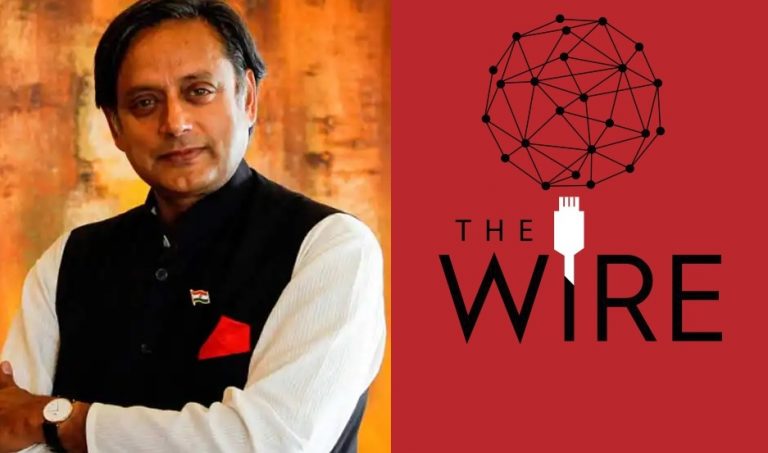
Similarly, at 16:51 hours on Tuesday, February 13, 2018, Congress MP and former Union Minister Shashi Tharoor posted a tweet claiming the current government has been moving goalposts.

We will look at these arguments in detail. But, to begin with, we must note that the article in The Wire misses out on several key facts while portraying a bleak picture of rural electrification. It also gets fundamental facts wrong – such as, the deadline for universal electrification.

THE DEFINITION

There is a difference between electrification of a village per se and intensive door-to-door electrification. The official definition of an electrified village, which has evolved over time, has stood for the following post-October 1997 (i.e. the current government has had nothing to do with this definition):

  • Basic infrastructure such as Distribution Transformer and Distribution lines are provided in the inhabited locality as well as the Dalit Basti hamlet where it exists.
  • Electricity is provided to public places like Schools, Panchayat Office, Health Centres, Dispensaries, Community centres etc.
  • The number of households electrified should be at least 10% of the total number of households in the village.

Therefore, at the least, if a village is connected to the grid, it is considered electrified. The next step is intensive door-to-door electrification, wherever necessary or in demand. It is common sense, however, that households cannot be electrified till the grid is connected to the village.

First of all, the current administration cannot be blamed for the above definition since it did not coin it. Second, it cannot be faulted for going by this definition till date as far as village electrification is concerned since the definition exists, much as a rule does in the rulebook.

On the whole, perhaps we could have skipped the bit about basic infrastructure had we been living and working in a parallel universe. But we do not. Therefore, when there are basic structural problems like the availability of electricity connection in a village, we would need to tackle that first and then proceed on the next step, which is ensuring every household has electricity.

THE DEADLINE FOR ELECTRIFYING EVERY HOUSEHOLD

The article says that, given the slow progress of work and the failure to meet deadlines, the government has constantly revised its targets and that “at last count, the government now hopes to meet the target of delivering power to every household by August 2022.” The Financial Express report that the article cites as evidence, is a PTI story dated August 10, 2017.

Is this the “last count”? Does the The Wire not know that as per the Saubhagya scheme announced the next month (September 2017) – and which is cited in the article — the deadline for electrifying every household, that is, universal household electrification is March 31, 2019? Surely, December 22, 2017 came a good four-plus months after August 10, 2017 in last year’s calendar?

THE PROGRESS OF VILLAGE ELECTRIFICATION

Now, coming to village electrification, out of 18,452 unelectrified villages identified as of April 2015, 16,341 villages have been electrified till date under the Deendayal Upadhyaya Gram Jyoti Yojana (DDUGJY). The remaining villages are expected to be electrified by May 1, 2018. That is the deadline.

As far the bigger picture on rural electrification is concerned, of 5,97,464 Census villages, 5,96,401 villages (99.8%) have been electrified till the first week of this month. Again, as of November 30, 2017, intensive electrification in 4,68,827 villages had been completed.

Do the facts and data above give any hint of the bleak portrait of rural electrification as made by the The Wire?

THE CONFUSION CONTINUES

The same confusion between village and household electrification has been carried forward when The Wire compares Saubhagya with the Rajiv Gandhi Grameen Vidyutikaran Yojana (RGGVY).

Mr Mohammad, the author of the The Wire article,  calls the Saubhagya scheme “old wine in new bottle”. It seems the phrase would be more apt for the writer in question since he had written a similar piece for The Wire: ‘Modi’s Reheated Electricity Scheme Won’t Fix Problems the Old One Couldn’t’, published September 26, 2017, where he had compared Saubhagya to the RGGVY scheme launched by the last government.

The True Picture had done a factcheck on the above piece from Mr Mohammad too: ‘No, Saubhagya is Not RGGVY Repackaged, Nor is it Unnecessary’.

The two schemes, Saubhagya and RGGVY, are quite different. How? First, both RGGVY & DDUGJY were/ are long-term projects to achieve rural electrification. Saubhagya is a short-term, target-oriented plan to light every Indian household. Therefore, Saubhagya is not the same as RGGVY or DDUGJY. It follows that, by definition and scope alone, Saubhagya is not, and cannot be, a repackaged RGGVY.

Second, Saubhagya plans to electrify all Indian households, be they rural or urban. RGGVY and DDUGJY were/are schemes meant for rural electrification only. Although the new scheme seeks to provide electricity connections free of cost to beneficiaries who will be identified with the help of the 2011 Socio-Economic and Caste Census (SECC) data, other unelectrified households not covered by the SECC 2011 data will also be provided electricity connections – if they so desire — under the scheme on payment of Rs 500 only. That is why, Saubhagya is a scheme that targets, literally, universal electrification.

Third, to connect the writer’s dots between village electrification and household electrification, Saubhagya is the logical next step after village electrification. Saubhagya is about last-mile connectivity and intensive door-to-door electrification. The existence of Saubhagya, which the article has not explored in terms of scope and achievement, belies the writer’s notion that household electrification is failing and targets will not be met.

While there is no denying that after building infrastructure, the same must be ensured that all households are connected, the article’s logic fails to connect the two – the first step, as we said, is connecting the village to the grid and, thereafter, that connection is extended to households. Saubhagya and DDUGJY, among other schemes, are trying to achieve just that between them.

In conclusion, it may be said that there is a roundedness to the approach to electrification and unlike what The Wire thinks – and with factual errors – both village electrification and household electrification projects appear to be moving ahead and on target.

As for Mr Tharoor, much like the writer in The Wire, Mr Tharoor is also unable to tell the difference between village and household electrification, and he also appears to have misled people with the deadlines: On August 15, 2015, the PM said 1,000 days for complete village electrification. The deadline for that is May 1, 2018 – which is a little short of 1,000 days. And the correct deadline for universal electrification is March 31, 2019. How then are the goalposts being moved?

As for the allegation of the NDA government renaming UPA projects, perhaps we ought to direct Mr Tharoor back to our article The Names And Games of Schemes: A Fact-Check for Shashi Tharoor from last June which was written specifically for the edification of Mr Shashi Tharoor.

(The above first appeared as two articles in thetruepicture.in (1) (2) )

Sources:
http://www.ddugjy.gov.in/mis/portal/index.jsp
http://pib.nic.in/newsite/mbErel.aspx?relid=171148
http://pib.nic.in/newsite/PrintRelease.aspx?relid=171101
http://garv.gov.in/dashboard

Oxfam deputy head resigns over Haiti prostitution scandal

0

Oxfam has been hit with a pay-for-sex scandal after an investigation by The Times newspaper alleged that the charity organization covered up misconduct by senior aid workers in Haiti including the then country-director Ronald van Hauwermeiren. The newspaper says that a confidential report by the charity found that Hauwermeiren had solicited prostitutes in the villa rented to him by the charity for operations in Haiti. Allegations of sexual exploitation of children were also present in the report but the charity states that such allegations are unproven.

Andrew McCleod, a former senior UN worker, has said the Oxfam scandal is just the tip of the iceberg. “It’s a global problem across all charities, including the United Nations,” MacLeod said. Not so long ago, a whistle-blower revealed the sexual exploitation of children by French troops at the Central African Republic and was suspended for passing the contents of an internal report to French authorities after the UN failed to take action to stop the abuse.

The Deputy Head of Oxfam, Penny Lawrence, has resigned after admitting the charity’s inadequate response to past allegations of sexual misconduct by its workers in Haiti. Hauwermeiren resigned in 2011 after admitting that prostitutes had visited his villa.

US based columnist tries to flare communal violence, again

0

CJ Werleman, a US-based self-proclaimed ‘journalist’ yesterday tweeted a video accusing the RSS of moral policing a young Muslim man and his Hindu girlfriend.


In his tweet, he says the moral policing took place in Uttar Pradesh. The video shows a group of men who appear to be threatening and abusing a couple.

However, what he claims in the tweet is far from reality. As per media reports, the incident is that of a couple getting roughed up by goons who were trying to misbehave with the woman, who was out with her fiancé. The incident happened on 18th December 2017 where a woman and her fiancé were harassed by some goons, who shot the video and uploaded it to social media.

4 accused, Hemant, Anis, Nadeem and Suhel, have been arrested, while one is still absconding.

Thereby, Werleman’s claim that RSS was behind thrashing the young couple appear false. This is not the first time he has spread misinformation. Earlier, during the Kasganj violence, he had tweeted allegations on Kasganj Police of taking help of ‘Hindu extremist mob’ to arrest Muslims. Following UP Police’s intervention, he deleted his tweet.


This just goes out to show that propagandists masquerading as journalists is not something only Indians are good at.

Tatya Tope multipurpose stadium in Bhopal becomes the first solar powered non-cricket stadium

0

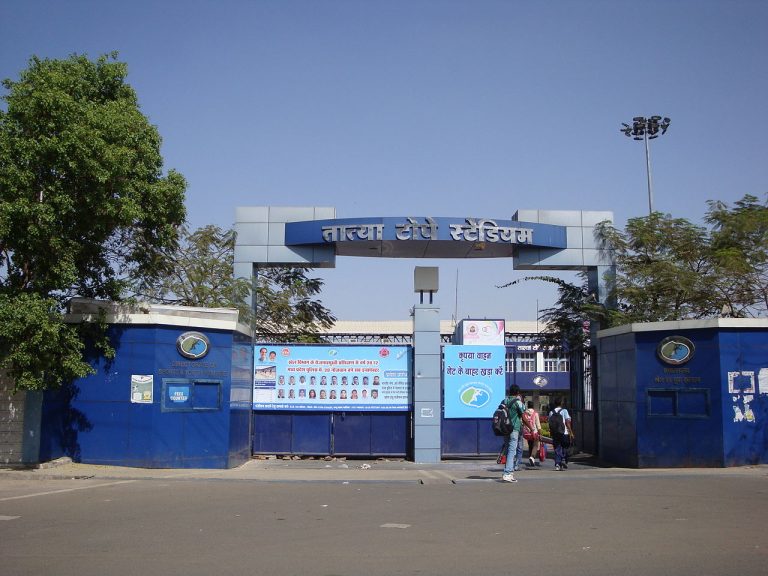
Tatya Tope Multipurpose Stadium in Bhopal becomes the first non-cricket stadium in the country which is completely powered by solar energy. 60% of the expenses on energy are expected to be saved because of the solar power infrastructure in the stadium. This information was tweeted by the minister of state for power and new renewable energy Raj Kumar Singh.


The Madhya Pradesh sports minister Yashodhara Raje Scindia told Economic Times that 375 KW electricity is being generated by the solar panels in the stadium. The stadium has been paying energy bills of 5 lakh per month so far. This is expected to go down to 2 lakhs once the solar panel infrastructure is used for its energy needs. The sports minister also said that the cost of installation would be recovered in four/five years because of these savings.

The stadium has facilities for football, athletics, volleyball, hockey, basketball, badminton, cricket, handball, table tennis, taekwondo and wrestling. With the current upgrade, the stadium will be a cost-effective asset aiding sports development in Madhya Pradesh.

Video: Congress minister tosses a coin to make a decision on appointment of lecturers

0

Charanjit Singh Channi, the minister of Technical Education in Punjab has cooked up a storm, after a video of him tossing coins to appoint lecturers has emerged.

The incident took place on Monday when 37 newly recruited mechanical lecturers were called by the minister to give them their posting orders. They were recruited via the Punjab Public Service Commission (PPSC) examination.

Incidentally Minister Channi had to decide between two lecturers hailing from Nabha and Patiala respectively, who both wanted to be appointed as a lecturer at a government polytechnic institute in Patiala. With there being just one post, one of the candidates pitched that his score was better while the other claimed that he had more experience.

Initially the minister asked them to solve the matter internally but when they kept insisting for him to take a decision, rather than digging deeper for more points of comparison, he decided to toss a coin, with the candidates’ approval.

A video of the proceedings was reported by ABP News:
[youtube https://www.youtube.com/watch?v=2O-MxovpFPM]

In the video the minister is seen tossing a coin in his office, while the lecturers whose fate hinged on the outcome of the toss, looked on.

Incredibly, rather than raising concerns over the arbitrary manner of Channi’s appointments, the Congress party has decided to support his move by claiming that his intention was to allot all posts in a transparent manner.

The BJP has decided to jump into this issue and has demanded that Chief Minister Amarinder Singh take action against Minister Channi. As per BJP leader GVL Narasimha Rao, Channi is a gambler and not a minister. He also sarcastically added that Amarinder Singh should toss a coin to decide whether the minister should be sacked or forced to resign.

Minister Channi has in the past been in the news for other flamboyant decisions which include him constructing an illegal passage for changing the entrance of his official residence to make it astrologically accurate.

RBI’s new rules on NPAs mean faster detection and better resolution

0

Today, we are witnessing a large spurt in Non-Performing Assets (NPAs) i.e. bad loans in many banks. Most of these loans are from pre-2014, and are only now being classified as NPAs since the RBI has become stringent in such norms over the past 2-3 years. Many of these loans avoided scrutiny over the past few years due to various malpractices and archaic norms. Now the RBI has ushered in a sea change in the way NPAs are to be detected and reported.

First of all, RBI has withdrawn almost 28 odd circulars which dealt with stressed asset resolution and corporate debt restructuring. These 28 circulars were themselves the cause of confusion very often, and are now being replaced by this single instruction now.

Thus, schemes such as Corporate Debt Restructuring (CDR), Strategic Debt Restructuring (SDR), the Scheme for Sustainable Structuring of Stressed Assets (S4A), and the Flexible Structuring of Long Term Loans cease to exist. The Joint Lenders’ Forum (JLF), which was set up to coordinate resolution of large consortium loans, has also been disbanded.

Now, Banks are expected to classify stressed accounts as “Special Mention Accounts” (SMAs) as per the following timelines:

Thus, as per the norms, if either principal or interest is overdue even partly, for even 1 day, the loan gets classified as SMA-0. This sort of strict monitoring is expected to reduce the actual NPAs as banks now will keep track of such accounts from an early stage of deterioration.

Further, banks will report classification of an account as SMA to Central Repository of Information on Large Credits (CRILC) on all borrowers having exposure of ₹ 50 million and above. In addition, banks shall report to CRILC, all borrowers in default (with aggregate exposure of ₹ 50 million and above), on a weekly basis. This weekly collection of data will give a near real-time situation of NPAs.

The CRILC reports help institutions to look at and tackle their NPA or near NPA exposures. It is a data sharing framework that collects data on non-performing assets from all Indian Financial Institutions and then advises the rest of the sector about the state of impairment. All banks can access the data in CRILC.

Further, the circular states that  as soon as there is a default in the borrower’s account with any bank, all banks− singly or jointly − shall initiate steps to cure the default. Thus, the chances of tracking a potential NPA and reviving the account before it goes bad, are increased, as all banks will have to initiate action.

This also eliminates the chance of different banks classifying the same borrower’s accounts differently, based on their own discretion. This issue was recently seen in many private banks, where one bank classified an account as stressed, or non-performing asset (NPA), others continued to show the account as standard. This required RBI to force the banks to show the accounts as stressed, thus showing a divergence in NPA reporting.

For large accounts, i.e in respect of accounts with aggregate exposure of the banks at ₹ 20 billion and above, a “resolution plan” is expected to be framed by banks within 180 days of default. The resolution plan (RP) may involve any actions / plans / reorganization including, but not limited to, regularisation of the account by payment of all over dues by the borrower entity, sale of the exposures to other entities / investors, change in ownership, or restructuring etc. If banks do not implement such a plan within the timelines, then the account will be referred for insolvency under the Insolvency and Bankruptcy Code.

The resolution plans for ‘large’ accounts (i.e., accounts where the aggregate exposure is ₹ 1 billion and above), shall require independent credit evaluation (ICE) of the residual debt by credit rating agencies (CRAs) specifically authorised by the RBI. Accounts with aggregate exposure of ₹ 5 billion and above shall require two such ICEs. This clause will perhaps ensure that the resolution plans are realistic and feasible, unlike plans made in the past.

The new norms laid down by RBI are a testament to the relentless fight against NPAs which started 2-3 years ago. The revised norms as above will lead to an increase in number of accounts being classified as NPAs in the short-term. But, this will help banks avoid a pile of NPAs, which has been the case so far.

Pushpavalli : A dark comedy that hits the nail on the head

0

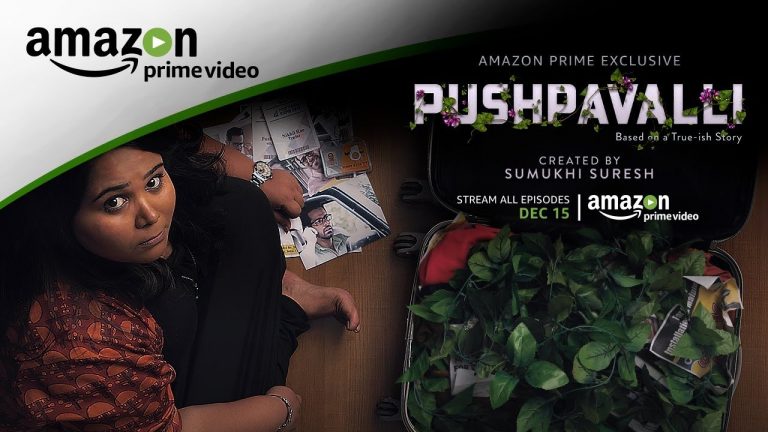
First and foremost 3 cheers to the creators and makers of Pushpavalli. Good original content on Amazon prime India. Comedienne & actor Sumukhi Suresh has brought to us this twisted dark comedy set in and around the life of “Pushpavalli”.

Plot: Pushpavalli is about a girl from Bhopal who moves to Bangalore to pursue her crush who is oblivious to her intentions.

Cast:

Sumukhi Suresh – Pushpavalli

Manish Anand – Nikhil Rai

Naveen Richard – Pankaj

Shraddha Vasu

Latha Satyamurthy – Amma

Director:

Debbie Rao

Writers:

Sumukhi Suresh

Naveen Richard

Rahul Hota

As I surfed through Amazon prime I came across Pushpavalli. The moment I saw the series, I was glad that is back with a show after a fantastic performance as Lavanya in the widely acclaimed movie ‘Humble Politician Nograj’. It also did remind me about this show called “Mahiway” on Sony by Yash Raj. For the uninitiated, it was a show about a chubby girl wanting to live a life on her own terms with a dream about how her ideal prince should be. It was a light-hearted, fun show, cut above the crowded K show repetitive drama soaps on tv back then.

So now with this thought, I was all set for a show in the similar genre – the feel-good rom-com. Perfect for a Sunday afternoon.

I binged watched the show. 8 episodes 25 mins each. The show grows on you like a vine. It begins with you rooting for the protagonist, loving the chocolate brown skinned, overweight funny girl who is constantly reminded of her colour and looks by her pushy, overbearing mother. It leads you to detest this scheming, compulsive liar, dognapping, stalker of women.

What I liked:-

  • The show does the dark comedy well. It is a genre which is not easy to pull off without falling flat. The thing about this genre is your laugh at that second while feeling uneasy at times and wondering did you have to laugh at all.
  • It is an uncommon story of a familiar plot called stalking, which is otherwise glamourized in Hindi movies. Here the makers strike the balance without normalizing stalking in love.
  • The life of the show is the rest of the cast and characters.
  • The two contrasting men, that is, the children’s library owner, Pushpavalli’s school friend and now F-word obsessed angry young man, boss Pankaj to Nikhil the Okra exporter, apple of pushpavalli’s eye, the sun to her life, the arm candy  gentleman, played By Manish Anand, bring in their A game adding the right balance to this twisted saga.
  • But my absolute favourite has to be Vasu played by Aiyyo Shraddha. Every time she appears as this stingy, annoying, nosey PG owner she gets you laughing out loud and keeps you wanting to see more of her.
  • Finally, the thing that caught my attention was how social and women issues were neatly weaved into the story like menstruation, body shaming, marital pressure, flashing, without throwing them into your face but yet delivering the message.
  • The climax literally leaves you saying, “What the hell!”.

Surely, Pushpavalli wasn’t what I expected it to be and am glad that was the case. It has its flaws but that’s for another time.

Rating: 3.5/5

[youtube https://www.youtube.com/watch?v=y5M_sdbFoYg]

25 Muslim families in Tripura village were shunned from Mosque because they joined BJP : reports

0

25 families of a small village in Tripura called Moidatilla in the Shantinagar constituency were shunned from their mosque because they had decided to support BJP. Moidatilla is a small village of about 100 families in the Shantinagar constituency in south Tripura. 83 of these families are Muslims.

As per a report in The Indian Express, about two years ago, some Muslim families in the village decided to support the BJP. Babul Hossain, a 35-year-old potato farmer has said that, about 16 months ago, his family and some others had joined BJP. Soon after, they were told by the other Muslim villagers that they could no longer pray in the village mosque because BJP is a ‘Hindu-Vadi’ party. They were forbidden to come to the village mosque and were told to go with the Hindus.

Hossain and the other families that were shunned had to build a make-shift mosque with tin roof and bamboo. Thye have engaged an imam and pay him by collecting money among themselves.

The shunned families also say that they have not heard about the BJP being a Hindutva Party. They don’t believe that the BJP had attacked any person because of their religion. They insist that this is just something that the Congress and the CPM have been saying. The villagers said that they have joined BJP because all these years of voting for Congress and CPM has not benefitted them in any way. The village has acute poverty and no power. There are no good roads to reach the village and no prospects of clean drinking water. Even the CPM  workers in the village had denied any help to repair the mosque.

Another lady, Bhanu Bibi had contested the panchayat elections earlier on a Congress ticket. She claimed that she was not even paid for 35 days of work under MNREGA . The villagers also claimed that the CPM workers often threaten and harass them. The musclemen also wanted a cut from the money raised for the mosque.

The CPM’s candidate for the Shantibazar constituency is State Minister for Home and Tribal Welfare Manindra Reang. He had alleged that RSS workers have camped in the rural areas and helped the families financially. He also claims that the villagers who earlier wanted only “mota bhaat and mota kapaad” (food and clothing) have started demanding infrastructure and development. He asserted that there is no infrastructure because the state was battling with problems of insurgency and there will be developmental work if the party comes back to power for the next five years.

PM Modi, while addressing an election rally in Tripura had alleged the Manik Sarkar-led government of massive corruption and lack of will for development of the poor people.


Tripura is set to hold the elections for the 60 Legislative Assembly seats this month. Tripura has about 37% tribal population and the state as a whole is reportedly decades back in development and basic infrastructure needs.

No Mr. Shekhar Gupta, you can’t malign us while tacitly supporting hate speech yourself

0

We started Squint Neon in September 2017 because like most politically and socially aware youth today, we got sick of the manner in which the left establishment and the Media had taken the country for a ride by peddling a skewed narrative over and over again. We started the page because we felt our voice needed to be heard. We started the page because we felt perhaps, through us, other’s voices could be heard too.

October 2017, we experienced first hand, the hypocrisy of the Left. A free speech warrior threatened us to take down a harmless meme. When someone who has the establishment on her side threatens you, you comply. And hence, we got intimidated and unpublished the page.

We felt helpless, to be honest. We are a bunch of socially aware kids who are angered by the Left establishment and how it is ruining the society. We wanted to give it back, in style, to the people who behave like the flag bearers of freedom of expression, pseudo-feminism, and societal values.

We know we had angered them with our narrative, when a reporter from ThePrint, a well funded Left-leaning website, emailed us asking our source of funding. That was the moment for all of us. We realized that these guys have started looking at us as a serious threat to their narrative on Social Media. And Mr Gupta, FYI we are not funded by any party. Unlike your journalists, we are passionate about our memes, and we do our bit of research before posting anything.

February 9th, 2018, was when thePrint ran a story and decided to cover meme pages run by teenagers. Almost all of our pages got featured on the article. By the way, maybe Shekhar Gupta and his journalists should research better since Humans of Squint Neon isn’t our page, one of our fans made a parody of Squint Neon.

Since the website invested serious man hours to research about harmless meme pages, we take this accusation seriously. Below are some of the memes we have shared on our page:


I wonder where exactly did they find us to be sexist, casteist or intolerant?

Do you want to know what sexism, casteism, and intolerance looks like? Have a look at the following :

Will The Print act with the same fervour against these Left-leaning people? Or will their humour be validated because The Print shares similar ideology as these individuals? There can’t be a better example for hypocrisy in any textbook.

We are more than just a meme page, we take pride in the fact that the Squint Neon ecosystem on Social media raised more than Rs 600,000 in just three days for a needy patient to be operated.

Do you remember how ‘Humans Of Hindutva’ who deactivated his page because he was threatened by the Right wing? How the left-leaning website pushed the narrative of fascism and intolerance down our throats? Did they even cross check with the admin for the threat? Did they ask him to send the screenshots of the threats so that the police could take action? No. It would thus seem like it was just an attention seeking move by the HOH admin as his page’s reach was going down.

We totally understand why the Left hates us. We can see the reach we have on our posts, it’s always more than what the rich, cash loaded website will ever have. We know that our posts resonate with the general public, and we will continue doing the work.

And Mr Shekhar Gupta, we always wanted to be India’s best right wing parody page. Thanks for officially crowning us with the title. The revolution has begun.

Hazaribagh Police arrests one 40 year old Mushtaq for attempting to create communal tension

0

As reported on Bhaskar, 40 year old Mushtaq has been arrested on the charges of trying to break peace in the region. As per reports, on Monday morning, Saleem Javed, a resident of BDO office received a letter through registry signed as ‘Santosh Kumar’, claiming to be resident of Madrasi Colony, Kargali Bazar. The letter contained abusive language towards Hindus and Muslims, which could create communal tension.

Mushtaq also claimed that a year prior, he had sent such letter to former BJP leaders Dhaneshwar Mahato, Jagarnath Ram and Hindu Kalyan Manch leader Ramu Digar amongst others, using such similar abusive and objectionable letters. These letters were signed under Muslim names which created internal tension. Station officer in charge Kuzur told that a case has been registered under section 243/18 Section 153, 295 against Mushtaq and he would be sent to jail on Tuesday.

Acting on Javed’s complaint, Mushtaq was arrested on suspicion. Mushtaq allegedly sent the mail written on fake letterhead in name of Eleven Star Club through registry. During this, Mushtaq was caught on basis of suspicion. Following interrogation, Mushtaq confessed to have sent the letter. He is now in police custody.