Home Blog Page 7367

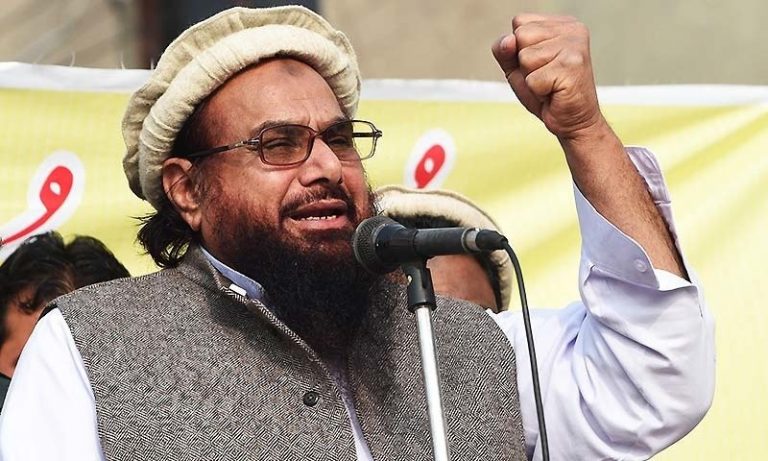
NIA files chargesheet against separatists and terrorists, including Hafiz Saeed and Hurriyat members

0

The National Investigation Agency (NIA) has filed its chargesheet against separatists, terrorists and stone pelters on Thursday for separatist activities in Kashmir. The main accused are the co-founder of Lashkar-e-Taiba, Hafiz Saeed, and Hizbul Chief, Syed Salahuddin. The list of accused also includes Aftab Ahmad Shah of the All Parties Hurriyat Conference, Altaf Ahmad Shah, Farooq Ahmad Dar, Mohammad Akbar Khanday and Raja Mehrajuddin Kalwar of the Hurriyat.


The investigation has revealed that the separatists have developed an organized network of stone-pelters and cadres who are incited to attack Indian sovereignty on Kashmiri soil. The investigation has also revealed that the separatists were receiving funds from Pakistani agencies through hawala conduits and that money was routed through fake and bogus companies floated abroad and remitted to Hurriyat leaders in Jammu and Kashmir.

The NIA conducted searches at over 60 locations and hundreds of damning documents and electronic devices were seized during the process. In addition, there are 300 witnesses in the case. The evidence collected have revealed that the persons accused were orchestrating violence against the Indian Army and stone-pelting and promoting and inciting other subversive activities against the Indian State. The investigation has also established an intimate link between separatists in Kashmir and their Pakistani handlers. The 1279-page chargesheet was filed before the Court in New Delhi and permission has been sought to continue the probe.

The raids conducted by NIA in various locations across Jammu and Kashmir, Haryana and Delhi reflects the ‘No Tolerance’ policy adopted by the NDA government against anti-India activities.The screws have been tightening around the separatists and terrorists in Kashmir and they have been feeling the heat under Narendra Modi with over 200 terrorists put to the sword in 2017. The case was first registered by the NIA in May, 2017 and the first arrests were made later in July.

The Judicial Custody of 10 people arrested by the NIA in connected with the case has ended today. Businessman Zahoor Ahmed Watali was one of the people arrested by the NIA in connection with the case, which was filed after violent protests had erupted across the valley after the elimination of Terrorist Burhan Wani by the Indian Army.
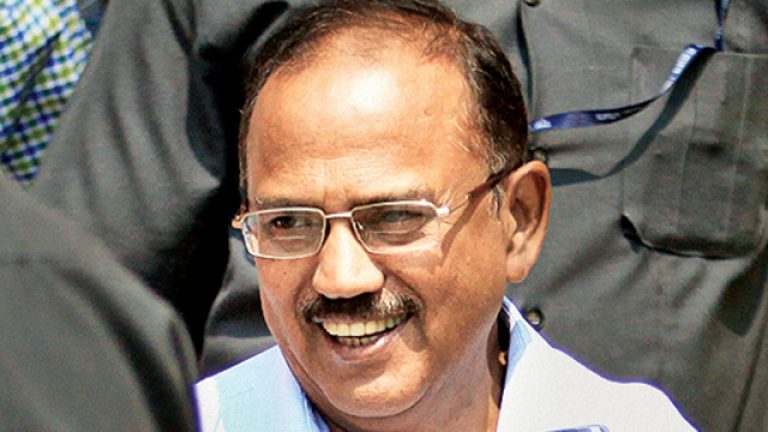
Importance of Agni-V in the Doval strategy to counter China and Congress’ lazy commentary

0

Today India successfully completed first user trial of nuclear capable Agni-V missile. The fourth (and last) experimental trial was completed on December 26, 2016.

At this juncture it is appropriate to revisit one of the riveting speeches of NSA Ajit Doval on importance of missile capability to counter Chinese aggression in Asia.

Importance of Missiles in Doval’s China Strategy

On August 21, 2010, during the Universal Brotherhood Day at Vishwa Adhyayan Kendra (Centre for International Studies), one person among the audience stood up and asked a question to Ajit Doval. “How should India deal with China, because Pakistan exists and will exist because of China?” Doval answered :

I think that is a very very valid question. Let me devote some time for it. Let us put on the graph papers where [things stand] China’s comprehensive national power today is about three times higher than India. And in next 50 years we will not be able to equal it. China is converting its economic power into its military and strategic power at a very fast rate, faster than what we had anticipated. They have advanced their strategic ability build-up by about 10 years. In these days of acute economic shortages/difficulty they are doing with great [zeal] . They are doing is the time when they can do it at the cheapest cost.

After this he cites a case where China assertively stopped a US -Korea naval exercise by threatening to launch a missile. He goes on to analyse the way in which China was building naval bases in Coco Islands (Myanmar), Chittangong port (Bangladesh), Gwadar (Pakistan), and Hambantota (Sri Lanka). According to him, China is slowly becoming a blue water navy (a maritime superpower capable of operating world wide ). To counter this, Doval feels it is best to have precise missiles that can reach economic hubs of China. He went on to say :

I think the best strategy for India would be to develop its missile capacity to a very high degree. China is extremely vulnerable today because all its comprehensive national power will be burst if its economic installations are threatened. And as China is progressing at a very fast pace its economic installations are coming up very fast. [..]

If China understands that India’s missile striking capacity is so much that we can reach Guangzhou, Shanghai and the port areas, that is, within 24 hours their economic capacity would be decapacitated (it will be a deterrence). India has got to make up its mind to develop its strategic missile capacity. [..]

Fortunately, I think, there has been a lot of pressure and the government has been going ahead and I think in the last three years there has been considerable progress.

The complete answer given by Doval can be seen here :

Why Doval Strategy is India’s best bet to counter China

Ajit Doval is absolutely right in this regard. China’s economic heft and population is concentrated on its eastern coastlines. The imaginary line called Heihe Tengchong line was drawn by Chinese geographer Hu Huanyong in 1935. It divides China into two distinctly different regions. West of this line, China’s 64% of land area supports only 4% of its population, where as 96% of its population lives in the eastern side of the line. Thus, Agni V, which has a range of 5000 km should be able to reach key economic installations in any part of this area. This will be a key deterrent to Chinese aggression in Indian ocean.

Heihe Tencheong Line. Image Source : Wikipedia

Congress Mouthpiece’s Remarks on Doval’s strategy

As expected, Congress mouthpiece (National Herald) has made lazy remarks on Doval’s push for missile capability in the recent past. It tried to interpret the Doklam road building activity as a response to Doval’s missile strategy.  In its article published on Jul 15th 2017 said :

Amidst speculation that NSA Ajit Kumar Doval could visit Beijing for talks on the border standoff, questions are being asked if China’s move is to checkmate Doval’s push for long-range missiles [..]

While Doval is known to have advocated capacity building in India’s long-range missile system as a deterrent to China, observers wonder if the Chinese road building efforts are a response to convey that if a missile is ever deployed, China would be prepared to push deep into Indian territory.

The article does not appreciate the strategy or provide any alternate strategy to counter China’s activity in Doklam. It sounds more like a complaint or a lazy remark on a serious strategic issue. A national party which has been in power for so long must be more careful and responsible while making any comment on issues of India’s security. It is also important to note that Rahul Gandhi met Chinese Ambassador during the Doklam standoff. We still don’t know what transpired in that meeting.

Once the NDA government took over Agni Missile development has progressed at a swift pace. This indicates that the strategy proposed by Doval in 2010 answer to a question is seeing the light of the day. The Agni-V is a fine achievement by DRDO that deserves appreciation of the entire nation.

‘The Print’ not only misled readers about IIT-B, but spun a simple issue to divide the society based on caste

0

Outrage over every tiny, insignificant and totally mediocre issues is quite in fashion these days. We are a big country. We are never out of issues to stand up for, we have a thousand problems plaguing our masses and yet it is so surprising how some media outlets conveniently miss them and instead put their collective power behind non-issues. Not only do they try to peddle fake narrative expertly woven around intricate lies, they also succeed in diverting the attention of the masses towards their bigger agenda of anti-Hindu, anti-BJP, anti-Modi fear mongering.

The recent topic of fake-activism has been the alleged caste divide and Bramhin monopoly in our society. We all see how viciously a lie can be woven into a net of violence and chaos that ultimately damages the spirit of the common man and the peace and harmony of our lives. We saw it in Bhima-Koregaon, we are seeing it every day in some of the other forms. The attempts to divide the general public in terms of caste and class are very much operational. Another sample of it was published in The Print, where it was alleged that IIT Bombay, one of the premier educational institutions of our country is promoting the “Bramhinical Notions of Food Practices”

When one reads the article title, one gets a mental image of a premier institution imposing strict rules for its students to adhere to.

The article goes on to quote academics on how what we eat defines us and then brings up casually that the much-feared “brahminical imposition” is actually happening in hostel 11. The fact that the said hostel is just one of the 16 women’s hostels on campus and there are many, many more hostels where no such thing has been reported somehow fails to get mentioned.

The fact behind the outrage (which never was, in the first place) is that a certain email was sent by the mess co-ordinator not to use the ‘main’ plates for non-vegetarian dishes. That’s it, seriously. The article goes ahead to describe how many institutions are practising this in their hostels. Spectacularly missing that hostels constantly cook food for a large number of people and not serving meat might be a budget matter rather than “Bramhinical imposition“. One Kg of Bhindi costs Rs. 30 while a kg of mutton costs Rs. 500. While I obviously can’t confirm, but since we are speculating, this could be a reason too, isn’t it?

The misleading article was soon picked up by celebrity journalists and “democracy is in danger” brigade. Mr Shekhar Gupta was quick to tweet.


There we have it. A mundane matter of using separate plates has now morphed into “food casteism”. The manufactured outrage didn’t just stop there. Soon others picked up. The students wishing for their plates not to smell bad were termed bigots in no time.


The fanning didn’t stop there, from casteism and bigotry it just had to become communal too.


Note here how a matter of hostel plates segregation has now been fanned into a Hindu Muslim issue already. Some vigilant observers were quick to see through the propaganda.


The absolute hogwash that was being attempted did manage to amuse some sane minds though.


It took some time before the facts began to emerge and tweeples started calling the hoax for what it actually was.


Facts do not stay hidden for long. Soon tweeples came out to clarify and it all fell apart.


In the digital age, it doesn’t take long to confirm facts and know the truth. But such repeated attempts to promote allegations of casteism and divide when none actually exist often makes one wonder, what are these elements actually trying to achieve by such baseless propagation of lies and half-baked conspiracy theories?

How Arvind Kejriwal ensured that Delhi children will not vote for AAP when they grow up

0

In Season 4, Episode 2 of Black Mirror, a popular series on Netflix, an over protective mother implants a child monitoring system on her daughter so she could track her every move. The episode follows life of Sara, the child, and her mother, and how constant monitoring basically screwed up her childhood. It sent chills down my spine.

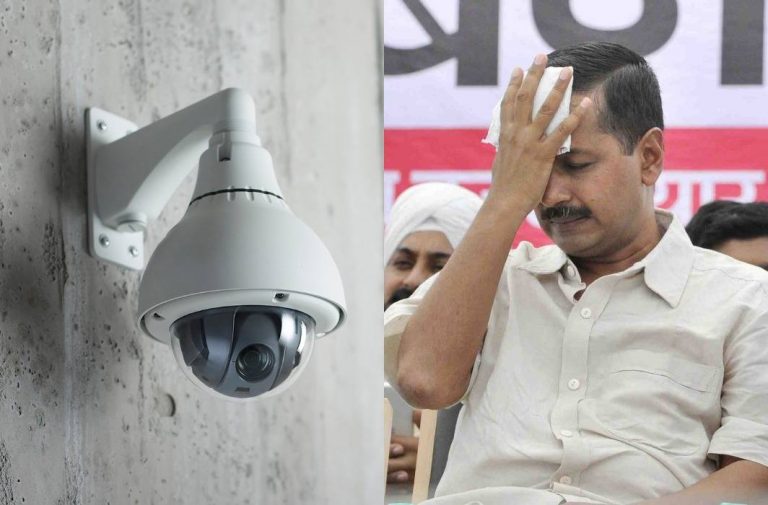
Arvind Kejriwal led Delhi Government recently started installing CCTV cameras across all government schools in Delhi where parents can get live streaming of the classroom their child is studying in.


Clearly, film review enthusiast doesn’t watch Netflix.

Kejriwal claims this will make the system ‘transparent’ and ‘accountable’. Like every other duty of his government, Kejriwal has outsourced the responsibility of ensuring safety of children in schools to the parents, who must now keep a constant watch on their children. Meanwhile, kids who’d rather play a little prank here and there, are robbed off their childhood because there are eyes, especially of their parents, constantly watching them.

When I was in school, my favourite thing to do was throw a paper plane whenever the teacher turned their backs on us. Now, of course, a student in Delhi might not be able to do so because not just his parents, but even parents of all their classmates are watching him. If not his classmates, the parents of his classmates, who may be deprived of humour, may call him out for just being little naughty.

And I am not buying the ‘safety’ argument. Shouldn’t parents be able to trust the schools when it comes to safety of their children? How can an education ecosystem be created when there is lack of trust amongst different stakeholders? The installation of CCTV cameras was taken up following the rape of a five year old girl in her school in Shahdara, and killing of a seven year old in a private school in Gurugram. While there should be no compromise on safety of children, this constant surveillance also infringes the right to privacy, which is a fundamental right.

Creating of vigilantism in ecosystem is detrimental to build a healthy environment in schools. Not only will the students feel inhibited from expressing themselves freely, even the teachers, who could use reasonable amount of strictness to discipline children, may be wary of taking any action for fear of being reprimanded by overly protective parents, many who never accept their child could be in the wrong. In fact, the 24×7 surveillance on teachers has also proved to be adverse for morale of the teachers who feel their professionalism is undermined.

In fact, other parents having access to constant monitoring of their children could open a whole lot of other problems. You really never know who is watching your children on their smart phones all the time. Shouldn’t the schools and government take consent of all the parents, as legal guardian of the children, before putting their privacy at sake? And if at all the cameras need to be installed, it is unclear why anyone other than select group of senior management personnel need to have a look. After all, the parents should be trusting management enough to be sending their children in the school. Moreover, evidence has suggested that CCTV cameras hardly help in curbing criminality. If children know they are under observation, and they indeed have criminal inclination, they will take the behaviour outside school gates which are not under camera observation, giving schools the opportunity to shrug off the responsibility since the ‘crime’ took place outside school premises.

And then there is the threat of misuse of cameras. Will the cameras be in toilets too? How will it be ensured that the access to these videos does not fall into wrong hands? In fact, studies have shown rather than bringing benefits, CCTV in schools can fuel suspicion, indoctrinate children into a culture of surveillance. In fact, no independent research shows benefit of CCTV cameras in schools despite widespread use.

If criminality in school is suspected, the teachers, management should get take up the issue with police and other relevant authorities instead of passing off the baton to parents. What if children grow up accepting that voyeurism is normal?

Well, one may not know an answer to all these questions, one does know that with this move, Kejriwal has ensured that these kids when they grow of age, are definitely not voting to power the one who essentially ruined what could have been the best days of their lives.

And while we are on topic of CCTV cameras, how about starting it with keeping few in offices of Delhi MLAs to begin with?

MP’s Home Minister wants a police complaint filed if people play Padmaavat’s songs

0

The upcoming Sanjay Leela Bhansali film Padmavati, which has now been rechristened to “Padmaavat”, has really got on to the nerves of certain elements of our society.

The protest against this movie which the aggressors claim, “distorts history” saw radical elements issuing bounties against Bhansali and Deepika Padukone. What heightened the drama was the fact that certain Kshatriya women threatened to commit Jauhar (self immolation), if the movie was released.

This hysteria started to take a dangerous turn after it was reported that members of the Rajput Karni Sena ransacked a school in  in Jaora town of Ratlam district, for playing a song from the movie during its annual function. This rampage by about 24 men sent panic into the hearts of parents, young children and created a stampede like situation at the venue.

When the Home Minister of Madhya Pradesh Home Minister Bhoopendra Singh was asked about this episode, rather than servery condemning the criminals, he proceeded to possibly justify their actions:


As seen above, the minister is quoted as asserting that since Padmaavat was banned in the state, people shouldn’t play its songs and if someone does so, it must be reported to the police.

This inexplicable view of the Home Minister, which is routinely enforced into practice in Communist and Islamic countries, resulted in many social media users expressing outrage:


Possibly to much relief of social media users, this statement of the Madhya Pradesh Home Minister might be rendered moot, as Supreme Court has now suspended the orders given by the four states to ban the film. Thus going by the Home Minister’s logic, no ban on the movie is equal to no ban on the songs.

The Congress party may soon lose its Lutyens properties, including 24 Akbar road

0

The Congress party which was voted out of power by the people of India in 2014, has possibly seen its fortunes slowly shift from bad to worse.

From losing power in states like Maharashtra, Haryana and Himachal Pradesh to not being able to dislodge the BJP in Gujarat when the latter was riddled with intense anti-incumbency, the party, some might say, now looks only a shade of its former shelf.

If this wasn’t enough, the party may now be rendered homeless if the Modi government’s Ministry of Housing and Urban Affairs has its way. This Ministry headed by Hardeep Singh Puri, was incidentally created in July of last year by merging the urban development, housing and urban poverty alleviation ministries.

As reported, the Ministry of Housing and Urban Affairs has moved a note before the cabinet committee on accommodation, seeking the immediate eviction of the Congress party from the Seva Dali office at 26 Akbar Road, the 5 Raisina Road property, which doubles up as the Indian Youth Congress office and CII/109 Chanakyapuri.

Apart from this, the note strikes at the heart of the Congress party by seeking its eviction from 24 Akbar Road, which has housed its party headquarters from 1976.

This note comes after the Directorate of Estates falling under the Urban Development Ministry, had cancelled the allotment of the these four bungalows in January, 2015. The violation of the Congress seems to be that, a political party is only given allotment of such premises for three years during which time it has construct its office and vacate the allotted premises after the prescribed period is over.

The Congress as it turns out, was provided a land at 9-A Rouse Avenue, back in June 2010 for constructing a new party office but when the period of three years got over, it sought an extension by claiming that its building plan was not sanctioned.

The party since then has successfully managed to keep getting extensions for its 24 Akbar Road property, which ends on October 2018. The party is asking that it be allowed to continue occupying all the four properties till that duration but the permission might only be provided for 24 Akbar road bungalow.

We had reported in the past how this government had taken a tough stance against politicians and bureaucrats overstaying at official residences.

To do that, the government had amended the Public Premises (Eviction of Unauthorised Occupants) Act, 1971. which meant that the eviction process would start within three days after the allotted grace time was over.

Plus in order to get a stay, the occupants could only knock the doors of the High court or Supreme Court and not the district courts. This takes time and can’t be done in three days. Apart from this, the illegal occupants were also required to pay steep fines of about Rs 10 lakh for an overstay of about five months.

Net direct tax collection upto December at 6.56 lakh crore, 18.2% higher than same period in previous year

0

The collections of Direct Tax has seen a massive jump of 18.2% in the first nine months (April-December) of the current fiscal year. The government has released the latest results in a press release last week. The print release provided figures which show that the net collections are at a huge 6.56 lakh crores. This amount is higher by a significant 18.2% than the corresponding period last year.

The net Direct Tax collections also represent 67% of the total budget estimates of Direct Taxes for the financial year of 2017-18. The total estimate was Rs 9.8 lakh crores. The figures show the government is positive about meeting the estimate this year.

Gross collections also showed a good increase of 12.6% to 7.68 lakh crores during the April-December period. Net collections are calculated after the refunds have been issued. Refunds worth a total of 1.12 lakh crores have been issued in the said nine months.

The print release also stated that an amount of 3.18 lakh crores has been received as Advance Tax up to the month of December 2017. Positive improvements are seen here too as it reflects a growth of 12.7% over the Advance Tax collections of the corresponding period last year. Advance Tax in both corporate income Tax (CIT) and Personal Income Tax (PIT) has also shown a growth of 10.9% and 21.6% respectively.

Bloomberg Quint had reported that the net direct tax collection rise is in fact highest in last four years. The percentage growth itself has shown a constant year on year growth too, as per the report.

The Narendra Modi government has been pushing for larger inclusion of citizen under the taxpaying net. Big financial moves like the Demonetisation and GST has been helpful for the increase in tax collection and a larger participation of individuals as well as corporates and small businesses in the economic growth.

Though indirect tax collections under the Goods and Services Tax (GST) has shown a slight decline in the last months. The finance ministry has attributed it to several factors such as compliance and tax rate adjustments. GST council has brought down tax rates on as many as 200 goods by about 10% last November.

As the government pushes for more reforms and the economy shows positive growth, the tax collection is expected to rise further.

HF-24 Marut : Made in India jet aircraft of the sixties

0

Much has been spoken of the incompetence of India’s defence manufacturing capability. But one would be surprised to know that India’s first jet aircraft, Marut (means ‘Storm’ in Sanskrit) was manufactured domestically. In fact it is the first jet aircraft manufactured in Asia. It was supposed to be a supersonic aircraft, but it did not achieve the speed due to problems with the engine. In spite of that, it served India well till 1982 when it was replaced by MIG 23N. Marut was completely phased out in 1990.

Designed by an Engineer who served Nazis

Kurt Waldemer Tank, was an aeronautical engineer who designed many aircrafts for Luftwaffee (Air force of Nazi Germany). He was famous for his work in Focke Wulf aircrafts that were used by Germany in WW II. Before leading the Marut project, he was working in the Madras Institute of Technology where APJ Abdul Kalam was one of his students. He finds a mention in Abdul Kalam’s book ‘Wings of Fire’.

He was invited by Jawaharlal Nehru to design the aircraft. Nehru personally met Tank and inspected the progress of the design. It is important to note that Nehru had no moral inhibitions in accepting the services of engineer who had worked for Nazis!

Image Source :MarutFans Blog

Tank arrived in Bangalore in 1956 for the project and produced a first prototype by 1961. The production version of the aircraft was ready by 1967. India was the only country outside Europe and America which had achieved the capability to build its own jet at that point. Of course, one can say that the designer was imported. In total 147 Maruts were manufactured and inducted into IAF.

Participation in Battle of Longewala

Critical air support in the battle of Longewala by Maruts prevented Pakistani army overpowering India posts in the western sector. It is believed than 20 tanks and 100 vehicles in total were destroyed in the attack. This operation was later called a ‘Turkey Shoot’ due to the lopsidedness of the attack.

Not even a single aircraft was lost in air to air combat during 1971 Indo-Pak war. This shows that the aircraft was reliable and maneuverable in complex combat situations. After the war, Marut became obsolete within a decade due to rapid technological developments in aircraft technology.

Decline in Defence Manufacturing After Marut

Marut HF-24 was the peak moment for India’s defence manufacturing capabilities (as far as aircrafts were concerned) according to Bharat Karnad, a defence expert at CPR (Centre for Policy Research). Thereafter, defence PSUs did not get the attention and political support they deserved. As a result of this, India is forced to import technology and defence ammunition, aircraft, rifles and even ammunition from foreign nations.

Recent deals with foreign manufacturer for technology transfer or local manufacturing may be touted as a boost to local defence industries. But these efforts are not equivalent to a truly flourishing domestic defence manufacturing industry which can develop and own all the technology used by our defence forces. Excessive bureaucratic control, lack of investment in research, negligence of military and political leaders has ensured that India is dependent on outside support for its critical defence requirements.

Muslim woman’s house set on fire for supporting Ram Mandir

0

A Muslim woman’s house was allegedly set on fire for supporting Ram Mandir by unidentified miscreants. The victim, Ikra Chaudhary, lives in Hapur, Uttar Pradesh, and she claims on 6th December she submitted a memorandum to the district magistrate regarding the Ram Mandir. Following that, she alleges, she was threatened repeatedly to avoid getting involved in the matter.

She further claims she was even asked to leave Hapur and fears that there is a threat to her life. On Monday, few miscreants allegedly threw petrol on her house and set it on fire. She has registered a complaint with the police. A note which said ‘Now call your Ram’ was also allegedly found by Ikra, which she has submitted to the police. However, the police denies Ikra having submitted such note. The police is investigating the matter, but no arrests have been made so far.

Chaudhary is a district head of the Muslim Women’s Harassment Cell and claimed that on Monday night, at around 2 am, some unidentified men threw petrol on her home and set it ablaze. This woke up the family and they called out for help. When the neighbours also joined in, the miscreants allegedly threw the note and escaped. The fire has damaged some property of the house as well.

Chaudhary, who not only supported the construction of Ram Mandir, also wanted to take out a rally in its support, the permission of which was denied by the police.

Following Kejriwal’s footsteps, Mevani claims threat to life

0

You can take an AAPiyan out of AAP, but you cannot take AAPiyata out of an AAPiyan. Or so it seems. Remember back in July 2016, AAP supremo Arvind Kejriwal released a short clip, claiming Prime Minister Modi is so scared of his rising popularity that ‘anything might happen’ and that ‘they could get us killed’. Of course, resounding defeat in Punjab and Goa elections held after the theatrics, Kejriwal has calmed down and now resorts to mostly being passive aggressive by retweeting anti-Modi tweets instead of directly taking on him.

But this art of playing victim is so deeply ingrained that former AAPiyan and now an ‘independent’ MLA from Vadgam in Gujarat, Jignesh Mevani has decided to follow his former boss’ footsteps. After Mevani, who is also a champion of free speech and freedom of press, was condemned for snubbing a journalist, he claimed that the BJP and RSS want to ‘get him eliminated’. Mevani was an AAP member till he resigned in August 2016.

In a scene straight out of Hindi films, Mevani’s statement came a day after Vishwa Hindu Parishad (VHP) leader Pravin Togadia went ‘missing’ before being found. Togadia, an advocate of Hindu nationalism, who has Z plus security, in a surprise move has found support and concern from unexpected sources.

Various Dalit groups in Gujarat have submitted memorandums to Collectors of various districts demanding a Y category security, of 11 security personnel including 8 commandos, for Mevani. Mevani claims that he feels just like Togadia, where fascists forces could get him killed. On an unrelated note, Mevani was accused of inciting a mob to take to streets leading to protest.

Speaking of threats and attacks, another AAPiyan, Gopal Rai, who is now the Rural Development Minister of Delhi Government, at one point had allegedly faked his own kidnapping to try win elections as student in Lucknow University.


Of course, one wishes long and healthy life to everyone, such actions by elected representatives leaves behind a lot of doubts. Mevani contested as an independent candidate in the recently concluded legislative assembly elections in Gujarat with support of the Congress on the seat reserved for a Schedule Caste nominee.