Home Blog Page 814

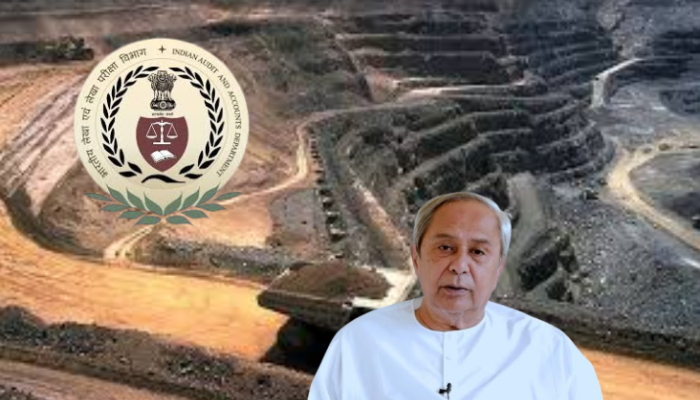
Who benefitted? CAG finds major irregularities in Odisha’s ore mining sector, losses over 22,000 crores incurred under Naveen Patnaik govt, says report

Comptroller and Auditor General (CAG) has shared alarming details about the loss of mining revenue incurred by the state administration of Odisha under former Chief Minister Naveen Patnaik. According to the CAG, the Odisha govt under the Biju Janata Dal (BJD) lost at least Rs 22,392 crore because leaseholders misreported the quality of the iron ore and underestimated the grade of ore mined between 2015 and 2022 as well as exceeded the mining plan.

The production of chromite without forest clearance, short royalty assessments, non-utilization of sub-grade iron ore, production exceeding permitted in mining plans and environmental clearance and reports of lower-grade iron ore and iron ore fines as screened fines were estimated by CAG when determining the loss figure.

CAG carried out a performance assessment of “Systems and Controls in Assessment and Collection of Revenue from Major Minerals.” It was focused on concerns pertaining to the granting and extension of mining leases, licenses, and licences for the years 2015 through 2022. CAG audited six iron ore mines in the state and the report was laid before the state assembly on 11th September.

What led to the staggering loss

Twenty leaseholders reported the majority of their mined ores as “screened iron ore fines” which are small and less desirable in steel plants. As a result, the ores were subject to lower royalty rates than normal iron ore fines, which are larger and attract higher royalty owing to a state government order in 2010. This resulted in the state losing Rs 10,294 crore, which amounted to half of the total loss in mining revenue.

“There was a significant decrease in reporting of crushed fines from the production pattern of crushed and screened fines as prevalent before the order, leading to revenue implication of Rs 10,294.24 crore for the 20 test checked mines consisting of royalty of approximately Rs 5,841.80 crores and premium of approximately Rs 4,452.44 crores (for four auctioned mines),” the audit agency stated.

In 2010, the State Steel and Mines Department issued an order directing the government to impose a greater fee on “crushed fines” and a lower royalty on “screened fines.” Following this notice, there was an unusual rise in the reported production of screened fines (which have a lower royalty) and a downward trend in the reported production of crushed fines from 2010 to 2011. Notably, it pointed towards a serious possibility of misreporting the “crushed fines,” to avert the imposition of higher royalty and premiums.

Seven of the 14 mines for which production data for the time frame before 2010 was available, showed production of no screened fines at all, while three reported producing less than 7%, one mine 12%, and just three mines between 23 to 42%. However, from 2010 to 2011, when the state government’s directive was issued, the percentage of screened fines produced from the same mines increased.

When compared to the production pattern of crushed and screened fines that were common before the order, by 2021–2022, the reported proportion of screened fines at the 12 active mines ranged from 60% to as high as 82% in the case of 10 mines, 44% for one mine and 27% for another mine.

Suspicious claims of decline in iron ore grade

The apex audit body pointed out an interesting loophole in the auction regime which was adopted after huge mining irregularities were revealed across the country. An “abrupt and abnormal decline in the grade of iron-ore and its classification” was noted following the auction of the selected mines in 2020. A total of Rs 4,162 crore in mining revenue was lost as a result between 2020 and 2022. Prior to the commencement of the auctions in 2020, over 83% of the production was recorded in the 62–65% iron grade, however, in the two years after the sale (2020–2022), that percentage dropped to 16%.

“The decline of the grade of iron ore has resulted in a revenue implication of approximately Rs 4,162.77 crore for the financial years 2020-21 and 2021-22 in the form of lesser royalty and premium (post-auction),” the report mentioned. CAG’s report number 6 of this year highlighted that the mines that supplied better-grade iron ore before the 2020 auction also reported increased percentages of lower-grade iron ore (with less than 60% Fe) after the auction, ranging from 11% to more than 60%.

The average production of iron ore with grades above 60% Fe in a mine under Joda Circle in the Keonjhar district was approximately 77% before the auction, however, afterwards, it decreased to 9.88% in 2020-21 and then to nil in 2021–22 when a new lessee took over operation of the mine.

“It is highly improbable that the grades of mineral reserves, produced from the auctioned mines, would witness an abrupt decline within a short period of one or two years. Such a significant and sharp decline in the grade of iron-ore indicated a significant risk that the new lessees were misreporting the grade of iron-ore produced, in order to avoid higher royalty and premium payable on higher grades,” the report unveiled.

CAG further mentioned, “For the six test-checked mines, changes in reported grades of production of lumps and fines after the auction, as compared to the consistent pattern in the grade of production, as reported by the older lessees, have consequently resulted in a revenue loss.” The loss in mining revenue was also brought to the attention of the CAG since at least eight iron ore mines incurred losses worth Rs 3,618.50 crore due to leaseholders mining above the permitted mining plans’ limitations.

Additionally, leaseholders mined past the boundaries of environmental permissions, costing the state Rs 1,700 crore in lost mining revenue. Furthermore, the CAG noted that Rs 1.48 crore tonnes of iron ore were moved via weighbridges and check gates without e-passes, resulting in a further loss of Rs 1,473 crore in mining income.

The state govt took no action to probe

The CAG report observed that the state administration had “not taken any steps to investigate” the grades of iron-ore production reported by the new lessees as of March 2022, despite an abnormal fall in the grades of iron-ore lumps and fines that indicated the possibility of misreporting.

‘Hold officers accountable’, says CAG report

The government has been advised by the CAG to hold officers accountable for suggesting an extension of the lease period despite objections from various departments regarding irregularities committed by the lessees. Moreover, a thorough and prompt investigation should be conducted across all mines that have been auctioned to figure out whether there was intentional or willful misreporting of lower grades of iron ore to evade paying higher royalties and premiums.

A committee headed by the director of mines and geology was reportedly established by the state government to investigate the disparity in ore downgrading and false reporting of ore size. The committee unearthed that ore was downgraded in three leases and that there was a mismatch in ore size in six leases. Lessees who have favoured the review of the cases before the revision authority are liable for paying an amount of Rs 471.48 crore by the government as a result of the breach.

The report conveyed that mining operations that violate applicable environmental protection laws and go beyond the parameters of the mining plan will undoubtedly have a negative influence on the surrounding ecosystem. “Therefore, the present status clearly indicates the existence of system failure to timely detect the actual grades of lumps and fines produced, which adversely impacted the state government revenue,” the significant report concluded.

Research funds totally exempt from GST, notices sent to private institutions like IIT, Anna, Punjab University no longer to be sought

0

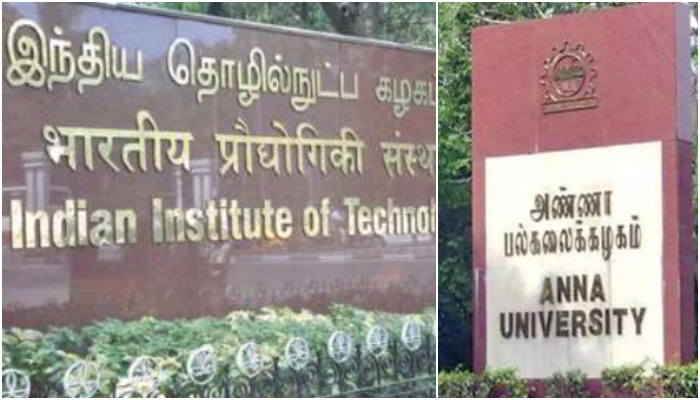
Following the GST Council’s decision to exempt central and state-governed higher education institutions from settling GST on their research funding, notices issued to some prominent institutions, including IIT-Delhi, Anna University, and Punjab University, concerning their outstanding GST pays will no longer be sought out.

The Goods and Services Tax (GST) Council, in its 54th meeting on Monday, resolved to exempt universities and research centers run by the central or state governments, as well as those exempt from income tax, from paying GST on research funding. The exemption applies to research money received from both the government and the commercial sector. Until the above, they had to pay 18% GST on their research grant.

These institutes claim that the move represents a significant step toward reducing budgetary strains, allowing them to focus more on innovation and high-impact research activities. They do, however, point out that there is still tremendous room for flexibility in other areas, such as college fees, particularly those at private colleges.

“The recent exemption of GST on research grants in educational institutions has been broadly welcomed within the academic community… Reducing the tax burden allows institutions to invest with greater confidence in potentially groundbreaking and risky projects,” Bhuvnesh Kumar, dean of research at Sharda University was quoted as saying.

Kumar noted that the removal of GST from college costs will benefit students. Eliminating this tax would reduce financial pressures for students and educational institutions. He noted that eliminating the GST on food and accommodation bills will significantly decrease the financial strain on students and their families.

The ruling comes a month after the Directorate General of Goods and Services Tax Intelligence issued show-cause orders to many educational institutions across the country for failing to pay GST on research funding received.

While IIT-Delhi received a Rs 120 crore warning, Tamil Nadu’s Anna University received a Rs 36 crore notice for research money received between 2017-18 and 2021-22. Following this, the Union Ministry of Education stepped in and commenced talks with the Ministry of Finance.

According to Department of Revenue officials, the GST Council’s decision will consider previous instances ‘as is, where is’. Nonetheless, educationists argue that, while exemption would undoubtedly foster scientific temper and increase research and development, it would provide an unusual obstacle to privately run colleges.

Exempting research organizations and universities from claiming input tax credits on grant purchases will result in increased operational costs for their research projects. Furthermore, these organizations would face challenges with tax compliance and record keeping.

The GST Council recently announced tax reductions on a variety of goods and services, including cancer treatments and helicopter trips. Following the council meeting, Union Finance Minister Nirmala Sitharaman stated that the lower rates will apply prospectively.

In Budget 2024, Sitharaman proposed a record Rs 1.20 lakh crore for education. However, the allocated amount for FY25 is Rs 9,091 crore less than the updated estimate for 2023-24, representing a nearly 7.26 percent reduction from the prior revised estimates of Rs 1,29,718 crore.

The Indian Institutes of Technology, the government-run public technical establishment, received Rs 10,324 crore for FY25, compared to Rs 9,661 money in the BE for FY24, which was then amended to Rs 10,384 crore.

The allocation to the University Grants Commission (UGC), the higher education regulatory agency, was lowered to Rs 2,500 crore. Last year, UGC was allocated Rs 5,360 crore, which was later increased to Rs 6,409 crore. 

Labourers from UP-Bihar not allowed inside villages while locals embracing Christianity or migrating to Canada – tragedy of Punjab that not many want to talk about

0

Three years ago, the former Chief Minister of Punjab and Congress leader Charanjit Singh Channi called migrant workers coming from Uttar Pradesh and Bihar as “Bhaiya” in a derogatory sense. Although Channi apologised due to backlash, this disdain against migrant workers is gaining momentum in Punjab. In August this year, several migrant workers were driven out of a village in Mohali by the locals. In some villages, boards with 11 ‘restrictions’ for migrant labourers have been put up.

According to an exclusive report by Aaj Tak, migrant labourers are not allowed to rent a house inside the Jandpur village under the Kharar sub-district of Sahibzada Ajit Singh Nagar (Mohali), which has imposed eleven restrictions on migrant workers. The restrictions include a ban on movement after 9 PM, no smoking or chewing tobacco, and others, as OpIndia reported earlier. Multiple display boards were placed across the village explaining the restrictions.

Moreover, there are several restrictions regarding the clothes they wear. Local people argue that with the arrival of outsiders, violence, thefts and robberies, harassment of women has increased. However, the migrant labourers say that although they earn money here, they receive no respect. The situation of these migrant labourers is such that they don’t want to stay there anymore.

The report says that this trend of driving UP, Bihar migrant labourers out of the village began from Mundo Sangtian in August this year. While all the migrants were driven out of the village, some were also expelled from their jobs. Eventually, the matter reached the Punjab and Haryana High Court as one Vaibhav Vats filed a plea against the illegal expulsion of migrant workers by the locals.

As per the Aaj Tak report, the Jandpur village is filled with signboards advertising visa to various countries like Canara, USA and Poland. Apart from that, there were boards praising and thanking ‘Prophet’ Bajinder Singh from the Chuch of Glory and Wisdom. Banners claiming that if one takes his blessing, visas will be issued immediately were also found by the reporting team of Aaj Tak.

As per the report, there is a conversion lobby working in the area who helps youths migrating to Canada by becoming Christians. They get the youths to convert to Christianity, cut their hair to settle abroad.

Speaking to AajTak, the villagers claimed that migrant workers lived in squalor, and roamed around half-naked when we used to go to Gurudwara. They used to fight and the behaviour of the migrant women was also not good. The villagers said that due to this alleged inappropriate behaviour, they voted which included people from the Gurudwara Committee and decided to oust the migrants from the village.

Lamenting the mistreatment faced by migrant workers in Mohali, a migrant worker Mansukh said that the local people taunt them with “Bhaiya Bhaiya” remarks and that they mock them by saying “you people eat from our money”. The worker said that if migrants take money, in exchange, they do hardwork. Other than belonging to UP and Bihar, these migrant workers are also allegedly mistreated due to their dark complexion. “We look different from them, that’s the whole problem,” the migrant worker said.

When asked about why suddenly this became an issue when migrants have been working in Punjab for many years, a local explained that earlier, these migrant workers used to work in fields and stay on their motor vehicles, but since last three-four years, they have begun entering the villages. In addition, since locals have placed a restriction on their sons moving to Canada and other countries, they look for work here. However, since most of the jobs are taken up by the migrants, they face difficulty in finding work.  A Panchayat member Charanjit Singh alleged that migrants have eloped with many local minor girls.  

As reported earlier, police verification has been made mandatory for migrant workers. The residents who provide accommodation on rent to these migrant workers are now also required to provide them with dustbins. More than two migrant workers will not be allowed to stay in a single room and they cannot roam around in “half attire”. In case the migrant workers are found indulging in illegal activities, the house owners who rented them accommodation would be held responsible.

The list of restrictions came in response to the allegations levelled against the migrant workers from Uttar Pradesh and Bihar. The allegations include spitting on roads outside the village Gurudwara, which is considered disrespectful to the Sikh religion. Locals accused migrant workers of roaming around half-naked, causing embarrassment to the female residents. Several migrant workers have decided to leave the village following the restrictions. Other workers might follow suit.

US imposes sanctions on suppliers to Pakistan’s ballistic missile program including multiple China-based companies

0

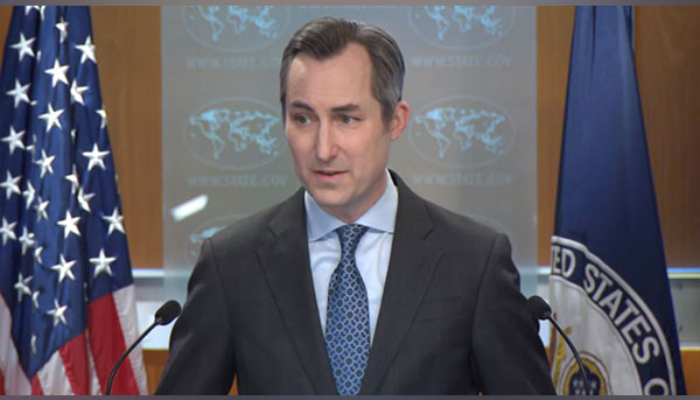
On 12th September the United States State Department placed penalties on China-based companies that supplied Pakistan’s ballistic missile development, according to the missile sanctions rules. State Department spokesperson Matthew Miller informed, “The Department of State is taking action against five entities and one individual that have been involved in the proliferation of ballistic missiles and controlled missile equipment and technology. Specifically, the Department of State is designating the Beijing Research Institute of Automation for Machine Building Industry (RIAMB) pursuant to Executive Order 13382, which targets proliferators of weapons of mass destruction and their means of delivery.”

Notably, RIAMB has collaborated with Pakistan’s National Development Complex (NDC), which the US considers responsible for the country’s long-range ballistic missile development and manufacturing.

The statement further added, “Additionally, the United States is imposing sanctions under the missile sanctions laws (i.e., the Arms Export Control Act [AECA] and the Export Control Reform Act [ECRA]) on three PRC-based entities, one PRC individual, and a Pakistani entity for ballistic missile proliferation activities: PRC-based firms Hubei Huachangda Intelligent Equipment Company, Universal Enterprise Limited, and Xi’an Longde Technology Development Company Limited (aka Lontek); PRC individual Luo Dongmei (aka Steed Luo); and Pakistani-based entity Innovative Equipment.”

Matthew Miller further added that the US ‘will continue to act’ against proliferation and associated procurement activities of concern, wherever they occur. “These sanctions are being imposed because these entities and individuals knowingly transferred equipment and technology controlled under the Missile Technology Control Regime (MTCR) Annex, in support of MTCR Category I missile programs, to a non-MTCR country.”

The US had designated four entities targeting proliferators of weapons of mass destruction and their means of delivery previously as well. These entities too had supplied missile-applicable items to Pakistan’s ballistic missile program, including its long-range missile program. The entities included Belarus-based Minsk Wheel Tractor Plant, which has worked to supply special vehicle chassis to Pakistan’s long-range ballistic missile program. It further imposed sanctions on three Chinese entities, including, “Xi’an Longde Technology Development Company Limited”, “Tianjin Creative Source International Trade Co Ltd” and “Granpect Company Limited.”

“We’re going to continue to disrupt and take actions against proliferation networks and concerning weapons of mass destruction procurement activities wherever they may occur. Just let me say, broadly, we advise anyone considering business deals with Iran to be aware of the potential risk of sanctions. But ultimately, the government of Pakistan can speak to their own foreign policy pursuits,” declared State Department Principal Deputy Spokesperson Vedant Patel in April.

“The sanctions were made because these were entities that were proliferators of weapons of mass destruction and the means of their delivery,” he pointed out. He revealed that these firms were based in China and Belarus.

(With inputs from ANI)

Arvind Kejriwal granted bail in Delhi liquor scam case with conditions, plea challenging legality of arrest dismissed: Here is all you need to know

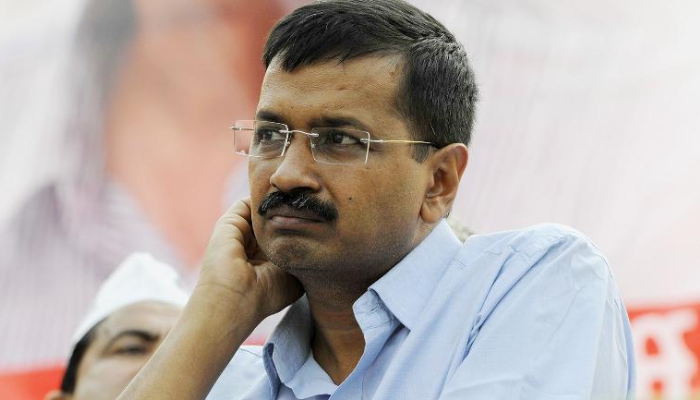
On Friday (13th September), the Supreme Court of India granted bail to Delhi Chief Minister Arvind Kejriwal in connection to the liquor policy scam case.

The development came more than three months after he surrendered to the authorities at the Tihar jail. The court noted that the arrest of the Delhi Chief Minister was valid and that there was no illegality on the part of the Central Bureau of Investigation (CBI).

Arvind Kejriwal was granted bail after the apex court noted that the trial is unlikely to be completed in the immediate future. On the other hand, the CBI had opposed the bail application, citing the possibility of tampering with evidence.

The central agency demanded that the case be heard by the trial court. It must be mentioned that Arvind Kejriwal did not stand trial in the lower court and had directly approached the Delhi High Court.

In the end, the Supreme Court ruled that Arvind Kejriwal satisfied all conditions required to secure bail. The Delhi CM has however been directed to appear before the trial court, surrender his passport and refrain from making public statements about the case.

This comes as a setback, given that Arvind Kejriwal and other AAP leaders were planning to use the Delhi liquor policy case for their political vendetta ahead of the Haryana and Delhi elections.

Kejriwal has also been barred from leaving the country. All restrictions that were imposed on him while being granted interim bail in the Enforcement Directorate (ED) case continue to him.

Having said that, no conditions have been imposed that can prevent Kejriwal for taking over the position of the Delhi Chief Minister.

Delhi Liquor policy scam case

At the heart of the controversy is the Delhi Excise Policy 2021-2022, which has been explained in 10 simple points.

  • The liquor policy was first proposed in September 2020 but came into effect only in November 2021.
  • It changed the manner in which alcohol was being sold in the National Capital. Introduced private players in the market and marked the exit of government-owned liquor vendors.
  • Delhi was divided into 32 zones and a total of 27 private vendors were to ply in each zone. Every municipal ward had 2-3 liquor vendors operating in the area. 
  • Proposals such as home delivery of liquor, allowing liquor vendors to offer unlimited discounts, opening of stores till 3 am were also tabled before the Delhi Cabinet.
  • The drastic policy change resulted in a 27% increase in government revenue to ₹8900 crores. At the same time, it marked the complete exit of the Delhi government from the liquor business.
  • While the objective of Excise Policy 2021-2022 was to end black marketing and the liquor mafia, the Delhi government soon came under fire over allegations of corruption.
  • Chief Secretary of Delhi, Naresh Kumar, found irregularities and procedural lapses in the new liquor policy. Lieutenant Governor VK Saxena ordered a CBI probe on the recommendation of Naresh Kumar.
  • Manish Sisodia waived off ₹144.36 crores on the license fee, to be paid by the private liquor vendors, under the garb of the Coronavirus pandemic. Incurred loss to the Excise Department and benefitted liquor licensees by waiving the import pass fee of ₹50 per beer case.
  • All these changes were made without the final approval of the Lieutenant Governor and thus considered illegal under the Delhi Excise Rules of 2010 and Transaction of Business Rules of 1993.
  • Thus, the Delhi government made a U-turn on its new excise policy in July 2022. A month later, CBI booked Manish Sisodia, ex-Only Much Louder (OML) CEO Vijay Nair and 13 others in an FIR for irregularities in the implementation of the Delhi Excise Policy 2021-2022.

Ahmedabad: Mohammed Shehbaz arrested in train theft is also involed in ‘Love Jihad’ case, has trapped 24 women using matrmonial sites pretending to be ‘Harshit Chaudhary’

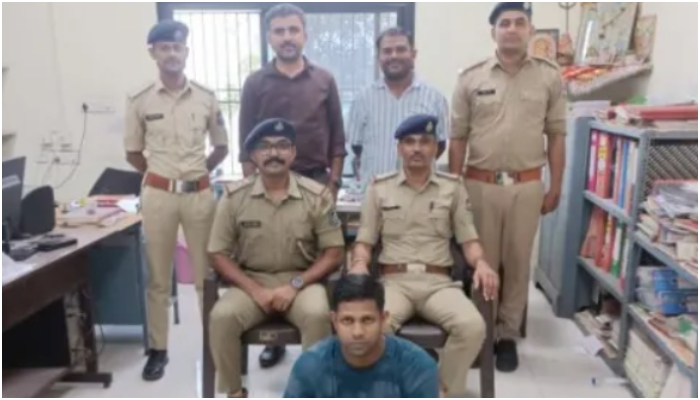
On 31st August, Ahmedabad Police arrested one individual identified as Mohammad Shehbaz in the case of theft on a Vande Bharat train in Gujarat. Now it has come to the fore that he is also involved in a ‘Love Jihad’ case. According to the initial reports, he is believed to have used a false Hindu name to trap and marry a Hindu girl. The Aligarh Police had booked the accused in the case and now he has been handed over to the Ahmedabad Police.

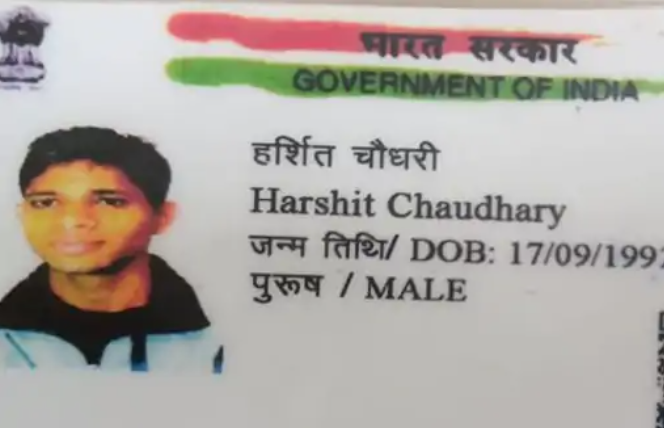
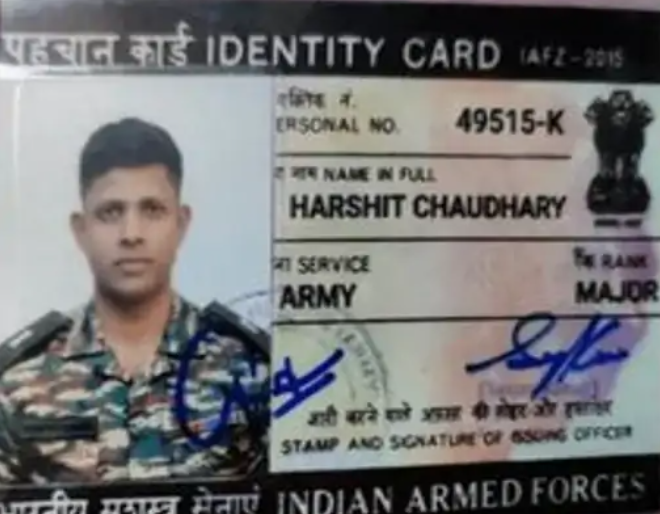
It is worth noting that Shahbaz was detained by Ahmedabad police on 31st August in connection with a theft on the Vande Bharat train. A fake ID card bearing the name ‘Major Harshit Chaudhary’ was also discovered in his possession. Shehbaz is a resident of Aligarh, Uttar Pradesh. He not only created a fake Aadhaar card with a Hindu name, but he also preserved a false army officer card despite not being in the army. When the police arrested him and interrogated him further, they discovered that he had used his false identity to deceptively maary a Hindu woman.

The accused is believed to have stolen a trolley bag of one of the passengers from the Vande Bhart train. After reviewing the train’s CCTV footage and passenger chart, the police found that the accused had reserved a seat under the name ‘Harshit Manoj Singh Chaudhary’. The police followed him away and detained him, and when questioned, he confessed to having generated a bogus ID of ‘Harshit Chaudhary’. Furthermore, it was discovered that he had joined the Army in 2015 but was expelled from the Army being unfit as of June 2024.

Image- Dainik Bhasker

Further inquiry revealed that Shehbaz utilized a fake Aadhaar card with a Hindu identity, a PAN card, and a false ID card of an army major for railway and plane travel. Not only that, but he also entrapped a Hindu girl originally from Jharkhand by adopting a Hindu identity. A case has been filed against him in Aligarh in this regard.

Image- Dainik Bhasker

One of the women called the police amid the investigation and exposed the accused

In a conversation with OpIndia, PI H Garhvi said that during the interrogation one of the women called him. The woman told the police that Harshit Chaudhary was her husband and had not returned home for a long time. So he called his (accused’s) phone number. The police later told the girl that the person she believed to be her husband was actually not Harshit but Mohammad Shehbaz. The girl eventually said that she never knew that the man she had married was a Muslim. She then lodged a complaint against Shehbaz at a police station in Aligarh.

According to a report by Dainik Bhaskar, the girl went to Aligarh’s Banna Devi police station and lodged a complaint on September 8th. She said in the complaint that she originally hails from Chaibasa in Jharkhand. Mohammad Shehbaz contacted her through shaadi.com and identified himself as ‘Harshit Chowdhury’, claiming to be an army man. He also created a fake Aadhaar card and an ID card of an Army major to obtain the woman’s trust.

After that, Shehbaz called the girl to Aligarh and got married to her as per Hindu rituals on March 5th, 2023 in a temples and then took a rented house in Aligarh and made the girl stay there.

The girl said in the police complaint that after marriage, Shehbaz’s behavior changed and he left her alone. He told her that he wasn’t allowed to go on leave by the Army authorities. In addition, she said that he forcefully established sexual relations with her and threatened to kill her if she refused. Further, during the police investigation, it was found that Shehbaz is already married and that he has two children.

Bank account seized, IT officials informed

The Aligarh Police registered a case on the complaint of the victim and now he has been handed over to the Ahmedabad Police. As per the police, he had cheated on 24 women from different parts of the country using fake Hindu identities. He met working women on social media sites or matrimonial sites and then forced them to have sexual relations. He then used to loot the women monetarily. The police exposed this modus operandi of the accused during the investigation to which the latter gave confirmation.

The Police further investigated the bank accounts of the accused to discover that he had used a fake Hindu identity to create an account. The police also found that large monetary transactions had recently happened through the account. The bank accounts have been seized and the IT officials have been informed.

The police said that since he was in the Army, he knew all the etiquette which helped him gain the trust of the victim women. Further investigations into the case are underway.

Another attack of short seller Hindenburg against Adani Group falls flat, Indian conglomerate says no proceedings ongoing in Swiss court

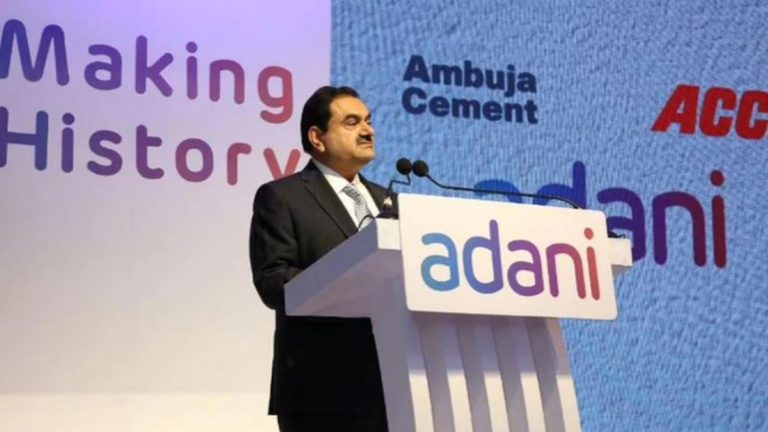
On Thursday (12th September), US-based short seller Hindenburg Research claimed that Swiss authorities had frozen more than USD 310 million in funds across several Swiss bank accounts over money laundering allegations against Adani Group. The Adani conglomerate strongly rejected the claims made by Hindenburg Research.

Taking to X, Hindenberg Research claimed: “Swiss authorities have frozen more than $310 million in funds across multiple Swiss bank accounts as part of a money laundering and securities forgery investigation into Adani, dating back as early as 2021. Prosecutors detailed how an Adani frontman invested in opaque BVI/Mauritius & Bermuda funds that almost exclusively owned Adani stocks, according to newly released Swiss criminal court records reported by Swiss media outlet.”

Adani Group trashes Hindenburg and Gotham City’s money laundering proceedings claim

The Adani Group has rejected and denied “baseless allegations” over reports concerning the freezing of some funds in Swiss bank accounts. The Business conglomerate asserted that it has no involvement in any Swiss court proceedings, nor have any of the company accounts been subject to sequestration by any authority.

The Adani Group said in a statement that the allegations are clearly preposterous, irrational, and absurd and it is yet another orchestrated and egregious attempt by the same cohorts acting in unison to inflict damage on the group’s reputation.

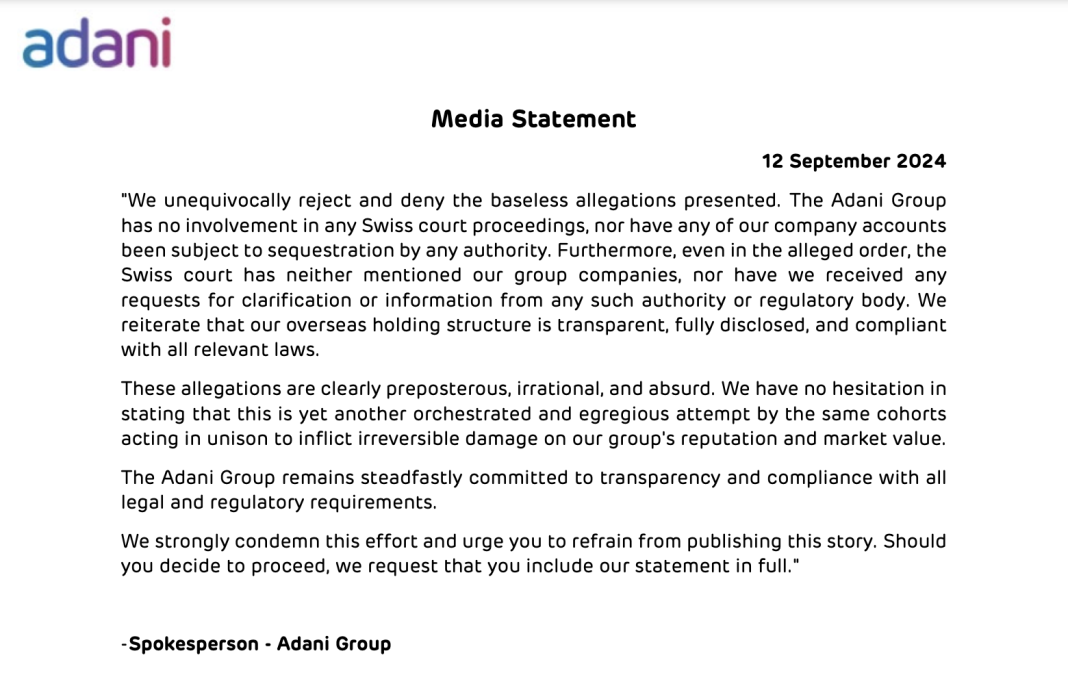
In an official statement, the Adani conglomerate said: “We unequivocally reject and deny the baseless allegations presented. The Adani Group has no involvement in any Swiss court proceedings, nor have any of our company accounts been subject to sequestration by any authority. Furthermore, even in the alleged order, the Swiss court has neither mentioned our group companies nor have we received any requests for clarification or information from any such authority or regulatory body.”

“We reiterate that our overseas holding structure is transparent, fully disclosed, and compliant with all relevant laws. These allegations are clearly preposterous, irrational, and absurd. We have no hesitation in stating that this is yet another orchestrated and egregious attempt by the same cohorts acting in unison to inflict irreversible damage on our group’s reputation and market value. Adani Group said it remains steadfastly committed to transparency and compliance with all legal and regulatory requirements,” the statement added.

How Sitaram Yechuri with UPA govt’s push played key role in bringing Nepal under communist rule and world’s only Hindu monarchy became a ‘secular democracy’

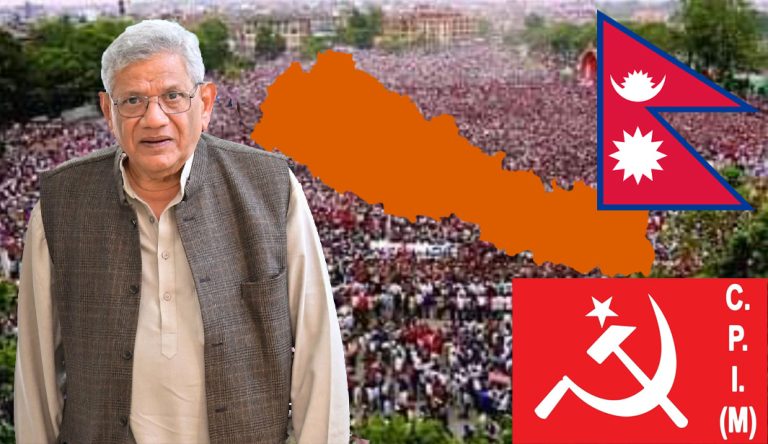
Communist Party of India (Marxist) general secretary and Rajya Sabha MP Sitaram Yechuri (72) passed away at Delhi’s All India Institute of Medical Sciences (AIIMS) on 12 September after battling a month-long respiratory disease. He was being treated for acute respiratory tract infection at the hospital. The veteran politician who learned tricks of the trade from Harkishan Singh Surjeet, another seasoned Left leader, had a penchant for making national headlines. One might argue that it was not for the right reasons, nevertheless, he emerged as one of the nation’s prominent communist voices.

The communists infamously refer to religion as “opium” and while Yechury also had similar views, they were more pronounced in relation to Hinduism as he and his party like the rest of the communists dedicated their lives to maintain the faux “ganga-jamuna thezeeb” equilibrium through the denigration of Sanatan Dharma. With his refusal to accept the invitation to the opening of Ram Mandir and his reference to Hindus and their sacred epics Ramayana and Mahabharata as violent, Yechury repeatedly demonstrated his commitment to the secularism practised in India.

However, one shouldn’t presume that his quest to introduce “true secularism” was exclusive to India. As a real communist who is unaffected by national boundaries and aspires to expand his ideology to the rest of the world, Yechury began the task with India’s neighbour. He actually implemented Prime Minister Narendra Modi’s “neighbours first” policy even before the latter gave the slogan and gained power at the centre.

Interestingly, he had decided to introduce communism to Nepal, the sole Hindu Rashtra in the world, rather than other neighbours of India where jihadi ideology is rife and minority groups, particularly Hindus, are being rapidly wiped out. The world’s only Hindu country became a ‘secular democracy’ after the rise of communism in the Himalayan country, and Yechury was among those who had initiated the process. Unsurprisingly, the United Progressive Alliance (UPA) headed by the Congress party played a significant role in this crooked initiative along with its alliance partners of the Left.

Yechury brought ‘democracy’ to Nepal, had met his great Maoist friend Baburam Bhattarai at PM Manmohan Singh’s behest

The first open conference of the outlawed Nepalese political parties was held in 1990 at the home of Ganeshman Singh, the founding member of the Nepali Congress, and Chandra Shekhar was the one who organized the delegation of Indian politicians who participated in it. That was the beginning of the end for King Birendra. Afterwards, Sitaram Yechury and DP Tripathi of the Nationalist Congress Party apparently took on the mantle from him. 

Yechury and Tripathi, who were student leaders at Jawahar Lal Nehru University (JNU), visited Maoist leader and former Nepalese prime minister Baburam Bhattarai who was also a student at the institution. While Yechury was able to leverage his influence with the Maoists, Tripathi was linked to the Nepali Congress and its splinter section led by Sher Bahadur Deuba, the Nepali Congress (Democratic).

More importantly, Prime Minister Manmohan Singh reportedly asked Yechury to leverage his connections with Bhattarai. Tripathi was also acquainted with him and even had the benefit of knowing the leaders of the Nepali Congress. Yechury’s intervention facilitated the 12-point accord between the Maoists and Nepalese political parties. The four-point agenda was even known as the “Yechury formula” in the media.

“Nepal must embark on a new democratic path. The political process must not remain limited to restoring what was gained in 1990. This is important because it is this understanding that will bring the Maoists into the democratic mainstream,” an elated Yechury had expressed during his visit to the former Hindu monarchy in 2006. In 2005, Yechury and Tripathi founded the Nepal Democracy Solidarity Committee in India and worked with Rahul Barua of the South Asia Foundation.

According to Yechury, there was “an additional incentive” for India to support this procedure as he admitted, “This will have a salutary effect on the ultra-left in India. Revolutions today must factor in people’s yearning for democracy.” Yechury and Tripathi were invited to the country by Nepali Congress President Girija Prasad Koirala and also went to the reinstated parliament to thundering applause and a grand welcome from the Nepalese comrades.

Yechury who batted for the Maoists visited the country regularly as an interlocutor between them and the Seven-Party Alliance. He used to meet then Prime Minister Manmohan Singh and former Defence Minister Pranab Mukherjee before his departure. He also held several meetings then with now Prime Minister Pushpa Kamal Dahal, alias Prachanda who is a veteran member of the Communist Party of Nepal (Maoist Centre).

Sitaram Yechury, a member of the Polit Bureau, returned there in 2010 after he was instrumental in Nepal’s alleged second jana andolan (people’s movement) in 2006 to help political parties in the country forge consensus to discuss the peace process, the task of Constitution writing and the latest political developments. He also met with notable leaders including Nepali Congress president Girija Prasad Koirala, Unified Communist Party of Nepal (Maoist) chairman Pushpa Kamal Dahal ‘Prachanda’ and Communist Party of Nepal (Unified Marxist Leninist) chairman Jhalanath Khanal.

His efforts served as a preview of how desperate the Left and Yechury were to ensure that the borrowed political ideology of communism replaced the Hindu roots of the nation under the garb of democracy, of course with active assistance of the Congress. Their hatred of Hindu Rahtra as demonstrated by their various statements and actions even today was quite evident at the time as well.

Yechury and his overwhelming love for all things China

Yechury, to put it in simple words, like other communist leaders in India shared a profound love and deep affection for China. However, it shouldn’t come as a surprise because the communists sacked politburo member and Chief Minister of Kerala V S Achutanandan for suggesting that they should organise a blood donation camp for the Indian Army soldiers, during the 1962 India-Chian war. His statement was deemed anti-party and he was thrown out.

Yechury was always an outspoken critic of ‘atrocities’ committed against Indian Muslims and even claimed discrimination when there was none, however, he refused to even acknowledge the widely documented oppression endured by Uyghur Muslims at the hands of his ideological brethren. “These are problems that need to be properly resolved. Problems are everywhere,” is how he defined the brutality inflicted upon the Muslim minorities in China in an interview in January of this year.

“I think in the future, challenges such as economic development, social harmony and the fight against negative features will be met more effectively in China. The exemplary manner in which the PRC (People’s Republic of China) tackled and contained the Covid pandemic, reopened its society and economy with the requisite precautions and put back the economy on a growth trajectory, is a lesson for the world establishing its superiority of socialism as a system over capitalism,” he boasted as if though he belonged to the Communist Party of China rather than the CPI(M).

He added, “The efforts to eliminate inequalities and corruption, and raising the quality of life have put PRC on the path for achieving the centennial goal of building a ‘modern socialist country that is prosperous, strong, democratic, culturally advanced and harmonious’ by 2049.” Yechury didn’t hold China accountable, of course, for spreading COVID-19 over the globe and concealing official death and patient data.

He made no mention of China’s harsh media regulations, its authoritarianism, the country’s expansionist policies, its meddling in India, or its support for Pakistan either. Yechury who relentlessly complained and exacerbated even minor issues in India, for some reason, appreciated everything that was anti-democratic and anti-secular in China. Maybe that is the reason China values ties with CPI(M). Furthermore, he penned a glowing review of Romanian dictator Nicolae Ceausescu before his execution in 1989. It appears that the parliamentarian wasn’t really concerned about human rights or freedom as much as he was about raising issues to score political points in the country.

Conclusion

Sitaram Yechuri succeeded Prakash Karat as the general secretary of the party in 2015. He worked relentlessly to further his political as well as ideological agenda. He was a loyal communist who put his party’s allegiance and ideology above all else. He never hesitated to voice his opposition to Santana Dharma, its culture, or India’s Hindu heritage. He was a shrewd politician, willing to act hypocritically when it served his interests. For all these attributes, the late Yechury will always be remembered in Indian political history and possibly in Nepal’s politics as well.

Mamata Banerjee accuses protesting medics of wanting to grab power after they refuse meeting without livestreaming, says she would have resigned if they wanted justice

0

On Thursday, September 12, West Bengal CM Mamata Banerjee said that in the interest of the people, she is ready to step down. CM Mamata Banerjee made this statement amid the raging protest by Doctors in Kolkata. She said, “I apologise to the people of Bengal who expected an end to the RG Kar impasse today…I am ready to resign from my post for the sake of people. I don’t want the chair, I want justice (for the deceased) and treatment for the people (patients).”

However, she accused the doctors of wanting power and said that she would have resigned if they wanted justice. The CM made the comments after the protesting doctors refused to attend the scheduled meeting with her as the West Bengal govt rejected the demand to livestream the meeting. She said that while she respects the movement and is even willing to step down to ensure justice for the people, she believes the protesting doctors are not seeking justice but power.

Mamata Banerjee said, “I respect the movement. I’m even willing to step down for the sake of justice for the common people. But they don’t seek justice they only want power. I’m ready to quit for justice”.

Mamata Banerjee said, “I tried my best to sit with the junior doctors. I waited 3 days for them that they should have come and settle their problem. Even when they didn’t accept the verdict of the Supreme Court, I waited 3 days with my highest officials, including Chief Secretary, Home Secretary, DG and my MoS. I am sorry. I apologize to the people of this country and the world who are supporting them (doctors), please give your support. I don’t have any problem. We want justice for the victim. We want justice for the common people. We want justice for the treatment of common people. We want that, as per Supreme Court instruction, they must join their duty. Though, 3 days passed after the Supreme Court verdict but we are not taking any disciplinary action because sometimes we have to tolerate. It is our duty to tolerate sometimes.”

West Bengal Chief Minister Mamata Banerjee also urged the protesting doctors to return to work.

Earlier, Bengal government denied protesting doctors’ demand for live streaming of the discussion saying that live-streaming won’t be possible as demanded by protesting doctors as the case was subjudice.

West Bengal CM said, “We were waiting for the doctors for 2 hours 10 minutes. We had urged the protesting doctors to come with an open mind. The deadlock can be resolved through talks only. In the last two days also, we waited for 2 hours. Our work is to forgive them. Today Chief Secretary wrote that the delegation should come to ensure the smooth running of the healthcare infrastructure in the state. The same cannot be contrary to the direction passed by SC for resumption of work as such direction binds the state. Today the meeting was of safety of doctors. We are open-minded about live streaming but the matter is subjudice. We had mentioned that it would be recorded but live-streaming won’t be possible.”

She further said that after the meeting they could have conducted a joint press conference to resolve the impasse.

“We expected that they would come. We will not take any action as we are elders and it is our duty to forgive them. We had mentioned that 15 representatives came come but 34 delegates came. We allowed everyone but they did not enter the hall. For an open discussion, we did not invite anyone else from the health department. Already 27 people have died. More than 7 lakh people are not getting service. It has been 32 days and junior doctors and many residential doctors are not working. There are 1500 serious cases,” she further said.

“We have built 43 super-speciality hospitals. We had built a transit camp waiting hut for difficult terrain. Many people are dead in homes without treatment. SC said that after the deadline, the state can take action. Still, we called them. Many senior doctors are working under difficult conditions. Today we were hoping for a breakthrough. We have again forgiven them,” she added.

The second-year postgraduate medical student was raped and murdered inside the seminar hall of RG Kar Medical College and Hospital on August 9. The Central Bureau of Investigation (CBI) is investigating the rape and murder of the 31-year-old trainee doctor at the Hospital, as ordered by the Calcutta High Court.

(With inputs from ANI)

US is ready to offer F-16 fighter jets to India, depends on Indian Air Force what they want: Major General with US Pacific Air Forces

0

Major General David A Piffarerio, Mobilization Assistant to the Deputy Commander of the US Pacific Air Forces (PACAF), said on Thursday that the United States is ready to offer F-16 fighter jets to India.

Speaking with reporters on India’s defence sector and F-16 Fighting Falcon fighter jets, Major General Piffarerio said, “…The more options that are out there, I think the stronger the Indian Air Force is going to be in the future.”

He added, “We certainly want to give them the best that we have — the F-16s. But ultimately it’s going to be a choice for the Indian Air Force on what they want to do with their air defence.”

Notably, the US State Department in June had announced the clearance of two possible sales to Taiwan of F-16 parts and supporting equipment, valued at a total of USD 300 million for Taiwan.

Pentagon’s Defence Security Cooperation Agency (DSCA) said the packages would include standard (USD 220 million) and non-standard (USD 80 million) spare and repair parts, components, consumables, and accessories for F-16 aircraft, as well as other technical and logistics support services, Focus Taiwan reported, citing the press releases.

The DSCA stated that the proposed sales would further strengthen Taiwan’s requirements “to meet current and future threats by maintaining the operational readiness of [Taiwan’s] fleet of F-16 aircraft.”

According to the DSCA, the package would also support regional economic growth, political stability, military balance, and enhanced Taiwanese security.

The US Congress was informed of the possible sales, according to the DSCA. The permission does not imply that an agreement has been signed for the equipment, according to Focus Taiwan.


(This news report is published from a syndicated feed. Except for the headline, the content has not been written or edited by OpIndia staff)