Home Blog Page 7608

The bigotry of so-called liberals over the Brexit verdict

I grew up in the temple town of Tuljapur, in rural Maharashtra, in the late 80s and early 90s. Like the rest of the nation, we were all cricket-crazy kids and like most of the village folks, we were from the lower middle class and poor families. If you joined the game having your own bat, you were accorded many privileges, including choosing your batting position (mostly opening).  It also meant that you could contest any decision that went against you. More often than not the games ended when the patience of the other kids gave out, and you threw a tantrum at finally being given out, and walked away from the game carrying your precious bat.

Reading the reactions of many liberals and intellectuals about the Brexit referendum results yesterday reminded me of those games played in my village, and the tantrums that we the bat owners threw.  There are two differences, however:  one, we were ten- and twelve-year-old children, and two, at least we owned bats.

In my first widely-read article, “I am left and you are wrong”, I had argued that liberals often use disagreement with their point of view as a proof of your moral deficiency. With the Brexit results, liberals have taken this one step further and begun suggesting measures that alarmed me enough to write this article.

If you have been following social media, then you would know that those who label themselves liberals did not take this defeat and the UK’s decision to leave the EU kindly. Their reactions ranged from sarcasm to outrage but the underlying attitude/belief was the same: “It is dangerous to let common people decide what they want. Better leave these matters in the hands of educated people like us”.

It is not my purpose in this article to discuss the wisdom behind David Cameron’s decision to call for a referendum on this matter, and whether the people chose correctly  or not. It is the timing of these comments that bother me more than the content. If liberals thought referendum was not the way to proceed in this matter, they should have fought it tooth and nail, rather than taking part in the process (or supporting those who took part) and blaming the system!  Railing against those who sought to quit and screaming insults when the result went against you speaks of the worst excesses of the cry-bully culture of the left.

The most outrageous or cringe-worthy piece of statistics doing the rounds, depending on your frame of mind and age,  is in  the table below:

Survey
Survey

As you can see, there are several things wrong with it and I am too tired to be angry about it by now. So, let me just list them. To start with, the interpretation that the older generation threw the younger generation under the bus is one-sided and bigoted. It fails to take into consideration that younger people may be more easily swayed by propaganda (especially through social media) and hence they bought into  the ‘Remain’ lobby’s peace-and-unity rhetoric compared to the response by older people who have seen and experienced the EU-induced reality for decades. The ‘Remain’ lobby progressively lost support among the older citizens/voters. It also meant that people who lived as adults longer in the EU were more disappointed with the EU reign  compared to the young voters  who have little memory or experience of this reign, let alone how life was prior to the UK joining the EU. Our parents often protect us from the many harsh realities of the world, and so is it too big a stretch of the imagination that the ‘Remain’ lobby targeted voters who were least likely to have any experience with that reality?

The bigger problem with this piece of statistics is of course the underlying expectation that the right of self-determination for older citizens should have been subordinated to the rights and wishes of the younger generation. As a matter of practicality, an older person is more likely to concede, and let someone from younger generation have his/her way in his personal life. To institutionalize that expectation is clearly against the very principle of equality and liberty in modern, constitutional democracies. Thus, to use the ‘years to live’ number to support the ‘Remain’ argument is beyond vile and vulgar.

Of course, that was not the end of it. By the evening the results were out, the social media feed was full of self-serving idiots blaming senior citizens for not letting the young bullies (or as I like to call them, ‘Generation Me’) have their way. Then, Ishaan Tharoor, the privileged son of a self-indulgent poseur, who happens to be a correspondent with The Washington Post, posted this tweet.

Ishan Tharoor
Ishan Tharoor

I am not too big a fan of the slippery-slope theory. Most of them propagate hysteria and paranoia. But while reading Tharoor’s tweet I could not help but remember this quote from Sir Francis Galton while promoting the idea of ‘selection’ in his theory of eugenics.

“What nature does blindly, slowly and ruthlessly, man may do providently, quickly, and kindly. As it lies within his power, so it becomes his duty to work in that direction.”

Really, how different are Tharoor and Sir Galton in their fundamental thought process and what they wish/ed to accomplish? We have read how the Nazis enthusiastically embraced the notion of Darwinism and eugenics (a term coined by Sir Galton) to systematically murder over six million Jews. Make no mistake, before the common man accepts the idea of sending a human being to the gas chamber based on his ethnicity, he would have to be sold the idea of disenfranchising the condemned man first.

Today, journalists like Tharoor are asking for older people’s right to vote to be taken away. The suggestion is too far-fetched, and bordering on the lunatic to be taken seriously ever, but how else do you remove people out of your way if the law does not let you do it? If the attacks on senior citizens in the UK and elsewhere in Europe go up, then the flippant remarks by journalists like Tharoor should be seen as the progenitors of the movement to disenfranchise older citizens.

And if all these arguments seem too implausible for you – imagine any older members in your own family. Do you really want to disempower and weaken them?

Will the editors of The Washington Post take cognizance of this barely-veiled aggression from one of their columnists and take action? Well, don’t hold your breath. I had fact-checked an articlehe newspaper had carried about increasing violence in India and instead of providing a rebuttal, their India-based correspondent, Annie Gowen, had responded with “this is an Associated Press news carried by many publications including us”  defence.  Also, these so-called-liberals are remarkably clever in separating personal opinions from professional ones when they wish. Therefore, when someone like Dr. Subramanian Swamy writes an op-ed suggesting that those who don’t acknowledge Indians’ Hindu ancestry be disenfranchised calls for his head go viral and Harvard removes him from his faculty position but when the likes of Tharoor suggest disenfranchising people based on their age it will be forgotten or dismissed as  a mere flippant remark.

As expected, the liberals in the US and the UK found stellar support from our own eminent journalists. Rajdeep  Sardesai, who had declared all ‘Leave’ campaigners as ‘haters’ in a tweet on the previous day, tweeted this when the results came.


Incidentally, British PM David Cameron who led the ‘Remain’ campaign announced his resignation a few minutes after Rajdeep tweeted as above. Here is what the PM had to say:

Cameron's statement
Cameron’s statement

One is of course a career politician who understands how democracy works, while the other is a suited, booted version of a ten-year-old walking away from the field with his bat because he was declared  ‘out’.

Or, read this tweet from the other ‘eminent’ journalist, Shekhar Gupta:

The fact that Gupta is a sore loser does not bother me.  What bothers me is the subtle tone of aggression towards people who do not agree with him. Labelling  your opponents as a mob/lynch mob/hooligans is an act of violence, and a weapon used to browbeat the opposition  into silence, or push them into a corner to  eventually  justify the  use of force against them. The pigs in ‘Animal Farm’ have already proclaimed that “all animals are equal but some are more equal than others” and now they are calling the others traitors. Punishment and lynching might not be far behind.

Dear Liberals, we understand your feeling of hurt and disappointment over the Brexit result. It did not go your way. These things happen. Especially to the younger generation brought up in the over protected, self-esteem movement based ‘everyone is a winner’ education system, the shocking realisation that in the real world you cannot always be winners could be disconcerting. But here is the thing folks, today the reason that the so-called right is rising throughout Europe does not necessarily point at a moral decay in society. It can simply be disenchantment with the promises that the left-liberals sold but failed to deliver. If you consider your ideology as a product and its consumers  as your clients, then calling clients who were won over by the competition as ‘lynch mobs’, is hardly an effective strategy to win them back over. Trust me, I have been in sales for over twenty years and I am yet to see a single client coming back to the salesperson who abused him/her.

Since we mentioned three newsmen in this article, allow me to close by quoting another newsman, in fact a legend in the area of business reporting. The late Lewis H Young, the chief editor of Business Week once told Tom Peters (‘In Search of Excellence’) this:

“In too many companies, the customer has become a bloody nuisance whose unpredictable behaviours damages carefully made strategic plans, whose activities mess up computer operations and who stubbornly insists that the purchased products should work”.

It is not the senior citizens’ fault that they voted in their self-interest. You did that too. Trying to demonize them, or blaming the verdict on the right wing rhetoric will only further deepen the divide and solidify your cry-bully reputation.

Please introspect and ask yourself why your product is not working.

Social Media outrages as Times of India calls LeT terrorists “rebels”

We have been now accustomed to seeing a section of foreign media often use charitable terms like “gunman” or “attacker” instead of the more direct “terrorist” in certain circumstances. Today, The Times of India too joined the ranks of such media houses by using the words “rebels”, and just “men” to describe LeT terrorists who ambushed CRPF personnel in Pampore in a Fidayeen attack.

On Saturday in a major strike, eight CRPF personnel were killed and at least 20 others injured when LeT terrorists attacked their convoy on the Srinagar-Jammu national highway near Pampore town in south Kashmir on Saturday. Claiming responsibility for the attack, the Lashkar-e-Toiba said it was carried out by a two-member fidayeen squad. The Lashkar spokesman also warned of similar attacks in future.

While the web version of the story, which was based on a PTI report clearly called them “terrorists”, the print edition had different headlines:

Ahmedabad Edition
Delhi Edition

It is important to note that in the body of the above story, Times Of India did call the attackers as terrorists, but the headline irked many on social media:


//platform.twitter.com/widgets.js

//platform.twitter.com/widgets.js


//platform.twitter.com/widgets.js

//platform.twitter.com/widgets.js


//platform.twitter.com/widgets.js

Some even demanded that the Information and Broadcasting ministry take action against Times of India:

//platform.twitter.com/widgets.js


//platform.twitter.com/widgets.js

//platform.twitter.com/widgets.js

//platform.twitter.com/widgets.js

Nepali filmmaker accuses Shirish Kunder of stealing his idea to make the short film Kriti

Shirish Kunder, maker of rather disappointing and average movies like Tees Maar Khan and Joker, has recently been attracting praise for his latest short film titled Kriti.

Among the people who praised the film is Delhi Chief Minister Arvind Kejriwal, who is known to watch movies and tweet his comments, mostly appreciative. Some other movie critics too have found Kriti a good film, in contrast to Kunder’s earlier attempts.

However, this morning there was an interesting twist in the tail. Aneel Neupane, a filmmaker from Nepal, claimed that Kunder had copied the idea of Kriti, presumably after watching BOB – a short film by Aneel released in October last year.

Kriti movie poster
Poster of the movie for which Kunder is being praised by many.

“Yesterday, I woke up to find Kriti on YouTube. Initially, I thought maybe the first few frames, the setting and characters resembled BOB. I thought it was just a co-incidence,” Aneel wrote in a Facebook post, “As the movie progressed, I was shocked to find so much similarities.”

Aneel says that he watched the movie as he is an admirer of actor Manoj Bajpayee, who stars in Kunder’s short film, but after realizing that it was a copy of his own movie, he felt angry.

“I’m angry not because Mr. Shirish Kunder practically stole the plot and made it into his film. I’m angry because we didn’t even have lunch money while shooting BOB, and a spot boy for Kriti probably made more money than BOB’s entire budget. My team and I didn’t work our asses off just so some rich dude from India could turn it into this and get away with it. That’s just not fair.” Aneel expressed his anguish.

An angry and hurt Aneel further wrote that he didn’t feel that he could fight Shirish Kunder as he was financially weak. However, he said that he felt good that Bollywood was now copying Nepali films as the trend was the opposite in earlier times.

This is not for the first time that Bollywood filmmakers have been accused of copying ideas without giving credit, but coming close on the Udta Punjab controversy where Bollywood requested people to stop piracy to support original and brave ideas, it sounds ironical.

It is also not the first time that Shirish Kunder has been accused of plagiarism. Many of his funny tweets were found to be copied from different sources, however that is not unique to Kunder as many popular accounts on Twitter have been accused of the same.

While Kunder may not have to explain his copied tweets, Aneel Neupane expects him to explain the copied idea for the short film. And Kunder did that by claiming that he was not friends with Aneel:


New Education Policy – Only Hope of Lost Confidence

0

India offers the largest talent pool of researchers in science, technology, medicine and in other disciplines to the migrated to other countries since 1970s. UK has almost 32,000 Indian doctors (HT, June 2015). 30 percent engineers in Silicon Valley, 12% scientists and 38% doctors in the US are Indians, and NASA has almost 40% scientists of Indian origin. Indian intellects have occupied top and influential positions due to their competence through education and holistic approach through culture. At home, Indian higher education is already educating 28 million students in 726 universities and nearing 38,000 colleges. The gross enrolment ratio is 20 percent as estimated in 2012 (MHRD, July 2014). The journey started from 20 universities and 500 colleges in 1956 with 0.21 million gross enrolment ratio. Given the time series, growth is impressive. Why should we worry on the higher education of the country?

The Gross Enrolment Ratio (GER) at the primary level (grades I-V) was 100.1%; it was 91.2% at the upper primary level (grades VI-VIII) in 2014-15, administrative system enrolling more than the population, is some foul game. Still, we have a large population which leaves the school before completing elementary education. In 2014-15, the retention rate at primary level was 83.7% and it was as low as 67.4% at the elementary level. Roughly, four in every 10 children enrolled in grade I were leaving the school before completing grade VIII.

Annual Status of Education Report (ASER – Rural, 2014) finds that 96.7% of children in the age group 6- 14 years were enrolled in schools in rural India. Quality compromise at this level would mean a functional damage to the social and economic development. Strong foundations of literacy and skills development in this system would ensure a good society. But it turns to be otherwise; ASER 2014 study finds that over 75% of all children in Class 3, over 50% in Class 5 and over 25% in Class 8 could not read texts meant for the Class 2 level. There is hardly any connection of literacy, education and vocational sill in our generation. This is a shame to the national education system for any government. The damages of the policy and administrative systems of last 10 years of governance in name of Right to Education cannot be more insensitive and ruthless for any country. Such numbers, if true, ensure the destruction of any society.

Let’s talk about higher education which is the backbone of progress of any developed society and its economy. UGC annual report 2014-15 shows that there are 711 universities, 40,760 colleges and 11,922 stand alone institutions in higher education sector in India. The enrollment ratio is at 24% which is progressing north but issue of quality is a serious threat to higher education too. About 64% of colleges and institutes were in the private sector and 60% of the total number of students is enrolled in private institutes.

Quality has plagued both the public and private institution primarily due to pressure of meeting social equality on behalf of government in public institutions greed of money in and private institutions. State managed institutes accounted for 35% and central machinery managed institutes account for 0.5% of the total number institutions in India. Indian universities do not find a place in the top 200 positions in the global ranking of universities by Times, QS. At national level, among the 4,870 colleges, 2,780 are accredited by the NAAC, with barely 9% making the A or above grade. Among the accredited institutions, 68% of universities and 91% of the colleges are rated average or below average in terms of the quality parameters specified by the NAAC.

Even recently established TSR Subramanian committee (2016) reports that A cross-section of stakeholders gave examples of widespread corruption which prevails in the functioning of regulators like AICTE, UGC, MCI and NCTE. The committee, when asked national accrediting agencies to explain why undeserving educational institutions often received rapid accreditation, while ‘more qualified’ institutions were left out of the process for long periods, the answer almost invariably would relate to political interference.

No country can create strong knowledge ecosystem without developing public school and university infrastructure. USA, following free market approach, data shows that the private school education enrollment in USA has come down below 10 percent from a peak of 50 percent in last 2 decades. Number of private higher education institutions (HEIs) (almost 65 percent) in USA are more than public institutions, but the enrollment in public institutions is distinctively high (approximately 68 percent) compared to private institutions. Nonetheless, competitive private HEIs get similar treatment in funding and governance as public universities due to their research and innovation capability and contribution.

We have developed our institutions to such failures at a time when other nations are working hard to build their education systems and institutions, innovation and research systems and institutions and preparing for next 30 to 50 years understanding the importance of knowledge in the social and economic development. India, with its ancient tradition, giving highest importance to the education and research has ignored or manipulated its education and research for a long time. A careful review and policy input in the New Education Policy is must to ensure that India is back on track in education, research and innovation.

While making a comparative of the Education Commission report 1948 by S Radhakrishnan and Education Committee report 2016 by TSR Subramanian 2016, both reports have given great importance to research, quality and equal opportunity to all sections of the society. Terms like ‘Research’ appear more than 150 times in the 2016 committee report which is almost the same as in the 1948 report, which clearly indicates it was a high priority in early years of our independence. The term ‘Quality’ appears more than 250 times in 2016 report indicating absolute worry on the policy, systems and institutions. With passage of time we introduce new terms such as ‘Innovation’ which appears 20 times in 2016 report than only 2 times in 1948 report, signifying the need to address it in most urgent manner in our education ecosystem. ‘Equality/Inequality’ has more than 40 times mentioning in 1948 report; whereas it is little more than 15 times in 2016 report, however the more term like ‘Inclusive’ appear more than 10 times.

Language policy is being addressed from 1948 commission to latest 2016 commission, and both recommend for giving more value and importance to the national languages than foreign languages. The school education is best in native language and not foreign language, which is scientific also. Almost all the developed nations like US, UK, France, Germany, South Korea, Japan, and Austria etc give highest value to their native language for school education with an option to few foreign languages for learning.

Nations like Thailand, Malaysia, Singapore, HongKong, South Korea have developed a great higher education system with a long term approach and principles of academic freedom. As a result, South Korea, which started its transformation of higher education only 50 years back, is topping the world in its academic excellence as per the Pearson assessment as done by The Economist team. Singapore, Malaysia, China have plans for 2030 or 2050 for higher education excellence. USA developed its system from similar chaos in 1915 through ‘Principles of Academic Freedom and Scholarship’. India is losing out on higher education systems in regulations and funding. It is losing in the list of nations on ‘cognitive skills and educational attainment’ of the Pearson Index, which includes countries like Indonesia, Mexico, Brazil, Turkey and Romania. This is a time when global competitors are investing more, creating new institutions of excellence for research and giving more respect to scholars and scholarship to ensure their place in knowledge economy.

India is losing on almost all the fronts of social and economic development of Education, Research and Innovation courtesy Expertise Myopia and Policy Blindness in most important recent 10-15 years. China spends almost same amount on ONE university as India spends total for 18 IITs. While we have given a high pedestal to Laksmi (economy), we are still waiting for Saraswati (education) to be free. According to World Bank’s data report on ‘World Research Development Indicators 2013: Science and Technology’, India is in the lowest bracket in research and development expenditure (at 0.89 as % of GDP) and files 1.5 percent (10,669) of patents filed by China (704,936), its nearest global competitor.

Indian education is not best but Indian talent is certainly one of the best, Indian education is not world class but Indian economy can be world class. This is a time when the debate cannot be extended on method of treatment when education policy and system is in Intensive Care Unit (ICU) courtesy 30 stints (in 70 years) of education ministers/ HRD ministers whereas USA has seen 9 secretaries in last 35 years, Singapore saw 12 ministers in 55 years, Germany counted 5 in last 25 years, and 15 ministers by china since 1950. These nations are busy in making a great nation, and not a new education minister. OR at least, highest importance is to the need of education, research and innovation for the country. When India is losing its natural character of talent and skill, economic agents are crying of employ-ability material, and Indian still is hope for the world on manpower supply globally; hopefully, new education policy address the urgent needs in education policy and ensure execution and implementation of same by creating a team of experts and not administrative cadre only.

–

Dr Rahul Singh, Associate Professor, Birla Institute of Management Technology.

A snapshot of Rajan’s performance as RBI governor

0

What makes a good RBI governor? If one were to ask this question to a layman, prompt would be the response with a ‘one who cuts down my home loan rates faster or chuck that, one who doesn’t make anti-India (that too as per my definitionRajan) statements in the world forums’. ‘Perhaps someone who isn’t at loggerheads with the government’. But well, there’s much more to it. Your home loan rate that you end up paying, is a constituent of mainly two components viz. base lending rate in the economy (repo rate, set by the RBI) and the margin charged to you by your bank. And this margin charged by the bank is a function of  demand/supply dynamics of money and the banks’ balance sheets and at their discretion. This is more or less the case with Corporates’ borrowing as well, give or take some bargaining power.
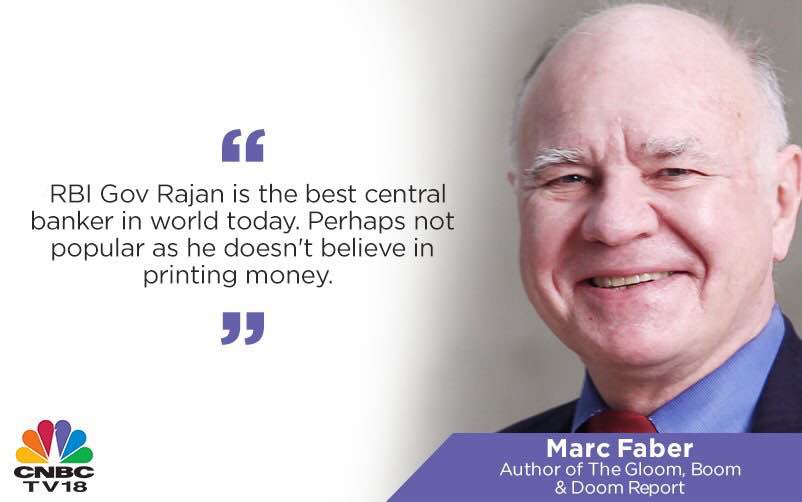
Did you know that since a year and a half (which forms half the term of Rajan), RBI has cut down almost 150 basis points in the Repo rates, but it is your banks who haven’t been passing that down to you? So far, on an average, banks have only passed down around 60-70 bps to the end borrower, with RBI governor repeatedly urging them to do so. Do you know that it is with this margin that your banks make profits. Even at a policy level, the inflation debate is always an inconclusive one. There are as many views as people and it is always easier to criticise in hindsight. Many have critiqued Rajan for not cutting rates further, but what value does it hold to the end consumer if we are still away by 60-70bps being passed down to us by the banks? Ir-respectively, the fact remains that inflation did come down from double digit levels when Rajan took over to around 5% on an average now.

It is with Rajan’s insistence that RBI and the Government decided to put in place a monetary policy framework in Mar’15, with a CPI based inflation targeting. The new framework makes RBI more accountable, as it will have to offer explanations to government on missing inflation targets. This restrains RBI from taking any aggressive or accommodative monetary policy stance, putting India on par with other countries in terms of flexible inflation targeting.

By mid-2013, Rupee had seen a sharp free fall to the levels of 70. India’s current account deficit had risen to a staggering 5% of GDP! CAD is basically a measure of the amount of supply of dollars (since that is the major currency of trade) in the country and a rising CAD indicates that the country is importing more than it is exporting. This causes the local currency to depreciate. India’s forex reserves had gone down to $250B and the government had signalled that they might run out of reserves in a few months. While the entire financial industry was in a panic mode, many of us were sitting in our offices wondering how many more days we have left in our jobs. The then governor Subbarao had imposed capital controls on Indian companies to limit their abilities to sell Rupees. One of the major duties of a central Bank’s governor is to continuously decide the supply of currency in the country.

So, when Raghuram Rajan took over as one on 5th September, he took over a in a difficult situation and one of the most challenging tasks ever! Today, we’re looking at a CAD of a very mellow 0.1% of GDP and our forex reserves just touched record highs of $363B on 10th June. (Average reserves in the period have been at $350B). “Rupee gained 10% between September and Dec’13 on the back of RBI measures”. With stronger reserves, RBI has managed to curb volatility in exchange rates. For it is the volatility of the currency which hurts participants more than its levels. The more volatility the currency, the higher than hedging cost and higher losses.  It is this strength imparted to India’s balance sheet and stability to Rupee that made international investors comfortable with India again. A remarkable fea t indeed!

In the last quarter of 2015-16, RBI gave a deadline to banks to declare all bad loans on their books and clean their balance sheets until Mar’17 instead of postponing and masquerading them as good loans. As a result of this, PSU banks have declared NPAs of almost 4 lakh crores and much more by now. Bilk of these are from loans issued by banks a good 5 years back, or even more. The chickens are just coming home to roost now. RBI’s strict stance on the matter has hastened the process of NPA recognition and provisioning by banks. This move is going to add strongly to the edifice of our banking system.

The list of Rajan’s contribution in making our Institutions’ foundations stronger is endless. It is because of these accomplishments that he has become an important figure in the eyes of
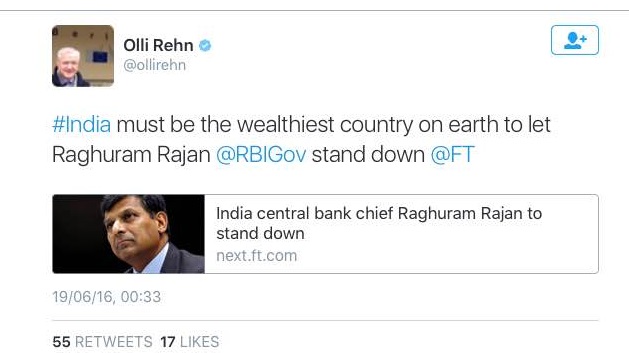
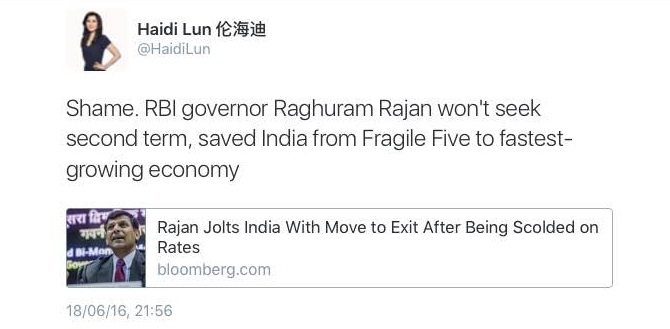
International investing community. Below are some international voices on Rajan’s exit :

IMG_0768IMG_0767

IMG_0769

There may have been some disagreements between the governor and the government, which is bound to happen by design if the governor is an independent thinker. It has only benefitted us as a nation and put us a few steps ahead on our way to progress. After all, we do take pride in having our autonomous institutions being run so, don’t we?

When has India Inc ever come together to voice their support to an RBI governor to retain him? Industry stalwarts like Rahul Bajaj, Harsh Mariwala, Adi Godrej, Kiran Majumdar Shaw, Deepak Parekh et al have acknowledged that Rajan must stay.

The reason for his exit (at least in public perception) could very well be some very personal and unsubstantiated attacks by Subramanian Swamy. A good Governor leaving in the backdrop of some frivolous attacks certainly doesn’t look good. No single person is indispensable and no individual is greater than the institution especially one like RBI, but India might have let an asset slip out of its grip. Rajan will be only the second governor to have served only for three years.

My first visit to an RSS event changed my perception about RSS

0

A few days back, I got a chance to attend a function organised by Rashtriya Swayamsevak Sangh, Delhi state. I have attended many events organized by BJP, but I never attended any RSS event before this event. The event was organised in an open ground, a part of which was covered with tents for the event.

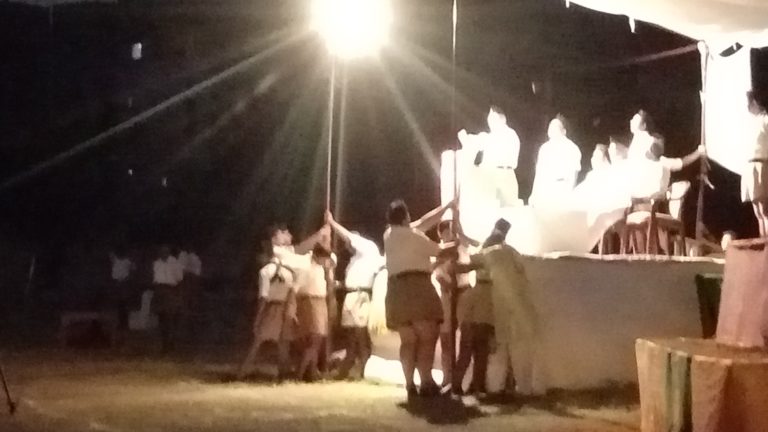
The swayamsewaks performed activities which they learnt in their 20 days long training Camp. It was to be followed by a speech by Shri Rameshwar, a Senior official of the RSS. When Shri Rameshwar stood to speak, a strong wind started blowing. The tent was tied to iron pillars from all sides, but due to pressure of the wind, it started shaking like leaves of a tree. All the pillars attached to the stage were also shaking. This all happened very fast. Even trained event managers couldn’t handle it easily and most of these swayamsewaks there were all untrained youngsters! The scene, for once, scared me so much that I thought of running away from the pandal.

The stage from which the main speaker was speaking was shaking like anything due to strong winds. I was pretty sure that the speaker will abort his speech and move from the venue. Who would want to stake his life for an event? What happened in next few seconds, changed my views for RSS forever. When the wind became strong, swayamsevaks quickly took positions. Those sitting beside poles, grabbed them strongly. They also untied all the tents from poles so that the wind pressure is minimized. Around 20-25 swayamsewaks ran towards the stage and grabbed each pole strongly to ensure that the stage doesn’t shake anymore. 6-7 swayamsewaks were holding each pole attached to the stage and made sure the events runs smoothly. Though the tent must have been of some tent-wallah, but his men were nowhere in sight. Swayamsewaks were holding each pillar of the widespread tent and ensured smooth functioning of the event. This everything happened within a couple of minutes.

But I must admit that the most astonishing thing that amazed me was the behavior of the speaker. The stage was shaking like a boat in a river, even one of the pillars of stage’s roof came out, which could even have caused his death, but he was as calm as if nothing had happened. Neither here was no sign of any fear on his face nor his words suggested so. He spoke for full 40 minutes as he was scheduled to, that too without even once mentioning the strong storm blowing there. The way by which these young swayamsewaks managed everything and ensured smooth concluding of the event, it was absolutely breath-taking. 2-3 swayamsewaks were tied to each of the pillar. Some even climbed on the pillars to ensure that they didn’t move any further. One senior swayamsewak, who was standing behind the main speaker on stage, was continuously looking towards the roof to ensure that the speaker isn’t harmed in case the iron pillar of the roof falls. He was on the stage which in itself was shaking badly due to strong winds and was held by 20-25 swayamsewaks who were holding the pillars of stage. Speaker put his faith on the karyakartas behind him while that karyakarta put his faith on the young swayamsenaks holding stage. What a bold statement of mutual trust it was!

While there was lots of turbulence, the main speaker stated that Sangh is an organisation which builds humans. I had heard this line many times but that day I actually realized what type of individuals Sangh creates. Speaker was a big RSS official. I am sure he won’t be knowing many of those who were holding the stage personally but he posed his full trust on their shoulders without even thinking twice. It was like putting his life in their hands.

May be this is the character-building that I have heard many RSS guys talking about. I shared here what I felt. These small things, in my opinion, make this organisation such a great one. We should attend RSS programs before forming opinions about the organization. I am sure you will like their dedication.

My best wishes to the Rashtriya Swayamsewak Sangh.

Misreporting by media on Aviation Policy’s proposal of Rs 2500 cap on airfares

0

The civil aviation policy was cleared by the cabinet yesterday. There was a presentation on the policy by civil aviation ministry in front of media followed by a question answer session. Although this new policy includes many path-breaking changes, which can be referred to as so called ‘big bang reforms’, there was one single point that got the most attention on both news media and social media. This point is, the Government has capped the price of air tickets at the rate of ₹2,500/- per hour of air travel.

Here are some of the media articles that mention that air fare has been capped at ₹ 2,500/- per hour:

ANI News
ANI News

Indian Express: New civil aviation policy: Rs 2,500 for 1-hr flights; 5/20 norm scrapped

India Today: New Civil Aviation Policy passed: Cap of Rs 2500 for hour-long, Rs 1300 for 30-minute flights

Hindustan Times: New civil aviation policy focuses on capping fares, regional connectivity

There was some outrage also on this, as how can government fix price of air ticket which is such a communist measure and against the principle of ease of doing business.

But has the Government of India really capped the price of air tickets? If you were paying attention to the presentation of ministry and the subsequent press conference, you will find that the reality is far from it. The fact is, there is no such cap on existing routes on which airlines are operating at present. This cap is applicable only on connecting to some new airports that will come up under Regional Connectivity Scheme introduced in the civil aviation policy today.

Let’s see some detail regarding this.

The central government has realised that India has one of the lowest domestic air connectivity for its size. India needs many more airports to improve this situation and provide connectivity to tier 2 and tier 3 cities. But building new airports in those places will be hugely expensive and time consuming. Incidentally, there are around 350 airstrips scattered across the country which are presently not used. Many of those were built during WW-II, some were built later but were abandoned as the demand was not enough to sustain air operations to those places. Now government has decided to convert some of these airstrips into functioning airports at investment of around ₹100 crore per airport. These airports will come under Regional Connectivity Scheme (RCS). This scheme will require support and participation of state governments which want such airports in their states.

Now, even after these airports are developed, air connectivity to these places will not be economically viable as demand is less in these sectors compared to metros and tier 1 cities. Because there are not enough people in those places who will buy air tickets at current prices. This is the reason some of the existing airports in such places are non-operational at present. Hence government has decided to cap air fare ONLY on these routes at ₹2,500/- per hour of flying, on pro-rata basis. Means for 2 hours of flight it will be ₹5,000/- and so on.

This cap will not be applicable on flights between two existing functional airports, it will be applicable only on flights between an existing airport and a new RCS airport, or between two RCS airports.

And, the Government is not forcing airlines to sell ticket at low price, but it is helping in bringing the price to such level, by taking following steps:

• Service Tax will be charged on only 10% of the ticket price. Means if a ticket costs ₹2,000/-, service tax will be applicable only on ₹200/-, making the tax amount only one-tenth of normal amount.
• The state government will be required to charge only 2% VAT on aviation turbine fuel purchased at these airports.
• The airports will not charge any kind of charge from the airlines for use of the airports.
• State governments will have to provide police and fire services free of cost.
• For any loss that airlines have to bear due to the cap in ticket price, Government of India will fund them through Viability Gap Funding, which will be collected through a cess applied on ticket prices of non-RCS routes.

So, the Government is implementing this cap by reducing its share in the ticket price, which is substantial, and also by providing Viability Gap Funding. Hope this clears the confusion created by usual misleading news by mainstream media.

Arvind Kejriwal and the era of gutter level politics

0

Arvind Kejriwal announced the formation of a political party called Aam Aadmi Party with the promise of a new brand of politics. He promised India that AAP would bring in clean politics, focused around their anti-corruption platform. A new level of public discourse centered around transparency. Sure there were the boisterous sometimes outrageous press-conferences by Kejriwal where he fired his salvos on the people his court deemed corrupt. But there always seemed to be a certain level of dignity maintained.

As far as the promise of clean politics goes, AAP cannot claim to have fulfilled expectations. 1 minister sacked dramatically on allegations of corruption. Another minister forced to resign after being arrested in a cheating case. Allegations of corruption against another ministry, the minister of which was oddly relieved of only that portfolio, citing “health reasons”. That is 3 out of the 7 cabinet ministers. Not a very healthy score.

Add to this the fact that in the recent past, Arvind Kejriwal seems to have had a meltdown. A meltdown of epic proportions. The  language, tone and tenor have gone from tolerable to cheap, coarse and crass. One cannot fathom that Kejriwal is actually a Chief Minister, that too of the National Capital Territory, because his behaviour comes across as one of those conceited college activists who find it cool to abuse people in places of authority.

It started with this tweet:


Here is an elected representative, a Chief Minister at that, with an enormous majority abusing the Prime Minister of a country. And it is not even election season. Elections often bring out the worst among politicians and it is par for course for barbs to be exchanged. But the trigger for this extremely abusive tweet was the fact the CBI raided the office of a bureaucrat in the Delhi Government. Here is an anti-corruption messiah absolutely losing his cool just because some bureaucrat in his Government was probed for corruption.

Not only is the Prime Minister attacked, who one can argue is a political opponent, Kejriwal has now gone on to abuse and deride even the Lieutenant Governor of Delhi, Najeeb Jung. Two letters written by Kejriwal, from his office as the Chief Minister of Delhi, addressed to Najeeb Jung have now leaked on social media and they show the depths that Arvind Kejriwal has sunk to.

In the first letter he literally challenges or rather sardonically requests the LG and PM to raid his minister “for the crime of completing a medical college in record time”:

Kejriwal's letter
Kejriwal’s letter

In the same letter he goes on to deride the LG again saying that irrespective of the “illegal, anti people, anti constitutional acts” he does on the directions of the PM, Modi will never make him Vice-President:

Kejriwal's letter
Kejriwal’s letter

In his second letter within two weeks, he once again goes on the aggressive. This time at least there is a reason: The Anti Corruption Bureau is questioning his Transport Ministry which has been riddled with allegations of multiple scams.

Much like his previous letter, he once again baits the LG and PM to send a CBI raid party, to raid his minister Satyendra Jain for the “crime of drafting a fantastic solar policy”:

Kejriwal's letter
Kejriwal’s letter

In another line, which reveals the absolutely twisted mindset of Kejriwal, he alludes that Modi is very happy with the LG for doing his bidding.

These letters, these cheap jibes are no accident. These are not slip-ups or on the spur of the moment remarks. These reveal a design of a demented mind. This man is only on the look-out for a fight. If you see his tenure as CM, almost every month there is some new issue with which he has claimed victim-hood and started a fresh fight. His constantly antagonistic approach is the only way he seems to feel he can be relevant. And in bad times, such stances can be used to cover up own deficiencies.

Under his brand of politics, which was supposed to be clean, he has abused and insulted the two most important people in the matters of a State Government: the Prime Minister, with whom he needs to work in close coordination to get many works done, and the LG, who again has many powers, especially in a territory like Delhi, which is not a full-fledged state.

It is not something unique to find that a CM has to deal with a PM who is a political opponent. Countless CMs in India, have dealt with opposition party PMs, but it is only AAP’s Kejriwal who always find some or the other grouse with the PM. In fact even recently when the President rejected AAP’s bill, he dragged in the PM. This reveals either mental imbalance of utter dishonesty.

Many states have also had Governors who were earlier in active politics and from the opposing party. Often Governors are appointed only to make sure the CM has a tough time. Najeeb Jung is not affiliated to any political party, and instead is a former bureaucrat, just like Kejriwal. Further, he is not a Modi appointee. Yet, it is only this petulant Delhi CM who has such a severe problem with his Governor.

Forget the position, both the LG and the PM are very senior people, men of considerable age, who have spent far more time in their respective fields than Kejriwal who is just a political upstart. Basic culture and decency demands that one must respect their seniority, if not position. A CM can have genuine grievances but there are ways and means in which they can be conveyed, means which do not cross the line of public propriety.

What is even worse is the utter silence from eminent people who support AAP and also the media. There have been almost no debates or discussions highlighting how Kejriwal has made it a habit to bait, troll and abuse people in positions which demand respect. A constantly at war CM combined with the Rs 526 crore advertisement war-chest maybe spelling out “acche din” for TV channels, which could perhaps explain the silence. But it is certainly not “acche din” for political discourse in India.

Adv Patel who filed the petition with EC clears all doubts about AAP’s 21 MLAs facing disqualification

0

In the latest saga engulfing controversy’s favourite child Delhi CM Arvind Kejriwal, AAP in Delhi might see 21 of its MLAs disqualified. The reason is simple: the Delhi Government appointed these 21 MLAs as “parliamentary secretaries” which was not permitted as per law since they were considered to be holding an “office of profit”. This matter has earlier claimed big names such as Jaya Bachchan and even Congress President Sonia Gandhi. While Bachchan lost her Rajya Sabha seat via disqualification, Sonia Gandhi had to resign from all her posts which could have been considered as falling under “office of profit”.

Arvind Kejriwal though tried another method, by passing a bill which had retrospective impact, trying to bless his 21 MLAs with legal sanctity. Unfortunately the bill was rejected by the President of India and ever since a new saga of victim-hood has played out. Kejriwal has cried foul that Modi is behind all the happenings.

The truth however is that all this started with a relatively unknown face: Advocate Prashant Patel. He filed a petition before the President to disqualify the 21 MLAs on 19th June, 2015. Now that the matter has become hot again, Ankit Jain spoke to Advocate Patel to get a clear understanding of the controversy:

Q. The President has just declined to give assent to the Delhi Government’s bill to exclude the post of parliamentary secretary from the office of profit. Why do you think he has done so?

Adv Patel: On 26th December, 2015  I had submitted my reply to Election Commission and a copy to Hon’ble President that the Delhi Government did not observe and follow the mandatory legal and constitutional requirements before introducing and passing this Bill in the Legislative Assembly, hence the impugned Bill cannot and must not be given the shape of a valid law. So Hon’ble Rashtrapati Ji being the defender and upholder of the constitution, must therefore withhold his assent to this Bill. I submitted this after the submission of my Petition seeking disqualification of MLAs holding Office of Profit. Delhi Government tried to present fait accompli to Hon’ble Rashtrapati Ji and brought a bill in Assembly.

Q. Kejriwal has alleged that the President is working on orders of PM Modi and MHA. As per the legal processes, is it fair to make such a conclusion granted that the President has declined NDA’s bills as well?

Adv Patel: Article 102 and 192 read with Section 15 of the NCT Act say that, in the matter of questions as to disqualification of Members, President shall obtain the opinion of Election Commission before taking any decision and decision of President shall be final. The file related to “Office of Profit” doesn’t go to PM, Cabinet or Government.

Q. Kejriwal claims that there are no benefits accruing to these parliamentary secretaries hence it is not an “office of profit”. The official circular says they may use vehicles and space for official purposes. How is this an office of “profit”?

Adv Patel: ‘Profit’ normally connotes any advantages, benefit or useful consequences. Generally, it is interpreted to mean monetary gain but benefits other than monetary gain may also come within its meaning. “Office of profit” is one to which some power to patronage is attached or in which the holder is entitled to exercise the executive functions, or which carries dignity, prestige or honour to the incumbent thereof.

The position of Parliamentary Secretary in Delhi squarely falls in the aforesaid category. MLAs appointed as Parliamentary Secretaries are certainly in a more advantageous or beneficial position in comparison to the other Members. By accepting the position of Parliamentary Secretary which certainly has some position, prestige or patronage attached to it, these legislators have become an inseparable and an integral part of the Executive and the dividing line between Legislature and the Government has been completely obliterated

Advocate Prashant Patel

Q. Why did the Delhi Government frame such a bill in the first place? 

Adv Patel: The appointment of Parliamentary Secretaries was made on 13 March 2015, and the Bill with malafide and malicious intent , was passed on 24 June 2015. It was given retrospective effect by stating that “It shall be deemed to have come into force on the 14th day of February 2015” only because I had filed a petition before the President to disqualify 21 MLAs on 19th June, 2015.

Q. Kejriwal says that many states have such parliamentary secretaries who also get paid and Modi is singling out Delhi. Is it true?

Adv Patel: First of all I want to clear that Delhi is not a state but Union Territory. Delhi comes under Chapter 8 of the Constitution and States Comes under chapter 3 of the Constitution. In Delhi, if You want to make any rule or want pass a Bill, you have take permission first from Central government via LG, which was never taken. In other states they have made parliamentary secretaries after passing the Bills in their Assemblies.

Q. In all the attacks of Kejriwal, he claims Modi is after him, whereas the entire issue started with your petition to EC. Are you in anyway connected to BJP  or Modi?

Adv Patel: I do not belong to any political party and have no political affiliations either. As a vigilant law abiding citizen, I simply want the majesty of the Indian Constitution and the law of the land to prevail.

Q. Some media reports suggest that the 21 MLAs now will be disqualified, but some other reports say that there is still time to go as EC has to hold hearings and take a decision. When will this issue be settled?

Adv Patel: EC is conducting all these proceedings according to directions of the President. EC may give chance to 21 AAP MLAs for Personal hearing. I have also requested to EC in my Rejoinder that the intention of MLAs seems to be malafide and to delay the process. However In the interest of speedy disposal of the matter, the hearing of all MLAs may be completed on a single day itself. The matter is on its final stage and EC may soon give opinion to the President and the President will take a decision and his decision shall be final which can’t be challenged to any court.

Q. Are there any legal remedies available to AAP to solve this issue without getting 21 MLAs disqualified?

Adv Patel: According to the Constitution, there is no legal remedy available to these MLAs, since appointment of 21 MLAs as Parliamentary Secretaries is the worst kind of political corruption.

Resignation of AAP transport minister Gopal Rai: Health reasons or something more to it?

After Jitender Singh Tomar and Asim Ahmed Khan , AAP Minister Gopal Rai became the next minister of the Delhi Government to resign, but with a difference.

The controversial Tomar was embroiled in a fake degree scam in which Kejriwal backed him to the hilt. Kejriwal tried to defend Tomar till the very last moment, but when multiple investigations and proofs began coming out in public, Tomar was finally forced to resign, after he was arrested on charges of fraud and cheating by the Delhi Police

In the case of Khan, he was sacked by AAP supremo Kejriwal allegedly over graft charges, although Khan himself blamed “AAP’s internal politics”. The minister wasn’t given any notice of this move and was sacked in a dramatic fashion, in an apparent bid to show-case a zero-tolerance-to-corruption attitude.

In that sense AAP Minister Gopal Rai’s case is mighty different. Firstly, he has been relieved only of one portfolio and continues to be minister for 5 other portfolios:

From Delhi Government Portal

The public reason given is that Gopal Rai resigned “citing poor health”. It is odd that a minister feels unhealthy only running the transport portfolio and is fine to run 5 other ministries. Rai though, did undergo a surgery in early May 2016, to remove a bullet lodged in his neck for the past 17 years. The bullet was removed without complications and his condition was said to be stable. This still does not explain why he felt he needed to be relieved only from the Transport department.

But if one goes back a bit to the developments of the past 2 weeks, then a different story emerges. On 18th May, came the story by a site called FountainInk, which exposed the dark secrets and corrupt practices of AAP:


Although this story was published on 18th May, it made news on social media only on 1st June, when some journalists shared the story and AAP leader Aashish Khetan threatened them with dire consequences. One of the parts of the story talked about Gopal Rai and his transport ministry:

The (transport) department was caught renewing licences of autorickshaws for people it favoured .While there were close to 17,000 vehicles on the road only 10,000 were to be allowed back as per the government’s decision. The department had been provided with a list of dealers to be favoured. But the scam was exposed and there were large-scale protests on the city’s roads.

In order to control the surge in negative publicity, Rai immediately suspended three officials based on recommendations from party workers. A senior official of the department says, “They were actually against the directions and had decided to work in a fair manner. They just became scapegoats in a political battle.”

Another potential scam which hit the transport ministry was the one regarding the sale of more than 1 lakh CNG stickers to non-CNG cars. 2 protesters of the Aam Aadmi Sena, a dissident faction of former workers of Aam Aadmi Party, claimed that they had a CD containing a sting operation, which exposed alleged sale of fake CNG stickers in Delhi ahead of the Odd-Even vehicular scheme. Even journalist Rahul Kanwal independently hinted at the possibility of such a scam.

And most recently, the news of an alleged “premium bus scam” broke out in Delhi. Anti-Corruption Bureau (ACB) confirmed that it had launched an investigation into the AAP government’s bus aggregator scheme, and summoned Transport Commissioner Sanjay Kumar, who notified it.

With 3 allegations of scams on Delhi’s Transport ministry, Delhi CM Arvind Kejriwal tweeted the following on 10th June:

Kejriwal’s tweet

This was a marked departure from Kejriwal’s stance with Khan, whom he sacked as soon as he got the news that there were allegations of corruption against him. This time Kejriwal tried to pre-empt action by ACB and tried to give it a political colour. And within hours of this tweet by Delhi CM, it was revealed that Gopal Rai may resign as transport minister due to “health concerns”:

“Health Concerns”

The entire sequence of events is this: Minister Gopal Rai has a surgery for an old complication. In the meanwhile allegations fly thick and fast about his transport ministry being involved in scams. ACB starts probing one of the matters. Delhi CM pre-empts ACB action on Rai and gives it a political colour. Finally Rai cites “health reasons” to resign, but only from the controversial transport portfolio and not his 5 other ministries.

The truth will be out only when investigations are over but in the past we have seen many politicians take the “chest-pain” route to avoid the long hand of the law. To make matters worse for him, communist Kavita Krishnan, had this to say about Gopal Rai, much before he became a minister and any of the alleged scams emerged:

Krishnan’s verdict